Skip to content · ⁨ข้ามไปยังเนื้อหา⁩

Drugs · ⁨ยา⁩

IGCSE Biology · ⁨Biology IGCSE⁩ · Topic 15 · ⁨หัวข้อ 15⁩

Video lesson for this topic · ⁨บทเรียนวิดีโอสำหรับหัวข้อนี้⁩ Open the video page · ⁨เปิดหน้าวิดีโอ⁩
4:37

ยาและยาปฏิชีวนะ

ถามแพทย์เพื่อรับยาปฏิชีวนะเมื่อเป็นหวัด แล้วเขาจะปฏิเสธ ไม่ใช่เพราะเขาก่อปัญหา — แต่เพราะมันจะไม่ทำงานจริงๆ และเพราะ…

English narration · English + 中文 subtitles burned in · ⁨การบรรยายภาษาอังกฤษ · คำบรรยายภาษาอังกฤษ + 中文 ลอยตัวบนภาพ⁩

15.1

What a drug is · ⁨What a drug is (ยาคืออะไร)⁩

Syllabus · ⁨หลักสูตร⁩
English
Core Supplement
1 Describe a drug as any substance taken into the body that modifies or affects chemical reactions in the body
2 Describe the use of antibiotics for the treatment of bacterial infections
3 State that some bacteria are resistant to antibiotics which reduces the effectiveness of antibiotics 5 Explain how using antibiotics only when essential can limit the development of resistant bacteria such as MRSA
4 State that antibiotics kill bacteria but do not affect viruses
ไทย
แก่น เพิ่มเติม
1 อธิบายยาว่าคือสารใดๆ ที่ถูกนำเข้าสู่ร่างกายเพื่อปรับเปลี่ยนหรือมีผลต่อปฏิกิริยาเคมีในร่างกาย
2 อธิบายการใช้ยาปฏิชีวนะสำหรับการรักษาการติดเชื้อแบคทีเรีย
3 ระบุว่าบางชนิดของแบคทีเรียมีความต้านทานต่อยาปฏิชีวนะ ซึ่งลดประสิทธิภาพของยา 5 อธิบายว่าการใช้ยาปฏิชีวนะเฉพาะเมื่อจำเป็นสามารถจำกัดการพัฒนาของแบคทีเรียที่ดื้อยา เช่น MRSA ได้
4 ระบุว่ายาปฏิชีวนะฆ่าแบคทีเรียแต่ไม่มีผลต่อไวรัส

Source: Cambridge International syllabus · ⁨แหล่งที่มา: หลักสูตร Cambridge International⁩

English

A drug 药物 is any substance taken into the body that changes or affects the chemical reactions 化学反应 in the body. Many drugs are medicines that help to treat illness.

ไทย
ซองบุหรี่
บุหรี่มี nicotine ซึ่งเป็นยาเสพติด

Drug คือสารใดๆ ที่ถูกนำเข้าสู่ร่างกายซึ่งเปลี่ยนแปลงหรือส่งผลต่อ ปฏิกิริยาเคมี ในร่างกาย ยาหลายชนิดเป็นยาที่ช่วยรักษาโรค

Vocabulary · ⁨คำศัพท์⁩ Train · ⁨ฝึกฝน⁩
English ไทย
drug/drʌɡ/ ยา
chemical reactions/ˈkemɪkl rɪˈækʃnz/ ปฏิกิริยาเคมี
15.1

Antibiotics · ⁨ยาปฏิชีวนะ⁩

English

Antibiotics 抗生素 are drugs used to treat bacterial infections 感染. They kill bacteria 细菌, or stop them growing, but they do not affect viruses 病毒. This is why antibiotics cannot cure a cold or the flu, which are caused by viruses.

To test which antibiotic works best, small paper discs soaked in different antibiotics are placed on a plate covered with bacteria. Where an antibiotic kills the bacteria, a clear ring with no growth appears around the disc. A bigger ring means the antibiotic is more effective.

ไทย

Antibiotics เป็นยาที่ใช้รักษาการติดเชื้อแบคทีเรีย infections. พวกมัน ฆ่าแบคทีเรีย หรือหยุดการเจริญเติบโตของมัน但它们 does not affect viruses. นี่คือเหตุผลที่ antibiotics ไม่สามารถรักษาหวัดหรือไข้หวัดใหญ่ซึ่งเกิดจากไวรัส

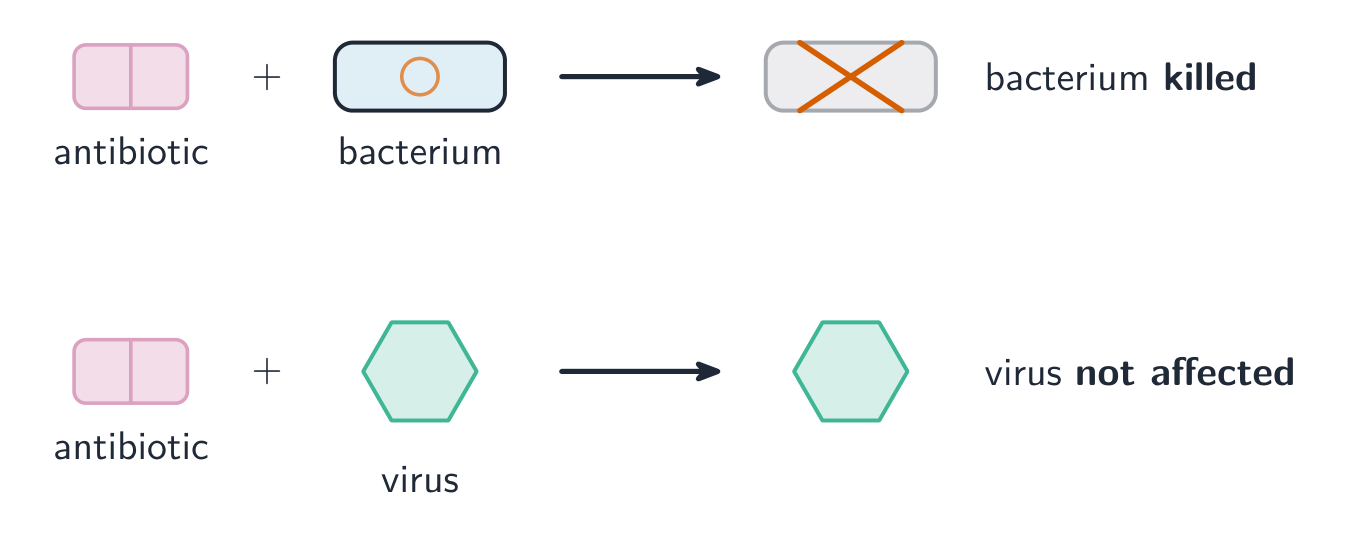
antibiotic plus a bacterium leads to the bacterium being killed, but an antibiotic plus a virus leaves the virus unaffected
Antibiotics ฆ่าแบคทีเรียแต่ไม่มีผลต่อไวรัส

เพื่อทดสอบว่ายาปฏิชีวนะตัวใดใช้ได้ดีที่สุด จะนำแผ่นกระดาษขนาดเล็กที่จุ่มยาปฏิชีวนะต่างกันวางบนจานเพาะเลี้ยงที่มีแบคทีเรีย เมื่อยาปฏิชีวนะฆ่าแบคทีเรียได้ จะเกิดวงกลมใสที่ไม่มีเชื้อรอบๆ แผ่นกระดาษ วงกลมที่ใหญ่กว่าแสดงว่ายานั้นมีประสิทธิภาพมากกว่า

จานเพาะเลี้ยงที่มี bacterial lawn ครอบคลุมอยู่ พร้อมแผ่นดิสก์ยาต้านแบคทีเรียวางกระจายอยู่ทั่ว; ยาต้านแบคทีเรียที่มีประสิทธิภาพแต่ละชนิดจะสร้างพื้นที่วงกลม devoid of bacterial growth รอบตัวมันเอง
วงแหวนใสแสดงบริเวณที่ยาปฏิชีวนะฆ่าแบคทีเรียบนจานเพาะเลี้ยง
Explore · ⁨สำรวจ⁩

Drug and antibiotic lab · ⁨ห้องปฏิบัติการเกี่ยวกับยาและยาปฏิชีวนะ⁩

Sort medical examples by what the drug can and cannot do. · ⁨จำแนกตัวอย่างทางแพทย์ตามสิ่งที่ยาสามารถทำได้และไม่สามารถทำได้⁩

Vocabulary · ⁨คำศัพท์⁩ Train · ⁨ฝึกฝน⁩
English ไทย
antibiotics/ˌæntɪbaɪˈɒtɪks/ ยาต้านเชื้อแบคทีเรีย
infections/ɪnˈfekʃnz/ การติดเชื้อ
bacteria/bækˈtɪərɪə/ แบคทีเรีย
viruses/ˈvaɪrəsɪz/ ไวรัส
resistant/rɪˈzɪstənt/ ดื้อยา
15.1

Antibiotic resistance · ⁨ความต้านทานยาปฏิชีวนะ⁩

English

Some bacteria are resistant 耐药 to an antibiotic — the antibiotic no longer kills them. These bacteria survive and multiply, so the antibiotic slowly becomes less effective for everyone.

(Supplement) To slow this down, antibiotics should be used only when they are really needed, and the full course should always be finished. Using antibiotics too often lets resistant bacteria, such as MRSA, spread.

Worked example. A patient stops taking their antibiotic as soon as they feel better, and the infection comes back worse. Explain using resistance. In the starting population a few bacteria are already resistant, by chance. The antibiotic kills the non-resistant ones, so those few survive, multiply, and come to make up most of the population - and the antibiotic no longer works on it. Stopping early leaves behind exactly the bacteria that are hardest to kill. Say the resistant bacteria already existed and survived: writing that the antibiotic "made them resistant" is wrong and loses every mark.

ไทย

บางชนิดของแบคทีเรียมี ความต้านทาน ต่อยาต้านแบคทีเรีย — ยาต้านแบคทีเรียไม่สามารถฆ่าพวกมันได้อีกต่อไป แบคทีเรียเหล่านี้รอดชีวิตและเพิ่มจำนวนขึ้น ดังนั้นยาต้านแบคทีเรียจึงค่อยๆ มีประสิทธิภาพลดลงสำหรับทุกคน

(ส่วนเสริม) เพื่อชะลอกระบวนการนี้ ยาต้านแบคทีเรียควรถูกใช้ เฉพาะเมื่อจำเป็นจริงๆ และต้องทำครบตาม疗程เสมอ การใช้ยาต้านแบคทีเรียบ่อยเกินไปจะทำให้แบคทีเรียที่ต้านทานยา เช่น MRSA แพร่กระจายได้

สามขั้นตอน: populations ของแบคทีเรียที่มีเพียงไม่กี่ตัวที่ต้านทานยา; หลังได้รับยาต้านแบคทีเรีย มีเพียงแบคทีเรียที่ต้านทานที่ยังรอดชีวิต; พวกมันเพิ่มจำนวนจน entire population กลายเป็นต้านทานยา
แบคทีเรียที่ต้านทานยารอดชีวิตและเพิ่มจำนวนขึ้น ทำให้ population กลายเป็นต้านทานยา

ตัวอย่างวิธีทำ. ผู้ป่วยหยุดกินยาต้านแบคทีเรียทันทีที่รู้สึกดีขึ้น และการติดเชื้อกลับมาแย่ลง อธิบายโดยใช้แนวคิดเรื่องความต้านทาน ใน populations เริ่มต้น มีแบคทีเรียเพียงไม่กี่ตัวที่ ทนทานต่อยานั้นอยู่แล้ว โดยบังเอิญ ยาต้านแบคทีเรียฆ่าแบคทีเรียที่ไม่ต้านทานไป เหลือเพียงไม่กี่ตัวนั้นที่รอดชีวิต เพิ่มจำนวนขึ้น และกลายเป็นส่วนใหญ่ของ populations - และยาต้านแบคทีเรียก็ไม่มีผลต่อมันอีก การหยุดก่อนกำหนดทำให้เหลือไว้เฉพาะแบคทีเรียที่ฆ่ายากที่สุดที่สุด หากบอกว่าแบคทีเรียที่ต้านทานยา มีอยู่เดิม และรอดชีวิต: การเขียนว่ายา "ทำให้มันทนทาน" นั้นผิดและจะถูกตัดคะแนนทุกข้อ

15.1

Exam tips · ⁨ข้อแนะนำสำหรับการสอบ⁩

English
  • A drug is any substance that changes the body's chemical reactions — not only illegal drugs.
  • Antibiotics kill bacteria only; they do not work on viruses (so they are useless against colds and flu).
  • Overusing antibiotics leads to resistant bacteria like MRSA. Use them only when needed, and finish the whole course.
ไทย
  • ยาคือ สารใดๆ ที่เปลี่ยนปฏิกิริยาเคมีในร่างกาย — ไม่ใช่เพียงยาเสพติดที่ผิดกฎหมายเท่านั้น
  • ยาต้านแบคทีเรียฆ่าเฉพาะ แบคทีเรีย; มันไม่ได้ผลกับ ไวรัส (ดังนั้นจึงไร้ประโยชน์ต่อการรักษาหวัดและไข้หวัดใหญ่)
  • การใช้ยาต้านแบคทีเรียเกินจำเป็นนำไปสู่แบคทีเรียที่ ต้านทานยา เช่น MRSA ควรใช้เฉพาะเมื่อจำเป็น และต้องทำ疗程ให้ครบ

Interactive lessons on this topic · ⁨บทเรียนเชิงโต้ตอบสำหรับหัวข้อนี้⁩

Work through it step by step, with instant-check exercises. · ⁨ทำทีละขั้นตอน พร้อมแบบฝึกหัดตรวจสอบผลทันที⁩

Past Papers · ⁨ข้อสอบย้อนหลัง⁩

More topics in IGCSE Biology · ⁨Biology IGCSE⁩ · ⁨หัวข้อเพิ่มเติมใน IGCSE Biology · ⁨Biology IGCSE⁩⁩

Log in or create account · ⁨เข้าสู่ระบบหรือสร้างบัญชี⁩

IGCSE, A-Level & AP