English
| Core | Supplement |
|---|---|
| 1 Describe the features of gas exchange surfaces in humans, limited to: large surface area, thin surface, good blood supply and good ventilation with air | |
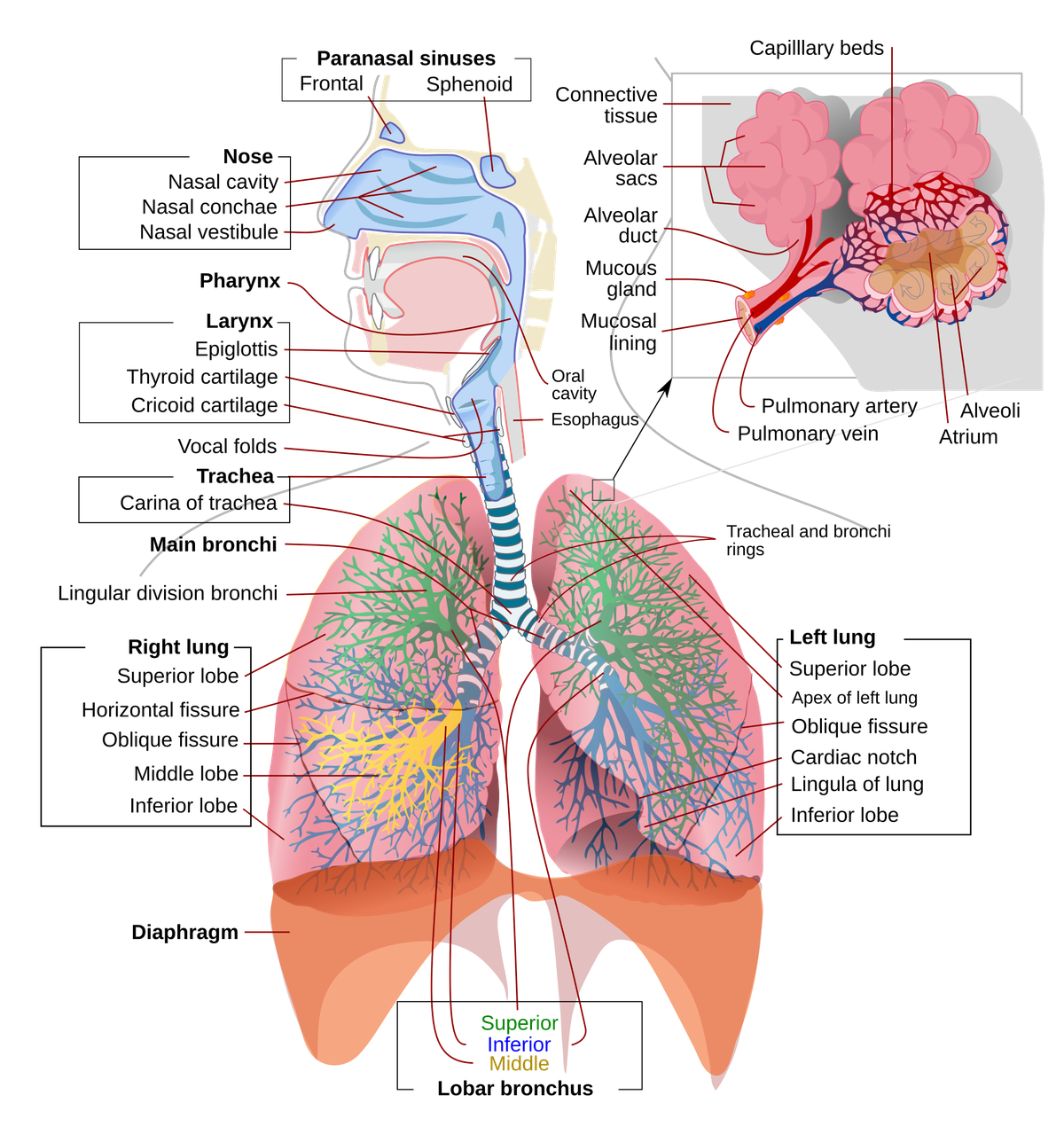
| 2 Identify in diagrams and images the following parts of the breathing system: lungs, diaphragm, ribs, intercostal muscles, larynx, trachea, bronchi, bronchioles, alveoli and associated capillaries | 6 Identify in diagrams and images the internal and external intercostal muscles |
| 7 State the function of cartilage in the trachea | |
| 8 Explain the role of the ribs, the internal and external intercostal muscles and the diaphragm in producing volume and pressure changes in the thorax leading to the ventilation of the lungs | |
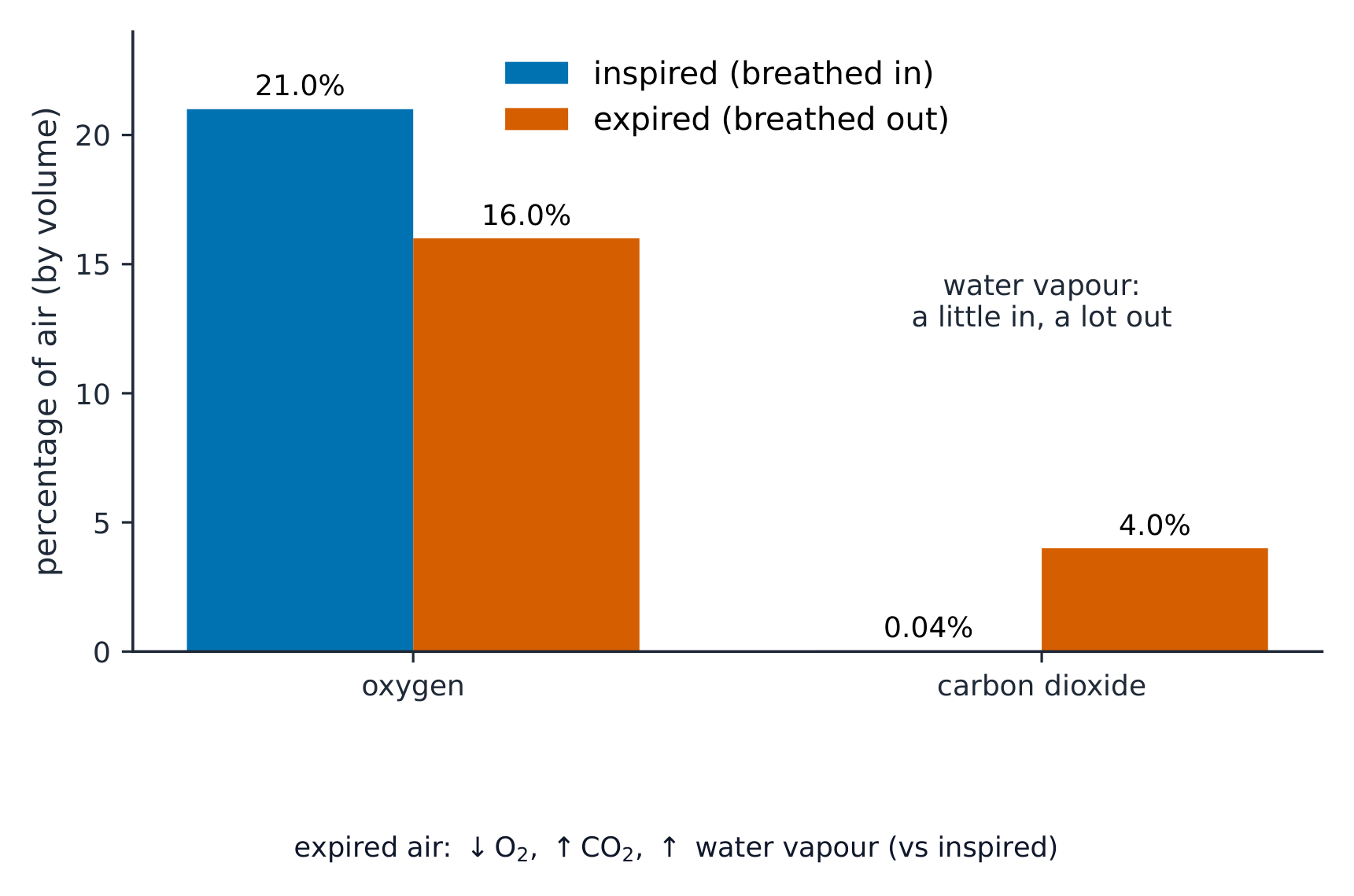
| 3 Investigate the differences in composition between inspired and expired air using limewater as a test for carbon dioxide | 9 Explain the differences in composition between inspired and expired air |
| 4 Describe the differences in composition between inspired and expired air, limited to: oxygen, carbon dioxide and water vapour | |
| 5 Investigate and describe the effects of physical activity on the rate and depth of breathing | 10 Explain the link between physical activity and the rate and depth of breathing in terms of: an increased carbon dioxide concentration in the blood, which is detected by the brain, leading to an increased rate and greater depth of breathing |
| 11 Explain the role of goblet cells, mucus and ciliated cells in protecting the breathing system from pathogens and particles |
ไทย
| แก่น | เพิ่มเติม |
|---|---|
| 1 อธิบายลักษณะของพื้นผิวสำหรับการแลกเปลี่ยนแก๊สในร่างกายมนุษย์, limited to: large surface area, thin surface, good blood supply and good ventilation with air | |
| 2 ระบุในแผนภาพและภาพส่วนต่างๆ ของระบบหายใจ: lungs, diaphragm, ribs, intercostal muscles, larynx, trachea, bronchi, bronchioles, alveoli and associated capillaries | 6 ระบุในแผนภาพและภาพ internal และ external intercostal muscles |
| 7 ระบุหน้าที่ของกระดูกอ่อน (cartilage) ในหลอดลม | |
| 8 อธิบายบทบาทของซี่โครง, internal และ external intercostal muscles และ диаแฟรมในการเปลี่ยนแปลงปริมาตรและความดันในทรวงอก leading to the ventilation of the lungs | |
| 3 ตรวจสอบความแตกต่างขององค์ประกอบระหว่างอากาศที่หายใจเข้าและออก using limewater as a test for carbon dioxide | 9 อธิบายความแตกต่างขององค์ประกอบระหว่างอากาศที่หายใจเข้าและออก |
| 4 อธิบายความแตกต่างขององค์ประกอบระหว่างอากาศที่หายใจเข้าและออก, limited to: oxygen, carbon dioxide and water vapour | |
| 5 ตรวจสอบและอธิบายผลของการออกกำลังกายต่ออัตราการและความลึกของการหายใจ | 10 อธิบายความสัมพันธ์ระหว่างการออกกำลังกายกับอัตราการและความลึกของการหายใจใน terms of: an increased carbon dioxide concentration in the blood, which is detected by the brain, leading to an increased rate and greater depth of breathing |
| 11 อธิบายบทบาทของ goblet cells, mucus และ ciliated cells ในการปกป้องระบบหายใจจากเชื้อโรคและอนุภาค |