Skip to content · ⁨ข้ามไปยังเนื้อหา⁩

Characteristics and classification of living organisms · ⁨ลักษณะและจัดหมวดหมู่ของสิ่งมีชีวิต⁩

IGCSE Biology · ⁨Biology IGCSE⁩ · Topic 1 · ⁨หัวข้อ 1⁩

Video lesson for this topic · ⁨บทเรียนวิดีโอสำหรับหัวข้อนี้⁩ Open the video page · ⁨เปิดหน้าวิดีโอ⁩
15:02

ลักษณะ & การจัดหมวดหมู่

รถเคลื่อนที่ ใช้เชื้อเพลิง ปล่อยก๊าซเสีย และตอบสนองเมื่อคุณหมุนพวงมาลัย ดังนั้นรถจึงมีชีวิตหรือไม่? ไม่ใช่ — และชีววิทยาสามารถบอกได้ว่าทำไมอย่างชัดเจน สิ่งมีชีวิต…

English narration · English + 中文 subtitles burned in · ⁨การบรรยายภาษาอังกฤษ · คำบรรยายภาษาอังกฤษ + 中文 ลอยตัวบนภาพ⁩

1.1

The seven characteristics of living organisms · ⁨Characteristics เจ็ดประการของสิ่งมีชีวิต⁩

Syllabus · ⁨หลักสูตร⁩
English
Core Supplement
1 Describe the characteristics of living organisms by describing: (a) movement as an action by an organism or part of an organism causing a change of position or place (b) respiration as the chemical reactions in cells that break down nutrient molecules and release energy for metabolism (c) sensitivity as the ability to detect and respond to changes in the internal or external environment (d) growth as a permanent increase in size and dry mass (e) reproduction as the processes that make more of the same kind of organism (f) excretion as the removal of the waste products of metabolism and substances in excess of requirements (g) nutrition as the taking in of materials for energy, growth and development
ไทย
แก่น เพิ่มเติม
1 อธิบายลักษณะของสิ่งมีชีวิตโดยการอธิบาย: (ก) การเคลื่อนที่เป็นปฏิกิริยาของสิ่งมีชีวิตหรือส่วนหนึ่งของสิ่งมีชีวิตที่ทำให้เกิดการเปลี่ยนแปลงตำแหน่งหรือสถานที่ (ข) การหายใจเป็นการเกิดปฏิกิริยาเคมีในเซลล์ที่ย่อยสลายโมเลกุลสารอาหารและปล่อยพลังงานสำหรับการเมตาบอลิซึม (ค) ความไวต่อการกระตุ้นคือความสามารถในการตรวจจับและตอบสนองต่อการเปลี่ยนแปลงในสภาพแวดล้อมภายในหรือภายนอก (ง) การเติบโตคือการเพิ่มขึ้นอย่างถาวรของขนาดและมวลแห้ง (จ) การสืบพันธุ์คือกระบวนการที่ทำให้เกิดสิ่งมีชีวิตชนิดเดียวกันมากขึ้น (ฉ) การขับถ่ายคือการกำจัดของเสียจากการเมตาบอลิซึมและสารที่เกินความต้องการ (ช) โภชนาการคือการ摄取วัสดุเพื่อพลังงาน การเจริญเติบโตและการพัฒนา

Source: Cambridge International syllabus · ⁨แหล่งที่มา: หลักสูตร Cambridge International⁩

English

Every living thing shares the same seven characteristics 特征 — seven life processes 生命过程 that all organisms 生物体 carry out. You can remember them with the letters MRS GREN. The examiner gives marks for the exact wording, so learn each definition.

  • Movement 运动 — an action by an organism, or part of an organism, that changes its position or place.
  • Respiration 呼吸作用 — the chemical reactions in cells 细胞 that break down nutrient molecules 营养物质 and release energy 能量 for metabolism 新陈代谢.
  • Sensitivity 应激性 — the ability to detect and respond to changes in the internal or external environment 环境.
  • Growth 生长 — a permanent increase in size and dry mass 干重.
  • Reproduction 生殖 — the processes that make more of the same kind of organism.
  • Excretion 排泄 — the removal of the waste products 废物 of metabolism, and of substances the body has in excess (more than it needs).
  • Nutrition 营养 — the taking in of materials for energy, growth and development.

Metabolism means all the chemical reactions that happen inside an organism's cells.

ไทย

ทุกสิ่งมีชีวิตมี characteristics เจ็ดประการเดียวกัน — life processes เจ็ดประการที่ organisms ทั้งหมดปฏิบัติ You can จำ them ด้วยตัวอักษร MRS GREN. ผู้สอบให้ marks สำหรับ exact wording ดังนั้น learn each definition

The seven characteristics of life spelling MRS GREN: Movement, Respiration, Sensitivity, Growth, Reproduction, Excretion, Nutrition
กระบวนการชีวิตทั้งเจ็ดเขียนว่า MRS GREN
  • Movement — action โดย organism หรือส่วนหนึ่งของ organism ที่เปลี่ยนตำแหน่งหรือสถานที่
  • Respiration — chemical reactions ใน cells ที่ย่อยสลาย nutrient molecules และปล่อย energy สำหรับ metabolism
  • Sensitivity — ความสามารถในการตรวจจับและตอบสนองต่อการเปลี่ยนแปลงใน environment ภายในหรือภายนอก
  • Growth — การเพิ่มขึ้นอย่างถาวรของขนาดและ dry mass
  • Reproduction — กระบวนการที่ทำให้เกิด organism ประเภทเดียวกันมากขึ้น
  • Excretion — การกำจัด waste products ของ metabolism และสารที่ร่างกายมีเกิน (มากกว่าที่ต้องการ)
  • Nutrition — การ摄取 materials เพื่อพลังงาน การเติบโตและการพัฒนา

Metabolism หมายถึง chemical reactions ทั้งหมดที่เกิดขึ้นภายใน cells ของ organism

Explore · ⁨สำรวจ⁩

Characteristics of life lab · ⁨ห้องปฏิบัติการศึกษาลักษณะของสิ่งมีชีวิต⁩

Classify real observations by the life process they show. · ⁨จำแนกการสังเกตจริงโดยกระบวนการชีวิตที่แสดงออก⁩

Vocabulary · ⁨คำศัพท์⁩ Train · ⁨ฝึกฝน⁩
English ไทย
characteristics/ˌkærɪktəˈrɪstɪks/ ลักษณะ
life processes/laɪf ˈprəʊsesɪz/ กระบวนการทางชีวภาพ
organisms/ˈɔːɡənɪzəmz/ สิ่งมีชีวิต
movement/ˈmuːvmənt/ การเคลื่อนไหว
respiration/ˌrespɪˈreɪʃn/ การหายใจ
cells/selz/ เซลล์
nutrient molecules/ˈnjuːtrɪənt ˈmɒlɪkjuːlz/ โมเลกุลอาหาร
energy/ˈenədʒi/ พลังงาน
metabolism/məˈtæbəlɪzəm/ การเผาผลาญ
sensitivity/ˌsensɪˈtɪvɪti/ ความไวต่อสาร
environment/enˈvaɪrənmənt/ สิ่งแวดล้อม
growth/ɡrəʊθ/ การเติบโต
dry mass/draɪ mæs/ มวลแห้ง
reproduction/rɪprəˈdʌkʃn/ การสืบพันธุ์ (reproduction)
excretion/ekˈskreʃn/ การขับถ่าย
waste products/weɪst ˈprɒdʌkts/ ของเสีย
nutrition/njuːˈtrɪʃn/ โภชนาการ
classify/ˈklæsɪfaɪ/ จัดประเภท
1.2

Classification: sorting living things into groups · ⁨การจัดหมวดหมู่: การแยกสิ่งมีชีวิตออกเป็นกลุ่ม⁩

Syllabus · ⁨หลักสูตร⁩
English
Core Supplement
1 State that organisms can be classified into groups by the features that they share 5 Explain that classification systems aim to reflect evolutionary relationships
2 Describe a species as a group of organisms that can reproduce to produce fertile offspring
3 Describe the binomial system of naming species as an internationally agreed system in which the scientific name of an organism is made up of two parts showing the genus and species
4 Construct and use dichotomous keys based on identifiable features
6 Explain that the sequences of bases in DNA are used as a means of classification
7 Explain that groups of organisms which share a more recent ancestor (are more closely related) have base sequences in DNA that are more similar than those that share only a distant ancestor
ไทย
แก่น เพิ่มเติม
1 ระบุว่าสิ่งมีชีวิตสามารถจัดกลุ่มได้ตามคุณสมบัติที่พวกมันร่วมกัน 5 อธิบายว่าระบบการจัดหมวดหมู่มีเป้าหมายเพื่อสะท้อนความสัมพันธ์ทางวิวัฒนาการ
2 อธิบายชนิด (species) ว่าคือกลุ่มของสิ่งมีชีวิตที่สามารถสืบพันธุ์เพื่อผลิตลูกหลานที่มี fertility ได้
3 อธิบายระบบชื่อวิทยาศาสตร์แบบสองพจน์ (binomial nomenclature) ของการตั้งชื่อชนิดว่าเป็นระบบที่ตกลงกันในระดับสากลซึ่งชื่อวิทยาศาสตร์ของสิ่งมีชีวิตประกอบด้วยสองส่วนที่แสดงถึงสกุลและชนิด
4 สร้างและใช้กุญแจแยกชนิดแบบคู่ (dichotomous keys) โดยอาศัยคุณสมบัติที่ระบุได้
6 อธิบายว่าลำดับเบสใน DNA ถูกใช้เป็น Means of Classification
7 อธิบายว่ากลุ่มสิ่งมีชีวิตที่ berbagiบรรพบุรุษที่ใกล้ชิดกว่ากัน (มีความสัมพันธ์ใกล้ชิดกว่า) จะมีลำดับเบสใน DNA ที่คล้ายคลึงกันมากกว่า那些ที่แบ่งปันบรรพบุรุษที่ห่างไกลเท่านั้น

Source: Cambridge International syllabus · ⁨แหล่งที่มา: หลักสูตร Cambridge International⁩

English

There are millions of kinds of living thing. To study them, scientists classify 分类 them — they sort them into groups by the features they share. Organisms in the same group share more features with each other than with organisms in other groups.

Species and the binomial system

The smallest common group is the species 物种. A species is a group of organisms that can reproduce to make fertile offspring 可育后代 ("fertile" means the offspring can themselves go on to have young).

Each species has a two-part scientific name 学名. This way of naming is the binomial system 双名法 — a system agreed all over the world, so every scientist uses the same name.

  • The first part is the genus 属 (a larger group that the species belongs to). It starts with a capital letter.
  • The second part is the species. It starts with a small letter.

The whole name is written in italics, for example Homo sapiens (humans). Two rats named Rattus norvegicus and Rattus rattus belong to the same genus but are different species.

Dichotomous keys

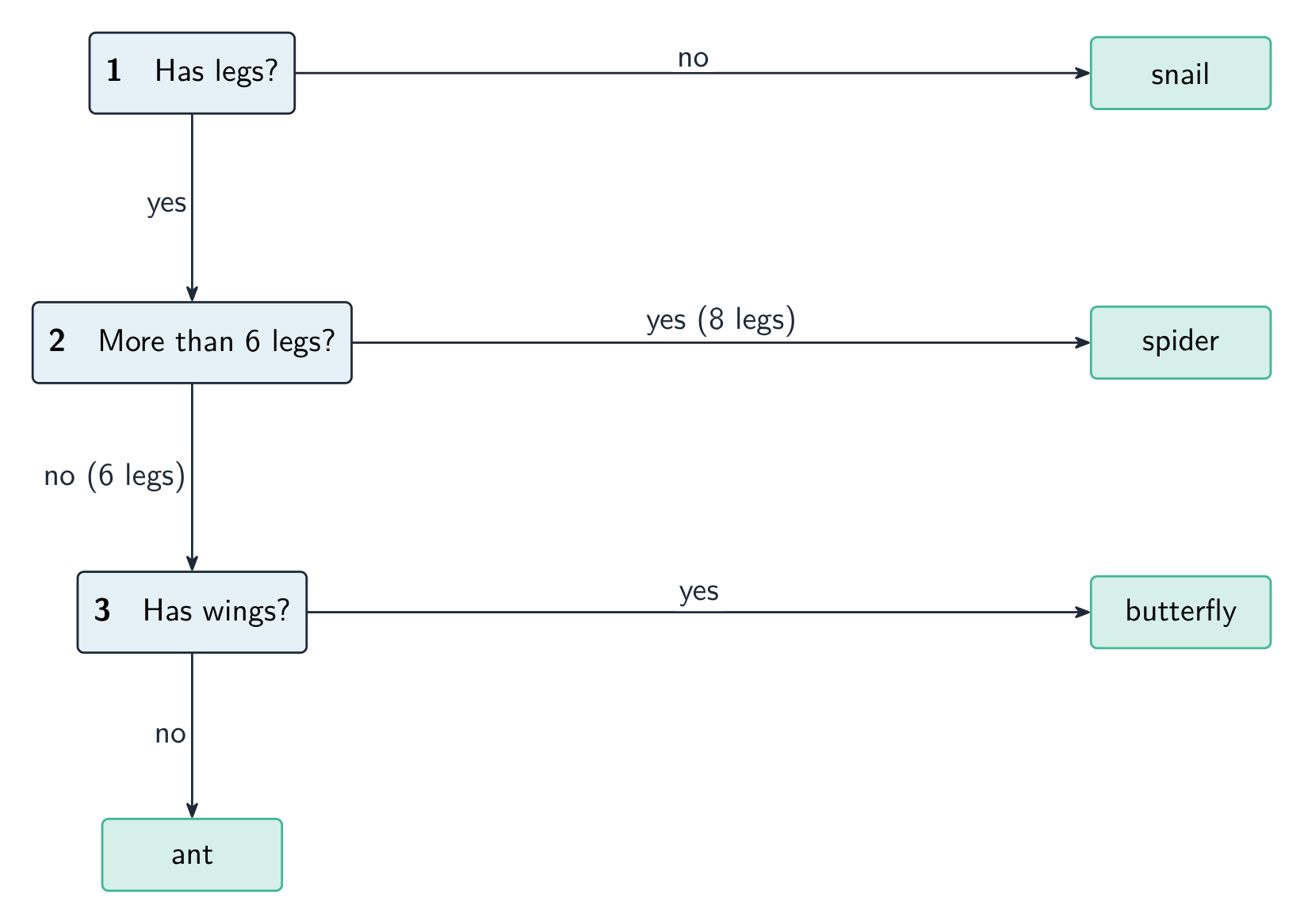
A dichotomous key 二歧检索表 is a tool that helps you identify an unknown organism. "Dichotomous" means "splitting into two". At each step the key gives you two choices about a feature. You pick the one that fits your organism, and that choice sends you on to the next pair of choices. You repeat this until you reach the organism's name.

When you build a key, choose clear features you can see — for example "has wings / has no wings" — not features that change, such as size.

Worked example. A key reads: step 1, has wings, go to 2; no wings, go to 3. Step 2, one pair of wings, it is a housefly; two pairs of wings, it is a butterfly. An unknown insect has two pairs of wings. Step 1 only asks "wings or no wings?", so having wings sends you to step 2. At step 2, "two pairs" gives butterfly. Follow the route the key gives you, one step at a time - never jump straight to the name that looks right.

Classification and DNA (Supplement)

Modern classification tries to show evolutionary relationships 进化关系 — how closely different organisms are related. Organisms that are more closely related share a more recent ancestor 祖先.

To measure this, scientists compare the base sequence 碱基序列 of DNA (the order of the chemical "letters" that make up an organism's genes 基因). The rule is simple:

  • Organisms that share a more recent ancestor (more closely related) have more similar DNA base sequences.
  • Organisms that share only a distant ancestor have less similar base sequences.

So a DNA base sequence can be used both to classify organisms and to work out how closely two species are related.

ไทย
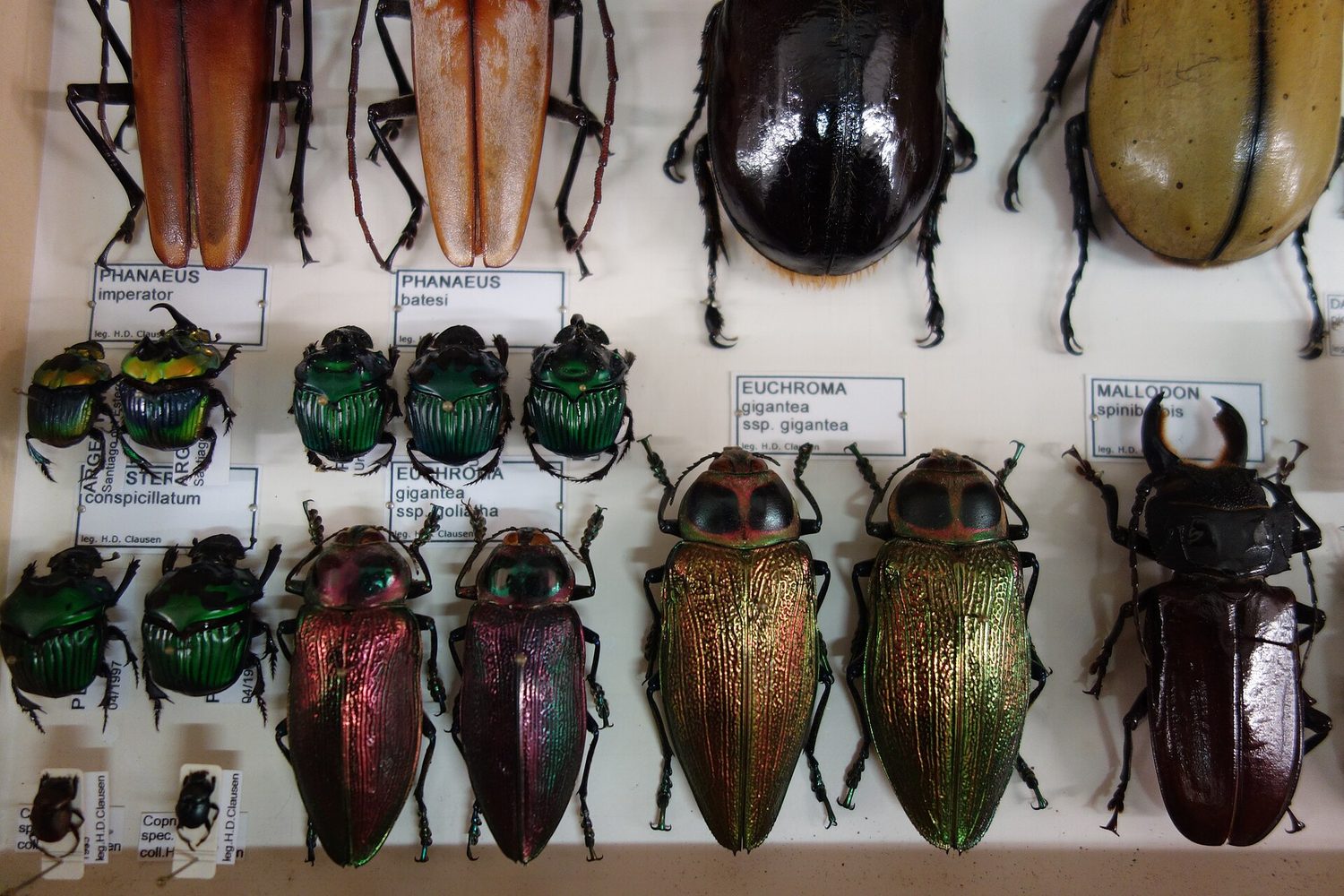
ลิ้นชักพิพิธภัณฑ์ที่ใส่แมลงหมุดติดไว้ เรียงเป็นแถวเรียบร้อยตามชนิด
ลิ้นชักแมลงในพิพิธภัณฑ์: การจัดหมวดหมู่จัดกลุ่มสิ่งมีชีวิตโดยลักษณะที่พวกมันมีร่วมกัน

มีสิ่งมีชีวิตหลากหลายชนิดนับล้านชนิด เพื่อศึกษาสิ่งเหล่านี้ นักวิทยาศาสตร์จะ จัดหมวดหมู่它们 — โดยแบ่งเข้ากลุ่มตามลักษณะที่เหมือนกัน สิ่งมีชีวิตในกลุ่มเดียวกันจะมีลักษณะคล้ายคลึงกันมากกว่าเมื่อเทียบกับสิ่งมีชีวิตในกลุ่มอื่น

สปีชีส์และระบบชื่อคู่

กลุ่มพื้นฐานที่สุดคือ สปีชีส์ (species) สปีชีส์คือกลุ่มของสิ่งมีชีวิตที่สามารถสืบพันธุ์เพื่อสร้าง ลูกหลานที่มีsplash fertility ("fertile" หมายถึง ลูกหลานสามารถสืบพันธุ์ต่อไปได้เอง)

ชื่อ Homo sapiens ที่ระบุไว้: Homo เป็น جنس ที่ขึ้นต้นด้วยตัวพิมพ์ใหญ่, sapiens เป็น species ที่ขึ้นต้นด้วยตัวพิมพ์เล็ก
ชื่อวิทยาศาสตร์: สกุลตัวใหญ่และสปีชีส์ตัวเล็ก

แต่ละสปีชีส์มี ชื่อวิทยาศาสตร์ แบบสองส่วน วิธีตั้งชื่อนี้เรียกว่า ระบบชื่อคู่ — ซึ่งเป็นระบบที่ยอมรับกันทั่วโลก ดังนั้นนักวิทยาศาสตร์ทุกคนจึงใช้ชื่อนี้เหมือนกัน

  • ส่วน แรก คือ جنس (genus) (กลุ่มที่ใหญ่กว่าที่สปีชีส์นั้นอยู่ในกลุ่ม) ขึ้นต้นด้วยตัวพิมพ์ใหญ่
  • ส่วน ที่สอง คือ species ขึ้นต้นด้วยตัวพิมพ์เล็ก

ชื่อทั้งหมดเขียนด้วยตัวเอียง ตัวอย่างเช่น Homo sapiens (มนุษย์) เปรียบเสมือนoffs Rattus norvegicus และ Rattus rattus อยู่ใน جنs เดียวกันแต่เป็น species ต่างกัน

คีย์แยกแยะแบบทวิภาค

คีย์แยกแยะแบบทวิภาค (dichotomous key) เป็นเครื่องมือที่ช่วยคุณระบุสิ่งมีชีวิตที่ไม่รู้จัก คำว่า "Dichotomous" แปลว่า "การแบ่งออกเป็นสอง" ในแต่ละขั้นตอน คีย์จะให้คุณเลือก สอง ทางเลือกเกี่ยวกับลักษณะหนึ่ง คุณเลือกทางที่เหมาะกับสิ่งมีชีวิตของคุณ และทางเลือกนั้นจะนำไปสู่คู่ตัวเลือกถัดไป คุณทำซ้ำจนกว่าจะได้ชื่อของสิ่งมีชีวิตนั้น

คีย์แยกแยะแบบทวิภาคในรูปแบบแผนภาพ: แต่ละขั้นตอนที่มีหมายเลขจะแยกออกเป็นสองทางเลือก นำไปสู่ขั้นตอนถัดไปหรือชื่อสัตว์
A dichotomous key: each step gives two choices until you reach the organism

เมื่อคุณสร้างคีย์ ให้เลือกลักษณะที่มองเห็นได้ชัดเจน เช่น "มีปีก / ไม่มี翼" ไม่ใช่ลักษณะที่เปลี่ยนแปลงได้ เช่น ขนาด

ตัวอย่างวิธีทำ. คีย์อ่านได้ว่า ขั้นตอนที่ 1 มี翼 ไปยัง 2; ไม่มี翼 ไปยัง 3. ขั้นตอนที่ 2 มี翼คู่เดียว เป็นแมลงวันบ้าน; มี翼สองคู่ เป็นผีเสื้อ. แมลงที่ไม่รู้จักมี翼สองคู่. ขั้นตอนที่ 1 ถามเพียงว่า "มี翼หรือไม่?" ดังนั้นการมี翼จะพาคุณไปยังขั้นตอนที่ 2. ที่ขั้นตอนที่ 2, "สองคู่" จะให้คำตอบว่าเป็น ผีเสื้อ. ติดตามเส้นทางที่คีย์กำหนดมาทีละขั้นตอน - อย่ากระโดดไปหาชื่อที่ดูถูกต้องทันที

การจัดหมวดหมู่และ DNA (ส่วนเสริม)

การจัดหมวดหมู่สมัยใหม่พยายามแสดง ความสัมพันธ์ทางวิวัฒนาการ ว่าสิ่งมีชีวิตต่างๆ มีความสัมพันธ์ใกล้ชิดกันแค่ไหน สิ่งมีชีวิตที่มีความสัมพันธ์ใกล้ชิดกันจะร่วมบรรพบุรุษที่ ใหม่กว่า

เพื่อวัดสิ่งนี้ นักวิทยาศาสตร์จะเปรียบเทียบ ลำดับเบส ของ DNA (ลำดับของ "อักษร" ทางเคมีที่ประกอบเป็น ยีน ของสิ่งมีชีวิต) กฎนั้นง่าย:

  • สิ่งมีชีวิตที่ร่วมบรรพบุรุษที่ ใหม่กว่า (มีความสัมพันธ์ใกล้ชิด) จะมี ลำดับเบสของ DNA คล้ายกันมากขึ้น
  • สิ่งมีชีวิตที่ร่วมบรรพบุรุษที่ ห่างไกล เท่านั้น จะมี ลำดับเบสที่คล้ายกันน้อยลง

ดังนั้น ลำดับเบสของ DNA สามารถใช้ทั้งในการจัดหมวดหมู่สิ่งมีชีวิตและการคำนวณความใกล้ชิดระหว่างสองสปีชีส์

Explore · ⁨สำรวจ⁩

Classification rank lab · ⁨ระดับการจำแนกประเภททางชีววิทยา⁩

Place examples at the right level in the biological hierarchy. · ⁨วางตัวอย่างในระดับที่เหมาะสมในลำดับชั้นทางชีววิทยา⁩

Vocabulary · ⁨คำศัพท์⁩ Train · ⁨ฝึกฝน⁩
English ไทย
species/ˈspiːsiːz/ ชนิด (species)
fertile offspring/ˈfɜːtaɪl ˈɒfsprɪŋ/ ลูกหลานที่มี khảในการสืบพันธุ์
scientific name/saɪənˈtɪfɪk neɪm/ ชื่อวิทยาศาสตร์
binomial system/baɪˈnəʊmɪəl ˈsɪstəm/ ระบบชื่อเรียกสองคำ
genus/ˈdʒenəs/ สกุล
dichotomous key/daɪˈkɒtəməs kiː/ กุญแจคู่
evolutionary relationships/ɪvəˈluːʃənəri rɪˈleɪʃənʃɪps/ ความสัมพันธ์ทางวิวัฒนาการ
ancestor/ˈænsestə/ บรรพบุรุษ
base sequence/beɪs ˈsiːkwəns/ base sequence
genes/dʒiːnz/ ยีนส์
1.3

Kingdoms · ⁨อาณาจักร⁩

Syllabus · ⁨หลักสูตร⁩
English
Core Supplement
1 State the main features used to place animals and plants into the appropriate kingdoms 4 State the main features used to place all organisms into one of the five kingdoms: animal, plant, fungus, prokaryote, protoctist
2 State the main features used to place organisms into groups within the animal kingdom, limited to: (a) the main groups of vertebrates: mammals, birds, reptiles, amphibians, fish (b) the main groups of arthropods: myriapods, insects, arachnids, crustaceans 5 State the main features used to place organisms into groups within the plant kingdom, limited to ferns and flowering plants (dicotyledons and monocotyledons)
3 Classify organisms using the features identified in 1.3.1 and 1.3.2 6 Classify organisms using the features identified in 1.3.4 and 1.3.5
7 State the features of viruses, limited to a protein coat and genetic material
ไทย
แก่น เพิ่มเติม
1 ระบุลักษณะหลักที่ใช้จัดจำแนกสัตว์และพืชเข้าinto kingdoms ที่เหมาะสม 4 ระบุลักษณะหลักที่ใช้จัดจำแนกสิ่งมีชีวิตทั้งหมด into one of the five kingdoms: animal, plant, fungus, prokaryote, protoctist
2 ระบุลักษณะหลักที่ใช้จัดจำแนกสิ่งมีชีวิต into groups within the animal kingdom, limited to: (a) the main groups of vertebrates: mammals, birds, reptiles, amphibians, fish (b) the main groups of arthropods: myriapods, insects, arachnids, crustaceans 5 ระบุลักษณะหลักที่ใช้จัดจำแนกสิ่งมีชีวิต into groups within the plant kingdom, limited to ferns and flowering plants (dicotyledons and monocotyledons)
3 จัดจำแนกสิ่งมีชีวิต using the features identified in 1.3.1 and 1.3.2 6 จัดจำแนกสิ่งมีชีวิต using the features identified in 1.3.4 and 1.3.5
7 ระบุลักษณะของไวรัส, limited to a protein coat and genetic material

Source: Cambridge International syllabus · ⁨แหล่งที่มา: หลักสูตร Cambridge International⁩

English

The biggest groups that organisms are sorted into are called kingdoms 界. At Core level you place organisms into the first two kingdoms below; for Supplement you need all five kingdoms. You decide where an organism belongs by looking at its main features.

Kingdom Main features
Animal 动物 made of many cells; cells have no cell wall 细胞壁; cannot make their own food, so they feed on other organisms; most can move their whole body
Plant 植物 made of many cells; cells have a cell wall; make their own food by photosynthesis 光合作用, so many cells contain chloroplasts 叶绿体
Fungus 真菌 for example moulds 霉菌, mushrooms 蘑菇 and yeast 酵母; have cell walls; cannot photosynthesise; feed on dead or living matter
Prokaryote 原核生物 for example bacteria 细菌; single-celled 单细胞; cells have no nucleus 细胞核
Protoctist 原生生物 for example Amoeba and algae 藻类; usually single-celled; cells do have a nucleus

The fungus, prokaryote and protoctist kingdoms are Supplement only.

Grouping the animal kingdom

The animal kingdom is split first into two: animals with a backbone and animals without one.

Vertebrates 脊椎动物 are animals with a backbone 脊柱. There are five main groups.

Group Main features
Mammals 哺乳动物 have fur 毛发 or hair; feed their young on milk
Birds 鸟类 have feathers 羽毛 and a beak 喙; lay eggs with hard shells
Reptiles 爬行动物 have dry skin covered with scales 鳞片; lay eggs with leathery shells on land
Amphibians 两栖动物 have moist skin; lay eggs in water; the young live in water
Fish 鱼类 have wet scales and fins 鳍; breathe using gills 鳃; lay eggs in water

Arthropods 节肢动物 are animals with no backbone. They have a hard outer skeleton (an exoskeleton 外骨骼) and legs that bend at joints 关节. There are four main groups.

Group Main features
Insects 昆虫 body in 3 parts; 3 pairs of legs; usually 2 pairs of wings; 1 pair of antennae 触角
Arachnids 蛛形类 body in 2 parts; 4 pairs of legs; no wings; no antennae
Crustaceans 甲壳类 many pairs of legs; 2 pairs of antennae; most live in water
Myriapods 多足类 long body made of many segments 体节; one or two pairs of legs on each segment

Grouping the plant kingdom (Supplement)

Plants are placed into groups too. You need two of them.

  • Ferns 蕨类植物 — have roots, stems and leaves, but make no flowers or seeds. They reproduce using tiny spores 孢子.
  • Flowering plants 开花植物 — make flowers, and form seeds 种子 inside the flower. They split into two groups by their seed-leaves (the first leaves inside a seed, called cotyledons 子叶):
Group Features
Monocotyledons 单子叶植物 seed has one cotyledon; long narrow leaves; veins 叶脉 run side by side (parallel)
Dicotyledons 双子叶植物 seed has two cotyledons; broad leaves; veins form a branching net

Viruses (Supplement)

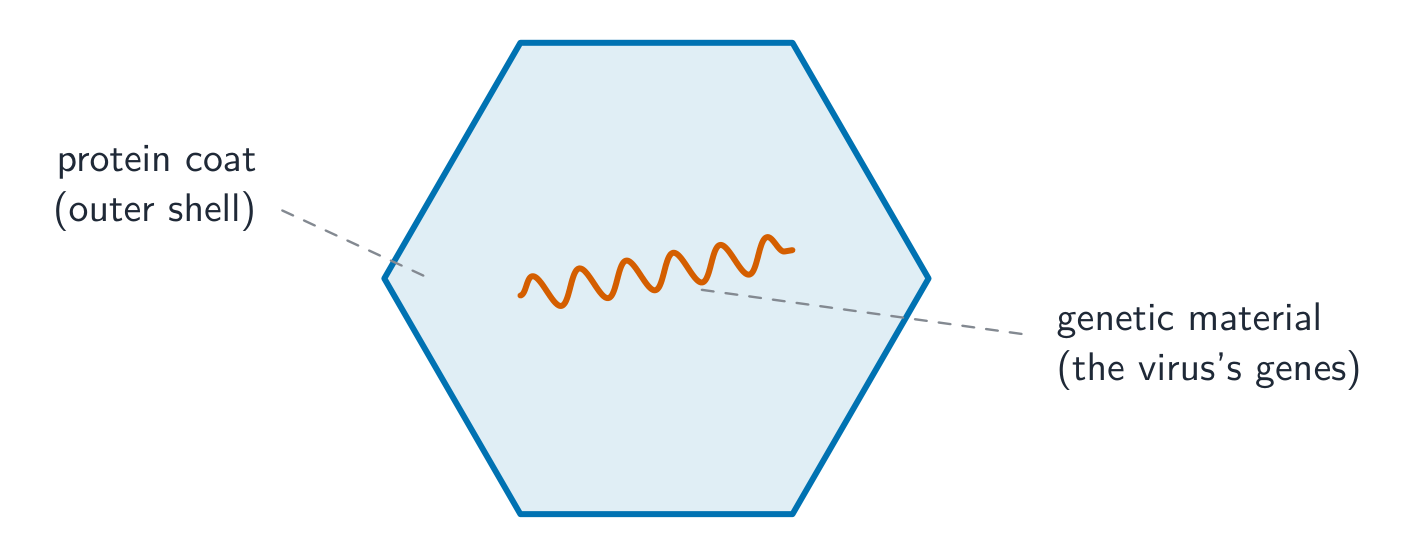
Viruses 病毒 are not placed in any kingdom. They are not made of cells, so many scientists do not count them as living. A virus is very simple, with only two parts:

  • an outer protein coat 蛋白质外壳, and
  • genetic material 遗传物质 (its genes) inside.

A virus cannot carry out the life processes on its own. It can only reproduce inside the living cells of a host 宿主 — the organism it infects.

ไทย

กลุ่มที่ใหญ่ที่สุดที่สิ่งมีชีวิตถูกแบ่งเข้าคือ อาณาจักร (kingdoms) ระดับ Core คุณจัดสิ่งมีชีวิตเข้าในสองอาณาจักรด้านล่างนี้; สำหรับส่วนเสริม คุณจำเป็นต้องรู้ ห้าอาณาจักร ทั้งหมด คุณตัดสินใจว่าสิ่งมีชีวิตใดควรอยู่ในกลุ่มไหนโดยการพิจารณาจากลักษณะหลักของมัน

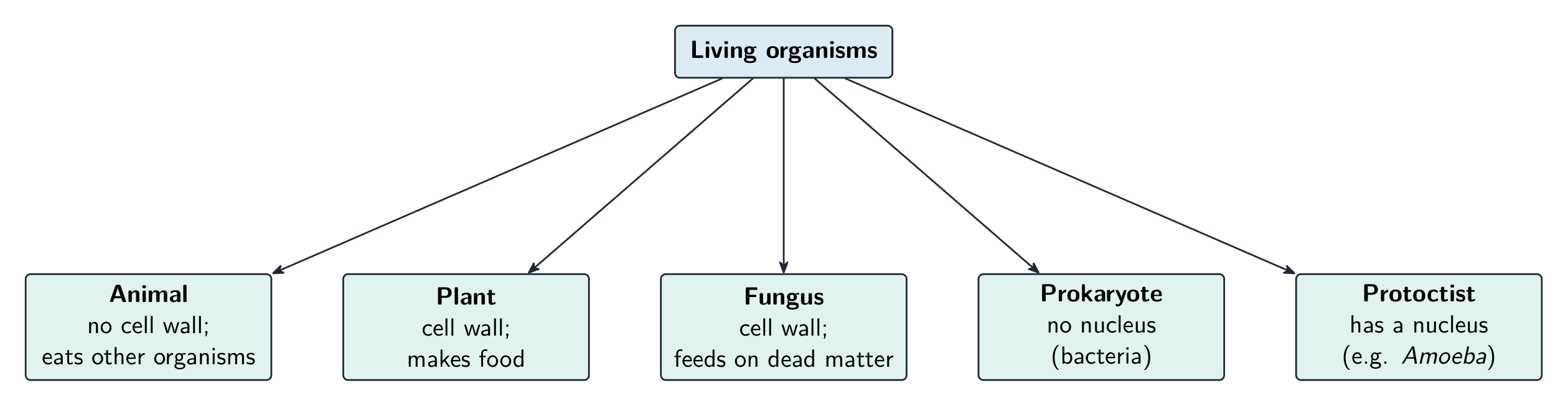
แผนภาพกิ่งก้าน: สิ่งมีชีวิตแบ่งออกเป็นห้าอาณาจักร — สัตว์, พืช, fungi, Prokaryote และ Protoctist — แต่ละกลุ่มมีลักษณะสำคัญ
สิ่งมีชีวิตถูกแบ่งออกเป็นห้าอาณาจักรตามลักษณะหลัก
อาณาจักร ลักษณะหลัก
สัตว์ ประกอบด้วยเซลล์จำนวนมาก; เซลล์ไม่มี ผนังเซลล์; ไม่สร้างอาหารเอง จึงกินสิ่งมีชีวิตอื่น; ส่วนใหญ่เคลื่อนย้ายร่างกายได้ทั้งหมด
พืช ประกอบด้วยเซลล์จำนวนมาก; เซลล์มีผนังเซลล์; สร้างอาหารเองผ่าน การสังเคราะห์ด้วยแสง ดังนั้นหลายเซลล์จึงมี คลอโรพลาสต์
Fungi ตัวอย่างเช่น รา, เห็ด และ ยีสต์; มีผนังเซลล์; ไม่สามารถสังเคราะห์ด้วยแสง; กินสารอินทรีย์ที่ตายแล้วหรือมีชีวิตอยู่
Prokaryote ตัวอย่างเช่น แบคทีเรีย; เซลล์เดียว; เซลล์ไม่มี นิวเคลียส
Protoctist ตัวอย่างเช่น Amoeba และ สาหร่าย; ส่วนใหญ่เป็นเซลล์เดียว; เซลล์มีนิวเคลียสจริง

อาณาจักร Fungi, Prokaryote และ Protoctist เป็นส่วนเสริมเท่านั้น

เห็ดfly agaric สามตัวที่มีหมวกสีแดงสดใสจุดขาวๆ เติบโตบนสนามหญ้าท่ามกลางใบไม้ร่วง
รา: Fly agaric, mushrooms
ภาพจุลทรรศน์อิเล็กตรอนสีปลอมของแบคทีเรีย Escherichia coliรูปแท่งจำนวนมากอัดแน่นกัน สีฟ้าสด
โปรคาริโอต (แบคทีเรีย): E. coli ที่มองเห็นภายใต้กล้องจุลทรรศน์อิเล็กตรอน

การจัดกลุ่มอาณาจักรสัตว์

อาณาจักรสัตว์แบ่งออกเป็นสองกลุ่มก่อน: สัตว์ที่มีกระดูกสันหลังและสัตว์ที่ไม่มี

อาณาจักรสัตว์แยกออกเป็น Vertebrates ที่มีกระดูกสันหลังและ Arthropods ที่ไม่มี โดยแต่ละกลุ่มมีกลุ่มย่อยหลัก
อาณาจักรสัตว์แยกออกเป็น Vertebrates (มีกระดูกสันหลัง) และ Arthropods (ไม่มีกระดูกสันหลัง) โดยแต่ละกลุ่มมีกลุ่มย่อยหลัก

Vertebrates คือสัตว์ที่มี กระดูกสันหลัง มีห้ากลุ่มหลัก

กลุ่ม ลักษณะหลัก
สัตว์เลี้ยงลูกด้วยนม มี ขน หรือ เส้นผม; เลี้ยงลูกด้วยน้ำนม
นก มี ขน และ ปาก; วางไข่ที่มีเปลือกแข็ง
สัตว์เลื้อยคลาน มีผิวแห้งปกคลุมด้วย เกล็ด; วางไข่ที่มีเปลือกหนังบนบก
สัตว์สะบักสะเป่าបอง มีผิวชุ่มชื้น; วางไข่ในน้ำ; ลูกอ่อนอาศัยอยู่ในน้ำ
ปลา มีเกล็ดเปียและ ครีบ; หายใจโดยใช้ เหงือก; วางไข่ในน้ำ

Arthropods คือสัตว์ที่ไม่มีกระดูกสันหลัง พวก它有 hard outer skeleton (exoskeleton) และขาที่ข้อต่อที่ joints. มีสี่กลุ่มหลัก

กลุ่ม ลักษณะหลัก
แมลง ร่างกายแบ่งเป็น 3 ส่วน; มีขา 3 คู่; มักมีปีก 2 คู่; มี หนวดยาง 1 คู่
สัตว์ขากรรไกร ร่างกายแบ่งเป็น 2 ส่วน; มีขา 4 คู่; ไม่มีปีก; ไม่มีหนวดยาง
สัตว์น้ำเปลือกแข็ง มีขาหลายคู่; มีหนวดยาง 2 คู่; ส่วนใหญ่อาศัยอยู่ในน้ำ
สัตว์ многонога ร่างกายยาวประกอบด้วย ส่วน หลายส่วน; แต่ละส่วนมีขาคู่เดียวหรือสองคู่

การจัดกลุ่มอาณาจักรพืช (เสริม)

พืชถูกจัดเข้ากลุ่มต่างๆ เช่นกัน คุณต้องเรียนรู้สองกลุ่มนี้

  • พืชมอส/เฟิร์น — มีราก ลำต้น และใบ แต่ไม่สร้าง ดอกไม้ หรือ เมล็ด它们 Reproduces using tiny spores. They reproduce using tiny spores.
  • พืชดอก — สร้างดอกไม้ และเกิด เมล็ด ภายในดอกไม้ They split into two groups by their seed-leaves (the first leaves inside a seed, called cotyledons):
กลุ่ม ลักษณะเด่น
พืชใบเลี้ยงเดี่ยว เมล็ดมี ใบเลี้ยง หนึ่ง ใบ; ใบยาวแคบ; เส้นใบ เรียงขนานกัน
พืชใบเลี้ยงคู่ เมล็ดมี ใบเลี้ยง สอง ใบ; ใบกว้าง; เส้นใบเป็นตาข่ายแตกแขนง
เปรียบเทียบใบสองแบบ: ใบ monocot ที่ยาวแคบพร้อมเส้นใบขนาน และใบ dicot ที่กว้างพร้อมเส้นกลางและตาข่ายเส้นใบแตกแขนง
ใบ monocot มีเส้นใบขนาน; ใบ dicot มีตาข่ายเส้นใบแตกแขนง

ไวรัส (เสริม)

ไวรัส ไม่ถูกจัดอยู่ในอาณาจักรใดๆ เนื่องจากไม่ได้ทำจากเซลล์ นักวิทยาศาสตร์จำนวนมากจึงไม่นับว่าเป็นสิ่งมีชีวิต ไวรัสมีโครงสร้างเรียบง่ายมาก ประกอบด้วยเพียงสองส่วน:

  • หุ้มโปรตีน ด้านนอก,
  • สารพันธุกรรม (ยีน) ด้านใน
วาดไวรัสอย่างง่ายเป็นรูปหกเหลี่ยมของหุ้มโปรตีนพร้อมสายสารพันธุกรรมด้านใน
ไวรัสคือเพียงหุ้มโปรตีนที่ห่อหุ้มสารพันธุกรรม

ไวรัสไม่สามารถดำเนินกระบวนการทางชีวภาพได้ด้วยตัวเอง มันสามารถเพิ่มจำนวนได้ภายในเซลล์ที่มีชีวิตของ เจ้าบ้าน — คือสิ่งมีชีวิตที่ถูกติดเชื้อ

Explore · ⁨สำรวจ⁩

Groups of organisms lab · ⁨ห้องปฏิบัติการกลุ่มสิ่งมีชีวิต⁩

Compare organism groups by the feature that identifies them. · ⁨เปรียบเทียบกลุ่มสิ่งมีชีวิตตามลักษณะที่ใช้จำแนก⁩

Vocabulary · ⁨คำศัพท์⁩ Train · ⁨ฝึกฝน⁩
English ไทย
kingdoms/ˈkɪŋdəmz/ อาณาจักร
animal/ˈænɪml/ สัตว์/ animal
cell wall/sel wɔːl/ ผนังเซลล์
plant/plænt/ พืช
photosynthesis/ˌfəʊtəʊˈsɪnθəsɪs/ การสังเคราะห์ด้วยแสง
chloroplasts/ˈklɔːrəʊplæsts/ คลอโรพลาสต์
fungus/ˈfʌŋɡəs/ รา
moulds/məʊldz/ เชื้อรา
mushrooms/ˈmʌʃruːmz/ เห็ด
yeast/jiːst/ yeast
prokaryote/ˈprɒkərɪəʊt/ โปรคาริโอต
bacteria/bækˈtɪərɪə/ แบคทีเรีย
single-celled/ˈsɪŋɡl seld/ เซลล์เดียว
nucleus/ˈnjuːklɪəs/ นิวเคลียส
protoctist/ˈprəʊtəʊktɪst/ โปรโตซัว
algae/ˈælɡiː/ สาหร่าย
vertebrates/ˈvɜːtɪbreɪts/ สัตว์มีกระดูกสันหลัง
backbone/ˈbækbəʊn/ กระดูกสันหลัง
mammals/ˈmæmlz/ สัตว์เลี้ยงลูกด้วยน้ำนม
fur/fɜː/ ขนสัตว์
birds/bɜːdz/ นก
feathers/ˈfeðəz/ ขน
beak/biːk/ ง่าบ
reptiles/ˈreptaɪlz/ สัตว์เลื้อยคลาน
scales/skeɪlz/ เกล็ด
amphibians/æmˈfɪbɪənz/ สัตว์สะเทินน้ำสะเทินบก
fish/fɪʃ/ ปลา
fins/fɪnz/ ครีบ
gills/ɡɪlz/ เหงือก
arthropods/ˈɑːθrəpɒdz/ สัตว์ขาข้อ
exoskeleton/ˈeksəʊskelɪtn/ เปลือกนอก
joints/dʒɔɪnts/ ข้อต่อ
insects/ˈɪnsekts/ แมลง
antennae/ænˈteniː/ หนวด
arachnids/əˈræknɪdz/ แมงมุม
crustaceans/krʌˈsteɪʃnz/ crustaceans
myriapods/ˈmaɪrɪæpɒdz/ myriapods
segments/ˈseɡmənts/ ส่วนประกอบ
ferns/fɜːnz/ พืชสน
spores/spɔːz/ สปอร์
flowering plants/ˈflaʊərɪŋ plænts/ พืชมีดอก
seeds/siːdz/ เมล็ด
cotyledons/ˌkɒtɪˈliːdnz/ ใบเลี้ยง
monocotyledons/ˌmɒnəʊˌkɒtɪˈliːdnz/ พืชใบเลี้ยงเดี่ยว
leaf veins/liːf veɪnz/ เส้นใบ
dicotyledons/ˌdɪkətɪˈliːdnz/ พืชใบเลี้ยงคู่
viruses/ˈvaɪrəsɪz/ ไวรัส
protein coat/ˈprəʊtiːn kəʊt/ โปรตีนหุ้ม
genetic material/dʒɪˈnetɪk məˈtɪərɪəl/ สารพันธุกรรม
host/həʊst/ host
digestion/daɪˈdʒestʃn/ การย่อยอาหาร
1.3

Exam tips · ⁨ข้อแนะนำสำหรับการสอบ⁩

English
  • Learn the seven characteristics by heart, with their exact definitions. Write them as clear, full sentences.
  • Digestion 消化 is not one of the seven characteristics — it is just one part of nutrition. "Breathing" is not one of the seven either.
  • In a scientific name, the genus starts with a capital letter and the species with a small letter, and both are in italics.
  • To use a dichotomous key, start at the first pair of choices and follow the route step by step. Do not jump ahead.
  • More similar DNA base sequence → the organisms are more closely related (they share a more recent ancestor).
ไทย
  • จดจำ คุณสมบัติทั้งเจ็ด ให้แม่น พร้อมนิยามที่ชัดเจน เขียนเป็นประโยคเต็มๆ ที่เข้าใจง่าย
  • การย่อยอาหาร ไม่ใช่ หนึ่งในเจ็ดคุณสมบัตินั้น — เป็นเพียงส่วนหนึ่งของโภชนาการเท่านั้น "การหายใจ" ก็ไม่ใช่หนึ่งในเจ็ดคุณสมบัตินี้เช่นกัน
  • ในชื่อวิทยาศาสตร์ สกุลเริ่มด้วยตัวพิมพ์ใหญ่ และชนิด開始ด้วยตัวพิมพ์เล็ก และทั้งสองคำต้องเขียนด้วยตัวเอียง
  • การใช้กุญแจจำแนกแบบคู่ ให้เริ่มจากรายการตัวเลือกคู่แรก แล้วทำตามเส้นทางทีละขั้นตอน อย่ากระโดดข้ามไปข้างหน้า
  • ลำดับเบสของ DNA คล้ายกันมากขึ้น → สิ่งมีชีวิตมีความสัมพันธ์ใกล้ชิดกันมากขึ้น (มีบรรพบุรุษร่วมที่ใกล้เคียงกว่า)

Interactive lessons on this topic · ⁨บทเรียนเชิงโต้ตอบสำหรับหัวข้อนี้⁩

Work through it step by step, with instant-check exercises. · ⁨ทำทีละขั้นตอน พร้อมแบบฝึกหัดตรวจสอบผลทันที⁩

Past Papers · ⁨ข้อสอบย้อนหลัง⁩

More topics in IGCSE Biology · ⁨Biology IGCSE⁩ · ⁨หัวข้อเพิ่มเติมใน IGCSE Biology · ⁨Biology IGCSE⁩⁩

Log in or create account · ⁨เข้าสู่ระบบหรือสร้างบัญชี⁩

IGCSE, A-Level & AP