Groups of organisms
Introduced| English | Meaning |
|---|---|
| kingdoms/ˈkɪŋdəmz/ | A broad taxonomic rank below domain and above phylum. |
| photosynthesis/ˌfəʊtəʊˈsɪnθəsɪs/ | The process by which plants and other organisms use light energy to make organic substances from carbon dioxide and water. |
| fungi/ˈfʌŋɡi/ | fungi |
| bacteria/bækˈtɪərɪə/ | Single-celled prokaryotic organisms whose cells lack a membrane-bound nucleus. |
| protoctists/ˈprəʊtəʊktɪsts/ | protoctists |
| vertebrates/ˈvɜːtɪbreɪts/ | Animals with a backbone: fish, amphibians, reptiles, birds and mammals. |
| invertebrates/ɪnˈvɜːtɪbreɪts/ | invertebrates |
| prokaryotes/ˈprɒkərɪəʊts/ | An organism whose cells lack a membrane-bound nucleus and other membrane-bound organelles. |
| eukaryotes/ˈjuːkərɪəʊts/ | eukaryotes |
The great kingdoms 界 of life
- A mushroom, an oak tree, a tiger and the germs that make you ill are all living — but profoundly different.
- Biologists sort all life into a few huge groups called kingdoms.
Groups of organisms lab
Compare organism groups by the feature that identifies them.
Which of these are kingdoms of living things? (Select all that apply.)
Difficulty 2/5 · 140 coins + a small bonus on first completion today
Rocks are not living. The kingdoms include animals, plants, fungi, bacteria and protoctists.
The five kingdoms
- Animals: many cells, no cell walls, feed on other organisms.
- Plants: many cells, cell walls, make food by photosynthesis 光合作用.
- Fungi 真菌, bacteria 细菌 and protoctists 原生生物 make up the rest.
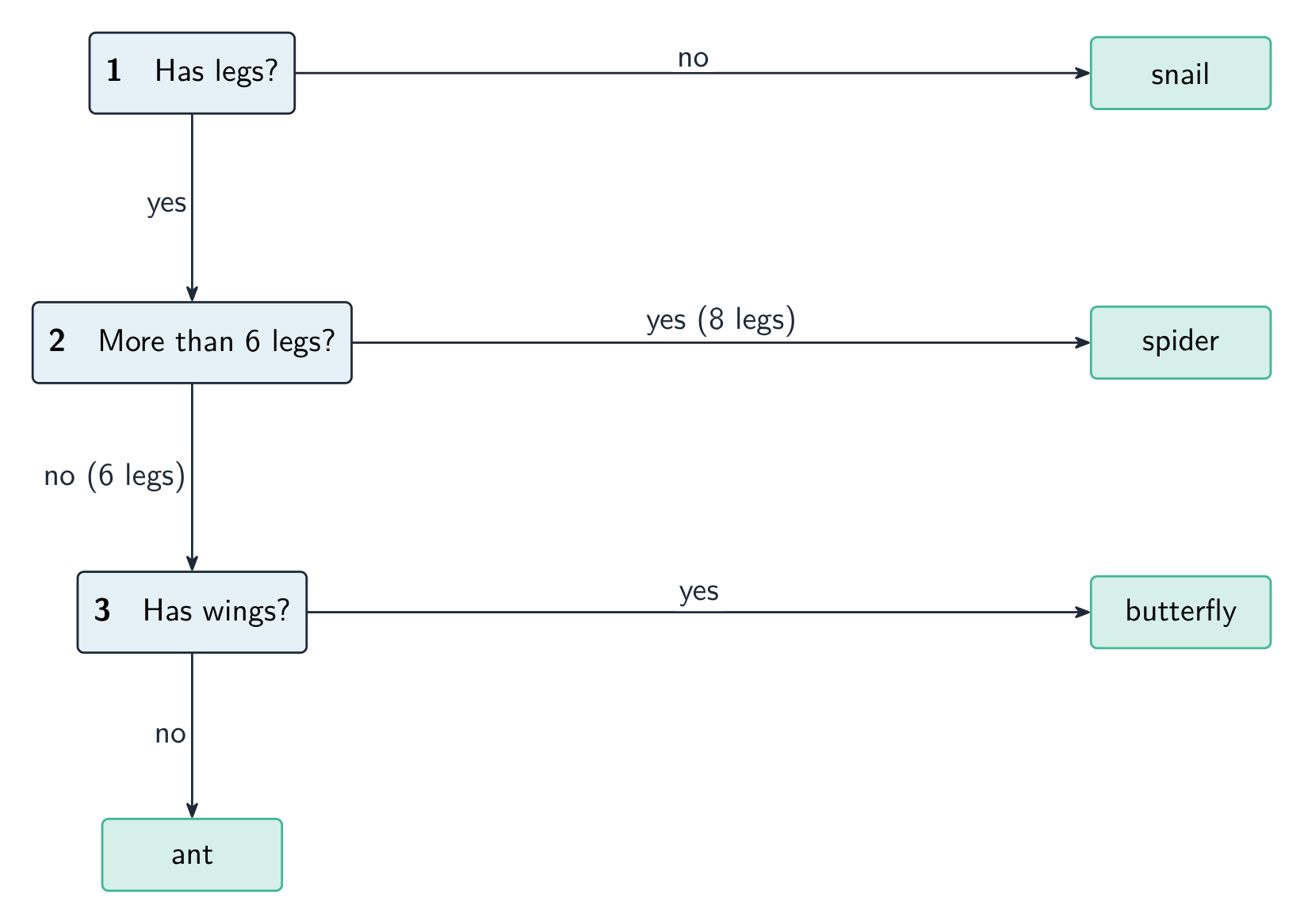
A dichotomous key: each step gives two choices until you reach the organism
Which feature do plant cells have that animal cells do not?
Difficulty 1/5 · 100 coins + a small bonus on first completion today
Plant cells have a cell wall, chloroplasts and a large vacuole.
Plants make their own food by the process of ______.
Difficulty 1/5 · 100 coins + a small bonus on first completion today
Plants are producers; animals must eat other organisms.
Animals vs plants
- Plant cells have a cell wall, chloroplasts and a large vacuole; animal cells do not.
- Plants make their own food (photosynthesis); animals must eat other organisms.
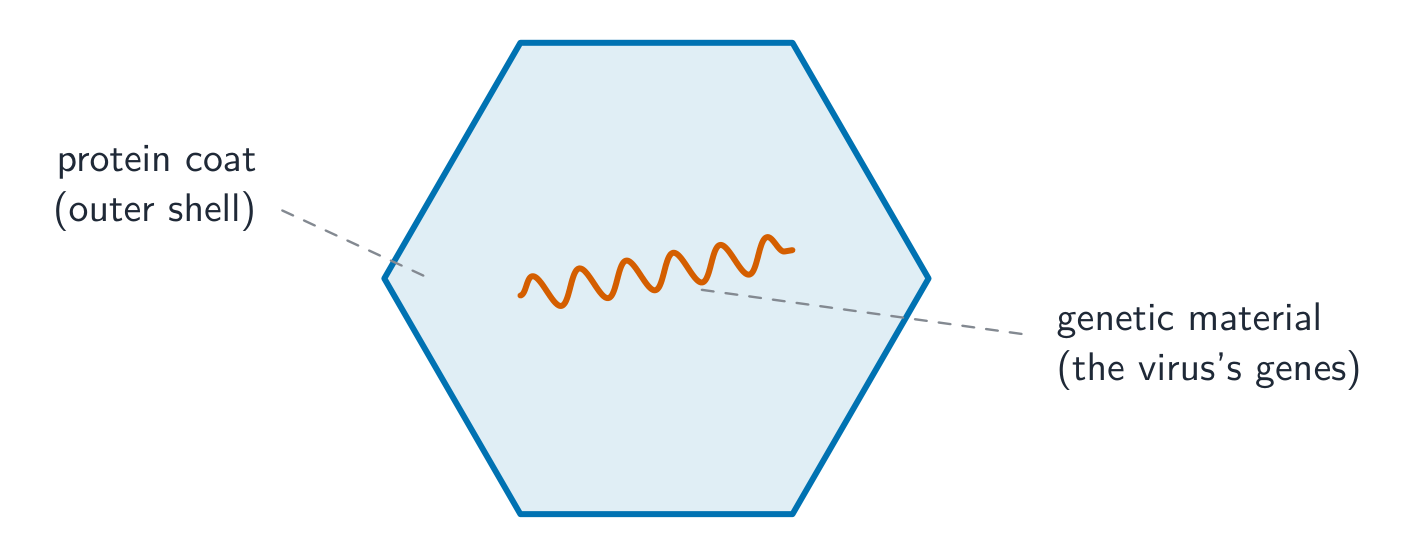
A virus has just two parts: a protein coat around its genetic material
Which group are vertebrates?
Difficulty 1/5 · 100 coins + a small bonus on first completion today
Mammals have a backbone; insects, spiders and worms do not.
Bacteria are prokaryotes, meaning their cells have no proper nucleus.
Difficulty 1/5 · 100 coins + a small bonus on first completion today
Bacteria lack a nucleus; the other kingdoms are eukaryotes.
Vertebrates 脊椎动物 and invertebrates 无脊椎动物
- Vertebrates have a backbone: fish, amphibians, reptiles, birds, mammals.
- Invertebrates have no backbone: insects, spiders, worms, molluscs.
Bacteria are different from the rest. Bacteria are prokaryotes 原核生物 — their cells have no proper nucleus. Animals, plants, fungi and protoctists are eukaryotes 真核生物, with a nucleus. This is a fundamental divide.
You've got it
- life is sorted into kingdoms: animals, plants, fungi, bacteria, protoctists
- plant cells have a cell wall, chloroplasts and a vacuole; animal cells don't
- vertebrates have a backbone, invertebrates don't; bacteria have no nucleus
Write from a cell with no nucleus
- One cell has a cell wall, chloroplasts and a large vacuole.
- Another cell has no nucleus and is much smaller.
Which kingdom fits each cell?
A nucleus is absent in bacteria, not in plant cells.
Which cell has no nucleus?
Difficulty 1/5 · 100 coins + a small bonus on first completion today
Bacteria have no nucleus.