Skip to content · ⁨ข้ามไปยังเนื้อหา⁩

Absolutism and Constitutionalism · ⁨ระบอบสัมปนาธิปไตยและรัฐธรรมนูญนิยม⁩

AP European History · ⁨AP ประวัติศาสตร์ยุโรป⁩ · Topic 3 · ⁨หัวข้อ 3⁩

Video lesson for this topic · ⁨บทเรียนวิดีโอสำหรับหัวข้อนี้⁩ Open the video page · ⁨เปิดหน้าวิดีโอ⁩
7:19

หน่วยที่ 3: สวรรค์สัมบูรณ์และรัฐธรรมนูญ

การตั้งบริบทของการสร้างรัฐเริ่มต้นด้วยประโยคเดียว: ความขัดแย้งเพื่อเอกราชทำให้เกิดการรวมศูนย์ทางการเมืองในระดับที่แตกต่างกัน Everything in…

English narration · English + 中文 subtitles burned in · ⁨การบรรยายภาษาอังกฤษ · คำบรรยายภาษาอังกฤษ + 中文 ลอยตัวบนภาพ⁩

3.1

Contextualizing State Building · ⁨การวางบริบทการสร้างรัฐ⁩

Syllabus · ⁨หลักสูตร⁩
English

3.1 Contextualizing State Building

Learning Objective Unit 3.A: Explain the context in which different forms of political power developed from 1648 to 1815.

  • KC-1.5 The struggle for sovereignty within and among states resulted in varying degrees of political centralization.
    • KC-1.5.I The new concept of the sovereign state and secular systems of law played a central role in the creation of new political institutions.
    • KC-1.5.III The competition for power between monarchs and corporate and minority language groups produced different distributions of governmental authority in European states.
    • KC-1.5.III.B Monarchies seeking enhanced power faced challenges from nobles who wished to retain traditional forms of shared governance and regional autonomy.
    • KC-1.5.III.C Within states, minority local and regional identities based on language and culture led to resistance against the dominant national group.
  • KC-2.1 Different models of political sovereignty affected the relationship among states and between states and individuals.
    • KC-2.1.I In much of Europe, absolute monarchy was established over the course of the 17th and 18th centuries.
    • KC-2.1.II Challenges to absolutism resulted in alternative political systems.

Illustrative examples:

  • Competition between monarchs and nobles:
    • Louis XIII and Cardinal Richelieu §Bullet
    • The Fronde in France
    • The Catalan Revolts in Spain
  • Competition between minority and dominant national groups:
    • Celtic regions of Scotland, Ireland, and France
    • Dutch resistance in the Spanish Netherlands
    • Czech identity in the Holy Roman Empire/ Jan Hus/Defenestration
ไทย

3.1 การวางบริบทการสร้างรัฐ

จุดประสงค์การเรียนรู้หน่วย 3.A: อธิบายบริบทที่รูปแบบต่างๆ ของอำนาจทางการเมืองเกิดขึ้นระหว่างปี ค.ศ. 1648 ถึง 1815

  • KC-1.5 การ斗争 sovereignty ภายในและระหว่าง states นำไปสู่ระดับต่างๆ ของ political centralization
    • KC-1.5.I แนวคิดใหม่关于 sovereign state และ secular systems of law played a central role in การสร้าง new political institutions
    • KC-1.5.III The competition for power between monarchs and corporate and minority language groups produced different distributions of governmental authority in European states.
    • KC-1.5.III.B Monarchies seeking enhanced power faced challenges from nobles who wished to retain traditional forms of shared governance and regional autonomy.
    • KC-1.5.III.C Within states, minority local and regional identities based on language and culture led to resistance against the dominant national group.
  • KC-2.1 Different models of political sovereignty affected the relationship among states and between states and individuals.
    • KC-2.1.I ในหลายส่วนของยุโรป Absolute monarchy ถูกสถาปนาในช่วง 17th และ 18th centuries.
    • KC-2.1.II ความท้าทายต่อ Absolutism นำไปสู่ระบบการเมืองทางเลือก

ตัวอย่างประกอบ:

  • การแข่งขันระหว่างกษัตริย์และขุนนาง:
    • Louis XIII และ Cardinal Richelieu §Bullet
    • The Fronde in France
    • The Catalan Revolts in Spain
  • การแข่งขันระหว่างกลุ่มชาติพันธุ์ส่วนน้อยกับกลุ่มชาติพันธุ์หลัก:
    • Celtic regions of Scotland, Ireland, and France
    • Dutch resistance in the Spanish Netherlands
    • Czech identity in the Holy Roman Empire/ Jan Hus/Defenestration

Source: College Board AP Course and Exam Description · ⁨แหล่งที่มา: คำอธิบายหลักสูตรและข้อสอบ College Board AP⁩

English

Unit 3 covers 1648 to 1815, and its organising claim is that different models of political sovereignty affected the relationship among states, and between states and individuals.

The struggle for sovereignty continued to produce varying degrees of political centralisation - but after Westphalia the competition happens between states that recognise each other as sovereign, which is a different game from the one played in Units 1 and 2. Everything in this unit follows from that: the state must now raise revenue, field armies, and manage an economy in permanent competition with rivals who are doing the same.

ไทย

หน่วยที่ 3 ครอบคลุม 1648 ถึง 1815 และข้ออ้างหลักในการจัดระเบียบคือ โมเดล Souverainityทางการเมืองที่แตกต่างกัน ส่งผลต่อความสัมพันธ์ระหว่างรัฐ และระหว่างรัฐกับบุคคล

การต่อสู้เพื่อ Souverainity ยังคงสร้าง ระดับการรวมศูนย์ทางการเมืองที่หลากหลาย - แต่หลังจาก Westphalia การแข่งขันเกิดขึ้นระหว่างรัฐที่ยอมรับกันว่า Souverainity ของกันและกัน ซึ่งเป็นเกมต่างจากที่เล่นในหน่วยที่ 1 และ 2 ทุกอย่างในหน่วยนี้เกิดจากสิ่งนั้น: รัฐต้องเก็บภาษี จงทัพ และจัดการเศรษฐกิจในการแข่งขันถาวรกับคู่แข่งที่กำลังทำแบบเดียวกัน

3.2

The English Civil War and the Glorious Revolution · ⁨สงครามกลางเมืองอังกฤษและการปฏิวัติอันรุ่งเรือง⁩

Syllabus · ⁨หลักสูตร⁩

3.2 The English Civil War and the Glorious Revolution

Thematic FocusLearning ObjectiveHistorical Developments

SOP
States and Other Institutions of Power — European states and nations developed governmental and civil institutions from 1450 to the present to organize society and consolidate political power, with a variety of social, cultural, and economic effects.

Unit 3.B
Explain the causes and consequences of the English Civil War.

  • KC-1.5.III.A The English Civil War—a conflict among the monarchy, Parliament, and other elites over their respective roles in the political structure— exemplified the competition for power among monarchs and competing groups.
  • KC-2.1.II.A The outcome of the English Civil War and the Glorious Revolution protected the rights of gentry and aristocracy from absolutism through assertions of the rights of Parliament.

Illustrative examples:

  • Competitors for power in the English Civil War:
    • James I
    • Charles I
    • Oliver Cromwell
  • Outcomes of the English Civil War and the Glorious Revolution:
    • English Bill of Rights
    • Parliamentary sovereignty

Source: College Board AP Course and Exam Description · ⁨แหล่งที่มา: คำอธิบายหลักสูตรและข้อสอบ College Board AP⁩

English

The English Civil War 英国内战 was a conflict among the monarchy, Parliament, and other elites over their respective roles in the political structure - not a conflict between the crown and the people.

Its outcome, together with the Glorious Revolution 光荣革命, protected the rights of the gentry and aristocracy from absolutism by asserting the rights of Parliament 议会.

Read that carefully, because it is easy to overstate. The settlement protected the rights of a propertied elite against royal power. It did not create popular government, and an answer that treats 1688 as democratic has misread the CED.

ไทย

สงครามกลางเมืองอังกฤษเป็นการขัดแย้งระหว่าง กษัตริย์, สภาผู้แทนราษฎร และ.elite อื่นๆ เกี่ยวกับบทบาทของแต่ละฝ่ายในโครงสร้างการเมือง - ไม่ใช่การขัดแย้งระหว่างราชวงศ์กับประชาชน

ผลลัพธ์ของมัน вместеกับการปฏิวัติอันรุ่งเรือง ปกป้องสิทธิของขุนนางและ aristocracy จาก Absolutism โดยยืนยันสิทธิของ สภาผู้แทนราษฎร

อ่านให้ละเอียด เพราะมันง่ายที่จะพูดเกินจริง การ arrangement ปกป้องสิทธิของ elite ที่มีทรัพย์สินต่ออำนาจกษัตริย์ มันไม่ได้สร้างรัฐบาลประชาชน และคำตอบที่ treating 1688 sebagai democratic ได้ misread CED

3.3

Continuities and Changes to Economic Practice · ⁨ความต่อเนื่องและการเปลี่ยนแปลงในทางปฏิบัติทางเศรษฐกิจ⁩

Syllabus · ⁨หลักสูตร⁩
English

3.3 Continuities and Changes to Economic Practice and Development

Thematic Focus (ECD): Economic and Commercial Developments — Economic development, especially the development of capitalism, played an important role in Europe’s history, often having significant social, political, and cultural effects.

Learning Objective Unit 3.C: Explain the continuities and changes in commercial and economic developments from 1648 to 1815.

  • KC-2.2.I.B The Agricultural Revolution raised productivity and increased the supply of food and other agricultural products.
  • KC-2.2.II.D The importation and transplantation of agricultural products from the Americas contributed to an increase in the food supply in Europe.
  • KC-2.2.I.A Labor and trade in commodities were increasingly freed from traditional restrictions imposed by governments and corporate entities.
  • KC-2.2.I.C The putting-out system, or cottage industry, expanded as increasing numbers of laborers in homes or workshops produced for markets through merchant intermediaries or workshop owners.
  • KC-2.2.I.D The development of the market economy led to new financial practices and institutions.
  • KC-2.2.I Early modern Europe developed a market economy that provided the foundation for its global role.

Illustrative examples:

  • New financial practices and institutions: § Insurance § Banking institutions for turning private savings into venture capital § New definitions of property rights and protections against confiscation § Bank of England
ไทย

3.3 ความต่อเนื่องและการเปลี่ยนแปลงในแนวปฏิบัติและการพัฒนาทางเศรษฐกิจ

Thematic Focus (ECD): Economic and Commercial Developments — Economic development, โดยเฉพาะการ phát triểnของ资本主义, played an important role in Europe’s history, มักมี significant social, political และ cultural effects

วัตถุประสงค์การเรียนรู้หน่วย 3.C: อธิบายความต่อเนื่องและการเปลี่ยนแปลงในการพัฒนาทางการค้าและเศรษฐกิจตั้งแต่ปี 1648 ถึง 1815

  • KC-2.2.I.B การปฏิวัติทางการเกษตรได้เพิ่มผลผลิตและเพิ่มปริมาณอาหารและผลิตภัณฑ์ทางการเกษตรอื่นๆ
  • KC-2.2.II.D การนำเข้าและการปลูกถ่ายพืชผลทางการเกษตรจากอเมริกา contributes to an increase in the food supply in Europe.
  • KC-2.2.I.A แรงงานและการค้าสินค้าถูกปลดปล่อยจากการจำกัดแบบดั้งเดิมที่รัฐและองค์กรธุรกิจกำหนดไว้มากขึ้นเรื่อยๆ
  • KC-2.2.I.C ระบบ Putting-out หรืออุตสาหกรรมในครัวเรือน ขยายตัวเมื่อแรงงานจำนวนมากขึ้นในบ้านหรือเวิร์กช็อปผลิตสินค้าเพื่อตลาดผ่านพ่อค้าคนกลางหรือเจ้าของเวิร์กช็อป
  • KC-2.2.I.D การพัฒนาของเศรษฐกิจตลาดนำไปสู่วิธีการทางการเงินและสถาบันการเงินใหม่ๆ
  • KC-2.2.I ยุโรปยุคใหม่พัฒนาเศรษฐกิจตลาดซึ่งวางรากฐานสำหรับบทบาทระดับโลกของมัน

ตัวอย่างประกอบ:

  • วิธีการทางการเงินและสถาบันการเงินใหม่ๆ: § ประกัน § สถาบันการเงินสำหรับการเปลี่ยนเงินออมส่วนบุคคลให้เป็นทุนธุรกิจ § นิยามใหม่ของสิทธิในทรัพย์สินและการป้องกันจากการยึดครอง § ธนาคารแห่งอังกฤษ

Source: College Board AP Course and Exam Description · ⁨แหล่งที่มา: คำอธิบายหลักสูตรและข้อสอบ College Board AP⁩

English

Early modern Europe developed a market economy that provided the foundation for its global role. The CED lists the components, and questions reward naming several:

  • The Agricultural Revolution 农业革命 raised productivity and increased the supply of food and other agricultural products.
  • The importation and transplantation of American crops contributed further to the food supply.
  • Labour and trade in commodities were increasingly freed from traditional restrictions 传统限制 imposed by governments and corporate bodies such as guilds.
  • The putting-out system, or cottage industry 家庭手工业, expanded as more labourers produced for market in homes and workshops.
  • The market economy produced new financial practices and institutions.

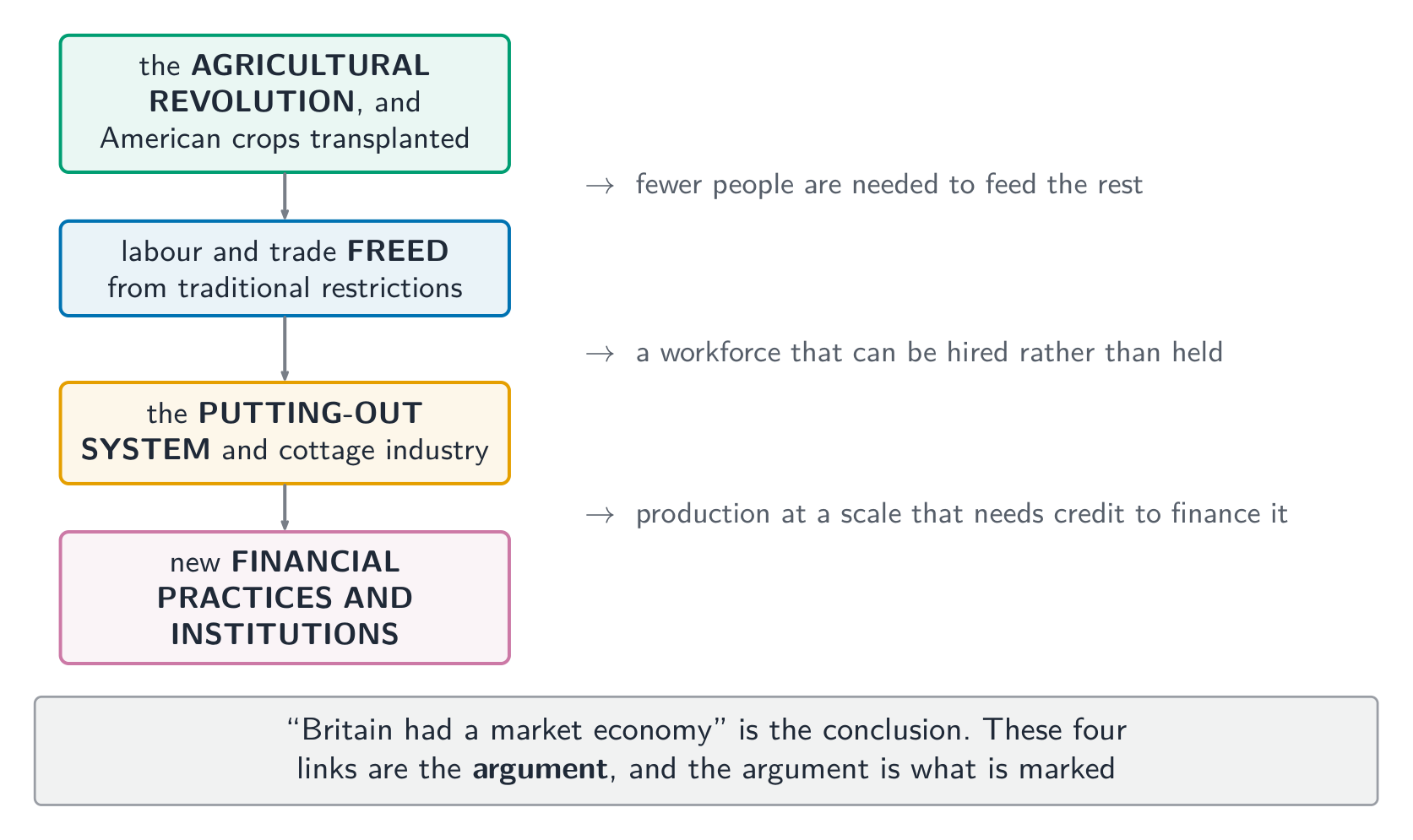
The chain worth holding: more food supports more people, freed labour and cottage industry let those people produce for market, and new finance moves the resulting capital. Each link is separately examinable, and together they are the foundation on which Unit 6's industrialisation is built.

ไทย

ยุโรปยุคใหม่ พัฒนาระบบตลาดที่ فراهم foundation สำหรับบทบาทระดับโลก CED列出 components และคำถามให้คะแนนเมื่อ named several:

  • Agricultural Revolution เพิ่มผลผลิตและเพิ่ม supply ของอาหารและผลิตภัณฑ์เกษตรอื่นๆ
  • การนำเข้าและการ移植美洲作物 ช่วยเพิ่ม supply อาหาร further
  • แรงงานและการค้า commodities ถูก ** آزادจากการจำกัดดั้งเดิม** ที่ governments และ corporate bodies such as guilds impose increasingly
  • ** Putting-out system หรือ cottage industry** ขยายตัวเมื่อแรงงานมากขึ้นผลิตเพื่อ market ในบ้านและ workshop
  • ระบบตลาดสร้าง ** Practices and institutions การเงินใหม่**

Chain ที่ควรจำ: อาหารมากขึ้นรองรับคนมากขึ้น แรงงานอิสระและ cottage industry ให้คนเหล่านี้ผลิตเพื่อ market และการเงินใหม่เคลื่อนย้าย capital ที่เกิดขึ้น Each link separable examinable และ together它们是 Unit 6's industrialization foundation

สี่ connections ระหว่างการเปลี่ยนแปลงทางการเกษตรกับบทบาทระดับโลก - links are the argument
Explore · ⁨สำรวจ⁩

Build Britain's market economy from the ground up

'Britain had a market economy' is the conclusion. These four links are the argument, and the argument is what is marked.

Vocabulary · ⁨คำศัพท์⁩ Train · ⁨ฝึกฝน⁩
English ไทย
English Civil War/ˈɪŋɡlɪʃ ˈsɪvl wɔː/ สงครามกลางเมืองอังกฤษ
Glorious Revolution/ˈɡlɔːrɪəs ˌrevəˈluːʃn/ การปฏิวัติอันรุ่งเรือง (Glorious Revolution)
Parliament/ˈpɑːləmənt/ Parliament
Agricultural Revolution/ˌæɡrɪˈkʌltʃərəl ˌrevəˈluːʃn/ การปฏิวัติทางการเกษตร
freed from traditional restrictions/friːd frɒm trəˈdɪʃənl rɪˈstrɪkʃnz/ หลุดพ้นจากข้อจำกัดดั้งเดิม
cottage industry/ˈkɒtɪdʒ ˈɪndʌstri/ อุตสาหกรรมในครัวเรือน
3.4

Economic Development and Mercantilism · ⁨การพัฒนาทางเศรษฐกิจและ Mercantilism⁩

Syllabus · ⁨หลักสูตร⁩

3.4 Economic Development and Mercantilism

Thematic FocusLearning ObjectiveHistorical Developments

ECD
Economic and Commercial Developments — Economic development, especially the development of capitalism, played an important role in Europe’s history, often having significant social, political, and cultural effects.

Unit 3.C
Explain the continuities and changes in commercial and economic developments from 1648 to 1815.

  • KC-2.2.II The European-dominated worldwide economic network contributed to the agricultural, industrial, and consumer revolutions in Europe.
    • KC-2.2.II.A European states followed mercantilist policies by drawing resources from colonies in the New World and elsewhere.
    • KC-2.2.II.B The transatlantic slave-labor system expanded in the 17th and 18th centuries as demand for New World products increased.
    • KC-2.2.II.C Overseas products and influences contributed to the development of a consumer culture in Europe.
    • KC-2.2.II.D The importation and transplantation of agricultural products from the Americas contributed to an increase in the food supply in Europe.
    • KC-2.2.II.E Foreign lands provided raw materials, finished goods, laborers, and markets for the commercial and industrial enterprises in Europe.

Illustrative examples:

  • Transatlantic slave-labor systems:
    • Middle Passage
    • Triangle trade
  • Overseas products:
    • Sugar
    • Tea
    • Silks and other fabrics
    • Tobacco
    • Rum
    • Coffee

Source: College Board AP Course and Exam Description · ⁨แหล่งที่มา: คำอธิบายหลักสูตรและข้อสอบ College Board AP⁩

English

The European-dominated worldwide economic network contributed to the agricultural, industrial, and consumer revolutions in Europe.

Mercantilism 重商主义 is the policy frame: the state promotes exports, restricts imports, and acquires colonies to supply raw materials and buy finished goods. Note the direction of causation the CED asserts - the global network is what fed the European transformations, so answers confined to Europe's internal development are incomplete.

ไทย

เครือข่ายเศรษฐกิจทั่วโลกที่นำโดยยุโรป contribute ต่อ Agricultural, Industrial และ consumer revolutions ในยุโรป

Mercantilism เป็น policy frame: State ส่งออก, restrict imports และ acquire colonies เพื่อ supply raw materials และซื้อ finished goods ระวังdirection of causation ที่ CED assert - the global network คือสิ่งที่ feed European transformations ดังนั้นคำตอบที่ confined to Europe's internal development是不 complete

Vocabulary · ⁨คำศัพท์⁩ Train · ⁨ฝึกฝน⁩
English ไทย
Mercantilism/ˈmɜːkæntəlɪzəm/ Mercantilism
3.5

The Dutch Golden Age · ⁨Dutch Golden Age⁩

Syllabus · ⁨หลักสูตร⁩
English

3.5 The Dutch Golden Age

Thematic Focus (SOP): States and Other Institutions of Power — European states and nations developed governmental and civil institutions from 1450 to the present to organize society and consolidate political power, with a variety of social, cultural, and economic effects.

Learning Objective Unit 3.D: Explain the factors that contributed to the development of the Dutch Republic.

  • KC-2.1.II.B The Dutch Republic, established by a Protestant revolt against the Habsburg monarchy, developed an oligarchy of urban gentry and rural landholders to promote trade and protect traditional rights.
ไทย

3.5 ยุคทองของดัตช์

จุดเน้นเชิง主题 (SOP): รัฐและสถาบันอำนาจอื่นๆ — รัฐและชาติยุโรปได้พัฒนารัฐบาลและสถาบันพลเมืองตั้งแต่ปี ค.ศ. 1450 จนถึงปัจจุบัน เพื่อจัดระเบียบสังคมและรวมศูนย์อำนาจทางการเมือง โดยมีผลกระทบทางสังคม วัฒนธรรม และเศรษฐกิจที่หลากหลาย

วัตถุประสงค์การเรียนรู้หน่วย 3.D: อธิบายปัจจัยที่ส่งผลต่อการพัฒนาของสาธารณรัฐดัตช์

  • KC-2.1.II.B สาธารณรัฐดัตช์ ซึ่งสถาปนาขึ้นจากการกบฏของโปรเตสแตนต์ต่อราชวงศ์ Habsburg พัฒนา oligarchy ของชนชั้นผู้ถือที่ดินในเมืองและเจ้าของที่ดินในชนบทเพื่อส่งเสริมการค้าและปกป้องสิทธิดั้งเดิม

Source: College Board AP Course and Exam Description · ⁨แหล่งที่มา: คำอธิบายหลักสูตรและข้อสอบ College Board AP⁩

English

The Dutch Republic 荷兰共和国, established by a Protestant revolt against the Habsburg monarchy, developed an oligarchy of urban gentry and rural landholders to promote trade and religious toleration.

The Dutch case matters because it is neither absolutism nor English constitutionalism - a third model, commercially dominant, that shows political form and economic success were not tied together in a single formula.

ไทย

Dutch Republic ซึ่งตั้งขึ้นโดย Protestant revolt ต่อ Habsburg monarchy พัฒนา oligarchy ของ urban gentry และ rural landholders เพื่อส่งเสริมการค้าและความอดทนทางศาสนา

กรณี Dutch สำคัญเพราะมัน neither absolutism nor English constitutionalism - a third model ที่imuthly dominant แสดงให้เห็นว่า political form และeconomic success ไม่ได้ผูก在一起在一个 formula里

Vocabulary · ⁨คำศัพท์⁩ Train · ⁨ฝึกฝน⁩
English ไทย
Dutch Republic/dʌtʃ rɪˈpʌblɪk/ สาธารณรัฐดัตช์
3.6

Balance of Power

Syllabus · ⁨หลักสูตร⁩

3.6 Balance of Power

Thematic FocusLearning ObjectiveHistorical Developments

SOP
States and Other Institutions of Power — European states and nations developed governmental and civil institutions from 1450 to the present to organize society and consolidate political power, with a variety of social, cultural, and economic effects.

Unit 3.E
Explain how European states attempted to establish and maintain a balance of power on the continent throughout the period from 1648 to 1815.

  • KC-1.5.II The competitive state system led to new patterns of diplomacy and new forms of warfare.
    • KC-1.5.II.A Following the Peace of Westphalia, religion declined in importance as a cause for warfare among European states; the concept of the balance of power played an important role in structuring diplomatic and military objectives.
  • KC-2.1.I.D The inability of the Polish monarchy to consolidate its authority over the nobility led to Poland’s partition by Prussia, Russia, and Austria, and its disappearance from the map of Europe.
  • KC-2.1.III After 1648, dynastic and state interests, along with Europe’s expanding colonial empires, influenced the diplomacy of European states and frequently led to war.
    • KC-2.1.III.B After the Austrian defeat of the Turks in 1683 at the Battle of Vienna, the Ottomans ceased their westward expansion.
    • KC-2.1.III.C Louis XIV’s nearly continuous wars, pursuing both dynastic and state interests, provoked a coalition of European powers opposing him. HISTORICAL DEVELOPMENTS

Unit 3.F
Explain how advances in technology contributed to a developing balance of power on the continent throughout the period from 1648 to 1815.

  • KC-1.5.II.B Advances in military technology led to new forms of warfare, including greater reliance on infantry, firearms, mobile cannon, and more elaborate fortifications, all financed by heavier taxation and requiring a larger bureaucracy. New military techniques and institutions (i.e., the military revolution) tipped the balance of power toward states able to marshal sufficient resources for the new military environment.

Illustrative examples:

  • Louis XIV’s nearly continuous wars:
    • Dutch War
    • Nine Years’ War
    • War of the Spanish Succession
  • States that benefited from the military revolution:
    • Spain under the Habsburgs §Bullet Sweden under Gustavus Adolphus §Bullet France

Source: College Board AP Course and Exam Description · ⁨แหล่งที่มา: คำอธิบายหลักสูตรและข้อสอบ College Board AP⁩

English

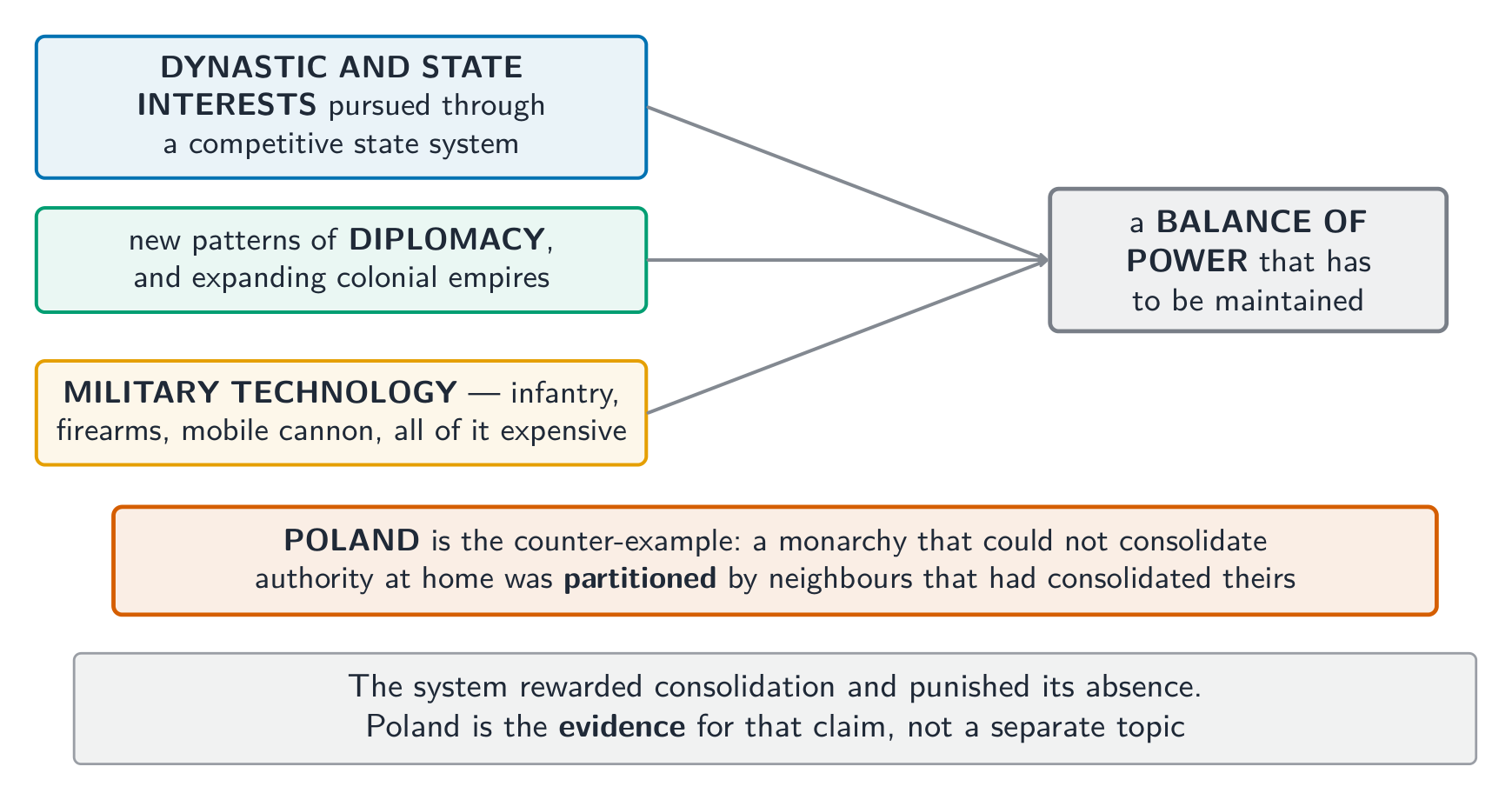
The competitive state system 竞争性国家体系 led to new patterns of diplomacy and new forms of warfare. After 1648, dynastic and state interests, along with expanding colonial empires, drove European diplomacy.

Two specifics are examinable. Advances in military technology produced new forms of warfare - greater reliance on infantry, firearms, and mobile cannon, and larger standing armies that only a centralising state could pay for. And the inability of the Polish monarchy to consolidate authority over its nobility led to Poland's partition 波兰被瓜分 by Prussia, Russia, and Austria - the clearest demonstration in the course that failure to centralise had a price.

ไทย
整个单元的 comparison在一个框架中 - และCED's own reasoning task คือ compare them
ทั้ง two models keep aristocracy in place; พวกเขา disagree ว่า sovereignty sits ที่ไหน

Competitive state system นำไปสู่ รูปแบบ diplomat new และ forms of warfare ใหม่ หลัง 1648, dynastic และ state interests cùng với expanding colonial empires drive European diplomacy

มีรายละเอียดสองจุดที่ออกสอบ: ความก้าวหน้าทางเทคโนโลยีทหาร สร้างรูปแบบสงครามใหม่ - การพึ่งพา พลทหาร ปืนปืน และปืนใหญ่เคลื่อนที่ มากขึ้น และกองทัพถาวรที่มีขนาดใหญ่ซึ่งมีเพียงรัฐกลางเท่านั้นที่จะสามารถจ่ายค่าใช้สอยได้ และ ความสามารถของราชวงศ์โปแลนด์ในการรวมอำนาจไว้กับตัวเองไม่ได้ นำไปสู่ การแบ่งดินแดนโปแลนด์ โดยปรัสเซีย รัสเซีย และออสเตรีย - ซึ่งเป็นตัวอย่างที่ชัดเจนที่สุดในรายวิชาว่าความล้มเหลวในการรวมศูนย์มีราคาที่ต้องจ่าย

ระบบให้รางวัลกับการรวมศูนย์ - โปแลนด์คือหลักฐาน ไม่ใช่หัวข้อแยกต่างหาก
Vocabulary · ⁨คำศัพท์⁩ Train · ⁨ฝึกฝน⁩
English ไทย
competitive state system/kəmˈpetɪtɪv steɪt ˈsɪstəm/ ระบบรัฐที่แข่งขันกัน
Poland's partition/ˈpəʊləndz pɑːˈtɪʃn/ การแบ่งดินโปแลนด์
Louis XIV/ˈluːi ðə ˌfɔːˈtiːnθ/ لوईที่十四 (Louis XIV)
Jean-Baptiste Colbert/dʒiːn bæpˈtiːst ˈkəʊlbət/ ژان-แบปตีสต์ โคลเบิร์ต
Peter the Great/ˈpiːtə ðə ɡreɪt/ ปีเตอร์มหาราช
Catherine the Great/ˈkæθrɪn ðə ɡreɪt/ แคทเทอรีนมหาราช
3.7

Absolutist Approaches to Power · ⁨แนวทางการเข้าถึงอำนาจแบบสัมประสิทธิ์⁩

Syllabus · ⁨หลักสูตร⁩

3.7 Absolutist Approaches to Power

Thematic FocusLearning ObjectiveHistorical Developments

SOP
States and Other Institutions of Power — European states and nations developed governmental and civil institutions from 1450 to the present to organize society and consolidate political power, with a variety of social, cultural, and economic effects.

Unit 3.G
Explain how absolutist forms of rule affected social and political development from 1648 to 1815.

  • KC-2.1.I.A Absolute monarchies limited the nobility’s participation in governance but preserved the aristocracy’s social position and legal privileges.
  • KC-2.1.I.B Louis XIV and his finance minister, Jean-Baptiste Colbert, extended the administrative, financial, military, and religious control of the central state over the French population.
  • KC-2.1.I.E Peter the Great “westernized” the Russian state and society, transforming political, religious, and cultural institutions; Catherine the Great continued this process.

Illustrative examples:

  • Absolute monarchs:
    • James I of England
    • Peter the Great of Russia
    • Philip II, III, and IV of Spain
  • Extended power of the state: §Bullet Intendants §Bullet Modernized, state-controlled military Russian westernization: §Bullet Russian Academy of Sciences §Bullet Education §Bullet Western fashion §Bullet Expanded military

Source: College Board AP Course and Exam Description · ⁨แหล่งที่มา: คำอธิบายหลักสูตรและข้อสอบ College Board AP⁩

English

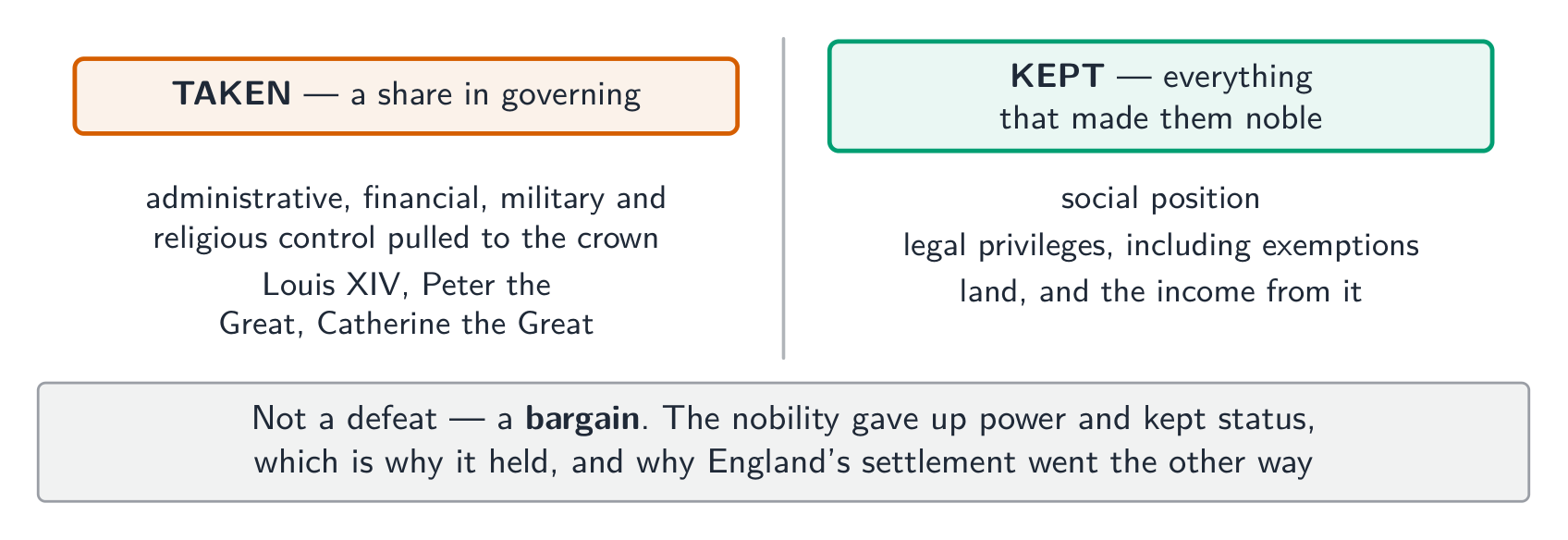
Absolute monarchies limited the nobility's participation in governance but preserved the aristocracy's social position and legal privileges. That trade is the single most useful sentence in the unit: absolutism bought political obedience by leaving social hierarchy untouched.

The CED's named cases:

  • Louis XIV 路易十四 and his finance minister Jean-Baptiste Colbert 柯尔贝尔 extended administrative, financial, military, and religious control over the French state.
  • Peter the Great 彼得大帝 "westernised" the Russian state and society, transforming political, religious, and cultural institutions; Catherine the Great 叶卡捷琳娜大帝 continued that programme.
ไทย

ระบอบสมบูรณสิทธิราชจำกัดการมีส่วนร่วมของขุนนางในการปกครองแต่รักษาตำแหน่งทางสังคมและสิทธิพิเศษทางกฎหมายของ aristocracy การแลกเปลี่ยนนี้คือประโยคที่มีประโยชน์ที่สุดในหน่วย: absolutism ซื้อการปฏิบัติตามทางการเมืองโดยปล่อยให้อันดับชั้นทางสังคมไม่ถูกเปลี่ยนแปลง

案例研究(CED)提到的具体案例:

  • 路易十四及其财政大臣让-巴蒂斯特·柯尔贝尔扩大了对法国国家的行政、财政、军事和宗教控制。
  • 彼得大帝将俄罗斯国家和 society "西方化",改造了政治、宗教和文化机构;叶卡捷琳娜大帝延续了这一计划。
绝对主义是一种交易而非失败:权力被放弃,地位得以保留
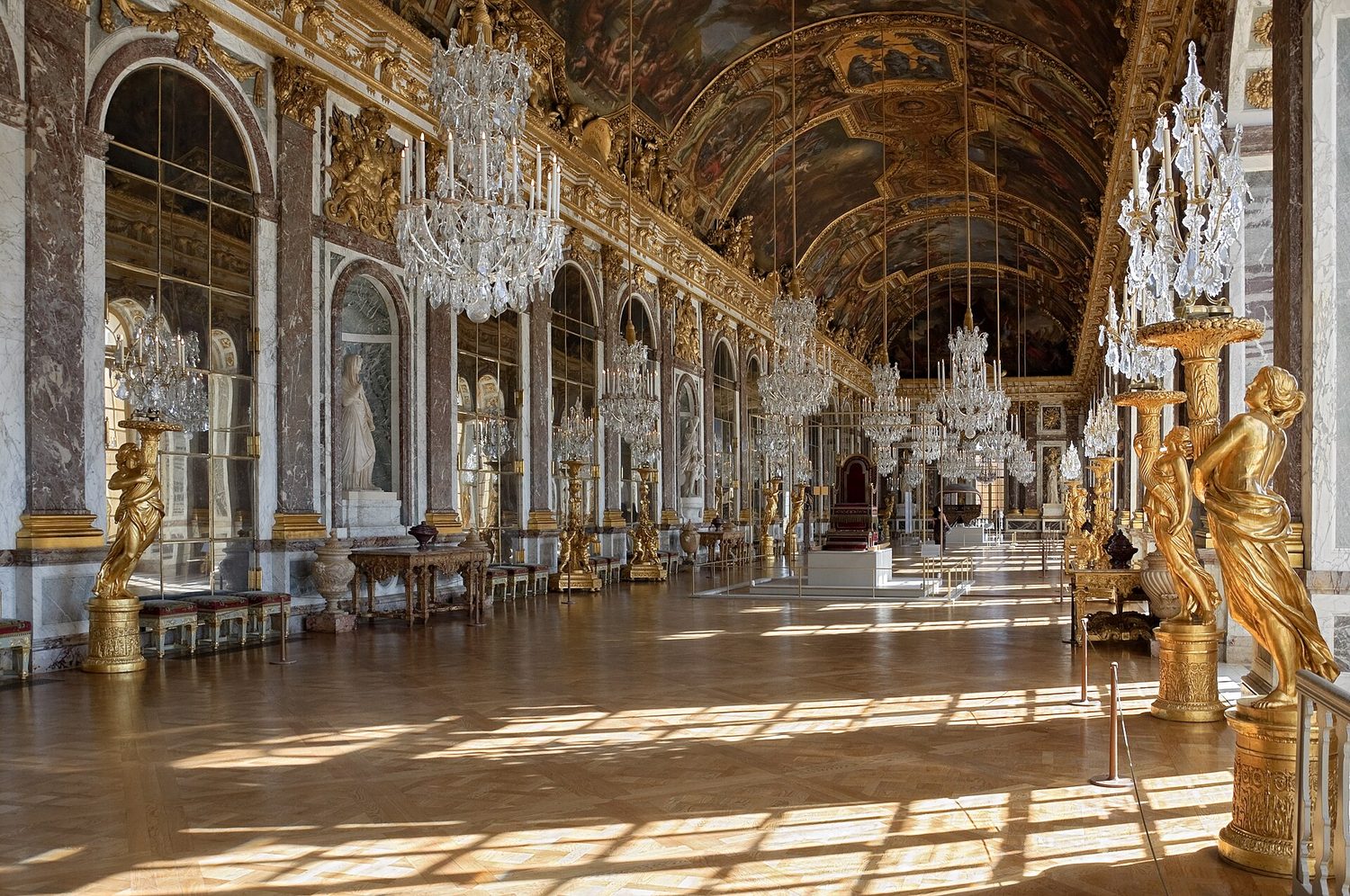
凡尔赛宫的镜厅 - 作为建筑的绝对主义
Explore · ⁨สำรวจ⁩

Sort what absolutism took from what it left alone

Absolute monarchs limited the nobility's share in governing and preserved its social position — which is why it held.

3.8

Comparison in the Age of Absolutism · ⁨绝对主义时代的比较⁩

Syllabus · ⁨หลักสูตร⁩
English

3.8 Comparison in the Age of Absolutism and Constitutionalism

Learning Objective Unit 3.H: Compare the different forms of political power that developed in Europe from 1648 to 1815.

  • KC-1.5 The struggle for sovereignty within and among states resulted in varying degrees of political centralization.
    • KC-1.5.I The new concept of the sovereign state and secular systems of law played a central role in the creation of new political institutions.
    • KC-1.5.III The competition for power between monarchs and corporate and minority language groups produced different distributions of governmental authority in European states.
    • KC-1.5.III.B Monarchies seeking enhanced power faced challenges from nobles who wished to retain traditional forms of shared governance and regional autonomy.
    • KC-1.5.III.C Within states, minority local and regional identities based on language and culture led to resistance against the dominant national group.
  • KC-2.1 Different models of political sovereignty affected the relationship among states and between states and individuals.
    • KC-2.1.I In much of Europe, absolute monarchy was established over the course of the 17th and 18th centuries.
    • KC-2.1.II Challenges to absolutism resulted in alternative political systems.
  • KC-2.2 The expansion of European commerce accelerated the growth of a worldwide economic network.
    • KC-2.2.I Early modern Europe developed a market economy that provided the foundation for its global role.
    • KC-2.2.II The European-dominated worldwide economic network contributed to the agricultural, industrial, and consumer revolutions in Europe.
ไทย

3.8 เปรียบเทียบในยุคสัมประสิทธิ์และรัฐธรรมนูญ

วัตถุประสงค์การเรียนรู้หน่วย 3.H: เปรียบเทียบรูปแบบอำนาจทางการเมืองที่แตกต่างกันที่เกิดขึ้นในยุโรประหว่างปี ค.ศ. 1648 ถึง 1815

  • KC-1.5 การ斗争 sovereignty ภายในและระหว่าง states นำไปสู่ระดับต่างๆ ของ political centralization
    • KC-1.5.I แนวคิดใหม่关于 sovereign state และ secular systems of law played a central role in การสร้าง new political institutions
    • KC-1.5.III The competition for power between monarchs and corporate and minority language groups produced different distributions of governmental authority in European states.
    • KC-1.5.III.B Monarchies seeking enhanced power faced challenges from nobles who wished to retain traditional forms of shared governance and regional autonomy.
    • KC-1.5.III.C Within states, minority local and regional identities based on language and culture led to resistance against the dominant national group.
  • KC-2.1 Different models of political sovereignty affected the relationship among states and between states and individuals.
    • KC-2.1.I ในหลายส่วนของยุโรป Absolute monarchy ถูกสถาปนาในช่วง 17th และ 18th centuries.
    • KC-2.1.II ความท้าทายต่อ Absolutism นำไปสู่ระบบการเมืองทางเลือก
  • KC-2.2 การขยายตัวของการค้ายุโรปเร่งการเติบโตของเครือข่ายเศรษฐกิจทั่วโลก
    • KC-2.2.I ยุโรปยุคใหม่พัฒนาเศรษฐกิจตลาดที่เป็นรากฐานสำหรับบทบาทระดับโลกของตน
    • KC-2.2.II เครือข่ายเศรษฐกิจโลกที่นำโดยยุโรป contributes to การปฏิวัติทางการเกษตร อุตสาหกรรม และการบริโภคในยุโรป

Source: College Board AP Course and Exam Description · ⁨แหล่งที่มา: คำอธิบายหลักสูตรและข้อสอบ College Board AP⁩

English

The unit's reasoning skill is comparison - the CED's own task is to compare the different forms of political power that developed from 1648 to 1815.

Worked example (a real AP exam question). AP European History short-answer questions here ask, for example, to "Explain one difference between absolutist and constitutionalist forms of government in the period 1648 to 1815." A full-mark answer states the difference in terms that apply to both: "They differed in where sovereignty was located. In absolutist France, Louis XIV concentrated administrative, financial, and military authority in the crown and excluded the nobility from governance. In constitutionalist England, the outcome of the Civil War and the Glorious Revolution located sovereignty in the crown together with Parliament, so that taxation and law required the consent of the propertied elite represented there." Notice the structure: one axis of comparison, then each case measured on it.

ไทย

本单元的推理技能是比较 - CED自己的任务是比较从1648年到1815年间发展出的不同形式的政治权力。

范例解答(真实的AP考试题)。 AP欧洲史简答题要求举例说明*“解释1648年至1815年间绝对主义与立宪主义政体形式之间的一个区别。”满分答案用适用于两者的术语陈述差异:“它们在主权所在地方面存在不同。在绝对主义的法国,路易十四将行政、财政和军事权威集中于王冠,并将贵族排除在治理之外。在立宪制的英国,内战和光荣革命的结果使主权位于王冠与议会之间,因此税收和法律需要由在那里代表的有财产精英的同意。”*注意结构:一个比较维度,然后在该维度上衡量每个案例。

3.8

Exam tips · ⁨ข้อแนะนำสำหรับการสอบ⁩

English
  • The English Civil War was a conflict among elites about their roles. Do not turn 1688 into democracy.
  • Absolutism limited political participation but preserved social privilege. That trade answers many questions.
  • Keep a third model ready - the Dutch Republic. It breaks the simple two-way comparison and shows examiners you know the period.
  • Poland's partition is the cost of failing to centralise. It is the counter-example the other cases need.
  • The economic topics are a chain: agriculture, freed labour, cottage industry, finance. Name several links, not one.
  • For comparison questions, choose one axis and measure both cases on it. Two separate descriptions are not a comparison.
ไทย
  • 英国内战是一场精英阶层内部关于其角色的冲突。不要将1688年变成民主。
  • 绝对主义限制政治参与但保留社会特权。这种权衡可以回答许多问题。
  • 准备好第三种模式 - 荷兰共和国。它打破了简单的双向比较,并向考官展示你了解该时期。
  • 波兰的瓜分是未能集中权力的代价。它是其他案例需要的反例。
  • 经济话题是一个链条:农业、自由劳动力、家庭手工业、金融。说出几个环节,而不仅仅是一个。
  • 对于比较题,选择一个维度并在其上衡量两个案例。两个独立的描述不是比较。

Interactive lessons on this topic · ⁨บทเรียนเชิงโต้ตอบสำหรับหัวข้อนี้⁩

Work through it step by step, with instant-check exercises. · ⁨ทำทีละขั้นตอน พร้อมแบบฝึกหัดตรวจสอบผลทันที⁩

Past Papers · ⁨ข้อสอบย้อนหลัง⁩

More topics in AP European History · ⁨AP ประวัติศาสตร์ยุโรป⁩ · ⁨หัวข้อเพิ่มเติมใน AP European History · ⁨AP ประวัติศาสตร์ยุโรป⁩⁩

Log in or create account · ⁨เข้าสู่ระบบหรือสร้างบัญชี⁩

IGCSE, A-Level & AP