English
Enduring Understanding (RHS-1): Individuals write within a particular situation and make strategic writing choices based on that situation.
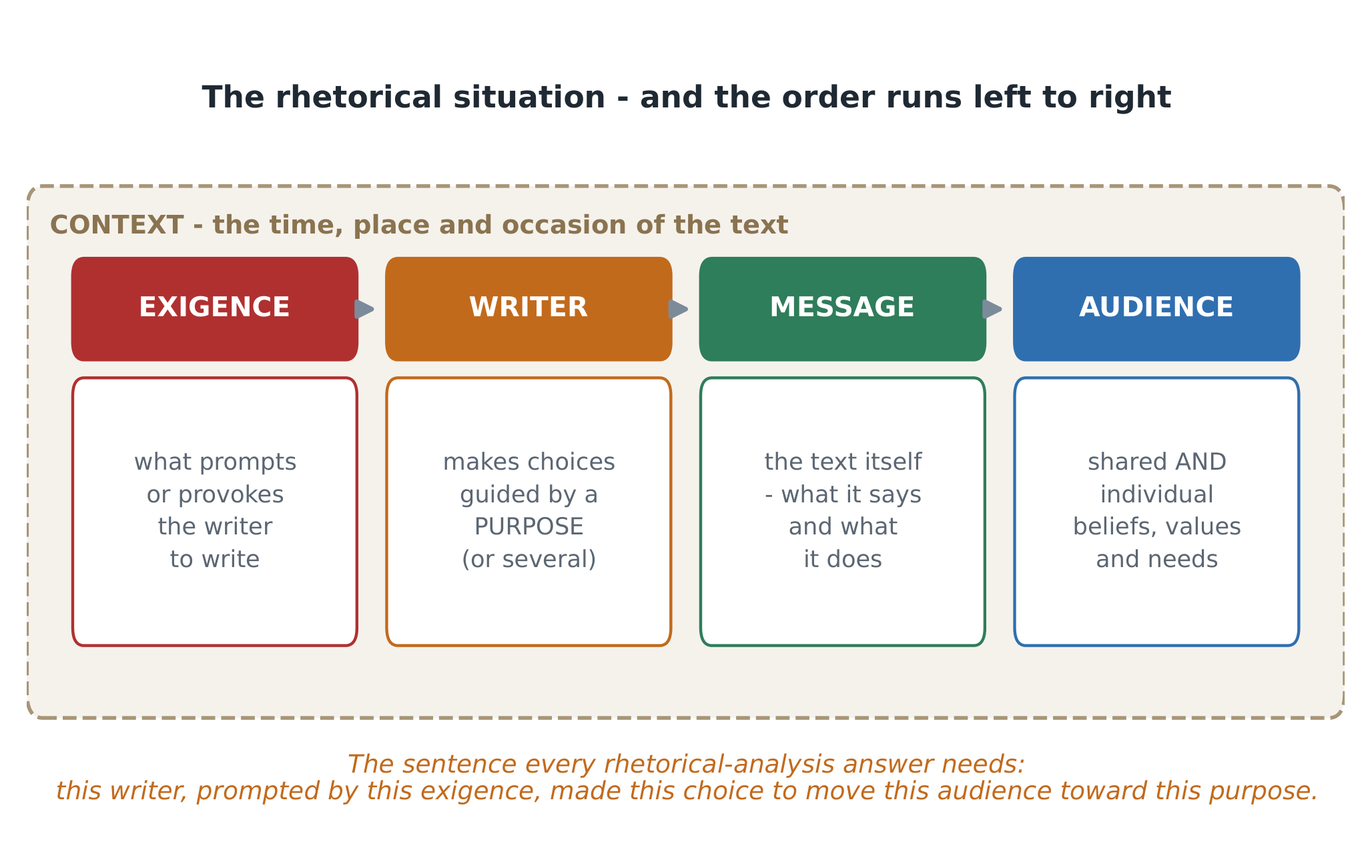
Learning Objective 1.A: Reading – Identify and describe components of the rhetorical situation: the exigence, audience, writer, purpose, context, and message.
- RHS-1.A The rhetorical situation of a text collectively refers to the exigence, purpose, audience, writer, context, and message.
- RHS-1.B The exigence is the part of a rhetorical situation that inspires, stimulates, provokes, or prompts writers to create a text.
- RHS-1.C The purpose of a text is what the writer hopes to accomplish with it. Writers may have more than one purpose in a text.
- RHS-1.D An audience of a text has shared as well as individual beliefs, values, needs, and backgrounds.
- RHS-1.E Writers create texts within a particular context that includes the time, place, and occasion.
ไทย
ความเข้าใจที่ยั่งยืน (RHS-1): บุคคลเขียนภายในสถานการณ์เฉพาะและเลือกการเขียนเชิงกลยุทธ์โดยอาศัยสถานการณ์นั้น
วัตถุประสงค์การเรียนรู้ 1.A: การอ่าน – ระบุและอธิบายองค์ประกอบของสถานการณ์เชิงวาท拉克: exigence, ผู้ฟัง, ผู้เขียน, วัตถุประสงค์, บริบท, และข้อความ
- RHS-1.A สถานการณ์เชิงวาท拉克ของข้อความอ้างถึง itemId exigence, วัตถุประสงค์, ผู้ฟัง, ผู้เขียน, บริบท, และข้อความ
- RHS-1.B ความจำเป็น (exigence) คือส่วนหนึ่งของสถานการณ์ทาง retorics ที่กระตุ้น กระตุ้นใจ กระตุ้นให้ หรือชี้นำนักเขียนให้สร้างข้อความ
- RHS-1.C วัตถุประสงค์ของข้อความคือสิ่งที่นักเขียนหวังว่าจะบรรลุได้ด้วยข้อความนั้น นักเขียนอาจมีวัตถุประสงค์มากกว่าหนึ่งอย่างในข้อความเดียว
- RHS-1.D กลุ่มผู้อ่านของข้อความมีทั้งความเชื่อ ค่านิยม ความต้องการ และพื้นหลังที่ร่วมกันและที่เป็นส่วนตัว
- RHS-1.E นักเขียนสร้างข้อความภายในบริบทเฉพาะซึ่งประกอบด้วยเวลา สถานที่ และโอกาส