9.1 Contextualizing Period 9
| Learning Objective | Preview: Unit 9 Key Concepts |
|---|---|
Unit 9.A |
|
9.2 Reagan and Conservatism
| Thematic Focus | Learning Objective | Historical Developments |
|---|---|---|
PCE | Unit 9.B |
|
AP 美国历史 · 第 9 主题
 5:46
5:46
Period 9: 1980 to the present
This period is short in topics and wide in scope, and the exam treats it as the culmination of the whole course. Three arguments that have run since the…
英文讲解 · 内嵌中英文字幕
| Learning Objective | Preview: Unit 9 Key Concepts |
|---|---|
Unit 9.A |
|
| Thematic Focus | Learning Objective | Historical Developments |
|---|---|---|
PCE | Unit 9.B |
|
来源:美国大学理事会 AP 课程与考试说明
第九时期从 1980 年延续至今。它的专题不多,涵盖面却很广,而考试把它视为贯穿整门课程的那些争论的总汇:政府规模、国家的世界角色,以及谁算是这个国家的完整成员。
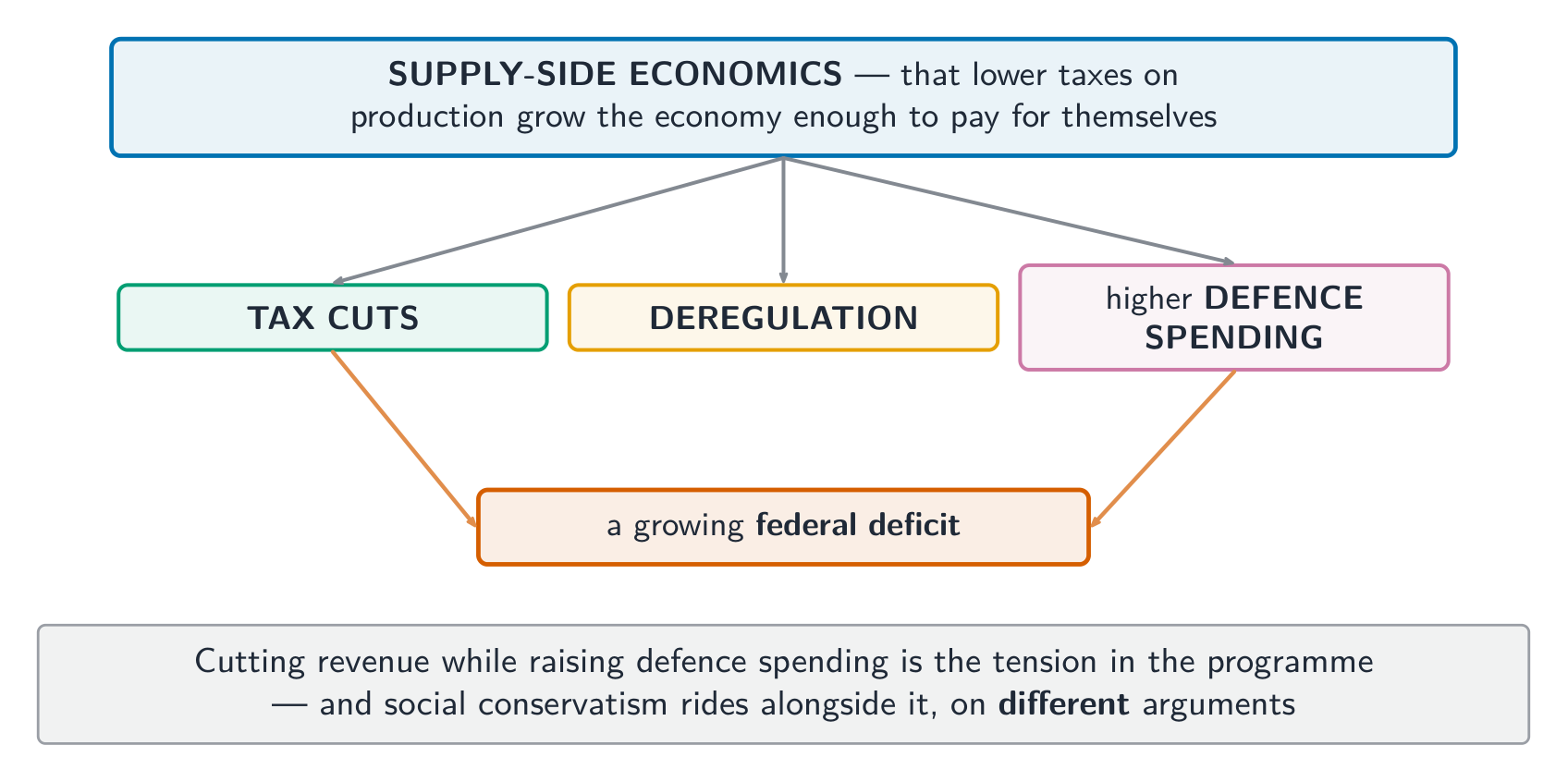
在 20 世纪 60 与 70 年代组织起来的保守主义运动(conservative movement)随里根(Ronald Reagan)上台执政。其纲领有三条线索:
其结果是辩论前提发生了持久转移:1980 年之后,两党围绕联邦政府经济角色的争论范围,比新政以来任何时候都更为狭窄。
Three policies rest on one economic claim, and two of them pull against each other on the deficit.
| 英文 | 中文 | 拼音 |
|---|---|---|
| conservative movement | 保守主义运动 | bǎo shǒu zhǔ yì yùn dòng |
| Ronald Reagan | 里根 | lǐ gēn |
| Tax cuts and deregulation | 减税与放松管制 | jiǎn shuì yǔ fàng sōng guǎn zhì |
| supply-side economics | 供给学派经济学 | gōng jǐ xué pài jīng jì xué |
| defence spending | 国防开支 | guó fáng kāi zhī |
| social conservatism | 社会保守主义 | shè huì bǎo shǒu zhǔ yì |
| Thematic Focus | Learning Objective | Historical Developments |
|---|---|---|
WOR | Unit 9.C |
|
来源:美国大学理事会 AP 课程与考试说明
重新展开的军备扩张、谈判,以及最重要的苏联内部的衰弱,使冷战走向终结。苏联体制在 1989 至 1991 年间瓦解。
其后果界定了随后的数十年:美国成为唯一的超级大国,却留下了何时何地干预(when and where to intervene)这一悬而未决的问题,以及在遏制不再统摄政策之后,哪些承诺仍然合理。
| 英文 | 中文 | 拼音 |
|---|---|---|
| when and where to intervene | 何时何地干预 | hé shí hé dì gān yù |
| Thematic Focus | Learning Objective | Historical Developments |
|---|---|---|
WXT | Unit 9.D |
|
来源:美国大学理事会 AP 课程与考试说明
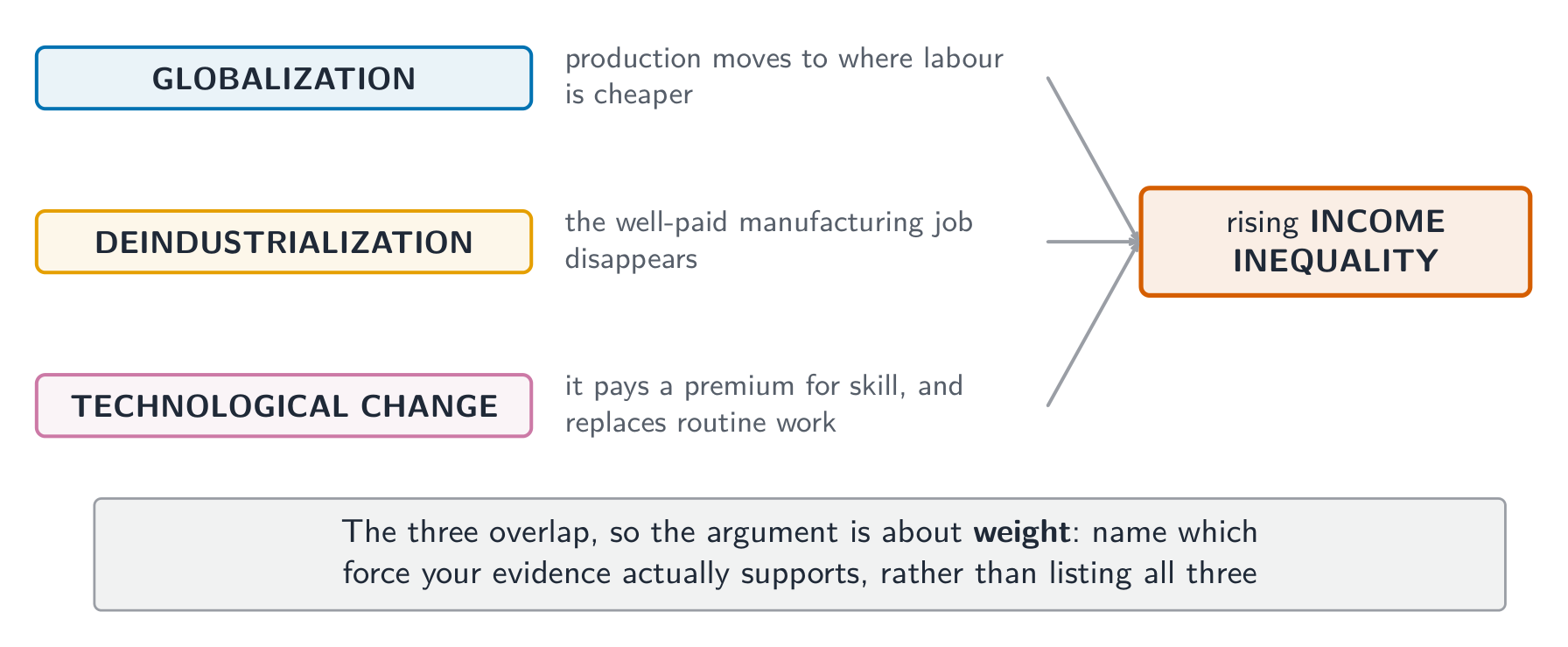
1980 年之后的经济被三股力量重塑:
这些力量共同提高了总体财富,却也扩大了收入不平等(income inequality),并降低了衰退行业中劳动者的保障水平——这正是此后主导政治的经济争论。
Globalization, deindustrialization and technological change overlap, so a period-9 answer is about weight, not about listing.
| 英文 | 中文 | 拼音 |
|---|---|---|
| Globalization | 全球化 | quán qiú huà |
| Deindustrialization | 去工业化 | qù gōng yè huà |
| Technological change | 技术变革 | jì shù biàn gé |
| income inequality | 收入不平等 | shōu rù bù píng děng |
| Thematic Focus | Learning Objective | Historical Developments |
|---|---|---|
MIG | Unit 9.E |
|
来源:美国大学理事会 AP 课程与考试说明
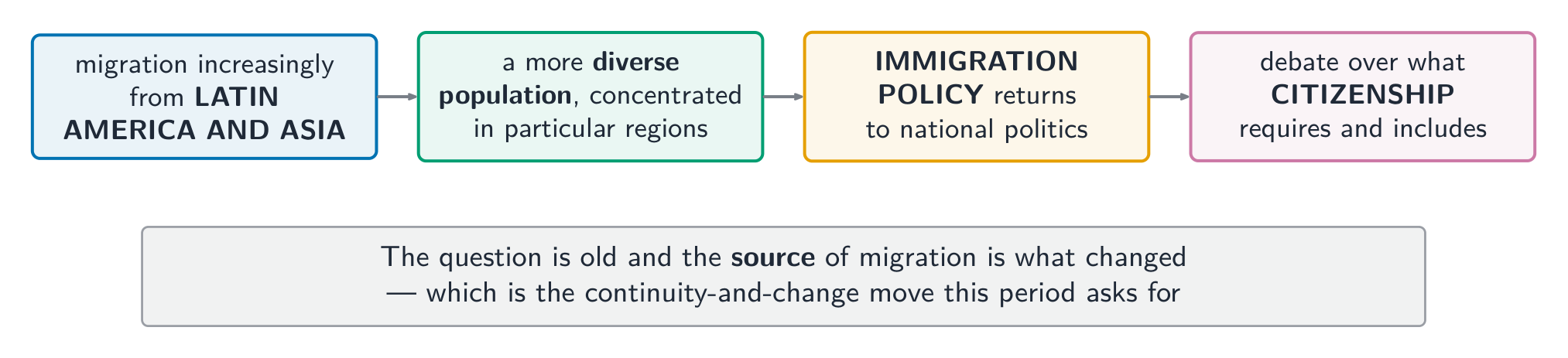
20 世纪 90 年代与 21 世纪初的人口迁移与移民(migration and immigration)继续重塑人口结构;在 1965 年移民法改革之后,来自拉丁美洲与亚洲(Latin America and Asia)的移民增加。
考点在于其后果:南部与西部人口增长、多族裔城市的成长、围绕移民政策(immigration policy)与边境执法的持续争论,以及关于公民身份(citizenship)与国家认同的持续辩论——这正是本课程自重建时期以来一直追踪的同一场争论。
| 英文 | 中文 | 拼音 |
|---|---|---|
| Migration and immigration | 人口迁移与移民 | rén kǒu qiān yí yǔ yí mín |
| Latin America and Asia | 拉丁美洲与亚洲 | lā dīng měi zhōu yǔ yà zhōu |
| immigration policy | 移民政策 | yí mín zhèng cè |
| citizenship | 公民身份 | gōng mín shēn fèn |
| Thematic Focus | Learning Objective | Historical Developments |
|---|---|---|
WOR | Unit 9.F |
|
来源:美国大学理事会 AP 课程与考试说明
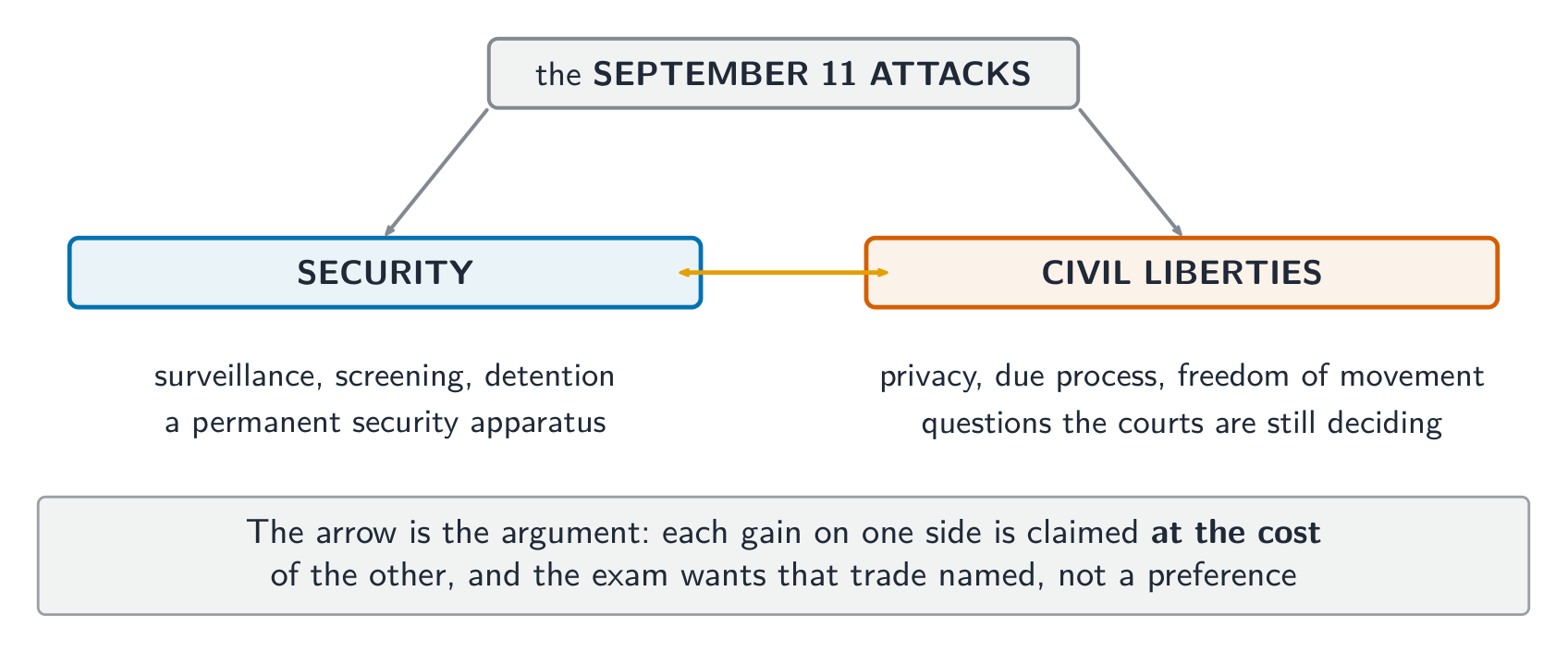
本时期后段的专题围绕少数几项发展展开:
| 英文 | 中文 | 拼音 |
|---|---|---|
| September 11 attacks | 九一一袭击 | jiǔ yī yī xí jī |
| security and civil liberties | 安全与公民自由 | ān quán yǔ gōng mín zì yóu |
| Political polarisation | 政治极化 | zhèng zhì jí huà |
| climate and energy | 气候与能源 | qì hòu yǔ néng yuán |
| Learning Objective | Review: Unit 9 Key Concepts |
|---|---|
Unit 9.G |
|
来源:美国大学理事会 AP 课程与考试说明
本时期考查的推理能力是因果关系,而最有用的做法是把近期的发展与更早的发展连接起来:把去工业化与市场革命中的区域专业化相连,把移民争论与 19 世纪 50 年代和 20 世纪 20 年代的排外主义相连,把关于联邦权力的争论与新政相连。
Worked example(一道真实的 AP 考题)。2026 年的长文章题要求「评估 20 世纪美国女性参与公共生活的状况在多大程度上发生了变化」*。有力的论点会区分变化的类型*及其时间节奏:「20 世纪美国女性参与公共生活发生了实质性变化:选举权、战时就业与妇女运动打开了政治与职业空间;不过职业隔离与同工不同酬意味着,这种参与在法律上的扩展快于在经济权力上的扩展。」注意其结构:面对跨度很长的题目,论点必须说明是哪一类变化以及它在何处止步,唯有如此才能使用多个时期的证据,而不是把它们复述一遍。
逐步学习,并即时检测练习。