Skip to content · ⁨본문 바로가기⁩

Gas exchange in humans · ⁨인간의 가스交換⁩

IGCSE Biology · ⁨IGCSE 생물학⁩ · Topic 11 · ⁨주제 11⁩

Video lesson for this topic · ⁨이 주제용 영상 수업⁩ Open the video page · ⁨영상 페이지 열기⁩
5:54

인체에서의 가스 교환

만약 폐를 평평하게 펴면 테니스 코트 반 개 크기가 됩니다.肺는 하나의 큰 주머니가 아니라 수백만 개의 미세한 주머니들로 이루어져 있으며, 이것이 핵심입니다.…

English narration · English + 中文 subtitles burned in · ⁨영어 내레이션 · 영어 + 중국어 자막 burned-in⁩

11.1

Gas exchange surfaces · ⁨가스 교환 표면⁩

Syllabus
English
Core Supplement
1 Describe the features of gas exchange surfaces in humans, limited to: large surface area, thin surface, good blood supply and good ventilation with air
2 Identify in diagrams and images the following parts of the breathing system: lungs, diaphragm, ribs, intercostal muscles, larynx, trachea, bronchi, bronchioles, alveoli and associated capillaries 6 Identify in diagrams and images the internal and external intercostal muscles
7 State the function of cartilage in the trachea
8 Explain the role of the ribs, the internal and external intercostal muscles and the diaphragm in producing volume and pressure changes in the thorax leading to the ventilation of the lungs
3 Investigate the differences in composition between inspired and expired air using limewater as a test for carbon dioxide 9 Explain the differences in composition between inspired and expired air
4 Describe the differences in composition between inspired and expired air, limited to: oxygen, carbon dioxide and water vapour
5 Investigate and describe the effects of physical activity on the rate and depth of breathing 10 Explain the link between physical activity and the rate and depth of breathing in terms of: an increased carbon dioxide concentration in the blood, which is detected by the brain, leading to an increased rate and greater depth of breathing
11 Explain the role of goblet cells, mucus and ciliated cells in protecting the breathing system from pathogens and particles
한국어
핵심 보충
1 인간의 가스 교환 표면의 특징을 서술하되 다음으로 제한한다: 큰 표면적, 얇은 표면, 풍부한 혈류 공급 및 공기와의 환기가 잘됨
2 도면과 이미지에서 호흡계의 다음 부위를 식별한다: 폐,横隔膜, 갈비뼈, 늑간근, 후두, 기도, 기관지, 세기관지, 알veoli 및 관련 모세혈관 6 도면과 이미지에서 내부 및 외부 늑간근을 식별한다
7 기도 내 연골의 기능을 서술한다
8 갈비뼈, 내부 및 외부 늑간근 그리고横隔膜가 흉강 내 부피와 압력 변화를 일으켜 폐의 환기에 관여하는 역할을 설명한다
3 리무어(limewater)를 이산화탄소 검사제로 사용하여 흡입공기와呼出空气의 조성 차이를 조사한다 9 흡입공기와呼出空气의 조성 차이를 설명한다
4 흡입공기와呼出空气의 조성 차이를 서술하되 다음으로 제한한다: 산소, 이산화탄소 및 수증기
5 신체 활동이 호흡율과 깊이에 미치는 영향을 조사하고 서술한다 10 신체 활동과 호흡율 및 깊이의 관계를 다음으로 설명한다: 혈중 이산화탄소 농도 증가가 뇌에 감지되어 호흡율 증가 및 호흡 깊이 증대로 이어짐
11 선모세포, 점액 및 편모세포가 호흡계를 병원체 및 입자로부터 보호하는 역할을 설명한다

Source: Cambridge International syllabus · ⁨출처: Cambridge International syllabus⁩

English

Gas exchange 气体交换 is how oxygen 氧气 gets into the blood and carbon dioxide 二氧化碳 gets out, by diffusion 扩散. A good gas exchange surface has four features:

  • a large surface area 表面积 — so more gas can cross at once.
  • a thin surface — so gases have only a short distance to diffuse.
  • a good blood supply — to keep a steep difference in concentration.
  • good ventilation 通气 with air — fresh air keeps the difference steep.
한국어
A 3-D model of the lungs and airways
가스交换 happens across the huge surface of the lungs.

가스 교환은 산소가 혈액으로 들어오고 이산화탄소가 밖으로 나가는 과정으로, 확산에 의해 이루어집니다. 효과적인 가스 교환 표면에는 네 가지 특징이 필요합니다:

  • 큰 표면적 — 한 번에 더 많은 가스가 통과할 수 있게 합니다.
  • 얇은 표면 — 가스가扩散할 거리가 짧습니다.
  • 좋은 혈류 공급 — 농도 차이를 steep하게 유지하기 위해.
  • 공기와의 좋은 환기 — 신선한 공기가 농도 차이를 steep하게 유지합니다.
Explore · ⁨탐색하기⁩

A good gas-exchange surface · ⁨좋은 가스 교환 표면⁩

Tap the alveolus to see the four features that make it ideal for exchange: a huge surface area, a thin wall, a moist lining and a good blood supply. · ⁨알베올스를 터치하여 교환에 최적화된 네 가지 특징을 확인하세요: 넓은 표면적, 얇은 벽, 촉촉한 내피 및 풍부한 혈류 공급.⁩

11.1

The breathing system · ⁨호흡계⁩

English

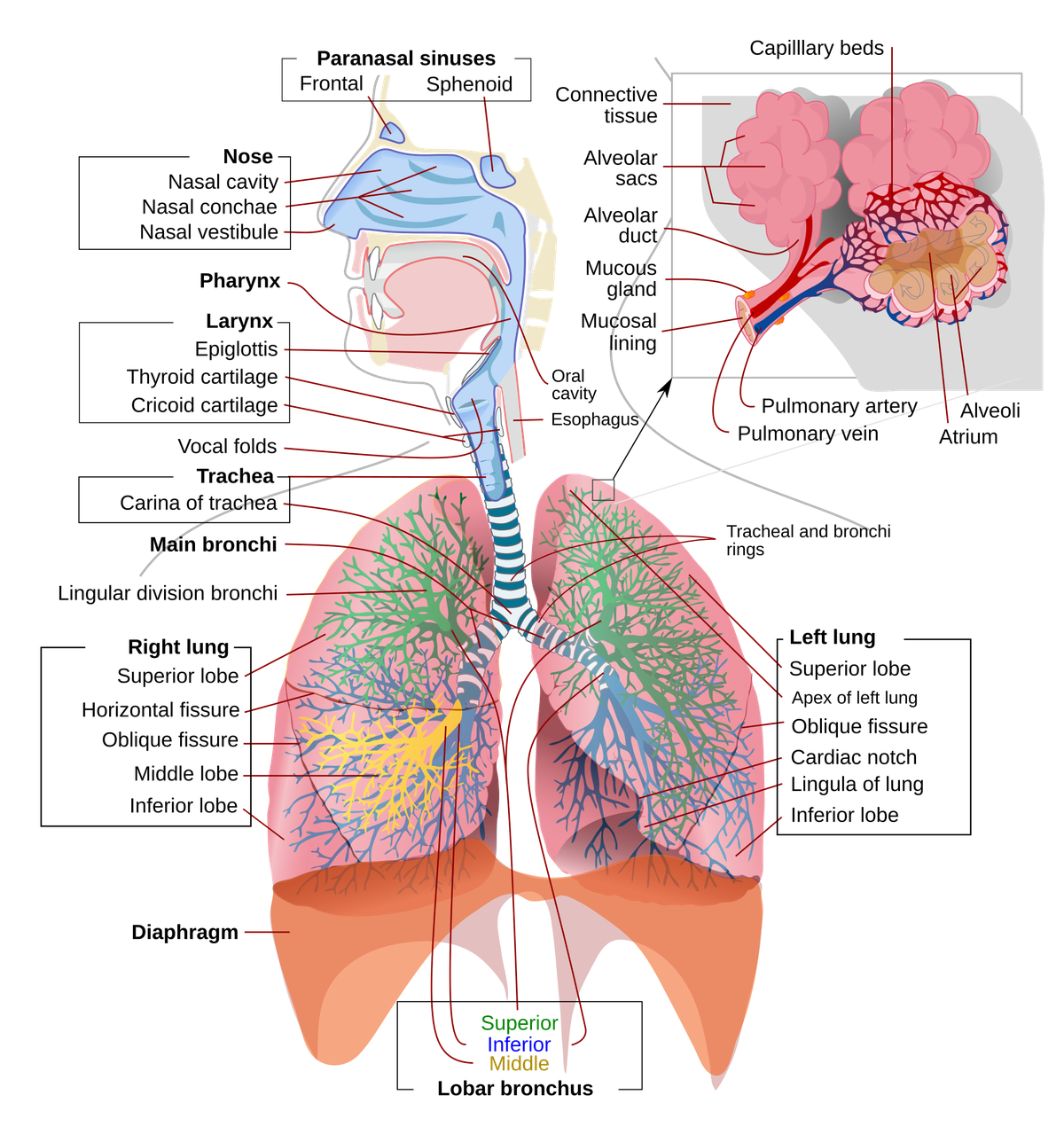
Air travels in and out through these parts:

Part Job
larynx 喉 the voice box, at the top of the windpipe
trachea 气管 the windpipe; carries air towards the lungs
bronchi 支气管 two tubes, one going to each lung
bronchioles 细支气管 smaller branching tubes inside the lungs
alveoli 肺泡 tiny air sacs where gas exchange happens; each is wrapped in capillaries 毛细血管

The alveoli make excellent gas exchange surfaces: there are millions of them (a huge surface area), each has a wall only one cell thick (a short distance), and each is surrounded by capillaries (a good blood supply).

The lungs sit in the chest, protected by the ribs 肋骨. Below them is a sheet of muscle, the diaphragm 膈肌. Between the ribs are the intercostal muscles 肋间肌. (Supplement) The trachea is held open by rings of cartilage 软骨, so it cannot collapse when you breathe in.

한국어
The human lungs
Lungs are the gas-exchange organs of the human body.

공기는 다음 부위를 통해进出합니다:

부위 역할
후두 성대상, 기도의 상단에 위치
기도 기관; 공기를 폐로 운반
기관지 두 개의 관, 각 폐로 하나씩
세기관지 폐 내부의 더 작은 분지관
호기포 가스交换이 일어나는微小的气囊; 각 호기포는 모세혈관으로 감싸져 있음

호기포는 훌륭한 가스交换表面:数百万个存在(巨大的表面积),每个只有一层细胞厚(短距离),且被毛细血管包围(良好的血液供应)。

알베올스를 감싸고 있는 모세혈관의 근접 사진: 산소는 공기 주머니에서 혈액으로 확산되고, 이산화탄소는 반대 방향으로 벽을 따라(벽은 세포 한 층 두께)扩散된다 *호기포에서 산소가 혈액으로 확산되고, 이산화탄소는 밖으로扩散됩니다

폐는 가슴 안에 위치하며 갈비뼈에 의해 보호받는다. 그 아래에는 横격막이라는 근육판이 있다. 갈비뼈 사이에는 갈비간근이 있다. (보충) 기도는 연골로 된 고리들에 의해 열려 있어 숨을 들이마실 때 꺼지지 않는다.

호흡계: 후두와 기관지는 양쪽 폐로 들어가는 두 개의 기관지(р bronchus)로 이어지며, 더 작은 기관지(bronchiole)로 분기하여 알베올스 덩어리로 끝난다. 폐 주변에는 갈비뼈가 있고 아래에는 횡격막이 있다
공기는 기도에서 경기관지 및 세기관지를 거쳐 호기포로 이동합니다
Vocabulary · ⁨어휘⁩ Train · ⁨연습하기⁩
English 한국어
gas exchange/ɡæs eksˈtʃeɪndʒ/ 가스 교환
oxygen/ˈɒksɪdʒn/ 산소
carbon dioxide/ˈkɑːbən daɪˈɒksaɪd/ 이산화탄소
diffusion/dɪˈfjuːʒn/ 확산
surface area/ˈsɜːfɪs ˈeərɪə/ 표면적
ventilation/ˌventɪˈleɪʃn/ 환기
larynx/ˈlærɪŋks/ 후두
trachea/trəˈkɪə/ 기관
bronchi/ˈbrɒŋkaɪ/ 기관지
bronchioles/ˈbrɒŋkɪəʊlz/ 세기관지
alveoli/ˈælvɪɒli/ 폐포
capillaries/ˈkæpɪləriz/ 모세혈관
ribs/rɪbz/ 갈비뼈
diaphragm/ˈdaɪəfræm/ 횡격막
intercostal muscles/ˌɪntəˈkɒstl ˈmʌslz/ 갈비간근
cartilage/ˈkɑːtɪlɪdʒ/ 연골
pressure/ˈpreʃə/ 압력
thorax/ˈθɔːræks/ 흉부
11.1

How you breathe (Supplement) · ⁨호흡 원리 (보충)⁩

English

Breathing changes the volume and pressure 压力 inside the chest (the thorax 胸腔).

Breathing in (inhaling 吸气):

  • the external intercostal muscles contract, pulling the ribs up and out.
  • the diaphragm contracts and flattens (moves down).
  • the thorax becomes bigger, so the pressure inside drops below the outside air pressure.
  • air is pushed in.

Breathing out (exhaling 呼气) is the opposite: the muscles relax (and the internal intercostal muscles may contract), the thorax becomes smaller, the pressure rises, and air is pushed out.

한국어

호흡은 흉부(흉강)의 부피와 압력을 변화시킵니다.

吸氣 (inhaling):

  • 외측costal근이 수축하여 갈비뼈를 위로 그리고 바깥쪽으로 당긴다.
  • 횡격막이 수축하고 평평해진다(아래로 이동한다).
  • 흉부가 커지므로 내부 압력이 외부 공기 압력보다 낮아진다.
  • 공기가 밀려 들어온다.

호기 (exhaling)는 그 반대로, 근육이 이완된다 (내측costal근이 수축할 수도 있다), 흉부가 작아지고, 압력이 상승하며, 공기가 밀려 나간다.

두 개의 그림: 숨을 들이마시며 갈비뼈가 위로 그리고 바깥쪽으로 움직이고横隔膜이 평평해져 흉부가 커지는 모습; 숨을 내뱉으며 갈비뼈가 아래로 그리고 안쪽으로 움직이고横隔膜이 둥글게 올라가서 흉부가 작아지는 모습
들이마시기(흡기)는 흉부를 크게 만들고(압력을 낮추고), 내뱉기(호기)는 작게 만든다
Explore · ⁨탐색하기⁩

Breathing in and out · ⁨吸气和呼气⁩

Breathing changes the volume of the chest, which changes the pressure and makes air flow in or out. · ⁨호흡은 흉부의 부피를 변화시켜 압력을 바꾸고 공기의 흐름을 안쪽으로 또는 바깥쪽으로 만듭니다.⁩

Explore · ⁨탐색하기⁩

Breathing mechanism · ⁨호흡 기전⁩

Watch a breath — the diaphragm flattens and ribs lift, the chest grows, the pressure drops, and air flows in. Relax and it pushes back out. · ⁨호흡을 관찰하세요 — 횡격막이 평평해지고 갈비뼈가 올라가며, 흉부가 커지고 압력이 낮아져 공기가 들어옵니다. 이완되면 다시 밀려 나갑니다.⁩

Vocabulary · ⁨어휘⁩ Train · ⁨연습하기⁩
English 한국어
inhaling/ɪnˈheɪlɪŋ/ 吸気(흡기)
exhaling/eksˈheɪlɪŋ/ 호기
water vapour/ˈwɔːtə ˈveɪpə/ 수증기
11.1

Inspired and expired air · ⁨흡입된 공기와 배출된 공기⁩

English
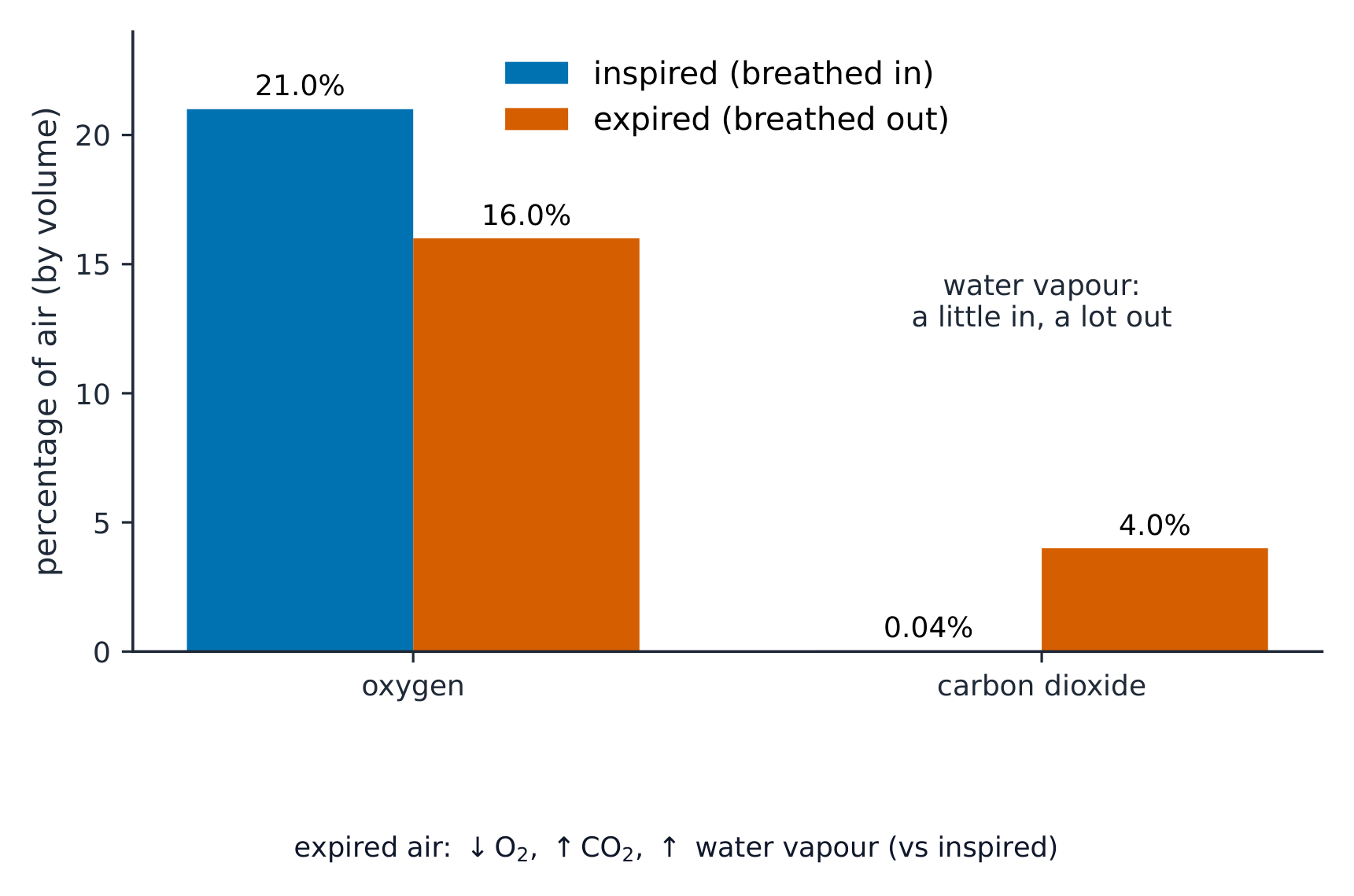
Gas Inspired air (breathed in) Expired air (breathed out)
oxygen about 21% about 16% (less)
carbon dioxide about 0.04% about 4% (more)
water vapour 水蒸气 a little a lot (more)

You can test for carbon dioxide with limewater 石灰水, which turns cloudy. Expired air turns limewater cloudy much faster than inspired air, showing it contains more carbon dioxide.

한국어
가스 흡입된 공기 (들이마신 공기) 배출된 공기 (내뱉은 공기)
산소 약 21% 약 16% (적음)
이산화탄소 약 0.04% 약 4% (많음)
수증기 조금 많음 (더 많음)
막대그래프: 흡입된 공기와 배출된 공기를 비교하는 그래프로, 산소는 21%에서 16%로 감소하고, 이산화탄소는 0.04%에서 4%로 증가하며, 수증기는 조금에서 많음으로 증가함
배출된 공기는 흡입된 공기에 비해 산소 양이 적고 이산화탄소 양이 훨씬 많습니다

이산화탄소를 테스트하기 위해 **석회수(limewater)**를 사용할 수 있는데, 석회수는 탁해진다. 배출된 공기는 흡입된 공기보다 훨씬 빠르게 석회수를 탁하게 만들어, 더 많은 이산화탄소를 포함함을 보여준다.

Vocabulary · ⁨어휘⁩ Train · ⁨연습하기⁩
English 한국어
limewater/ˈlaɪmwɔːtə/ 석회수
concentration/ˌkɒnsənˈtreɪʃn/ 농도
brain/breɪn/ 뇌
11.1

Breathing and exercise · ⁨호흡과 운동⁩

English

During exercise your muscles respire faster and make more carbon dioxide. This raises the concentration 浓度 of carbon dioxide in the blood. (Supplement) Your brain 大脑 detects the rise and makes you breathe at a faster rate 速率 and a greater depth. This brings in more oxygen and removes the extra carbon dioxide quickly.

Worked example. At rest a person takes 12 breaths per minute, moving 500 cm³ of air per breath. During exercise this becomes 20 breaths per minute at 900 cm³ per breath. How much air passes through the lungs each minute in each case? Multiply the rate by the depth. At rest: 12 × 500 = 6000 cm³ per minute. During exercise: 20 × 900 = 18 000 cm³ per minute, three times as much. Exercise raises both the rate and the depth of breathing - an answer that changes only the rate throws away half the marks.

한국어

운동 중 근육이 더 빠르게 호흡하여 더 많은 이산화탄소를 생성한다. 이로 인해 혈액 내 이산화탄소 농도가 높아진다. (보충) 뇌는 이 상승을 감지하여 더 빠른 **호흡률(rate)**과 더 깊은 호흡을 유도한다. 이는 더 많은 산소를 공급하고 초과된 이산화탄소를 빠르게 제거하게 한다.

작은 문제 풀이 예시. 휴식 시 한 사람은 분당 12회 숨을 쉬며, 숨 한 번 당 500cm³의 공기를 흡입한다. 운동 중에는 분당 20회 숨을 쉬며, 숨 한 번 당 900cm³의 공기를 흡입한다. 각 경우마다 폐를 통해 흐르는 공기의 양은 얼마인가? 빈도(rate)에 깊이(depth)를 곱한다. 휴식 시: 12 × 500 = **분당 6000 cm³. 운동 중: 20 × 900 = **분당 18 000 cm³, 세 배이다. 운동은 호흡 빈도와 깊이를 모두 높인다 - 빈도만 바꾼다면 정답의 절반을 잃게 된다.

Vocabulary · ⁨어휘⁩ Train · ⁨연습하기⁩
English 한국어
rate/reɪt/ 비율
11.1

Keeping the airways clean (Supplement) · ⁨기도의 청결 유지 (보충)⁩

English

The airways are lined with two kinds of cell that trap and remove dirt:

  • goblet cells 杯状细胞 make mucus 黏液, which traps pathogens 病原体 and dust particles 粒子.
  • ciliated cells 纤毛细胞 have tiny hairs that sweep the mucus, with the trapped dirt, up to the throat, where it is swallowed.
한국어

기도는 두 가지 종류의 세포로 덮여 있어 먼지를 포획하고 제거한다:

  • **선모세포(goblet cells)**는 **점액(mucus)**를 만들어 **병원체(pathogens)**와 먼지 **입자(particles)**를 가둔다.
  • **섬모(ciliated cells)**는 작은 털을 가지고 있어, 포획된 먼지가 포함된 점액을 목구멍까지 쓸어 올려 삼키게 한다.
Vocabulary · ⁨어휘⁩ Train · ⁨연습하기⁩
English 한국어
goblet cells/ˈɡɒblət selz/ 구형세포
mucus/ˈmjuːkəs/ 점액(점액질)
pathogens/ˈpæθədʒnz/ 병원성 미생물
particles/ˈpɑːtɪklz/ 입자
ciliated cells/ˈsɪlɪeɪtɪd selz/ 섬모 세포
11.1

Exam tips · ⁨시험 팁⁩

English
  • A gas exchange surface is large, thin, with a good blood supply and good ventilation.
  • Air path: larynx → trachea → bronchi → bronchioles → alveoli.
  • Breathing in: external intercostal muscles and diaphragm contract → thorax bigger → pressure lower → air in. Breathing out is the opposite.
  • Expired air has less oxygen, more carbon dioxide and more water vapour. Limewater tests for carbon dioxide.
  • Exercise → more carbon dioxide in the blood → brain → faster, deeper breathing.
한국어
  • 가스 교환 표면은 넓고, 얇으며, 좋은 혈류 공급과 환기가 있다.
  • 공기 경로: 후두 → 기관 → 기관지 → 세기관지 → 폐포.
  • 들이마시기: 외측costal근과横隔膜 수축 → 흉부 커짐 → 압력 낮아짐 → 공기 유입. 내뱉기는 그 반대이다.
  • 배출된 공기는 산소가 적고, 이산화탄소가 많으며, 수증기가 많다. 이산화탄소 테스트에는 석회수가 사용된다.
  • 운동 → 혈액 내 이산화탄소 증가 → 뇌 → 빠르고 깊은 호흡.

Interactive lessons on this topic · ⁨이 주제에 대한 인터랙티브 수업⁩

Work through it step by step, with instant-check exercises. · ⁨즉시 체크 기능 exercises를 통해 단계별로 진행하세요.⁩

Past Papers · ⁨과거 시험지⁩

More topics in IGCSE Biology · ⁨IGCSE 생물학⁩ · ⁨IGCSE Biology · ⁨IGCSE 생물학⁩ 내 추가 주제⁩

Log in or create account · ⁨로그인 또는 계정 만들기⁩

IGCSE, A-Level & AP