English
Enduring Understanding (ERT-1): Ecosystems are the result of biotic and abiotic interactions.
Learning Objective ERT-1.A: Explain how the availability of resources influences species interactions.
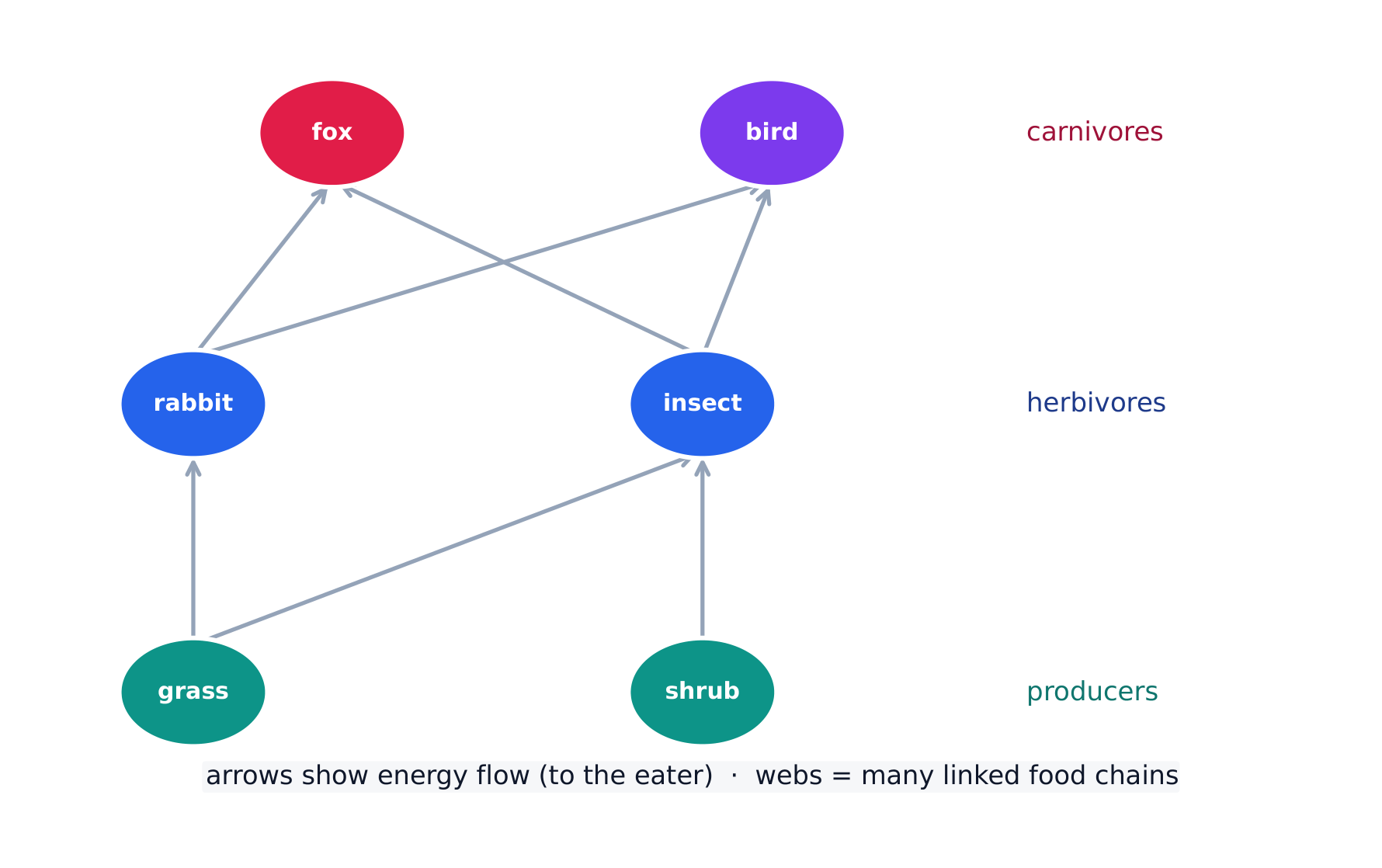
- ERT-1.A.1 In a predator-prey relationship, the predator is an organism that eats another organism (the prey).
- ERT-1.A.2 Symbiosis is a close and long-term interaction between two species in an ecosystem. Types of symbiosis include mutualism, commensalism, and parasitism.
- ERT-1.A.3 Competition can occur within or between species in an ecosystem where there are limited resources. Resource partitioning—using the resources in different ways, places, or at different times—can reduce the negative impact of competition on survival.
한국어
지속적 이해(Earth Science Core Idea ERT-1): 생태계는 생물적 요인과 비생물적 요인의 상호작용의 결과이다.
학습 목표 ERT-1.A: 자원의 가용성이 종간 상호작용에 미치는 영향을 설명하시오.
- ERT-1.A.1 포식자-피식자 관계에서 포식자는 다른 생물(피식자)을 먹이로 삼는 생물이다.
- ERT-1.A.2 공생은 생태계 내 두 종 간의 밀접하고 장기적인 상호작용이다. 공생의 유형에는 상리공생, 중립공생 및 기생이 포함된다.
- ERT-1.A.3 제한된 자원이 있는 생태계에서는 종 내부 또는 종 간에 경쟁이 발생할 수 있다. 자원을 서로 다른 방식, 장소 또는 시간에 사용하는 자원 분할(resource partitioning)은 생존에 미치는 경쟁의 부정적 영향을 줄일 수 있다.