Skip to content · ⁨본문 바로가기⁩

Refining Qualified Arguments · ⁨제한된 주장 다듬기⁩

AP English Language and Composition · ⁨AP 영어 어법 및 작문⁩ · Topic 9 · ⁨주제 9⁩

Video lesson for this topic · ⁨이 주제용 영상 수업⁩ Open the video page · ⁨영상 페이지 열기⁩
4:51

유닛 9: 조건부 주장 다듬기

유닛 9는 짧지만 이 과정의 마지막 단계입니다. 당신과 반대되는 주장을如何处理하는지 설명합니다. 여기의 모든 내용은 시험에서 직접적으로 보상을 받으며…

English narration · English + 中文 subtitles burned in · ⁨영어 내레이션 · 영어 + 중국어 자막 burned-in⁩

9.1

How Claims Are Qualified · ⁨주장의 한정 Qualifying Claims⁩

Syllabus
English

Enduring Understanding (CLE-1): Writers make claims about subjects, rely on evidence that supports the reasoning that justifies the claim, and often acknowledge or respond to other, possibly opposing, arguments.

Learning Objective 3.C: Reading – Explain ways claims are qualified through modifiers, counterarguments, and alternative perspectives.

  • CLE-1.AA Writers enhance their credibility when they refute, rebut, or concede opposing arguments and contradictory evidence.
  • CLE-1.AB When writers concede, they accept all or a portion of a competing position or claim as correct, agree that the competing position or claim is correct under a different set of circumstances, or acknowledge the limitations of their own argument.
  • CLE-1.AC When writers rebut, they offer a contrasting perspective on an argument and its evidence or provide alternative evidence to propose that all or a portion of a competing position or claim is invalid.
  • CLE-1.AD When writers refute, they demonstrate, using evidence, that all or a portion of a competing position or claim is invalid.
  • CLE-1.AE Transitions may be used to introduce counterarguments.
  • CLE-1.AF Not all arguments explicitly address a counterargument.
  • CLE-1.Y Effectively entering into an ongoing conversation about a subject means engaging the positions that have already been considered and argued about.
  • CLE-1.Z Evidence and sources will either support, complement, or contradict a writer’s thesis.
한국어

Enduring Understanding (CLE-1): 작가는 주제에 대한 주장을 내세우고, 주장을 정당화하는 추론을 뒷받침할 증거를 reliance하며, 때로는 다른, 대립될 수 있는 주장들을 인정하거나 반응하기도 한다.

학습 목표 3.C: 읽기 – 수식어, 반박 논증 및 대안적 관점을 통해 주장이 어떻게 조건부(qualify)되는지를 설명한다.

  • CLE-1.AA 작가가 반대 주장이나 상충되는 증거를 반박하거나, 거절하거나, 인정할 때 자신의 신뢰성을 높입니다.
  • CLE-1.AB 작가가 인정(concede)할 때, 경쟁 주장을或部分주장을 옳다고 수용하거나, 다른 상황 하에서는 경쟁 주장이 옳다고 동의하거나, 자신의 주장의 한계를 인정합니다.
  • CLE-1.AC 작가가 반박(rebut)할 때, 주장과 그에 따른 증거에 대해 대안적인 관점을 제시하거나, 경쟁 주장의 전부 또는 일부가 무효임을 제안하기 위해 대체 증거를 제공합니다.
  • CLE-1.AD 작가가 반증(refute)할 때, 증거를 사용하여 경쟁 주장의 전부 또는 일부가 무효임을 입증합니다.
  • CLE-1.AE 연결어(transitions)는 반대 주장(counterarguments)을 도입하는 데 사용할 수 있습니다.
  • CLE-1.AF 모든 주장이 반대 주장을 명시적으로 다루지는 않습니다.
  • CLE-1.Y某一主题에 대한 지속적인 대화에 효과적으로 참여한다는 것은 이미 고려되고 논쟁된 입장들을 참여시키는 것을 의미합니다.
  • CLE-1.Z 증거와 출처는 작가의 주제(thesis)를 지지하거나, 보완하거나, 또는 반대할 수 있습니다.
Source: College Board AP Course and Exam Description · ⁨출처: College Board AP Course and Exam Description⁩

English

Unit 9 is short and it is the course's final move: how to handle the arguments that oppose yours. Everything here is directly rewarded on the exam, and the three key verbs are constantly confused.

The framing first:

  • Effectively entering an ongoing conversation about a subject means engaging the positions that have already been taken. An argument that ignores them is not participating in the discussion, only announcing into it.
  • Evidence and sources will either support, complement, or contradict 支持、补充或反驳 a writer's thesis. All three are usable - contradicting evidence is not a problem to be hidden but material to be handled.
  • Writers enhance their credibility when they refute, rebut, or concede opposing arguments and contradictory evidence.

The three moves, in the CED's own definitions:

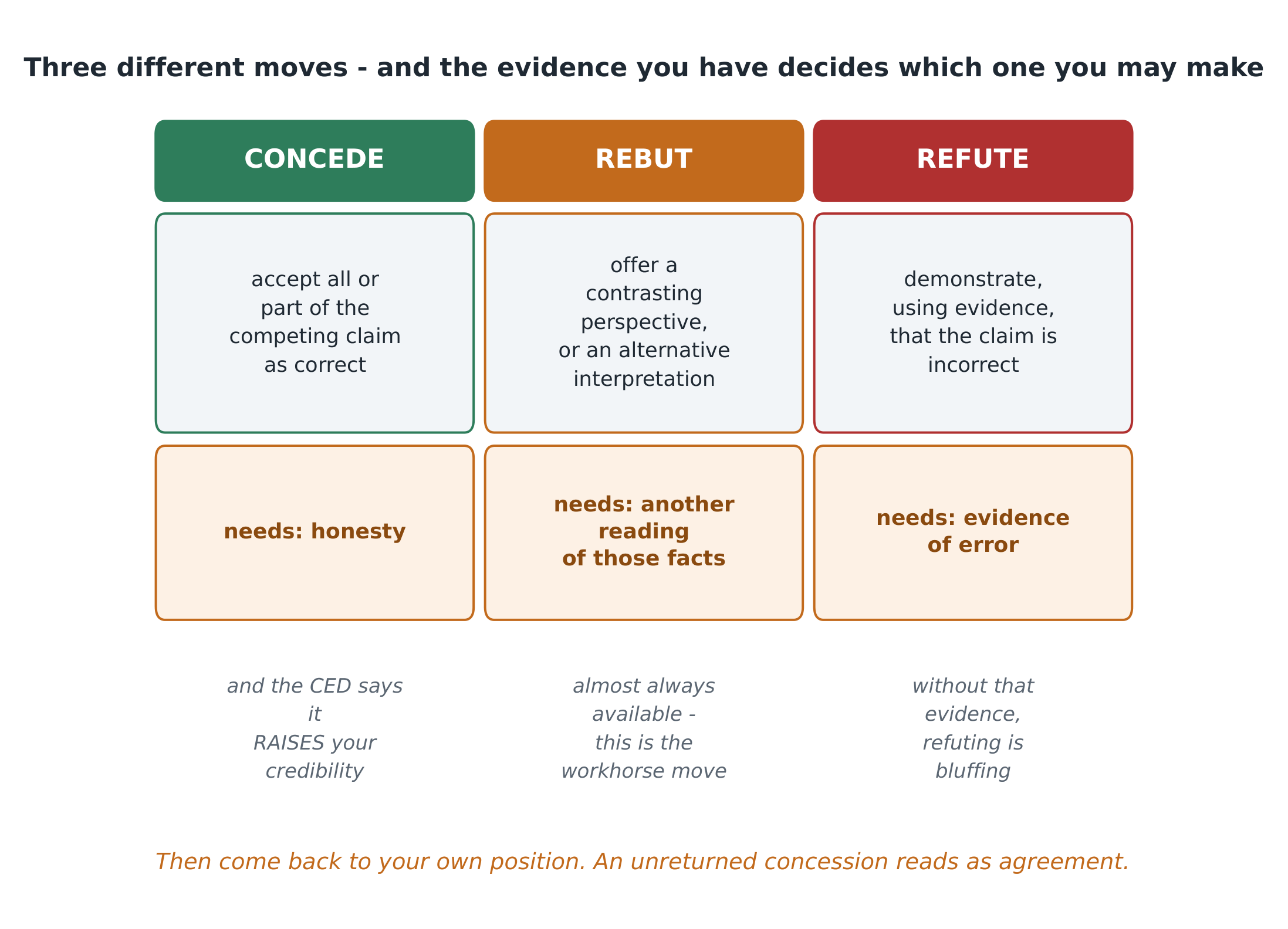
  • Concede 让步: writers accept all or a portion of a competing position or claim as correct, and agree that the opposing point has merit.
  • Rebut 反驳: writers offer a contrasting perspective on an argument and its evidence, or provide an alternative interpretation.
  • Refute 驳倒: writers demonstrate, using evidence, that all or a portion of a competing position or claim is incorrect.

The distinction is what your evidence lets you do. Refuting requires evidence of error; if you do not have it, refuting is bluffing and a reader will see it. Rebutting requires only an alternative reading of the same facts, which is far more often available. Conceding requires honesty, and it costs nothing - the CED says explicitly that it enhances credibility.

Two further points:

  • Transitions may be used to introduce counterarguments - and, as in Unit 5, the transition should signal the relationship. Critics argue announces one; the strongest objection to this is announces one and ranks it.
  • Not all arguments explicitly address a counterargument. True of texts you read, and worth noting when analysing - an argument that engages no opposition has told you something about its intended audience.
한국어

9단원은 짧으며, 이 과정의 마지막 단계입니다: 당신의 주장에 반대되는 논쟁을如何处理하는지. 여기의 모든 것이 시험에서 직접적으로 가산점이 있으며, 세 가지 핵심 동사는 자주 혼동됩니다.

구상을 먼저 정리하겠습니다:

  • 주제에 대한 ongoing conversation(지속적인 대화)에 효과적으로 참여한다는 것은 이미 제시된 입장们을 engaging(접근/참여)하는 것을 의미합니다. 이를 무시하는 논쟁은 토론에 참여하는 것이 아니라, 단순히 그 안으로 외치는 것입니다.
  • 증거와 출처는 작가의 thesis를 either support(지지), complement(보충), or contradict(반박) 할 수 있습니다. 세 가지 모두 활용 가능합니다. 반박하는 증거를 숨길 문제가 되는 것이 아니라, handling(대처해야 할 소재)입니다.
  • 作家들은 opposing arguments와 contradictory evidence를 refute(驳倒), rebut(反驳), 또는 concede(让步)할 때 신뢰도를 높입니다.
세 가지 다른 move, 세 가지 다른 admission - 학생들이 이들을 constantly confuse합니다
Concede는 수용하고, rebut는 대응하며, refute는证伪(거짓임 증명)합니다. 증거가 실제로 지지할 수 있는 하나를 선택하십시오

CED(College Board)의 자체 정의에 따른 세 가지 move:

  • Concede (양보): 作家们 competing position 또는 claim의 전부를或部分을 correct로 인정하고, opposing point가 merit(가치)가 있다고 동의합니다.
  • Rebut (반박): 作家们 argument及其证据에 contrasting perspective를 제공하거나, alternative interpretation을 제공합니다.
  • Refute (驳倒): 作家们 证据를 사용하여 competing position 또는 claim의 전부가或部分이 incorrect임을 demonstrater(증명) 합니다.

차이는的证据가允许您做什么。 Refuting requires evidence of error;如果没有它,refuting是bluffing(虚张声势),读者会看穿。Rebutting只需要对同一事实的alternative reading,这更容易获得。Conceding需要honesty(诚实),而且没有代价——CED明确指出它能 enhance 可信度。

두 가지 추가 사항:

  • Transitions(전환사)은 counterarguments를引入(도입)하는 데 사용될 수 있습니다 - 5단원에서처럼, transition은relationship(관계)를signaling(표시)해야 합니다. 비평가들은 주장한다는 것을宣布;이에 대한 가장 강력한 반론은을宣布하고 ranking(순위 매기기)합니다.
  • 모든 논쟁이explicitly(명확히)一个counterargument를address(다루지 않습니다).读了的文本也是这样,分析时值得注意 - opposition을engage하지 않는 논쟁은它的intended audience(目标受众)에 about something tells you(무언가를 알려줍니다).
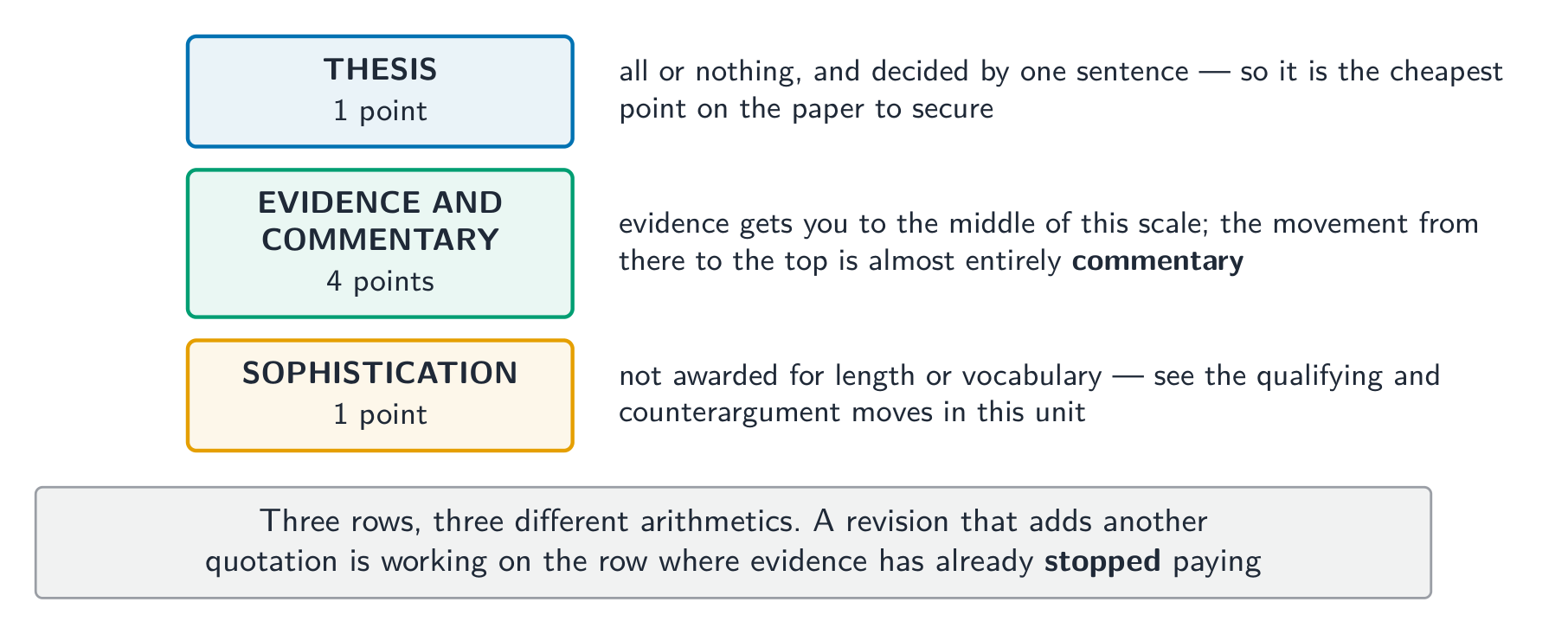
三行,三种不同的算术 - 仍在付费的那一行请复习
Explore · ⁨탐색하기⁩

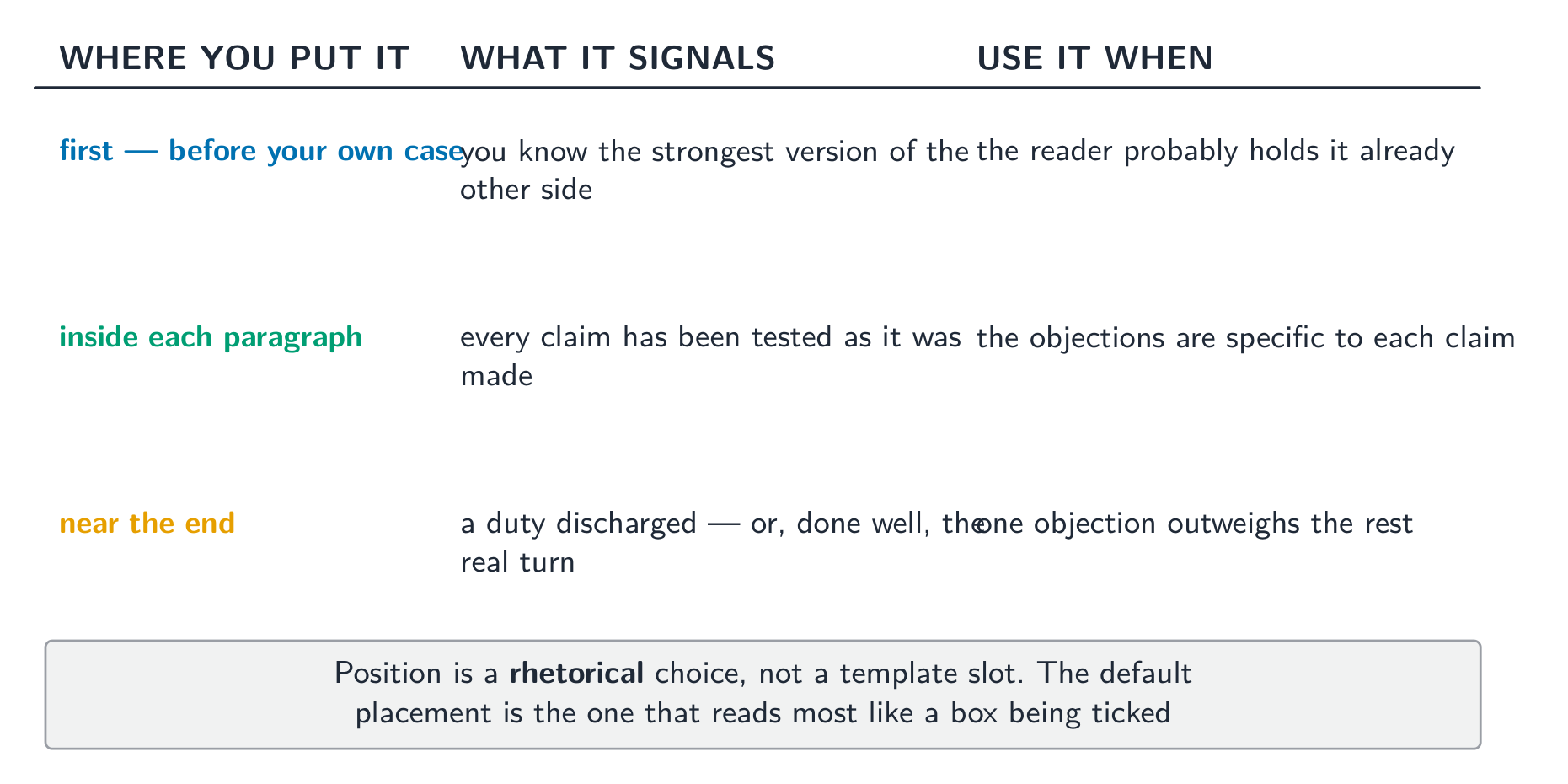
Place the counterargument, and say what it signals · ⁨将counterargument放置,并说明它所暗示的内容⁩

Position carries meaning: early it frames the essay, late it can read as a box being ticked. · ⁨Position carries meaning: early它框架 essay, late它可能读作检查框⁩

Vocabulary · ⁨어휘⁩ Train · ⁨연습하기⁩
English 한국어
support, complement, or contradict/səˈpɔːt ˈkɒmplɪmənt ɔː ˌkɒntrəˈdɪkt/ 지지, 보완 또는 반박
Concede/kənˈsiːd/ 양보
Rebut/rɪˈbʌt/ 반박
9.2

Qualifying a Claim · ⁨주장을 한정하는 방법 Qualifying a Claim⁩

Syllabus
English

Enduring Understanding (CLE-1): Writers make claims about subjects, rely on evidence that supports the reasoning that justifies the claim, and often acknowledge or respond to other, possibly opposing, arguments.

Learning Objective 4.C: Writing – Qualify a claim using modifiers, counterarguments, or alternative perspectives.

  • CLE-1.AA Writers enhance their credibility when they refute, rebut, or concede opposing arguments and contradictory evidence.
  • CLE-1.AB When writers concede, they accept all or a portion of a competing position or claim as correct, agree that the competing position or claim is correct under a different set of circumstances, or acknowledge the limitations of their own argument.
  • CLE-1.AC When writers rebut, they offer a contrasting perspective on an argument and its evidence or provide alternative evidence to propose that all or a portion of a competing position or claim is invalid.
  • CLE-1.AD When writers refute, they demonstrate, using evidence, that all or a portion of a competing position or claim is invalid.
  • CLE-1.AE Transitions may be used to introduce counterarguments.
  • CLE-1.AF Not all arguments explicitly address a counterargument.
  • CLE-1.Y Effectively entering into an ongoing conversation about a subject means engaging the positions that have already been considered and argued about.
  • CLE-1.Z Evidence and sources will either support, complement, or contradict a writer’s thesis.
한국어

Enduring Understanding (CLE-1): 작가는 주제에 대한 주장을 내세우고, 주장을 정당화하는 추론을 뒷받침할 증거를 reliance하며, 때로는 다른, 대립될 수 있는 주장들을 인정하거나 반응하기도 한다.

학습 목표 4.C: 글쓰기 – 수식어, 반박 논증 또는 대안적 관점을 사용하여 주장을 조건부 설정한다.

  • CLE-1.AA 작가가 반대 주장이나 상충되는 증거를 반박하거나, 거절하거나, 인정할 때 자신의 신뢰성을 높입니다.
  • CLE-1.AB 작가가 인정(concede)할 때, 경쟁 주장을或部分주장을 옳다고 수용하거나, 다른 상황 하에서는 경쟁 주장이 옳다고 동의하거나, 자신의 주장의 한계를 인정합니다.
  • CLE-1.AC 작가가 반박(rebut)할 때, 주장과 그에 따른 증거에 대해 대안적인 관점을 제시하거나, 경쟁 주장의 전부 또는 일부가 무효임을 제안하기 위해 대체 증거를 제공합니다.
  • CLE-1.AD 작가가 반증(refute)할 때, 증거를 사용하여 경쟁 주장의 전부 또는 일부가 무효임을 입증합니다.
  • CLE-1.AE 연결어(transitions)는 반대 주장(counterarguments)을 도입하는 데 사용할 수 있습니다.
  • CLE-1.AF 모든 주장이 반대 주장을 명시적으로 다루지는 않습니다.
  • CLE-1.Y某一主题에 대한 지속적인 대화에 효과적으로 참여한다는 것은 이미 고려되고 논쟁된 입장들을 참여시키는 것을 의미합니다.
  • CLE-1.Z 증거와 출처는 작가의 주제(thesis)를 지지하거나, 보완하거나, 또는 반대할 수 있습니다.
Source: College Board AP Course and Exam Description · ⁨출처: College Board AP Course and Exam Description⁩

English

For your own writing, the strongest and most reliable shape on Question 3 is:

  1. State your position, qualified to the ground your evidence covers.
  2. Concede the part of the opposing position that is genuinely correct.
  3. Rebut or refute the rest - rebut if you have an alternative reading, refute only if you have evidence of error.
  4. Show why your position survives the concession.

Step 4 is the one most students omit, and it is where the sophistication point lives. Conceding and then not returning to your own argument reads as having changed your mind.

Worked example (a real AP exam question). On a Question 3 argument prompt, compare two treatments of the same objection. Weak: "Some people disagree, but they are wrong." That names an opposing position without engaging it - it is neither concession, rebuttal, nor refutation. Strong: "The objection that the policy is too costly is correct as far as it goes: the direct expenditure is higher than any alternative considered. But cost is only decisive if the alternatives achieve the same result, and the same report shows they do not - so the comparison the objection depends on is not available." That paragraph concedes the cost, refutes the comparison with evidence, and returns to the writer's own position. Three moves, and every one of them is on the rubric.

한국어

你自己的写作中,Question 3에서最强且最可靠的shape(结构)是:

  1. 자신의 입장을表明,**qualified(限定)**하여证据所覆盖的范围ground(支撑)。
  2. opposing position의 genuinely correct的部分을 Concede(양보) 하십시오.
  3. Rebut 또는 Refute剩下的部分 - alternative reading이 있으면rebut,error의证据가있으면refute。
  4. 자신의立场为什么在concession之后仍然survives(存续)을show(보여주십시오)。

Step 4는most students(大多数学生)省略的环节, sophistication point( sophistication点)就在这里。Conceding然后不回到自己的论点会被read as having changed one's mind(改变主意)。

作文例題(實際AP考試題目)。 Question 3의論證提示中,比較對同一反駁的兩種處理方式。Weak(弱): “有些人不同意,但他們錯了。” That names an opposing position without engaging it - it is neither concession, rebuttal, nor refutation. Strong(強): “政策成本過高的反駁在一定程度上是正確的:直接開支高於任何考慮過的替代方案。但只有當替代方案能達成相同結果時,成本才是決定性因素,而同一報告顯示它們做不到——因此反駁所依賴的比較並不存在。” 該段落 concedes(承認) 成本,refutes(駁倒) 基於證據的比較,並返回到作者自己的立場。Three moves(三個步驟),every one of them is on the rubric(都在評分標準上)。

Position(立場)是修辭選擇,而非模板槽位
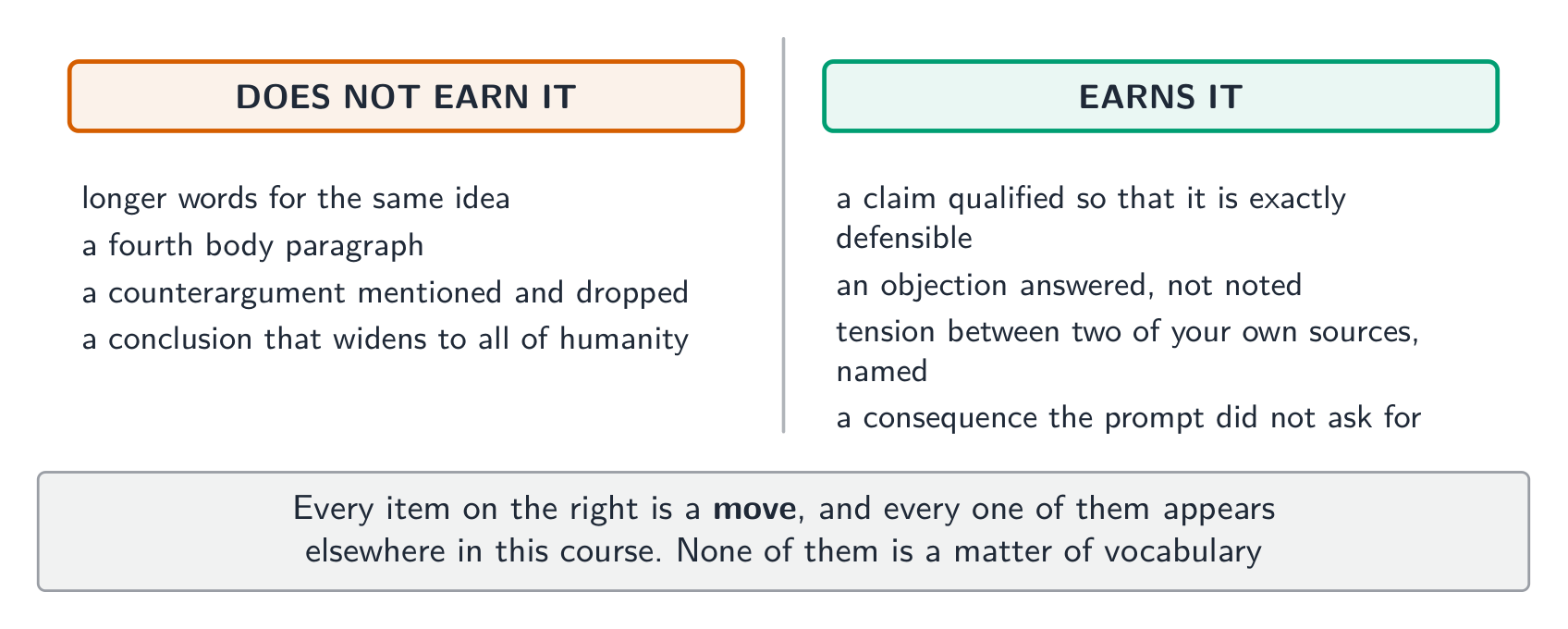
右側的每一項都是在本課程其他部分教授的move
Explore · ⁨탐색하기⁩

Sort what earns the sophistication point · ⁨sophistication 점을获得的东西排序⁩

It rewards a specific set of moves, all taught elsewhere in this course. None of them is a matter of vocabulary. · ⁨이것은本课程其他部分教授的一整套动作을reward。none of them is a matter of vocabulary.⁩

Vocabulary · ⁨어휘⁩ Train · ⁨연습하기⁩
English 한국어
Refute/rɪˈfjuːt/ 반증
9.2

Exam tips · ⁨시험 팁⁩

English
  • Concede, rebut, refute are three different claims. Do not use the words interchangeably.
  • Refute only with evidence of error. Without it, rebut instead - an alternative interpretation is almost always available.
  • Conceding raises credibility, by the CED's own statement. It is not a weakness.
  • After conceding, come back. An unreturned concession reads as agreement with the other side.
  • Use a transition that ranks the counterargument: the strongest objection to this is beats some people say.
  • When analysing a text, notice when it addresses no counterargument. That absence tells you who it was written for.
한국어
  • Concede, rebut, refute are three different claims. Do not use the words interchangeably.(互換使用)。
  • Refute only with evidence of error. Without it, rebut instead - an alternative interpretation is almost always available.(幾乎總是有可用的)。
  • Conceding raises credibility, by the CED's own statement. It is not a weakness.(不是弱點)。
  • After conceding, come back(回來). An unreturned concession reads as agreement with the other side(被解讀為同意對方)。
  • 반론을 순위를 매기는 전환구를 사용하십시오: 이点对最有力的反对意见是가 일부 사람들은 말한다보다 더 효과적입니다.
  • 텍스트를 분석할 때 반론을 전혀 다루지 않는 부분을 주의 깊게 보십시오. 그 부재는 이 텍스트가 누구를 위해 쓰였는지 알려줍니다.

Interactive lessons on this topic · ⁨이 주제에 대한 인터랙티브 수업⁩

Work through it step by step, with instant-check exercises. · ⁨즉시 체크 기능 exercises를 통해 단계별로 진행하세요.⁩

Past Papers · ⁨과거 시험지⁩

More topics in AP English Language and Composition · ⁨AP 영어 어법 및 작문⁩ · ⁨AP English Language and Composition · ⁨AP 영어 어법 및 작문⁩ 내 추가 주제⁩

Log in or create account · ⁨로그인 또는 계정 만들기⁩

IGCSE, A-Level & AP