- recall the reactions by which halogenoarenes can be produced: substitution of an arene with $\text{Cl}_2$ or $\text{Br}_2$ in the presence of a catalyst, $\text{AlCl}_3$ or $\text{AlBr}_3$ to form a halogenoarene, exemplified by benzene to form chlorobenzene and methylbenzene to form 2-chloromethylbenzene and 4-chloromethylbenzene
- explain the difference in reactivity between a halogenoalkane and a halogenoarene as exemplified by chloroethane and chlorobenzene
Halogen compounds
A-Level Chemistry · A-Level 화학 · Topic 31 · 주제 31
 7:56
7:56
할로젠 화합물 (A2)
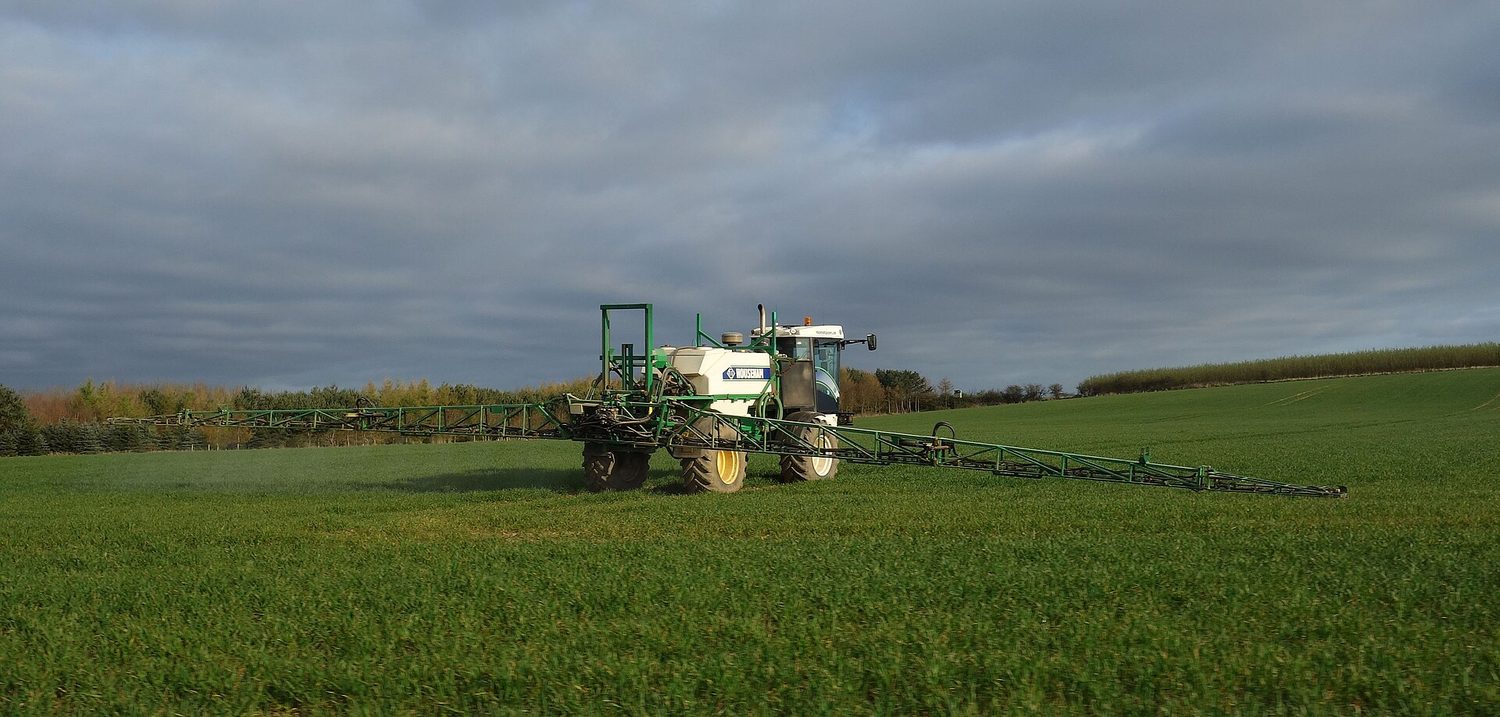
농부가 논에 살충제를 뿌립니다. 탱크 속 많은 농약과 제초제에는 할로젠 아릴 화합물이 포함되어 있습니다: 벤젠 고리에 직접 결합된 클로린 원자입니다. 이제 look…
English narration · English + 中文 subtitles burned in · 영어 내레이션 · 영어 + 중국어 자막 burned-in
31.1
Making halogenoarenes · 할로겐아렌 만들기

Syllabus
Source: Cambridge International syllabus · 출처: Cambridge International syllabus
English
A halogenoarene 卤代芳烃 (also called an aryl halide) is formed when an arene 芳烃 reacts with $\text{Cl}_2$ or $\text{Br}_2$, using $\text{AlCl}_3$ or $\text{AlBr}_3$ as a catalyst 催化剂. This is the electrophilic substitution from the arenes topic — the halogen replaces a hydrogen on the ring.
- benzene gives chlorobenzene.
- methylbenzene gives 1-chloro-2-methylbenzene and 1-chloro-4-methylbenzene (the methyl group directs the chlorine to positions 2 and 4).
한국어
할로겐아렌(아릴 할라이드라고도 함)은 아렌이 $\text{Cl}_2$ 또는 $\text{Br}_2$과 반응하고, 촉매로 $\text{AlCl}_3$ 또는 $\text{AlBr}_3$을 사용할 때 형성됩니다. 이는 아렌 단원의 전자심유입 치환반응이며, 할로겐이 고리의 수소 하나를 대체합니다.
- 벤젠은 클로로벤젠을 만듭니다.
- 메틸벤젠은 1-클로로-2-메틸벤젠과 1-클로로-4-메틸벤젠을 만듭니다(메틸기가 클로根的을 위치 2와 4로 지향함).
Explore · 탐색하기
Halogenoarene lab · 할로겐아렌 실험
Compare halogenoarenes with halogenoalkanes. · 할로겐아렌과 할로겐알kan을 비교하시오.
Vocabulary · 어휘
Train · 연습하기
| English | 한국어 |
|---|---|
| halogenoarene/ˈheɪləʊdʒnɔːren/ | 할로겐 아릴 화합물 |
| arene/ˈæren/ | 아레인 |
| catalyst/ˈkætəlɪst/ | 촉매 |
| halogenoalkane/ˈheɪləʊdʒnəʊlkeɪn/ | 할로젠알케인 |
| nucleophilic substitution/ˌnjuːklɪəˈfɪlɪk ˌsʌbstɪˈtjuːʃn/ | 친핵 치환 반응 |
| lone pair/ləʊn peə/ | 비공유 전자쌍 |
| delocalised/dɪˈlɒkəlaɪzd/ | 비국소화된 |
| nucleophile/ˈnjuːklɪɒfaɪl/ | 친핵체 |
31.1
Why a halogenoarene is less reactive than a halogenoalkane · 할로겐아렌이 할로겐알케인보다 반응성이 낮은 이유

English
Compare chloroethane (a halogenoalkane 卤代烷) with chlorobenzene (a halogenoarene).
A halogenoalkane reacts easily by nucleophilic substitution 亲核取代: its C–Cl bond is polar, so a nucleophile can attack the slightly positive carbon and push the halogen out.
A halogenoarene is very unreactive towards nucleophilic substitution. There are two reasons:
- a lone pair 孤对电子 on the chlorine overlaps sideways with the delocalised 离域 ring of electrons. This gives the C–Cl bond partial double-bond character, making it shorter and stronger, so it is much harder to break.
- the electron-rich ring repels an approaching nucleophile 亲核试剂.
So chlorobenzene does not react with nucleophiles such as $\text{OH}^-$ under normal conditions, while chloroethane does.
한국어
클로로에탄( 할로겐알케인 )과 클로로벤젠(할로겐아렌)을 비교하십시오.
할로겐알케인은 핵종 치환반응을 쉽게 거칩니다: C–Cl 결합이 극성이므로 핵종이 약양성 탄소를 공격할 수 있고 할로겐을 밀어낼 수 있습니다.
할로겐아렌은 핵종 치환반응에 매우 비활성입니다. 그 이유는 두 가지입니다:
- 염소의 고유전자쌍이 비국소화된 전자環과 측면으로 중첩됩니다. 이로 인해 C–Cl 결합은 부분적인 이중결합 성질을 띠게 되어 더 짧고 강해지며, 따라서 훨씬 더 깨지기 어렵습니다.
- 전자가 풍부한環은 접근하는 핵친화체를 반발합니다.
따라서 클로로벤젠은.normal 조건에서 $\text{OH}^-$와 같은 핵친화체와 반응하지만, 클로로에탄은 반응합니다.
31.1
Exam tips · 시험 팁
English
- A halogenoarene is less reactive than a halogenoalkane: the lone pair delocalises into the ring, giving the $\text{C-X}$ bond partial double-bond character.
- Distinguish a halogen on the ring (needs a catalyst, unreactive to substitution) from one on a side chain (reacts like a halogenoalkane).
한국어
- 할로겐아레인은 할로겐알케인보다 반응성이 낮습니다: 고유전자쌍이 ring으로 비국소화되어 $\text{C-X}$ 결합에 부분적인 이중결합 성질을 부여합니다.
- Ring 위의 할로겐(촉매 필요, 치환에는 불활성)과 사이드체인 위의 할로겐(할로겐알케인처럼 반응)을 구별하십시오.
Interactive lessons on this topic · 이 주제에 대한 인터랙티브 수업
Work through it step by step, with instant-check exercises. · 즉시 체크 기능 exercises를 통해 단계별로 진행하세요.