Three ways to say "but". although / feel free to尽管……but但是…… admits a fact before contrasting it; but; yet却 comes after the subject and shows that the result is not what you expected; to pour倒 shows a surprising or opposite point, often in speech. but; yet却 and to pour倒 are adverbs, so they follow the subject.
"But" statements
HSK 4 · Topic 15
 3:49
HSK 4 Grammar 15: "But" Statements
Three flavours of "but". 尽管 concedes then overrides; 倒 flags the pleasant surprise; 却 marks the disappointing twist from inside the sentence. Choosing 倒 or 却…
English explanations + Mandarin examples · captions follow the spoken text
15.1
At a glance
- 1. although / feel free to尽管 … ,but但是 … – although: although / feel free to尽管下着雪,sports competition运动会or / still还是as usual照常to hold (an event)举行(completed / change)了。
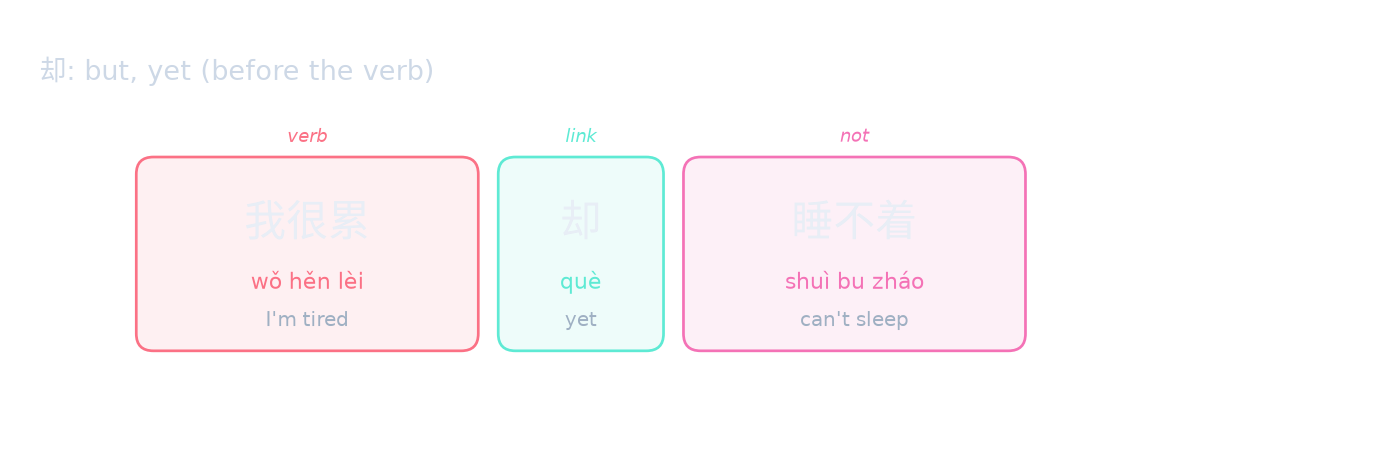
- 2. but; yet却 + Predicate – however / yet: I / me我degree / adjective linker很tired累,but; yet却睡不着。
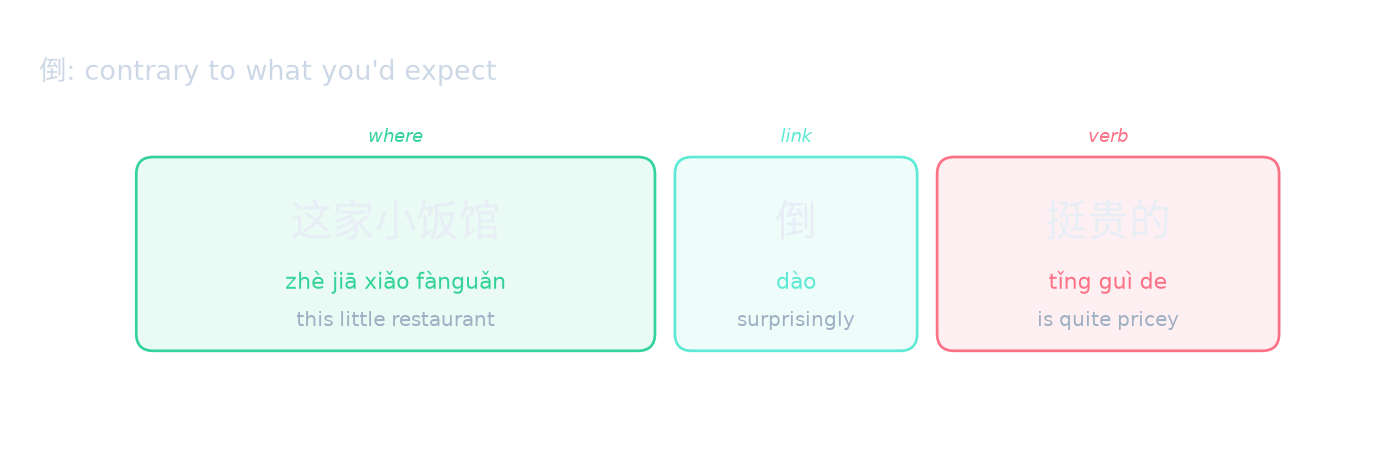
- 3. to pour倒 – actually / on the contrary: 这家small小restaurant饭馆to pour倒quite挺expensive贵(modifier / structural particle)的。
15.2
1. 尽管 … ,但是 … (although)
Form: although / feel free to尽管 A,(but但是 / but可是) subject + or / still还是 / also也 / but; yet却 + B · although / feel free to尽管 + verb (feel free to)
- although / feel free to尽管下着雪,sports competition运动会or / still还是as usual照常to hold (an event)举行(completed / change)了。 Jǐnguǎn xiàzhe xuě, yùndònghuì háishi zhàocháng jǔxíng le. – Although it was snowing, the sports day still went ahead.
- although / feel free to尽管degree / adjective linker很late / evening晚(completed / change)了,he / him他still / also / even还at / in在to work; job工作。 – Although it was late, he was still working.
- although / feel free to尽管he / him他degree / adjective linker很to work hard / effort努力,but可是achievement成绩or / still还是not so good不太好。 – Although he works hard, his grades still aren't very good.
- to have / there is有question / problem问题although / feel free to尽管to ask问I / me我。 – Feel free to ask me if you have any questions.
How it works. although / feel free to尽管 jǐnguǎn states a real fact that does not stop the result. The second clause often has but但是, but可是, or / still还是, also也 or but; yet却. It is a bit stronger and more formal than although虽然.
| although / feel free to尽管 / although虽然 | even if即使 |
|---|---|
| although (it is true) | even if (it may happen) |
Before a verb, although / feel free to尽管 means "feel free to".
Watch out
- One "although" is enough: don't combine although / feel free to尽管 with although虽然 or even if即使 in the same clause.

Vocabulary
Train
| 汉字 | Pinyin | English |
|---|---|---|
| 尽管 | jǐn guǎn | although; despite |
| 可是 | kě shì | but |
| 却 | què | but; yet |
| 即使 | jí shǐ | even if |
15.3
2. 却 + Predicate (however / yet)
Form: clause,(but但是) subject + but; yet却 + predicate
- I / me我degree / adjective linker很tired累,but; yet却睡不着。 Wǒ hěn lèi, què shuì bu zháo. – I'm exhausted, yet I can't sleep.
- already已经to be / is是spring (season)春天(completed / change)了,weather天气but; yet却still / also / even还degree / adjective linker很cold冷。 – It's already spring, yet it's still very cold.
- I / me我want / think / miss想to help帮he / him他,but但是he / him他but; yet却not不to need需要。 – I wanted to help him, but he didn't need it.
How it works. but; yet却 què marks a surprising contrast. It is an adverb: it goes after the subject of the second clause, before the verb. It can follow but但是 or but可是, and is common in writing and stories.
| but但是 | but; yet却 |
|---|---|
| opens the clause | after the subject, inside the clause |
| but但是he / him他not不to come来 | he / him他but; yet却not不to come来 |
Watch out
- but; yet却 never opens a clause: wrong: but; yet却he / him他not不to come来 → he / him他but; yet却not不to come来.
15.4
3. 倒 (actually / on the contrary)
Form: subject + to pour倒 + predicate · ……to pour倒to be / is是……,exactly就是……
- 这家small小restaurant饭馆to pour倒quite挺expensive贵(modifier / structural particle)的。 Zhè jiā xiǎo fànguǎn dào tǐng guì de. – This little restaurant is actually quite expensive.
- everyone大家all / both都degree / adjective linker很nervous紧张,he / him他to pour倒degree / adjective linker很calm平静。 – Everyone was nervous; he, surprisingly, was calm.
- thing; stuff东西to pour倒to be / is是not bad / pretty good不错,exactly就是太贵(completed / change)了。 – The goods are fine; it's just that they're too expensive.
- you你to speak说(degree marker)得to pour倒easy容易! – That's easy for you to say!
How it works. to pour倒 dào marks a result opposite to what you'd expect. It needs an expectation to go against, and sits after the subject, before the verb or adjective. to pour倒to be / is是 concedes a point before a "but" (exactly就是). you你to speak说(degree marker)得to pour倒easy容易 is ironic: easy to say, hard to do.
| but; yet却 | to pour倒 | instead (contrary to expectation)反而 |
|---|---|---|
| plain "yet" | contrary to expectation, mild | on the contrary, stronger |
| he / him他degree / adjective linker很tired累,but; yet却睡不着 | he / him他to pour倒not不to worry / impatient着急 | to eat吃(completed / change)了medicine药,illness / ill病instead (contrary to expectation)反而更重(completed / change)了 |
Watch out
- wrong: to pour倒he / him他not不to worry / impatient着急 → he / him他to pour倒not不to worry / impatient着急.
Vocabulary
Train
| 汉字 | Pinyin | English |
|---|---|---|
| 挺 | tǐng | quite |
| 紧张 | jǐn zhāng | nervous |
15.5
Practice
Cover the teaching pages before you answer. The answers are at the end.
1. although / feel free to尽管 … ,but但是 … (although)
1. Complete: “Although it was late, he was still working.” …………degree / adjective linker很late / evening晚(completed / change)了,he / him他still / also / even还at / in在to work; job工作。
2. In to have / there is有question / problem问题although / feel free to尽管to ask问I / me我, what does although / feel free to尽管 mean?
- A. because
- B. although
- C. even if
- D. feel free to
3. Build: “Although he works hard, his grades still aren't good.”
Put in order: achievement成绩or / still还是 / not so good不太好。 / although / feel free to尽管he / him他degree / adjective linker很to work hard / effort努力 / ,but可是
4. True or false? although / feel free to尽管 introduces something that is actually true. If false, correct it.
5. The school sports day went ahead even though it was snowing. Use although / feel free to尽管 … ,but但是 …. Write your answer in Chinese, then say it aloud.
2. but; yet却 + Predicate (however / yet)
6. Complete: “It's spring, yet it's still very cold.” already已经to be / is是spring (season)春天(completed / change)了,weather天气…………still / also / even还degree / adjective linker很cold冷。
7. Which sentence is correct?
- A. he / him他degree / adjective linker很intelligent聪明,he / him他but; yet却not不to work hard / effort努力。
- B. but; yet却he / him他degree / adjective linker很intelligent聪明,not不to work hard / effort努力。
- C. he / him他degree / adjective linker很intelligent聪明,not不to work hard / effort努力but; yet却。
- D. he / him他degree / adjective linker很intelligent聪明,but; yet却he / him他not不to work hard / effort努力。
8. Build: “I wanted to help him, but he didn't need it.”
Put in order: ,but但是 / he / him他but; yet却 / I / me我want / think / miss想to help帮he / him他 / not不to need需要。
9. True or false? but; yet却 can come before the subject, like but但是 (but; yet却he / him他not不to come来). If false, correct it.
10. After a long day you lie in bed, exhausted, but your mind won't stop. Use but; yet却 + Predicate. Write your answer in Chinese, then say it aloud.
3. to pour倒 (actually / on the contrary)
11. Complete: “Everyone was nervous; he, surprisingly, was calm.” everyone大家all / both都degree / adjective linker很nervous紧张,he / him他…………degree / adjective linker很calm平静。
12. What does you你to speak说(degree marker)得to pour倒easy容易 suggest?
- A. You said it again.
- B. You spoke slowly.
- C. It's easy for you to say (but hard to do).
- D. The speaker agrees it is easy.
13. Build: “The goods are fine, it's just that they're too expensive.”
Put in order: , / exactly就是 / 太贵(completed / change)了。 / thing; stuff东西to pour倒to be / is是not bad / pretty good不错
14. True or false? instead (contrary to expectation)反而 is stronger than but; yet却. If false, correct it.
15. Your friend expected the small restaurant to be cheap, but it was pricey and the fancy one was cheap. Use to pour倒. Write your answer in Chinese, then say it aloud.
15.6
Mixed practice
These questions mix the patterns and use new situations.
16. Which sentence is correct?
- A. but; yet却he / him他not have / haven't没有to come来。
- B. he / him他but; yet却not have / haven't没有to come来。
- C. he / him他not have / haven't没有to come来but; yet却。
17. Join with although / feel free to尽管……but但是……: the method takes time / it works well.
18. Everyone thought the test would be hard. Say it was actually easy, with to pour倒.
19. Find and fix the problem. A classmate writes but; yet却he / him他not have / haven't没有to come来 for "However, he didn't come." Correct the word order.
20. Use it yourself. Admit that the method takes time, then say it works well.
15.7
Answers and explanations
Mark your work, then correct each mistake in your own words.
1. although / feel free to尽管 … ,but但是 … (although)
1. although / feel free to尽管
although / feel free to尽管 + fact, then the result despite it.
2. D. feel free to
In an invitation, although / feel free to尽管 + verb = feel free to.
3. although / feel free to尽管he / him他degree / adjective linker很to work hard / effort努力,but可是achievement成绩or / still还是not so good不太好。
although / feel free to尽管 A,but可是 … or / still还是 B.
4. True.
For a hypothetical “even if”, use even if即使.
5. Model answer: although / feel free to尽管下着雪,sports competition运动会or / still还是as usual照常to hold (an event)举行(completed / change)了。
Check your answer:
- although / feel free to尽管 + a fact, with but但是 / or / still还是 after it = "although". In a request or invitation, although / feel free to尽管 + verb = "feel free to": to have / there is有question / problem问题although / feel free to尽管to ask问 – "If you have questions, feel free to ask."
- Do not combine although / feel free to尽管 with even if即使 or although虽然 in the same clause; one is enough.
2. but; yet却 + Predicate (however / yet)
6. but; yet却
but; yet却 after the subject marks the contrast.
7. A. he / him他degree / adjective linker很intelligent聪明,he / him他but; yet却not不to work hard / effort努力。
he / him他degree / adjective linker很intelligent聪明,he / him他but; yet却not不to work hard / effort努力 is right: but; yet却 is an adverb, so it goes after the subject of its clause. Unlike but但是, it can never start the clause.
8. I / me我want / think / miss想to help帮he / him他,but但是he / him他but; yet却not不to need需要。
but但是 + subject + but; yet却 + predicate.
9. False.
but; yet却 is an adverb after the subject.
10. Model answer: I / me我degree / adjective linker很tired累,but; yet却睡不着。
Check your answer:
- but; yet却 is an adverb: it goes after the subject, never before it: he / him他but; yet却not不to come来, not but; yet却he / him他not不to come来.
- but但是 starts the clause; but; yet却 follows the subject. They can be used together.
3. to pour倒 (actually / on the contrary)
11. to pour倒
to pour倒 marks a result against expectation.
12. C. It's easy for you to say (but hard to do).
Ironic to pour倒: easy to say, not to do.
13. thing; stuff东西to pour倒to be / is是not bad / pretty good不错,exactly就是太贵(completed / change)了。
to pour倒to be / is是…,exactly就是….
14. True.
instead (contrary to expectation)反而 says the opposite of what you'd expect actually happened.
15. Model answer: 这家small小restaurant饭馆to pour倒quite挺expensive贵(modifier / structural particle)的。
Check your answer:
- to pour倒 needs an expectation to go against (stated or obvious); without one it sounds odd.
- It goes after the subject: he / him他to pour倒not不to worry / impatient着急, not to pour倒he / him他not不to worry / impatient着急.
Mixed practice
16. B. but; yet却 is an adverb, so it goes after the subject and before the verb.
17. although / feel free to尽管this这个means办法degree / adjective linker很费时间,but但是effect效果degree / adjective linker很good好。
18. 这次exam; to take an exam考试to pour倒不难。to pour倒 marks a result that goes against what people expected.
19. but; yet却 is an adverb, so it follows the subject: he / him他but; yet却not have / haven't没有to come来. A clause before it gives the contrast: I / me我to wait; and so on等(completed / change)了he / him他一个hour小时,he / him他but; yet却not have / haven't没有to come来.
20. Model answer. although / feel free to尽管this这个means办法degree / adjective linker很费时间,but但是effect效果degree / adjective linker很good好。
Review later. Tomorrow, write one sentence with although / feel free to尽管……but但是…… and one with but; yet却.
Interactive lessons on this topic
Work through it step by step, with instant-check exercises.