Skip to content
Subjects

GRE · GRE Subject Test · GRE Psychology

  • 1

    I · Biological psychology

    Learning program coming soon

    Handout

    Biological psychology

    Scope and prerequisites

    Supported GRE topic 1 (I). Read SP.1, NE.1 and HB.1 for the detailed biological mechanisms. Existing official questions are traced in bank_review_form.yaml; original tasks below are not ETS items.

    Concepts and method

    sensation 感觉: Reception of sensory stimulation. response criterion 反应标准: The threshold for reporting that a signal is present.

    Sensation concerns reception of stimulation; perception concerns interpretation. They interact but are not interchangeable.

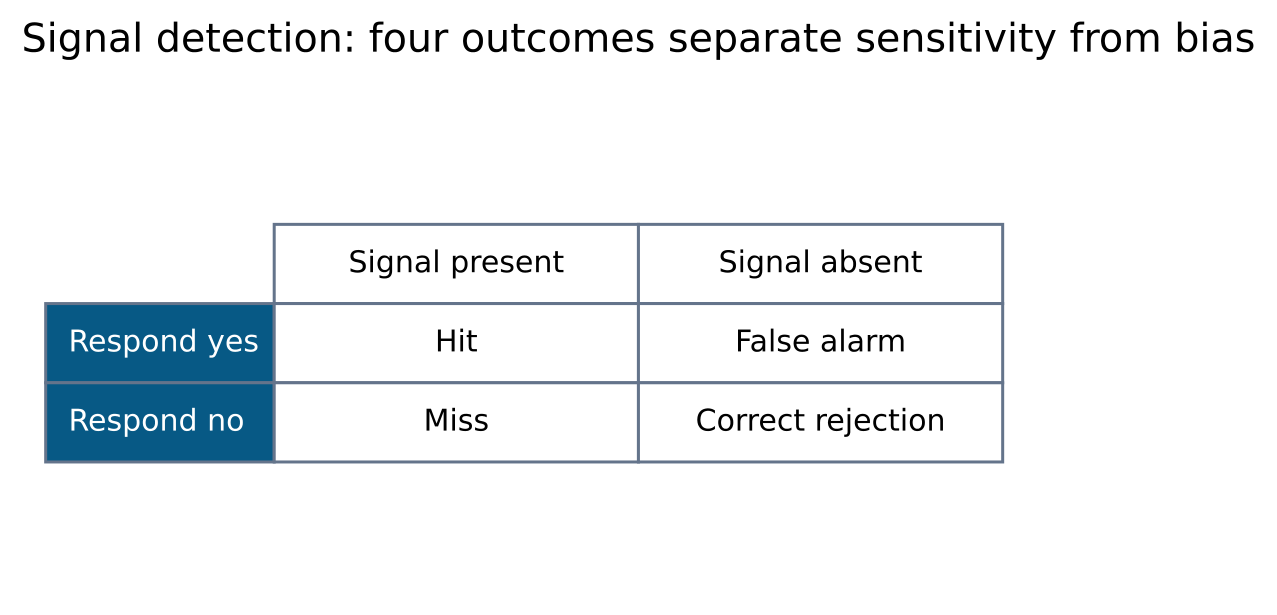
    Signal detection separates sensitivity from the criterion for saying yes. Expectations can change the response criterion.

    Neurons communicate through electrical signals and synapses. A brain region’s involvement does not establish that it acts alone.

    Lesion and imaging studies give different evidence. Consider confounds and the limits of inferring causes from associations.

    A biological explanation needs a path from a physical process to the observed behaviour. Receptors change stimulus energy into neural signals; connected brain systems process those signals. An association in an image cannot tell us whether activity causes, follows or merely accompanies the task. Sleep also depends on both a roughly daily circadian rhythm and pressure that builds during wakefulness. Motivation and emotion involve interacting neural, endocrine and environmental processes. A single brain area or hormone is rarely a complete explanation. Detailed methods are in SP.1, NE.1 and HB.1.

    Worked reasoning

    A person expecting an alarm reports more faint sounds as alarms. Hits may rise, but false alarms may also rise. This can reflect a more liberal response criterion rather than better sensory sensitivity.

    In a fictional alarm task, a bonus for reporting alarms raises hits from 60/100 to 80/100 and false alarms from 10/100 to 30/100. Does this establish improved sensitivity?

    Hit rate rises from 60% to 80%, but false-alarm rate also rises from 10% to 30%. A more liberal response criterion can produce both changes. Hit rate alone cannot establish improved sensitivity; compare separation of signal and noise using both rates and a suitable model. Neither the bonus nor these illustrative counts identifies a neural cause.
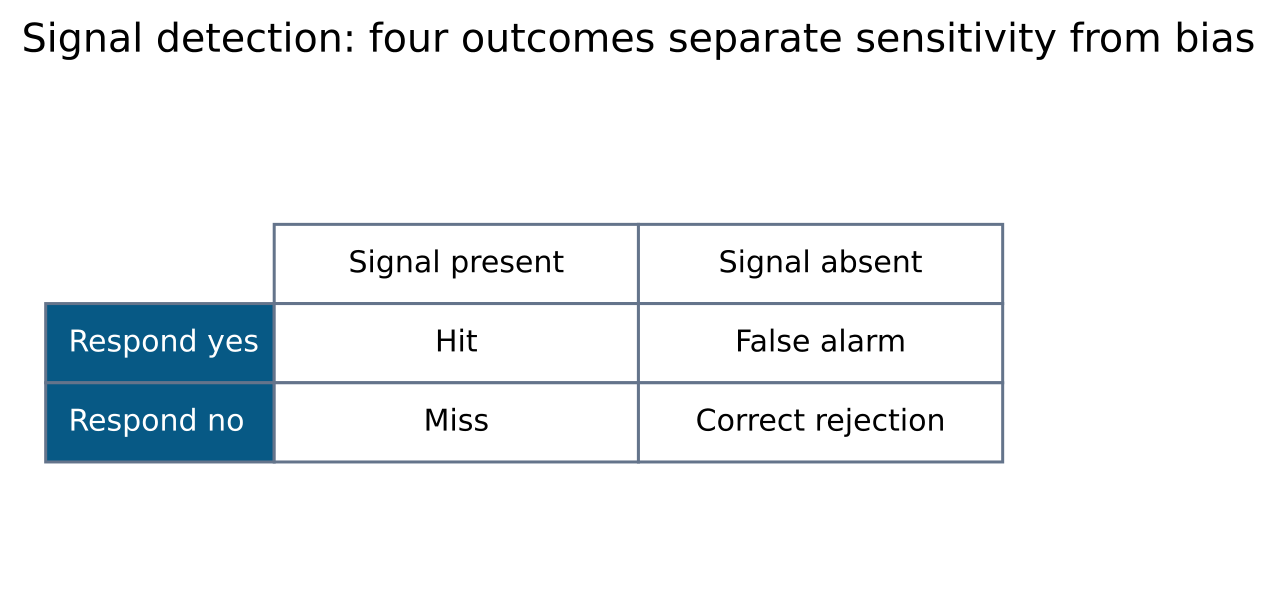
    Original schematic for Sensation, perception and psychophysics. Illustrative relationships and numbers are not research results.

    Independent transfer

    A participant sleeps little before a memory scan. Recall falls and one region is less active. Give two competing explanations and a design improvement.

    Attempt independently, then use the matching skill sheet solution.

    Review and source limits

    Avoid this error: A brain image showing activity during a task is not proof that the region alone causes the behaviour. Teaching scope comes from teaching.yaml and the source/key/crop review in bank_review_form.yaml. Detailed current diagnostic criteria require an authenticated manual; neither historical ETS practice nor this educational reference certifies them.
    Vocabulary
    English
    sensation/senˈseɪʃn/
    response criterion/rɪˈspɒns kraɪˈtɪərɪən/
  • 2

    II · Cognition, language and learning

    Learning program coming soon

    Handout

    Cognition, language and learning

    Scope and prerequisites

    Supported GRE topic 2 (II). Read LR.1, ME.1, LG.1, TH.1 and ME.2 for the detailed cognitive mechanisms. Existing official questions are traced in bank_review_form.yaml; original tasks below are not ETS items.

    Concepts and method

    negative reinforcement 负强化: Removing an aversive condition to increase behaviour. morpheme 语素: A smallest meaningful language unit.

    Classical conditioning associates stimuli; operant conditioning changes behaviour through consequences.

    Negative reinforcement removes an unpleasant condition and increases behaviour. It is not punishment.

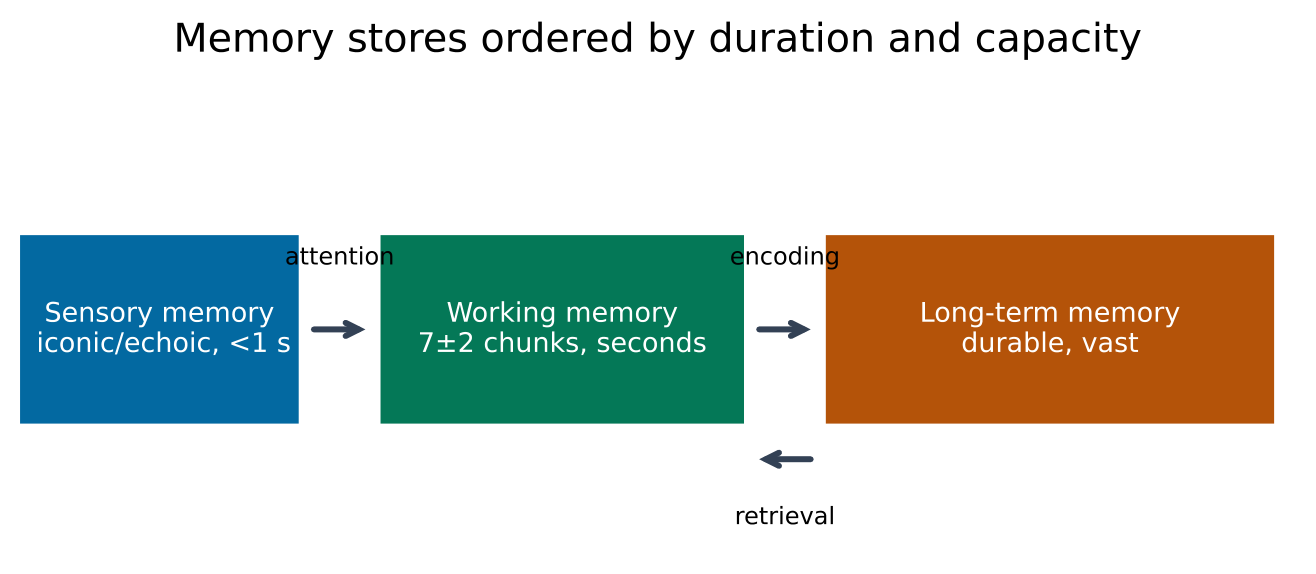
    Working memory supports current processing. Long-term memory includes explicit and implicit forms.

    Language uses phonemes for sound contrasts and morphemes for meaning units. Problem solving can be limited by fixation or biased heuristics.

    Identify what changes before naming a learning process. In classical conditioning, a cue predicts another event and evokes a response. In operant conditioning, a consequence follows an action and changes its future frequency. Memory tasks differ in their retrieval cues: recognizing an answer supplies information that free recall does not. A language task may require sound contrasts, meaningful word parts or sentence structure; identify the level rather than using language as one undivided ability. See LR.1, ME.1, LG.1, TH.1 and ME.2 for detailed teaching.

    Worked reasoning

    A seat-belt alarm stops when the belt is fastened. Removing the alarm makes fastening more likely: negative reinforcement. If an added fine reduces unsafe driving, that is positive punishment. Positive and negative mean adding and removing, not good and bad.

    A child hears a tune before lunch and later salivates to it. Separately, a child earns a token after reading and reads more often. Explain the different processes.

    The tune predicts food; salivation to the cue fits classical conditioning. Reading produces a token and subsequently increases; adding that consequence fits positive reinforcement. A pleasant event is not automatically reinforcement: the evidence must include a change in the target action.

    Original schematic for Memory systems, processes and forgetting. Illustrative relationships and numbers are not research results.

    Independent transfer

    Students remember a definition when shown its first letter but fail to recall it unaided. One claims the memory never existed. Evaluate and propose a comparison.

    Attempt independently, then use the matching skill sheet solution.

    Review and source limits

    Avoid this error: Recognition performance cannot be treated as identical to unaided recall performance. Teaching scope comes from teaching.yaml and the source/key/crop review in bank_review_form.yaml. Detailed current diagnostic criteria require an authenticated manual; neither historical ETS practice nor this educational reference certifies them.
    Vocabulary
    English
    negative reinforcement/ˈneɡətɪv ˌriːɪnˈfɔːsmənt/
    morpheme/ˈmɔːfiːm/
  • 3

    III · Social psychology

    Learning program coming soon

    Handout

    Social psychology

    Scope and prerequisites

    Supported GRE topic 3 (III). Read SO.1 and SO.2 for attribution, influence and group mechanisms. Existing official questions are traced in bank_review_form.yaml; original tasks below are not ETS items.

    Concepts and method

    attribution 归因: An explanation for behaviour. conformity 从众: Changing behaviour or judgement in relation to a group.

    Attribution concerns explanations for behaviour. Situational and dispositional causes should be distinguished.

    Conformity concerns group pressure; obedience concerns an authority’s instruction. Both require a clear social context.

    Attitude and behaviour links depend on measurement and situation. A stated intention is not identical to observed action.

    Group research must consider social norms, selection and ethical constraints before generalising its findings.

    Separate what people do, what they privately believe and why they do it. Agreement may seek acceptance, use others as information or follow an authority. An attribution should compare situational constraints with stable personal explanations. Group differences require information about sampling, norms and opportunities; a category label does not explain every member. Use SO.1 and SO.2 for attribution and group mechanisms.

    Worked reasoning

    A participant agrees with a group’s visibly wrong answer. If the person privately doubts it but complies to avoid rejection, normative influence is a plausible explanation. Accepting the group as a source of information is informational influence.

    A pupil publicly agrees with peers but privately gives the correct answer. An adult did not issue an instruction. Which influence fits best, and what remains uncertain?

    The public/private difference fits normative influence: agreement may avoid rejection while private belief stays different. It is not enough to call the response obedience because no authority instruction is described. Fear of rejection is still an inferred mechanism; an approved private account or changed anonymity condition could strengthen it.

    Original schematic for Social cognition, attribution and social influence. Illustrative relationships and numbers are not research results.

    Independent transfer

    A club's members help more than non-members. Explain why this does not show that joining the club causes generosity, then improve the evidence.

    Attempt independently, then use the matching skill sheet solution.

    Review and source limits

    Avoid this error: Do not infer a person’s stable trait from a single constrained action. Teaching scope comes from teaching.yaml and the source/key/crop review in bank_review_form.yaml. Detailed current diagnostic criteria require an authenticated manual; neither historical ETS practice nor this educational reference certifies them.
    Vocabulary
    English
    attribution/ətrɪˈbjuːʃn/
    conformity/kənˈfɔːmɪti/
  • 4

    IV · Developmental psychology

    Learning program coming soon

    Handout

    Developmental psychology

    Scope and prerequisites

    Supported GRE topic 4 (IV). Read DV.1 for developmental theories and their evidence. Existing official questions are traced in bank_review_form.yaml; original tasks below are not ETS items.

    Concepts and method

    cohort 同龄群体: People sharing a birth period or historical experience. attrition 样本流失: Loss of participants during a study.

    Development covers the lifespan and multiple domains, not just childhood milestones.

    Cross-sectional studies compare ages at one time; longitudinal studies follow people over time.

    Cohort effects can confound age comparisons. Longitudinal studies face attrition and repeated-testing effects.

    Theories offer different accounts of change. Apply their specific mechanisms rather than treating a stage label as an explanation.

    Development can change knowledge, strategy and social support at different rates. Piaget's account emphasizes changes in reasoning; Vygotsky's account emphasizes learning supported by social interaction. Attachment concerns a relationship and patterns of security, not a permanent label inferred from one separation. Age averages do not establish a deadline for each child. Compare repeated observations, task demands and cultural context before deciding what changed. See DV.1 for theories and methods.

    Worked reasoning

    Comparing 20-year-olds and 70-year-olds on computer use cannot isolate age: they had different exposure opportunities. Following one group helps examine change but may lose participants unevenly, creating attrition bias.

    Children solve a sorting task with an adult's hints but not alone. How could a sociocultural explanation account for the difference?

    The hints provide scaffolding within a range where supported performance exceeds independent performance. They may direct attention or model a useful strategy. Record the actual hint and later test without it; success with help does not yet establish independent mastery or identify a universal stage.

    Original schematic for Developmental theories and milestones. Illustrative relationships and numbers are not research results.

    Independent transfer

    A study compares adolescents and adults once, then calls the difference a developmental change. Give the design, a competing explanation and a complementary design with its limitation.

    Attempt independently, then use the matching skill sheet solution.

    Review and source limits

    Avoid this error: Average developmental patterns do not imply identical timing or outcomes for every person. Teaching scope comes from teaching.yaml and the source/key/crop review in bank_review_form.yaml. Detailed current diagnostic criteria require an authenticated manual; neither historical ETS practice nor this educational reference certifies them.
    Vocabulary
    English
    cohort/ˈkəʊhɔːt/
    attrition/əˈtrɪʃn/
  • 5

    V · Personality, clinical and abnormal psychology

    Learning program coming soon

    Handout

    Personality, clinical and abnormal psychology

    Scope and prerequisites

    Supported GRE topic 5 (V). Read CL.1, CL.2 and EP.1 for classification and outcome evidence. Existing official questions are traced in bank_review_form.yaml; original tasks below are not ETS items.

    Concepts and method

    trait 人格特质: A relatively stable dimension of individual differences. differential diagnosis 鉴别诊断: Comparing possible explanations for a clinical presentation.

    Trait theories describe relatively stable dimensions; other personality theories emphasise learning, cognition or internal dynamics.

    Clinical classification uses patterns, impairment, context and differential explanations. A symptom alone is insufficient.

    Therapies differ in proposed mechanisms. Cognitive approaches examine thoughts; behavioural approaches change learning contingencies.

    Treatment studies need suitable comparison groups and defined outcomes. These lessons teach academic concepts, not self-diagnosis or treatment advice.

    Trait descriptions summarize relatively stable patterns; behavioural accounts examine learned contingencies; cognitive accounts examine interpretations; psychodynamic accounts emphasize unconscious processes; humanistic accounts emphasize experience and growth. Compare the mechanism and evidence, rather than treating these as interchangeable names. Clinical categories summarize patterns under a specified diagnostic framework. Their boundaries do not establish causes. CL.1, CL.2 and EP.1 provide educational classification and outcome interpretation.

    Worked reasoning

    A therapy group improves after six weeks. Without a comparison, the change may reflect therapy, spontaneous improvement, expectancy or regression toward the mean. Random allocation and an appropriate comparison can improve causal evidence.

    A pupil's self-report scores are stable across weeks but change when a teacher is present. What does this suggest about assessment?

    Stable scores can show repeatability under similar conditions. The teacher's presence may change social desirability or perceived consequences, so interpretation also depends on setting. Use appropriate multiple methods and contexts; consistency alone neither validates a trait interpretation nor supplies a diagnosis.

    Original schematic for Psychometrics and test construction. Illustrative relationships and numbers are not research results.

    Independent transfer

    An uncontrolled support programme reports large improvement among people selected for unusually high initial scores. Give two alternatives to a treatment effect and one useful comparison.

    Attempt independently, then use the matching skill sheet solution.

    Review and source limits

    Avoid this error: Do not diagnose yourself or classmates from a multiple-choice description. Actual assessment belongs to qualified clinicians. Teaching scope comes from teaching.yaml and the source/key/crop review in bank_review_form.yaml. Detailed current diagnostic criteria require an authenticated manual; neither historical ETS practice nor this educational reference certifies them.
    Vocabulary
    English
    trait/treɪt/
    differential diagnosis/ˌdɪfəˈrenʃl ˌdaɪəɡˈnəʊsɪs/
  • 6

    VI · Measurement, methods, statistics and history

    Learning program coming soon

    Handout

    Measurement, methods, statistics and history

    Scope and prerequisites

    Supported GRE topic 6 (VI). Read MM.1, MM.2 and HT.1 for measurement, design and historical claims. Existing official questions are traced in bank_review_form.yaml; original tasks below are not ETS items.

    Concepts and method

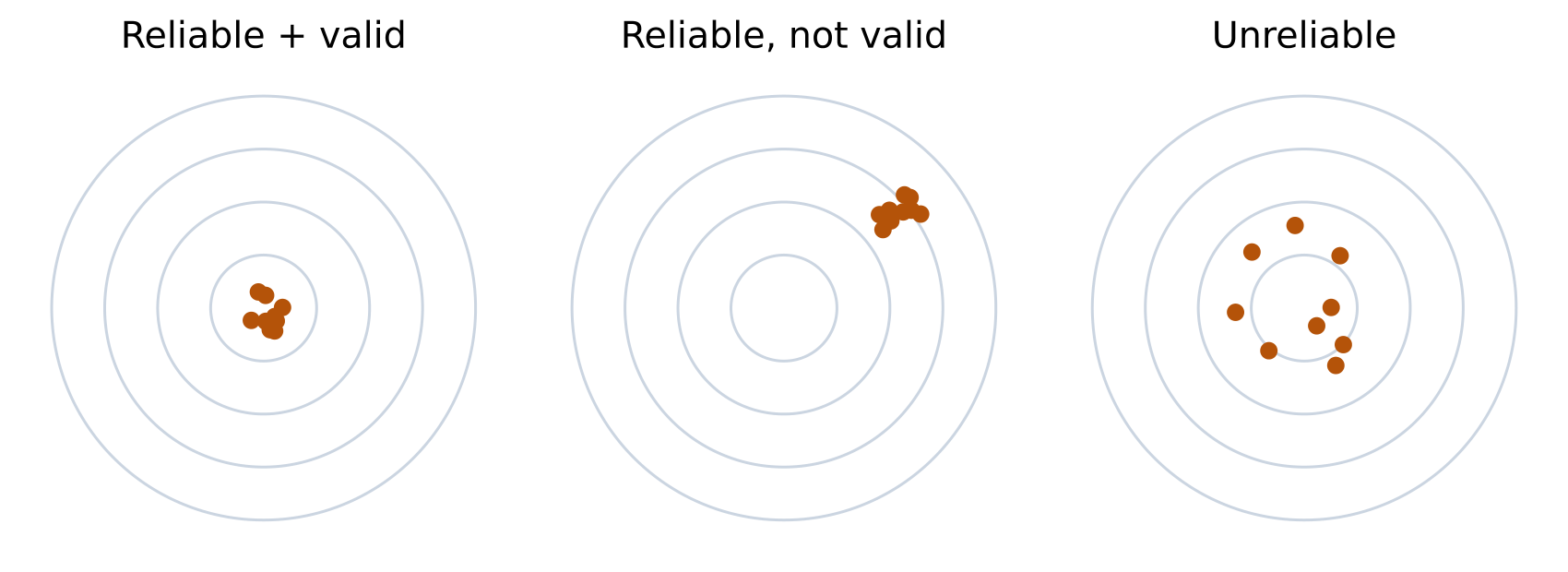
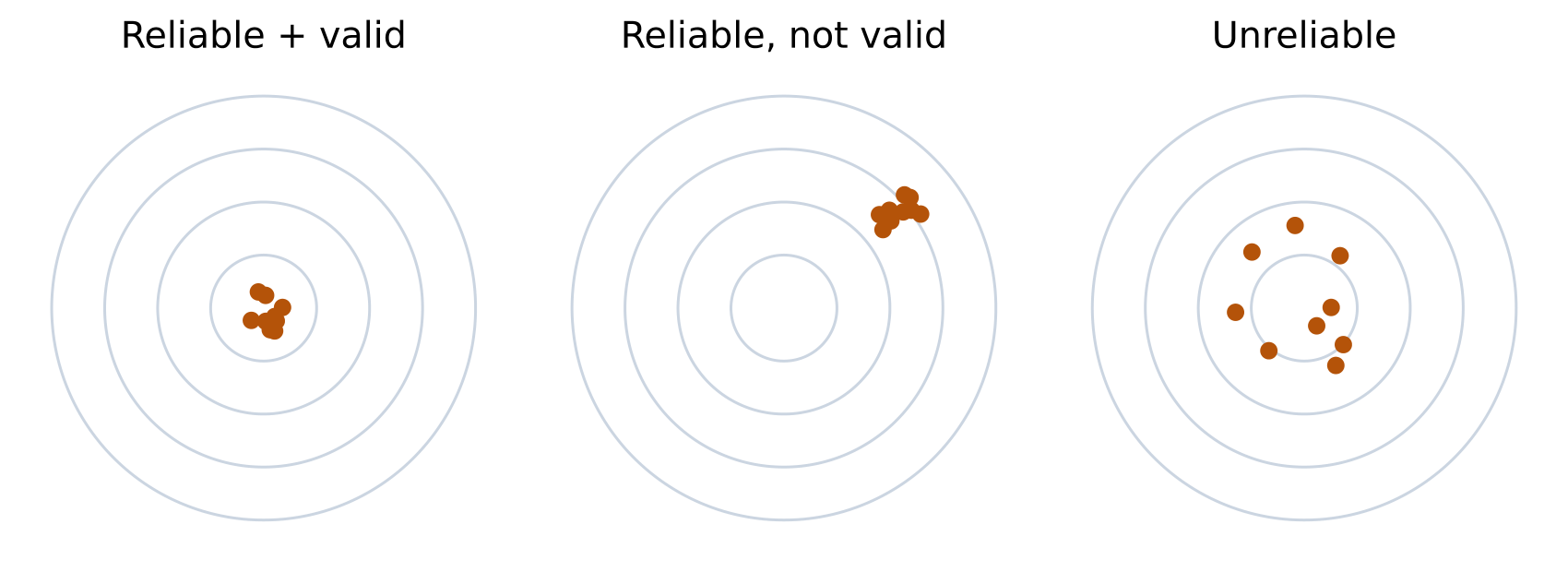
    reliability 信度: Consistency of measurement. validity 效度: Evidence for an intended measurement interpretation.

    Reliability concerns consistency; validity concerns evidence supporting a particular interpretation or use.

    Operational definitions specify how a construct is measured. A questionnaire label does not establish construct validity.

    Random assignment improves comparisons; random sampling supports population generalisation. Ethics constrains both design and interpretation.

    A p-value is a probability of data at least as incompatible under the null model, not the probability that the null is true. History questions distinguish explanatory schools and their methods.

    Define a construct, state its observable measure, then ask whether the measure supports the intended interpretation. Random sampling concerns who enters a study; random assignment concerns which condition participants receive. A causal conclusion needs a credible comparison as well as measurement and ethical safeguards. Historical schools differ in the questions and methods they prioritize. See MM.1, MM.2 and HT.1 before using statistical or historical labels as explanations.

    Worked reasoning

    A memory test yields similar scores on repeated administrations but mostly measures reading skill. It may show test–retest reliability while lacking evidence for its intended memory interpretation. Establishing validity requires more than repeated agreement.

    Volunteers are randomly assigned to two memory tasks. Does this make the sample representative of all adults?

    No. Assignment improves comparability of conditions within the recruited sample; it does not undo volunteer selection. Generalization requires attention to recruitment, eligibility and population differences. Describe random sampling and assignment separately.

    Original schematic for Psychometrics and test construction. Illustrative relationships and numbers are not research results.

    Independent transfer

    A report finds p=.03 and concludes that its theory has a 97% probability of being true and a large effect. Correct both inferences.

    Attempt independently, then use the matching skill sheet solution.

    Review and source limits

    Avoid this error: Statistical significance alone does not tell you effect size, practical value or absence of design bias. Teaching scope comes from teaching.yaml and the source/key/crop review in bank_review_form.yaml. Detailed current diagnostic criteria require an authenticated manual; neither historical ETS practice nor this educational reference certifies them.
    Vocabulary
    English
    reliability/rɪˌlaɪəˈbɪlɪti/
    validity/væˈlɪdɪti/
  • 7

    VII · Historical perspectives and psychometric interpretation

    Learning program coming soon

    Handout

    Historical perspectives and psychometric interpretation

    Scope and prerequisites

    Supported GRE topic 7 (VII). Use MM.1 for standard scores and EP.1 for conditional screening measures. Existing official questions are traced in bank_review_form.yaml; original tasks below are not ETS items.

    Concepts and method

    reliability 信度: Consistency of measurement under specified conditions. validity 效度: Evidence supporting a particular interpretation and use of scores.

    Structuralism analysed conscious experience; functionalism asked how mental activity serves adaptation. Behaviourism emphasised observable learning; Gestalt psychology stressed organised perception. These are historical emphases, not interchangeable labels.

    Psychoanalytic accounts emphasise unconscious conflict, humanistic accounts agency and growth, and cognitive accounts information processing. Compare the explanatory mechanism rather than matching every theory to a single familiar name.

    Reliability concerns consistency across measurements. Validity concerns evidence for a proposed interpretation and use. A high reliability coefficient cannot prove that a test measures the intended construct fairly.

    Standardisation supplies consistent administration and a relevant reference sample. Norm-referenced standing differs from criterion-referenced mastery. Predictive value depends on base rates as well as sensitivity and specificity.

    A norm describes relative standing in a reference population; a mastery criterion describes a specified performance standard. A high percentile is not the same as a high percentage correct. Standardized administration reduces avoidable procedural variation, but the norm sample must still fit the intended use. Psychological perspectives can ask complementary questions; differences in emphasis do not make every observation decisive for one school.

    Worked reasoning

    In 1,000 people, suppose 10 have a target condition. A screening tool detects 9 of those 10, but falsely flags 99 of the other 990. Among 108 positive screens, only 9/108≈8.3% are true positives. This is a hypothetical methods example, not a diagnostic recommendation.

    A learner is at the 80th percentile on a normed test and answers 60% correctly. Is this contradictory?

    No. Percent correct compares correct responses with all items. Percentile compares the learner's score with scores in a reference group. A difficult test can produce both figures. State the norm population and the particular comparison rather than replacing one measure with the other.

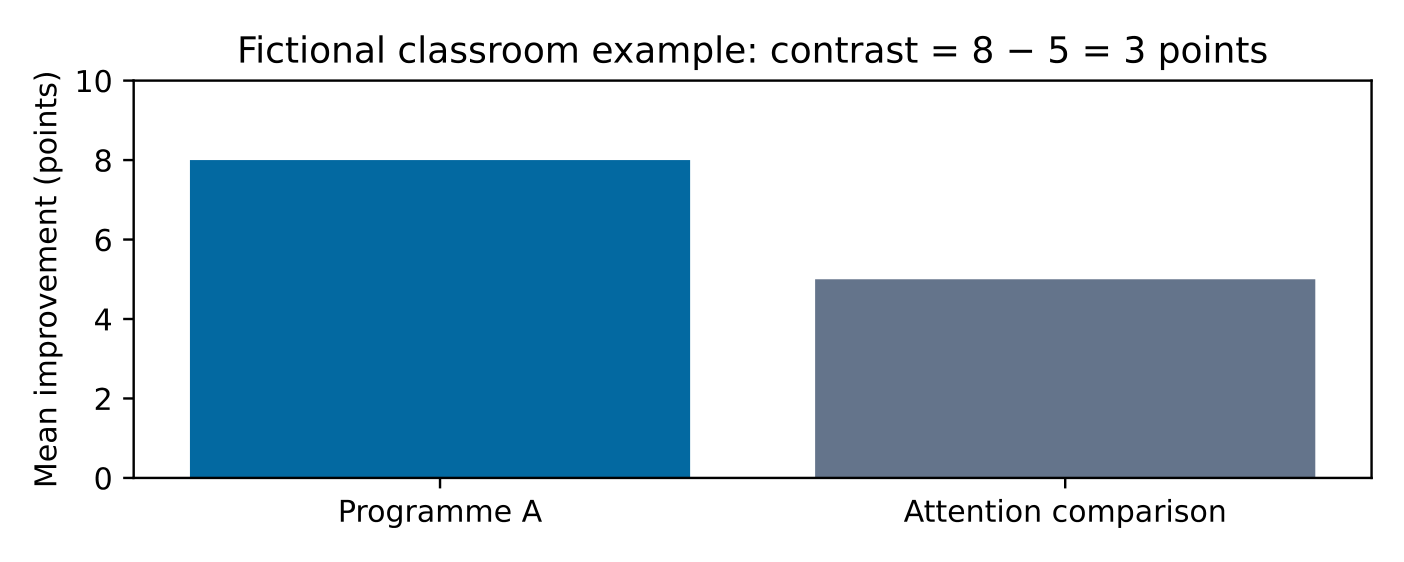
    Original schematic for Sensation, perception and psychophysics. Illustrative relationships and numbers are not research results.

    Independent transfer

    In 2,000 fictional cases, 20 meet a target definition. A screen flags 18 of these and 198 of the others. Compute the fraction of positive screens that meet the definition.

    Attempt independently, then use the matching skill sheet solution.

    Review and source limits

    Avoid this error: Do not equate sensitivity with the probability that a positive result is correct, and do not use a classroom score to diagnose a disorder. Teaching scope comes from teaching.yaml and the source/key/crop review in bank_review_form.yaml. Detailed current diagnostic criteria require an authenticated manual; neither historical ETS practice nor this educational reference certifies them.
    Vocabulary
    English
    reliability/rɪˌlaɪəˈbɪlɪti/
    validity/væˈlɪdɪti/
  • 8

    CL.1 · Diagnostic systems and disorder classification

    Learning program coming soon

    Handout

    Diagnostic systems and disorder classification

    Scope and prerequisites

    Supported GRE topic 8 (CL.1). Use the overview measurement lesson VI when interpreting research evidence. Existing official questions are traced in bank_review_form.yaml; original tasks below are not ETS items.

    Concepts and method

    diagnostic criteria 诊断标准: The listed symptom, duration, impairment and exclusion requirements for a classification. diathesis-stress model 素质-应激模型: An account of how vulnerability and environmental stress jointly affect risk.

    The recorded framework is DSM-5-TR. Clinical classification describes patterns; a category does not establish the cause of a presentation. Historical ETS items must be interpreted against their recorded source version.

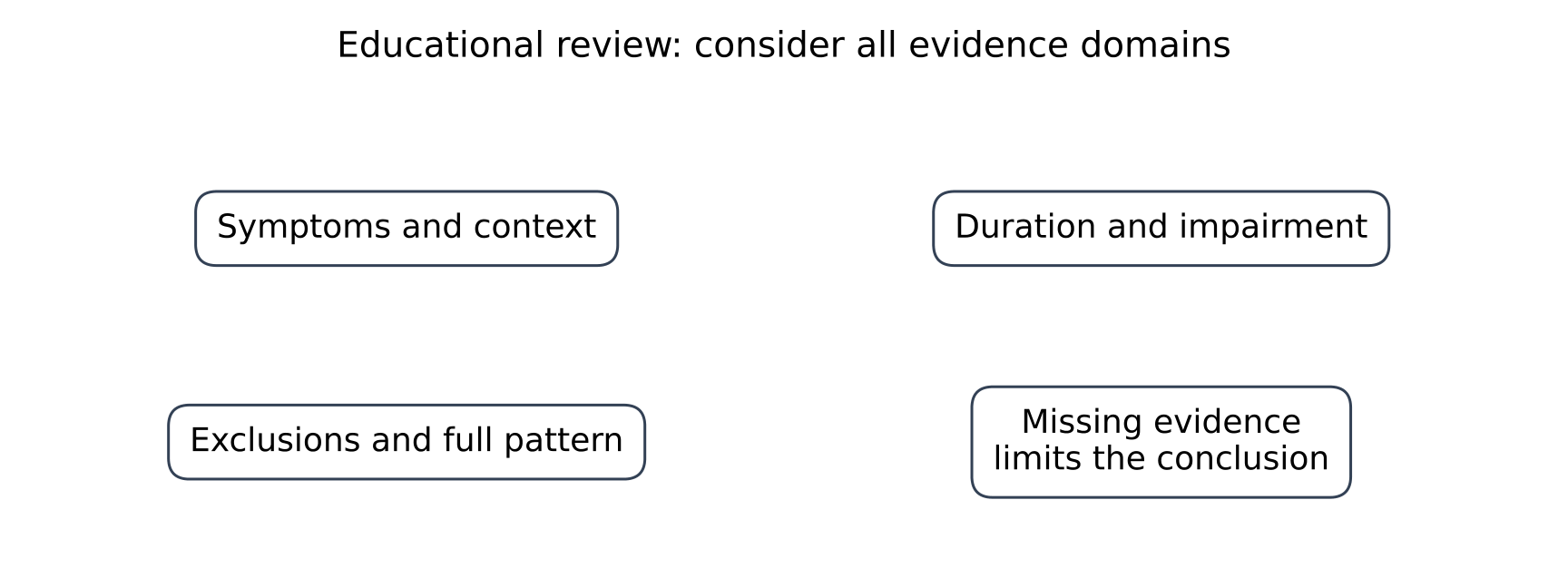
    Symptoms, duration, clinically significant distress or impairment, context and exclusions must be considered together. A short duration does not by itself establish acute stress disorder or any other diagnosis.

    The diathesis-stress model examines how vulnerability and environmental stress jointly affect risk. Neither a family history nor a later event establishes an inevitable outcome or a universal necessity/sufficiency rule.

    Common educational distinctions include added experiences versus reduced functions in symptom descriptions, and episodic presentations versus enduring patterns. Full current criteria require an authenticated manual; the available GRE practice book is not that manual.

    The recorded teaching names DSM-5-TR; the historical ETS practice form is not authority for every current diagnostic criterion. A diagnosis requires its complete pattern and exclusions under the applicable manual. Duration is one piece of evidence, never a sufficient decision rule. Predisposition and stress are risk concepts: neither a family history nor an adverse event makes an outcome inevitable. Avoid classifying real people in classroom practice.

    Worked reasoning

    A fictional vignette supplies a recent adverse event and two symptoms but omits impairment, exclusions and a full assessment. What conclusion is justified?

    The vignette identifies relevant evidence and missing information. It cannot establish a diagnosis. A duration threshold alone cannot turn a short account into an alternative disorder. The correct educational response is to name the missing criterion domains and source/version, not supply personal advice.

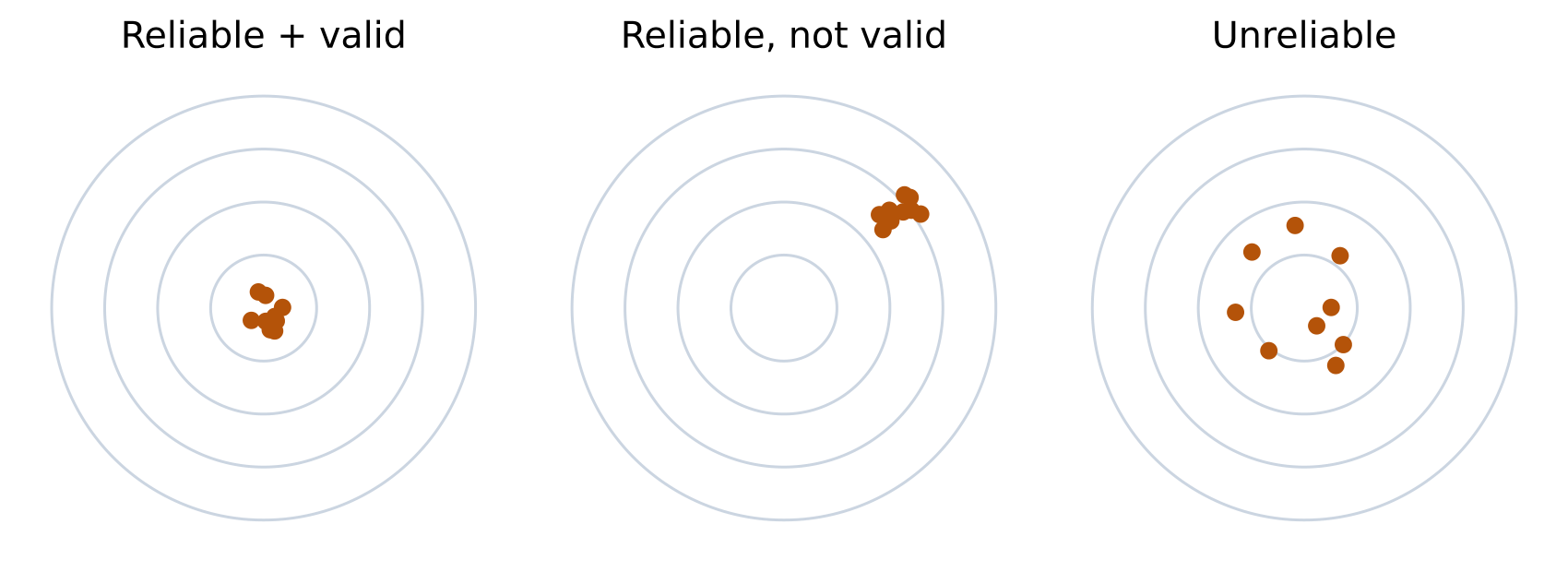
    Educational evidence domains: an incomplete vignette does not establish a diagnosis.

    Independent transfer

    Two fictional people share a family risk factor; only one has a later stressor and difficulty. Explain the diathesis-stress interpretation and its limit.

    Attempt independently, then use the matching skill sheet solution.

    Review and source limits

    Avoid this error: Do not infer a diagnosis from duration or a few symptoms, or offer personal treatment advice. Teaching scope comes from teaching.yaml and the source/key/crop review in bank_review_form.yaml. Detailed current diagnostic criteria require an authenticated manual; neither historical ETS practice nor this educational reference certifies them.
    Vocabulary
    English
    diagnostic criteria/ˌdaɪəɡˈnɒstɪk kraɪˈtɪərɪə/
    diathesis-stress model/ˈdaɪəθəsɪs stres ˈmɒdl/
  • 9

    CL.2 · Treatment models and outcome evidence

    Learning program coming soon

    Handout

    Treatment models and outcome evidence

    Scope and prerequisites

    Supported GRE topic 9 (CL.2). Use the overview measurement lesson VI when interpreting research evidence. Existing official questions are traced in bank_review_form.yaml; original tasks below are not ETS items.

    Concepts and method

    counterconditioning 对抗性条件作用: Replacing a conditioned response by pairing the stimulus with an incompatible response such as relaxation. common factors 共同因素: Ingredients shared across therapies, such as alliance and expectancy, proposed to explain comparable outcomes.

    Each therapy family proposes a mechanism. Psychodynamic work targets unconscious conflict and early relationships, using transference; object-relations variants emphasise early relationships in particular. Behavioural treatment applies learning principles: systematic desensitisation traditionally pairs a graded fear hierarchy with relaxation (counterconditioning), while exposure approaches need not use relaxation pairing. Cognitive-behavioural therapy identifies and tests distorted thoughts and adds behavioural activation. Person-centred work offers empathy, unconditional positive regard and congruence; Gestalt work stresses the here and now. Biological treatment includes medication and, for severe depression, electroconvulsive therapy.

    Match technique to mechanism and presentation: specific phobia points to graduated exposure; obsessive-compulsive disorder to exposure with response prevention; depression to cognitive restructuring plus activity scheduling. A therapist rooted in object relations will emphasise early life relationships, not medication or cognitive distortion lists.

    Outcome claims need controls because of spontaneous remission and regression to the mean: people seek help at their worst and improve anyway. A randomised controlled trial with a waitlist or placebo comparison separates treatment gain from natural course. Efficacy is performance under controlled conditions; effectiveness is performance in ordinary practice. Meta-analysis pools trials for a more stable estimate.

    When bona fide therapies show comparable mean outcomes, the common-factors hypothesis credits shared ingredients such as the working alliance, expectancy and empathy rather than branded techniques. Comparable means do not prove identical mechanisms, and a single trial cannot settle the question either way.

    Mechanism and outcome are different claims. An intervention may improve an outcome without the study establishing its proposed mechanism. A waitlist comparison controls some natural change, but not all attention and expectancy differences. An active comparison can address some of those differences. Compare allocation, attrition, outcome definition and follow-up before attributing benefit to a particular technique. Similar sample means do not demonstrate equivalence without an appropriate design and uncertainty analysis.

    Worked reasoning

    A therapist rooted in object relations theory emphasises early life relationships. A phobia treated by a relaxation-paired hierarchy is counterconditioning. A treated group improving from pre-test to post-test shows change, not efficacy: without a control, regression to the mean and spontaneous remission remain open.

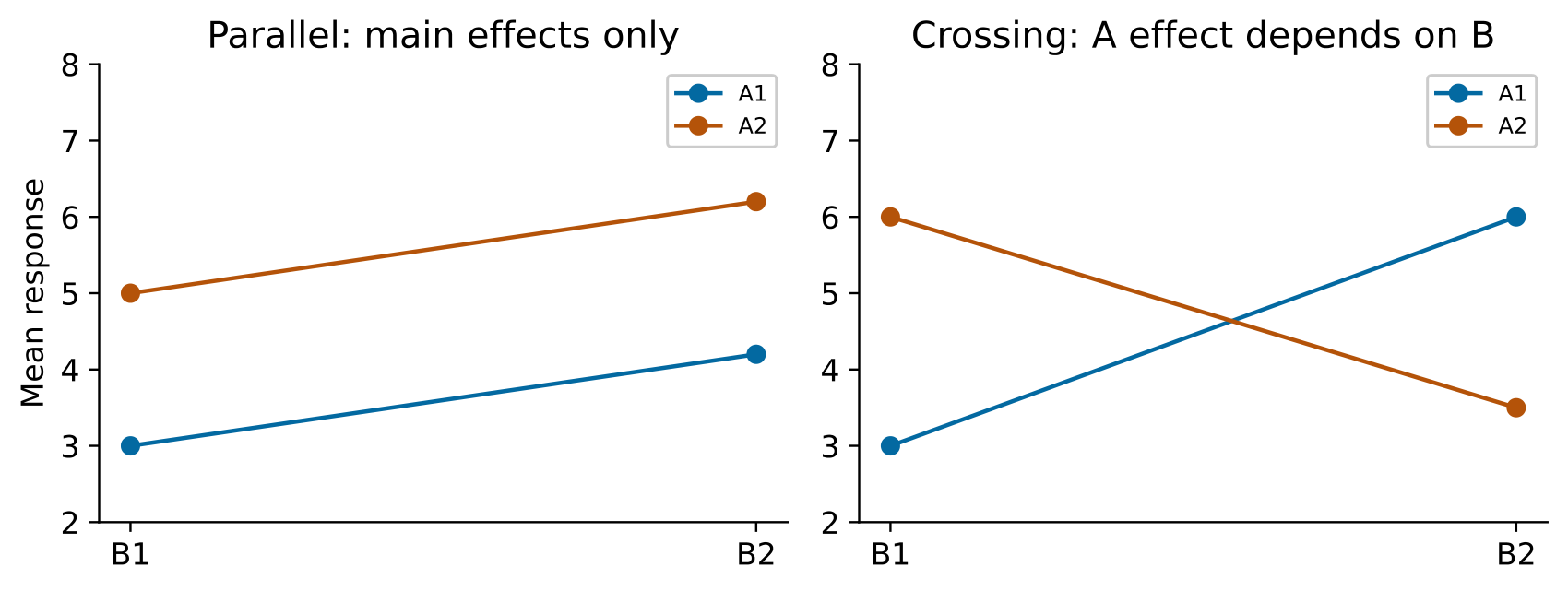
    In a fictional randomized study, mean improvement is 8 points in programme A and 5 in an attention comparison. What contrast is relevant?

    Between-group difference in mean improvement=8−5=3 points. The 8-point within-group gain includes changes also occurring under the comparison. The contrast may support a relative effect under the study conditions, but precision, missing data and outcome meaning are still needed. It does not establish the mechanism or superiority in all practice settings.

    Original fictional programme contrast: eight minus five equals three improvement points.

    Independent transfer

    A review combines ten small trials, all drawn from one type of clinic. Why does having ten studies not ensure a universal conclusion?

    Attempt independently, then use the matching skill sheet solution.

    Review and source limits

    Avoid this error: Inferring causation from a before-and-after gain without a control, or treating comparable means as proof of identical mechanisms. Teaching scope comes from teaching.yaml and the source/key/crop review in bank_review_form.yaml. Detailed current diagnostic criteria require an authenticated manual; neither historical ETS practice nor this educational reference certifies them.
    Vocabulary
    English
    counterconditioning/ˈkaʊntəkəndɪʃənɪŋ/
    common factors/ˈkɒmən ˈfæktəz/
  • 10

    MM.1 · Psychometrics and test construction

    Learning program coming soon

    Handout

    Psychometrics and test construction

    Scope and prerequisites

    Supported GRE topic 10 (MM.1). Use the overview measurement lesson VI when interpreting research evidence. Existing official questions are traced in bank_review_form.yaml; original tasks below are not ETS items.

    Concepts and method

    standard error of measurement 测量标准误: The expected spread of observed scores around the true score, SD×sqrt(1−r). construct validity 构想效度: Convergent and discriminant evidence that a score reflects the intended trait.

    Reliability is consistency, and its type is named by the design that produced it: the same test twice gives test-retest reliability; two similar forms give alternate-forms reliability; consistency within one sitting (split-half, Cronbach alpha) is internal consistency; agreement between scorers is inter-rater reliability. The Spearman-Brown formula r_full=2r/(1+r) rescales a half-test correlation to full test length: r=.80 becomes about .89.

    Validity is evidence for the proposed interpretation, not of the test itself: content validity asks whether items cover the domain; criterion validity relates scores to an outcome, concurrently or predictively; construct validity assembles convergent and discriminant evidence that the score tracks the intended trait. Reliability caps validity but never establishes it: a consistent scale can systematically measure something else.

    Standard scores re-express raw scores against a norm group: z=(X−mean)/SD, T=50+10z, and Wechsler deviation IQ=100+15z. A z of +2 gives IQ 130 and about the 98th percentile. The standard error of measurement SEM=SD×sqrt(1−r) converts reliability into a score band: SD=15 with r=.91 gives SEM=15×sqrt(.09)=4.5.

    Item analysis checks each item: difficulty p is the proportion answering correctly, and discrimination is the item-total correlation. Items that nearly everyone or no one answers correctly carry little information; negative discrimination flags a likely miskeyed or misleading item.

    Choose the reliability coefficient by the source of variation being studied. A standard error of measurement concerns measurement uncertainty under a model; it is not the standard error of a sample mean. The Spearman–Brown estimate assumes sufficiently comparable halves; a formula cannot repair unrelated item content. Standard scores describe relative position and do not show that a test measures the intended construct fairly across groups.

    Worked reasoning

    Two similar vocabulary tests given a week apart with r=.90 show alternate-forms reliability, not test-retest, because the form changed. With SD=15 and reliability .91, SEM=4.5 points. A z of +2 corresponds to IQ 130. A split-half correlation of .80 corrects to 2×.80/1.80≈.89 at full length.

    A fictional scale has mean 50 points, SD 10 points and reliability .84. A score is 65. Compute z and SEM, showing the formulas.

    z=(X−mean)/SD; z=(65 points−50 points)/(10 points)=1.5, dimensionless. SEM=SD√(1−r); SEM=(10 points)√(1−.84)=4 points. SEM is a model-based uncertainty measure, not proof of validity. T=50+10z; T=50+10(1.5)=65 on the T scale.

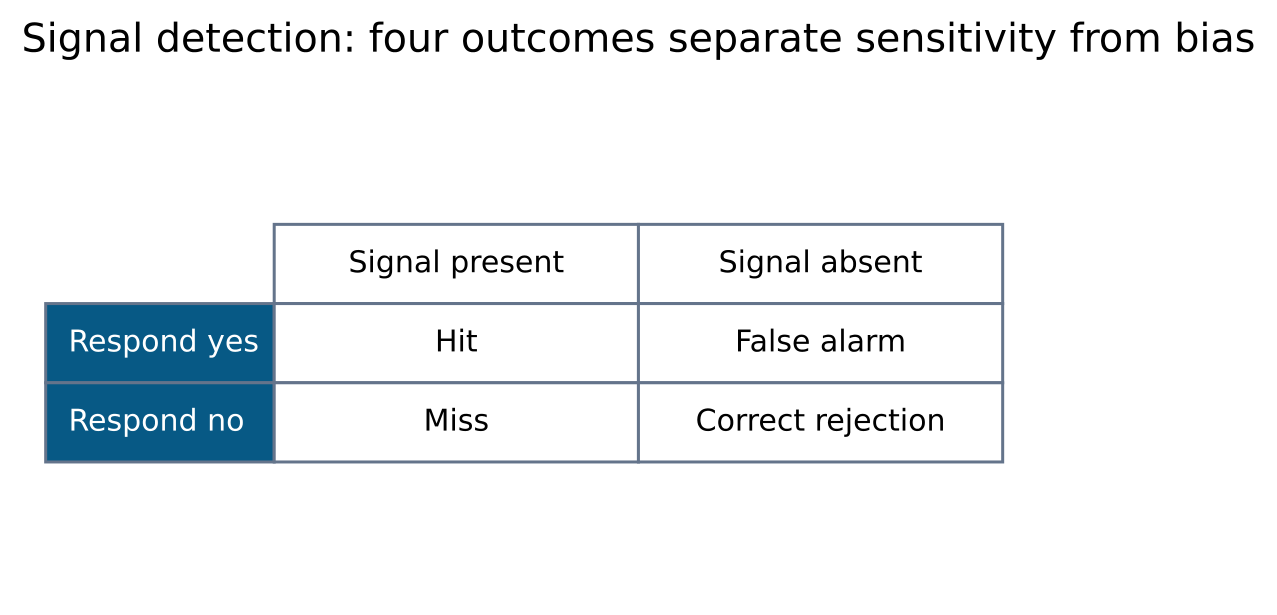
    Original schematic for Psychometrics and test construction. Illustrative relationships and numbers are not research results.

    Independent transfer

    Two raters repeatedly disagree by five points but rank scripts identically. Does a high correlation establish agreement? Suggest a check.

    Attempt independently, then use the matching skill sheet solution.

    Review and source limits

    Avoid this error: Calling a two-different-forms correlation test-retest reliability, or citing high reliability as if it were validity evidence. Teaching scope comes from teaching.yaml and the source/key/crop review in bank_review_form.yaml. Detailed current diagnostic criteria require an authenticated manual; neither historical ETS practice nor this educational reference certifies them.
    Vocabulary
    English
    standard error of measurement/ˈstændəd ˈerə ɒv ˈmeʒəmənt/
    construct validity/ˈkɒnstrʌkt væˈlɪdɪti/
  • 11

    MM.2 · Research designs and statistical interpretation

    Learning program coming soon

    Handout

    Research designs and statistical interpretation

    Scope and prerequisites

    Supported GRE topic 11 (MM.2). Use the overview measurement lesson VI when interpreting research evidence. Existing official questions are traced in bank_review_form.yaml; original tasks below are not ETS items.

    Concepts and method

    interaction effect 交互作用: The dependence of one factor's effect on the level of another factor. random assignment 随机分配: Allocating participants to conditions by chance to support causal inference.

    A true experiment manipulates an independent variable with random assignment of participants to conditions; between-subjects designs give different people to each condition, within-subjects designs measure the same people in every condition and need counterbalancing. A quasi-experiment lacks full assignment, and a correlational study does not manipulate an independent variable. Correlation alone does not establish causation or temporal order. Random assignment supports internal validity (causal inference); random sampling supports external validity (generalisability). They answer different questions.

    Match analysis to design, measurement scale and assumptions. Two independent quantitative groups may suit an independent-samples t-test; paired data require a paired analysis. Factorial designs often use analysis of variance; categorical counts may suit a chi-square test when expected-count assumptions hold. Correlation or regression examines specified associations; neither alone establishes causation.

    A main effect averages one factor across the other factor. An interaction means one effect depends on the other factor. Nonparallel sample means suggest an interaction pattern, but variability and the design are needed for population inference. Interactions can exist when averaged main effects cancel; lack of significance is not proof of no effect.

    Mean age 26 with most students 25 or younger is compatible with right skew, but does not uniquely determine distribution shape. Statistical significance is not effect size. A p-value is a probability of results at least as extreme under the specified null model and assumptions, not the probability the null is true. Type I and Type II errors depend on design and decision thresholds.

    Choose a test from the design, scale and assumptions, not merely the number of groups. Paired observations require a paired or repeated-measures analysis; independent groups require an independent-group analysis. An interaction can be meaningful even if averaged main effects cancel. Statistical significance is evidence under a model, not a condition for describing an observed difference. Report estimates and uncertainty and qualify population claims.

    Worked reasoning

    Fictional mean scores are: task A, novices 4 and experts 8; task B, novices 8 and experts 4. Compute marginal means and describe the pattern.

    Novice marginal mean=(4+8)/2=6; expert marginal mean=(8+4)/2=6. Task A marginal mean=(4+8)/2=6; task B marginal mean=(8+4)/2=6. The task contrast reverses by expertise, an interaction pattern despite equal marginal means. Means alone do not establish a population interaction; variability, design and inference are needed.

    Original schematic for Research designs and statistical interpretation. Illustrative relationships and numbers are not research results.

    Independent transfer

    The same 24 people complete two tasks. Another analyst treats the 48 scores as independent. Explain the problem and a suitable analysis family.

    Attempt independently, then use the matching skill sheet solution.

    Review and source limits

    Avoid this error: Drawing a causal conclusion from a correlational design, or reporting a significant interaction as if it were a main effect of one factor. Teaching scope comes from teaching.yaml and the source/key/crop review in bank_review_form.yaml. Detailed current diagnostic criteria require an authenticated manual; neither historical ETS practice nor this educational reference certifies them.
    Vocabulary
    English
    interaction effect/ˌɪntəˈrækʃn ɪˈfekt/
    random assignment/ˈrændəm əˈsaɪnmənt/
  • 12

    SP.1 · Sensation, perception and psychophysics

    Learning program coming soon

    Handout

    Sensation, perception and psychophysics

    Scope and prerequisites

    Supported GRE topic 12 (SP.1). Use the overview measurement lesson VI when interpreting research evidence. Existing official questions are traced in bank_review_form.yaml; original tasks below are not ETS items.

    Concepts and method

    difference threshold 差别阈限: The minimum detectable change in a stimulus, a constant fraction of the baseline by Weber's law. transduction 换能: Conversion of physical stimulus energy into neural signals by receptors.

    Psychophysics relates physical intensity to experience. An absolute threshold is a stimulus level meeting a specified detection criterion under specified conditions, often 50% detection; a difference threshold is a detectable change under a stated criterion. Weber's law states that the difference threshold is a constant fraction of the baseline: ΔI/I=k. With k=.02, a 100 g weight needs a 2 g change, while 200 g needs 4 g. Fechner proposed that perceived intensity grows logarithmically with physical intensity.

    Real detection is noisy, so signal detection theory separates sensitivity from bias. Presenting signal or noise on each trial gives four outcomes: hits, misses, false alarms and correct rejections. Sensitivity d′ measures how separated the signal and noise distributions are; the criterion measures the observer's willingness to say yes. A payoff change can move the criterion without changing d′, so hit rate alone is not sensitivity.

    Sensation begins with transduction: receptors convert physical energy into neural signals, as photoreceptors convert light and hair cells convert sound pressure. Sensory adaptation reduces response to a constant stimulus. Dark adaptation is the recovering sensitivity of the visual system in low light.

    Perception organises input rather than copying it. Gestalt principles group by proximity, similarity, closure and good continuation. Bottom-up processing builds percepts from features; top-down processing applies context and expectation. Categorical perception treats continuous acoustic variation as discrete phonemes: within a category, differences are hard to hear even when physically present.

    A threshold is defined by a detection criterion under specified conditions, often 50% detection for an absolute threshold, rather than a sharp physical boundary between always seen and never seen. Weber's approximation predicts changes proportional to a baseline within its useful range. Transduction changes energy into neural signalling; perception groups and interprets that input. A change in reporting incentives primarily concerns decision criterion, while changes in physical contrast may affect sensitivity.

    Worked reasoning

    With Weber fraction .02, detecting a change from 50 g needs 1 g, and from 500 g needs 10 g. A radiologist who says yes more often after a pay-per-hit scheme shifts criterion, not d′. A listener who cannot distinguish two within-category speech sounds shows categorical perception of a physically continuous dimension.

    With a fictional Weber fraction k=.03, estimate the just noticeable difference for 100 g and 300 g baselines.

    ΔI/I=k, so ΔI=kI. ΔI=.03×100 g=3 g; ΔI=.03×300 g=9 g. The fraction is dimensionless and the result has the baseline's unit. A constant 3 g prediction at both baselines would ignore the proportional model. The approximation does not establish identical thresholds for all observers or intensities.

    Original schematic for Sensation, perception and psychophysics. Illustrative relationships and numbers are not research results.

    Independent transfer

    A listener says yes on more signal and more noise trials after a warning. Explain why sensory adaptation is not the only or best initial explanation.

    Attempt independently, then use the matching skill sheet solution.

    Review and source limits

    Avoid this error: Treating the difference threshold as a fixed amount rather than a fraction of the baseline, or reading a higher hit rate as better sensitivity when the observer simply says yes more. Teaching scope comes from teaching.yaml and the source/key/crop review in bank_review_form.yaml. Detailed current diagnostic criteria require an authenticated manual; neither historical ETS practice nor this educational reference certifies them.
    Vocabulary
    English
    difference threshold/ˈdɪfrəns ˈθreʃəʊld/
    transduction/trænsˈdʌkʃn/
  • 13

    NE.1 · Neurons, synapses and brain systems

    Learning program coming soon

    Handout

    Neurons, synapses and brain systems

    Scope and prerequisites

    Supported GRE topic 13 (NE.1). Use the overview measurement lesson VI when interpreting research evidence. Existing official questions are traced in bank_review_form.yaml; original tasks below are not ETS items.

    Concepts and method

    all-or-none principle 全或无定律: Once threshold is reached a neuron fires a complete spike; stronger stimuli raise rate, not spike size. reuptake 再摄取: Reabsorption of neurotransmitter into the presynaptic cell, ending its action.

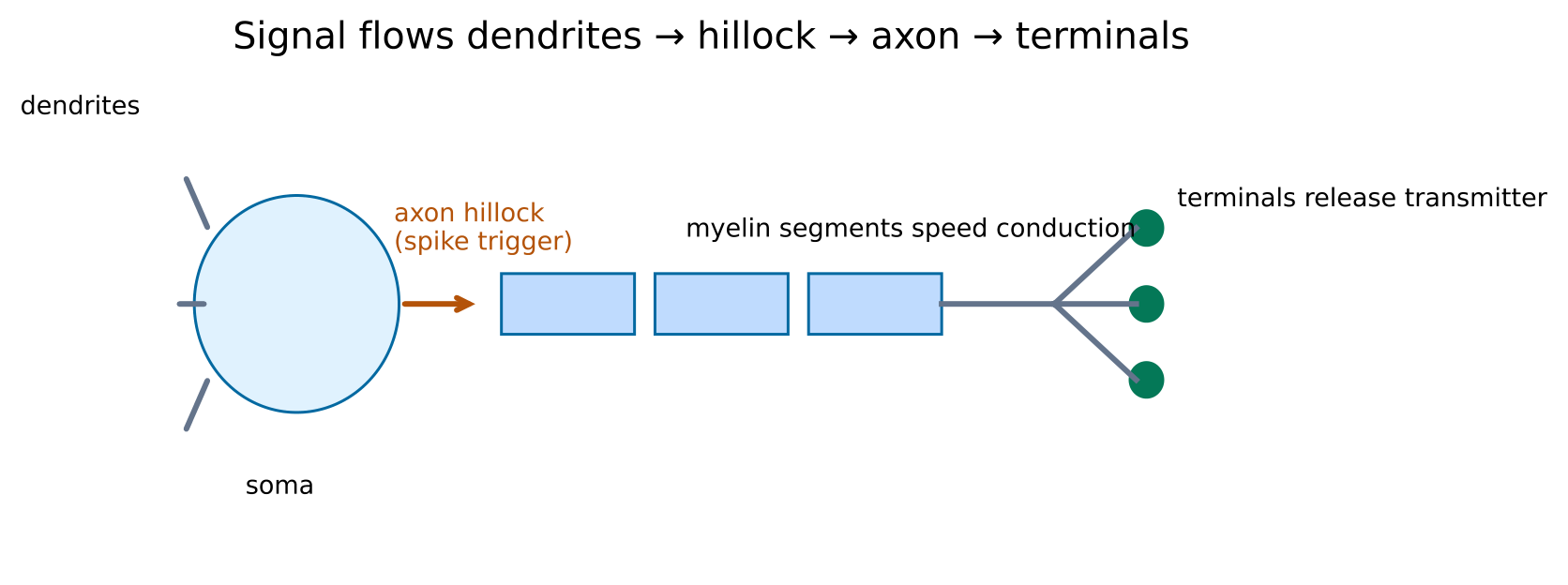
    The action potential begins at the axon hillock, where graded inputs sum; once the threshold is reached the neuron fires a complete spike (the all-or-none principle), and during the absolute refractory period it cannot fire again. Stimulus intensity is coded by firing rate and by how many neurons fire, not by spike size. Myelin insulates the axon and speeds conduction by saltatory conduction between the nodes of Ranvier; demyelinating disease slows or blocks conduction.

    At the synapse, the arriving spike opens calcium channels, vesicles release neurotransmitter into the cleft, and receptors on the postsynaptic cell convert binding into a new graded potential. Reuptake and enzymatic breakdown clear the transmitter. A drug can be an agonist (mimicking or enhancing a transmitter) or an antagonist (blocking receptors); SSRIs block serotonin reuptake, leaving more in the cleft.

    Structure-function anchors: the amygdala supports emotion and fear learning; the hippocampus is needed to form new episodic memories; the hypothalamus regulates drives and homeostasis; the cerebellum coordinates movement; Broca's area supports speech production and Wernicke's area comprehension; the prefrontal cortex supports planning and control. Localisation is real but partial: most behaviours involve distributed networks.

    Dopamine illustrates specificity: it supports movement and reward, its loss produces Parkinson's disease, and excessive dopaminergic signalling is linked to positive symptoms of schizophrenia, which many antipsychotics treat by blocking D2 receptors. One transmitter serves many systems, so a drug's behavioural effect depends on the pathway, not the molecule alone.

    Graded input can vary in size and combine at the trigger region; a propagated action potential is all-or-none. Stronger input can change firing frequency and recruitment, rather than making every spike taller. At a chemical synapse, arrival opens calcium channels, vesicles release transmitter and receptors alter the receiving cell. An agonist increases a receptor-related action; an antagonist blocks it. Effects depend on receptor and circuit, not just the transmitter's name.

    Worked reasoning

    A spike is triggered at the axon hillock once summed inputs cross threshold; after firing, the absolute refractory period enforces a pause. Blocking serotonin reuptake raises synaptic serotonin, which is the SSRI mechanism. Loss of dopaminergic neurons impairs movement in Parkinson's disease.

    A fictional substance blocks receptors without activating them. Another slows transmitter reuptake. Predict their immediate actions with qualifications.

    The receptor blocker acts as an antagonist at the stated receptor. Slower reuptake can prolong or increase transmitter availability in the cleft. Neither description establishes an overall behavioural effect: receptor subtype, feedback and affected pathways matter. Do not infer a drug recommendation.

    Original schematic for Neurons, synapses and brain systems. Illustrative relationships and numbers are not research results.

    Independent transfer

    A stronger stimulus produces more spikes of unchanged height. A pupil calls this evidence against all-or-none firing. Correct the inference.

    Attempt independently, then use the matching skill sheet solution.

    Review and source limits

    Avoid this error: Describing a stronger stimulus as producing a bigger spike, or naming a single brain centre as the whole basis of a complex behaviour. Teaching scope comes from teaching.yaml and the source/key/crop review in bank_review_form.yaml. Detailed current diagnostic criteria require an authenticated manual; neither historical ETS practice nor this educational reference certifies them.
    Vocabulary
    English
    all-or-none principle/ɔːl ɔː nɒn ˈprɪnsɪpl/
    reuptake/ˈruːpteɪk/
  • 14

    DV.1 · Developmental theories and milestones

    Learning program coming soon

    Handout

    Developmental theories and milestones

    Scope and prerequisites

    Supported GRE topic 14 (DV.1). Use the overview measurement lesson VI when interpreting research evidence. Existing official questions are traced in bank_review_form.yaml; original tasks below are not ETS items.

    Concepts and method

    object permanence 客体永久性: Knowing that objects continue to exist when out of sight, gained in the sensorimotor stage. theory of mind 心理理论: Understanding that others hold beliefs, including beliefs that are false.

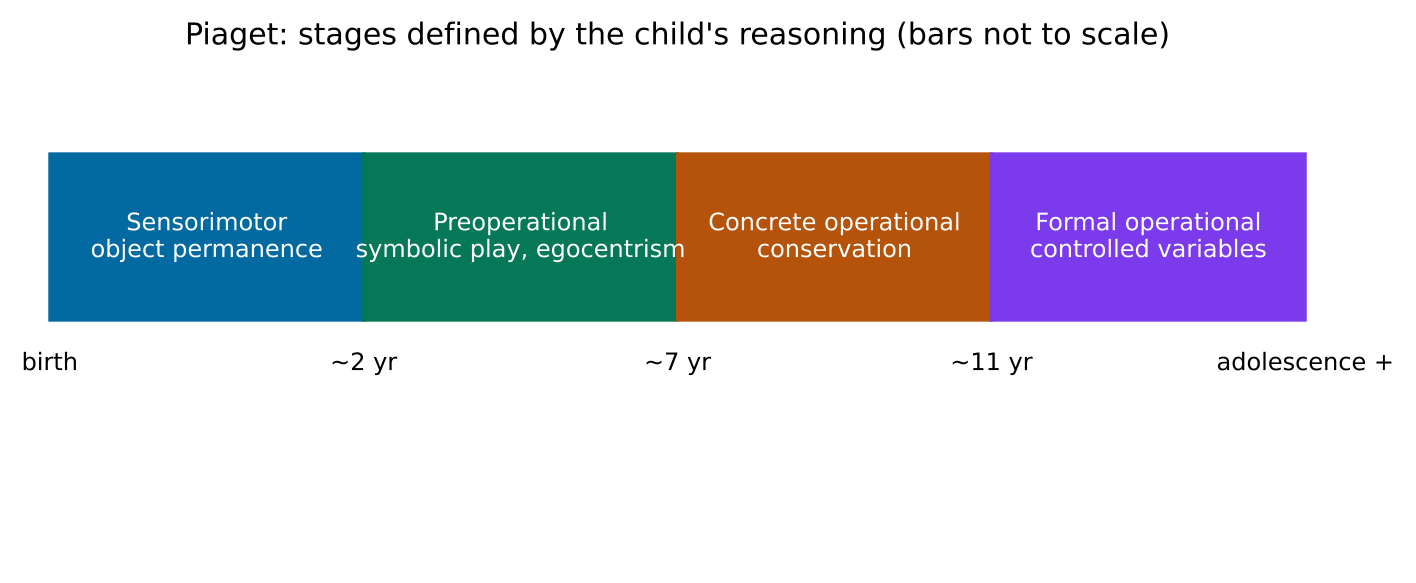
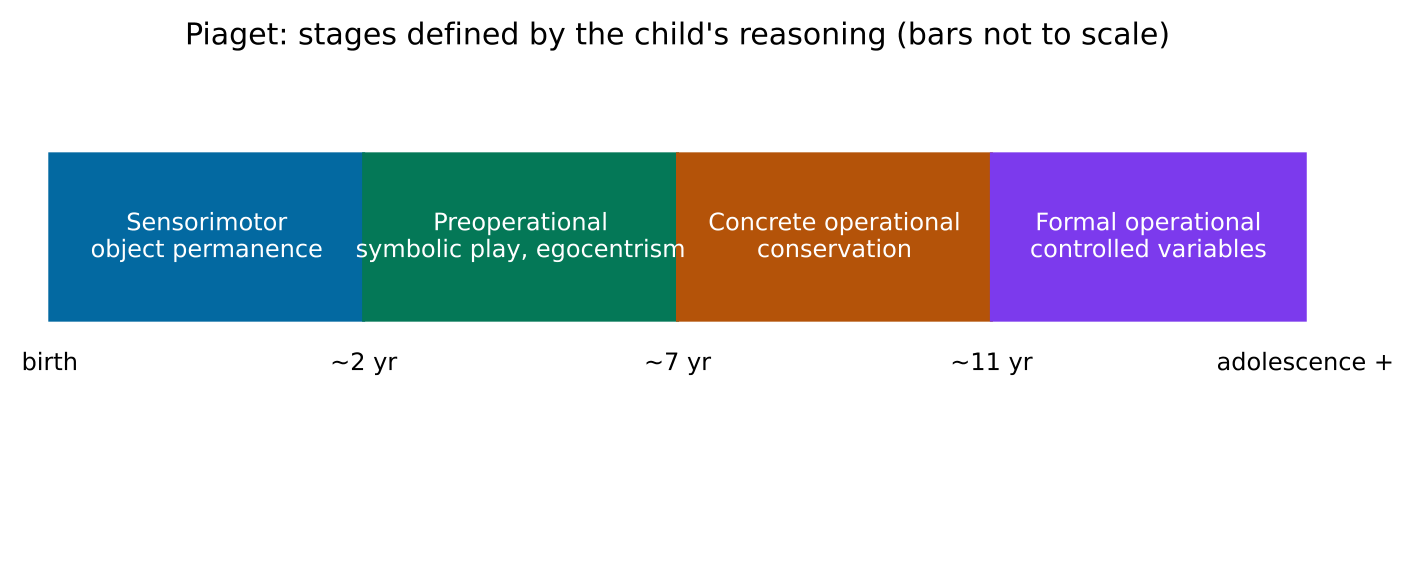
    Piaget's stages are defined by what a child can do. Sensorimotor (birth to about 2): object permanence. Preoperational (about 2 to 7): symbolic play but egocentrism and failure of conservation. Concrete operational (about 7 to 11): conservation and reversible operations on concrete material. Formal operational (about 11 up): hypothetico-deductive reasoning, as in the pendulum task, where the solver holds one factor constant while varying another. Ages are approximate; the reasoning profile defines the stage.

    Kohlberg ordered moral reasoning into preconventional (consequences to self), conventional (approval and rules) and postconventional (principles) levels. Erikson framed eight lifespan psychosocial crises, from trust versus mistrust in infancy to integrity versus despair in late adulthood; identity versus role confusion belongs to adolescence. Stage theories describe common sequences, not fixed timetables.

    Attachment research uses the strange situation: secure infants use the caregiver as a base and are comforted at reunion; avoidant infants keep distance; resistant (ambivalent) infants cling yet are not easily comforted. Caregiver sensitivity predicts the pattern, and early patterns relate to later relationships without determining them.

    Theory of mind is understanding that others hold beliefs, including false ones. The false-belief task is its standard test: a child who expects a searcher to look where the object really is, rather than where the searcher saw it, has not yet passed. Intentional lying presupposes modelling what another person believes, so deceptive lying marks a change in mental representation.

    Assimilation uses an existing scheme; accommodation changes the scheme when it does not fit. Conservation tasks examine whether a transformation changes a quantity, not merely whether children use an adult word. In a supported-learning account, distinguish a prompt that organizes a child's reasoning from a prompt that supplies the answer. Attachment observations concern relationship-specific behaviour under a protocol, not an adult personality diagnosis.

    Worked reasoning

    A child who solves the pendulum problem by holding X constant while varying Y shows formal-operational reasoning. Conserving liquid volume across containers marks concrete operations. An infant who is easily comforted at reunion shows a secure pattern. Expecting a searcher to look where the object really is fails the false-belief task.

    A child calls every four-legged animal a dog, then creates a separate category for cats after contrasting examples. Explain the two processes.

    Using the existing dog category for a cat illustrates assimilation. Revising categories to distinguish cats illustrates accommodation. The example concerns changing classification, not proof of a particular stage or the child's general intelligence. Ask for the child's reasoning and test new examples.

    Original schematic for Developmental theories and milestones. Illustrative relationships and numbers are not research results.

    Independent transfer

    A child predicts that a taller narrow cup has more water after a transfer. Design a question that tests reasoning rather than giving away the answer.

    Attempt independently, then use the matching skill sheet solution.

    Review and source limits

    Avoid this error: Assigning a stage by age alone, or treating a developmental sequence as a fixed timetable; the reasoning profile, not the birthday, defines the stage. Teaching scope comes from teaching.yaml and the source/key/crop review in bank_review_form.yaml. Detailed current diagnostic criteria require an authenticated manual; neither historical ETS practice nor this educational reference certifies them.
    Vocabulary
    English
    object permanence/ˈɒbdʒekt ˈpɜːmənəns/
    theory of mind/ˈθɪəri ɒv maɪnd/
  • 15

    HT.1 · Theorists, schools and their claims

    Learning program coming soon

    Handout

    Theorists, schools and their claims

    Scope and prerequisites

    Supported GRE topic 15 (HT.1). Use the overview measurement lesson VI when interpreting research evidence. Existing official questions are traced in bank_review_form.yaml; original tasks below are not ETS items.

    Concepts and method

    structuralism 结构主义: Titchener's school analysing experience into basic elements by introspection. cognitive revolution 认知革命: The 1950s restoration of mental processes as lawful objects of study, displacing strict behaviourism.

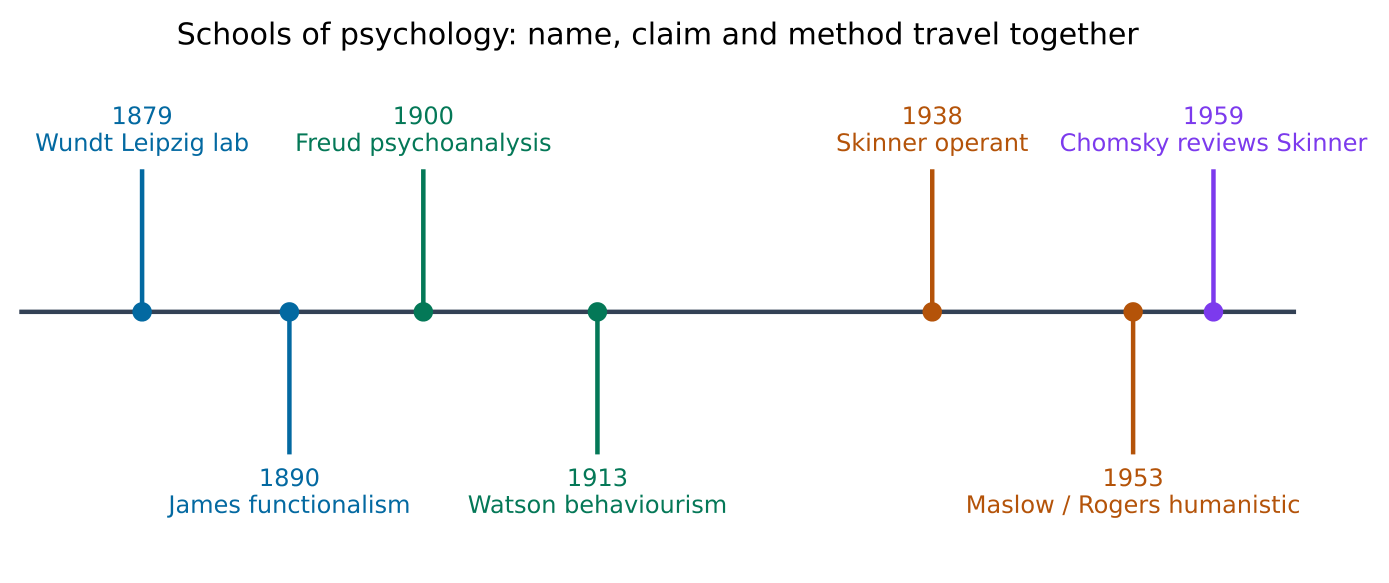
    Psychology's laboratories began in the 1870s: Wilhelm Wundt at Leipzig (1879) and William James's Harvard laboratory work. Wundt's student Titchener carried structuralism, analysing experience into elements by introspection; James's functionalism instead asked what mental processes are for, shaped by evolution. Gestalt psychologists (Wertheimer, Köhler, Koffka) rejected element analysis, arguing that organised wholes precede parts in perception.

    Freud's psychoanalysis centred on unconscious conflict and early experience, with defence mechanisms and stages of psychosexual development; its claims are debated as science but shaped clinical practice. Watson's 1913 behaviourism rejected introspection for observable behaviour, and Skinner's radical behaviourism explained action by operant consequences. Horney analysed coping as moving toward, away from or against people.

    The humanistic third force (Maslow's hierarchy of needs, Rogers's person-centred approach) stressed growth and self-actualisation against both psychoanalysis and behaviourism. The cognitive revolution of the 1950s restored mind as a lawful object: Miller's working-memory limits, Neisser's cognitive synthesis, and Chomsky's 1959 review arguing that Skinner's verbal-behaviour account cannot explain language acquisition.

    Later traditions built on these: Bandura's social learning (the Bobo doll studies) added observation and modelling to conditioning; Beck's cognitive therapy treats distorted thinking in depression; Eysenck described personality on broad dimensions such as extraversion and neuroticism. Match each name to a claim and method, not merely to a famous phrase.

    Classify an explanation by its proposed mechanism and method. Structuralist analysis of experience differs from functional questions about adaptation. Behaviourist accounts study relations among environment and observable action; cognitive accounts use representations and processing. Gestalt accounts emphasize organization rather than reducing every percept to isolated sensations. A historical label is useful only when it identifies a claim that could guide evidence collection.

    Worked reasoning

    Wundt's Leipzig laboratory and James's Harvard work mark the 1870s founding; Titchener turned introspection into structuralism while James asked functional questions. Chomsky's review of Verbal Behavior is a landmark of the cognitive turn against Skinner. A therapist targeting distorted automatic thoughts works in Beck's cognitive tradition.

    One account studies reinforcement schedules; another models a temporary information store; a third studies the purpose a behaviour serves. Match each emphasis.

    Reinforcement schedules fit a behavioural emphasis. A temporary information store fits a cognitive information-processing emphasis. Adaptive purpose fits functionalism's characteristic question. These are explanatory emphases, not a claim that a modern researcher must belong exclusively to one school.

    Original schematic for Theorists, schools and their claims. Illustrative relationships and numbers are not research results.

    Independent transfer

    An answer names a famous theorist but gives no account of the observation. Rewrite it as an explanation that could be checked, using the reinforcement case.

    Attempt independently, then use the matching skill sheet solution.

    Review and source limits

    Avoid this error: Crediting one founder with founding alone, or treating psychoanalytic claims and tested cognitive findings as the same kind of evidence. Teaching scope comes from teaching.yaml and the source/key/crop review in bank_review_form.yaml. Detailed current diagnostic criteria require an authenticated manual; neither historical ETS practice nor this educational reference certifies them.
    Vocabulary
    English
    structuralism/ˈstrʌktʃərəlɪzəm/
    cognitive revolution/ˈkɒɡnɪtɪv ˌrevəˈluːʃn/
  • 16

    LR.1 · Conditioning, reinforcement and observational learning

    Learning program coming soon

    Handout

    Conditioning, reinforcement and observational learning

    Scope and prerequisites

    Supported GRE topic 16 (LR.1). Use the overview measurement lesson VI when interpreting research evidence. Existing official questions are traced in bank_review_form.yaml; original tasks below are not ETS items.

    Concepts and method

    negative reinforcement 负强化: Strengthening a behaviour by removing an aversive stimulus; not punishment. extinction 消退: Weakening of a conditioned response when the CS no longer predicts the US or the behaviour is no longer reinforced.

    Classical conditioning pairs a neutral stimulus with an unconditioned stimulus until the neutral stimulus (now conditioned) evokes a conditioned response: bell then food gives bell-evoked salivation. Key phenomena: acquisition, extinction when the CS appears without the US, spontaneous recovery after a pause, generalisation to similar stimuli and discrimination between them. The CS predicts the US; timing and contingency matter.

    Operant conditioning changes voluntary behaviour by its consequences. Reinforcement INCREASES behaviour: positive adds something wanted, negative removes something aversive. Punishment DECREASES behaviour: positive adds something aversive, negative removes something wanted. Negative reinforcement is not punishment: both escape and avoidance strengthen the behaviour that ends or prevents the aversive event.

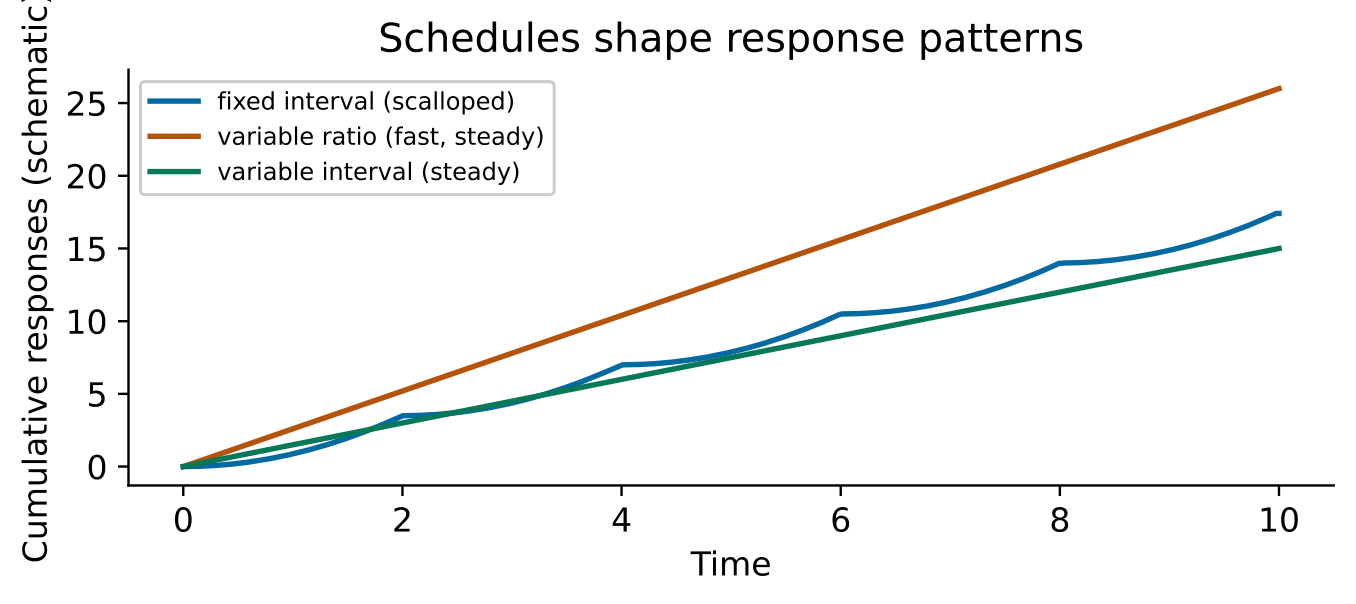
    Reinforcement schedules shape response patterns. Fixed-ratio schedules give high rates with a post-reinforcement pause; variable-ratio schedules give the highest, steadiest rates and resist extinction (gambling). Fixed-interval schedules give scalloped responding that rises near the interval end; variable-interval schedules give steady moderate rates. Ratio schedules count responses; interval schedules count time.

    Observational learning needs attention to the model, retention of what was seen, the ability to reproduce it, and motivation; vicarious reinforcement (seeing the model rewarded) raises imitation. Bandura's Bobo doll studies showed children imitate filmed aggression. Modelling extends learning beyond direct experience.

    Positive means adding; negative means removing. Reinforcement increases the target behaviour; punishment decreases it. Classify from the observed contingency and subsequent behaviour, not the adult's intention. Ratio schedules depend on responses; interval schedules depend on elapsed time before a response can be reinforced. Extinction means the previously reinforced response or cue no longer receives its former consequence; it is not simply forgetting.

    Worked reasoning

    A tone repeatedly followed by food comes to evoke salivation; presenting the tone without food extinguishes it, yet the response can briefly return after a rest (spontaneous recovery). A slot machine is a variable-ratio schedule: rapid, steady, extinction-resistant play. Taking an aspirin to end a headache is negative reinforcement; a fine for late work is negative punishment.

    Access to a game is removed after interruptions, and interruptions decline. An alarm stops after homework begins, and starting increases. Classify both.

    Removing access and decreasing interruptions is negative punishment. Removing the alarm and increasing starting is negative reinforcement. The same word removing occurs in both; the direction of change in the named behaviour separates them. These are descriptions of fictional contingencies, not recommended classroom interventions.

    Original schematic for Conditioning, reinforcement and observational learning. Illustrative relationships and numbers are not research results.

    Independent transfer

    Rewards follow every fifth response in one task and the first response after varying time intervals in another. Identify the schedules and the condition that earns each reward.

    Attempt independently, then use the matching skill sheet solution.

    Review and source limits

    Avoid this error: Calling negative reinforcement punishment, or treating any unpredictable reward as variable-ratio; interval schedules pay the first response AFTER the interval. Teaching scope comes from teaching.yaml and the source/key/crop review in bank_review_form.yaml. Detailed current diagnostic criteria require an authenticated manual; neither historical ETS practice nor this educational reference certifies them.
    Vocabulary
    English
    negative reinforcement/ˈneɡətɪv ˌriːɪnˈfɔːsmənt/
    extinction/ekˈstɪŋkʃn/
  • 17

    ME.1 · Memory systems, processes and forgetting

    Learning program coming soon

    Handout

    Memory systems, processes and forgetting

    Scope and prerequisites

    Supported GRE topic 17 (ME.1). Use the overview measurement lesson VI when interpreting research evidence. Existing official questions are traced in bank_review_form.yaml; original tasks below are not ETS items.

    Concepts and method

    working memory 工作记忆: The limited active system holding and manipulating a few chunks for seconds. proactive interference 前摄干扰: Older learning disrupting the retention of newer material.

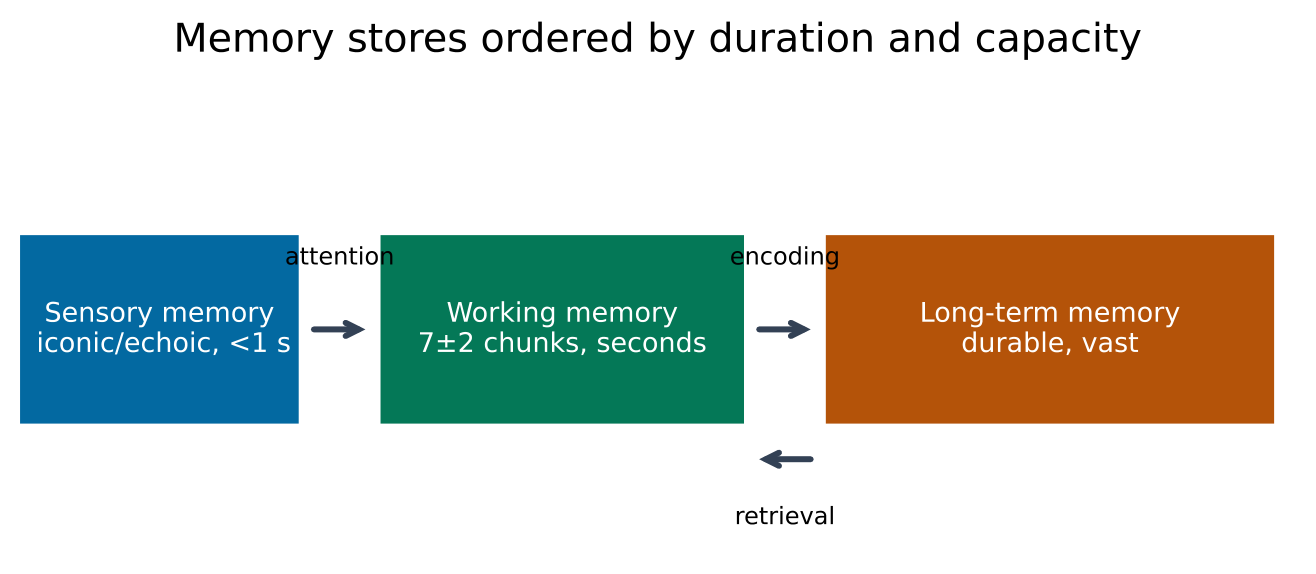
    The modal model orders stores by duration. Sensory memory holds a brief, nearly complete trace — iconic for vision, echoic for hearing — and a mask within 200–300 ms destroys it. Short-term or working memory holds a few chunks for seconds; Miller's classic estimate is 7±2 chunks, and rehearsal keeps material active. Long-term memory is durable and effectively unlimited.

    Working memory is more than a short store: Baddeley's model has a central executive with a phonological loop for speech-like material and a visuospatial sketchpad for images. Chunking recodes items into familiar units, expanding effective capacity without expanding the store.

    Long-term memory divides by content and awareness. Episodic memory is personal events; semantic memory is facts and knowledge; procedural memory is skills. Implicit memory shows in performance without deliberate recall (priming, skills); explicit memory is deliberate recall or recognition. A person can show priming for material they cannot consciously recollect.

    Forgetting has identifiable mechanisms. Proactive interference is old learning disrupting new; retroactive interference is new learning disrupting old. Retrieval failure follows encoding specificity: cues matching the encoding context restore recall. The serial position curve (primacy and recency) separates long-term from immediate-store contributions.

    Sensory stores briefly retain modality-specific input. Working memory maintains and processes a limited amount; chunking changes the effective units. Long-term explicit memory includes episodic events and semantic knowledge; implicit effects include skills and priming. Forgetting may involve interference or retrieval failure, so a failed free-recall test cannot uniquely identify decay. The familiar seven-plus-or-minus-two span is a historical estimate under particular tasks, not a universal working-memory capacity.

    Worked reasoning

    A masked letter array is lost within 300 ms — sensory memory. Remembering a phone number by 3-4 digit chunks uses chunking in working memory. Recognising a face without recalling the meeting is implicit memory. After learning French then Spanish, French vocabulary intrudes into Spanish recall: proactive interference.

    Old account passwords make a new password harder to recall. Later the new password disrupts recall of the old one. Name each direction.

    Old interfering with new is proactive interference; new interfering with old is retroactive interference. Name the target and the interfering material before applying the label. The case does not show that either memory has been erased.

    Original schematic for Memory systems, processes and forgetting. Illustrative relationships and numbers are not research results.

    Independent transfer

    A person improves at a motor task but cannot recall the training session. What distinction fits, and why is one case not proof of a fully isolated system?

    Attempt independently, then use the matching skill sheet solution.

    Review and source limits

    Avoid this error: Treating working memory as a single box, or calling every memory failure decay; interference and cue-dependent retrieval failure account for most exam cases. Teaching scope comes from teaching.yaml and the source/key/crop review in bank_review_form.yaml. Detailed current diagnostic criteria require an authenticated manual; neither historical ETS practice nor this educational reference certifies them.
    Vocabulary
    English
    working memory/ˈwɜːkɪŋ ˈmeməri/
    proactive interference/prəʊˈæktɪv ˌɪntəˈfɪərəns/
  • 18

    LG.1 · Language structure, perception and acquisition

    Learning program coming soon

    Handout

    Language structure, perception and acquisition

    Scope and prerequisites

    Supported GRE topic 18 (LG.1). Use the overview measurement lesson VI when interpreting research evidence. Existing official questions are traced in bank_review_form.yaml; original tasks below are not ETS items.

    Concepts and method

    morpheme 语素: The smallest meaning-bearing unit of language. syntax 句法: The rules governing how words combine into phrases and sentences.

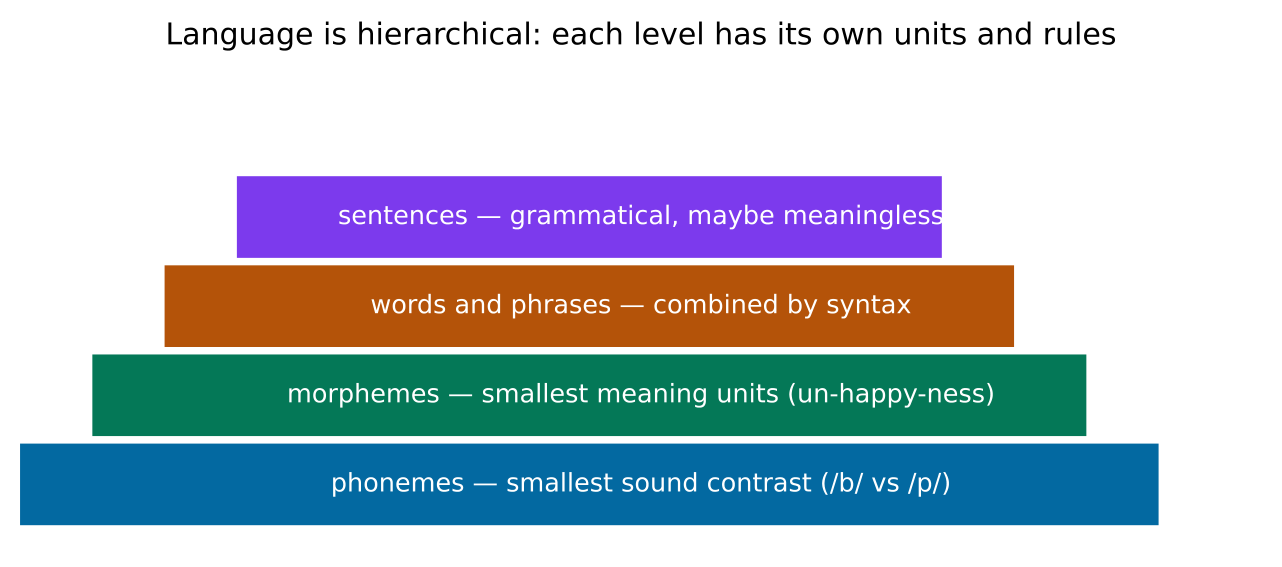
    Language is hierarchical. Phonemes are the smallest sound units that distinguish meaning (/b/ versus /p/); morphemes are the smallest meaning-bearing units (un-happy-ness has three); syntax governs how words combine into phrases and sentences; semantics concerns meaning. A sentence can be grammatical yet meaningless — syntax and semantics are separable.

    Speech perception is categorical: continuous acoustic variation is heard as discrete phonemes, so a sound between /b/ and /p/ is reported as one or the other. Listeners segment a continuous stream using transitional probabilities and knowledge, not audible gaps between words.

    Reading links print to sound and meaning. Skilled readers use both a grapheme-to-sound route (sounding out) and a direct whole-word route for familiar words; dyslexia research separates phonological decoding deficits from surface patterns. Eye-movement studies show reading is a series of fixations and saccades, not smooth gliding.

    Bilingualism research separates language proficiency from general intelligence: balanced bilinguals show executive-control practice effects, while subtractive schooling can harm both languages. Second-language learning declines with age of onset, especially for pronunciation and grammar, without a single sharp critical cut-off.

    Phonemes distinguish sound categories; morphemes carry meaning. Syntax concerns organization of words; semantics concerns meaning; pragmatics concerns use in context. A grammatical sentence can be unusual in meaning. Children's rule-based errors can show productive generalization rather than exact copying. Both learning opportunities and biological constraints matter; a single error cannot decide every language-acquisition theory.

    Worked reasoning

    Un-happy-ness is three morphemes but the spoken form has more phonemes than syllables. A sound midway between /b/ and /p/ is heard as clearly one or the other — categorical perception. Colourless green ideas sleep furiously is grammatical but meaningless, separating syntax from semantics.

    A child says walked correctly and then says goed. What does the second form suggest about learning, and what would be an overclaim?

    Goed applies a productive past-tense pattern to an irregular verb, consistent with overregularization. The child is doing more than repeating every form exactly. This does not prove that input or reinforcement never matters or that one complete theory has been established. Examine patterns across forms and development.

    Original schematic for Language structure, perception and acquisition. Illustrative relationships and numbers are not research results.

    Independent transfer

    Explain how a message can have correct syntax but be misunderstood because of context, using an original example.

    Attempt independently, then use the matching skill sheet solution.

    Review and source limits

    Avoid this error: Counting morphemes by letters or syllables, or treating word boundaries in speech as physically present; segmentation is inferred by the listener. Teaching scope comes from teaching.yaml and the source/key/crop review in bank_review_form.yaml. Detailed current diagnostic criteria require an authenticated manual; neither historical ETS practice nor this educational reference certifies them.
    Vocabulary
    English
    morpheme/ˈmɔːfiːm/
    syntax/ˈsɪntæks/
  • 19

    TH.1 · Thinking, problem solving and intelligence

    Learning program coming soon

    Handout

    Thinking, problem solving and intelligence

    Scope and prerequisites

    Supported GRE topic 19 (TH.1). Use the overview measurement lesson VI when interpreting research evidence. Existing official questions are traced in bank_review_form.yaml; original tasks below are not ETS items.

    Concepts and method

    availability heuristic 可得性启发式: Estimating frequency or likelihood by how easily examples come to mind. representativeness heuristic 代表性启发式: Judging probability by similarity to a prototype, neglecting base rates.

    Concepts group instances; natural concepts have fuzzy boundaries organised around prototypes, so a robin is a "better" bird than a penguin and is verified faster. Schemas are organised knowledge structures about domains; scripts are schemas for event sequences (the restaurant script). Schemas guide encoding and also distort recall toward the expected.

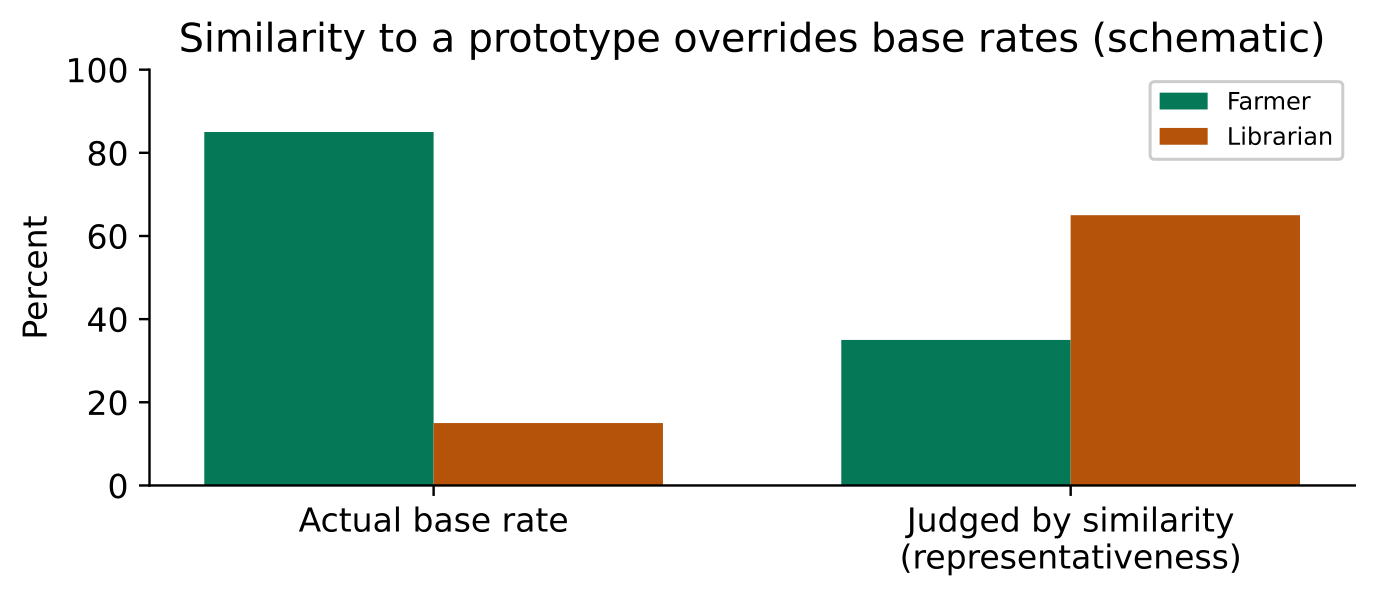
    An algorithm guarantees a solution by exhaustive rule; heuristics trade certainty for speed. Availability estimates frequency by ease of recall, so vivid events are overestimated. Representativeness judges by similarity to a prototype and neglects base rates. Anchoring drags estimates toward an initial number. Framing changes choices between logically equivalent descriptions, and confirmation bias seeks only supporting evidence.

    Problem solving fails in characteristic ways: functional fixedness (objects only in usual roles), mental set (old solutions to new problems), and missing insight restructuring. Means-end analysis reduces the difference to the goal; working backward suits problems with a clear goal state.

    Intelligence theories differ on structure: Spearman's general factor g, Cattell's fluid versus crystallised abilities, Gardner's multiple intelligences, Sternberg's triarchic analysis. Test interpretation follows the psychometrics of earlier units: scores are reliable for prediction within their validation samples, but a score measures performance on the test, not a fixed essence.

    An algorithm follows steps that guarantee a solution for its specified problem class when correctly applied. A heuristic is an efficient shortcut that may fail. Representativeness judges similarity and can neglect base rates; availability uses ease of recall and can confuse memorable with frequent. Mental set and functional fixedness constrain which solutions are considered. Intelligence tests measure performances under particular conditions and require validity and fairness evidence for their use.

    Worked reasoning

    Estimating plane crashes as commoner than car deaths after news coverage is the availability heuristic. Judging a quiet bookish stranger more likely a librarian than a farmer, despite far more farmers, is representativeness neglecting base rates. Using a candle only as a candle, not as part of a shelf, is functional fixedness.

    A description fits a rare occupation. A pupil chooses it without checking how many people have each occupation. Identify the reasoning risk.

    Representativeness can override base-rate information: similarity to a stereotype does not by itself determine probability. Combine relevant likelihood information with prior frequencies if available. A vivid description supplies neither a population count nor proof of group traits.

    Original schematic for Thinking, problem solving and intelligence. Illustrative relationships and numbers are not research results.

    Independent transfer

    A method works on nine puzzles and fails on a tenth with different constraints. Explain how to decide whether the method is an algorithm or heuristic and propose a response.

    Attempt independently, then use the matching skill sheet solution.

    Review and source limits

    Avoid this error: Calling a heuristic an error in itself; heuristics are efficient defaults whose costs are predictable. Do not equate a test score with a fixed measure of worth or potential. Teaching scope comes from teaching.yaml and the source/key/crop review in bank_review_form.yaml. Detailed current diagnostic criteria require an authenticated manual; neither historical ETS practice nor this educational reference certifies them.
    Vocabulary
    English
    availability heuristic/əˌveɪləˈbɪlɪti hjuːˈrɪstɪk/
    representativeness heuristic/ˌreprɪˈzentətɪvnəs hjuːˈrɪstɪk/
  • 20

    SO.1 · Social cognition, attribution and social influence

    Learning program coming soon

    Handout

    Social cognition, attribution and social influence

    Scope and prerequisites

    Supported GRE topic 20 (SO.1). Use the overview measurement lesson VI when interpreting research evidence. Existing official questions are traced in bank_review_form.yaml; original tasks below are not ETS items.

    Concepts and method

    fundamental attribution error 基本归因错误: Over-attributing others' behaviour to disposition while neglecting the situation. normative influence 规范性影响: Conforming to gain acceptance or avoid rejection, distinct from informational influence.

    Attribution assigns causes to behaviour: internal (dispositional) or external (situational). The fundamental attribution error over-uses dispositional explanations for others, and the actor-observer asymmetry reverses this for ourselves. Correspondent inference asks when an act reveals a trait: freely chosen, unexpected or low-consensus acts are the most informative.

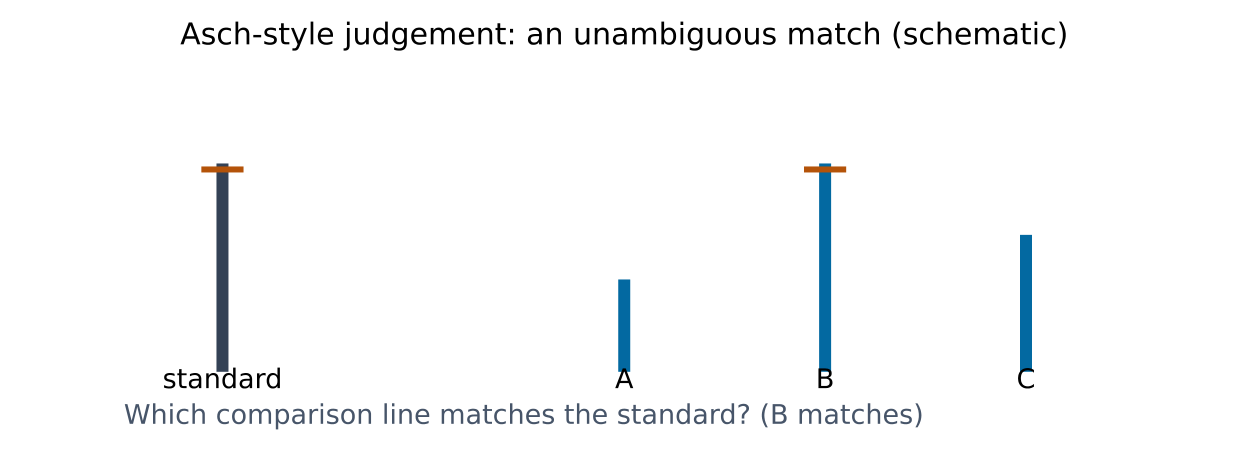
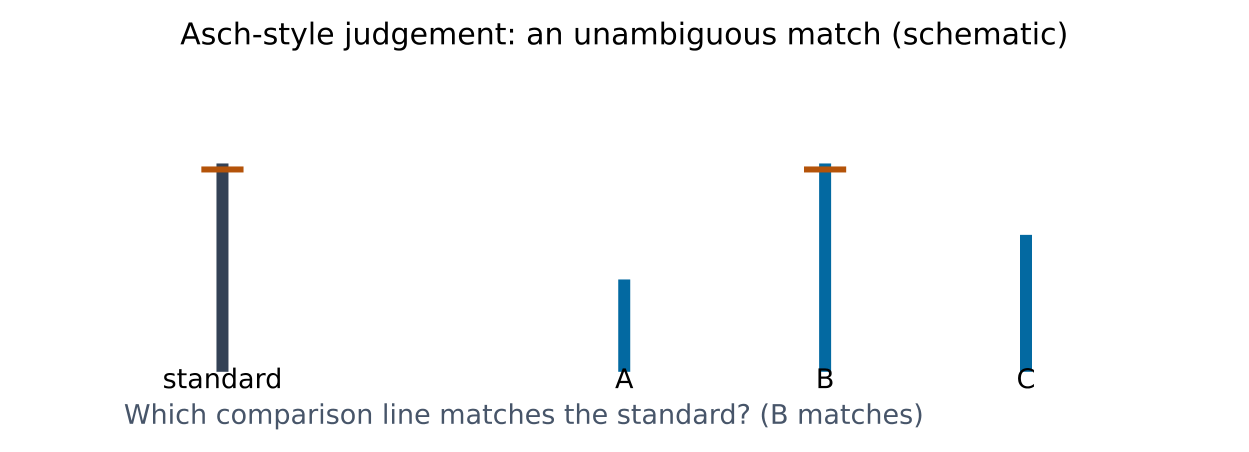
    Influence comes in two kinds: normative influence is conforming to be accepted; informational influence is accepting others' behaviour as evidence about reality. Asch's line studies showed conformity to a unanimous majority on unambiguous judgements; Milgram's obedience studies showed destructive compliance with an authority. Conformity falls sharply with one dissenting partner.

    Cognitive dissonance is the tension from holding inconsistent cognitions, reduced by changing attitudes or justifications; with insufficient external justification, people internalise the behaviour. Persuasion follows the elaboration likelihood model: the central route (arguments) produces durable change when audiences can and will think; the peripheral route (cues, attractiveness) is fragile.

    Self-evaluation processes include self-affirmation (restoring worth in an unaffected domain after a threat), self-verification (seeking confirming feedback), self-monitoring (adjusting self-presentation) and the self-serving bias (success internal, failure external). Excitation transfer lets residual arousal from one event intensify a later emotional reaction.

    Attribution distinguishes situational and dispositional explanations. Informational influence treats others as evidence; normative influence concerns acceptance. Obedience involves an authority's direction. An attitude includes evaluative components, while an action also depends on opportunity, incentives and constraints. A mechanism needs discriminating evidence: public agreement alone cannot uniquely identify private belief.

    Worked reasoning

    Screaming at a friend after a parking ticket is excitation transfer: residual arousal intensifies the later anger. Reminding yourself of a strength after a comparison threat is self-affirmation. Agreeing with a unanimous group on an obvious line length is normative conformity. A vague appeal working only when the audience is distracted is peripheral-route persuasion.

    A student copies a group's route choice because they believe the group knows the campus. How does this differ from copying to avoid ridicule?

    Believing the group has useful knowledge fits informational influence. Avoiding ridicule fits normative influence. The same outward action can arise through different mechanisms. Anonymity, uncertainty and private accounts may help distinguish them in an ethically approved task.

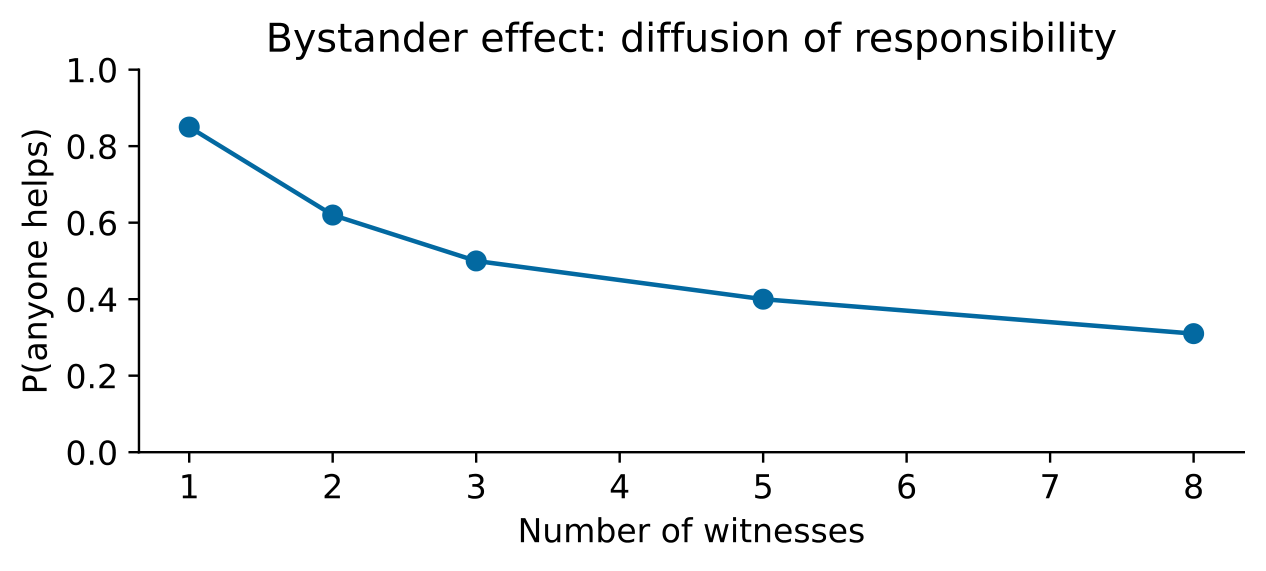
    Original schematic for Social cognition, attribution and social influence. Illustrative relationships and numbers are not research results.

    Independent transfer

    A late student is called lazy, but the bus stopped unexpectedly. Build a better attribution and name what remains unknown.

    Attempt independently, then use the matching skill sheet solution.

    Review and source limits

    Avoid this error: Do not merge conformity and obedience (peer pressure versus authority), or call every dispositional inference an error; the error is neglecting the situation, not using traits at all. Teaching scope comes from teaching.yaml and the source/key/crop review in bank_review_form.yaml. Detailed current diagnostic criteria require an authenticated manual; neither historical ETS practice nor this educational reference certifies them.
    Vocabulary
    English
    fundamental attribution error/ˌfʌndəˈmentl ətrɪˈbjuːʃn ˈerə/
    normative influence/ˈnɔːmətɪv ˈɪnfluːəns/
  • 21

    SO.2 · Groups, relationships and intergroup processes

    Learning program coming soon

    Handout

    Groups, relationships and intergroup processes

    Scope and prerequisites

    Supported GRE topic 21 (SO.2). Use the overview measurement lesson VI when interpreting research evidence. Existing official questions are traced in bank_review_form.yaml; original tasks below are not ETS items.

    Concepts and method

    social loafing 社会惰化: Reduced individual effort when contributions are pooled and unidentifiable. bystander effect 旁观者效应: Help becomes less likely as the number of witnesses grows, via diffusion of responsibility.

    Groups change performance. Social facilitation: the presence of others strengthens dominant responses, helping well-learned tasks and hurting novel ones. Social loafing: effort falls when individual contributions are unidentifiable. Groupthink: cohesive groups under pressure suppress dissent and reach poor decisions; deindividuation: anonymity in a crowd lowers self-restraint.

    Attraction is predicted first by propinquity — physical or functional proximity, as in making friends on the same dorm floor — then similarity and reciprocal liking; mere exposure breeds familiarity-based liking. Social exchange theory reads relationships as outcomes minus costs against a comparison level; interdependence analyses use each partner's payoff structure.

    Separate the intergroup trio: stereotypes are beliefs about groups, prejudice is evaluative affect, discrimination is behaviour. The minimal-group paradigm shows in-group favouritism from arbitrary assignment alone; realistic conflict theory ties hostility to competition over resources; the contact hypothesis reduces prejudice under equal status, common goals and cooperative contact, not mere exposure.

    The bystander effect: help falls as witnesses increase, through diffusion of responsibility and pluralistic ignorance (each reads others' calm as no emergency). Aggression research links frustration to aggression and shows how residual arousal (excitation transfer) can escalate conflict; altruism is helped by clear identification of a single victim.

    Diffusion of responsibility can reduce an individual's felt obligation when others could act. Pluralistic ignorance can make people interpret others' inaction as evidence that help is unnecessary. Cohesion can support cooperation but does not always improve judgement. Group polarization concerns a shift toward an initially favoured direction; groupthink concerns decision processes that suppress critical evaluation. Intergroup explanations must examine structures, norms and contact conditions, not assume every member shares one attitude.

    Worked reasoning

    Friends cluster on the same dorm floor — propinquity. A tug-of-war team slacks when pulls are pooled — social loafing under unidentifiable contributions. Arbitrary badge colours producing in-group preference is the minimal-group effect. Nobody calling for help in a crowded plaza is diffusion of responsibility.

    Several witnesses wait because each thinks another will call for help. Name the mechanism and distinguish it from believing no help is needed.

    Expecting someone else to act fits diffusion of responsibility. Interpreting everyone else's calm as evidence there is no emergency fits pluralistic ignorance. The case needs their accounts or an appropriate manipulation to distinguish mechanisms; mere group size does not establish either.

    Original schematic for Groups, relationships and intergroup processes. Illustrative relationships and numbers are not research results.

    Independent transfer

    A group makes a more extreme decision after discussion. Give evidence needed to identify polarization and one alternative process.

    Attempt independently, then use the matching skill sheet solution.

    Review and source limits

    Avoid this error: Writing stereotype, prejudice and discrimination as synonyms, or promising that any contact fixes prejudice; contact works under conditions, not by default. Teaching scope comes from teaching.yaml and the source/key/crop review in bank_review_form.yaml. Detailed current diagnostic criteria require an authenticated manual; neither historical ETS practice nor this educational reference certifies them.
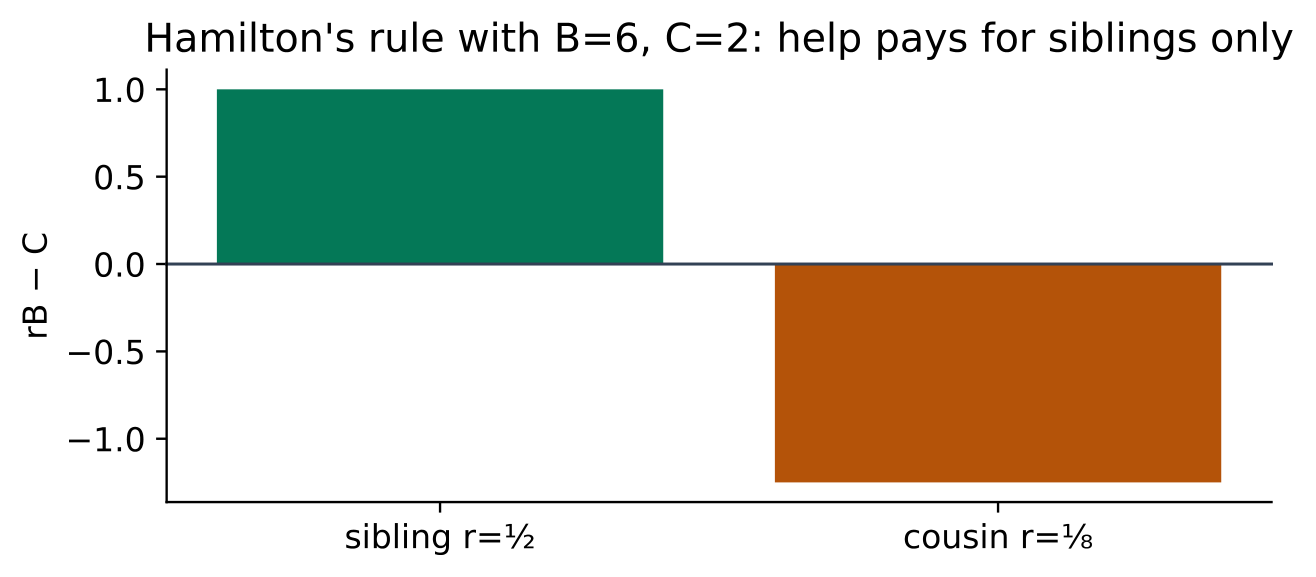
    Vocabulary
    English
    social loafing/ˈsəʊʃl ˈləʊfɪŋ/
    bystander effect/ˈbaɪstændə ɪˈfekt/
  • 22

    AT.1 · Attention limits and non-associative learning

    Learning program coming soon

    Handout

    Attention limits and non-associative learning

    Scope and prerequisites

    Supported GRE topic 22 (AT.1). Use the overview measurement lesson VI when interpreting research evidence. Existing official questions are traced in bank_review_form.yaml; original tasks below are not ETS items.

    Concepts and method

    habituation 习惯化: Non-associative decline in response to a repeated stimulus, reversed by stimulus change. divided attention 分配性注意: Sharing limited central capacity across concurrent tasks, with costs set by load.

    Attention is limited capacity. Early-selection accounts filter by physical features, late-selection accounts filter after meaning, and multimode theory (Johnston and Heinz) lets the selection point flex with task demands. Divided attention fails when combined demands exceed capacity: a hands-free call still slows driving because the bottleneck is central, not manual.

    Load theory separates perceptual load from working-memory load: high perceptual load in the main task shuts out distractors, while high working-memory load invites them. Predictions follow the load, not the slogan that multitasking is always impossible.

    Habituation is non-associative learning: repeated presentation of a stimulus weakens the response, and a changed stimulus restores it (dishabituation). No pairing with another stimulus is involved, which separates it from classical conditioning. A commuter who stops hearing a scheduled train has habituated; the response returns if the train schedule changes.

    Habituation is exploited as a measure: infants look longer at novel stimuli, so looking-time recovery after habituation indexes discrimination. Extinction in conditioning is different: there a learned association is withdrawn, not a repeated stimulus.

    Attention models specify where and under what demands selection occurs. Perceptual load and working-memory control demands can make different predictions; a blanket claim that distraction always rises with load is inadequate. Habituation is a declining response after repeated exposure; renewed response to a change supports discrimination. Distinguish it from receptor adaptation, fatigue and conditioning extinction through the stimulus history and a suitable comparison.

    Worked reasoning

    A driver on a hands-free call brakes later because central capacity is shared, not because of occupied hands. City residents stop noticing constant traffic noise (habituation), but notice immediately when it stops or changes (dishabituation). An infant who looks longer at a changed display demonstrates discrimination through looking-time recovery.

    Looking time falls across repeated displays and rises after the colour changes. What is supported, and what is not established?

    The recovery is consistent with discrimination of the change after habituation. It does not show adult-like colour concepts or prove exactly how the display is represented. Control simple salience differences and compare suitable novel and familiar displays.

    Original schematic for Attention limits and non-associative learning. Illustrative relationships and numbers are not research results.

    Independent transfer

    A response falls with repeated sound presentations. Propose a check against fatigue and explain why extinction is not established.

    Attempt independently, then use the matching skill sheet solution.

    Review and source limits

    Avoid this error: Calling habituation a form of conditioning, or claiming attention always fails under any dual task; the cost depends on load and the selection point. Teaching scope comes from teaching.yaml and the source/key/crop review in bank_review_form.yaml. Detailed current diagnostic criteria require an authenticated manual; neither historical ETS practice nor this educational reference certifies them.
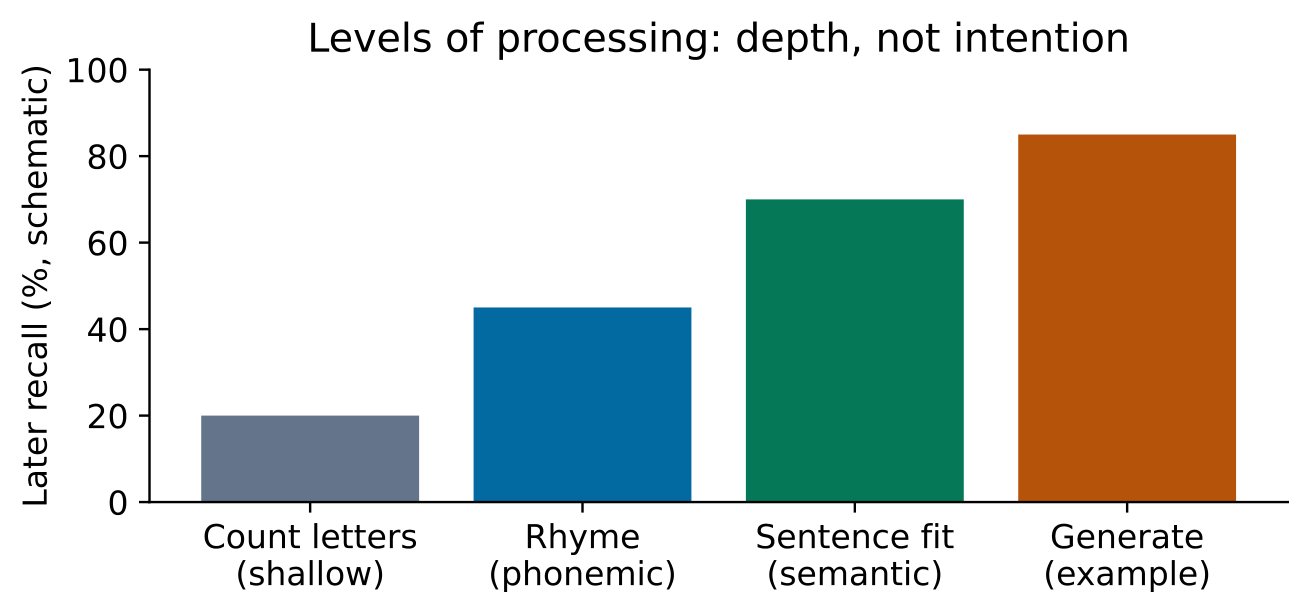
    Vocabulary
    English
    habituation/ˌhæbɪtʃuːˈeɪʃn/
    divided attention/dɪˈvaɪdɪd əˈtenʃn/
  • 23

    EX.1 · Evolutionary and comparative perspectives

    Learning program coming soon

    Handout

    Evolutionary and comparative perspectives

    Scope and prerequisites

    Supported GRE topic 23 (EX.1). Use the overview measurement lesson VI when interpreting research evidence. Existing official questions are traced in bank_review_form.yaml; original tasks below are not ETS items.

    Concepts and method

    inclusive fitness 广义适合度: Reproductive success counting both direct offspring and the reproduction of relatives weighted by relatedness. fixed action pattern 固定行为模式: An invariant species-typical sequence released by a specific sign stimulus.

    Kin selection explains helping by inclusive fitness: a gene spreads by aiding relatives who share it. Hamilton's rule says helping pays when rB>C — benefit to the recipient weighted by relatedness exceeds cost to the helper. With benefits and costs held equal, closer relatedness makes the inequality more likely to hold: compare siblings (r=.5) with first cousins (r=.125). The rule predicts direction and rough ordering, not exact human behaviour.

    Ethology studies species-typical behaviour. A fixed action pattern is an invariant sequence released by a specific sign stimulus and run to completion, as in classic egg-retrieval or mating displays. Because it is triggered rather than assembled, a fixed action pattern can be hijacked by supernormal stimuli — models with exaggerated features.

    Evolutionary explanations ask about function: how a behaviour raised reproductive success in ancestral environments. They compete or combine with learning accounts; prepared learning (fast acquisition of evolutionarily relevant fears like snakes) shows both at once. An evolutionary story is a hypothesis about history, and needs comparative or experimental evidence, not plausibility alone.

    Comparative caution cuts both ways: do not read human motives into animal behaviour (anthropomorphism), and do not assume a human behaviour is learned when cross-species patterns suggest otherwise. The examinable skill is matching each explanation to its evidence type.

    Hamilton's inequality is a model of selection under stated costs, benefits and relatedness, not an instruction about human duty. Inclusive fitness concerns effects on genetic representation through self and relatives. Fixed action patterns describe characteristic sequences in classic ethological models; real behaviour can vary with state and context. Evolutionary function and immediate learning mechanisms can complement each other. A plausible adaptive story requires evidence that distinguishes it from alternatives.

    Worked reasoning

    Helping a sibling before a cousin fits rB>C ordering. A goose retrieving a doorknob as if it were an egg shows a fixed action pattern released by an exaggerated sign stimulus. Acquiring a fear of snakes after one bad experience, but not of flowers, illustrates prepared learning.

    In a fictional fitness model, B=8, C=3 and r=.5. Test the inequality. Repeat for r=.125.

    rB>C. For r=.5, rB=.5×8=4>3, so the stated condition holds. For r=.125, rB=.125×8=1<3, so it does not. Benefits and costs must use compatible fitness measures. Relatedness alone cannot rank helping when B or C differs across cases.

    Original schematic for Evolutionary and comparative perspectives. Illustrative relationships and numbers are not research results.

    Independent transfer

    An animal quickly learns one fear association. Explain why this can be compatible with both learning and an evolutionary account, and what evidence is needed.

    Attempt independently, then use the matching skill sheet solution.

    Review and source limits

    Avoid this error: Treating Hamilton's rule as a precise human calculator, or explaining any observed behaviour as adaptive after the fact; an evolutionary claim needs evidence, not a plausible story. Teaching scope comes from teaching.yaml and the source/key/crop review in bank_review_form.yaml. Detailed current diagnostic criteria require an authenticated manual; neither historical ETS practice nor this educational reference certifies them.
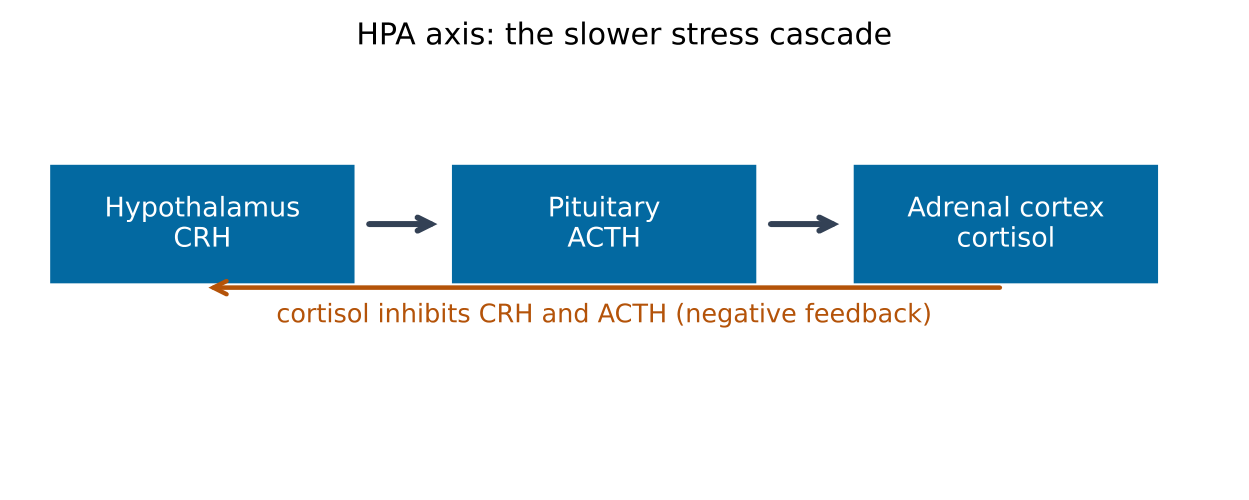
    Vocabulary
    English
    inclusive fitness/ɪnˈkluːsɪv ˈfɪtnəs/
    fixed action pattern/fɪkst ˈækʃn ˈpætn/
  • 24

    ME.2 · Encoding depth and retrieval routes

    Learning program coming soon

    Handout

    Encoding depth and retrieval routes

    Scope and prerequisites

    Supported GRE topic 24 (ME.2). Use the overview measurement lesson VI when interpreting research evidence. Existing official questions are traced in bank_review_form.yaml; original tasks below are not ETS items.

    Concepts and method

    levels of processing 加工水平: The account in which memory strength follows the depth of encoding analysis. transfer-appropriate processing 迁移适宜性加工: Encoding helps most when its form matches the retrieval test.

    Levels of processing (Craik and Lockhart) hold that memory strength follows the depth of encoding, not the intention to learn. Shallow tasks (is the word in capitals?) give weak traces; phonemic tasks (does it rhyme?) are intermediate; semantic tasks (does it fit the sentence?) are deepest. Incidental learners doing deep tasks can out-remember intentional learners doing shallow ones.

    Maintenance rehearsal repeats material without change and holds it briefly; elaborative rehearsal links it to meaning, images and prior knowledge, producing durable traces. The generation effect — better memory for answers you produce than words you read — is elaboration at work.

    Transfer-appropriate processing adds the retrieval side: encoding helps most when it matches the test. Semantic encoding suits semantic tests; phonemic encoding can beat it on rhyme-recognition tests. Depth usually wins because most tests probe meaning, but the match, not depth alone, decides.

    Encoding specificity applies the same match principle to context: recall improves when the retrieval environment or state matches encoding. These effects sit beside the interference mechanisms from the earlier memory unit: depth builds the trace, match retrieves it.

    Semantic elaboration often supports later meaning-based recall because it creates useful relationships and retrieval routes. Maintenance repetition can keep information active without the same elaboration. Transfer-appropriate processing asks whether encoding operations fit the later test. Therefore depth is not an unconditional ranking of all possible tasks. Context match can provide cues; it is one influence among many, not a guarantee of recall.

    Worked reasoning

    Answering "does it fit the sentence" beats "is it in capitals" on later recall, even with no warning of a test. Generating the missing word in a list beats reading it. Rhyme-encoding can beat meaning-encoding on a rhyme test — transfer-appropriate processing. Divers remembering word lists better underwater (where they learned them) show encoding specificity.

    One group judges meaning and another judges rhyme. On a rhyme-recognition test, the rhyme group performs better. Does this disprove every benefit of semantic encoding?

    No. The result is consistent with an encoding–test match. It qualifies a claim that deeper meaning processing always wins. Compare both groups on meaning-based and rhyme-based tests to examine the interaction between encoding and retrieval demand. Keep exposure and time comparable.

    Original schematic for Encoding depth and retrieval routes. Illustrative relationships and numbers are not research results.

    Independent transfer

    Design a two-by-two classroom study that distinguishes an encoding advantage from a matching advantage, then predict the informative pattern.

    Attempt independently, then use the matching skill sheet solution.

    Review and source limits

    Avoid this error: Equating repetition with learning: maintenance rehearsal holds material briefly but builds weak traces, and intention to learn without a deep task adds little. Teaching scope comes from teaching.yaml and the source/key/crop review in bank_review_form.yaml. Detailed current diagnostic criteria require an authenticated manual; neither historical ETS practice nor this educational reference certifies them.
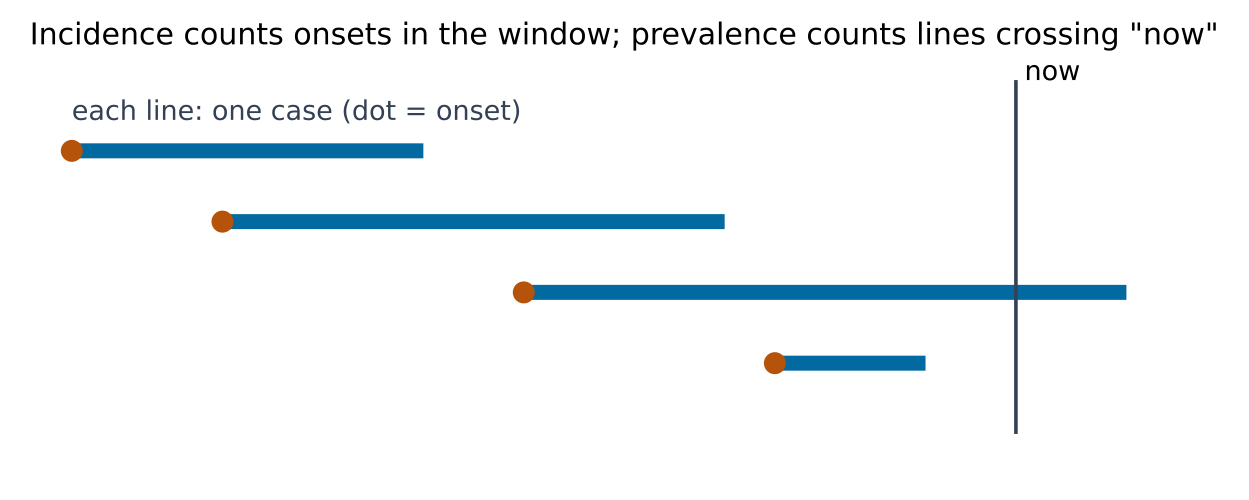
    Vocabulary
    English
    levels of processing/ˈlevlz ɒv ˈprəʊsesɪŋ/
    transfer-appropriate processing/ˈtrænsfɜː əˈprəʊprɪət ˈprəʊsesɪŋ/
  • 25

    HB.1 · Hormones, stress and behavioural regulation

    Learning program coming soon

    Handout

    Hormones, stress and behavioural regulation

    Scope and prerequisites

    Supported GRE topic 25 (HB.1). Use the overview measurement lesson VI when interpreting research evidence. Existing official questions are traced in bank_review_form.yaml; original tasks below are not ETS items.

    Concepts and method

    HPA axis 下丘脑-垂体-肾上腺轴: The hypothalamus-pituitary-adrenal chain producing the slower cortisol stress response. negative feedback 负反馈: A product inhibiting its own upstream release, bounding the response.

    The stress response runs on two clocks. The fast sympathetic-adrenal-medullary path releases adrenaline within seconds; the slower HPA axis runs hypothalamus (CRH) to pituitary (ACTH) to adrenal cortex (cortisol) over minutes, mobilising energy and suppressing non-urgent functions. Chronic stress can affect health through several interacting pathways; cortisol is one part of this regulation, not a single inevitable cause.

    Key regulatory hormones: progesterone prepares and maintains the uterine lining for implantation; oxytocin drives labour contractions and milk let-down and is linked to bonding; melatonin times sleep-wake cycles; insulin and glucagon manage blood glucose in opposition. Match the hormone to the loop it serves, not to a vague mood label.

    Hormones differ from neural signals in timing and targeting: neural signalling is often faster and spatially directed; hormonal signalling often acts over longer times through circulation. These are tendencies with exceptions, not an absolute division. Only cells carrying the matching receptor respond, so a circulating hormone can still be selective.

    Feedback keeps the system bounded: cortisol inhibits CRH and ACTH release (negative feedback), so the axis ramps down when the stressor passes. Feedback failure or chronic activation — not the hormone itself — is what turns an adaptive response into a liability.

    The HPA sequence connects hypothalamic CRH, pituitary ACTH and adrenal-cortex cortisol. Cortisol participates in feedback that can inhibit upstream release. Sympathetic-adrenal responses can act more quickly. Neural and endocrine signalling overlap in function; timing is a useful tendency, not an absolute fast/slow division. Circulating hormones act selectively because target cells differ in receptors. Chronic stress involves multiple pathways and cannot be reduced to one inevitable cortisol effect.

    Worked reasoning

    A near-miss in traffic: adrenaline within seconds, then cortisol via the HPA axis over minutes; cortisol later inhibits CRH/ACTH to settle the response. Progesterone prepares the uterus for a fertilised ovum. Melatonin rises at night to time sleep.

    Order CRH, ACTH and cortisol by their place in the HPA pathway, then explain negative feedback without calling cortisol harmful in itself.

    Hypothalamus releases CRH, which stimulates pituitary ACTH, which stimulates adrenal-cortex cortisol. Cortisol can inhibit upstream signalling, helping regulate the response. This adaptive control differs from saying the hormone is always harmful. Repeated activation, context and regulation matter.

    Original schematic for Hormones, stress and behavioural regulation. Illustrative relationships and numbers are not research results.

    Independent transfer

    A hormone reaches many organs but affects only some cells. Explain why broad circulation and selective effects are compatible.

    Attempt independently, then use the matching skill sheet solution.

    Review and source limits

    Avoid this error: Assigning a hormone a single emotion, or forgetting receptor selectivity; hormones broadcast but only receptor-bearing cells answer. Teaching scope comes from teaching.yaml and the source/key/crop review in bank_review_form.yaml. Detailed current diagnostic criteria require an authenticated manual; neither historical ETS practice nor this educational reference certifies them.

    Vocabulary
    English
    HPA axis/ˌeɪtʃ piː ˈeɪ ˈæksɪs/
    negative feedback/ˈneɡətɪv ˈfiːdbæk/
  • 26

    EP.1 · Epidemiology and clinical evidence

    Learning program coming soon

    Handout

    Epidemiology and clinical evidence

    Scope and prerequisites

    Supported GRE topic 26 (EP.1). Use the overview measurement lesson VI when interpreting research evidence. Existing official questions are traced in bank_review_form.yaml; original tasks below are not ETS items.

    Concepts and method

    incidence 发病率(新发病例): The number or rate of NEW cases arising in a period. prevalence 患病率: The proportion of a population with the condition at a given time.

    Incidence counts NEW cases in a period (number of new diagnoses in a year); prevalence counts ALL existing cases at a time. Chronic conditions can have low incidence and high prevalence; short acute outbreaks show the reverse. A count of new cases in the United States in the past year is an incidence figure.

    Rates need denominators: incidence rate is new cases divided by person-time at risk; prevalence is existing cases divided by the population. Comparing raw counts across populations of different sizes misleads; compare rates.

    Case reports, case-control studies, cohorts, randomized trials and meta-analyses answer different questions. Random allocation can reduce baseline confounding under appropriate implementation; observational designs need explicit confounder analysis. Quality, bias, relevance and uncertainty must be evaluated within each design. A meta-analysis cannot automatically repair weak constituent studies.

    Screening and risk run on base rates: with low prevalence, even an accurate test yields mostly false positives among positives. Number needed to treat and relative versus absolute risk are read against the baseline, not from the treatment label alone.

    A cumulative incidence proportion uses new cases among people initially at risk over a specified period. An incidence rate uses person-time, while point prevalence counts existing cases at a specified time. Do not interchange their denominators or units. Design labels are guides, not an automatic quality ladder: a biased trial or weak meta-analysis can mislead. Relative risk reduction needs its baseline; absolute change and follow-up duration are necessary for interpretation.

    Worked reasoning

    Counting this year's new schizophrenia diagnoses measures incidence; counting everyone currently diagnosed measures prevalence. A 50% relative risk reduction from 2% to 1% is 1 point absolute. A rare-condition screen with many false positives follows directly from the low base rate.

    In a fictional closed cohort, 12 of 600 initially unaffected people develop a condition over one year, with complete follow-up. Compute cumulative incidence. If 30 of 750 people have it at a census, compute prevalence.

    Cumulative incidence=new cases/initially at-risk population=12/600=.02, or 2% over one year. Point prevalence=existing cases/population at that time=30/750=.04, or 4%. The first is not a person-time incidence rate; the second includes old and new existing cases at the census.

    Original schematic for Epidemiology and clinical evidence. Illustrative relationships and numbers are not research results.

    Independent transfer

    A fictional trial's risks over the same period are 4% in control and 3% in treatment. Compute relative and absolute reduction and NNT, then qualify.

    Attempt independently, then use the matching skill sheet solution.

    Review and source limits

    Avoid this error: Reporting a new-case count as prevalence, or quoting relative risk without the absolute baseline. Teaching scope comes from teaching.yaml and the source/key/crop review in bank_review_form.yaml. Detailed current diagnostic criteria require an authenticated manual; neither historical ETS practice nor this educational reference certifies them.

    Vocabulary
    English
    incidence/ˈɪnsɪdəns/
    prevalence/ˈprevələns/

Log in or create account

IGCSE, A-Level & AP