Skip to content · ⁨コンテンツへスキップ⁩

Human nutrition · ⁨人間の栄養⁩

IGCSE Biology · ⁨IGCSE 生物⁩ · Topic 7 · ⁨トピック 7⁩

View Slides · ⁨查看幻灯片⁩ Train · ⁨練習する⁩
Video lesson for this topic · ⁨このトピックのビデオレッスン⁩ Open the video page · ⁨動画ページを開く⁩
15:52

人間の栄養

皿の上の食品は、血液に直接进入できるほど分子が大きすぎます。そのため、体はそれを取り壊します。まず潰して、次に分子を切断して…

English narration · English + 中文 subtitles burned in · ⁨英語ナレーション・英語+中文字幕 burning-in⁩

7.1

A balanced diet · ⁨均衡の取れた食事⁩

Syllabus · ⁨シラバス⁩
English
Core Supplement
1 Describe what is meant by a balanced diet
2 State the principal dietary sources and describe the importance of: (a) carbohydrates (b) fats and oils (c) proteins (d) vitamins, limited to C and D (e) mineral ions, limited to calcium and iron (f) fibre (roughage) (g) water
3 State the causes of scurvy and rickets
日本語
コア サプリメント
1 均衡食とは何かを説明する
2 主な栄養源を述べ、次の各要素の重要性について説明する:(a) 炭水化物 (b) 脂質および油 (c) タンパク質 (d) ビタミン(CとDに限定)(e) 無機イオン(カルシウムと鉄に限定)(f) 食物繊維(粗食物繊維)(g) 水分
3 坏血病およびricketsの原因を述べる

Source: Cambridge International syllabus · ⁨出典: Cambridge International シラバス⁩

English

A balanced diet 均衡饮食 gives you all the substances you need, in the right amounts. There are seven parts.

Part of diet Good sources Why you need it
carbohydrates 碳水化合物 rice, bread, potatoes the main source of energy 能量
fats 脂肪 and oils butter, oil, nuts an energy store; help keep you warm
proteins 蛋白质 meat, fish, eggs, beans growth and repair of cells
vitamin 维生素 C fresh fruit, vegetables keeps skin and gums healthy
vitamin D sunlight, oily fish, eggs helps the body take in calcium 钙
mineral ions 矿物质离子 — calcium milk, cheese strong bones and teeth
mineral ions — iron 铁 red meat, leafy greens needed to make haemoglobin 血红蛋白, the red pigment in red blood cells that carries oxygen
fibre 膳食纤维 (roughage) vegetables, whole grains keeps food moving through the gut
water drinks and food needed for all reactions; most of the body is water

Two diseases come from missing a vitamin:

  • too little vitamin C → scurvy 坏血病 (bleeding gums, slow healing).
  • too little vitamin D → rickets 佝偻病 (soft, bent bones), because the body cannot take in enough calcium.

Worked example. A child eats almost no fresh fruit or vegetables. Their gums bleed and small cuts heal slowly. Which part of the diet is missing, and why does that explain the symptoms? Fresh fruit and vegetables are the main source of vitamin C, and too little vitamin C causes scurvy - whose signs are exactly bleeding gums and slow healing. So the missing part is vitamin C. Name the substance and the disease separately: an answer that says only "a vitamin deficiency" does not earn the mark.

日本語
新鮮な果物と野菜の盛り合わせ
均衡の取れた食事は、たっぷりの果物と野菜を含みます。

均衡の取れた食事は、必要な物質を適切な量で提供します。7つの要素があります。

均衡の取れた食事の7つの要素、それぞれの役割:エネルギー源としての炭水化物、エネルギー貯蔵としての脂質、成長と修復としてのタンパク質、ビタミン、無機イオン、食物繊維、水
均衡の取れた食事の7つの要素と、それぞれが果たす役割
食事の要素 良い供給源 必要な理由
炭水化物 ご飯、パン、ジャガイモ エネルギーの主な供給源
脂質 と油 バター、油、ナッツ エネルギー貯蔵;保温に役立つ
タンパク質 肉、魚、卵、豆類 細胞の成長と修復
ビタミン C 新鮮な果物、野菜 皮膚と歯茎の健康維持
ビタミン D 日光、脂質魚、卵 体がカルシウムを取り込むのを助ける
無機イオン — カルシウム 牛乳、チーズ 骨と歯の強さ
無機イオン — 鉄分 赤身肉、葉物野菜 酸素を運ぶ赤血球内の赤色素であるヘモグロビンを作るために必要
食物繊維(粗繊維) 野菜、全粒穀物 腸内での食物の移動を促す
水 飲料・食品 全ての反応に必要;体の大部分は水でできている

ビタミン欠乏による疾病が2つあります:

  • ビタミンC不足 → 坏血病(歯茎の出血、治癒の遅れ)。
  • ビタミンD不足 → 軟骨症(柔らかく曲がった骨)、体が十分カルシウムを取り込めないため。

** worked example.** 子供がほぼ新しい果物や野菜を食べていない。歯茎から出血し、小さな傷の治りが遅い。食事から欠けている部分は何か、なぜそれが症状を説明するのか。新しい果物と野菜はビタミンCの主な供給源であり、ビタミンCが不足すると坏血病(スカービ)が起こる——その兆候はまさに歯茎の出血と治りの遅さである。したがって、欠けているのはビタミンCである。物質と疾患を別々に名指して答えること:「ビタミン欠乏症」とだけ答えても得点されない。

Explore · ⁨探索⁩

Balanced diet lab · ⁨バランスの取れた食事実験⁩

Match dietary needs to the nutrient that solves the problem. · ⁨問題解決に必要な栄養素と食事の要件を組み合わせる。⁩

Vocabulary · ⁨語彙⁩ Train · ⁨練習する⁩
English 日本語
balanced diet/ˈbælənst ˈdaɪət/ バランスの取れた食事
carbohydrates/ˌkɑːbəʊˈhaɪdreɪts/ 炭水化物
energy/ˈenədʒi/ エネルギー
fats/fæts/ 脂質
proteins/ˈprəʊtiːnz/ タンパク質
vitamin/ˈvɪtəmɪn/ ビタミン
calcium/ˈkælsɪəm/ カルシウム
mineral ions/ˈmɪnərəl ˈaɪɒnz/ 鉱物イオン
iron/ˈaɪən/ 鉄
haemoglobin/ˌhiːməˈɡləʊbɪn/ ヘモグロビン
fibre/ˈfaɪbə/ 食物繊維
scurvy/ˈskɜːvi/ 坏血病
rickets/ˈrɪkɪts/ こどもの骨软化症(ラキテス)
7.2

The digestive system · ⁨消化器系⁩

Syllabus · ⁨シラバス⁩
English
Core Supplement
1 Identify in diagrams and images the main organs of the digestive system, limited to: (a) alimentary canal: mouth, oesophagus, stomach, small intestine (duodenum and ileum) and large intestine (colon, rectum, anus) (b) associated organs: salivary glands, pancreas, liver and gall bladder
2 Describe the functions of the organs of the digestive system listed in 7.2.1, in relation to: (a) ingestion – the taking of substances, e.g. food and drink, into the body (b) digestion – the breakdown of food (c) absorption – the movement of nutrients from the intestines into the blood (d) assimilation – uptake and use of nutrients by cells (e) egestion – the removal of undigested food from the body as faeces
日本語
コア サプリメント
1 図や画像から消化系の主要な器官を特定し、次に限定する:(a) 消化管:口腔、食道、胃、小腸(十二指腸と回腸)、大腸(結腸、直腸、肛門)(b) 附属器官:唾液腺、膵臓、肝臓、胆嚢
2 7.2.1 に記載された消化系器官の機能について、次の点に関連して説明する:(a) 摂取 – 物質(例:食品・飲料)を体内に取り込むこと (b) 消化 – 食品の分解 (c) 吸収 – 栄養素が腸から血液へ移動すること (d) 同化 – 細胞による栄養素の取り込みと利用 (e) 排泄 – 未消化の食品を糞便として体外へ排出すること

Source: Cambridge International syllabus · ⁨出典: Cambridge International シラバス⁩

English

The digestive system 消化系统 breaks food down. Food passes along one long tube, the alimentary canal 消化道:

mouth → oesophagus 食道 → stomach 胃 → small intestine 小肠 (the duodenum 十二指肠 then the ileum 回肠) → large intestine 大肠 (the colon 结肠, rectum 直肠 and anus 肛门).

Some organs help with digestion but food does not pass through them: the salivary glands 唾液腺 in the mouth, the pancreas 胰腺, the liver 肝脏 and the gall bladder 胆囊.

Five things happen to food, in order:

Process What it means
ingestion 摄入 taking food and drink into the body through the mouth
digestion 消化 breaking food down into small molecules
absorption 吸收 nutrients 营养物质 move from the intestine into the blood
assimilation 同化 cells take in and use the nutrients
egestion 排遗 undigested food leaves the body as faeces 粪便
日本語

消化器系は食物を分解する。食物は長い管である消化管を通って移動する:

口 → 食道 → 胃 → 小腸(十二指腸、次に回腸)→ 大腸(結腸、直腸、肛門)。

消化に寄与するが、食物は通らない器官がある:口内の唾液腺、膵臓、肝臓、胆嚢。

消化器系のフロー図:食物の経路に沿った口、食道、胃、小腸、大腸、肛門、および唾液腺、肝臓、胆嚢、膵臓による分泌液の追加
食物が通る消化管、および消化液を分泌する臓器

食物に対して以下の5つのことが順序に行われる:

過程 意味
摂取 口を通じて食物や飲料を体内に取り込むこと
消化 食物を微小な分子に分解すること
吸収 栄養素が腸から血液へ移行すること
同化 細胞が栄養素を取り込み利用すること
排泄 未消化の食物が糞便として体外へ排出されること
Explore · ⁨探索⁩

Through the digestive system · ⁨消化系を通過する⁩

Food travels along the gut; each part does a different job to break it down and absorb it. · ⁨食物は腸管内を移動し、各部位が異なる役割を果たして分解・吸収を行う。⁩

Vocabulary · ⁨語彙⁩ Train · ⁨練習する⁩
English 日本語
digestive system/daɪˈdʒestɪv ˈsɪstəm/ 消化器系
alimentary canal/əlaɪˈmentəri kəˈnæl/ 消化管
oesophagus/ɪˈsɒfəɡəs/ 食道
stomach/ˈstʌmək/ 胃
small intestine/smɔːl ɪnˈtestɪn/ 小腸
duodenum/ˈdjuːəʊdnəm/ 十二指腸
ileum/ɪˈliːəm/ 回腸
large intestine/lɑːdʒ ɪnˈtestɪn/ 大腸
colon/ˈkəʊlən/ 大腸
rectum/ˈrektəm/ 直腸
anus/ˈeɪnʌs/ 肛門
salivary glands/ˈsælɪvəri ɡlændz/ 唾液腺
pancreas/ˈpæŋkrɪəs/ 膵臓
liver/ˈlɪvə/ 肝臓
gall bladder/ɡɔːl ˈblædə/ 胆嚢
ingestion/ɪnˈdʒestʃn/ 摂取
digestion/daɪˈdʒestʃn/ 消化
nutrients/ˈnjuːtrɪənts/ 栄養素
absorption/əbˈsɔːpʃn/ 吸収
assimilation/əˌsɪmɪˈleɪʃn/ 同化 (assimilation)
egestion/ɪˈdʒestʃn/ 糞便排出
faeces/ˈfiːsiːz/ 便
surface area/ˈsɜːfɪs ˈeərɪə/ 表面積
7.3

Physical digestion · ⁨物理的消化⁩

Syllabus · ⁨シラバス⁩
English
Core Supplement
1 Describe physical digestion as the breakdown of food into smaller pieces without chemical change to the food molecules
2 State that physical digestion increases the surface area of food for the action of enzymes in chemical digestion
3 Identify in diagrams and images the types of human teeth: incisors, canines, premolars and molars
4 Describe the structure of human teeth, limited to: enamel, dentine, pulp, nerves, blood vessels and cement, and understand that teeth are embedded in bone and the gums
5 Describe the functions of the types of human teeth in physical digestion of food
6 Describe the function of the stomach in physical digestion
7 Outline the role of bile in emulsifying fats and oils to increase the surface area for chemical digestion
日本語
コア サプリメント
1 物理的消化を、食物分子に化学的変化を伴わずに小さな破片に分解するプロセスとして説明する
2 物理的消化が、化学的消化における酵素の作用のための食物の表面積を増加させることを述べる
3 図や画像において、ヒトの歯の種類(切歯、犬歯、前臼歯、臼歯)を識別する
4 ヒトの歯の構造を、エナメル質、象牙質、髄、神経、血管およびセメントに限って説明し、歯が骨および歯茎に埋め込まれていることを理解する
5 物理的消化におけるヒトの各歯の機能について説明する
6 胃の物理的消化における機能について説明する
7 ビールが脂肪・油を乳化させ、化学的消化のための表面積を増やす役割を概説する

Source: Cambridge International syllabus · ⁨出典: Cambridge International シラバス⁩

English

Physical digestion breaks food into smaller pieces without changing the food molecules. This gives a larger surface area 表面积 for the enzymes 酶 to act on later.

Teeth

You have four kinds of teeth 牙齿:

Tooth Job
incisors 门齿 sharp front teeth for biting and cutting
canines 犬齿 pointed teeth for tearing
premolars 前臼齿 flat teeth for chewing and grinding
molars 臼齿 flat back teeth for chewing and grinding

A tooth is built from these parts:

Part Description
enamel 牙釉质 hard white outer layer; the hardest material in the body
dentine 牙本质 softer, bone-like layer under the enamel
pulp 牙髓 soft centre with nerves 神经 and blood vessels 血管
cement 牙骨质 fixes the root into the jaw

Teeth are set into the bone of the jaw and held firm by the gums 牙龈.

The stomach

The wall of the stomach is made of muscle 肌肉 that squeezes and mixes the food, breaking it into smaller pieces.

Bile (Supplement)

Bile 胆汁 is made in the liver and stored in the gall bladder. It emulsifies 乳化 fats and oils — it breaks large drops of fat into many tiny droplets. This gives a much larger surface area for the enzyme lipase 脂肪酶 to digest the fat. Bile itself contains no enzymes.

日本語

物理的消化は食物分子を変化させずに食物を小さな破片に分解する。これにより、後で酵素が作用するためのより大きな表面積が提供される。

歯

あなたは4種類の歯を持っている:

歯の種類 役割
切歯 かじりや切断のための鋭い前歯
犬歯 引き裂くための尖った歯
前臼歯 かみ砕きやすりつぶしための平らな歯
臼歯 かみ砕きやすりつぶしための平らな奥の歯
下顎の3Dモデル:歯の種類ごとに色分けされており、奥に平らな頭部を持つ臼歯と前臼歯、尖った犬歯、そして前にシャベル状の切歯が配置されている
4種類の歯:前側の切歯と犬歯、奥の前臼歯と臼歯

歯はこれらの部分から構成されている:

部分 説明
エナメル質 硬い白色の外層;体内で最も硬い物質
象牙質 エナメル質の下の骨のような柔らかい層
歯髄 神経と血管を含む柔らかい中心部
セメント質 根を顎に固定する

歯は顎の骨に埋め込まれており、歯茎によってしっかり保持されている。

断面図とした歯:象牙質の上のエナメル質の冠、内部の柔らかい歯髄、そして顎の骨に埋め込まれ歯茎に囲まれたセメント質で覆われた根
断面図とした歯:象牙質の上のエナメル質、柔らかい歯髄、および顎に埋め込まれた根

胃

胃壁は筋肉でできており、食物を絞って混ぜ合わせ、小さな破片に分解する。

胆汁(補足)

胆汁は肝臓で作られ、胆嚢に貯留される。胆汁は脂肪と油を乳化させる——つまり、大きな脂肪滴を多数の微細な液滴に分解する。これにより、酵素リパーゼが脂肪を消化するためのはるかに大きな表面積が得られる。胆汁自体には酵素は含まれない。

Explore · ⁨探索⁩

Physical (mechanical) digestion · ⁨物理的(機械的)消化⁩

Physical digestion breaks food into smaller pieces WITHOUT changing it chemically — it just increases the surface area for enzymes. · ⁨物理的消化は化学変化を伴わずに食物を小さな破片に分けることである—酵素のための表面積を増やすだけである。⁩

Vocabulary · ⁨語彙⁩ Train · ⁨練習する⁩
English 日本語
teeth/tiːθ/ 歯
incisors/ɪnˈsaɪzəz/ 切歯
canines/ˈkeɪnaɪnz/ 犬歯
premolars/priːˈməʊləz/ 前臼歯
molars/ˈməʊləz/ 臼歯
enamel/ɪˈnæml/ エナメル質
dentine/ˈdentiːn/ 象牙質
pulp/pʌlp/ 歯髄
nerves/nɜːvz/ 神経
blood vessels/blʌd ˈveslz/ 血管
cement/sɪˈment/ cement (セメント)
gums/ɡʌmz/ 歯茎
muscle/ˈmʌsl/ 筋肉
bile/baɪl/ 胆汁
emulsifies/ɪˈmʌlsɪfaɪz/ 乳化させる
lipase/ˈlɪpeɪs/ リパーゼ
insoluble/ɪnˈsɒljuːbl/ 不溶である
soluble/ˈsɒljuːbl/ 可溶
amylase/ˈæmɪleɪz/ アミラーゼ
starch/stɑːtʃ/ デンプン
reducing sugars/rɪˈdjuːsɪŋ ˈʃʊɡəz/ 還元糖
protease/ˈprəʊteɪs/ プロテアーゼ
amino acids/əˈmiːnəʊ ˈæsɪdz/ アミノ酸
fatty acids/ˈfæti ˈæsɪdz/ 脂肪酸
glycerol/ˈɡlɪsərɒl/ グリセロール
hydrochloric acid/ˌhaɪdrəˈklɔːrɪk ˈæsɪd/ 塩酸
gastric juice/ˈɡæstrɪk dʒuːs/ 胃液
microorganisms/ˌmaɪkrəʊˈɔːɡənɪzəmz/ 微生物
acidic/əˈsɪdɪk/ 酸性であるため
maltose/ˈmɒltəʊs/ 麦芽糖
maltase/ˈmɒlteɪs/ マルターゼ
epithelium/ˌepɪˈθiːlɪəm/ 上皮
glucose/ˈɡluːkəʊs/ ブドウ糖
pepsin/ˈpepsɪn/ ペプシン
trypsin/ˈtrɪpsɪn/ トリプシン
alkaline/ˈælkəlaɪn/ アルカリ性である
neutralises/ˈnjuːtrəlaɪzɪz/ 中和する
villi/ˈvɪlaɪ/ 絨毛
microvilli/ˈmaɪkrəʊvɪlaɪ/ 微絨毛
capillaries/ˈkæpɪləriz/ 毛細血管(capillaries)
lacteal/ˈlæktɪəl/ 乳糜管
7.4

Chemical digestion · ⁨化学的消化⁩

Syllabus · ⁨シラバス⁩
English
Core Supplement
1 Describe chemical digestion as the breakdown of large insoluble molecules into small soluble molecules
2 State the role of chemical digestion in producing small soluble molecules that can be absorbed
3 Describe the functions of enzymes as follows: (a) amylase breaks down starch to simple reducing sugars (b) proteases break down protein to amino acids (c) lipase breaks down fats and oils to fatty acids and glycerol 6 Describe the digestion of starch in the digestive system: (a) amylase breaks down starch to maltose (b) maltase breaks down maltose to glucose on the membranes of the epithelium lining the small intestine
4 State where, in the digestive system, amylase, protease and lipase are secreted and where they act 7 Describe the digestion of protein by proteases in the digestive system: (a) pepsin breaks down protein in the acidic conditions of the stomach (b) trypsin breaks down protein in the alkaline conditions of the small intestine
5 Describe the functions of hydrochloric acid in gastric juice, limited to killing harmful microorganisms in food and providing an acidic pH for optimum enzyme activity 8 Explain that bile is an alkaline mixture that neutralises the acidic mixture of food and gastric juices entering the duodenum from the stomach, to provide a suitable pH for enzyme action
日本語
コア サプリメント
1 化学的消化を、大きな不溶性分子を小さな可溶性分子に分解するプロセスとして説明する
2 化学的消化が、吸収可能な小さな可溶性分子を生成する役割を持つことを述べる
3 酵素の機能を以下のように説明する:(a) アミラーゼはデンプンを還元性単糖に分解する (b) プロテアーゼはタンパク質をアミノ酸に分解する (c) リパーゼは脂肪・油を脂肪酸とグリセロールに分解する 6 消化系におけるデンプンの消化を説明する:(a) アミラーゼはデンプンをマルトースに分解する (b) マルターゼは小腸上皮の膜上でマルトースをグルコースに分解する
4 デンプン、プロテアーゼ、リパーゼが消化系内でどこで分泌され、どこで作用するかを述べる 7 消化系におけるプロテアーゼによるタンパク質の消化を説明する:(a) ペプシンは胃の酸性条件下でタンパク質を分解する (b) トリプシンは小腸のアルカリ性条件下でタンパク質を分解する
5 胃液における塩酸の機能を、有害な微生物を殺菌することと、最適な酵素活性のための酸性pHを提供することに限定して説明する 8 ビールがアルカリ性の混合物であり、胃から十二指腸へ流入する食物と胃液の酸性混合物を中和し、酵素作用に適したpHを提供することを説明する

Source: Cambridge International syllabus · ⁨出典: Cambridge International シラバス⁩

English

Chemical digestion breaks large insoluble 不溶性 molecules into small soluble 可溶性 molecules. Only small soluble molecules can be absorbed into the blood. Enzymes carry out this work.

Enzyme Breaks down Into Made in
amylase 淀粉酶 starch 淀粉 reducing sugars 还原糖 salivary glands, pancreas
protease 蛋白酶 protein amino acids 氨基酸 stomach, pancreas
lipase fats and oils fatty acids 脂肪酸 and glycerol 甘油 pancreas

Acid in the stomach

The stomach makes hydrochloric acid 盐酸, which is part of the gastric juice 胃液. This acid:

  • kills harmful microorganisms 微生物 in the food, and
  • gives an acidic 酸性 pH, the best pH for the stomach's protease to work.

Digesting starch and protein (Supplement)

Starch is digested in two steps:

  • amylase breaks starch into maltose 麦芽糖.
  • maltase 麦芽糖酶, on the membranes of the epithelium 上皮 lining the small intestine, breaks maltose into glucose 葡萄糖.

Protein is digested by two proteases:

  • pepsin 胃蛋白酶 breaks protein down in the acidic stomach.
  • trypsin 胰蛋白酶 breaks protein down in the alkaline 碱性 small intestine.

Bile is alkaline. It neutralises 中和 the acidic food and gastric juice as they enter the duodenum, giving a suitable pH for the enzymes there.

日本語

化学的消化は大きな不溶性分子を小さな水溶性分子に分解する。血液へ吸収できるのは水溶性の微小な分子のみである。この作業は酵素が行う。

酵素 分解対象 生成物 産生場所
アミラーゼ デンプン 還元糖 唾液腺、膵臓
プロテアーゼ タンパク質 アミノ酸 胃、膵臓
リパーゼ 脂肪と油 脂肪酸とグリセロール 膵臓
酵素が大きな分子を小さな分子に分解する様子を示す3つの行:アミラーゼがデンプンを単純糖に変換し、プロテアーゼがタンパク質をアミノ酸に変換し、リパーゼが脂肪を脂肪酸とグリセロールに変換する
消化酵素は大きな不溶性分子を小さな水溶性分子に分解する

胃の酸

胃は塩酸を作り出し、これは胃液の一部である。この酸は:

  • 食物中の有害な微生物を殺し、かつ、
  • 酸性pHを提供し、これが胃のプロテアーゼが機能する最適なpHである。

デンプンとタンパク質の消化(補足)

デンプンは2段階で消化される:

  • アミラーゼがデンプンをマルトースに分解する。
  • 小腸を内側から覆う上皮膜上のマルターゼが、マルトースをグルコースに分解する。

タンパク質は2種類のプロテアーゼによって消化される:

  • ペプシンが酸性の胃内でタンパク質を分解する。
  • トリプシンがアルカリ性の小腸内でタンパク質を分解する。

胆汁はアルカリ性である。十二指腸に入る際、酸性の食物と胃液を中和し、そこに存在する酵素にとって適切なpHを与える。

Explore · ⁨探索⁩

How fast a digestive enzyme works · ⁨消化酵素の反応速度⁩

Add more substrate and the reaction rate climbs, then levels off as every enzyme is busy — the same way amylase, protease and lipase break down food. · ⁨基質を増やすと反応速度は上昇し、すべての酵素が忙しくなることで頭打ちになる—アミラーゼ、プロテアーゼ、リパーゼが食物を分解する際と同様である。⁩

Vocabulary · ⁨語彙⁩ Train · ⁨練習する⁩
English 日本語
enzymes/ˈenzaɪmz/ 酵素
7.5

Absorption · ⁨吸収⁩

Syllabus · ⁨シラバス⁩
English
Core Supplement
1 State that the small intestine is the region where nutrients are absorbed
3 Explain the significance of villi and microvilli in increasing the internal surface area of the small intestine
4 Describe the structure of a villus
5 Describe the roles of capillaries and lacteals in villi
2 State that most water is absorbed from the small intestine but that some is also absorbed from the colon
日本語
コア サプリメント
1 小腸が栄養素が吸収される部位であることを述べる
3 絨毛および微絨毛が小腸の内面積を増加させる意義について説明する
4 絨毛の構造について説明する
5 絨毛内の毛細血管およびラクトールの役割について説明する
2 大部分の水は小腸から吸収されるが、一部は大腸からも吸収されることを述べる

Source: Cambridge International syllabus · ⁨出典: Cambridge International シラバス⁩

English

Digested nutrients are absorbed into the blood in the small intestine. Most water is absorbed here too; the colon absorbs the rest, leaving solid faeces.

Villi (Supplement)

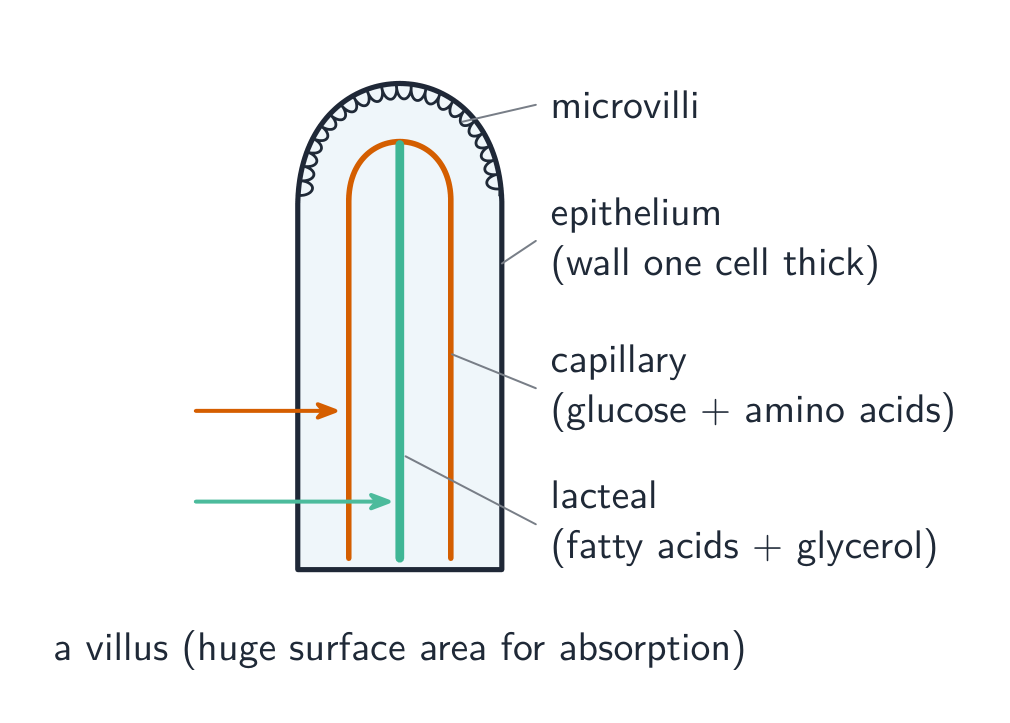
The inside of the small intestine is covered with millions of tiny finger-shaped villi 绒毛. Each villus is itself covered in much smaller microvilli 微绒毛. Together these give a huge surface area, so absorption is fast.

A single villus has:

  • a wall just one cell thick, so molecules have only a short distance to travel.
  • a network of capillaries 毛细血管 that carry away absorbed glucose and amino acids.
  • a lacteal 乳糜管 in the centre that carries away absorbed fatty acids and glycerol.
日本語

消化された栄養素は小腸で血液へ吸収される。水分の大部分もここで吸収され、結腸が残りを吸収して固体の糞便を残す。

絨毛(補足)

小腸の内面は数百万個の指状の微小な絨毛で覆われている。各絨毛はさらに非常に小さい微小絨毛で覆われている。これらが一体となって膨大な表面積を生み出すため、吸収は迅速である。

単一の絨毛とその適応: 表面積をさらに増やす微小絨毛、1細胞層の薄い壁、食物を運ぶ豊富な血液循環、脂肪を吸収する乳糜管
絨毛は急速な吸収に適応している: 微小絨毛、薄い壁、豊富な血液循環および乳糜管

単一の絨毛には以下がある:

  • 分子が移動する距離が短いだけ、1細胞層の薄い壁。
  • 吸収されたブドウ糖とアミノ酸を運ぶ毛細血管の網。
  • 中心にある吸収された脂肪酸とグリセロールを運ぶ乳糜管。
単一の絨毛: 1細胞層の薄い壁を持つ指状突起、表面の微小絨毛、ブドウ糖とアミノ酸を取り込む毛細血管網、中心の脂肪酸とグリセロールを取り込む乳糜管
絨毛は、急速な吸収のために、薄い壁、毛細血管網および乳糜管を持っている
Explore · ⁨探索⁩

Absorption at the villi · ⁨絨毛における吸収⁩

The small intestine is lined with millions of villi that give a huge surface area for absorbing digested food. · ⁨小腸内壁には数百万個の絨毛があり、消化された食物を吸収するための広大な表面積を提供している。⁩

7.5

Exam tips · ⁨試験対策⁩

English
  • A balanced diet has the right amount of each part. Learn one source and one use for each.
  • Vitamin C ↔ scurvy; vitamin D ↔ rickets.
  • The five processes in order: ingestion → digestion → absorption → assimilation → egestion. Egestion (faeces) is not excretion.
  • Physical digestion makes pieces smaller (more surface area); chemical digestion uses enzymes to make molecules smaller and soluble.
  • amylase → sugars, protease → amino acids, lipase → fatty acids + glycerol. Stomach acid kills microorganisms and sets a low pH.
  • Villi and microvilli give a large surface area, and a thin wall gives a short distance — both make absorption faster.
日本語
  • 均衡の取れた食事は、各成分の適切な量を含んでいる。各成分について、1つの由来と1つの用途を学べばよい。
  • ビタミンC ↔ 坏血病; ヴィタミンD ↔ 軟骨症。
  • 5つのプロセスの順序: 摂取 → 消化 → 吸収 → 同化 → 排泄。排泄(便)は**排泄(排泄)**ではない。
  • 物理的消化は粒子を小さくし(表面積を増やす)、化学的消化は酵素を使って分子を小さくし水に溶けやすくする。
  • アミラーゼ → 糖、プロテアーゼ → アミノ酸、リパーゼ → 脂肪酸 + グリセロール。胃液は微生物を殺し、低いpHを作る。
  • 絨毛と微小絨毛は大きな表面積を与え、薄い壁は短い距離を与える。どちらも吸収を速くする。

Interactive lessons on this topic · ⁨このトピックのインタラクティブ授業⁩

Work through it step by step, with instant-check exercises. · ⁨一歩ずつ進め、即時チェック付きの問題で学習します。⁩

Past Papers · ⁨過去問⁩

More topics in IGCSE Biology · ⁨IGCSE 生物⁩ · ⁨IGCSE Biology · ⁨IGCSE 生物⁩ の他のトピック⁩

Log in or create account · ⁨ログインまたはアカウント作成⁩

IGCSE, A-Level & AP