Skip to content · ⁨コンテンツへスキップ⁩
Subjects · ⁨科目⁩

AP 2-D Art and Design · ⁨AP 2Dアート&デザイン⁩

Tips · ⁨ヒント⁩

AP 2-D Art and Design is a portfolio course, not an exam course. You submit fifteen Selected Works demonstrating 2-D design skills, and a Sustained Investigation of fifteen images with written evidence showing how one inquiry question developed over time.

The Sustained Investigation is judged on the process, not on fifteen finished pieces. Work that experiments, revises and visibly changes scores higher than fifteen polished but unrelated images.

The writing is assessed too. A vague inquiry question — "I explored colour" — cannot be evidenced; a specific one can. Photograph and date every stage as you go, because the evidence of development cannot be reconstructed at the end.

This is a portfolio course, so the notes deal with what Selected Works and Sustained Investigation actually require, and with writing the accompanying text inside the character limits. There is no written exam to revise for; the library carries the published scoring guidelines instead.

Train all vocabulary · ⁨全語彙を練習する⁩
  • 1

    Elements of Art · ⁨芸術の要素⁩

    Watch lesson · ⁨レッスンを視聴⁩
    1.1

    Line · ⁨ライン⁩

    Syllabus · ⁨シラバス⁩
    English

    Focus: Line is the most basic element of art — a moving point that the eye follows across a surface.

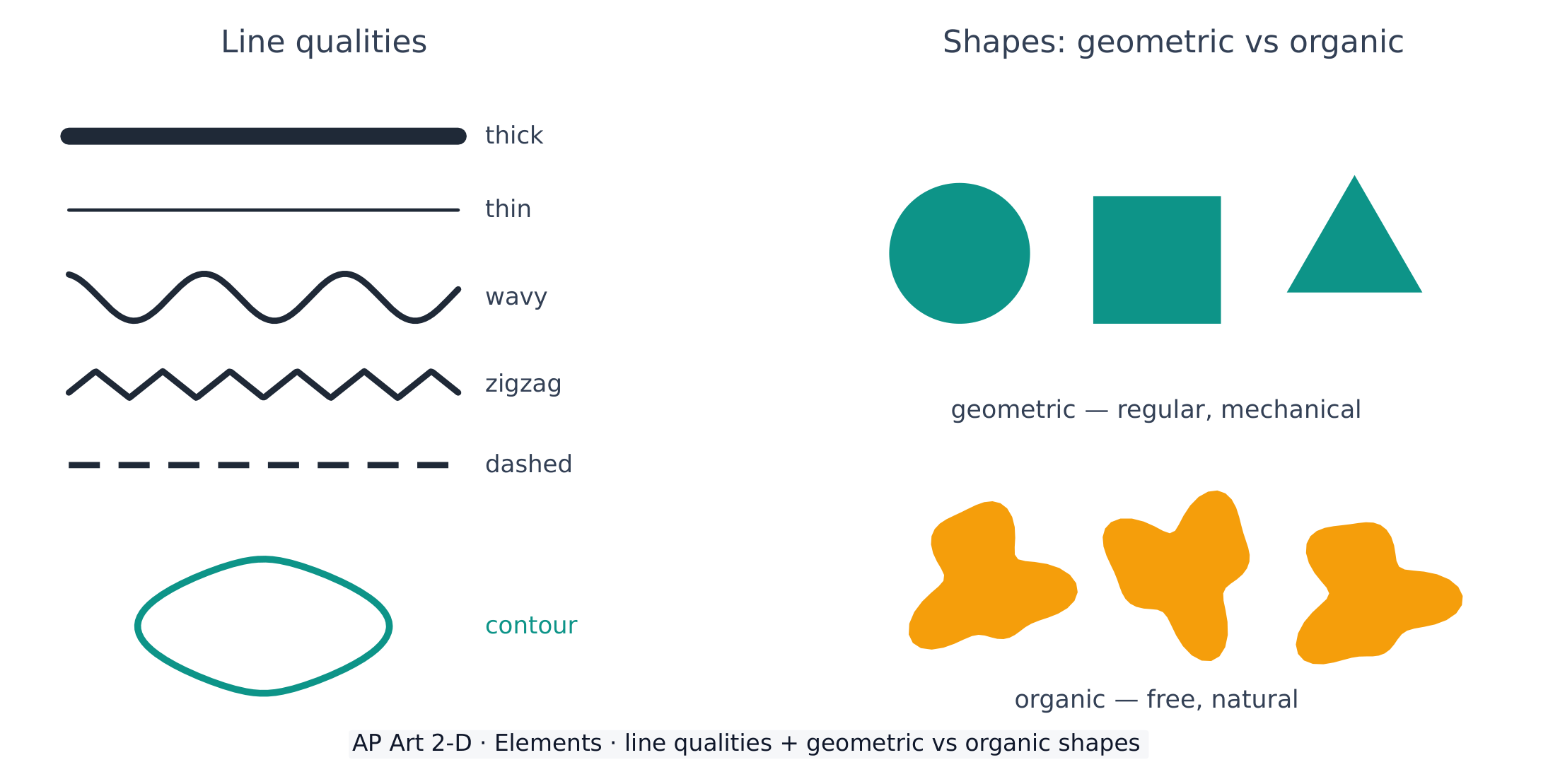
    • A line is a mark with length and direction: straight, curved, angular, or freeform.
    • Lines vary in quality — thick or thin, smooth or rough, continuous or broken, dark or light.
    • Contour lines trace the edges of a form; gesture lines quickly capture movement and energy.
    • Implied lines are suggested, not drawn — by a row of objects, a pointing arm, or a gaze.
    • Direction carries feeling: horizontal reads as calm, vertical as strength, diagonal as action.
    • Artists use line to build shape, shade value (hatching, cross-hatching), imply texture, and lead the eye.
    日本語

    焦点: 線は芸術の最も基本的な要素であり、目が表面を横切って追跡する動点である。

    • 線とは、長さおよび方向を持つ印であり、直線、曲線、角のある形、あるいはフリーハンドである。
    • 線の品質は厚いまたは薄い、滑らかまたは粗い、連続的または断続的、暗いまたは明るいなどで異なる。
    • 輪郭線は形の縁をたどり、ジェスチャー線は素早く動きとエネルギーを捉える。
    • 暗示された線は描かれていないが、一列の物体、指さしの腕、または視線によって示唆される。
    • 方向には感情が込められている:水平は静けさ、垂直は力強さ、斜線はアクションとして読まれる。
    • アーティストは形状を構築し、影の値(ハッチング、クロスハッチング)、質感の暗示、目の誘導のために線を使用する。
    Source: College Board AP Course and Exam Description · ⁨出典: College Board AP コースおよび試験説明書⁩

    English

    The elements of art 艺术元素 are the visual "building blocks" every artist uses. The first is line 线条 — a moving point that the eye follows.

    • A line has length and direction; it can be straight, curved, angular, or freeform.
    • Lines have quality: thick or thin, smooth or rough, continuous or broken, dark or light.
    • Contour 轮廓 lines trace the edges of a form; gesture 动态速写 lines capture movement quickly.
    • Implied lines 隐含线 are not drawn but suggested — by a row of objects or a person's gaze.

    Direction carries feeling: horizontal lines feel calm, vertical lines feel strong, and diagonal lines feel active. Artists use line to build shape, shade value (hatching), imply texture, and lead the viewer's eye.

    日本語

    芸術の要素とは、すべてのアーティストが使用する視覚的な「構成要素」のことです。最初の要素はライン——目が見て追う、動く点です。

    • ラインには「長さ」と「方向」があります。直線、曲線、角ばった線、または自由線可以是其中一种。
    • ラインには「質感」があります。太い・細い、滑らか・粗い、連続・断続、濃い・薄いなど。
    • 「輪郭線」は形のエッジを追跡し、「ジェスチャー線」は動きを素早く捉えます。
    • 「暗示されたライン」は描かれていませんが、一列の物体や人物の視線によって示唆されます。
    巨浪が小舟の上にかぶろうとする葛飾北斎の浮世絵、遠景に富士山が小さく見える
    葛飾北斎の『神奈川沖浪裏』:力強い曲線の輪郭が視線を波の上へ導き、泡の爪のような線が動きを生み出している
    線の質感と幾何学形状と有機形状の違い
    線は太さや性格が異なり、形状は幾何学的(規則的)か有機的(自然的)かのいずれかである

    方向には感情が込められます:水平線は静けさを、垂直線は強さを、斜線は活発さを表現します。芸術家は線を用いて形を構築し、陰影の値(ハッチング)、質感の暗示、および鑑賞者の視線を誘導します。

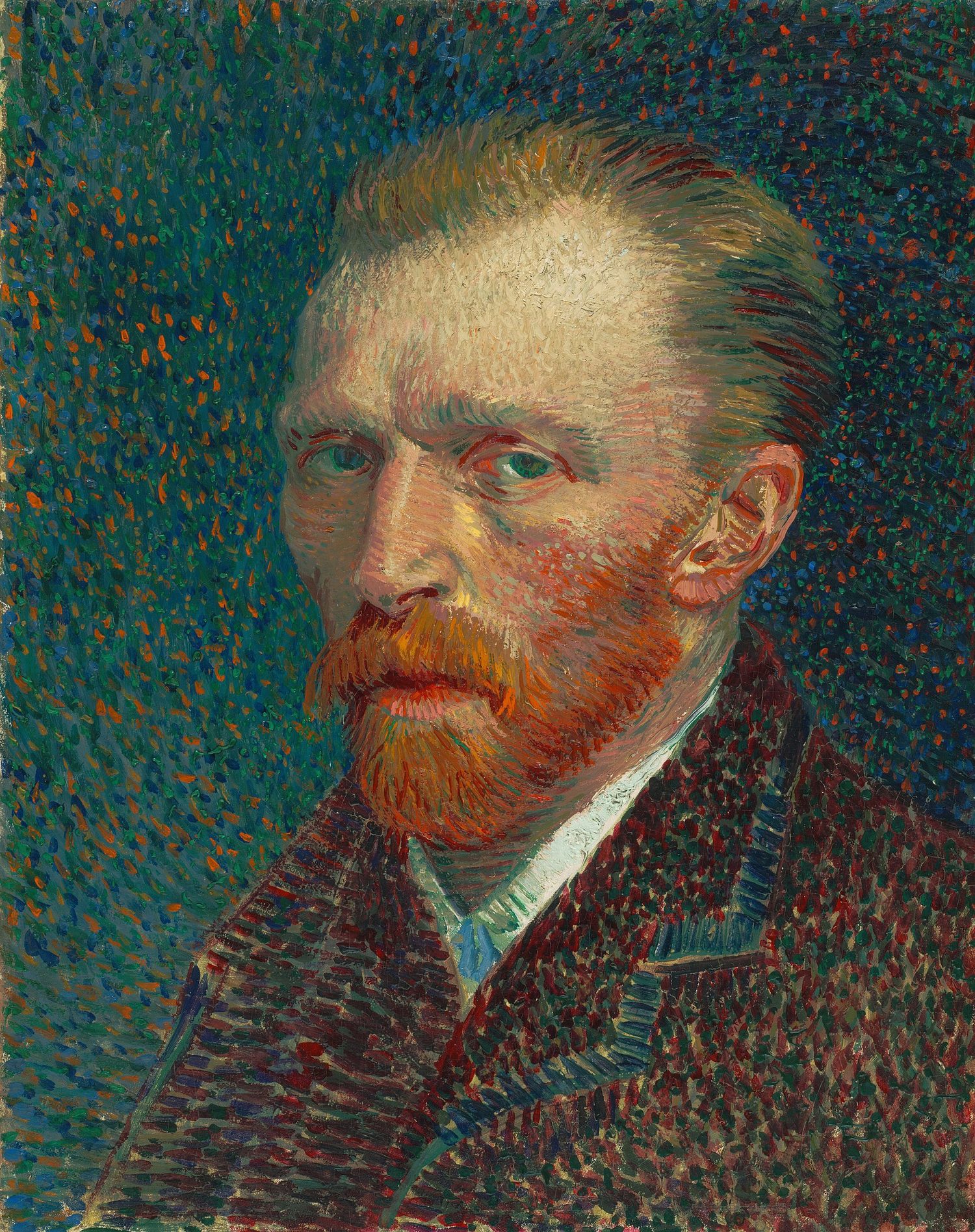
    ヴァン・ゴッホの自画像:背景には短く不穏な斜めの筆触が描かれ、肩元や襟元は広く穏やかに表現されている
    ヴァン・ゴッホの自画像:穏やかな水平の肩の後ろに不穏な斜めの筆触 — 一枚の絵の中で同じ2つの方向が正反対の役割を果たしている
    Vocabulary · ⁨語彙⁩ Train · ⁨練習する⁩
    English 日本語
    elements of art/ˈelɪmənts ɒv ɑːt/ 芸術の要素
    line/laɪn/ ライン
    Contour/ˈkɒntʊə/ Contour
    gesture/ˈdʒestʃə/ ジェスチャー
    Implied lines/ɪmˈplaɪd laɪnz/ 暗線
    shape/ʃeɪp/ 形
    form/fɔːm/ フォルム
    Geometric/ˌdʒiːəʊˈmetrɪk/ 幾何学的
    organic/ɔːˈɡænɪk/ 有機的
    Positive shape/ˈpɒzɪtɪv ʃeɪp/ 正の形状
    negative shape/ˈneɡətɪv ʃeɪp/ ネガティブな形状
    1.2

    Shape and Form · ⁨形状と立体⁩

    Syllabus · ⁨シラバス⁩
    English

    Focus: Shape is a flat, enclosed area; form is the illusion of a three-dimensional object on a 2-D surface.

    • A shape is a two-dimensional area with a boundary; form appears three-dimensional (height, width, depth).
    • Geometric shapes (circle, square, triangle) are regular and mechanical; organic shapes are free and natural.
    • Positive shapes are the objects; negative shapes are the empty spaces around and between them.
    • Form is created on a flat surface through value (shading), overlapping, and perspective.
    • Recognising negative space helps an artist see and compose more accurately.
    日本語

    焦点: 形状(Shape)は平面的な閉じた領域であり、形(Form)とは 2D の面上における三次元物体の錯覚のことである。

    • 形状是有边界的二维区域;立体感呈现出三维效果(高度、宽度、深度)。
    • 幾何学的な形状(円、四角、三角形)は規則的で機械的です。有機的な形状は自由で自然です。
    • 正形是被描绘的对象;负形是对象周围及之间的空白空间。
    • 通过在平坦表面上运用明度(阴影)、重叠和透视,可以创造出立体感。
    • 识别负空间有助于艺术家更准确地进行观察和构图。

    Source: College Board AP Course and Exam Description · ⁨出典: College Board AP コースおよび試験説明書⁩

    English

    A shape 形状 is a flat, enclosed area; a form 形体 has the illusion of three dimensions (height, width, and depth).

    • Geometric 几何 shapes (circle, square, triangle) are regular and mechanical; organic 有机 shapes are free and natural.
    • Positive shape 正形 is the object; negative shape 负形 is the empty space around and between objects — learning to see it makes drawing far more accurate.
    • Form is created on a flat surface with value (shading), overlapping, and perspective.
    日本語

    形状とは平面的で閉じた領域であり、立体とは3次元(高さ、幅、奥行き)の錯覚を持つものです。

    • 幾何学的な形状(円、四角、三角形)は規則的で機械的です。有機的な形状は自由で自然です。
    • ポジティブな形状とは対象そのものであり、ネガティブな形状とは対象を取り囲むまたは挟む余白の空間です。これを見ることができるようになることは、描画の正確性を大幅に高めます。
    • 立体は、平面の上に値(陰影)、重なり合い、遠近法を用いて表現されます。
    1.3

    Value · ⁨値(トーン)⁩

    Syllabus · ⁨シラバス⁩
    English

    Focus: Value is the lightness or darkness of a colour or tone — the key to showing form and depth.

    • Value runs from white through greys to black; a value scale shows the gradual steps.
    • Highlight, midtone, core shadow, reflected light, and cast shadow describe light on a form.
    • Strong value contrast creates drama and a clear focal point; close values feel soft and calm.
    • Chiaroscuro is the bold use of light and dark to model three-dimensional form.
    • Squinting removes colour and helps an artist judge value relationships.
    日本語

    **焦点:**明度指颜色或色调的深浅程度——这是表现立体感和深度的关键。

    • 明度从白色经灰色过渡到黑色;明度阶调表展示了这种渐进的变化步骤。
    • 高光、中间调、固有色暗部、反射光和投影描述了光照在物体上的表现。
    • 强烈的明度对比能营造戏剧性并确立清晰的视觉中心;相近的明度则感觉柔和宁静。
    • 明暗对照法是通过大胆运用明暗来塑造三维立体的技法。
    • 眯起眼睛可以消除色彩干扰,帮助艺术家判断明度关系。

    Source: College Board AP Course and Exam Description · ⁨出典: College Board AP コースおよび試験説明書⁩

    English
    Light logic: how light describes form
    The value scale

    Value 明度 is the lightness or darkness of a tone — the single most powerful tool for showing three-dimensional form.

    • A value scale 明度阶 runs from white through greys to black.
    • Light on a form has a highlight 高光, midtones 中间调, a core shadow 明暗交界线, reflected light 反光, and a cast shadow 投影.
    • Chiaroscuro 明暗对照法 is the bold use of light and dark to model form. Squinting removes colour and helps you judge value.
    日本語
    光の論理:光が立体をどう描写するか
    値スケール

    値とはトーンの明るさや暗さのことであり、3次元の立体を表現するための最も強力なツールです。

    値スケールは白から黒まで均等な段階で並んでいる
    値スケールは白から黒まで均等に刻んでおり、強い値のコントラストはドラマと焦点を生み出します
    • 明度スケールは白から灰色を経て黒まで連続しています。
    • 立体への光には、ハイライト、ミッドトーン、コアシャドウ、リフレクトedライト、そしてキャストシャドウが含まれます。
    • シャルロスコとは、明暗の強い対比を用いて立体感を表現する技法です。目を細めると色が消えて、明度(値)の判断がしやすくなります。
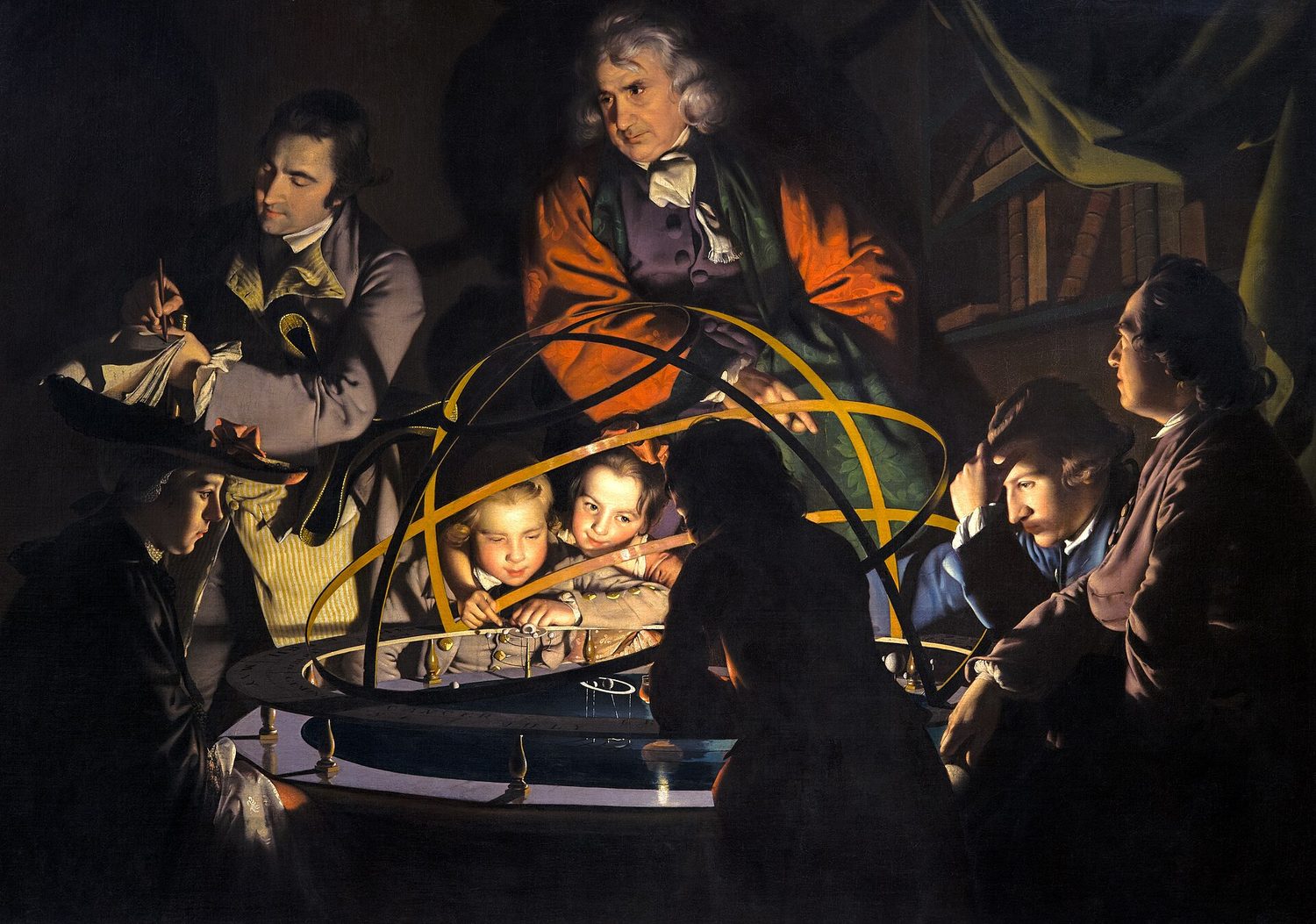
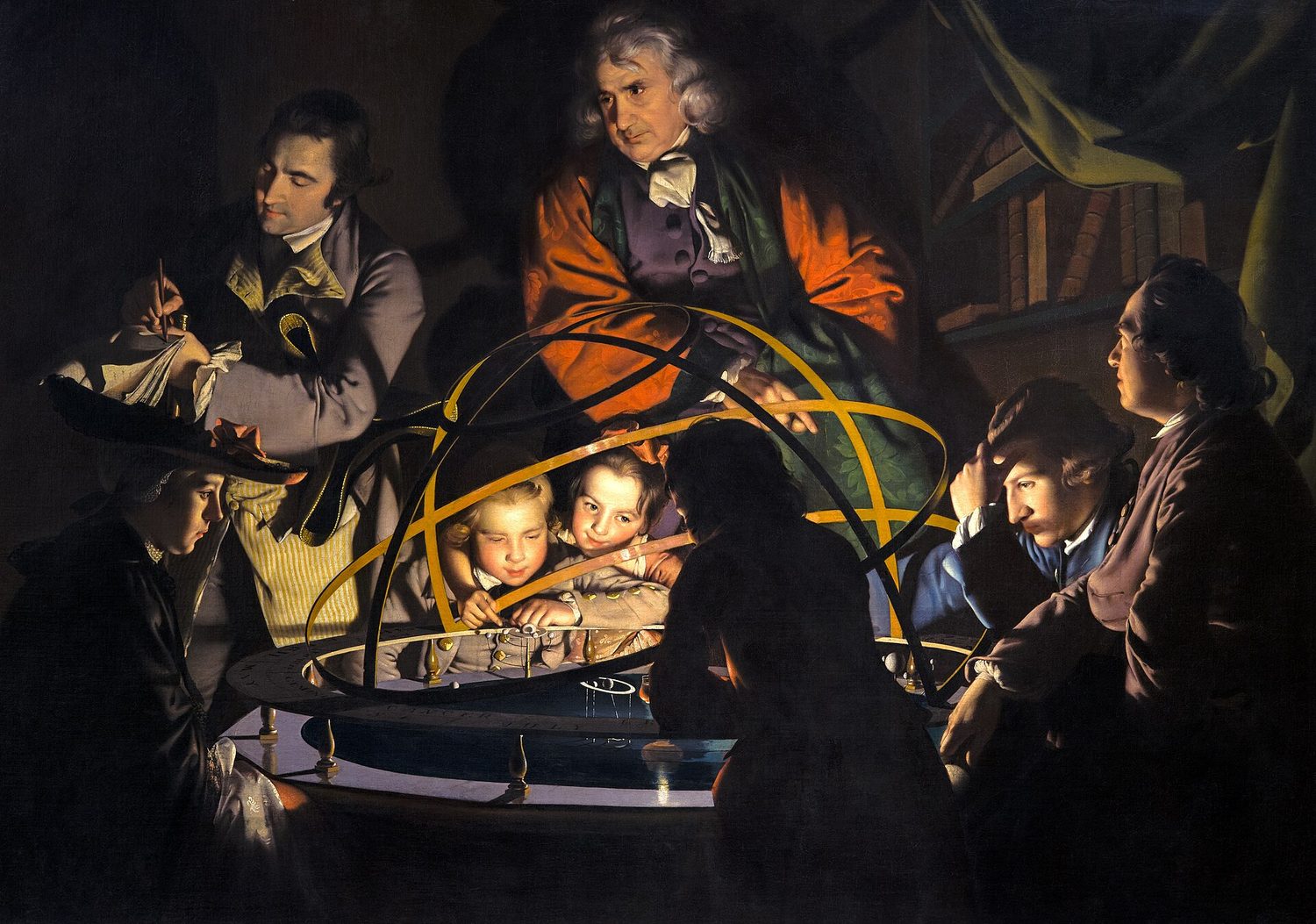
    ろうそくの光に照らされた 18 世紀の絵画で、人々が太陽系の模型を取り囲み、顔が暗い背景に対して輝いています
    ジョセフ・ライトの『オルレリーを講義する哲学者』:中央の隠れた光源が強い明暗のコントラスト(シャルロスコ)を生み出し、各顔を闇から浮き上がらせています。
    Vocabulary · ⁨語彙⁩ Train · ⁨練習する⁩
    English 日本語
    Value/ˈvæljuː/ 明暗(Value)
    value scale/ˈvæljuː skeɪl/ バリュースケール
    highlight/ˈhaɪlaɪt/ ハイライト
    midtones/ˈmɪdtəʊnz/ ミッドトーン
    core shadow/kɔː ˈʃædəʊ/ コア・シャドウ
    reflected light/rɪˈflektɪd laɪt/ 反射光
    cast shadow/kæst ˈʃædəʊ/ キャストシャドウ
    Chiaroscuro/ˌtʃaɪərəˈskjʊərəʊ/ キアロスクuro
    Colour/ˈkʌlə/ 色
    colour wheel/ˈkʌlə wiːl/ カラーホイール
    hue/hjuː/ 色相
    saturation/ˌsætʃəˈreɪʃn/ 彩度
    Primary/ˈpraɪməri/ 一次
    secondary/ˈsekəndəri/ 第二級
    Complementary/ˌkɒmplɪˈmentəri/ 補色
    neutralise/ˈnjuːtrəlaɪz/ 中和する
    Analogous/əˈnæləɡəs/ 類似色
    1.4

    Color · ⁨色⁩

    Syllabus · ⁨シラバス⁩
    English

    Focus: Colour is light reflected from a surface; it has three properties and follows the logic of the colour wheel.

    • Colour has three properties: hue (its name), value (light/dark), and saturation/intensity (dull to vivid).
    • Primary colours (red, yellow, blue) mix to make secondary (orange, green, violet) and tertiary colours.
    • Colour schemes: complementary, analogous, monochromatic, triadic, warm, and cool.
    • Warm colours (red, orange, yellow) advance and energise; cool colours (blue, green, violet) recede and calm.
    • Adding white makes a tint, black makes a shade, grey makes a tone.
    • Complementary colours placed side by side intensify each other; mixed together they dull (neutralise).
    日本語

    **焦点:**色彩是表面反射的光;它具有三个属性,并遵循色轮的逻辑。

    • 色彩有三个属性:色相(名称)、明度(深浅)和饱和度/强度(灰暗至鲜艳)。
    • 原色(红、黄、蓝)混合可生成间色(橙、绿、紫)和复色。
    • 配色方案包括:互补色、类似色、单色系、三色组、暖色调和冷色调。
    • 暖色(红、橙、黄)具有前进感和活力;冷色(蓝、绿、紫)具有后退感和镇静感。
    • 加入白色形成浅色,加入黑色形成深色,加入灰色形成中色调。
    • 互补色并置会互相增强;混合在一起则会变暗(中和)。

    Source: College Board AP Course and Exam Description · ⁨出典: College Board AP コースおよび試験説明書⁩

    English
    The colour wheel and its schemes

    Colour 色彩 is light reflected from a surface. It has three properties and follows the logic of the colour wheel 色轮.

    • Colour's three properties: hue 色相 (its name), value (light/dark), and saturation 饱和度 (dull to vivid).
    • Primary 三原色 (red, yellow, blue) mix to make secondary 间色 and tertiary colours.
    • Complementary 互补色 colours sit opposite on the wheel: placed side by side they intensify each other, but mixed together they neutralise 中和 into a dull grey-brown. Analogous 邻近色 colours sit next to each other and harmonise.
    • Warm 暖色 colours (red, orange, yellow) advance; cool 冷色 colours (blue, green, violet) recede. A tint adds white, a shade adds black.
    日本語
    カラーホイールとその配色

    色とは、表面から反射された光のことです。3つの性質を持ち、**カラーホイール(色彩環)**の論理に従います。

    カラーホイール:一次色、二次色、三次色、および暖色・寒色の半分
    一次色が混ざり合って二次色や三次色となり、補色は互いに反対側に位置します
    • 色の3つの性質:色相(その名称)、明度(明るさ・暗さ)、彩度(くすんだものから鮮やかなものまで)。
    • 一次色(赤、黄、青)を混ぜると、二次色と三次色が作られます。
    • 補色はホイール上で反対側に位置し、隣り合わせにすると相互に強調されますが、混ぜると中性化されてくすんだ灰色~茶色になります。類似色は隣接しており、調和します。
    • 暖色(赤、橙、黄)は前進し、寒色(青、緑、紫)は後退します。トイントは白を加えたもの、シェードは黒を加えたものです。
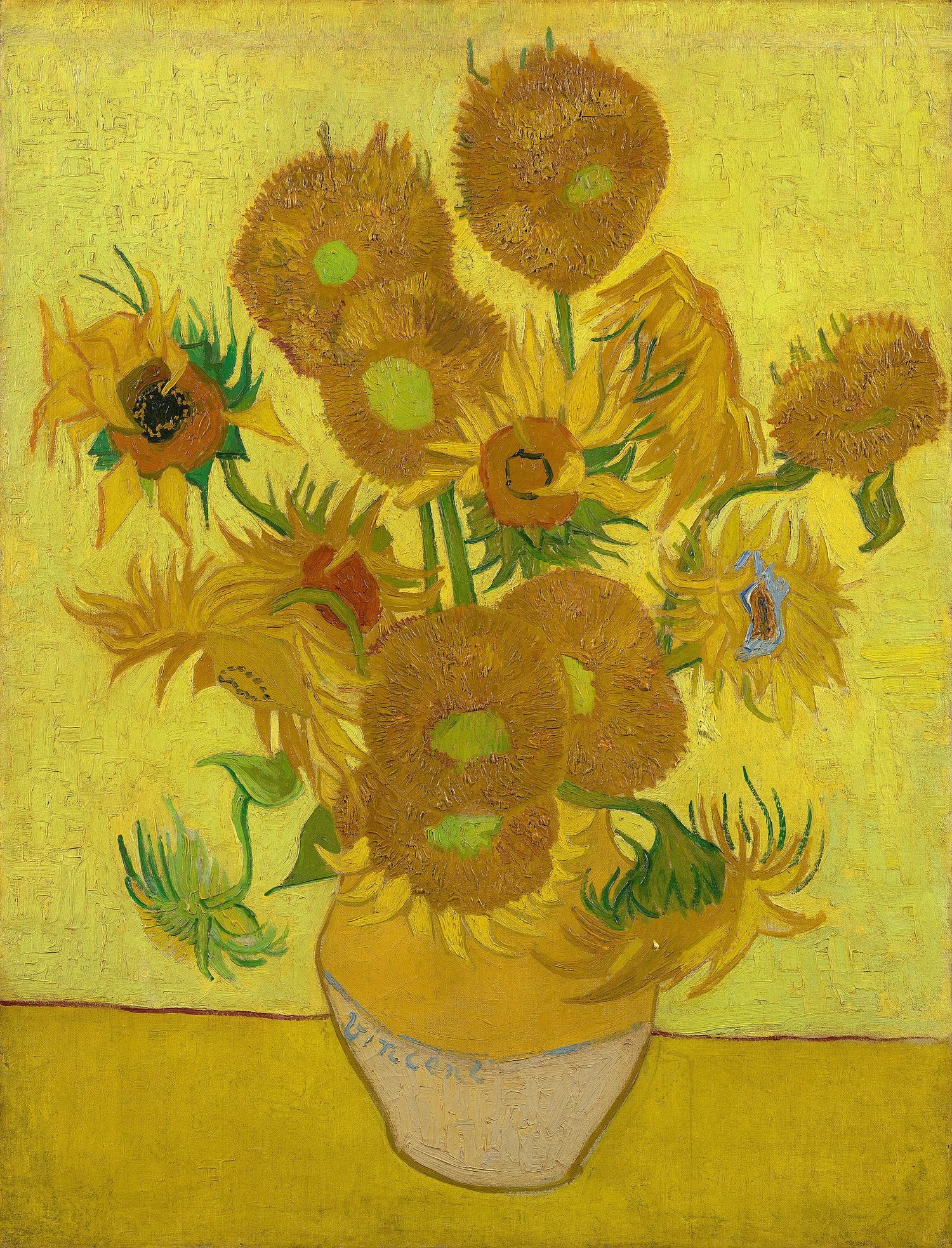
    ヴァン・ゴッホの静物画「ひまわり」、ほぼすべて黄色と金色のトーンで描かれた花瓶に挿されたひまわり
    ヴァン・ゴッホの『ひまわり』は、ほぼすべて暖かい黄色と橙色で構成されており、類似色の配色によって明るく統一感のある印象を与えます
    Explore · ⁨探索⁩

    Warm or cool colour? · ⁨暖色系か寒色系か?⁩

    Warm colours (red, orange, yellow) feel energetic and seem to advance; cool colours (blue, green, violet) feel calm and seem to recede. · ⁨暖色(赤、橙、黄)は活発で前に進んで見える;寒色(青、緑、紫)は穏やかで後退して見える。⁩

    Vocabulary · ⁨語彙⁩ Train · ⁨練習する⁩
    English 日本語
    Warm/wɔːm/ 暖色系
    cool/kuːl/ 寒色系
    1.5

    Texture · ⁨質感⁩

    Syllabus · ⁨シラバス⁩
    English

    Focus: Texture is the surface quality of a work — how it feels or how it appears to feel.

    • Actual (tactile) texture can be physically touched (thick paint, collage, rough paper).
    • Implied (visual) texture is the illusion of a surface, created with marks, value, and pattern.
    • Texture is built through mark-making: stippling, hatching, dry-brush, impasto, and frottage (rubbing).
    • Contrasting smooth and rough areas adds interest and can direct attention.
    • In photography and digital work, texture comes from light, focus, and surface detail.
    日本語

    **焦点:**质感是作品的表面品质——即触感或视觉上的触觉感受。

    • 真实(触觉)质感可以被物理触摸到(如厚涂颜料、拼贴画、粗糙纸张)。
    • 暗示(视觉)质感是通过笔触、明度和图案营造的表面错觉。
    • 质感通过运笔方式建立:点画法、排线法、干笔法、厚涂法和刮擦法(拓印)。
    • 光滑与粗糙区域的对比能增加趣味性并引导视线。
    • 在摄影和数字艺术中,质感来源于光线、对焦和表面细节。

    Source: College Board AP Course and Exam Description · ⁨出典: College Board AP コースおよび試験説明書⁩

    English

    Texture 肌理 is the surface quality of a work — how it feels, or how it appears to feel.

    • Actual (tactile) texture 实际肌理 can be physically touched (thick paint, collage, rough paper).
    • Implied (visual) texture 视觉肌理 is the illusion of a surface, made with marks, value, and pattern.
    • Techniques include stippling, hatching, impasto 厚涂 (thick paint), and dry-brush. Contrasting smooth and rough areas adds interest and can direct the eye.
    日本語

    質感とは、作品の表面の質であり、実際に触れる感覚や、目に見えて感じる触感のことです。

    • 実在(触覚的)質感は、物理的に触れることができます(厚い絵具、コラージュ、粗い紙など)。
    • 暗示(視覚的)質感は、線、明度、パターンを用いて作られる表面の錯覚です。
    • 技法には、ステッピング、ハッチング、インパスト(厚い絵具)、ドライブラシが含まれます。滑らかな部分と粗い部分を対比させることで、興味を惹きつけ、視線を誘導できます。
    織り布地デニムのクローズアップ:質感とは、目で見たり、手触りで感じたりできる表面の質であり、実在または暗示のどちらかです
    織り布地デニムのクローズアップ:質感とは、目で見たり、手触りで感じたりできる表面の質であり、実在または暗示のどちらかです
    Vocabulary · ⁨語彙⁩ Train · ⁨練習する⁩
    English 日本語
    Texture/ˈtekstʃə/ 質感(Texture)
    Actual (tactile) texture/ˈæktʃuːəl ˈtekstʃə/ 実質(触覚的)質感
    Implied (visual) texture/ɪmˈplaɪd ˈtekstʃə/ 暗示的(視覚的)質感
    impasto/ɪmˈpæstəʊ/ インパスト
    Space/speɪs/ 空間(Space)
    overlapping/ˌəʊvəˈlæpɪŋ/ 重なり
    foreground/ˈfɔːɡraʊnd/ 前景
    middle ground/ˈmɪdl ɡraʊnd/ 中景
    background/ˈbækɡraʊnd/ 背景
    Linear perspective/ˈlɪnɪə pəˈspektɪv/ 線遠近法
    vanishing point/ˈvænɪʃɪŋ pɔɪnt/ 消失点
    1.6

    Space · ⁨空間⁩

    Syllabus · ⁨シラバス⁩
    English

    Focus: Space is the area within, around, and between the parts of a work, including the illusion of depth.

    • Positive space is filled by the subject; negative space is the empty area around it.
    • Artists create the illusion of depth with overlapping, size, placement, and detail.
    • Linear perspective uses a horizon line and vanishing point(s) so parallel lines converge.
    • Atmospheric (aerial) perspective makes distant objects paler, bluer, and less detailed.
    • Foreground, middle ground, and background organise a scene from near to far.
    • The format and cropping of the picture plane shape how space is read.
    日本語

    **焦点:**空间是作品内部、外部及部件之间的区域,包括深度的错觉。

    • 正空间由主体填充;负空间是其周围的空白区域。
    • 艺术家通过重叠、大小、位置和细节来创造深度的错觉。
    • 线性透视利用地平线和消失点使平行线汇聚。
    • 空气(大气)透视使远处的物体显得更淡、更蓝且细节减少。
    • 前景、中景和背景将场景按远近进行组织。
    • 画面的格式和裁剪决定了空间的阅读方式。

    Source: College Board AP Course and Exam Description · ⁨出典: College Board AP コースおよび試験説明書⁩

    English
    Atmospheric perspective
    One-point perspective

    Space 空间 is the area within, around, and between the parts of a work, including the illusion of depth on a flat surface.

    • Positive space is filled by the subject; negative space is the empty area around it.
    • Depth is created with overlapping 重叠, size, placement, and detail.
    • A scene organises into three depth planes: foreground 前景 (nearest), middle ground 中景, and background 背景 (farthest). The nearest plane usually carries the most detail and contrast, the farthest the least.
    • Linear perspective 线性透视 uses a horizon line and vanishing point 灭点 so parallel lines converge; atmospheric perspective 空气透视 makes distant things paler, bluer, and less detailed.
    • The format and cropping of the picture plane shape how the space is read.

    Worked example (applying the concept). Asked to describe how line creates meaning in a portrait, a strong answer names the element, its quality, and its effect: "The artist uses thick, jagged diagonal lines in the background, and their restless, active direction makes the calm horizontal lines of the sitter's shoulders feel even more still." Naming the element and linking it to a feeling is what portfolio written evidence and analysis questions both reward.

    日本語
    大気遠近法
    一点透視図法

    空間とは、作品の内部、周囲、要素間の領域を指し、平坦な面上における奥行きへの錯覚も含まれます。

    • 正空間は被写体で埋め尽くされ、負空間はその周囲の余白です。
    • 奥行きは重なり合い、大きさ、配置、詳細さによって作られます。
    • 風景は3つの奥行き面として組織されます:手前(最も近い)、中景、背景(最も遠い)。最も近い面は通常、最も詳細とコントラストを含み、最も遠い面は最も少ない含みます。
    • 直線透視図法は地平線と消失点を用いて平行線を収束させます。大気遠近法は遠くのものを薄く、青く、詳細を減らして見せます。
    • ピクチャープレーンのフォーマットとクロッピングが、空間の読み方を形作ります。

    ** worked example (概念の適用) :ポートレートにおいてラインが意味を生み出す方法を説明するよう求められた際、強い回答は要素、その性質、効果の名前を挙げます:「画家は背景に太く、ギザギザした斜めのラインを使用しており、その不安定で活発な方向性が、被写体の肩の穏やかな水平なラインをさらに静止しているように感じさせます。」 要素を名指ししかつ**感情と結びつけることが、ポートフォリオの記述問題と分析問題の両方で評価されます。

    Vocabulary · ⁨語彙⁩ Train · ⁨練習する⁩
    English 日本語
    atmospheric perspective/ˌætməsˈferɪk pəˈspektɪv/ 大気透視法
    1.6

    Exam tips · ⁨試験対策⁩

    English
    • Name the element precisely — line, shape or form, value, colour, texture, space — in any analysis.
    • Justify how form is modelled with a value scale and a single light source.
    • Read the colour wheel: identify complementary versus analogous schemes and warm or cool temperature.
    • Separate shape (2-D) from form (3-D) and actual from implied texture.
    • Explain depth with overlap, size, linear perspective, and atmospheric perspective.
    日本語
    • どの分析においても、要素を正確に名指してください——ライン、形状または形、明度、色、質感、空間。
    • 明度スケールと単一の光源を使って、形がどのように造形されているかを正当化してください。
    • カラーホイールを読み解き、補色と類似色の配色、および暖色または寒色の温度感を特定してください。
    • 形状(2次元)と形(3次元)、および実在と暗示の質感を区別してください。
    • 重なり、大きさ、直線透視図法、大気遠近法を用いて奥行きを説明してください。
  • 2

    Principles of Design · ⁨デザイン原理⁩

    Watch lesson · ⁨レッスンを視聴⁩
    2.1

    Balance · ⁨バランス⁩

    Syllabus · ⁨シラバス⁩
    English

    Focus: Balance is the visual distribution of weight in a composition so it feels stable.

    • Symmetrical (formal) balance mirrors both sides of a central axis — calm and orderly.
    • Asymmetrical (informal) balance uses different elements of equal visual weight — dynamic and lively.
    • Radial balance arranges elements around a central point.
    • Visual weight is affected by size, colour, value, texture, and position.
    • A large, dull shape can balance a small, bright one on the other side.
    日本語

    **焦点:**均衡是构图中视觉重量的分布,使其看起来稳定。

    • 对称(正式)均衡沿中心轴镜像两侧——显得平静有序。
    • 不对称(非正式)均衡使用不同但视觉重量相等的元素——显得动态活泼。
    • 辐射均衡围绕中心点排列元素。
    • 视觉重量受大小、颜色、明度、质感和位置影响。
    • 一侧的大面积暗色形状可以平衡另一侧的小面积亮色形状。

    Source: College Board AP Course and Exam Description · ⁨出典: College Board AP コースおよび試験説明書⁩

    English
    Balance: symmetrical, asymmetrical, radial

    The principles of design 设计原则 are the "rules" for arranging the elements of art. The first is balance 平衡 — the visual distribution of weight so a work feels stable.

    • Symmetrical (formal) balance 对称平衡 mirrors both sides of a central axis — calm and orderly.
    • Asymmetrical (informal) balance 非对称平衡 uses different elements of equal visual weight 视觉重量 — dynamic and lively.
    • Radial balance 辐射平衡 arranges elements around a central point.

    Visual weight is affected by size, colour, value, and position: a small bright shape can balance a large dull one.

    日本語
    バランス:対称、非対称、放射状

    デザイン原則とは、芸術の要素を配置するための「ルール」です。最初の原则はバランス——作品が安定して見えるように重みの視覚的な分布を行うことです。

    3種類のバランス:対称、非対称、放射状
    対称バランスは中央軸を鏡のように映し出します;非対称バランスは異なる要素の重みを調整します;放射状バランスは中心から外側へ放たれます
    • 対称(形式)バランスは中央軸の両側を鏡のように映し出し、落ち着きがあり整然としています。
    • 非対称(自由)バランスは等しい視覚的重みを持つ異なる要素を用い、ダイナミックで生き生きとしています。
    • 放射状バランス は、要素を中央の点の周りに配置します。

    視覚的重みは大きさ、色、明度、位置に影響を受けます。小さな鮮やかな形状は、大きなくすんだ形状と釣り合うことができます。

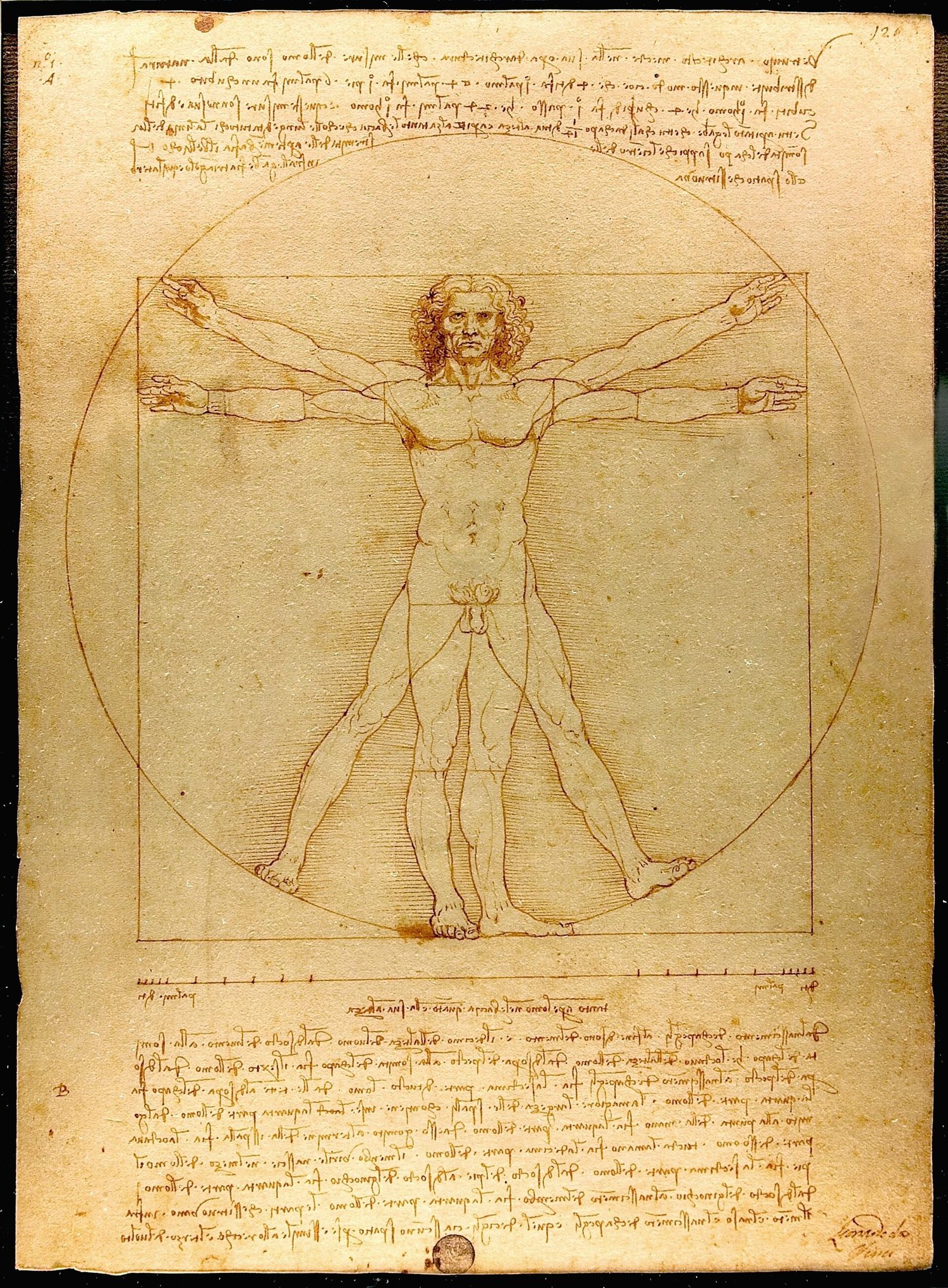
    レオナルドの墨絵、腕と脚を広げた男性が円と正方形の両方に収められている
    レオナルドの『ウィトルビウスの人』:人物は中央の垂直軸についてほぼ完全な対称性で描かれており、周囲の円が放射状のバランスも与えています
    ピクチャープレーン全体に光、塊、興味の関心を均衡させた構図
    ピクチャープレーン全体に光、塊、興味の関心を均衡させた構図
    Explore · ⁨探索⁩

    Which kind of balance? · ⁨どのような種類のバランスか?⁩

    Symmetrical balance mirrors a central axis; asymmetrical balance weighs different elements of equal visual weight; radial balance radiates from a centre. · ⁨対称的バランスは中央軸で鏡像する;非対称的バランスは視覚的な重みが等しい異なる要素で釣り合う;放射状バランスは中心から放射する。⁩

    Vocabulary · ⁨語彙⁩ Train · ⁨練習する⁩
    English 日本語
    principles of design/ˈprɪnsɪplz ɒv dɪˈzaɪn/ デザインの原理
    balance/ˈbæləns/ バランス
    Symmetrical (formal) balance/sɪˈmetrɪkl ˈbæləns/ 対称的(形式の)バランス
    Asymmetrical (informal) balance/ˌeɪsɪˈmetrɪkl ˈbæləns/ 非対称的( informal )バランス
    visual weight/ˈvɪʒuːəl weɪt/ 視覚的重み
    Radial balance/ˈreɪdɪəl ˈbæləns/ 放射状バランス
    Emphasis/ˈemfəsɪs/ 強調
    focal point/ˈfəʊkl pɔɪnt/ 焦点
    Subordination/ˌsʌbɔːdɪˈneɪʃn/ 従属
    Contrast/ˈkɒntræst/ コントラスト
    visual hierarchy/ˈvɪʒuːəl ˈhaɪərɑːki/ 視覚的階層性
    2.2

    Emphasis and Focal Point · ⁨強調と焦点⁩

    Syllabus · ⁨シラバス⁩
    English

    Focus: Emphasis makes one part of a work stand out as the centre of interest (the focal point).

    • A focal point is where the eye is drawn first; emphasis creates it.
    • Emphasis is built through contrast — of size, colour, value, isolation, or placement.
    • Convergence (lines that point) and the rule of thirds help locate a strong focal point.
    • Subordination keeps other areas quieter so the focal point leads.
    • A work may have one dominant focal point and smaller secondary accents.
    日本語

    **焦点:**强调使作品的某一部分突出成为兴趣中心(视觉中心)。

    • 视觉中心是视线最先被吸引的地方;强调作用由此产生。
    • 强调通过对比建立——包括大小、颜色、明度、孤立感或位置的对比。
    • 线条汇聚(指向线)和三分法有助于定位强有力的视觉中心。
    • 従属 は、他の部分を静かに保ち、焦点が主導権を握るようにします。
    • 作品可能有一个主导视觉中心和较小的次要强调点。

    Source: College Board AP Course and Exam Description · ⁨出典: College Board AP コースおよび試験説明書⁩

    English

    Emphasis 强调 makes one part of a work stand out as the centre of interest — the focal point 视觉焦点, where the eye is drawn first.

    • Emphasis is created through contrast — of size, colour, value, isolation, or placement.
    • Leading lines and the rule of thirds help place a strong focal point.
    • Subordination 从属 keeps other areas quieter so the focal point leads.
    日本語

    強調とは、作品の一部を関心の中心である焦点として際立たせることで、最初に目が引きつけられる場所を作ることです。

    • 強調は、大きさ、色、明度、孤立、配置の対比を通じて作られます。
    • リーディングラインと三分割の法則は、強力な焦点を配置するのに役立ちます。
    • 従属 は、他の部分を静かに保ち、焦点が主導権を握るようにします。
    2.3

    Contrast · ⁨対比⁩

    Syllabus · ⁨シラバス⁩
    English

    Focus: Contrast is the difference between elements — it creates energy, variety, and readability.

    • Contrast can be of value (light/dark), colour (complementary), shape, texture, or size.
    • Strong contrast attracts attention and defines a focal point.
    • Low contrast unifies a work and can feel calm, subtle, or moody.
    • Contrast in direction (horizontal vs diagonal) adds movement.
    • In graphic design, value and size contrast create clear visual hierarchy.
    日本語

    **焦点:**对比是元素之间的差异——它创造能量、变化和可读性。

    • 对比可以是明度(深浅)、色彩(互补)、形状、质感或大小。
    • 強いコントラストは注目を集め、焦点を定義します。
    • 低对比度统一画面,可能显得平静、微妙或多愁善感。
    • 方向对比(水平与对角线)增加动感。
    • 在平面设计中,明度和大小的对比能建立清晰的视觉层级。

    Source: College Board AP Course and Exam Description · ⁨出典: College Board AP コースおよび試験説明書⁩

    English

    Contrast 对比 is the difference between elements — it creates energy, variety, and readability.

    • Contrast can be of value (light/dark), colour (complementary), shape, texture, or size.
    • Strong contrast attracts attention and defines a focal point; low contrast unifies and calms.
    • In design, value and size contrast create clear visual hierarchy 视觉层次.
    日本語

    対比とは要素間の違いであり、エネルギー、多様性、可読性を生み出します。

    • 対比は、明度(明・暗)、色(補色)、形状、質感、大きさのいずれでもあり得ます。
    • 強い対比は注目を集め、焦点を定義します;低い対比は統一感を与え、落ち着かせます。
    • デザインにおいて、価値観とサイズの対比は明確な視覚的階層を生み出す。
    2.4

    Movement and Rhythm · ⁨動きとリズム⁩

    Syllabus · ⁨シラバス⁩
    English

    Focus: Movement leads the viewer's eye through a work; rhythm is the repetition that creates a visual beat.

    • Movement is the path the eye takes, guided by line, edges, colour, and placement.
    • Rhythm is created by repeating elements with regular or varied spacing.
    • Types of rhythm: regular (even), flowing (curving), progressive (gradual change), and random.
    • Directional forces (leading lines, gazes, gestures) create implied motion.
    • Repetition with variation keeps rhythm interesting rather than monotonous.
    日本語

    **焦点:**动势引导观众视线穿过作品;节奏是通过重复产生的视觉节拍。

    • 动势是视线的轨迹,由线条、边缘、颜色和位置引导。
    • 节奏通过有规律或不规律的间隔重复元素而产生。
    • 节奏类型:等距(均匀)、流动(弯曲)、渐变(逐渐变化)和随机。
    • 导向力(引导线、视线、手势)营造出暗示性的运动感。
    • 変化を伴う反復は、単調さを防ぎリズムを興味深いものにする。

    Source: College Board AP Course and Exam Description · ⁨出典: College Board AP コースおよび試験説明書⁩

    English

    Movement 动感 leads the viewer's eye through a work; rhythm 节奏 is the repetition that creates a visual "beat".

    • Movement is the path the eye takes, guided by line, edges, colour, and placement.
    • Rhythm types: regular (even), flowing (curving), progressive 渐进 (gradual change), and random.
    • Repetition with variation keeps rhythm interesting rather than monotonous.
    日本語

    動きは鑑賞者の視線を作品内へ誘導し、リズムは視覚的な「ビート」を作る反復である。

    • 動きは線、輪郭、色、配置によって導かれる視線の経路である。
    • リズムの種類:規則的(均等)、流れるような(曲線的)、段階的(漸進的な変化)、ランダム。
    • 変化を伴う反復は、単調さを防ぎリズムを興味深いものにする。
    暗い村の上を大きな渦巻きの光が広がり、星空を描いたヴァン・ゴッホの絵画
    ヴァン・ゴッホ『星夜』:渦巻き状の筆致が空全体に視線を移動させ(動き)、繰り返されるカールが波打つリズムを与える
    Vocabulary · ⁨語彙⁩ Train · ⁨練習する⁩
    English 日本語
    Movement/ˈmuːvmənt/ 動き
    rhythm/ˈrɪðəm/ rhythm
    progressive/prəˈɡresɪv/ 漸進的
    2.5

    Pattern and Repetition · ⁨パターンと反復⁩

    Syllabus · ⁨シラバス⁩
    English

    Focus: Repetition reuses an element; pattern is the repeated element arranged in a predictable way.

    • Repetition of shape, colour, or line builds unity and rhythm.
    • A pattern is a repeated motif — regular (grid, tessellation) or irregular.
    • Patterns can fill a shape, define a texture, or become the subject itself.
    • Motif is the single unit that repeats; changing scale or colour varies the pattern.
    • Too much repetition can feel monotonous; variation keeps it engaging.
    日本語

    **焦点:**重复是复用某一元素;图案是按可预测方式排列的重复元素。

    • 重复形状、颜色或线条能建立统一感和节奏感。
    • 图案是重复的母题——可以是规则的(网格、镶嵌)或不规则的。
    • 图案可以填充形状、定义质感,或直接成为主题本身。
    • モチーフは繰り返される単一の単位であり、スケールや色を変えることでパターンが変化します。
    • 繰り返しが多すぎると単調に感じる場合があります;バリエーションがあることで興味を維持できます。

    Source: College Board AP Course and Exam Description · ⁨出典: College Board AP コースおよび試験説明書⁩

    English

    Repetition 重复 reuses an element; a pattern 图案 is the repeated element arranged in a predictable way.

    • Repetition of shape, colour, or line builds unity and rhythm.
    • A pattern is a repeated motif 母题 — regular (a grid or tessellation) or irregular.
    • Too much repetition feels monotonous; changing scale or colour adds variety.
    日本語

    反復は要素を再利用すること、パターンは反復した要素が予測可能な形で配置されたものである。

    • 形状、色、線の反復は統一感とリズムを生む。
    • パターンとは反復するモチーフであり、規則的(グリッドやテッセレーション)または不規則である。
    • 反復が多すぎると単調になるため、スケールや色を変えることで多様性を加える。
    赤いイチゴと緑の葉の間を青い鳥が通り、同じモチーフが布全体に繰り返される模様の布地
    ウィリアム・モリス『ストロベリースナイパー』:イチゴの間の鳥という一つのモチーフが、布全体に規則的なパターンで繰り返されている
    Vocabulary · ⁨語彙⁩ Train · ⁨練習する⁩
    English 日本語
    Repetition/ˌrepəˈtɪʃn/ 反復
    pattern/ˈpætn/ 模様
    motif/məʊˈtiːf/ モチーフ
    Proportion/prəˈpɔːʃn/ 比
    scale/skeɪl/ スケール
    Hierarchical scale/haɪəˈrɑːkɪkl skeɪl/ 階層的スケール
    golden ratio/ˈɡəʊldn ˈreɪʃɪəʊ/ 黄金比
    Unity/ˈjuːnɪti/ 統一性
    variety/vəˈraɪəti/ 多様性
    proximity/prɒkˈsɪmɪti/ 近接
    continuity/kɒntɪˈnjuːɪti/ 継続
    Harmony/ˈhɑːməni/ 調和
    2.6

    Proportion and Scale · ⁨比率とスケール⁩

    Syllabus · ⁨シラバス⁩
    English

    Focus: Proportion is the size relationship between parts; scale is the size of the work or an element relative to something else.

    • Proportion compares the sizes of parts within a work (e.g. head to body).
    • Scale compares an element to the whole, to the human body, or to the real world.
    • Hierarchical scale makes the most important element largest.
    • Exaggerated or distorted proportion can express emotion or draw attention.
    • The golden ratio and canon of proportions are historic guides to pleasing relationships.
    日本語

    焦点: 比率とは構成要素間の大きさの関係であり、スケールとは作品全体や要素の大きさが他者に対する相対的な大きさを指します。

    • 比率は、作品内の部分同士の大きさの比較を行います(例:頭部と体)。
    • スケールは、ある要素が全体、人体、あるいは現実世界に対してどの程度大きい・小さいかを比較します。
    • 階層的スケールは、最も重要な要素を最大にする手法です。
    • 誇張されたまたは歪曲したプロポーションは、感情を表現したり、注目を集めたりするために用いられます。
    • 黄金比や比率の正統な体系は、心地よい関係性を導くための歴史的な指針となります。

    Source: College Board AP Course and Exam Description · ⁨出典: College Board AP コースおよび試験説明書⁩

    English

    Proportion 比例 is the size relationship between parts; scale 尺度 is the size of an element relative to something else.

    • Proportion compares the sizes of parts within a work (head to body).
    • Hierarchical scale 等级比例 makes the most important element the largest.
    • Exaggerated or distorted proportion can express emotion or draw attention. The golden ratio 黄金比例 is a historic guide to pleasing proportions.
    日本語

    比率は部分同士の大きさの関係、スケールは他物に対する要素の大きさを指す。

    構成ツール:三分割法と階層的スケール
    三分割法は重要な要素を三分の一分け線上に配置し、階層的スケールでは重要な要素を最も大きくする
    • 比率は作品内の部分同士の大きさの比較である(頭から体など)。
    • 階層的スケールとは、最も重要な要素を最も大きく描く手法です。
    • 誇張や歪んだ比率は感情を表現したり注目を集めたりする。黄金比は、快楽的な比率のための歴史的なガイドラインである。
    Vocabulary · ⁨語彙⁩ Train · ⁨練習する⁩
    English 日本語
    Composition/ˌkɒmpəˈzɪʃn/ 構成
    picture plane/ˈpɪktʃə pleɪn/ 絵画面
    format/ˈfɔːmæt/ フォーマット
    rule of thirds/ruːl ɒv θɜːdz/ 三分割の法則
    Cropping/ˈkrɒpɪŋ/ クロップ
    2.7

    Unity and Variety · ⁨統一と多様性⁩

    Syllabus · ⁨シラバス⁩
    English

    Focus: Unity holds a work together as a whole; variety adds interest so it is not dull. Good design balances the two.

    • Unity is a sense that all parts belong together (through repetition, proximity, and a limited palette).
    • Variety is difference that adds interest and prevents monotony.
    • Harmony comes from elements that are similar; tension from those that differ.
    • Proximity (grouping) and continuity (alignment) strengthen unity.
    • The best works achieve unity with variety — order that still surprises.
    日本語

    焦点: 統一性は作品全体を結びつけ、多様性は退屈さを防ぎ面白みを加えます。良いデザインはこの両者のバランスを取ります。

    • 統一性とは、反復、近接、限られたパレットなどによって、すべての要素が一体であると感じさせる状態です。
    • 多様性とは、違いを生じさせ、単調さを防ぎながら興味を引き出すものです。
    • 調和は類似した要素から生まれ、緊張感は異なる要素から生まれます。
    • 近接(グループ化)と連続性(整列)は統一感を強化します。
    • 最高傑作は多様性を伴った統一を実現している——驚きを含んだ秩序である。

    Source: College Board AP Course and Exam Description · ⁨出典: College Board AP コースおよび試験説明書⁩

    English

    Unity 统一 holds a work together as a whole; variety 变化 adds interest so it is not dull. Good design balances the two.

    • Unity comes from repetition, proximity 邻近 (grouping), continuity 连续性 (aligning elements along a line or edge so they read as one group), and a limited palette.
    • Variety is difference that prevents monotony. Harmony 和谐 comes from similar elements.
    • The best works achieve unity with variety — order that still surprises.
    日本語

    統一は作品全体としてまとまることを意味し、多様性は退屈さを防ぐための興味深い要素である。良いデザインはこの両者のバランスを取る。

    • 統一は反復、近接(グループ化)、連続性(要素を線や縁に沿って配置して一つのグループとして認識させる)、限られたパレットから生まれる。
    • 多様性は単調さを防ぐ違いである。調和は類似した要素から生まれる。
    • 最高傑作は多様性を伴った統一を実現している——驚きを含んだ秩序である。
    2.8

    Composition · ⁨構成⁩

    Syllabus · ⁨シラバス⁩
    English

    Focus: Composition is how all the elements and principles are arranged within the picture plane.

    • The picture plane is the flat surface; its format (portrait, landscape, square) shapes the design.
    • The rule of thirds places key elements along thirds lines and their intersections.
    • Cropping decides what is included and what is cut, changing emphasis and tension.
    • Leading lines, framing, and balance guide the eye and hold the composition together.
    • A strong composition unifies the elements while creating a clear focal point.
    日本語

    焦点: 構図とは、絵画面内にすべての要素と原理がどのように配置されているかです。

    • 絵画面とは平らな表面而言い、そのフォーマット(縦長、横長、正方形)がデザインを形作ります。
    • 三分割法では、主要な要素を三分割線とその交点の上に配置します。
    • クロッピングは何を含み何を切り取るかを決定し、重点や緊張感を変える。
    • 誘導線、フレーム組み、バランスは視線を導き、構図を安定させます。
    • 強力な構図は要素を統合しつつ、明確な視覚的焦点を作ります。

    Source: College Board AP Course and Exam Description · ⁨出典: College Board AP コースおよび試験説明書⁩

    English

    Composition 构图 is how all the elements and principles are arranged within the picture plane 画面.

    • The format 画幅 (portrait, landscape, square) shapes the design.
    • The rule of thirds 三分法 places key elements along third-lines and their intersections.
    • Cropping 裁剪 decides what is included and what is cut, changing emphasis and tension.
    • A strong composition unifies the elements while creating a clear focal point — this is what the AP portfolio's 2-D skills are judged on.

    Worked example (applying the concept). To explain balance in a composition: "The large dark shape on the left is balanced by three small bright shapes on the right — this is asymmetrical balance, which gives the piece visual weight on both sides while keeping it dynamic rather than static." A full answer names the principle, points to specific evidence in the work, and states the effect on the viewer.

    日本語

    構成とは、すべての要素と原則が**キャンバス面(ピクチャープレーン)**内にどのように配置されているかである。

    • フォーマット(縦長、横長、正方形)はデザインを形作る。
    • 三分割法は重要な要素を三分の一分け線およびその交点上に配置する。
    • クロッピングは何を含み何を切り取るかを決定し、重点や緊張感を変える。
    • 強力な構成は要素を統一しつつ明確な焦点を作り出す——これがAPポートフォリオの2D技能の評価基準である。

    実演例(概念の適用)。 構成におけるバランスを説明する場合:「左側の大きな暗い形状は、右側の三つの小さな明るい形状によって釣り合っている——これは非対称バランスであり、作品に両側に視覚的重量を与えつつ、静的ではなく動的な状態を保つ。」 完全な回答は原則を名指し、作品内の具体的な証拠を指摘し、かつ視聴者に与える効果を示すこと。

    2.8

    Exam tips · ⁨試験対策⁩

    English
    • For every work, state which principle organises it — balance, emphasis, contrast, movement, or unity.
    • Justify balance through visual weight, not just symmetry.
    • Ensure one clear focal point, and name the emphasis technique that creates it.
    • Aim for unity with variety — name the unifying device and the source of interest.
    • Plan composition with the rule of thirds and thumbnails before committing.
    日本語
    • 各作品について、それを組織している原則(バランス、強調、対比、動き、統一)を述べる。
    • 対称性だけでなく、視覚的重量を通じてバランスを正当化する。
    • 明確な焦点を一つ確保し、それを生み出す強調技法を名指す。
    • 統一と多様性を目指し、統一するための装置と興味の出所を名指す。
    • 最終制作前に三分分割法とミニチュアスケッチを使って構成を計画する。
  • 3

    2-D Media, Materials, and Techniques · ⁨2次元メディア、素材、技法⁩

    Watch lesson · ⁨レッスンを視聴⁩
    3.1

    Drawing Media · ⁨ドローイング媒材⁩

    Syllabus · ⁨シラバス⁩
    English

    Focus: Drawing media make marks directly on a surface — the foundation of most 2-D work.

    • Dry media: graphite (pencil), charcoal, conte, chalk and oil pastel, coloured pencil.
    • Wet media: pen and ink, brush and ink, markers.
    • Mark-making techniques: hatching, cross-hatching, stippling, blending, and scribbling.
    • Choice of media and paper (tooth/texture) changes the line and value possible.
    • Drawing is used both to investigate ideas (studies, sketches) and to make finished works.
    日本語

    焦点: ドローイング媒材は直接表面に痕跡を残すものであり、多くの2次元作品の基礎となります。

    • 乾式媒材:グラファイト(鉛筆)、チャコール、コンテ、チョーク、油パステル、カラーペンシル。
    • 湿式媒材:ペンとインク、ブラシとインク、マーカー。
    • 痕跡の描き方技法:ハッチング、クロスハッチング、スティップリング、ブレンド、スクラッチ。
    • 媒材と紙の選択(歯/テクスチャー)により、表現可能なラインやトーンが変わります。
    • ドローイングはアイデアの探究(スケッチ、習作)にも finished work の制作にも用いられます。

    Source: College Board AP Course and Exam Description · ⁨出典: College Board AP コースおよび試験説明書⁩

    English

    Media 媒介 are the materials an artist works with. Drawing media make marks directly on a surface and are the foundation of most 2-D work.

    • Dry media 干性媒介: graphite (pencil), charcoal, conté, chalk and oil pastel, coloured pencil.
    • Wet media 湿性媒介: pen and ink, brush and ink, markers.
    • Mark-making techniques: hatching 排线, cross-hatching 交叉排线, stippling 点画, blending, and scribbling.
    • The tooth 纸纹 (texture) of the paper changes the line and value possible.

    Drawing is used both to investigate ideas (studies and sketches) and to make finished works.

    日本語

    媒材とはアーティストが使用する材料である。ドローイング媒材は表面に直接マークをつけ、ほとんどの2D作品の基礎となる。

    • 乾式媒材:グラファイト(鉛筆)、炭、コンテ、チョーク、油性パステル、カラーペンシル。
    • 湿りメディア: ペンとインク、ブラシとインク、マーカー。
    • マーク-making技法:ハッチング、クロスハッチング、スティップリング、ブレンド、スクラッチング。
    • 紙の歯(質感)により、描けるラインと値が変わる。

    ドローイングはアイデアを調査する(スタディやスケッチ)ために用いられる一方、完成作品を作るためにも用いられる。

    3.2

    Painting Media · ⁨ペインティング媒材⁩

    Syllabus · ⁨シラバス⁩
    English

    Focus: Painting applies pigment suspended in a binder to a surface, building colour, value, and texture.

    • Common media: watercolour (transparent), gouache (opaque water-based), acrylic (fast-drying), oil (slow, blendable).
    • Support and ground (paper, canvas, board; primer/gesso) affect how paint behaves.
    • Techniques: washes, glazing, wet-on-wet, dry-brush, impasto, and layering.
    • Water-based paints dry quickly and clean with water; oils dry slowly and blend richly.
    • Brush choice, dilution, and paint thickness control mark, edge, and texture.
    日本語

    焦点: ペインティングはバインダーに懸濁された顔料を表面に塗布し、色味、トーン、テクスチャーを積み重ねていきます。

    • 一般的な媒材:水彩(透明)、ガッシュ(不透明水性)、アクリル(速乾性)、油彩(遅乾性で混合可能)。
    • サポーテ(支持体)とグラウンド(紙、キャンバス、ボード;プライマー/ジesso)はペイントの挙動に影響を与えます。
    • 技法:ワッシュ、グラージング、ウェットオンウェット、ドライブラシ、インパスト、レイヤーング。
    • 水性ペイントは速乾性で水で洗えます;油彩は遅乾性で豊かに混合できます。
    • ブラシの選択、希釈、ペイントの厚みによって痕跡、エッジ、テクスチャーが制御されます。

    Source: College Board AP Course and Exam Description · ⁨出典: College Board AP コースおよび試験説明書⁩

    English

    Painting 绘画 applies pigment held in a binder 粘合剂 to a surface, building colour, value, and texture.

    • Watercolour 水彩 is transparent; gouache 水粉 is opaque and water-based; acrylic 丙烯 dries fast; oil 油画 dries slowly and blends richly.
    • The support 底材 and ground (paper, canvas, board; primer or gesso 石膏底料) affect how paint behaves.
    • Techniques include washes, glazing 罩染, wet-on-wet, dry-brush, and impasto.
    日本語

    ペインティングはバインダーに含まれる顔料を表面に塗布し、色、値、質感を構築する。

    • 水彩は透明、ガッシュは不透明で水性、アクリルは速乾性、油彩は遅乾性で豊かなブレンドが可能。
    • サポーテとグランド(紙、キャンバス、ボード;プライマーやゲッソ)はペイントの挙動に影響を与える。
    • 技法には、ウォッシュ、グレイジング、湿り画法、ドライブラシ、インパストが含まれます。
    油彩は色を積み重ねていく:媒材の選択が表面、値、空間を形成する
    油彩は色を積み重ねていく:媒材の選択が表面、値、空間を形成する
    Vocabulary · ⁨語彙⁩ Train · ⁨練習する⁩
    English 日本語
    Media/ˈmiːdiːə/ メディア
    Dry media/draɪ ˈmiːdiːə/ ドライメディア
    Wet media/wet ˈmiːdiːə/ ウェットメディア
    hatching/ˈhætʃɪŋ/ ハッチング
    cross-hatching/krɒs ˈhætʃɪŋ/ クロスハッチング
    stippling/ˈstɪplɪŋ/ スティップリング
    tooth/tuːθ/ 歯(トース)
    Painting/ˈpeɪntɪŋ/ 絵画
    binder/ˈbaɪndə/ バインダー
    Watercolour/ˈwɔːtəkʌlə/ 水彩
    gouache/ɡwɑːtʃ/ ガッシュ
    acrylic/əˈkrɪlɪk/ アクリル
    oil/ɔɪl/ 油彩
    support/səˈpɔːt/ 支持体
    gesso/ˈdʒesəʊ/ ゲッソ
    glazing/ˈɡleɪzɪŋ/ グレイジング
    3.3

    Printmaking · ⁨プリントメーキング⁩

    Syllabus · ⁨シラバス⁩
    English

    Focus: Printmaking transfers an image from a prepared surface (matrix) to paper, allowing multiple copies (an edition).

    • Relief (linocut, woodcut): ink the raised surface; the cut-away areas stay blank.
    • Intaglio (etching, engraving): ink sits in incised lines below the surface.
    • Planographic (lithography): image and non-image areas are on the same level, using grease and water.
    • Stencil (screen printing): ink is pushed through open areas of a mesh.
    • Prints are usually made in a numbered edition; the reversed matrix flips the image.
    日本語

    焦点: プリントメイキングは準備された表面(マトリックス)から画像を紙へ転写し、複数枚の限定版(エディション)を作成することを可能にします。

    • レリーフ(リノカット、ウッドカット):浮き上がった表面にインクを塗り、切り取られた部分は白のままにします。
    • エンタニャージュ(エッチング、エングレービング):表面より下に刻まれた溝にインクが入ります。
    • プラノグラフィック(リトグラフ):画像部分と非画像部分が同一平面にあり、油脂と水を利用します。
    • スタンプ(スクリーンプリント):インクはメッシュの開いた部分を通って押し出されます。
    • プリントは通常、番号付きのエディションとして制作され、裏返ったマトリックスによって画像が左右逆になります。

    Source: College Board AP Course and Exam Description · ⁨出典: College Board AP コースおよび試験説明書⁩

    English

    Printmaking 版画 transfers an image from a prepared surface (the matrix 版) to paper, so many copies (an edition 版数) can be made.

    • Relief 凸版 (linocut, woodcut) — ink sits on the raised surface; cut-away areas stay blank.
    • Intaglio 凹版 (etching, engraving) — ink sits in lines cut below the surface.
    • Planographic 平版 (lithography) — image and non-image areas are on the same level, using grease and water.
    • Stencil 孔版 (screen printing) — ink is pushed through open areas of a mesh.

    The matrix is reversed, so the printed image is a mirror of the plate.

    日本語

    プリントメーキングは準備された表面(マトリックス)から画像を紙へ転写するため、多くのコピー(エディション)を作成できる。

    プリントメーキングの四つのファミリー:レリーフ、エンボス、プランオグラフィック、ステンシル
    レリーフ印刷は隆起した表面から、エンボス印刷は彫り込み線から、プランオグラフィック印刷は平面的な油性画像から、ステンシル印刷はメッシュ Through にインクを通す
    • レリーフ(リノカット、木版画)—— インクは隆起した表面に乗る;切り取られた部分は白のまま残る。
    • エンボス(エッチング、グラビア)—— インクは表面より切り下げられた線に宿る。
    • プランオグラフィック(リトグラフ)—— 画像部と非画像部が同じレベルにあり、油脂と水を用いる。
    • ステンシル(スクリーンプリント)— インクがメッシュの開口部を通って押し出される。

    マトリックスは反転しているため、印刷された画像は版の鏡像となる。

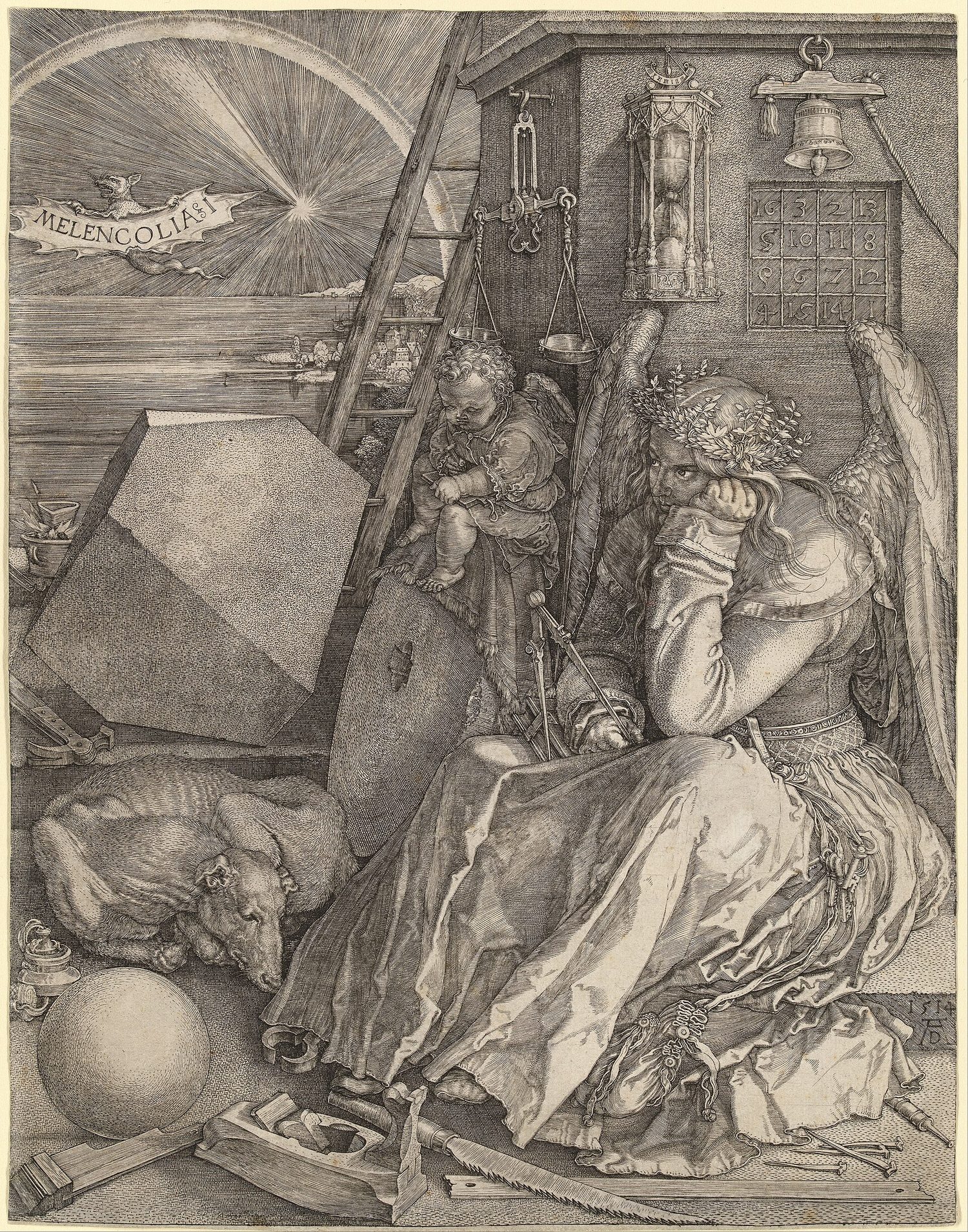
    密で非常に詳細な座っている翼のある人物の古い版画、周囲には道具や象徴があり、すべて細かい彫刻線によって描かれている
    デューラーの銅版画『Melencolia I』:凹版では線が金属版に切り込まれ、銅版画特有の細く密度の高い線が深い陰影と豊かなディテールを生み出す
    Explore · ⁨探索⁩

    Which printmaking process?

    Relief prints from the raised surface; intaglio from lines cut below the surface; planographic from a flat greasy image; stencil pushes ink through a mesh. · ⁨レリーフ印刷は浮き彫りの表面から;インタリオ印刷は表面下の線刻みから;プレノグラフィック印刷は平面的な油性画像から;ステシル印刷はメッシュを通してインクを押す。⁩

    Vocabulary · ⁨語彙⁩ Train · ⁨練習する⁩
    English 日本語
    Printmaking/ˈprɪntmeɪkɪŋ/ 印刷術
    matrix/ˈmeɪtrɪks/ マトリックス
    edition/ɪˈdɪʃn/ エディション
    Relief/rɪˈliːf/ 浮き版
    Intaglio/ɪnˈtæɡlɪəʊ/ 凹版
    Planographic/ˌplænəˈɡræfɪk/ Planographic
    Stencil/ˈstensl/ ステンシル
    Collage/kɒˈlɑːʒ/ コラージュ
    mixed media/mɪkst ˈmiːdiːə/ ミックスドメディア
    3.4

    Collage and Mixed Media · ⁨コラージュとミックスドメディア⁩

    Syllabus · ⁨シラバス⁩
    English

    Focus: Collage assembles found materials onto a surface; mixed media combines two or more materials or processes.

    • Collage glues papers, photos, fabric, or found objects into a composition.
    • Mixed media layers, for example, drawing over paint, or print with stitching.
    • These processes add actual texture and unexpected juxtapositions of image and meaning.
    • Materials can carry meaning (a ticket, a map) beyond their visual role.
    • Good mixed-media work still uses the elements and principles to stay unified.
    日本語

    焦点: コラージュは found materials を表面に組み立てる手法であり、ミックスドメディアは2つ以上の材料やプロセスを組み合わせるものです。

    • コラージュは、紙、写真、布地、found objects を接着して構成を作ります。
    • ミックスドメディアは、例えばペイントの上にドローイングを重ねたり、プリントに刺し繍を加えたりするレイヤリングです。
    • これらのプロセスは実際のテクスチャーや、イメージと意味の予期せない並置を加えます。
    • 素材には視覚的な役割を超えた意味が含まれることがあります(チケット、地図など)。
    • 優れたミックス・メディア作品でも、統一感を保つために要素と原則を適切に活用する必要があります。

    Source: College Board AP Course and Exam Description · ⁨出典: College Board AP コースおよび試験説明書⁩

    English

    Collage 拼贴 assembles found materials onto a surface; mixed media 综合媒介 combines two or more materials or processes.

    • Collage glues papers, photos, fabric, or found objects into a composition.
    • Mixed media layers processes — for example, drawing over paint, or print with stitching.
    • These add actual texture and unexpected meaning; a found material (a ticket, a map) can carry meaning beyond its look.
    日本語

    コラージュは見つかった素材を表面に組み立てる;ミックスドメディアは2つ以上の素材またはプロセスを組み合わせる。

    • コラージュは紙、写真、布地、あるいは見つかった物体を接着して構成を作る。
    • ミックスドメディアはプロセスを重ねる — 例えば、絵具の上に描画する、または刺繍付きのプリントなど。
    • これらは実際の質感と予期せぬ意味を加える;見つかった素材(切符、地図)は外見以上の意味を持つことがある。
    3.5

    Photography and Lens-Based Media · ⁨写真およびレンズメディア⁩

    Syllabus · ⁨シラバス⁩
    English

    Focus: Photography makes images with light and a lens; the same elements and principles apply to the frame.

    • Key controls: framing/composition, focus, exposure (light), depth of field, and viewpoint.
    • The rule of thirds, leading lines, and negative space compose a photograph.
    • Light direction and quality (hard/soft) shape value, form, and mood.
    • Editing (cropping, contrast, colour) is part of the creative process, not just correction.
    • Digital and darkroom processes both count as lens-based 2-D art and design.
    日本語

    焦点: 写真は光とレンズを用いて画像を作成しますが、同じ要素と原理がフレームに適用されます。

    • 主な操作項目:フレーミング/構図、ピント、露出(光)、被写界深度、視点です。
    • 三分分割法、誘導線、ネガティブスペースが写真を構成します。
    • 光の方向と質感(ハード/ソフト)がトーン、形状、ムードを形成します。
    • エディティング(トリミング、コントラスト、カラー調整)は修正のためのものではなく、創造プロセスの一部です。
    • デジタル処理と暗室処理の両方がレンズベースの2次元アート&デザインに含まれます。

    Source: College Board AP Course and Exam Description · ⁨出典: College Board AP コースおよび試験説明書⁩

    English

    Photography 摄影 makes images with light and a lens; the elements and principles apply to the frame just as in any 2-D work.

    • Key controls: framing, focus 对焦, exposure 曝光 (light), depth of field 景深, and viewpoint.
    • The rule of thirds, leading lines, and negative space compose a photograph.
    • Editing 后期 (cropping, contrast, colour) is part of the creative process, not just correction.
    日本語

    写真は光とレンズを使って画像を作成する;要素と原則は、他の2次元作品と同様にフレームに適用される。

    乗客で混雑した船の白黒写真、階段状通路によって2つのレベルに分かれ、強い幾何学的形状を形成している
    アルフレッド・スティ글リッツの『The Steerage』、有名な初期芸術写真:階段状通路、煙突、人物が強い幾何学的構成を形成するため、要素と原則は写真にも適用される
    • 主要な操作要素には、フレーミング、フォーカス(焦点)、エクスポージャー(露光:光の量)、ディプス・オブ・フィールド(被写界深度)、および視点が含まれます。
    • 三分割法、誘導線、ネガティブスペースが写真を構成する。
    • エディティング(トリミング、コントラスト、カラー調整)は修正のためのものではなく、創造プロセスの一部です。
    Vocabulary · ⁨語彙⁩ Train · ⁨練習する⁩
    English 日本語
    Photography/fəˈtɒɡrəfi/ 写真
    focus/ˈfəʊkəs/ 焦点
    exposure/ekˈspəʊʒə/ 露光
    depth of field/depθ ɒv fiːld/ 被写界深度
    Editing/ˈedɪtɪŋ/ 編集
    Digital media/ˈdɪdʒɪtl ˈmiːdiːə/ デジタルメディア
    Raster/ˈræstə/ ラスタ
    vector/ˈvektə/ ベクトル
    Layers/ˈleɪəz/ 層
    resolution/ˌrezəˈluːʃn/ 分解能
    Graphic design/ˈɡræfɪk dɪˈzaɪn/ グラフィックデザイン
    illustration/ˌɪləˈstreɪʃn/ イラストレーション
    type/taɪp/ タイプ(文字)
    Typography/taɪˈpɒɡrəfi/ タイポグラフィ
    3.6

    Digital Art and Design · ⁨デジタルアートとデザイン⁩

    Syllabus · ⁨シラバス⁩
    English

    Focus: Digital tools create and edit images on a computer or tablet, working in layers and pixels or vectors.

    • Raster images are made of pixels (photo editing, painting apps); vector images use math paths (scalable).
    • Layers let an artist build, mask, and revise non-destructively.
    • Digital colour uses RGB (screen, additive) or CMYK (print, subtractive).
    • Resolution (DPI/PPI) affects print quality; keep files high-resolution for the portfolio.
    • The same elements and principles guide digital work as any other 2-D medium.
    日本語

    焦点: デジタルツールはコンピューターやタブレット上で画像を作成・編集し、レイヤー、ピクセル、ベクターを用います。

    • ラスタ画像はピクセルで構成され(フォトショップ、ペイントアプリ)、ベクター画像は数値経路(スケーラブル)を使用します。
    • レイヤーは、非破壊的に構築、マスク、修正を行うことを可能にします。
    • デジタルカラーは、画面表示用のRGB(加色混色)または印刷用のCMYK(減色混色)を使用します。
    • 解像度(DPI/PPI)は印刷品質に影響します;ポートフォリオには高解像度のファイルを保持してください。
    • デジタルワークも他の2次元媒材と同様に、同じ要素と原理が指導原则となります。

    Source: College Board AP Course and Exam Description · ⁨出典: College Board AP コースおよび試験説明書⁩

    English

    Digital media 数字媒介 create and edit images on a computer or tablet, working in layers.

    • Raster 位图 images are made of pixels (photo editing, digital painting); vector 矢量 images use maths paths and scale without losing quality.
    • Layers 图层 let an artist build, mask, and revise without damaging earlier work.
    • Digital colour uses RGB (screen, additive) or CMYK (print, subtractive); keep files high-resolution 分辨率 for the portfolio.
    日本語

    デジタルメディアはコンピューターやタブレット上で画像を作成・編集し、レイヤー方式で作業する。

    • ラスタ画像はピクセルで構成される(フォト編集、デジタルペインティング);ベクトル画像は数学的パスを使用し、拡大しても品質を失わない。
    • レイヤーはアーティストが後続の作業を損なうことなく、構築、マスク作成、修正を行うことを可能にする。
    • デジタルカラーはRGB(画面、加色混合)またはCMYK(印刷、減色混合)を使用し、ポートフォリオには高-解像度のファイルを保持する。
    加色混合と減色混合の比較
    光を混ぜる(RGB)と白に近づき、顔料を混ぜる(CMY)と黒に近づく
    3.7

    Graphic Design and Illustration · ⁨グラフィックデザインとイラストレーション⁩

    Syllabus · ⁨シラバス⁩
    English

    Focus: Graphic design communicates a message visually; illustration makes images that support or tell a story.

    • Design combines type, image, colour, and layout to communicate to a viewer or client.
    • Visual hierarchy (size, weight, contrast, placement) guides the eye to what matters first.
    • Typography — typeface, size, spacing, alignment — is a core design element.
    • Illustration serves a purpose: editorial, book, product, poster, or narrative.
    • Design and illustration are problem-solving: audience and message shape every choice.
    日本語

    焦点: グラフィックデザインは視覚的にメッセージを伝達し、イラストレーションはイメージを作り、補足したり物語を語ったりします。

    • デザインはタイポグラフィ、イメージ、色、レイアウトを組み合わせて、視聴者やクライアントに伝達します。
    • ビジュアル hierarchy(サイズ、重み、コントラスト、配置)は、まず注目すべきものを视线に導きます。
    • タイポグラフィ— フォント、サイズ、間隔、アライメント — はデザインの中心的な要素です。
    • イラストレーションには目的があります:エディトリアル、書籍、プロダクト、ポスター、またはナラティブ。
    • デザインとイラストレーションは問題解決です;ターゲットオーディエンスとメッセージがあらゆる選択を決定します。

    Source: College Board AP Course and Exam Description · ⁨出典: College Board AP コースおよび試験説明書⁩

    English

    Graphic design 平面设计 communicates a message visually; illustration 插画 makes images that support or tell a story.

    • Design combines type 字体, image, colour, and layout to reach a viewer or client.
    • Visual hierarchy guides the eye to what matters first, through size, weight, and placement.
    • Typography 字体排印 — typeface, size, spacing, alignment — is a core design tool.
    • Design and illustration are problem-solving: the audience and message shape every choice.

    Worked example (writing about process). When your written evidence must explain a material and process: "I used charcoal on toned paper because its soft, smudgeable line let me build deep shadow quickly, and I lifted highlights with an eraser to suggest form." Notice the shape — name the medium, say why you chose it, and connect it to the idea you were exploring. Listing a material with no reason earns little.

    日本語

    グラフィックデザインは視覚的にメッセージを伝達する;イラストレーションはサポートしたり物語を語ったりする画像を作成する。

    • デザインはタイポグラフィ、画像、色、レイアウトを組み合わせ、視聴者やクライアントに届ける。
    • 視覚階層はサイズ、太さ、配置を通じて、まず目に入る重要な要素へと視線を導く。
    • タイポグラフィ(フォント、サイズ、間隔、アライメント)は、デザインの核心的なツールの一つです。
    • デザインとイラストレーションは問題解決であり、対象者やメッセージがすべての選択を形作る。

    ** worked example(プロセスに関する記述)。** 文章による証拠で材料とプロセスを説明する必要がある場合:「トーン紙にチャコールを用いたのは、その柔らかく擦り付けやすい線が素早く深い陰影を作り出し、消しゴムでハイライトを取り除くことで立体感を表現できたからである」。この構造に注目されたい — 媒体名を明記し、なぜ選んだかを述べ、探索していたアイデアに結びつけること。理由なしに材料を列挙するだけでは評価は低くなる。

    3.7

    Exam tips · ⁨試験対策⁩

    English
    • Match the medium to the intended effect, and justify the choice.
    • For printmaking, state relief versus intaglio, and remember the printed image reverses.
    • Explain transparent versus opaque paint, and layers and vector versus raster in digital work.
    • Treat collage and mixed media materials as meaning, not just texture.
    • In graphic design, show a clear visual hierarchy serving the message.
    日本語
    • 意図する効果に合わせて媒体を選び、その選択を正当化すること。
    • 版画制作については、浮き彫りと凹版を区別し、印刷画像が反転することを忘れないようにする。
    • 透明塗料と不透明塗料の違い、およびデジタル作品におけるレイヤーとベクトル対ラスタについて説明する。
    • コラージュとミックスドメディアの素材を単なる質感ではなく、意味として扱う。
    • グラフィックデザインでは、メッセージに資する明確な視覚的階層を示す。
  • 4

    Investigate: Inquiry and the Artistic Process · ⁨探求:インクワイアリと創造プロセス⁩

    Watch lesson · ⁨レッスンを視聴⁩
    4.1

    Inquiry and Asking Questions · ⁨探究と質問⁩

    Syllabus · ⁨シラバス⁩
    English

    Focus: In AP Art and Design, making begins with inquiry — asking questions that guide a sustained investigation. (CED Big Idea 1)

    • Inquiry is asking questions to find information and drive investigation.
    • A sustained investigation is an in-depth, question-driven study of materials, processes, and ideas over time.
    • Questions can be simple — who, what, when, where, why, how, what if, and why not.
    • Investigation includes perception, curiosity, examination, discovery, imagination, and conversation.
    • Questions evolve: early questions lead to new questions as the work develops.
    日本語

    焦点: APアート&デザインにおいて、制作の始まりは探究にあります。持続的な探究を導く質問を投げかけることです。(CED Big Idea 1)

    • インクワイアリーとは、情報を得て調査を推進するために質問する行為です。
    • **持続的調査(Sustained Investigation)**とは、時間を通じて材料、プロセス、アイデアに対して深く問いを交えた研究です。
    • 問いは単純であっても構いません。「誰」「何」「いつ」「どこ」「なぜ」「どのように」「もしもどうなるか」「なぜしないのか」などです。
    • 調査には、知覚、好奇心、検証、発見、想像力、対話が含まれます。
    • 問いは変容します:初期の問いが作品の発展に伴い新しい問いを生み出します。

    Source: College Board AP Course and Exam Description · ⁨出典: College Board AP コースおよび試験説明書⁩

    English

    In AP Art and Design, making begins with inquiry 探究 — asking questions that guide a sustained investigation 持续探究 over time. This is Big Idea 1.

    • Inquiry is asking questions to find information and drive investigation.
    • A sustained investigation is an in-depth, question-driven study of materials, processes, and ideas.
    • Good questions can be simple — who, what, when, where, why, how, what if, and why not.
    • Questions evolve: early questions lead to new questions as the work develops.
    日本語

    APアート&デザインにおいて、制作は探究から始まり、時間を通じて持続的な調査を導く質問を投じることから始まる。これがBig Idea 1である。

    芸術的プロセスは、質問、調査、制作、反省のサイクルである
    探究はサイクルを駆動する:質問を投げかけ、調査し、制作し、反省する — そして各答えが新たな問いを生むようにする
    • 探究とは情報を得て調査を推進するために質問を投じる活動である。
    • 持続的な調査とは、材料、プロセス、アイデアに対する深入りのある質問主導型研究である。
    • 良い質問は単純であることも多い — 誰が、何を、いつ、どこで、なぜ、どのように、もし〜ならどうなるか、なぜしないのか。
    • 問いは変容します:初期の問いが作品の発展に伴い新しい問いを生み出します。
    4.2

    Sources of Ideas and Experiences · ⁨アイデアと体験の源泉⁩

    Syllabus · ⁨シラバス⁩
    English

    Focus: Artists' and designers' experiences inform why, how, and what they make. (CED 1.A)

    • An experience is an event or occurrence — real surroundings, imagined concepts, communication, or research.
    • Reflecting on experiences sparks questions and inspires investigation.
    • Experiences can be documented with drawings, photos, diagrams, notes, or sound.
    • Ideas come from observation, memory, other disciplines, and other artists' work.
    • Recording experiences becomes a resource for the sustained investigation.
    日本語

    焦点: アーティストやデザイナーの経験が、彼らが何を作り、どのように作り、なぜ作るかを形作ります。(CED 1.A)

    • 経験とは、実際の環境、想象的な概念、コミュニケーション、あるいは研究といった出来事や現象です。
    • 体験への振り返りは疑問を喚起し、調査へのインスピレーションを与える。
    • 経験は、絵画、写真、図表、メモ、音響記録などで記録できます。
    • アイデアは、観察、記憶、他分野、および他のアーティストの作品から生まれます。
    • 経験を記録することは、持続的調査のためのリソースとなります。

    Source: College Board AP Course and Exam Description · ⁨出典: College Board AP コースおよび試験説明書⁩

    English

    Artists' and designers' experiences 经历 inform why, how, and what they make.

    • An experience is any event — real surroundings, imagined ideas, communication, or research.
    • Reflecting on experiences sparks questions and inspires investigation.
    • Ideas come from observation 观察, memory, other disciplines, and other artists' work.
    • Experiences can be documented with drawings, photos, notes, or sound, becoming a resource.
    日本語

    アーティストやデザイナーの体験は、彼らがなぜ、どのように、そして何を作るかに影響を与える。

    • 体験とはあらゆる出来事 — 現実の環境、想像上のアイデア、コミュニケーション、または研究のこと。
    • 体験への振り返りは疑問を喚起し、調査へのインスピレーションを与える。
    • アイデアは観察、記憶、他分野、および他のアーティストの作品から生まれます。
    • 体験は、 drawings, photos, notes, or sound(絵画、写真、メモ、音声)で記録され、リソースとなることができる。
    持続的な調査のアイデアの源泉
    強力な探究質問は、体験、観察、他作品、文化、課題、素材から育つ
    4.3

    Materials, Processes, and Ideas · ⁨材料、プロセス、アイデア⁩

    Syllabus · ⁨シラバス⁩
    English

    Focus: Every work is built from three interacting components — materials, processes, and ideas. (CED 1.C)

    • Materials are what a work is made of; processes are how it is made; ideas are what it is about.
    • These components interact: a material suggests a process; a process shapes an idea.
    • Investigating materials, processes, and ideas expands the possibilities for making.
    • The components an artist chooses influence how viewers interpret the work.
    • Documenting these choices shows the thinking behind the making.
    日本語

    焦点: すべての作品は、相互作用する3つの要素——材料、プロセス、アイデア——から構成されます。(CED 1.C)

    • 材料は作品の構成要素;プロセスはその制作方法;アイデアは作品の内容である。
    • これらの要素は相互に作用し、材料がプロセスを暗示し、プロセスがアイデアを形作ります。
    • 材料、プロセス、アイデアを調査することは、制作の可能性を広げます。
    • アーティストが選んだ要素は、鑑賞者が作品をどのように解釈するかに影響を与えます。
    • これらの選択を記録することは、制作の背景にある思考を示します。

    Source: College Board AP Course and Exam Description · ⁨出典: College Board AP コースおよび試験説明書⁩

    English

    Every work is built from three interacting components — materials, processes, and ideas 材料、过程与想法.

    • Materials are what a work is made of; processes are how it is made; ideas are what it is about.
    • The components interact: a material suggests a process; a process shapes an idea.
    • Investigating all three expands the possibilities for making, and influences how viewers interpret the work.
    日本語

    全ての作品は3つの相互作用する要素 — 材料、プロセス、アイデア — から成り立っている。

    • 材料は作品の構成要素;プロセスはその制作方法;アイデアは作品の内容である。
    • 要素は互いに作用します:素材がプロセスを促し、プロセスがアイデアを形作ります。
    • これら3つ全てを探究することは、制作の可能性を広げ、鑑賞者が作品を解釈する方法に影響を与える。
    シリーズのための調和を選ぶ際はカラーホイールに戻ること
    シリーズのための調和を選ぶ際はカラーホイールに戻ること
    Explore · ⁨探索⁩

    Material, process, or idea? · ⁨材料、プロセス、アイデアのいずれか?⁩

    Every work combines materials (what it is made of), processes (how it is made), and ideas (what it is about). · ⁨Every work combines materials(素材)、processes(技法)、ideas(概念)。⁩

    4.4

    Art and Design in Context · ⁨文脈におけるアートとデザイン⁩

    Syllabus · ⁨シラバス⁩
    English

    Focus: Works are made and understood within contexts — traditions, cultures, and other disciplines. (CED 1.D)

    • Context is when, where, how, why, and by whom a work was made and viewed.
    • Artists work within (or challenge) art and design traditions from cultures around the world.
    • Comparing works reveals similarities and differences in materials, processes, and ideas.
    • Acknowledging references and influences shows integrity.
    • Understanding context helps both makers and viewers interpret a work.
    日本語

    焦点: 作品は文脈——伝統、文化、他分野——の中で制作され、理解されます。(CED 1.D)

    • 文脈とは、作品がいつ、どこで、どのように、なぜ、誰によって制作され、鑑賞されたかです。
    • アーティストは、世界中の文化におけるアートとデザインの伝統の中で活動し(または挑戦します)。
    • 作品を比較することで、素材、プロセス、アイデアにおける類似点と相違点が明らかになります。
    • 引用元や影響源を明示することは、誠実さを示すものです。
    • 文脈を理解することは、制作者と鑑賞者の双方が作品を解釈する助けとなります。

    Source: College Board AP Course and Exam Description · ⁨出典: College Board AP コースおよび試験説明書⁩

    English

    Works are made and understood within a context 语境 — traditions, cultures, and other disciplines.

    • Context is when, where, how, why, and by whom a work was made and viewed.
    • Artists work within, or challenge, art and design traditions 传统 from cultures around the world.
    • Comparing works reveals similarities and differences in materials, processes, and ideas.
    • Acknowledging references and influences shows integrity 诚信 — never copying without credit.
    日本語

    作品は文脈の中で制作され理解される — 伝統、文化、他の分野を含む。

    • 文脈とは、作品がいつ、どこで、どのように、なぜ、誰によって制作され、鑑賞されたかという背景のことです。
    • アーティストは世界中の文化におけるアートとデザインの伝統の中で活動するか、それらを挑戦する。
    • 作品を比較することで、素材、プロセス、アイデアにおける類似点と相違点が明らかになります。
    • 参照や影響を認めることは誠実性を示す — 出典を明記せずに模倣することは避けるべきである。
    文脈における葛飾北斎:歴史的作品は探究のための構図の教訓を提供する
    文脈としての北斎:歴史的作品が、探究のための構成を教える
    Vocabulary · ⁨語彙⁩ Train · ⁨練習する⁩
    English 日本語
    inquiry/ɪnˈkwaɪəri/ インクワイリ
    sustained investigation/səˈsteɪnd ɪnˌvestɪˈɡeɪʃn/ 継続的な探究
    experiences/ekˈspɪərɪənsɪz/ 経験
    observation/ɒbzəˈveɪʃn/ 観察
    materials, processes, and ideas/məˈtɪərɪəlz ˈprəʊsesɪz ænd aɪˈdɪəz/ 材料、プロセス、アイデア
    context/ˈkɒntekst/ コンテキスト
    traditions/trəˈdɪʃnz/ 伝統
    integrity/ɪnˈteɡrɪti/ 完全性
    evaluated/ɪˈvæljuːeɪtɪd/ 評価された
    criteria/kraɪˈtɪərɪə/ 基準
    synthesis/ˈsɪnθəsɪs/ 統合
    4.5

    Evaluating Art and Design · ⁨アートとデザインの評価⁩

    Syllabus · ⁨シラバス⁩
    English

    Focus: Works can be evaluated by using evidence to compare them with specific criteria. (CED 1.E)

    • Evaluation uses visual evidence to judge a work against criteria (as the AP scoring guidelines do).
    • Observe carefully: identify materials, processes, and ideas, and how they connect.
    • Consider whether the components show synthesis — parts working together for one effect.
    • Evaluation can be informal (as you work) or formal (peer critique, feedback).
    • Reflecting on evaluation improves later thinking and making.
    日本語

    焦点: 作品は、具体的な基準を用いて証拠に基づき比較することで評価できます。(CED 1.E)

    • 評価とは、AP採点ガイドラインと同様に、視覚的証拠を用いて基準に対して作品を判断することです。
    • 注意深く観察し、材料、プロセス、アイデアを特定し、それらがどのように結びついているかを分析します。
    • 要素が一つの効果のために機能し合う統合を示しているか考慮する。
    • 評価は、作業中に行う非公式なものであったり、ピア・クリティクスやフィードバックを含む公式なものであったりします。
    • 評価への反省は、その後の思考と制作を向上させます。

    Source: College Board AP Course and Exam Description · ⁨出典: College Board AP コースおよび試験説明書⁩

    English

    Works can be evaluated 评价 by using visual evidence to compare them with specific criteria 标准 (as the AP scoring guidelines do).

    • Observe carefully: identify the materials, processes, and ideas, and how they connect.
    • Consider whether the components show synthesis 综合 — parts working together for one effect.
    • Evaluation can be informal (as you work) or formal (a critique 评图 with peers or a teacher).
    • Reflecting on evaluation improves your later thinking and making.
    日本語

    作品は、AP採点基準が示すように、視覚的証拠を用いて特定の基準と比較することで評価できる。

    • 注意深く観察する:素材、プロセス、アイデアを特定し、それらがどのように結びついているかを把握する。
    • 要素が一つの効果のために機能し合う統合を示しているか考慮する。
    • 評価は、制作中に行う非公式なものと、仲間や教師とのクリティークのような公式なものがあります。
    • 評価に対する反省は、後の思考や制作を向上させます。
    批判的な分析が視覚的証拠(線、トーン、構成)を指摘:名作の絵画より
    批判的な分析が視覚的証拠(線、トーン、構成)を指摘:名作の絵画より
    Vocabulary · ⁨語彙⁩ Train · ⁨練習する⁩
    English 日本語
    critique/krɪˈtiːk/ 批評
    Documentation/ˌdɒkjuːmənˈteɪʃn/ ドキュメンテーション
    process journal/ˈprəʊses ˈdʒɜːnl/ プロセスジャーナル
    lines of inquiry/laɪnz ɒv ɪnˈkwaɪəri/ 探究のライン
    4.6

    Documentation and the Process Journal · ⁨記録とプロセス・ジャーナル⁩

    Syllabus · ⁨シラバス⁩
    English

    Focus: Documentation records information and becomes a resource for the sustained investigation. (CED 1.A/1.B)

    • Documentation takes many forms: images, notes, diagrams, samples, and written reflection.
    • A process journal (sketchbook) records questions, experiments, and revisions over time.
    • Documenting your lines of inquiry shows how the investigation developed.
    • Good documentation can be shared with viewers and included as part of the work.
    • Consistent documentation makes writing the portfolio's written evidence far easier.
    日本語

    焦点: 記録は情報を記録し、持続的調査のリソースとなります。(CED 1.A/1.B)

    • 記録には、画像、メモ、図表、サンプル、書き留めた反省など、多様な形式があります。
    • プロセスジャーナル(スケッチブック)は、時間の経過とともに質問、実験、修正を記録します。
    • 探究の道筋を記録することは、調査がどのように発展したかを示します。
    • 良好な記録は鑑賞者に共有でき、作品の一部として含めることができます。
    • 一貫した記録は、ポートフォリオの書かれた証拠を作成することを大幅に容易にする。

    Source: College Board AP Course and Exam Description · ⁨出典: College Board AP コースおよび試験説明書⁩

    English

    Documentation 记录 records information and becomes a resource for the sustained investigation.

    • It takes many forms: images, notes, diagrams, material samples, and written reflection.
    • A process journal 创作日志 (sketchbook) records questions, experiments, and revisions over time.
    • Documenting your lines of inquiry 探究路径 shows how the investigation developed.
    • Consistent documentation makes writing the portfolio's written evidence far easier.

    Worked example (framing an inquiry). A weak sustained-investigation question is really just a topic: "My investigation is about the ocean." A strong one is a real question that can drive many artworks: "How can I use colour and texture to show the ocean shifting from calm to dangerous?" The question names an idea and points to the visual choices you will test — exactly what raises a portfolio's score.

    日本語

    記録は情報を記録し、持続的探究のためのリソースとなる。

    • 多様な形式をとる:画像、メモ、図表、素材サンプル、書かれた反省など。
    • プロセスジャーナル(スケッチブック)は、時間の経過とともに質問、実験、修正を記録します。
    • 探究の道筋を記録することは、調査がどのように発展したかを示します。
    • 一貫した記録は、ポートフォリオの書かれた証拠を作成することを大幅に容易にする。

    ワークド・エグザンプル(問いの枠組み)。 弱い持続的探究の問いは、単なるトピックに過ぎない:「私の探究は海についてだ。」 強い問いは、多くの艺术作品を導く真の問いである:「色と質感をどう使えば、海が穏やかから危険な状態へと変化するか表現できるか?」 この問いはアイデアを指定し、同時にあなたがテストする視覚的な選択を指し示す——これがポートフォリオのスコアを上げるために必要不可欠である。

    プロセス・ジャーナルのページ:探究のメモと小さな実験がアイデアの発展を記録する
    プロセス・ジャーナルのページ:探究のメモと小さな実験がアイデアの発展を記録する
    4.6

    Exam tips · ⁨試験対策⁩

    English
    • Frame the work with an open guiding question, not a closed yes/no one.
    • Draw on varied sources — observation, experience, research — and cite your influences.
    • Aim for synthesis: materials and processes chosen because they carry the idea.
    • Evaluate through critique using the elements and principles, then plan a revision.
    • Keep a process journal: record experiments and failures as evidence of inquiry.
    日本語
    • 閉じたはい/いいえの問いではなく、開かれた指導問いで作品を枠組む。
    • 多様な出典(観察、経験、調査)を活用し、影響源を引用する。
    • 統合を目指し、アイデアを担うため選ばれた素材とプロセスを用いる。
    • 要素と原則を用いた批判的評価を通じて評価し、修正を計画する。
    • プロセス・ジャーナルを維持し、探究の証拠として実験と失敗を記録する。
  • 5

    Make: Practice, Experimentation, and Revision · ⁨制作:実践、実験、修正⁩

    Watch lesson · ⁨レッスンを視聴⁩
    5.1

    The Sustained Investigation · ⁨持続的探究⁩

    Syllabus · ⁨シラバス⁩
    English

    Focus: The Sustained Investigation is a body of work exploring one question or idea in depth over time. (CED Big Idea 2)

    • A sustained investigation is guided by questions or inquiry and develops as you make.
    • It shows practice, experimentation, and revision — not a set of unrelated pieces.
    • The 2-D portfolio's Sustained Investigation section is 15 images plus written evidence.
    • A clear, focused inquiry gives the whole body of work direction and coherence.
    • The investigation can change direction as new questions emerge — and that evolution is valued.
    日本語

    焦点: **持続的調査(Sustained Investigation)**とは、時間をかけて一つの問いやアイデアを深く探求する一連の作品群です。(CED Big Idea 2)

    • 持続的探究は問いや探究によって導かれ、制作する中で発展していく。
    • 関連のない作品のセットではなく、練習、実験、修正を示す。
    • 2Dポートフォリオの持続的探究セクションには、15枚の画像と書かれた証拠が含まれる。
    • 明確で焦点を絞ったインクワイアリーが、一連の作品全体に方向性と整合性を与えます。
    • 新たな問いが生じるにつれて調査の方向性が変わることもあり、この発展性は重視されます。

    Source: College Board AP Course and Exam Description · ⁨出典: College Board AP コースおよび試験説明書⁩

    English

    Big Idea 2 is about making. Its heart is the Sustained Investigation 持续探究 — a body of work that explores one question or idea in depth over time.

    • A sustained investigation is guided by questions or inquiry and develops as you make.
    • It shows practice, experimentation, and revision — not a set of unrelated pieces.
    • The 2-D portfolio's Sustained Investigation section is 15 images plus written evidence.
    • A clear, focused inquiry gives the whole body of work direction and coherence 连贯性.
    日本語

    Big Idea 2は制作に関するものである。その核心は持続的探究であり、時間を通じて一つの問いやアイデアを深く探求する作品群である。

    • 持続的探究は問いや探究によって導かれ、制作する中で発展していく。
    • 関連のない作品のセットではなく、練習、実験、修正を示す。
    • 2Dポートフォリオの持続的探究セクションには、15枚の画像と書かれた証拠が含まれる。
    • 明確で焦点を絞った探究は、作品全体の方向性と整合性を与える。
    5.2

    Practice, Experimentation, and Revision · ⁨練習、実験、修正⁩

    Syllabus · ⁨シラバス⁩
    English

    Focus: Making advances through three linked actions — practice, experimentation, and revision. (CED 2.B)

    • Practice is repeated work to build skill and understanding.
    • Experimentation tries new materials, processes, and ideas to discover possibilities.
    • Revision changes a work based on reflection, feedback, or new questions.
    • These actions are shown across the body of work, not just in one final piece.
    • Evidence of experimentation and revision is exactly what the AP readers look for.
    日本語

    焦点: 3つの関連する行動——実践、実験、修正——を通じて進歩を遂げることです。(CED 2.B)

    • 実践とは、スキルと理解を深めるための反復作業です。
    • 実験は、新たな可能性を見つけるために、新しい素材、プロセス、アイデアを試みる。
    • 修正とは、反省、フィードバック、または新たな問いに基づいて作品を変えることです。
    • これらの行動は、単一の最終作品だけでなく、一連の作品全体を通じて示されるべきです。
    • 実験と修正の痕跡こそが、AP採点者が求めるものです。

    Source: College Board AP Course and Exam Description · ⁨出典: College Board AP コースおよび試験説明書⁩

    English

    Making advances through three linked actions.

    • Practice 练习 is repeated work to build skill and understanding.
    • Experimentation 实验 tries new materials, processes, and ideas to discover possibilities.
    • Revision 修改 changes a work based on reflection, feedback, or new questions.
    • These are shown across the body of work, not just in one final piece. Evidence of experimentation and revision is exactly what the AP readers look for.
    日本語

    三つの連動する行動を通じて進歩する。

    長期間にわたって練習し、実験し、修正することで制作が進む
    練習はスキルを養い、実験は新しい可能性を試み、修正は作品を改善する——これらは作品全体を通じて繰り返される
    • 実践とは、スキルと理解を深めるための反復作業です。
    • 実験は、新たな可能性を見つけるために、新しい素材、プロセス、アイデアを試みる。
    • 修正とは、反省、フィードバック、または新たな問いに基づいて作品を変えることです。
    • これらは単一の最終作品だけでなく、作品全体を通じて示されるべきである。実験と修正の証拠こそが、AP採点官が見ているものである。
    名作の模写:練習、実験、修正が2Dのスキルを長期的に蓄積させる方法
    名作の模写:練習、実験、修正が2Dのスキルを長期的に蓄積させる方法
    Explore · ⁨探索⁩

    Practice, experiment, or revise? · ⁨実践か、実験か、修正か?⁩

    Practice is repeated work to build skill; experimentation tries new materials or ideas; revision changes a work after reflection or feedback. · ⁨Practiceはスキルを磨くための反復作業;experimentationは新しい素材やアイデアの試行;revisionは反省やフィードバック後の修正。⁩

    Vocabulary · ⁨語彙⁩ Train · ⁨練習する⁩
    English 日本語
    Sustained Investigation/səˈsteɪnd ɪnˌvestɪˈɡeɪʃn/ 継続的な調査
    coherence/kəʊˈhɪərəns/ 整合性
    Practice/ˈpræktɪs/ 実践
    Experimentation/ekˌsperɪmənˈteɪʃn/ 実験
    Revision/rɪˈvɪʒn/ 修正
    synthesis/ˈsɪnθəsɪs/ 統合
    2-D skills/tuː diː skɪlz/ 2次元のスキル
    Selected Works/sɪˈlektɪd wɜːks/ 選定作品
    Craft/kræft/ 技術
    Craftsmanship/ˈkræftsmənʃɪp/ 職人技
    developing/dɪˈveləpɪŋ/ 発展している
    5.3

    Synthesis of Materials, Processes, and Ideas · ⁨素材、プロセス、アイデアの統合⁩

    Syllabus · ⁨シラバス⁩
    English

    Focus: Strong works show synthesis — materials, processes, and ideas integrated so the whole is more than its parts. (CED 2.C)

    • Synthesis means the components combine (coalesce) to create a unified effect.
    • The choice of material should support the idea; the process should serve both.
    • When components are integrated, viewers read one clear message rather than separate parts.
    • Synthesis develops through investigation — trying combinations and keeping what works.
    • The relationships among components are what evaluation and scoring examine.
    日本語

    焦点: 優れた作品は、材料、プロセス、アイデアが統合され、全体が部分の合計以上となる**統合(Synthesis)**を示します。(CED 2.C)

    • 統合とは、要素が結合して統一された効果を生み出すことを意味します。
    • 材料の選択はアイデアを支援すべきであり、プロセスも両方を支えるべきです。
    • 要素が統合されている場合、鑑賞者は個別の部分ではなく、一つの明確なメッセージを読む。
    • 統合は調査を通じて発展します——組み合わせを試して、機能するものを残していくことで生まれます。
    • 要素間の関係性が、評価と採点の対象となります。

    Source: College Board AP Course and Exam Description · ⁨出典: College Board AP コースおよび試験説明書⁩

    English

    Strong works show synthesis 综合 — materials, processes, and ideas integrated so the whole is more than its parts.

    • Synthesis means the components combine to create a unified effect.
    • The chosen material should support the idea; the process should serve both.
    • When components are integrated, viewers read one clear message rather than separate parts.
    • Synthesis develops through investigation — trying combinations and keeping what works.
    日本語

    強力な作品は統合を示す——素材、プロセス、アイデアが統合され、全体が部分の和以上となっている。

    • 統合とは、要素が結合して統一された効果を生み出すことを意味する。
    • 選ばれた材料はアイデアを支援し、プロセスはその両方を支えるべきです。
    • 要素が統合されている場合、鑑賞者は個別の部分ではなく、一つの明確なメッセージを読む。
    • 統合は調査を通じて発展します——組み合わせを試して、機能するものを残していくことで生まれます。
    5.4

    Demonstrating 2-D Skills · ⁨2Dスキルの提示⁩

    Syllabus · ⁨シラバス⁩
    English

    Focus: The portfolio must show 2-D skills — the elements and principles used to organise a two-dimensional surface. (CED 2.D)

    • 2-D skills are the use of the elements of art and principles of design on a flat surface.
    • Skilful work shows control of value, colour, composition, and mark-making.
    • Skills are demonstrated across many works, in a range of materials and processes.
    • The Selected Works section (5 works) is where 2-D skills are judged most directly.
    • Skill is shown by decisions that are clear, purposeful, and support the idea.
    日本語

    焦点: ポートフォリオには、2D スキル — 二次元面を組織するために用いられる要素と原則 — を示す必要がある。(CED 2.D)

    • 2次元技能とは、平面的な表面において芸術の要素とデザイン原則を用いることです。
    • 巧みな作品は、明暗、色、構図、マーク-making に対するコントロールを示します。
    • 技能は、多様な材料とプロセスを用いた多くの作品を通じて示されます。
    • 選抜作品 セクション(5作品)は、2Dスキルが最も直接的に評価される場所です。
    • 技能は、明確で意図的であり、アイデアを支持する決定によって示されます。

    Source: College Board AP Course and Exam Description · ⁨出典: College Board AP コースおよび試験説明書⁩

    English

    The portfolio must show 2-D skills 二维技能 — the elements and principles used to organise a flat surface.

    • 2-D skills are the skilful use of line, shape, value, colour, texture, space, and the principles of design.
    • Skilful work shows control of value, colour, composition, and mark-making.
    • Skills are demonstrated across many works, in a range of materials and processes.
    • The Selected Works 精选作品 section is where 2-D skills are judged most directly.
    日本語

    ポートフォリオは2Dスキルを示さなければならない——平面的な表面を構成するために用いられる要素と原則である。

    • 2Dスキルとは、線、形、明度、色、質感、空間、およびデザイン原則を巧みに使うことである。
    • 巧みな作品は、明暗、色、構図、マーク-making に対するコントロールを示します。
    • スキルは、多様な素材とプロセスを含む多くの作品を通じて示されるべきである。
    • 選定作品セクションが、2Dスキルが最も直接的に評価される場所である。
    ヴァン・ゴッホ『星夜』:表現的な線、色、リズムが2Dスキルとして
    ヴァン・ゴッホ『星夜』:表現的な線、色、リズムが2Dスキルとして
    5.5

    Composition and Craft in Making · ⁨制作における構成と技術⁩

    Syllabus · ⁨シラバス⁩
    English

    Focus: Craft is the quality of making; composition is the arrangement of the work — both communicate care and intent.

    • Craftsmanship is the skilful, controlled handling of materials and processes.
    • Composition applies the principles of design to organise the picture plane.
    • Purposeful decisions about surface, edges, and finish strengthen a work.
    • Craft should serve the idea — sometimes rough or raw handling is the right choice.
    • Consistent quality across the body of work signals a developed artist.
    日本語

    焦点: 技術(Craft)は制作の質であり、構成(Composition)は作品の配置です——どちらも配慮と意図を伝えます。

    • 技術力は、素材とプロセスを巧みに、統制的に扱うことである。
    • 構成とは、デザイン原則を用いて絵画面を構成することです。
    • 表面、エッジ、仕上げに対する意図的な決定が作品を強化します。
    • クラフトはアイデアに仕えるべきであり、あえて粗いまたは素のままの仕上がりを選ぶ場合もあります。
    • 作品群全体の一貫した品質は、成熟したアーティストの証左となります。

    Source: College Board AP Course and Exam Description · ⁨出典: College Board AP コースおよび試験説明書⁩

    English

    Craft 工艺 is the quality of making; composition is the arrangement of the work — both communicate care and intent.

    • Craftsmanship 匠艺 is the skilful, controlled handling of materials and processes.
    • Composition applies the principles of design to organise the picture plane.
    • Craft should serve the idea — sometimes a rough or raw handling is the right choice.
    • Consistent quality across the body of work signals a developed artist.
    日本語

    技術は制作の質であり、構成は作品の配置である——両方とも丁寧さと意図を伝える。

    • 技術力は、素材とプロセスを巧みに、統制的に扱うことである。
    • 構成はデザイン原理を用いて絵画面を組織化します。
    • 技術はアイデアに仕えるべきであり、時として粗いあるいは生々しい处理方式が適切な選択となることもある。
    • 作品群全体の一貫した品質は、成熟したアーティストの証左となります。
    葛飾北斎『神奈川冲浪裏』:構成と技術が視線を絵画面全体に導く
    葛飾北斎『神奈川冲浪裏』:構成と技術が視線を絵画面全体に導く
    5.6

    Developing Ideas Over Time · ⁨長期的なアイデアの発展⁩

    Syllabus · ⁨シラバス⁩
    English

    Focus: A sustained investigation shows ideas developing — growing and changing across the body of work. (CED 2.B)

    • Development is visible when later works build on discoveries in earlier ones.
    • New questions, materials, or processes push the investigation forward.
    • Not every experiment succeeds — evidence of what did not work is still valuable.
    • Documenting the sequence shows the readers a genuine journey of inquiry.
    • A body of work with clear development scores higher than a set of finished-but-static pieces.
    日本語

    焦点: 持続的調査は、一連の作品を通じて発展していくアイデアを示します。(CED 2.B)

    • 後期の作品が前期の発見に基づいている場合、発展は明確に見て取れます。
    • 新たな問い、素材、プロセスが探求を推進します。
    • 全ての実験が成功するわけではありませんが、失敗した痕跡も依然として価値があります。
    • 手順を記録することは、採点者に真摯な探究の旅を示します。
    • 明確な発展がある作品のセットは、完成しているが静的な作品のセットよりも高い得点を得る。

    Source: College Board AP Course and Exam Description · ⁨出典: College Board AP コースおよび試験説明書⁩

    English

    A sustained investigation shows ideas developing 发展 — growing and changing across the body of work.

    • Development is visible when later works build on discoveries in earlier ones.
    • New questions, materials, or processes push the investigation forward.
    • Not every experiment succeeds — evidence of what did not work is still valuable.
    • A body of work with clear development scores higher than a set of finished-but-static pieces.

    Worked example (showing development). The Sustained Investigation is scored on evidence of thinking, not just finished pieces: "My first three works used flat colour; after seeing they felt lifeless, I experimented with layered glazes in works 4–6, then in works 7–9 I combined the best of both." Describing a change and the reason for it is how you demonstrate practice, experimentation, and revision.

    日本語

    持続的探究は、アイデアが発展していることを示す——作品全体を通じて成長し、変化する。

    • 後期の作品が前期の発見に基づいている場合、発展は明確に見て取れます。
    • 新たな問い、素材、プロセスが探求を推進します。
    • すべての実験が成功するわけではありません;失敗した証拠もまた価値があります。
    • 明確な発展がある作品のセットは、完成しているが静的な作品のセットよりも高い得点を得る。
    作品が発展するにつれて持続的探究が深まる
    初期の探索から実験と修正へ、そして統合へ——思考が作品を通じて視覚的に深まっていく

    ワークド・エグザンプル(発展の提示)。 持続的探究は、完成した作品だけでなく、思考の証拠に基づいて採点される:「最初の3作品では平面塗りを採用したが、それが無機質な印象を与えたため、4〜6作品では層状のグラデーションを試みた。その後、7〜9作品では両方の最好的な要素を組み合わせた。」 変化を記述し、かつその理由を説明することが、練習、実験、修正を示す方法である。

    5.6

    Exam tips · ⁨試験対策⁩

    English
    • Build the sustained investigation as a connected body of work, not one-offs.
    • Show practice, experimentation, and revision — a documented failure still earns credit.
    • Push synthesis and clear 2-D skills, and keep craft clean to the edges.
    • Let each work develop from the last, raising the next question.
    • Choose materials and processes that embody the guiding question.
    日本語
    • 継続的探求を断片的な作品ではなく、相互に結びついた一連の作品集として構築する。
    • 実践、実験、修正を示し、記録された失敗であっても評価対象となる。
    • 合成を強化し、明確な2-Dのスキルを磨き、技術的熟練度を端まで整えること。
    • 各作品が前作から発展し、次の問いを生み出すようにする。
    • 指導問題(guiding question)を体現する素材とプロセスを選択する。
  • 6

    Present: Communication and the AP Portfolio · ⁨発表:コミュニケーションとAPポートフォリオ⁩

    Watch lesson · ⁨レッスンを視聴⁩
    6.1

    The AP 2-D Art and Design Portfolio · ⁨AP 2次元アート・デザインポータフォリオ⁩

    Syllabus · ⁨シラバス⁩

    Focus: The AP exam is a portfolio, not a written test. It has two sections that are submitted digitally. (CED Big Idea 3)

    • The Sustained Investigation section: 15 images showing inquiry, practice, experimentation, and revision, plus written evidence.
    • The Selected Works section: 5 works that best show your 2-D skills and synthesis, with written information.
    • Works may be physical or digital, but all are submitted as digital images (and short video where relevant).
    • There is no written exam and no timed section — the portfolio is built across the whole course.
    • Both sections are scored against the College Board scoring guidelines.

    Source: College Board AP Course and Exam Description · ⁨出典: College Board AP コースおよび試験説明書⁩

    English

    Big Idea 3 is about presenting your work. The AP exam is a portfolio 作品集 — not a written test. It has two sections, both submitted digitally.

    • The Sustained Investigation 持续探究 section: 15 images showing inquiry, practice, experimentation, and revision, plus written evidence.
    • The Selected Works 精选作品 section: 5 works that best show your 2-D skills, with written information.
    • Works may be physical or digital, but all are submitted as digital images. There is no timed exam — the portfolio is built across the whole course.
    日本語

    Big Idea 3は作品の提示(プレゼンテーション)に関するものです。AP試験は筆記試験ではなくポータフォリオです。2つのセクションがあり、どちらもデジタルで提出します。

    2次元ポータフォリオには2部分组成:15枚画像の持続的探求と5点の選抜作品
    ポータフォリオは、15枚画像の持続的探求と5点の選抜作品から構成され、デジタル画像として提出されます
    • **持続的探求(Sustained Investigation)**セクション:15枚の画像で、探究、実践、実験、修正を示すとともに、記述による証拠を提供する。
    • 選定作品セクション:5作品であなたの2-Dのスキルを最もよく示し、文章による説明も添えること。
    • 作品は物理的またはデジタルのいずれでも構いませんが、すべてデジタル画像として提出します。限时試験はありません。ポータフォリオは全課程を通じて作成されます。
    AP 2次元アート・デザインポータフォリオの2部分组成
    持続的探求(15枚画像+記述証拠)は、選抜作品(5点)よりも加重割合が高い
    Vocabulary · ⁨語彙⁩ Train · ⁨練習する⁩
    English 日本語
    portfolio/pɔːtˈfəʊlɪəʊ/ ポートフォリオ
    Sustained Investigation/səˈsteɪnd ɪnˌvestɪˈɡeɪʃn/ 継続的な調査
    6.2

    Sustained Investigation: Images and Written Evidence · ⁨持続的探求:画像と記述証拠⁩

    Syllabus · ⁨シラバス⁩
    English

    Focus: The Sustained Investigation is judged on the inquiry and the practice, experimentation, and revision it shows. (CED 3.A/3.B)

    • Submit 15 images — works and process documentation that show the investigation over time.
    • Provide written evidence: identify the questions that guided the investigation, and describe how the work shows practice, experimentation, and revision.
    • Images should tell the story of the inquiry, not just show finished pieces.
    • Detail images and in-progress shots are allowed and often helpful.
    • Clear writing (within the character limit) makes the investigation easy to follow.
    日本語

    焦点: 持続的調査は、それが示すインクワイアリーと実践、実験、修正に基づいて評価されます。(CED 3.A/3.B)

    • 調査の過程を示す15枚の画像(作品およびプロセスの記録)を提出する。
    • 記述 evidenceを提供し、調査を導いた問いを特定し、作品が実践、実験、修正をどのように示しているかを説明します。
    • 画像は、完成作品を単に示すだけでなく、探究の物語を語らなければならない。
    • 詳細な画像や進行中のショットの提供が許可され、しばしば有益です。
    • 文字数制限内での明確な文章は、調査の流れを簡単に追跡できるようにする。

    Source: College Board AP Course and Exam Description · ⁨出典: College Board AP コースおよび試験説明書⁩

    English

    The Sustained Investigation is judged on the inquiry and the practice, experimentation, and revision it shows.

    • Submit 15 images — works and process documentation that show the investigation over time.
    • Provide written evidence 书面材料: identify the guiding questions 引导性问题, and describe how the work shows practice, experimentation, and revision.
    • Images should tell the story of the inquiry, not just show finished pieces. Detail and in-progress shots are allowed.
    日本語

    持続的探求は、その探究と、示されている実践、実験、修正に基づいて採点されます。

    • 調査の過程を示す15枚の画像(作品およびプロセスの記録)を提出する。
    • 記述証拠を提供する:指導問題を特定し、作品が実践、実験、修正をどのように示しているかを説明する。
    • 画像は完成品を示すだけでなく、探究の物語を語らなければならない。詳細なクローズアップや進行中のショットも許可される。
    6.3

    Selected Works: Demonstrating Skills · ⁨選抜作品:スキルの証明⁩

    Syllabus · ⁨シラバス⁩
    English

    Focus: The Selected Works section shows your best evidence of 2-D skills and synthesis of materials, processes, and ideas. (CED 3.D/3.E)

    • Submit 5 works (physical or digital) as high-quality images.
    • For each, give the materials, processes, and ideas used, plus the size.
    • These works are judged mainly on the skilful use of the elements and principles.
    • They do not have to belong to the sustained investigation.
    • Choose works that most clearly show control, decision-making, and synthesis.
    日本語

    焦点: 選択作品セクションでは、2-D技能および素材、プロセス、アイデアの統合に対するあなたの最良の証拠を示す。(CED 3.D/3.E)

    • 高品質な画像として、5作品(実物またはデジタル)を提出してください。
    • 各作品について、使用した素材、プロセス、アイデア、およびサイズを記載する。
    • これらの作品は、要素と原則の有能な使用に基づいて主に評価される。
    • これらは持続的探究の一部である必要はない。
    • 統御力、判断力、統合能力が最も明確に表れている作品を選んでください。

    Source: College Board AP Course and Exam Description · ⁨出典: College Board AP コースおよび試験説明書⁩

    English

    The Selected Works section shows your best evidence of 2-D skills 二维技能 and synthesis of materials, processes, and ideas.

    • Submit 5 works (physical or digital) as high-quality images.
    • For each, give the materials, processes, and ideas used, plus the size.
    • These works are judged mainly on the skilful use of the elements and principles; they need not belong to the sustained investigation.
    日本語

    選定作品セクションは、あなたの2-Dのスキルおよび素材、プロセス、アイデアの統合に対する最良の証拠を示すものである。

    • 高品質な画像として、5作品(実物またはデジタル)を提出してください。
    • 各作品について、使用した素材、プロセス、アイデア、およびサイズを記載する。
    • これらの作品は、主に要素と原則の熟練した使用に基づいて採点されます。持続的探求の一部である必要はありません。
    完成した選抜作品:提出された画像において、技術、構成、スキルが明確に読み取れること
    完成した選抜作品:提出された画像において、技術、構成、スキルが明確に読み取れること
    モネ『睡蓮』:選定作品は画像において明確な技術的熟練度と展示が必要である
    モネ『睡蓮』:選抜作品は画像において明確な技術と提示が必要
    Vocabulary · ⁨語彙⁩ Train · ⁨練習する⁩
    English 日本語
    Selected Works/sɪˈlektɪd wɜːks/ 選定作品
    written evidence/ˈrɪtn ˈevɪdəns/ 筆記証拠
    guiding questions/ˈɡaɪdɪŋ ˈkwestʃnz/ 指導質問
    2-D skills/tuː diː skɪlz/ 2次元のスキル
    character limits/ˈkærɪktə ˈlɪmɪts/ 文字数制限
    keystoning/ˈkiːstənɪŋ/ キーストニング効果
    resolution/ˌrezəˈluːʃn/ 分解能
    scoring guidelines/ˈskɔːrɪŋ ˈɡaɪdlaɪnz/ 採点ガイドライン
    published or photographic sources/ˈpʌblɪʃt ɔː ˌfəʊtəˈɡræfɪk ˈsɔːsɪz/ 出版または写真ソース
    cite/saɪt/ 引用する
    integrity/ɪnˈteɡrɪti/ 完全性
    6.4

    Writing About Your Work · ⁨作品についての記述⁩

    Syllabus · ⁨シラバス⁩
    English

    Focus: Writing communicates your inquiry, processes, and ideas to viewers who cannot ask you questions. (CED 3.A/3.B/3.C)

    • Written evidence must fit within the College Board character limits — be concise and specific.
    • State the question(s) that guided the sustained investigation clearly.
    • Describe how the work shows practice, experimentation, and revision — use evidence.
    • For Selected Works, name the materials, processes, and ideas.
    • Write plainly; the reader should understand your intent from the words plus the images.
    日本語

    焦点: 記述は、質問できない鑑賞者に対してあなたの探究、プロセス、アイデアを伝える。(CED 3.A/3.B/3.C)

    • 記述証拠はCollege Boardの文字数制限内に収まるよう、簡潔かつ具体的に記述する。
    • 持続的探究を導いた問いを明確に述べる。
    • 作品が実践、実験、修正をどのように示しているかを説明し、証拠を用いる。
    • 選択作品については、素材、プロセス、アイデアの名前を明記する。
    • 素直に書くこと。読者は言葉と画像からあなたの意図を理解できるはずである。

    Source: College Board AP Course and Exam Description · ⁨出典: College Board AP コースおよび試験説明書⁩

    English

    Writing communicates your inquiry, processes, and ideas to viewers who cannot ask you questions.

    • Written evidence must fit within the College Board character limits 字数限制 — be concise and specific.
    • State the guiding question(s) of the sustained investigation clearly.
    • Describe how the work shows practice, experimentation, and revision — use evidence, not vague claims.
    日本語

    記述は、質問できない視聴者に対してあなたの探究、プロセス、アイデアを伝える手段である。

    • 記述証拠はCollege Boardの文字数制限内に収まるよう、簡潔かつ具体的に記述する。
    • 持続的探求の指導問題を明確に述べる。
    • 作品がどのように実践、実験、修正を示しているかを記述する。曖昧な主張ではなく、具体的な証拠を用いる。
    記述証拠は探究ノートから始まる:具体的な視覚言語を用いて素材、プロセス、アイデアを記述する
    記述証拠は探究ノートから始まる:具体的な視覚言語を用いて素材、プロセス、アイデアを記述する
    6.5

    Presentation and Image Quality · ⁨提示と画像の品質⁩

    Syllabus · ⁨シラバス⁩
    English

    Focus: How work is presented affects how viewers interpret it — image quality is part of the grade. (CED 3.F)

    • Photograph work with even lighting, sharp focus, true colour, and no distracting background.
    • Crop images to the work; avoid glare, shadows, and keystoning (tilted edges).
    • Follow the required file formats and sizes; keep resolution high.
    • Consistent, clean presentation lets the readers see the work, not the photograph.
    • Poor images can hide real skill — good documentation protects your score.
    日本語

    焦点: 作品の提示方法は鑑賞者の解釈に影響を与え、画像品質は成績の一部となる。(CED 3.F)

    • 均一な照明、鮮明なピント、忠実な色、目立つ背景のない状態で作品を撮影する。
    • 画像を作品に合わせてトリミングし、反射光、影、台形変形(傾いた縁)を避ける。
    • 指定されたファイル形式とサイズに従い、解像度を高く保つ。
    • 統一感があり清潔感のある展示により、読者は写真そのものではなく作品を見ることができる。
    • 悪い画像は実際の技能を隠してしまう可能性があるため、適切な記録があなたの得点を保護する。

    Source: College Board AP Course and Exam Description · ⁨出典: College Board AP コースおよび試験説明書⁩

    English

    How work is presented affects how viewers interpret it — image quality is part of the grade.

    • Photograph work with even lighting, sharp focus, true colour, and no distracting background.
    • Crop to the work; avoid glare, shadows, and tilted edges (keystoning 梯形失真).
    • Follow the required file formats and sizes; keep resolution 分辨率 high. Poor images can hide real skill.
    日本語

    作品の提示方法は視聴者の解釈に影響を与えるため、画像の品質は採点要素の一部である。

    • 作品を撮影する際は、均一な照明、鮮明な焦点、正確な色味、そして目引く背景がないようにする。
    • 作品に**クロップ(切り抜き)**を行い、反射光、影、傾いた縁(キーストニング)を避ける。
    • 必要なファイル形式とサイズに従い、高い解像度を維持する。悪い画像は実際のスキルを隠してしまう可能性がある。
    Explore · ⁨探索⁩

    Helps or hurts your portfolio image? · ⁨あなたのポートフォリオ画像を助けるか損ねるか?⁩

    Good documentation lets the readers see your work clearly; poor images can hide real skill. · ⁨適切なドキュメントにより読者は作業の成果を明確に見ることができますが、不十分な画像は実際のスキルを隠してしまうことがあります。⁩

    6.6

    Understanding the Scoring Guidelines · ⁨採点基準の理解⁩

    Syllabus · ⁨シラバス⁩
    English

    Focus: Both portfolio sections are scored against published guidelines — knowing them helps you build the portfolio.

    • The Sustained Investigation is scored on inquiry and on evidence of practice, experimentation, and revision (and their visual relationships).
    • Selected Works are scored on 2-D skills and the synthesis of materials, processes, and ideas.
    • Readers use visual evidence in the work plus your writing to apply the criteria.
    • Scores use a rubric with described levels; the top levels show clear, sustained, well-integrated evidence.
    • Designing your work with the criteria in mind (not to a formula) leads to a stronger portfolio.
    日本語

    焦点: ポートフォリオの両セクションは、公表された基準に基づいて採点される。これを知っておくことでポートフォリオを構築できる。

    • 持続的探究は、探究および実践、実験、修正の証拠(およびそれらの視覚的関係)に基づいて採点される。
    • **選択作品(Selected Works)**は、2次元のスキルと、素材、プロセス、アイデアの統合に基づいて評価されます。
    • 読者は、作品内の視覚的証拠とあなたの記述を用いて基準を適用する。
    • 採点は記述レベルを持つルーブリックで行われ、上位レベルには明確で持続的かつ統合された証拠が含まれる。
    • 数式に従うのではなく、基準を意識して作品をデザインすることが、より強力なポートフォリオにつながる。

    Source: College Board AP Course and Exam Description · ⁨出典: College Board AP コースおよび試験説明書⁩

    English

    Both sections are scored against published scoring guidelines 评分标准 — knowing them helps you build the portfolio.

    • The Sustained Investigation is scored on inquiry and on evidence of practice, experimentation, and revision.
    • Selected Works are scored on 2-D skills and the synthesis of materials, processes, and ideas.
    • Readers use visual evidence in the work plus your writing to apply the criteria. Design your work with the criteria in mind — not to a formula.
    日本語

    両セクションとも公開された採点基準に基づいて採点されるため、それを知っておくことはポータフォリオ作成に役立つ。

    • 持続的探求は、探究と、実践、実験、修正の証拠に基づいて採点される。
    • **選択作品(Selected Works)**は、2次元のスキルと、素材、プロセス、アイデアの統合に基づいて評価されます。
    • 読者は、作品内の視覚的証拠とあなたの記述を用いて基準を適用する。公式に合わせるのではなく、基準を意識して作品をデザインする。
    6.7

    Academic Integrity and Citing Sources · ⁨アカデミック・インテグリティと出典引用⁩

    Syllabus · ⁨シラバス⁩
    English

    Focus: Portfolios must be your own work; using others' work without permission or citation is a serious violation.

    • Work based on published or photographic sources you did not take must move far beyond duplication and cite the source.
    • Never present another artist's work — or an AI-generated image — as your own.
    • Cite influences and references; acknowledging them shows integrity, not weakness.
    • The College Board can withhold scores for portfolios that violate integrity policies.
    • When in doubt, work from your own photos, observation, and imagination.
    日本語

    焦点: ポートフォリオは必ず自分自身の作品であるべきであり、許可なく他者の作品を使用したり引用しないことは重大な違反となる。

    • 自分が撮影していない出版物や写真の出典に基づく作品は、単なる模倣を超えた独自の発展が必要であり、出典を引用しなければならない。
    • 他者の作品やAI生成画像を自身の作品として提示してはいけません。
    • 影響源や参照先を引用すること。それらを承認することは、インテグリティを示すものであり、弱点ではない。
    • インテグリティポリシーに違反したポートフォリオについては、College Boardが得点を保留する可能性がある。
    • 不確かな場合は、ご自身の写真、観察、想像力に基づいて制作する。

    Source: College Board AP Course and Exam Description · ⁨出典: College Board AP コースおよび試験説明書⁩

    English

    Portfolios must be your own work; using others' work without permission or citation is a serious violation.

    • Work based on published or photographic sources 参考来源 you did not create must move far beyond duplication and cite 注明出处 the source.
    • Never present another artist's work — or an AI-generated image — as your own.
    • Citing influences shows integrity 诚信, not weakness. When in doubt, work from your own photos, observation, and imagination.

    Worked example (portfolio written evidence). For the Sustained Investigation you write a short statement about your inquiry and how the work developed. A strong statement links idea, materials, and change: "My inquiry asked how repetition can show the passing of time. I began with pencil grids, then moved to printmaking so I could repeat one image with small changes, revising the spacing in later prints to slow the visual rhythm." One or two sentences that connect idea → process → revision score far better than a description of the finished pictures alone.

    日本語

    ポータフォリオは必ずあなた自身の作品であり、許可なく他者の作品を使用したり、引用しないことは深刻な違反となる。

    • あなたが制作していない出版物や写真のソースに基づく作品は、単なる複製を超え、必ず出典を引用しなければならない。
    • 他者の作品やAI生成画像を自身の作品として提示してはいけません。
    • 影響源への言及は弱さではなく、インテグリティを示すものである。迷った場合は、自身の写真、観察、想像力に基づいて創作する。

    演習例(ポータフォリオ用記述証拠)。 持続的探求については、探究と作品の発展に関する短い声明を記述する。優れた声明は、アイデア、素材、変化を結びつける:「私の探究は、反復が時間の変化をどう表現できるかという問いであった。最初は鉛筆のグリッドから始め、後に印刷技法に移行し、小さな変更を加えて同一の画像を反復できるようにした。後続のプリントでは間隔を修正し、視覚的なリズムを遅らせることで表現を深めた。」 完成した絵画の説明のみよりも、アイデア → プロセス → 修正をつなぐ1〜2文の方がはるかに高い得点が期待される。

    6.7

    Exam tips · ⁨試験対策⁩

    English
    • Know the two sections: the sustained investigation (15 images) and selected works (5 works).
    • Use images for process, not only finished pieces, and name the guiding question in the writing.
    • Write specifically and within the character limits — point to visible evidence.
    • Photograph well: even light, true colour, avoid keystoning, and keep resolution high.
    • Keep it your own work: transform any sources far beyond copying and cite them.
    日本語
    • 2つのセクションを理解する:持続的探求(15枚画像)と選抜作品(5作品)。
    • 完了作品だけでなく、プロセスを示す画像を使用し、記述の中で指導問題に言及する。
    • 文字数制限内かつ具体的に記述し、視覚的に確認できる証拠を指摘する。
    • 写真撮影は適切に行う:均一な光、正確な色味を確保し、キーストニングを避け、解像度を高く保つ。
    • 自身の作品として完成させる:ソースを単なるコピーではなく大幅に変形させ、引用する。

Log in or create account · ⁨ログインまたはアカウント作成⁩

IGCSE, A-Level & AP