Learning Objective 8.1.A: Describe the electric force that results from the interactions between charged objects or systems.
- 8.1.A.1 Charge is a fundamental property of all matter.
- 8.1.A.1.i Charge is a scalar quantity and is described as positive or negative.
- 8.1.A.1.ii The magnitude of the charge of a single electron or proton, the elementary charge $e$, can be considered to be the smallest indivisible amount of charge.
- 8.1.A.1.iii The charge of an electron is $-e$ and the charge of a proton is $+e$, and a neutron has no electric charge.
- 8.1.A.1.iv A point charge is a model in which the physical size of a charged object or system is negligible in the context of the situation being analyzed.
- 8.1.A.2 Coulomb's law describes the electrostatic force between two charged objects as directly proportional to the magnitude of each of the charges and inversely proportional to the square of the distance between the objects.
- Relevant equation: $\left| \vec{F}_E \right| = \dfrac{1}{4\pi\varepsilon_0} \dfrac{|q_1 q_2|}{r^2} = k \dfrac{|q_1 q_2|}{r^2}$
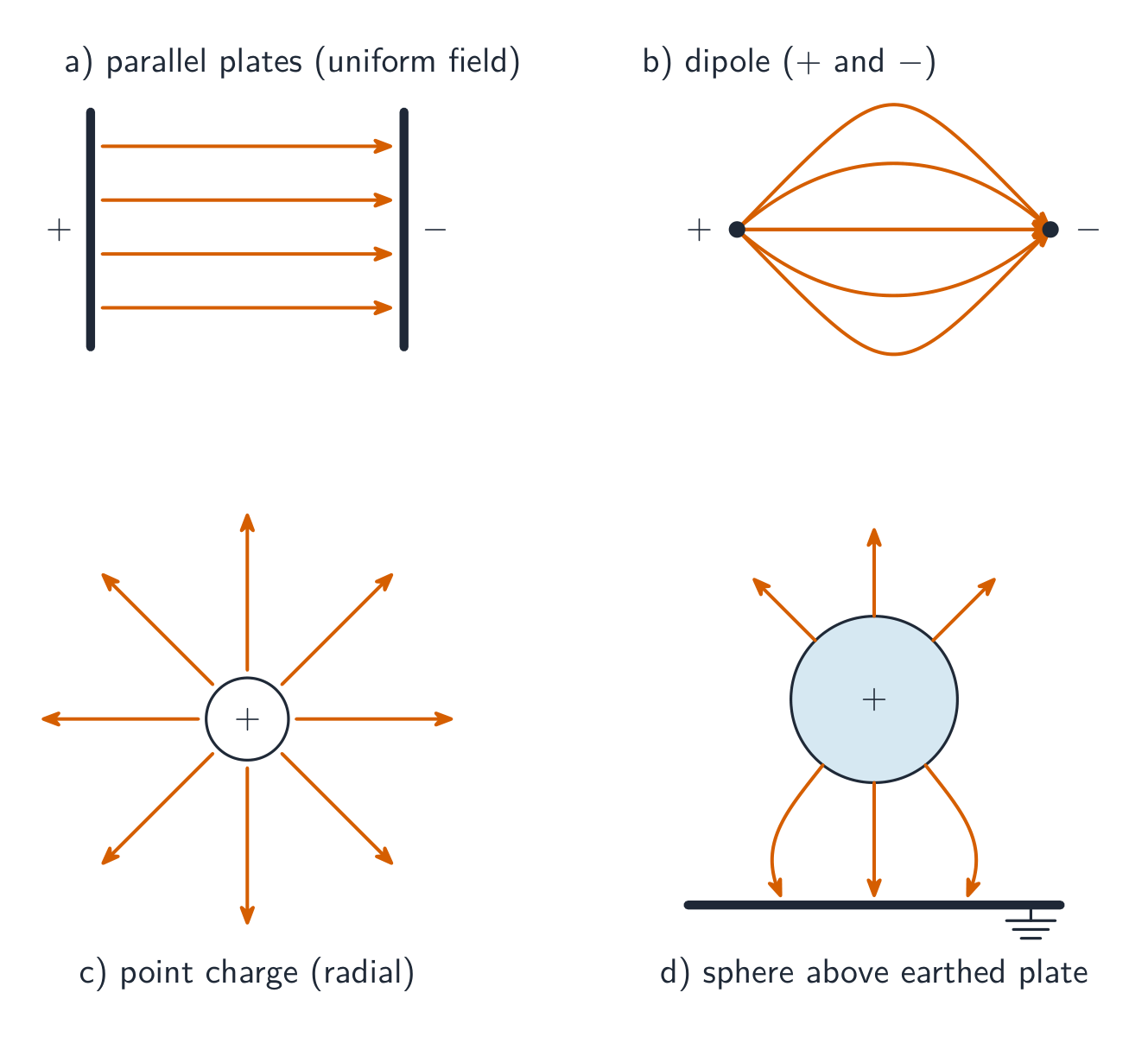
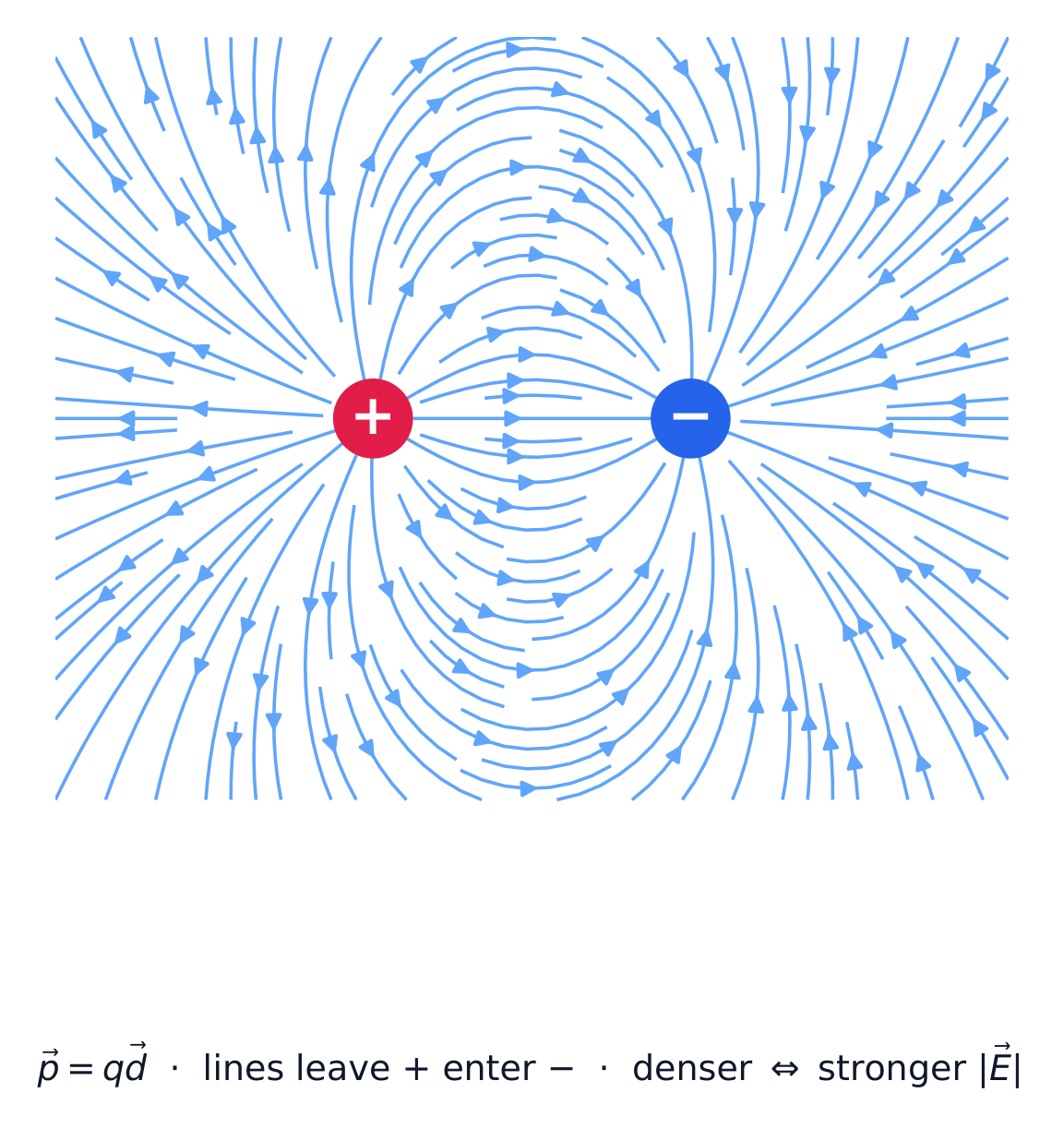
- 8.1.A.3 The direction of the electrostatic force depends on the signs of the charges of the interacting objects and is along the line of separation between the objects.
- 8.1.A.3.i Two objects with charges of the same sign exert repulsive forces on each other.
- 8.1.A.3.ii Two objects with charges of opposite signs exert attractive forces on each other.
- 8.1.A.4 Electric forces are responsible for some of the macroscopic properties of objects in everyday experiences. However, the large number of particle interactions that occur make it more convenient to treat everyday forces in terms of nonfundamental forces called contact forces, such as normal force, friction, and tension.
Learning Objective 8.1.B: Describe the electric and gravitational forces that result from interactions between charged objects with mass.
- 8.1.B.1 Electrostatic forces can be attractive or repulsive, while gravitational forces are always attractive.
- 8.1.B.2 For any two objects that have mass and electric charge, the magnitude of the gravitational force is usually much smaller than the magnitude of the electrostatic force.
- 8.1.B.3 Gravitational forces dominate at larger scales even though they are weaker than electrostatic forces, because systems at large scales tend to be electrically neutral.
Learning Objective 8.1.C: Describe the electric permittivity of a material or medium.
- 8.1.C.1 Electric permittivity is a measurement of the degree to which a material or medium is polarized in the presence of an electric field.
- 8.1.C.2 Electric polarization can be modeled as the induced rearrangement of electrons by an external electric field, resulting in a separation of positive and negative charges within a material or medium.
- 8.1.C.3 Free space has a constant value of electric permittivity, $\varepsilon_0$, that appears in physical relationships.
- 8.1.C.4 The permittivity of matter has a value different from that of free space that arises from the matter's composition and arrangement.
- 8.1.C.4.i In a given material, electric permittivity is determined by the ease with which electrons can change configurations within the material.
- 8.1.C.4.ii Conductors are made from electrically conducting materials in which charge carriers move easily; insulators are made from electrically nonconducting materials in which charge carriers cannot move easily.
Boundary statement: AP Physics C: Electricity & Magnetism only expects students to make calculations of the electric force between four or fewer interacting charged objects or systems. The analysis of the resulting electric force from more charges is allowed in situations of high symmetry. Note that students are expected to calculate the electric fields of charge distributions, as described in Topics 8.4 and 8.6.
Tujuan Pembelajaran 8.1.A: Jelaskan gaya listrik yang dihasilkan dari interaksi antara benda atau sistem yang bermuatan.
- 8.1.A.1 Muatan adalah sifat fundamental dari semua materi.
- 8.1.A.1.i Muatan adalah besaran skalar dan dijelaskan sebagai positif atau negatif.
- 8.1.A.1.ii Besar muatan elektron tunggal atau proton, yaitu muatan elementer $e$, dapat dianggap sebagai jumlah muatan terkecil yang tak terbagi.
- 8.1.A.1.iii Muatan elektron adalah $-e$ dan muatan proton adalah $+e$, sedangkan neutron tidak memiliki muatan listrik.
- 8.1.A.1.iv Muatan titik adalah model di mana ukuran fisik benda atau sistem bermuatan diabaikan dalam konteks situasi yang sedang dianalisis.
- 8.1.A.2 Hukum Coulomb mendeskripsikan gaya elektrostatik antara dua benda bermuatan yang sebanding langsung dengan besar masing-masing muatan dan berbanding terbalik dengan kuadrat jarak antar benda.
- Persamaan relevan: $\left| \vec{F}_E \right| = \dfrac{1}{4\pi\varepsilon_0} \dfrac{|q_1 q_2|}{r^2} = k \dfrac{|q_1 q_2|}{r^2}$
- 8.1.A.3 Arah gaya elektrostatik bergantung pada tanda muatan dari benda-benda yang berinteraksi dan berada sepanjang garis pemisah antara benda-benda tersebut.
- 8.1.A.3.i Dua benda dengan muatan yang sama tanda saling memberikan gaya tolak-menolak.
- 8.1.A.3.ii Dua benda dengan muatan yang berbeda tanda saling memberikan gaya tarik-menarik.
- 8.1.A.4 Gaya listrik bertanggung jawab atas beberapa sifat makroskopis objek dalam pengalaman sehari-hari. Namun, karena banyaknya interaksi partikel yang terjadi, lebih nyaman untuk memperlakukan gaya-gaya sehari-hari dalam istilah gaya non-fundamental yang disebut gaya kontak, seperti gaya normal, gesekan, dan tegangan.
Tujuan Pembelajaran 8.1.B: Jelaskan gaya listrik dan gravitasi yang dihasilkan dari interaksi antara benda bermuatan dengan massa.
- 8.1.B.1 Gaya elektrostatik bisa bersifat tarik-menarik atau tolak-menolak, sementara gaya gravitasi selalu tarik-menarik.
- 8.1.B.2 Untuk setiap dua benda yang memiliki massa dan muatan listrik, besar gaya gravitasi biasanya jauh lebih kecil daripada besar gaya elektrostatik.
- 8.1.B.3 Gaya gravitasi mendominasi pada skala yang lebih besar meskipun lebih lemah daripada gaya elektrostatik, karena sistem pada skala besar cenderung netral secara listrik.
Tujuan Pembelajaran 8.1.C: Jelaskan permitivitas listrik suatu material atau medium.
- 8.1.C.1 Permitivitas listrik adalah pengukuran seberapa jauh suatu material atau medium terpolarisasi ketika berada dalam medan listrik.
- 8.1.C.2 Polaritas listrik dapat dimodelkan sebagai penataan ulang elektron yang diinduksi oleh medan listrik eksternal, yang menghasilkan pemisahan muatan positif dan negatif di dalam material atau medium.
- 8.1.C.3 Ruang hampa memiliki nilai konstan permitivitas listrik, $\varepsilon_0$, yang muncul dalam hubungan fisika.
- 8.1.C.4 Permitivitas materi memiliki nilai berbeda dari ruang hampa yang timbul dari komposisi dan susunan materinya.
- 8.1.C.4.i Dalam suatu material tertentu, permitivitas listrik ditentukan oleh kemudahan elektron mengubah konfigurasi di dalam material tersebut.
- 8.1.C.4.ii Konduktor dibuat dari bahan yang menghantarkan listrik di mana pembawa muatan bergerak dengan mudah; isolator dibuat dari bahan yang tidak menghantarkan listrik di mana pembawa muatan tidak dapat bergerak dengan mudah.
Pernyataan batas: AP Physics C: Listrik & Magnetisme hanya mengharapkan siswa melakukan perhitungan gaya listrik antara empat atau kurang objek/sistem bermuatan yang berinteraksi. Analisis gaya listrik yang dihasilkan dari lebih banyak muatan diperbolehkan dalam situasi simetri tinggi. Perhatikan bahwa siswa diharapkan menghitung medan listrik dari distribusi muatan, sebagaimana dijelaskan dalam Topik 8.4 dan 8.6.

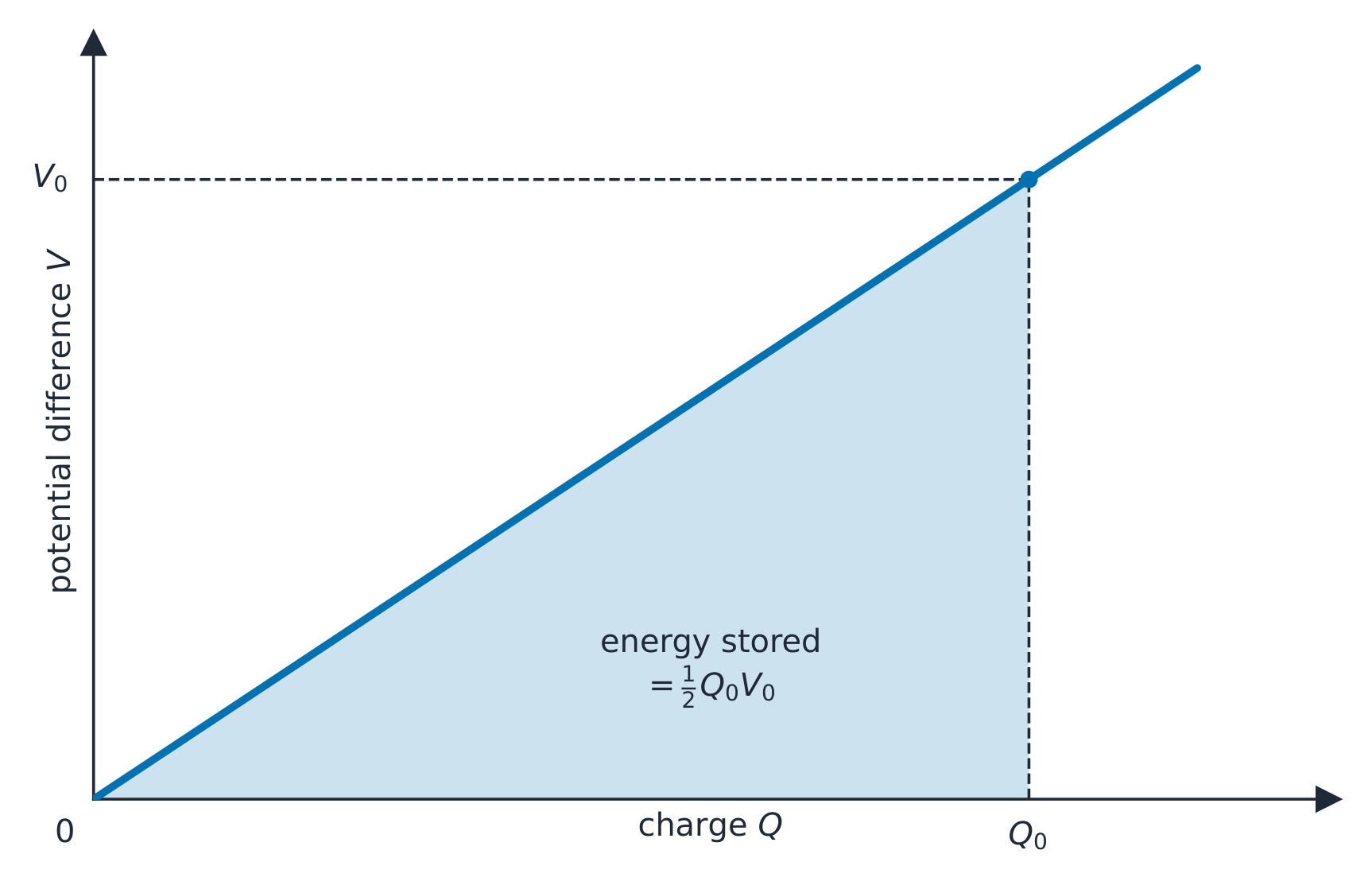 *Energi tersimpan dalam kapasitor adalah area di bawah garis muatan-tegangannya
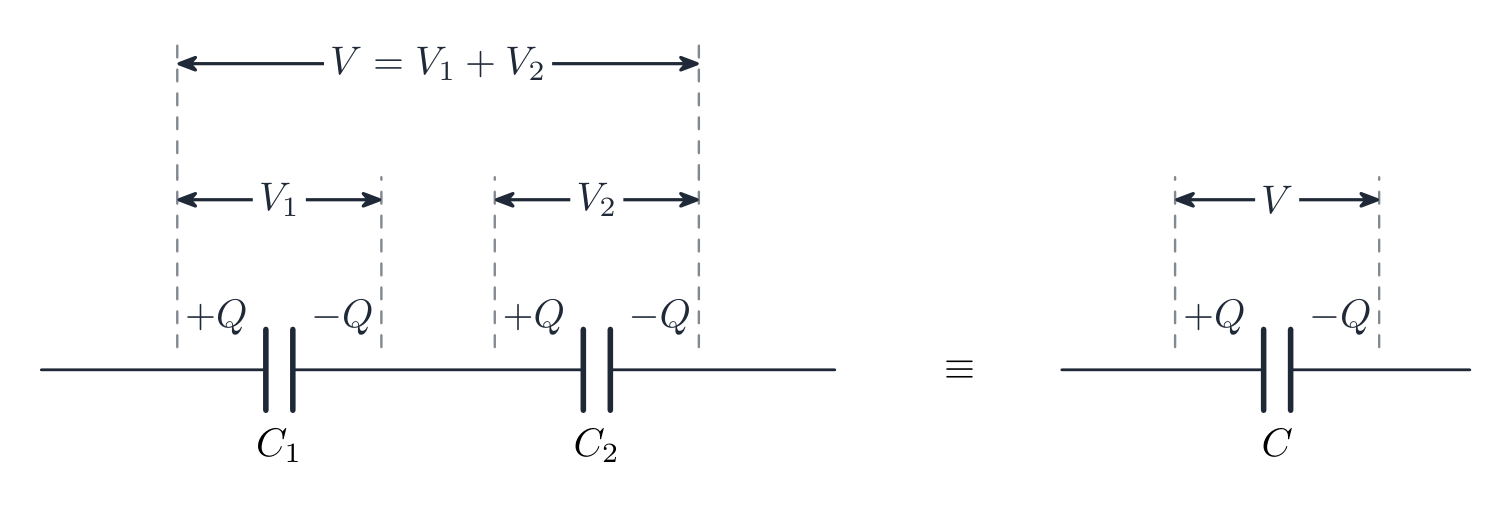 *Kapasitor dalam seri membawa muatan yang sama, dan beda potensialnya bertambah
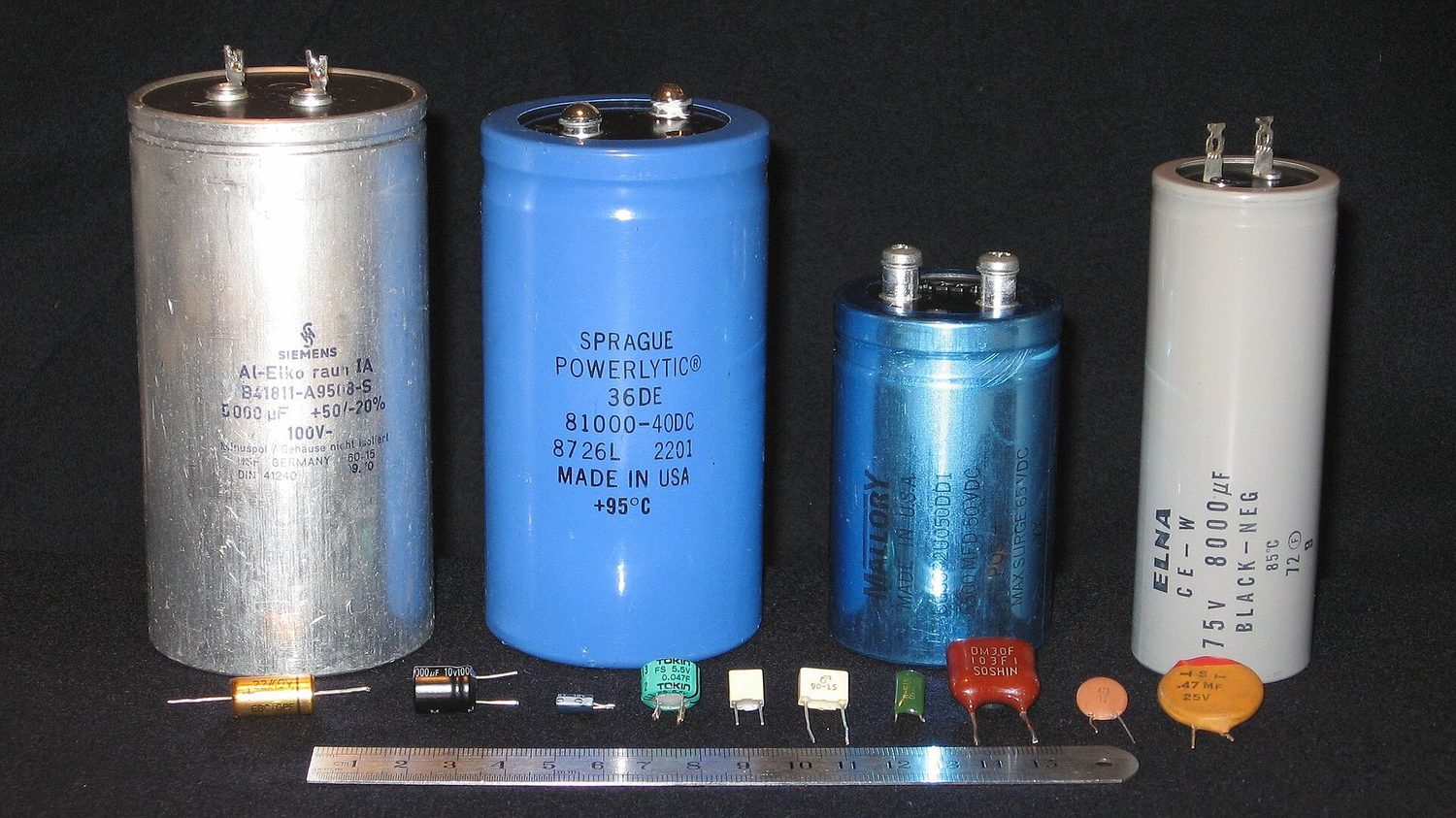 *Berbagai kapasitor: perangkat yang menyimpan muatan dan energi dalam medan listrik antar konduktor
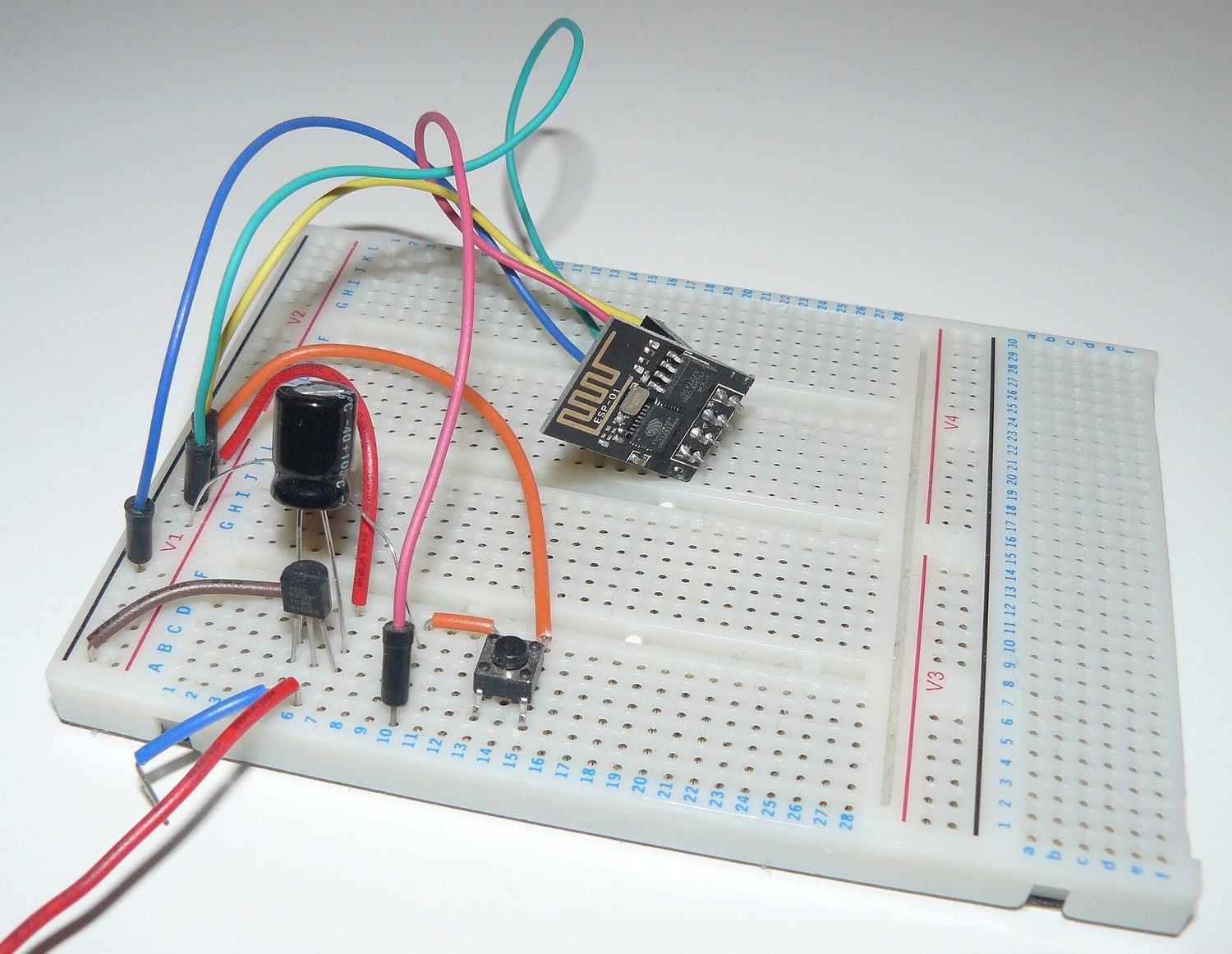
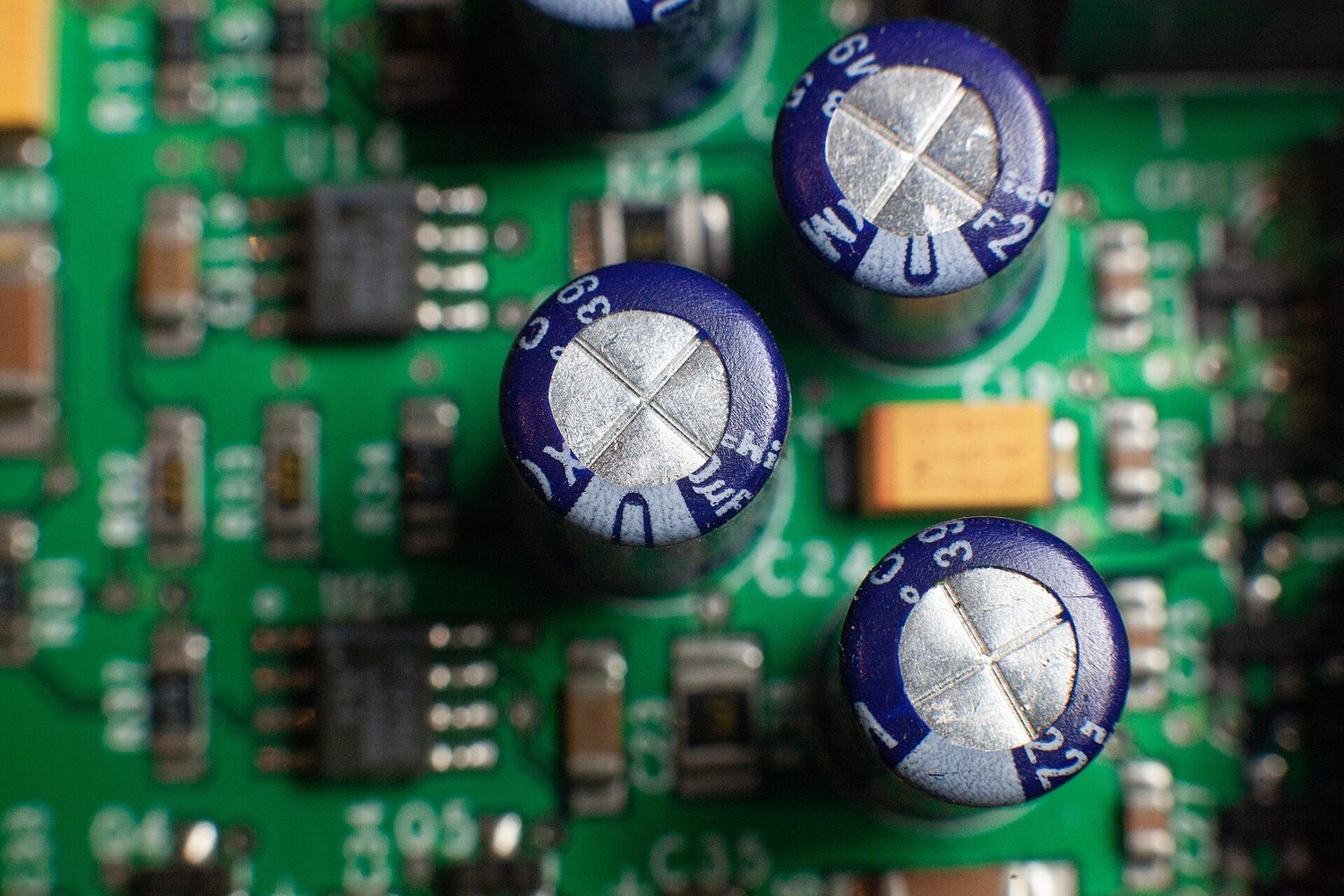 *Kapasitor elektrolitik pada papan sirkuit: kapasitansi menyimpan energi sebagai U = ½CV²