English
4.1 Contextualizing the Scientific Revolution and the Enlightenment
Learning Objective Unit 4.A: Explain the context in which the Scientific Revolution and Enlightenment developed in Europe.
- KC-1.1 The rediscovery of works from ancient Greece and Rome and observation of the natural world changed many Europeans’ view of their world.
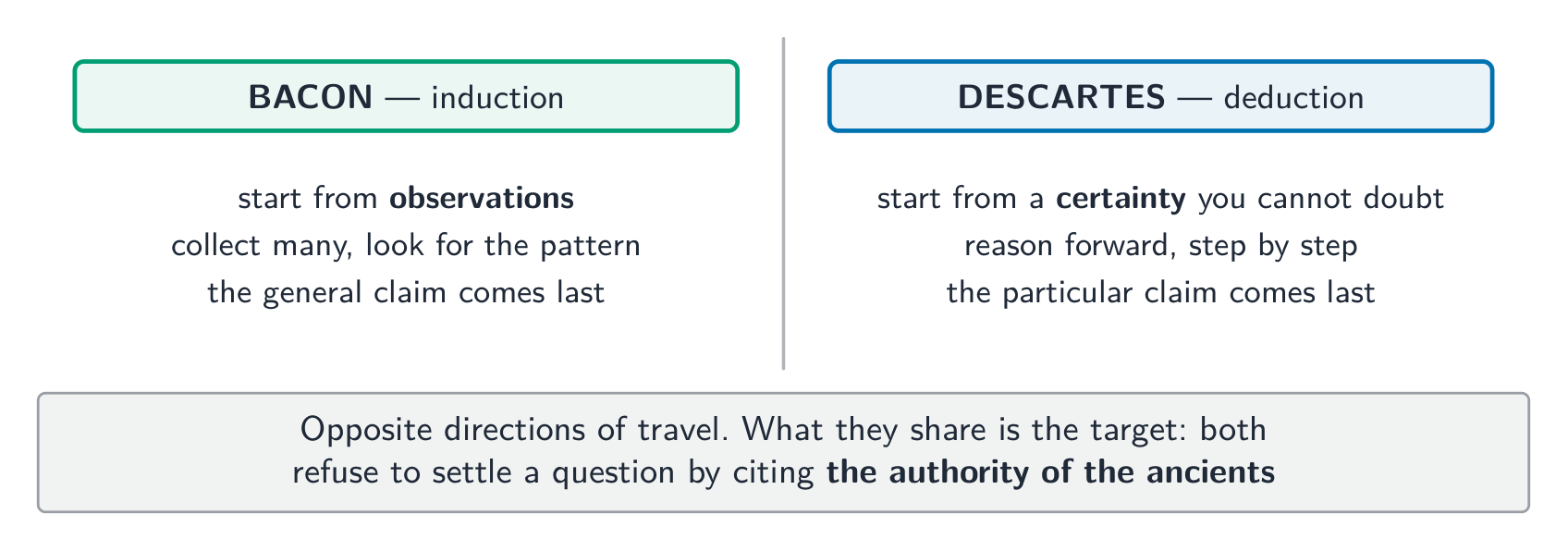
- KC-1.1.IV New ideas in science based on observation, experimentation, and mathematics challenged classical views of the cosmos, nature, and the human body, although existing traditions of knowledge and the universe continued.
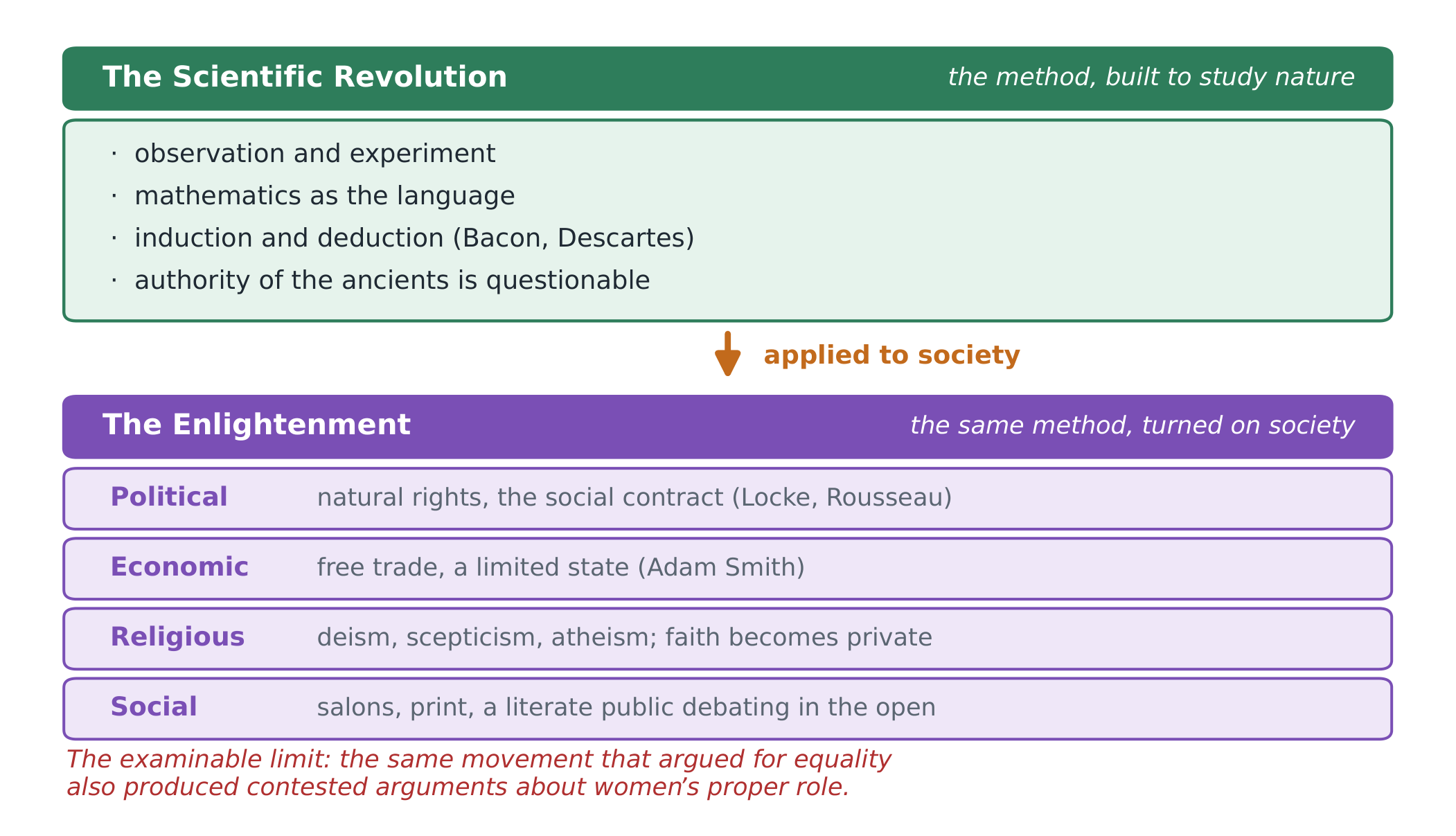
- KC-2.3 The spread of Scientific Revolution concepts and practices and the Enlightenment’s application of these concepts and practices to political, social, and ethical issues led to an increased but not unchallenged emphasis on reason in European culture.
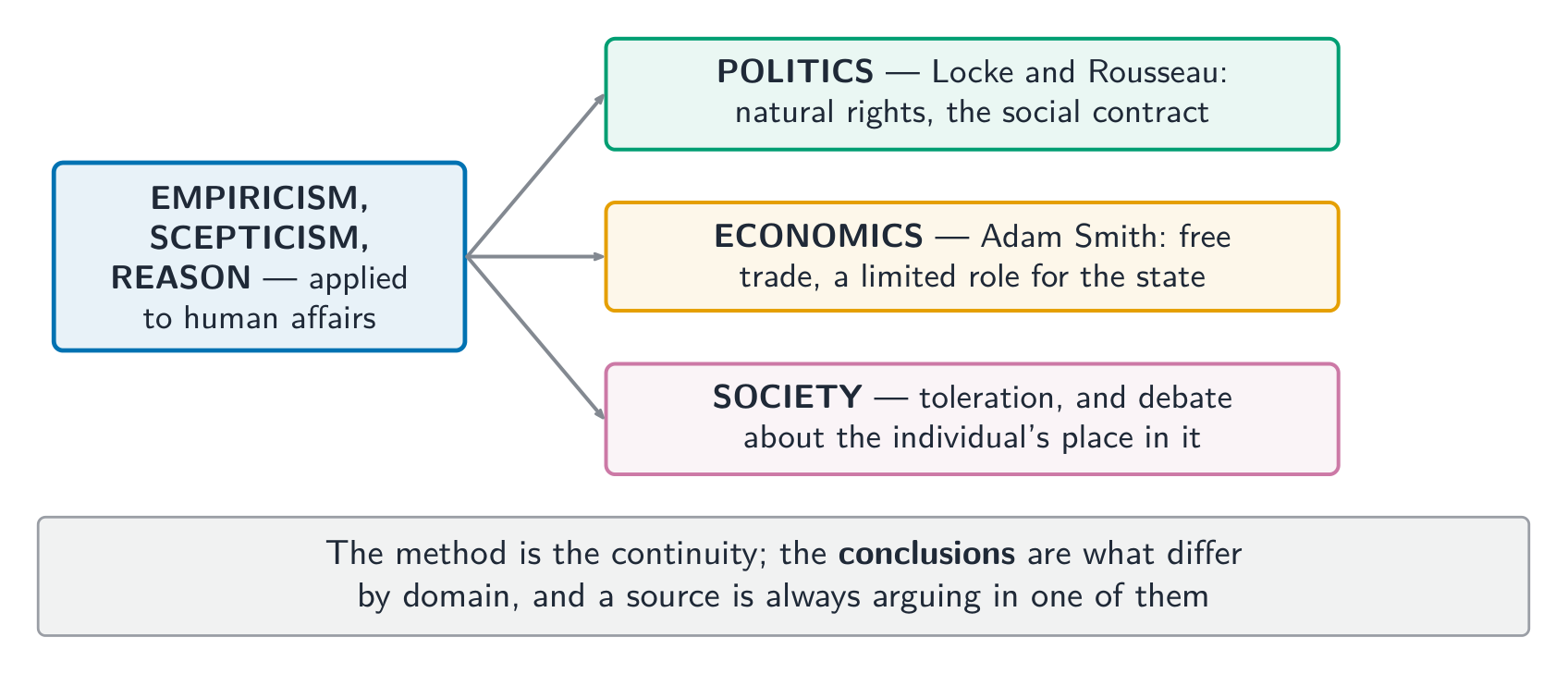
- KC-2.3.I Enlightenment thought, which focused on concepts such as empiricism, skepticism, human reason, rationalism, and classical sources of knowledge, challenged the prevailing patterns of thought with respect to social order, institutions of government, and the role of faith.
- KC-2.3.II New public venues and print media popularized Enlightenment ideas.
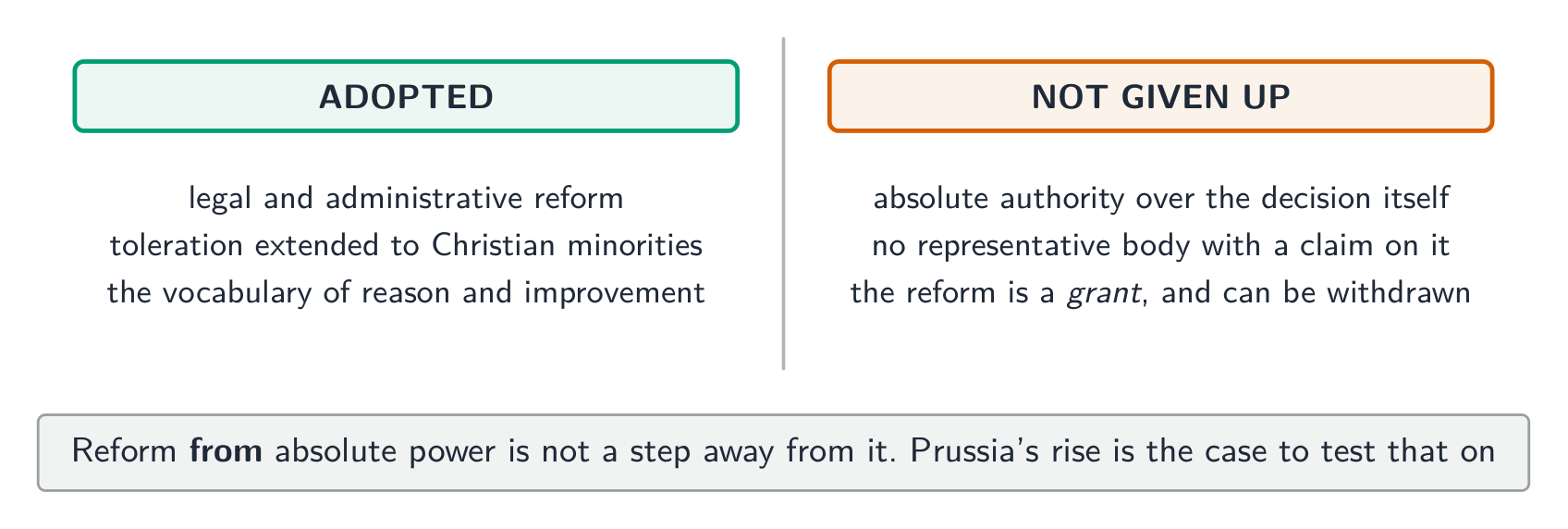
- KC-2.3.III New political and economic theories challenged absolutism and mercantilism.
- KC-2.3.IV During the Enlightenment, the rational analysis of religious practices led to natural religion and the demand for religious toleration.
- KC-2.4 The experiences of everyday life were shaped by demographic, environmental, medical, and technological changes.
- KC-2.4.III By the 18th century, family and private life reflected new demographic patterns and the effects of the commercial revolution.
Bahasa Indonesia
4.1 Mengkontekstualisasikan Revolusi Ilmiah dan Pencerahan
Tujuan Pembelajaran Unit 4.A: Jelaskan konteks di mana Revolusi Ilmiah dan Pencerahan berkembang di Eropa.
- KC-1.1 Penemuan kembali karya-karya Yunani dan Roma kuno serta pengamatan alam mengubah pandangan banyak orang Eropa tentang dunia mereka.
- KC-1.1.IV Ide-ide baru dalam sains berdasarkan observasi, eksperimen, dan matematika menantang pandangan klasik tentang semesta, alam, dan tubuh manusia, meskipun tradisi pengetahuan dan alam semesta yang ada tetap berlanjut.
- KC-2.3 Penyebaran konsep dan praktik Revolusi Ilmiah serta penerapan Pencerahan terhadap isu-isu politik, sosial, dan etika menyebabkan peningkatan penekanan pada akal budi dalam budaya Eropa, namun tidak tanpa tantangan.
- KC-2.3.I Pemikiran Pencerahan, yang berfokus pada konsep seperti empirisme, skeptisisme, akal budi manusia, rasionalisme, dan sumber pengetahuan klasik, menantang pola pikir yang berlaku terkait tatanan sosial, institusi pemerintah, dan peran iman.
- KC-2.3.II Tempat-tempat publik baru dan media cetak mempopulerkan ide-ide Pencerahan.
- KC-2.3.III Teori-teori politik dan ekonomi baru menantang absolutisme dan merkantilisme.
- KC-2.3.IV Selama masa Pencerahan, analisis rasional terhadap praktik keagamaan mengarah pada agama alami dan tuntutan toleransi beragama.
- KC-2.4 Pengalaman kehidupan sehari-hari dibentuk oleh perubahan demografis, lingkungan, medis, dan teknologi.
- KC-2.4.III Pada abad ke-18, keluarga dan kehidupan pribadi mencerminkan pola demografis baru dan efek dari revolusi komersial.