התבוננו בתוך מפעל רכבים. אותו רכב, שוב ושוב, מאות כל יום, כל אחד בדיוק כמו הקודם. מישהו החליט על הכל: איך לבנות אותו, מה…
English narration · English + 中文 subtitles burned in · קריאת קול באנגלית · תרגום אנגלי + סינית שרוף בתוך הסרטון
4.1
Methods of production · שיטות ייצור
Syllabus · סיילבוס
English
describe the methods of production: job, batch and flow production, and their advantages/disadvantages
explain productivity and how it can be increased
explain lean production and just-in-time (JIT) inventory control and the management of inventory
explain how technology has changed production
עברית
תיאור שיטות הייצור: ייצור מלאכת, ייצור בארגז וייצור זרימה, והיתרונות/חסרונות שלהן
הסבר על פרודוקטיביות וכיצד ניתן לשיפורה
הסבר על ייצור רזה ובקרת מלאי Just-in-Time (JIT) וניהול מלאי
הסבר כיצד טכנולוגיה שינתה את הייצור
Source: Cambridge International syllabus · מקור: הסיילבוס הבינלאומי של קמבריד'ג'
English
Stock control: the sawtooth chart
Production 生产 means turning materials and labour 劳动力 into finished goods and services 服务. There are three main methods.
Method
What it is
Good for
Drawback
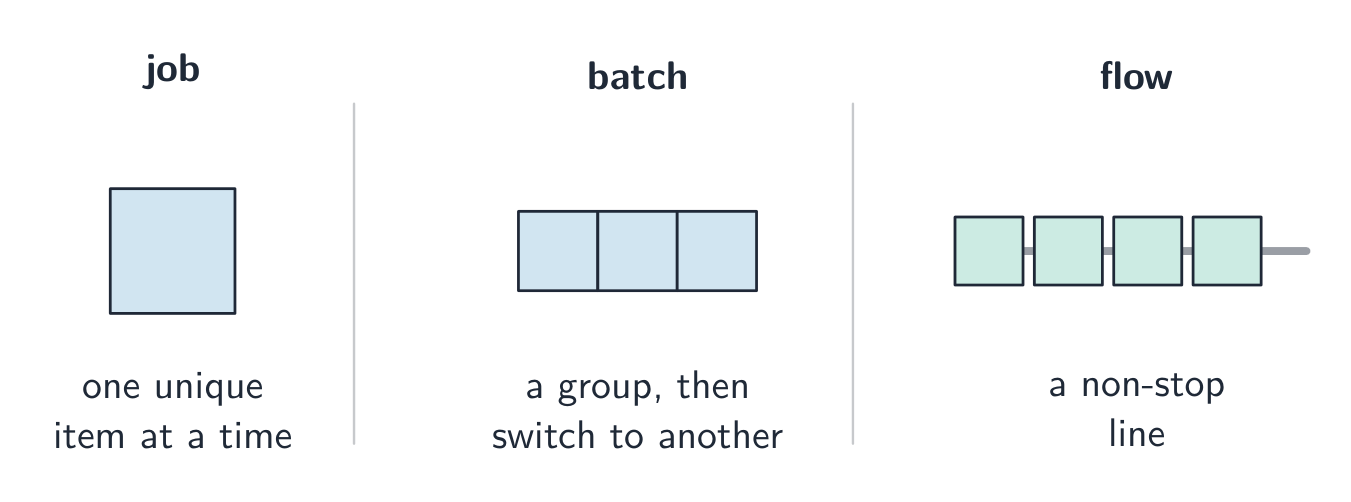
job production 单件生产
making one item at a time, to order
special, one-off items: a wedding cake, a ship
slow and costly per item
batch production 批量生产
making a group of the same item, then switching to another group
bakeries, clothes in different sizes
machines stand idle while switching
flow production 流水线生产
making goods non-stop on a moving line
mass-made goods: cars, drinks
costly to set up; work can be boring
Productivity
Productivity 生产率 measures how much each worker or machine produces in a set time. Higher productivity lowers the cost per item. A business can raise productivity by:
training workers,
using better machines and technology 技术,
improving motivation 激励,
organising the work better.
Lean production and just-in-time
Lean production 精益生产 means cutting all waste — wasted time, materials, space and effort — while keeping quality.
One key method is just-in-time 准时制 (JIT). With JIT, materials arrive just as they are needed, and finished goods are sold quickly, so the business holds very little inventory 库存 (its stock of materials and goods). This saves storage cost, but one late delivery can stop production. Good management of inventory keeps enough stock to meet demand, but not so much that money is tied up or goods go out of date.
Technology in production
Technology has changed production. Automation 自动化 (machines and robots doing tasks), computer design and online ordering all make production faster, cheaper and more exact. But machines cost a lot to buy and can replace workers' jobs.
עברית
בקרת מלאי: הגרף השן-מסור
ייצור הוא ההפיכה של חומרים ועבודה למוצרים סופיים ושירותים. ישנם שלושה שיטות עיקריות.
קו הרכבה של מכונית: ייצור של מוצרים זהים רבים בקו זז
שיטה
מהי
מתאימה ל-
חיסרון
ייצור בפרט
ייצור פריט אחד בכל פעם, בהתאמה להזמנה
פריטים מיוחדים וחד-פעמיים: עוגת כלה, אונייה
איטי ומדיר על כל פריט
ייצור בכמויות (בצ'יקלים)
ייצור קבוצה של אותו פריט, ולאחר מכן מעבר לקבוצה אחרת
מאפיות, בגדים במידות שונות
המכונות נשארות עומדות בזמן ההחלפה
ייצור זרימה
ייצור סחורות ברציפות על קו זורם
סחורות מסוגל-גוף: מכוניות, משקאות
דורש השקעה גבוהה להתקנה; העבודה עשויה להיות משעממת
שלוש שיטות הייצור
פרודוקטיביות
פרודוקטיביותמדדת כמה מייצר כל עובד או מכונה בזמן נתון. פרודוקטיביות גבוהה מורידה את העלות לפריט. עסק יכול להגביר את הפרודוקטיביות על ידי:
הכשרת עובדים,
שימוש במכונות טובות יותר וב-טכנולוגיה,
שיפור ה-מוטיבציה,
ארגון העבודה בצורה טובה יותר.
פרודוקטיביות היא תפוקה לכל עובד בזמן נתון; הגבהתה מורידה את העלות לפריט
ייצור רזה וJust-in-Time
ייצור רזהמשמעו החסרת כל ביזבוז — בזבוז של זמן, חומרים, מקום ומאמץ — תוך שמירה על איכות.
שיטה מרכזית אחת היא Just-in-Time (JIT). עם JIT, חומרים מגיעים בדיוק בזמן שהם נדרשים, והמוצרים המוגמרים נמכרים במהירות, כך שהעסק מחזיק כמות מלאי (מלאי החומרים והסחורות) נמוכה מאוד. הדבר חוסך בעלויות אחסון, אך משלוח מאוחר אחד יכול לעצור את הייצור. ניהול נכון של המלאי שומר על מלאי מספיק כדי לענות על הביקוש, אך לא כזה גדול מדי שיקפיץ מזומנים או יגרום לסחורה להפוך למיושנת.
Just-in-Time מחזיק מעט מלאי עם משלוחים תכופים; Just-in-Case מחזיק מלאי בסיכון
טכנולוגיה בייצור
הטכנולוגיה שינתה את הייצור. אוטומציה (מכונות ורובוטים המבצעים משימות), עיצוב מחשבתי והזמנות אונליין הופכים את הייצור מהיר, זול מדויק יותר. אך מכונות עולות הרבה לקנייה ועלולות להחליף את תפקידי העובדים.
אוטומציה: רובוטים תעשייתיים מבצעים ריתוך והרכבה של גופי רכב — מהר ובדיוק גבוה יותר מאשר בעבודת יד, אך הם עולים הרבה ומחליפים חלק מעובדים
Explore · חקור
Methods of production · שיטות ייצור
A business picks job, batch or flow production to suit its product and order size. · עסק בוחר בייצור עבודה, סדרות או זרימה בהתאם למוצר ולגודל ההזמנה שלו.
Worked example. A factory has fixed costs of £8,000 and variable costs of £2 per unit, and makes 1,000 units. Find the total cost and the average cost per unit.
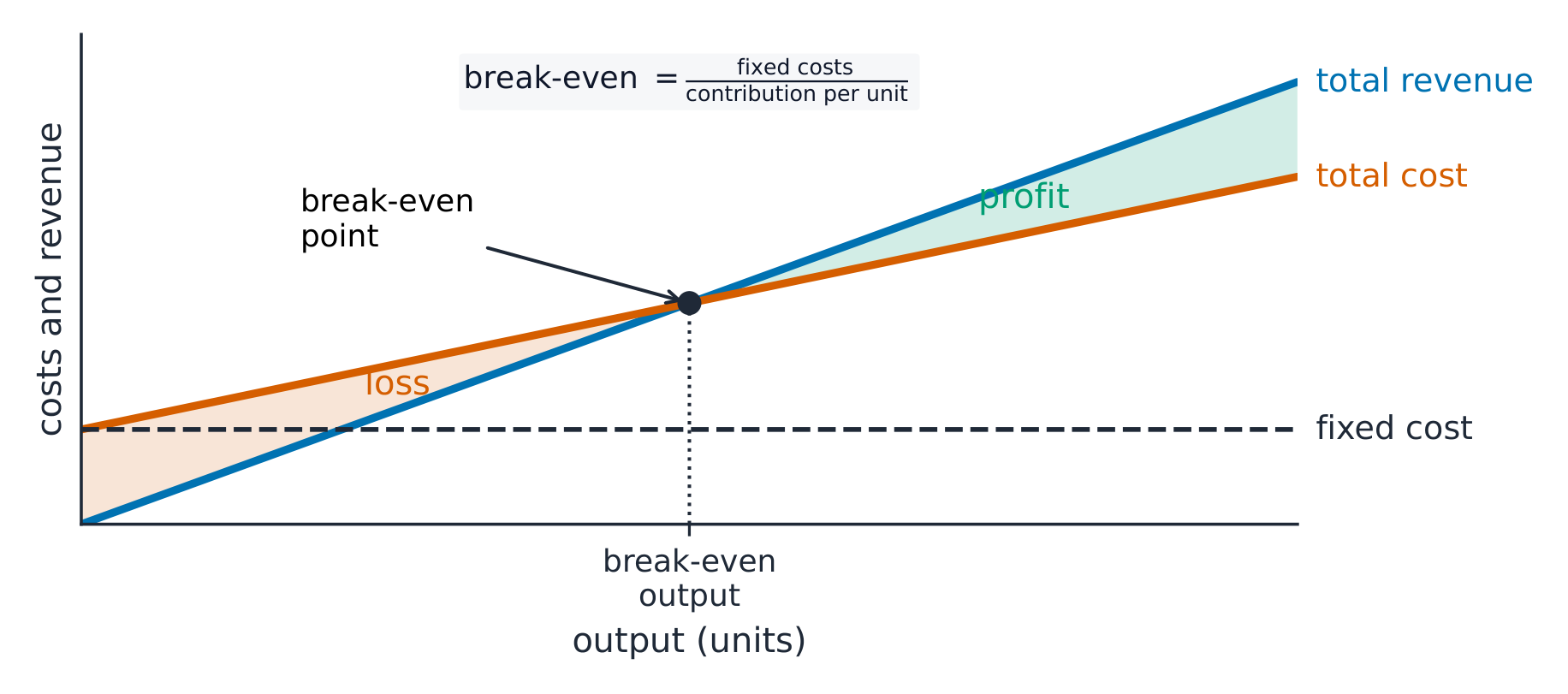
The break-even 盈亏平衡 point is the level of output where total revenue exactly equals total cost: the business makes no profit and no loss. Below it the business makes a loss; above it, a profit.
Each item sold gives an amount towards covering the fixed costs. This amount is the selling price minus the variable cost of one item (sometimes called the contribution 贡献 per unit).
$$\text{break-even output} = \frac{\text{fixed costs}}{\text{selling price per unit} - \text{variable cost per unit}}$$
A break-even chart 盈亏平衡图 plots total cost and total revenue against output. The two lines cross at the break-even point 盈亏平衡点.
The margin of safety 安全边际 is how far the actual output is above the break-even output.
$$\text{margin of safety} = \text{actual output} - \text{break-even output}$$
Worked example. A product sells for £15 with a variable cost of £5 per unit, and the firm's fixed costs are £8,000. Find the break-even output, and the margin of safety if the firm actually makes 1,200 units.
The contribution per unit is $\text{\pounds} 15 - \text{\pounds} 5 = \text{\pounds} 10$, so
A large margin of safety is safer, because sales can fall a long way before the business makes a loss.
Limits of break-even analysis. It assumes that all output is sold, and that the selling price and the costs stay the same at every level of output. In real life these often change, so break-even is only a guide.
עברית
חסכוניות בקנה מידה: עלות ממוצעת יורדתניתוח נקודת השווי, נבנה שורה בשורה
סוגי עלויות
לעסק ישנם סוגים שונים של עלויות.
עלויות קבועות אינן משתנות בהתאם לייצור — שכירות, משכורות, ביטוח. אתה משלם אותן גם אם אינך מייצר כלום.
עלויות משתנות משתנות בהתאם לייצור — חומרי גלם ותשלום עבור כל פריט המיוצר. ייצור גדול יותר אומר עלויות משתנות גדולות יותר.
סה"כ עלויות הוא סכום העלויות הקבועות והמשתנות.
עלות ממוצעת היא הסה"כ עלויות מחולק במספר הפריטים המיוצרים.
נקודת השוויון היא רמת הייצור בה ההכנסה הכוללת שווה בדיוק לסה"כ העלויות: לעסק אין רווח ואין הפסד. מתחת לה, העסק מפיק הפסד; מעליה, רווח.
כל פריט שנמכר תורם בסכום מסוים לכיסוי העלויות הקבועות. סכום זה הוא מחיר המכירה מינוס העלות המשתנה של פריט אחד (לעיתים קרובות נקרא תרומה ליחידה).
$$\text{break-even output} = \frac{\text{fixed costs}}{\text{selling price per unit} - \text{variable cost per unit}}$$
גרף נקודת השוויה מציג את העלות הכוללת וההכנסה הכוללת כנגד הייצור. שתי הקווים נחתכים בנקודת השוויה.
נקודת השווי היא הנקודה שבה ההכנסה הכוללת שווה לעלות הכוללת — משמאל לה יש פסד, מימין לה יש רווח
שולי הבטיחות הם המרחק בין הייצור בפועל לבין ייצור נקודת השוויה.
$$\text{margin of safety} = \text{actual output} - \text{break-even output}$$
דוגמה מוצגת. מוצר נמכר ב-£15 עם עלות משתנה של £5 ליחידה, ועלויות הקבועות של החברה הן £8,000. מצאו את ייצור נקודת השוויה, ושולי הבטיחות אם החברה מייצרת למעשה 1,200 יחידות.
התרומה ליחידה היא $\text{\pounds} 15 - \text{\pounds} 5 = \text{\pounds} 10$, לכן
שולי בטיחות גדולים הם בטוחים יותר, מכיוון שהמכירות יכולות לצנוח רבות לפני שהעסק יופסד.
גבולות ניתוח נקודת השוויה. הוא מניח שכל הייצור נמכר, וכי מחיר המכירה והעלויות נשארים זהים בכל רמת ייצור. במציאות הדברים משתנים לעיתים קרובות, ולכן ניתוח נקודת השוויה הוא רק מדריך.
Explore · חקור
Break-even · נקודת שיווי משקל (Break-even)
Break-even is where total revenue crosses total cost. · נקודת איזון היא הרגע שבו ההכנסה הכוללת חוצה את העלות הכוללת.
explain the factors affecting the location decision of a manufacturing business and a service business
explain the factors a business considers when locating in another country and the role of legal controls
עברית
להסביר את הגורמים המשפיעים על החלטת המיקום של עסק תעשייתי ועסק שירותי
להסביר את הגורמים שעסק שוקל במהלך בחירת מיקום בחו"ל ואת התפקיד של בקרות משפטיות
Source: Cambridge International syllabus · מקור: הסיילבוס הבינלאומי של קמבריד'ג'
English
Locating a business
Where a business sits affects its costs and its sales. A manufacturing 制造业 business (one that makes goods) looks at:
nearness to raw materials 原材料, because heavy or bulky materials cost a lot to move,
nearness to customers and the market 市场,
the cost and size of the land,
a supply of suitable labour,
good transport links,
government grants offered in some areas.
A service business (one that sells services, such as a shop or a hair salon) looks more at being close to customers, passing foot traffic, nearby shops, and the rent.
Locating in another country
A business may produce or sell abroad in order to reach new customers and bigger markets, pay lower wages or rent, get nearer to raw materials, or avoid tariffs 关税 (taxes on imports) by making goods inside the country. But it must then deal with different laws, languages and customs, and follow the legal controls 法律管制 of both countries.
עברית
מיקום עסק — כמו מרכז ההפצה הזה — משפיע על הוצאותיו ועל השירותים שמספק.
מיקום עסק
מיקום עסק משפיע על הוצאותיו ועל מכירותיו. עסק ייצור (העוסק בייצור מוצרים) לוקח בחשבון:
קרבה ל-חומרי גלם, כיוון שלחומרים כבדים או נפחיים ישנה עלות הובלה גבוהה,
קרבה ללקוחות ול-שוק,
עלות וגודל הקרקע,
אספקת כוח עבודה מתאים,
קשרי תחבורה טובים,
מענקים ממשלתיים המוצעים באזורים מסוימים.
עסק שירותים (העוסק במכירת שירותים, כמו חנות או סלון יופי) מתמקד יותר בקרבה ללקוחות, תנועת הולכים רגלי, חנויות בסמוך ותשלום השכירות.
מיקום במדינה אחרת
עסק עשוי לייצר או למכור בחו"ל כדי להגיע ללקוחות חדשים ולשווקים גדולים יותר, לשלם שכר או שכירות נמוכים יותר, להתקרیب לחומרי גלם, או להימנע ממכסים (מיסים על יבוא) על ידי ייצור המוצרים בתוך המדינה. אך הוא צריך להתמודד עם חוקים, שפות ומנהגים שונים, ולפעול בהתאם לבקרה משפטית בשתי המדינות.
Explore · חקור
Location factor lab · מעבדת גורמי מיקום
Classify why a business chooses one site over another. · סווג מדוע עסק בוחר באתר אחד על פני אחר.
Match the production methods: job (one-off items to order), batch (a group, then switch to another), flow (non-stop mass production on a line).
Learn the formulas: total cost = fixed + variable; average cost = total cost ÷ output; total revenue = price × quantity; profit = total revenue − total cost.
Break-even output = fixed costs ÷ (selling price − variable cost per unit). How far actual output is above break-even is the margin of safety.
Break-even analysis assumes everything made is sold at one fixed price and cost, so it is only a guide.
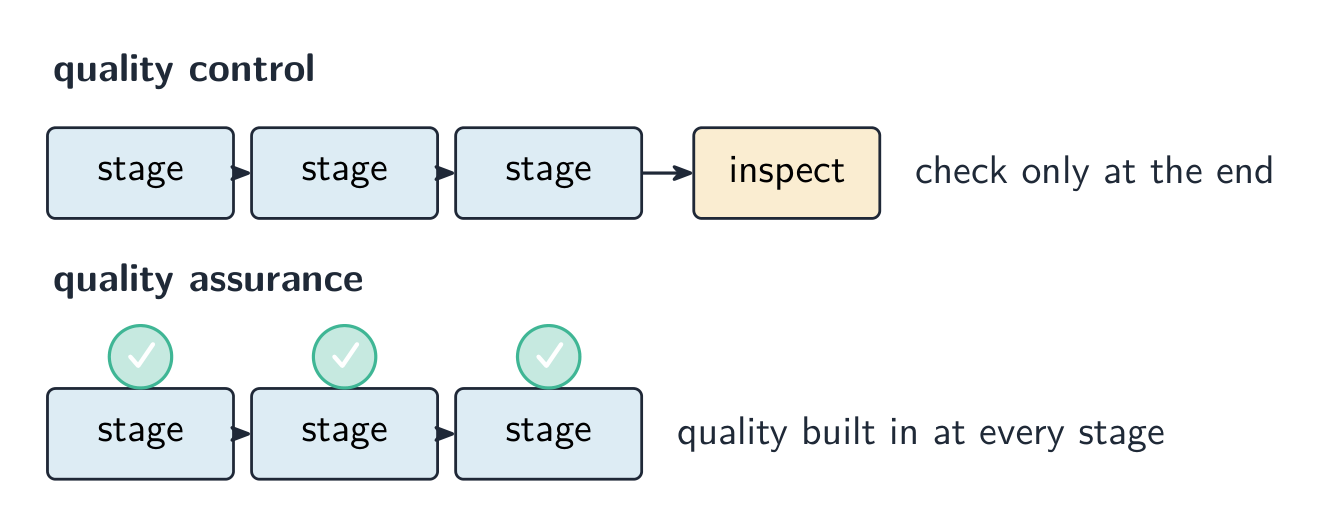
Quality control checks finished goods at the end; quality assurance builds quality in at every stage.
עברית
התאמת שיטות הייצור: עבודת ארגז (פריטים יחידים לפי הזמנה), שיטת סדרות (סדרה אחת ואז מעבר לסדרה אחרת), ייצור זורם (ייצור המוני רציף בקו).
לימוד הנוסחאות: העלות הכוללת = קבועה + משתנה; העלות הממוצעת = העלות הכוללת ÷ תפוקה; ההכנסה הכוללת = מחיר × כמות; הרווח = הכנסה כוללת − עלות כוללת.
תפוקת נקודת איזון = עלות קבועה ÷ (מחיר מכירה − עלות משתנה ליחידה). המרחק בין תפוקה בפועל לבין נקודת האיזון הוא שולי הביטחון.
ניתוח נקודת איזון מניח שהכל מה שמיוצר נמכר במחיר ובעלות קבועים, ולכן מדובר רק במדריך.
בקרת איכות בודקת מוצרים מוגמרים בסוף התהליך; אחריות לאיכות בונה את האיכות בכל שלב.
Interactive lessons on this topic · שיעורים אינטראקטיביים בנושא זה
Work through it step by step, with instant-check exercises. · לעבור על הדברים צעד אחר צעד, עם תרגילים לבדיקה מיידית.
Pick one and the site follows you — notes, papers, videos and practice all open on it. · בחרו נושא אחד והאתר יעקוב אחריו — הערות, מסמכים, וידאו ותרגולים פתוחים בו.
Type to search notes, lessons, code, vocabulary and past-paper questions across every subject. · הקלד כדי לחפש הערות, שיעורים, קוד, אוצר מילים ושאלות מבחנים בכל הנושאים.