- explain the role of marketing: identifying and satisfying customer needs, maintaining/increasing sales and market share, building customer loyalty
- explain why customers are important and the costs of losing them
- distinguish niche and mass markets and explain market segmentation and its benefits
Marketing
IGCSE Business Studies · Topic 3
 9:08
9:08
Marketing
Count the messages in this one street. Screens, posters, logos — every one of them is a business trying to reach you. But adverts are only the last step. Long…
English narration · English + 中文 subtitles burned in
3.1
What marketing does
Syllabus
Source: Cambridge International syllabus
Marketing 营销 is the work of finding out what customers 顾客 want, then making, pricing, selling and promoting products to meet those wants at a profit.
Marketing has several roles:
- find out and satisfy what customers want,
- keep and increase sales 销售额 and market share 市场份额,
- build customer loyalty 顾客忠诚度 so buyers come back again.
Why customers matter
Customers bring in the money, so keeping them is vital. Losing customers is costly: the business loses their future spending, and it must spend a lot on advertising 广告 to win new ones. It is usually far cheaper to keep a customer than to find a new one.
Niche and mass markets
A market 市场 is all the buyers and sellers of a product.
- A niche market 利基市场 is a small part of a market with special needs, for example left-handed tools.
- A mass market 大众市场 is a large market with many similar buyers, for example soft drinks.
Market segmentation
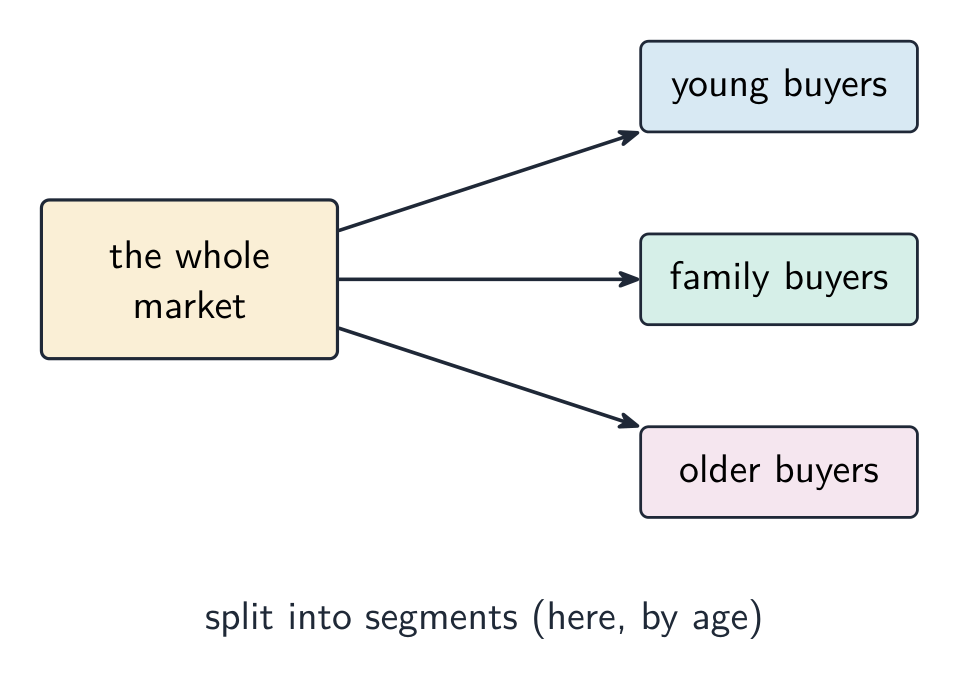
Market segmentation 市场细分 means splitting a market into groups of buyers who share something, such as age, income, gender or location. Its benefits:
- the business can design a product to fit each group,
- it can aim its advertising at the right people,
- it can spot gaps in the market.
Explore
Marketing mix lab
See which part of the marketing mix changes in each real decision.
Vocabulary
Train
| English |
|---|
| marketing/ˈmɑːkɪtɪŋ/ |
| customers/ˈkʌstəməz/ |
| sales/seɪlz/ |
| market share/ˈmɑːkɪt ʃeə/ |
| customer loyalty/ˈkʌstəmə ˈlɔɪəlti/ |
| advertising/ˈædvətaɪzɪŋ/ |
| market/ˈmɑːkɪt/ |
| niche market/niːʃ ˈmɑːkɪt/ |
| mass market/mæs ˈmɑːkɪt/ |
| market segmentation/ˈmɑːkɪt ˌseɡmənˈteɪʃn/ |
3.2
Market research

Syllabus
- distinguish primary (field) and secondary (desk) market research and their methods
- explain sampling and the need for accurate, reliable data
- present and interpret market research data (tables, charts, graphs) to support decisions
Source: Cambridge International syllabus
Market research 市场调研 is collecting information about customers, rivals and the market, to help make good decisions.
Primary and secondary research
- Primary research 一手调研 (also called field research) collects new information directly, for the first time. Methods include questionnaires 问卷, interviews, surveys and tests. It is up to date and fits the exact need, but costs time and money.
- Secondary research 二手调研 (also called desk research) uses information that already exists, such as government reports, websites and past sales records. It is cheap and quick, but may be old or may not fit the need.
Sampling and reliable data
A business cannot ask everyone, so it asks a small group, called a sample. Sampling 抽样 must be done with care. If the sample is too small or not typical, the data 数据 will not be reliable, and decisions based on it may be wrong.
Using research data
Research results are shown in tables, charts and graphs. You should be able to read them — for example, find the most popular product, or see how sales change over time — and use them to support a decision.
Explore
Market research cycle
Follow how a business turns customer data into a marketing decision.
Vocabulary
Train
| English |
|---|
| market research/ˈmɑːkɪt rɪˈsɜːtʃ/ |
| primary research/ˈpraɪməri rɪˈsɜːtʃ/ |
| questionnaires/ˌkwestʃəˈneəz/ |
| secondary research/ˈsekəndəri rɪˈsɜːtʃ/ |
| sampling/ˈsæmplɪŋ/ |
| data/ˈdeɪtə/ |
3.3
The marketing mix

Syllabus
- explain the four elements of the marketing mix (product, price, place, promotion)
- product: the product life cycle and extension strategies, branding and packaging
- price: pricing methods (cost-plus, penetration, skimming, competitive, promotional, dynamic) and influences on price
- place: channels of distribution (wholesaler, retailer, direct, e-commerce)
- promotion: advertising, sales promotion and the role of technology (internet, social media) in the marketing mix
Source: Cambridge International syllabus
The marketing mix 营销组合 is the four main choices a business makes about a product. They are often called the four Ps: product, price, place and promotion.

Product
The product 产品 must meet customers' needs. Two ideas matter here.
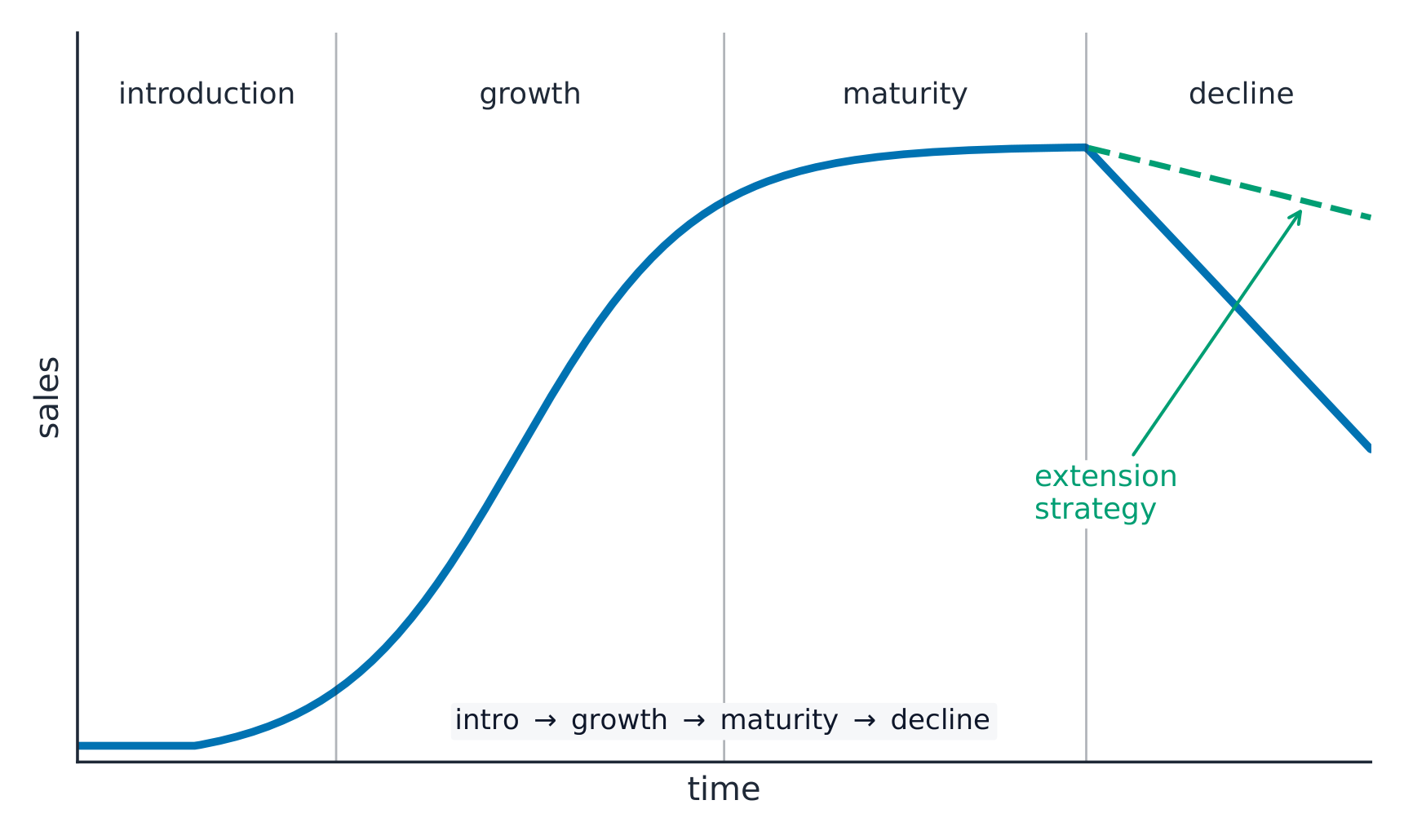
The product life cycle 产品生命周期 describes the sales of a product over time, in four stages: introduction, growth, maturity and decline. When sales begin to fall, a business can use an extension strategy 延长策略 — such as a new design, a new advert, or selling in a new market — to keep the product selling.
A strong brand 品牌 (a name, logo and image that customers recognise) and good packaging 包装 (the wrapping that protects the product and attracts buyers) both help a product sell. Building a brand is called branding.
Price
The price 价格 is what the customer pays. A business can choose from several pricing methods.
| Method | How it works |
|---|---|
| cost-plus pricing 成本加成定价 | add a fixed share of profit on top of the cost of making the item |
| penetration pricing 渗透定价 | set a low price to enter a market and win customers fast |
| price skimming 撇脂定价 | set a high price at first for a new, special product |
| competitive pricing 竞争定价 | set a price close to rivals' prices |
| promotional pricing 促销定价 | cut the price for a short time to lift sales |
| dynamic pricing 动态定价 | change the price automatically as demand changes, as airlines do |
The right price also depends on the cost of making the product, on what customers will pay, on rivals' prices, and on the product's stage in its life cycle.
Worked example. One firm launches a smartphone using technology no rival has. Another enters a crowded soft-drinks market. Which pricing method suits each, and why? The smartphone is new and special with no direct competition, so use price skimming: charge a high price at first to recover the development cost from customers who must have it, then lower it as rivals catch up. The soft drink faces many established rivals, so use penetration pricing: a low price wins customers quickly and buys market share, and it can be raised later. Match the method to the market conditions - a pricing strategy is only right or wrong relative to the competition and the product's stage in its life cycle.
Place
Place 地点 is about how and where the product is sold, so it reaches the customer at the right time. The route a product takes from maker to customer is called a channel of distribution 分销渠道.
Many channels use a wholesaler 批发商 (buys large amounts from makers and sells smaller amounts to shops) and a retailer 零售商 (a shop that sells to the final customer). A business can also sell directly 直销 to customers, or online through e-commerce 电子商务.

Promotion
Promotion 推广 means telling customers about a product and persuading them to buy it. It includes:
- advertising — paid messages on TV, online, on posters and so on,
- sales promotion 促销 — short-term offers like discounts, free gifts, or "buy one get one free".
Technology now plays a big part. The internet 互联网 and social media 社交媒体 let a business reach many people cheaply, target the right customers, and sell all over the world.
Explore
The marketing mix (4 Ps)
The marketing mix is the four decisions a business blends to sell a product well.
Vocabulary
Train
| English |
|---|
| marketing mix/ˈmɑːkɪtɪŋ mɪks/ |
| product/ˈprɒdʌkt/ |
| product life cycle/ˈprɒdʌkt laɪf ˈsaɪkl/ |
| extension strategy/ekˈstenʃn ˈstrætədʒi/ |
| brand/brænd/ |
| packaging/ˈpækɪdʒɪŋ/ |
| price/praɪs/ |
| cost-plus pricing/kɒst plʌs ˈpraɪsɪŋ/ |
| penetration pricing/ˌpenɪˈtreɪʃn ˈpraɪsɪŋ/ |
| price skimming/praɪs ˈskɪmɪŋ/ |
| competitive pricing/kəmˈpetɪtɪv ˈpraɪsɪŋ/ |
| promotional pricing/prəˈməʊʃənl ˈpraɪsɪŋ/ |
| dynamic pricing/daɪˈnæmɪk ˈpraɪsɪŋ/ |
| place/pleɪs/ |
| channel of distribution/ˈtʃænl ɒv ˌdɪstrɪˈbjuːʃn/ |
| wholesaler/ˈhəʊlseɪlə/ |
| retailer/ˈriːteɪlə/ |
| direct selling/daɪˈrekt ˈselɪŋ/ |
| e-commerce/iː ˈkɒmɜːs/ |
| promotion (marketing)/prəˈməʊʃn/ |
| sales promotion/seɪlz prəˈməʊʃn/ |
| internet/ˈɪntənet/ |
| social media/ˈsəʊʃl ˈmiːdiːə/ |
3.4
Marketing strategy

Syllabus
- explain how a marketing mix can be used to achieve marketing objectives
- explain legal controls related to marketing (consumer protection, misleading promotion)
- explain the opportunities and problems of entering new markets in other countries
Source: Cambridge International syllabus
A marketing strategy 营销策略 is a plan that uses the four Ps together to reach the business's objectives 目标. The four Ps must fit each other and fit the target customers. For example, a high-price luxury product needs high-quality packaging, expensive shops and image-based adverts.
Legal controls on marketing
Many countries have legal controls 法律管制 that protect buyers:
- consumer protection 消费者保护 laws stop the sale of unsafe or faulty goods,
- rules ban misleading 误导 promotion — adverts that lie about what a product can do.
Selling in other countries
A business can grow by entering an international market 国际市场 in another country.
- Opportunities: many more customers, higher sales, and spreading risk across markets.
- Problems: different languages and tastes, higher transport costs, foreign laws and tariffs 关税 (taxes on imports), and strong local competition 竞争.
Explore
Ansoff strategy lab
Sort growth choices by product and market risk.
Vocabulary
Train
| English |
|---|
| marketing strategy/ˈmɑːkɪtɪŋ ˈstrætədʒi/ |
| objectives/ɒbˈdʒektɪvz/ |
| legal controls/ˈliːɡl kənˈtrəʊlz/ |
| consumer protection/kənˈsuːmə prəˈtekʃn/ |
| misleading/mɪˈsliːdɪŋ/ |
| international market/ˌɪntəˈnæʃənl ˈmɑːkɪt/ |
| tariffs/ˈtærɪfs/ |
| competition/ˌkɒmpəˈtɪʃn/ |
3.4
Exam tips
- Learn the four Ps of the marketing mix — product, price, place, promotion — and remember they must fit each other and the target customer.
- Primary research collects new data (surveys, questionnaires; up to date but costly); secondary research uses existing data (cheap and quick but may be out of date).
- Know the product life cycle (introduction, growth, maturity, decline) and that an extension strategy revives falling sales.
- Match the pricing methods: penetration (low, to enter a market), skimming (high, for a new product), plus cost-plus, competitive, promotional and dynamic pricing.
- A niche market is small and specialised; a mass market is large, with many similar buyers.
Interactive lessons on this topic
Work through it step by step, with instant-check exercises.