Skip to content · ⁨דלג לתוכן⁩

Human nutrition · ⁨תזונת אדם⁩

IGCSE Biology · ⁨ביולוגיה IGCSE⁩ · Topic 7 · ⁨נושא 7⁩

Video lesson for this topic · ⁨שיעור וידאו לנושא זה⁩ Open the video page · ⁨פתח את עמוד הוידאו⁩
15:52

תזונת האדם

האוכל בצלחתך מורכב ממולקולות גדולות מדי כדי להיכנס לזרם הדם שלך. לכן הגוף פותח אותן — תחילה על ידי השחיקה, ולאחר מכן על ידי חיתוך המולקולות…

English narration · English + 中文 subtitles burned in · ⁨קריאת קול באנגלית · תרגום אנגלי + סינית שרוף בתוך הסרטון⁩

7.1

A balanced diet · ⁨תזונה מאוזנת⁩

Syllabus · ⁨סיילבוס⁩
English
Core Supplement
1 Describe what is meant by a balanced diet
2 State the principal dietary sources and describe the importance of: (a) carbohydrates (b) fats and oils (c) proteins (d) vitamins, limited to C and D (e) mineral ions, limited to calcium and iron (f) fibre (roughage) (g) water
3 State the causes of scurvy and rickets
עברית
ליבה תוספת
1 תיאור של מהי המשמעות של תזונה מאוזנת
2 ציון המקורות התזונתיים הראשיים ותיאור החשיבות של: (א) פחמימות (ב) שומנים ושמן (ג) חלבונים (ד) ויטמינים, מוגבל ל-C ו-D (ה) יוני מינרלים, מוגבל לסידן ולברזל (ו) סיבים (סיבי תזונה) (ז) מים
3 ציון גורמי הקשורים למחלת הסקורבט ולרקטיטיס

Source: Cambridge International syllabus · ⁨מקור: הסיילבוס הבינלאומי של קמבריד'ג'⁩

English

A balanced diet 均衡饮食 gives you all the substances you need, in the right amounts. There are seven parts.

Part of diet Good sources Why you need it
carbohydrates 碳水化合物 rice, bread, potatoes the main source of energy 能量
fats 脂肪 and oils butter, oil, nuts an energy store; help keep you warm
proteins 蛋白质 meat, fish, eggs, beans growth and repair of cells
vitamin 维生素 C fresh fruit, vegetables keeps skin and gums healthy
vitamin D sunlight, oily fish, eggs helps the body take in calcium 钙
mineral ions 矿物质离子 — calcium milk, cheese strong bones and teeth
mineral ions — iron 铁 red meat, leafy greens needed to make haemoglobin 血红蛋白, the red pigment in red blood cells that carries oxygen
fibre 膳食纤维 (roughage) vegetables, whole grains keeps food moving through the gut
water drinks and food needed for all reactions; most of the body is water

Two diseases come from missing a vitamin:

  • too little vitamin C → scurvy 坏血病 (bleeding gums, slow healing).
  • too little vitamin D → rickets 佝偻病 (soft, bent bones), because the body cannot take in enough calcium.

Worked example. A child eats almost no fresh fruit or vegetables. Their gums bleed and small cuts heal slowly. Which part of the diet is missing, and why does that explain the symptoms? Fresh fruit and vegetables are the main source of vitamin C, and too little vitamin C causes scurvy - whose signs are exactly bleeding gums and slow healing. So the missing part is vitamin C. Name the substance and the disease separately: an answer that says only "a vitamin deficiency" does not earn the mark.

עברית
מגוון של פירות וירקות טריים
תזונה מאוזנת כוללת כמות ample של פירות וירקות.

תזונה מאוזנת מספקת לכם את כל החומרים הנדרשים, בכמויות המתאימות. ישנם שבעה חלקים.

שבעת חלקי התזונה המאוזנת, כל אחד עם תפקידו: פחמימות לאנרגיה, שומנים למאגר אנרגיה, חלבונים לצמיחה ולשיקום, ויטמינים, יוני מינרלים, סיבים ותמים
שבעת חלקי התזונה המאוזנת ותפקידו של כל אחד מהם
חלק בתזונה מקורות טובים מדוע צריך אותו
פחמימות אורז, לחם, תפוחי אדמה המקור הראשי לאנרגיה
שומנים ושמן חמאה, שמן, אגוזים מאגר אנרגיה; עוזרים לשמור על חום הגוף
חלבונים בשר, דגים, ביצים, שעועית צמיחה ושיקום תאים
ויטמין C פירות טריים, ירקות שומר על בריאות העור והחניכיים
ויטמין D אור שמש, דגים שמנים, ביצים עוזר לגוף לספוג סידן
יוני מינרלים — סידן חלב, גבינה עצמות ושיניים חזקות
יוני מינרלים — ברזל בשר אדום, ירקות עלים נדרש ליצירת המוגלובין, הפיגמנט האדום בתאי הדם האדומים המעביר חמצן
סיבים (סיבים תזונתיים) ירקות, דגנים מלאים שומר על תנועת מזון במערכת העיכול
מים משקאות ומזון נדרשים לכל התגובות; רוב הגוף מורכב ממים

שתי מחלות נגרמות מחוסר בוויטמין:

  • מחסור בוויטמין C → סקורביוס (דימום חניכיים, רפואה איטית).
  • מחסור בוויטמין D → ריקטיס (עצמות רכות ומעוקמות), מכיוון שהגוף אינו מסוגל לספוג מספיק סידן.

דוגמה פתורה. ילד אוכל כמעט לאף פרי טרי או ירקות. החניכיים שלו דוממים וחבלים קטנים נרפאים לאט. איזה חלק מתזונה חסר, ולמה הדבר מסביר את הסימפטומים? פרים טרים וירקות הם המקור העיקרי לוויטמין C, ומחסור בוויטמין C גורם לסקורביוס - שסימניו הם בדיוק דימום חניכיים ורפואה איטית. לכן החלק החסר הוא ויטמין C. ציין את החומר ואת המחלה בנפרד: תשובה שאומרת רק "חוסר בוויטמין" לא תקבל את הנקודה.

Explore · ⁨חקור⁩

Balanced diet lab · ⁨מעבדת תזונה מאוזנת⁩

Match dietary needs to the nutrient that solves the problem. · ⁨התאם צרכים תזונתיים לתרכובת החלבון שמפתרת את הבעיה.⁩

Vocabulary · ⁨מילון מונחים⁩ Train · ⁨אימון⁩
English עברית
balanced diet/ˈbælənst ˈdaɪət/ תזונה מאוזנת
carbohydrates/ˌkɑːbəʊˈhaɪdreɪts/ פחמימות
energy/ˈenədʒi/ אנרגיה
fats/fæts/ שומנים
proteins/ˈprəʊtiːnz/ חלבונים
vitamin/ˈvɪtəmɪn/ ויטמין
calcium/ˈkælsɪəm/ סידן
mineral ions/ˈmɪnərəl ˈaɪɒnz/ יוני מינרלים
iron/ˈaɪən/ ברזל
haemoglobin/ˌhiːməˈɡləʊbɪn/ המוגלובין
fibre/ˈfaɪbə/ סיבים תזונתיים
scurvy/ˈskɜːvi/ סקורבי
rickets/ˈrɪkɪts/ עקב
7.2

The digestive system · ⁨מערכת העיכול⁩

Syllabus · ⁨סיילבוס⁩
English
Core Supplement
1 Identify in diagrams and images the main organs of the digestive system, limited to: (a) alimentary canal: mouth, oesophagus, stomach, small intestine (duodenum and ileum) and large intestine (colon, rectum, anus) (b) associated organs: salivary glands, pancreas, liver and gall bladder
2 Describe the functions of the organs of the digestive system listed in 7.2.1, in relation to: (a) ingestion – the taking of substances, e.g. food and drink, into the body (b) digestion – the breakdown of food (c) absorption – the movement of nutrients from the intestines into the blood (d) assimilation – uptake and use of nutrients by cells (e) egestion – the removal of undigested food from the body as faeces
עברית
ליבה תוספת
1 זיהוי בתרשימים ובתמונות האיברים המרכזיים במערכת העיכול, מוגבל ל: (א) הצינור ההזנה: פה, תוךית, קיבה, מעי דק (דודנום ואיליאום) ומעי עבה (קולון, רקטה, פי הטבעת) (ב) איברים משלימים: בלוטות רוק, לבלב, כבד וכלית המרה
2 תיאור הפונקציות של איברי מערכת העיכול הנזכרים ב-7.2.1, בהקשר ל: (א) הכנסה – הקבלה של חומרים, כגון מזון ומשקאות, לגוף (ב) עיכול – פירוק המזון (ג) ספיגה – מעבר营养物 מהמעיים לדם (ד) השלמה – קליטה והשתמשות בחומרי הזנה על ידי תאים (ה) פרושה – הסרת מזון לא מעוכל מהגוף בצורת פסולת

Source: Cambridge International syllabus · ⁨מקור: הסיילבוס הבינלאומי של קמבריד'ג'⁩

English

The digestive system 消化系统 breaks food down. Food passes along one long tube, the alimentary canal 消化道:

mouth → oesophagus 食道 → stomach 胃 → small intestine 小肠 (the duodenum 十二指肠 then the ileum 回肠) → large intestine 大肠 (the colon 结肠, rectum 直肠 and anus 肛门).

Some organs help with digestion but food does not pass through them: the salivary glands 唾液腺 in the mouth, the pancreas 胰腺, the liver 肝脏 and the gall bladder 胆囊.

Five things happen to food, in order:

Process What it means
ingestion 摄入 taking food and drink into the body through the mouth
digestion 消化 breaking food down into small molecules
absorption 吸收 nutrients 营养物质 move from the intestine into the blood
assimilation 同化 cells take in and use the nutrients
egestion 排遗 undigested food leaves the body as faeces 粪便
עברית

מערכת העיכול מפרקת את המזון. המזון עובר לאורך צינור ארוך אחד, צינור הקליטה:

פה → שפת תחתון → בטן → מעיה קטן (דודנום ולאחר מכן איליאום) → מעיה גדול (קולון, מקטרת ופיטום).

חלק מאיברי הגוף מסייעים בעיכול אך המזון אינו עובר דרכם: בלוטות הריר בפה, הלבלב, הכבד והמרה.

תרשים זרימת מערכת העיכול: פה, שפת תחתון, בטן, מעיה קטן, מעיה גדול ופיטום לאורך מסלול המזון, עם בלוטות הריר, כבד, מרה ולבלב שמוסיפים נוזלים
מערכת העיכול שהמזון עובר דרכה, והאיברים המוסיפים נוזלי עיכול

חמישה דברים קורים למזון, בסדר:

תהליך מה המשמעות
הכנסה הכנסת מזון ומשקאות לגוף דרך הפה
עיכול פירוק המזון לחלקיקים קטנים
ספיגה תזונה עוברת מהמעיה לתוך הדם
אסימילציה תאים סופגים ומשתמשים בתזונה
הוצאת פסולת מזון לא מעוכל יוצא מהגוף כפסולת
Explore · ⁨חקור⁩

Through the digestive system · ⁨דרך מערכת העיכול⁩

Food travels along the gut; each part does a different job to break it down and absorb it. · ⁨האוכל עובר לאורך המעי; כל חלק מבצע משימה שונה כדי לפרק אותו ולספוגו.⁩

Vocabulary · ⁨מילון מונחים⁩ Train · ⁨אימון⁩
English עברית
digestive system/daɪˈdʒestɪv ˈsɪstəm/ מערכת העיכול
alimentary canal/əlaɪˈmentəri kəˈnæl/ תעלת העיכול
oesophagus/ɪˈsɒfəɡəs/ שחלה
stomach/ˈstʌmək/ בטן / קיבה
small intestine/smɔːl ɪnˈtestɪn/ מעיה דק
duodenum/ˈdjuːəʊdnəm/ תריסית
ileum/ɪˈliːəm/ מעלה המעי
large intestine/lɑːdʒ ɪnˈtestɪn/ מערכת העיכול הגסה
colon/ˈkəʊlən/ מעי גס
rectum/ˈrektəm/ יחוסן
anus/ˈeɪnʌs/ פיטום
salivary glands/ˈsælɪvəri ɡlændz/ בלוטות חוליות
pancreas/ˈpæŋkrɪəs/ לבלב
liver/ˈlɪvə/ כבד
gall bladder/ɡɔːl ˈblædə/ כיס הארה
ingestion/ɪnˈdʒestʃn/ צריכה
digestion/daɪˈdʒestʃn/ עיכול
nutrients/ˈnjuːtrɪənts/ תזונתיים
absorption/əbˈsɔːpʃn/ ספיגה
assimilation/əˌsɪmɪˈleɪʃn/ התאמה תרבותית
egestion/ɪˈdʒestʃn/ הפרשה
faeces/ˈfiːsiːz/ פסולת מעית
surface area/ˈsɜːfɪs ˈeərɪə/ שטח פני
7.3

Physical digestion · ⁨עיכול פיזיקלי⁩

Syllabus · ⁨סיילבוס⁩
English
Core Supplement
1 Describe physical digestion as the breakdown of food into smaller pieces without chemical change to the food molecules
2 State that physical digestion increases the surface area of food for the action of enzymes in chemical digestion
3 Identify in diagrams and images the types of human teeth: incisors, canines, premolars and molars
4 Describe the structure of human teeth, limited to: enamel, dentine, pulp, nerves, blood vessels and cement, and understand that teeth are embedded in bone and the gums
5 Describe the functions of the types of human teeth in physical digestion of food
6 Describe the function of the stomach in physical digestion
7 Outline the role of bile in emulsifying fats and oils to increase the surface area for chemical digestion
עברית
ליבה תוספת
1 תיאור של עיכול פיזי כפירוק מזון לחלקים קטנים ללא שינוי כימי בחומרי המזון
2 ציון that עיכול פיזי מגדיל את שטח הפנים של המזון לפעולת האנזימים בעיכול כימי
3 זיהוי בתרשימים ובתמונות סוגי השיניים האנושיות: חיתוך, כלבים, טוחניות וחניכיים
4 תיאור מבנה השיניים האנושיות, מוגבל ל: אמל, דנטין, פולפה, עצבים, כלי דם וצימנט, והבנה שהשיניים מוטעות בעצם ובחניכיים
5 תיאור הפונקציות של סוגי השיניים האנושיות בעיכול פיזי של מזון
6 תיאור הפונקציה של הקיבה בעיכול פיזי
7 תיאור תקצרן של תפקידה של המרה באמולסיה של שומנים ושמן להגדלת שטח הפנים לעיכול כימי

Source: Cambridge International syllabus · ⁨מקור: הסיילבוס הבינלאומי של קמבריד'ג'⁩

English

Physical digestion breaks food into smaller pieces without changing the food molecules. This gives a larger surface area 表面积 for the enzymes 酶 to act on later.

Teeth

You have four kinds of teeth 牙齿:

Tooth Job
incisors 门齿 sharp front teeth for biting and cutting
canines 犬齿 pointed teeth for tearing
premolars 前臼齿 flat teeth for chewing and grinding
molars 臼齿 flat back teeth for chewing and grinding

A tooth is built from these parts:

Part Description
enamel 牙釉质 hard white outer layer; the hardest material in the body
dentine 牙本质 softer, bone-like layer under the enamel
pulp 牙髓 soft centre with nerves 神经 and blood vessels 血管
cement 牙骨质 fixes the root into the jaw

Teeth are set into the bone of the jaw and held firm by the gums 牙龈.

The stomach

The wall of the stomach is made of muscle 肌肉 that squeezes and mixes the food, breaking it into smaller pieces.

Bile (Supplement)

Bile 胆汁 is made in the liver and stored in the gall bladder. It emulsifies 乳化 fats and oils — it breaks large drops of fat into many tiny droplets. This gives a much larger surface area for the enzyme lipase 脂肪酶 to digest the fat. Bile itself contains no enzymes.

עברית

עיכול פיזיקלי מפרק מזון לחתיכות קטנות יותר בלי לשנות את המולקולות של המזון. הדבר מעניק שטח פנים גדול יותר כדי שהאנזימים יוכלו לפעול עליו מאוחר יותר.

שיניים

יש לך ארבעה סוגים של שיניים:

שיניים תפקיד
חריפים חריפי קדמיים למצוץ ולחתוך
כלבים שיניים מחודדות לקריעה
מלפונים שיניים שטוחות לעיסה ולטחינה
חכיים שיניים אחוריות שטוחות לעיסה ולטחינה
מודל 3 תלת-ממדי של לסת תחתונה עם שיניים המודגשות בצבע לפי סוג: שני שרועלים ושני שני-שרועלים שטוחים בחלק האחורי, חוככים מחודדים, וחריציים בצורת מזמרה בחלק הקדמי
ארבעה סוגים של שיניים: חריפים וכלבים בקדמת הפה, מלפונים וחכיים בחלק האחורי

שין בנויה מהחלקים הבאים:

חלק תיאור
אמייל שכבה חיצונית לבנה וקשה; החומר הקשה ביותר בגוף
דנטין שכבה רכה יותר דומה עצם מתחת לאמייל
פולפה מרכז רך עם עצבים וכלי דם
צימנט מקבע את השורש בלסת

שיניים מוטעות בתוך עצם הלסת ומוחזקות במקומן על ידי החניכיים.

שין במחצה: כתר אמייל על גבי דנטין עם פולפה רכה בפנים, ושורש מכוסה בצימנט מוטען בעצם הלסת ומוקף בחניכיים
שין במחצה: אמייל קשה על גבי דנטין, פולפה רכה, ושורש מוטען בלסת

הקיבה

דופן הקיבה עשויה משרירים שכווצים ומערבלים את המזון, ומפרקים אותו לחלקים קטנים יותר.

נוזל מרה (תוספת)

נוזל מרה מיוצר בכבד ומוצג במע Gallbladder. הוא מהמם שומנים ושמן — הוא מפיר טיפות שומן גדולות לרבות טיפות זעירות. הדבר מעניק שטח פני שטח הרבה גדול יותר לאנזימי ליפאזה לעכל את השומן. לנוזל המרה עצמו אין אנזימים.

Explore · ⁨חקור⁩

Physical (mechanical) digestion · ⁨עיכול פיזי (מכני)⁩

Physical digestion breaks food into smaller pieces WITHOUT changing it chemically — it just increases the surface area for enzymes. · ⁨עיכול פיזי משבר את המזון לחלקים קטנים בלי לשנות אותו כימית — הוא רק מגדיל את שטח הפנים עבור האנזימים.⁩

Vocabulary · ⁨מילון מונחים⁩ Train · ⁨אימון⁩
English עברית
teeth/tiːθ/ שיניים
incisors/ɪnˈsaɪzəz/ שיני חיתוך
canines/ˈkeɪnaɪnz/ שיני כלב
premolars/priːˈməʊləz/ שיני טוחן
molars/ˈməʊləz/ שיני טוחן
enamel/ɪˈnæml/ אמייל
dentine/ˈdentiːn/ דנטין
pulp/pʌlp/ דלק
nerves/nɜːvz/ עצבים
blood vessels/blʌd ˈveslz/ כלי דם
cement/sɪˈment/ מלט
gums/ɡʌmz/ חניכיים
muscle/ˈmʌsl/ שריר
bile/baɪl/ נוזל מרה
emulsifies/ɪˈmʌlsɪfaɪz/ משמנת
lipase/ˈlɪpeɪs/ ליפאזה
insoluble/ɪnˈsɒljuːbl/ בלתי מסיס
soluble/ˈsɒljuːbl/ מסיס
amylase/ˈæmɪleɪz/ אמילאז
starch/stɑːtʃ/ עמילן
reducing sugars/rɪˈdjuːsɪŋ ˈʃʊɡəz/ סוכרים מופחתים
protease/ˈprəʊteɪs/ פרוטאז
amino acids/əˈmiːnəʊ ˈæsɪdz/ חומצות אמינו
fatty acids/ˈfæti ˈæsɪdz/ חומצות שומן
glycerol/ˈɡlɪsərɒl/ גליצרול
hydrochloric acid/ˌhaɪdrəˈklɔːrɪk ˈæsɪd/ חומצת הידרוכלורית
gastric juice/ˈɡæstrɪk dʒuːs/ נוזל גסטרי
microorganisms/ˌmaɪkrəʊˈɔːɡənɪzəmz/ מיקרואורגניזמים
acidic/əˈsɪdɪk/ חומצי
maltose/ˈmɒltəʊs/ מלטוז
maltase/ˈmɒlteɪs/ מלטאזה
epithelium/ˌepɪˈθiːlɪəm/ אפיתליום
glucose/ˈɡluːkəʊs/ גלוקוז
pepsin/ˈpepsɪn/ פפסין
trypsin/ˈtrɪpsɪn/ טרypsine (טריופסין)
alkaline/ˈælkəlaɪn/ אלקלי
neutralises/ˈnjuːtrəlaɪzɪz/ מנטרלת
villi/ˈvɪlaɪ/ וילי קשקשת
microvilli/ˈmaɪkrəʊvɪlaɪ/ מיקרווילי
capillaries/ˈkæpɪləriz/ נימי דם
lacteal/ˈlæktɪəl/ לקטאלי
7.4

Chemical digestion · ⁨עיכול כימי⁩

Syllabus · ⁨סיילבוס⁩
English
Core Supplement
1 Describe chemical digestion as the breakdown of large insoluble molecules into small soluble molecules
2 State the role of chemical digestion in producing small soluble molecules that can be absorbed
3 Describe the functions of enzymes as follows: (a) amylase breaks down starch to simple reducing sugars (b) proteases break down protein to amino acids (c) lipase breaks down fats and oils to fatty acids and glycerol 6 Describe the digestion of starch in the digestive system: (a) amylase breaks down starch to maltose (b) maltase breaks down maltose to glucose on the membranes of the epithelium lining the small intestine
4 State where, in the digestive system, amylase, protease and lipase are secreted and where they act 7 Describe the digestion of protein by proteases in the digestive system: (a) pepsin breaks down protein in the acidic conditions of the stomach (b) trypsin breaks down protein in the alkaline conditions of the small intestine
5 Describe the functions of hydrochloric acid in gastric juice, limited to killing harmful microorganisms in food and providing an acidic pH for optimum enzyme activity 8 Explain that bile is an alkaline mixture that neutralises the acidic mixture of food and gastric juices entering the duodenum from the stomach, to provide a suitable pH for enzyme action
עברית
ליבה תוספת
1 תיאור עיכול כימי כפירוק של מולקולות גדולות לא מסיסות למולקולות קטנות מסיסות
2 ציין את תפקיד העיכול הכימי בייצור מולקולות קטנות ומומסות שניתן לספוג
3 תאר את הפונקציות של אנזימים כדלקמן: (א) אמילז מפרק עמלה לסוכרים פשוטים מייצרי חמצון (ב) פרוטיאזות מפרקות חלבון לחומצות אמינו (ג) ליפאז מפרק שומנים ושמן לחומצות שומן וגליצרול 6 תאר את עיכול העמלה במערכת העיכול: (א) אמילז מפרק עמלה למלטוז (ב) מלטאז מפרק מלטוז לגלוקוז על הממברנות של האפיתל המרופד במעי הדק
4 ציין היכן, במערכת העיכול, נשחררים אמילז, פרוטיאז וליפאז ואين הם פועלים 7 תאר את עיכול החלבון על ידי פרוטיאזות במערכת העיכול: (א) פפסין מפרק חלבון בתנאים חומציים של הקיבה (ב) טריפסין מפרק חלבון בתנאים בסיסיים של המעי הדק
5 תאר את הפונקציות של חומצה הידרוכלורית במיץ הקיבה, מוגבלת להרגת חיידקים מזיקים במזון ולספק pH חומצי לפעילות אנזימלית מיטבית 8 הסבר כי נוזל הגרה הוא תערובת בסיסית שמנטרלת את התערובת החומצית של מזון ומיצי קיבה הנכנסים לדיודנום מהקיבה, כדי לספק pH מתאים לפעילות אנזימלית

Source: Cambridge International syllabus · ⁨מקור: הסיילבוס הבינלאומי של קמבריד'ג'⁩

English

Chemical digestion breaks large insoluble 不溶性 molecules into small soluble 可溶性 molecules. Only small soluble molecules can be absorbed into the blood. Enzymes carry out this work.

Enzyme Breaks down Into Made in
amylase 淀粉酶 starch 淀粉 reducing sugars 还原糖 salivary glands, pancreas
protease 蛋白酶 protein amino acids 氨基酸 stomach, pancreas
lipase fats and oils fatty acids 脂肪酸 and glycerol 甘油 pancreas

Acid in the stomach

The stomach makes hydrochloric acid 盐酸, which is part of the gastric juice 胃液. This acid:

  • kills harmful microorganisms 微生物 in the food, and
  • gives an acidic 酸性 pH, the best pH for the stomach's protease to work.

Digesting starch and protein (Supplement)

Starch is digested in two steps:

  • amylase breaks starch into maltose 麦芽糖.
  • maltase 麦芽糖酶, on the membranes of the epithelium 上皮 lining the small intestine, breaks maltose into glucose 葡萄糖.

Protein is digested by two proteases:

  • pepsin 胃蛋白酶 breaks protein down in the acidic stomach.
  • trypsin 胰蛋白酶 breaks protein down in the alkaline 碱性 small intestine.

Bile is alkaline. It neutralises 中和 the acidic food and gastric juice as they enter the duodenum, giving a suitable pH for the enzymes there.

עברית

עיכול כימי מפיר מולקולות גדולות לא-מסיסות למולקולות קטנות מסיסות. רק מולקולות קטנות ומסיסות יכולות לספוג לתוך הזרם הדם. אנזימים מבצעים עבודה זו.

אנזים מפיר ל ל מיוצר ב
אמילאזה עמילן סוכרים ממזגים בלוטות חוליות, לבלב
פרוטאזה חלבון חומצות אמינו קיבה, לבלב
ליפאזה שומנים ושמן חומצות שומן וגליצרול לבלב
שלושה שורות המראים אנזימים המפרקים מולקולות גדולות לקטנות: אמילאזה הופכת עמילן לסוכרים פשוטים, פרוטאזה הופכת חלבון לחומצות אמינו, ליפאזה הופכת שומנים לחומצות שומן וגליצרול
אנזימי העיכול מפירים מולקולות גדולות ולא-מסיסות למולקולות קטנות ומסיסות

חומצה בקיבה

הקיבה מייצרת חומצה הידרוקלורית, שהיא חלק מהנוזל הגסטרי. חומצה זו:

  • הורגת מיקרואורגניזמים מזיקים במזון, ו
  • נותנת pH חומצי, שהוא ה-pH הטוב ביותר לפעילות הפרוטאזה של הקיבה.

עיבוד עמילן וחלבון (תוספת)

העמילן מעוכל בשני שלבים:

  • אמילאזה מפירה את העמילן למלטוז.
  • מלטאזה, על ממברנות האפיתל המרפד את המערכת העיכולה הקטנה, מפירה את המלטוז לגלוקוז.

חלבון עובר העיכול על ידי שני פרוטאזות:

  • פפסין מפרק חלבון בקרבת החומצה בבטן.
  • טריופסין מפרק חלבון במעיים הדקים האלקליים.

נוזל המרה הוא אלקלי. הוא מנטרל את מזון החומצי ונוזל הגסטריכלי כשהם נכנסים לארבעת, ומספק pH מתאים לאנזימים שם.

Explore · ⁨חקור⁩

How fast a digestive enzyme works · ⁨מהירות ביצוע עיכול אנזימי⁩

Add more substrate and the reaction rate climbs, then levels off as every enzyme is busy — the same way amylase, protease and lipase break down food. · ⁨הוספת יותר מצע ומהירות התגובה עולה, ולאחר מכן מתחלקת כאשר כל האנזים עסוק — בדיוק כמו שאמילאז, פרוטאז וליפאז מפרקים מזון.⁩

Vocabulary · ⁨מילון מונחים⁩ Train · ⁨אימון⁩
English עברית
enzymes/ˈenzaɪmz/ אנזימים
7.5

Absorption · ⁨ספיגה⁩

Syllabus · ⁨סיילבוס⁩
English
Core Supplement
1 State that the small intestine is the region where nutrients are absorbed
3 Explain the significance of villi and microvilli in increasing the internal surface area of the small intestine
4 Describe the structure of a villus
5 Describe the roles of capillaries and lacteals in villi
2 State that most water is absorbed from the small intestine but that some is also absorbed from the colon
עברית
ליבה תוספת
1 ציין כי המעי הדק הוא האזור בו营养 nutrients נספגים
3 הסבר את משמעות הוילוסים והמיקרווילוסים בהגדלת השטח הפנימי של המעי הדק
4 תאר את מבנה הוילוס
5 תאר את תפקידי הנימי הדם והלאקטיאלים בוילוסים
2 ציין כי רוב המים נספגים מהמעי הדק אך חלקם נספג גם מהעורפה

Source: Cambridge International syllabus · ⁨מקור: הסיילבוס הבינלאומי של קמבריד'ג'⁩

English

Digested nutrients are absorbed into the blood in the small intestine. Most water is absorbed here too; the colon absorbs the rest, leaving solid faeces.

Villi (Supplement)

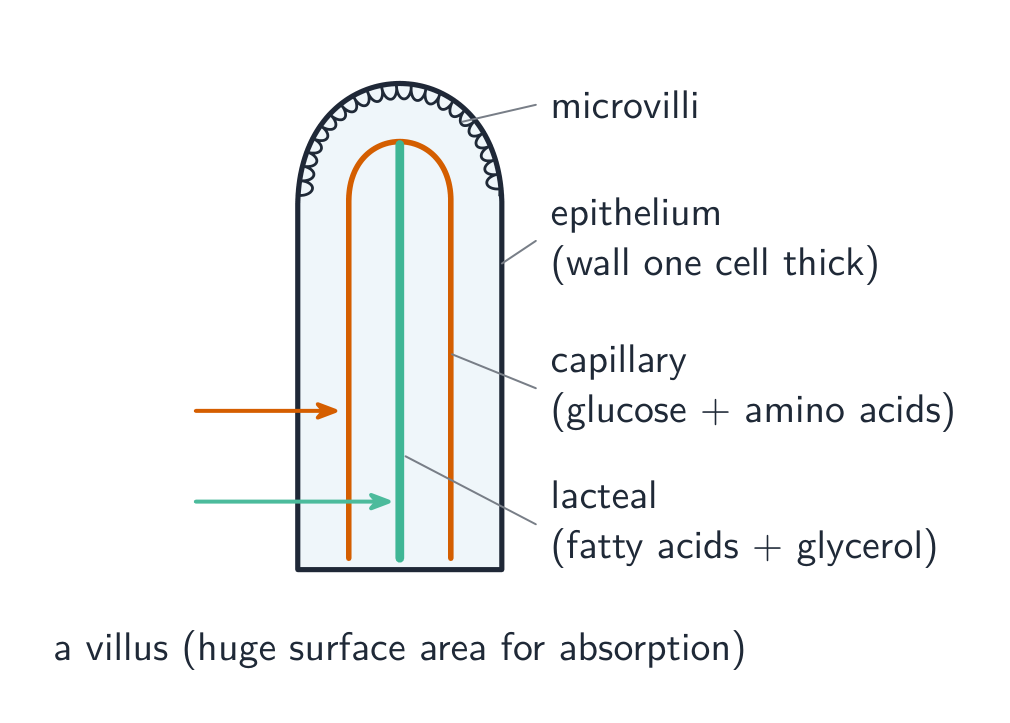
The inside of the small intestine is covered with millions of tiny finger-shaped villi 绒毛. Each villus is itself covered in much smaller microvilli 微绒毛. Together these give a huge surface area, so absorption is fast.

A single villus has:

  • a wall just one cell thick, so molecules have only a short distance to travel.
  • a network of capillaries 毛细血管 that carry away absorbed glucose and amino acids.
  • a lacteal 乳糜管 in the centre that carries away absorbed fatty acids and glycerol.
עברית

תוצרי עיכול נספגים לתוך הזרם הדם במעיים הדקים. רוב המים נספגים גם כאן; העורפה סופגת את שארית, ומשאירה פירות קשיחים.

וילוסים (משלים)

פנים מעיים הדמויות מכוסות במיליוני וילוסים זרים בצורת אצבע. כל וילוס מכוסה עצמה ב-מיקרווילוסים קטנים הרבה יותר. יחד הם מספקים שטח פנים עצום, כך הספיגה היא מהירה.

וילוס בודד עם התאמותיו: מיקרווילוסים לשטח פנים נוסף, דק דק של תאי אחד, אספקת דם עשירה שמובילה מזון להרחוק, ולקטאל סופק שומנים
הוילוס מותאם לספיגה מהירה: מיקרווילוסים, דק דק של תאי אחד, אספקת דם עשירה ולקטאל

וילוס בודד יש:

  • דק דק של תאי אחד, כך למולקולות יש רק מרחק קצר לטייל.
  • רשת של קפילריות שמובילות גלוקוז ואמינו חומצות שנספגו להרחוק.
  • לקטאל במרכז שמוביל חומצות שומן וגlycerol שנספגו להרחוק.
וילוס בודד: בליטה בצורת אצבע עם דק דק של תאי אחד, מיקרווילוסים על פני השטח, רשת קפילריות שקולטת גלוקוז ואמינו חומצות, ולקטאל מרכזי שקולט חומצות שומן וגlycerol
הוילוס יש דק דק של תאי אחד, רשת קפילריות ולקטאל, לספיגה מהירה
Explore · ⁨חקור⁩

Absorption at the villi · ⁨ספיגה בוילו⁩

The small intestine is lined with millions of villi that give a huge surface area for absorbing digested food. · ⁨המעיה הדקה מצופה במיליוני וילו שנותנים שטח פנים עצום לספיגת המזון המעוכל.⁩

7.5

Exam tips · ⁨טיפים לבחינות⁩

English
  • A balanced diet has the right amount of each part. Learn one source and one use for each.
  • Vitamin C ↔ scurvy; vitamin D ↔ rickets.
  • The five processes in order: ingestion → digestion → absorption → assimilation → egestion. Egestion (faeces) is not excretion.
  • Physical digestion makes pieces smaller (more surface area); chemical digestion uses enzymes to make molecules smaller and soluble.
  • amylase → sugars, protease → amino acids, lipase → fatty acids + glycerol. Stomach acid kills microorganisms and sets a low pH.
  • Villi and microvilli give a large surface area, and a thin wall gives a short distance — both make absorption faster.
עברית
  • תזונה מאוזנת יש הכמות הנכונה של כל חלק. למד מקור אחד ושימוש אחד לכל אחד.
  • ויטמין C ↔ סקורביו; ויטמין D ↔ ריקטיס.
  • חמש התהליכים בסדר: צריכה → עיכול → ספיגה → אסימילציה → פליטה. פליטה (פירות) היא לא הפרשה.
  • עיכול פיזי עושה חתיכות קטנות יותר (יותר שטח פנים); עיכול כימי משתמש באנזימים כדי לעשות מולקולות קטנות וניתנות לפתרון.
  • אמילאז → סוכרים, פרוטאז → חומצות אמינו, ליפאז → חומצות שומן + גליצרול. חומצה בקיבה הורגת מיקרואורגניזמים ויוצרת pH נמוך.
  • וילוסים ומיקרווילוסים מספקים שטח פנים גדול, וכף דקה מספקת מרחק קצר — שניהם מהדירים את הספיגה.

Interactive lessons on this topic · ⁨שיעורים אינטראקטיביים בנושא זה⁩

Work through it step by step, with instant-check exercises. · ⁨לעבור על הדברים צעד אחר צעד, עם תרגילים לבדיקה מיידית.⁩

Past Papers · ⁨מבחני עבר⁩

More topics in IGCSE Biology · ⁨ביולוגיה IGCSE⁩ · ⁨נושאים נוספים בIGCSE Biology · ⁨ביולוגיה IGCSE⁩⁩

Log in or create account · ⁨היכנס או צור חשבון⁩

IGCSE, A-Level & AP