רכב נוסע. הוא צורך דלק, משחרר גזי פליטה, ומגיב כאשר אתה מסובב ההגה. אז האם רכב חי? לא — וביוולוגיה יכולה לספר לך בדיוק מדוע. חיוני…
English narration · English + 中文 subtitles burned in · קריאת קול באנגלית · תרגום אנגלי + סינית שרוף בתוך הסרטון
1.1
The seven characteristics of living organisms · שבעת המאפיינים של אורגניזמים חיים
Syllabus · סיילבוס
English
Core
Supplement
1 Describe the characteristics of living organisms by describing: (a) movement as an action by an organism or part of an organism causing a change of position or place (b) respiration as the chemical reactions in cells that break down nutrient molecules and release energy for metabolism (c) sensitivity as the ability to detect and respond to changes in the internal or external environment (d) growth as a permanent increase in size and dry mass (e) reproduction as the processes that make more of the same kind of organism (f) excretion as the removal of the waste products of metabolism and substances in excess of requirements (g) nutrition as the taking in of materials for energy, growth and development
עברית
ליבה
תוספת
1 תאר את המאפיינים של אורגניזמים חיים על ידי: (א) תנועה כפעולה על ידי אורגניזם או חלק ממנו הגורמת לשינוי במיקום או מרחק (ב) נשימה כימית כתהליכים כימיים בתאים המפרקים מולקולות מזון ומשחררים אנרגיה למטבוליזם (ג) רגישות כיכולת לגלות ולהגיב לשינויים בסביבה הפנימית או החיצונית (ד) גידול כעלייה קבועה בגודל ובמסה יבשה (ה) רבייה כתהליכים היוצרים עוד אורגניזמים מאותו סוג (ו) פליטה כהסרת תוצרי לוואי של מטבוליזם וחומרים בעודף מהדרישות (ז) הזנה כקבלת חומרים לאנרגיה, גידול ופיתוח
Source: Cambridge International syllabus · מקור: הסיילבוס הבינלאומי של קמבריד'ג'
English
Every living thing shares the same seven characteristics 特征 — seven life processes 生命过程 that all organisms 生物体 carry out. You can remember them with the letters MRS GREN. The examiner gives marks for the exact wording, so learn each definition.
Movement 运动 — an action by an organism, or part of an organism, that changes its position or place.
Respiration 呼吸作用 — the chemical reactions in cells 细胞 that break down nutrient molecules 营养物质 and release energy 能量 for metabolism 新陈代谢.
Sensitivity 应激性 — the ability to detect and respond to changes in the internal or external environment 环境.
Growth 生长 — a permanent increase in size and dry mass 干重.
Reproduction 生殖 — the processes that make more of the same kind of organism.
Excretion 排泄 — the removal of the waste products 废物 of metabolism, and of substances the body has in excess (more than it needs).
Nutrition 营养 — the taking in of materials for energy, growth and development.
Metabolism means all the chemical reactions that happen inside an organism's cells.
עברית
כל אורגניזם חיpartages את אותם שבעה מאפיינים — שבעה תהליכי חיים שמבצע כל האורגניזם. ניתן לזכור אותם באמצעות האותיות MRS GREN. המבקר נותן נקודות על ניסוח מדויק, לכן יש ללמוד כל הגדרה.
התהליכים החיים השבעה מרכיבים את MRS GREN
תנועה — פעולה של אורגניזם או חלק ממנו, המשתנה מיקוםו או מקומו.
נשימה — התגובות הכימיות ב-תאים שמפרקות מולקולות מזון ומשחררות אנרגיה עבור מטבוליזם.
רגישות — היכולת לגלות ולתגובה לשינויים בסביבה הפנימית או החיצונית.
צמיחה — עלייה מתמשכת בגודל וב-מסה יבשה.
רבייה — התהליכים המייצרים עוד אורגניזמים מאותו סוג.
הפרשה — הסרת תוצרי פסולת של המטבוליזם, וחומרים שאורגניזם יש לו בעודף (יותר ממה שהוא צריך).
תזונה — קבלת חומרים לצורך אנרגיה, גידול והתפתחות.
מטבוליזם הוא כל התגובות הכימיות המתרחשות בתוך תאי אורגניזם.
Explore · חקור
Characteristics of life lab · מעבדה: מאפייני חיים
Classify real observations by the life process they show. · סווג התרחשויות אמיתיות לפי תהליך החיים שהן מציגות.
1.2
Classification: sorting living things into groups · מיון: סיווג אורגניזמים לקבוצות
Syllabus · סיילבוס
English
Core
Supplement
1 State that organisms can be classified into groups by the features that they share
5 Explain that classification systems aim to reflect evolutionary relationships
2 Describe a species as a group of organisms that can reproduce to produce fertile offspring
3 Describe the binomial system of naming species as an internationally agreed system in which the scientific name of an organism is made up of two parts showing the genus and species
4 Construct and use dichotomous keys based on identifiable features
6 Explain that the sequences of bases in DNA are used as a means of classification
7 Explain that groups of organisms which share a more recent ancestor (are more closely related) have base sequences in DNA that are more similar than those that share only a distant ancestor
עברית
ליבה
תוספת
1 ציין שאורגניזמים יכולים להיות מסווגים לקבוצות לפי התכונות שהם משותפים להם
5 הסבר שמערכות סיווג שואפות לשקף קשרים אבולוציוניים
2 תאר מין כקבוצת אורגניזמים שיכולים לבצע רבייה כדי לייצר צאצאים פוריים
3 תאר את המערכת הבינארית לכינוי מינים כמערכת הנפוצה בינלאומית שבה השם המדעי של אורגניזם מורכב משני חלקים המציגים סוג ומין
4 בנה והשתמש במפת זיהוי דו-ערוצית המבוססת על תכונות זיהוי
6 הסבר שרצפי הבסיסים ב-DNA משמשים כאמצעי לסיווג
7 הסבר שקבוצות אורגניזמים השוכרים אב מקדום עדכני יותר (הקרובות יותר זו לזו) הן בעלות רצפי בסיסים ב-DNA הדומים יותר מאלו השוכרים רק אב מקדום רחוק
Source: Cambridge International syllabus · מקור: הסיילבוס הבינלאומי של קמבריד'ג'
English
There are millions of kinds of living thing. To study them, scientists classify 分类 them — they sort them into groups by the features they share. Organisms in the same group share more features with each other than with organisms in other groups.
Species and the binomial system
The smallest common group is the species 物种. A species is a group of organisms that can reproduce to make fertile offspring 可育后代 ("fertile" means the offspring can themselves go on to have young).
Each species has a two-part scientific name 学名. This way of naming is the binomial system 双名法 — a system agreed all over the world, so every scientist uses the same name.
The first part is the genus 属 (a larger group that the species belongs to). It starts with a capital letter.
The second part is the species. It starts with a small letter.
The whole name is written in italics, for example Homo sapiens (humans). Two rats named Rattus norvegicus and Rattus rattus belong to the same genus but are different species.
Dichotomous keys
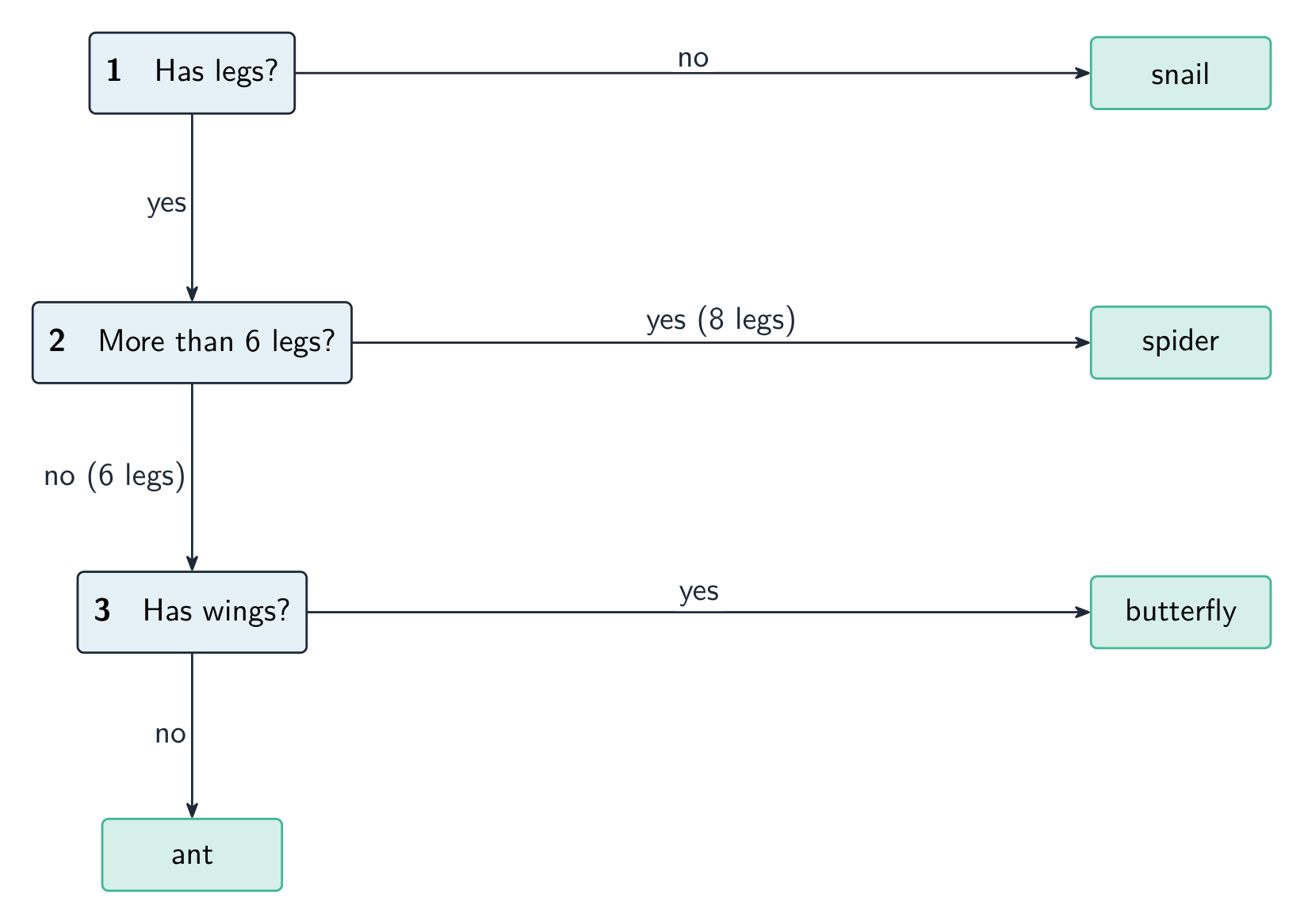
A dichotomous key 二歧检索表 is a tool that helps you identify an unknown organism. "Dichotomous" means "splitting into two". At each step the key gives you two choices about a feature. You pick the one that fits your organism, and that choice sends you on to the next pair of choices. You repeat this until you reach the organism's name.
When you build a key, choose clear features you can see — for example "has wings / has no wings" — not features that change, such as size.
Worked example. A key reads: step 1, has wings, go to 2; no wings, go to 3. Step 2, one pair of wings, it is a housefly; two pairs of wings, it is a butterfly. An unknown insect has two pairs of wings. Step 1 only asks "wings or no wings?", so having wings sends you to step 2. At step 2, "two pairs" gives butterfly. Follow the route the key gives you, one step at a time - never jump straight to the name that looks right.
Classification and DNA (Supplement)
Modern classification tries to show evolutionary relationships 进化关系 — how closely different organisms are related. Organisms that are more closely related share a more recent ancestor 祖先.
To measure this, scientists compare the base sequence 碱基序列 of DNA (the order of the chemical "letters" that make up an organism's genes 基因). The rule is simple:
Organisms that share a more recent ancestor (more closely related) have more similar DNA base sequences.
Organisms that share only a distant ancestor have less similar base sequences.
So a DNA base sequence can be used both to classify organisms and to work out how closely two species are related.
עברית
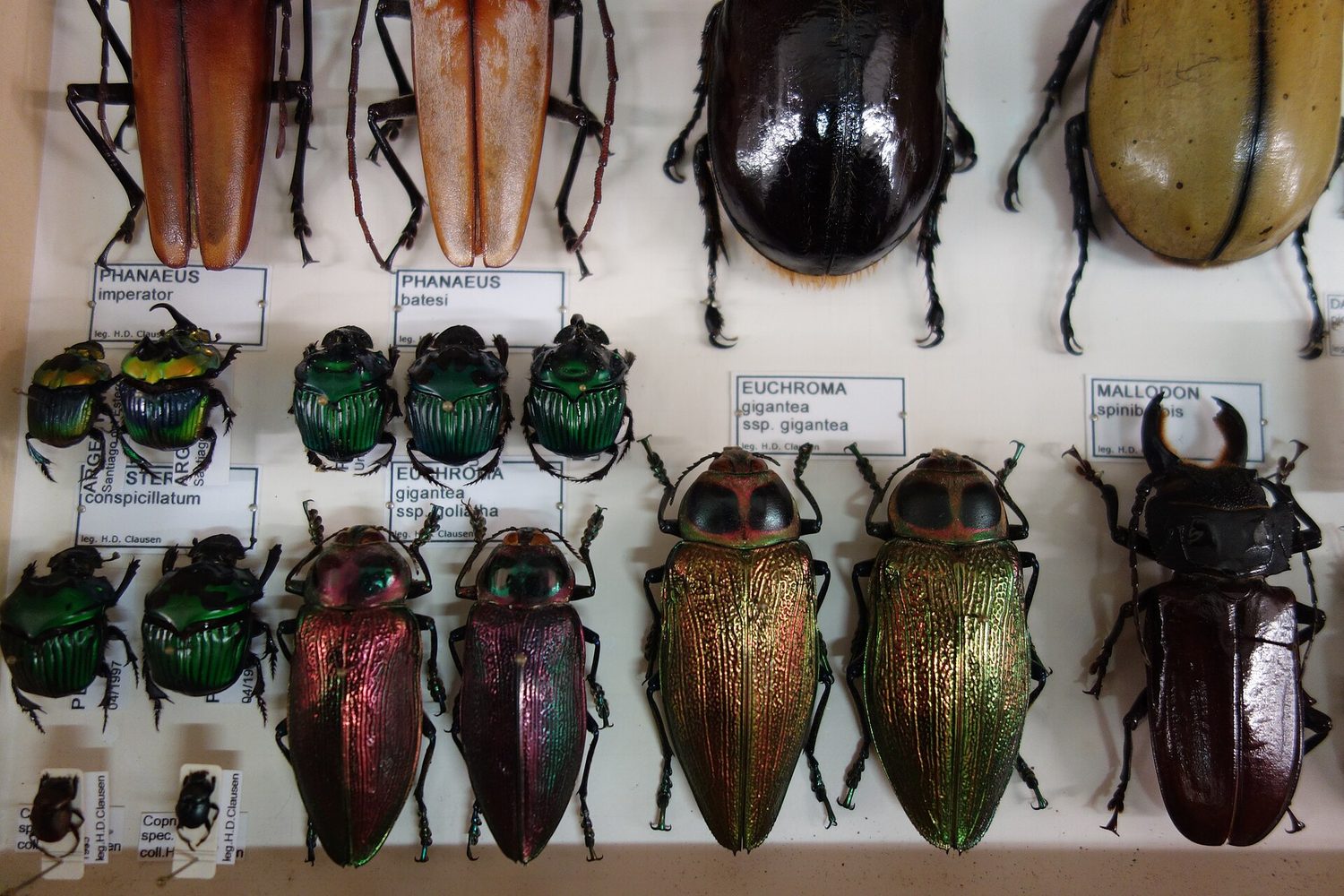
מגרת צ'לפים במוזיאון: המיון מקבץ אורגניזמים לפי התכונות שהם משתפים ביניהם
קיימים מיליוני סוגים של אורגניזמים. כדי ללמוד אותם, מדענים ממיין אותם – הם מסדרים אותם בקבוצות לפי התכונות שהם משתפים ביניהם. אורגניזמים באותה קבוצה משתפים יותר תכונות זה עם זה מאשר עם אורגניזמים בקבוצות אחרות.
מין ומערכת השם הדו-חלקית
הקבוצה המשותפת הקטנה ביותר היא ה-מין. מין הוא קבוצת אורגניזמים שיכולים להשתכפלות ולהפיק צאצאים פוריים ("פוריים" אומר שהצאצאים עצמם יכולים להמשיך ולהפיק צאצאים).
שם מדעי: גנרית באות גדולה ומין באות קטנה
לכל מין יש שם מדעי דו-חלקי. דרך השמה זו היא מערכת השם הדו-חלקית – מערכת הסכמה עולמית, כך שכל מדען משתמש באותו שם.
החלק הראשון הוא הסוג (קבוצה גדולה יותר שבה המין שייך). הוא מתחיל באות גדולה.
החלק השני הוא המין. הוא מתחיל באות קטנה.
השם כולו נכתב במעריב, לדוגמה Homo sapiens (אנושים). שתי עכברים שנקראו Rattus norvegicus ו-Rattus rattus שייכים לאותו סוג אך הם מינים שונים.
מפת זיהוי דו-סעיפית
מפת זיהוי דו-סעיפית היא כלי שעוזר לזהות אורגניזם לא ידוע. "דו-סעיפית" אומר "מתפצל לשניים". בכל שלב המפה מציעה לך שתי אפשרויות לגבי תכונה. אתה בוחר את זו שמתאימה לאורגניזם שלך, ובחירה זו מובילה אותך לזוג האפשרויות הבא. חוזרים על פעולה זו עד שמגיעים לשם האורגניזם.
מפת זיהוי דו-סעיפית: בכל צעד ישנו שני בחירות עד להגעה לאורגניזם
כשאוחים מפה, יש לבחור תכונות ברורות שנראות לעין – למשל "יש כנפיים / אין כנפיים" – ולא תכונות משתנות, כמו גודל.
דוגמה פתורה. מפה קוראת: שלב 1, יש כנפיים, עבור ל2; אין כנפיים, עבור ל3. שלב 2, זוג כנפיים אחד, זהו זבוב בית; שני זוגות כנפיים, זהו פרפר. חרק לא ידוע יש לו שני זוגות כנפיים. בשלב 1 נשאל רק "כנפיים או אין כנפיים?", ולכן קיום כנפיים מוביל לשלב 2. בשלב 2, "שני זוגות" נותן פרפר. לעבור על הדרך שהמפה מציעה, שלב אחר שלב - לעולם לקפוץ ישירות לשם שנראה נכון.
מיון ו-DNA (תוספת)
מיון מודर्ני מנסה להציג יחסים אבולוציוניים – כמה אורגניזמים שונים קרובים זה לזה. אורגניזמים הקרובים יותר משתפים אב חדש יותר.
כדי למדוד זאת, מדענים משווים את הרצף הבסיס של DNA (הסדרת ה"אותיות" הכימיות המרכיבות את הגנים של אורגניזם). הכלל פשוט:
אורגניזמים השותפים באב עדכני יותר (קשורים יותר) בעלי רצפי בסיס DNA דומים יותר.
אורגניזמים השותפים רק באב רחוק בעלים רצפי בסיס פחות דומים.
לכן רצף בסיס של DNA יכול לשמש גם לסיווג אורגניזמים וגם לקבוע כמה שתי מינים קשורים זה לזה.
1 State the main features used to place animals and plants into the appropriate kingdoms
4 State the main features used to place all organisms into one of the five kingdoms: animal, plant, fungus, prokaryote, protoctist
2 State the main features used to place organisms into groups within the animal kingdom, limited to: (a) the main groups of vertebrates: mammals, birds, reptiles, amphibians, fish (b) the main groups of arthropods: myriapods, insects, arachnids, crustaceans
5 State the main features used to place organisms into groups within the plant kingdom, limited to ferns and flowering plants (dicotyledons and monocotyledons)
3 Classify organisms using the features identified in 1.3.1 and 1.3.2
6 Classify organisms using the features identified in 1.3.4 and 1.3.5
7 State the features of viruses, limited to a protein coat and genetic material
עברית
ליבה
תוספת
1 ציין את המאפיינים העיקריים המשמשים להכנסת בעלי חיים וצמחים לממלכות המתאימות
4 ציין את המאפיינים העיקריים המשמשים להכנסת כל האורגניזמים לאחת מחמש הממלכות: בעלי חיים, צמחים, פטריות, פרוקאריוטים, פרוטוקיסטים
2 ציין את המאפיינים העיקריים המשמשים להכנסת אורגניזמים לקבוצות בתוך ממלכת בעלי החיים, המוגבלות ל: (א) הקבוצות העיקריות של בעלי עמוד שדרה: יונקים, עופות, זוחלים, דו-חיים, דגים (ב) הקבוצות העיקריות של פרוקי רגליים: רב-רגליים, חרקים, עכבישניות, סרטניות
5 ציין את המאפיינים העיקריים המשמשים להכנסת אורגניזמים לקבוצות בתוך ממלכת הצמחים, המוגבלות לערבות ולצמחים פורחים (דו-עליים וחד-עליים)
3 סווג אורגניזמים באמצעות המאפיינים שזוהו ב-1.3.1 ו-1.3.2
6 סווג אורגניזמים באמצעות המאפיינים שזוהו ב-1.3.4 ו-1.3.5
7 ציין את המאפיינים של וירוסים, המוגבלים לצלילית חלבון וחומר גנטי
Source: Cambridge International syllabus · מקור: הסיילבוס הבינלאומי של קמבריד'ג'
English
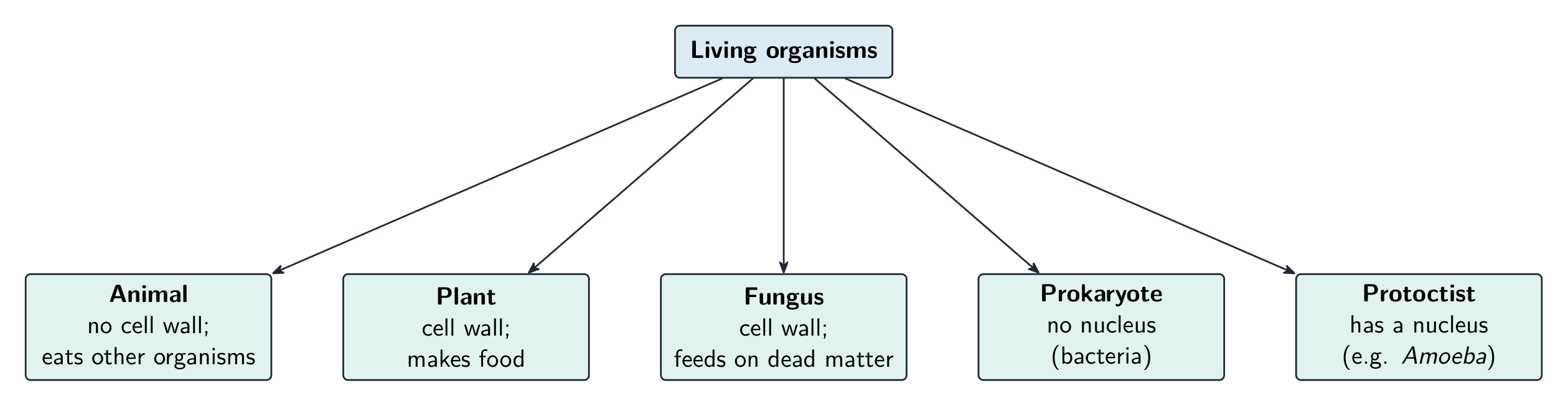
The biggest groups that organisms are sorted into are called kingdoms 界. At Core level you place organisms into the first two kingdoms below; for Supplement you need all five kingdoms. You decide where an organism belongs by looking at its main features.
Kingdom
Main features
Animal 动物
made of many cells; cells have no cell wall 细胞壁; cannot make their own food, so they feed on other organisms; most can move their whole body
Plant 植物
made of many cells; cells have a cell wall; make their own food by photosynthesis 光合作用, so many cells contain chloroplasts 叶绿体
Fungus 真菌
for example moulds 霉菌, mushrooms 蘑菇 and yeast 酵母; have cell walls; cannot photosynthesise; feed on dead or living matter
Prokaryote 原核生物
for example bacteria 细菌; single-celled 单细胞; cells have no nucleus 细胞核
Protoctist 原生生物
for example Amoeba and algae 藻类; usually single-celled; cells do have a nucleus
The fungus, prokaryote and protoctist kingdoms are Supplement only.
Grouping the animal kingdom
The animal kingdom is split first into two: animals with a backbone and animals without one.
Vertebrates 脊椎动物 are animals with a backbone 脊柱. There are five main groups.
Group
Main features
Mammals 哺乳动物
have fur 毛发 or hair; feed their young on milk
Birds 鸟类
have feathers 羽毛 and a beak 喙; lay eggs with hard shells
Reptiles 爬行动物
have dry skin covered with scales 鳞片; lay eggs with leathery shells on land
Amphibians 两栖动物
have moist skin; lay eggs in water; the young live in water
Fish 鱼类
have wet scales and fins 鳍; breathe using gills 鳃; lay eggs in water
Arthropods 节肢动物 are animals with no backbone. They have a hard outer skeleton (an exoskeleton 外骨骼) and legs that bend at joints 关节. There are four main groups.
Group
Main features
Insects 昆虫
body in 3 parts; 3 pairs of legs; usually 2 pairs of wings; 1 pair of antennae 触角
Arachnids 蛛形类
body in 2 parts; 4 pairs of legs; no wings; no antennae
Crustaceans 甲壳类
many pairs of legs; 2 pairs of antennae; most live in water
Myriapods 多足类
long body made of many segments 体节; one or two pairs of legs on each segment
Grouping the plant kingdom (Supplement)
Plants are placed into groups too. You need two of them.
Ferns 蕨类植物 — have roots, stems and leaves, but make no flowers or seeds. They reproduce using tiny spores 孢子.
Flowering plants 开花植物 — make flowers, and form seeds 种子 inside the flower. They split into two groups by their seed-leaves (the first leaves inside a seed, called cotyledons 子叶):
Group
Features
Monocotyledons 单子叶植物
seed has one cotyledon; long narrow leaves; veins 叶脉 run side by side (parallel)
Dicotyledons 双子叶植物
seed has two cotyledons; broad leaves; veins form a branching net
Viruses (Supplement)
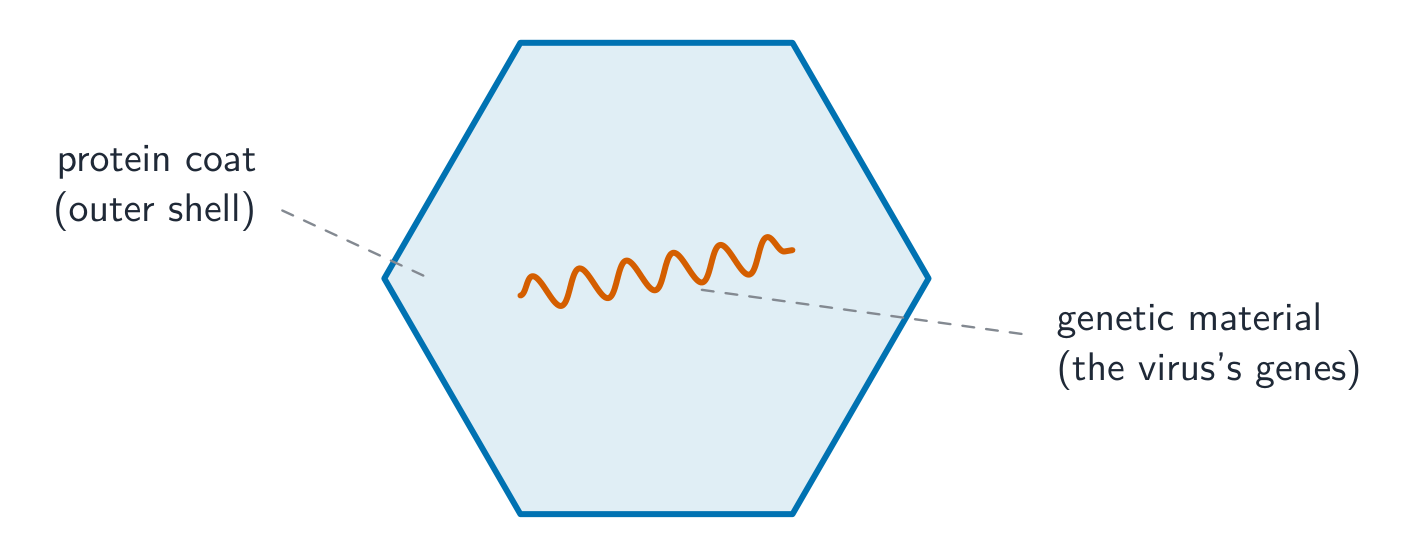
Viruses 病毒 are not placed in any kingdom. They are not made of cells, so many scientists do not count them as living. A virus is very simple, with only two parts:
an outer protein coat 蛋白质外壳, and
genetic material 遗传物质 (its genes) inside.
A virus cannot carry out the life processes on its own. It can only reproduce inside the living cells of a host 宿主 — the organism it infects.
עברית
הקבוצות הגדולות ביותר לתוך שהן אורגניזמים מסווגים נקראות ממלכות. ברמת Core אתה מציב אורגניזמים בשתי הממלכות הראשונות למטה; עבור Supplement תצטרך את כל חמש הממלכות. אתה מחליט לאיזו ממלכה אורגניזם שייך על ידי הצצה בתכונות העיקריות שלו.
יצורים חיים מחולקים לחמש ממלכות לפי התכונות העיקריות שלהם
ממלכה
תכונות עיקריות
בעלי חיים
עשויים מרבים תאים; תאים אין להם קיר תא; אינם יכולים לייצר מזון עצמאי, ולכן ניזונים מאורגניזמים אחרים; רובם יכולים להזיז את גופם כולו
צמחים
עשויים מרבים תאים; תאים יש להם קיר תא; מייצרים את מזונם בעזרת פוטוסינתזה, ולכן תאים רבים מכילים כלורופלאסטים
פטריות
לדוגמה עובשות, פטריות ושמרים; יש להן קירות תא; אינן מבצעות פוטוסינתזה; ניזונות מחומר מת או חי
פרוקריאוט
לדוגמה בקטריות; חד-תאי; תאים אין להם גרעין
פרוטוקיסט
לדוגמה אמובה ואלגות; בדרך כלל חד-תאים; תאים יש להם גרעין
ממלכות הפטריות, הפרוקריאוט והפרוטוקיסט הן רק עבור Supplement.
עובש: הזוֹמָה, פטריית-אדמוניתפרוקאריוטה (בקטריה): E. coli הנראה תחת מיקרוסקופ אלקטרוני
סיווג ממלכת בעלי החיים
ממלכת בעלי החיים מחולקת תחילה לשניים: בעלי חיים עם עמוד שדרה ובעלי חיים ללא עמוד שדרה.
ממלכת בעלי החיים מתפצלת לצוליות (עם עמוד שדרה) ואריתרופודים (ללא עמוד שדרה), כל אחד עם קבוצות העיקריות שלו
בעלי חוליות הן בעלי חיים עם עמוד שדרה. קיימות חמש קבוצות עיקריות.
קבוצה
תכונות עיקריות
יונקים
יש להם פרוות או שיער; מזינים את צאצאיהם בחלב
ציפורים
יש להם נוצות ומקור; מטילות ביצים עם מעטפת קשה
זוחלים
יש להם עור יבש המכוסה בקשקשים; מטילים ביצים בעלות מעטפת עורית על היבשה
דו-חיים
יש להם עור לח; מטילים ביצים במים; הצאצאים חיים במים
דגים
יש להם קשקשים רטובים וסנפירים; נושמים באמצעות זיגמים; מטילים ביצים במים
פרוקני הרגליים הם בעלי חיים ללא עמוד שדרה. יש להם שלד חיצוני קשיח (שלד חיצוני) ורגליים המתכופפות במפרקים. קיימות ארבע קבוצות עיקריות.
קבוצה
תכונות עיקריות
חרקים
גוף ב3 חלקים; 3 זוגות של רגליים; בדרך כלל 2 זוגות של כנפיים; 1 זוג של מגשישי
עכבישיות
גוף מחולק ל-2 חלקים; 4 זוגות רגליים; אין כנפיים; אין מגשישים
סרטניות
מספר רב של זוגות רגליים; 2 זוגות מגשישים; רובן חיות במים
רב-רגליים
גוף ארוך המורכב מפרקי גוף רבים; זוג אחד או שניים של רגליים בכל פרק
סיווג ממלכת הצומח (תוסף)
צמחים גם כן מחולקים לקבוצות. עליכם לבחור שתי מהן.
פרוסות — יש להן שורשים, גבעולים ועלים, אך הן לא מייצרות פרחים או זרעים. הן מתרבות באמצעות ספורות מינימליות.
צמחי פרחים — מייצרים פרחים, ויוצרים זרעים בתוך הפרח. הם מתחלקים לשתי קבוצות לפי עלפי הזרע (העלים הראשונים בתוך הזרע, הנקראים עלי עובר),:
קבוצה
מאפיינים
חד-עלה
לזרע יש עלה עובר אחד; עלים ארוכים וצררים; ערוצים נמתחים זה לצד זה (במקביל)
דו-עלה
לזרע יש שניים עלפי עובר; עלים רחבים; הערוצים יוצרים רשת ענפים
עלי צמחים חד-שתי ענפים בעלי ערוצים מקבילים; עלי צמחים דו-שתי ענפים בעלי רשת של ערוצים ענפניים
וירוסים (תוספת)
וירוסים אינם ממוקמים בשום ממלכה. הם אינם מורכבים מתאים, ולכן许多 מדענים אינו סופרים אותם כבעלי חיים. וירוס הוא פשוט מאוד, עם שני חלקים בלבד:
מעטפת חיצונית של חלבון, ו
חומר גנטי (הגנים שלו) בפנים.
וירוס הוא פשוט מעטפת חלבון סביב החומר הגנטי שלו
וירוס לא יכול לבצע תהליכי חיים לבדו. הוא יכול להתרבות רק בתוך התאים החיים של ארחי — האורגניזם שהוא מחלה.
Explore · חקור
Groups of organisms lab · מעבדת קבוצות אורגניזמים
Compare organism groups by the feature that identifies them. · השוו קבוצות אורגניזמים לפי התכונה המזהה אותן.
Pick one and the site follows you — notes, papers, videos and practice all open on it. · בחרו נושא אחד והאתר יעקוב אחריו — הערות, מסמכים, וידאו ותרגולים פתוחים בו.
Type to search notes, lessons, code, vocabulary and past-paper questions across every subject. · הקלד כדי לחפש הערות, שיעורים, קוד, אוצר מילים ושאלות מבחנים בכל הנושאים.