Skip to content · ⁨דלג לתוכן⁩

Scientific, Philosophical, and Political Developments

AP European History · ⁨היסטוריה אירופאית - AP⁩ · Topic 4 · ⁨נושא 4⁩

Video lesson for this topic · ⁨שיעור וידאו לנושא זה⁩ Open the video page · ⁨פתח את עמוד הוידאו⁩
7:53

יחידה 4: התפתחות מדעית, פילוסופית ופוליטית

משפט אחד כולל את כל היחידה הזו, ועדיף ללמוד אותו במילים של ה-CED עצמו. התפשטות מושגים ומעשים מהמהפכה המדעית, וה…

English narration · English + 中文 subtitles burned in · ⁨קריאת קול באנגלית · תרגום אנגלי + סינית שרוף בתוך הסרטון⁩

4.1

Contextualizing the Scientific Revolution and the Enlightenment · ⁨הקשרה מהפכה מדעית ואורנות⁩

Syllabus · ⁨סיילבוס⁩
English

4.1 Contextualizing the Scientific Revolution and the Enlightenment

Learning Objective Unit 4.A: Explain the context in which the Scientific Revolution and Enlightenment developed in Europe.

  • KC-1.1 The rediscovery of works from ancient Greece and Rome and observation of the natural world changed many Europeans’ view of their world.
    • KC-1.1.IV New ideas in science based on observation, experimentation, and mathematics challenged classical views of the cosmos, nature, and the human body, although existing traditions of knowledge and the universe continued.
  • KC-2.3 The spread of Scientific Revolution concepts and practices and the Enlightenment’s application of these concepts and practices to political, social, and ethical issues led to an increased but not unchallenged emphasis on reason in European culture.
    • KC-2.3.I Enlightenment thought, which focused on concepts such as empiricism, skepticism, human reason, rationalism, and classical sources of knowledge, challenged the prevailing patterns of thought with respect to social order, institutions of government, and the role of faith.
    • KC-2.3.II New public venues and print media popularized Enlightenment ideas.
    • KC-2.3.III New political and economic theories challenged absolutism and mercantilism.
    • KC-2.3.IV During the Enlightenment, the rational analysis of religious practices led to natural religion and the demand for religious toleration.
  • KC-2.4 The experiences of everyday life were shaped by demographic, environmental, medical, and technological changes.
    • KC-2.4.III By the 18th century, family and private life reflected new demographic patterns and the effects of the commercial revolution.
עברית

4.1 הקשרת המהפכה המדעית והתעוררות

מטרת למידה ליחידה 4.A: הסבר ההקשר שבו התפתחה המהפכה המדעית והתעוררות באירופה.

  • KC-1.1 הממצאה מחודשת של יצירות מהיוון העתיקה ורומא ותצפית בעולם הטבע שינו את מבטן של אנשי אירופה על עולםהם.
    • KC-1.1.IV רעיונות חדשים במדע המבוססים על תצפית, ניסוי ומתמטיקה ערערו את התפיסות הקלאסיות של היקום, הטבע וגוף האדם, אף על פי שמסורות ידע קיימות והיקום המשיכו לקיים.
  • KC-2.3 התפשטת מושגים ומנהגים של המהפכה המדעית והיישום של מושגים אלו על ידי התעוררות לנושאים פוליטיים, חברתיים ואתיים הביאו להדגשה מוגברת אך לא ללא מתנגדים על סברת המוח בתרבות האירופאית.
    • KC-2.3.I מחשבת התעוררות, שהתמקדה במושגים כמו אמפריזם, סקפטציזם, סברת המוח האנושית, רציונליזם ומקורות ידע קלאסיים, ערערה את הדפוסי המחשבה השוררים בנוגע לסדר חברתי, מוסדות ממשל ותפקידו של האמונה.
    • KC-2.3.II מקומות ציבוריים חדשים ותקשורת מודפסת הפכו את רעיונות התעוררות לפופולריים.
    • KC-2.3.III תיאוריות פוליטיות וכלכליות חדשות ערערו את האבסולוטיות והמרקantilism (מרקנטיליזם).
    • KC-2.3.IV במהלך התעוררות, הניתוח הרציונלי של מנהגי דתיים הוביל לדת טבעית ולדרישה לסבלנות דתית.
  • KC-2.4 החוויות של חיי היומיום עוצבו על ידי שינויים דמוגרפיים, סביבתיים, רפואיים וטכנולוגיים.
    • KC-2.4.III עד המאה ה-18, המשפחה וחיי פרטיים ביטחו דפוסי דמוגרפיים חדשים והשפעותיהן של המהפכה המסחרית.
Source: College Board AP Course and Exam Description · ⁨מקור: תיאור הקורס והמבחן של College Board AP⁩

English

Unit 4 rests on one claim, and it is worth learning in the CED's own words: the spread of Scientific Revolution 科学革命 concepts and practices, and the Enlightenment's application of those concepts and practices to political, social, and ethical issues, fostered debate about the role of the individual in relation to the state and society.

That sentence contains the whole unit. A method developed for studying nature was turned on human institutions, and the result was a set of arguments about what a government owes the people it rules.

Running alongside it: everyday experience was shaped by demographic, environmental, medical, and technological changes - which is why this unit pairs high intellectual history with population statistics and consumer goods.

עברית

יחידה 4 מתבססת על טעמה האחת, והיא שווה להילמד במילים של ה-CED עצמו: התפשטות רעיונות ומערכות הפעולה של המהפכה המדעית, והיישום אלו רעיונות ומערכות הפעולה על ידי האורנות לבעיות פוליטיות, חברתיות ואתיות, עודדו שיח סביב תפקידו של הפרט ביחס למדינה ולחברה.

(משפט זה מכיל את כל היחידה. שיטה שפותחה ללימוד הטבע הופנת לעומת מוסדות אנושיים, ותוצאתה הייתה מגוון של טיעונים לגבי מה שמדינה חייבת לעמיו).

בראשון לכך: חוויות יומיומיות עוצבו על ידי שינויים דמוגרפיים, סביבתיים, רפואיים וטכנולוגיים - ולכן יחידה זו משלבת היסטוריה אינטלקטואלית גבוהה עם סטטיסטיקות אוכלוסייה ומוצרי צריכה.

4.2

The Scientific Revolution · ⁨המהפכה המדעית⁩

Syllabus · ⁨סיילבוס⁩
English

4.2 The Scientific Revolution

Thematic Focus (TSI): Technological and Scientific Innovation — Scientific and technological innovations have increased efficiency, improved daily life, and shaped human development and interactions, having both intended and unintended consequences.

Learning Objective Unit 4.B: Explain how understanding of the natural world developed and changed during the Scientific Revolution and Enlightenment.

  • KC-1.1.IV.A New ideas and methods in astronomy led individuals, including Copernicus, Galileo, and Newton, to question the authority of the ancients and traditional knowledge, and to develop a heliocentric view of the cosmos.
  • KC-1.1.IV.B Anatomical and medical discoveries by physicians, including William Harvey, presented the body as an integrated system, challenging the traditional humoral theory of the body and of disease espoused by Galen.
  • KC-1.1.IV.C Francis Bacon and René Descartes defined inductive and deductive reasoning and promoted experimentation and the use of mathematics, which would ultimately shape the scientific method.
  • KC-1.1.IV.D Alchemy and astrology continued to appeal to elites and some natural philosophers, in part because they shared with the new science the notion of a predictable and knowable universe. At the same time, many people continued to believe that the cosmos was governed by spiritual forces.

Illustrative examples:

  • Additional physicians who challenged Galen:
    • Paracelsus
    • Andreas Vesalius
  • Natural philosophers who continued to hold traditional views of alchemy and astrology:
    • Paracelsus
    • Johannes Kepler
    • Sir Isaac Newton
עברית

4.2 המהפכה המדעית

מיקוד נושאי (TSI): חדשנות טכנולוגית ומדעית — חדשונות מדעיים וטכנולוגיים הגדילו את היעילות, שיפרו את החיים היומיומיים ועיצבו את הפיתוח והאינטראקציה האנושיים, עם תוצאות מתוכננות ולא מתוכננות.

מטרת למידה ליחידה 4.B: הסבר כיצד הבנת העולם הטבעי התפתחה ושונתה במהלך המהפכה המדעית והתעוררות.

  • KC-1.1.IV.A רעיונות ושיטות חדשים באסטרונומיה הובילו לאנשים, כולל קופרניקוס, גלילאו וניוטון, לערער את סמכות העתיקים והידע המסורתי, ולפותח תפיסה הליוצנטרית של היקום.
  • KC-1.1.IV.B גילויים אנאטומיים ורפואיים על ידי רופאים, כולל ויליאם הארווי, הצגו את הגוף כמערכת משולבת, בערעור את תאוריית הזרמים המסורתית לגוף ולמחלות שהוגדרה על ידי גאלן.
  • KC-1.1.IV.C פרנסיס בייקון ורן דקארט הגדירו מסקנה אינדוקטיבית ודידוקטיבית וקידמו ניסוי ושימוש במתמטיקה, שזה יעצב לבסוף את השיטה המדעית.
  • KC-1.1.IV.D אלכימיה ואסטרוlogy המשיכו למשוך אליתיות וחלק מהפילוסופים הטבעיים, חלקית מכיוון שהם חלקו עם המדע החדש את הרעיון של יקום ניתן לחיזוי ולהכרה. בו זמנית, אנשים רבים המשיכו להאמין שהיקום מנוהל על ידי כוחות רוחניים.

דוגמאות מדגמיות:

  • רופאים נוספים שערערו את גאלן:
    • פראצלסוס
    • אנדרס וזליוס
  • פילוסופים טבעיים שהמשיכו להחזיק בעמדות מסורתיות לגבי אלכימיה ואסטרולוגיה:
    • פראצלסוס
    • יוהנס קפלר
    • סר אייזק ניוטון

Source: College Board AP Course and Exam Description · ⁨מקור: תיאור הקורס והמבחן של College Board AP⁩

English

New ideas and methods in astronomy led Copernicus 哥白尼, Galileo 伽利略, and Newton 牛顿 to question the authority of the ancients and develop a heliocentric view of the cosmos.

Alongside astronomy:

  • Anatomical and medical discoveries by physicians including William Harvey 哈维 presented the body as an integrated system 整体系统, challenging inherited medical theory.
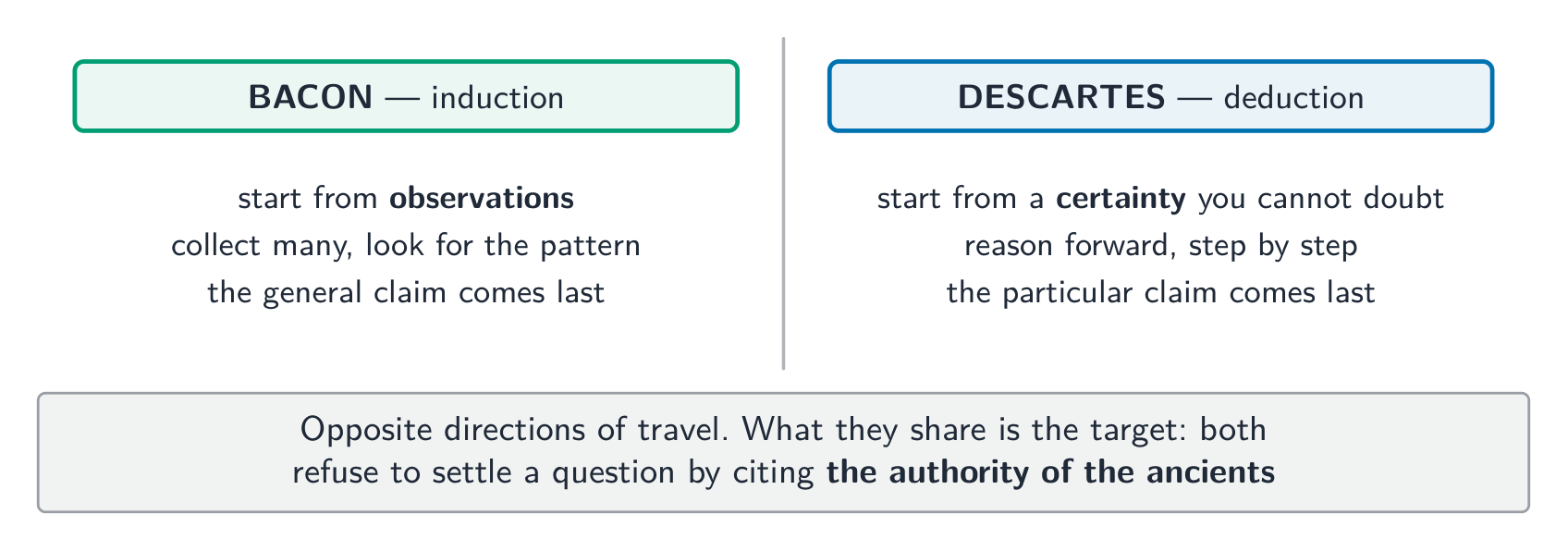
  • Francis Bacon 培根 and René Descartes 笛卡尔 defined inductive and deductive reasoning 归纳与演绎推理 and promoted experimentation and the use of mathematics.

The CED then adds a point students find surprising and examiners like: alchemy and astrology continued to appeal to elites and to some natural philosophers, partly because they shared with the new science the assumption that the natural world is governed by discoverable rules. The Scientific Revolution was not a clean break, and saying so demonstrates real understanding of continuity.

עברית

רעיונות ושיטות חדשים באסטרונומיה הובילו את קופרניקוס, גלילאו ואת ניוטון לפקפק בסמכות העתיקים ולפתח תפיסה הליוצנטרית של הקוסמוס.

בצד האסטרונומיה:

  • גילויים אנאטומיים ורפואיים על ידי רופאים כגון ויליאם האווי הצגו את הגוף כמערכת מאוחדת, תוך אתגור לתפיסה הרפואית המורשת.
  • פרנסיס בקון ו-רנה דקארט הגדירו הסקה והסקה (אינדוקציה ודדוקציה) ועודדו ניסויים ושימוש במתמטיקה.

ה-CED מוסיף נקודה שמציפה סטודנטים אך אהובה על בוחנים: אלכימיה ואסטרולוגיה המשיכו למשוך אלites וגם פילוסופים טבעיים מסוימים, חלקית מכיוון שהן שתפו את המדע החדש בהנחה שעולם הטבע מנוהל על ידי חוקים שניתן לגלות. המהפכה המדעית לא הייתה שבירה נקייה, והצגת זאת מעידה על הבנה אמיתית של הרצף.

הסקה והסקה (אינדוקציה ודדוקציה) פועלים בכיוונים מנוגדים - מה שהן משתפות הוא המטרה
Explore · ⁨חקור⁩

Sort each step to induction or deduction

Bacon and Descartes run in opposite directions. What they share is the target: neither settles a question by citing the ancients.

4.3

The Enlightenment · ⁨האורנות⁩

Syllabus · ⁨סיילבוס⁩

4.3 The Enlightenment

Thematic FocusLearning ObjectiveHistorical Developments

CID
Cultural and Intellectual Developments — The creation and transmission of knowledge, including the relationship between traditional sources of authority and the development of differing world views, had significant political, intellectual, economic, cultural, and social effects on European and world societies.

Unit 4.C
Explain the causes and consequences of Enlightenment thought on European society from 1648 to 1815.

  • KC-2.3.I.A Intellectuals, including Voltaire and Diderot, began to apply the principles of the Scientific Revolution to society and human institutions.
  • KC-2.3.I.B Locke and Rousseau developed new political models based on the concept of natural rights and the social contract.
  • KC-2.3.I.C Despite the principles of equality espoused by the Enlightenment and the French Revolution, intellectuals such as Rousseau offered controversial arguments for the exclusion of women from political life.

Unit 4.D
Explain the influence of Enlightenment thought on European intellectual development from 1648 to 1815.

  • KC-2.3.II.A A variety of institutions, including salons, explored and disseminated Enlightenment culture.
  • KC-2.3.III.A Political theories, including John Locke’s, conceived of society as composed of individuals driven by self-interest and argued that the state originated in the consent of the governed (i.e., a social contract) rather than in divine right or tradition.
  • KC-2.3.III.B Mercantilist theory and practice were challenged by new economic ideas, including Adam Smith’s, which espoused free trade and a free market.
  • KC-2.3.I Enlightenment thought, which focused on concepts such as empiricism, skepticism, human reason, rationalism, and classical sources of knowledge, challenged the prevailing patterns of thought with respect to social order, institutions of government, and the role of faith.
  • KC-2.3.IV.A Intellectuals, including Voltaire and Diderot, developed new philosophies of deism, skepticism, and atheism.
  • KC-2.3.IV.B Religion was viewed increasingly as a matter of private rather than public concern.

Illustrative examples:

  • Works applying scientific principles to society:
    • Montesquieu’s The Spirit of the Laws
    • Cesare Beccaria’s On Crimes and Punishments
  • Individuals who challenged Rousseau’s position on women:
    • Mary Wollstonecraft
    • Marquis de Condorcet
  • Institutions that broadened the audience for new ideas:
    • Coffeehouses Academies Bullet Bullet Lending libraries
    • Masonic lodges
  • Proponents of new economic ideas:
    • Physiocrats
    • Francois Quesnay
    • Anne Robert Jacques Turgot
  • Intellectuals: §Bullet David Hume
    • Baron d’Holbach
  • Religious developments:
    • Revival of German Pietism

Source: College Board AP Course and Exam Description · ⁨מקור: תיאור הקורס והמבחן של College Board AP⁩

English

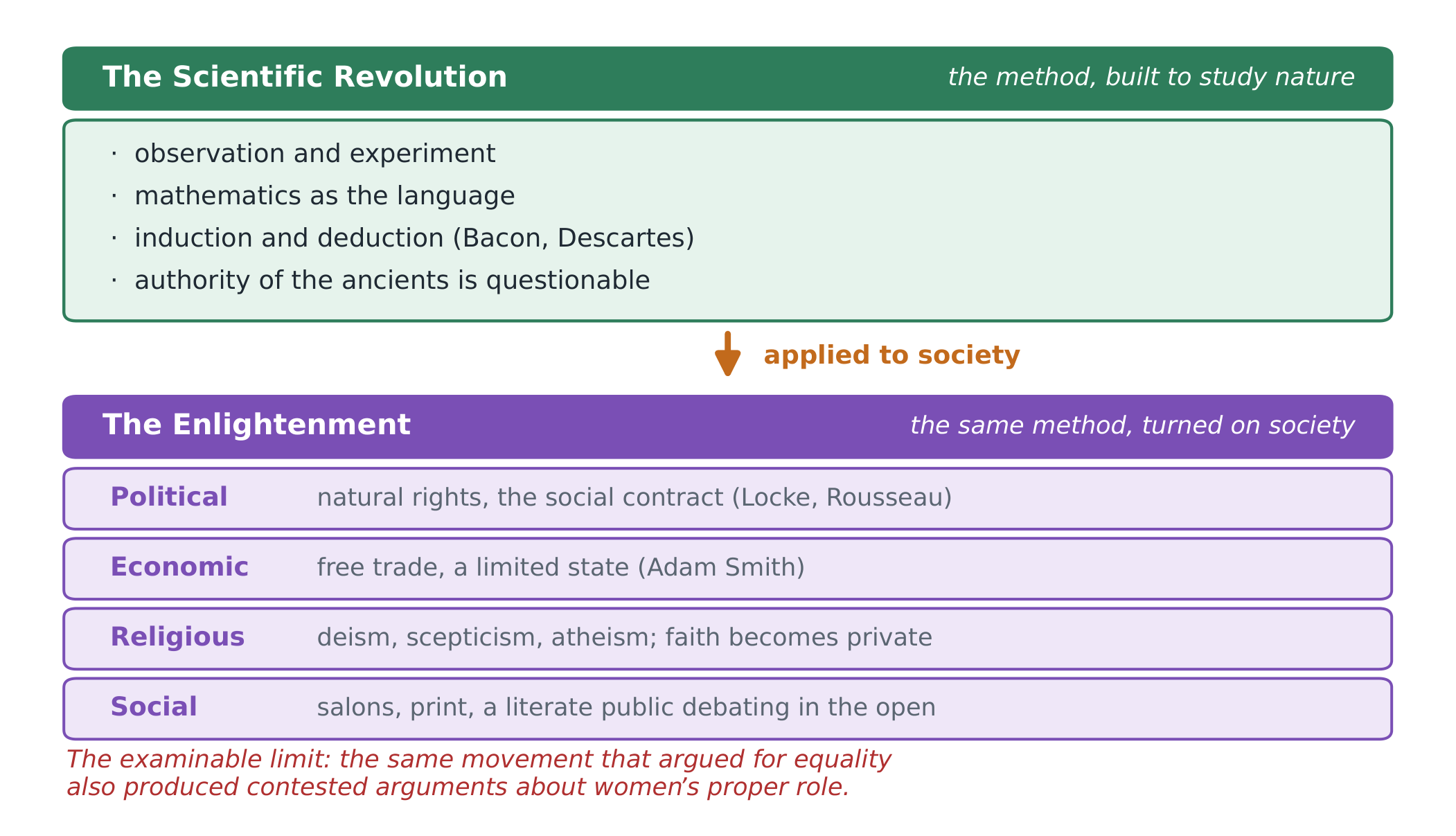
Enlightenment 启蒙运动 thought focused on empiricism, scepticism, human reason, rationalism, and classical sources of knowledge. Its outputs group into four kinds:

  • Political: Locke 洛克 and Rousseau 卢梭 developed new political models based on natural rights 天赋权利 and the social contract 社会契约. Locke's theory conceived society as composed of individuals driven by self-interest, and argued the state's role was to protect their rights.
  • Economic: mercantilist theory and practice were challenged by new ideas, including Adam Smith's 亚当·斯密, which espoused free trade 自由贸易 and a limited role for the state in the economy.
  • Religious: intellectuals including Voltaire 伏尔泰 and Diderot 狄德罗 developed deism, scepticism, and atheism 自然神论、怀疑主义与无神论, and religion came to be seen increasingly as a private rather than a public concern.
  • Social: a variety of institutions, notably salons 沙龙, explored and disseminated Enlightenment culture.

One limit is examinable and should never be omitted: despite the principles of equality the Enlightenment espoused, intellectuals such as Rousseau offered controversial arguments about the proper role of women in society. An answer that presents the Enlightenment as uniformly egalitarian is not the answer the CED wants.

The names the CED expects you to cite

An essay scores for specific evidence, so learn one work per thinker rather than a list of surnames:

Thinker Work The argument, in one line
Montesquieu 孟德斯鸠 The Spirit of the Laws power must be divided between branches of government so that each checks the others
Cesare Beccaria 贝卡里亚 On Crimes and Punishments punishment should deter rather than avenge; torture and the death penalty do neither well
Anne Robert Jacques Turgot 杜尔哥 as Louis XVI's controller-general free the grain trade and abolish the guilds — reform from inside the state, and it failed against entrenched interests
Adam Smith The Wealth of Nations the division of labour and free exchange produce more than mercantilist regulation

Where the ideas were exchanged matters as much as who wrote them, because it explains how a small readership became a public: coffeehouses, academies, lending libraries and salons put print and conversation in front of people who owned few books. The CED groups these as the institutions of Enlightenment sociability.

⚠️ Not everyone answered with reason. The same century saw a revival of German Pietism 虔敬主义 and other movements of emotional, personal faith — a reaction against rationalism, not a survival of the old order. A question about the Enlightenment's limits usually wants that, together with the controversial views on women that the section above records.

עברית
התנועה המרכזית של היחידה: שיטה שנבנתה עבור הטבע הופנת לעומת החברה
זהו המשמעות של ה-CED כאשר הוא אומר שהאורנות יישמה את המהפכה המדעית למוסדות אנושיים

האורנות התמקדה באמפיריציות, סקפטיציזם, שכל אנושי, רציונליזם ובמקורות ידע קלאסיים. הפלט שלה מתחלק לארבעה סוגים:

  • פוליטי: לוק ורוסו פיתחו מודלים פוליטיים חדשים המבוססים על זכויות טבעיות וחברת החוזה. תורתו של לוק ראתה בחברה מורכבת מאנשים המונעים על ידי אינטרס עצמי, והטילה את תפקיד המדינה להגן על זכויותיהם.
  • כלכלי: תורת ומעשה המרקantilist הוערערו על ידי רעיונות חדשים, כולל אלו של אדם סמית, שהגנו על סחר חופשי ותפקוד מוגבל למדינה בכלכלה.
  • דתי: אינטלקטואלים כולל וולטר ודידרו פיתחו דאיזם, סקפטיות ואתאיזם, והדת נראתה יותר ויותר כנושא פרטי ולא ציבורי.
  • חברתי: מגוון מוסדות, בפרט סלונים, חקרו ופיצצו את תרבות הנאורה.

מגבלה אחת היא לבחינה ואין לשלול אותה לעולם: למרות עקרונות השוויון שאתה נאורה הגנה עליהם, אינטלקטואלים כמו רוסו הציעו ארגומנטים מחלוקתיים לגבי התפקיד המתאים של נשים בחברה. תשובה המציגה את הנאורה כשוויונית באופן אחיד אינה התשובה שה-CED מחפש.

שיטה אחת, שלושה תחומים - מקור תמיד טוען בתוך אחד מהם

השמות שה-CED מצפה שתציין

מאמר קובץ נקודות עבור עדות ספציפית, לכן למד יצירה אחת לכל חושב במקום רשימת שמות משפחה:

חושב יצירה הארגומנט, בשורה אחת
מונטסקיאו רוח החוקים הכוח חייב להיות מחולק בין זרעי הממשלה כך שכל אחד יבדוק את האחרים
צ'זאר בצ'קאריה על פשעים וענישים העונש אמור להרתיע ולא להתנקם; עינוי ודין מוות אינם עושים זאת היטב
אן רובר ז'אק טורגו כמפקח הכללי של לואי XVI חופש מסחר בדגן ולבטל הקונטרות — реформа מתוך המדינה, והיא נכשלה מול אינטרסים מעמיקים
אדם סמית עושר האומות חלוקת העבודה והחלפה חופשית מייצרות יותר מאשר ויסות מרקantilist

היכן הרעיונות הוחלפו חשוב בה同等程度 למי כתב אותם, כי זה מסביר איך קהל קוראים קטן הפך לקהל רחב: בתי קפה, אקדמיות, ספריות השאלה וסלונים הביאו מדפוס ושיחה לפני אנשים שאיחזו בספרים מעטים. ה-CED מקבץ מוסדות אלו תחת מוסדות חברתיות של הנאורה.

⚠️ לא כולם ענו עם הגיון. אותו מאה ראה תחדשות של פייטיזם גרמני ותנועות אחרות של אמונה רגשית, אישית — תגובה נגד רציונליזם, לא שריד של הסדר הישן. שאלה לגבי הגבולות של הנאורה בדרך כלל מחפש את זה, יחד עם הדעות המחלוקתיות לגבי נשים שסעיף זה מעלה.

Vocabulary · ⁨מילון מונחים⁩ Train · ⁨אימון⁩
English עברית
Scientific Revolution/saɪənˈtɪfɪk ˌrevəˈluːʃn/ המהפכה המדעית
Copernicus/ˈkəʊpənɪkəs/ קופרניקוס
Galileo/ˌɡælɪˈleɪəʊ/ גלילאו
Newton/ˈnjuːtn/ ניוטון
William Harvey/ˈwɪlɪəm ˈhɑːvi/ ויליאם הארווי
integrated system/ˈɪntɪɡreɪtɪd ˈsɪstəm/ מערכת משולבת
Francis Bacon/ˈfrænsɪs ˈbeɪkən/ פרנסיס בייקון
inductive and deductive reasoning/ɪnˈdʌktɪv ænd dɪˈdʌktɪv ˈriːzənɪŋ/ הסקת אינדוקטיבית ודדוקטיבית
Enlightenment/enˈlaɪtənmənt/ תנועת האורות
Locke/lɒk/ לוק
Rousseau/ˈraʊsəʊ/ רוזו
natural rights/ˈnætʃərəl raɪts/ זכויות טבעיות
social contract/ˈsəʊʃl ˈkɒntrækt/ חברת החברה
Adam Smith's/ˈædəm smɪθz/ אדם סמית'
free trade/friː treɪd/ סחר חופשי
Voltaire/vəʊlˈteə/ ולטר
Diderot/ˈdaɪdrɒt/ דידרו
deism, scepticism, and atheism/ˈdeɪzəm ˈskeptɪsɪzəm ænd ˈeɪθɪɪzəm/ דעאות, סקפטיציזם ואתייזם
salons/ˈsælɒnz/ סלונים
Montesquieu/ˈmɒntɪskwɪuː/ מונטסקיה
Cesare Beccaria/ˈseseə beˈkeərɪə/ צ'זהרה בקריה
Anne Robert Jacques Turgot/æn ˈrɒbət ʒæk ˈtɜːɡət/ אן רובר ז'אק טורגו
revival of German Pietism/rɪˈvaɪvl ɒv ˈdʒɜːmən ˈpaɪətɪzəm/ שיקום הפיוטיזם הגרמני
European marriage pattern/ˌjʊərəˈpɪən ˈmærɪdʒ ˈpætn/ תבנית הנישואים האירופאית
inoculation/ɪˌnɒkjʊˈleɪʃn/ חיטוט
censorship/ˈsensəʃɪp/ צנזורה
literate public/ˈlɪtərət ˈpʌblɪk/ ציבור קורא וער
consumer revolution/kənˈsuːmə ˌrevəˈluːʃn/ מהפכת הצריכה
privacy/ˈprɪvəsi/ פרטיות
4.4

18th-Century Society and Demographics · ⁨חברה ודמוגרפיה במאה ה-18⁩

Syllabus · ⁨סיילבוס⁩

4.4 18th-Century Society and Demographics

Thematic FocusLearning ObjectiveHistorical Developments

SCD
Social Organization and Development — Economic, political, and cultural factors have influenced the form and status of family, class, and social groups in European history, which has, in turn, affected both the individual and society.

Unit 4.E
Explain the factors contributing to and the consequences of demographic changes from 1648 to 1815.

  • KC-2.4.I In the 17th century, small landholdings, low-productivity agricultural practices, poor transportation, and adverse weather limited and disrupted the food supply, causing periodic famines. By the 18th century, the balance between population and the food supply stabilized, resulting in steady population growth.
    • KC-2.4.I.A By the middle of the 18th century, higher agricultural productivity and improved transportation increased the food supply, allowing populations to grow and reducing the number of demographic crises (a process known as the Agricultural Revolution).
    • KC-2.4.I.B In the 18th century, plague disappeared as a major epidemic disease, and inoculation reduced smallpox mortality.
  • KC-2.4.III.A Although the rate of illegitimate births increased in the 18th century, population growth was limited by the European marriage pattern, and in some areas by various birth control methods.
  • KC-2.4.III.B As infant and child mortality decreased, and commercial wealth increased, families dedicated more space and resources to children and child-rearing, as well as private life and comfort.
  • KC-2.4.IV Cities offered economic opportunities, which attracted increasing migration from rural areas, transforming urban life and creating challenges for the new urbanites and their families.
    • KC-2.4.IV.A The Agricultural Revolution produced more food using fewer workers; as a result, people migrated from rural areas to the cities in search of work.
    • KC-2.4.IV.B The growth of cities eroded traditional communal values, and city governments strained to provide protection and a healthy environment.
    • KC-2.4.IV.C The concentration of the poor in cities led to a greater awareness of poverty, crime, and prostitution as social problems, and prompted increased efforts to police marginal groups.

Illustrative examples:

  • Inoculation and disease control:
    • Lady Mary Wortley Montagu
  • Increased emphasis on childhood: §Bullet Jean-Jacques Rousseau
    • Education in Napoleonic France and Austria
    • Painting and portraiture

Source: College Board AP Course and Exam Description · ⁨מקור: תיאור הקורס והמבחן של College Board AP⁩

English

The demographic story has a clear before and after:

  • In the seventeenth century, small landholdings, low-productivity agriculture, poor transportation, and adverse weather limited population growth and caused periodic subsistence crises.
  • Although the rate of illegitimate births rose in the eighteenth century, growth was still limited by the European marriage pattern 欧洲婚姻模式 - late marriage and a significant proportion never marrying.
  • As infant and child mortality decreased and commercial wealth increased, families dedicated more space and resources to children and their education.
  • Cities offered economic opportunities, which attracted migration from rural areas, transforming urban life and creating new social problems.

Inoculation and disease control belong to this story too: the spread of inoculation 接种 against smallpox — and later Jenner's vaccination — together with better sanitation and the retreat of plague, is part of why mortality fell. It is the clearest case in the unit of a scientific method producing a demographic effect.

עברית

הסיפור הדמוגרפי יש לו ברור לפני ואחרי:

  • במאה השבע עשרה, חזקות אדמה קטנות, חקלאות בעלת תפוקה נמוכה, תשתיות תחבורה גרועות ומזג אוויר פavorable הגבילו את צמיחת האוכלוסייה וגרמו למשברי רעב מחזוריים.
  • אף על פי ששיעור הלידה החוץ-נישואית עלה במאה השמונה עשרה, הצמיחה הוגבלה עדיין על ידי הדגם הנישואי האירופאי - נישואין מאוחרים ואחוז משמעותי שלא נישאו לעולם.
  • כאשר תמותת תינוקות וילדים ירדה ועושר מסחרי עלה, המשפחות הקדישו יותר מקום ומשאבים לילדים ולחינוכם.
  • הערים הציעו הזדמנויות כלכליות, שה吸引 migration ממחוזות כפריים, שינו את החיים בעיר ויצרו בעיות חברתיות חדשות.

החיסון ובקרת מחלות נכללים גם הם בסיפור זה: התפשטות החיסון נגד אבוקה — ואחר כך חיסונו של ג'נר — יחד עם שיפור הניקיון והתכנסות השחפת, הן חלק מהסיבות למורידה בתמרה. זו המקרה המובהק ביותר ביחידה של שיטה מדעית המובילה להשפעה דמוגרפית.

4.5

18th-Century Culture and Arts · ⁨תרבות ואמנות במאה ה-18⁩

Syllabus · ⁨סיילבוס⁩

4.5 18th-Century Culture and Arts

Thematic FocusLearning ObjectiveHistorical Developments

CID
Cultural and Intellectual Developments — The creation and transmission of knowledge, including the relationship between traditional sources of authority and the development of differing world views, had significant political, intellectual, economic, cultural, and social effects on European and world societies.

Unit 4.F
Explain how European cultural and intellectual life was maintained and changed throughout the period from 1648 to 1815.

  • KC-2.3.II.B Despite censorship, increasingly numerous and varied printed materials served a growing literate public and led to the development of public opinion.
  • KC-2.3.II.C Natural sciences, literature, and popular culture increasingly exposed Europeans to representations of peoples outside Europe and, on occasion, challenges to accepted social norms.
  • KC-2.3.V The arts moved from the celebration of religious themes and royal power to an emphasis on private life and the public good.
    • KC-2.3.V.A Until about 1750, Baroque art and music promoted religious feeling and was employed by monarchs to illustrate state power.
    • KC-2.3.V.B 18th-century art and literature increasingly reflected the outlook and values of commercial and bourgeois society. Neoclassicism expressed new Enlightenment ideals of citizenship and political participation.
  • KC-2.4.II The consumer revolution of the 18th century was shaped by a new concern for privacy, encouraged the purchase of new goods for homes, and created new venues for leisure activities.

Illustrative examples:

  • Printed materials:
    • Newspapers
    • Periodicals
    • Books
    • Pamphlets
    • The Encyclopédie
  • Baroque artists and musicians who promoted religion or glorified monarchy:
    • Diego Velásquez
    • Gian Bernini
    • George Frideric Handel
    • J. S. Bach
  • Artistic movements that reflected commercial society or Enlightenment ideals:
    • Dutch painting
    • Rembrandt
    • Jan Vermeer
    • Jacques-Louis David
    • Pantheon in Paris
  • Literature that reflected commercial society or Enlightenment ideals:
    • Daniel Defoe
    • Samuel Richardson
    • Henry Fielding
    • Johann Wolfgang von Goethe
    • Jane Austen (CONT’D) A new concern for privacy:
    • Homes built to include private retreats, such as the boudoir §Bullet Novels that encouraged a reflection on private emotion New consumer goods for homes: §Bullet Porcelain dishes
    • Cotton and linens for home décor §Bullet Mirrors
    • Prints New leisure venues: §Bullet Coffeehouses §Bullet Taverns §Bullet Theaters and opera houses

Source: College Board AP Course and Exam Description · ⁨מקור: תיאור הקורס והמבחן של College Board AP⁩

English
  • Despite censorship 审查, increasingly numerous and varied printed materials served a growing literate public 识字公众 and produced a public sphere in which opinion could form outside the state.
  • Natural sciences, literature, and popular culture increasingly exposed Europeans to representations of peoples outside Europe.
  • The arts moved from the celebration of religious themes and royal power to an emphasis on private life and the public good - a shift in subject that tracks the shift in authority.
  • The consumer revolution 消费革命 of the eighteenth century was shaped by a new concern for privacy 隐私 and encouraged the purchase of new goods for the home.
עברית
  • למרות הצנזורה, כמות הולכת וגוברת ומגוונת יותר של חומרים מודפסים שירתה ציבור סופר צומח ויצרה ספירה ציבורית שבה דעת יכולה להתגבש מחוץ למדינה.
  • מדעי הטבע, הספרות והתרבות הפופולרית חשפו את האירופאים באופן increasingly ל-ייצוגים של עמים מחוץ לאירופה.
  • האמנות עברה מחגיגת נושאים דתיים וכוח מלכותי לדגש על חיים פרטיים ועל טוב הציבור - שינוי בנושא המעקב אחרי שינוי בסמכות.
  • מהפכת הצריכה של המאה השמונה עשרה עוצבה על ידי דאגה חדשה לפרטיות ועודדה רכישה של מוצרים חדשים לבית.
4.6

Enlightened and Other Approaches to Power · ⁨גישות מואירות ואחרות לכוח⁩

Syllabus · ⁨סיילבוס⁩
English

4.6 Enlightened and Other Approaches to Power

Thematic Focus (SOP): States and Other Institutions of Power — European states and nations developed governmental and civil institutions from 1450 to the present to organize society and consolidate political power, with a variety of social, cultural, and economic effects.

Learning Objective Unit 4.G: Explain how different forms of political power were influenced by Enlightenment thought from 1648 to 1815. THEMATIC FOCUS National and European Identity NEI Definitions and perceptions of regional, cultural, national, and European identity have developed and been challenged over time, with varied and often profound effects on the political, social, and cultural order in Europe. LEARNING OBJECTIVE

  • KC-2.1.I.C In the 18th century, a number of states in eastern and central Europe experimented with enlightened absolutism.
  • KC-2.3.IV.C By 1800, most governments in western and central Europe had extended toleration to Christian minorities and, in some states, civil equality to Jews. HISTORICAL DEVELOPMENTS

Learning Objective Unit 4.H: Explain how and why political and religious developments challenged or reinforced the idea of a unified Europe from 1648 to 1815.

  • KC-2.1.III.A As a result of the Holy Roman Empire’s limitation of sovereignty in the Peace of Westphalia, Prussia rose to power, and the Habsburgs, centered in Austria, shifted their empire eastward.

Illustrative examples:

  • Enlightened monarchs: §Bullet Frederick II of Prussia §Bullet Joseph II of Austria Prussian and Habsburg rulers:
    • Maria Theresa of Austria
    • Frederick William I of Prussia
    • Frederick II of Prussia
עברית

4.6 גישה מעורבת ואחרים לכוח

מיקוד נושאי (SOP): מדינות ומוסדות כוח אחרים — מדינות ואומות אירופיות פיתחו מוסדות ממשליים ואזרחיים משנת 1450 ועד היום כדי לארגן את החברה ולחזק את הכוח הפוליטי, עם מגוון השפעות חברתיות, תרבותיות וכלכליות.

מטרות למידה ליחידה 4.G: הסבר כיצד צורות שונות של כוח פוליטי הושפעו מתפיסות העיון מ-1648 עד 1815. מיקוד נושאי זהות לאומית ואירופאית NEI הגדרות וקליטות של זהות אזורית, תרבותית, לאומית ואירופאית התפתחו והת挑战ו לאורך הזמן, עם השפעות מגוונות ועמוקות לעיתים קרובות על הסדר הפוליטי, החברתי והתרבותי באירופה. מטרת למידה

  • KC-2.1.I.C במאה ה-18, מספר מדינות במזרח ובמרכז אירופה נסו בגישת המונרכיה המעורבת.
  • KC-2.3.IV.C עד שנת 1800, רוב הממשלות במערב ובמרכז אירופה הרחיבו את סובלנות הדת כלפי מיעוטים נוצריים, ובמדינות מסוימות, שוויון אזרחי כלפי יהודים. התפתחות היסטורית

מטרות למידה ליחידה 4.H: הסבר כיצד והמדוע התפתחו פוליטיות ודתיות אתגרו או חיזקו את הרעיון של אירופה מאוחדת מ-1648 עד 1815.

  • KC-2.1.III.A כתוצאה מהמגבלה שהטיל האימפריה הרומית הקדושה על הריבונות בהסכמי וסטפליה, פרוסיה עלתה בעוצמה, והבסבורגים, שמרכזם היה באוסטריה, שינו את האימפריה שלהם לכיוון מזרח.

דוגמאות מדגמיות:

  • מלכים מעורבים: §Bullet פרדריק השני מפרוסיה §Bullet יוזף השני מאוסטריה שלטונות פרוסיים ובסבורגיים:
    • מריה תרזה מאוסטריה
    • פרדריק ויליאם הראשון מפרוסיה
    • פרדריק השני מפרוסיה

Source: College Board AP Course and Exam Description · ⁨מקור: תיאור הקורס והמבחן של College Board AP⁩

English

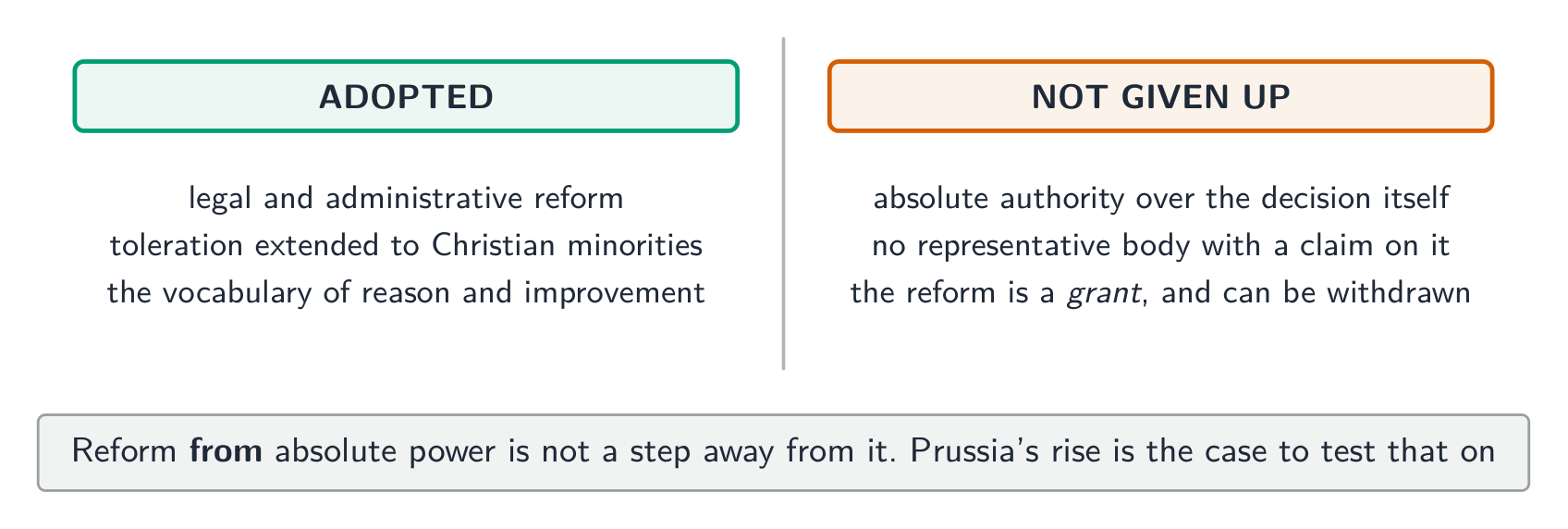
In the eighteenth century a number of states in eastern and central Europe experimented with enlightened absolutism 开明专制 - rulers adopting Enlightenment-inspired reforms in law, education, and administration while retaining absolute authority. The tension in that phrase is the examinable point.

By 1800 most governments in western and central Europe had extended toleration to Christian minorities, and in some states civil rights as well.

And as a result of the Holy Roman Empire's limitation of sovereignty at Westphalia, Prussia rose to power 普鲁士 while the Habsburgs turned toward their eastern lands - a structural consequence of Unit 2's settlement arriving a century later.

עברית

במאה השמונה עשרה מספר מדינות באירופה מזרחית ומרכזית ניסו בסמכות מוחלטת מוארת - שליטים שאמצו реформs המעוררות מהתעוררות בתחומי החוק, החינוך והניהול תוך שמירה על סמכות מוחלטת. המתח בביטוי זה הוא הנקודה שנבדקת.

עד שנת 1800 רוב הממשלות במערב ומרכז אירופה הרחיבו את הסובלנות לעדות נוצריות מיעוט, ובמדינות מסוימות גם זכויות אזרחיות.

וככל תוצאה של הגבלת הריבונות בווסטפליה על ידי הקיסרות הרומית הקדושה, פרוסיה עלתה בכוח בעוד שההבסבורגים פנו אל אדמותיהם המזרחיות - תוצאה מבנית של הסכם היחידה 2 שהגיעה מאה שנים מאוחר יותר.

מה אושר, ומה מעולם לא הושאר
Explore · ⁨חקור⁩

Sort what was adopted from what was never given up

The CED's clause is 'while retaining absolute authority', and the marks are in that clause.

Vocabulary · ⁨מילון מונחים⁩ Train · ⁨אימון⁩
English עברית
enlightened absolutism/enˈlaɪtnd ˈæbsəluːtɪzəm/ אבסולוטיות מוארת
Prussia rose to power/ˈprʌʃə rəʊz tə ˈpaʊə/ פרוסיה עלתה לעמדת כוח
René Descartes/rɪˈneɪ dɪˈskɑːts/ רנה דקארט
4.7

Causation in the Age of the Enlightenment · ⁨סיבתיות בתקופת ההארה⁩

Syllabus · ⁨סיילבוס⁩
English

4.7 Causation in the Age of the Scientific Revolution and the Enlightenment

Learning Objective Unit 4.I: Explain how and why the Scientific Revolution and Enlightenment challenged the existing European order and understanding of the world.

  • KC-1.1 The rediscovery of works from ancient Greece and Rome and observation of the natural world changed many Europeans’ view of their world.
    • KC-1.1.IV New ideas in science based on observation, experimentation, and mathematics challenged classical views of the cosmos, nature, and the human body, although existing traditions of knowledge and the universe continued.
  • KC-2.3 The spread of Scientific Revolution concepts and practices and the Enlightenment’s application of these concepts and practices to political, social, and ethical issues led to an increased but not unchallenged emphasis on reason in European culture.
    • KC-2.3.I Enlightenment thought, which focused on concepts such as empiricism, skepticism, human reason, rationalism, and classical sources of knowledge, challenged the prevailing patterns of thought with respect to social order, institutions of government, and the role of faith.
    • KC-2.3.II New public venues and print media popularized Enlightenment ideas.
    • KC-2.3.III New political and economic theories challenged absolutism and mercantilism.
    • KC-2.3.IV During the Enlightenment, the rational analysis of religious practices led to natural religion and the demand for religious toleration.
  • KC-2.4 The experiences of everyday life were shaped by demographic, environmental, medical, and technological changes.
    • KC-2.4.III By the 18th century, family and private life reflected new demographic patterns and the effects of the commercial revolution.
עברית

4.7 סיבתיות בתקופת המהפכה המדעית והעיון

מטרות למידה ליחידה 4.I: הסבר כיצד והמדוע המהפכה המדעית והעיון אתגרו את הסדר האירופאי הקיים וההבנה העולמית.

  • KC-1.1 הממצאה מחודשת של יצירות מהיוון העתיקה ורומא ותצפית בעולם הטבע שינו את מבטן של אנשי אירופה על עולםהם.
    • KC-1.1.IV רעיונות חדשים במדע המבוססים על תצפית, ניסוי ומתמטיקה ערערו את התפיסות הקלאסיות של היקום, הטבע וגוף האדם, אף על פי שמסורות ידע קיימות והיקום המשיכו לקיים.
  • KC-2.3 התפשטת מושגים ומנהגים של המהפכה המדעית והיישום של מושגים אלו על ידי התעוררות לנושאים פוליטיים, חברתיים ואתיים הביאו להדגשה מוגברת אך לא ללא מתנגדים על סברת המוח בתרבות האירופאית.
    • KC-2.3.I מחשבת התעוררות, שהתמקדה במושגים כמו אמפריזם, סקפטציזם, סברת המוח האנושית, רציונליזם ומקורות ידע קלאסיים, ערערה את הדפוסי המחשבה השוררים בנוגע לסדר חברתי, מוסדות ממשל ותפקידו של האמונה.
    • KC-2.3.II מקומות ציבוריים חדשים ותקשורת מודפסת הפכו את רעיונות התעוררות לפופולריים.
    • KC-2.3.III תיאוריות פוליטיות וכלכליות חדשות ערערו את האבסולוטיות והמרקantilism (מרקנטיליזם).
    • KC-2.3.IV במהלך התעוררות, הניתוח הרציונלי של מנהגי דתיים הוביל לדת טבעית ולדרישה לסבלנות דתית.
  • KC-2.4 החוויות של חיי היומיום עוצבו על ידי שינויים דמוגרפיים, סביבתיים, רפואיים וטכנולוגיים.
    • KC-2.4.III עד המאה ה-18, המשפחה וחיי פרטיים ביטחו דפוסי דמוגרפיים חדשים והשפעותיהן של המהפכה המסחרית.
Source: College Board AP Course and Exam Description · ⁨מקור: תיאור הקורס והמבחן של College Board AP⁩

English

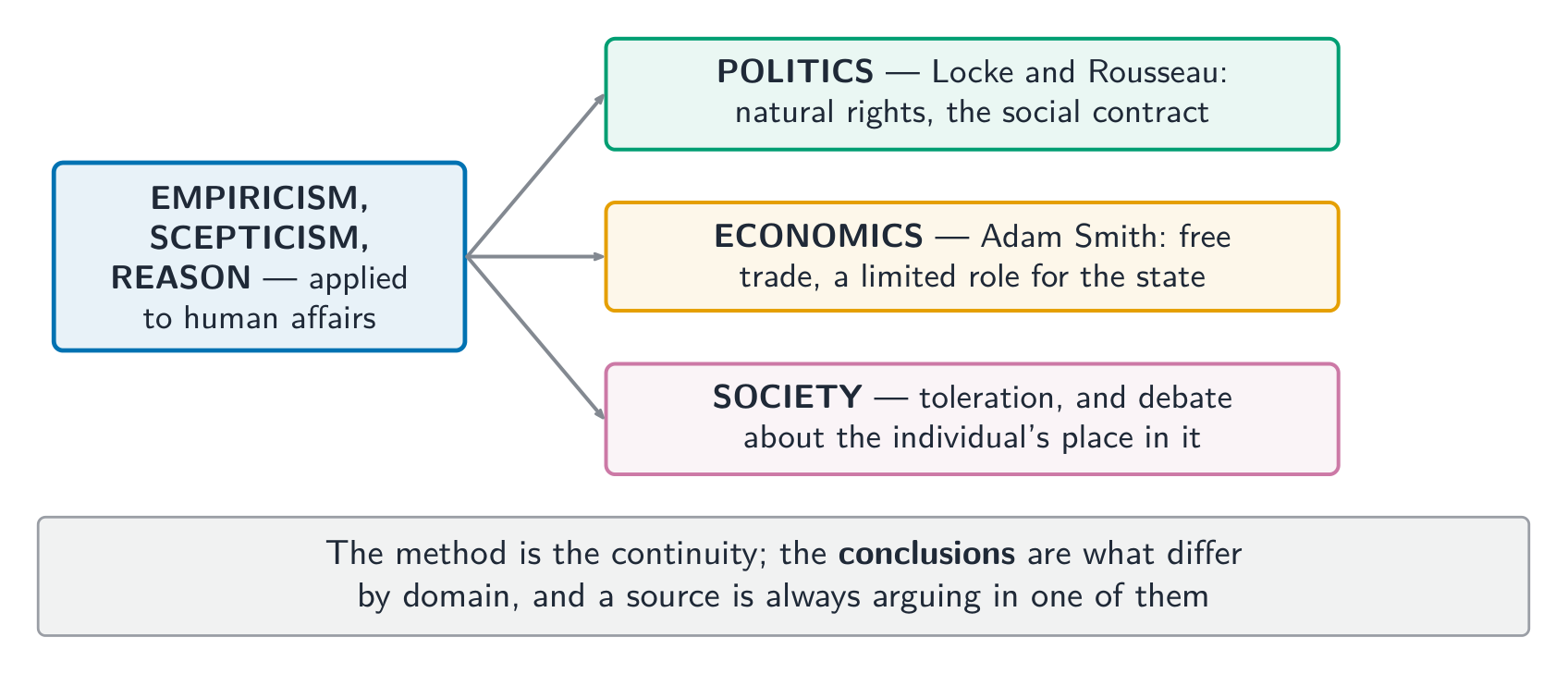
The unit's reasoning skill is causation, applied to how these movements challenged the existing European worldview.

Worked example (a real AP exam question). AP European History short-answer questions here ask, for example, to "Explain one way in which Enlightenment thought challenged existing political authority in the eighteenth century." A full-mark answer identifies the challenge and traces it: "Locke's theory of natural rights and the social contract held that government exists to protect the rights of individuals and derives its authority from their consent. This directly undermined the claim that a monarch's authority came from God, because it made obedience conditional on the ruler's performance rather than unconditional." Notice the mechanism: the answer shows how one argument displaces another, rather than listing thinkers.

עברית

מיומן החשיבה של היחידה היא סיבתיות, המיושמת על האופן שבו תנועות אלו פקקו את העולם-הראייה האירופאי הקיים.

דוגמה מפורטת (שאלה אמיתית בבחינת AP). בשאלות מענה קצר בהיסטוריה אירופאית של AP נתבקשים כאן, למשל, "להסביר דרך אחת שבה חשיבת התעוררות אתגרה את הסמכות הפוליטית הקיימת במאה השמונה עשרה." תשובה מלאה עם ציון מלא מזהה את האתגר ועוקבת אחריו: "תיאוריית הזכויות הטבעיות והחברת החוק של לוק טענה שממשלה קיימת כדי להגן על זכויות הפרטים ולוודא את סמכותה מתוך הסכמתם. הדבר פגע ישירות בטענה שסמכות המלך מגיעה מהאל, מכיוון שהפך את ההתמכדות לתנאי ביצוע השלטן ולא ללא תנאים." שימו לב למנגנון: התשובה מראה איך ארגומנט אחד מחליף אחר, ולא פשוט מציגה חוכמים.

4.7

Exam tips · ⁨טיפים לבחינות⁩

English
  • Learn the CED's own sentence: the Enlightenment applied Scientific Revolution methods to political, social, and ethical issues. Many questions are answered by unpacking it.
  • The Scientific Revolution was not a clean break - alchemy and astrology persisted. Continuity points score.
  • Group Enlightenment outputs as political, economic, religious, social. Four labelled kinds beat a list of names.
  • Always note the limits on equality, especially regarding women. The CED names them explicitly.
  • Enlightened absolutism is a tension, not a contradiction: reform without surrendering authority.
  • The public sphere - print, literacy, salons - is the mechanism by which ideas became political. Use it to explain, not just to describe.
עברית
  • ללמוד את המשפט של ה-CED עצמו: ההארה יישמה שיטות המהפכה המדעית על נושאים פוליטיים, חברתיים ואתיים.许多 questions נענות על ידי פירוק שלו.
  • המהפכה המדעית לא הייתה שבירה נקייה - האלכימיה והאסטרונומיה המזל המשיכו. נקודות המשכיות נקודות.
  • לסדר את תוצרי ההארה בקבוצות פוליטיות, כלכליות, דתיות, חברתיות. ארבעה סוגים מסומנים עדיפים על רשימת שמות.
  • תמיד לשים לב למגבלות על שוויון, במיוחד לגבי נשים. ה-CED מפרט אותן במפורש.
  • אוטוריטריות מוארת היא מתח, לא סתירה: רפורמה ללא ויתור על סמכות.
  • הספירה הציבורית - הדפסה, א literacy, סלונים - היא המנגנון שבו רעיונות הפכו לפוליטיים. השתמש בזה להסביר, לא רק לספר.

Interactive lessons on this topic · ⁨שיעורים אינטראקטיביים בנושא זה⁩

Work through it step by step, with instant-check exercises. · ⁨לעבור על הדברים צעד אחר צעד, עם תרגילים לבדיקה מיידית.⁩

Past Papers · ⁨מבחני עבר⁩

More topics in AP European History · ⁨היסטוריה אירופאית - AP⁩ · ⁨נושאים נוספים בAP European History · ⁨היסטוריה אירופאית - AP⁩⁩

Log in or create account · ⁨היכנס או צור חשבון⁩

IGCSE, A-Level & AP