Skip to content · ⁨דלג לתוכן⁩

Refining Qualified Arguments · ⁨שיפור טענות מקושות⁩

AP English Language and Composition · ⁨שפה ואנגלית כתיבה יצירתית - AP⁩ · Topic 9 · ⁨נושא 9⁩

Video lesson for this topic · ⁨שיעור וידאו לנושא זה⁩ Open the video page · ⁨פתח את עמוד הוידאו⁩
4:51

יחידה 9: שיפור ארגומנטים מוקפדים

יחידה 9 קצרה, והיא הצעד האחרון בקורס: כיצד להתמודד עם ארגומנטים הנגד לאלה שלך. הכל כאן מוערך ישירות במבחן, וה…

English narration · English + 中文 subtitles burned in · ⁨קריאת קול באנגלית · תרגום אנגלי + סינית שרוף בתוך הסרטון⁩

9.1

How Claims Are Qualified · ⁨כיצד טענות מוגבלות⁩

Syllabus · ⁨סיילבוס⁩
English

Enduring Understanding (CLE-1): Writers make claims about subjects, rely on evidence that supports the reasoning that justifies the claim, and often acknowledge or respond to other, possibly opposing, arguments.

Learning Objective 3.C: Reading – Explain ways claims are qualified through modifiers, counterarguments, and alternative perspectives.

  • CLE-1.AA Writers enhance their credibility when they refute, rebut, or concede opposing arguments and contradictory evidence.
  • CLE-1.AB When writers concede, they accept all or a portion of a competing position or claim as correct, agree that the competing position or claim is correct under a different set of circumstances, or acknowledge the limitations of their own argument.
  • CLE-1.AC When writers rebut, they offer a contrasting perspective on an argument and its evidence or provide alternative evidence to propose that all or a portion of a competing position or claim is invalid.
  • CLE-1.AD When writers refute, they demonstrate, using evidence, that all or a portion of a competing position or claim is invalid.
  • CLE-1.AE Transitions may be used to introduce counterarguments.
  • CLE-1.AF Not all arguments explicitly address a counterargument.
  • CLE-1.Y Effectively entering into an ongoing conversation about a subject means engaging the positions that have already been considered and argued about.
  • CLE-1.Z Evidence and sources will either support, complement, or contradict a writer’s thesis.
עברית

הבנה מתמשכת (CLE-1): כותבים מטילים טענות בנושאים, נסמכים על עדויות התומכות בלוגיקה המצדיקה את הטענה, ולעיתים קרובות מכירים או מגיבים לטענות אחרות, אולי מתנגדות.

מטרות למידה 3.C: קריאה – הסבר על דרכים שבהן טענות מוסתגרות באמצעות תוספים, טיעונים נגדים וזוויות מבט חלופיות.

  • CLE-1.AA כותבים מגברים את אמינותם כאשר הם מפרכים, שוכחים או מעידים טיעונים מנוגדים והוכחות סותרות.
  • CLE-1.AB כאשר כותבים מעידים, הם מקבלים כל או חלק ממיקום תחרותי או טענה כנכונה, מסכימים שמיקום תחרותי או טענה נכונים תחת סט תנאים אחר, או מודעים למגבלות הטיעון שלהם.
  • CLE-1.AC כאשר כותבים שוכחים, הם מציעים זווית מנוגדת לטיעון ולהוכחותיו או מספקים הוכחות חלופיות כדי להציע שכל או חלק ממיקום תחרותי או טענה אינם תקפים.
  • CLE-1.AD כאשר סופרים שוללים, הם מראים, באמצעות עובדות, שכל או חלק ממעמדה המתחרה או מהטענה אינם תקפים.
  • CLE-1.AE ניתן להשתמש במעברים כדי להקדים טיעונים נגדיים.
  • CLE-1.AF לא כל הטיעונים מתמודדים במפורש עם טיעון נגדי.
  • CLE-1.Y כניסה אפקטיבית לשיח正在进行的 על נושא מסוים פירושה התמודדות עם העמדות שנדונו ונעלו בהן דיון עד כה.
  • CLE-1.Z העובדות והמקורות יתמוכו, ישלבו או יסתרו את הטזת הסופר.
Source: College Board AP Course and Exam Description · ⁨מקור: תיאור הקורס והמבחן של College Board AP⁩

English

Unit 9 is short and it is the course's final move: how to handle the arguments that oppose yours. Everything here is directly rewarded on the exam, and the three key verbs are constantly confused.

The framing first:

  • Effectively entering an ongoing conversation about a subject means engaging the positions that have already been taken. An argument that ignores them is not participating in the discussion, only announcing into it.
  • Evidence and sources will either support, complement, or contradict 支持、补充或反驳 a writer's thesis. All three are usable - contradicting evidence is not a problem to be hidden but material to be handled.
  • Writers enhance their credibility when they refute, rebut, or concede opposing arguments and contradictory evidence.

The three moves, in the CED's own definitions:

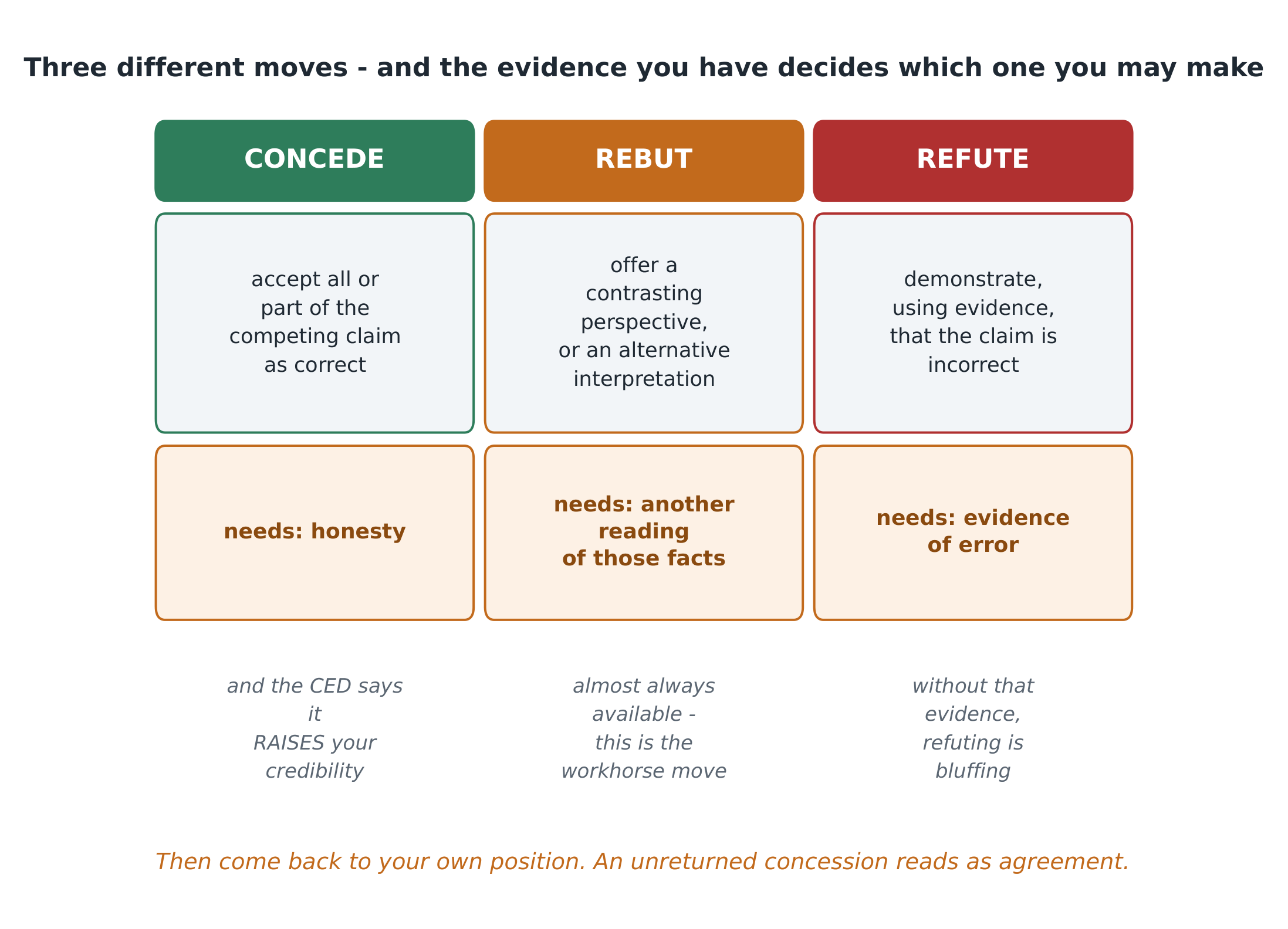
  • Concede 让步: writers accept all or a portion of a competing position or claim as correct, and agree that the opposing point has merit.
  • Rebut 反驳: writers offer a contrasting perspective on an argument and its evidence, or provide an alternative interpretation.
  • Refute 驳倒: writers demonstrate, using evidence, that all or a portion of a competing position or claim is incorrect.

The distinction is what your evidence lets you do. Refuting requires evidence of error; if you do not have it, refuting is bluffing and a reader will see it. Rebutting requires only an alternative reading of the same facts, which is far more often available. Conceding requires honesty, and it costs nothing - the CED says explicitly that it enhances credibility.

Two further points:

  • Transitions may be used to introduce counterarguments - and, as in Unit 5, the transition should signal the relationship. Critics argue announces one; the strongest objection to this is announces one and ranks it.
  • Not all arguments explicitly address a counterargument. True of texts you read, and worth noting when analysing - an argument that engages no opposition has told you something about its intended audience.
עברית

Unit 9 is short and it is the course's final move: how to handle the arguments that oppose yours. Everything here is directly rewarded on the exam, and the three key verbs are constantly confused.

The framing first:

  • Effectively entering an ongoing conversation about a subject means engaging the positions that have already been taken. An argument that ignores them is not participating in the discussion, only announcing into it.
  • Evidence and sources will either support, complement, or contradict (支持、补充或反驳) a writer's thesis. All three are usable - contradicting evidence is not a problem to be hidden but material to be handled.
  • Writers enhance their credibility when they refute, rebut, or concede opposing arguments and contradictory evidence.
שלושה תנועות שונות, שלושה קבלות שונות - והתלמידים בדרך כלל מבלבלים ביניהן
Concede מקבל, rebut מאתגר, refute משקר. בחר את התנועה שהוכחה שלך יכולה לתמוך בה באמת

שלושת התנועות, לפי ההגדרות של ה-CED עצמו:

  • Concede (מקבל): הכותבים מקבלים חלק או כולו עמדה מתחרה או טענה כנכונה, ומסכימים שהנקודה הנגדית יש לה ערך.
  • Rebut (מאתגר): הכותבים מציעים נקודת מבט נוגדת לגבי ארגומנט והוכחותיו, או מספקים פרשנות חלופית.
  • Refute (משקר): הכותבים מראים, באמצעות הוכחות, שחלק או כולו מעמדה מתחרה או טענה הוא שגוי.

ההבדל טמון במה שההוכחות שלך מאפשרות לך לעשות. Refuting דורש הוכחת שגיאה; אם אין לך אותה, רפיאוט הוא פיקסייה והקורא יראה זאת. Rebutting דורש רק קריאה חלופית של אותם עובדות, וזו זמינה לעיתים קרובות יותר. Conceding דורש כנות, ואינו עולה כלום - ה-CED אומר במפורש שהוא מגביר את האמינות.

שתי נקודות נוספות:

  • Transitions יכולים לשמש להקדמת ארגומנטים נגדיים - ובדיו כמו בUnit 5, ה-Transition צריך לסמן את הקשר. Critics argue (הבקרים טוענים) מכריזה על אחד; the strongest objection to this is (הבקרה החזקה ביותר לכך היא) מכריזה על אחד ומדרגת אותו.
  • לא כל הארגומנטים מתייחסים במפורש לארגומנט נגדי. נכון עבור הטקסטים שקוראים, ושווה לציין בעת ניתוח - ארגומנט שאינו מתמודד עם התנגדות אמר לך משהו על הקהל המיועד אליו.
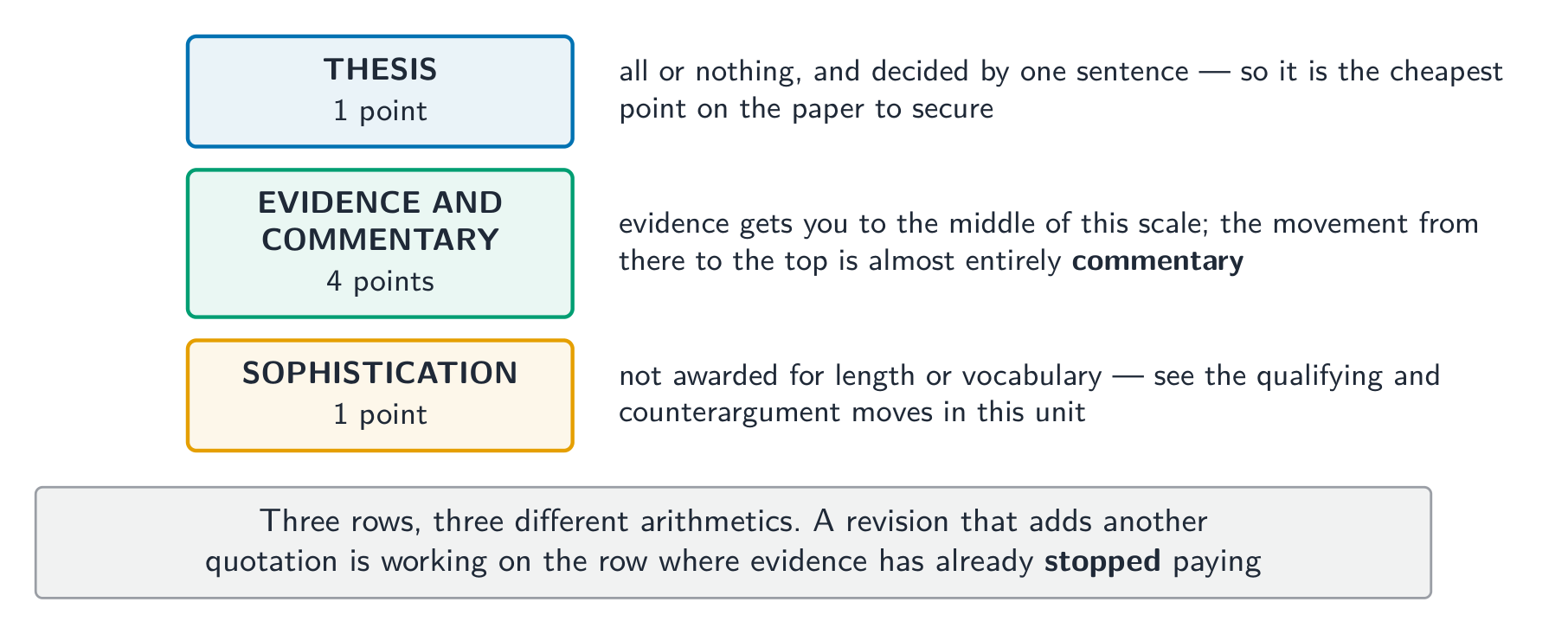
שלוש שורות, שלוש אריתמטיקות שונות - תתחדש בתנועה שעדיין משלמת
Explore · ⁨חקור⁩

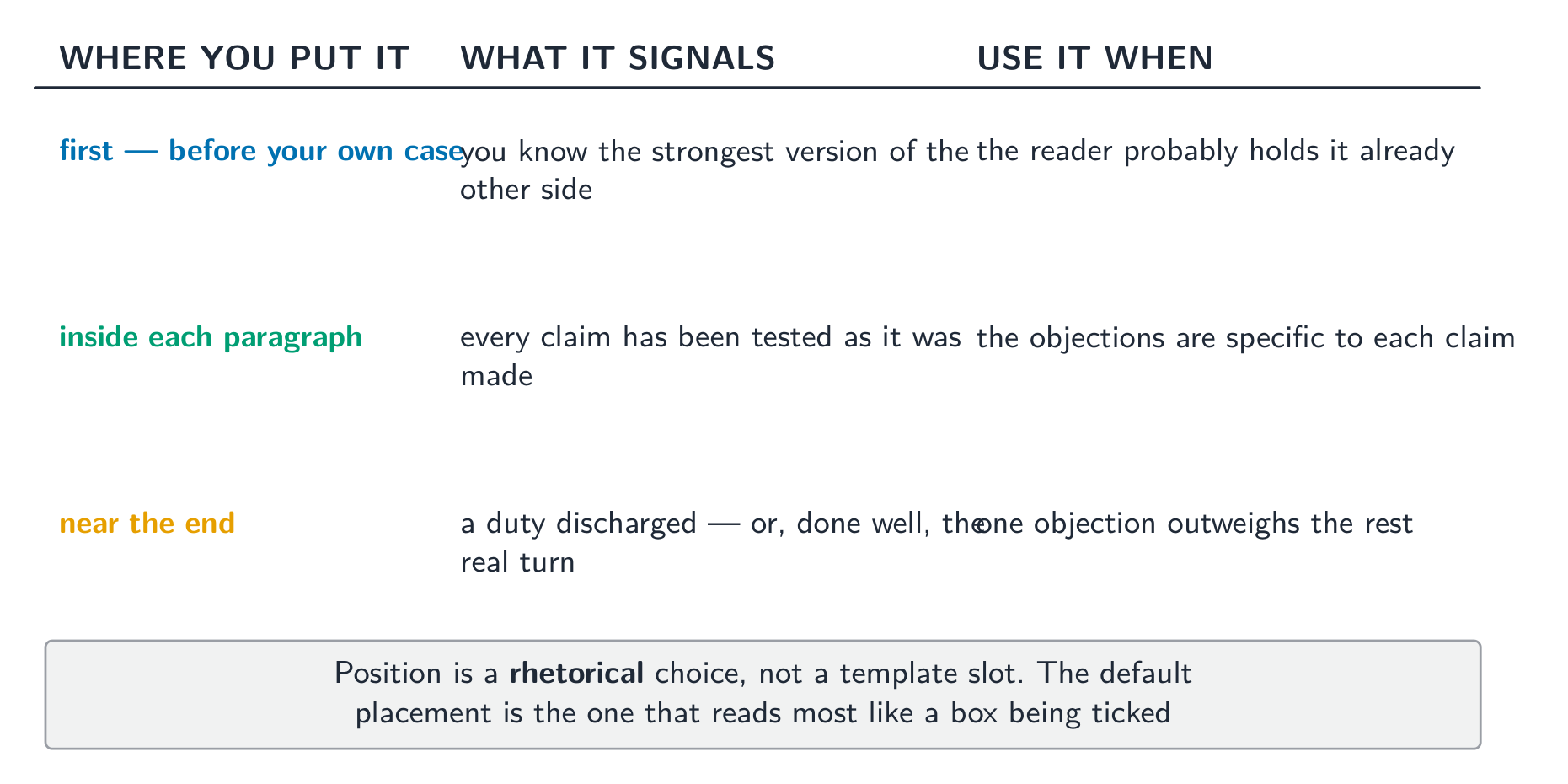
Place the counterargument, and say what it signals · ⁨התמקם בטיעון הנגד, ואמור מה הוא מעיד⁩

Position carries meaning: early it frames the essay, late it can read as a box being ticked. · ⁨למיקום יש משמעות: מוקדם הוא מסגיר את המאמר, מאוחר יותר עשוי לקרוא כאילו תוך כדי סימון תיבה.⁩

Vocabulary · ⁨מילון מונחים⁩ Train · ⁨אימון⁩
English עברית
support, complement, or contradict/səˈpɔːt ˈkɒmplɪmənt ɔː ˌkɒntrəˈdɪkt/ תמיכה, השלמה או סירוב
Concede/kənˈsiːd/ הכרה
Rebut/rɪˈbʌt/ פיוט
Refute/rɪˈfjuːt/ פירוק
9.2

Qualifying a Claim · ⁨הגבלת טענה⁩

Syllabus · ⁨סיילבוס⁩
English

Enduring Understanding (CLE-1): Writers make claims about subjects, rely on evidence that supports the reasoning that justifies the claim, and often acknowledge or respond to other, possibly opposing, arguments.

Learning Objective 4.C: Writing – Qualify a claim using modifiers, counterarguments, or alternative perspectives.

  • CLE-1.AA Writers enhance their credibility when they refute, rebut, or concede opposing arguments and contradictory evidence.
  • CLE-1.AB When writers concede, they accept all or a portion of a competing position or claim as correct, agree that the competing position or claim is correct under a different set of circumstances, or acknowledge the limitations of their own argument.
  • CLE-1.AC When writers rebut, they offer a contrasting perspective on an argument and its evidence or provide alternative evidence to propose that all or a portion of a competing position or claim is invalid.
  • CLE-1.AD When writers refute, they demonstrate, using evidence, that all or a portion of a competing position or claim is invalid.
  • CLE-1.AE Transitions may be used to introduce counterarguments.
  • CLE-1.AF Not all arguments explicitly address a counterargument.
  • CLE-1.Y Effectively entering into an ongoing conversation about a subject means engaging the positions that have already been considered and argued about.
  • CLE-1.Z Evidence and sources will either support, complement, or contradict a writer’s thesis.
עברית

הבנה מתמשכת (CLE-1): כותבים מטילים טענות בנושאים, נסמכים על עדויות התומכות בלוגיקה המצדיקה את הטענה, ולעיתים קרובות מכירים או מגיבים לטענות אחרות, אולי מתנגדות.

מטרת למידה 4.C: כתיבה – הקפד על טענה באמצעות תחנות משפטיות, טיעונים נגדיים או זוויות מבט חלופיות.

  • CLE-1.AA כותבים מגברים את אמינותם כאשר הם מפרכים, שוכחים או מעידים טיעונים מנוגדים והוכחות סותרות.
  • CLE-1.AB כאשר כותבים מעידים, הם מקבלים כל או חלק ממיקום תחרותי או טענה כנכונה, מסכימים שמיקום תחרותי או טענה נכונים תחת סט תנאים אחר, או מודעים למגבלות הטיעון שלהם.
  • CLE-1.AC כאשר כותבים שוכחים, הם מציעים זווית מנוגדת לטיעון ולהוכחותיו או מספקים הוכחות חלופיות כדי להציע שכל או חלק ממיקום תחרותי או טענה אינם תקפים.
  • CLE-1.AD כאשר סופרים שוללים, הם מראים, באמצעות עובדות, שכל או חלק ממעמדה המתחרה או מהטענה אינם תקפים.
  • CLE-1.AE ניתן להשתמש במעברים כדי להקדים טיעונים נגדיים.
  • CLE-1.AF לא כל הטיעונים מתמודדים במפורש עם טיעון נגדי.
  • CLE-1.Y כניסה אפקטיבית לשיח正在进行的 על נושא מסוים פירושה התמודדות עם העמדות שנדונו ונעלו בהן דיון עד כה.
  • CLE-1.Z העובדות והמקורות יתמוכו, ישלבו או יסתרו את הטזת הסופר.
Source: College Board AP Course and Exam Description · ⁨מקור: תיאור הקורס והמבחן של College Board AP⁩

English

For your own writing, the strongest and most reliable shape on Question 3 is:

  1. State your position, qualified to the ground your evidence covers.
  2. Concede the part of the opposing position that is genuinely correct.
  3. Rebut or refute the rest - rebut if you have an alternative reading, refute only if you have evidence of error.
  4. Show why your position survives the concession.

Step 4 is the one most students omit, and it is where the sophistication point lives. Conceding and then not returning to your own argument reads as having changed your mind.

Worked example (a real AP exam question). On a Question 3 argument prompt, compare two treatments of the same objection. Weak: "Some people disagree, but they are wrong." That names an opposing position without engaging it - it is neither concession, rebuttal, nor refutation. Strong: "The objection that the policy is too costly is correct as far as it goes: the direct expenditure is higher than any alternative considered. But cost is only decisive if the alternatives achieve the same result, and the same report shows they do not - so the comparison the objection depends on is not available." That paragraph concedes the cost, refutes the comparison with evidence, and returns to the writer's own position. Three moves, and every one of them is on the rubric.

עברית

לכתיבה שלך, הצורה החזקה והאמינה ביותר בשאלה 3 היא:

  1. הצג את עמדתך, מוגבלת למרחב שבו ההוכחות שלך תקפות.
  2. Concede את החלק בעמדה הנגדית שהוא באמת נכון.
  3. Rebut או refute את השאר - rebut אם יש לך קריאה חלופית, refute רק אם יש לך הוכחת שגיאה.
  4. הראה מדוע עמדתך נשארת לאחר המקצת.

שלב 4 הוא זה שמרבית התלמידים מחמיצים, והוא שם שרוכזת נקודת ההתקדמות. Conceding ולא לחזור לארגומנט שלך נקרא כאילו שינית דעתך.

Worked example (שאלה אמיתית בבחינת AP). בשאלת ארגומנט Type 3, השוו בין שני טיפולים באותה בקרה. חלש: "Some people disagree, but they are wrong." (חלק מהאנשים אינם מסכימים, אבל הם טועים.) זה מזכיר עמדה נגדית מבלי להתמודד איתה - זה לא concession, לא rebutal, ולא refutation. חזק: "The objection that the policy is too costly is correct as far as it goes: the direct expenditure is higher than any alternative considered. But cost is only decisive if the alternatives achieve the same result, and the same report shows they do not - so the comparison the objection depends on is not available." (הבקרה שהמדיניות יקרה מדי נכונה עד גובהה: ההוצאה הישירה גבוהה מכל חלופה שנבחנה. אך העלות קובעת רק אם החלופות מגיעות לתוצאה זהה, והדו"ח הזהה מראה שהן לא - כך שההשוואה עליה הבקרה סומכת אינה זמינה.) הפרק הזה concedes את העלות, refutes את ההשוואה בהוכחות, וחוזר לעמדת הכותב. שלוש תנועות, וכל אחת מהן מופיעה ברובריק.

עמדה היא בחירה רטורית, לא מקום בתבנית
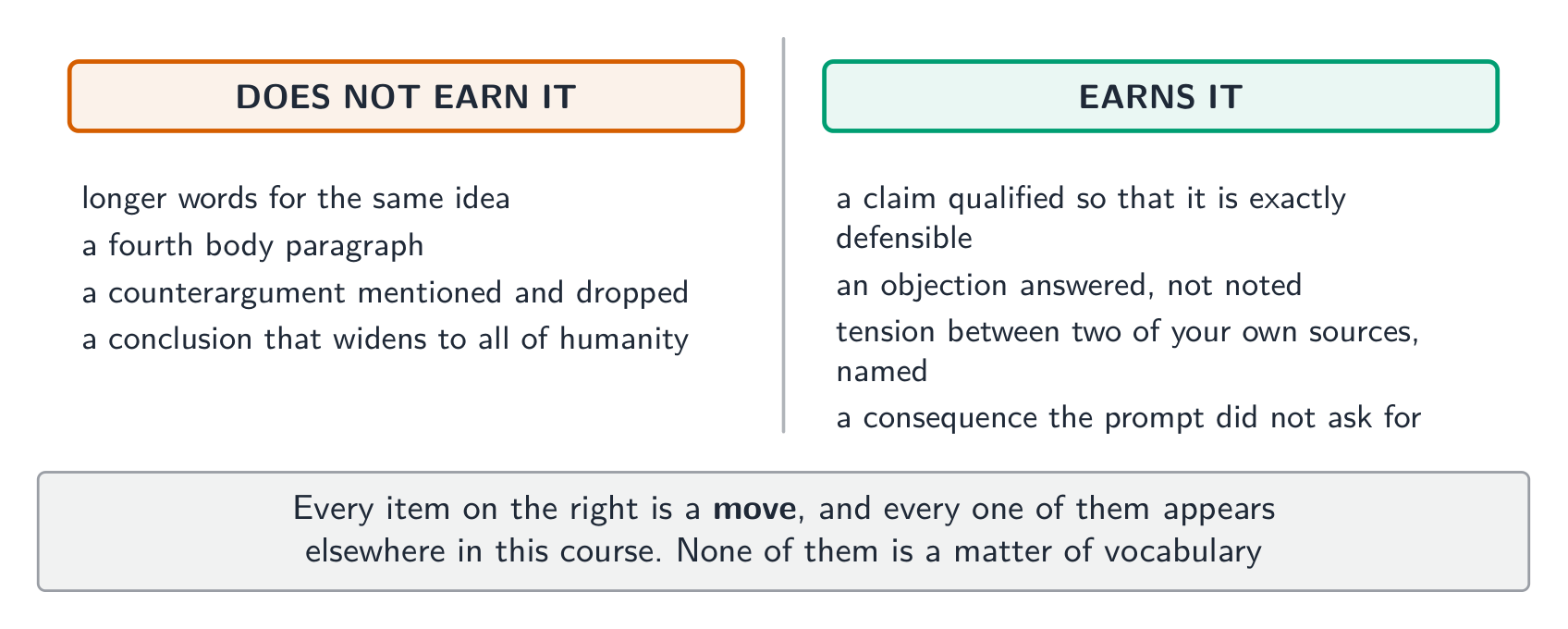
כל פריט בצד ימין הוא תנועה שהוסברו elsewhere במסלול זה
Explore · ⁨חקור⁩

Sort what earns the sophistication point · ⁨לסנן מה שמייצר את נקודת הפיתוח⁩

It rewards a specific set of moves, all taught elsewhere in this course. None of them is a matter of vocabulary. · ⁨זה מעניק תשלום עבור סט ספציפי של פעולות, כולן מוסברות במקום אחר בקורס זה. אף אחת מהן אינה עניין של מילון.⁩

9.2

Exam tips · ⁨טיפים לבחינות⁩

English
  • Concede, rebut, refute are three different claims. Do not use the words interchangeably.
  • Refute only with evidence of error. Without it, rebut instead - an alternative interpretation is almost always available.
  • Conceding raises credibility, by the CED's own statement. It is not a weakness.
  • After conceding, come back. An unreturned concession reads as agreement with the other side.
  • Use a transition that ranks the counterargument: the strongest objection to this is beats some people say.
  • When analysing a text, notice when it addresses no counterargument. That absence tells you who it was written for.
עברית
  • הסכמה, התנגדות, הפרכה הן שלוש טענות שונות. אל תשתמש במונחים האלו בהחלפה זה לזה.
  • הפרכה נעשית רק עם עדות לשגיאה. ללא זאת, התנגד במקום זאת - פרשנות חלופית זמינה כמעט תמיד.
  • הסכמה מעלה את האמינות, לפי ההצהרה עצמה של CED. זוהי אינה חולשה.
  • לאחר ההסכמה, חזור. הסכמה שלא חזרה עליה נקראת כאילו הסכמת לצד השני.
  • השתמש במעבר שמדרג את הארגומנט הנגדי: ההתנגדות החזקה ביותר לכך היא עדיף על חלק אנשים אומרים.
  • בעת ניתוח טקסט, שימו לב מתי הוא אינו מתייחס לארגומנט נגדי. היעדרו זה אומר לכם למי הוא נכתב.

Interactive lessons on this topic · ⁨שיעורים אינטראקטיביים בנושא זה⁩

Work through it step by step, with instant-check exercises. · ⁨לעבור על הדברים צעד אחר צעד, עם תרגילים לבדיקה מיידית.⁩

Past Papers · ⁨מבחני עבר⁩

More topics in AP English Language and Composition · ⁨שפה ואנגלית כתיבה יצירתית - AP⁩ · ⁨נושאים נוספים בAP English Language and Composition · ⁨שפה ואנגלית כתיבה יצירתית - AP⁩⁩

Log in or create account · ⁨היכנס או צור חשבון⁩

IGCSE, A-Level & AP