English
Enduring Understanding (RHS-1): Individuals write within a particular situation and make strategic writing choices based on that situation.
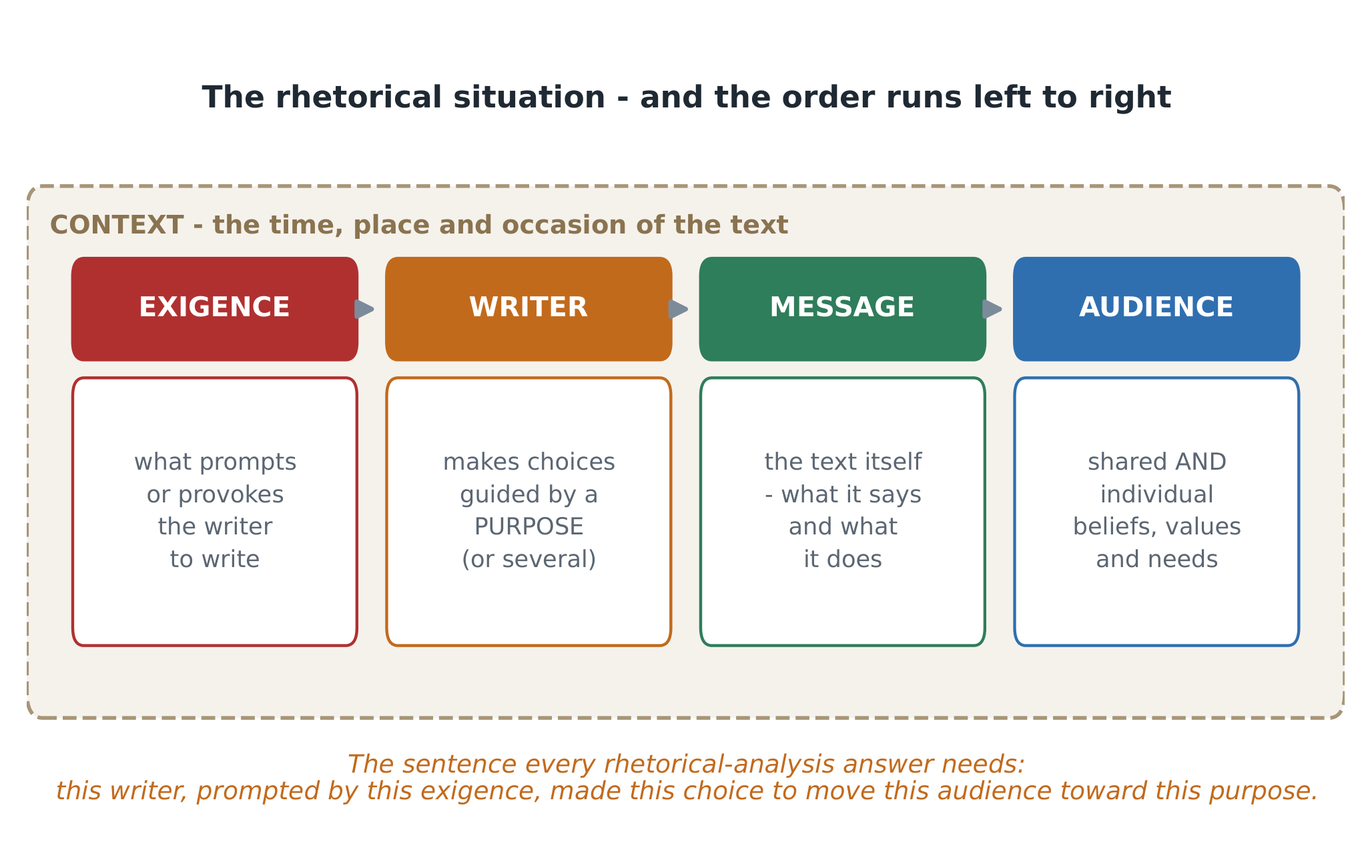
Learning Objective 1.A: Reading – Identify and describe components of the rhetorical situation: the exigence, audience, writer, purpose, context, and message.
- RHS-1.A The rhetorical situation of a text collectively refers to the exigence, purpose, audience, writer, context, and message.
- RHS-1.B The exigence is the part of a rhetorical situation that inspires, stimulates, provokes, or prompts writers to create a text.
- RHS-1.C The purpose of a text is what the writer hopes to accomplish with it. Writers may have more than one purpose in a text.
- RHS-1.D An audience of a text has shared as well as individual beliefs, values, needs, and backgrounds.
- RHS-1.E Writers create texts within a particular context that includes the time, place, and occasion.
עברית
הבנה מתמשכת (RHS-1): אנשים כותבים בתוך מצב רטורי ספציפי ועושים בחירות כתיבה אסטרטגיות על בסיס המצב הזה.
מטרות למידה 1.A: קריאה – זיהוי ותיאור רכיבי המצב הרטורי: הדרישה, הקהל, הכותב, המטרה, ההקשר וההודעה.
- RHS-1.A המצב הרטורי של טקסט מתייחס באופן קולקטיבי לדרישה, למטרה, לקהל, לכותב, להקשר ולהודעה.
- RHS-1.B הדרישה היא החלק במצב הרטורי שמעורר, מגרה, מעורר או מדריך כותבים ליצירת טקסט.
- RHS-1.C המטרה של טקסט היא מה שהכותב מקווה להשיג באמצעותו. כותבים עשויים לשאוף למטרות רבות יותר בטקסט אחד.
- RHS-1.D לקהל הטקסט ישנם אמונות, ערכים, צרכים ורקעים משותפים וגם אישיים.
- RHS-1.E כותבים יוצרים טקסטים בתוך הקשר ספציפי הכולל זמן, מקום ואירוע.