أرسل صورة لصديق في另一端 العالم. لا يسافر ككتلة واحدة. يتم تقطيعها إلى مئات الحزم الصغيرة، كل منها يحمل label…
English narration · English + 中文 subtitles burned in · سرد باللغة الإنجليزية · ترجمة مدمجة بالإنجليزية + الصينية
2.1
What is data transmission? · ما هو نقل البيانات؟
English
Data transmission 数据传输 means moving data from one place to another — for example from your computer to a website, or from a phone to a printer.
Data often travels along a cable. Two common ones are shown below.
Before it is sent, the data is broken down into small, equal-sized pieces called packets 数据包. Each packet travels separately and they are put back together at the other end.
Using packets has benefits:
if one packet is lost or damaged, only that packet is sent again, not the whole file;
packets can take different routes, so a busy or broken route can be avoided;
many users can share the same connection at the same time.
العربية
نقل البيانات يعني تحريك البيانات من مكان إلى آخر — على سبيل المثال من جهازك إلى موقع ويب، أو من هاتف إلى طابعة.
غالبًا ما تنتقل البيانات عبر كابل. يتم عرض اثنين شائعين أدناه.
كابل إيثرنيت بقبعة RJ45، يُستخدم غالبًا لنقل البيانات على شبكة سلكيةكابل ألياف ضوئية ينقل البيانات على شكل نبضات ضوئية عبر ألياف زجاجية رفيعة
قبل إرسالها، يتم تقسيم البيانات إلى أجزاء صغيرة متساوية الحجم تسمى حزم. تمرر كل حزمة بشكل منفصل وتتم إعادة تجميعها في الطرف الآخر.
استخدام الحزم له فوائد:
إذا ضاعت حزمة أو تلفت، يتم إعادة إرسال تلك الحزمة فقط، وليس الملف بأكمله؛
يمكن للحزم اتباع مسارات مختلفة، لذا يمكن تجنب المسار المزدحم أو المعطوب؛
يمكن للعديد من المستخدمين مشاركة نفس الاتصال في نفس الوقت.
2.1
The structure of a packet · بنية الحزمة
Syllabus · المنهج
English
Candidates should be able to:
Notes and guidance
1 (a) Understand that data is broken down into packets to be transmitted
(b) Describe the structure of a packet
• A packet of data contains a: – packet header – payload – trailer • The packet header includes the: – destination address – packet number – originator’s address
(c) Describe the process of packet switching
• Data is broken down into packets • Each packet could take a different route • A router controls the route a packet takes • Packets may arrive out of order • Once the last packet has arrived, packets are reordered
2 (a) Describe how data is transmitted from one device to another using different methods of data transmission
(b) Explain the suitability of each method of data transmission, for a given scenario
• Including the advantages and disadvantages of each method
3 Understand the universal serial bus (USB) interface and explain how it is used to transmit data
• Including the benefits and drawbacks of the interface
العربية
يجب أن يكون المرشحون قادرين على:
ملاحظات وإرشادات
1 (أ) فهم أن البيانات يتم تقسيمها إلى حزم للنقل
(ب) وصف هيكل الحزمة
• تحتوي حزمة البيانات على: – رأس الحزمة – حمولة – ذيل • يتضمن رأس الحزمة: – عنوان الوجهة – رقم الحزمة – عنوان المرسل
(ج) وصف عملية تبديل الحزم
• يتم تقسيم البيانات إلى حزم • يمكن لكل حزمة اتخاذ مسار مختلف • يتحكم الموجه في المسار الذي تسلكه الحزمة • قد تصل الحزم خارج الترتيب • بمجرد وصول آخر حزمة، يتم إعادة ترتيب الحزم
2 (أ) وصف كيفية نقل البيانات من جهاز إلى آخر باستخدام طرق مختلفة لنقل البيانات
• بما في ذلك: – متسلسل – توازي – أحادي الاتجاه – نصف مزدوج – كامل مزدوج
(ب) شرح مدى ملاءمة كل طريقة من طرق نقل البيانات، لسيناريو معين
• بما في ذلك المزايا والعيوب لكل طريقة
3 فهم واجهة الناقل التسلسلي العالمي (USB) وشرح كيفية استخدامها لنقل البيانات
• بما في ذلك الفوائد والعيوب للواجهة
Source: Cambridge International syllabus · المصدر: منهج كامبريدج الدولي
English
Every packet has three parts.
Part
What it holds
packet header 包头
control information (see below)
payload 有效载荷
the actual data being carried
trailer 尾部
shows where the packet ends, plus an error check
The packet header holds:
the sender's IP address 地址 (where the packet came from),
the receiver's IP address (where it is going),
the packet number (so the packets can be put back in the right order).
العربية
كل حزمة لها ثلاثة أجزاء.
الحزمة لها رأس، وحمولة (البيانات) وذيل؛ يحمل الرأس العناوين ورقم الحزمة
الجزء
ما يحمله
رأس الحزمة
معلومات التحكم (انظر أدناه)
الحمولة
البيانات الفعلية المنقولة
الذيل
يشير إلى نهاية الحزمة بالإضافة إلى فحص الخطأ
يحتوي رأس الحزمة على:
عنوان IP للمرسل (من أين جاءت الحزمة)،
عنوان IP للمستقبل (إلى أين تذهب)،
رقم الحزمة (لكي يمكن إعادة ترتيب الحزم في الترتيب الصحيح).
2.1
Packet switching · تبديل الحزم
English
Packet switching 数据包交换 is the way packets are sent across a network.
Special devices called routers 路由器 read each packet's header and choose the best route for it.
Each packet may take its own path, so packets can travel different ways.
Packets may arrive out of order.
When the last packet has arrived, the packets are reordered using their packet numbers.
العربية
تبديل الحزم هو الطريقة التي تُرسل بها الحزم عبر الشبكة.
الموجهات تعيد توجيه الحزم، ويمكن للحزم المختلفة أن تتبع مسارات مختلفة إلى نفس المستقبل
أجهزة خاصة تسمى الموجهات تقرأ رأس كل حزمة وتختار أفضل مسار لها.
قد تأخذ كل حزمة مسارها الخاص، بحيث يمكن للحزم السفر بطرق مختلفة.
قد تصل الحزم خارج الترتيب.
عند وصول آخر حزمة، يتم إعادة ترتيب الحزم باستخدام أرقام الحزم.
Explore · استكشف
How data travels in packets · كيف تسافر البيانات في حزم
Step through packet switching. Splitting a file into addressed packets is why one lost packet only needs resending, and why many users can share the same line. · مرر عبر تبديل الحزم. تقسيم ملف إلى حزم موجهة هو سبب الحاجة لإعادة إرسال حزمة مفقودة واحدة فقط، ولأن العديد من المستخدمين يمكنهم مشاركة نفس الخط.
bits can arrive at slightly different times over long wires
Serial sends one bit after another along a single wire. Parallel sends several bits at the same time along several wires, so it is faster over short distances.
Simplex, half-duplex and full-duplex
These describe the direction data can travel.
Method
Direction
simplex 单工
one direction only (e.g. computer → printer)
half-duplex 半双工
both directions, but only one at a time (e.g. walkie-talkie)
full-duplex 全双工
both directions at the same time (e.g. phone call)
Choosing a method
The choice depends on the distance, the speed needed, the cost, and whether data must travel both ways at once.
العربية
التسلسلية والتوازية
التسلسلية
التوازية
كيف
بت واحد في كل مرة، عبر سلك واحد
عدة بتات في وقت واحد، عبر أسلاك متعددة
المسافة
جيدة لمسافات طويلة
جيدة لمسافات قصيرة فقط
التكلفة
أرخص (أسلاك أقل)
أغلى (أسلاك أكثر)
الأخطاء
البتات تظل مرتبة
يمكن للبتات الوصول بأوقات مختلفة قليلاً عبر الأسلاك الطويلة
التسلسلية ترسل بتًا واحدًا تلو الآخر عبر سلك واحد. التوازية ترسل عدة بتات في نفس الوقت عبر أسلاك متعددة، لذا فهي أسرع لمسافات قصيرة.
النقل التسلسلي يرسل بتًا واحدًا في كل مرة عبر سلك واحد؛ النقل التوازي يرسل عدة بتات في وقت واحد عبر أسلاك متعددة
أحادي الاتجاه، نصف مزدوج واتجاه مزدوج كامل
تصف هذه اتجاه يمكن للبيانات أن تسافر فيه.
أحادي الاتجاه هو طريق واحد فقط؛ نصف مزدوج هو كلا الاتجاهين لكن واحدًا تلو الآخر؛ اتجاه مزدوج كامل هو كلا الاتجاهين في آنٍ واحد
الطريقة
الاتجاه
أحادي الاتجاه
اتجاه واحد فقط (مثال: كمبيوتر ← طابعة)
نصف مزدوج
كلا الاتجاهين، ولكن واحدًا تلو الآخر (مثال: راديو مشفر)
اتجاه مزدوج كامل
كلا الاتجاهين في نفس الوقت (مثال: مكالمة هاتفية)
اختيار طريقة
يعتمد الاختيار على المسافة، السرعة المطلوبة، التكلفة، وما إذا كانت البيانات يجب أن تسافر في كلا الاتجاهين في آنٍ واحد.
The universal serial bus 通用串行总线 (USB) is a common interface 接口 (a connection point) for joining devices to a computer.
Benefits:
the same connector is used by many devices (one standard);
the device is detected automatically and the correct driver is loaded;
it carries power, so it can charge or run a device;
the connector only fits one way, so it is hard to plug in wrongly.
Drawbacks:
the cable can only be a limited length (a few metres);
older USB versions are slower than newer ones;
transfer speeds can be lower than some other connection types.
العربية
الناقل التسلسلي العالمي (USB) هو واجهة شائعة (نقطة اتصال) لربط الأجهزة بجهاز الكمبيوتر.
الفوائد:
نفس الموصل يُستخدم بواسطة العديد من الأجهزة (معيار واحد)؛
يتم اكتشاف الجهاز تلقائيًا ويتم تحميل التعريف المناسب؛
ينقل الطاقة، لذا يمكنه شحن أو تشغيل جهاز.
لا يتناسب الموصل إلا في اتجاه واحد، لذا يصعب توصيله بشكل خاطئ.
العيوب:
يمكن أن يكون طول الكابل محدوداً (بضعة أمتار)؛
الإصدارات الأقدم من USB أبطأ من الإصدارات الأحدث؛
قد تكون سرعات النقل أقل من بعض أنواع الاتصال الأخرى.
بعض أشكال موصلات USB. جميعها تستخدم نفس معيار USB، لذا يتم اكتشاف الأجهزة تلقائيًا.
2.2
Why we check for errors · لماذا نفحص وجود أخطاء
Syllabus · المنهج
English
Candidates should be able to:
Notes and guidance
1 Understand the need to check for errors after data transmission and how these errors can occur
• Errors can occur during data transmission due to interference, e.g. data loss, data gain and data change
2 Describe the processes involved in each of the following error detection methods for detecting errors in data after transmission: parity check (odd and even), checksum and echo check
• Including parity byte and parity block check
3 Describe how a check digit is used to detect errors in data entry and identify examples of when a check digit is used, including international standard book numbers (ISBN) and bar codes
4 Describe how an automatic repeat query (ARQ) can be used to establish that data is received without error
• Including the use of: – positive/negative acknowledgements – timeout
العربية
يجب أن يكون المرشحون قادرين على:
ملاحظات وإرشادات
1 فهم الحاجة إلى التحقق من وجود أخطاء بعد نقل البيانات وكيفية حدوث هذه الأخطاء
• يمكن أن تحدث أخطاء أثناء نقل البيانات بسبب التداخل، على سبيل المثال: فقدان البيانات، زيادة البيانات، وتغيير البيانات
2 وصف العمليات المتعلقة بكل من طرق اكتشاف الأخطاء التالية لاكتشاف الأخطاء في البيانات بعد النقل: فحص التكافؤ (فردي وثنائي)، مجموع التحقق وفحص الصدى
• بما في ذلك فحص بايت التكافؤ وحجب التكافؤ
3 وصف كيفية استخدام الرقم التحقيقي لاكتشاف الأخطاء في إدخال البيانات وتحديد أمثلة عند استخدام الرقم التحقيقي، بما في ذلك الأرقام الدولية القياسية للكتب (ISBN) والأكواد الشريطية
4 وصف كيفية استخدام الاستعلام التلقائي للإعادة (ARQ) للتأكد من استلام البيانات بدون أخطاء
• بما في ذلك استخدام: – ack إيجابي/سلبي – انتهاء الوقت
Source: Cambridge International syllabus · المصدر: منهج كامبريدج الدولي
English
While data travels, interference 干扰 can change it. Three things can go wrong:
data loss — some bits do not arrive;
data gain — extra bits are added;
data change — some bits are flipped.
So the receiver checks whether the data arrived correctly.
العربية
أثناء انتقال البيانات، يمكن أن تداخل يغيرها. ثلاثة things يمكن أن تذهب إلى الأسوأ:
فقدان البيانات — بعض البتات لا تصل؛
زيادة البيانات — يتم إضافة بتات إضافية؛
تغيير البيانات — تنقلب بعض البتات.
لذلك يفحص المستقبل ما إذا كانت البيانات وصلت بشكل صحيح.
A parity check 奇偶校验 adds one extra bit, the parity bit 奇偶校验位, to each byte. There are two types:
even parity — the total number of 1s in the byte (including the parity bit) must be even;
odd parity — the total number of 1s must be odd.
Example (even parity): the data 1011001 has four 1s, which is already even, so the parity bit is 0:
To find an error: the receiver counts the 1s. If even parity was agreed but a byte arrives with an odd number of 1s, an error has happened during transmission.
A parity check cannot find every error. If two bits flip, the count may still look correct.
Worked example. A single parity bit tells you that an error happened, but not where. A parity block 奇偶校验块 can find the exact bit. Several bytes are sent together, each with a row parity bit, and one extra parity byte 奇偶校验字节 at the bottom holds a parity bit for each column. Even parity is used below, and one bit was flipped during transmission. Find it.
Row byte 3 breaks even parity, and column b3 breaks even parity. The flipped bit is where they cross: byte 3, bit b3. Changing it back from 1 to 0 repairs the data. A single parity bit only says an error happened; a parity block says exactly where, so the receiver can even fix it.
Checksum
A checksum 校验和 is a value worked out from all the data before sending. The receiver works out the checksum again from the data it received. If the two values do not match, an error has occurred and the data is resent.
Echo check
In an echo check 回送校验, the receiver sends the data back to the sender. The sender compares it with the original. If they differ, an error happened. (This needs the data to be sent twice, so it is slow.)
Automatic Repeat reQuest (ARQ)
Automatic Repeat reQuest 自动重传请求 (ARQ) uses messages called acknowledgements 确认.
The receiver sends a positive acknowledgement if a packet arrived correctly, or a negative acknowledgement if it did not.
The sender starts a timeout 超时 timer. If no positive acknowledgement comes back in time, the sender sends the packet again.
Check digit
A check digit 校验码 is an extra digit placed at the end of a number, worked out from the other digits. It is used to find mistakes when a number is typed in.
When the number is entered, the check digit is calculated again and compared. It can catch:
an incorrect digit entered,
a transposition error 换位错误 (two digits swapped, e.g. 21 typed as 12),
a digit left out or an extra digit added,
a phonetic error (a digit that sounds similar, e.g. 13 and 30).
Check digits are used in barcodes 条形码 and ISBNs (book numbers).
العربية
فحص التكافؤ
يضيف فحص التكافؤ بتاً واحداً إضافياً، وهو بت التكافؤ، إلى كل بايت. يوجد نوعان:
يتم إضافة بت تناظر لجعل عدد 1s زوجيًا (أو فرديًا)
تكافؤ زوجي — يجب أن يكون العدد الكلي لـ 1s في البايت (بما في ذلك بت التكافؤ) زوجياً؛
تكافؤ فردي — يجب أن يكون العدد الكلي لـ 1s فردياً.
مثال (تكافؤ زوجي): البيانات 1011001 تحتوي على أربعة 1s، وهي بالفعل زوجية، لذا فإن بت التكافؤ هو 0:
parity bit + data
    0        1011001
للعثور على خطأ: يعدد المستقبل عدد الـ 1s. إذا تم الاتفاق على تكافؤ زوجي ولكن وصل بايت بعدد فردي من 1s، فقد حدث خطأ أثناء النقل.
لا يمكن لفحص التكافؤ العثور على كل الأخطاء. إذا انقلبت بتتان، قد يبدو العداد صحيحاً.
مثال محلول. يخبرك بت تكافؤ واحد بأن خطأ قد حدث، لكن ليس أين. يمكن لـ كتلة التكافؤ تحديد البت الخاطئ بدقة. يتم إرسال عدة بايتات معاً، كل منها يحتوي على بت تكافؤ صف، وبابيت تكافؤ إضافي واحد في الأسفل يحمل بت تكافؤ لكل عمود. يُستخدم التكافؤ الزوجي أدناه، وتم قلب بت واحد أثناء النقل. جدّه.
صف بايت 3 يكسر التكافؤ الزوجي، وعمود b3 يكسر التكافؤ الزوجي. البت المقلوب هو حيث يتقاطعان: بايت 3، بت b3. تغييره مرة أخرى من 1 إلى 0 يصلح البيانات. يشير بت تكافؤ واحد فقط إلى حدوث خطأ؛ بينما تشير كتلة التكافؤ إلى الموقع الدقيق، مما يسمح للمستقبل حتى بإصلاحها.
مجموع التحقق
مجموع التحقق هو قيمة يتم حسابها من جميع البيانات قبل الإرسال. يقوم المستقبل بحساب مجموع التحقق مرة أخرى من البيانات التي استقبلها. إذا لم تتطابق القيمتان، فقد حدث خطأ وأعيد إرسال البيانات.
فحص الصدى
في فحص الصدى، يرسل المستقبل البيانات مرة أخرى إلى المرسل. يقارن المرسل إياها بالأصلية. إذا اختلفا، فقد حدث خطأ. (هذا يتطلب إرسال البيانات مرتين، لذا فهو بطيء.)
طلب إعادة التلقائي (ARQ)
طلب إعادة التلقائي (ARQ) يستخدم رسائل تسمى إشعارات الاستلام.
يرسل المستقبل إشعار استلام إيجابي إذا وصلت الحزمة بشكل صحيح، أو إشعار استلام سلبي إذا لم تستقم.
يبدأ المرسل مؤقت زمن انتهاء الصلاحية. إذا لم يأتي إشعار استلام إيجابي في الوقت المحدد، يعيد المرسل إرسال الحزمة.
رقم التحقق
رقم التحقق هو رقم إضافي يُوضع في نهاية الرقم، يتم حسابه بناءً على الأرقام الأخرى. يُستخدم للعثور على الأخطاء عند كتابة الرقم يدوياً.
عند إدخال الرقم، يتم حساب رقم التحقق مرة أخرى ومقارنته. يمكنه التقاط:
رقم غير صحيح تم إدخاله،
خطأ التبديل (تبديل رقمين، مثل كتابة 21 بدلاً من 12)،
رقم مفقود أو إضافة رقم زائد،
خطأ صوتي (رقم يشبه في النطق، مثل 13 و 30).
تُستخدم أرقام التحقق في الأشرطة الشريطية و ISBNs (أرقام الكتب).
Explore · استكشف
Computing concept lab · مختبر مفاهيم الحوسبة.
Classify concrete examples by the computing idea they demonstrate. · صنّف الأمثلة المحددة حسب الفكرة الحاسوبية التي تمثلها.
1 Understand the need for and purpose of encryption when transmitting data
2 Understand how data is encrypted using symmetric and asymmetric encryption
• Asymmetric encryption includes the use of public and private keys
العربية
يجب أن يكون المرشحون قادرين على:
ملاحظات وإرشادات
1 فهم الحاجة والغرض من التشفير عند نقل البيانات
2 فهم كيفية تشفير البيانات باستخدام التشفير المتماثل والتشفير اللامتماثل
• يشمل التشفير اللامتماثل استخدام المفاتيح العامة والخاصة
Source: Cambridge International syllabus · المصدر: منهج كامبريدج الدولي
English
Why we need encryption
Encryption 加密 scrambles data so that it cannot be understood if it is intercepted 拦截 (caught) by the wrong person. The readable data is called plaintext 明文; after encryption it becomes ciphertext 密文.
Encryption does not stop data from being intercepted. It only stops the data from being understood.
Symmetric encryption
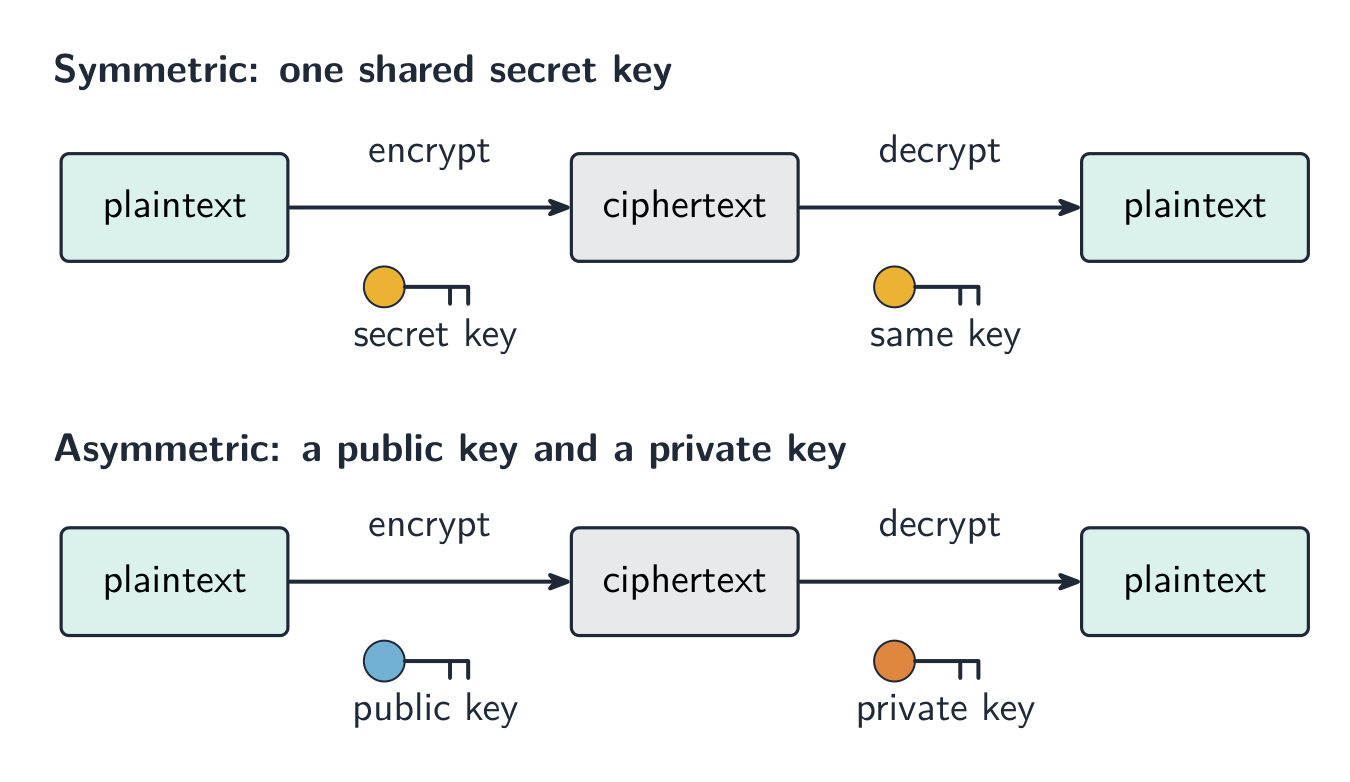
Symmetric encryption 对称加密 uses a single key 密钥 to both encrypt and decrypt the data. The sender and receiver must share this same secret key. The risk is that the key itself could be stolen while being shared.
Asymmetric encryption
Asymmetric encryption 非对称加密 uses two different keys:
a public key 公钥 that anyone can have, used to encrypt;
a private key 私钥 that is kept secret, used to decrypt.
Data encrypted with the public key can only be decrypted with the matching private key, so the key never has to be shared. This is safer than sharing one secret key.
العربية
لماذا نحتاج إلى التشفير
التشفير يعرّيل البيانات بحيث لا يمكن فهمها إذا تم اعتراضها (التقاطها) من قبل الشخص الخطأ. البيانات المقروءة تسمى النص الأصلي؛ بعد التشفير تصبح نص مشفر.
التشفير لا يمنع اعتراض البيانات. بل يمنع فقط فهم البيانات.
التشفير المتماثل
التشفير المتماثل يستخدم مفتاحاً واحداً المفتاح لتشفير وفك تشفير البيانات معاً. يجب على المرسل والمستقبل مشاركة هذا المفتاح السري نفسه. المخاطر هي أن المفتاح نفسه قد يسرق أثناء مشاركته.
التشفير غير المتماثل
التشفير غير المتماثل يستخدم مفتاحين مختلفين:
مفتاح عام يمكن لأي شخص الحصول عليه، يُستخدم للتشفير؛
مفتاح خاص يتم الاحتفاظ به سراً، يُستخدم لفك التشفير.
يمكن فك تشفير البيانات المشفرة بالمفتاح العام باستخدام المفتاح الخاص المطابق فقط، لذا لا حاجة لمشاركة المفتاح أبداً. هذا أكثر أماناً من مشاركة مفتاح سري واحد.
المتماثل يستخدم مفتاحًا مشتركًا واحدًا؛ غير المتماثل يستخدم مفتاحًا عامًا للتشفير ومفتاحًا خاصًا لفك التشفير
Explore · استكشف
The Caesar cipher · رمز قيصر
Shift each letter to encrypt a message — the simplest idea of a cipher and its key. · إزاحة كل حرف لتشفير رسالة — أبسط فكرة عن الشيفرة والمفتاح الخاص بها.
Data is sent in packets (a header with the addresses and packet number, a payload, and a trailer). Packets can take different routes and arrive out of order, then are reordered by their packet numbers.
Match the transmission types: serial (one bit at a time, good over long distances) vs parallel (several bits at once, short distances); simplex / half-duplex / full-duplex describe the direction.
A single parity bit only shows that an error happened; a parity block locates the exact wrong bit — the row and the column that both fail.
Learn the error-detection methods and what each does: parity check, checksum, echo check, ARQ, and the check digit (for typed-in numbers).
Symmetric encryption uses one shared key; asymmetric uses a public key to encrypt and a private key to decrypt, so no secret key is ever shared.
العربية
تُرسل البيانات في حزم (رأس يحتوي على العناوين ورقم الحزمة، وحمل، وذيل). يمكن للحزم اتباع مسارات مختلفة والوصول بترتيب مختلف، ثم يتم إعادة ترتيبها حسب أرقام الحزم.
طابق أنواع النقل: تسلسلي (بت واحد في كل مرة، جيد لمسافات طويلة) مقابل متوازي (عدة بتات في نفس الوقت، مسافات قصيرة)؛ بسيط / نصف مزدوج / كامل المزدوج يصف الاتجاه.
يشير بت تكافؤ واحد فقط بأن خطأ قد حدث؛ بينما تحدد كتلة التكافؤ البت الخاطئ بدقة — الصف والعمود اللذين يفشلان معاً.
احفظ طرق كشف الأخطاء وما تفعله كل منها: فحص التكافؤ، مجموع التحقق، فحص الصدى، ARQ، ورقم التحقق (للأرقام المكتوبة يدوياً).
التشفير المتماثل يستخدم مفتاحاً مشترَكاً واحداً؛ التشفير غير المتماثل يستخدم مفتاحاً عاماً للتشفير ومفتاحاً خاصاً لفك التشفير، لذا لا يتم مشاركة أي مفتاح سري أبداً.
Interactive lessons on this topic · دروس تفاعلية حول هذا الموضوع
Work through it step by step, with instant-check exercises. · ا-working عليه خطوة بخطوة، مع تمارين تحقق فوري.
Pick one and the site follows you — notes, papers, videos and practice all open on it. · اختر واحدًا وسيتبعك الموقع — الملاحظات، الأوراق، الفيديوهات والتدريب جميعها تفتح عليه.
Type to search notes, lessons, code, vocabulary and past-paper questions across every subject. · اكتب للبحث عن ملاحظات، دروس، أكواد، مفردات وأسئلة امتحانات سابقة عبر جميع المواد.