انظر إلى مصنع سيارات. نفس السيارة، مراراً وتكراراً، مئات كل يوم، كل واحدة مثل التي قبلها تماماً. شخص ما قرر كل هذا: كيفية صناعتها، وما…
English narration · English + 中文 subtitles burned in · سرد باللغة الإنجليزية · ترجمة مدمجة بالإنجليزية + الصينية
4.1
Methods of production · طرق الإنتاج
Syllabus · المنهج
English
describe the methods of production: job, batch and flow production, and their advantages/disadvantages
explain productivity and how it can be increased
explain lean production and just-in-time (JIT) inventory control and the management of inventory
explain how technology has changed production
العربية
صف طرق الإنتاج: الإنتاج الفردي، الإنتاج الدفعة الواحدة والإنتاج المتدفق، ومزاياه/عيوبه
اشرح الإنتاجية وكيفية زيادتها
اشرح الإنتاج النظيف والتحكم في المخزون عند الحاجة بالضبط وإدارة المخزون
اشرح كيف غيرت التكنولوجيا الإنتاج
Source: Cambridge International syllabus · المصدر: منهج كامبريدج الدولي
English
Stock control: the sawtooth chart
Production 生产 means turning materials and labour 劳动力 into finished goods and services 服务. There are three main methods.
Method
What it is
Good for
Drawback
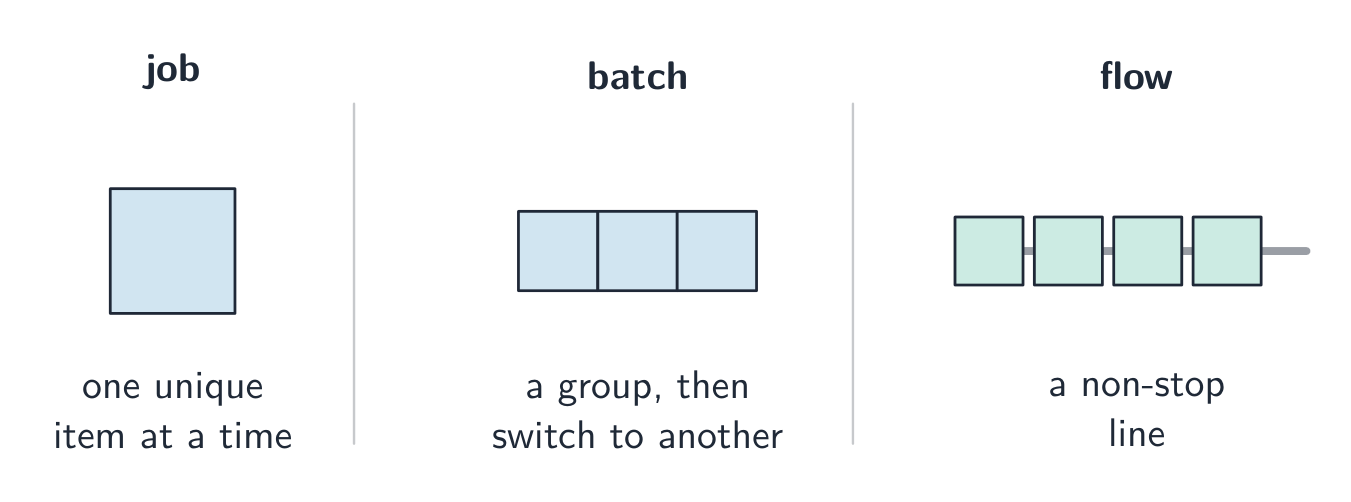
job production 单件生产
making one item at a time, to order
special, one-off items: a wedding cake, a ship
slow and costly per item
batch production 批量生产
making a group of the same item, then switching to another group
bakeries, clothes in different sizes
machines stand idle while switching
flow production 流水线生产
making goods non-stop on a moving line
mass-made goods: cars, drinks
costly to set up; work can be boring
Productivity
Productivity 生产率 measures how much each worker or machine produces in a set time. Higher productivity lowers the cost per item. A business can raise productivity by:
training workers,
using better machines and technology 技术,
improving motivation 激励,
organising the work better.
Lean production and just-in-time
Lean production 精益生产 means cutting all waste — wasted time, materials, space and effort — while keeping quality.
One key method is just-in-time 准时制 (JIT). With JIT, materials arrive just as they are needed, and finished goods are sold quickly, so the business holds very little inventory 库存 (its stock of materials and goods). This saves storage cost, but one late delivery can stop production. Good management of inventory keeps enough stock to meet demand, but not so much that money is tied up or goods go out of date.
Technology in production
Technology has changed production. Automation 自动化 (machines and robots doing tasks), computer design and online ordering all make production faster, cheaper and more exact. But machines cost a lot to buy and can replace workers' jobs.
العربية
التحكم في المخزون: الرسم البياني المسنن
الإنتاج يعني تحويل المواد والعمالة إلى سلع وخدمات نهائية. هناك ثلاث طرق رئيسية.
خط تجميع سيارات: صنع العديد من المنتجات المتطابقة على خط متحرك
الطريقة
ما هي
مناسبة لـ
عيب
الإنتاج حسب الطلب (Job Production)
صنع صنف واحد في كل مرة، حسب الطلب
بنود خاصة وفريدة: كعكة زفاف، سفينة
بطيء ومكلف لكل صنف
الإنتاج الدفعة (Batch Production)
إنتاج مجموعة من نفس الصنف، ثم الانتقال إلى مجموعة أخرى
المخابز، الملابس بأحجام مختلفة
بق Machines inaktive أثناء التبديل
الإنتاج المتدفق (Flow Production)
manufacturing goods non-stop on a moving line
سلع ذات إنتاج ضخم: سيارات، مشروبات
مكلف للإعداد؛ العمل قد يكون مملاً
الطرق الثلاثة للإنتاج
الإنتاجية
الإنتاجية تقيس مقدار ما ينتجه كل عامل أو آلة في وقت محدد. الإنتاجية الأعلى تقلل التكلفة لكل عنصر. يمكن للشركة رفع الإنتاجية من خلال:
تدريب العمال،
استخدام آلات وتكنولوجيا أفضل،
تحسين الدافع،
تنظيم العمل بشكل أفضل.
الإنتاجية هي المخرجات لكل عامل في وقت محدد؛ رفعها يقلل التكلفة لكل عنصر
الإنتاج النحيف والوقت المناسب
الإنتاج النحيف يعني تقليل الهدر تماماً — الوقت الضائع، المواد، المساحة والجهد — مع الحفاظ على الجودة.
إحدى الطرق الرئيسية هي الوقت المناسب (JIT). مع الوقت المناسب، تصل المواد في اللحظة التي تحتاجها بالضبط، وتُباع البضائع الجاهزة بسرعة، لذلك تحتفظ الشركة بكمية ضئيلة جداً من المخزون (مخزونها من المواد والبضائع). هذا يوفر تكاليف التخزين، ولكن تأخير واحدة في التوصيل قد يوقف الإنتاج. الإدارة الجيدة للمخزون تحافظ على مخزون كافٍ لتلبية الطلب، لكن ليس كثيراً بحيث ترتبط الأموال أو تنتهي صلاحية البضائع.
الوقت المناسب يحتوي على مخزون قليل مع توصيلات متكررة؛ بينما نهج "في حال الحاجة" يحتوي على مخزون احتياطي
التكنولوجيا في الإنتاج
غيرت التكنولوجيا الإنتاج. الأتمتة (آلات وروبوتات تقوم بالمهام)، والتصميم بالكمبيوتر، والطلبات عبر الإنترنت تجعل الإنتاج أسرع وأرخص وأكثر دقة. لكن الآلات باهظة الثمن لشراءها ويمكن أن تحل محل وظائف العمال.
الأتمتة: روبوتات صناعية تلحم وتجمع هياكل السيارات — أسرع وأكثر دقة من اليدوية، لكنها باهظة الثمن وتحل محل بعض العمال
Explore · استكشف
Methods of production · طرق الإنتاج
A business picks job, batch or flow production to suit its product and order size. · تختار الشركة الإنتاج الوظيفي أو الدفعة أو التدفق لتتناسب مع منتجها وحجم الطلب.
Worked example. A factory has fixed costs of £8,000 and variable costs of £2 per unit, and makes 1,000 units. Find the total cost and the average cost per unit.
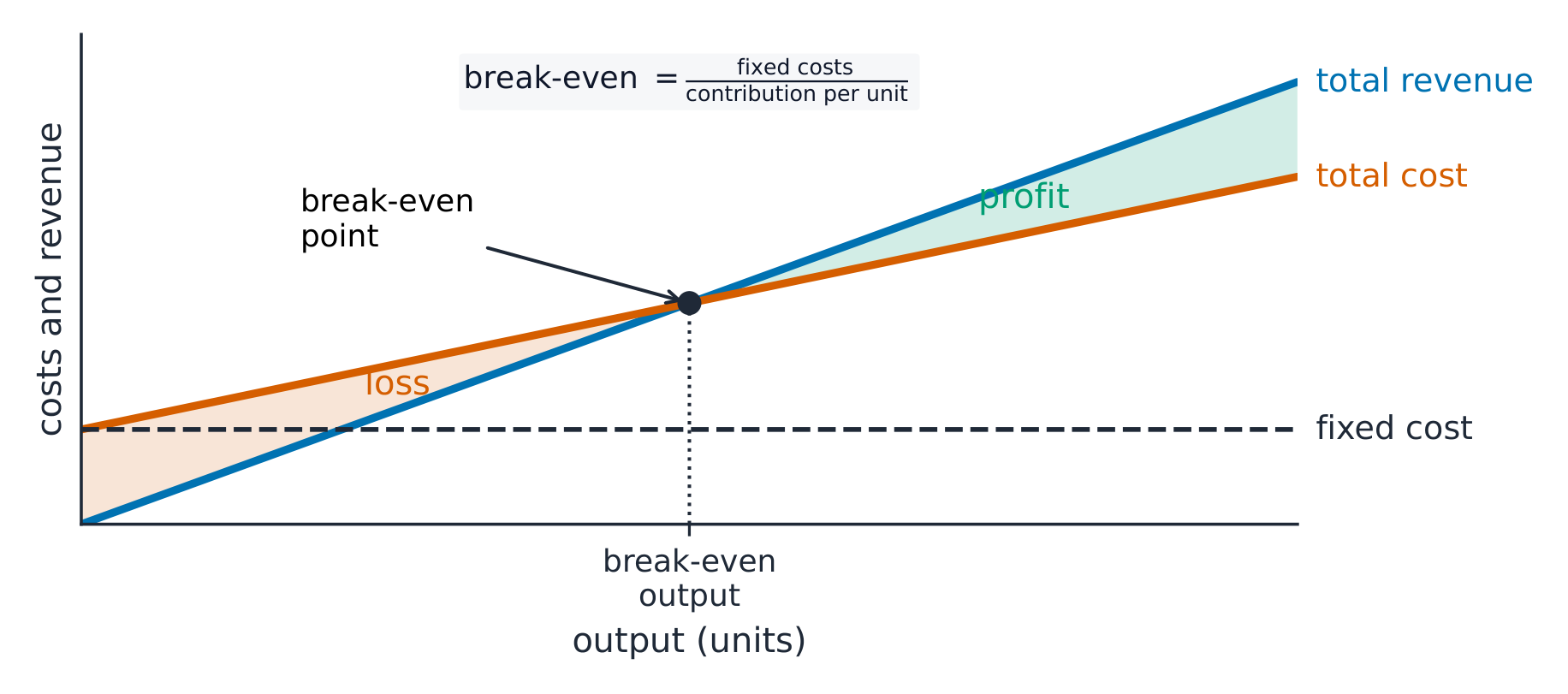
The break-even 盈亏平衡 point is the level of output where total revenue exactly equals total cost: the business makes no profit and no loss. Below it the business makes a loss; above it, a profit.
Each item sold gives an amount towards covering the fixed costs. This amount is the selling price minus the variable cost of one item (sometimes called the contribution 贡献 per unit).
$$\text{break-even output} = \frac{\text{fixed costs}}{\text{selling price per unit} - \text{variable cost per unit}}$$
A break-even chart 盈亏平衡图 plots total cost and total revenue against output. The two lines cross at the break-even point 盈亏平衡点.
The margin of safety 安全边际 is how far the actual output is above the break-even output.
$$\text{margin of safety} = \text{actual output} - \text{break-even output}$$
Worked example. A product sells for £15 with a variable cost of £5 per unit, and the firm's fixed costs are £8,000. Find the break-even output, and the margin of safety if the firm actually makes 1,200 units.
The contribution per unit is $\text{\pounds} 15 - \text{\pounds} 5 = \text{\pounds} 10$, so
A large margin of safety is safer, because sales can fall a long way before the business makes a loss.
Limits of break-even analysis. It assumes that all output is sold, and that the selling price and the costs stay the same at every level of output. In real life these often change, so break-even is only a guide.
العربية
وفورات الحجم: انخفاض التكلفة المتوسطةتحليل نقطة التعادل، مبني سطراً بسطر
أنواع التكاليف
للمؤسسة أنواع مختلفة من التكاليف.
التكاليف الثابتة لا تتغير مع حجم الإنتاج — الإيجار، الرواتب، التأمين. تدفعها حتى لو لم تصنع شيئاً.
التكاليف المتغيرة تتغير حسب حجم الإنتاج — المواد، والأجر مقابل كل عنصر يتم تصنيعه. زيادة الإنتاج تعني زيادة التكاليف المتغيرة.
التكلفة الكلية هي التكاليف الثابتة زائد التكاليف المتغيرة.
متوسط التكلفة هو التكلفة الكلية مقسومة على عدد العناصر المنتجة.
نقطة التعادل هي مستوى الإنتاج حيث تساوي الإيرادات الكلية التكلفة الكلية تماماً: لا تحقق المؤسسة ربحاً ولا خسارة. أسفلها تخسر المؤسسة؛ فوقها، تحقق ربحاً.
يعطي كل عنصر مباع مبلغاً نحو تغطية التكاليف الثابتة. هذا المبلغ هو سعر البيع ناقص التكلفة المتغيرة لعنصر واحد (تسمى أحياناً المساهمة للوحدة الواحدة).
$$\text{break-even output} = \frac{\text{fixed costs}}{\text{selling price per unit} - \text{variable cost per unit}}$$
مخطط نقطة التعادل يرسم التكلفة الكلية والإيرادات الكلية مقابل حجم الإنتاج. يتقاطع الخطان عند نقطة التعادل.
نقطة التعادل هي حيث يساوي الإيراد الكلي التكلفة الكلية — يسارها خسارة، ويمنها ربح
هامش الأمان هو مدى تباعد الإنتاج الفعلي عن إنتاج نقطة التعادل.
$$\text{margin of safety} = \text{actual output} - \text{break-even output}$$
مثال محلول. منتج يُباع بسعر 15 جنيهاً مع تكلفة متغيرة قدرها 5 جنيهات للوحدة، وتكاليف ثابتة للشركة قدرها 8,000 جنيه. أوجد إنتاج نقطة التعادل، وهامش الأمان إذا أنتجت الشركة فعلياً 1,200 وحدة.
المساهمة للوحدة الواحدة هي $\text{\pounds} 15 - \text{\pounds} 5 = \text{\pounds} 10$، لذا
هامش أمان كبير أكثر أماناً، لأن المبيعات يمكن أن تنخفض لمسافة طويلة قبل أن تحقق المؤسسة خسارة.
حدود تحليل نقطة التعادل. يفترض أن جميع الإنتاج يُباع، وأن سعر البيع والتكاليف تظل ثابتة عند كل مستوى من مستويات الإنتاج. في الواقع هذه تتغير غالباً، لذا فإن نقطة التعادل هي مجرد دليل.
Explore · استكشف
Break-even · نقطة التعادل
Break-even is where total revenue crosses total cost. · نقطة التعادل هي حيث تتقاطع الإيرادات الكلية مع التكلفة الكلية.
explain the factors affecting the location decision of a manufacturing business and a service business
explain the factors a business considers when locating in another country and the role of legal controls
العربية
اشرح العوامل المؤثرة في قرار موقع شركة تصنيع وشركة خدمات
اشرح العوامل التي تأخذها الشركة في الاعتبار عند اختيار موقع في بلد آخر ودور الضوابط القانونية
Source: Cambridge International syllabus · المصدر: منهج كامبريدج الدولي
English
Locating a business
Where a business sits affects its costs and its sales. A manufacturing 制造业 business (one that makes goods) looks at:
nearness to raw materials 原材料, because heavy or bulky materials cost a lot to move,
nearness to customers and the market 市场,
the cost and size of the land,
a supply of suitable labour,
good transport links,
government grants offered in some areas.
A service business (one that sells services, such as a shop or a hair salon) looks more at being close to customers, passing foot traffic, nearby shops, and the rent.
Locating in another country
A business may produce or sell abroad in order to reach new customers and bigger markets, pay lower wages or rent, get nearer to raw materials, or avoid tariffs 关税 (taxes on imports) by making goods inside the country. But it must then deal with different laws, languages and customs, and follow the legal controls 法律管制 of both countries.
العربية
أين تقع المؤسسة — مثل مركز التوزيع هذا — يؤثر على تكاليفها وخدماتها.
تحديد موقع المؤسسة
مكان وجود المؤسسة يؤثر على تكاليفها ومبيعاتها. مؤسسة تصنيع (تصنع سلعاً) تنظر إلى:
القرب من المواد الخام، لأن المواد الثقيلة أو الكبيرة الحجم باهظة النقل،
القرب من العملاء والسوق،
تكلفة وحجم الأرض،
توفر عمالة مناسبة،
روابط نقل جيدة،
منح حكومية تُقدم في بعض المناطق.
تُركّز شركات الخدمات (التي تبيع خدمات، كمتجر أو صالون تجميل) بشكل أكبر على القرب من العملاء، وحركة المارة المتدفقة، والمتاجر المجاورة، والإيجار.
تحديد الموقع في بلد آخر
قد تُنتج الشركة أو تبيع خارجياً للوصول إلى عملاء جدد وأسواق أكبر، أو لدفع أجور أو إيجارات أقل، أو للقرب من المواد الخام، أو لتجنب الجمارك (ضرائب الاستيراد) عبر تصنيع البضائع داخل البلاد. ولكن عليها حينها التعامل مع قوانين ولغات وعادات مختلفة، واتباع الرقابة القانونية لكلا البلدين.
Explore · استكشف
Location factor lab · مختبر عامل الموقع
Classify why a business chooses one site over another. · صنف لماذا تختار شركة موقعًا معينًا بدلاً من آخر.
Match the production methods: job (one-off items to order), batch (a group, then switch to another), flow (non-stop mass production on a line).
Learn the formulas: total cost = fixed + variable; average cost = total cost ÷ output; total revenue = price × quantity; profit = total revenue − total cost.
Break-even output = fixed costs ÷ (selling price − variable cost per unit). How far actual output is above break-even is the margin of safety.
Break-even analysis assumes everything made is sold at one fixed price and cost, so it is only a guide.
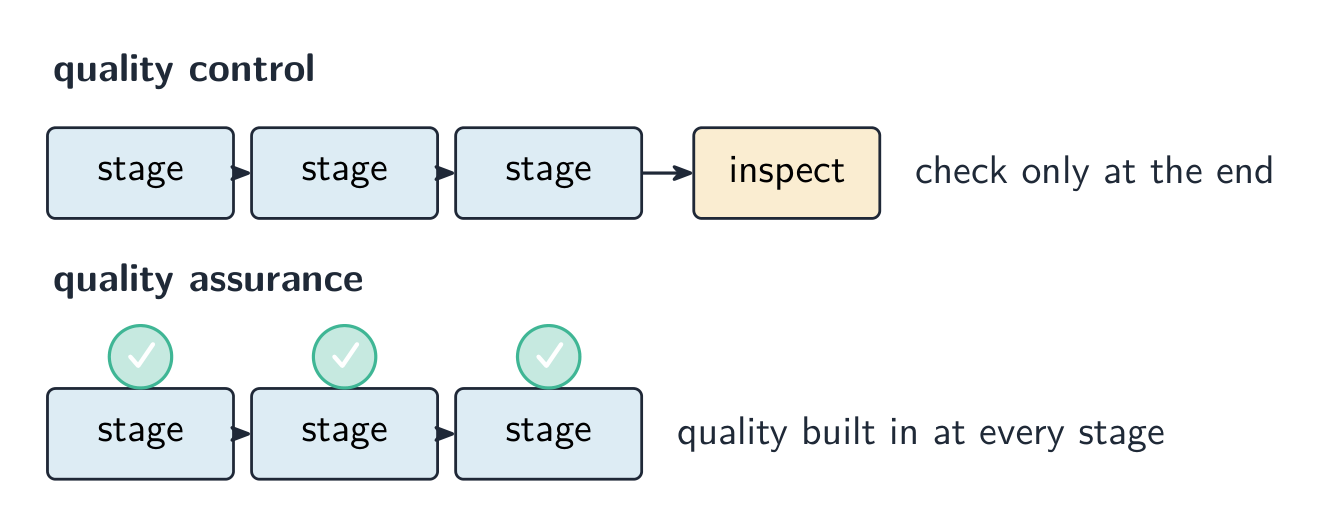
Quality control checks finished goods at the end; quality assurance builds quality in at every stage.
العربية
اربط طرق الإنتاج: التصنيع حسب الطلب (قطع مفردة حسب الطلب)، تشغيل الدفعات (مجموعة ثم التحول إلى أخرى)، الإنتاج المستمر (إنتاج جماعي غير متوقف على خط الإنتاج).
احفظ الصيغ: التكلفة الكلية = الثابتة + المتغيرة؛ متوسط التكلفة = التكلفة الكلية ÷ الإنتاج؛ الإيراد الكلي = السعر × الكمية؛ الربح = الإيراد الكلي − التكلفة الكلية.
إنتاج نقطة التعادل = التكاليف الثابتة ÷ (سعر البيع − التكلفة المتغيرة للوحدة). المسافة التي يتجاوز بها الإنتاج الفعلي نقطة التعادل هي هامش الأمان.
تفترض تحليل نقطة التعادل أن كل ما يتم إنتاجه يُباع بسعر وتكلفة ثابتين، لذا فهو مجرد دليل توجيهي.
مراقبة الجودة تفحص البضائع الجاهزة في النهاية؛ ضمان الجودة يدمج الجودة في كل مرحلة.
Interactive lessons on this topic · دروس تفاعلية حول هذا الموضوع
Work through it step by step, with instant-check exercises. · ا-working عليه خطوة بخطوة، مع تمارين تحقق فوري.
Pick one and the site follows you — notes, papers, videos and practice all open on it. · اختر واحدًا وسيتبعك الموقع — الملاحظات، الأوراق، الفيديوهات والتدريب جميعها تفتح عليه.
Type to search notes, lessons, code, vocabulary and past-paper questions across every subject. · اكتب للبحث عن ملاحظات، دروس، أكواد، مفردات وأسئلة امتحانات سابقة عبر جميع المواد.