لمس شيء ساخن وتكون يدك قد تحركت بالفعل قبل أن تشعر بالألم. هذا أحد نظامي التحكم لديك — النظام السريع، المكون من الأعصاب. الآخر…
English narration · English + 中文 subtitles burned in · سرد باللغة الإنجليزية · ترجمة مدمجة بالإنجليزية + الصينية
14.1
The nervous system · الجهاز العصبي
Syllabus · المنهج
English
Core
Supplement
1 State that electrical impulses travel along neurones
2 Describe the mammalian nervous system in terms of: (a) the central nervous system (CNS) consisting of the brain and the spinal cord (b) the peripheral nervous system (PNS) consisting of the nerves outside of the brain and spinal cord
3 Describe the role of the nervous system as coordination and regulation of body functions
4 Identify in diagrams and images sensory, relay and motor neurones
5 Describe a simple reflex arc in terms of: receptor, sensory neurone, relay neurone, motor neurone and effector
6 Describe a reflex action as a means of automatically and rapidly integrating and coordinating stimuli with the responses of effectors (muscles and glands)
7 Describe a synapse as a junction between two neurones
8 Describe the structure of a synapse, including the presence of vesicles containing neurotransmitter molecules, the synaptic gap and receptor proteins
9 Describe the events at a synapse as: (a) an impulse stimulates the release of neurotransmitter molecules from vesicles into the synaptic gap (b) the neurotransmitter molecules diffuse across the gap (c) neurotransmitter molecules bind with receptor proteins on the next neurone (d) an impulse is then stimulated in the next neurone
10 State that synapses ensure that impulses travel in one direction only
العربية
أساسي
تكميلي
1 ذكّر أن النبضات الكهربائية تسير عبر العصبونات
2 صف الجهاز العصبي ثنائي المشطيات من حيث: (أ) الجهاز العصبي المركزي (CNS) المكون من الدماغ والحبل الشوكي (ب) الجهاز العصبي المحيطي (PNS) المكون من الأعصاب خارج الدماغ والحبل الشوكي
3 صف دور الجهاز العصبي في التنسيق وتنظيم وظائف الجسم
4 حدد في المخططات والصور العصبونات الحسية، والرباطية، والحركية
5 صف قوس رد فعل بسيط من حيث: المستقبل، العصبون الحسي، العصبون الرباطي، العصبون الحركي، والمؤثر
7 صف الوصلة المشبكية على أنها نقطة اتصال بين عصبونين
8 صف بنية الوصلة المشبكية، بما في ذلك وجود حويصلات تحتوي على جزيئات الناقل العصبي، والفراغ المشبكي، وبروتينات المستقبل
9 صف الأحداث عند الوصلة المشبكية كالتالي: (أ) يحفز النبض إطلاق جزيئات الناقل العصبي من الحويصلات إلى الفراغ المشبكي (ب) تنتشر جزيئات الناقل العصبي عبر الفراغ (ج) ترتبط جزيئات الناقل العصبي ببروتينات المستقبل على العصبون التالي (د) يتم تحفيز نبضة في العصبون التالي
10 ذكّر أن الوصلات المشبكية تضمن انتقال النبضات في اتجاه واحد فقط
Source: Cambridge International syllabus · المصدر: منهج كامبريدج الدولي
English
The reflex arc
Your body must coordinate 协调 all its parts and react to changes. The nervous system 神经系统 does this using fast electrical impulses 电脉冲 that travel along neurones 神经元 (nerve cells). It has two parts:
the central nervous system 中枢神经系统 (CNS) — the brain 大脑 and the spinal cord 脊髓.
the peripheral nervous system 周围神经系统 (PNS) — all the nerves outside the brain and spinal cord.
The nervous system coordinates and regulates 调节 the body's functions.
العربية
القوس الانعكاسيينسق الدماغ الجسم من خلال الجهاز العصبي.
يجب أن تنسق جسمه جميع أجزائه ويتفاعل مع التغيرات. يقوم الجهاز العصبي بذلك باستخدام نبضات كهربائية سريعة تنتقل عبر العصبونات (الخلايا العصبية). يتكون من جزئين:
الجهاز العصبي المركزي (CNS) — المخ والحبل الشوكي.
الجهاز العصبي المحيطي (PNS) — كل الأعصاب خارج المخ والحبل الشوكي.
في قوس الانعكاس، تنتقل النبضة من المستقبل ← الحسي ← الوسيط ← الحركي ← المؤثر
Explore · استكشف
The reflex arc · القوس الانعكاسي
A reflex is a fast, automatic response — the signal takes a short cut through the spinal cord. · المنعكس استجابة سريعة وتلقائية — تأخذ الإشارة طريقاً مختصراً عبر النخاع الشوكي.
14.1
Synapses (Supplement) · المشابك (إضافي)
English
A synapse 突触 is a junction (a tiny gap) between two neurones. At the end of one neurone are vesicles 囊泡 holding neurotransmitter 神经递质 molecules. Across the synaptic gap 突触间隙, the next neurone has receptor proteins 受体蛋白.
Events at a synapse:
an impulse arrives and makes the vesicles release neurotransmitter into the synaptic gap.
the neurotransmitter molecules diffuse 扩散 across the gap.
they bind to the receptor proteins on the next neurone.
this starts a new impulse in the next neurone.
Synapses make impulses travel in one direction only.
العربية
المشبك هو نقطة اتصال (شق صغير) بين عصبونتين. في نهاية أحد العصبونات توجد حويصلات تحمل جزيئات ناقل عصبي. عبر الشق المشبكي، يحتوي العصبون التالي على بروتينات مستقبلات.
أحداث عند المشبك:
وصول نبضة وجعل الحويصلات تطلق الناقل العصبي في الشق المشبكي.
انتشار جزيئات الناقل العصبي عبر الشق.
ارتباطها ببروتينات المستقبلات على العصبون التالي.
هذا يبدأ إشارة جديدة في الخلية العصبية التالية.
تجعل المشابك النبضات تسير في اتجاه واحد فقط.
عند المشبك، ينتشر الناقل العصبي عبر الفجوة، فتسافر الإشارات في اتجاه واحد فقط
Explore · استكشف
Across the synapse · عبر المفاصل العصبية
Neurons don't touch — the impulse crosses the tiny gap using a chemical messenger. · لا تتلامس الخلايا العصبية — تعبر الإشارة عبر الفجوة الصغيرة باستخدام رسول كيميائي.
Sense organs and the eye · الأعضاء الحسية والعين
Syllabus · المنهج
English
Core
Supplement
1 Describe sense organs as groups of receptor cells responding to specific stimuli: light, sound, touch, temperature and chemicals
2 Identify in diagrams and images the structures of the eye, limited to: cornea, iris, pupil, lens, retina, optic nerve and blind spot
3 Describe the function of each part of the eye, limited to: (a) cornea – refracts light (b) iris – controls how much light enters the pupil (c) lens – focuses light on to the retina (d) retina – contains light receptors, some sensitive to light of different colours (e) optic nerve – carries impulses to the brain
4 Explain the pupil reflex, limited to changes in light intensity and pupil diameter
5 Explain the pupil reflex in terms of the antagonistic action of circular and radial muscles in the iris
6 Explain accommodation to view near and distant objects in terms of the contraction and relaxation of the ciliary muscles, tension in the suspensory ligaments, shape of the lens and refraction of light
7 Describe the distribution of rods and cones in the retina of a human
8 Outline the function of rods and cones, limited to: (a) greater sensitivity of rods for night vision (b) three different kinds of cones, absorbing light of different colours, for colour vision
9 Identify in diagrams and images the position of the fovea and state its function
العربية
أساسي
تكميلي
1 صف الأعضاء الحسية بأنها مجموعات من خلايا المستقبل تستجبه لمحفزات محددة: الضوء، الصوت، اللمس، درجة الحرارة والمواد الكيميائية
2 حدد في المخططات والصور بنية العين، مقتصراً على: القرنية، القزحية، الحدقة، العدسة، الشبكية، العصب البصري والنقطة العمياء
3 صف وظيفة كل جزء من العين، مقتصراً على: (أ) القرنية – تكسر الضوء (ب) القزحية – تتحكم في كمية الضوء الداخلة إلى الحدقة (ج) العدسة – تركز الضوء على الشبكية (د) الشبكية – تحتوي على مستقبلات ضوئية، بعضها حساس لألوان مختلفة من الضوء (هـ) العصب البصري – ينقل النبضات إلى الدماغ
4 اشرح انعكاس الحدقة، مقتصراً على تغيرات شدة الضوء وقطر الحدقة
5 اشرح انعكاس الحدقة من حيث التأثير المضاد للعضلات الدائرية والشعاعية في القزحية
6 اشرح التكيف لرؤية الأجسام القريبة والبعيدة من حيث انقباض واسترخاء العضلات الهدبية، وتوتر الأربطة المعلقة، وشكل العدسة وكسر الضوء
7 صف توزيع العصيات والأصبات في شبكية الإنسان
8 استعرض وظيفة العصيات والأصبات، مقتصراً على: (أ) حساسية أكبر للعصيات للرؤية الليلية (ب) ثلاثة أنواع مختلفة من الأصبات تمتص ضوءاً بألوان مختلفة للرؤية الملونة
9 حدد في المخططات والصور موقع الثقب الأصفر وأذكر وظيفته
Source: Cambridge International syllabus · المصدر: منهج كامبريدج الدولي
English
Sense organs 感觉器官 are groups of receptor cells that respond to one kind of stimulus — light, sound, touch, temperature or chemicals. The eye responds to light.
Parts of the eye
Part
Function
cornea 角膜
refracts 折射 (bends) the light as it enters
iris 虹膜
controls how much light enters the pupil 瞳孔
lens 晶状体
focuses the light onto the retina
retina 视网膜
contains light receptors, some sensitive to different colours
optic nerve 视神经
carries the impulses to the brain
blind spot 盲点
where the optic nerve leaves the eye; it has no receptors
The pupil reflex
In bright light the pupil gets smaller, to protect the retina. In dim light it gets wider, to let more light in. (Supplement) This is done by two sets of antagonistic 拮抗 muscles in the iris: the circular muscles 环肌 and the radial muscles 辐射肌. In bright light the circular muscles contract and the pupil narrows; in dim light the radial muscles contract and the pupil widens.
Accommodation (Supplement)
Accommodation 视觉调节 is changing the shape of the lens to focus on near or far objects, using the ciliary muscles 睫状肌 and the suspensory ligaments 悬韧带:
near object: the ciliary muscles contract, the ligaments slacken, and the lens becomes fatter — more refraction.
far object: the ciliary muscles relax, the ligaments pull tight, and the lens becomes thinner — less refraction.
Rods and cones (Supplement)
The retina has two kinds of light receptor:
rods 视杆细胞 — very sensitive, good for vision 视觉 in dim light (night vision); they do not detect colour.
cones 视锥细胞 — three kinds, each absorbing a different colour, giving colour vision; they work best in bright light.
Cones are packed most densely at the fovea 中央凹, the part of the retina that gives the sharpest image.
العربية
الأعضاء الحسية هي مجموعات من الخلايا المستقبلية تستجيب لنوع واحد من المُحفِّزات — الضوء، الصوت، اللمس، الحرارة أو المواد الكيميائية. تستجيب العين للضوء.
أجزاء العين
الجزء
الوظيفة
قرنية
تكسر (ثني) الضوء عند دخوله
حدقة
تتحكم في كمية الضوء الداخلة إلى البؤبؤ
عدسة
تُركز الضوء على شبكية العين
شبكية العين
تحتوي على مستقبلات ضوئية، بعضها حساس لألوان مختلفة
العصب البصري
ينقل النبضات إلى المخ
النقطة العمياء
حيث يغادر العصب البصري العين؛ لا تحتوي على مستقبلات
يتم تركيز الضوء بواسطة القرنية والعدسة على الشبكية؛ تغادر الإشارات عبر العصب البصريواجهة عين حقيقية: البؤبؤ الأسود هو الثقب الذي يسمح بدخول الضوء، والحدقة الملونة حوله تتحكم في اتساع فتحة البؤبؤ
انعكاس البؤبؤ
في الضوء الساطع becomes البؤبؤ أصغر، لحماية شبكية العين. وفي الضوء الخافت يصبح أوسع، للسماح بدخول المزيد من الضوء. (إضافي) يتم ذلك عن طريق مجموعتين من العضلات المضادة في الحدقة: العضلات الدائرية والعضلات الشعاعية. في الضوء الساطع تنقبض العضلات الدائرية ويضيق البؤبؤ؛ وفي الضوء الخافت تنقبض العضلات الشعاعية ويتسع البؤبؤ.
التكيف (إضافي)
التكيف هو تغيير شكل العدسة للتركيز على الأجسام القريبة أو البعيدة، باستخدام العضلات الهدبية والأربطة المعلقة:
جسم قريب: تنقبض العضلات الهدبية، ترتخي الأربطة، وتصبح العدسة أكثر امتلاءً — تكسر أكبر.
تحتوي شبكية العين على نوعين من المستقبلات الضوئية:
أعصاب مستقبلة — حساسة جداً، مناسبة لـ الرؤية في الضوء الخافت (الرؤية الليلية)؛ لا تكشف الألوان.
مخاريط — ثلاثة أنواع، كل منها يمتص لوناً مختلفاً، مما يمنح الرؤية اللونية؛ تعمل بشكل أفضل في الضوء الساطع.
تتكدس المخاريط بكثافة قصوى عند البقعة الصفراء، وهي الجزء من شبكية العين الذي يعطي الصورة الأكثر حدة.
Explore · استكشف
Explore the eye · استكشف العين
Tap each part to follow light through the eye — from the cornea and lens that focus it to the retina that detects it. · اضغط على كل جزء لتتبع الضوء عبر العين — من القرنية عدسة التركيز إلى الشبكية التي تكشفه.
Explore · استكشف
Accommodation — focusing the eye · التكيف — تركيز العين
The eye changes the shape of its lens to focus on near or far objects. · تغير العين شكل عدستها للتركيز على الأجسام القريبة أو البعيدة.
1 Describe a hormone as a chemical substance, produced by a gland and carried by the blood, which alters the activity of one or more specific target organs
2 Identify in diagrams and images specific endocrine glands and state the hormones they secrete, limited to: (a) adrenal glands and adrenaline (b) pancreas and insulin (c) testes and testosterone (d) ovaries and oestrogen
5 State that glucagon is secreted by the pancreas
3 Describe adrenaline as the hormone secreted in ‘fight or flight’ situations and its effects, limited to: (a) increased breathing rate (b) increased heart rate (c) increased pupil diameter
6 Describe the role of adrenaline in the control of metabolic activity, limited to: (a) increasing the blood glucose concentration (b) increasing heart rate
4 Compare nervous and hormonal control, limited to speed of action and duration of effect
العربية
أساسي
تكميلي
1 صف الهرمون على أنه مادة كيميائية تُنتج بواسطة غدة وتُنقل عن طريق الدم، وتغير نشاط عضو مستهدف محدد واحد أو أكثر
3 صف الأدرينالين كهرمون يُفرز في مواقف 'المواجهة أو الهروب' وتأثيراته، مقتصراً على: (أ) زيادة معدل التنفس (ب) زيادة معدل ضربات القلب (ج) اتساع بؤبؤ العين
6 صف دور الأدرينالين في التحكم في النشاط الأيضي، مقتصراً على: (أ) زيادة تركيز الجلوكوز في الدم (ب) زيادة معدل ضربات القلب
4 قارن بين التحكم العصبي والهرموني، مقتصراً على سرعة الفعل ومدة التأثير
Source: Cambridge International syllabus · المصدر: منهج كامبريدج الدولي
English
A hormone 激素 is a chemical, made by a gland and carried in the blood, that changes the activity of one or more target organs 靶器官. Hormones are made by endocrine glands 内分泌腺, which release them straight into the blood.
Gland
Hormone
Main effect
adrenal glands 肾上腺
adrenaline 肾上腺素
prepares the body for action
pancreas 胰腺
insulin 胰岛素 (and glucagon 胰高血糖素)
control blood glucose 葡萄糖
testes 睾丸
testosterone 睾酮
male development
ovaries 卵巢
oestrogen 雌激素
female development
Adrenaline is released in 'fight or flight' situations, such as fear or danger. It increases the breathing rate, the heart rate 心率, the blood glucose concentration 浓度 and the pupil diameter, getting the body ready to act.
العربية
الهرمون مادة كيميائية، تُنتجها غدة وتنتقل في الدم، تُغيّر نشاط عضو أو أكثر من الأعضاء المستهدفة. تُنتج الهرمونات الغدد الصماء، التي تفرزها مباشرة في الدم.
الغدة
الهرمون
التأثير الرئيسي
الغدد الكظرية
أدرينالين
تجهيز الجسم للعمل
البنكرياس
إنسولين (وجلوكاجون)
التحكم في الجلوكوز في الدم
الخصيتين
تستوستيرون
النمو الذكوري
المبيضين
إاستروجين
النمو الأنثوي
يتم إطلاق الأدرينالين في مواقف "القتال أو الهروب"، مثل الخوف أو الخطر. يزيد معدل التنفس، ومعدل القلب، وتركيز الجلوكوز في الدم، وقطر البؤبؤ، استعداداً للجسم للعمل.
الأدرينالين يُجهّز الجسم للعمل من خلال تأثيره على عدة أعضاء مستهدفة
Explore · استكشف
How hormones work · كيف تعمل الهرمونات
Hormones are chemical messengers carried in the blood — slower than nerves, but longer-lasting. · الهرمونات هي رسائل كيميائية تنتقل في الدم — أبطأ من الأعصاب، لكن تأثيرها أطول أمداً.
Nervous control vs hormonal control · التحكم العصبي مقابل التحكم الهرموني
English
Nervous control
Hormonal control
speed
very fast
slower
duration 持续时间
short-lived
longer-lasting
how it travels
electrical impulses along neurones
chemicals in the blood
العربية
التحكم العصبي
التحكم الهرموني
السرعة
سريعة جداً
أبطأ
المدة
قصيرة الأمد
أطول أمداً
طريقة النقل
نبضات كهربائية عبر العصبونات
مواد كيميائية في الدم
التحكم العصبي سريع ولكنه قصير؛ والتحكم الهرموني أبطأ ولكن أطول أمداً
14.4
Homeostasis · الاستتباب
Syllabus · المنهج
English
Core
Supplement
1 Describe homeostasis as the maintenance of a constant internal environment
3 Explain the concept of homeostatic control by negative feedback with reference to a set point
2 State that insulin decreases blood glucose concentration
4 Describe the control of blood glucose concentration by the liver and the roles of insulin and glucagon
5 Outline the treatment of Type 1 diabetes
6 Identify in diagrams and images of the skin: hairs, hair erector muscles, sweat glands, receptors, sensory neurones, blood vessels and fatty tissue
7 Describe the maintenance of a constant internal body temperature in mammals in terms of: insulation, sweating, shivering and the role of the brain
8 Describe the maintenance of a constant internal body temperature in mammals in terms of vasodilation and vasoconstriction of arterioles supplying skin surface capillaries
العربية
أساسي
تكميلي
1 صف التوازن الداخلي كمحافظة على بيئة داخلية ثابتة
3 اشرح مفهوم التحكم بالتوازن الداخلي بالتغذية الراجعة السالبة مع الإشارة إلى نقطة الضبط
2 بيّن أن الأنسولين يقلل من تركيز الجلوكوز في الدم
4 صف التحكم في تركيز الجلوكوز في الدم بواسطة الكبد ودور كل من الأنسولين والجلوكاجون
5 صوّر علاج السكري النوع 1
6 حدد في المخططات وصور الجلد: الشعر، عضلات نثارة الشعر، الغدد العرقية، المستقبلات، الخلايا العصبية الحسية، الأوعية الدموية والنسيج الدهني
7 صف المحافظة على درجة حرارة الجسم الداخلية الثابتة في الثدييات من حيث: العزل، التعرق، الرعشة ودور الدماغ
8 صف المحافظة على درجة حرارة الجسم الداخلية الثابتة في الثدييات من حيث توسع وتضيق الشرايين الصغيرة التي تزود الشعيرات الدموية بسطح الجلد
Source: Cambridge International syllabus · المصدر: منهج كامبريدج الدولي
English
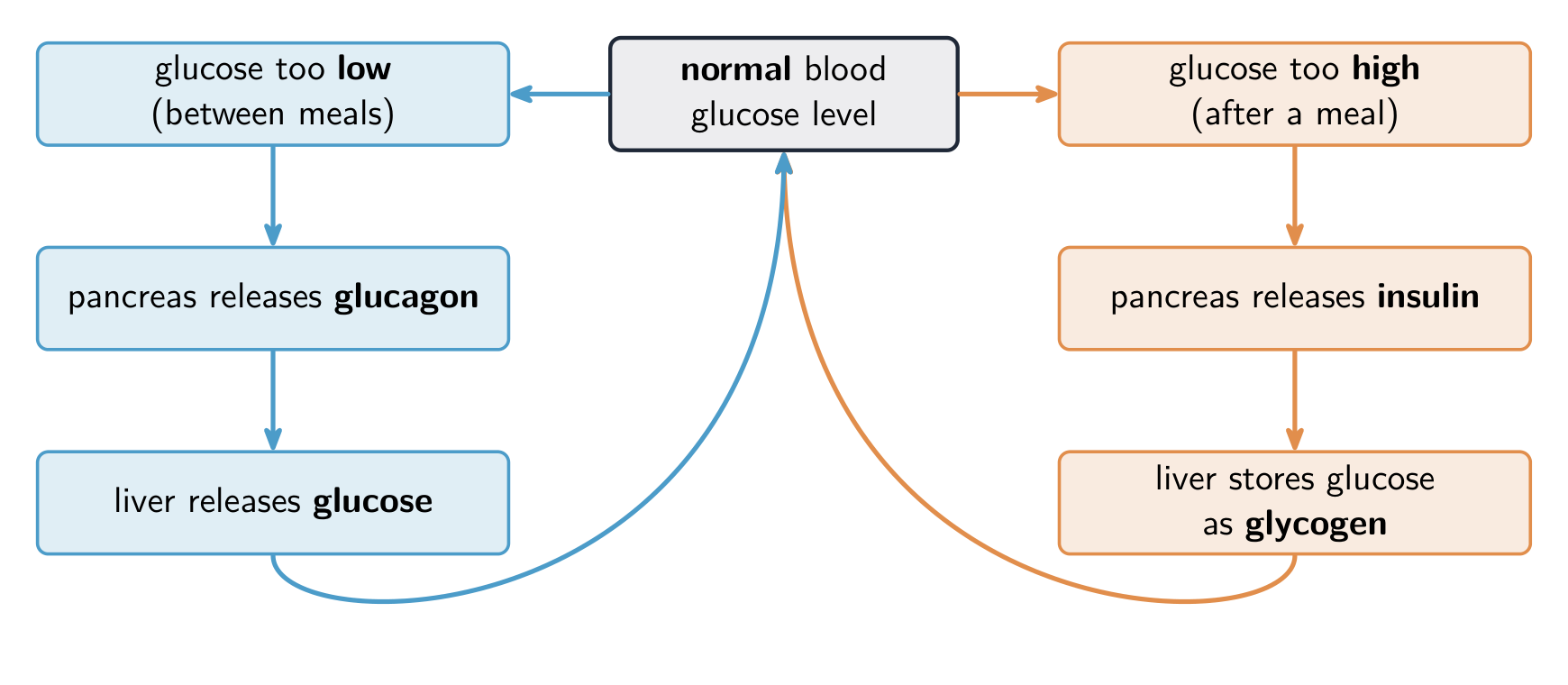
Negative feedback: blood glucose
Homeostasis 稳态 is keeping a constant internal environment 环境 inside the body — for example a steady temperature and a steady blood glucose level.
(Supplement) Homeostasis works by negative feedback 负反馈: when a value moves away from its set point 设定点, the body acts to bring it back. The change itself triggers the correction.
Controlling blood glucose
The liver 肝脏 and the pancreas keep blood glucose steady:
insulin lowers blood glucose after a meal — the liver stores the glucose as glycogen 糖原.
(Supplement) glucagon raises blood glucose between meals — the liver releases glucose.
In Type 1 diabetes 糖尿病 the pancreas cannot make insulin, so blood glucose rises too high. It is treated with insulin injections and a carefully planned diet.
Worked example. Blood glucose rises sharply after a meal, then falls back to normal over the next two hours. Name the organs and the hormone involved, and say what they do. The pancreas detects the rise and releases insulin. Insulin makes the liver take glucose out of the blood and store it as glycogen, so the level falls back to normal. Between meals the opposite loop runs: the pancreas releases glucagon and the liver releases glucose again. Keep the two words apart - insulin is the hormone, glycogen is the store. Swapping them is the classic error.
Controlling body temperature (Supplement)
The brain detects the body temperature 温度 and keeps it steady. The skin helps:
Structure
Role
sweat glands 汗腺
make sweat; as it evaporates it cools the skin (sweating 出汗)
hair erector muscles 立毛肌
raise the hairs to trap a layer of air
blood vessels 血管
change how much blood flows near the skin surface
fatty tissue 脂肪组织
gives insulation 隔热 to reduce heat loss
When you are too hot: you sweat, and the arterioles 小动脉 widen (vasodilation 血管舒张) so more blood flows to the skin capillaries 毛细血管 and loses heat.
When you are too cold: you shiver 颤抖 (the muscles make heat), and the arterioles narrow (vasoconstriction 血管收缩) so less blood reaches the surface, keeping heat in.
العربية
التغذية الراجعة السالبة: جلوكوز الدم
الاستتباب هو الحفاظ على بيئة داخلية ثابتة داخل الجسم — على سبيل المثال درجة حرارة مستقرة ومستوى سكر دم ثابت.
(إضافي) يعمل الاستتباب عن طريق التغذية الراجعة السلبية: عندما يبتعد قيمة ما عن نقطة الضبط، يتصرف الجسم لإعادتها. التغير نفسه يحفز التصحيح.
التحكم في سكر الدم
يُحافظ الكبد والبنكرياس على ثبات سكر الدم:
الإنسولين يخفض سكر الدم بعد الوجبة — يخزن الكبد السكر على شكل جلايكوجين.
(إضافي) الجلوكاجون يرفع سكر الدم بين الوجبات — يحرر الكبد السكر.
الأنسولين يقلل جلوكوز الدم والجلوكاجون يرفعه، مما يحافظ عليه near مستوى طبيعي
في مرض السكري من النوع 1 لا يستطيع البنكرياس إنتاج الأنسولين، لذا يرتفع جلوكوز الدم بشكل زائد عن الحد. يتم علاجه بحقن الأنسولين ونظام غذائي مدروس بعناية.
مثال محلول. يرتفع سكر الدم بشدة بعد وجبة، ثم يعود إلى المستوى الطبيعي خلال الساعتين التاليتين. اذكر الأعضاء والهرمون المشاركين، وماذا يفعلان. البنكرياس يكشف الارتفاع ويحرر الإنسولين. يجعل الإنسولين الكبد يأخذ السكر من الدم ويخزنه على شكل جلايكوجين، sehingga ينخفض المستوى إلى الطبيعي. بين الوجبات تعمل الحلقة العكسية: يحرر البنكرياس الجلوكاجون ويحرر الكبد السكر مرة أخرى. حافظ على التمييز بين الكلمتين - الإنسولين هو الهرمون، والجلايكوجين هو المخزن. خلطهما هو الخطأ الكلاسيكي.
التحكم في درجة حرارة الجسم (إضافي)
يكتشف الدماغ درجة حرارة الجسم ويحافظ على ثباتها. يساعد الجلد:
البنية
الدور
غدد العرق
تنتج العرق؛ وعند تبخره تُبرد الجلد (التعرق)
عضلات إرعاد الشعر
ترفع الشعر لاحتجاز طبقة من الهواء
الأوعية الدموية
تغير كمية الدم المتدفق قرب سطح الجلد
النسيج الدهني
يوفر العزل الحراري لتقليل فقدان الحرارة
عندما تكون ساخناً جداً: تتعرق، وتتوسع الشرايين الصغيرة (توسيع الأوعية) لتدفق المزيد من الدم إلى الشعيرات الدموية للجلد وفقدان الحرارة.
عندما تكون بارداً جداً: ترتجف (تنتج العضلات الحرارة)، وتضيق الشرايين الصغيرة (تضييق الأوعية) ليصل دم أقل إلى السطح، مما يحفظ الحرارة.
التغذية الراجعة السلبية: أي تغيير بعيداً عن 37 °C تقريباً يحفز الاستجابة التي تعكسه، مما يعيد الجسم إلى حالته الطبيعية.
Explore · استكشف
Negative feedback · التغذية الراجعة السلبية
Push body temperature away from its set point and watch negative feedback bring it back to normal. · ادفع درجة حرارة الجسم بعيداً عن نقطة ضبطها وراقب التغذية الراجعة السلبية تعيدها للوضع الطبيعي.
1 Describe gravitropism as a response in which parts of a plant grow towards or away from gravity
4 Explain phototropism and gravitropism of a shoot as examples of the chemical control of plant growth
2 Describe phototropism as a response in which parts of a plant grow towards or away from the direction of the light source
5 Explain the role of auxin in controlling shoot growth, limited to: (a) auxin is made in the shoot tip (b) auxin diffuses through the plant from the shoot tip (c) auxin is unequally distributed in response to light and gravity (d) auxin stimulates cell elongation
3 Investigate and describe gravitropism and phototropism in shoots and roots
العربية
أساسي
تكميلي
1 صف الجاذبية الإيجابية والسلبية كاستجابة ينمو فيها أجزاء النبات نحو الجاذبية الأرضية أو بعيداً عنها
4 اشرح الاستجابة للضوء والجاذبية في البرعم كمثالين على التحكم الكيميائي في نمو النبات
2 صف الاستجابة للضوء كاستجابة ينمو فيها أجزاء النبات نحو مصدر الضوء أو بعيداً عنه
5 اشرح دور الأوكسين في التحكم في نمو البرعم، مقتصراً على: (أ) يتكون الأوكسين في قمة البرعم (ب) ينتشر الأوكسين عبر النبات من قمة البرعم (ج) يتوزع الأوكسين بشكل غير متساوٍ استجابةً للضوء والجاذبية (د) يحفز الأوكسين استطالة الخلايا
3 تحقق وصف الاستجابة للجاذبية والاستجابة للضوء في البراعم والجذور
Source: Cambridge International syllabus · المصدر: منهج كامبريدج الدولي
English
A tropism 向性 is a plant's growth response to a direction:
gravitropism 向地性 — growth in response to gravity 重力 (roots grow down, shoots grow up).
phototropism 向光性 — growth in response to the direction of light (shoots grow towards the light).
(Supplement) These responses are controlled by a chemical called auxin 生长素:
auxin is made in the shoot 嫩枝 tip.
it diffuses down through the plant.
light or gravity makes the auxin spread unequally to one side.
auxin makes cells elongate 伸长 (grow longer). The side with more auxin grows faster, so the shoot bends.
العربية
الاستجابة الاتجاهية هي استجابة نمو النبات تجاه اتجاه معين:
الاستجابة للجاذبية — النمو استجابة لـ الجاذبية (تنمو الجذور لأسفل، وتنمو السيقان لأعلى).
الاستضاءة — النمو استجابة لاتجاه الضوء (تنمو السيقان نحو الضوء).
(إضافي) تُتحكم هذه الاستجابات بمادة كيميائية تسمى الإكسين:
يُصنع الإكسين في طرف الساق.
ينتشر للأسفل عبر النبات.
الضوء أو الجاذبية تجعل الإكسين ينتشر بشكل غير متساوٍ إلى جانب واحد.
يجعل الإكسين الخلايا تمتد (تنمو أطول). الجانب الذي يحتوي على إكسين أكثر ينمو أسرع، فتتنحى الساق.
يتجمع الأوكسين على الجانب المظلم ويجعل تلك الخلايا تنمو أطول، مما يُقوّي الساق نحو الضوء
Explore · استكشف
Phototropism — bending to light · الانتحاء الضوئي — الانحناء نحو الضوء
A shoot grows towards light because a hormone makes one side grow faster than the other. · ينمو البرعم نحو الضوء لأن هرموناً يجعل جانباً ينمو أسرع من الآخر.
Pick one and the site follows you — notes, papers, videos and practice all open on it. · اختر واحدًا وسيتبعك الموقع — الملاحظات، الأوراق، الفيديوهات والتدريب جميعها تفتح عليه.
Type to search notes, lessons, code, vocabulary and past-paper questions across every subject. · اكتب للبحث عن ملاحظات، دروس، أكواد، مفردات وأسئلة امتحانات سابقة عبر جميع المواد.