| Core | Supplement |
|---|---|
| 1 Describe a drug as any substance taken into the body that modifies or affects chemical reactions in the body | |
| 2 Describe the use of antibiotics for the treatment of bacterial infections | |
| 3 State that some bacteria are resistant to antibiotics which reduces the effectiveness of antibiotics | 5 Explain how using antibiotics only when essential can limit the development of resistant bacteria such as MRSA |
| 4 State that antibiotics kill bacteria but do not affect viruses |
Drugs
IGCSE Biology · Topic 15
 4:37
4:37
Drugs and Antibiotics
Ask a doctor for antibiotics when you have a cold and they will say no. Not because they are being difficult — because it genuinely would not work, and because…
English narration · English + 中文 subtitles burned in
15.1
What a drug is

Syllabus
Source: Cambridge International syllabus
A drug 药物 is any substance taken into the body that changes or affects the chemical reactions 化学反应 in the body. Many drugs are medicines that help to treat illness.
Vocabulary
Train
| English |
|---|
| drug/drʌɡ/ |
| chemical reactions/ˈkemɪkl rɪˈækʃnz/ |
15.1
Antibiotics
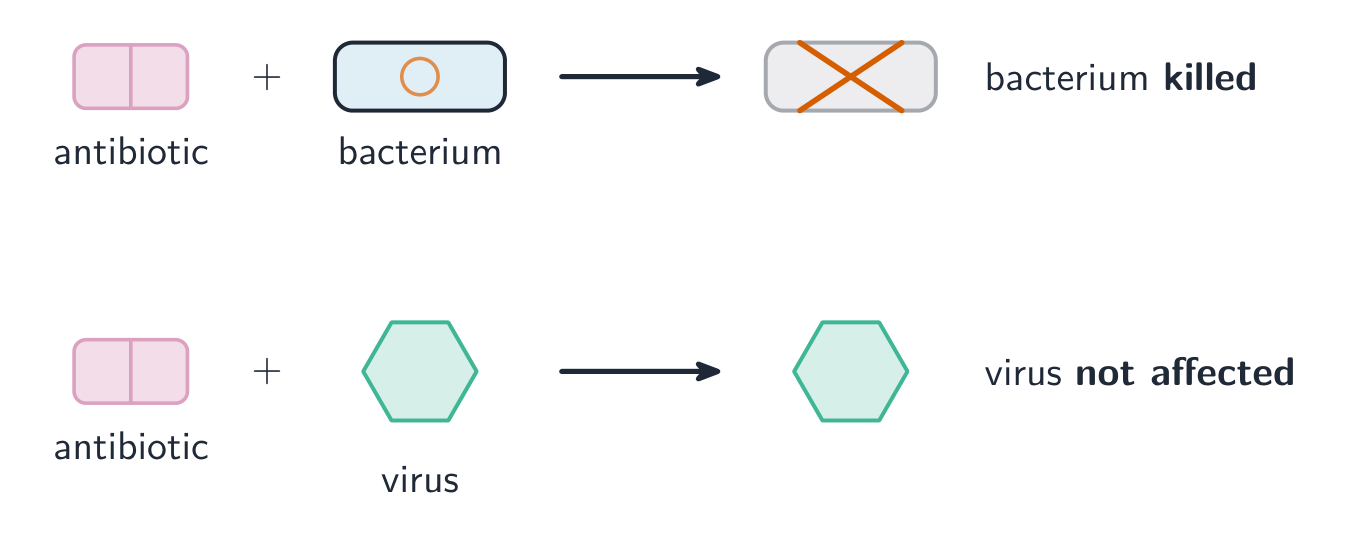
Antibiotics 抗生素 are drugs used to treat bacterial infections 感染. They kill bacteria 细菌, or stop them growing, but they do not affect viruses 病毒. This is why antibiotics cannot cure a cold or the flu, which are caused by viruses.
To test which antibiotic works best, small paper discs soaked in different antibiotics are placed on a plate covered with bacteria. Where an antibiotic kills the bacteria, a clear ring with no growth appears around the disc. A bigger ring means the antibiotic is more effective.

Explore
Drug and antibiotic lab
Sort medical examples by what the drug can and cannot do.
Vocabulary
Train
| English |
|---|
| antibiotics/ˌæntɪbaɪˈɒtɪks/ |
| infections/ɪnˈfekʃnz/ |
| bacteria/bækˈtɪərɪə/ |
| viruses/ˈvaɪrəsɪz/ |
15.1
Antibiotic resistance

Some bacteria are resistant 耐药 to an antibiotic — the antibiotic no longer kills them. These bacteria survive and multiply, so the antibiotic slowly becomes less effective for everyone.
(Supplement) To slow this down, antibiotics should be used only when they are really needed, and the full course should always be finished. Using antibiotics too often lets resistant bacteria, such as MRSA, spread.
Worked example. A patient stops taking their antibiotic as soon as they feel better, and the infection comes back worse. Explain using resistance. In the starting population a few bacteria are already resistant, by chance. The antibiotic kills the non-resistant ones, so those few survive, multiply, and come to make up most of the population - and the antibiotic no longer works on it. Stopping early leaves behind exactly the bacteria that are hardest to kill. Say the resistant bacteria already existed and survived: writing that the antibiotic "made them resistant" is wrong and loses every mark.
Vocabulary
Train
| English |
|---|
| resistant/rɪˈzɪstənt/ |
15.1
Exam tips
- A drug is any substance that changes the body's chemical reactions — not only illegal drugs.
- Antibiotics kill bacteria only; they do not work on viruses (so they are useless against colds and flu).
- Overusing antibiotics leads to resistant bacteria like MRSA. Use them only when needed, and finish the whole course.
Interactive lessons on this topic
Work through it step by step, with instant-check exercises.