سيارة تتحرك. تستخدم الوقود، وتطلق غازات نفاية، وتستجيب عند تدوير المقود. هل السيارة حية؟ لا — ويمكن لعلم الأحياء أن يخبرك بالضبط لماذا. الكائنات الحية…
English narration · English + 中文 subtitles burned in · سرد باللغة الإنجليزية · ترجمة مدمجة بالإنجليزية + الصينية
1.1
The seven characteristics of living organisms · السمات السبعة للكائنات الحية
Syllabus · المنهج
English
Core
Supplement
1 Describe the characteristics of living organisms by describing: (a) movement as an action by an organism or part of an organism causing a change of position or place (b) respiration as the chemical reactions in cells that break down nutrient molecules and release energy for metabolism (c) sensitivity as the ability to detect and respond to changes in the internal or external environment (d) growth as a permanent increase in size and dry mass (e) reproduction as the processes that make more of the same kind of organism (f) excretion as the removal of the waste products of metabolism and substances in excess of requirements (g) nutrition as the taking in of materials for energy, growth and development
العربية
أساسي
تكميلي
1 صف خصائص الكائنات الحية من خلال وصف: (أ) الحركة كعمل يقوم به الكائن الحي أو جزء منه يسبب تغييراً في الموقع أو المكان (ب) التنفس كالتفاعلات الكيميائية في الخلايا التي تكسر جزيئات المغذيات وتطلق الطاقة للتأيين (ج) الحساسية كقدرة الكشف عن الاستجابة للتغيرات في البيئة الداخلية أو الخارجية (د) النمو كزيادة دائمة في الحجم والكتلة الجافة (هـ) التكاثر كالعمليات التي تنتج المزيد من نفس نوع الكائن الحي (و) الإخراج كإزالة نواتج الأيض والمواد الزائدة عن الاحتياجات (ز) التغذية كأخذ المواد للحصول على الطاقة والنمو والتطور
Source: Cambridge International syllabus · المصدر: منهج كامبريدج الدولي
English
Every living thing shares the same seven characteristics 特征 — seven life processes 生命过程 that all organisms 生物体 carry out. You can remember them with the letters MRS GREN. The examiner gives marks for the exact wording, so learn each definition.
Movement 运动 — an action by an organism, or part of an organism, that changes its position or place.
Respiration 呼吸作用 — the chemical reactions in cells 细胞 that break down nutrient molecules 营养物质 and release energy 能量 for metabolism 新陈代谢.
Sensitivity 应激性 — the ability to detect and respond to changes in the internal or external environment 环境.
Growth 生长 — a permanent increase in size and dry mass 干重.
Reproduction 生殖 — the processes that make more of the same kind of organism.
Excretion 排泄 — the removal of the waste products 废物 of metabolism, and of substances the body has in excess (more than it needs).
Nutrition 营养 — the taking in of materials for energy, growth and development.
Metabolism means all the chemical reactions that happen inside an organism's cells.
العربية
كل كائن حي يشارك نفس السبع سمات — سبع عمليات حياة يقوم بها جميع الكائنات. يمكنك تذكرها بالحروف MRS GREN. يعطي الممتحن الدرجات للصياغة الدقيقة، لذا احفظ كل تعريف.
تُشكّل العمليات الحيوية السبعة كلمة MRS GREN
الحركة — فعل بواسطة الكائن الحي أو جزء منه يغير موقعه أو مكانه.
التنفس — التفاعلات الكيميائية في الخلايا التي تكسر الجزيئات الغذائية وتطلق الطاقة لـ الأيض.
الحساسية — القدرة على الكشف والاستجابة للتغيرات في البيئة الداخلية أو الخارجية.
النمو — زيادة دائمة في الحجم و الكتلة الجافة.
التكاثر — العمليات التي تنتج المزيد من نفس النوع من الكائنات.
الإخراج — إزالة منتجات الفضلات الخاصة بالأيض، والمواد التي يمتلكها الجسم بزيادة (أكثر مما يحتاج).
التغذية — إدخال المواد للحصول على الطاقة والنمو والتطور.
الأيض يعني جميع التفاعلات الكيميائية التي تحدث داخل خلايا الكائن الحي.
Explore · استكشف
Characteristics of life lab · مختبر خصائص الحياة
Classify real observations by the life process they show. · صنّف الملاحظات الحقيقية بناءً على عملية الحياة التي تُظهرها.
1.2
Classification: sorting living things into groups · التصنيف: فرز الكائنات الحية في مجموعات
Syllabus · المنهج
Core
Supplement
1 State that organisms can be classified into groups by the features that they share
5 Explain that classification systems aim to reflect evolutionary relationships
2 Describe a species as a group of organisms that can reproduce to produce fertile offspring
3 Describe the binomial system of naming species as an internationally agreed system in which the scientific name of an organism is made up of two parts showing the genus and species
4 Construct and use dichotomous keys based on identifiable features
6 Explain that the sequences of bases in DNA are used as a means of classification
7 Explain that groups of organisms which share a more recent ancestor (are more closely related) have base sequences in DNA that are more similar than those that share only a distant ancestor
Source: Cambridge International syllabus · المصدر: منهج كامبريدج الدولي
English
There are millions of kinds of living thing. To study them, scientists classify 分类 them — they sort them into groups by the features they share. Organisms in the same group share more features with each other than with organisms in other groups.
Species and the binomial system
The smallest common group is the species 物种. A species is a group of organisms that can reproduce to make fertile offspring 可育后代 ("fertile" means the offspring can themselves go on to have young).
Each species has a two-part scientific name 学名. This way of naming is the binomial system 双名法 — a system agreed all over the world, so every scientist uses the same name.
The first part is the genus 属 (a larger group that the species belongs to). It starts with a capital letter.
The second part is the species. It starts with a small letter.
The whole name is written in italics, for example Homo sapiens (humans). Two rats named Rattus norvegicus and Rattus rattus belong to the same genus but are different species.
Dichotomous keys
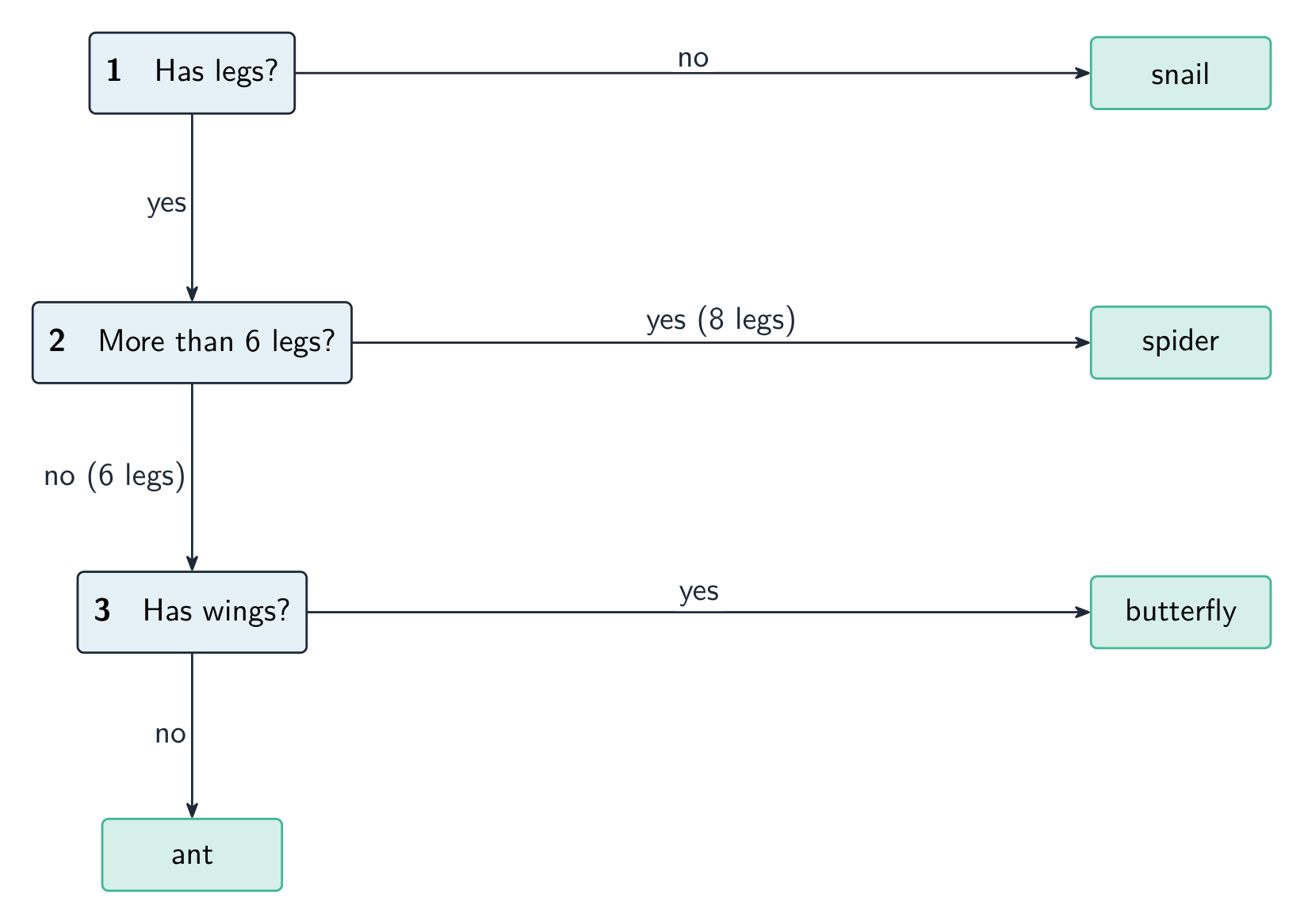
A dichotomous key 二歧检索表 is a tool that helps you identify an unknown organism. "Dichotomous" means "splitting into two". At each step the key gives you two choices about a feature. You pick the one that fits your organism, and that choice sends you on to the next pair of choices. You repeat this until you reach the organism's name.
When you build a key, choose clear features you can see — for example "has wings / has no wings" — not features that change, such as size.
Worked example. A key reads: step 1, has wings, go to 2; no wings, go to 3. Step 2, one pair of wings, it is a housefly; two pairs of wings, it is a butterfly. An unknown insect has two pairs of wings. Step 1 only asks "wings or no wings?", so having wings sends you to step 2. At step 2, "two pairs" gives butterfly. Follow the route the key gives you, one step at a time - never jump straight to the name that looks right.
Classification and DNA (Supplement)
Modern classification tries to show evolutionary relationships 进化关系 — how closely different organisms are related. Organisms that are more closely related share a more recent ancestor 祖先.
To measure this, scientists compare the base sequence 碱基序列 of DNA (the order of the chemical "letters" that make up an organism's genes 基因). The rule is simple:
Organisms that share a more recent ancestor (more closely related) have more similar DNA base sequences.
Organisms that share only a distant ancestor have less similar base sequences.
So a DNA base sequence can be used both to classify organisms and to work out how closely two species are related.
العربية
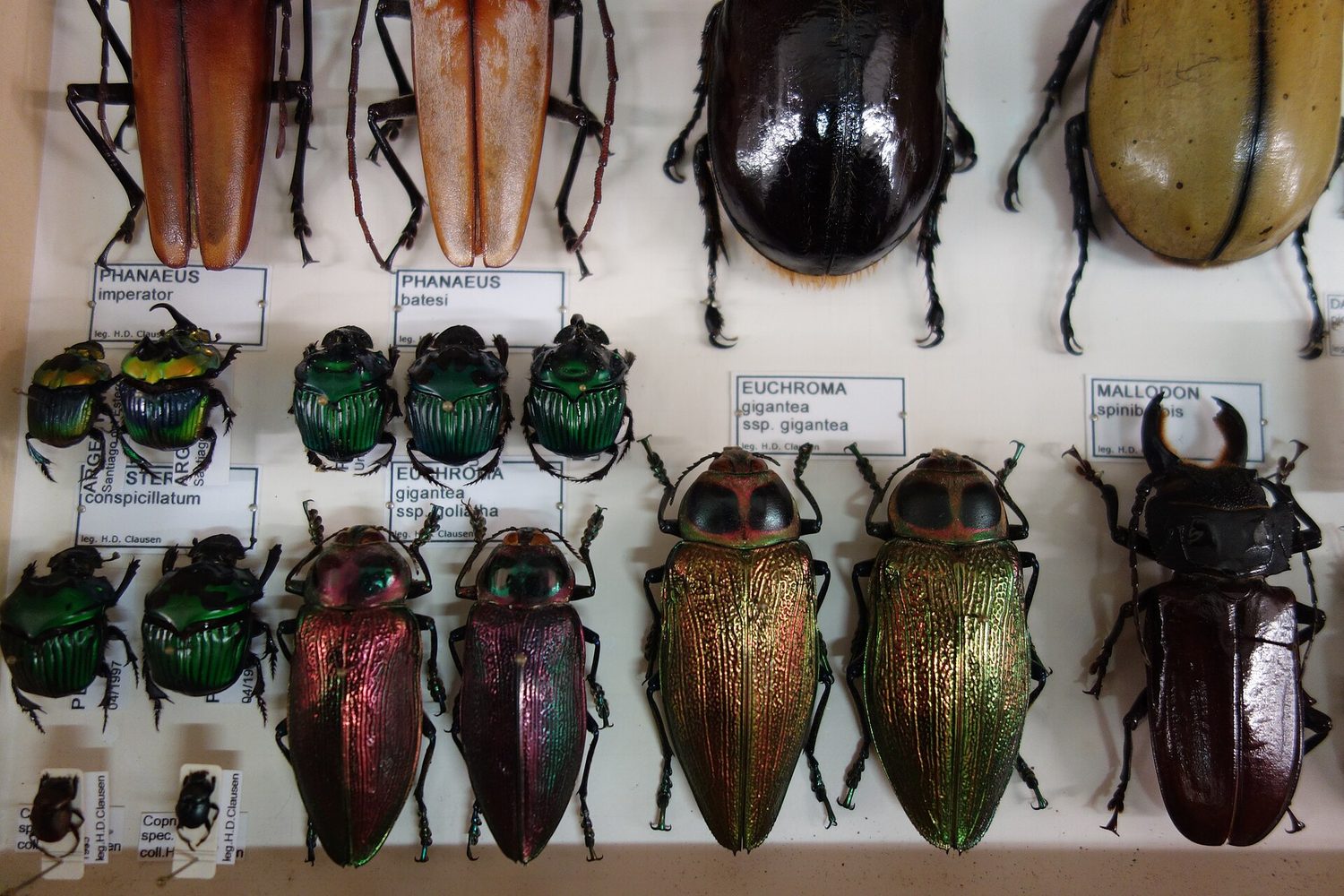
درج حشرات في متحف: يصنف الكائنات الحية بناءً على الخصائص المشتركة بينها
هناك ملايين أنواع من الكائنات الحية. لدراستها، يقوم العلماء بـتصنيفها — حيث يرتبونها في مجموعات بناءً على الخصائص المشتركة. تتشارك الكائنات في نفس المجموعة خصائص أكثر مع بعضها البعض مقارنة بالكائنات في المجموعات الأخرى.
الأنواع والنظام الثنائي
أصغر مجموعة مشتركة هي النوع. النوع هو مجموعة من الكائنات الحية قادرة على التكاثر لإنتاج نسل خصب ("خصب" تعني أن النسل يمكنه بدوره الإنجاب).
اسم علمي: جنس بحرف كبير ونوع بحرف صغير
لكل نوع اسم علمي مكون من جزأين. هذه الطريقة في التسمية تُعرف بـالنظام الثنائي — وهو نظام متفق عليه عالمياً، بحيث يستخدم كل عالم نفس الاسم.
الجزء الأول هو الجنس (مجموعة أكبر ينتمي إليها النوع). يبدأ بحرف كبير.
الجزء الثاني هو النوع. يبدأ بحرف صغير.
يُكتب الاسم الكامل بخط مائل، على سبيل المثال Homo sapiens (البشر). فئران مسماوان Rattus norvegicus وRattus rattus ينتميان إلى نفس الجنس لكنهما نوعان مختلفان.
المفاتيح ثنائية التقسيم
المفتاح ثنائي التقسيم هو أداة تساعدك في تحديد كائن حي مجهول. "ثنائي التقسيم" يعني "التقسيم إلى قسمين". في كل خطوة، يقدم المفتاح لك خيارين حول صفة معينة. تختار الخيار الذي يتناسب مع كائنك الحي، وهذا الخيار يرشدك إلى الزوج التالي من الخيارات. تكرر هذا حتى تصل إلى اسم الكائن الحي.
مفتاح ثنائي التقسيم: كل خطوة تقدم خيارين حتى تصل إلى الكائن
عند بناء مفتاح، اختر صفات واضحة يمكنك رؤيتها — على سبيل المثال "يحتوي على أجنحة / لا يحتوي على أجنحة" — وليس صفات متغيرة مثل الحجم.
مثال محلول. مفتاح يقرأ: الخطوة 1، يحتوي على أجنحة، انتقل إلى 2؛ لا أجنحة، انتقل إلى 3. الخطوة 2، زوج واحد من الأجنحة، إنه ذبابة منزلية؛ زوجان من الأجنحة، إنه فراشة. حشرة مجهولة تحتوي على زوجين من الأجنحة. الخطوة 1 تسأل فقط "أجنحة أم لا؟"، لذا وجود أجنحة يرشدك إلى الخطوة 2. عند الخطوة 2، "زوجان" يعطي فراشة. اتبع المسار الذي يوفره المفتاح خطوة بخطوة - ولا تقفز مباشرة إلى الاسم الذي يبدو صحيحاً.
التصنيف والحمض النووي (إضافة)
يحاول التصنيف الحديث إظهار العلاقات التطورية — مدى قرابة الكائنات الحية المختلفة. الكائنات التي تكون أكثر ارتباطاً تتشارك سلفاً أحدث مشتركاً.
لقياس ذلك، يقارن العلماء تسلسل القواعد للحمض النووي (ترتيب الأحرف الكيميائية المكونة لـالجينات الخاصة بالكائن الحي). القاعدة بسيطة:
الكائنات التي تتشارك سلفاً أحدث (أكثر ارتباطاً) لها تسلسلات قواعد حمض نووي أكثر تشابهاً.
الكائنات التي تتشارك سلفاً بعيداً فقط لديها تسلسلات قواعد أقل تشابهاً.
لذلك يمكن استخدام تسلسل قواعد الحمض النووي لتصنيف الكائنات ولحساب مدى قرابة نوعين ما ببعضهما.
1 State the main features used to place animals and plants into the appropriate kingdoms
4 State the main features used to place all organisms into one of the five kingdoms: animal, plant, fungus, prokaryote, protoctist
2 State the main features used to place organisms into groups within the animal kingdom, limited to: (a) the main groups of vertebrates: mammals, birds, reptiles, amphibians, fish (b) the main groups of arthropods: myriapods, insects, arachnids, crustaceans
5 State the main features used to place organisms into groups within the plant kingdom, limited to ferns and flowering plants (dicotyledons and monocotyledons)
3 Classify organisms using the features identified in 1.3.1 and 1.3.2
6 Classify organisms using the features identified in 1.3.4 and 1.3.5
7 State the features of viruses, limited to a protein coat and genetic material
العربية
أساسي
تكميلي
1 اذكر الخصائص الرئيسية المستخدمة لتصنيف الحيوانات والنباتات في الممالك المناسبة
4 اذكر الخصائص الرئيسية المستخدمة لتصنيف جميع الكائنات الحية في واحدة من الممالك الخمس: الحيوان، النبات، الفطريات، بدائيات النواة، البروتوكست
2 اذكر الخصائص الرئيسية المستخدمة لتصنيف الكائنات الحية إلى مجموعات داخل مملكة الحيوان، مقيدة بما يلي: (أ) المجموعات الرئيسية للفقاريات: الثدييات، الطيور، الزواحف، برمائيات، الأسماك (ب) المجموعات الرئيسية لعقليات الأرجل: متعددة الأقدام، الحشرات، العنكبوتيات، القشريات
5 اذكر الخصائص الرئيسية المستخدمة لتصنيف الكائنات الحية إلى مجموعات داخل مملكة النبات، مقيدة بالسرخسيات والنباتات ذات الأزهار (ذات الفلقتين وذات فلقة واحدة)
3 صنف الكائنات الحية باستخدام الخصائص التي تم تحديدها في 1.3.1 و 1.3.2
6 صنف الكائنات الحية باستخدام الخصائص التي تم تحديدها في 1.3.4 و 1.3.5
7 اذكر خصائص الفيروسات، مقيدة بغلاف بروتيني ومادة وراثية
Source: Cambridge International syllabus · المصدر: منهج كامبريدج الدولي
English
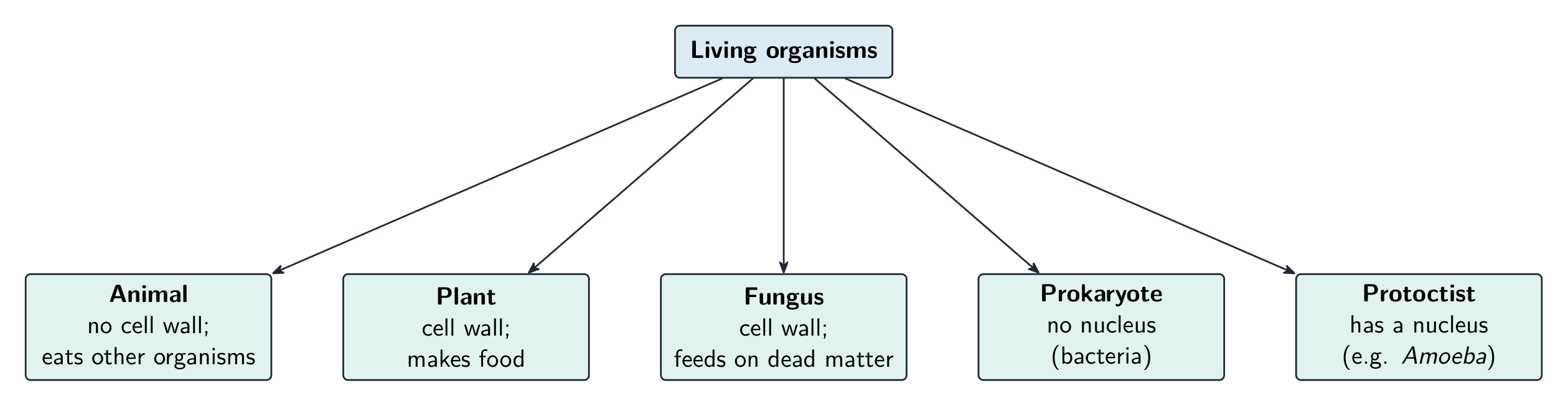
The biggest groups that organisms are sorted into are called kingdoms 界. At Core level you place organisms into the first two kingdoms below; for Supplement you need all five kingdoms. You decide where an organism belongs by looking at its main features.
Kingdom
Main features
Animal 动物
made of many cells; cells have no cell wall 细胞壁; cannot make their own food, so they feed on other organisms; most can move their whole body
Plant 植物
made of many cells; cells have a cell wall; make their own food by photosynthesis 光合作用, so many cells contain chloroplasts 叶绿体
Fungus 真菌
for example moulds 霉菌, mushrooms 蘑菇 and yeast 酵母; have cell walls; cannot photosynthesise; feed on dead or living matter
Prokaryote 原核生物
for example bacteria 细菌; single-celled 单细胞; cells have no nucleus 细胞核
Protoctist 原生生物
for example Amoeba and algae 藻类; usually single-celled; cells do have a nucleus
The fungus, prokaryote and protoctist kingdoms are Supplement only.
Grouping the animal kingdom
The animal kingdom is split first into two: animals with a backbone and animals without one.
Vertebrates 脊椎动物 are animals with a backbone 脊柱. There are five main groups.
Group
Main features
Mammals 哺乳动物
have fur 毛发 or hair; feed their young on milk
Birds 鸟类
have feathers 羽毛 and a beak 喙; lay eggs with hard shells
Reptiles 爬行动物
have dry skin covered with scales 鳞片; lay eggs with leathery shells on land
Amphibians 两栖动物
have moist skin; lay eggs in water; the young live in water
Fish 鱼类
have wet scales and fins 鳍; breathe using gills 鳃; lay eggs in water
Arthropods 节肢动物 are animals with no backbone. They have a hard outer skeleton (an exoskeleton 外骨骼) and legs that bend at joints 关节. There are four main groups.
Group
Main features
Insects 昆虫
body in 3 parts; 3 pairs of legs; usually 2 pairs of wings; 1 pair of antennae 触角
Arachnids 蛛形类
body in 2 parts; 4 pairs of legs; no wings; no antennae
Crustaceans 甲壳类
many pairs of legs; 2 pairs of antennae; most live in water
Myriapods 多足类
long body made of many segments 体节; one or two pairs of legs on each segment
Grouping the plant kingdom (Supplement)
Plants are placed into groups too. You need two of them.
Ferns 蕨类植物 — have roots, stems and leaves, but make no flowers or seeds. They reproduce using tiny spores 孢子.
Flowering plants 开花植物 — make flowers, and form seeds 种子 inside the flower. They split into two groups by their seed-leaves (the first leaves inside a seed, called cotyledons 子叶):
Group
Features
Monocotyledons 单子叶植物
seed has one cotyledon; long narrow leaves; veins 叶脉 run side by side (parallel)
Dicotyledons 双子叶植物
seed has two cotyledons; broad leaves; veins form a branching net
Viruses (Supplement)
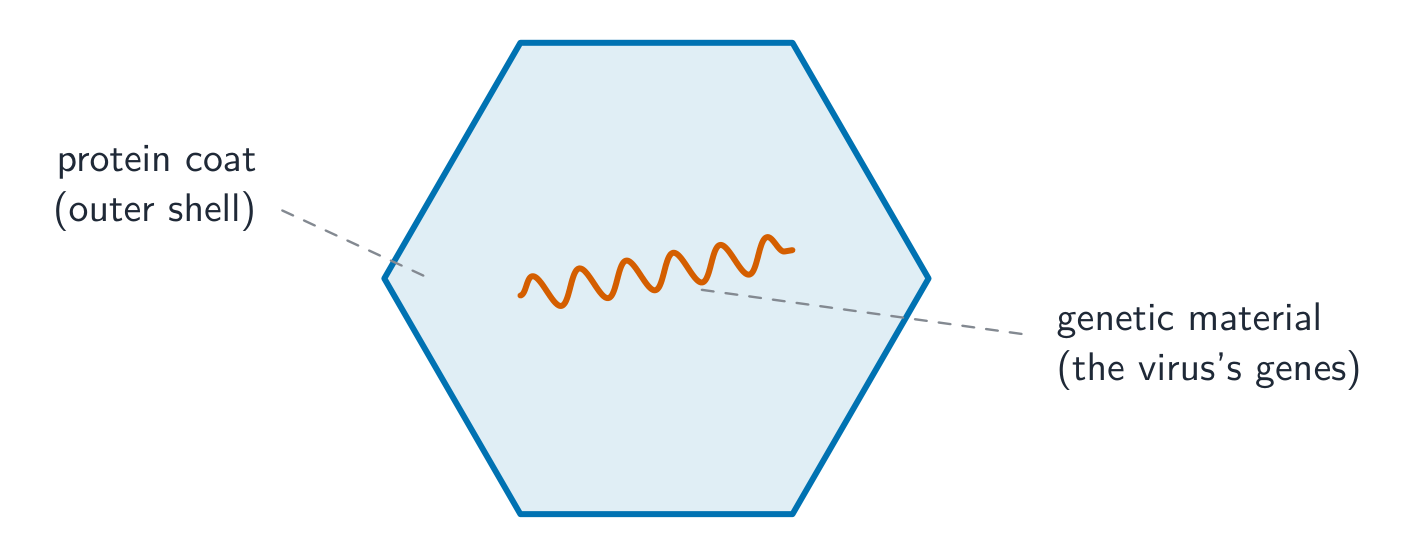
Viruses 病毒 are not placed in any kingdom. They are not made of cells, so many scientists do not count them as living. A virus is very simple, with only two parts:
an outer protein coat 蛋白质外壳, and
genetic material 遗传物质 (its genes) inside.
A virus cannot carry out the life processes on its own. It can only reproduce inside the living cells of a host 宿主 — the organism it infects.
العربية
أكبر المجموعات التي يُرتب فيها الكائنات الحية تسمى الممالك. في المستوى الأساسي تضع الكائنات في أول ملكيتين أدناه؛ أما بالنسبة للإضافة فتحتاج إلى جميع الممالك الخمسة. تحدد مكان الانتماء للكائن الحي من خلال النظر إلى其主要 features.
تُصنف الكائنات الحية إلى ممالك خمس بناءً على سماتها الرئيسية
المملكة
الصفات الرئيسية
حيوان
مصنوع من خلايا متعددة؛ الخلايا لا تمتلك جدار خلوي؛ لا تستطيع صنع غذائها الخاص، لذا تتغذى على كائنات أخرى؛ معظمها قادر على تحريك جسمه بالكامل
نبات
مصنوع من خلايا متعددة؛ الخلايا تمتلك جداراً خلوياً؛ تصنع غذاءها الخاص عبر البناء الضوئي، لذا تحتوي العديد من الخلايا على جسيمات خضراء
فطريات
على سبيل المثال العفن والفطر والخميرة؛ تمتلك جدران خلوية؛ لا تقوم بالبناء الضوئي؛ تتغذى على مواد ميتة أو حية
بدائيات النواة
على سبيل المثال البكتيريا؛ وحيدة الخلية؛ الخلايا لا تمتلك نواة
أوليات
على سبيل المثال Amoeba والطحالب؛ عادة وحيدة الخلية؛ الخلايا تمتلك نواة بالفعل
ممالك الفطريات وبدائيات النواة والأوليات هي للإضافة فقط.
فطر: فطر المذنب، وهو فطر مشرومكائن بدائي النواة (بكتيريا): الإشريكية القولونية تُرى تحت المجهر الإلكتروني
تصنيف مملكة الحيوان
تنقسم مملكة الحيوان أولاً إلى قسمين: حيوانات possessing a backbone وحيوانات بدونها.
تنقسم مملكة الحيوان إلى الفقاريات (possesses a backbone) وعقديات الأرجل (بدون possesses a backbone)، كل منهما بمجموعاته الرئيسية
الفقاريات هي حيوانات possesses a backbone. يوجد خمسة مجموعات رئيسية.
المجموعة
الصفات الرئيسية
ثدييات
تمتلك وبراً أو شعرًا؛ ترضع صغارها بالحليب
طيور
تمتلك ريشاً ومنقاراً؛ تضع بيضاً بقشور صلبة
زواحف
تمتلك جلدًا جافًا مغطى بـقشور؛ تضع بيضاً بقشور جلدية على اليابسة
طفيليات
تمتلك جلدًا رطباً؛ تضع بيضاً في الماء؛ يعيش الصغار في الماء
أسماك
تمتلك قشوراً رطبة وزعانف؛ تتنفس باستخدام خياشيم؛ تضع بيضاً في الماء
عقديات الأرجل هي حيوانات بدون possesses a backbone. تمتلك هيكلاً خارجياً صلباً (an exoskeleton) وأرجلاً تنثني عند المفاصل. يوجد أربع مجموعات رئيسية.
المجموعة
الصفات الرئيسية
الحشرات
جسم في 3 أجزاء؛ 3 أزواج من الأرجل؛ عادةً 2 أزواج من الأجنحة؛ 1 زوج من المستشعرات
العنكبوتيات
جسم في 2 أجزاء؛ 4 أزواج من الأرجل؛ بدون أجنحة؛ بدون مستشعرات
القشريات
العديد من أزواج الأرجل؛ 2 أزواج من المستشعرات؛ معظمها يعيش في الماء
متعددات الأرجل
جسم طويل مكون من عدد كبير من الأجزاء؛ زوج أو زوجان من الأرجل على كل جزء
تصنيف مملكة النبات (مكمل)
تُصنف النباتات أيضًا إلى مجموعات. تحتاج إلى معرفتين منها.
النباتات الوعائية — تمتلك جذورًا وساقًا وأوراقًا، لكنها لا تُنتج أزهارًا أو بذورًا. تتكاثر باستخدام بوغات دقيقة.
النباتات المزهرة — تُنتج أزهارًا، وتكوّن بذورًا داخل الزهرة. تنقسم إلى مجموعتين حسب البذرة-الأوراق (أول الأوراق الموجودة داخل البذرة، وتسمى الفصّات):
المجموعة
المميزات
ذوات الفصّة الواحدة
البذرة تحتوي على فصّة واحدة؛ أوراق طويلة وضيقة؛ عروق تسير جنبًا إلى جنب (متوازية)
ذوات الفصّتين
البذرة تحتوي على فصّتين؛ أوراق عريضة؛ العروق تُشكّل شبكة متفرعة
أوراق ذوات الفصّة الواحدة لها عروق متوازية؛ أوراق ذات الفصّتين لها شبكة من العروق المتفرعة
الفيروسات (مكمل)
الفيروسات لا تُصنف ضمن أي مملكة. لأنها ليست مكونة من خلايا، فإن الكثير من العلماء لا يعدّها كائنات حية. الفيروس بسيط جدًا، ويتكون من جزئين فقط:
غلاف خارجي من البروتين، و
مواد وراثية (جيناته) داخله.
الفيروس هو مجرد غلاف بروتيني يحيط بمواده الوراثية
لا يستطيع الفيروس القيام بالعمليات الحية بمفرده. يمكنه التكاثر فقط داخل الخلايا الحية لـ مضيف — وهو الكائن الذي يُصاب به.
Explore · استكشف
Groups of organisms lab · مختبر مجموعات الكائنات الحية
Compare organism groups by the feature that identifies them. · قارن مجموعات الكائنات بالحسمة التي تحددها.
Pick one and the site follows you — notes, papers, videos and practice all open on it. · اختر واحدًا وسيتبعك الموقع — الملاحظات، الأوراق، الفيديوهات والتدريب جميعها تفتح عليه.
Type to search notes, lessons, code, vocabulary and past-paper questions across every subject. · اكتب للبحث عن ملاحظات، دروس، أكواد، مفردات وأسئلة امتحانات سابقة عبر جميع المواد.