Skip to content · ⁨الانتقال إلى المحتوى⁩

Social Psychology and Personality · ⁨علم النفس الاجتماعي والشخصية⁩

AP Psychology · ⁨علم النفس (AP)⁩ · Topic 4 · ⁨الموضوع 4⁩

Video lesson for this topic · ⁨درس فيديو لهذا الموضوع⁩ Open the video page · ⁨افتح صفحة الفيديو⁩
10:24

علم النفس الاجتماعي والشخصية

سائق يقطع أمامك وتقرر أنه وقح. لاحقاً تقطع أمام شخص آخر، وتعرف تماماً لماذا: كنت متأخراً، والمسار الآخر كان…

English narration · English + 中文 subtitles burned in · ⁨سرد باللغة الإنجليزية · ترجمة مدمجة بالإنجليزية + الصينية⁩

4.1

Explaining Behaviour: Attribution · ⁨شرح السلوك: التعزيز⁩

Syllabus · ⁨المنهج⁩
English

Learning Objective 4.1.A: Explain how attribution theory applies to behavior and mental processes.

  • 4.1.A.1 Attributions are how people explain behavior and mental processes of themselves and others. Dispositional attributions relate to internal qualities of others (such as intelligence or personality) while situational attributions relate to external circumstances that are experienced.
  • 4.1.A.2 People demonstrate a predictable pattern of attributions called explanatory style. Explanatory style is how people explain good and bad events in their lives and in the lives of others. Explanatory style can be optimistic or pessimistic.
  • 4.1.A.3 People are subject to biases in their attributions. Those biases include actor/ observer bias, fundamental attribution error, and self-serving bias, all of which can affect behavior and mental processes.

Learning Objective 4.1.B: Explain how locus of control (internal and external) applies to behavior and mental processes.

Learning Objective 4.1.C: Explain how person perception applies to behavior and mental processes.

  • 4.1.C.1 People’s perception of how much they like something can be influenced by the mere exposure effect. The mere exposure effect occurs when people are exposed to a stimulus repeatedly over time, which causes them to like the stimulus more.
  • 4.1.C.2 People can behave in ways that elicit behaviors from others that confirm their beliefs or perceptions about themselves or others (self-fulfilling prophecy).
  • 4.1.C.3 Social comparison is a type of person perception that occurs when people evaluate themselves based on comparisons to other members of society or social circles. Social comparison can be upward or downward. People often judge their own sense of deprivation relative to others (relative deprivation).
العربية

هدف التعلم 4.1.A: اشرح كيف تنطبق نظرية النسب على السلوك والعمليات العقلية.

  • 4.1.A.1 الإسنادات هي الطريقة التي يفسر بها الناس سلوكهم وعملهم العقلي، بالإضافة إلى تفسير سلوك الآخرين وعملهم العقلي. تتعلق الإسنادات التكوينية بالسمات الداخلية للآخرين (مثل الذكاء أو الشخصية)، بينما تتعلق الإسنادات الموقفية بالظروف الخارجية التي يتم experienced.
  • 4.1.A.2 يُظهر الناس نمطًا تنبؤيًا من الإسنادات يُسمى النمط التفسيري. النمط التفسيري هو كيفية تفسير الناس للأحداث الجيدة والسيئة في حياتهم وحياة الآخرين. يمكن أن يكون النمط التفسيري متفائلًا أو متشائمًا.
  • 4.1.A.3 يخضع الناس لتحيزات في إسناداتهم. تشمل هذه التحيزات تحيز الفاعل/المراقب، وخطأ الإسناد الأساسي، والتحيز المفيد ذاتيًا، وكلها يمكن أن تؤثر على السلوك والعمل العقلي.

هدف التعلم 4.1.B: اشرح كيف ينطبق مركز التحكم (الداخلي والخارجي) على السلوك والعمل العقلي.

هدف التعلم 4.1.C: اشرح كيف ينطبق إدراك الشخص على السلوك والعمل العقلي.

  • 4.1.C.1 يمكن أن يتأثر إدراك الأشخاص لمدى إعجابهم بشيء ما بتأثير التعرض البسيط. يحدث تأثير التعرض البسيط عندما يتعرض الناس لمحفز بشكل متكرر بمرور الوقت، مما يجعلهم يعجبون بالمحفز أكثر.
  • 4.1.C.2 يمكن للناس التصرف بطريقة تستدعي سلوكيات من الآخرين تؤكد معتقداتهم أو إدراكاتهم حول أنفسهم أو حول الآخرين (التنبؤ المحقق ذاتيًا).
  • 4.1.C.3 المقارنة الاجتماعية هي نوع من إدراك الشخص يحدث عندما يقوم الناس بتقييم أنفسهم بناءً على مقارنتهم بأعضاء آخرين من المجتمع أو الدوائر الاجتماعية. يمكن أن تكون المقارنة الاجتماعية صاعدة أو هابطة. غالبًا ما يحكم الناس على شعورهم بالحرمان نسبيًا مقارنة بالآخرين (الحرمان النسبي).
Source: College Board AP Course and Exam Description · ⁨المصدر: وصف دورة وامتحان College Board AP⁩

English

Social psychology 社会心理学 studies how people think about, influence, and relate to others. It begins with attribution 归因 - how we explain behaviour.

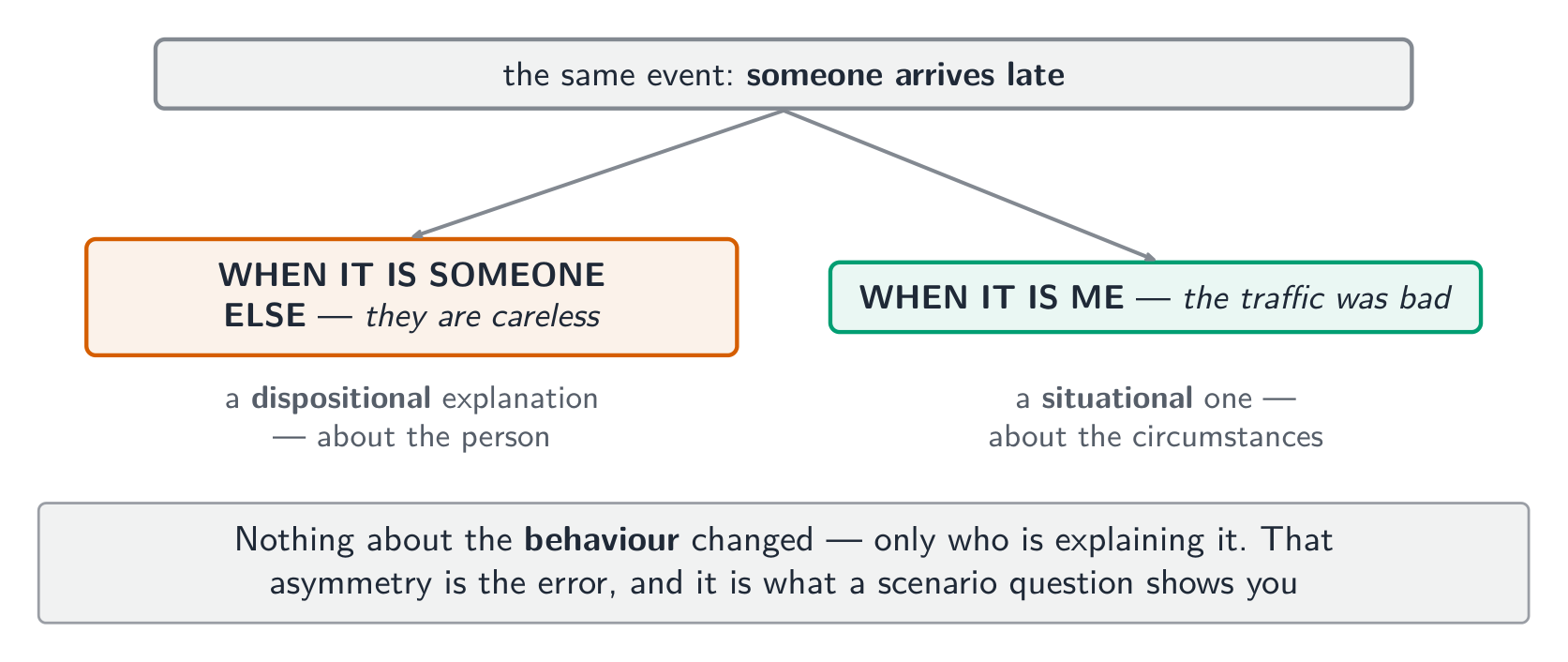
An explanation is either dispositional 内归因 (about the person's personality) or situational 外归因 (about the circumstances). People are not even-handed about which they choose:

  • The fundamental attribution error 基本归因错误 is over-using dispositional explanations for other people's behaviour.
  • The actor-observer bias 行动者-观察者偏差 is explaining your own behaviour situationally while explaining others' dispositionally.
  • The self-serving bias 自利偏差 credits success to yourself and blames failure on the situation.
  • The just-world phenomenon 公正世界现象 is the belief that people get what they deserve.

A person's explanatory style 解释风格 can be optimistic 乐观的 or pessimistic 悲观的, and this shapes how they respond to setbacks.

Person perception has its own effects. The mere exposure effect 单纯曝光效应 means repeated contact increases liking. A self-fulfilling prophecy 自我实现预言 occurs when expectations cause the behaviour that confirms them. Social comparison 社会比较 is judging yourself against others, either upward 向上比较 or downward 向下比较.

العربية

علم النفس الاجتماعي يدرس كيف يفكر الناس ويؤثرون ويرتبطون بالآخرين. يبدأ بـ التعزيز - كيف نشرح السلوك.

التفسير إما طائقي (عن شخصية الشخص) أو وضعي (عن الظروف). الناس ليسوا متساوين في اختيارهم لأي منهما:

  • خطأ التعزيز الأساسي هو الإفراط في استخدام التفسيرات الطاقية لسلوك الآخرين.
  • تحيز الممثل-المراقب: تفسير سلوكك شخصياً بينما تفسر سلوك الآخرين طاقياً.
  • تحيز خدمة الذات يحسب النجاح لنفسه ويَلوم الفشل على الوضع.
  • ظاهرة العالم العادل هي الاعتقاد بأن الناس يحصلون على ما يستحقونه.

أسلوب التفسير الشخصي يمكن أن يكون متفائلًا أو متشائمًا، وهذا يشكل كيفية استجابته للصعوبات.

إدراك الشخصية له تأثيراته الخاصة. تأثير التعرض المجرد يعني أن الاتصال المتكرر يزيد المحبة. التنبؤ ذاتي التحقق يحدث عندما تسبب التوقعات السلوك الذي يؤكدها. المقارنة الاجتماعية هي الحكم على نفسك مقابل الآخرين، سواء كانت صاعدة أو هابطة.

لم يتغير شيء في السلوك - فقط من يشرحه
Explore · ⁨استكشف⁩

Sort each explanation as dispositional or situational · ⁨صنّف كل تفسير كسمة شخصية أو موقفية⁩

Nothing about the behaviour changes — only who is explaining it. That asymmetry is the error. · ⁨لا يوجد تغيير في السلوك — فقط من يفسره. هذه عدم التناظر هو الخطأ.⁩

Vocabulary · ⁨مفردات⁩ Train · ⁨تدريب⁩
English العربية
Social psychology/ˈsəʊʃl saɪˈkɒlədʒi/ علم النفس الاجتماعي
attribution/ətrɪˈbjuːʃn/ النسب
dispositional/ˌdɪspəˈzɪʃənl/ طابعي
situational/ˌsɪtʃuːˈeɪʃənl/ موضعي
fundamental attribution error/ˌfʌndəˈmentl ətrɪˈbjuːʃn ˈerə/ خطأ النسب الأساسي
actor-observer bias/ˈæktə ɒbˈzɜːvə ˈbaɪəs/ تحيز الفاعل-المراقب
self-serving bias/self ˈsɜːvɪŋ ˈbaɪəs/ تحيز خدمة الذات
just-world phenomenon/dʒʌst wɜːld fɪˈnɒmɪnən/ ظاهرة العالم العادل
explanatory style/ekˈsplænətəri staɪl/ النمط التفسيري
optimistic/ˌɒptɪˈmɪstɪk/ متفائل
pessimistic/ˌpesɪˈmɪstɪk/ متشائم
mere exposure effect/mɪə ekˈspəʊʒə ɪˈfekt/ تأثير التعرض المجرد
self-fulfilling prophecy/self fʊlˈfɪlɪŋ ˈprɒfəsi/ نبوءة محققة ذاتيًا
Social comparison/ˈsəʊʃl kəmˈpærɪsn/ المقارنة الاجتماعية
upward/ˈʌpwəd/ صعوداً
downward/ˈdaʊnwəd/ هبوطاً
stereotype/ˈsterɪəʊtaɪp/ تصوّر نمطي
Prejudice/ˈpredʒuːdɪs/ تعصب
discrimination/dɪˌskrɪmɪˈneɪʃn/ التمييز
Implicit attitudes/ɪmˈplɪsɪt ˈætɪtjuːdz/ اتجاهات ضمنية
Belief perseverance/bɪˈliːf ˌpɜːsɪˈvɪərəns/ ثبات الاعتقاد
Confirmation bias/kɒnfəˈmeɪʃn ˈbaɪəs/ تحيز التأكد
Cognitive dissonance/ˈkɒɡnɪtɪv ˈdɪsənəns/ التعارض المعرفي
Social norms/ˈsəʊʃl nɔːmz/ الأعراف الاجتماعية
Conformity/kənˈfɔːmɪti/ الامتثال
Obedience/əʊˈbiːdɪəns/ الطاعة
Normative social influence/ˈnɔːmətɪv ˈsəʊʃl ˈɪnfluːəns/ التأثير الاجتماعي المعياري
informational social influence/ˌɪnfəˈmeɪʃənl ˈsəʊʃl ˈɪnfluːəns/ التأثير الاجتماعي المعلوماتي
Persuasion/pəˈsweɪʒn/ الإقناع
elaboration likelihood model/ɪˌlæbəˈreɪʃn ˈlaɪklihʊd ˈmɒdl/ نموذج احتمالية المعالجة
central route/ˈsentrəl ruːt/ المسار المركزي
peripheral route/pəˈrɪfərəl ruːt/ المسار الطارئ
foot-in-the-door/fʊt ɪnðə dɔː/ قدم الباب
door-in-the-face/dɔː ɪnðə feɪs/ باب في الوجه
4.2

Attitudes and Attitude Change · ⁨المواقف وتغيير المواقف⁩

Syllabus · ⁨المنهج⁩
English

Learning Objective 4.2.A: Explain how stereotypes and implicit attitudes contribute to the behaviors and mental processes of prejudice and discrimination.

  • 4.2.A.1 A stereotype is a generalized concept about a group. Stereotypes can help reduce cognitive load when making decisions or judgments. Stereotypes can be the cause and/or result of biased perceptions and experiences and are frequently the basis of prejudiced attitudes and discriminatory behaviors.
  • 4.2.A.2 Implicit attitudes are those that individuals hold but may be unaware of or may not acknowledge. Research has focused on how implicit attitudes reflect negative evaluations of others, as demonstrated by the just-world phenomenon, out-group homogeneity bias, in-group bias, or ethnocentrism.

Learning Objective 4.2.B: Explain how belief perseverance and cognitive dissonance apply to attitude formation and change.

  • 4.2.B.1 Belief perseverance occurs when a belief persists even if evidence suggests it is not accurate. People experiencing belief perseverance may engage in confirmation bias, thereby clinging to an attitude or belief regardless of the evidence for or against it.
  • 4.2.B.2 Cognitive dissonance refers to the mental discomfort that occurs when actions or attitudes are in conflict. People are motivated to reduce the discomfort by changing either actions or attitudes to be more in line with each other.
العربية

هدف التعلم 4.2.A: اشرح كيف تساهم الصور النمطية والمواقف الضمنية في سلوكيات ومعالجات عقلية التحيز والتمييز.

  • 4.2.A.1 الصورة النمطية هي مفهوم عام عن مجموعة معينة. يمكن أن تساعد الصور النمطية في تقليل الحمل المعرفي عند اتخاذ القرارات أو الأحكام. يمكن أن تكون الصور النمطية سببًا و/أو نتيجة للإدراكات والتجارب المتحيزة، وغالبًا ما تكون أساسًا للمواقف المتحيزة والسلوكيات التمييزية.
  • 4.2.A.2 المواقف الضمنية هي تلك التي يحملها الأفراد لكنهم قد لا يكونون مدركين لها أو لا يعترفون بها. ركزت الأبحاث على كيفية انعكاس المواقف الضمنية لتقييمات سلبية للآخرين، كما هو موضح في ظاهرة العالم العادل، وتحيز تجانس المجموعة الأخرى، وتحيز المجموعة الداخلية، أو العنصرية.

هدف التعلم 4.2.B: اشرح كيف ينطبق استمرارية الاعتقاد والتعارض المعرفي على تكوين态度 وتغييرها.

  • 4.2.B.1 تحدث استمرارية الاعتقاد عندما يبقى اعتقاد ثابتًا حتى إذا أشارت الأدلة إلى أنه غير دقيق. قد يشارك الأشخاص الذين يعانون من استمرارية الاعتقاد في تحيز التأكد، مما يجعلهم متمسكين بموقف أو اعتقاد بغض النظر عن الأدلة الداعمة له أو ضده.
  • 4.2.B.2 يشير التعارض المعرفي إلى الانزعاج العقلي الذي يحدث عندما تكون الأفعال أو المواقف في تعارض. يكون الناس محفزين لتقليل هذا الانزعاج عن طريق تغيير الأفعال أو المواقف لتكون أكثر انسجامًا مع بعضها البعض.

Source: College Board AP Course and Exam Description · ⁨المصدر: وصف دورة وامتحان College Board AP⁩

English

A stereotype 刻板印象 is a generalised idea about a group; it reduces mental effort but can be inaccurate and harmful. Prejudice 偏见 is an attitude, and discrimination 歧视 is the behaviour. Implicit attitudes 内隐态度 are held without full awareness.

Attitudes resist change. Belief perseverance 信念固着 keeps a belief alive even after the evidence for it is discredited. Confirmation bias 确认偏差 is seeking evidence that fits what you already believe.

Cognitive dissonance 认知失调 is the discomfort felt when actions and attitudes conflict. Because the action has already happened, people often resolve it by changing the attitude - which is why doing something can change what a person believes.

العربية

النمطي هو فكرة عامة عن مجموعة؛ يقلل الجهد الذهني ولكنه قد يكون غير دقيق وضار. التحيز هو موقف، و التمييز هو السلوك. المواقف الضمنية تُحتفظ بها دون وعي كامل.

المواقف تقاوم التغيير. استمرارية الاعتقاد تحافظ على اعتقاد حي حتى بعد تشويه الأدلة الداعمة له. تحيز التأكد هو البحث عن أدلة تتناسب مع ما تؤمن به بالفعل.

التناقض المعرفي هو الإزعاج الذي يشعر به الأشخاص عندما تتعارض الأفعال والمواقف. نظرًا لأن الفعل قد حدث بالفعل، غالبًا ما يحل الأشخاص الأمر بتغيير الموقف - وهو السبب في أن فعل شيء ما يمكن أن يغير ما يؤمن به الشخص.

4.3

Social Situations · ⁨المواقف الاجتماعية⁩

Syllabus · ⁨المنهج⁩
English

Learning Objective 4.3.A: Explain how the social situation affects behavior and mental processes.

  • 4.3.A.1 Social norms define expectations and roles a society may have for its members in individual and social situations.
  • 4.3.A.2 Social influence theory proposes that social pressure to behave or think in certain ways can be normative or informational.
  • 4.3.A.3 Persuasion refers to the techniques applied to convince the self or others of particular ideas, actions, or beliefs.
    • 4.3.A.3.i Persuasion can depend on the route to persuasion. The elaboration likelihood model outlines two main routes to persuasion: central and peripheral. The halo effect is an example of a peripheral route to persuasion.
    • 4.3.A.3.ii Persuasion can depend on how information is presented, as demonstrated by the foot-in-the-door and the door-in-the-face techniques.
  • 4.3.A.4 Research on conformity clarifies the conditions that strengthen the likelihood of people adhering to unspoken rules, norms, or expectations.
  • 4.3.A.5 Research on obedience clarifies the conditions that strengthen the likelihood of people complying with the directives of an authority figure.

Learning Objective 4.3.B: Explain how being in a group can affect an individual’s behavior and mental processes.

  • 4.3.B.1 Cultural phenomena such as individualism, collectivism, and multiculturalism can influence how one perceives and behaves towards oneself and others.
  • 4.3.B.2 Being a member of a group can influence how one behaves or experiences mental processes via group polarization, groupthink, diffusion of responsibility, social loafing, and deindividuation.
  • 4.3.B.3 Performing a mental or physical behavior in front of a group can lead to social facilitation.
  • 4.3.B.4 People often overestimate the levels to which others agree with them, known as the false consensus effect.
  • 4.3.B.5 Superordinate goals serve to unite disparate groups under a common goal and help reduce negative affect and stereotyping among groups. Social traps occur when individuals do not unite and act in their own self-interest to the detriment of the group.
  • 4.3.B.6 Industrial-organizational (I/O) psychologists study how people perform in the workplace. I/O psychologists study best practices in management of work, relationships among people working together or for a common company or program, and how people feel about work (burnout).

Learning Objective 4.3.C: Explain how prosocial behavior affects behavior and mental processes.

  • 4.3.C.1 Altruism refers to selfless behavior, but some researchers suggest that people act in prosocial ways due to incurring social debt. The social reciprocity norm and the social responsibility norm explain this type of behavior.
  • 4.3.C.2 The bystander effect demonstrates that situational and attentional variables predict whether someone is likely to help another person.
العربية

هدف التعلم 4.3.A: اشرح كيف يؤثر الموقف الاجتماعي على السلوك والعمل العقلي.

  • 4.3.A.1 تحدد الأعراف الاجتماعية التوقعات والأدوار التي قد تكون لديها المجتمع لأفراده في المواقف الفردية والاجتماعية.
  • 4.3.A.2 تقترح نظرية التأثير الاجتماعي أن الضغط الاجتماعي للتصرف أو التفكير بطرق معينة يمكن أن يكون تنظيميًا أو معلوماتيًا.
  • 4.3.A.3 الإقناع يشير إلى التقنيات المطبقة لإقناع النفس أو الآخرين بأفكار أو أفعال أو معتقدات معينة.
    • 4.3.A.3.i يمكن أن يعتمد الإقناع على المسار نحو الإقناع. يرسم نموذج احتمالية التعميق مسارين رئيسيين للإقناع: المركزي وال peripheral. تأثير الهالة هو مثال على مسار peripheral للإقناع.
    • 4.3.A.3.ii يمكن أن يعتمد الإقناع على كيفية تقديم المعلومات، كما هو موضح بتقنية "القدم في الباب" وتقنية "الباب في الوجه".
  • 4.3.A.4 يوضح البحث حول الانطباق الظروف التي تعزز احتمال التزام الناس بالقواعد أو الأعراف أو التوقعات غير المكتوبة.
  • 4.3.A.5 يوضح البحث عن الطاعة الظروف التي تعزز احتمال امتثال الناس لتوجيهات شخص ذي سلطة.

هدف التعلم 4.3.B: اشرح كيف يمكن أن يؤثر وجود الفرد ضمن مجموعة على سلوكه وعملانه العقلي.

  • 4.3.B.1 يمكن أن تؤثر الظواهر الثقافية مثل الفرديية والجماعية والتنوع الثقافي على كيفية إدراك الفرد لنفسه وكيفية تصرفه تجاه نفسه والآخرين.
  • 4.3.B.2 يمكن أن يكون العضوية في مجموعة عاملاً مؤثراً في كيفية تصرف الفرد أو تجربه للعمل العقلي عبر الاستقطاب الجماعي، وفكر الجماعة، وانتشار المسؤولية، والكسل الاجتماعي، وانعدام الذات.
  • 4.3.B.3 أداء سلوك عقلي أو جسدي أمام مجموعة يمكن أن يؤدي إلى التحفيز الاجتماعي.
  • 4.3.B.4 غالبًا ما يبالغ الناس في تقدير المستويات التي يتفق معها الآخرون معهم، وهو ما يُعرف بتأثير الإجماع الكاذب.
  • 4.3.B.5 الأهداف الفوقية تخدم في توحيد المجموعات المتباينة تحت هدف مشترك وتساعد في تقليل المشاعر السلبية والتصوير النمطي بين المجموعات. تحدث الفخاخ الاجتماعية عندما لا تتحد الأفراد وتتصرف لصالح مصالحهم الذاتية على حساب المجموعة.
  • 4.3.B.6 يدرس علماء النفس الصناعيين-تنظيميين (I/O) كيفية أداء الناس في مكان العمل. يدرسون أفضل الممارسات في إدارة العمل، والعلاقات بين الأشخاص الذين يعملون معًا أو لشركة أو برنامج مشترك، وكيفية شعور الناس بالعمل (الإرهاق الوظيفي).

الهدف التعليمي 4.3.C: اشرح كيف يؤثر السلوك الاجتماعي الإيجابي على السلوك والعمليات العقلية.

  • 4.3.C.1 يشير النفور إلى السلوك غير الأناني، لكن بعض الباحثين يقترحون أن الناس يتصرفون与社会 ways بسبب تحمل ديون اجتماعية. يفسر معيار التبادل الاجتماعي ومعيار المسؤولية الاجتماعية هذا النوع من السلوك.
  • 4.3.C.2 يُظهر تأثير الشاهد العيان أن المتغيرات الموضعية والمتغيرات الانتباهية تتنبأ بما إذا كان الشخص سيمنح المساعدة لشخص آخر.

Source: College Board AP Course and Exam Description · ⁨المصدر: وصف دورة وامتحان College Board AP⁩

English

Social norms 社会规范 define the behaviour a group expects. Behaviour changes when others are present:

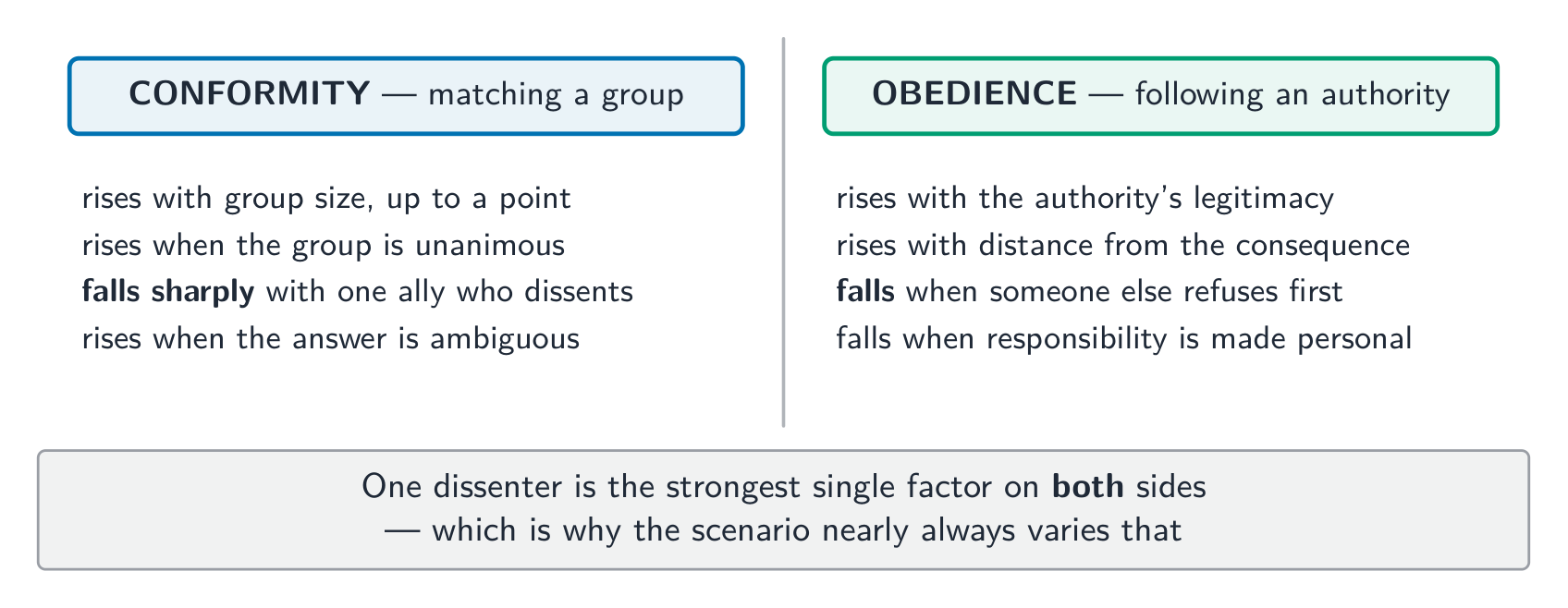
  • Conformity 从众 is adjusting behaviour to match a group. It rises with group size (up to a point), unanimity, and ambiguity, and falls when even one other person dissents.
  • Obedience 服从 is following an instruction from an authority. It rises with the authority's perceived legitimacy and closeness, and falls when the victim is close or the authority is distant.
  • Normative social influence 规范性社会影响 is conforming to be accepted; informational social influence 信息性社会影响 is conforming because you think others know better.

Persuasion 说服 has two routes in the elaboration likelihood model 精细加工可能性模型: the central route 中心路径 uses the strength of the argument, and the peripheral route 边缘路径 uses cues such as attractiveness. Sequential techniques matter too: the foot-in-the-door 登门槛效应 technique starts with a small request, while the door-in-the-face 留面子效应 technique starts with an unreasonable one.

Group settings change behaviour further. Social facilitation 社会助长 improves performance on simple or well-practised tasks when others watch, but harms performance on difficult ones. Social loafing 社会惰化 is reduced individual effort in a group. Deindividuation 去个体化 is loss of self-awareness in a crowd. Group polarization 群体极化 pushes a group's average view further in its original direction, and groupthink 群体思维 is the suppression of dissent to keep harmony.

Individualism 个人主义 and collectivism 集体主义 shape all of these, and multiculturalism 多元文化主义 describes societies holding several traditions together. The false consensus effect 虚假一致效应 is overestimating how many people agree with you. Superordinate goals 超级目标 - shared aims that need cooperation - reduce hostility between groups.

Altruism 利他行为 is selfless helping, though prosocial behavior 亲社会行为 may also bring benefit to the helper. The bystander effect 旁观者效应 shows people are less likely to help as the number of onlookers rises, because of diffusion of responsibility 责任分散.

Worked example (a real AP exam question). The 2025 Evidence-Based Question asked students to "develop and justify an argument about whether the presence of others improves performance", then to "Explain how the evidence from Part B (i) supports your claim using a psychological perspective, theory, concept, or research finding learned in AP Psychology." A full-mark answer supplies a course concept, not just a restatement of the source: "The participants performed better on the simple task when observed (Source 1). This supports my claim because social facilitation predicts that an audience improves performance on tasks that are simple or well practised, while impairing performance on difficult ones." Notice the shape: cite the source, then name the concept and state what it predicts. Re-describing the study alone does not earn the explanation point.

العربية

المعايير الاجتماعية تحدد السلوك الذي تتوقعه المجموعة. يتغير السلوك عندما يكون الآخرون موجودين:

  • الامتثال هو تعديل السلوك ليتوافق مع المجموعة. يرتفع مع حجم المجموعة (حتى نقطة معينة)، والاتفاق العام، والغموض، وينخفض عندما يعترض شخص واحد على الأقل.
  • الطاعة هي اتباع تعليمات من سلطة. يرتفع مع شرعية السلطة المُدركة وقربها، وينخفض عندما يكون الضحية قريبًا أو السلطة بعيدة.
  • التأثير الاجتماعي المعياري هو الامتثال ليتم قبوله؛ التأثير الاجتماعي المعلوماتي هو الامتثال لأنك تعتقد أن الآخرين يعرفون أكثر.

الإقناع له مساران في نموذج احتمالية الت elaboration: المسار المركزي يستخدم قوة الحجة، و المسار المحيطي يستخدم إشارات مثل الجمال. التقنيات التسلسلية مهمة أيضًا: تقنية الدخول بالقدم تبدأ بطلب صغير، بينما تقنية الدخول بالوجه تبدأ بطلب غير معقول.

تُغير إعدادات المجموعة السلوك بشكل أكبر. التسهيل الاجتماعي يحسن الأداء في المهام البسيطة أو المحسنة جيداً عند مراقبة الآخرين، لكنه يضر بالأداء في المهام الصعبة. كسل اجتماعي هو تقليل الجهد الفردي داخل المجموعة. فقدان الهوية الفردية هو فقدان الوعي بالذات في الحشد. الاستقطاب الجماعي يدفع الرأي المتوسط للمجموعة إلى الأمام في اتجاهها الأصلي، بينما التفكير الجماعي هو كتم المعارضة للحفاظ على التماسك.

الفردية والجماعية تشكل كل هذه العوامل، والتعددية الثقافية تصف مجتمعات تحتضن عدة تقاليد معاً. تأثير الإجماع الكاذب هو المبالغة في تقدير عدد الأشخاص الذين يتفقون معك. الأهداف الفوقية - وهي أهداف مشتركة تتطلب التعاون - تقلل من العداء بين المجموعات.

العاطفة altruism هي المساعدة بلا أنانية، على الرغم من أن السلوك المجتمعي قد يجلب أيضاً منفعة للمساعد. تأثير المشاهد العابر يظهر أن الناس أقل احتمالاً للمساعدة كلما زاد عدد المشاهدين، وذلك بسبب انتشار المسؤولية.

مثال محلل (سؤال حقيقي في امتحان AP). طُلب من الطلاب في سؤال الاستناد إلى الأدلة 2025 أن "يطوروا ويبرهنوا على حجة حول ما إذا كان وجود الآخرين يحسن الأداء"، ثم "شرح كيف يدعم الدليل من الجزء B (i) ادعاءهم باستخدام منظور نفسي، نظرية، مفهوم، أو نتيجة بحثية تم دراستها في علم النفس AP.". الإجابة الكاملة التي تحصل على الدرجة الكاملة تقدم مفهوماً من المقرر، وليس مجرد إعادة صياغة للمصدر: " performed better on the simple task when observed (Source 1). This supports my claim because social facilitation predicts that an audience improves performance on tasks that are simple or well practised, while impairing performance on difficult ones." لاحظ الشكل: استشهد بالمصدر، ثم سمِّ المفهوم واذكر ما يتنبأ به. إعادة وصف الدراسة وحدها لا تمنح نقطة الشرح.

معارض واحد هو العامل الوحيد الأقوى في كلا الجانبين
Vocabulary · ⁨مفردات⁩ Train · ⁨تدريب⁩
English العربية
Social facilitation/ˈsəʊʃl fəˌsɪlɪˈteɪʃn/ التسهيل الاجتماعي
Social loafing/ˈsəʊʃl ˈləʊfɪŋ/ الكسل الاجتماعي
Deindividuation/ˌdeɪndɪˌvɪdjuːˈeɪʃn/ فقدان الذات
Group polarization/ɡruːp ˌpəʊləraɪˈzeɪʃn/ القطبية الجماعية
groupthink/ˈɡruːpθɪŋk/ تفكير المجموعة
Individualism/ˌɪndɪˈvɪdʒuːəlɪzəm/ الفردية
collectivism/kəˈlektɪvɪzəm/ الجمعيات
multiculturalism/ˌmʌltɪˈkʌltʃərəlɪzəm/ الثقافات المتعددة
false consensus effect/fɒls kənˈsensəs ɪˈfekt/ تأثير الإجماع الكاذب
Superordinate goals/ˌsuːpəˈrɔːdɪnət ɡəʊlz/ أهداف عليا مشتركة
Altruism/ˈɔːltruːɪzəm/ العطاء
prosocial behavior/ˈprɒsəʊʃl bɪˈheɪvjə/ سلوك اجتماعي إيجابي
bystander effect/ˈbaɪstændə ɪˈfekt/ تأثير المراقب
diffusion of responsibility/dɪˈfjuːʒn ɒv rɪˌspɒnsəˈbɪlɪti/ توزع المسؤولية
4.4

Personality: Psychodynamic and Humanistic · ⁨الشخصية: الديناميكية النفسية والإنسانية⁩

Syllabus · ⁨المنهج⁩
English

Learning Objective 4.4.A: Explain how the psychodynamic theory of personality defines and assesses personality.

  • 4.4.A.1 According to the psychodynamic theory of personality, unconscious processes drive personality.
    • Exclusion Statement: The stage theory of psychosexual development is out of scope for the AP Psychology Exam.
  • 4.4.A.2 Ego defense mechanisms (denial, displacement, projection, rationalization, reaction formation, regression, repression, and sublimation) serve to protect the ego unconsciously from threats.
  • 4.4.A.3 Psychodynamic personality psychologists assess personality using projective tests that are designed to probe the preconscious and unconscious mind.

Learning Objective 4.4.B: Explain how the humanistic theory of personality defines and assesses personality.

  • 4.4.B.1 According to humanistic psychology, personality focuses on unconditional regard and the self-actualizing tendency as primary motivating factors.
    • Exclusion Statement: Maslow’s hierarchy of needs is outside the scope of the AP Psychology Exam.
العربية

الهدف التعليمي 4.4.A: اشرح كيف تُعرّف النظرية النفسية الحركية للشخصية وتقيس الشخصية.

  • 4.4.A.1 وفقاً للنظرية النفسية الحركية للشخصية، فإن العمليات اللاواعية هي المحرك الأساسي للشخصية.
    • عبارة الاستبعاد: نظرية المراحل للتطور النفسي الجنسي خارج نطاق امتحان علم النفس AP.
  • 4.4.A.2 تعمل آليات دفاع ego (النكران، الإزاحة، الإسقاط، التبرير، تكوين رد الفعل، الانسحاب، الكبت، والتحويل) على حماية ego بشكل لا واعي من التهديدات.
  • 4.4.A.3 يقيس علماء نفس الشخصية النفسية الحركية الشخصية باستخدام الاختبارات المشروطة التي صُممت لاستكشاف العقل ما قبل الواعي واللاوعي.

الهدف التعليمي 4.4.B: اشرح كيف تُعرّف النظرية الإنسانية للشخصية وتقيس الشخصية.

  • 4.4.B.1 وفقاً لعلم النفس الإنساني، تركز الشخصية على الاحترام اللامشروط والميل نحو تحقيق الذات كعوامل دافع رئيسية.
    • عبارة الاستبعاد: هرمية احتياجات ماسلو خارج نطاق امتحان علم النفس AP.

Source: College Board AP Course and Exam Description · ⁨المصدر: وصف دورة وامتحان College Board AP⁩

English

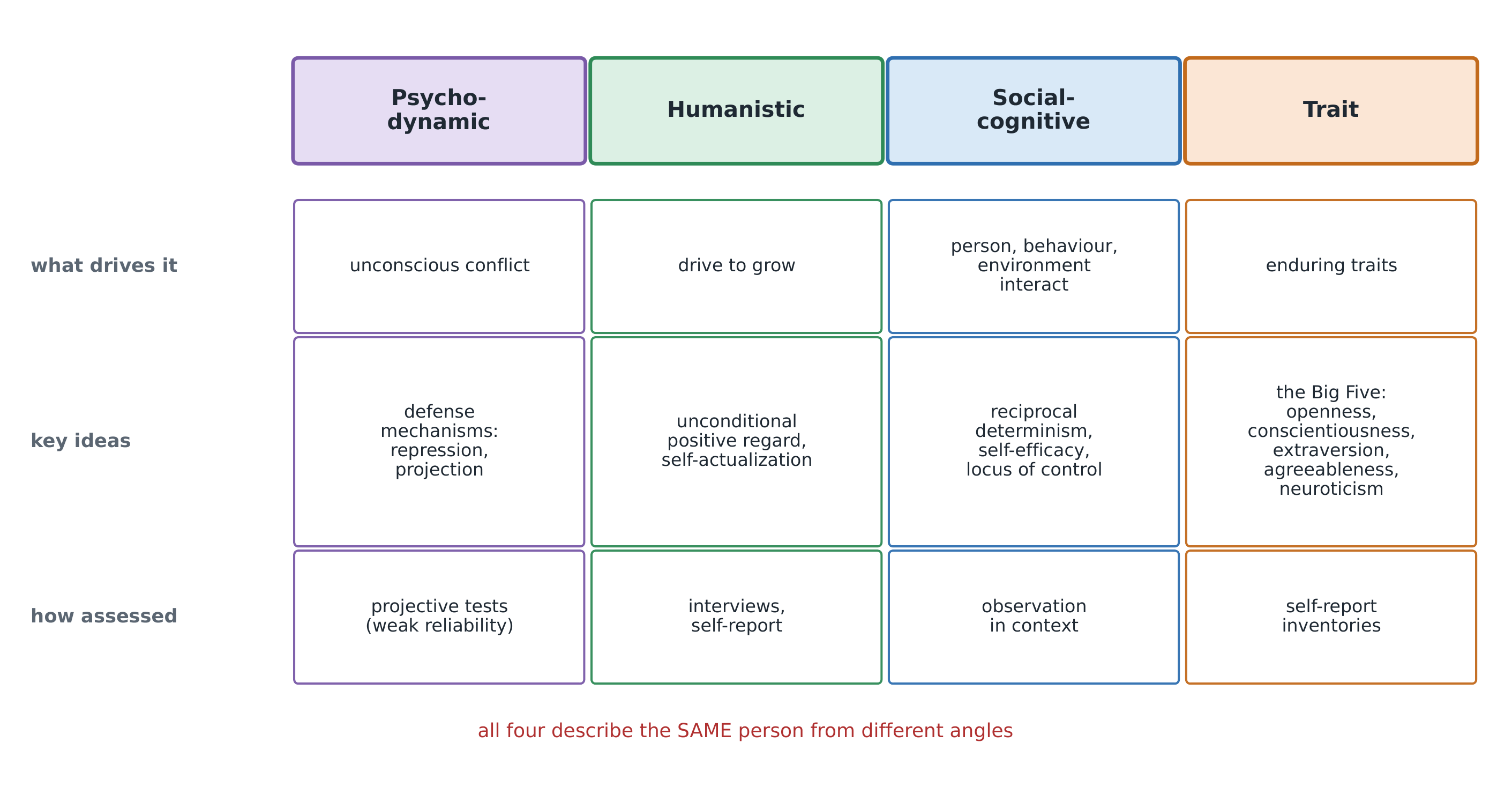
Personality 人格 is a person's characteristic pattern of thinking, feeling, and behaving. Four approaches are examinable.

The psychodynamic 精神动力学 approach holds that unconscious 无意识 processes drive personality. Ego defense mechanisms 自我防御机制 protect the person from anxiety, and the examinable set is denial 否认, displacement 转移, projection 投射, rationalization 合理化, reaction formation 反向形成, regression 退行, repression 压抑, and sublimation 升华. It assesses personality with projective tests 投射测验, which present an ambiguous stimulus; these have weak reliability and validity.

The humanistic 人本主义 approach focuses on growth. It emphasises unconditional positive regard 无条件积极关注 and self-actualization 自我实现 - becoming the fullest version of oneself.

العربية
المنهجيات الأربعة للشخصية جنباً إلى جنب، كل منها يوضح ما يحرك الشخصية وكيفية تقييمها
أربع منهجيات للشخصية، لكل منها دافع مختلف وطريقة مختلفة لقياسها

الشخصية هي النمط المميز للفرد في التفكير والشعور والتصرف. هناك أربعة منهجيات يمكن اختبارها.

يعتقد المنهج الديناميكي النفسي أن العمليات اللاواعية تحرك الشخصية. آليات الدفاع عن الأن ego تحمي الشخص من القلق، والمجموعة القابلة للاختبار هي النفي، الإزاحة، الإسقاط، التبرير، تشكيل رد الفعل، التراجع، الكبت، والترقية. تُقيّم الشخصية باستخدام الاختبارات الإسقاطية، التي تقدم محرّكاً غامضاً؛ وتتميز هذه الاختبارات بضعف الموثوقية والصحة.

يركز المنهج الإنساني على النمو. ويؤكد على الرؤية الإيجابية غير المشروطة وتحقيق الذات - حيث يصبح الفرد أرقى نسخة ممكنة من نفسه.

Vocabulary · ⁨مفردات⁩ Train · ⁨تدريب⁩
English العربية
Personality/ˌpɜːsəˈnælɪti/ الشخصية
psychodynamic/ˌsaɪkəʊdaɪˈnæmɪk/ الديناميكي النفسي
unconscious/ʌnˈkɒnʃəs/ اللاوعي
Ego defense mechanisms/ˈiːɡəʊ dɪˈfens ˈmekənɪzəmz/ آليات الدفاع ego defense mechanisms
denial/dɪˈnaɪəl/ النكران
displacement/dɪˈspleɪsmənt/ إزاحة
projection/prəˈdʒekʃn/ الإسقاط
rationalization/ˌræʃənəlaɪˈzeɪʃn/ التبرير
reaction formation/rɪˈækʃn fɔːˈmeɪʃn/ تشكيل رد الفعل
regression/rɪˈɡreʃn/ الانحدار
repression/rɪˈpreʃn/ الكبت
sublimation/ˌsʌblɪˈmeɪʃn/ التعالي
projective tests/prəˈdʒektɪv tests/ الاختبارات الإسقاطية
humanistic/ˌhjuːməˈnɪstɪk/ إنساني
unconditional positive regard/ʌŋkənˈdɪʃənl ˈpɒzɪtɪv rɪˈɡɑːd/ الاهتمام الإيجابي غير المشروط
self-actualization/self ˌæktʃuːəlaɪˈzeɪʃn/ تحقيق الذات
social-cognitive/ˈsəʊʃl ˈkɒɡnɪtɪv/ اجتماعي-معرفي
reciprocal determinism/rɪˈsɪprəkl dɪˈtɜːmɪnɪzəm/ التحديد المتبادل
Self-efficacy/self ˈefɪkəsi/ الكفاءة الذاتية
locus of control/ˈləʊkəs ɒv kənˈtrəʊl/ محور السيطرة
internal/ɪnˈtɜːnl/ داخلي
external/ekˈstɜːnl/ خارجيون
Trait theories/treɪt ˈθɪəriz/ نظريات السمات
Big Five/bɪɡ faɪv/ الخمس الكبرى
openness to experience/ˈəʊpənnəs tʊ ekˈspɪərɪəns/ انفتاح التجربة
conscientiousness/ˌkɒnsɪˈenʃəsnəs/ الضمير
extraversion/ˌekstrəˈvɜːʃn/ الانطواء
agreeableness/əˈɡriːəbəlnəs/ الودية
neuroticism/njuːˈrɒtɪsɪzəm/ العصابية
Drive-reduction theory/draɪv rɪˈdʌkʃn ˈθɪəri/ نظرية تقليل الدافع
homeostasis/ˌhəʊmiːəˈstɑːsiz/ التوازن الداخلي
Arousal theory/əˈraʊzl ˈθɪəri/ نظرية التنبيه
Yerkes-Dodson law/jɜːks ˈdɒdsn lɔː/ قانون يوركس-دودسون
Self-determination theory/self dɪˌtɜːmɪˈneɪʃn ˈθɪəri/ نظرية الاستقلالية الذاتية
intrinsic motivation/ɪnˈtrɪnsɪk ˌməʊtɪˈveɪʃn/ الدافع الداخلي
extrinsic motivation/ekˈstrɪnsɪk ˌməʊtɪˈveɪʃn/ الدافع الخارجي
incentive theory/ɪnˈsentɪv ˈθɪəri/ نظرية الحافز
Instincts/ˈɪnstɪŋkts/ الغرائز
Lewin's motivational conflicts/ˈluːɪnz ˌməʊtɪˈveɪʃənl ˈkɒnflɪkts/ صراعات لوفين الدافعة
approach-approach/əˈprəʊtʃ əˈprəʊtʃ/ اقتراح-اقتراح
approach-avoidance/əˈprəʊtʃ əˈvɔɪdəns/ اقتراح-تجنب
avoidance-avoidance/əˈvɔɪdəns əˈvɔɪdəns/ تجنب-تجنب
Sensation-seeking theory/senˈseɪʃn ˈsiːkɪŋ ˈθɪəri/ نظرية البحث عن الإثارة
4.5

Personality: Social-Cognitive and Trait · ⁨الشخصية: الاجتماعية المعرفية والسمات⁩

Syllabus · ⁨المنهج⁩
English

Learning Objective 4.5.A: Explain how the social-cognitive theory of personality defines and assesses personality.

  • 4.5.A.1 According to social-cognitive theory, reciprocal determinism shapes personality. Reciprocal determinism explores self-concept (how one views themselves and in relation to others) and how self-efficacy and self-esteem both contribute to self-concept.

Learning Objective 4.5.B: Explain how trait theories of personality define and assess personality.

  • 4.5.B.1 Trait theories of personality conclude that personality involves a set of enduring characteristics that lead to typical responses to stimuli.
  • 4.5.B.2 The Big Five theory of personality proposes that traits of agreeableness, openness to experience, extraversion, conscientiousness, and emotional stability make up one’s personality. These traits are measured by specialized personality inventories that use factor analysis to organize item responses.
العربية

الهدف التعليمي 4.5.A: اشرح كيف تُعرّف النظرية المعرفية الاجتماعية للشخصية وتقيس الشخصية.

  • 4.5.A.1 وفقاً للنظرية المعرفية الاجتماعية، يشكل التحديد المتبادل الشخصية. يستكشف التحديد المتبادل مفهوم الذات (كيف يرى الفرد نفسه وفي علاقته بالآخرين) وكيف يساهم كل من الكفاءة الذاتية وتقدير الذات في مفهوم الذات.

الهدف التعليمي 4.5.B: اشرح كيف تُعرّف نظريات سمة الشخصية وتقيس الشخصية.

  • 4.5.B.1 تستنتج نظريات سمة الشخصية أن الشخصية تتضمن مجموعة من الخصائص الدائمة التي تؤدي إلى استجابات نموذجية للمؤثرات.
  • 4.5.B.2 تقترح نظرية "الكبير خمسة" للشخصية أن سمات القبول، والانفتاح على التجربة، والانطواء، ضابطة النفس، والاستقرار العاطفي تشكل شخصية الفرد. يتم قياس هذه السمات باستخدام استمارات شخصية متخصصة تستخدم تحليل العوامل لتنظيم استجابات البنود.

Source: College Board AP Course and Exam Description · ⁨المصدر: وصف دورة وامتحان College Board AP⁩

English

The social-cognitive 社会认知 approach explains personality through reciprocal determinism 交互决定论: the person, their behaviour, and the environment each influence the other two. Self-efficacy 自我效能感 - belief in one's own ability to succeed at a task - is central, as is locus of control 控制点, which is internal 内控 or external 外控.

Trait theories 特质理论 describe personality as enduring characteristics. The Big Five 大五人格 traits are openness to experience 开放性, conscientiousness 尽责性, extraversion 外向性, agreeableness 宜人性, and neuroticism 神经质. Traits are measured with self-report inventories, which are more reliable than projective tests.

العربية

يشرح المنهج الاجتماعي المعرفي الشخصية من خلال التحدد المتبادل: فالشخص، وسلوكه، والبيئة يؤثر كل منهما في الاثنين الآخرين. يُعد الكفاءة الذاتية - أي الإيمان بقدرة الفرد على النجاح في مهمة ما - عاملاً محورياً، وكذلك مركز السيطرة الذي يكون داخلياً أو خارجياً.

نظريات السمات تصف الشخصية بصفات دائمة. تشمل سمات الخمس الكبرى: الانفتاح على التجربة، الضمير، الانبساط، التوافق، والعصبة العصبية. تُقاس السمات باستخدام استمارات تقرير الذات، وهي أكثر موثوقية من الاختبارات الإسقاطية.

4.6

Motivation · ⁨الدوافع⁩

Syllabus · ⁨المنهج⁩
English

Learning Objective 4.6.A: Explain how theories about motivation apply to behavior and mental processes.

  • 4.6.A.1 Some theories about motivation focus on behavior and mental processes that seek to address physical needs and desires such as drive-reduction theory and arousal theory. Drive-reduction theory addresses how certain behaviors help maintain homeostasis while arousal theory addresses how people seek an optimal level of arousal when they behave (as demonstrated by the Yerkes-Dodson Law).
  • 4.6.A.2 Self-determination theory proposes that people are motivated by intrinsic (internal) or extrinsic (external) motivations. Incentive theory explores the role of rewards (an extrinsic motivation) in motivating behavior.
  • 4.6.A.3 Many non-human animals are motivated by instincts (innate, typically fixed patterns of behavior in animals in response to certain stimuli). Humans do not seem to demonstrate instinctual behavior or mental processes.
  • 4.6.A.4 Lewin’s motivational conflicts theory proposes that choices create conflicts one must resolve as the basis of motivation. The type of conflicts faced include approach-approach, approach-avoidance, and avoidance-avoidance.
  • 4.6.A.5 Sensation-seeking theory proposes that one’s level of need for varied or novel experiences is the basis of motivation. The types of sensation seeking are experience seeking, thrill or adventure seeking, disinhibition, and boredom susceptibility.

Learning Objective 4.6.B: Explain how eating and belongingness motivate behavior and mental processes.

  • 4.6.B.1 Eating is a complex motivated behavior that demonstrates how physical and mental processes interact.
    • 4.6.B.1.i Hormones, such as ghrelin and leptin (regulated by the hypothalamus via the pituitary gland), regulate feelings of hunger and satiety.
    • 4.6.B.1.ii External factors like the presence of food, time of day, or social gatherings around meals also influence the behavior of eating.
العربية

الهدف التعليمي 4.6.A: اشرح كيف تنطبق النظريات حول الدافع على السلوك والعمليات العقلية.

  • 4.6.A.1 تركز بعض النظريات حول الدافع على السلوك والعمليات العقلية التي تسعى لتلبية الاحتياجات والرغبات الجسدية مثل نظرية تقليل الدافع ونظرية التنبيه. تعالج نظرية تقليل الدافع كيفية مساعدة بعض السلوكيات في الحفاظ على التوازن الداخلي، بينما تعالج نظرية التنبيه كيفية سعي الناس لتحقيق مستوى مثالي من التنبيه عند تصرفهم (كما يوضح قانون يوركس-دودسون).
  • 4.6.A.2 تقترح نظرية تحديد الذات أن الأفراد محفزون بدوافع داخلية (ذاتية) أو خارجية (مشتقة). تستكشف نظرية الحوافز دور المكافآت (وهو دافع خارجي) في تحفيز السلوك.
  • 4.6.A.3 العديد من الحيوانات غير البشرية محفزة بالغرائز (أنماط سلوكية فطرية، وعادة ما تكون ثابتة، تظهر في الحيوانات استجابة لمؤثرات معينة). يبدو أن البشر لا يعرضون سلوكاً غريزياً أو عمليات عقلية غريزية.
  • 4.6.A.4 تقترح نظرية الصراعات التحفيزية لويين أن الخيارات تنشأ صراعات يجب حلها كأساس للدافع. تشمل أنواع الصراعات المواجهة: approaching-approach، approach-avoidance، و avoidance-avoidance.
  • 4.6.A.5 تقترح نظرية البحث عن الإثارة أن مستوى الحاجة إلى تجارب متنوعة أو جديدة هو أساس الدافع. تشمل أنواع البحث عن الإثارة: البحث عن التجارب، والبحث عن المغامرة أو الإثارة، وإزالة التثبيط، وقابلية الملل.

الهدف التعليمي 4.6.B: اشرح كيف يحفز الأكل والانتماء السلوك والعمليات العقلية.

  • 4.6.B.1 يعد الأكل سلوكاً محفزاً معقداً يظهر التفاعل بين العمليات الجسدية والعقلية.
    • 4.6.B.1.i الهرمونات، مثل الغريلين والليبتين (يتم تنظيمها بواسطة تحت المهاد عبر الغدة النخامية)، تنظم مشاعر الجوع والشبع.
    • 4.6.B.1.ii تؤثر العوامل الخارجية مثل وجود الطعام، ووقت اليوم، أو التجمعات الاجتماعية حول الوجبات أيضاً على سلوك الأكل.

Source: College Board AP Course and Exam Description · ⁨المصدر: وصف دورة وامتحان College Board AP⁩

English

Several theories explain what drives behaviour:

  • Drive-reduction theory 驱力减少理论 says behaviour reduces a physical need to restore homeostasis 内稳态.
  • Arousal theory 唤醒理论 says people seek an optimal level of arousal; the Yerkes-Dodson law 耶克斯-多德森定律 states that moderate arousal gives the best performance on most tasks.
  • Self-determination theory 自我决定理论 separates intrinsic motivation 内在动机 (from within) from extrinsic motivation 外在动机 (from reward), and incentive theory 诱因理论 focuses on the pull of rewards.
  • Instincts 本能 are innate fixed patterns, seen in non-human animals rather than in human behaviour.
  • Lewin's motivational conflicts 勒温的动机冲突理论 names three: approach-approach 双趋冲突, approach-avoidance 趋避冲突, and avoidance-avoidance 双避冲突.
  • Sensation-seeking theory 感觉寻求理论 explains differences in the need for novelty.

Eating shows physical and mental processes interacting. Ghrelin and leptin, regulated by the hypothalamus, control hunger and fullness, while external factors - the sight of food, the time of day, a shared meal - change how much people eat.

العربية

تشرح عدة نظريات ما يحرك السلوك:

  • تقول نظرية تقليل الدافع إن السلوك يقلل الحاجة الجسدية لاستعادة الاتزان الداخلي.
  • تنص نظرية الاستثارة على أن الأفراد يبحثون عن مستوى مثالي من الاستثارة؛ وتُنص قانون ييركس-دودسون على أن الاستثارة المعتدلة تعطي أفضل أداء في معظم المهام.
  • تفصل نظرية التحديد الذاتي بين الدافع الداخلي (من الداخل) والدافع الخارجي (من المكافأة)، وتركز نظرية الحوافز على جذب المكافآت.
  • ** الغرائز** هي أنماط فطرية ثابتة، تظهر في الحيوانات غير البشرية بدلاً من السلوك البشري.
  • تسمية الصراعات الدافعة لدى لوين ثلاثة أنواع: الاقتراب-الاقتراب، الاقتراب-التجنب، والتجنب-التجنب.
  • تفسر نظرية البحث عن الإثارة الفروق في الحاجة إلى التجديد.

يظهر الأكل تفاعلاً بين العمليات الجسدية والعقلية. ينظم هرمون الغريلين وهرمون اللبتين، اللذان يتحكم بهما تحت المهاد، الشهية والشبع، بينما تغير العوامل الخارجية - مثل رؤية الطعام، ووقت اليوم، أو تناول وجبة مشتركة - كمية الطعام التي يتناولها الناس.

4.7

Emotion · ⁨العواطف⁩

Syllabus · ⁨المنهج⁩
English

Learning Objective 4.7.A: Explain how theories of emotion apply to behavior and mental processes.

  • 4.7.A.1 Emotion, or affect, is a complex psychological process that is distinguished from reasoning or knowledge. Emotions reflect internal and external factors affecting an individual. Early 20th century psychological theories of emotion parsed the distinction between the physiological and cognitive experiences of emotion. Some theories proposed that the physiological and cognitive experiences occurred in succession while others proposed that they occurred simultaneously. Other theories emphasize that the cognitive label is required to experience an emotion. The facial-feedback hypothesis suggests that the experience of emotion is influenced by facial expressions, which supports theories that propose the physiological experience of emotion precedes the cognitive appraisal, and research testing this hypothesis has produced mixed results.
    • Exclusion Statement: Specific names of theories of emotion are outside the scope of the AP Psychology Exam.
  • 4.7.A.2 The broaden-and-build theory of emotion proposes that positive emotional experiences tend to broaden awareness and encourage new actions and thoughts. Negative emotions tend to reduce awareness and narrow thinking and action.

Learning Objective 4.7.B: Explain how social norms and experiences influence the expression of emotions.

  • 4.7.B.1 Research has explored whether the expression of emotions is universally common. Some emotions that may be commonly experienced across cultures include anger, disgust, sadness, happiness, surprise, and fear. Research on the universality of emotions shows mixed results.
  • 4.7.B.2 Display rules and elicitors for emotional expression can differ among cultures. Display rules and elicitors may regulate how people from different genders, ages, or socioeconomic classes within a culture can display and interpret emotions.
العربية

الهدف التعليمي 4.7.A: اشرح كيف تنطبق نظريات العاطفة على السلوك والعمليات العقلية.

  • 4.7.B.1 العاطفة، أو التأثير، هي عملية نفسية معقدة تتميز عن التفكير المنطقي أو المعرفة. تعكس العواطف العوامل الداخلية والخارجية المؤثرة على الفرد. قسّمت النظريات النفسية المبكرة للعاقل في القرن 20 التمييز بين التجارب الفسيولوجية والمعرفية للعاطفة. اقترحت بعض النظريات أن التجارب الفسيولوجية والمعرفية تحدث بالتتابع بينما افترضت أخرى أنها تحدث في وقت واحد. تؤكد نظريات أخرى أن التسمية المعرفية مطلوبة لتجربة عاطفة. تقترح فرضية تغذية الرجع الوجهية أن تجربة العاطفة تتأثر بالتعابير الوجهية، مما يدعم النظريات التي تفترض أن التجربة الفسيولوجية للعاطفة تسبق التقييم المعرفي، وقد أنتجت الأبحاث التي تختبر هذه الفرضية نتائج مختلطة.
    • عبارة الاستبعاد: الأسماء المحددة لنظريات العاطفة تقع خارج نطاق امتحان علم النفس AP.
  • 4.7.A.2 تقترح نظرية التوسيع والبناء أن التجارب العاطفية الإيجابية تميل إلى توسيع الوعي وتشجيع أفعال وأفكار جديدة. أما المشاعر السلبية فتميل إلى تقليل الوعي وتضييق التفكير والفعل.

هدف التعلم 4.7.B: اشرح كيف تؤثر المعايير الاجتماعية والتجارب على التعبير عن المشاعر.

  • 4.7.B.1 استكشف البحث ما إذا كان التعبير عن المشاعر شائعًا عالميًا. تشمل بعض المشاعر التي قد تكون شائعة عبر الثقافات الغضب، والكراهية، والحزن، والسعادة، والدهشة، والخوف. تُظهر أبحاث حول عالمية المشاعر نتائج مختلطة.
  • 4.7.B.2 يمكن أن تختلف قواعد العرض والمثيرات للتعبير العاطفي بين الثقافات. قد تنظم قواعد العرض والمثيرات كيفية عرض وتفسير الأشخاص من الجنسين أو الأعمار أو الطبقات الاجتماعية المختلفة داخل ثقافة معينة للمشاعر.

Source: College Board AP Course and Exam Description · ⁨المصدر: وصف دورة وامتحان College Board AP⁩

English

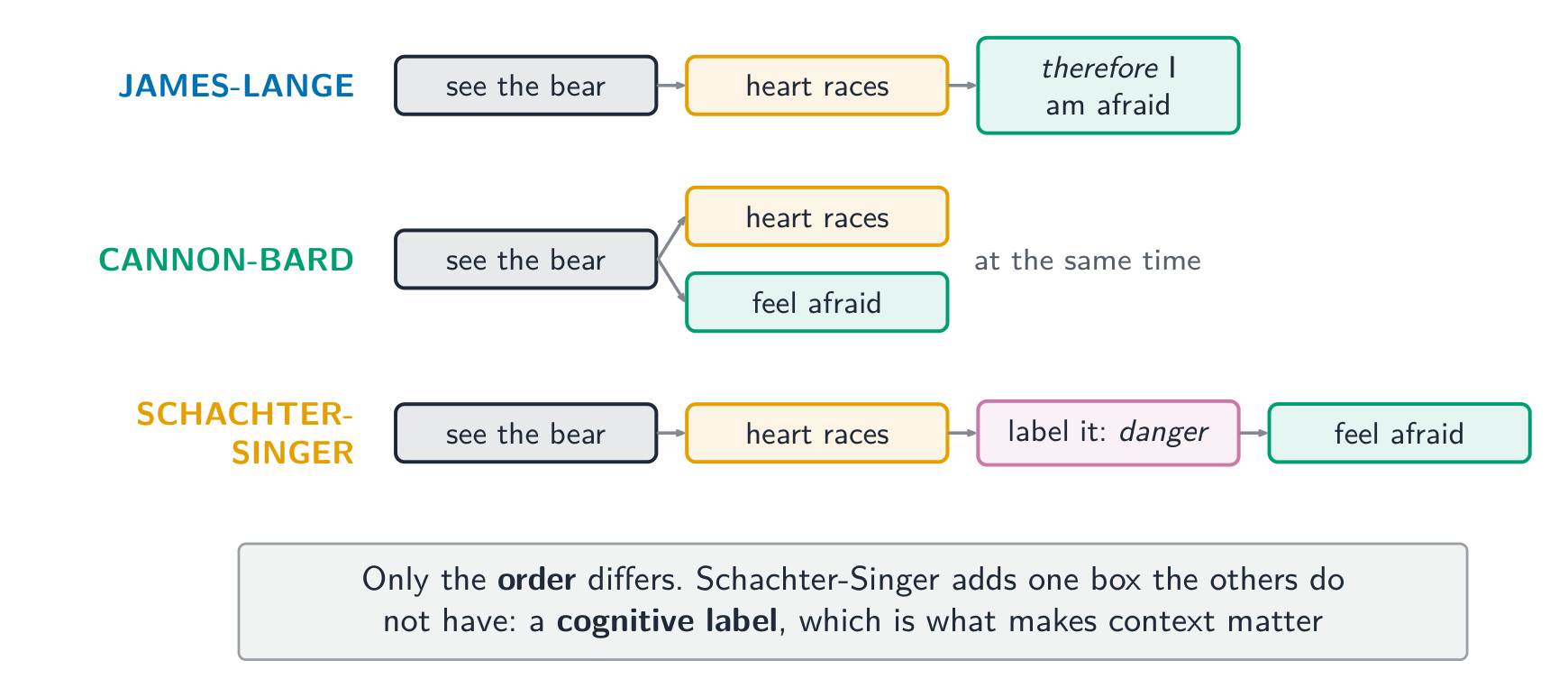
Emotion 情绪, also called affect 情感, combines physical arousal, expressive behaviour, and conscious experience. Examinable theories are the James-Lange theory 詹姆斯-兰格理论 (the body responds first, and emotion is the reading of that response), the Cannon-Bard theory 坎农-巴德理论 (arousal and emotion occur at once), and the Schachter-Singer two-factor theory 沙赫特-辛格两因素理论 (arousal plus a cognitive label 认知标签). Broaden-and-build theory 拓展-建构理论 proposes that positive emotions widen thinking and build lasting resources.

Some facial expressions are recognised across cultures, but display rules 表达规则 - a culture's norms for showing emotion - and the events that trigger emotion both vary.

العربية

العاطفة، المعروفة أيضاً بـالتأثر، تجمع بين الاستثارة الجسدية والسلوك التعبيري والتجربة الواعية. النظريات القابلة للاختبار هي نظرية جيمس-لانج (يتجاوب الجسم أولاً، والعاطفة هي قراءة هذا الاستجابة)، ونظرية كانون-بارد (تحدث الاستثارة والعاطفة في نفس الوقت)، ونظرية شاختر-سنجر ثنائية العامل (الاستثارة بالإضافة إلى تسمية معرفية). تقترح نظرية التوسيع والبناء أن العواطف الإيجابية توسع نطاق التفكير وتبني موارد دائمة.

بعض تعابير الوجه تُعرف عبر الثقافات، لكن قواعد العرض - وهي معايير الثقافة لإظهار العاطفة - والأحداث التي تحفز العاطفة تتفاوت جميعها.

ثلاث نظريات، وثلاث ترتيبات لنفس الأحداث الثلاثة
Explore · ⁨استكشف⁩

Order the three events for each theory · ⁨رتب الأحداث الثلاثة لكل نظرية⁩

The three theories are three orderings of the same three events — and only Schachter-Singer adds a cognitive label. · ⁨النظريات الثلاث هي ثلاث ترتيبات للأحداث الثلاثة نفسها — ويضيف Schachter-Singer فقط تسمية معرفية.⁩

Vocabulary · ⁨مفردات⁩ Train · ⁨تدريب⁩
English العربية
Emotion/ɪˈməʊʃn/ العاطفة
affect/əˈfekt/ تؤثر
James-Lange theory/dʒeɪmz lændʒ ˈθɪəri/ نظرية جيمس-لانج
Cannon-Bard theory/ˈkænən bɑːd ˈθɪəri/ نظرية كانون-بارد
Schachter-Singer two-factor theory/ˈʃætʃtə ˈsɪŋə tuː ˈfæktə ˈθɪəri/ نظرية شاختر-سنجر ذات العاملين
cognitive label/ˈkɒɡnɪtɪv ˈleɪbl/ تسمية معرفية
Broaden-and-build theory/ˈbrɔːdn ænd bɪld ˈθɪəri/ نظرية التوسيع والبناء
display rules/dɪˈspleɪ ruːlz/ قواعد العرض
4.7

Exam tips · ⁨نصائح للامتحان⁩

English
  • Fundamental attribution error applies to explaining others. If the question is about explaining yourself, the answer is usually self-serving bias.
  • Social facilitation improves simple tasks and harms difficult ones. Say which kind of task the scenario describes.
  • Separate conformity (matching a group) from obedience (following an authority).
  • For cognitive dissonance, name the conflict and say which side changed - usually the attitude, because the behaviour already happened.
  • Learn the Big Five as a set; questions often ask you to place a described person on one named trait.
  • With emotion theories, the difference is order: body first (James-Lange), together (Cannon-Bard), or arousal plus label (two-factor).
العربية
  • خطأ التعريف الأساسي ينطبق على تفسير الآخرين. أما إذا كان السؤال يتعلق بتفسير نفسك، فالإجابة عادة ما تكون تحيز خدمة الذات.
  • التسهيل الاجتماعي يحسن المهام البسيطة ويضر بالصعبة. حدد نوع المهمة التي يصفها السيناريو.
  • افصل بين الامتثال (التوافق مع المجموعة) و الطاعة (اتباع السلطة).
  • بالنسبة لـ التعارض المعرفي، حدد الصراع وأجب عن الجانب الذي تغير - عادةً ما يكون التوجه، لأن السلوك قد حدث بالفعل.
  • احفظ العوامل الخمسة الكبرى كمجموعة؛ غالبًا ما تطلب الأسئلة منك وضع شخص موصوف على سمة محددة.
  • في نظريات العاطفة، يكمن الفرق في التسلسل: الجسم أولاً (جيمس-لانغ)، معًا (كانون-بارد)، أو الإثارة متبوعة بالوسم (ثنائي العامل).

Interactive lessons on this topic · ⁨دروس تفاعلية حول هذا الموضوع⁩

Work through it step by step, with instant-check exercises. · ⁨ا-working عليه خطوة بخطوة، مع تمارين تحقق فوري.⁩

Past Papers · ⁨أوراق الامتحانات السابقة⁩

More topics in AP Psychology · ⁨علم النفس (AP)⁩ · ⁨المزيد من المواضيع في AP Psychology · ⁨علم النفس (AP)⁩⁩

Log in or create account · ⁨تسجيل الدخول أو إنشاء حساب⁩

IGCSE, A-Level & AP