| Learning Objective | Essential Knowledge |
|---|---|
1.1.A |
|
Biological Bases of Behavior
AP Psychology · Topic 1
 18:17
18:17
Biological Bases of Behavior
The teacher hands out the exam paper. Before you have read a single word, your heart is already faster and your hands are cold. You did not choose that.…
English narration · English + 中文 subtitles burned in
1.1
Nature and Nurture
Syllabus
Source: College Board AP Course and Exam Description
Psychology studies behavior 行为 (what a person does) and mental processes 心理过程 (what a person thinks and feels). Unit 1 asks where these come from in the body.
Heredity and environmental factors interact to shape behavior and mental processes. Heredity 遗传 is what a person inherits from their parents. Environment 环境 is everything that happens around them. Neither one acts alone.
- Nature and nurture 先天与后天 interact. For example, inherited tendencies and nutrition can both influence height.
- The evolutionary perspective 进化论视角 asks how inherited tendencies may relate to survival and reproductive success. A plausible story about an advantage is not, by itself, proof of a particular behavior's origin.
- Twin and adoption studies 双生子与收养研究 compare patterns of similarity across relatedness and upbringing. Similarity between identical twins raised apart can support an inherited contribution, but it does not cleanly separate all inherited and environmental influences.
Worked interaction. In an illustrative case, assume a student inherits a tendency that helps distinguish musical sounds. Lessons, practice and access to an instrument help develop the ability. Performance improves after the school provides instruments. The inherited tendency is the stated heredity contribution; teaching, practice and access are environmental contributions. The opportunity helps develop the tendency. Improvement with access does not prove that all differences between students are environmental, or that inheritance fixes final performance. Do not infer inherited ability merely because someone performs well.
Evaluate a twin-study conclusion. Identical twins raised apart show similar scores on a behavioral trait. The similarity is consistent with an inherited contribution, not proof that the trait is entirely inherited. They share prenatal conditions and may encounter similar environments; placement into families is not a random experiment. Comparisons with other relatives and adoptive families add evidence about patterns, rather than assigning one person's behavior wholly to one cause.
Scope note: detailed genetics, DNA and chromosome mechanisms are outside this course framework. The relationship between heredity and environment is assessed.
Vocabulary
Train
| English |
|---|
| behavior/bɪˈheɪvjə/ |
| mental processes/ˈmentl ˈprəʊsesɪz/ |
| Heredity/həˈredɪti/ |
| Environment/enˈvaɪrənmənt/ |
| Nature and nurture/ˈneɪtʃə ænd ˈnɜːtʃə/ |
| evolutionary perspective/ɪvəˈluːʃənəri pəˈspektɪv/ |
| Twin and adoption studies/twɪn ænd əˈdɒpʃn ˈstʌdiz/ |
1.2
The Nervous System
Syllabus
| Learning Objective | Essential Knowledge |
|---|---|
1.2.A |
|
Source: College Board AP Course and Exam Description
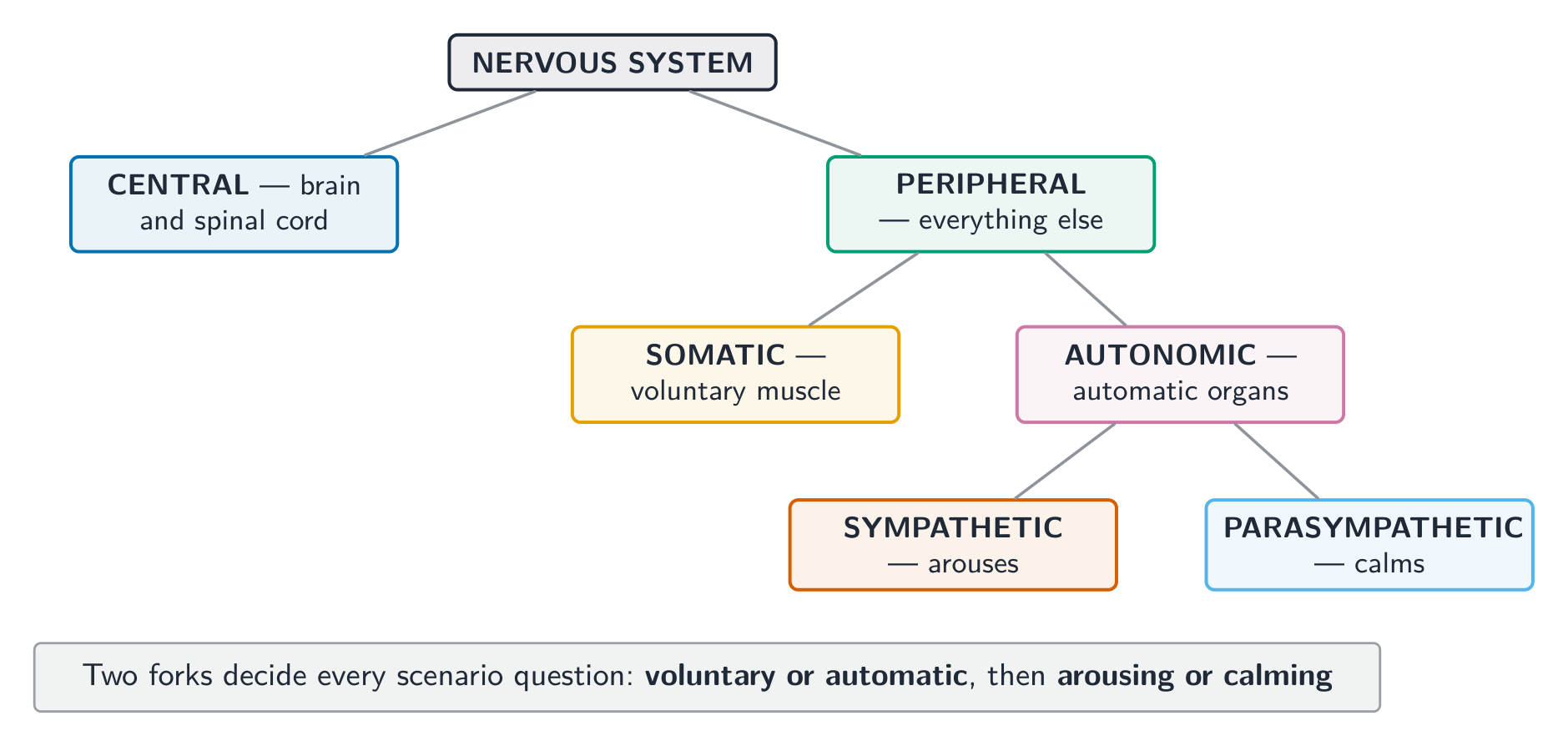
The nervous system 神经系统 carries information around the body. It has two main parts.
The central nervous system (CNS) 中枢神经系统 is the brain and the spinal cord 脊髓. It interacts with every process in the body.
The peripheral nervous system (PNS) 周围神经系统 relays messages between the CNS and the rest of the body. It divides again:
- The somatic nervous system 躯体神经系统 controls voluntary 随意的 movement, such as raising your hand.
- The autonomic nervous system 自主神经系统 controls involuntary 不随意的 processes, such as heartbeat and digestion. It has two branches that work against each other: the sympathetic nervous system 交感神经系统 prepares the body for action (the "fight or flight" response), and the parasympathetic nervous system 副交感神经系统 calms the body down afterwards.
Worked pathway choice. A student deliberately raises a hand, experiences a faster heartbeat before a presentation, and later notices a slowing heart rate during recovery. The deliberate skeletal movement involves the somatic division carrying motor commands. Heartbeat is an autonomic process: the sympathetic branch supports arousal and the parasympathetic branch supports recovery. These are PNS pathways interacting with the CNS. Classify the specific response, not the whole event as only voluntary or automatic. A racing heart alone does not establish one particular emotion.
Explore
Place each function on the nervous-system tree
Two forks decide every scenario question: voluntary or automatic, then arousing or calming.
Vocabulary
Train
| English |
|---|
| nervous system/ˈnɜːvəs ˈsɪstəm/ |
| central nervous system (CNS)/ˈsentrəl ˈnɜːvəs ˈsɪstəm/ |
| spinal cord/ˈspaɪnl kɔːd/ |
| peripheral nervous system (PNS)/pəˈrɪfərəl ˈnɜːvəs ˈsɪstəm/ |
| somatic nervous system/səˈmætɪk ˈnɜːvəs ˈsɪstəm/ |
| voluntary/ˈvɒləntəri/ |
| autonomic nervous system/ɔːtəˈnɒmɪk ˈnɜːvəs ˈsɪstəm/ |
| involuntary/ɪnˈvɒləntəri/ |
| sympathetic nervous system/ˌsɪmpəˈθetɪk ˈnɜːvəs ˈsɪstəm/ |
| parasympathetic nervous system/ˌpærəˌsɪmpəˈθetɪk ˈnɜːvəs ˈsɪstəm/ |
1.3
Neurons and How They Fire
Syllabus
| Learning Objective | Essential Knowledge |
|---|---|
1.3.A |
|
1.3.B |
|
1.3.C |
|
Source: College Board AP Course and Exam Description
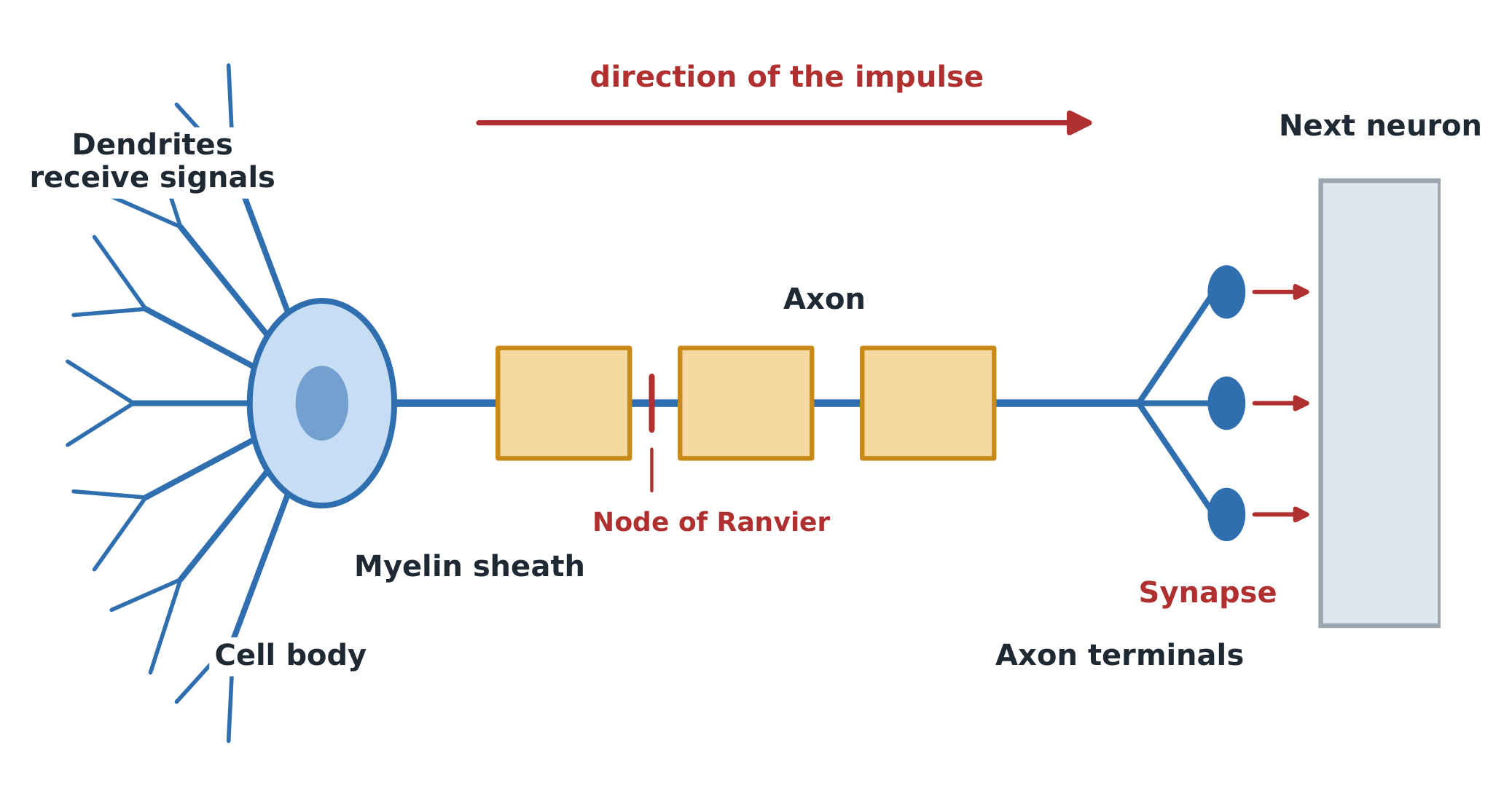
Two kinds of cell do the work. Neurons 神经元 transmit information. Glial cells 神经胶质细胞 provide structure, insulation, communication, and waste transport. Together they are the building blocks of all behavior and mental processes.
A neuron has dendrites 树突 that receive signals, a cell body 细胞体, and an axon 轴突 that carries the signal away. Many axons are wrapped in a myelin sheath 髓鞘, which speeds the signal up.
Neural transmission follows a set order:
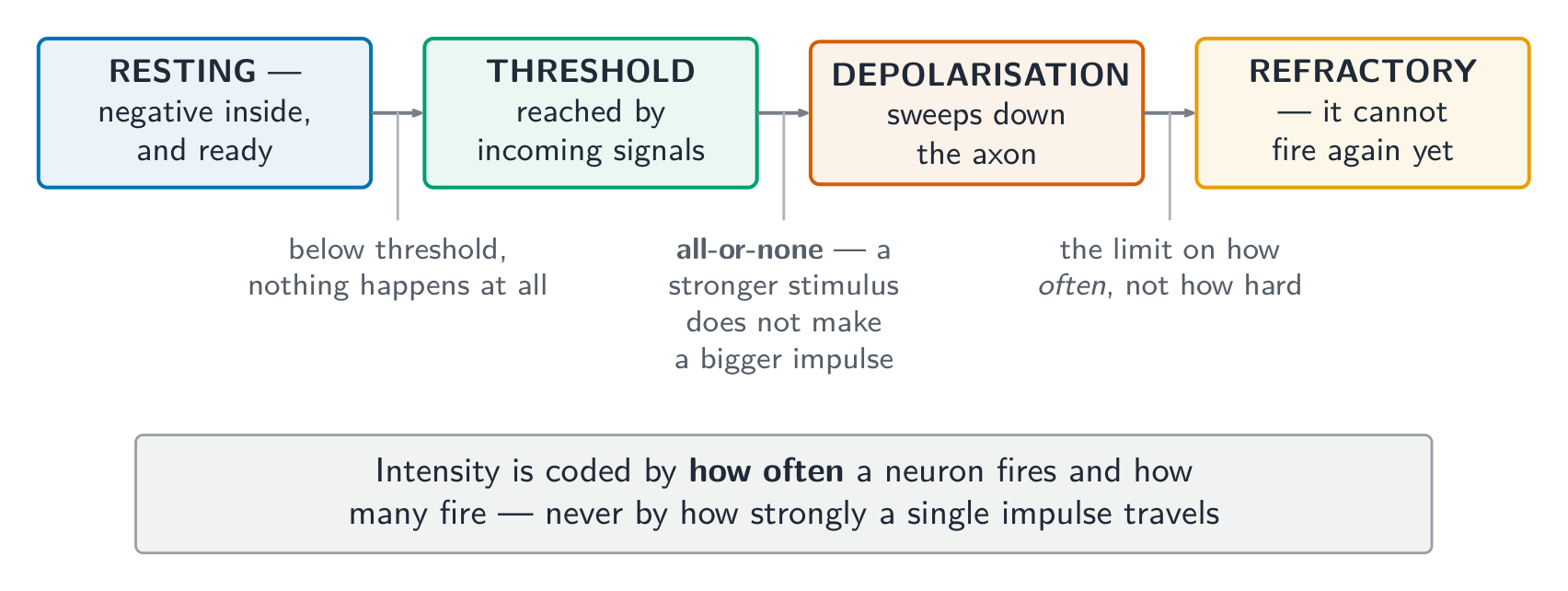
- At rest the neuron holds a resting potential 静息电位, ready but not firing.
- If incoming signals pass the threshold 阈限, the neuron depolarizes 去极化 and fires.
- Firing follows the all-or-none principle 全或无原则: the neuron fires at full strength or not at all. A stronger stimulus makes it fire more often, not harder.
- Straight after firing there is a refractory period 不应期 when the neuron cannot fire again.
- At the synapse 突触, the gap between neurons, chemicals cross to the next cell. Leftover chemicals are taken back in a process called reuptake 再摄取.
Damage to this process can cause disorders such as multiple sclerosis 多发性硬化 or myasthenia gravis 重症肌无力.
In the spinal cord, the reflex arc 反射弧 shows the system working as a unit. Sensory neurons 感觉神经元 carry information in, interneurons 中间神经元 connect inside the cord, and motor neurons 运动神经元 carry the command out - a withdrawal can be initiated through spinal circuits before conscious awareness, while signals also travel toward the brain.
Explore
Fire a neuron, step by step
All-or-none: a stronger stimulus does not make a bigger impulse. Intensity is coded by how often, and by how many.
Vocabulary
Train
| English |
|---|
| Neurons/ˈnjuːrɒnz/ |
| Glial cells/ˈɡlaɪəl selz/ |
| dendrites/ˈdendraɪts/ |
| cell body/sel ˈbɒdi/ |
| axon/ˈæksɒn/ |
| myelin sheath/ˈmaɪɪlɪn ʃiːθ/ |
| resting potential/ˈrestɪŋ pəˈtenʃl/ |
| threshold/ˈθreʃəʊld/ |
| depolarizes/diːˈpəʊlɑːraɪzɪz/ |
| all-or-none principle/ɔːl ɔː nɒn ˈprɪnsɪpl/ |
| refractory period/rɪˈfræktəri ˈpɪərɪəd/ |
| synapse/ˈsɪnæps/ |
| reuptake/ˈruːpteɪk/ |
| multiple sclerosis/ˈmʌltɪpl skləˈrəʊsɪs/ |
| myasthenia gravis/ˌmaɪəsˈθiːnɪə ˈɡrævɪs/ |
| reflex arc/ˈriːfleks ɑːk/ |
| Sensory neurons/ˈsensəri ˈnjuːrɒnz/ |
| interneurons/ˌɪntəˈnjuːrɒnz/ |
| motor neurons/ˈməʊtə ˈnjuːrɒnz/ |
1.3
Neurotransmitters, Hormones, and Drugs
Syllabus
| Learning Objective | Essential Knowledge |
|---|---|
1.3.A |
|
1.3.B |
|
1.3.C |
|
Source: College Board AP Course and Exam Description
Neurotransmitters 神经递质 are the chemicals that cross the synapse. Each has its own job, and the effect can depend on where in the nervous system it acts. A message is either excitatory 兴奋性的 (making firing more likely) or inhibitory 抑制性的 (making firing less likely).
Only these are examinable: dopamine 多巴胺 (reward and movement), serotonin 血清素 (mood and sleep), norepinephrine 去甲肾上腺素 (alertness), glutamate 谷氨酸 (the main excitatory transmitter), GABA γ-氨基丁酸 (the main inhibitory transmitter), endorphins 内啡肽 (pain relief), substance P P物质 (pain signalling), and acetylcholine 乙酰胆碱 (muscle movement and memory).
Hormones 激素 travel through the blood and can influence the brain as well as other organs. Their route differs from communication across a synapse; blood-borne does not mean unable to affect behavior. Again only five are examinable: adrenaline 肾上腺素, leptin 瘦素 (reduces hunger), ghrelin 胃饥饿素 (increases hunger), melatonin 褪黑素 (sleep), and oxytocin 催产素 (bonding).
Psychoactive drugs 精神药物 can change behavior by acting on neurotransmission. Three mechanisms taught in the course are:
- An agonist 激动剂 activates or supports a transmitter's effect. In an introductory excitatory-signal example, this encourages firing.
- An antagonist 拮抗剂 blocks a transmitter's action. With that excitatory signal, blocking it reduces its contribution to firing.
- A reuptake inhibitor 再摄取抑制剂 blocks reabsorption, leaving more transmitter in the synapse.
Worked synapse comparison. Assume a transmitter normally activates a receiving receptor and makes firing more likely. Hypothetical substance X activates the same receptor: it acts as an agonist in this case. Y occupies that receptor without activating it and prevents the transmitter acting: it is an antagonist. Z stops reabsorption into the sending cell: it is a reuptake inhibitor, leaving more transmitter available in the gap without directly copying it at the receiving receptor. State the affected step before predicting its consequence.
The example explicitly uses an excitatory signal. Supporting an inhibitory signal can strengthen inhibition; blocking it can remove inhibition. An agonist is not a universal synonym for stimulation of the whole nervous system. Receptor, transmitter and location matter, and the three taught mechanisms are examples rather than all possible drug mechanisms.
Drug categories: stimulants 兴奋剂 (caffeine, cocaine) increase neural activity; depressants 抑制剂 (alcohol) decrease it; hallucinogens 致幻剂 (marijuana) distort perception; opioids 阿片类药物 (heroin) relieve pain. Repeated use can lead to tolerance 耐受性, where more is needed for the same effect, and to addiction 成瘾, with withdrawal 戒断反应 symptoms when use stops.
Vocabulary
Train
| English |
|---|
| Neurotransmitters/ˈnjuːrətrænsmɪtəz/ |
| excitatory/ekˈsɪtətəri/ |
| inhibitory/ɪnˈhɪbɪtəri/ |
| dopamine/ˈdɒpəmiːn/ |
| serotonin/ˌserəˈtəʊnɪn/ |
| norepinephrine/ˈnɔːpaɪnfriːn/ |
| glutamate/ˈɡluːtəmeɪt/ |
| GABA/ˈɡɑːbə/ |
| endorphins/enˈdɔːfɪnz/ |
| substance P/ˈsʌbstəns piː/ |
| acetylcholine/ˈæsɪtɪlkəliːn/ |
| Hormones/ˈhɔːməʊnz/ |
| adrenaline/əˈdrenəlɪn/ |
| leptin/ˈleptɪn/ |
| ghrelin/ˈdʒiːhrelɪn/ |
| melatonin/ˈmelətɒnɪn/ |
| oxytocin/ˌɒksɪˈtɒsɪn/ |
| Psychoactive drugs/ˌsaɪkəʊˈæktɪv drʌɡz/ |
| agonist/ˈæɡənɪst/ |
| antagonist/ænˈtæɡənɪst/ |
| reuptake inhibitor/ˈruːpteɪk ɪnˈhɪbɪtə/ |
| stimulants/ˈstɪmjʊlənts/ |
| depressants/dɪˈpresənts/ |
| hallucinogens/həˈluːsɪnədʒnz/ |
| opioids/ˈəʊpɪɔɪdz/ |
| tolerance/ˈtɒlərəns/ |
| addiction/əˈdɪkʃn/ |
| withdrawal/wɪθˈdrɔːl/ |
1.4
The Brain
Syllabus
| Learning Objective | Essential Knowledge |
|---|---|
1.4.A |
|
Source: College Board AP Course and Exam Description
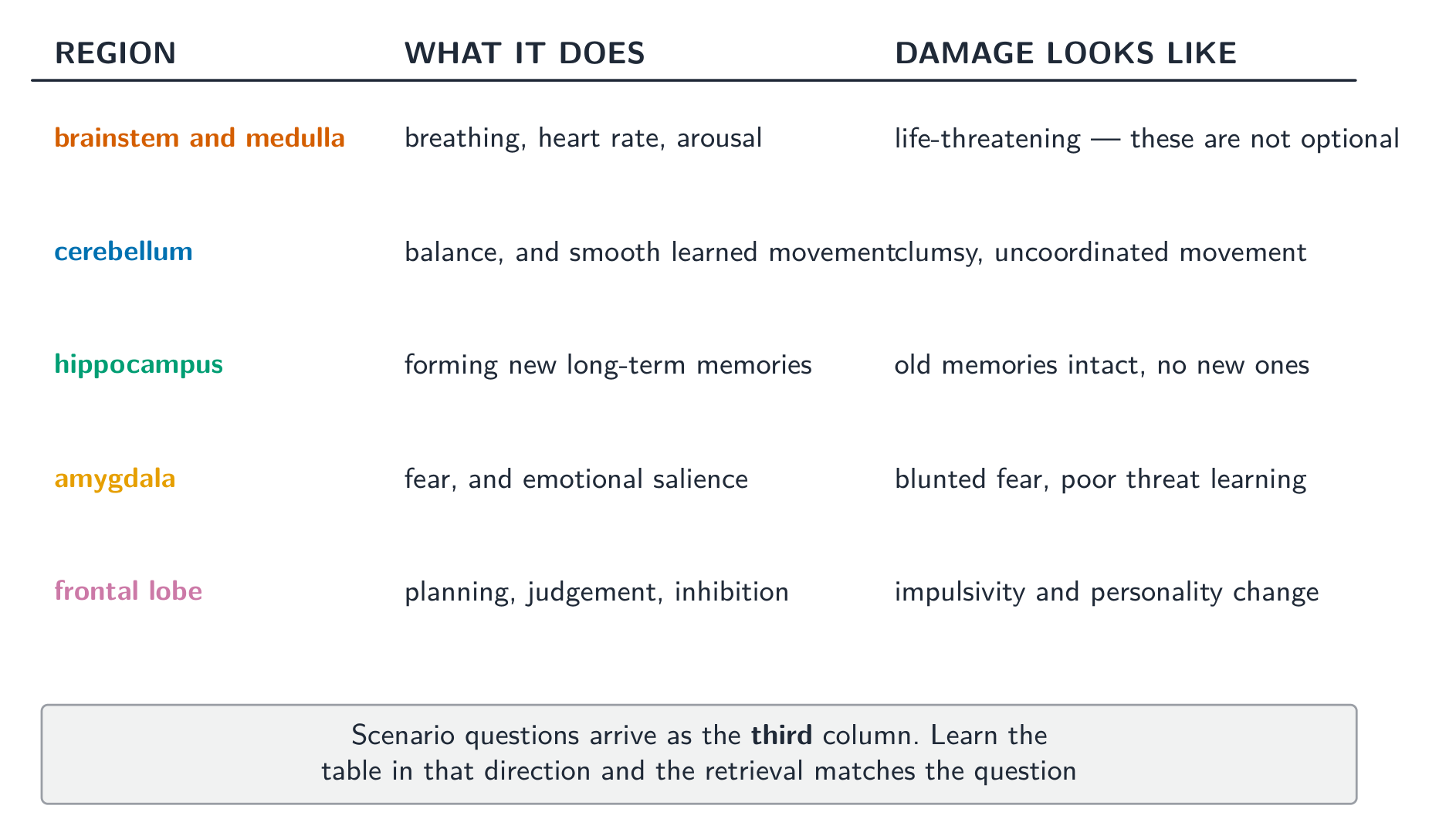
The brain is studied from the bottom up, because the lower structures handle the most basic jobs.
- The brain stem 脑干, including the medulla 延髓, controls breathing and heart rate.
- The reticular activating system 网状激活系统 controls alertness and arousal.
- The cerebellum 小脑 controls coordination, balance, and some procedural learning 程序性学习.
- The limbic system 边缘系统 sits inside the cerebral cortex and includes the thalamus 丘脑 (a relay station for the senses), the hypothalamus 下丘脑 (hunger, thirst, temperature), the pituitary gland 脑垂体, the hippocampus 海马体 (forming new memories), and the amygdala 杏仁核 (fear and emotion).
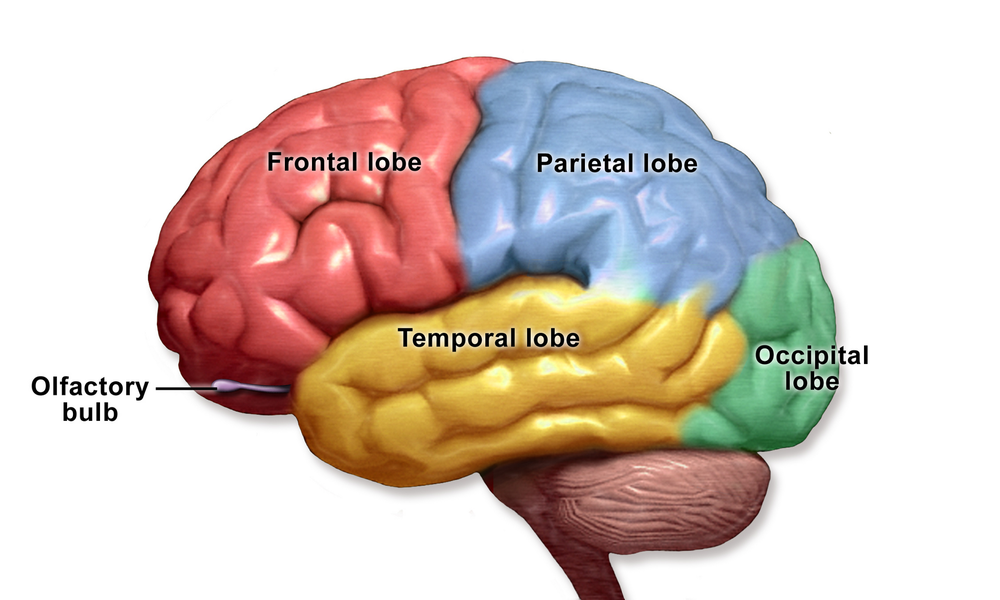
The cerebral cortex 大脑皮层 is divided into two hemispheres 半球 and four lobes: the occipital lobes 枕叶 process vision at the rear; the temporal lobes 颞叶 process hearing and language at the sides; the parietal lobes 顶叶 hold the somatosensory cortex 体感皮层 for touch; and the frontal lobes 额叶 handle higher-order thinking and executive function 执行功能.
Language sits mainly in the left hemisphere: Broca's area 布罗卡区 for speech production and Wernicke's area 韦尼克区 for comprehension.
Split-brain research 裂脑研究, done on patients whose corpus callosum 胼胝体 was cut to treat severe epilepsy, shows the two hemispheres can work independently. Researchers present information to one visual field 视野 at a time, because each field is processed by the opposite hemisphere.
Brain plasticity 大脑可塑性 is the brain's ability to rewire itself and form new connections, which supports recovery after damage. Research methods include EEG 脑电图 and fMRI 功能性磁共振成像 scans, case studies, and lesioning 损毁法.
Worked method choice. To identify rapid electrical patterns distinguishing sleep stages, choose EEG: scalp electrodes record electrical patterns with fine timing, although locating a precise source is more limited. To compare where blood-oxygen signals change during a memory task and a comparison task, choose fMRI: it commonly tracks regional blood-oxygen changes associated with activity. It gives useful spatial detail but measures an indirect, slower-changing signal rather than each neuron's firing. Both methods can track changes over time; that phrase alone does not distinguish them. A regional change during a task does not, by itself, establish that the region is necessary for the task or reveal exact thoughts. Match the research aim to the signal and state a limitation.
Explore
Match each deficit to the region
Scenario questions arrive as a deficit, so learn the table in that direction.
Vocabulary
Train
| English |
|---|
| brain stem/breɪn stem/ |
| medulla/ˈmedʌlə/ |
| reticular activating system/reˈtɪkjʊlə ˈæktɪveɪtɪŋ ˈsɪstəm/ |
| cerebellum/ˌserɪˈbeləm/ |
| procedural learning/prəˈsiːdʒərəl ˈlɜːnɪŋ/ |
| limbic system/ˈlɪmbɪk ˈsɪstəm/ |
| thalamus/ˈθælæməs/ |
| hypothalamus/ˌhaɪpəʊˈθælæməs/ |
| pituitary gland/pɪˈtjuːɪtəri ɡlænd/ |
| hippocampus/ˈhɪpəkæmpəs/ |
| amygdala/ˌæmɪɡˈdɑːlə/ |
| cerebral cortex/ˈserɪbrəl ˈkɔːteks/ |
| hemispheres/ˈhemɪsfɪəz/ |
| occipital lobes/ˈɒksɪpɪtl ləʊbz/ |
| temporal lobes/ˈtempərəl ləʊbz/ |
| parietal lobes/ˈpæraɪətl ləʊbz/ |
| somatosensory cortex/ˈsɒmətəʊsənsəri ˈkɔːteks/ |
| frontal lobes/ˈfrʌntl ləʊbz/ |
| executive function/eɡˈzekjuːtɪv ˈfʌŋkʃn/ |
| Broca's area/ˈbrəʊkəz ˈeərɪə/ |
| Wernicke's area/ˈwɜːnɪks ˈeərɪə/ |
| Split-brain research/splɪt breɪn rɪˈsɜːtʃ/ |
| corpus callosum/ˈkɔːpəs ˈkælɒsəm/ |
| visual field/ˈvɪʒuːəl fiːld/ |
| Brain plasticity/breɪn plæˈstɪsɪti/ |
| EEG/ˌiː iː ˈdʒiː/ |
| fMRI/ef ˌeˌmɑːˈraɪ/ |
| lesioning/ˈliːʒənɪŋ/ |
1.5
Consciousness and Sleep
Syllabus
| Learning Objective | Essential Knowledge |
|---|---|
1.5.A |
|
Source: College Board AP Course and Exam Description
Consciousness 意识 is awareness of internal and external events, and it varies in level.
The sleep/wake cycle is a circadian rhythm 昼夜节律 of about 24 hours. Jet lag 时差反应 and shift work disrupt it.
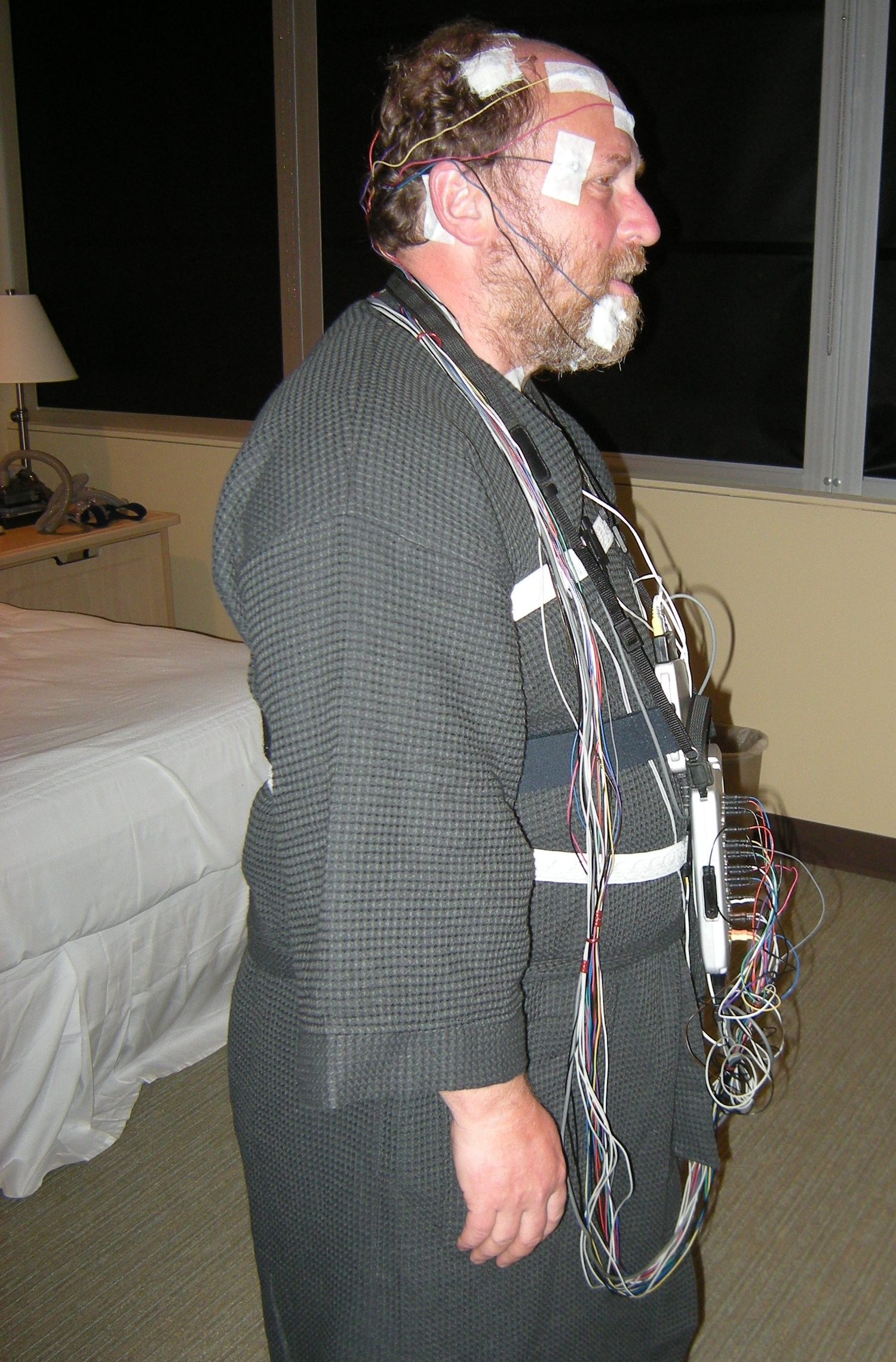
Sleep stages are identified by EEG patterns. NREM sleep 非快速眼动睡眠 covers stages 1 to 3; hypnagogic sensations 入睡幻觉 occur as you fall asleep. REM sleep 快速眼动睡眠 is called paradoxical sleep 异相睡眠 because the brain looks awake while the body is most relaxed, and most dreaming happens here.
Two examinable theories explain dreams: activation-synthesis theory 激活-综合理论 (the brain interprets random activity) and consolidation theory 巩固理论 (dreams reflect memory processing). Sleep itself is explained by memory consolidation 记忆巩固 and restoration 恢复 theories.
Note: the psychoanalytic theory of dreams is outside the exam's scope.
Sleep disorders disrupt waking behavior and health: insomnia 失眠, narcolepsy 发作性睡病, sleep apnea 睡眠呼吸暂停, somnambulism 梦游 (sleepwalking), and REM sleep behavior disorder 快速眼动睡眠行为障碍.
Vocabulary
Train
| English |
|---|
| Consciousness/ˈkɒnʃəsnəs/ |
| circadian rhythm/sɜːˈkeɪdɪən ˈrɪðəm/ |
| Jet lag/dʒet læɡ/ |
| NREM sleep/ˌenˈrem sliːp/ |
| hypnagogic sensations/ˌhɪpnəˈɡɒɡɪk senˈseɪʃnz/ |
| REM sleep/rem sliːp/ |
| paradoxical sleep/ˌpærəˈdɒksɪkl sliːp/ |
| activation-synthesis theory/ˌæktɪˈveɪʃn ˈsɪnθəsɪs ˈθɪəri/ |
| consolidation theory/kənˌsɒlɪˈdeɪʃn ˈθɪəri/ |
| memory consolidation/ˈmeməri kənˌsɒlɪˈdeɪʃn/ |
| restoration/ˌrestəˈreɪʃn/ |
| insomnia/ɪnˈsɒmnɪə/ |
| narcolepsy/ˈnɑːkəʊlepsi/ |
| sleep apnea/sliːp əpˈnɪə/ |
| somnambulism/sɒmˈnæmbjuːlɪzəm/ |
| REM sleep behavior disorder/rem sliːp bɪˈheɪvjə dɪˈsɔːdə/ |
1.6
Sensation
Syllabus
| Learning Objective | Essential Knowledge |
|---|---|
1.6.A |
|
1.6.B |
|
1.6.C |
|
1.6.D |
|
1.6.E |
|
1.6.F |
|
1.6.G |
|
Source: College Board AP Course and Exam Description
Sensation 感觉 is detecting information from the environment and transducing 转导 it into neural signals the brain can use. Detection needs a certain absolute threshold 绝对阈限.
- The just-noticeable difference 最小可觉差 is the smallest change a person can detect.
- Sensory adaptation 感觉适应 is reduced sensitivity to an unchanging stimulus - you stop noticing a smell.
- Sensory interaction 感觉相互作用 means the senses work together. Synesthesia 联觉 is when one sense triggers another.
Vision. Light is focused onto the retina 视网膜 by the lens 晶状体 changing shape, a process called visual accommodation 视觉调节; when this fails the result is nearsightedness 近视 or farsightedness 远视. Rods 视杆细胞 lie in the periphery and detect shape and movement in low light. Cones 视锥细胞 sit in the fovea 中央凹 and detect colour and detail. Colour vision needs two theories: trichromatic theory 三色理论 (blue, green and red cones) and opponent-process theory 对立过程理论, which explains afterimages 后像. Damage to the occipital lobes can cause prosopagnosia 面孔失认症, or face blindness.
Hearing. Sound is air movement; wavelength gives pitch 音高 and amplitude gives loudness 响度. Pitch perception is explained by place theory 位置理论, volley theory 齐射理论, and frequency theory 频率理论. Sound localization 声源定位 tells us where a sound comes from. Hearing loss may be conduction deafness 传导性耳聋 or sensorineural deafness 感音神经性耳聋.
The chemical senses. Olfaction 嗅觉 is the only sense not relayed first through the thalamus. Gustation 味觉 covers sweet, sour, salty, bitter, umami 鲜味, and oleogustus 脂味. The two interact: without smell, taste is muted.
Touch, pain, and body position. Skin receptors transduce touch; "hot" comes from warm and cold receptors firing together. Pain is processed in body and brain, and gate control theory 闸门控制理论 explains why attention changes how much it hurts; phantom limb 幻肢 sensations show the brain's role. The vestibular sense 前庭觉 controls balance through the semicircular canals 半规管, and kinesthesis 动觉 is the sense of body movement.
Worked evidence-based generalization (2025 AP Psychology Set 1 Article Analysis). The study recruited 127 students at one large university for course credit. They were aged 18–39, with a mean age of 21.21; 69% were women and 31% men. Consider how far the findings can be extended to adults aged 65 and over.
One supported response is: the findings may not extend to adults aged 65 and over because all participants were university students aged 18–39. The study provides no direct participant evidence about that older population. This is a limit on the evidence, not proof that older adults would behave differently. A sample's size alone does not show that it represents every population. Random assignment to misinformation conditions helps compare the experimental groups; it does not turn a university sample into a representative sample of all adults.
The official Part E criterion requires a generalization claim supported by specific, relevant participant evidence. Name the population, select a participant feature and explain the link. An unexplained label such as “biased” or a statement about sample size is insufficient. This is an authored model response grounded in the source and scoring criterion, not a quotation of a scored student answer.
Vocabulary
Train
| English |
|---|
| Sensation/senˈseɪʃn/ |
| transducing/trænsˈdjuːsɪŋ/ |
| absolute threshold/ˈæbsəluːt ˈθreʃəʊld/ |
| just-noticeable difference/dʒʌst ˈnəʊtɪsəbl ˈdɪfrəns/ |
| Sensory adaptation/ˈsensəri ˌædæpˈteɪʃn/ |
| Sensory interaction/ˈsensəri ˌɪntəˈrækʃn/ |
| Synesthesia/ˌsaɪnɪsˈθiːzɪə/ |
| retina/ˈretɪnə/ |
| lens/lenz/ |
| visual accommodation/ˈvɪʒuːəl əˌkɒməˈdeɪʃn/ |
| nearsightedness/ˈnɪəsaɪtɪdnəs/ |
| farsightedness/ˈfɑːsaɪtɪdnəs/ |
| Rods/rɒdz/ |
| Cones/kəʊnz/ |
| fovea/ˈfəʊvɪə/ |
| trichromatic theory/ˌtrɪkrəʊˈmætɪk ˈθɪəri/ |
| opponent-process theory/əˈpəʊnənt ˈprəʊses ˈθɪəri/ |
| afterimages/ˈæftərɪmɪdʒɪz/ |
| prosopagnosia/ˌprɒsəpəɡˈnəʊzɪə/ |
| pitch/pɪtʃ/ |
| loudness/ˈlaʊdnəs/ |
| place theory/pleɪs ˈθɪəri/ |
| volley theory/ˈvɒli ˈθɪəri/ |
| frequency theory/ˈfriːkwənsi ˈθɪəri/ |
| Sound localization/saʊnd ˌləʊkəlaɪˈzeɪʃn/ |
| conduction deafness/kənˈdʌkʃn ˈdefnəs/ |
| sensorineural deafness/ˈsensɔːraɪnjuːrəl ˈdefnəs/ |
| Olfaction/ɒlˈfækʃn/ |
| Gustation/ɡʌˈsteɪʃn/ |
| umami/juːˈmɑːmi/ |
| oleogustus/ˈəʊləɡʌstəs/ |
| gate control theory/ɡeɪt kənˈtrəʊl ˈθɪəri/ |
| phantom limb/ˈfæntəm lɪm/ |
| vestibular sense/veˈstɪbjʊlə sens/ |
| semicircular canals/ˌsemɪˈsɜːkjʊlə kəˈnælz/ |
| kinesthesis/ˈkaɪnsθəsɪs/ |
1.6
Exam tips
- Learn only the listed neurotransmitters and hormones; the exam will not ask about others, and the endocrine glands are out of scope apart from the pituitary.
- Keep sensation separate from perception: sensation is detecting and transducing, perception is interpreting (Unit 2).
- The all-or-none principle means intensity is coded by how often a neuron fires, never by how strongly.
- Match structure to job before you write: hippocampus forms memories, amygdala handles fear, cerebellum coordinates movement.
- Sympathetic arouses, parasympathetic calms. If a question describes a racing heart, name the sympathetic branch.
- Say what a scan can and cannot show. EEG records rapid electrical patterns; fMRI commonly tracks regional blood-oxygen changes associated with activity.
Interactive lessons on this topic
Work through it step by step, with instant-check exercises.