Skip to content · ⁨الانتقال إلى المحتوى⁩

Political Patterns and Processes · ⁨الأنماط والعمليات السياسية⁩

AP Human Geography · ⁨الجغرافيا البشرية (AP)⁩ · Topic 4 · ⁨الموضوع 4⁩

Video lesson for this topic · ⁨درس فيديو لهذا الموضوع⁩ Open the video page · ⁨افتح صفحة الفيديو⁩
8:12

الأنماط والعمليات السياسية

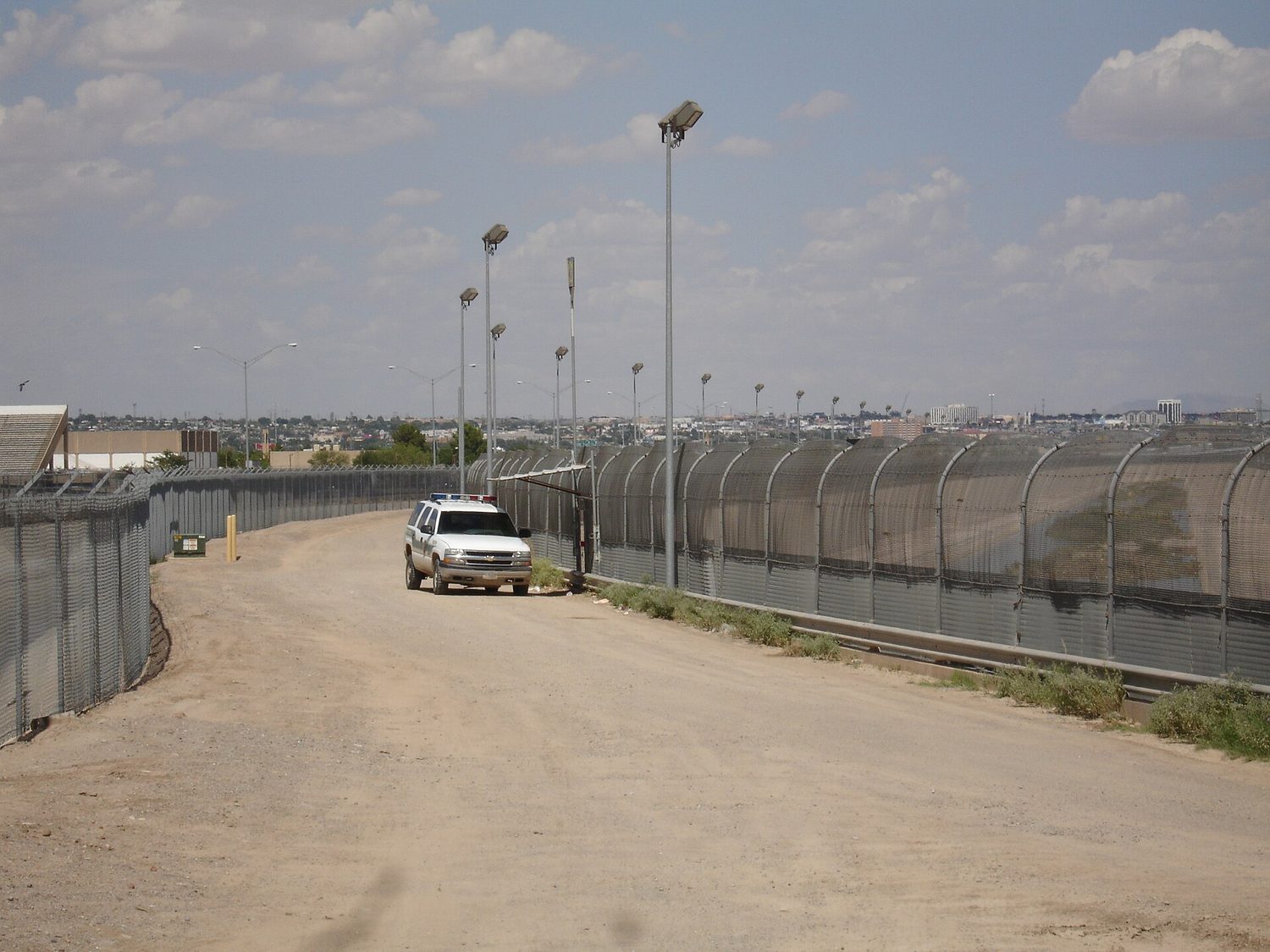
هناك سياج. يمتد عبر أرض مفتوحة حتى الأفق. من الجهة الأخرى تقف مدينة — نفس الأرض الجافة، نفس السماء. وهنا القاعة…

English narration · English + 中文 subtitles burned in · ⁨سرد باللغة الإنجليزية · ترجمة مدمجة بالإنجليزية + الصينية⁩

4.1

Introduction to Political Geography · ⁨مقدمة في الجغرافيا السياسية⁩

Syllabus · ⁨المنهج⁩
English

Enduring Understanding (PSO-4): The political organization of space results from historical and current processes, events, and ideas.

Learning Objective PSO-4.A: For world political maps: a. Define the different types of political entities. b. Identify a contemporary example of political entities.

  • PSO-4.A.1 Independent states are the primary building blocks of the world political map.
  • PSO-4.A.2 Types of political entities include nations, nation-states, stateless nations, multinational states, multistate nations, and autonomous and semiautonomous regions, such as American Indian reservations.
العربية

فهم دائم (PSO-4): wynika التنظيم السياسي للفضاء من العمليات والأحداث والأفكار التاريخية والحالية.

هدف التعلم PSO-4.A: للخرائط السياسية العالمية: أ. تعريف الأنواع المختلفة للكيان السياسي. ب. تحديد مثال معاصر للكيانات السياسية.

  • PSO-4.A.1 الدول المستقلة هي اللبنات الأساسية الرئيسية للخريطة السياسية العالمية.
  • PSO-4.A.2 تشمل أنواع الكيانات السياسية الأمم، ودول الأمة، والأمم بلا دولة، والدول متعددة القوميات، والأمم متعددة الدول، والمناطق ذاتية الحكم وشبه ذاتية الحكم، مثل محميات الأمريكيين الأصليين.
Source: College Board AP Course and Exam Description · ⁨المصدر: وصف دورة وامتحان College Board AP⁩

English

Political geography 政治地理学 studies how humans divide and control space. Its key units:

  • A state 国家 (country) is an area with defined borders, a permanent population, a government, and sovereignty 主权 — full control over its own affairs.
  • A nation 民族 is a group of people with a shared culture and identity; a nation-state 民族国家 is a state whose borders match one nation (Japan is close).
  • A multinational state 多民族国家 contains several nations; a stateless nation 无国家民族 (like the Kurds) has no state of its own.

Worked example (a real AP exam question). "Define the concept of an independent state." (2025) A full-mark answer: "A sovereign country that governs itself and its own territory, is not controlled by any outside power, and is recognised by other states." The command word Define wants a short, precise meaning — one clear sentence is enough. You do not need examples or explanation here; save those for the "Describe" and "Explain" parts.

العربية

الجغرافيا السياسية تدرس كيفية تقسيم البشر للفضاء والتحكم فيه. وحداتها الرئيسية:

  • الدولة (البلد) هي منطقة ذات حدود محددة، وسكان دائم، وحكومة، وسيادة — أي سيطرة كاملة على شؤونها الخاصة.
  • الأمة هي مجموعة من الناس تشاركهم ثقافة وهوية موحدة؛ دولة الأمة هي دولة تتطابق حدودها مع أمة واحدة (اليابان قريبة من هذا المفهوم).
  • الدولة متعددة الأمم تحتوي على عدة أمم؛ أما الأمة بلا دولة (مثل الأكراد) فلها دولة خاصة بها.

مثال محلول (سؤال حقيقي من امتحان AP). "عرّف مفهوم الدولة المستقلة." (2025) إجابة كاملة الدرجة: "دولة سيادية تحكم نفسها وأراضيها، ولا تخضع لأي قوة خارجية، وتُعترف بها من قبل الدول الأخرى." الكلمة الدالة عرّف تعني معنى قصيراً ودقيقاً — جملة واحدة واضحة كافية. لا تحتاج إلى أمثلة أو شرح هنا؛ احتفظ بذلك لأجزاء "وصف" و"شرح".

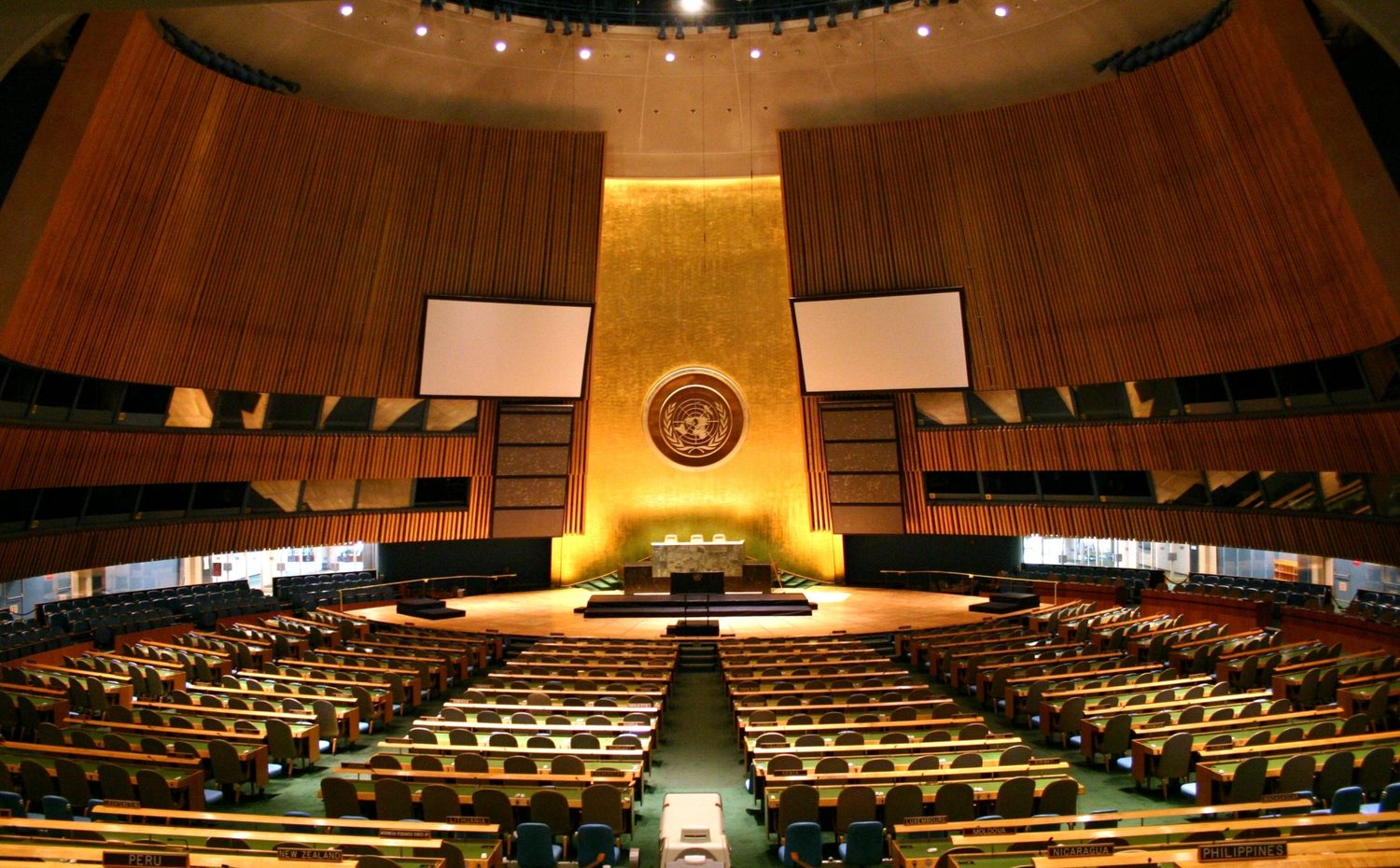
جمعية عامة للأمم المتحدة: السيادة والاعتراف بين الدول
4.2 4.3

Political Power and Territoriality · ⁨السلطة السياسية والإقليمية⁩

Syllabus · ⁨المنهج⁩
English

Enduring Understanding (PSO-4): The political organization of space results from historical and current processes, events, and ideas.

Learning Objective PSO-4.B: Explain the processes that have shaped contemporary political geography.

  • PSO-4.B.1 The concepts of sovereignty, nation- states, and self-determination shape the contemporary world.
  • PSO-4.B.2 Colonialism, imperialism, independence movements, and devolution along national lines have influenced contemporary political boundaries.
العربية

فهم دائم (PSO-4): wynika التنظيم السياسي للفضاء من العمليات والأحداث والأفكار التاريخية والحالية.

هدف التعلم PSO-4.B: شرح العمليات التي شكلت الجغرافيا السياسية المعاصرة.

  • PSO-4.B.1 مفاهيم السيادة، ودول الأمة، وتحديد المصير تشكل العالم المعاصر.
  • PSO-4.B.2 أثر الاستعمار والإمبريالية وحركات الاستقلال والتفويض على الخطوط الوطنية على الحدود السياسية المعاصرة.
English

Enduring Understanding (PSO-4): The political organization of space results from historical and current processes, events, and ideas.

Learning Objective PSO-4.C: Describe the concepts of political power and territoriality as used by geographers.

  • PSO-4.C.1 Political power is expressed geographically as control over people, land, and resources, as illustrated by neocolonialism, shatterbelts, and choke points.
  • PSO-4.C.2 Territoriality is the connection of people, their culture, and their economic systems to the land.
العربية

فهم دائم (PSO-4): wynika التنظيم السياسي للفضاء من العمليات والأحداث والأفكار التاريخية والحالية.

هدف التعلم PSO-4.C: وصف مفاهيم السلطة السياسية والسيادية الإقليمية كما يستخدمها الجغرافيون.

  • PSO-4.C.1 تُعبر السلطة السياسية جغرافيًا عن طريق السيطرة على الناس والأرض والموارد، كما يوضحه الاستعمار الجديد، وأحواض التفكك، ونقاط الاختناق.
  • PSO-4.C.2 السيادية الإقليمية هي ارتباط الناس وثقافتهم وأنظمتهم الاقتصادية بالأرض.

Source: College Board AP Course and Exam Description · ⁨المصدر: وصف دورة وامتحان College Board AP⁩

English

Territoriality 领域性 is the attempt by a person or group to control people and things by controlling an area. Power is expressed geographically through control of land, people, and resources.

  • Colonialism and imperialism built empires by taking control of distant territory; neocolonialism 新殖民主义 is continued economic control after formal independence.
  • Choke points 咽喉要道 (narrow passages like the Suez Canal or the Strait of Malacca) and shatterbelts 破碎地带 (regions caught between competing powers) show how geography shapes political power.
العربية

الإقليمية هي محاولة شخص أو مجموعة للتحكم في الناس والأشياء من خلال التحكم في منطقة ما. تُعبّر السلطة جغرافياً من خلال السيطرة على الأراضي والناس والموارد.

  • بنى الاستعمار والإمبريالية إمبراطوريات عن طريق الاستيلاء على أراضي بعيدة؛ أما الاستعمار الجديد فهو استمرار السيطرة الاقتصادية بعد الاستقلال الرسمي.
  • نقاط الاختناق (ممرات ضيقة مثل قناة السويس أو مضيق ملقا) وأحواض التحطم (مناطق تقع بين قوى متنافسة) تظهر كيف تشكل الجغرافيا السلطة السياسية.
4.4 4.5 4.6

Political Boundaries · ⁨الحدود السياسية⁩

Syllabus · ⁨المنهج⁩
English

Enduring Understanding (IMP-4): Political boundaries and divisions of governance, between states and within them, reflect balances of power that have been negotiated or imposed.

Learning Objective IMP-4.A: Define types of political boundaries used by geographers.

  • IMP-4.A.1 Types of political boundaries include relic, superimposed, subsequent, antecedent, geometric, and consequent boundaries.
العربية

الفهم الدائم (IMP-4): تعكس الحدود السياسية وتقسيمات الحكم، بين الدول وداخلها، توازنات القوى التي تم التفاوض عليها أو فرضها.

هدف التعلم IMP-4.A: عرّف أنواع الحدود السياسية المستخدمة من قبل الجغرافيين.

  • IMP-4.A.1 تشمل أنواع الحدود السياسية الحدود المتبقية، والمفروضة، واللاحقة، والسابقة، الهندسية، والناتجة عن.
English

Enduring Understanding (IMP-4): Political boundaries and divisions of governance, between states and within them, reflect balances of power that have been negotiated or imposed.

Learning Objective IMP-4.B: Explain the nature and function of international and internal boundaries.

  • IMP-4.B.1 Boundaries are defined, delimited, demarcated, and administered to establish limits of sovereignty, but they are often contested.
  • IMP-4.B.2 Political boundaries often coincide with cultural, national, or economic divisions. However, some boundaries are created by demilitarized zones or policy, such as the Berlin Conference.
  • IMP-4.B.3 Land and maritime boundaries and international agreements can influence national or regional identity and encourage or discourage international or internal interactions and disputes over resources.
  • IMP-4.B.4 The United Nations Convention on the Law of the Sea defines the rights and responsibilities of nations in the use of international waters, established territorial seas, and exclusive economic zones.
العربية

الفهم الدائم (IMP-4): تعكس الحدود السياسية وتقسيمات الحكم، بين الدول وداخلها، توازنات القوى التي تم التفاوض عليها أو فرضها.

هدف التعلم IMP-4.B: اشرح طبيعة ووظائف الحدود الدولية والداخلية.

  • IMP-4.B.1 يتم تحديد الحدود وتحديدها ورسمها وإدارتها لإقامة حدود السيادة، لكنها غالبًا ما تكون محل نزاع.
  • IMP-4.B.2 تتطابق الحدود السياسية أحيانًا مع التقسيمات الثقافية أو الوطنية أو الاقتصادية. ومع ذلك، تُخلق بعض الحدود بواسطة مناطق منزوعة السلاح أو السياسات، مثل مؤتمر برلين.
  • IMP-4.B.3 يمكن للحدود البرية والبحرية والاتفاقيات الدولية أن تؤثر على الهوية الوطنية أو الإقليمية وتشجع أو تثبط التفاعلات الدولية أو الداخلية والنزاعات حول الموارد.
  • IMP-4.B.4 تحدد اتفاقية الأمم المتحدة لقانون البحر حقوق ومسؤوليات الدول في استخدام المياه الدولية، والبحار الإقليمية المنشأة، والمناطق الاقتصادية الحصرية.
English

Enduring Understanding (IMP-4): Political boundaries and divisions of governance, between states and within them, reflect balances of power that have been negotiated or imposed.

Learning Objective IMP-4.B: Explain the nature and function of international and internal boundaries.

  • IMP-4.B.5 Voting districts, redistricting, and gerrymandering affect election results at various scales.
العربية

الفهم الدائم (IMP-4): تعكس الحدود السياسية وتقسيمات الحكم، بين الدول وداخلها، توازنات القوى التي تم التفاوض عليها أو فرضها.

هدف التعلم IMP-4.B: اشرح طبيعة ووظائف الحدود الدولية والداخلية.

  • IMP-4.B.5 تؤثر دوائر الانتخاب وإعادة تقسيم الدوائر والتوزيع غير العادل للدوائر على نتائج الانتخابات على مختلف المستويات.

Source: College Board AP Course and Exam Description · ⁨المصدر: وصف دورة وامتحان College Board AP⁩

English

A boundary 边界 is a line that marks the limit of a state's territory. Types by origin:

  • Antecedent 先成边界 (drawn before dense settlement), subsequent 后成边界 (drawn as cultures develop), superimposed 叠加边界 (forced on by an outside power, ignoring local culture), and relic 残余边界 (no longer a border but still visible, like the Berlin Wall).
  • Definition, delimitation, and demarcation are the steps of setting a boundary: agreeing wording, drawing it on a map, then marking it on the ground.
  • At sea, the UN Convention on the Law of the Sea (UNCLOS) 联合国海洋法公约 sets each coastal state's territorial sea and an exclusive economic zone (EEZ) 专属经济区, defining rights to fishing and seabed resources.
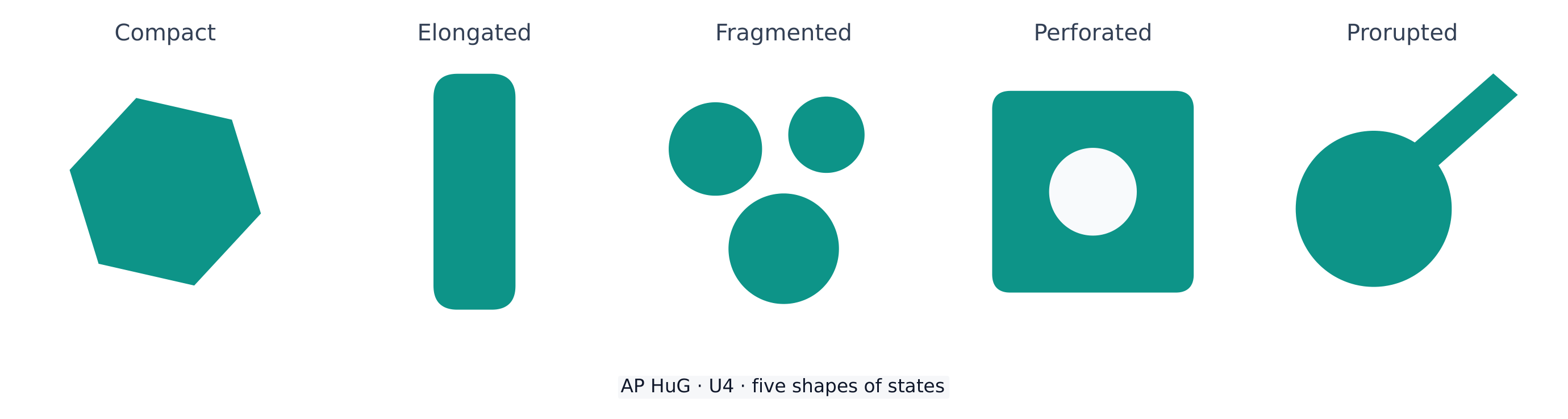
  • The shape of a state matters: compact states are easy to govern; elongated, fragmented, perforated, and prorupted shapes create governing challenges.
العربية
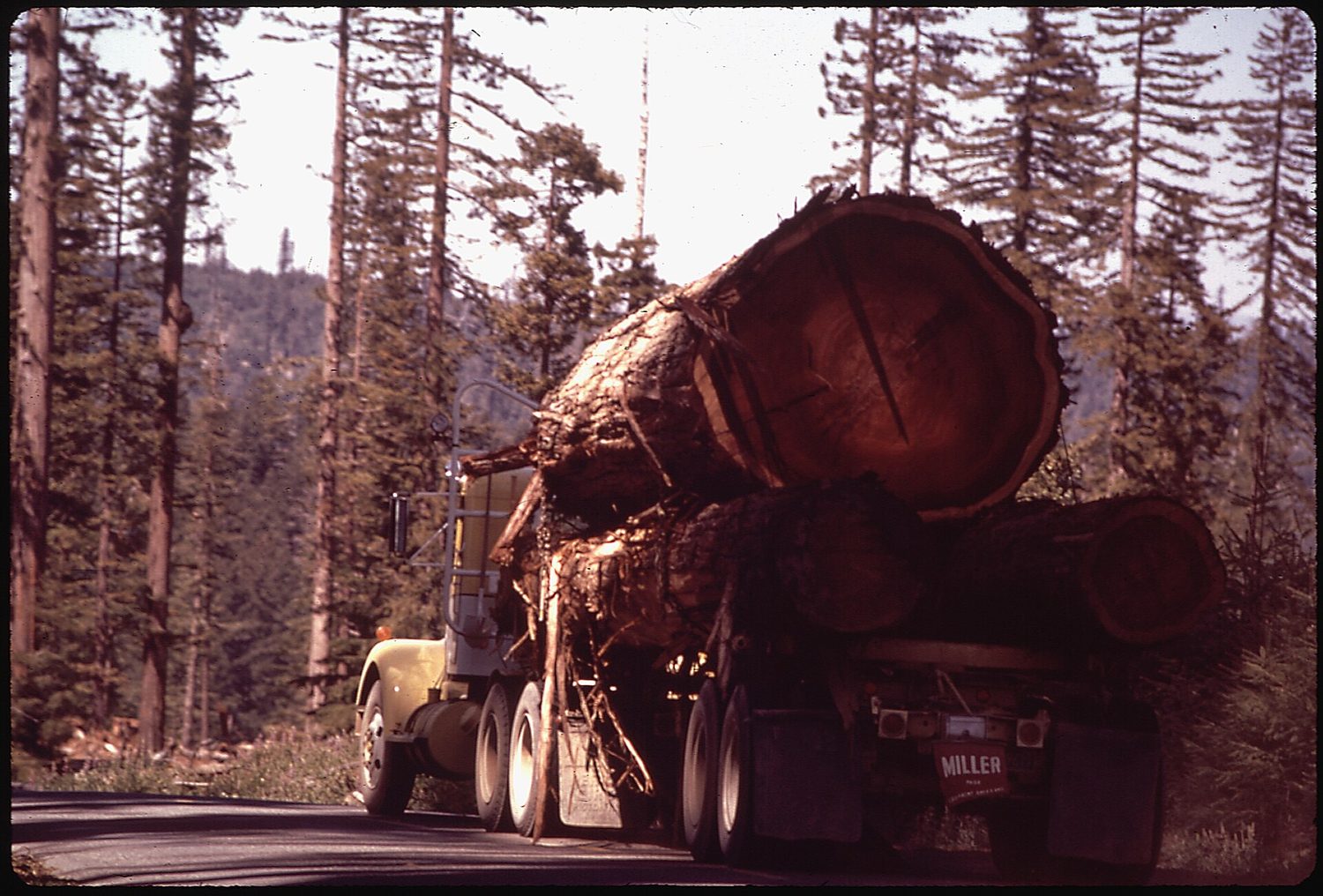
منظر طبيعي واضح: الحدود السياسية وسيطرة الأرض تشكيل استخدام الموارد

الحدود هو خط يحدد حدود أراضي الدولة. أنواع حسب الأصل:

كيف تتشكل الحدود وأشكال الدول المختلفة
تتخذ الدول أشكالاً مختلفة؛ كل شكل يؤثر على سهولة حكم الدولة
  • السابقة (رُسمت قبل الاستقرار الكثيف)، اللاحقة (رُسمت أثناء تطور الثقافات)، المفروضة (فُرِضت بواسطة قوة خارجية، متجاهلة الثقافة المحلية)، والمتبقية (لم تعد حداً但仍 مرئية، مثل جدار برلين).
  • التعريف، تحديد الخطوط، ورسم الحدود هي خطوات وضع الحدود: الاتفاق على الصياغة، رسمها على الخريطة، ثم وضعها على أرض الواقع.
  • في البحار، تضع اتفاقية الأمم المتحدة لقانون البحار (UNCLOS) البحر الإقليمي لكل دولة ساحلية ومنطقة اقتصادية حصرية (EEZ)، لتحديد حقوق الصيد وموارد قاع البحر.
  • شكل الدولة مهم: الدول المركزة سهلة الحكم؛ أما الأشكال الممدودة، المجزأة، المثقوبة، والبروزية فتخلق تحديات في الحكم.
Vocabulary · ⁨مفردات⁩ Train · ⁨تدريب⁩
English العربية
Political geography/pəˈlɪtɪkl dʒɪˈɒɡrəfi/ الجغرافيا السياسية
state/steɪt/ دولة
sovereignty/ˈsɒvərɪnti/ السيادة
nation/ˈneɪʃn/ أمة
nation-state/ˈneɪʃn steɪt/ دولة قومية
multinational state/ˌmʌltɪˈnæʃənl steɪt/ الدولة متعددة الجنسيات
stateless nation/ˈsteɪtləs ˈneɪʃn/ أمة بلا دولة
Territoriality/ˌterɪˌtɔːrɪˈælɪti/ السيادة الإقليمية
neocolonialism/ˈniːəʊkɒləʊnɪəlɪzəm/ الاستعمار الجديد
Choke points/tʃəʊk pɔɪnts/ نقاط الاختناق
shatterbelts/ˈʃætəbelts/ المناطق المتصدعة
boundary/ˈbaʊndəri/ حدود
Antecedent/ˌæntɪˈsiːdənt/ سابقة
subsequent/ˈsʌbsɪkwənt/ لاحق
superimposed/ˌsuːpərɪmˈpəʊzd/ مفروض
relic/ˈrelɪk/ متروكة
UN Convention on the Law of the Sea (UNCLOS) اتفاقية الأمم المتحدة لقانون البحار (UNCLOS)
exclusive economic zone (EEZ)/eksˈkluːsɪv ˌiːkəˈnɒmɪk zəʊn/ المنطقة الاقتصادية الحصرية (EEZ)
unitary state/ˈjuːnɪtəri steɪt/ دولة مركزية
federal state/ˈfedərəl steɪt/ دولة فيدرالية
Gerrymandering/ˈdʒerɪmændərɪŋ/ تجنيح
4.7

Forms of Governance · ⁨أشكال الحوكمة⁩

Syllabus · ⁨المنهج⁩
English

Enduring Understanding (IMP-4): Political boundaries and divisions of governance, between states and within them, reflect balances of power that have been negotiated or imposed.

Learning Objective IMP-4.C: Define federal and unitary states.

  • IMP-4.C.1 Forms of governance include unitary states and federal states.

Learning Objective IMP-4.D: Explain how federal and unitary states affect spatial organization.

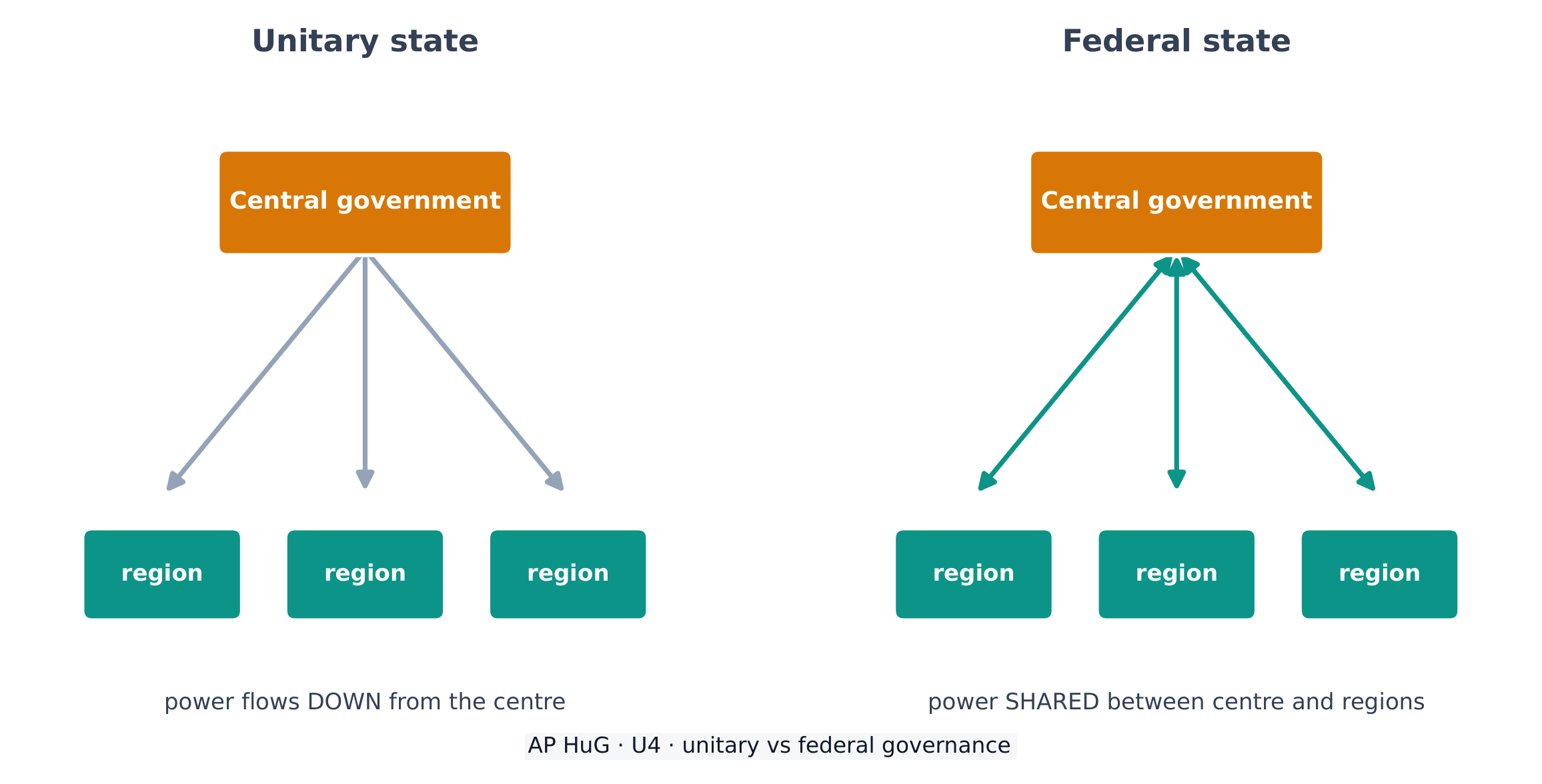
  • IMP-4.D.1 Unitary states tend to have a more top-down, centralized form of governance, while federal states have more locally based, dispersed power centers. SUGGESTED SKILLS Spatial Relationships Describe spatial patterns, networks, and relationships.
العربية

الفهم الدائم (IMP-4): تعكس الحدود السياسية وتقسيمات الحكم، بين الدول وداخلها، توازنات القوى التي تم التفاوض عليها أو فرضها.

هدف التعلم IMP-4.C: عرّف الدول الفيدرالية والدول الوحدوية.

  • IMP-4.C.1 تشمل أشكال الحكم الدول الوحدوية والدول الفيدرالية.

هدف التعلم IMP-4.D: اشرح كيف تؤثر الدول الفيدرالية والوحدوية على التنظيم المكاني.

  • IMP-4.D.1 تميل الدول الوحدوية إلى اعتماد شكل مركزي من نوع "من الأعلى إلى الأسفل" للحكم، بينما تمتلك الدول الفيدرالية مراكز سلطة مبعثرة ومبنية على المستوى المحلي. المهارات المقترحة: العلاقات المكانية صف الأنماط والشبكات والعلاقات المكانية.

Source: College Board AP Course and Exam Description · ⁨المصدر: وصف دورة وامتحان College Board AP⁩

English

States organise power between the centre and the regions in two main ways:

  • A unitary state 单一制国家 keeps most power in the central government (France). It works best in small or culturally uniform countries.
  • A federal state 联邦制国家 shares power between the centre and regional governments (USA, India). It suits large or diverse countries.
  • Gerrymandering 选区划分不公 is redrawing voting district boundaries to favour one group — a political use of geography.
العربية
مبنى البرلمان: تدرس الجغرافيا السياسية كيف يتم تنظيم السلطة فوق الإقليم

تنظم الدول السلطة بين المركز والمناطق بطريقتين رئيسيتين:

الدول الوحدوية تركّز السلطة في المركز؛ والدول الفيدرالية تشاركها مع المناطق
الدولة الوحدية تحتفظ بالسلطة مركزياً؛ الدولة الفيدرالية تشارك السلطة مع الحكومات الإقليمية
  • الدولة الوحدية تحتفظ بمعظم السلطة في الحكومة المركزية (فرنسا). تعمل بشكل أفضل في البلدان الصغيرة أو المتجانسة ثقافياً.
  • الدولة الفيدرالية تشارك السلطة بين المركز والحكومات الإقليمية (الولايات المتحدة، الهند). تناسب البلدان الكبيرة أو المتنوعة.
  • إعادة رسم الحدود الانتخابية هو إعادة رسم حدود دوائر الانتخاب لصالح مجموعة معينة — استخدام سياسي للجغرافيا.
4.8 4.9

Devolution and Challenges to Sovereignty · ⁨اللامركزية وتحديات السيادة⁩

Syllabus · ⁨المنهج⁩
English

Enduring Understanding (SPS-4): Political, economic, cultural, or technological changes can challenge state sovereignty.

Learning Objective SPS-4.A: Define factors that lead to the devolution of states.

  • SPS-4.A.1 Factors that can lead to the devolution of states include the division of groups by physical geography, ethnic separatism, ethnic cleansing, terrorism, economic and social problems, and irredentism.
العربية

فهم دائم (SPS-4) يمكن للتغيرات السياسية أو الاقتصادية أو الثقافية أو التكنولوجية أن تحد من سيادة الدولة.

هدف التعلم SPS-4.A: عرّف العوامل التي تؤدي إلى تفكك الدول.

  • SPS-4.A.1 تشمل العوامل التي قد تؤدي إلى تفكك الدول انقسام المجموعات بسبب الجغرافيا الطبيعية، والفصل العنصري الإثني، والتطهير العنصري، والإرهاب، والمشاكل الاقتصادية والاجتماعية، والإيريدنتيزم (التطلعات القومية).
English

Enduring Understanding (SPS-4): Political, economic, cultural, or technological changes can challenge state sovereignty.

Learning Objective SPS-4.B: Explain how political, economic, cultural, and technological changes challenge state sovereignty.

  • SPS-4.B.1 Devolution occurs when states fragment into autonomous regions; subnational political- territorial units, such as those within Spain, Belgium, Canada, and Nigeria; or when states disintegrate, as happened in Sudan and the former Soviet Union.
  • SPS-4.B.2 Advances in communication technology have facilitated devolution, supranationalism, and democratization.
  • SPS-4.B.3 Global efforts to address transnational and environmental challenges and to create economies of scale, trade agreements, and military alliances help to further supranationalism.
  • SPS-4.B.4 Supranational organizations—including the United Nations (UN), North Atlantic Treaty Organization (NATO), European Union (EU), Association of Southeast Asian Nations (ASEAN), Arctic Council, and African Union— can challenge state sovereignty by limiting the economic or political actions of member states.
العربية

فهم دائم (SPS-4) يمكن للتغيرات السياسية أو الاقتصادية أو الثقافية أو التكنولوجية أن تحد من سيادة الدولة.

هدف التعلم SPS-4.B: اشرح كيف تتحدى التغيرات السياسية والاقتصادية والثقافية والتكنولوجية سيادة الدولة.

  • SPS-4.B.1 يحدث التفكك عندما تنقسم الدول إلى مناطق ذاتية الحكم؛ وحدات سياسية إقليمية دون وطنية، مثل تلك الموجودة في إسبانيا وبلجيكا وكندا ونيجيريا؛ أو عندما تتحلل الدول، كما حدث في السودان واتحاد الجمهوريات الاشتراكية السوفيتية السابق.
  • SPS-4.B.2 ساهمت التطورات في تكنولوجيا الاتصالات في تسهيل التفكك، والوحدة فوق الوطنية، والديمقراطية.
  • SPS-4.B.3 تساعد الجهود العالمية لمعالجة التحديات العابرة للحدود والبيئية وإنشاء اقتصادات الحجم، واتقيات التجارة، والتحالفات العسكرية في تعزيز الوحدة فوق الوطنية.
  • SPS-4.B.4 يمكن للمنظمات فوق الوطنية - بما في ذلك الأمم المتحدة (UN)، وحلف شمال الأطلسي (NATO)، والاتحاد الأوروبي (EU)، ورابطة دول جنوب شرق آسيا (ASEAN)، ومجلس القطب الشمالي، والاتحاد الأفريقي - أن تتحدى سيادة الدولة من خلال تقييد الإجراءات الاقتصادية أو السياسية للدول الأعضاء.

Source: College Board AP Course and Exam Description · ⁨المصدر: وصف دورة وامتحان College Board AP⁩

English

Devolution 权力下放 is the transfer of power from a central government down to regional governments. It is driven by devolutionary factors: ethnic or religious differences, physical geography (islands, mountains), and economic inequality.

  • Strong differences can lead to autonomy 自治 for a region, or even a movement for full independence.
  • Sovereignty is also challenged from outside by supranational organisations 超国家组织 (the EU, UN), by globalisation, and by the internet, which crosses borders freely.
العربية

اللامركزية هي نقل السلطة من حكومة مركزية إلى حكومات إقليمية. تُدفع هذه العملية بعوامل لامركزية: اختلافات عرقية أو دينية، جغرافيا فيزيائية (جزر، جبال)، وعدم مساواة اقتصادية.

  • يمكن أن تؤدي الاختلافات القوية إلى منح استقلالية لمنطقة ما، أو حتى حركة لاستقلال كامل.
  • السيادة تتعرض للتحدي أيضاً من الخارج من قبل المنظمات فوق الوطنية (الاتحاد الأوروبي، الأمم المتحدة)، والعولمة، والإنترنت الذي يعبر الحدود بحرية.
حدود صلبة وسيطرة متنازع عليها: تحديات السيادة على أرض الواقع
Vocabulary · ⁨مفردات⁩ Train · ⁨تدريب⁩
English العربية
Devolution/dɪvəˈluːʃn/ تفويض
autonomy/ɔːˈtɒnəmi/ الاستقلالية
supranational organisations/ˌsuːprəˈnæʃənl ˌɔːɡənaɪˈzeɪʃnz/ منظمات فوق وطنية
Centrifugal forces/ˌsentrɪˈfjuːɡl ˈfɔːsɪz/ القوى المتباعدة
failed states/feɪld steɪts/ الدول الفاشلة
Centripetal forces/senˈtrɪpɪtl ˈfɔːsɪz/ القوى المركزة
ethnonationalism/ˌeθnəˈneɪʃənəlɪzəm/ القومية العرقية
4.10

Centrifugal and Centripetal Forces · ⁨القوى الطاردة والمركزة⁩

Syllabus · ⁨المنهج⁩
English

Enduring Understanding (SPS-4): Political, economic, cultural, or technological changes can challenge state sovereignty.

Learning Objective SPS-4.C: Explain how the concepts of centrifugal and centripetal forces apply at the state scale.

  • SPS-4.C.1 Centrifugal forces may lead to failed states, uneven development, stateless nations, and ethnic nationalist movements.
  • SPS-4.C.2 Centripetal forces can lead to ethnonationalism, more equitable infrastructure development, and increased cultural cohesion.
العربية

فهم دائم (SPS-4) يمكن للتغيرات السياسية أو الاقتصادية أو الثقافية أو التكنولوجية أن تحد من سيادة الدولة.

هدف التعلم SPS-4.C: شرح كيفية تطبيق مفاهيم قوى النبذ والجذب على مستوى الدولة.

  • SPS-4.C.1 قد تؤدي قوى النبذ إلى فشل الدول، والتنمية غير المتساوية، والأمم بلا الدولة، وحركات القومية العرقية.
  • SPS-4.C.2 يمكن لقوى الجذب أن تؤدي إلى القومية العرقية، وتطوير البنية التحتية أكثر عدلاً، وزيادة التماسك الثقافي.

Source: College Board AP Course and Exam Description · ⁨المصدر: وصف دورة وامتحان College Board AP⁩

English

Two opposing forces act on every state:

  • Centrifugal forces 离心力 pull a state apart — ethnic conflict, uneven development, and weak identity can lead to failed states 失败国家 and separatist movements.
  • Centripetal forces 向心力 hold a state together — a shared language, national symbols, fair infrastructure, and a strong national identity (ethnonationalism 族裔民族主义 when tied to one ethnic group).

Governments strengthen centripetal forces (national holidays, a common language) to keep the state unified. Balancing these forces is the central task of political geography.

العربية

قوتان متعاكستان تؤثران في كل دولة:

  • القوى الطاردة تفكك الدولة — حيث يمكن أن تؤدي النزاعات العرقية، والتطور غير المتكافئ، وضعف الهوية إلى الدول الفاشلة وحركات الانفصال.
  • القوى المركزة تربط الدولة معاً — من خلال لغة مشتركة، ورموز وطنية، وبنية تحتية عادلة، وهوية وطنية قوية (القومية الإثنية عند ارتباطها بمجموعة عرقية واحدة).

تعزز الحكومات القوى المركزة (العطلات الوطنية، اللغة المشتركة) للحفاظ على تماسك الدولة. وتتمثل المهمة المركزية للجغرافيا السياسية في الموازنة بين هذه القوى.

تتركز المدن السلطة السياسية والاقتصادية عبر الإقليم
Explore · ⁨استكشف⁩

Centrifugal or centripetal force? · ⁨قوة طردية أم جاذبة؟⁩

A centrifugal force pulls a state apart; a centripetal force holds it together. · ⁨القوة الطردية تُفكك الدولة؛ القوة الجاذبة تربطها معاً.⁩

4.10

Exam tips · ⁨نصائح للامتحان⁩

English
  • Keep state (territory + sovereignty), nation (a people), and nation-state clearly separate.
  • Classify a boundary by history (antecedent / subsequent / superimposed / relict) and by stage (defined to administered).
  • Name the boundary-dispute type: definitional, locational, operational, or allocational.
  • Compare unitary and federal governance, and link the choice to managing diversity.
  • Explain instability through centrifugal and centripetal forces and devolution; use neutral examples.
العربية
  • حافظ على الفصل الواضح بين الدولة (الإقليم + السيادة)، والأمة (شعب)، ودولة الأمة.
  • صنف الحدود حسب التاريخ (سابقة / لاحقة / مفروضة / متبقية) ووفق المرحلة (معرّفة إلى مُدارَة).
  • سمِّ نوع نزاع الحدود: تعريفي، أو مكاني، أو تشغيلي، أو تخصيصي.
  • قارن بين الحكم المركزي والحكم الفيدرالي، وربط الاختيار بإدارة التنوع.
  • اشرح عدم الاستقرار من خلال القوى الطاردة والقوى المركزة والتفويض، واستخدم أمثلة محايدة.

Interactive lessons on this topic · ⁨دروس تفاعلية حول هذا الموضوع⁩

Work through it step by step, with instant-check exercises. · ⁨ا-working عليه خطوة بخطوة، مع تمارين تحقق فوري.⁩

Past Papers · ⁨أوراق الامتحانات السابقة⁩

More topics in AP Human Geography · ⁨الجغرافيا البشرية (AP)⁩ · ⁨المزيد من المواضيع في AP Human Geography · ⁨الجغرافيا البشرية (AP)⁩⁩

Log in or create account · ⁨تسجيل الدخول أو إنشاء حساب⁩

IGCSE, A-Level & AP