| Enduring Understanding | Learning Objective | Essential Knowledge |
|---|---|---|
PSO-3 | PSO-3.A |
|
Cultural Patterns and Processes
AP Human Geography · Topic 3
 7:50
7:50
Cultural Patterns and Processes
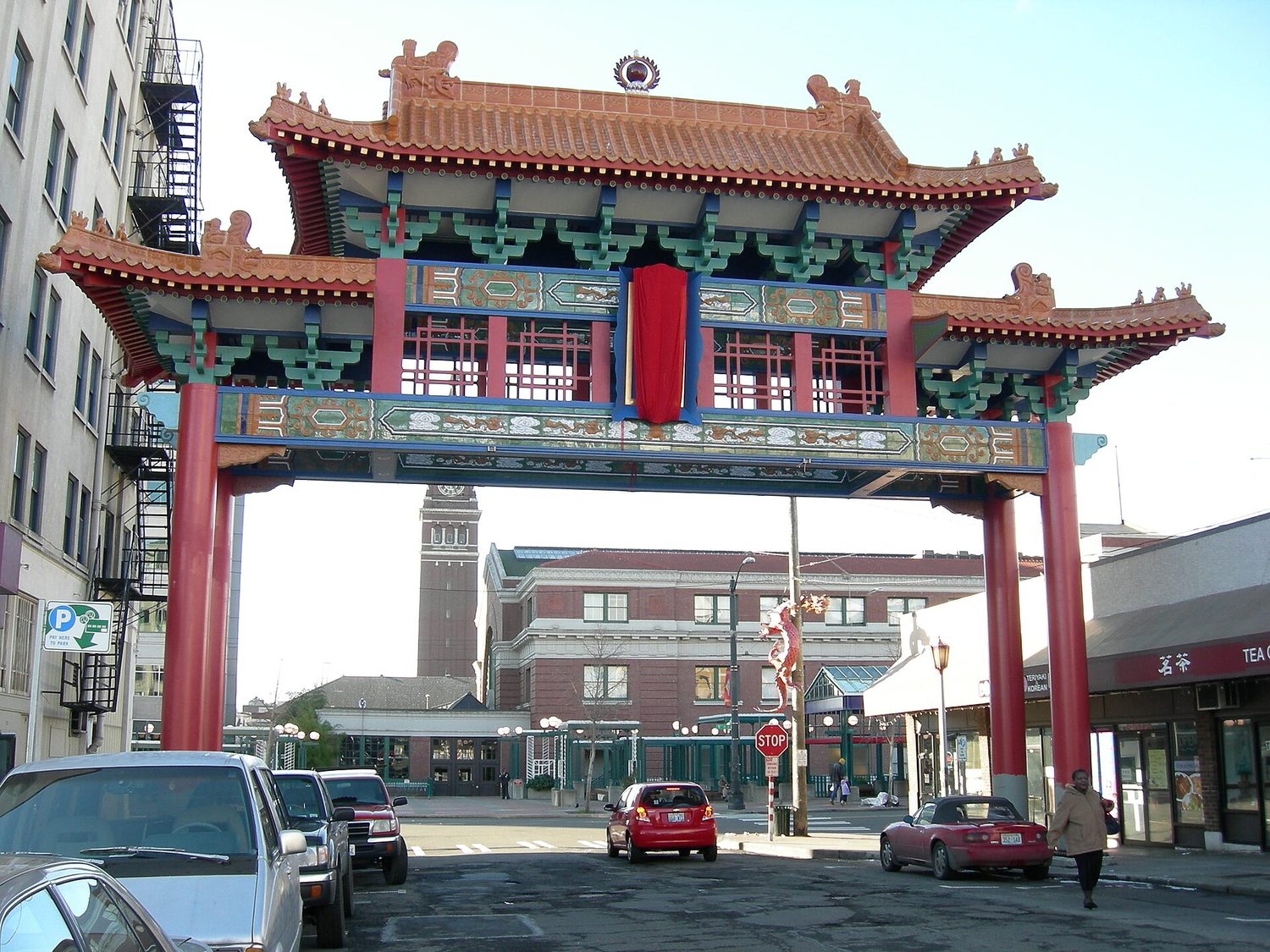
This gate stands over a street in Seattle, in the United States. But the roof, the colours and the writing all come from China, nearly ten thousand kilometres…
English narration · English + 中文 subtitles burned in
3.1
Introduction to Culture

Syllabus
Source: College Board AP Course and Exam Description
Culture 文化 is the shared set of beliefs, values, practices, and objects of a group of people. Geographers split it into two parts:
- Material culture 物质文化 — the things people make and use (clothing, tools, food, buildings, art).
- Nonmaterial culture 非物质文化 — the ideas people hold (language, religion, values, rules).
A cultural trait 文化特征 is a single element of culture (using chopsticks); a group of linked traits is a cultural complex. Cultural relativism 文化相对论 is the practice of judging a culture by its own standards rather than your own.
Vocabulary
Train
| English |
|---|
| Culture/ˈkʌltʃə/ |
| Material culture/məˈtɪərɪəl ˈkʌltʃə/ |
| Nonmaterial culture/ˌnɒnməˈtɪərɪəl ˈkʌltʃə/ |
| cultural trait/ˈkʌltʃərəl treɪt/ |
| Cultural relativism/ˈkʌltʃərəl ˈrelətɪvɪzəm/ |
3.2
Cultural Landscapes
Syllabus
| Enduring Understanding | Learning Objective | Essential Knowledge |
|---|---|---|
PSO-3 | PSO-3.B |
|
PSO-3.C |
|
Source: College Board AP Course and Exam Description
The cultural landscape 文化景观 is the visible imprint of human activity on the land — buildings, farms, roads, signs, and monuments. It records the values of the people who made it.
- Sequent occupance 承继占用 is the idea that each group who lives in a place leaves a layer on the landscape, so the landscape shows its whole history.
- Ethnic enclaves 族裔聚居区, religious buildings, and language on signs are all readable clues to who lives there and what they value.

Vocabulary
Train
| English |
|---|
| cultural landscape/ˈkʌltʃərəl ˈlændskeɪp/ |
| Sequent occupance/ˈsiːkwənt ˈɒkjʊpəns/ |
| Ethnic enclaves/ˈeθnɪk ˈeŋkleɪvz/ |
3.3
Cultural Patterns
Syllabus
| Enduring Understanding | Learning Objective | Essential Knowledge |
|---|---|---|
PSO-3 | PSO-3.D |
|
Source: College Board AP Course and Exam Description
Cultures spread across space in patterns. Key ideas:
- Centripetal forces 向心力 pull a group together (a shared language or religion); centrifugal forces 离心力 push it apart.
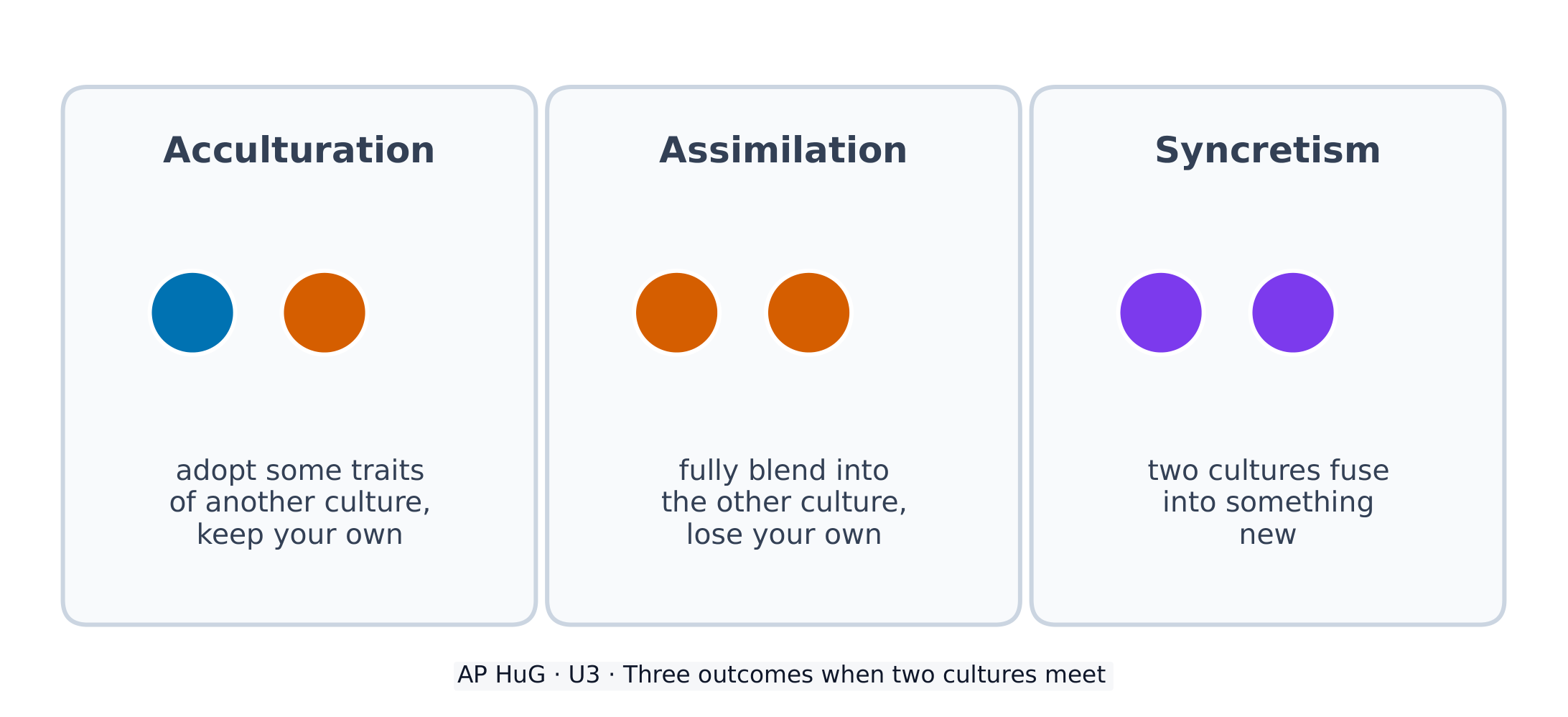
- Acculturation 文化适应 (adopting some traits of another culture while keeping your own), assimilation 同化 (fully blending into another culture), and syncretism 融合 (two cultures blending into something new) describe how cultures change on contact.
- A lingua franca 通用语 is a common language used between groups who speak different first languages.
Worked example (a real AP exam question). "Explain how food preferences can be a culture trait." (2023) A full-mark answer: "Many dishes use ingredients or ways of cooking that are unique to one culture group — for example a national dish — so choosing and eating that food expresses belonging to the group, which is what makes it a culture trait." The command word Explain needs a link, not a definition: connect the food preference to the idea of a shared culture. Simply listing foods earns zero.
Vocabulary
Train
| English |
|---|
| Centripetal forces/senˈtrɪpɪtl ˈfɔːsɪz/ |
| centrifugal forces/ˌsentrɪˈfjuːɡl ˈfɔːsɪz/ |
| Acculturation/əˌkʌltʃəˈreɪʃn/ |
| assimilation/əˌsɪmɪˈleɪʃn/ |
| syncretism/ˈsɪŋkrɪtɪzəm/ |
| lingua franca/ˈlɪŋɡjuːə ˈfræŋkə/ |
3.4
Types of Diffusion
Syllabus
| Enduring Understanding | Learning Objective | Essential Knowledge |
|---|---|---|
IMP-3 | IMP-3.A |
|
Source: College Board AP Course and Exam Description
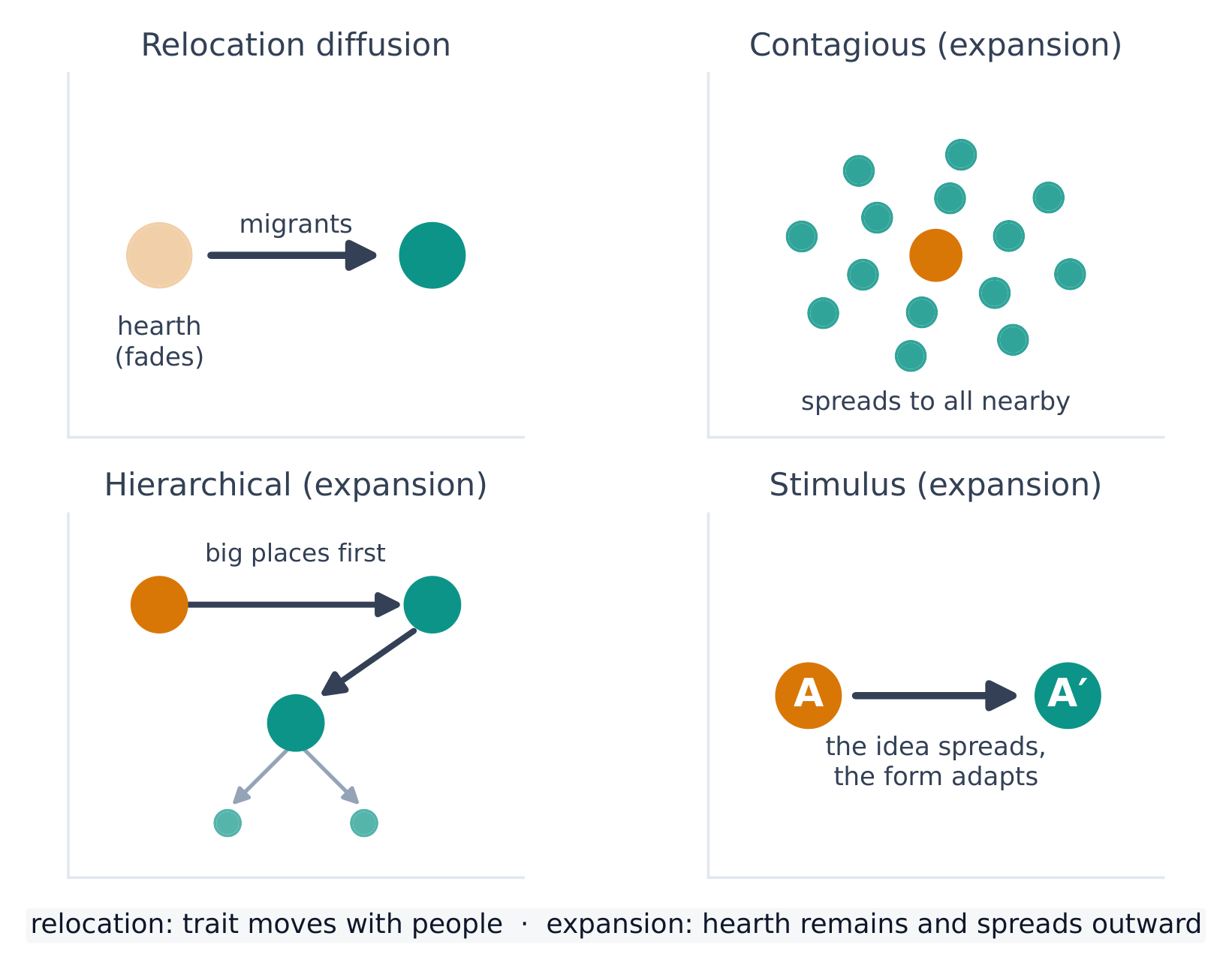
Diffusion 扩散 is the spread of a cultural trait from its hearth 源地 (place of origin) to new areas. There are two big families.
- Relocation diffusion 迁移扩散 — the trait moves as people migrate, so it appears in the new place but may fade at the source.
- Expansion diffusion 扩展扩散 — the trait spreads outward while staying strong at the source. It has three types:
- Contagious 传染扩散 — spreads person-to-person to nearby people (like a viral video).
- Hierarchical 等级扩散 — jumps from big, important places to other big places first (a fashion from major cities).
- Stimulus 刺激扩散 — the underlying idea spreads even if the exact trait changes (a global brand adapting its menu locally).
Explore
Which type of diffusion is it?
Relocation diffusion moves with migrants; contagious spreads to everyone nearby; hierarchical jumps between big places; stimulus spreads the idea while the form changes.
Vocabulary
Train
| English |
|---|
| Diffusion/dɪˈfjuːʒn/ |
| hearth/hɑːθ/ |
| Relocation diffusion/rɪləʊˈkeɪʃn dɪˈfjuːʒn/ |
| Expansion diffusion/ekˈspænʃn dɪˈfjuːʒn/ |
| Contagious/kənˈteɪdʒəs/ |
| Hierarchical/haɪəˈrɑːkɪkl/ |
| Stimulus/ˈstɪmjʊləs/ |
3.5 3.6
Causes of Diffusion
Syllabus
| Enduring Understanding | Learning Objective | Essential Knowledge |
|---|---|---|
SPS-3 | SPS-3.A |
|
| Enduring Understanding | Learning Objective | Essential Knowledge |
|---|---|---|
SPS-3 | SPS-3.A |
|
Source: College Board AP Course and Exam Description
Diffusion has both historical and contemporary causes.
- Historical: colonialism 殖民主义, imperialism 帝国主义, trade, and the spread of religion carried culture across the world for centuries.
- Contemporary: globalisation 全球化, the internet, transport, and time–space compression speed diffusion up enormously — a trend can now spread worldwide in hours.
These forces can spread culture but also threaten local traditions, raising debates about a global culture versus local identity.
Vocabulary
Train
| English |
|---|
| colonialism/ˈkɒləʊnɪəlɪzəm/ |
| imperialism/ɪmˈpɪərɪəlɪzəm/ |
| globalisation/ˌɡləʊbəlaɪˈzeɪʃn/ |
3.7
Diffusion of Religion and Language
Syllabus
| Enduring Understanding | Learning Objective | Essential Knowledge |
|---|---|---|
IMP-3 | IMP-3.B |
|
Source: College Board AP Course and Exam Description
Religions and languages are the two clearest examples of cultural diffusion.
- Universalising religions 普世宗教 (Christianity, Islam, Buddhism) actively seek converts and spread widely by expansion and relocation diffusion. Ethnic religions 民族宗教 (Hinduism, Judaism) are tied to one group and spread mainly by relocation.
- Languages belong to language families 语系; they spread with migration and trade, and can split into dialects 方言 or die out as speakers switch to a dominant language.
Vocabulary
Train
| English |
|---|
| Universalising religions/ˌjuːnɪˈvɜːsəlaɪzɪŋ rɪˈlɪdʒnz/ |
| Ethnic religions/ˈeθnɪk rɪˈlɪdʒnz/ |
| language families/ˈlæŋɡwɪdʒ ˈfæmɪliz/ |
| dialects/ˈdaɪəlekts/ |
3.8
Effects of Diffusion
Syllabus
| Enduring Understanding | Learning Objective | Essential Knowledge |
|---|---|---|
SPS-3 | SPS-3.B |
|
Source: College Board AP Course and Exam Description
When cultures spread and meet, several outcomes follow:
- Cultural convergence 文化趋同 — cultures become more alike as they share traits (global brands, English online).
- Cultural divergence 文化分化 — a culture becomes more distinct, often to resist outside influence.
- Diffusion can enrich a place with new food, music, and ideas, but can also erode local languages and traditions — a central tension of a globalising world.
Vocabulary
Train
| English |
|---|
| Cultural convergence/ˈkʌltʃərəl kənˈvɜːdʒəns/ |
| Cultural divergence/ˈkʌltʃərəl daɪˈvɜːdʒəns/ |
3.8
Exam tips
- Distinguish relocation diffusion (people move) from expansion diffusion (the idea spreads and stays at its source).
- Name the expansion sub-type precisely: contagious, hierarchical, or stimulus.
- Separate universalizing religions (seek converts) from ethnic religions (spread mainly by birth).
- Use the cultural landscape — architecture, toponyms, sequent occupance — as evidence of past groups.
- For effects, keep acculturation, assimilation, and syncretism distinct; they are not the same.
Interactive lessons on this topic
Work through it step by step, with instant-check exercises.