4.1 Contextualizing the Scientific Revolution and the Enlightenment
| Learning Objective | Preview: Unit 4 Key Concepts |
|---|---|
Unit 4.A |
|
AP European History · تاريخ أوروبا (AP) · Topic 4 · الموضوع 4
 7:53
7:53
الوحدة 4: التطورات العلمية والفلسفية والسياسية
جملة واحدة تحتوي على هذه الوحدة بأكملها، وهي تستحق أن تُتعلم بكلمات CED الخاصة بها. انتشار مفاهيم وممارسات الثورة العلمية، و…
English narration · English + 中文 subtitles burned in · سرد باللغة الإنجليزية · ترجمة مدمجة بالإنجليزية + الصينية
| Learning Objective | Preview: Unit 4 Key Concepts |
|---|---|
Unit 4.A |
|
Source: College Board AP Course and Exam Description · المصدر: وصف دورة وامتحان College Board AP
Unit 4 rests on one claim, and it is worth learning in the CED's own words: the spread of Scientific Revolution 科学革命 concepts and practices, and the Enlightenment's application of those concepts and practices to political, social, and ethical issues, fostered debate about the role of the individual in relation to the state and society.
That sentence contains the whole unit. A method developed for studying nature was turned on human institutions, and the result was a set of arguments about what a government owes the people it rules.
Running alongside it: everyday experience was shaped by demographic, environmental, medical, and technological changes - which is why this unit pairs high intellectual history with population statistics and consumer goods.
تستند الوحدة 4 إلى ادعاء واحد، ومن المفيد تعلمه بكلمات وثيقة الإطار التعليمي (CED) نفسها: إن انتشار مفاهيم وممارسات الانقلاب العلمي، وتطبيق التنوير لتلك المفاهيم والممارسات على القضايا السياسية والاجتماعية والأخلاقية، قد عزز النقاش حول دور الفرد في علاقته بالدولة والمجتمع.
تحتوي تلك الجملة على جوهر الوحدة. طريقة طُوِّرت لدراسة الطبيعة استُخدمت على المؤسسات البشرية، وكانت النتيجة مجموعة من الحجج حول ما تدين به الحكومة لشعبها المحكوم.
تسير جنباً إلى جنب معها: كانت التجربة اليومية تتشكل بسبب تغيرات ديموغرافية وبيئية وطبية وتكنولوجية - ولهذا السبب تربط هذه الوحدة تاريخ الفكر الرفيع بإحصائيات السكان والسلع الاستهلاكية.
Thematic Focus (TSI): Technological and Scientific Innovation — Scientific and technological innovations have increased efficiency, improved daily life, and shaped human development and interactions, having both intended and unintended consequences.
Learning Objective Unit 4.B: Explain how understanding of the natural world developed and changed during the Scientific Revolution and Enlightenment.
Illustrative examples:
التركيز الموضوعي (TSI): الابتكار التكنولوجي والعلمي — أدت الابتكارات العلمية والتكنولوجية إلى زيادة الكفاءة، وتحسين الحياة اليومية، وتشكيل التطور البشري والتفاعلات البشرية، ولها عواقب مقصودة وغير مقصودة.
هدف التعلم الوحدة 4.B: اشرح كيف تطور فهم العالم الطبيعي وتغير خلال الثورة العلمية والنهضة.
أمثلة توضيحية:
Source: College Board AP Course and Exam Description · المصدر: وصف دورة وامتحان College Board AP
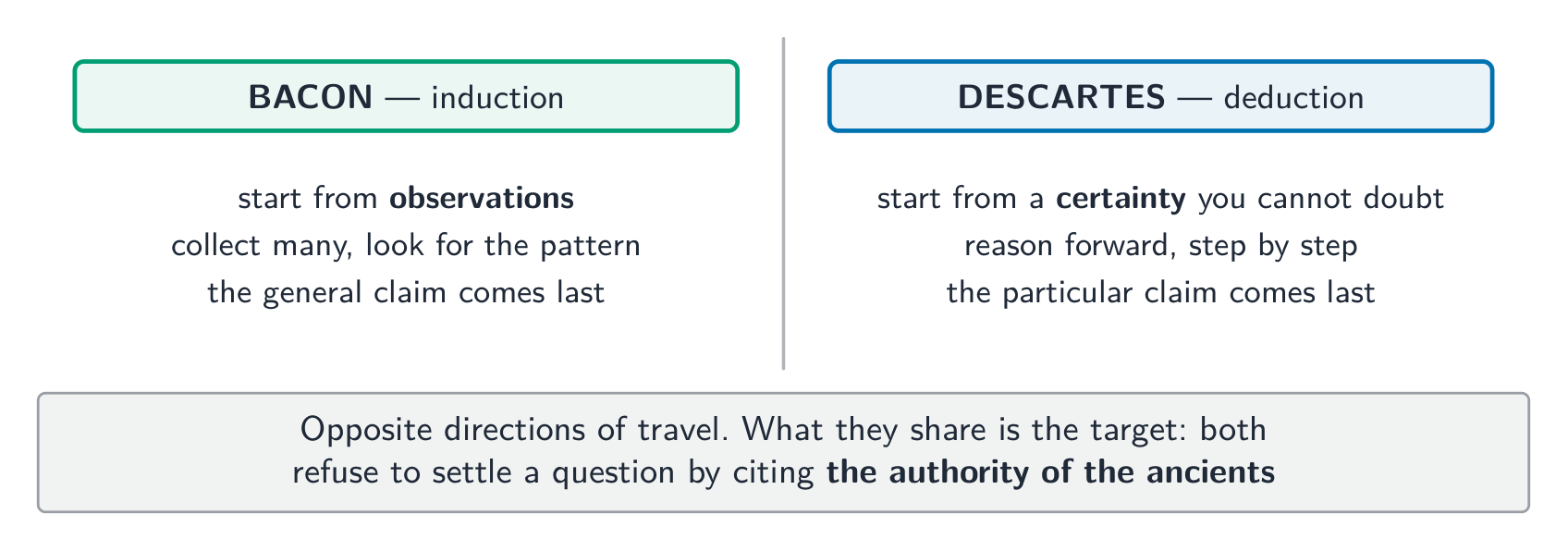
New ideas and methods in astronomy led Copernicus 哥白尼, Galileo 伽利略, and Newton 牛顿 to question the authority of the ancients and develop a heliocentric view of the cosmos.
Alongside astronomy:
The CED then adds a point students find surprising and examiners like: alchemy and astrology continued to appeal to elites and to some natural philosophers, partly because they shared with the new science the assumption that the natural world is governed by discoverable rules. The Scientific Revolution was not a clean break, and saying so demonstrates real understanding of continuity.
أدت الأفكار والطرق الجديدة في علم الفلك بـ كوبرنيكوس وغاليليو ونيوتن إلى الشك في سلطة القدماء وتطوير رؤية مركزية للكون.
إلى جانب علم الفلك:
تضيف CED بعد ذلك نقطة يجدها الطلاب مفاجئة ويحبها الممتحنون: استمر الخيمياء والفلك في جذب النخب وبعض الفلاسفة الطبيعيين، جزئياً لأنهم شاركوا العلم الجديد افتراض أن العالم الطبيعي يحكمه قواعد قابلة للاكتشاف. لم تكن الثورة العلمية انقطاعاً نظيفاً، وقول ذلك يُظهر فهماً حقيقياً للاستمرارية.
Bacon and Descartes run in opposite directions. What they share is the target: neither settles a question by citing the ancients. · باكون وديكارت يسيران في اتجاهين متعاكسين. ما يجمعهما هو الهدف: لا منهما يحسم سؤالاً بالاستشهاد بالقدماء.
Thematic Focus (SCD): Social Organization and Development — Economic, political, and cultural factors have influenced the form and status of family, class, and social groups in European history, which has, in turn, affected both the individual and society.
Thematic Focus (CID): Cultural and Intellectual Developments — The creation and transmission of knowledge, including the relationship between traditional sources of authority and the development of differing world views, had significant political, intellectual, economic, cultural, and social effects on European and world societies.
Learning Objective Unit 4.C: Explain the causes and consequences of Enlightenment thought on European society from 1648 to 1815.
Learning Objective Unit 4.D: Explain the influence of Enlightenment thought on European intellectual development from 1648 to 1815.
Illustrative examples:
التركيز الموضوعي (SCD): التنظيم الاجتماعي والتنمية — أثرت العوامل الاقتصادية والسياسية والثقافية على شكل ومكانة الأسرة والطبقة والمجموعات الاجتماعية في تاريخ أوروبا، مما أثر بدوره على الفرد والمجتمع.
تركيز موضوعي (CID): التطورات الثقافية والفكرية — كان خلق المعرفة ونشرها، بما في ذلك العلاقة بين مصادر السلطة التقليدية وتطوير آلهة نظر مختلفة، له تأثيرات سياسية وفكرية واقتصادية وثقافية واجتماعية كبيرة على المجتمعات الأوروبية والعالمية.
هدف التعلم الوحدة 4.C: اشرح أسباب وعواقب الفكر النهضي على المجتمع الأوروبي من عام 1648 إلى 1815.
هدف التعلم الوحدة 4.D: اشرح تأثير أفكار عصر التنوير على التطور الفكري الأوروبي من 1648 إلى 1815.
أمثلة توضيحية:
Source: College Board AP Course and Exam Description · المصدر: وصف دورة وامتحان College Board AP
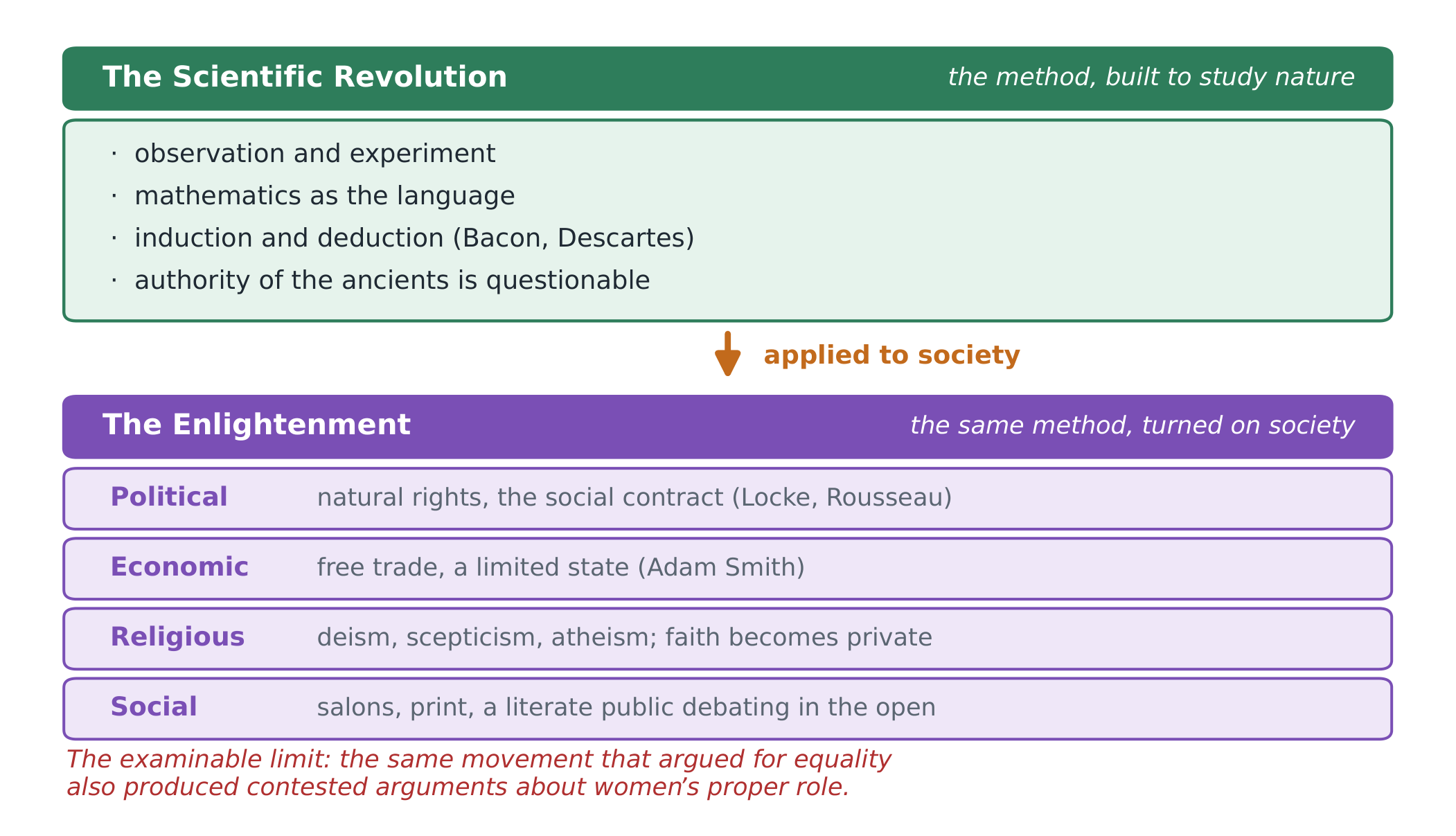
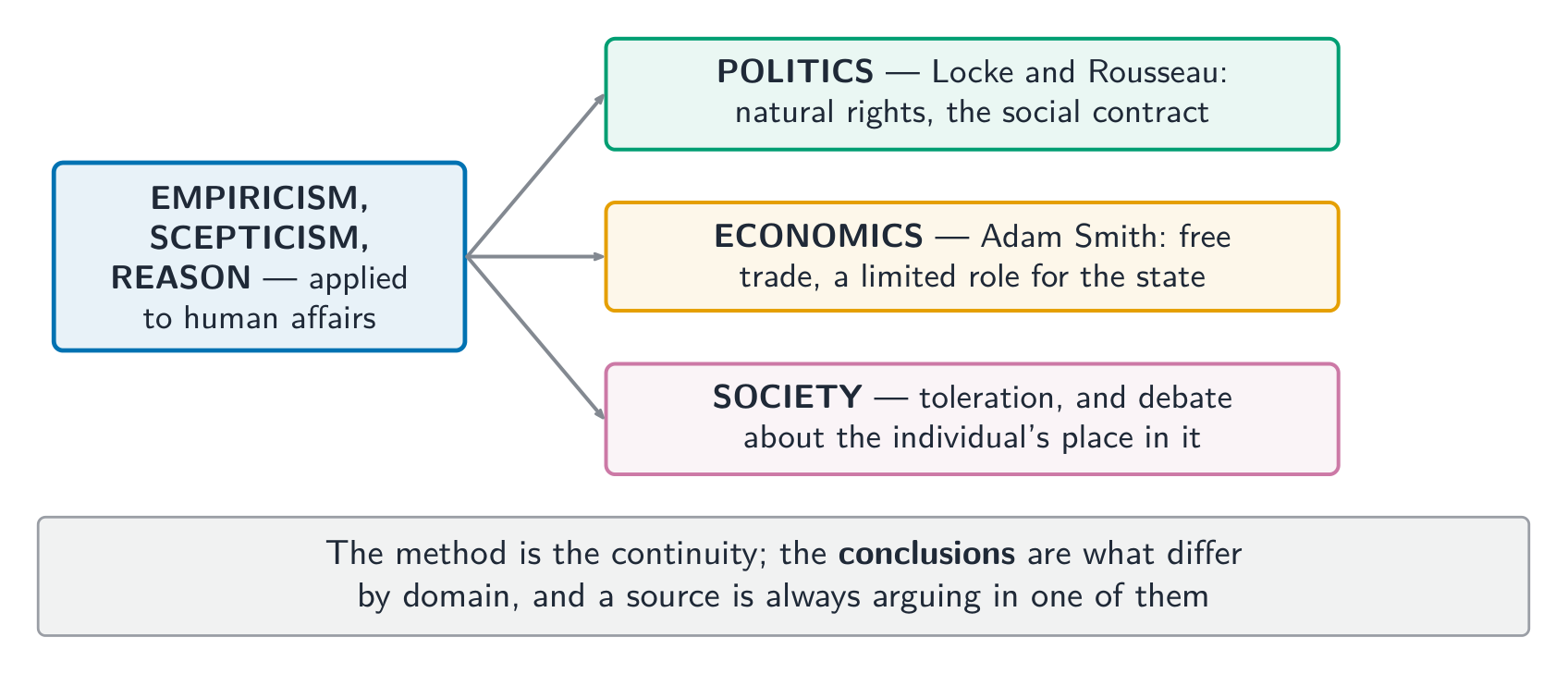
Enlightenment 启蒙运动 thought focused on empiricism, scepticism, human reason, rationalism, and classical sources of knowledge. Its outputs group into four kinds:
One limit is examinable and should never be omitted: despite the principles of equality the Enlightenment espoused, intellectuals such as Rousseau offered controversial arguments about the proper role of women in society. An answer that presents the Enlightenment as uniformly egalitarian is not the answer the CED wants.
An essay scores for specific evidence, so learn one work per thinker rather than a list of surnames:
| Thinker | Work | The argument, in one line |
|---|---|---|
| Montesquieu 孟德斯鸠 | The Spirit of the Laws | power must be divided between branches of government so that each checks the others |
| Cesare Beccaria 贝卡里亚 | On Crimes and Punishments | punishment should deter rather than avenge; torture and the death penalty do neither well |
| Anne Robert Jacques Turgot 杜尔哥 | as Louis XVI's controller-general | free the grain trade and abolish the guilds — reform from inside the state, and it failed against entrenched interests |
| Adam Smith | The Wealth of Nations | the division of labour and free exchange produce more than mercantilist regulation |
Where the ideas were exchanged matters as much as who wrote them, because it explains how a small readership became a public: coffeehouses, academies, lending libraries and salons put print and conversation in front of people who owned few books. The CED groups these as the institutions of Enlightenment sociability.
⚠️ Not everyone answered with reason. The same century saw a revival of German Pietism 虔敬主义 and other movements of emotional, personal faith — a reaction against rationalism, not a survival of the old order. A question about the Enlightenment's limits usually wants that, together with the controversial views on women that the section above records.
ركزت أفكار الإنارة على الэмبيرية، الشكوكية، العقل البشري، العقلمية، ومصادر المعرفة الكلاسيكية. تنقسم نتاجاتها إلى أربعة أنواع:
واحد من الحدود القابلة للاختبار والذي يجب ألا يُستبعد أبداً: على الرغم من مبادئ المساواة التي دعا إليها التنوير، قدم مفكرون مثل روسو حججًا مثيرة للجدل حول الدور المناسب للمرأة في المجتمع. الإجابة التي تقدم التنوير كمساوي تمامًا ليست الإجابة التي تريدها CED.
تُدرَج المقالات درجات بناءً على أدلة محددة، لذا ادرس عملًا واحدًا لكل مفكر بدلاً من قائمة بألقاب العائلات:
| المفكر | العمل | الحجة في سطر واحد |
|---|---|---|
| مونتسكيو | روح القوانين | يجب تقسيم السلطة بين فروع الحكومة بحيث يتحقق كل فرع من صحة الآخرين |
| تشيزاري بيكاريا | حول الجرائم والعقوبات | العقوبة يجب أن تردع وليس تنتقم؛ التعذيب وعقوبة الموت لا يفعلان أيًا منهما جيدًا |
| آن روبرت جاك تورغو | كوزير عام للملك لويس السادس عشر | حرر تجار الحبوب وألغى النقابات — إصلاح من داخل الدولة، وفشل أمام المصالح المتجذرة |
| آدم سميث | ثروة الأمم | تقسيم العمل والتبادل الحر ينتجان أكثر مما تنتجه التنظيمات الميركانتيلية |
أين تم تبادل الأفكار مهم بنفس قدر من كتبها، لأنه يوضح كيف أصبح قارئ صغير جمهورًا: مقاهي، أكاديميات، مكتبات للإعارة، وصالونات وضعت المطبوعات والمحادثات أمام أشخاص امتلكوا القليل من الكتب. تصنف CED هذه على أنها مؤسسات اجتماعية التنوير.
⚠️ لم يرد الجميع بعقلانية. شهد نفس القرن نهضة البييتية الألمانية وحركات أخرى للإيمان العاطفي الشخصي — رد فعل ضد العقلانية، وليس بقاء للنظام القديم. السؤال عن حدود التنوير عادة ما يطلب ذلك، جنبًا إلى جنب مع الآراء المثيرة للجدل حول النساء المسجلة في القسم السابق.
| English | العربية |
|---|---|
| Scientific Revolution/saɪənˈtɪfɪk ˌrevəˈluːʃn/ | الثورة العلمية |
| Copernicus/ˈkəʊpənɪkəs/ | كوبيرنيكوس |
| Galileo/ˌɡælɪˈleɪəʊ/ | جاليليو |
| Newton/ˈnjuːtn/ | نيوتن |
| William Harvey/ˈwɪlɪəm ˈhɑːvi/ | ويليام هارفي |
| integrated system/ˈɪntɪɡreɪtɪd ˈsɪstəm/ | نظام متكامل |
| Francis Bacon/ˈfrænsɪs ˈbeɪkən/ | فرانسيس بيكون |
| inductive and deductive reasoning/ɪnˈdʌktɪv ænd dɪˈdʌktɪv ˈriːzənɪŋ/ | الاستدلال الاستقرائي والاستنباطي |
| Enlightenment/enˈlaɪtənmənt/ | النهضة الفكرية |
| Locke/lɒk/ | لوك |
| Rousseau/ˈraʊsəʊ/ | روسو |
| natural rights/ˈnætʃərəl raɪts/ | حقوق طبيعية |
| social contract/ˈsəʊʃl ˈkɒntrækt/ | العقد الاجتماعي |
| Adam Smith's/ˈædəm smɪθz/ | آدم سميث |
| free trade/friː treɪd/ | التجارة الحرة |
| Voltaire/vəʊlˈteə/ | فولتير |
| Diderot/ˈdaɪdrɒt/ | ديدرو |
| deism, scepticism, and atheism/ˈdeɪzəm ˈskeptɪsɪzəm ænd ˈeɪθɪɪzəm/ | الإلهاية، الشك، والإلحاد |
| salons/ˈsælɒnz/ | الصالونات الأدبية |
| Montesquieu/ˈmɒntɪskwɪuː/ | مونتسكيو |
| Cesare Beccaria/ˈseseə beˈkeərɪə/ | تشيزاري بيكاريا |
| Anne Robert Jacques Turgot/æn ˈrɒbət ʒæk ˈtɜːɡət/ | آن روبرت جاك تورجو |
| revival of German Pietism/rɪˈvaɪvl ɒv ˈdʒɜːmən ˈpaɪətɪzəm/ | نهضة البietatabase الألمانية |
| European marriage pattern/ˌjʊərəˈpɪən ˈmærɪdʒ ˈpætn/ | النمط الأوروبي للزواج |
| inoculation/ɪˌnɒkjʊˈleɪʃn/ | التطعيم |
| censorship/ˈsensəʃɪp/ | رقابة |
| literate public/ˈlɪtərət ˈpʌblɪk/ | الجمهور القارئ |
| consumer revolution/kənˈsuːmə ˌrevəˈluːʃn/ | ثورة المستهلكين |
| privacy/ˈprɪvəsi/ | الخصوصية |
| Thematic Focus | Learning Objective | Historical Developments |
|---|---|---|
SCD | Unit 4.E |
|
Illustrative examples:
Source: College Board AP Course and Exam Description · المصدر: وصف دورة وامتحان College Board AP
The demographic story has a clear before and after:
Inoculation and disease control belong to this story too: the spread of inoculation 接种 against smallpox — and later Jenner's vaccination — together with better sanitation and the retreat of plague, is part of why mortality fell. It is the clearest case in the unit of a scientific method producing a demographic effect.
القصة الديموغرافية لها قبل وبعيد واضح:
التلقيح ومكافحة الأمراض تنتمي أيضًا إلى هذه القصة: انتشار التلقيح ضد الجدري — ولاحقًا تطعيم جنر — جنبًا إلى تحسين الصرف الصحي وانسحاب الطاعون، هو جزء من سبب انخفاض الوفيات. إنه أوضح مثال في الوحدة على منهجية علمية تنتج تأثيرًا ديموغرافيًا.
| Thematic Focus | Learning Objective | Historical Developments |
|---|---|---|
CID | Unit 4.F |
|
Illustrative examples:
Source: College Board AP Course and Exam Description · المصدر: وصف دورة وامتحان College Board AP
Thematic Focus (SOP): States and Other Institutions of Power — European states and nations developed governmental and civil institutions from 1450 to the present to organize society and consolidate political power, with a variety of social, cultural, and economic effects.
Learning Objective Unit 4.G: Explain how different forms of political power were influenced by Enlightenment thought from 1648 to 1815. THEMATIC FOCUS National and European Identity NEI Definitions and perceptions of regional, cultural, national, and European identity have developed and been challenged over time, with varied and often profound effects on the political, social, and cultural order in Europe. LEARNING OBJECTIVE
Learning Objective Unit 4.H: Explain how and why political and religious developments challenged or reinforced the idea of a unified Europe from 1648 to 1815.
Illustrative examples:
التركيز الموضوعي (SOP): الدول والمؤسسات الأخرى للسلطة — طورت الدول الأوروبية والأمم مؤسسات حكومية ومدنية من عام 1450 إلى الوقت الحاضر لتنظيم المجتمع وتجميع السلطة السياسية، مع تأثيرات اجتماعية وثقافية واقتصادية متنوعة.
هدف التعلم الوحدة 4.G: اشرح كيف أثرت أشكال مختلفة من السلطة السياسية على الفكر التنويري من 1648 إلى 1815. التركيز الموضوعي الهوية الوطنية والأوروبية تطورت تعريفات وإدراكات الهوية الإقليمية والثقافية والوطنية والأوروبية عبر الزمن، وتم تحديها، مما أدى إلى آثار متنوعة وغالبًا ما تكون عميقة على النظام السياسي والاجتماعي والثقافي في أوروبا. هدف التعلم
هدف التعلم الوحدة 4.H: اشرح كيف ولماذا和挑战ت أو عززت التطورات السياسية والدينية فكرة أوروبا الموحدة من 1648 إلى 1815.
أمثلة توضيحية:
Source: College Board AP Course and Exam Description · المصدر: وصف دورة وامتحان College Board AP
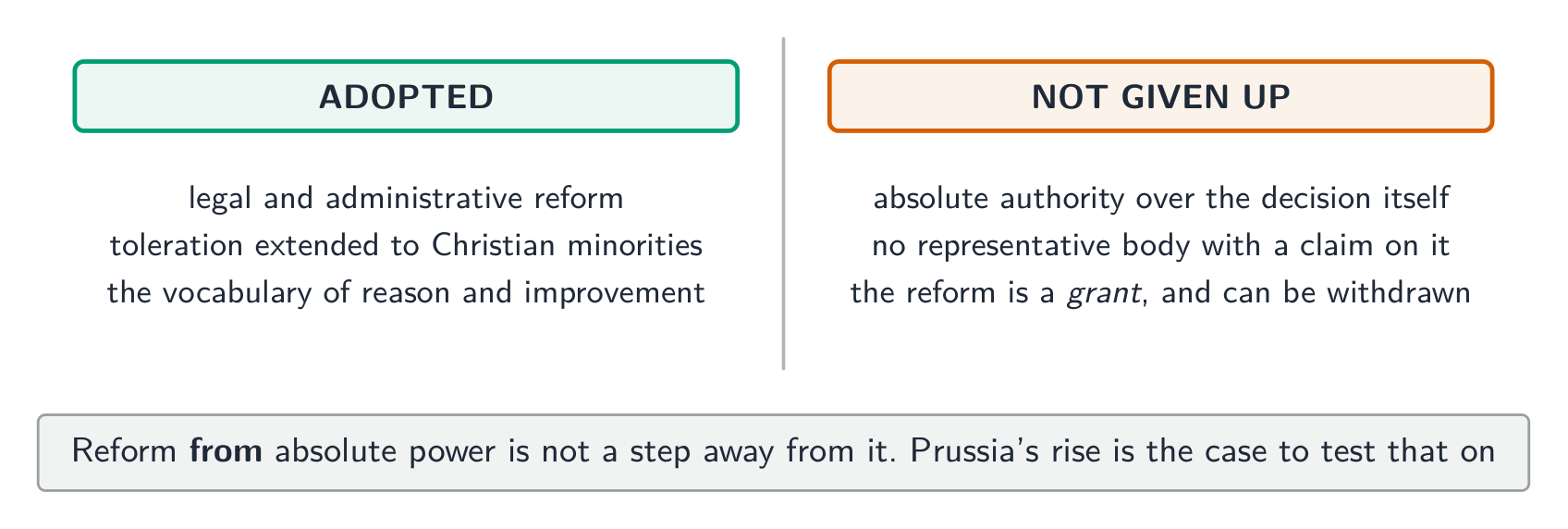
In the eighteenth century a number of states in eastern and central Europe experimented with enlightened absolutism 开明专制 - rulers adopting Enlightenment-inspired reforms in law, education, and administration while retaining absolute authority. The tension in that phrase is the examinable point.
By 1800 most governments in western and central Europe had extended toleration to Christian minorities, and in some states civil rights as well.
And as a result of the Holy Roman Empire's limitation of sovereignty at Westphalia, Prussia rose to power 普鲁士 while the Habsburgs turned toward their eastern lands - a structural consequence of Unit 2's settlement arriving a century later.
في القرن الثامن عشر، جربت عدد من الدول في شرق أوروبا ووسط أوروبا الاستبداد المستنير - حكام يتبنون إصلاحات مستوحاة من التنوير في القانون والتعليم والإدارة مع الحفاظ على السلطة المطلقة. التوتر في تلك العبارة هو نقطة الاختبار.
بحلول عام 1800، كانت معظم الحكومات في غرب أوروبا ووسط أوروبا قد وسعت التسامح للأقليات المسيحية، وفي بعض الدول الحقوق المدنية أيضًا.
ونتيجة لتقييد إمبراطورية الرومان المقدسة للسيادة في وستفاليا، ارتفعت البروسية إلى قوة بينما توجه هابسبورغ نحو أراضيهم الشرقية - نتيجة هيكلية ل settling الوحدة 2 وصلت بعد قرن.
The CED's clause is 'while retaining absolute authority', and the marks are in that clause. · عبارة CED هي 'مع الاحتفاظ بالسلطة المطلقة'، والدرجات تكمن في تلك العبارة.
| English | العربية |
|---|---|
| enlightened absolutism/enˈlaɪtnd ˈæbsəluːtɪzəm/ | الاستبداد المستنير |
| Prussia rose to power/ˈprʌʃə rəʊz tə ˈpaʊə/ | ارتفعت براند في السلطة |
| René Descartes/rɪˈneɪ dɪˈskɑːts/ | رينيه ديكارت |
| Learning Objective | Review: Unit 4 Key Concepts |
|---|---|
Unit 4.I |
|
Source: College Board AP Course and Exam Description · المصدر: وصف دورة وامتحان College Board AP
The unit's reasoning skill is causation, applied to how these movements challenged the existing European worldview.
Worked example (a real AP exam question). AP European History short-answer questions here ask, for example, to "Explain one way in which Enlightenment thought challenged existing political authority in the eighteenth century." A full-mark answer identifies the challenge and traces it: "Locke's theory of natural rights and the social contract held that government exists to protect the rights of individuals and derives its authority from their consent. This directly undermined the claim that a monarch's authority came from God, because it made obedience conditional on the ruler's performance rather than unconditional." Notice the mechanism: the answer shows how one argument displaces another, rather than listing thinkers.
مهارة التفكير في الوحدة هي السببية، مطبقة على كيف تحدى هذه الحركات العالمية الأوروبية القائمة.
مثال محلول (سؤال حقيقي من امتحان AP). أسئلة الإجابة القصيرة في تاريخ أوروبا في امتحانات AP تطلب هنا، على سبيل المثال، "اشرح طريقة واحدة التي تحدى بها الفكر التنويري السلطة السياسية القائمة في القرن الثامن عشر." إجابة الدرجة الكاملة تحدد التحدي وتتبعه: "نصت نظرية لوك في الحقوق الطبيعية والعقد الاجتماعي على أن الحكومة موجودة لحماية حقوق الأفراد وتشتق سلطتها من موافقتهم. هذا أضعف بشكل مباشر ادعاء أن سلطة الملك تأتي من الله، لأنه جعل الطاعة مشروطة بأداء الحاكم بدلاً من أن تكون غير مشروطة." لاحظ الآلية: الإجابة تُظهر كيف يحل حجة محل أخرى، بدلاً من مجرد سرد المفكرين.
Work through it step by step, with instant-check exercises. · ا-working عليه خطوة بخطوة، مع تمارين تحقق فوري.
Past Papers · أوراق الامتحانات السابقة
Loading subjects… · جار تحميل المواضيع…