English
3.1 Contextualizing State Building
Learning Objective Unit 3.A: Explain the context in which different forms of political power developed from 1648 to 1815.
- KC-1.5 The struggle for sovereignty within and among states resulted in varying degrees of political centralization.
- KC-1.5.I The new concept of the sovereign state and secular systems of law played a central role in the creation of new political institutions.
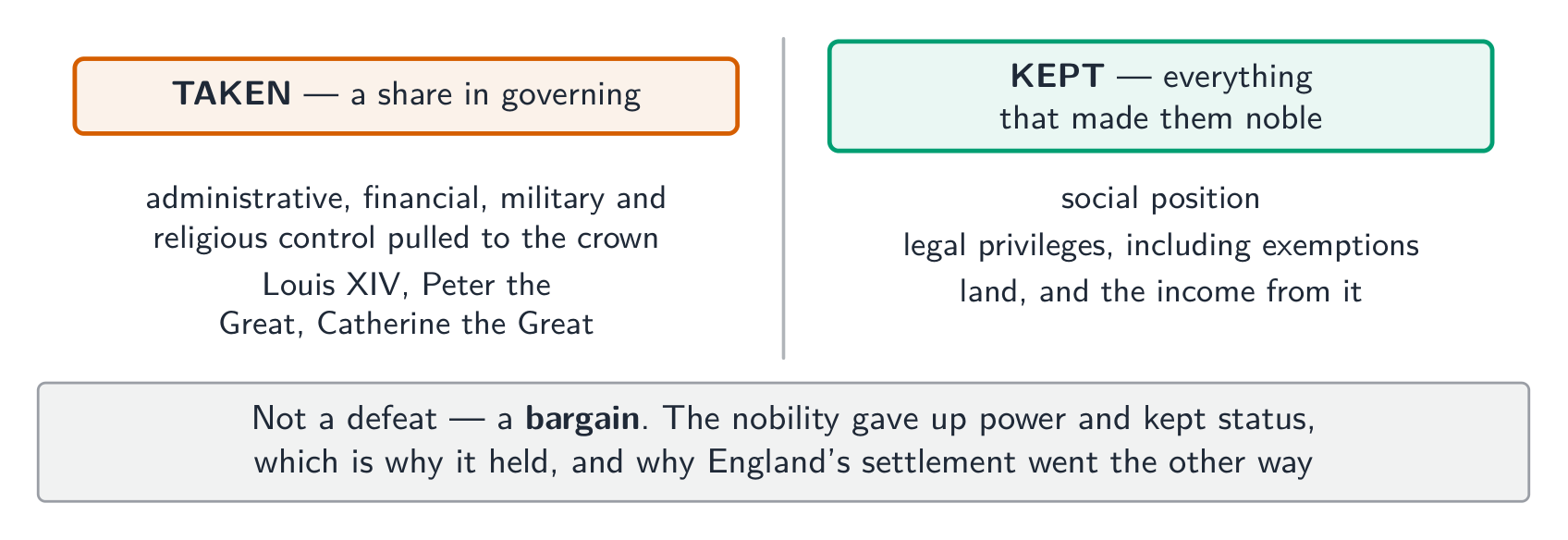
- KC-1.5.III The competition for power between monarchs and corporate and minority language groups produced different distributions of governmental authority in European states.
- KC-1.5.III.B Monarchies seeking enhanced power faced challenges from nobles who wished to retain traditional forms of shared governance and regional autonomy.
- KC-1.5.III.C Within states, minority local and regional identities based on language and culture led to resistance against the dominant national group.
- KC-2.1 Different models of political sovereignty affected the relationship among states and between states and individuals.
- KC-2.1.I In much of Europe, absolute monarchy was established over the course of the 17th and 18th centuries.
- KC-2.1.II Challenges to absolutism resulted in alternative political systems.
Illustrative examples:
- Competition between monarchs and nobles:
- Louis XIII and Cardinal Richelieu §Bullet
- The Fronde in France
- The Catalan Revolts in Spain
- Competition between minority and dominant national groups:
- Celtic regions of Scotland, Ireland, and France
- Dutch resistance in the Spanish Netherlands
- Czech identity in the Holy Roman Empire/ Jan Hus/Defenestration
العربية
3.1 سياق بناء الدولة
هدف التعلم الوحدة 3.أ: اشرح السياق الذي تطورت فيه أشكال مختلفة من السلطة السياسية من 1648 إلى 1815.
- KC-1.5 أدت الصراعات من أجل السيادة داخل وبين الدول إلى درجات متفاوتة من المركزية السياسية.
- KC-1.5.I لعب المفهوم الجديد للدولة السيادية والأنظمة القانونية العلمانية دورًا محوريًا في إنشاء مؤسسات سياسية جديدة.
- KC-1.5.III أنتجت المنافسة على السلطة بين الملوك والمجموعات Corporate والأقلية اللغوية توزيعات مختلفة للسلطة الحكومية في دول أوروبا.
- KC-1.5.III.B واجهت الملوكية الساعية لتعزيز قوتها تحديات من النبلاء الذين أرادوا الاحتفاظ بالأشكال التقليدية للحكم المشترك والاستقلالية الإقليمية.
- KC-1.5.III.C داخل الدول، أدت الهويات المحلية والإقليمية الأقلية القائمة على اللغة والثقافة إلى مقاومة المجموعة الوطنية المهيمنة.
- KC-2.1 أثرت نماذج مختلفة من السيادة السياسية على العلاقات بين الدول وبين الدول والأفراد.
- KC-2.1.I في أجزاء كثيرة من أوروبا، تأسس الحكم المطلق خلال 17th و 18th القرون.
- KC-2.1.II أدت التحديات إلى الاستبداد إلى ظهور أنظمة سياسية بديلة.
أمثلة توضيحية:
- المنافسة بين الملوك والنخبة:
- لويس الثالث عشر والكاردينال ريشليو §Bullet
- الفوند في فرنسا
- تمردات الكتالونيا في إسبانيا
- المنافسة بين المجموعات القومية الأقلية والمجموعات المهيمنة:
- المناطق الكلتية في اسكتلندا وإيرلندا وفرنسا
- مقاومة الهولنديين في الأراضي المنخفضة الإسبانية
- الهوية التشيكية في الإمبراطورية الرومانية المقدسة / جان هوس / طرد النوافذ