Skip to content · ⁨الانتقال إلى المحتوى⁩

Age of Reformation · ⁨عصر الإصلاح الديني⁩

AP European History · ⁨تاريخ أوروبا (AP)⁩ · Topic 2 · ⁨الموضوع 2⁩

Video lesson for this topic · ⁨درس فيديو لهذا الموضوع⁩ Open the video page · ⁨افتح صفحة الفيديو⁩
8:01

الوحدة 2: عصر الإصلاح

هناك طريقة واحدة يفقد بها الطلاب درجات بشكل موثوق في هذه الوحدة، وهي عادة دراسة بدلاً من فجوة معرفية. إنهم يبقون الدين والسياسة في… منفصلة

English narration · English + 中文 subtitles burned in · ⁨سرد باللغة الإنجليزية · ترجمة مدمجة بالإنجليزية + الصينية⁩

2.1

Contextualizing 16th- and 17th-Century Challenges · ⁨وضع تحديات القرنين 16 و17 في سياقها التاريخي⁩

Syllabus · ⁨المنهج⁩
English

2.1 Contextualizing 16th- and 17th-Century Challenges and Developments

Learning Objective Unit 2.A: Explain the context in which the religious, political, and cultural developments of the 16th and 17th centuries took place.

  • KC-1.2 Religious pluralism challenged the concept of a unified Europe.
    • KC-1.2.I The Protestant and Catholic reformations fundamentally changed theology, religious institutions, culture, and attitudes toward wealth and prosperity.
    • KC-1.2.II Religious reform both increased state control of religious institutions and provided justifications for challenging state authority.
    • KC-1.2.III Conflicts among religious groups overlapped with political and economic competition within and among states.
  • KC-1.4 European society and the experiences of everyday life were increasingly shaped by commercial and agricultural capitalism, notwithstanding the continued existence of medieval social and economic structures.
    • KC-1.4.III Population shifts and growing commerce caused the expansion of cities, which often placed stress on their traditional political and social structures.
    • KC-1.4.IV The family remained the primary social and economic institution of early modern Europe and took several forms, including the nuclear family.
    • KC-1.4.V Popular culture, leisure activities, and rituals reflecting the continued popularity of folk ideas reinforced and sometimes challenged communal ties and norms.
  • KC-1.5 The struggle for sovereignty within and among states resulted in varying degrees of political centralization.
    • KC-1.5.I The new concept of the sovereign state and secular systems of law played a central role in the creation of new political institutions.
العربية

2.1 وضع تحديات وتطورات القرنين 16 و17 في السياق التاريخي

هدف التعلم الوحدة 2.أ: شرح السياق الذي حدثت فيه التطورات الدينية والسياسية والثقافية خلال القرنين 16 و17.

  • KC-1.2 طرّح التعددية الدينية مفهوم أوروبا الموحدة.
    • KC-1.2.I غيّرت الإصلاحات البروتستانتية والكاثوليكية بشكل جذري اللاهوت والمؤسسات الدينية والثقافة ومواقف الثروة والازدهار.
    • KC-1.2.II زادت الإصلاحات الدينية من سيطرة الدولة على المؤسسات الدينية وقدمت مبررات لتحدي سلطة الدولة.
    • KC-1.2.III تداخلت الصراعات بين المجموعات الدينية مع المنافسة السياسية والاقتصادية داخل الدول وبينها.
  • KC-1.4 شكل الرأسمالية التجارية والزراعية بشكل متزايد المجتمع الأوروبي وتجارب الحياة اليومية، على الرغم من استمرار الهياكل الاجتماعية والاقتصادية الوسطى.
    • KC-1.4.III تسببت التحركات السكانية وتزايد التجارة في توسع المدن، والتي وضفت غالبًا ضغطًا على هياكلها السياسية والاجتماعية التقليدية.
    • KC-1.4.IV ظلّت الأسرة المؤسسة الاجتماعية والاقتصادية الرئيسية لأوروبا الحديثة المبكرة واتخذت أشكالًا متعددة، بما في ذلك الأسرة النووية.
    • KC-1.4.V عززت ثقافة الشعب وأنشطة الترفيه والطقوس التي تعكس الاستمرار في شعبية الأفكار الشعبية الروابط والمعايير المجتمعية، وفي بعض الأحيان تحدتها.
  • KC-1.5 أدت الصراعات من أجل السيادة داخل وبين الدول إلى درجات متفاوتة من المركزية السياسية.
    • KC-1.5.I لعب المفهوم الجديد للدولة السيادية والأنظمة القانونية العلمانية دورًا محوريًا في إنشاء مؤسسات سياسية جديدة.
Source: College Board AP Course and Exam Description · ⁨المصدر: وصف دورة وامتحان College Board AP⁩

English

Unit 2 covers the Reformation and the wars of religion, and the CED frames the whole period around one claim: religious pluralism challenged the concept of a unified Europe.

Two other threads run alongside it and are examined together with religion - the reshaping of daily life by commercial and agricultural capitalism, and the struggle for sovereignty producing varying degrees of political centralisation. The unit's characteristic question asks how religious change and political change acted on each other, so keeping them in separate mental boxes is the main way students lose marks here.

العربية

تغطي الوحدة 2 الإصلاح الديني وحروب الدين، ويُحدد CED الإطار العام لكل تلك الفترة حول ادعاء واحد: **التعددية الدينية挑战 concept of a unified Europe.

يتم تشغيل خيطين آخرين بالتوازي مع هذا الخيط ويتم فحصهما مع الدين - إعادة تشكيل الحياة اليومية من خلال الرأسمالية التجارية والزراعية، والنضال من أجل السيادة الذي أنتج درجات متفاوتة من المركزية السياسية. السؤال المميز للوحدة يسأل كيف أثرت التغيرات الدينية والسياسية على بعضها البعض، لذا فإن الاحتفاظ بهما في صناديق عقلية منفصلة هو الطريقة الرئيسية التي يفقد بها الطلاب علامات هنا.

2.2

Luther and the Protestant Reformation · ⁨لوثر والإصلاح البروتستانتي⁩

Syllabus · ⁨المنهج⁩
English

2.2 Luther and the Protestant Reformation

Thematic Focus (CID): Cultural and Intellectual Developments — The creation and transmission of knowledge, including the relationship between traditional sources of authority and the development of differing world views, had significant political, intellectual, economic, cultural, and social effects on European and world societies.

Learning Objective Unit 2.B: Explain how and why religious belief and practices changed from 1450 to 1648.

  • KC-1.2.I.B Reformers Martin Luther and John Calvin criticized Catholic abuses and established new interpretations of Christian doctrine and practice. Responses to Luther and Calvin included religious radicals, including the Anabaptists, and other groups, such as German peasants.
  • KC-1.2.I.C Some Protestant groups sanctioned the notion that wealth accumulation was a sign of God’s favor and a reward for hard work.

Illustrative examples:

  • New Protestant interpretations of Christian doctrine and practice:
    • Priesthood of all believers
    • Primacy of scripture §Bullet Predestination §Bullet Salvation by faith alone
  • Protestants who viewed wealth as signs of God’s favor: §Bullet Calvinists
العربية

2.2 لوثر والإصلاح البروتستانتي

تركيز موضوعي (CID): التطورات الثقافية والفكرية — كان خلق المعرفة ونشرها، بما في ذلك العلاقة بين مصادر السلطة التقليدية وتطوير آلهة نظر مختلفة، له تأثيرات سياسية وفكرية واقتصادية وثقافية واجتماعية كبيرة على المجتمعات الأوروبية والعالمية.

هدف التعلم الوحدة 2.B: اشرح كيف ولماذا تغيرت المعتقدات والممارسات الدينية من عام 1450 إلى 1648.

  • KC-1.2.I.B انتقد المصلحون مارتن لوثر وجون كالفين الإساءات الكاثوليكية وأقاموا تفسيرات جديدة للمذهب والممارسة المسيحية. وشملت ردود الفعل على لوثر وكالفين المتطرفون الدينيون، بما في ذلك المعمدانيين، ومجموعات أخرى مثل الفلاحين الألمان.
  • KC-1.2.I.C صوّغت بعض المجموعات البروتستانتية فكرة أن تراكم الثروة علامة على نعمة الله ومكافأة للعمل الجاد.

أمثلة توضيحية:

  • تفسيرات بروتستانتية جديدة للمذهب والممارسة المسيحية:
    • كهنة جميع المؤمنين
    • سيادة الكتاب المقدس §Bullet القدرية المسبقة §Bullet الخلاص بالإيمان وحده
  • بروتستانت نظروا إلى الثروة على أنها علامات لنعمة الله: §Bullet الكالفينيون

Source: College Board AP Course and Exam Description · ⁨المصدر: وصف دورة وامتحان College Board AP⁩

English

Reformers Martin Luther 马丁·路德 and John Calvin 加尔文 criticised Catholic abuses and established new interpretations of Christian doctrine and practice. The CED's emphasis is on interpretation: what changed was not only conduct but the account of how salvation works and where religious authority lies.

A second, more social claim is examinable and often forgotten: some Protestant groups sanctioned the notion that the accumulation of wealth was a sign of God's favour and a reward for hard work. That is the link between the Reformation and the commercial developments of Unit 1, and it is worth having ready for economic questions.

العربية

انتقد المصلحون مارتن لوثر وجون كالفن إساءات الكاثوليكية وأسسوا تفسيرات جديدة للعقيدة والممارسة المسيحية. يركز CED على التفسير: ما تغير لم يكن السلوك فحسب بل أيضًا الرواية حول كيفية عمل الخلاص وأين تقع السلطة الدينية.

ادعاء ثانٍ أكثر اجتماعية يمكن اختباره وغالبًا ما يُنسى: بعض المجموعات البروتستانتية أيدت فكرة أن تراكم الثروة كان علامة على بركة الله ومكافأة للعمل الجاد. هذا هو الرابط بين الإصلاح والتطورات التجارية في الوحدة 1، ومن الجيد أن يكون جاهزًا للأسئلة الاقتصادية.

2.3

Protestant Reform Continues · ⁨الاستمرار في الإصلاح البروتستانتي⁩

Syllabus · ⁨المنهج⁩
English

2.3 Protestant Reform Continues

Thematic Focus (CID): Cultural and Intellectual Developments — The creation and transmission of knowledge, including the relationship between traditional sources of authority and the development of differing world views, had significant political, intellectual, economic, cultural, and social effects on European and world societies.

Learning Objective Unit 2.B: Explain how and why religious belief and practices changed from 1450 to 1648.

  • KC-1.1.II.B Protestant reformers used the printing press to disseminate their ideas, which spurred religious reform and helped it to become widely established.
  • KC-1.2.II.B Some Protestants, including Calvin and the Anabaptists, refused to recognize the subordination of the church to the secular state.
  • KC-1.2.II.C Religious conflicts became a basis for challenging the monarchs’ control of religious institutions.

Illustrative examples:

  • Reformers using press to disseminate ideas: §Bullet Martin Luther §Bullet Vernacular Bibles Religious conflicts caused by groups challenging the monarch’s control of religious institutions:
    • Huguenots
    • Puritans
    • Nobles in Poland
العربية

2.3 استمرار الإصلاح البروتستانتي

تركيز موضوعي (CID): التطورات الثقافية والفكرية — كان خلق المعرفة ونشرها، بما في ذلك العلاقة بين مصادر السلطة التقليدية وتطوير آلهة نظر مختلفة، له تأثيرات سياسية وفكرية واقتصادية وثقافية واجتماعية كبيرة على المجتمعات الأوروبية والعالمية.

هدف التعلم الوحدة 2.B: اشرح كيف ولماذا تغيرت المعتقدات والممارسات الدينية من عام 1450 إلى 1648.

  • KC-1.1.II.B استخدم المصلحون البروتستانت المطبعة لنشر أفكارهم، مما حفّز الإصلاح الديني وساعد على ترسيخه على نطاق واسع.
  • KC-1.2.II.B رفض بعض البروتستانت، بما في ذلك كالفين والمعمدانيين، الاعتراف بخضوع الكنيسة للدولة العلمانية.
  • KC-1.2.II.C أصبحت الصراعات الدينية أساسًا لتحدي سيطرة الملوك على المؤسسات الدينية.

أمثلة توضيحية:

  • مصلحون استخدموا المطبعة لنشر الأفكار: §Bullet مارتن لوثر §Bullet كتب مقدسة بالعامية الصراعات الدينية الناجمة عن مجموعات تحدي سيطرة الملك على المؤسسات الدينية:
    • Huguenots
    • Puritans
    • النبلاء في بولندا

Source: College Board AP Course and Exam Description · ⁨المصدر: وصف دورة وامتحان College Board AP⁩

English

Three developments carry the Reformation past its first generation:

  • Protestant reformers used the printing press 印刷机 to disseminate their ideas, which spurred reform and helped it become permanent. Printing again functions as the amplifier - it is why this movement did not end as earlier ones had.
  • Some Protestants, including Calvin and the Anabaptists 再洗礼派, refused to recognise the subordination of the church to the secular state.
  • Religious conflicts became a basis for challenging monarchs' control of religious institutions.

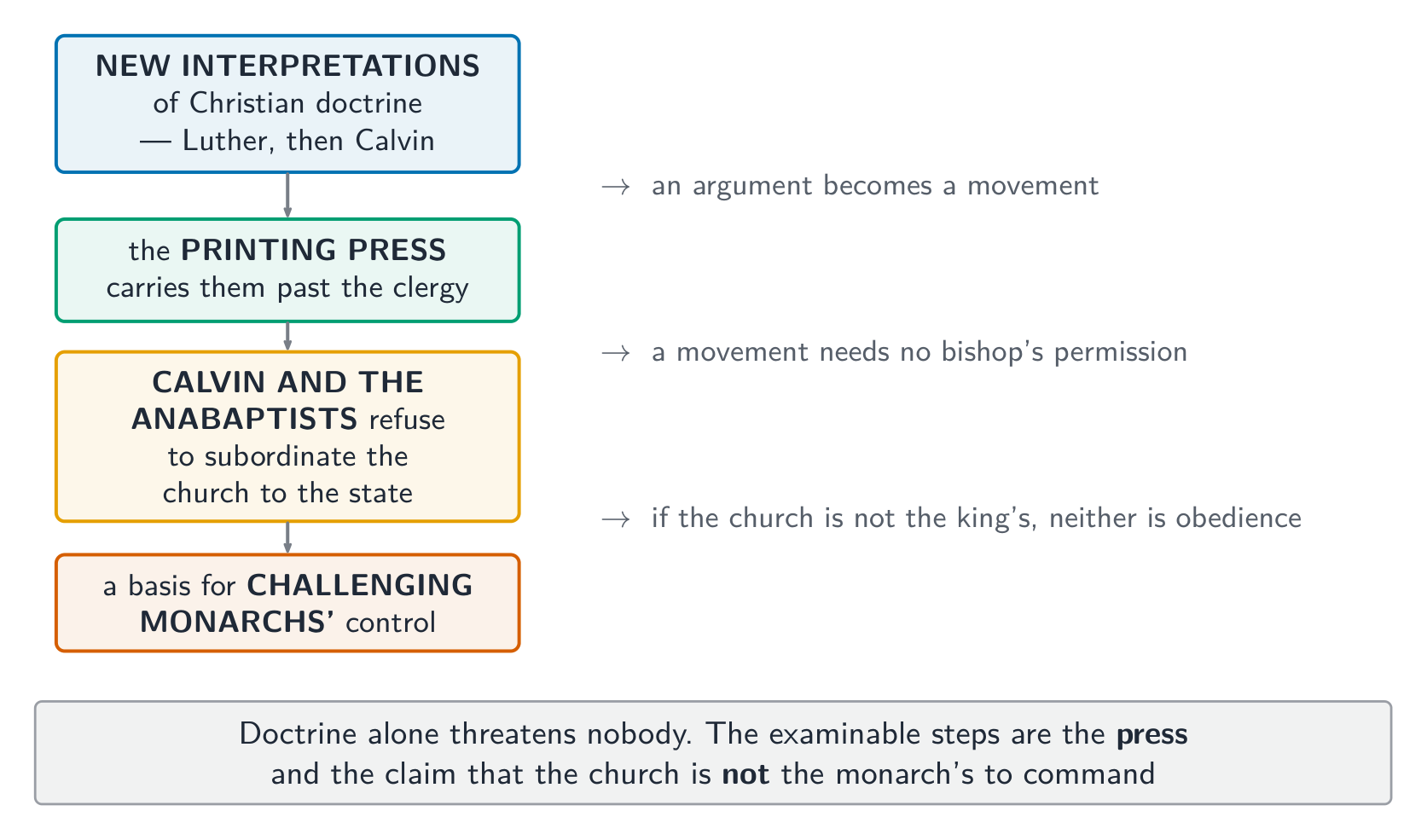
The last two are political claims dressed in religious language, and the CED treats them that way. Once religious authority is contestable, so is the authority of whoever claims to control it.

العربية

ثلاثة تطورات تأخذ الإصلاح عبر جيله الأول:

  • استخدم المصلحون البروتستانت الطابعة لنشر أفكارهم، مما حفز الإصلاح وساعد في جعله دائمًا. تعمل الطباعة مجددًا كمضخم - ولهذا السبب لم ينتهِ هذا الحركة كما فعلت الحركات السابقة.
  • رفض بعض البروتستانت، بما في ذلك كالفن والأنابتيستيين، الاعتراف بخضوع الكنيسة للدولة العلمانية.
  • أصبحت النزاعات الدينية أساسًا لتحدي سيطرة الملوك على المؤسسات الدينية.

الأخيران ادعاءات سياسية ملبوسة بلغة دينية، ويعاملها CED بهذه الطريقة. بمجرد أن تصبح السلطة الدينية قابلة للنزاع، تصبح أيضًا سلطة أي شخص يدعي التحكم فيها قابلة للنزاع.

كيف تحول خلاف عقائدي إلى تهديد سياسي: الصحافة واستقلال الكنيسة
Explore · ⁨استكشف⁩

Follow doctrine to a political threat · ⁨اتبع العقيدة لتحويلها لتهديد سياسي⁩

Doctrine alone threatens nobody. The press and the claim that the church is not the monarch's are the examinable steps. · ⁨العقيدة وحدها لا تهدد أحداً. الصحافة والادعاء بأن الكنيسة ليست ملكاً هو للملك هما الخطوتين القابلتين للامتحان.⁩

2.4

Wars of Religion · ⁨حروب الدين⁩

Syllabus · ⁨المنهج⁩
English

2.4 Wars of Religion

Thematic Focus (SOP): States and Other Institutions of Power — European states and nations developed governmental and civil institutions from 1450 to the present to organize society and consolidate political power, with a variety of social, cultural, and economic effects.

Learning Objective Unit 2.C: Explain how matters of religion influenced and were influenced by political factors from 1450 to 1648.

  • KC-1.2.III.A Issues of religious reform exacerbated conflicts between the monarchy and the nobility, as in the French wars of religion.
  • KC-1.2.III.B Habsburg rulers confronted an expanded Ottoman Empire while attempting unsuccessfully to restore Catholic unity across Europe.
  • KC-1.2.III.C States exploited religious conflicts to promote political and economic interests.
  • KC-1.2.III.D A few states, such as France with the Edict of Nantes, allowed religious pluralism in order to maintain domestic peace.
  • KC-1.5.I.B The Peace of Westphalia (1648), which marked the effective end of the medieval ideal of universal Christendom, accelerated the decline of the Holy Roman Empire by granting princes, bishops, and other local leaders control over religion.

Illustrative examples:

  • Key factors in the French wars of religion:
    • Catherine de’ Medici
    • St. Bartholomew’s Day massacre
    • War of the Three Henrys
    • Henry IV
  • Habsburg rulers: §Bullet Charles V State exploitation of religious conflicts:
    • Catholic Spain and Protestant England
    • France, Sweden, and Denmark in the Thirty Years’ War
  • States allowing religious pluralism:
    • Poland
    • The Netherlands
العربية

2.4 الحروب الدينية

التركيز الموضوعي (SOP): الدول والمؤسسات الأخرى للسلطة — طورت الدول الأوروبية والأمم مؤسسات حكومية ومدنية من عام 1450 إلى الوقت الحاضر لتنظيم المجتمع وتجميع السلطة السياسية، مع تأثيرات اجتماعية وثقافية واقتصادية متنوعة.

هدف التعلم الوحدة 2.ج: اشرح كيف أثرت قضايا الدين على العوامل السياسية وكيف تأثرت بها من 1450 إلى 1648.

  • KC-1.2.III.A أدت قضايا الإصلاح الديني إلى تفاقم الصراعات بين الملكة والنبلاء، كما حدث في حروب الدين الفرنسية.
  • KC-1.2.III.B واجه حكام هابسبورغ إمبراطورية عثمانية متوسعة بينما حاولوا بلا جدوى استعادة الوحدة الكاثوليكية عبر أوروبا.
  • KC-1.2.III.C استغل الدول الصراعات الدينية لتعزيز المصالح السياسية والاقتصادية.
  • KC-1.2.III.D سمحت دول قليلة، مثل فرنسا بإعصار نانت، بالتعددية الدينية للحفاظ على السلم الداخلي.
  • KC-1.5.I.B ساهمت صلح وستفاليا (1648)، الذي مثّل النهاية الفعلية للمثالية القروسطية للكنيسة المسيحية العالمية، في تسريع decline الإمبراطورية الرومانية المقدسة من خلال منح الأمراء والأساقرة والقادة المحليين الآخرين السيطرة على الدين.

أمثلة توضيحية:

  • العوامل الرئيسية في حروب الدين الفرنسية:
    • كاترين دي ميديشي
    • مذبحة يوم سان بارثولوميو
    • حرب الثلاثة هنري
    • هنري الرابع
  • حكام هابسبورغ: §Bullet Charles V استغلال الدولة للصراعات الدينية:
    • إسبانيا الكاثوليكية وإنجلترا البروتستانتية
    • فرنسا، السويد، والدنمارك في الحرب الثلاثين عامًا
  • الدول التي سمحت بالتعددية الدينية:
    • بولندا
    • هولندا

Source: College Board AP Course and Exam Description · ⁨المصدر: وصف دورة وامتحان College Board AP⁩

English

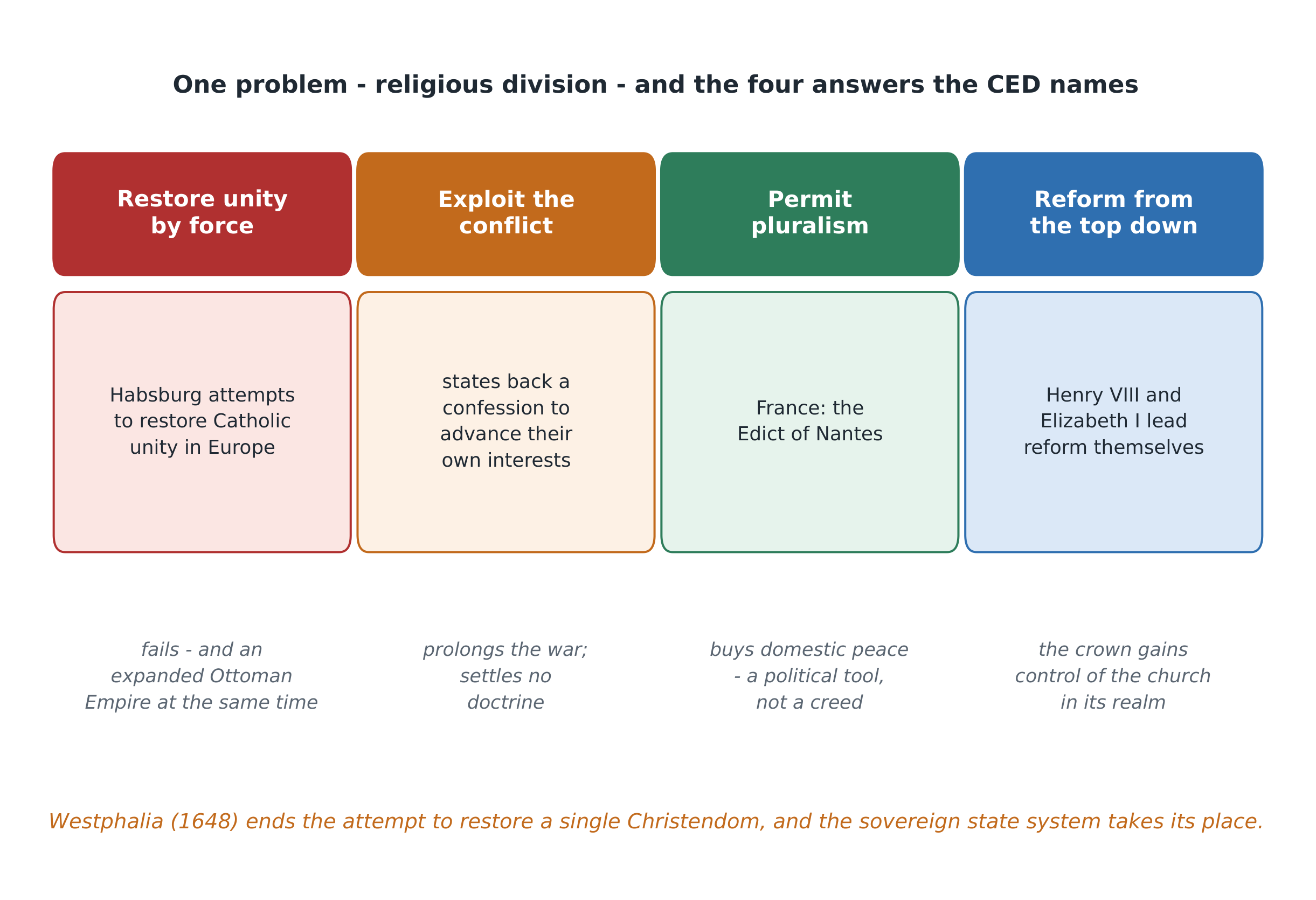
The CED gives four state responses to religious division, and a strong answer treats them as a set:

  • Restore unity by force - Habsburg rulers attempted to restore Catholic unity across Europe and failed, while simultaneously confronting an expanded Ottoman Empire 奥斯曼帝国.
  • Exploit the conflict - states used religious disputes to promote political and economic interests rather than to settle doctrine.
  • Permit pluralism - a few states, such as France with the Edict of Nantes 南特敕令, allowed religious pluralism in order to maintain domestic peace.
  • Reform from the top down - monarchs, including Henry VIII and Elizabeth I, initiated religious reform themselves to strengthen control over the church within their realm.

Religious reform also exacerbated conflicts between monarchy and nobility, as in the French wars of religion - religion supplied the language, and existing political rivalry supplied the force.

The settlement matters as much as the wars: the Peace of Westphalia (1648) 威斯特伐利亚和约 marked the effective end of the medieval ideal of universal Christendom 普世基督教世界 and accelerated the decline of the Holy Roman Empire. That is the hinge on which Unit 3 opens.

العربية
أربع طرق استجابة الدولة للانقسام الديني في القرن السادس عشر - وCED يذكر جميعها
فقط واحد من هذه النهايات ينهي الصراع، وليس الأكثر محاولةً من قبل الحكام

يقدم CED أربع استجابات للدولة للانقسام الديني، والإجابة القوية تعاملها كمجموعة:

  • استعادة الوحدة بالقوة - حاول حكام هابسبورغ استعادة الوحدة الكاثوليكية عبر أوروبا وفشلوا، بينما واجهوا في الوقت نفسه الإمبراطورية العثمانية الموسعة.
  • استغلال الصراع - استخدمت الدول النزاعات الدينية لـ تعزيز المصالح السياسية والاقتصادية بدلاً من تسوية العقيدة.
  • السماح بالتعددية - سمحت دول قليلة، مثل فرنسا مع مرسوم نانتس، بالتعددية الدينية من أجل الحفاظ على السلام الداخلي.
  • الإصلاح من الأعلى إلى الأسفل - بدأ الملوك، بما في ذلك هنري الثامن وإليزابيث الأولى، الإصلاح الديني بأنفسهم لتعزيز السيطرة على الكنسة داخل ممالكهم.

أدى الإصلاح الديني أيضًا إلى تفاقم الصراعات بين الملكية والنبلاء، كما في حروب الدين الفرنسية - حيث وفر الدين اللغة، وقدم المنافسة السياسية القائمة القوة.

يعتبر التسوية مهمًا بنفس قدر الحروب: معاهدة وستفاليا (1648) حددت النهاية الفعلية للمثالية القروسطية لـ المسيحية العالمية وسرعت من تدهور الإمبراطورية الرومانية المقدسة. هذا هو المحور الذي تنفتح منه الوحدة 3.

Explore · ⁨استكشف⁩

Sort each state's answer to religious division · ⁨صنّف إجابة كل دولة على الانقسام الديني⁩

Four answers, and they are strategies rather than degrees of tolerance. · ⁨أربع إجابات، وهي استراتيجيات بدلاً من درجات التسامح.⁩

2.5

The Catholic Reformation · ⁨الإصلاح الكاثوليكي⁩

Syllabus · ⁨المنهج⁩
English

2.5 The Catholic Reformation

Thematic Focus (CID): Cultural and Intellectual Developments — The creation and transmission of knowledge, including the relationship between traditional sources of authority and the development of differing world views, had significant political, intellectual, economic, cultural, and social effects on European and world societies.

Learning Objective Unit 2.D: Explain the continuities and changes in the role of the Catholic Church from 1450 to 1648.

  • KC-1.2.I.D The Catholic Reformation, exemplified by the Jesuit Order and the Council of Trent, revived the church but cemented division within Christianity.

Illustrative examples:

  • The Catholic Reformation:
    • St. Teresa of Avila
    • Ursulines
    • Roman Inquisition
    • Index of Prohibited Books
العربية

2.5 الإصلاح الكاثوليكي

تركيز موضوعي (CID): التطورات الثقافية والفكرية — كان خلق المعرفة ونشرها، بما في ذلك العلاقة بين مصادر السلطة التقليدية وتطوير آلهة نظر مختلفة، له تأثيرات سياسية وفكرية واقتصادية وثقافية واجتماعية كبيرة على المجتمعات الأوروبية والعالمية.

هدف التعلم الوحدة 2.د: اشرح الاستمرارات والتغيرات في دور الكنيسة الكاثوليكية من 1450 إلى 1648.

  • KC-1.2.I.D أعاد الإصلاح الكاثوليكي، المتمثل في رهبنة اليسوعيين ومجمع ترنت، إحياء الكنيسة لكنه رسخ الانقسام داخل المسيحية.

أمثلة توضيحية:

  • الإصلاح الكاثوليكي:
    • سانتا تيريزا من أفيل
    • الأورسولين
    • محاكم التفتيش الرومانية
    • قائمة الكتب المحظورة

Source: College Board AP Course and Exam Description · ⁨المصدر: وصف دورة وامتحان College Board AP⁩

English

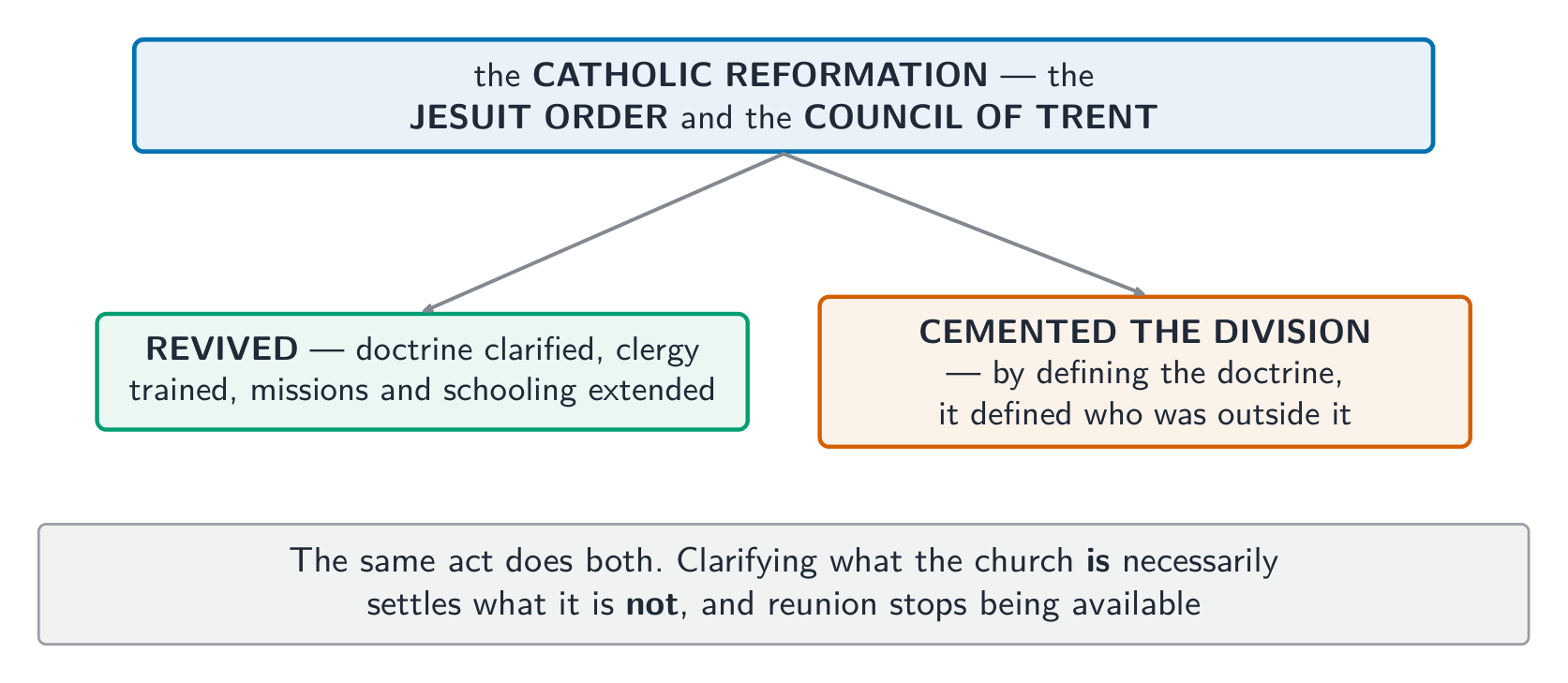
The Catholic Reformation 天主教改革, exemplified by the Jesuit Order 耶稣会 and the Council of Trent 特伦特会议, revived the church but cemented the division within Christianity.

Both halves of that sentence are the answer to a continuity-and-change question. The Church renewed its institutions, doctrine, education, and missionary reach - and in defining its doctrine precisely, it made reunion impossible. Revival and permanent division were the same act.

العربية

أحيى الإصلاح الكاثوليكي، المتمثل في الجمهورية اليسوعية ومجلس ترينت، الكنيسة لكنه رسخ الانقسام داخل المسيحية.

كلا جزئي من تلك الجملة هما إجابة على سؤال الاستمرارية والتغير. تجددت الكنسة مؤسساتها وعقيدتها وتعليمها ووصولها التبشيري - وفي تعريف عقيدتها بدقة، جعلت التوحيد مستحيلًا. كان الإحياء والانقسام الدائم نفس الفعل.

برنامج إصلاح واحد، نتيجتان متعاكسان - تحديد العقيدة عرّف من هو خارجها
Vocabulary · ⁨مفردات⁩ Train · ⁨تدريب⁩
English العربية
Martin Luther/ˈmɑːtɪn ˈluːðə/ مارتن لوثر
John Calvin/dʒɒn ˈkælvɪn/ جون كالفن
used the printing press/juːzd ðə ˈprɪntɪŋ pres/ استخدم آلة الطباعة
Calvin and the Anabaptists/ˈkælvɪn ænd ðɪ ˈænəbæptɪsts/ كالفين والمعمدانيون الجدد
expanded Ottoman Empire/ekˈspændɪd ˈɒtəmən ˈempaɪə/ توسع الإمبراطورية العثمانية
Edict of Nantes/ˈiːdɪkt ɒv nænts/ مرسوم نانت
Peace of Westphalia (1648)/piːs ɒv westˈfeɪlɪə/ سلام فستفاليا (1648)
universal Christendom/ˌjuːnɪˈvɜːsl ˈkrɪsəndəm/ المسيحية العالمية
Catholic Reformation/ˈkæθlɪk rɪfɔːˈmeɪʃn/ إصلاح الكاثوليكية
Jesuit Order/ˈdʒezjuːɪt ˈɔːdə/ اليسوعيين
Council of Trent/ˈkaʊnsl ɒv trent/ مجلس ترنت
2.6

16th-Century Society and Politics · ⁨المجتمع والسياسة في القرن 16⁩

Syllabus · ⁨المنهج⁩
English

2.6 16th-Century Society and Politics

Thematic Focus (SCD): Social Organization and Development — Economic, political, and cultural factors have influenced the form and status of family, class, and social groups in European history, which has, in turn, affected both the individual and society.

Learning Objective Unit 2.E: Explain how economic and intellectual developments from 1450 to 1648 affected social norms and hierarchies.

  • KC-1.4.I.C Established hierarchies of class, religion, and gender continued to define social status and perceptions in rural and urban settings.
  • KC-1.4.IV.A Rural and urban households worked as units, with men and women engaged in separate but complementary tasks.
  • KC-1.4.IV.B The Renaissance and Reformation raised debates about female education and women’s roles in the family, church, and society.
  • KC-1.4.III.C Social dislocation, coupled with the shifting authority of religious institutions during the Reformation, left city governments with the task of regulating public morals.
  • KC-1.4.V.A Leisure activities continued to be organized according to the religious calendar and the agricultural cycle, and remained communal in nature.
  • KC-1.4.V.B Local and church authorities continued to enforce communal norms through rituals of public humiliation.
  • KC-1.4.V.C Reflecting folk ideas and social and economic upheaval, accusations of witchcraft peaked between 1580 and 1650.

Illustrative examples:

  • Continued social hierarchies:
    • Prestige of land ownership
    • Aristocratic privileges regarding taxes, fees for services, and legal protections
    • Political exclusion of women
  • Debates about female roles:
    • Women’s intellect and education
    • Women as preachers
    • La Querelle des Femmes
  • Regulating public morals:
    • New secular laws regulating private life
    • Stricter codes on prostitution and begging
    • Abolishing or restricting Carnival
  • Communal leisure activities:
    • Saint’s day festivities
    • Carnival
    • Blood sports
  • Rituals of public humiliation:
    • Charivari
    • Stocks
    • Public whipping and branding
  • Factors in witchcraft accusations:
    • Prominence of women
    • Regional variation
    • Social upheaval
العربية

2.6 المجتمع والسياسة في القرن 16

التركيز الموضوعي (SCD): التنظيم الاجتماعي والتنمية — أثرت العوامل الاقتصادية والسياسية والثقافية على شكل ومكانة الأسرة والطبقة والمجموعات الاجتماعية في تاريخ أوروبا، مما أثر بدوره على الفرد والمجتمع.

هدف التعلم الوحدة 2.هـ: اشرح كيف أثرت التطورات الاقتصادية والفكرية من 1450 إلى 1648 على المعايير والهرميات الاجتماعية.

  • KC-1.4.I.C استمرت الهرميات الراسخة للطبقات والدين والجنس في تحديد Status الاجتماعي والإدراكات في البيئات الريفية والحضرية.
  • KC-1.4.IV.A عملت الأسر الريفية والحضرية كوحدات، حيث كان الرجال والنساء يشاركون في مهام منفصلة ولكن متكاملة.
  • KC-1.4.IV.B أثار عصر النهضة والإصلاح نقاشات حول تعليم النساء وأدوارهن في الأسرة والكنيسة والمجتمع.
  • KC-1.4.III.C تركت الاضطراب الاجتماعي، مقترنًا بتغير سلطات المؤسسات الدينية خلال الإصلاح، الحكومات البلدية مهمة تنظيم الأخلاق العامة.
  • KC-1.4.V.A استمرت أنشطة الترفيه في التنظيم وفقًا للتقويم الديني والدورة الزراعية، وظلت ذات طابع جماعي.
  • KC-1.4.V.B واصلت السلطات المحلية والكنائس فرض المعايير الجماعية من خلال طقوس الإذلال العام.
  • KC-1.4.V.C انعكاسًا للأفكار الشعبية والاضطرابات الاجتماعية والاقتصادية، بلغت اتهامات السحر ذروتها بين 1580 و1650.

أمثلة توضيحية:

  • استمرار الهرميات الاجتماعية:
    • مكانة امتلاك الأراضي
    • الامتيازات الأرستقراطية فيما يتعلق بالضرائب، رسوم الخدمات، والحماية القانونية
    • الاستبعاد السياسي للنساء
  • نقاشات حول أدوار النساء:
    • عقلية المرأة وتعليمها
    • النساء كمُعلّمات
    • صراع النساء (La Querelle des Femmes)
  • تنظيم الأخلاق العامة:
    • قوانين علمانية جديدة تنظم الحياة الخاصة
    • قواعد أكثر صرامة على البغاء والتسول
    • إلغاء أو تقييد الكرنفال
  • أنشطة الترفيه الجماعية:
    • احتفالات أيام القديسين
    • الكرنفال
    • الرياضات الدامية
  • طقوس الإذلال العام:
    • الشاريڤاري
    • العنقوز
    • الضرب بالسوط والعقاب بالحرق في الأماكن العامة
  • عوامل اتهامات السحر:
    • بروز النساء
    • الاختلافات الإقليمية
    • الاضطراب الاجتماعي

Source: College Board AP Course and Exam Description · ⁨المصدر: وصف دورة وامتحان College Board AP⁩

English

This is the unit's social-history topic, and it is dense with examinable content that essays rarely use:

  • Established hierarchies of class, religion, and gender continued to define social status in both rural and urban settings.
  • Rural and urban households worked as units, with men and women engaged in separate but complementary tasks 分工互补.
  • The Renaissance and Reformation raised debates about female education and women's roles in family, church, and society.
  • Social dislocation 社会失序, together with the shifting authority of religious institutions, left city governments to address the problems it created.
  • Leisure remained organised by the religious calendar and the agricultural cycle, and remained communal.
  • Local and church authorities enforced communal norms through rituals of public humiliation 公开羞辱.
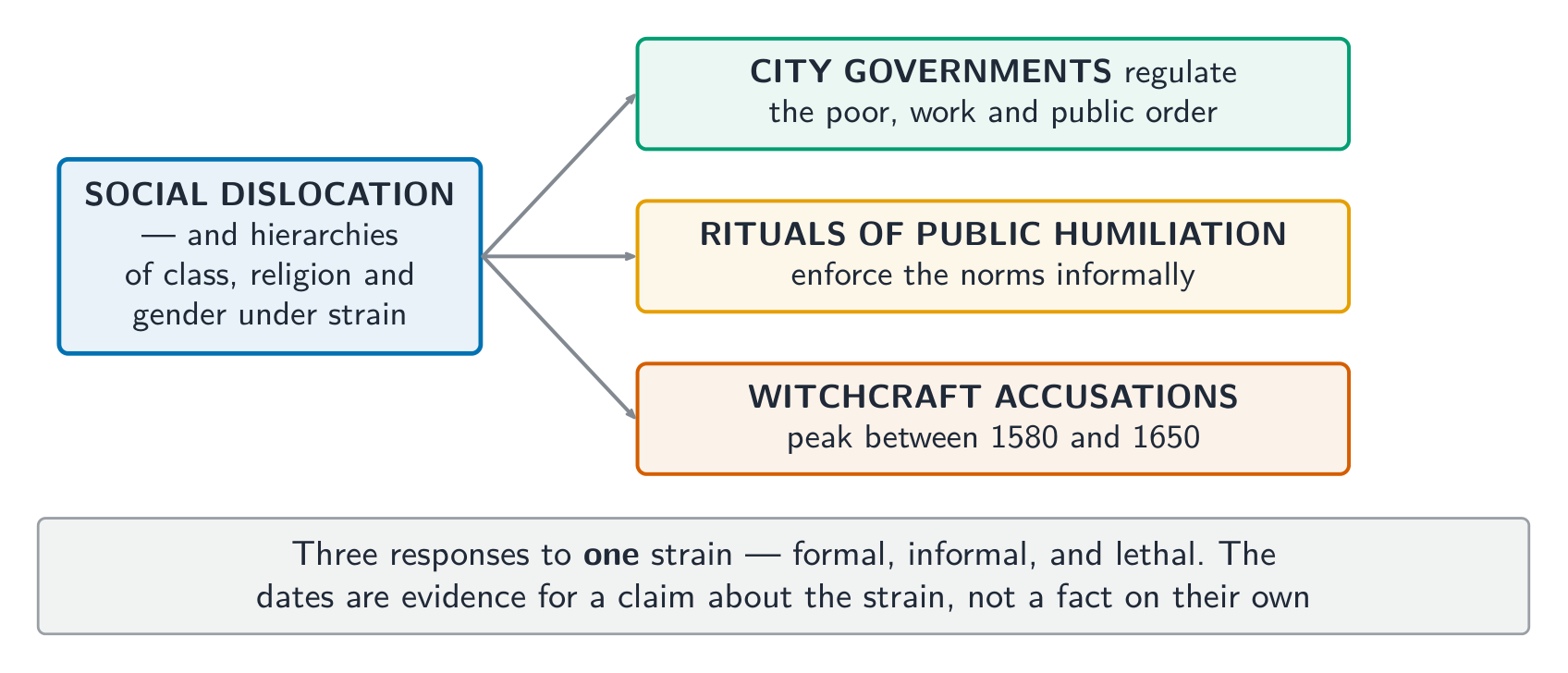
  • Reflecting folk belief and social and economic upheaval, accusations of witchcraft peaked between 1580 and 1650.

The witchcraft peak is worth holding precisely because of its dates: it coincides with the period of maximum religious conflict and economic strain, which is what makes it usable as evidence rather than as an anecdote.

العربية

هذا هو الموضوع التاريخي الاجتماعي للوحدة، وهو كثيف بالمحتوى القابل للاختبار الذي نادراً ما تستخدمه المقالات:

  • استمرت الهرميات الاجتماعية الراسخة للطبقات والدين والجندر في تحديد المكانة الاجتماعية في كل من الريف والحضر.
  • عملت البيوت الريفية والحضرية وحدات، وكان الرجال والنساء مشغولين بـ مهام منفصلة但又互补. (Note: The original text says 'separate but complementary tasks', the Arabic placeholder in thought process was a typo, corrected to standard Arabic). -> عملت البيوت الريفية والحضرية وحدات، وكان الرجال والنساء مشغولين بـ مهام منفصلة ولكن مكملة.
  • رفعت النهضة والإصلاح النقاشات حول تعليم النساء ودورهن في الأسرة والكنيسة والمجتمع.
  • ترك الاضطراب الاجتماعي، جنبًا إلى جنب مع انتقال سلطة المؤسسات الدينية، حكومات المدن لتناول المشاكل التي خلقته.
  • ظل الترفيه منظمًا وفقًا للتقويم الديني والدورة الزراعية، وبقي جماعيًا.
  • فرضت السلطات المحلية والكنسية المعايير الجماعية من خلال طقوس الإذلال العام.
  • انعكاسًا للاعتقاد الشعبي والاضطراب الاجتماعي والاقتصادي، بلغ اتهامات السحر ذروته بين عامي 1580 و1650.

ذروة السحر تستحق الحفظ بالضبط بسبب تواريخها: تتوافق مع فترة أقصى صراع ديني وضغط اقتصادي، وهو ما يجعلها قابلة للاستخدام作为 evidence بدلاً من anecdote. (Note: Correcting to pure Arabic based on instructions). -> ذروة السحر تستحق الحفظ بالضبط بسبب تواريخها: تتوافق مع فترة أقصى صراع ديني وضغط اقتصادي، وهو ما يجعلها قابلة للاستخدام كشاهد بدلاً من مجرد حكاية.

ثلاث استجابات لضغط واحد: رسمية وغير رسمية وقاتلة
Vocabulary · ⁨مفردات⁩ Train · ⁨تدريب⁩
English العربية
separate but complementary tasks/ˈseprət bʌt ˌkɒmplɪˈmentəri tæsks/ مهام منفصلة ولكن مكملة
Social dislocation/ˈsəʊʃl dɪsləʊˈkeɪʃn/ الاضطراب الاجتماعي
rituals of public humiliation/ˈrɪtʃuːəlz ɒv ˈpʌblɪk ˌhjuːmɪlɪˈeɪʃn/ طقوس الإذلال العام
Mannerist and Baroque/ˈmænərɪst ænd bəˈrəʊk/ المانييريزم والباروكي
distortion, drama, and illusion/dɪˈstɔːʃn ˈdrɑːmə ænd ɪˈluːʒn/ التشويه، الدراما، والوهم
2.7

Art of the 16th Century: Mannerism and Baroque · ⁨فن القرن 16: المانييريزم والباروك⁩

Syllabus · ⁨المنهج⁩
English

2.7 Art of the 16th Century: Mannerism and Baroque Art

Thematic Focus (CID): Cultural and Intellectual Developments — The creation and transmission of knowledge, including the relationship between traditional sources of authority and the development of differing world views, had significant political, intellectual, economic, cultural, and social effects on European and world societies.

Learning Objective Unit 2.F: Explain how and why artistic expression changed from 1450 to 1648.

  • KC-1.1.III.C Mannerist and Baroque artists employed distortion, drama, and illusion in their work. Monarchies, city-states, and the church commissioned these works as a means of promoting their own stature and power.

Illustrative examples:

  • Mannerist and Baroque artists whose art was used in new public buildings:
    • El Greco
    • Artemisia Gentileschi
    • Gian Bernini
    • Peter Paul Rubens
العربية

2.7 فن القرن 16: المانييريزم والفن الباروكي

تركيز موضوعي (CID): التطورات الثقافية والفكرية — كان خلق المعرفة ونشرها، بما في ذلك العلاقة بين مصادر السلطة التقليدية وتطوير آلهة نظر مختلفة، له تأثيرات سياسية وفكرية واقتصادية وثقافية واجتماعية كبيرة على المجتمعات الأوروبية والعالمية.

هدف التعلم الوحدة 2.و: اشرح كيف ولماذا تغير التعبير الفني من 1450 إلى 1648.

  • KC-1.1.III.C استخدم فنانو المنارة والباروك التشويه، والدراما، والوهم في أعمالهم. أمرت الملوكيات ودول المدن والكنيسة بهذه الأعمال كوسيلة لتعزيز مكانتها وقوتها الخاصة.

أمثلة توضيحية:

  • فنانو المنارة والباروك whose art was used in new public buildings:
    • إل غريكو
    • أرمينيا جينيتيسكي
    • جان بيرنيني
    • بيتر باول روبنس

Source: College Board AP Course and Exam Description · ⁨المصدر: وصف دورة وامتحان College Board AP⁩

English

Mannerist and Baroque 手法主义与巴洛克 artists employed distortion, drama, and illusion 变形、戏剧性与幻觉. Monarchies, city-states, and the church commissioned these works.

The examinable point is the same as in Unit 1, one step further: art was commissioned to persuade. Baroque drama in a Catholic church and Baroque grandeur at a royal court are doing the same work in different directions - asserting the authority of the patron in an age when authority was contested.

العربية

استخدم فنانو المنهجية والباروك التشويه والدراما والوهم. طلبت الملوكيات ودول المدن والكنيسة هذه الأعمال.

النقطة القابلة للاختبار هي نفسها في الوحدة 1، ولكن بخطوة أعمق: كان الفن مُطلبًا لإقناع الناس. فالدراما الباروكية في الكنائس الكاثوليكية والفخامة الباريوكية في المحاكم الملكية تقوم بنفس الوظيفة في اتجاهين مختلفين - وهما التأكيد على سلطة الممول في عصر كانت فيه السلطة محل جدل.

2.8

Causation in the Age of Reformation · ⁨السببية في عصر الإصلاح⁩

Syllabus · ⁨المنهج⁩
English

2.8 Causation in the Age of Reformation and the Wars of Religion

Learning Objective Unit 2.G: Explain how the religious, political, and cultural developments of the 16th and 17th centuries affected European society from 1450 to 1648.

  • KC-1.2 Religious pluralism challenged the concept of a unified Europe.
    • KC-1.2.I The Protestant and Catholic reformations fundamentally changed theology, religious institutions, culture, and attitudes toward wealth and prosperity.
    • KC-1.2.II Religious reform both increased state control of religious institutions and provided justifications for challenging state authority.
    • KC-1.2.III Conflicts among religious groups overlapped with political and economic competition within and among states.
  • KC-1.4 European society and the experiences of everyday life were increasingly shaped by commercial and agricultural capitalism, notwithstanding the continued existence of medieval social and economic structures.
    • KC-1.4.III Population shifts and growing commerce caused the expansion of cities, which often placed stress on their traditional political and social structures.
    • KC-1.4.IV The family remained the primary social and economic institution of early modern Europe and took several forms, including the nuclear family.
    • KC-1.4.V Popular culture, leisure activities, and rituals reflecting the continued popularity of folk ideas reinforced and sometimes challenged communal ties and norms.
  • KC-1.5 The struggle for sovereignty within and among states resulted in varying degrees of political centralization.
    • KC-1.5.I The new concept of the sovereign state and secular systems of law played a central role in the creation of new political institutions.
العربية

2.8 التسبب في عصر الإصلاح وحروب الدين

هدف التعلم الوحدة 2.غ: شرح كيف أثرت التطورات الدينية والسياسية والثقافية في القرنين 16 و17 على المجتمع الأوروبي من 1450 إلى 1648.

  • KC-1.2 طرّح التعددية الدينية مفهوم أوروبا الموحدة.
    • KC-1.2.I غيّرت الإصلاحات البروتستانتية والكاثوليكية بشكل جذري اللاهوت والمؤسسات الدينية والثقافة ومواقف الثروة والازدهار.
    • KC-1.2.II زادت الإصلاحات الدينية من سيطرة الدولة على المؤسسات الدينية وقدمت مبررات لتحدي سلطة الدولة.
    • KC-1.2.III تداخلت الصراعات بين المجموعات الدينية مع المنافسة السياسية والاقتصادية داخل الدول وبينها.
  • KC-1.4 شكل الرأسمالية التجارية والزراعية بشكل متزايد المجتمع الأوروبي وتجارب الحياة اليومية، على الرغم من استمرار الهياكل الاجتماعية والاقتصادية الوسطى.
    • KC-1.4.III تسببت التحركات السكانية وتزايد التجارة في توسع المدن، والتي وضفت غالبًا ضغطًا على هياكلها السياسية والاجتماعية التقليدية.
    • KC-1.4.IV ظلّت الأسرة المؤسسة الاجتماعية والاقتصادية الرئيسية لأوروبا الحديثة المبكرة واتخذت أشكالًا متعددة، بما في ذلك الأسرة النووية.
    • KC-1.4.V عززت ثقافة الشعب وأنشطة الترفيه والطقوس التي تعكس الاستمرار في شعبية الأفكار الشعبية الروابط والمعايير المجتمعية، وفي بعض الأحيان تحدتها.
  • KC-1.5 أدت الصراعات من أجل السيادة داخل وبين الدول إلى درجات متفاوتة من المركزية السياسية.
    • KC-1.5.I لعب المفهوم الجديد للدولة السيادية والأنظمة القانونية العلمانية دورًا محوريًا في إنشاء مؤسسات سياسية جديدة.
Source: College Board AP Course and Exam Description · ⁨المصدر: وصف دورة وامتحان College Board AP⁩

English

The unit's reasoning skill is causation.

Worked example (a real AP exam question). AP European History short-answer questions here ask, for example, to "Explain one way in which political developments in the sixteenth century were influenced by religious change." A full-mark answer names both sides of the influence: "Religious reform gave the nobility a language and a justification for resisting royal authority, as in the French wars of religion, where noble families used confessional allegiance to organise opposition to the crown. The monarchy's response - eventually the Edict of Nantes - was therefore a political settlement of a religious dispute, granting toleration in order to restore royal control." Notice that the answer moves in both directions, because the CED's own framing does.

العربية

مهارة التفكير في هذه الوحدة هي السببية.

مثال محلول (سؤال حقيقي من امتحان AP). أسئلة الإجابة القصيرة في تاريخ أوروبا AP تطلب هنا، على سبيل المثال، "اشرح طريقة واحدة تأثرت بها التطورات السياسية في القرن السادس عشر بالتغير الديني." الإجابة الكاملة ذات الدرجة الكاملة تذكر كلا جانبين من التأثير: "أعطى الإصلاح الديني النبلاء لغة ومبرراً للمقاومة ضد السلطة الملكية، كما حدث في الحروب الدينية الفرنسية، حيث استخدمت العائلات النبيلة الولاء المذهبي لتنظيم المعارضة ضد العرش. وكان رد فعل الملكية - وفي النهاية مرسوم نانت - تسوية سياسية لنزاع ديني، منح التسامح استعادةً للتحكم الملكي." لاحظ أن الإجابة تتحرك في كلا الاتجاهين، لأن صياغة CED نفسها تفعل ذلك.

2.8

Exam tips · ⁨نصائح للامتحان⁩

English
  • Never separate religion and politics in this unit. Nearly every question tests the interaction.
  • The four state responses - force, exploitation, toleration, top-down reform - make an excellent answer skeleton for any wars-of-religion question.
  • Westphalia is the hinge: the end of universal Christendom, the start of the sovereign state system.
  • The Catholic Reformation revived and divided at the same time. Both halves earn the mark.
  • Toleration was a political tool, not a moral position. The Edict of Nantes bought domestic peace.
  • Use the witchcraft peak (1580-1650) as dated evidence of social and religious strain, not as colour.
العربية
  • لا تفصل أبداً بين الدين والسياسة في هذه الوحدة. كل سؤال يختبر التفاعل بينهما.
  • استجابات الدول الأربعة - القوة، الاستغلال، التسامح، الإصلاح من الأعلى - تشكل هيكلاً ممتازاً للإجابة على أي سؤال يتعلق بالحروب الدينية.
  • ويستفاليا هي المفصل: نهاية المسيحية العالمية وبداية نظام الدولة السيادية.
  • أثار الإصلاح الكاثوليكي إحياءً وانقساماً في آن واحد. كلا الجانبين يستحقان العلامة.
  • التسامح كان أداة سياسية، وليس موقفاً أخلاقياً. مرسوم نانت اشترى السلام الداخلي.
  • استخدم ذروة تعاقب الساحرات (1580-1650) كدليل مؤرخ على الضغط الاجتماعي والديني، وليس كمجرد لون أو خلفية.

Interactive lessons on this topic · ⁨دروس تفاعلية حول هذا الموضوع⁩

Work through it step by step, with instant-check exercises. · ⁨ا-working عليه خطوة بخطوة، مع تمارين تحقق فوري.⁩

Past Papers · ⁨أوراق الامتحانات السابقة⁩

More topics in AP European History · ⁨تاريخ أوروبا (AP)⁩ · ⁨المزيد من المواضيع في AP European History · ⁨تاريخ أوروبا (AP)⁩⁩

Log in or create account · ⁨تسجيل الدخول أو إنشاء حساب⁩

IGCSE, A-Level & AP