Skip to content · ⁨الانتقال إلى المحتوى⁩

Refining Qualified Arguments · ⁨تحسين الحجج المقيّدة⁩

AP English Language and Composition · ⁨اللغة الإنجليزية والتأليف (AP)⁩ · Topic 9 · ⁨الموضوع 9⁩

Video lesson for this topic · ⁨درس فيديو لهذا الموضوع⁩ Open the video page · ⁨افتح صفحة الفيديو⁩
4:51

الوحدة 9: صقل الحجج المُقيدة

الوحدة 9 قصيرة، وهي الحركة الأخيرة في المقرر: كيفية التعامل مع الحجج المعارضة لادعائك. كل ما هنا يُجازى مباشرة في الامتحان، و…

English narration · English + 中文 subtitles burned in · ⁨سرد باللغة الإنجليزية · ترجمة مدمجة بالإنجليزية + الصينية⁩

9.1

How Claims Are Qualified · ⁨كيف يتم تأهيل الادعاءات⁩

Syllabus · ⁨المنهج⁩
English

Enduring Understanding (CLE-1): Writers make claims about subjects, rely on evidence that supports the reasoning that justifies the claim, and often acknowledge or respond to other, possibly opposing, arguments.

Learning Objective 3.C: Reading – Explain ways claims are qualified through modifiers, counterarguments, and alternative perspectives.

  • CLE-1.AA Writers enhance their credibility when they refute, rebut, or concede opposing arguments and contradictory evidence.
  • CLE-1.AB When writers concede, they accept all or a portion of a competing position or claim as correct, agree that the competing position or claim is correct under a different set of circumstances, or acknowledge the limitations of their own argument.
  • CLE-1.AC When writers rebut, they offer a contrasting perspective on an argument and its evidence or provide alternative evidence to propose that all or a portion of a competing position or claim is invalid.
  • CLE-1.AD When writers refute, they demonstrate, using evidence, that all or a portion of a competing position or claim is invalid.
  • CLE-1.AE Transitions may be used to introduce counterarguments.
  • CLE-1.AF Not all arguments explicitly address a counterargument.
  • CLE-1.Y Effectively entering into an ongoing conversation about a subject means engaging the positions that have already been considered and argued about.
  • CLE-1.Z Evidence and sources will either support, complement, or contradict a writer’s thesis.
العربية

الفهم الدائم (CLE-1): يطرح الكُتّاب ادعاءات حول موضوعات معينة، ويعتمدون على أدلة تدعم البرهان الذي يبرر الادعاء، وغالبًا ما يعترفون بالرد على حجج أخرى، قد تكون معارضة.

الهدف التعليمي 3.ب: القراءة – شرح طرق تقييد الادعاءات من خلال التعديلات والحجج المضادة والمنظورات البديلة.

  • CLE-1.AA يعزز الكتاب مصداقيتهم عندما يدحضون، أو يجيبوا، أو يتنازلوا عن الحجج والأدلة المضادة.
  • CLE-1.AB عندما يتنازل الكتاب، فإنهم يقبلون كل或部分 من موقف أو ادعاء منافس باعتباره صحيحاً، أو يتفقون على أن الموقف أو الادعاء المنافس صحيح تحت مجموعة مختلفة من الظروف، أو يعترفون بحدود حجتهم الخاصة.
  • CLE-1.AC عندما يجيب الكتاب، فإنهم يقدمون منظوراً متناقضاً حول حجة وأدلتها أو يقدمون أدلة بديلة لاقتراح أن كل或部分 من موقف أو ادعاء منافس غير صالح.
  • CLE-1.AD عندما يدحض الكتاب، فإنهم يثبتون، باستخدام الأدلة، أن كل或部分 من موقف أو ادعاء منافس غير صالح.
  • CLE-1.AE يمكن استخدام الانتقالات لتقديم حجج مضادة.
  • CLE-1.AF ليس كل الحجج تتناول صراحةً حججاً مضادة.
  • CLE-1.Y الانخراط بفعالية في نقاش مستمر حول موضوع ما يعني التعامل مع المواقف التي تم النظر فيها ومناقشتها بالفعل.
  • CLE-1.Z supporting sources will either support, complement, or contradict a writer’s thesis.
Source: College Board AP Course and Exam Description · ⁨المصدر: وصف دورة وامتحان College Board AP⁩

English

Unit 9 is short and it is the course's final move: how to handle the arguments that oppose yours. Everything here is directly rewarded on the exam, and the three key verbs are constantly confused.

The framing first:

  • Effectively entering an ongoing conversation about a subject means engaging the positions that have already been taken. An argument that ignores them is not participating in the discussion, only announcing into it.
  • Evidence and sources will either support, complement, or contradict 支持、补充或反驳 a writer's thesis. All three are usable - contradicting evidence is not a problem to be hidden but material to be handled.
  • Writers enhance their credibility when they refute, rebut, or concede opposing arguments and contradictory evidence.

The three moves, in the CED's own definitions:

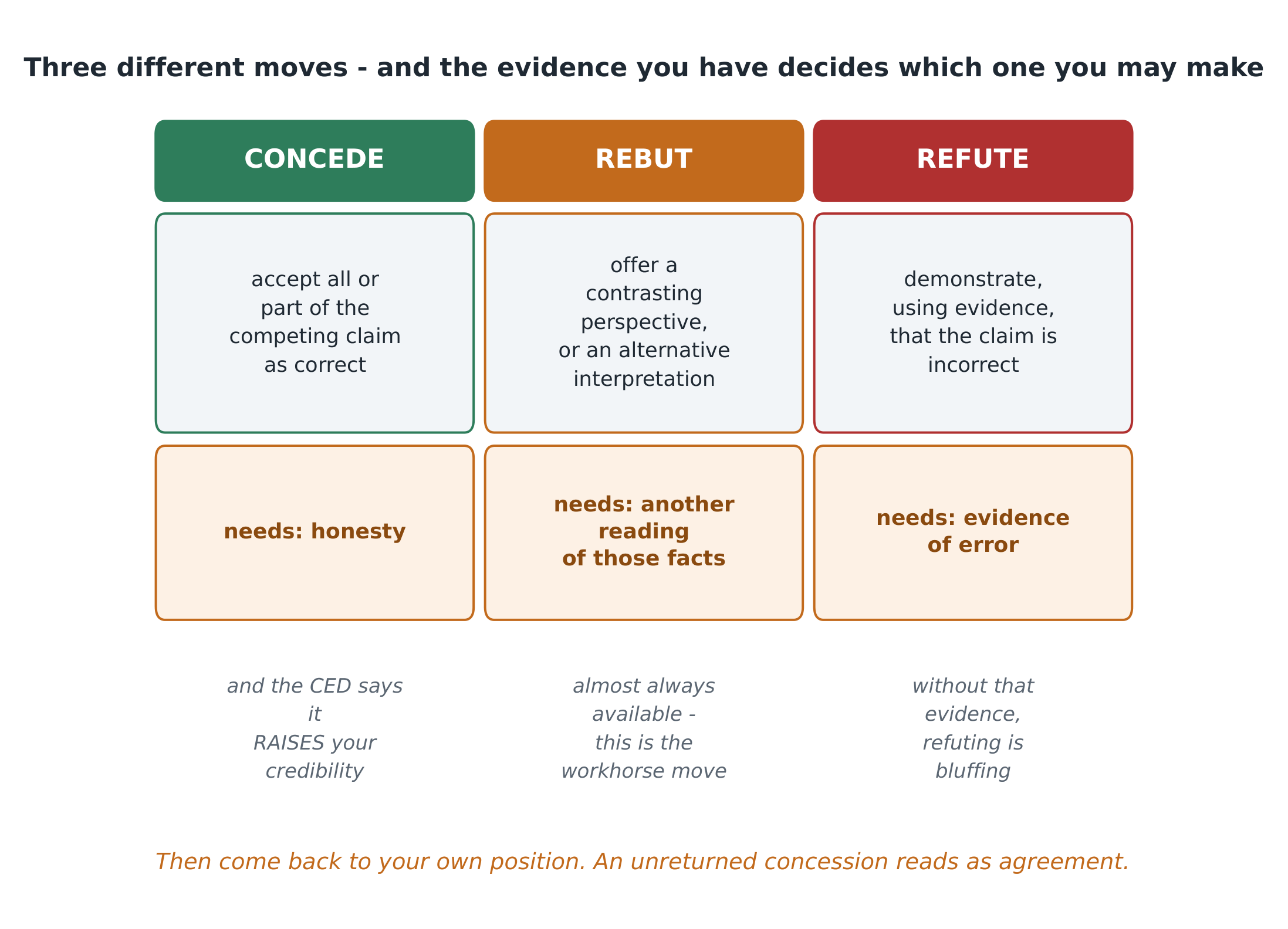
  • Concede 让步: writers accept all or a portion of a competing position or claim as correct, and agree that the opposing point has merit.
  • Rebut 反驳: writers offer a contrasting perspective on an argument and its evidence, or provide an alternative interpretation.
  • Refute 驳倒: writers demonstrate, using evidence, that all or a portion of a competing position or claim is incorrect.

The distinction is what your evidence lets you do. Refuting requires evidence of error; if you do not have it, refuting is bluffing and a reader will see it. Rebutting requires only an alternative reading of the same facts, which is far more often available. Conceding requires honesty, and it costs nothing - the CED says explicitly that it enhances credibility.

Two further points:

  • Transitions may be used to introduce counterarguments - and, as in Unit 5, the transition should signal the relationship. Critics argue announces one; the strongest objection to this is announces one and ranks it.
  • Not all arguments explicitly address a counterargument. True of texts you read, and worth noting when analysing - an argument that engages no opposition has told you something about its intended audience.
العربية

الوحدة 9 قصيرة وهي الحركة الأخيرة في هذا المقرر: كيفية التعامل مع الحجج المعاكسة لحججتك. كل ما هنا يُجزي مباشرة في الامتحان، والأفعال الرئيسية الثلاثة غالباً ما يتم الخلط بينها.

إطار العمل أولاً:

  • الدخول الفعّال في نقاش جاري حول موضوع ما يعني التفاعل مع المواقف المتخذة مسبقاً. الحجة التي تتجاهلها ليست مشاركة في النقاش، بل إعلان فقط داخله.
  • الأدلة والمصادر إما تدعم، أو تكمل، أو تناقض أطروحة الكاتب. جميعها قابلة للاستخدام - الأدلة المناقضة ليست مشكلة لإخفائها بل مادة للتعامل معها.
  • يعزز الكتاب مصداقيتهم عندما يدحضون، أو يردون، أو يعترفون بالحجج والأدلة المناقضة.
ثلاث حركات مختلفة، وثلاثة اعترافات مختلفة - والطلاب يخلطون بينها باستمرار
الاعتراف يقبل، الرد يعارض، الإدحاض ينفي. اختر الذي تدعمه أدلتك فعلياً

الحركات الثلاث،按照 CED's own definitions:

  • الاعتراف (Concede): يقبل الكاتب جزءاً أو كلياً من موقف تنافسي أو ادعاء كصحيح، ويوافق على أن النقطة المعارضة لها أصل في المنطق.
  • الرد (Rebut): يقدم الكاتب منظوراً متناقضاً للحجة وأدلتها، أو يقدم تفسيراً بديلاً.
  • الإدحاض (Refute): يُظهر الكاتب، باستخدام الأدلة، أن جزءاً أو كلياً من موقف تنافسي أو ادعاء غير صحيح.

الفارق يكمن فيما تسمح لك به أدلتك. الإدحاض يتطلب أدلة على الخطأ; إذا لم تكن لديك، فالإدحاض يكون مجرد خدعة وسيلاحظها القارئ. الرد يتطلب فقط قراءة بديلة لنفس الحقائق، وهو ما يتوفر غالباً. الاعتراف يتطلب الصدق، ولا يكلف شيئاً - فالـCED يقول صراحة إنه يعزز المصداقية.

نقطتان إضافيتان:

  • يمكن استخدام الجمل الانتقالية لتقديم حجج معاكسة - وكما في الوحدة 5، يجب أن تشير الجملة الانتقالية إلى العلاقة. يرى النقاد تعلن عنها; أقوى الاعتراض على هذا تعلن عنها وتصنفها.
  • ليست كل الحجج تعالج بشكل صريح حججاً معاكسة. صدق بالنسبة للنصوص التي تقرأها، ومهم ملاحظته عند التحليل - حجة لا تواجه أي معارضة تخبرك شيئا عن جمهورها المستهدف.
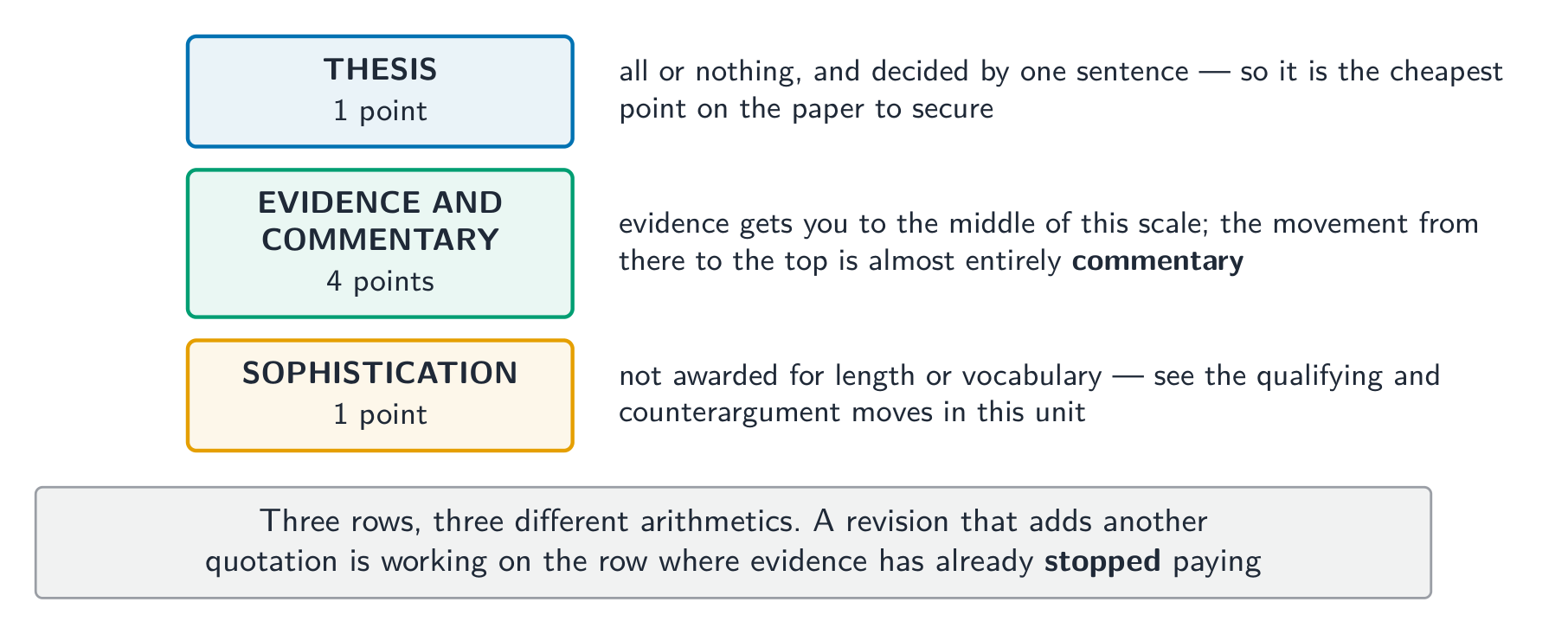
ثلاثة صفوف، وثلاثة عمليات حسابية مختلفة - راجع العملية التي لا تزال تدفع ثمنها
Explore · ⁨استكشف⁩

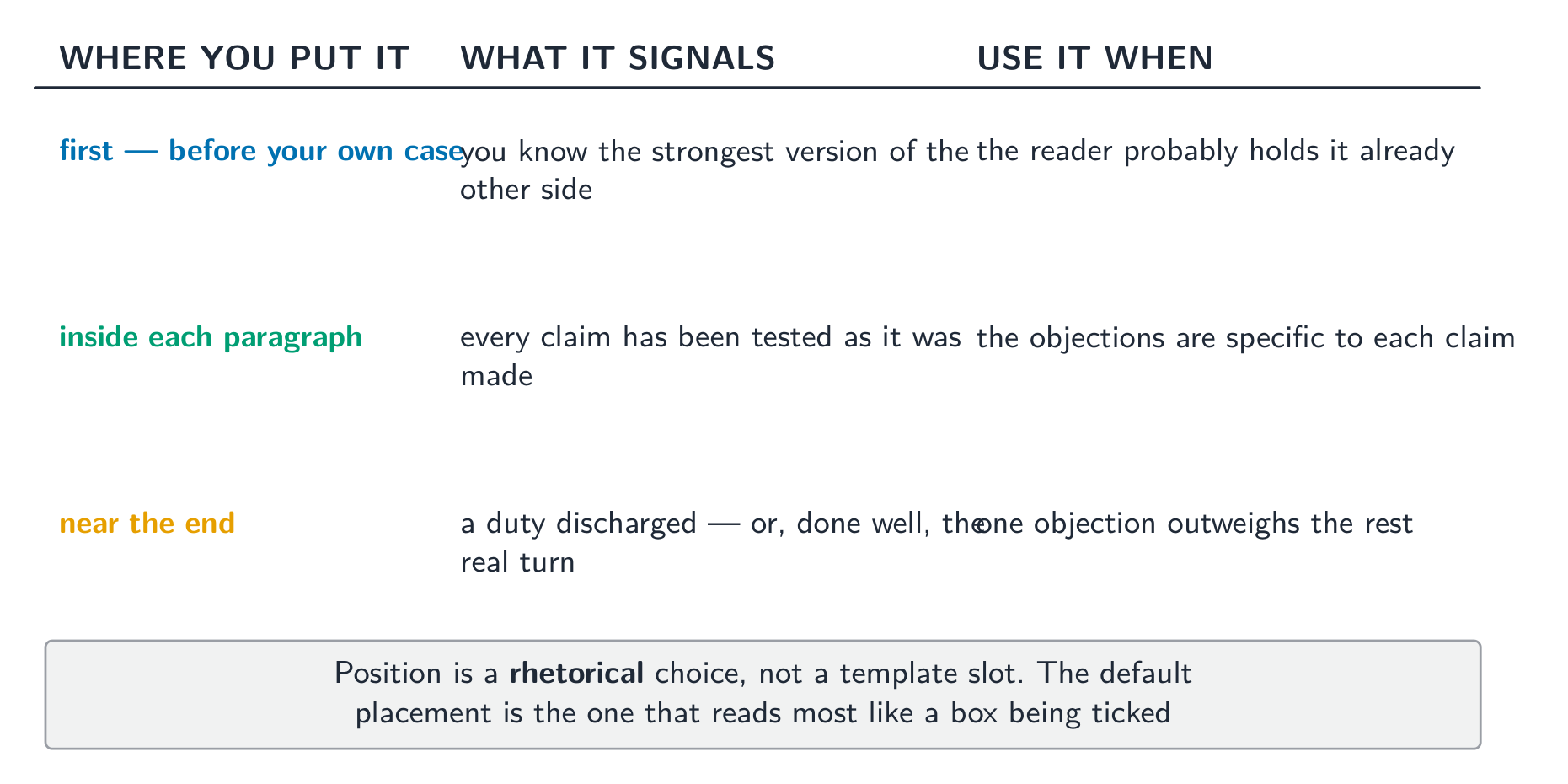
Place the counterargument, and say what it signals · ⁨ضع الحجة المضادة، وقل ماذا تدل عليه⁩

Position carries meaning: early it frames the essay, late it can read as a box being ticked. · ⁨الموضع يحمل معنى: مبكراً يُؤطر المقال، متأخراً قد يُقرأ كتعبئة مربع.⁩

Vocabulary · ⁨مفردات⁩ Train · ⁨تدريب⁩
English العربية
support, complement, or contradict/səˈpɔːt ˈkɒmplɪmənt ɔː ˌkɒntrəˈdɪkt/ دعم، تكميل، أو تناقض
Concede/kənˈsiːd/ الإقرار
Rebut/rɪˈbʌt/ الرد
Refute/rɪˈfjuːt/ الدحض
9.2

Qualifying a Claim · ⁨تأهيل الادعاء⁩

Syllabus · ⁨المنهج⁩
English

Enduring Understanding (CLE-1): Writers make claims about subjects, rely on evidence that supports the reasoning that justifies the claim, and often acknowledge or respond to other, possibly opposing, arguments.

Learning Objective 4.C: Writing – Qualify a claim using modifiers, counterarguments, or alternative perspectives.

  • CLE-1.AA Writers enhance their credibility when they refute, rebut, or concede opposing arguments and contradictory evidence.
  • CLE-1.AB When writers concede, they accept all or a portion of a competing position or claim as correct, agree that the competing position or claim is correct under a different set of circumstances, or acknowledge the limitations of their own argument.
  • CLE-1.AC When writers rebut, they offer a contrasting perspective on an argument and its evidence or provide alternative evidence to propose that all or a portion of a competing position or claim is invalid.
  • CLE-1.AD When writers refute, they demonstrate, using evidence, that all or a portion of a competing position or claim is invalid.
  • CLE-1.AE Transitions may be used to introduce counterarguments.
  • CLE-1.AF Not all arguments explicitly address a counterargument.
  • CLE-1.Y Effectively entering into an ongoing conversation about a subject means engaging the positions that have already been considered and argued about.
  • CLE-1.Z Evidence and sources will either support, complement, or contradict a writer’s thesis.
العربية

الفهم الدائم (CLE-1): يطرح الكُتّاب ادعاءات حول موضوعات معينة، ويعتمدون على أدلة تدعم البرهان الذي يبرر الادعاء، وغالبًا ما يعترفون بالرد على حجج أخرى، قد تكون معارضة.

الهدف التعليمي 4.ج: الكتابة – تقييد الادعاء باستخدام التعديلات أو الحجج المضادة أو المنظورات البديلة.

  • CLE-1.AA يعزز الكتاب مصداقيتهم عندما يدحضون، أو يجيبوا، أو يتنازلوا عن الحجج والأدلة المضادة.
  • CLE-1.AB عندما يتنازل الكتاب، فإنهم يقبلون كل或部分 من موقف أو ادعاء منافس باعتباره صحيحاً، أو يتفقون على أن الموقف أو الادعاء المنافس صحيح تحت مجموعة مختلفة من الظروف، أو يعترفون بحدود حجتهم الخاصة.
  • CLE-1.AC عندما يجيب الكتاب، فإنهم يقدمون منظوراً متناقضاً حول حجة وأدلتها أو يقدمون أدلة بديلة لاقتراح أن كل或部分 من موقف أو ادعاء منافس غير صالح.
  • CLE-1.AD عندما يدحض الكتاب، فإنهم يثبتون، باستخدام الأدلة، أن كل或部分 من موقف أو ادعاء منافس غير صالح.
  • CLE-1.AE يمكن استخدام الانتقالات لتقديم حجج مضادة.
  • CLE-1.AF ليس كل الحجج تتناول صراحةً حججاً مضادة.
  • CLE-1.Y الانخراط بفعالية في نقاش مستمر حول موضوع ما يعني التعامل مع المواقف التي تم النظر فيها ومناقشتها بالفعل.
  • CLE-1.Z supporting sources will either support, complement, or contradict a writer’s thesis.

Source: College Board AP Course and Exam Description · ⁨المصدر: وصف دورة وامتحان College Board AP⁩

English

For your own writing, the strongest and most reliable shape on Question 3 is:

  1. State your position, qualified to the ground your evidence covers.
  2. Concede the part of the opposing position that is genuinely correct.
  3. Rebut or refute the rest - rebut if you have an alternative reading, refute only if you have evidence of error.
  4. Show why your position survives the concession.

Step 4 is the one most students omit, and it is where the sophistication point lives. Conceding and then not returning to your own argument reads as having changed your mind.

Worked example (a real AP exam question). On a Question 3 argument prompt, compare two treatments of the same objection. Weak: "Some people disagree, but they are wrong." That names an opposing position without engaging it - it is neither concession, rebuttal, nor refutation. Strong: "The objection that the policy is too costly is correct as far as it goes: the direct expenditure is higher than any alternative considered. But cost is only decisive if the alternatives achieve the same result, and the same report shows they do not - so the comparison the objection depends on is not available." That paragraph concedes the cost, refutes the comparison with evidence, and returns to the writer's own position. Three moves, and every one of them is on the rubric.

العربية

لكتابة الخاصة بك، الشكل الأقوى والأكثر موثوقية في السؤال 3 هو:

  1. اذكر موقفك، مشروطاً بما تغطيه أدلتك.
  2. اعترف بالجزء من الموقف المعارض الذي هو صحيح حقاً.
  3. رد أو أضحِ على الباقي - رد إذا كانت لديك قراءة بديلة، إدحاض فقط إذا كانت لديك أدلة على الخطأ.
  4. بيّن لماذا يصمد موقفك أمام الاعتراف.

الخطوة 4 هي التي يتجاهلها معظم الطلاب، وهي حيث يكمن نقطة التطور. الاعتراف ثم عدم العودة لحجتك يُقرأ على أنه تغيير للرأي.

مثال محلل (سؤال حقيقي في امتحان AP). في سياق الجدال للسؤال 3، قارن بين تعاملين مع نفس الاعتراض. ضعيف: "بعض الناس يعترضون، لكنهم مخطئون." هذا يذكر موقعاً معارضاً دون الانخراط معه - فهو neither(rank) تنازل ولا رد ولا نفي. قوي: "الاعتراض بأن السياسة مكلفة للغاية صحيح إلى حد ما: الإنفاق المباشر أعلى من أي بديل تمConsidered. لكن التكلفة حاسمة فقط إذا حققت البدائل نفس النتيجة، ويوضح نفس التقرير أنهم لا يفعلون - لذا فإن المقارنة التي يعتمد عليها الاعتراض غير متاحة." هذه الفقرة تنازلت عن التكلفة، نفت المقارنة بالإثبات، وعادت إلى موقف الكاتب. ثلاث خطوات، وكل واحدة منها في المقياس.

الموقف هو اختيار بلاغي وليس خانة قالب
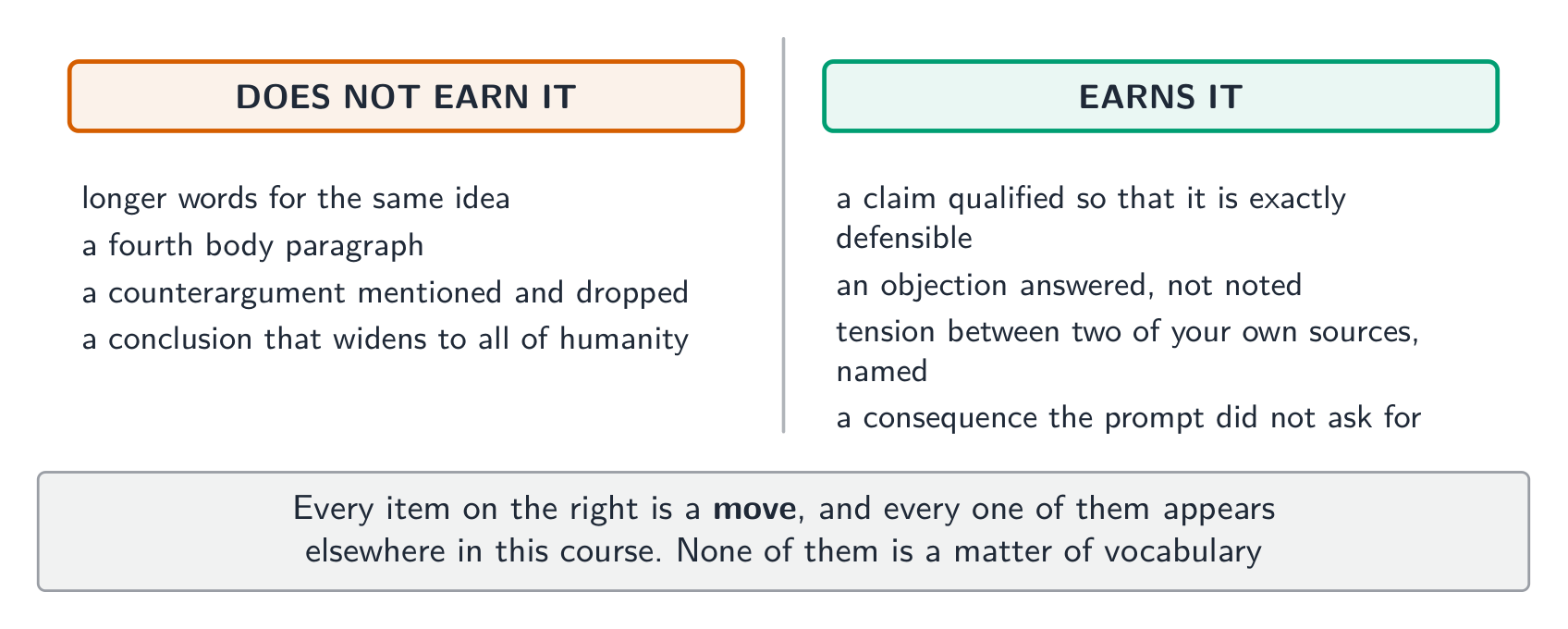
كل عنصر على اليمين هو حركة مُعلمة في مكان آخر من هذا المقرر
Explore · ⁨استكشف⁩

Sort what earns the sophistication point · ⁨رتّب ما يستحق نقطة التعقيد⁩

It rewards a specific set of moves, all taught elsewhere in this course. None of them is a matter of vocabulary. · ⁨إنها تكافئ مجموعة محددة من الحركات، جميعها مُدرَّسة في مكان آخر من هذا المقرر. لا شيء منها مسألة مفردات.⁩

9.2

Exam tips · ⁨نصائح للامتحان⁩

English
  • Concede, rebut, refute are three different claims. Do not use the words interchangeably.
  • Refute only with evidence of error. Without it, rebut instead - an alternative interpretation is almost always available.
  • Conceding raises credibility, by the CED's own statement. It is not a weakness.
  • After conceding, come back. An unreturned concession reads as agreement with the other side.
  • Use a transition that ranks the counterargument: the strongest objection to this is beats some people say.
  • When analysing a text, notice when it addresses no counterargument. That absence tells you who it was written for.
العربية
  • الاعتراف، الرد، الإدحاض هي ثلاثة ادعاءات مختلفة. لا تستخدم الكلمات تبديلاً عن بعضها.
  • أضحِ فقط بأدلة على الخطأ. بدونها، ارد بدلاً من ذلك - التفسير البديل متاح تقريباً دائماً.
  • الاعتراف يرفع المصداقية، حسب تصريح الـCED نفسه. إنه ليس عيباً.
  • بعد الاعتراف، عد إلى موقفك. الاعتراف الذي لا يُعاد إليه يُقرأ على أنه اتفاق مع الطرف الآخر.
  • استخدم انتقالية ترتب الحجة المعارضة: أقوى اعتراض على هذا هو تفوق بعض الناس يقولون.
  • عند تحليل نص، لاحظ متى يتجاهل لا الحجة المعارضة. غياب ذلك يخبرك بمن كُتب النص له.

Interactive lessons on this topic · ⁨دروس تفاعلية حول هذا الموضوع⁩

Work through it step by step, with instant-check exercises. · ⁨ا-working عليه خطوة بخطوة، مع تمارين تحقق فوري.⁩

Past Papers · ⁨أوراق الامتحانات السابقة⁩

More topics in AP English Language and Composition · ⁨اللغة الإنجليزية والتأليف (AP)⁩ · ⁨المزيد من المواضيع في AP English Language and Composition · ⁨اللغة الإنجليزية والتأليف (AP)⁩⁩

Log in or create account · ⁨تسجيل الدخول أو إنشاء حساب⁩

IGCSE, A-Level & AP