Skip to content · ⁨الانتقال إلى المحتوى⁩

Claims, Evidence, and the Rhetorical Situation · ⁨المزاعم والأدلة والموقف البلاغي⁩

AP English Language and Composition · ⁨اللغة الإنجليزية والتأليف (AP)⁩ · Topic 1 · ⁨الموضوع 1⁩

Video lesson for this topic · ⁨درس فيديو لهذا الموضوع⁩ Open the video page · ⁨افتح صفحة الفيديو⁩
6:20

الوحدة 1: الادعاءات، الدليل، والموقف البلاغي

هذا هو الإجابة الضعيفة الأكثر شيوعاً في هذا الكورس بأكمله. "الكاتب يستخدم سؤال بلاغياً." تلك الجملة لا تكسب شيئاً، وهي ما يفعله معظم…

English narration · English + 中文 subtitles burned in · ⁨سرد باللغة الإنجليزية · ترجمة مدمجة بالإنجليزية + الصينية⁩

1.1

The Rhetorical Situation · ⁨الوضع البلاغي⁩

Syllabus · ⁨المنهج⁩
English

Enduring Understanding (RHS-1): Individuals write within a particular situation and make strategic writing choices based on that situation.

Learning Objective 1.A: Reading – Identify and describe components of the rhetorical situation: the exigence, audience, writer, purpose, context, and message.

  • RHS-1.A The rhetorical situation of a text collectively refers to the exigence, purpose, audience, writer, context, and message.
  • RHS-1.B The exigence is the part of a rhetorical situation that inspires, stimulates, provokes, or prompts writers to create a text.
  • RHS-1.C The purpose of a text is what the writer hopes to accomplish with it. Writers may have more than one purpose in a text.
  • RHS-1.D An audience of a text has shared as well as individual beliefs, values, needs, and backgrounds.
  • RHS-1.E Writers create texts within a particular context that includes the time, place, and occasion.
العربية

الفهم الدائم (RHS-1): يكتب الأفراد ضمن موقف معين ويتخذون خيارات كتابة استراتيجية بناءً على ذلك الموقف.

هدف التعلم 1.A: القراءة – حدد ووصف مكونات الموقف البلاغي: الاستعجال، الجمهور، الكاتب، الغرض، السياق، والرسالة.

  • RHS-1.A يشير الموقف البلاغي لنص ما جمعيًا إلى الاستعجال، والغرض، والجمهور، والكاتب، والسياق، والرسالة.
  • RHS-1.B المبرر هو الجزء من الموقف البلاغي الذي يُلهم، أو يحفز، أو يثير، أو يدفع الكُتّاب إلى إنشاء نص.
  • RHS-1.C الغرض من النص هو ما يتوقع الكاتب تحقيقه من خلاله. قد يكون للكاتب أكثر من غرض في النص الواحد.
  • RHS-1.D للجمهور Shared beliefs, values, needs, and backgrounds مشتركة وفردية.
  • RHS-1.E يكتب الكُتّاب النصوص ضمن سياق محدد يشمل الوقت والمكان والمناسبة.
Source: College Board AP Course and Exam Description · ⁨المصدر: وصف دورة وامتحان College Board AP⁩

English

AP English Language is not a literature course. It is a course in how texts do work on readers, and Unit 1 installs the two ideas everything else is built on: the rhetorical situation and the claim-plus-evidence paragraph.

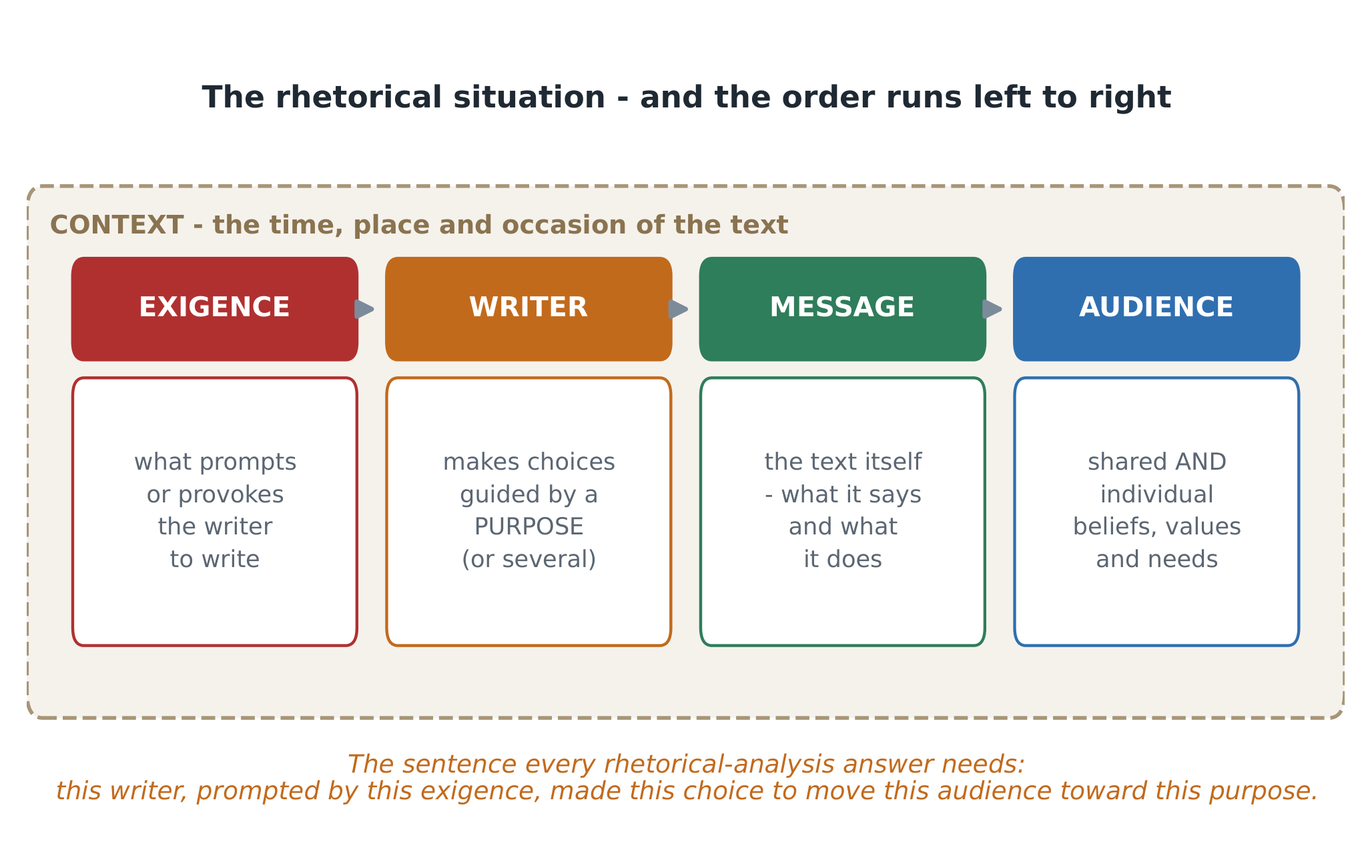
The CED defines the rhetorical situation 修辞情境 as the exigence, purpose, audience, writer, context, and message taken together. Each has a precise meaning, and using them precisely is what separates a strong answer from a vague one:

  • The exigence 促因 is the part of the situation that inspires, stimulates, provokes, or prompts a writer to create a text. It is the reason this text exists now.
  • The purpose 目的 is what the writer hopes to accomplish. A text may have more than one purpose.
  • The audience 受众 has shared as well as individual beliefs, values, needs, and backgrounds - so "the audience" is never a single uniform thing.
  • The context 语境 includes the time, place, and occasion in which the text was created.
  • The message is what the text actually says and does.

The most common weak answer in this course names a device and stops. The rhetorical situation is what turns a device into an argument: this writer, prompted by this exigence, made this choice to move this audience toward this purpose.

العربية

اللغة الإنجليزية AP ليست مادة أدبية. بل هي مادة عن كيفية تأثير النصوص على القراء، ووحدتي 1 تُرسّخان فكرتين يُبنى عليهما كل ما يلي: الموقف البلاغي والفقرة التي تتضمن ادعاءً وإثباتاً.

المكونات الستة، مرتبة بحيث يظهر الترتيب السببي
الاستغاثة تحفز الكاتب؛ السياق يحيط بكل شيء - وكل سؤال حول "الخيارات" يُجاب من هنا

يعرف CED الـ الوضع البلاغي 修辞情境 بأنه الاستغاثة، والهدف، والجمهور، والكاتب، والسياق، والرسالة مأخوذة معاً. لكل منها معنى دقيق، والاستخدام الدقيق لها هو ما يفصل الإجابة القوية عن الإجابة الغامضة:

  • الـ استغاثة 促因 هي جزء الوضع الذي يُلهم، ويحفز، أو يثير، أو يحفز الكاتب لإنشاء نص. إنه السبب في وجود هذا النص الآن.
  • الـ الهدف 目的 هو ما يأمل الكاتب إنجازه. قد يكون للنص أكثر من هدف واحد.
  • الـ الجمهور 受众 يمتلك مشاركة في المعتقدات والقيم والاحتياجات والخلفيات بالإضافة إلى فردية، لذا فإن "الجمهور" ليس شيئاً واحداً موحداً أبداً.
  • الـ السياق 语境 يشمل الزمان والمكان والمناسبة التي تم فيها إنشاء النص.
  • الرسالة هي ما يقوله النص بالفعل وما يفعلونه.

الإجابة الضعيفة الأكثر شيوعاً في هذه الدورة تسمى جهازاً وتتوقف. الوضع البلاغي هو ما يحول الجهاز إلى حجة: هذا الكاتب، مُحفز بواسطة هذه الاستغاثة، اتخذ هذا الخيار لتحريك هذا الجمهور نحو هذا الهدف.

Vocabulary · ⁨مفردات⁩ Train · ⁨تدريب⁩
English العربية
rhetorical situation/reˈtɒrɪkl ˌsɪtʃuːˈeɪʃn/ الموقف البلاغي
exigence/ˈeksɪdʒəns/ الدافع البلاغي
purpose/ˈpɜːpəs/ الغرض
audience/ˈɔːdɪəns/ الجمهور
context/ˈkɒntekst/ سياقه
claims/kleɪmz/ الادعاءات
evidence and/or reasoning/ˈevɪdəns ænd ɔː ˈriːzənɪŋ/ الدليل و/أو البرهان
Question 1, Synthesis/ˈkwestʃn wɒn ˈsɪnθəsɪs/ السؤال 1، التركيب
Question 2, Rhetorical Analysis/ˈkwestʃn tuː reˈtɒrɪkl əˈnæləsɪs/ السؤال 2، التحليل البلاغي
Question 3, Argument/ˈkwestʃn θriː ˈɑːɡjuːmənt/ السؤال 3، الحجة
1.2

Identifying Claims and Evidence · ⁨تحديد الادعاءات والأدلة⁩

Syllabus · ⁨المنهج⁩
English

Enduring Understanding (CLE-1): Writers make claims about subjects, rely on evidence that supports the reasoning that justifies the claim, and often acknowledge or respond to other, possibly opposing, arguments.

Learning Objective 3.A: Reading – Identify and explain claims and evidence within an argument.

  • CLE-1.A Writers convey their positions through one or more claims that require a defense.
  • CLE-1.B Writers defend their claims with evidence and/or reasoning.
  • CLE-1.C Types of evidence may include facts, anecdotes, analogies, statistics, examples, details, illustrations, expert opinions, personal observations, personal experiences, testimonies, or experiments.
  • CLE-1.D Effective claims provoke interest and require a defense, rather than simply stating an obvious, known fact that requires no defense or justification.
  • CLE-1.E Writers relate source material to their own argument by syntactically embedding particular quoted, paraphrased, or summarized information from one or more sources into their own ideas.
العربية

الفهم الدائم (CLE-1): يطرح الكُتّاب ادعاءات حول موضوعات معينة، ويعتمدون على أدلة تدعم البرهان الذي يبرر الادعاء، وغالبًا ما يعترفون بالرد على حجج أخرى، قد تكون معارضة.

الهدف التعليمي 3.A: القراءة - تحديد وشرح الادعاءات والأدلة داخل الحجة.

  • CLE-1.A ينقل الكُتّاب مواقفهم من خلال ادعاء واحد أو أكثر يتطلب الدفاع عنه.
  • CLE-1.B يدافع الكُتّاب عن ادعاءاتهم بالأدلة و/أو البرهان.
  • CLE-1.C قد تشمل أنواع الأدلة: الحقائق، والقصص القصيرة، والتشبيهات، والإحصائيات، والأمثلة، والتفاصيل، والتمثيلات، وآراء الخبراء، والملاحظات الشخصية، والخبرات الشخصية، والشهادات، أو التجارب.
  • CLE-1.D الادعاءات الفعالة تثير الاهتمام وتتطلب دفاعًا، بدلاً من مجرد ذكر حقيقة واضحة ومعروفة لا تتطلب دفاعًا أو تبريرًا.
  • CLE-1.E يرتبط الكُتّاب بمواد المصدر بحججتهم الخاصة من خلال دمج معلومات مستقاة مباشرة أو مفسرة أو موجزة من مصدر أو أكثر بشكل نحوي داخل أفكارهم الخاصة.

Source: College Board AP Course and Exam Description · ⁨المصدر: وصف دورة وامتحان College Board AP⁩

English
  • Writers convey their positions through one or more claims 主张 that require a defence.
  • Writers defend their claims with evidence and/or reasoning 证据与推理.
  • Types of evidence include facts, anecdotes, analogies, statistics, examples, details, illustrations, expert opinions, and personal experience - a deliberately wide list, because recognising an anecdote or an analogy as evidence is itself a skill.
  • Effective claims provoke interest and require a defence, rather than stating an obvious, known fact that requires no proof.

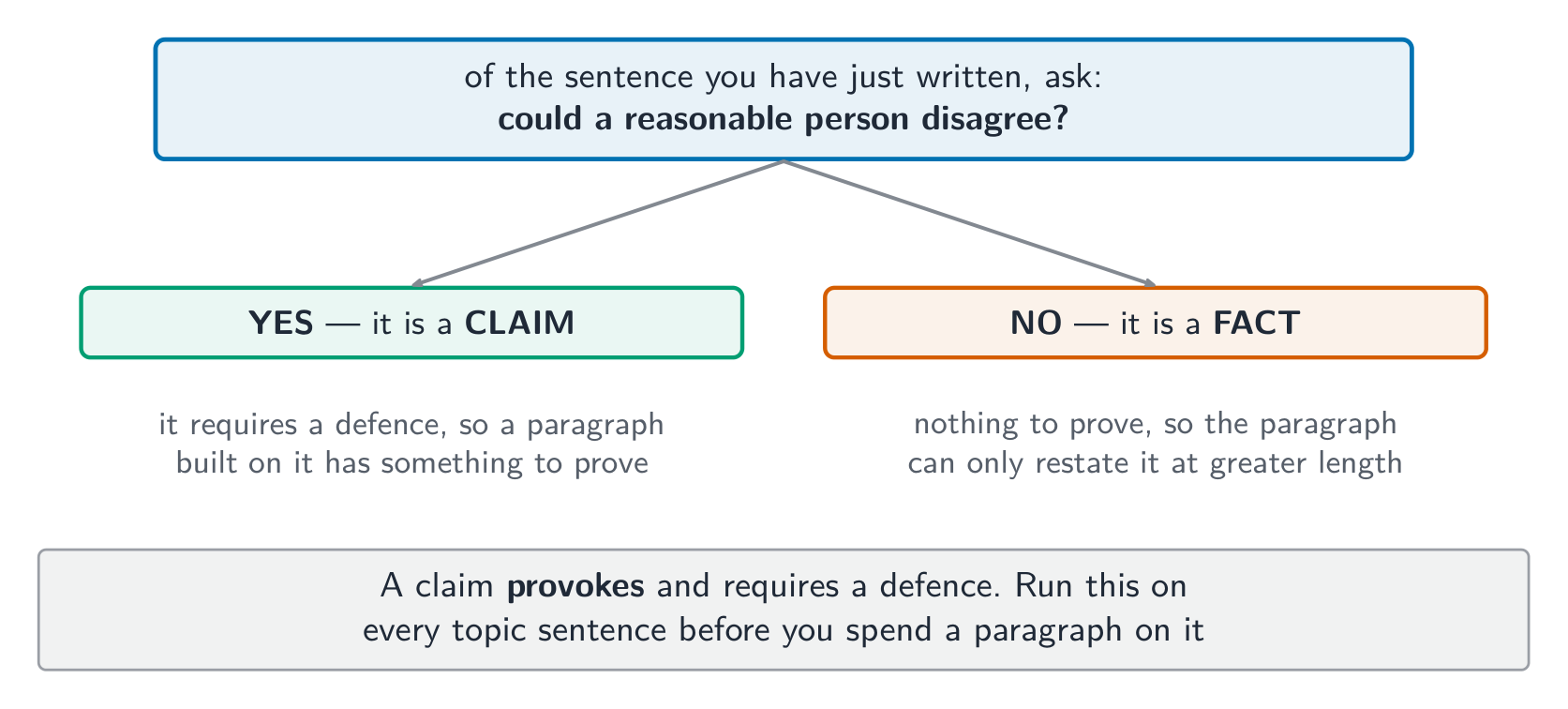
That fourth point is the most useful test you have. Ask of any sentence: could a reasonable person disagree? If not, it is not a claim - it is a fact, and building a paragraph on it produces writing with nothing to prove.

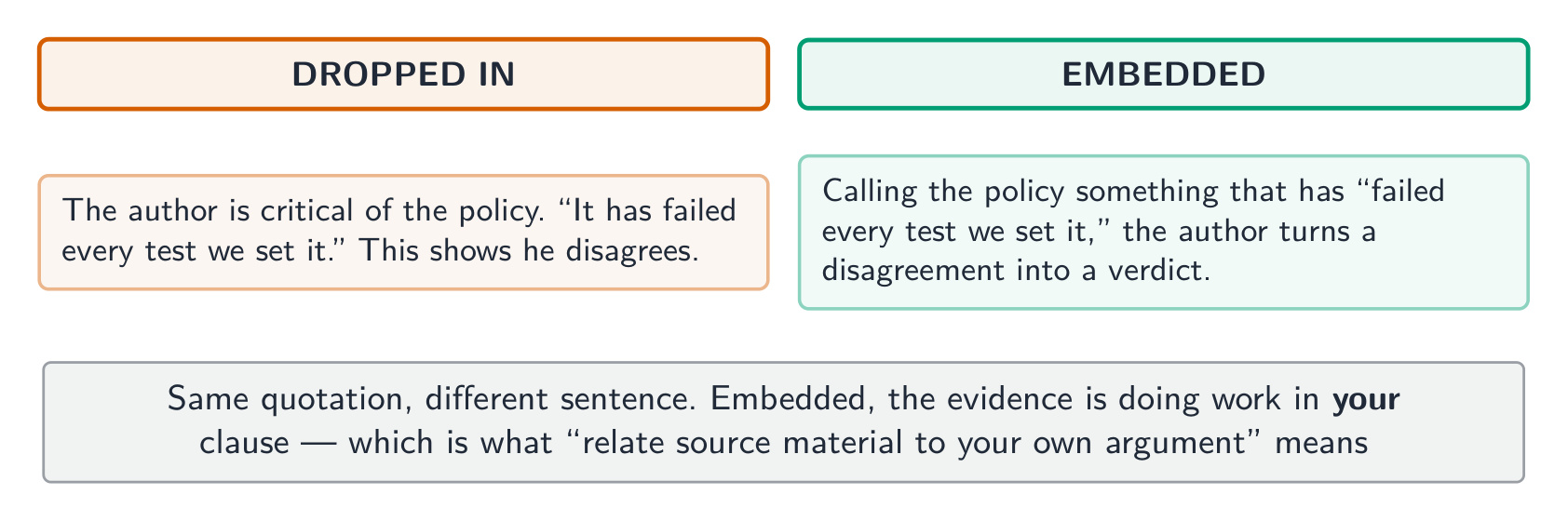
Finally, writers relate source material to their own argument by syntactically embedding quoted, paraphrased, or summarised material into their own sentences. The evidence is not dropped in beside your sentence; it is built into it.

العربية
  • ينقل الكُتّاب مواقفهم من خلال ادعاء واحد أو أكثر ادعاءات 主张 تتطلب دفاعاً.
  • يدافع الكُتّاب عن ادعاءاتهم باستخدام الأدلة و/أو الاستنتاج 证据与推理.
  • تشمل أنواع الأدلة الحقائق، والحكايات، والتشبيهات، والإحصائيات، والأمثلة، والتفاصيل، والتمثيلات، وآراء الخبراء، والخبرة الشخصية - قائمة واسعة عمدياً، لأن التعرف على الحكاية أو التشبيه كأدلة هو مهارة بحد ذاته.
  • الادعاءات الفعالة تثير الاهتمام وتتطلب دفاعاً، بدلاً من stating حقيقة واضحة ومعلومة تتطلب برهاناً.

هذه النقطة الرابعة هي الاختبار الأكثر فائدة لديك. اسأل أي جملة: هل يمكن لشخص معقول أن يختلف؟ إذا لم يكن كذلك، فهي ليست ادعاء - بل هي حقيقة، وبناء فقرة عليها ينتج كتابة بلا ما يثبت.

أخيراً، يرتبط الكُتّاب مواد المصدر بحججتهم الخاصة عن طريق الانغماس النحوي للمواد المقتبسة أو المعاد صياغتها أو المُختصرة في جملهم الخاصة. الأدلة لا تُسقط بجانب جملتك؛ بل تُبنى بداخلها.

الاختبار الوحيد الذي يفصل بين الادعاء والحقيقة: هل يمكن لشخص معقول أن يختلف؟
نفس الاقتباس مُسقط ومُندمج - واحد منهما فقط يعمل في جملتك
Explore · ⁨استكشف⁩

Claim or fact? Run the test on each sentence · ⁨ادعاء أم حقيقة؟ قم باختبار كل جملة⁩

The test is one question: could a reasonable person disagree? If not, it is not a claim and a paragraph on it has nothing to prove. · ⁨الاختبار عبارة عن سؤال واحد: هل يمكن لشخص معقول أن يختلف؟ إذا لم يكن الأمر كذلك، فهو ليس ادعاءً وللفقرة الخاصة به ما لا يثبت.⁩

1.3

Developing a Paragraph with Claim and Evidence · ⁨تطوير فقرة بالادعاء والدليل⁩

Syllabus · ⁨المنهج⁩
English

Enduring Understanding (CLE-1): Writers make claims about subjects, rely on evidence that supports the reasoning that justifies the claim, and often acknowledge or respond to other, possibly opposing, arguments.

Learning Objective 4.A: Writing – Develop a paragraph that includes a claim and evidence supporting the claim.

  • CLE-1.A Writers convey their positions through one or more claims that require a defense.
  • CLE-1.B Writers defend their claims with evidence and/or reasoning.
  • CLE-1.C Types of evidence may include facts, anecdotes, analogies, statistics, examples, details, illustrations, expert opinions, personal observations, personal experiences, testimonies, or experiments.
  • CLE-1.D Effective claims provoke interest and require a defense, rather than simply stating an obvious, known fact that requires no defense or justification.
  • CLE-1.E Writers relate source material to their own argument by syntactically embedding particular quoted, paraphrased, or summarized information from one or more sources into their own ideas.
العربية

الفهم الدائم (CLE-1): يطرح الكُتّاب ادعاءات حول موضوعات معينة، ويعتمدون على أدلة تدعم البرهان الذي يبرر الادعاء، وغالبًا ما يعترفون بالرد على حجج أخرى، قد تكون معارضة.

الهدف التعليمي 4.A: الكتابة - تطوير فقرة تتضمن ادعاءً وأدلة تدعم هذا الادعاء.

  • CLE-1.A ينقل الكُتّاب مواقفهم من خلال ادعاء واحد أو أكثر يتطلب الدفاع عنه.
  • CLE-1.B يدافع الكُتّاب عن ادعاءاتهم بالأدلة و/أو البرهان.
  • CLE-1.C قد تشمل أنواع الأدلة: الحقائق، والقصص القصيرة، والتشبيهات، والإحصائيات، والأمثلة، والتفاصيل، والتمثيلات، وآراء الخبراء، والملاحظات الشخصية، والخبرات الشخصية، والشهادات، أو التجارب.
  • CLE-1.D الادعاءات الفعالة تثير الاهتمام وتتطلب دفاعًا، بدلاً من مجرد ذكر حقيقة واضحة ومعروفة لا تتطلب دفاعًا أو تبريرًا.
  • CLE-1.E يرتبط الكُتّاب بمواد المصدر بحججتهم الخاصة من خلال دمج معلومات مستقاة مباشرة أو مفسرة أو موجزة من مصدر أو أكثر بشكل نحوي داخل أفكارهم الخاصة.

Source: College Board AP Course and Exam Description · ⁨المصدر: وصف دورة وامتحان College Board AP⁩

English

Unit 1's writing objective is deliberately small: write one paragraph containing a claim and evidence that supports it. Everything later in the course is an elaboration of this.

A working shape:

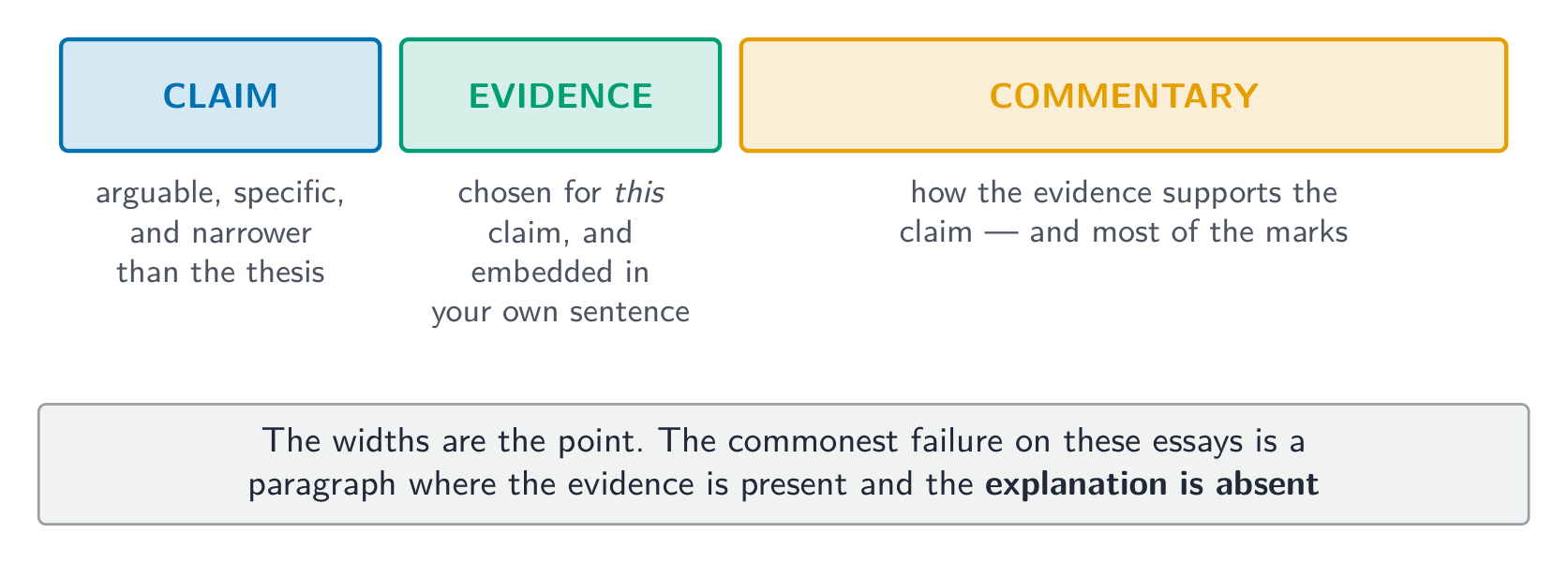
  1. A claim that requires defence - arguable, specific, and narrower than the whole thesis.
  2. Evidence chosen because it supports this claim, embedded syntactically rather than dropped in.
  3. Commentary explaining how the evidence supports the claim - the step students skip, and the one that carries most of the marks on the exam.

The single most common failure on the AP Language essays is a paragraph in which the evidence is present and the explanation is absent. The reader can see the quotation; what they cannot see is why you think it proves your point.

العربية

الهدف الكتابي لوحدتي 1 صغير بقصد: اكتب فقرة واحدة تحتوي على ادعاء وإثبات يدعمه. كل ما يليه في المقرر هو تفصيل لهذا الهدف.

شكل عامل:

  1. ادعاء يتطلب دفاعاً - قابل للنقاش، محدد، وأن أضيق من الأطروحة الكلية.
  2. الأدلة مختارة لأنها تدعم هذا الادعاء، مُندمجة نحواياً بدلاً من إسقاطها.
  3. التعليق الذي يوضح كيف يدعم الدليل الادعاء - وهو الخطوة التي يتخطاها الطلاب، والخطوة التي تحمل معظم الدرجات في الامتحان.

الفشل الأكثر شيوعًا على level essays في AP Language هو فقرة تحتوي على الدليل لكن تفتقر إلى التفسير. يمكن للقارئ رؤية الاقتباس؛ لكنه لا يرى لماذا تعتقد أنه يثبت نقطتك.

الفقرة مرسومة按比例 proportions she should have - the widths are the point
Explore · ⁨استكشف⁩

Build a paragraph in proportion · ⁨بناء فقرة متناسبة⁩

The commonest failure on these essays is a paragraph where the evidence is present and the explanation is absent. · ⁨الفشل الأكثر شيوعاً في هذه المقالات هو فقرة حيث الأدلة موجودة والشرح غائب.⁩

1.3

What the Exam Actually Asks · ⁨ما يسأله الامتحان فعليًا⁩

English

The free-response section has three questions, and they use the same skills in different arrangements:

  • Question 1, Synthesis 综合写作: you are given several sources and must build your own argument, using the sources as evidence rather than summarising them.
  • Question 2, Rhetorical Analysis 修辞分析: you are given one text and must explain the choices the writer makes and how those choices contribute to purpose - which is the rhetorical situation applied.
  • Question 3, Argument 论证写作: you are given a claim or a scenario and must argue a position, using evidence from your own knowledge and experience.

All three are marked on a six-point rubric with the same three rows: thesis (1 point), evidence and commentary (4 points), and sophistication (1 point). Knowing that shape from Unit 1 tells you where the marks are: four of the six come from evidence and the commentary on it, so a plan that produces evidence without explanation caps you at low marks no matter how good the writing sounds.

Worked example (a real AP exam task). A Rhetorical Analysis prompt asks you to "explain the writer's rhetorical choices" in a given passage. A row-scoring answer does not say "the writer uses a rhetorical question." It says: "Faced with an audience that already agrees on the problem but not on its urgency, the writer opens with a question rather than a statement, forcing readers to supply the answer themselves and so to feel the conclusion as their own rather than as one imposed on them." Notice what earns the points: the audience, the choice, and the effect on purpose - the rhetorical situation, used.

العربية

القسم المفتوح الإجابة يحتوي على ثلاث أسئلة، ويستخدم نفس المهارات بتخطيطات مختلفة:

  • السؤال 1، التوليف: Synthesis: يُعطى لك عدة مصادر ويجب أن تبني حججتك الخاصة، باستخدام المصادر كدليل بدلاً من تلخيصها.
  • السؤال 2، التحليل البلاغي: Rhetorical Analysis: يُعطى لك نص واحد ويجب أن تشرح الخيارات التي اتخذها الكاتب وكيف تساهم تلك الخيارات في الغرض - وهو تطبيق الموقف البلاغي.
  • السؤال 3، الحجة: Argument: يُعطى لك ادعاء أو سيناريو ويجب أن تدافع عن موقف باستخدام أدلة من معرفتك وخبراتك الخاصة.

تُصنف الثلاثة جميعاً وفق مقياس تقييم من ست نقاط بثلاثة صفوف متطابقة: الفرضية (1 نقطة)، الإثبات والتعليق (4 نقاط)، والعمق (1 نقطة). معرفة هذا الشكل من وحدتي 1 يخبرك بمصدر الدرجات: أربعة من الست تأتي من الإثبات والتعليق عليه، لذا فإن خطة تنتج إثباتاً دون شرح تحدد حدك عند درجات منخفضة بغض النظر عن جودة الأسلوب.

مثال محلول (مهمة امتحان AP حقيقية). يطلب سؤال تحليل بلاغي منك "شرح الخيارات البلاغية للكاتب" في مقطع معطى. إجابة تصنف بالصفوف لا تقول "يستخدم الكاتب سؤالاً بلاغيًا". بل تقول: "بصفتهم أمام جمهور موافق بالفعل على المشكلة لكن غير متفق على urgency، يبدأ الكاتب بسؤال بدلاً من جملة خبرية، مما يجبر القراء على تزويد الإجابة بأنفسهم وبالتالي الشعور بالنتيجة كتجربة شخصية لهم بدلاً من فرض عليها." لاحظ ما يحقق النقاط: الجمهور، الاختيار، والتأثير على الغرض - استخدام الموقف البلاغي.

1.3

Exam tips · ⁨نصائح للامتحان⁩

English
  • Learn the six components by name and use the names. Precision here is directly rewarded.
  • Exigence is not the same as purpose. Exigence is what prompted the text; purpose is what the writer wants to achieve.
  • Test every claim with could a reasonable person disagree? If not, it is a fact, not a claim.
  • Embed evidence in your own sentence. Dropped quotations read as unprocessed.
  • Four of six points are evidence and commentary. Write the commentary; it is where most lost marks live.
  • Never name a device without saying what it does to the audience. A device with no effect earns nothing.
العربية
  • احفظ المكونات الستة بأسمائها واستخدم الأسماء. الدقة هنا مجزية مباشرةً.
  • الإلحاح ليس هو نفسه الغرض. الإلحاح هو ما حرك النص؛ والغرض هو ما يريد الكاتب تحقيقه.
  • اختبر كل ادعاء بـ هل يمكن لشخص معقول أن يختلف؟ إذا لم يكن الأمر كذلك، فهو حقيقة وليس ادعاءً.
  • أدرج الدليل في جملتك الخاصة. الاقتباسات المنفصلة تُقرأ كمعالجة غير مكتملة.
  • أربعة من ستة نقاط هي للدليل والتعليق. اكتب التعليق؛ لأنه المكان الذي توجد فيه معظم الدرجات المفقودة.
  • لا تذكر جهاز بلاغي أبدًا دون قول ماذا يفعل بالجماهير. الجهاز الذي لا تأثير له لا يحقق أي شيء.

Interactive lessons on this topic · ⁨دروس تفاعلية حول هذا الموضوع⁩

Work through it step by step, with instant-check exercises. · ⁨ا-working عليه خطوة بخطوة، مع تمارين تحقق فوري.⁩

Past Papers · ⁨أوراق الامتحانات السابقة⁩

More topics in AP English Language and Composition · ⁨اللغة الإنجليزية والتأليف (AP)⁩ · ⁨المزيد من المواضيع في AP English Language and Composition · ⁨اللغة الإنجليزية والتأليف (AP)⁩⁩

Log in or create account · ⁨تسجيل الدخول أو إنشاء حساب⁩

IGCSE, A-Level & AP