Skip to content · ⁨الانتقال إلى المحتوى⁩
Subjects · ⁨المواد⁩

AP 2-D Art and Design · ⁨الفنون والتصميم AP 2-D⁩

Tips

AP 2-D Art and Design is a portfolio course, not an exam course. You submit fifteen Selected Works demonstrating 2-D design skills, and a Sustained Investigation of fifteen images with written evidence showing how one inquiry question developed over time.

The Sustained Investigation is judged on the process, not on fifteen finished pieces. Work that experiments, revises and visibly changes scores higher than fifteen polished but unrelated images.

The writing is assessed too. A vague inquiry question — "I explored colour" — cannot be evidenced; a specific one can. Photograph and date every stage as you go, because the evidence of development cannot be reconstructed at the end.

This is a portfolio course, so the notes deal with what Selected Works and Sustained Investigation actually require, and with writing the accompanying text inside the character limits. There is no written exam to revise for; the library carries the published scoring guidelines instead.

Train all vocabulary · ⁨تدريب كل المفردات⁩
  • 1

    Elements of Art · ⁨عناصر الفن⁩

    Watch lesson · ⁨شاهد الدرس⁩
    1.1

    Line · ⁨الخط⁩

    Syllabus · ⁨المنهج⁩
    English

    Focus: Line is the most basic element of art — a moving point that the eye follows across a surface.

    • A line is a mark with length and direction: straight, curved, angular, or freeform.
    • Lines vary in quality — thick or thin, smooth or rough, continuous or broken, dark or light.
    • Contour lines trace the edges of a form; gesture lines quickly capture movement and energy.
    • Implied lines are suggested, not drawn — by a row of objects, a pointing arm, or a gaze.
    • Direction carries feeling: horizontal reads as calm, vertical as strength, diagonal as action.
    • Artists use line to build shape, shade value (hatching, cross-hatching), imply texture, and lead the eye.
    العربية

    التركيز: الخط هو العنصر الأساسي للفن — نقطة متحركة يتبعها العين عبر سطح.

    • الخط علامة ذات طول واتجاه: مستقيم، منحني، زاوي، أو حر.
    • تختلف خطوط الجودة — سميكة أو رفيعة، ناعمة أو خشنة، متصلة أو متقطعة، داكنة أو فاتحة.
    • تحدد خطوط الحدود حواف الشكل؛ وتلتقط خطوط الإيماء الحركة والطاقة بسرعة.
    • الخطوط الضمنية مقترحة وليست مرسومة — بواسطة صف من الأشياء أو ذراع указатель أو نظرة.
    • الاتجاه يحمل مشاعر: الأفقي يُقرأ كهدوء، والعمودي كقوة، والقطري كحركة.
    • يستخدم الفنانون الخط لبناء الشكل وظلال القيمة (التظليل المتقاطع)، وإيضاح الملمس، وتوجيه العين.
    Source: College Board AP Course and Exam Description · ⁨المصدر: وصف دورة وامتحان College Board AP⁩

    English

    The elements of art 艺术元素 are the visual "building blocks" every artist uses. The first is line 线条 — a moving point that the eye follows.

    • A line has length and direction; it can be straight, curved, angular, or freeform.
    • Lines have quality: thick or thin, smooth or rough, continuous or broken, dark or light.
    • Contour 轮廓 lines trace the edges of a form; gesture 动态速写 lines capture movement quickly.
    • Implied lines 隐含线 are not drawn but suggested — by a row of objects or a person's gaze.

    Direction carries feeling: horizontal lines feel calm, vertical lines feel strong, and diagonal lines feel active. Artists use line to build shape, shade value (hatching), imply texture, and lead the viewer's eye.

    العربية

    عناصر الفن البصري هي "الوحدات البنائية" المرئية التي يستخدمها كل فنان. الأول هو الخط — نقطة متحركة يتابعها العين.
    • الخط له طول واتجاه؛ يمكن أن يكون مستقيماً، منحنيًا، زاويًا، أو حرًا.
    • الخطوط لها جودة: سميكة أو رقيقة، ناعمة أو خشنة، متصلة أو متقطعة، داكنة أو فاتحة.
    • خطوط التضاريس تتبع حواف الشكل؛ خطوط الإيماءات تصور الحركة بسرعة.
    • الخطوط الضمنية غير مرسومة بل مُستدلَّ عليها — عبر صف من الأشياء أو نظر شخص.
    طباعة خشبية لهوكوساي لموجة ضخمة لولبية على وشك الاصطدام بقوارب صغيرة، مع جبل فوجي صغير في الخلفية
    موجة كاناجاوا العظيمة لهوكوساي: حدود منحنية جريئة تقود العين عبر الموجة، وخطوات الرغوة الشبيهة بالمخالب تخلق حركة
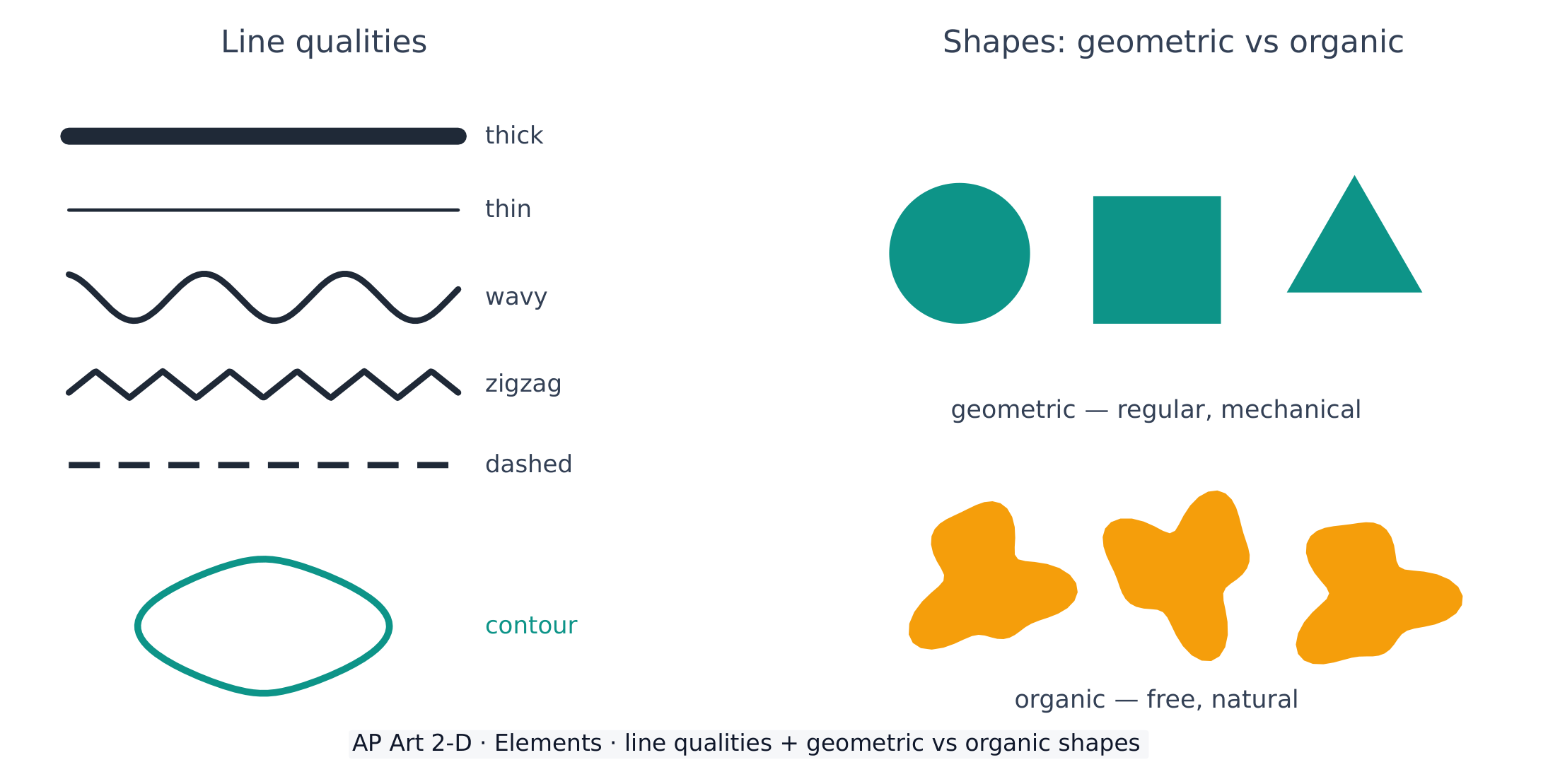
    جودة الخط والفرق بين الأشكال الهندسية والعضوية
    يتغير الخط في وزنه وشخصيته؛ الأشكال إما هندسية (منتظمة) أو عضوية (طبيعية)

    الاتجاه يحمل شعوراً: الخطوط الأفقية توحي بالهدوء، والعمودية بالقوة، والمائلة بالنشاط. يستخدم الفنانون الخط لبناء الشكل، وتظليل القيمة (بالخطوط المتقاطعة)، والإيحاء بالملمس، وتوجيه عين المشاهد.

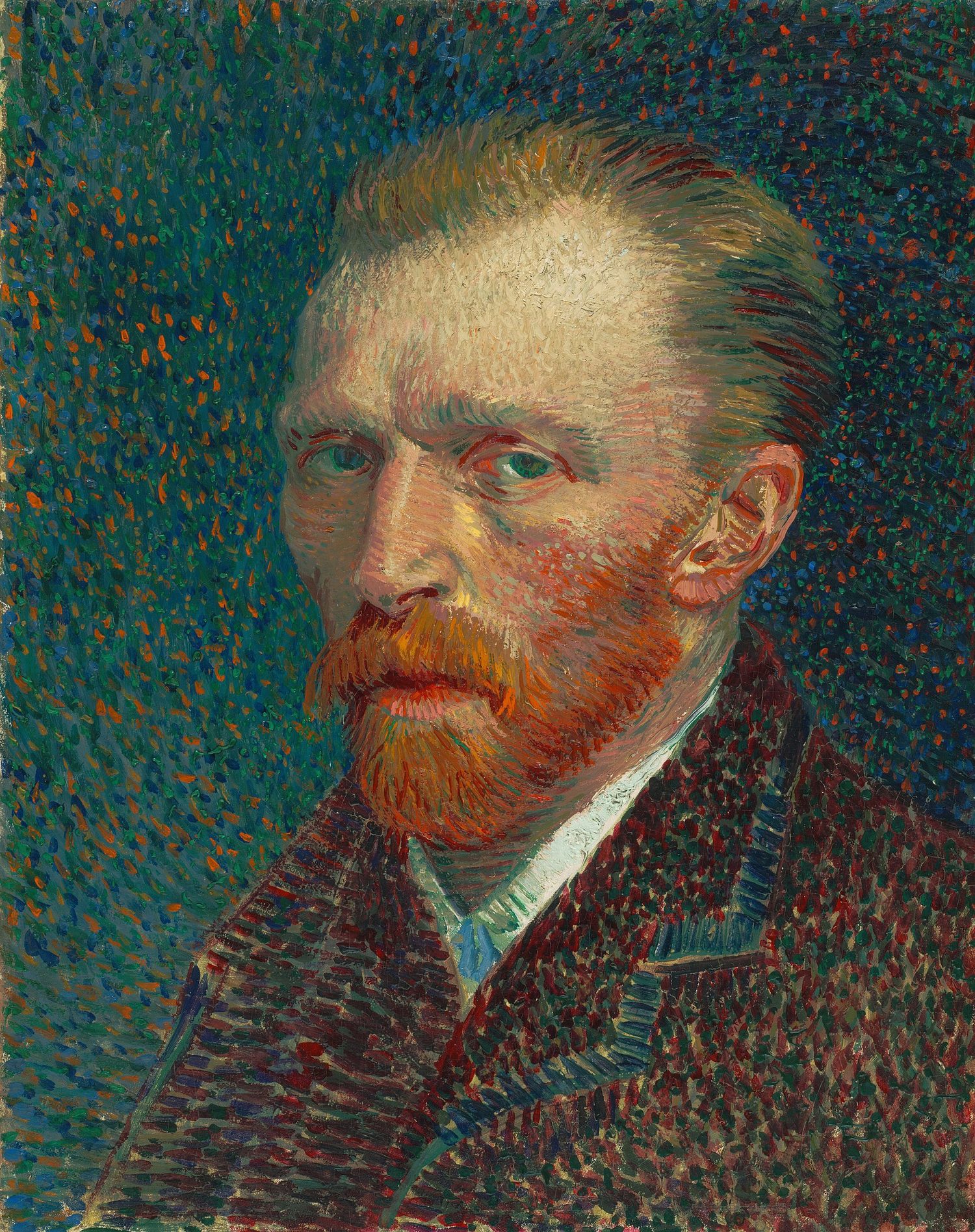
    بورتريه ذاتي لفان جوخ: ضربات فرشاة قطرية قصيرة ومضطربة تملأ الخلفية، بينما تبقى الأكتاف والياقة واسعة وهادئة
    بورتريه فان جوخ ذاتي: ضربات قطرية مضطربة خلف أكتاف أفقية هادئة — نفس الاتجاهين يؤديان عملين متعاكسين في لوحة واحدة
    Vocabulary · ⁨مفردات⁩ Train · ⁨تدريب⁩
    English العربية
    elements of art/ˈelɪmənts ɒv ɑːt/ عناصر الفن
    line/laɪn/ خط
    Contour/ˈkɒntʊə/ حدودي
    gesture/ˈdʒestʃə/ إيماءة
    Implied lines/ɪmˈplaɪd laɪnz/ خطوط مستنتجة
    shape/ʃeɪp/ الشكل
    form/fɔːm/ مجسم
    Geometric/ˌdʒiːəʊˈmetrɪk/ هندسي
    organic/ɔːˈɡænɪk/ عضوي
    Positive shape/ˈpɒzɪtɪv ʃeɪp/ شكل إيجابي
    negative shape/ˈneɡətɪv ʃeɪp/ شكل سلبي
    1.2

    Shape and Form · ⁨الشكل والشكل المجسم⁩

    Syllabus · ⁨المنهج⁩
    English

    Focus: Shape is a flat, enclosed area; form is the illusion of a three-dimensional object on a 2-D surface.

    • A shape is a two-dimensional area with a boundary; form appears three-dimensional (height, width, depth).
    • Geometric shapes (circle, square, triangle) are regular and mechanical; organic shapes are free and natural.
    • Positive shapes are the objects; negative shapes are the empty spaces around and between them.
    • Form is created on a flat surface through value (shading), overlapping, and perspective.
    • Recognising negative space helps an artist see and compose more accurately.
    العربية

    تركيز: الشكل هو مساحة مسطحة ومغلقة؛ بينما الشكل المجسم هو وهم لثلاثي الأبعاد على سطح 2-D.

    • الشكل هو منطقة ثنائية الأبعاد ذات حدود؛ أما الشكل المجسم فيظهر ثلاثي الأبعاد (ارتفاع، عرض، عمق).
    • أشكال هندسية (دائرة، مربع، مثلث) منتظمة وآلية؛ أشكال عضوية حرة وطبيعية.
    • الأشكال الموجبة هي الأجسام؛ والأشكال السالبة هي المساحات الفارغة المحيطة بها وبينها.
    • يُنشأ الشكل المجسم على سطح مسطح من خلال القيمة (التظليل)، والتداخل، والمنظور.
    • التعرف على الفراغ السالب يساعد الفنان على الرؤية والتكوين بدقة أكبر.

    Source: College Board AP Course and Exam Description · ⁨المصدر: وصف دورة وامتحان College Board AP⁩

    English

    A shape 形状 is a flat, enclosed area; a form 形体 has the illusion of three dimensions (height, width, and depth).

    • Geometric 几何 shapes (circle, square, triangle) are regular and mechanical; organic 有机 shapes are free and natural.
    • Positive shape 正形 is the object; negative shape 负形 is the empty space around and between objects — learning to see it makes drawing far more accurate.
    • Form is created on a flat surface with value (shading), overlapping, and perspective.
    العربية

    الشكل هو منطقة مسطحة مغلقة؛ الشكل المجسم له وهم بالأبعاد الثلاثة (الارتفاع، العرض، والعمق).

    • أشكال هندسية (دائرة، مربع، مثلث) منتظمة وآلية؛ أشكال عضوية حرة وطبيعية.
    • الشكل الإيجابي هو الجسم؛ الشكل السلبي هو الفراغ المحيط بها وبينها — تعلم رؤيته يجعل الرسم أدق بكثير.
    • يُنشأ الشكل المجسم على سطح مسطح باستخدام القيمة (التظليل)، والتداخل، والمنظور.
    1.3

    Value · ⁨القيمة⁩

    Syllabus · ⁨المنهج⁩
    English

    Focus: Value is the lightness or darkness of a colour or tone — the key to showing form and depth.

    • Value runs from white through greys to black; a value scale shows the gradual steps.
    • Highlight, midtone, core shadow, reflected light, and cast shadow describe light on a form.
    • Strong value contrast creates drama and a clear focal point; close values feel soft and calm.
    • Chiaroscuro is the bold use of light and dark to model three-dimensional form.
    • Squinting removes colour and helps an artist judge value relationships.
    العربية

    التركيز: القيمة هي درجة إضاءة أو ظلمة اللون أو النبرة — وهي المفتاح لإظهار الشكل المجسم والعمق.

    • القيمة تمتد من الأبيض عبر الرمادي إلى الأسود؛ ومقياس القيم يُظهر الخطوات التدريجية.
    • الإضاءة، النبرة المتوسطة، ظل الجسم الأساسي، الضوء المنعكس، والظل المُلقي تصف الضوء الساقط على الشكل المجسم.
    • التباين القوي في القيم يخلق دراما ونقطة تركيز واضحة؛ بينما القيم المتقاربة توحي بالنعومة والهدوء.
    • الكياروسكورو هو الاستخدام الجريء للضوء والظل لنحت الشكل المجسم ثلاثي الأبعاد.
    • تقبيل العين ينزع الألوان ويساعد الفنان على تقييم علاقات القيم.

    Source: College Board AP Course and Exam Description · ⁨المصدر: وصف دورة وامتحان College Board AP⁩

    English
    Light logic: how light describes form
    The value scale

    Value 明度 is the lightness or darkness of a tone — the single most powerful tool for showing three-dimensional form.

    • A value scale 明度阶 runs from white through greys to black.
    • Light on a form has a highlight 高光, midtones 中间调, a core shadow 明暗交界线, reflected light 反光, and a cast shadow 投影.
    • Chiaroscuro 明暗对照法 is the bold use of light and dark to model form. Squinting removes colour and helps you judge value.
    العربية
    منطق الضوء: كيف يصف الضوء الشكل
    مقياس القيمة

    القيمة هي مدى فاتحية أو ظلمة النبرة — وهي الأداة الأقوى لإظهار الشكل المجسم ثلاثي الأبعاد.

    مقياس قيمة يتدرج بخطوات متساوية من الأبيض إلى الأسود
    يتدرج مقياس القيمة بخطوات متساوية من الأبيض إلى الأسود؛ التباين العالي في القيمة يخلق دراما ونقطة تركيز
    • مقياس القيمة يمتد من الأبيض عبر درجات الرمادي إلى الأسود.
    • الضوء على الشكل يحتوي على بريق، ألوان وسطى، ظل أساسي، ضوء منعكس، وظل إسقاط.
    • الكياروسكورو هو الاستخدام الجريء للضوء والظل لنحت الشكل. رموش العين يلغي الألوان ويساعدك على تقييم القيمة.
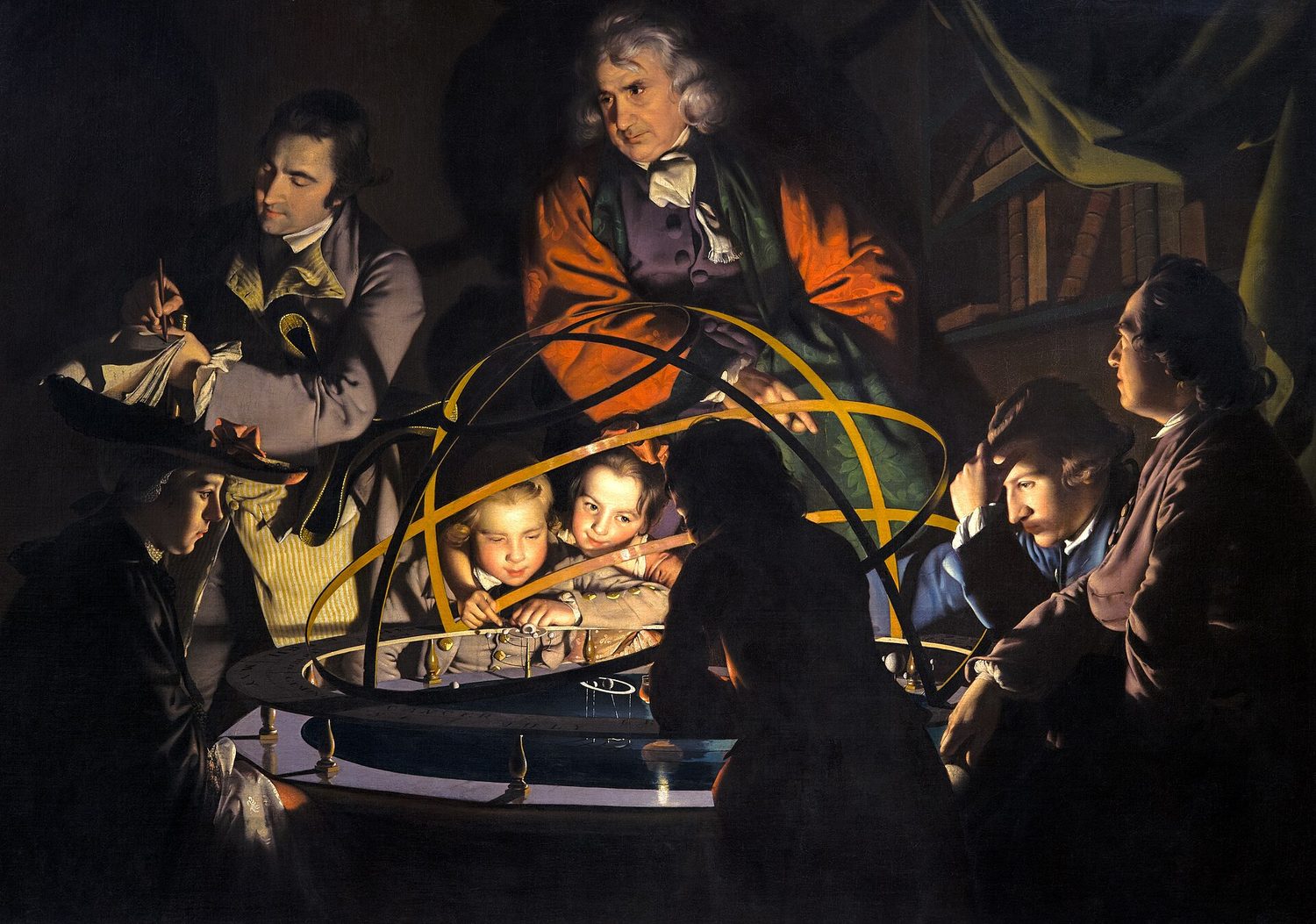
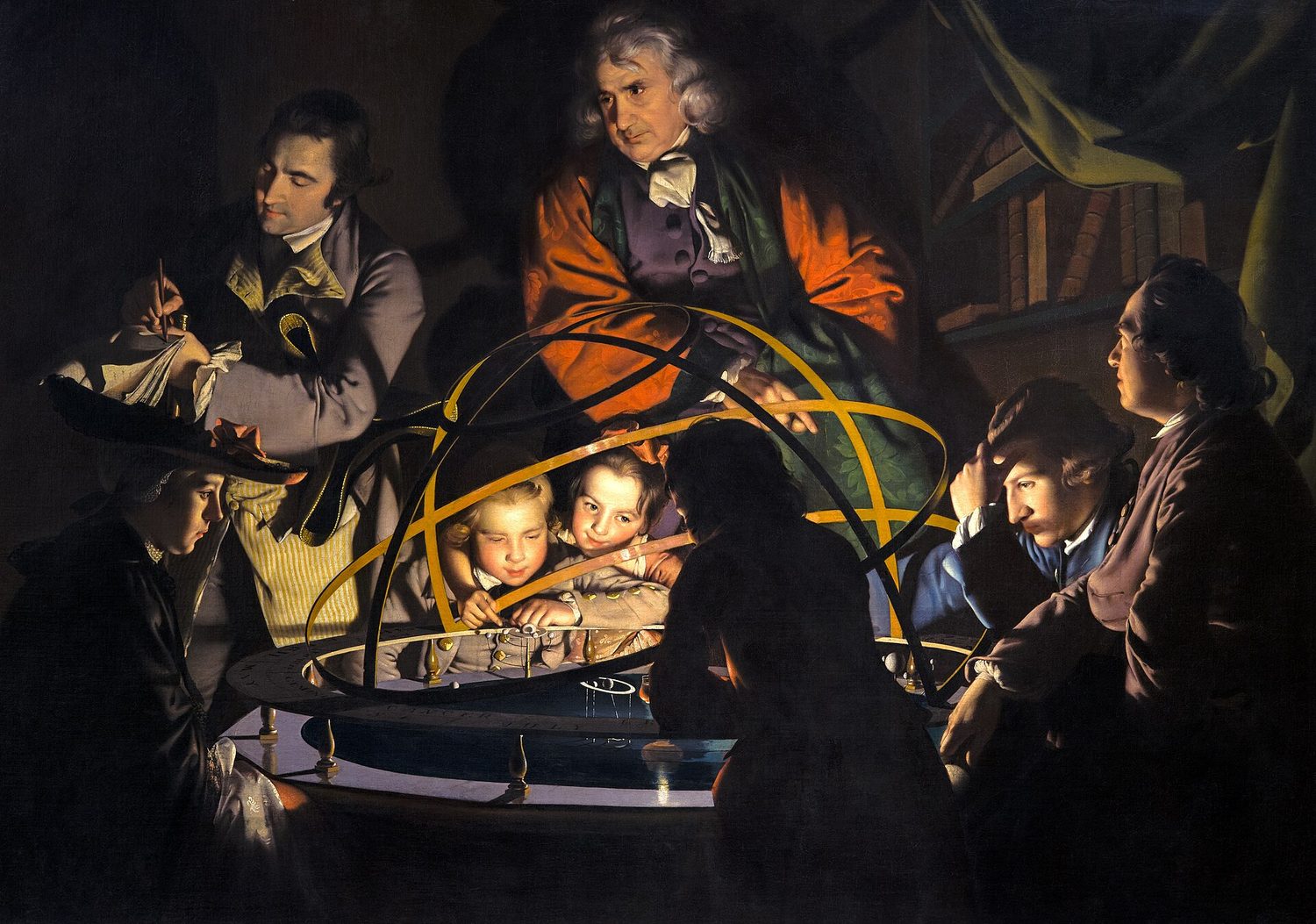
    لوحة مضاءة بالشمعة من القرن 18 حيث يجتمع الناس حول نموذج للنظام الشمسي، وتضيء وجوههم ضد خلفية داكنة
    فيلسوف يقرأ محاضرة حول الآلة الفلكية لجوزيف رايت: ضوء واحد مخفي في المركز يخلق تبايناً عالياً في القيمة (كياروسكورو)، مما يبرز كل وجه من الظلام
    Vocabulary · ⁨مفردات⁩ Train · ⁨تدريب⁩
    English العربية
    Value/ˈvæljuː/ القيمة اللونية
    value scale/ˈvæljuː skeɪl/ مقياس القيمة
    highlight/ˈhaɪlaɪt/ الإضاءة
    midtones/ˈmɪdtəʊnz/ الألوان المتوسطة
    core shadow/kɔː ˈʃædəʊ/ ظل الشكل الأساسي
    reflected light/rɪˈflektɪd laɪt/ الضوء المنعكس
    cast shadow/kæst ˈʃædəʊ/ ظل مسقط
    Chiaroscuro/ˌtʃaɪərəˈskjʊərəʊ/ كياروسكورو
    Colour/ˈkʌlə/ لون
    colour wheel/ˈkʌlə wiːl/ عجلة الألوان
    1.4

    Color · ⁨اللون⁩

    Syllabus · ⁨المنهج⁩
    English

    Focus: Colour is light reflected from a surface; it has three properties and follows the logic of the colour wheel.

    • Colour has three properties: hue (its name), value (light/dark), and saturation/intensity (dull to vivid).
    • Primary colours (red, yellow, blue) mix to make secondary (orange, green, violet) and tertiary colours.
    • Colour schemes: complementary, analogous, monochromatic, triadic, warm, and cool.
    • Warm colours (red, orange, yellow) advance and energise; cool colours (blue, green, violet) recede and calm.
    • Adding white makes a tint, black makes a shade, grey makes a tone.
    • Complementary colours placed side by side intensify each other; mixed together they dull (neutralise).
    العربية

    التركيز: اللون هو ضوء منعكس من سطح؛ وله ثلاث خصائص ويتبع منطق عجلة الألوان.

    • للون ثلاث خصائص: الصبغة (اسمه)، القيمة (فاتح/داكن)، والتشبع/الشدة (باهت إلى زاهٍ).
    • الألوان الأولية (الأحمر، الأصفر، الأزرق) تختلط لتنتج ألواناً ثانوية (البرتقالي، الأخضر، البنفسجي) وألواناً ثالثية.
    • خطوط الألوان: التكميلية، المتجاورة، أحادية اللون، الثلاثية، الدافئة، والباردة.
    • الألوان الدافئة (الأحمر، البرتقالي، الأصفر) تتقدم وتثير الحماس؛ والألوان الباردة (الأزرق، الأخضر، البنفسجي) تتراجع وتهدئ.
    • إضافة الأبيض تُنتج درجات فاتحة، وإضافة الأسود تُنتج درجات داكنة، وإضافة الرمادي تُنتج نغمات.
    • الألوان التكميلية عند وضعها جنباً إلى جنب تعزز بعضها البعض؛ وعند خلطها معاً تبهت (تُعدّل لونياً).

    Source: College Board AP Course and Exam Description · ⁨المصدر: وصف دورة وامتحان College Board AP⁩

    English
    The colour wheel and its schemes

    Colour 色彩 is light reflected from a surface. It has three properties and follows the logic of the colour wheel 色轮.

    • Colour's three properties: hue 色相 (its name), value (light/dark), and saturation 饱和度 (dull to vivid).
    • Primary 三原色 (red, yellow, blue) mix to make secondary 间色 and tertiary colours.
    • Complementary 互补色 colours sit opposite on the wheel: placed side by side they intensify each other, but mixed together they neutralise 中和 into a dull grey-brown. Analogous 邻近色 colours sit next to each other and harmonise.
    • Warm 暖色 colours (red, orange, yellow) advance; cool 冷色 colours (blue, green, violet) recede. A tint adds white, a shade adds black.
    العربية
    عجلة الألوان ومخططاتها

    اللون هو الضوء المنعكس من سطح. له ثلاث خصائص ويتبع منطق عجلة الألوان.

    عجلة الألوان: الألوان الأولية والثانوية والفرعية، والنصفان الدافئ والبارد
    تختلط الألوان الأولية لتكوين ألوان ثانية وفرعية؛ الألوان المتكاملة تقع متقابلة لبعضها البعض
    • الخصائص الثلاث للون: التدرج اللوني (Hue) (اسمه)، القيمة (Value) (فاتح/داكن)، والتشبع (Saturation) (باهت إلى زاهي).
    • الأوليات (أحمر، أصفر، أزرق) تختلط لتكوين ألوان ثانوية وفرعية.
    • الألوان المتكاملة تقع متقابلة على العجلة: عند وضعها جنباً إلى جنب تتضخم في شدتها، ولكن عند خلطها معاً تتعادل وتتحول إلى رمادي بني باهت. الألوان المماثلة تقع بجانب بعضها وتتناغم.
    • الألوان الدافئة (أحمر، برتقالي، أصفر) تبدو وكأنها تقترب؛ الألوان الباردة (أزرق، أخضر، بنفسجي) تبدو وكأنها تبتعد. الإضافة تضيف أبيضاً، والتظليل يضيف أسوداً.
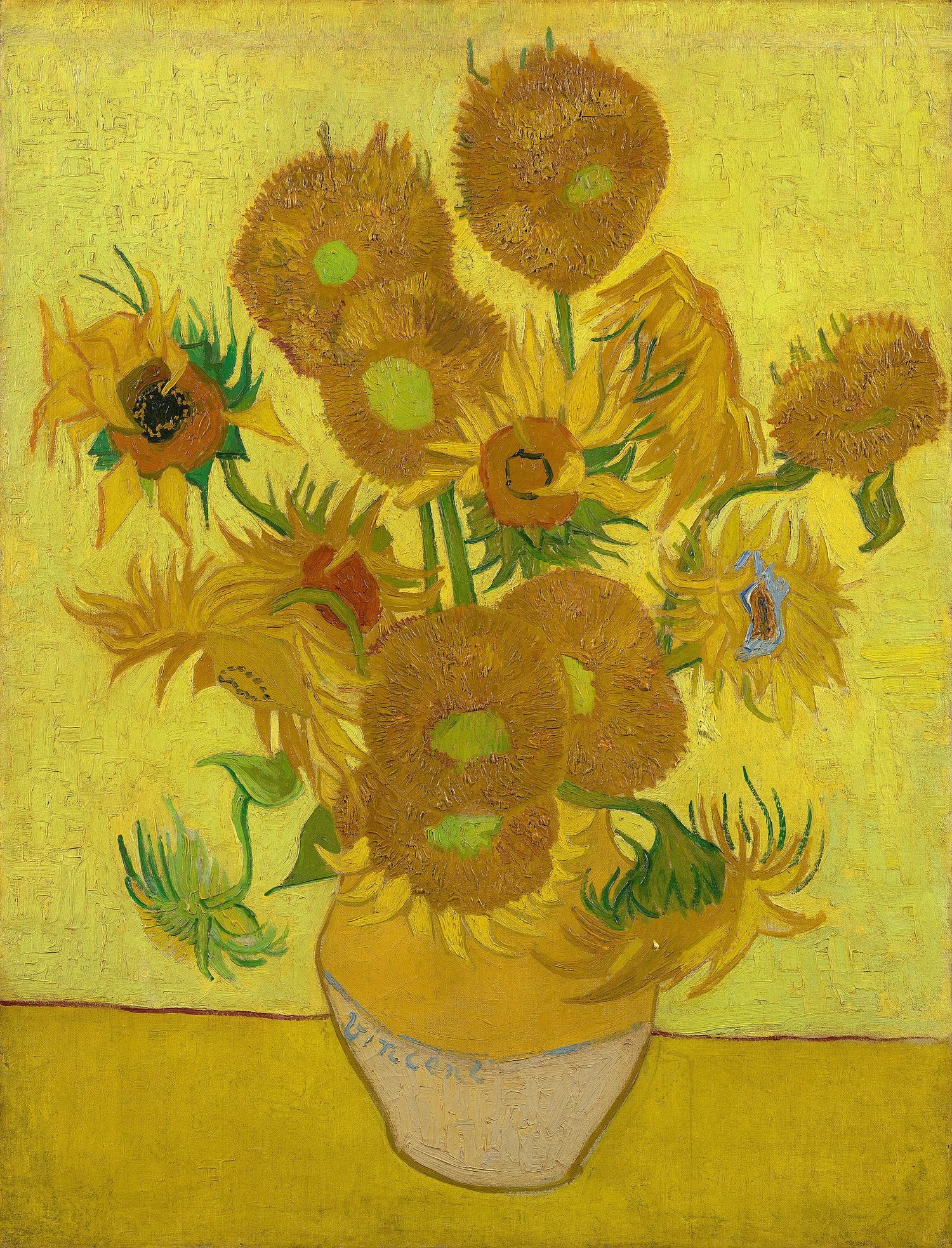
    لوحة سكوني لـ فان جوخ لوردة من زهور عباد الشمس، مرسومة تقريباً بالكامل بتدرجات الأصفر والذهاب
    زهور عباد الشمس لفان جوخ مبنية تقريباً بالكامل من الأصفر البرتقالي الدافئ، وهي خطة لونية مماثلة تعطي شعوراً بالإضاءة والوحدة
    Explore · ⁨استكشف⁩

    Warm or cool colour? · ⁨هل اللون دافئ أم بارد؟⁩

    Warm colours (red, orange, yellow) feel energetic and seem to advance; cool colours (blue, green, violet) feel calm and seem to recede. · ⁨الألوان الدافئة (الأحمر، البرتقالي، الأصفر) تبدو نشطة وتبدو وكأنها تتقدم؛ الألوان الباردة (الأزرق، الأخضر، البنفسجي) توحي بالهدوء وتبدو وكأنها تتراجع.⁩

    Vocabulary · ⁨مفردات⁩ Train · ⁨تدريب⁩
    English العربية
    hue/hjuː/ تدرج اللون
    saturation/ˌsætʃəˈreɪʃn/ تشبع اللون
    Primary/ˈpraɪməri/ أولي
    secondary/ˈsekəndəri/ ثانوي
    Complementary/ˌkɒmplɪˈmentəri/ مكمل
    neutralise/ˈnjuːtrəlaɪz/ تعادل
    Analogous/əˈnæləɡəs/ متجاور
    Warm/wɔːm/ دافئ
    cool/kuːl/ باردة
    1.5

    Texture · ⁨الملمس⁩

    Syllabus · ⁨المنهج⁩
    English

    Focus: Texture is the surface quality of a work — how it feels or how it appears to feel.

    • Actual (tactile) texture can be physically touched (thick paint, collage, rough paper).
    • Implied (visual) texture is the illusion of a surface, created with marks, value, and pattern.
    • Texture is built through mark-making: stippling, hatching, dry-brush, impasto, and frottage (rubbing).
    • Contrasting smooth and rough areas adds interest and can direct attention.
    • In photography and digital work, texture comes from light, focus, and surface detail.
    العربية

    التركيز: الملمس هو خاصية سطح العمل الفني — كيف يبدو أو كيف يبدو أنه يُلمس.

    • الملمس الحقيقي (الملموس) يمكن لمسه جسدياً (دهانات سميكة، كولاج، ورق خشن).
    • الملمس الموهم (البصري) هو وهم للسطح، يُنشأ باستخدام العلامات، والقيم، والنمط.
    • يُبنى الملمس من خلال رسم العلامات: النقش، التظليل الخطي، الفرشاة الجافة، الطبقات السميكـة، والفرطاج (الاحتكاك).
    • التناقض بين المناطق الملساء والخشنة يضيف اهتماماً ويمكن توجيه الانتباه.
    • في التصوير والأعمال الرقمية، يأتي الملمس من الضوء، والتركيز، وتفاصيل السطح.

    Source: College Board AP Course and Exam Description · ⁨المصدر: وصف دورة وامتحان College Board AP⁩

    English

    Texture 肌理 is the surface quality of a work — how it feels, or how it appears to feel.

    • Actual (tactile) texture 实际肌理 can be physically touched (thick paint, collage, rough paper).
    • Implied (visual) texture 视觉肌理 is the illusion of a surface, made with marks, value, and pattern.
    • Techniques include stippling, hatching, impasto 厚涂 (thick paint), and dry-brush. Contrasting smooth and rough areas adds interest and can direct the eye.
    العربية

    الملمس هو جودة السطح في العمل الفني — كيف يبدو أو كيف يبدو أنه يُلمس.

    • الملمس الفعلي (اللمسي) يمكن لمسه جسدياً (طلاء كثيف، كولاج، ورق خشن).
    • الملمس الضمني (البصري) هو وهم السطح، يُصنع باستخدام العلامات والقيمة والنمط.
    • التقنيات تشمل النقطية، والتظليل الخطي، والطبقة السميك (Impasto) (طلاء كثيف)، وقلم الفرشاة الجاف. التباين بين المناطق الملساء والخشنة يضيف اهتماماً ويمكن أن يوجه النظر.
    صورة مقربة من جينس منسوج: الملمس هو جودة السطح التي يمكنك رؤيتها أو الشعور بها — فعلي أو ضمني
    صورة مقربة من جينس منسوج: الملمس هو جودة السطح التي يمكنك رؤيتها أو الشعور بها — فعلي أو ضمني
    Vocabulary · ⁨مفردات⁩ Train · ⁨تدريب⁩
    English العربية
    Texture/ˈtekstʃə/ الملمس
    Actual (tactile) texture/ˈæktʃuːəl ˈtekstʃə/ الملمس الفعلي (الملمسي)
    Implied (visual) texture/ɪmˈplaɪd ˈtekstʃə/ الملمس المستنتج (البصري)
    impasto/ɪmˈpæstəʊ/ إيمباستو
    Space/speɪs/ المكان (الفضاء)
    overlapping/ˌəʊvəˈlæpɪŋ/ التداخل
    foreground/ˈfɔːɡraʊnd/ المقدمة
    middle ground/ˈmɪdl ɡraʊnd/ وسط الصورة
    background/ˈbækɡraʊnd/ الخلفية
    Linear perspective/ˈlɪnɪə pəˈspektɪv/ المنظور الخطي
    vanishing point/ˈvænɪʃɪŋ pɔɪnt/ نقطة التلاشي
    1.6

    Space · ⁨المساحة⁩

    Syllabus · ⁨المنهج⁩
    English

    Focus: Space is the area within, around, and between the parts of a work, including the illusion of depth.

    • Positive space is filled by the subject; negative space is the empty area around it.
    • Artists create the illusion of depth with overlapping, size, placement, and detail.
    • Linear perspective uses a horizon line and vanishing point(s) so parallel lines converge.
    • Atmospheric (aerial) perspective makes distant objects paler, bluer, and less detailed.
    • Foreground, middle ground, and background organise a scene from near to far.
    • The format and cropping of the picture plane shape how space is read.
    العربية

    التركيز: المساحة هي المنطقة داخل وحول وبين أجزاء العمل الفني، بما في ذلك وهم العمق.

    • المساحة الموجبة مملوءة بالموضوع؛ والمساحة السالبة هي المنطقة الفارغة المحيطة به.
    • يصنع الفنانو وهم العمق من خلال التداخل، والحجم، والموضع، والتفاصيل.
    • المنظور الخطي يستخدم خط الأفق ونقطة (أو نقاط) الزوال حتى تتلاقى الخطوط المتوازية.
    • المنظور الجوي (الجوي) يجعل الأشياء البعيدة أفتح لوناً، أزرق، وأقل تفصيلاً.
    • الأمامية، الوسطى، والخلفية تنظم المشهد من القريب إلى البعيد.
    • الصيغة والتقطيع لمستوى الصورة يشكّلان كيفية قراءة المساحة.

    Source: College Board AP Course and Exam Description · ⁨المصدر: وصف دورة وامتحان College Board AP⁩

    English
    Atmospheric perspective
    One-point perspective

    Space 空间 is the area within, around, and between the parts of a work, including the illusion of depth on a flat surface.

    • Positive space is filled by the subject; negative space is the empty area around it.
    • Depth is created with overlapping 重叠, size, placement, and detail.
    • A scene organises into three depth planes: foreground 前景 (nearest), middle ground 中景, and background 背景 (farthest). The nearest plane usually carries the most detail and contrast, the farthest the least.
    • Linear perspective 线性透视 uses a horizon line and vanishing point 灭点 so parallel lines converge; atmospheric perspective 空气透视 makes distant things paler, bluer, and less detailed.
    • The format and cropping of the picture plane shape how the space is read.

    Worked example (applying the concept). Asked to describe how line creates meaning in a portrait, a strong answer names the element, its quality, and its effect: "The artist uses thick, jagged diagonal lines in the background, and their restless, active direction makes the calm horizontal lines of the sitter's shoulders feel even more still." Naming the element and linking it to a feeling is what portfolio written evidence and analysis questions both reward.

    العربية
    المنظور الجوي
    المنظور بنقطة واحدة

    المساحة هي المنطقة داخل وحول وبين أجزاء العمل الفني، بما في ذلك وهوم العمق على سطح مستوٍ.

    • المساحة الموجبة مملوءة بالموضوع؛ المساحة السلبية هي المنطقة الفارغة حوله.
    • يُخلق العمق من خلال التداخل، والحجم، والموقع، والتفاصيل.
    • تنتظم المشهد في ثلاثة مستويات عمق: المقدمة (الأقرب)، الوسط، والخلفية (الأبعد). المستوى الأقرب عادة ما يحمل أكثر التفاصيل والتباين، والأبعد أقلها.
    • المنظور الخطي يستخدم خط الأفق ونقطة الزوال بحيث تتقاطع الخطوط المتوازية؛ المنظور الجوي يجعل الأشياء البعيدة أفتح، أزرق، وأقل تفاصيلاً.
    • الإطار والقص للمستوى البصري يشكلان كيفية قراءة المساحة.

    مثال محلول (تطبيق المفهوم). عند الطلب وصف كيف يخلق الخط معنى في صورة شخصية، الإجابة القوية تذكر العنصر، وجودة تأثيره: "يستخدم الفنان خطوطاً قطرية خشنة ومتعرجة في الخلفية، واتجاهها المضطرب والنشط يجعل الخطوط الأفقية الهادئة لأكتاف الشخص يبدو أكثر هدوءاً." ذكر العنصر و ربطه بشعور هو ما يجاز به كل من الأدلة المكتوبة للملف الشخصي وأسئلة التحليل.

    Vocabulary · ⁨مفردات⁩ Train · ⁨تدريب⁩
    English العربية
    atmospheric perspective/ˌætməsˈferɪk pəˈspektɪv/ المنظور الجوي
    1.6

    Exam tips · ⁨نصائح للامتحان⁩

    English
    • Name the element precisely — line, shape or form, value, colour, texture, space — in any analysis.
    • Justify how form is modelled with a value scale and a single light source.
    • Read the colour wheel: identify complementary versus analogous schemes and warm or cool temperature.
    • Separate shape (2-D) from form (3-D) and actual from implied texture.
    • Explain depth with overlap, size, linear perspective, and atmospheric perspective.
    العربية
    • سمّ العنصر بدقة — الخط، الشكل أو الحجم، القيمة، اللون، الملمس، المساحة — في أي تحليل.
    • برر كيف يتم تجسيم الحجم باستخدام مقياس القيمة ومصدر ضوء واحد.
    • اقرأ عجلة الألوان: حدد المخططات المتكاملة مقابل المماثلة ودرجة الحرارة الدافئة أو الباردة.
    • افصل بين الشكل (2-أبعاد) والصورة (3-أبعاد) وبين الملمس الفعلي والملمس الضمني.
    • اشرح العمق باستخدام التداخل، الحجم، المنظور الخطي، والمنظور الجوي.
  • 2

    Principles of Design · ⁨مبادئ التصميم⁩

    Watch lesson · ⁨شاهد الدرس⁩
    2.1

    Balance · ⁨التوازن⁩

    Syllabus · ⁨المنهج⁩
    English

    Focus: Balance is the visual distribution of weight in a composition so it feels stable.

    • Symmetrical (formal) balance mirrors both sides of a central axis — calm and orderly.
    • Asymmetrical (informal) balance uses different elements of equal visual weight — dynamic and lively.
    • Radial balance arranges elements around a central point.
    • Visual weight is affected by size, colour, value, texture, and position.
    • A large, dull shape can balance a small, bright one on the other side.
    العربية

    التركيز: التوازن هو التوزيع البصري للوزن في التكوين ليبدو مستقراً.

    • التوازن المتماثل (الرسمي) يعكس كلا جانبي محور مركزي — هادئ ومنظم.
    • التوازن غير المتماثل (غير الرسمي) يستخدم عناصر مختلفة ذات وزن بصري متساوي — ديناميكي وحيوي.
    • التوازن الشعاعي يرتب العناصر حول نقطة مركزية.
    • يتأثر الوزن البصري بالحجم، واللون، والقيمة، والملمس، والموضع.
    • يمكن لشكل كبير وباهت أن يوازن شكلاً صغيراً وزاهياً في الجانب الآخر.

    Source: College Board AP Course and Exam Description · ⁨المصدر: وصف دورة وامتحان College Board AP⁩

    English
    Balance: symmetrical, asymmetrical, radial

    The principles of design 设计原则 are the "rules" for arranging the elements of art. The first is balance 平衡 — the visual distribution of weight so a work feels stable.

    • Symmetrical (formal) balance 对称平衡 mirrors both sides of a central axis — calm and orderly.
    • Asymmetrical (informal) balance 非对称平衡 uses different elements of equal visual weight 视觉重量 — dynamic and lively.
    • Radial balance 辐射平衡 arranges elements around a central point.

    Visual weight is affected by size, colour, value, and position: a small bright shape can balance a large dull one.

    العربية
    التوازن: المتماثل، غير المتماثل، الشعاعي

    إن مبادئ التصميم هي "القواعد" لترتيب عناصر الفن. الأولى هي التوازن — التوزيع البصري للوزن حتى يبدو العمل ثابتاً.

    أنواع ثلاثة من التوازن: المتماثل، غير المتماثل، والشعاعي
    التوازن المتماثل يعكس محوراً مركزياً؛ التوازن غير المتماثل يزن عناصر مختلفة؛ التوازن الشعاعي يتجه من مركز
    • التوازن المتماثل (الرسمي) يعكس كلا جانبي محور مركزي — هادئ ومنظم.
    • التوازن غير المتماثل (غير الرسمي) يستخدم عناصر مختلفة ذات وزن بصري متساوٍ — ديناميكي وحيوي.
    • التوازن الشعاعي يرتب العناصر حول نقطة مركزية.

    يتأثر الوزن البصري بالحجم واللون والقيمة والموقع: يمكن لشكل صغير مشرق موازنة شكل كبير باهت.

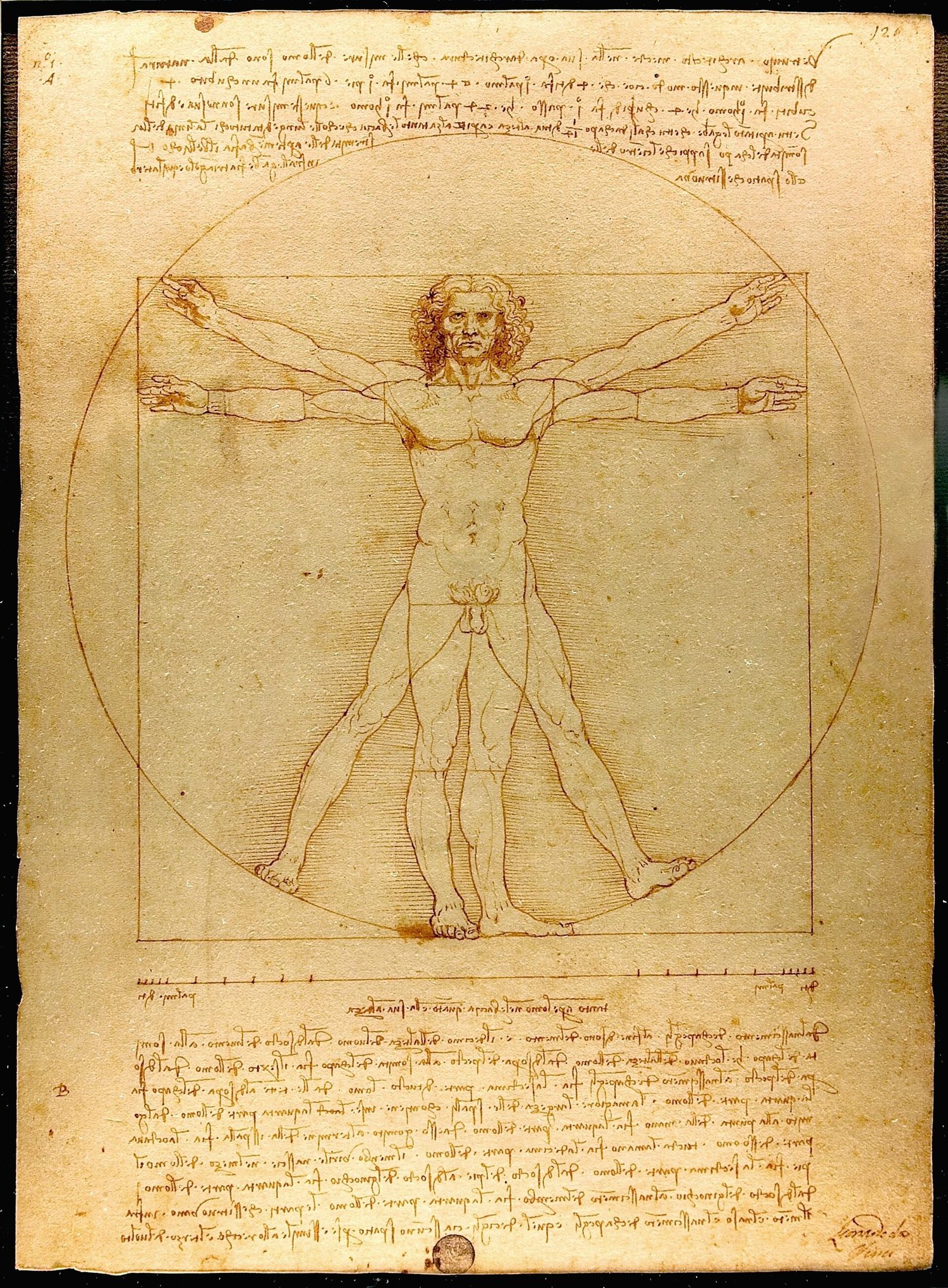
    رسم الحبر لـ ليوناردو لرجل بأذرع وساقين ممدودتين، مدمج داخل دائرة ومربع
    رجل فيتروفيوس لليوناردو: تم رسم الشخصية بتناظر شبه مثالي حول محور رأسي مركزي، والدائرة المحيطة تمنحه أيضاً تواناً شعاعياً
    التكوين يوازن الضوء والكتل والاهتمام عبر المستوى البصري
    التكوين يوازن الضوء والكتل والاهتمام عبر المستوى البصري
    Explore · ⁨استكشف⁩

    Which kind of balance? · ⁨أي نوع من التوازن؟⁩

    Symmetrical balance mirrors a central axis; asymmetrical balance weighs different elements of equal visual weight; radial balance radiates from a centre. · ⁨التوازن المتماثل يعكس محوراً مركزياً؛ التوازن غير المتماثل يزن عناصر مختلفة ذات وزن بصري متساوٍ؛ التوازن الشعاعي يشع من مركز.⁩

    Vocabulary · ⁨مفردات⁩ Train · ⁨تدريب⁩
    English العربية
    principles of design/ˈprɪnsɪplz ɒv dɪˈzaɪn/ مبادئ التصميم
    balance/ˈbæləns/ التوازن
    Symmetrical (formal) balance/sɪˈmetrɪkl ˈbæləns/ التوازن المتماثل (الرسمي)
    Asymmetrical (informal) balance/ˌeɪsɪˈmetrɪkl ˈbæləns/ التوازن اللامتماثل (غير الرسمي)
    visual weight/ˈvɪʒuːəl weɪt/ الوزن البصري
    Radial balance/ˈreɪdɪəl ˈbæləns/ التوازن الشعاعي
    Emphasis/ˈemfəsɪs/ التركيز
    focal point/ˈfəʊkl pɔɪnt/ نقطة التركيز
    Subordination/ˌsʌbɔːdɪˈneɪʃn/ التضعيف
    Contrast/ˈkɒntræst/ التباين
    visual hierarchy/ˈvɪʒuːəl ˈhaɪərɑːki/ التسلسل الهرمي البصري
    2.2

    Emphasis and Focal Point · ⁨التركيز ونقطة التركيز⁩

    Syllabus · ⁨المنهج⁩
    English

    Focus: Emphasis makes one part of a work stand out as the centre of interest (the focal point).

    • A focal point is where the eye is drawn first; emphasis creates it.
    • Emphasis is built through contrast — of size, colour, value, isolation, or placement.
    • Convergence (lines that point) and the rule of thirds help locate a strong focal point.
    • Subordination keeps other areas quieter so the focal point leads.
    • A work may have one dominant focal point and smaller secondary accents.
    العربية

    التركيز: التركيز يجعل جزءاً واحداً من العمل بارزاً كنقطة اهتمام (النقطة المركزية).

    • النقطة المركزية هي المكان الذي تنجذب إليه العين أولاً؛ والتركيز هو ما يخلقها.
    • يُبنى التركيز من خلال التباين — في الحجم، اللون، القيمة، العزل، أو الموضع.
    • التقارب (الخطوط التي تشير) وقاعدة الثلث يساعدان في تحديد نقطة مركزية قوية.
    • الإخضاع يحافظ على المناطق الأخرى أكثر هدوءاً حتى تقود النقطة المحورية.
    • قد يحتوي العمل على نقطة مركزية واحدة مسيطرة وعلامات ثانوية أصغر.

    Source: College Board AP Course and Exam Description · ⁨المصدر: وصف دورة وامتحان College Board AP⁩

    English

    Emphasis 强调 makes one part of a work stand out as the centre of interest — the focal point 视觉焦点, where the eye is drawn first.

    • Emphasis is created through contrast — of size, colour, value, isolation, or placement.
    • Leading lines and the rule of thirds help place a strong focal point.
    • Subordination 从属 keeps other areas quieter so the focal point leads.
    العربية

    التركيز يجعل جزءاً واحداً من العمل بارزاً كمركز للاهتمام — نقطة التركيز، حيث ينجذب النظر أولاً.

    • يُخلق التركيز من خلال التباين — في الحجم، اللون، القيمة، العزل، أو الموقع.
    • الخطوط التوجيهية وقاعدة الثلث تساعد في وضع نقطة تركيز قوية.
    • الإخضاع يحافظ على المناطق الأخرى أكثر هدوءاً حتى تقود النقطة المحورية.
    2.3

    Contrast · ⁨التباين⁩

    Syllabus · ⁨المنهج⁩
    English

    Focus: Contrast is the difference between elements — it creates energy, variety, and readability.

    • Contrast can be of value (light/dark), colour (complementary), shape, texture, or size.
    • Strong contrast attracts attention and defines a focal point.
    • Low contrast unifies a work and can feel calm, subtle, or moody.
    • Contrast in direction (horizontal vs diagonal) adds movement.
    • In graphic design, value and size contrast create clear visual hierarchy.
    العربية

    التركيز: التباين هو الفرق بين العناصر — ويخلق الطاقة، والتنوع، والوضوح.

    • يمكن أن يكون التباين في القيمة (فاتح/داكن)، اللون (تكميلي)، الشكل، الملمس، أو الحجم.
    • التباين القوي يجذب الانتباه ويحدد النقطة المحورية.
    • التباين المنخفض يوحّد العمل وقد يبدو هادئاً، ناعماً، أو حزيناً.
    • التباين في الاتجاه (أفقي مقابل قطري) يضيف حركة.
    • في التصميم الجرافيكي، يخلق تباين القيمة والحجم تسلسلاً هرمياً بصرياً واضحاً.

    Source: College Board AP Course and Exam Description · ⁨المصدر: وصف دورة وامتحان College Board AP⁩

    English

    Contrast 对比 is the difference between elements — it creates energy, variety, and readability.

    • Contrast can be of value (light/dark), colour (complementary), shape, texture, or size.
    • Strong contrast attracts attention and defines a focal point; low contrast unifies and calms.
    • In design, value and size contrast create clear visual hierarchy 视觉层次.
    العربية

    التباين هو الفرق بين العناصر — فهو يخلق الطاقة والتنوع والقراءة.

    • يمكن أن يكون التباين في القيمة (فاتح/داكن)، اللون (متكامل)، الشكل، الملمس، أو الحجم.
    • التباين القوي يجذب الانتباه ويحدد نقطة التركيز؛ التباين المنخفض يوحّد ويهدئ.
    • في التصميم، يخلق التباين في القيمة والحجم تسلسلاً هرمياً بصرياً واضحاً.
    2.4

    Movement and Rhythm · ⁨الحركة والإيقاع⁩

    Syllabus · ⁨المنهج⁩
    English

    Focus: Movement leads the viewer's eye through a work; rhythm is the repetition that creates a visual beat.

    • Movement is the path the eye takes, guided by line, edges, colour, and placement.
    • Rhythm is created by repeating elements with regular or varied spacing.
    • Types of rhythm: regular (even), flowing (curving), progressive (gradual change), and random.
    • Directional forces (leading lines, gazes, gestures) create implied motion.
    • Repetition with variation keeps rhythm interesting rather than monotonous.
    العربية

    التركيز: الحركة توجه عين المشاهد عبر العمل؛ والإيقاع هو التكرار الذي يخلق نبضة بصرية.

    • الحركة هي المسار الذي تتبعه العين، مُوجهة بواسطة الخطوط، الحواف، اللون، والموضع.
    • يُنشأ الإيقاع بتكرار العناصر بمسافات منتظمة أو متغيرة.
    • أنواع الإيقاع: منتظم (متساوٍ)، متدفق (منحني)، تدريجي (تغير تدريجي)، وعشوائي.
    • القوى الاتجاهية (الخطوط المؤدية، النظرات، الإيماءات) تحرك حركياً ضمنيًا.
    • التكرار مع التنوع يحافظ على الإيقاع جذاباً بدلاً من أن يكون مملاً.

    Source: College Board AP Course and Exam Description · ⁨المصدر: وصف دورة وامتحان College Board AP⁩

    English

    Movement 动感 leads the viewer's eye through a work; rhythm 节奏 is the repetition that creates a visual "beat".

    • Movement is the path the eye takes, guided by line, edges, colour, and placement.
    • Rhythm types: regular (even), flowing (curving), progressive 渐进 (gradual change), and random.
    • Repetition with variation keeps rhythm interesting rather than monotonous.
    العربية

    الحركة توجه نظر المشاهد عبر العمل الفني؛ والإيقاع هو التكرار الذي ينشئ "إيقاعاً" بصرياً.

    • المسار الذي يسلكه العين موجه بواسطة الخطوط والحواف والألوان والموضع.
    • أنواع الإيقاع: منتظم (متساوٍ)، متدفق (منحني)، تدريجي (تغير تدريجي)، وعشوائي.
    • التكرار مع التنوع يحافظ على الإيقاع جذاباً بدلاً من أن يكون مملاً.
    لوحة فان جوغ لسماء ليلية مليئة بدوامات ضوئية كبيرة دوارة فوق قرية هادئة
    لوحة "الليلة النجمية" لفان جوغ: ضربات الفرشاة الدوارة توجه النظر عبر السماء (حركة)، والدوائر المكررة تمنحه إيقاعاً متداخلاً
    Vocabulary · ⁨مفردات⁩ Train · ⁨تدريب⁩
    English العربية
    Movement/ˈmuːvmənt/ الحركة
    rhythm/ˈrɪðəm/ الإيقاع
    progressive/prəˈɡresɪv/ تدريجي
    2.5

    Pattern and Repetition · ⁨النمط والتكرار⁩

    Syllabus · ⁨المنهج⁩
    English

    Focus: Repetition reuses an element; pattern is the repeated element arranged in a predictable way.

    • Repetition of shape, colour, or line builds unity and rhythm.
    • A pattern is a repeated motif — regular (grid, tessellation) or irregular.
    • Patterns can fill a shape, define a texture, or become the subject itself.
    • Motif is the single unit that repeats; changing scale or colour varies the pattern.
    • Too much repetition can feel monotonous; variation keeps it engaging.
    العربية

    التركيز: التكرار يعيد استخدام عنصر؛ والنمط هو العنصر المكرر المرتب بطريقة متوقعة.

    • التكرار للشكل، اللون، أو الخط يبني الوحدة والإيقاع.
    • النمط هو دافع مكرر — منتظم (شبكة، ترصيع) أو غير منتظم.
    • يمكن للنمط أن يملأ شكلاً، أو يُعرّف ملمساً، أو يصبح الموضوع نفسه.
    • النمط المتكرر (Motif) هو الوحدة المفردة التي تتكرر؛ فإن تغيير المقياس أو اللون يُغيّر النمط.
    • يمكن أن يبدو التكرار المفرط مملًا؛ بينما يحافظ التنوع على جاذبيته.

    Source: College Board AP Course and Exam Description · ⁨المصدر: وصف دورة وامتحان College Board AP⁩

    English

    Repetition 重复 reuses an element; a pattern 图案 is the repeated element arranged in a predictable way.

    • Repetition of shape, colour, or line builds unity and rhythm.
    • A pattern is a repeated motif 母题 — regular (a grid or tessellation) or irregular.
    • Too much repetition feels monotonous; changing scale or colour adds variety.
    العربية

    التكرار يعيد استخدام عنصر ما؛ والنمط هو العنصر المكرر المرتب بطريقة متوقعة.

    • تكرار الشكل أو اللون أو الخط يبني الوحدة والإيقاع.
    • النمط هو دافع مكرر — منتظم (شبكة أو تزييج) أو غير منتظم.
    • كثرة التكرار قد تبدو مملة؛ وتغيير الحجم أو اللون يضيف تنوعاً.
    قطعة قماش منقوشة بطيور زرقاء بين فراوات حمراء وأوراق خضراء، نفس الدافع يتكرر عبرها
    "صائد الفراولة" لويليام موريس: دافع واحد لطيور بين الفراوات يتكرر بنمط منتظم عبر القماش بأكمله
    Vocabulary · ⁨مفردات⁩ Train · ⁨تدريب⁩
    English العربية
    Repetition/ˌrepəˈtɪʃn/ التكرار
    pattern/ˈpætn/ نمط
    motif/məʊˈtiːf/ الدافع
    Proportion/prəˈpɔːʃn/ النسبة
    scale/skeɪl/ المقياس
    Hierarchical scale/haɪəˈrɑːkɪkl skeɪl/ المقياس الهرمي
    golden ratio/ˈɡəʊldn ˈreɪʃɪəʊ/ النسبة الذهبية
    Unity/ˈjuːnɪti/ الوحدة
    variety/vəˈraɪəti/ التنوع
    proximity/prɒkˈsɪmɪti/ القرب
    continuity/kɒntɪˈnjuːɪti/ استمرارية
    Harmony/ˈhɑːməni/ التناغم
    2.6

    Proportion and Scale · ⁨التناسب والمقياس⁩

    Syllabus · ⁨المنهج⁩
    English

    Focus: Proportion is the size relationship between parts; scale is the size of the work or an element relative to something else.

    • Proportion compares the sizes of parts within a work (e.g. head to body).
    • Scale compares an element to the whole, to the human body, or to the real world.
    • Hierarchical scale makes the most important element largest.
    • Exaggerated or distorted proportion can express emotion or draw attention.
    • The golden ratio and canon of proportions are historic guides to pleasing relationships.
    العربية

    التركيز: التناسب هو العلاقة بين أحجام الأجزاء؛ أما المقياس فهو حجم العمل أو العنصر بالنسبة إلى شيء آخر.

    • التناسب يقارن أحجام الأجزاء داخل العمل الفني (مثل الرأس مقابل الجسم).
    • المقياس يقارن عنصرًا ما بالكل، أو بالجسم البشري، أو بالعالم الحقيقي.
    • المقياس الهرمي يجعل العنصر الأكثر أهمية هو الأكبر حجمًا.
    • النسبة المبالغ فيها أو المشوهة يمكن أن تعبر عن العاطفة أو تجذب الانتباه.
    • النسبة الذهبية وقانون التناسبات هي إرشادات تاريخية لتحقيق علاقات بصرية مريحة.

    Source: College Board AP Course and Exam Description · ⁨المصدر: وصف دورة وامتحان College Board AP⁩

    English

    Proportion 比例 is the size relationship between parts; scale 尺度 is the size of an element relative to something else.

    • Proportion compares the sizes of parts within a work (head to body).
    • Hierarchical scale 等级比例 makes the most important element the largest.
    • Exaggerated or distorted proportion can express emotion or draw attention. The golden ratio 黄金比例 is a historic guide to pleasing proportions.
    العربية

    التناسب هو علاقة الحجم بين الأجزاء؛ والمقياس هو حجم العنصر بالنسبة لشيء آخر.

    أدوات التركيب: قاعدة الأثلاث والمقياس الهرمي
    قاعدة الأثلاث تضع العناصر الرئيسية على خطوط الثلث؛ والمقياس الهرمي يجعل العنصر المهم هو الأكبر
    • يقارن التناسب أحجام الأجزاء داخل العمل (الرأس إلى الجسم).
    • المقياس الهرمي يجعل العنصر الأكثر أهمية هو الأكبر حجمًا.
    • التناسب المبالغ فيه أو المشوه يمكن أن يعبر عن مشاعر أو يجذب الانتباه. النسبة الذهبية دليل تاريخي لنسب جذابة.
    Vocabulary · ⁨مفردات⁩ Train · ⁨تدريب⁩
    English العربية
    Composition/ˌkɒmpəˈzɪʃn/ التركيب
    picture plane/ˈpɪktʃə pleɪn/ مستوى الصورة
    format/ˈfɔːmæt/ الصيغة
    rule of thirds/ruːl ɒv θɜːdz/ قاعدة الثلثات
    Cropping/ˈkrɒpɪŋ/ القص
    2.7

    Unity and Variety · ⁨الوحدة والتنوع⁩

    Syllabus · ⁨المنهج⁩
    English

    Focus: Unity holds a work together as a whole; variety adds interest so it is not dull. Good design balances the two.

    • Unity is a sense that all parts belong together (through repetition, proximity, and a limited palette).
    • Variety is difference that adds interest and prevents monotony.
    • Harmony comes from elements that are similar; tension from those that differ.
    • Proximity (grouping) and continuity (alignment) strengthen unity.
    • The best works achieve unity with variety — order that still surprises.
    العربية

    التركيز: الوحدة تربط عناصر العمل الفني معًا ككل؛ بينما يضيف التنوع الاهتمام حتى لا يكون العمل باهتًا. التصميم الجيد يوازن بين الاثنين.

    • الوحدة هي الإحساس بأن جميع الأجزاء تنتمي معًا (من خلال التكرار، القرب، ولوحة ألوان محدودة).
    • التنوع هو الاختلاف الذي يضيف اهتمامًا ويمنع الملل.
    • التناغم ينبع من العناصر المتشابهة؛ بينما ينشأ التوتر من العناصر المختلفة.
    • القرب (التجميع) والاستمرارية (المحاذاة) يعززان الوحدة.
    • أفضل الأعمال تحقق الوحدة مع التنوع — نظام لا يزال يفاجئ.

    Source: College Board AP Course and Exam Description · ⁨المصدر: وصف دورة وامتحان College Board AP⁩

    English

    Unity 统一 holds a work together as a whole; variety 变化 adds interest so it is not dull. Good design balances the two.

    • Unity comes from repetition, proximity 邻近 (grouping), continuity 连续性 (aligning elements along a line or edge so they read as one group), and a limited palette.
    • Variety is difference that prevents monotony. Harmony 和谐 comes from similar elements.
    • The best works achieve unity with variety — order that still surprises.
    العربية

    الوحدة تربط العمل ككل؛ والتنوع يضيف اهتماماً حتى لا يكون مملاً. التصميم الجيد يوازن بين الاثنين.

    • تأتي الوحدة من التكرار، والقرب (التجميع)، والاتصال (محاذاة العناصر على خط أو حافة لتُقرأ كمجموعة واحدة)، ولوحة ألوان محدودة.
    • التنوع هو الفرق الذي يمنع الملل. يأتي التناغم من العناصر المتشابهة.
    • أفضل الأعمال تحقق الوحدة مع التنوع — نظام لا يزال يفاجئ.
    2.8

    Composition · ⁨التركيب⁩

    Syllabus · ⁨المنهج⁩
    English

    Focus: Composition is how all the elements and principles are arranged within the picture plane.

    • The picture plane is the flat surface; its format (portrait, landscape, square) shapes the design.
    • The rule of thirds places key elements along thirds lines and their intersections.
    • Cropping decides what is included and what is cut, changing emphasis and tension.
    • Leading lines, framing, and balance guide the eye and hold the composition together.
    • A strong composition unifies the elements while creating a clear focal point.
    العربية

    التركيز: التركيب هو كيفية ترتيب جميع العناصر والمبادئ داخل مساحة اللوحة.

    • مساحة اللوحة هي السطح المسطح؛ وشكلها (عمودي، أفقي، مربع) يُشكّل التصميم.
    • قاعدة الثلثات تضع العناصر الرئيسية على خطوط الثلثات وتقاطعاتها.
    • القص يحدد ما يُشمل وما يُقطع، مما يغير التركيز والتوتر.
    • الخطوط المؤدية والإطار والتوازن توجه العين وتحافظ على تماسك التركيب.
    • التركيب القوي يوحد العناصر بينما يخلق نقطة تركيز واضحة.

    Source: College Board AP Course and Exam Description · ⁨المصدر: وصف دورة وامتحان College Board AP⁩

    English

    Composition 构图 is how all the elements and principles are arranged within the picture plane 画面.

    • The format 画幅 (portrait, landscape, square) shapes the design.
    • The rule of thirds 三分法 places key elements along third-lines and their intersections.
    • Cropping 裁剪 decides what is included and what is cut, changing emphasis and tension.
    • A strong composition unifies the elements while creating a clear focal point — this is what the AP portfolio's 2-D skills are judged on.

    Worked example (applying the concept). To explain balance in a composition: "The large dark shape on the left is balanced by three small bright shapes on the right — this is asymmetrical balance, which gives the piece visual weight on both sides while keeping it dynamic rather than static." A full answer names the principle, points to specific evidence in the work, and states the effect on the viewer.

    العربية

    التركيب هو كيفية ترتيب جميع العناصر والمبادئ داخل المستوى الصوري.

    • الصيغة (عمودية، أفقية، مربعة) تُشكل التصميم.
    • قاعدة الأثلاث تضع العناصر الرئيسية على خطوط الثلث وتقاطعاتها.
    • القص يحدد ما يُشمل وما يُقطع، مما يغير التركيز والتوتر.
    • التركيب القوي يوحد العناصر بينما ينشئ نقطة تركيز واضحة — وهذا ما يُحكم عليه في مهارات 2-D في محفظة AP.

    مثال محلول (تطبيق المفهوم). لتوضيح التوازن في تركيب فني: "الشكل الداكن الكبير على اليسار مُوازَن بثلاثة أشكال صغيرة مضيئة على اليمين — هذا توازن غير متماثل، يمنح Piece ثقلًا بصريًا على كلا الجانبين مع الحفاظ على ديناميكيته بدلاً من سكونه." الإجابة الكاملة تذكر المبدأ، وتشير إلى أدلة محددة في العمل، وتُبيّن التأثير على المشاهد.

    2.8

    Exam tips · ⁨نصائح للامتحان⁩

    English
    • For every work, state which principle organises it — balance, emphasis, contrast, movement, or unity.
    • Justify balance through visual weight, not just symmetry.
    • Ensure one clear focal point, and name the emphasis technique that creates it.
    • Aim for unity with variety — name the unifying device and the source of interest.
    • Plan composition with the rule of thirds and thumbnails before committing.
    العربية
    • لكل عمل، اذكر أي مبدأ ينظمه — التوازن، التركيز، التباين، الحركة، أو الوحدة.
    • برر التوازن من خلال الثقل البصري، وليس فقط التماثل.
    • تأكد من وجود نقطة تركيز واحدة واضحة، وسمِّ تقنية التركيز التي تنشئها.
    • استهدف الوحدة مع التنوع — سمِّ الجهاز الموحد ومصدر الاهتمام.
    • خطّط للتركيب باستخدام قاعدة الأثلاث والنماذج الصغيرة قبل التنفيذ النهائي.
  • 3

    2-D Media, Materials, and Techniques · ⁨وسائل الإعلام والمواد والتقنيات أحادية الأبعاد ⟨2⟩⁩

    Watch lesson · ⁨شاهد الدرس⁩
    3.1

    Drawing Media · ⁨مواد الرسم⁩

    Syllabus · ⁨المنهج⁩
    English

    Focus: Drawing media make marks directly on a surface — the foundation of most 2-D work.

    • Dry media: graphite (pencil), charcoal, conte, chalk and oil pastel, coloured pencil.
    • Wet media: pen and ink, brush and ink, markers.
    • Mark-making techniques: hatching, cross-hatching, stippling, blending, and scribbling.
    • Choice of media and paper (tooth/texture) changes the line and value possible.
    • Drawing is used both to investigate ideas (studies, sketches) and to make finished works.
    العربية

    تركيز: وسائط الرسم تترك علامات مباشرة على السطح — وهو أساس معظم أعمال 2-D.

    • وسائط جافة: الرصاص (قلم رصاص)، الفحم، الكونتي، الطباشير، الشمع الزيتي، والقلم الملون.
    • وسائط سائلة: القلم والحبر، الفرشاة والحبر، والعلامات (ماركبات).
    • تقنيات إنشاء العلامات: التظليل المتوازي، التظليل المتقاطع، النقش، المزج، والخطوط العشوائية.
    • اختيار الوسائط والورق (الخشونة/الملمس) يُغيّر الخط والقيمة الممكنة.
    • يُستخدم الرسم للتحقيق في الأفكار (دراسات، مسودات) ولإنجاز الأعمال النهائية.

    Source: College Board AP Course and Exam Description · ⁨المصدر: وصف دورة وامتحان College Board AP⁩

    English

    Media 媒介 are the materials an artist works with. Drawing media make marks directly on a surface and are the foundation of most 2-D work.

    • Dry media 干性媒介: graphite (pencil), charcoal, conté, chalk and oil pastel, coloured pencil.
    • Wet media 湿性媒介: pen and ink, brush and ink, markers.
    • Mark-making techniques: hatching 排线, cross-hatching 交叉排线, stippling 点画, blending, and scribbling.
    • The tooth 纸纹 (texture) of the paper changes the line and value possible.

    Drawing is used both to investigate ideas (studies and sketches) and to make finished works.

    العربية

    الوسائط هي المواد التي يعمل بها الفنان. وسائط الرسم تُنشئ علامات مباشرة على سطح ما وهي أساس معظم أعمال 2-D.

    • الوسائط الجافة: الرصاص (قلم رصاص)، الفحم، الكونتي، الطباشير، الفسفور الزيتي، والقلم الملون.
    • الوسائط الرطبة: القلم والحبر، الفرشاة والحبر، والأقلام الملونة.
    • تقنيات إنشاء العلامات: التظليل بالخطوط، التظليل المتقاطع، التكثير، المزج، والتخريب.
    • الملمس (الخشن) للورق يغير الخط والقيمة الممكنة.

    يُستخدم الرسم للاستقصاء عن الأفكار (دراسات ورسومات مبدئية) ولإنشاء أعمال نهائية.

    3.2

    Painting Media · ⁨وسائط الرسم⁩

    Syllabus · ⁨المنهج⁩
    English

    Focus: Painting applies pigment suspended in a binder to a surface, building colour, value, and texture.

    • Common media: watercolour (transparent), gouache (opaque water-based), acrylic (fast-drying), oil (slow, blendable).
    • Support and ground (paper, canvas, board; primer/gesso) affect how paint behaves.
    • Techniques: washes, glazing, wet-on-wet, dry-brush, impasto, and layering.
    • Water-based paints dry quickly and clean with water; oils dry slowly and blend richly.
    • Brush choice, dilution, and paint thickness control mark, edge, and texture.
    العربية

    التركيز: الرسم بالماء يطبق الصبغة المعلقة في رابطة على سطح، مما يبني اللون والقيمة والملمس.

    • وسائط شائعة: الأكريليك (يتجف بسرعة)، الأكريليك (يتجف بسرعة)، الزيت (بطيء، قابل للمزج).
    • الدعامة والطبقة الأساسية (ورق، قماش، لوح؛ محضرة/جبس) تؤثر على سلوك الطلاء.
    • التقنيات: الغسيل، التزجيج، المبل على المبل، الفرشاة الجافة، الإمباستو، والطبقات.
    • الألوان المائية تجف بسرعة وتنظيفها بالماء؛ بينما تجف الزيوت ببطء وتتميز بمزج غني.
    • اختيار الفرشاة، التخفيف، وسماكة الطلاء يتحكم في العلامة والحافة والملمس.

    Source: College Board AP Course and Exam Description · ⁨المصدر: وصف دورة وامتحان College Board AP⁩

    English

    Painting 绘画 applies pigment held in a binder 粘合剂 to a surface, building colour, value, and texture.

    • Watercolour 水彩 is transparent; gouache 水粉 is opaque and water-based; acrylic 丙烯 dries fast; oil 油画 dries slowly and blends richly.
    • The support 底材 and ground (paper, canvas, board; primer or gesso 石膏底料) affect how paint behaves.
    • Techniques include washes, glazing 罩染, wet-on-wet, dry-brush, and impasto.
    العربية

    الرسم يطبق صبغة محمولة في لاصق على سطح، مبنيًا اللون والقيمة والملمس.

    • الأكريليك شفاف؛ والجواش معتم وقائم على الماء؛ والأكريليك يجف بسرعة؛ والزيت يجف ببطء ويختلط غنياً.
    • الدعامة والطبقة التحضيرية (ورق، قماش، لوحة؛ طبقة تحضيرية أو جبس) تؤثر على سلوك الطلاء.
    • التقنيات تشمل الغسلات، التزجيج، المبل على المبل، الفرشاة الجافة، والإمباستو.
    الرسم الزيتي يبني اللون في طبقات: خيارات الوسائط تُشكل السطح والقيمة والمساحة
    الرسم الزيتي يبني اللون في طبقات: خيارات الوسائط تُشكل السطح والقيمة والمساحة
    Vocabulary · ⁨مفردات⁩ Train · ⁨تدريب⁩
    English العربية
    Media/ˈmiːdiːə/ الوسائط
    Dry media/draɪ ˈmiːdiːə/ المواد الجافة
    Wet media/wet ˈmiːdiːə/ المواد الرطبة
    hatching/ˈhætʃɪŋ/ التظليل الخطي
    cross-hatching/krɒs ˈhætʃɪŋ/ التظليل المتقاطع
    stippling/ˈstɪplɪŋ/ التنقيط
    tooth/tuːθ/ الأسنان (ملمس السطح)
    Painting/ˈpeɪntɪŋ/ الرسم الزيتي
    binder/ˈbaɪndə/ الملاصق (الرابط)
    Watercolour/ˈwɔːtəkʌlə/ ألوان مائية
    gouache/ɡwɑːtʃ/ الغوشيه
    acrylic/əˈkrɪlɪk/ الأكريليك
    oil/ɔɪl/ زيت
    support/səˈpɔːt/ الداعم
    gesso/ˈdʒesəʊ/ جيسو
    glazing/ˈɡleɪzɪŋ/ التزجيج
    3.3

    Printmaking · ⁨الطباعة⁩

    Syllabus · ⁨المنهج⁩
    English

    Focus: Printmaking transfers an image from a prepared surface (matrix) to paper, allowing multiple copies (an edition).

    • Relief (linocut, woodcut): ink the raised surface; the cut-away areas stay blank.
    • Intaglio (etching, engraving): ink sits in incised lines below the surface.
    • Planographic (lithography): image and non-image areas are on the same level, using grease and water.
    • Stencil (screen printing): ink is pushed through open areas of a mesh.
    • Prints are usually made in a numbered edition; the reversed matrix flips the image.
    العربية

    التركيز: الطباعة الفنية تنقل صورة من سطح مُعدّ (قالب) إلى الورق، مما يسمح بإنتاج نسخ متعددة (طبعة).

    • الطباعة البارزة (الليينوكوت، الخشب): تدهن السطح المرتفع؛ وتبقى المناطق المقطوعة فارغة.
    • الطباعة الغائرة (الحفر، النحت): يجلس الحبر في الخطوط المحفورة تحت السطح.
    • الطباعة المسطحة (الليثوغرافيا): منطقة الصورة ومنطقة عدم الصورة تكون على نفس المستوى، باستخدام الدهون والماء.
    • القالب (طباعة الشاشة): يُدفع الحبر عبر المناطق المفتوحة في الشبكة.
    • عادةً ما تُصنع الطباعات في طبعة مرقمة؛ حيث يعكس القالب المقلوب الصورة.

    Source: College Board AP Course and Exam Description · ⁨المصدر: وصف دورة وامتحان College Board AP⁩

    English

    Printmaking 版画 transfers an image from a prepared surface (the matrix 版) to paper, so many copies (an edition 版数) can be made.

    • Relief 凸版 (linocut, woodcut) — ink sits on the raised surface; cut-away areas stay blank.
    • Intaglio 凹版 (etching, engraving) — ink sits in lines cut below the surface.
    • Planographic 平版 (lithography) — image and non-image areas are on the same level, using grease and water.
    • Stencil 孔版 (screen printing) — ink is pushed through open areas of a mesh.

    The matrix is reversed, so the printed image is a mirror of the plate.

    العربية

    الطباعة تنقل صورة من سطح مُحضَّر (المصفوفة) إلى الورق، مما يسمح بإعداد نسخ عديدة (طبعة).

    عائلات الطباعة الأربع: البروز، الغائر، المستوي، والقالب
    الطباعة البارزة من السطح المرتفع؛ والغائرة من الخطوط المنقوشة؛ والمستوية من صورة دهنية مسطحة؛ والقالب يدفع الحبر عبر شبكة
    • البروز (الليnoprint، الخشب) — يستقر الحبر على السطح المرتفع؛ وتبقى المناطق المقطوعة فارغة.
    • الغائر (الحفر، النقش) — يستقر الحبر في الخطوط المقطوعة تحت السطح.
    • المستوية (الطباعة الحجرية) — منطقة الصورة وغير الصورة على نفس المستوى، باستخدام الدهان والماء.
    • الستيل (طباعة الشاشة) — يُدفع الحبر عبر المناطق المفتوحة في الشبكة.

    المصفوفة معكوسة، لذا تكون الصورة المطبوعة مرآة للوح.

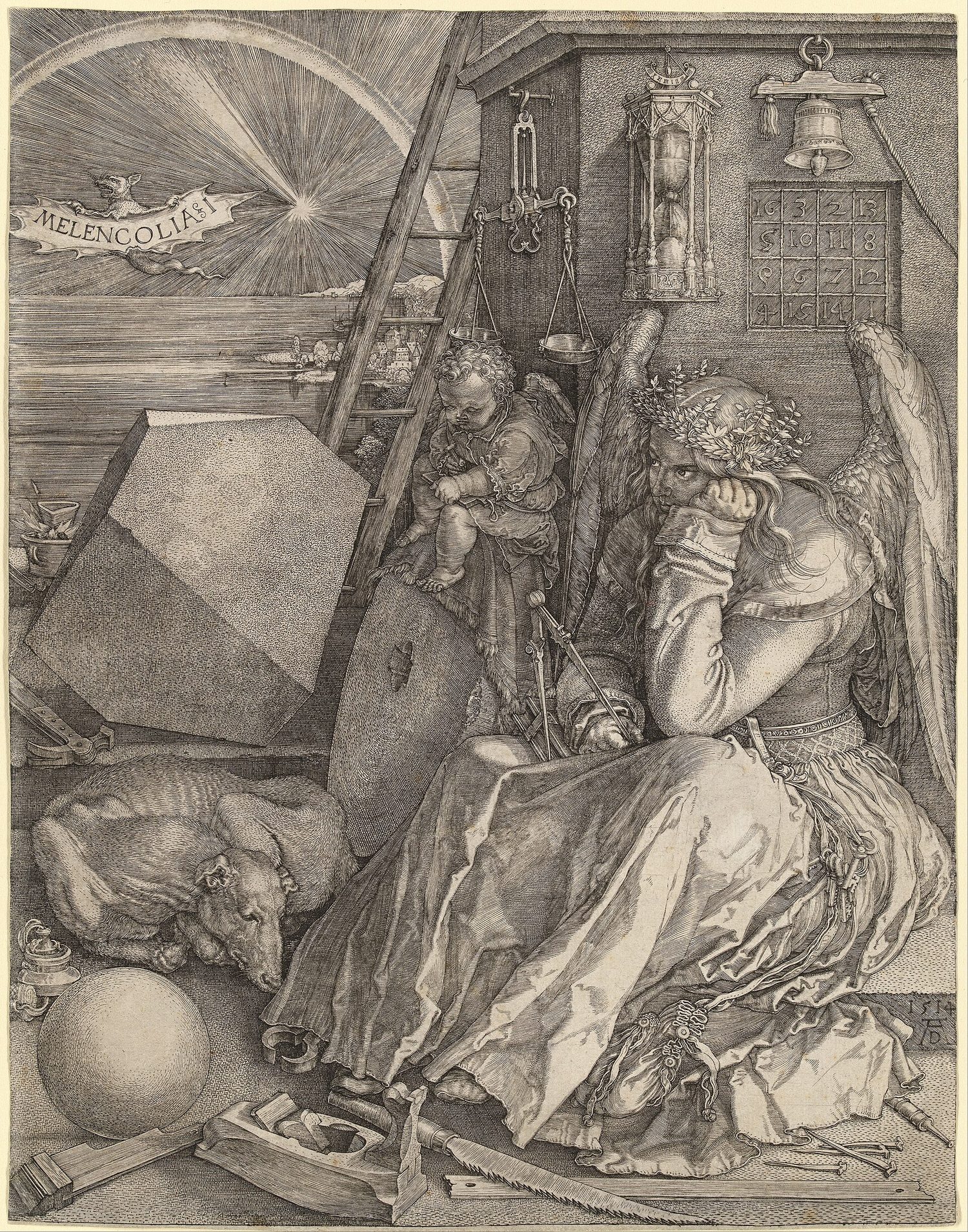
    طباعة قديمة كثيفة ومفصلة للغاية لشخصية مجنحة جالسة محاطة بالأدوات والرموز، جميعها مبنية من خطوط النقش الدقيقة
    نقش دورر Melencolia I: في النقش الغائر، تُقطع الخطوط داخل لوح معدني، وتسمح الخطوط الدقيقة والكثيفة التي يوفرها النقش ببناء ظلال عميقة وتفاصيل غنية
    Explore · ⁨استكشف⁩

    Which printmaking process? · ⁨أي عملية طباعة؟⁩

    Relief prints from the raised surface; intaglio from lines cut below the surface; planographic from a flat greasy image; stencil pushes ink through a mesh. · ⁨طباعة النقش المرتفع من السطح البارز؛ النقش الغائر من الخطوط المحفورة تحت السطح؛ الطباعة المسطحة من صورة دهنية مسطحة؛ القالب المثقب يدفع الحبر عبر شبكة.⁩

    Vocabulary · ⁨مفردات⁩ Train · ⁨تدريب⁩
    English العربية
    Printmaking/ˈprɪntmeɪkɪŋ/ طباعة الفنون
    matrix/ˈmeɪtrɪks/ مصفوفة
    edition/ɪˈdɪʃn/ إصدار
    Relief/rɪˈliːf/ البارزة
    Intaglio/ɪnˈtæɡlɪəʊ/ الغائرة
    Planographic/ˌplænəˈɡræfɪk/ طباعة مسطحة
    Stencil/ˈstensl/ الاستنسل
    Collage/kɒˈlɑːʒ/ كولاج
    mixed media/mɪkst ˈmiːdiːə/ وسائط مختلطة
    3.4

    Collage and Mixed Media · ⁨الكولاج والوسائط المختلطة⁩

    Syllabus · ⁨المنهج⁩
    English

    Focus: Collage assembles found materials onto a surface; mixed media combines two or more materials or processes.

    • Collage glues papers, photos, fabric, or found objects into a composition.
    • Mixed media layers, for example, drawing over paint, or print with stitching.
    • These processes add actual texture and unexpected juxtapositions of image and meaning.
    • Materials can carry meaning (a ticket, a map) beyond their visual role.
    • Good mixed-media work still uses the elements and principles to stay unified.
    العربية

    التركيز: الكولاج يجمع مواد موجودة مسبقًا على سطح؛ بينما تجمع الوسائط المختلطة نوعين أو أكثر من المواد أو العمليات.

    • الكولاج يلصق الأوراق، الصور، القماش، أو الأشياء المستخرجة لتكوين تركيب.
    • الوسائط المختلطة طبقات، مثل الرسم فوق الطلاء، أو الطباعة مع الغرز.
    • هذه العمليات تضيف ملمسًا حقيقيًا وتقابل غير متوقعة للصورة والمعنى.
    • يمكن للمواد حمل معنى (تذكرة، خريطة) يتجاوز دورها البصري.
    • الأعمال الجيدة بالوسائط المختلطة لا تزال تستخدم العناصر والمبادئ لتبقى موحدة.

    Source: College Board AP Course and Exam Description · ⁨المصدر: وصف دورة وامتحان College Board AP⁩

    English

    Collage 拼贴 assembles found materials onto a surface; mixed media 综合媒介 combines two or more materials or processes.

    • Collage glues papers, photos, fabric, or found objects into a composition.
    • Mixed media layers processes — for example, drawing over paint, or print with stitching.
    • These add actual texture and unexpected meaning; a found material (a ticket, a map) can carry meaning beyond its look.
    العربية

    الكولاج يجمع مواد مستخرجة على سطح؛ الوسائط المختلطة تجمع مادتين أو أكثر أو عمليات.

    • يقوم الكولاج بلصق الورق والصور والملابس أو المواد المستخرجة في تركيبة فنية.
    • تدمج الوسائط المختلطة العمليات طبقات — على سبيل المثال، الرسم فوق الطلاء، أو الطباعة مع الغرز.
    • هذه تضيف ملمساً حقيقياً ومعنى غير متوقع؛ يمكن أن تحمل المادة المستخرجة (تذكرة، خريطة) معنى يتجاوز مظهرها.
    3.5

    Photography and Lens-Based Media · ⁨التصوير الفوتوغرافي ووسائط العدسات⁩

    Syllabus · ⁨المنهج⁩
    English

    Focus: Photography makes images with light and a lens; the same elements and principles apply to the frame.

    • Key controls: framing/composition, focus, exposure (light), depth of field, and viewpoint.
    • The rule of thirds, leading lines, and negative space compose a photograph.
    • Light direction and quality (hard/soft) shape value, form, and mood.
    • Editing (cropping, contrast, colour) is part of the creative process, not just correction.
    • Digital and darkroom processes both count as lens-based 2-D art and design.
    العربية

    التركيز: التصوير الفوتوغري يصنع صورًا باستخدام الضوء والعدسة؛ تنطبق نفس العناصر والمبادئ على الإطار.

    • الضوابط الرئيسية: الإطار/التركيب، التركيز، التعريض (الضوء)، عمق الميدان، ونقطة الرؤية.
    • قاعدة الثلثات، الخطوط المؤدية، والمساحة السلبية تُركّب الصورة الفوتوغرافية.
    • اتجاه الضوء وجودته (صلب/ناعم) يشكّل القيمة والشكل والمزاج.
    • التعديل (القص، التباين، اللون) جزء من العملية الإبداعية، وليس مجرد تصحيح.
    • كل من العمليات الرقمية وغرفة الظلام تُحسب كفنون وتصاميم ثنائية الأبعاد تعتمد على العدسات 2-D.

    Source: College Board AP Course and Exam Description · ⁨المصدر: وصف دورة وامتحان College Board AP⁩

    English

    Photography 摄影 makes images with light and a lens; the elements and principles apply to the frame just as in any 2-D work.

    • Key controls: framing, focus 对焦, exposure 曝光 (light), depth of field 景深, and viewpoint.
    • The rule of thirds, leading lines, and negative space compose a photograph.
    • Editing 后期 (cropping, contrast, colour) is part of the creative process, not just correction.
    العربية

    التصوير الفوتوغرافي يصنع صوراً باستخدام الضوء والعدسة؛ تنطبق العناصر والمبادئ على الإطار تماماً كما هو الحال في أي عمل 2-أبعاد.

    صورة فوتوغرافية بالأبيض والأسود لمسافرين على متن سفينة مزدحمة، مقسومة بممر إلى مستويين، وتشكل أشكالاً هندسية قوية
    The Steerage لألفريد ستيجليتز، صورة فنية مبكرة مشهورة: الممر، المدخنة والشكل البشري تشكل تركيبة هندسية قوية، لذلك تنطبق العناصر والمبادئ على الصورة أيضاً
    • الضوابط الرئيسية: الإطار، التركيز، التعرض (الضوء)، عمق الميدان، وزاوية الرؤية.
    • قاعدة الثلثات، الخطوط التوجيهية والمساحة السلبية تتركب لتكوين الصورة الفوتوغرافية.
    • التعديل (القص، التباين، اللون) جزء من العملية الإبداعية، وليس مجرد تصحيح.
    Vocabulary · ⁨مفردات⁩ Train · ⁨تدريب⁩
    English العربية
    Photography/fəˈtɒɡrəfi/ التصوير الفوتوغرافي
    focus/ˈfəʊkəs/ البؤرة
    exposure/ekˈspəʊʒə/ التعريض
    depth of field/depθ ɒv fiːld/ عمق الميدان
    Editing/ˈedɪtɪŋ/ التحرير
    Digital media/ˈdɪdʒɪtl ˈmiːdiːə/ الوسائط الرقمية
    Raster/ˈræstə/ المرسوم النقطي (Raster)
    vector/ˈvektə/ شعاعية
    Layers/ˈleɪəz/ الطبقات
    resolution/ˌrezəˈluːʃn/ الدقة
    Graphic design/ˈɡræfɪk dɪˈzaɪn/ التصميم الجرافيكي
    illustration/ˌɪləˈstreɪʃn/ الرسم التوضيحي
    type/taɪp/ النص
    Typography/taɪˈpɒɡrəfi/ طباعة الخطوط
    3.6

    Digital Art and Design · ⁨الفن والتصميم الرقمي⁩

    Syllabus · ⁨المنهج⁩
    English

    Focus: Digital tools create and edit images on a computer or tablet, working in layers and pixels or vectors.

    • Raster images are made of pixels (photo editing, painting apps); vector images use math paths (scalable).
    • Layers let an artist build, mask, and revise non-destructively.
    • Digital colour uses RGB (screen, additive) or CMYK (print, subtractive).
    • Resolution (DPI/PPI) affects print quality; keep files high-resolution for the portfolio.
    • The same elements and principles guide digital work as any other 2-D medium.
    العربية

    التركيز: الأدوات الرقمية تصنع وتعدل الصور على جهاز كمبيوتر أو لوحة رسم، تعمل بالطبقات أو البكسلات أو المتجهات.

    • الصور النقطية تتكون من بكسلات (تعديل الصور، تطبيقات الرسم)؛ المتجهات تستخدم مسارات رياضية (قابلة للتوسع).
    • الطبقات تسمح للفنان بالبناء وإخفاء وتعديل بشكل غير مدمر.
    • الألوان الرقمية تستخدم RGB (شاشة، جمع) أو CMYK (طباعة، طرح).
    • الدقة (DPI/PPI) تؤثر على جودة الطباعة؛ احتفظ بالملفات عالية الدقة للملف الشخصي.
    • نفس العناصر والمبادئ توجه العمل الرقمي كما أي وسيط آخر 2-D.

    Source: College Board AP Course and Exam Description · ⁨المصدر: وصف دورة وامتحان College Board AP⁩

    English

    Digital media 数字媒介 create and edit images on a computer or tablet, working in layers.

    • Raster 位图 images are made of pixels (photo editing, digital painting); vector 矢量 images use maths paths and scale without losing quality.
    • Layers 图层 let an artist build, mask, and revise without damaging earlier work.
    • Digital colour uses RGB (screen, additive) or CMYK (print, subtractive); keep files high-resolution 分辨率 for the portfolio.
    العربية

    الوسائط الرقمية تصنع وتعدل الصور على جهاز كمبيوتر أو لوحي، مع العمل بطبقات.

    • الصور النقطية تتكون من بكسلات (تعديل الصور، الرسم الرقمي)؛ الصور المتجهة تستخدم مسارات رياضية وتتمدد دون فقدان الجودة.
    • الطبقات تسمح للفنان بالبناء وإخفاء وتعديل دون الإضرار بالأعمال السابقة.
    • الألوان الرقمية تستخدم RGB (الشاشة، إضافة) أو CMYK (الطباعة، طرح)؛ احتفظ بالملفات عالية الدقة للمحفظة.
    الألوان الإضافة مقابل الألوان الطرح
    خلط الضوء (RGB) يضيء نحو الأبيض؛ خلط الصبغة (CMY) يظلم نحو الأسود
    3.7

    Graphic Design and Illustration · ⁨التصميم الجرافيكي والتوضيح⁩

    Syllabus · ⁨المنهج⁩
    English

    Focus: Graphic design communicates a message visually; illustration makes images that support or tell a story.

    • Design combines type, image, colour, and layout to communicate to a viewer or client.
    • Visual hierarchy (size, weight, contrast, placement) guides the eye to what matters first.
    • Typography — typeface, size, spacing, alignment — is a core design element.
    • Illustration serves a purpose: editorial, book, product, poster, or narrative.
    • Design and illustration are problem-solving: audience and message shape every choice.
    العربية

    التركيز: التصميم الجرافيكي يوصل رسالة بصريًا؛ والتوضيح يصنع صورًا تدعم أو تروي قصة.

    • يجمع التصميم النص، الصورة، اللون، والتخطيط لإيصال الرسالة للمشاهد أو العميل.
    • الهرمية البصرية (الحجم، الوزن، التناقض، الموقع) توجه العين إلى ما يهم أولاً.
    • الطباعة (Typography) - نوع الخط، الحجم، المسافات، والمحاذاة - هي عنصر تصميم أساسي.
    • التوضيح يخدم هدفًا: تحريريًا، كتابيًا، منتجًا، ملصقًا، أو سرديًا.
    • التصميم والتوضيح هما حل المشكلات: الجمهور والرسالة يشكّلان كل اختيار.

    Source: College Board AP Course and Exam Description · ⁨المصدر: وصف دورة وامتحان College Board AP⁩

    English

    Graphic design 平面设计 communicates a message visually; illustration 插画 makes images that support or tell a story.

    • Design combines type 字体, image, colour, and layout to reach a viewer or client.
    • Visual hierarchy guides the eye to what matters first, through size, weight, and placement.
    • Typography 字体排印 — typeface, size, spacing, alignment — is a core design tool.
    • Design and illustration are problem-solving: the audience and message shape every choice.

    Worked example (writing about process). When your written evidence must explain a material and process: "I used charcoal on toned paper because its soft, smudgeable line let me build deep shadow quickly, and I lifted highlights with an eraser to suggest form." Notice the shape — name the medium, say why you chose it, and connect it to the idea you were exploring. Listing a material with no reason earns little.

    العربية

    التصميم الجرافيكي يوصل رسالة بصرياً؛ التوضيح يصنع صوراً تدعم أو سردي قصة.

    • يجمع التصميم النصوص، والصور، والألوان، والتخطيط للوصول إلى المشاهد أو العميل.
    • التسلسل الهرمي البصري يوجه العين إلى ما يهم أولاً، من خلال الحجم، والوزن، والموضع.
    • الخطوط — نوع الخط، الحجم، المسافة، المحاذاة — أداة تصميم جوهرية.
    • التصميم والتوضيح هما حل المشكلات: الجمهور والرسالة يشكّلان كل اختيار.

    مثال محلول (كتابة عن العملية). عندما يجب أن يشرح دليلك المكتوب مواد وعملية: "استخدمت الفحم على ورق ملون لأن خطه الناعم القابل للدهان سمح لي ببناء ظلال عميقة بسرعة، ورفعت الإضاءة باستخدام ممحاة لإضفاء شكل." لاحظ الشكل — سمِّ الوسيط، قل لماذا اخترته، وصِل ذلك بـالفكرة التي كنت تستكشفها. سرد مادة بدون سبب لا يحقق الكثير.

    3.7

    Exam tips · ⁨نصائح للامتحان⁩

    English
    • Match the medium to the intended effect, and justify the choice.
    • For printmaking, state relief versus intaglio, and remember the printed image reverses.
    • Explain transparent versus opaque paint, and layers and vector versus raster in digital work.
    • Treat collage and mixed media materials as meaning, not just texture.
    • In graphic design, show a clear visual hierarchy serving the message.
    العربية
    • طابق الوسيط بالتأثير المقصود، وبرر الاختيار.
    • بالنسبة لـ طباعة اللوحات، حدد النقش البارز مقابل النقش الغائر، وتذكر أن الصورة المطبوعة تنعكس.
    • اشرح الطلاء الشفاف مقابل الطلاء المعتم، والطبقات والمتجه مقابل النقطي في العمل الرقمي.
    • تعامل مع مواد الكولاج والوسائط المختلطة على أنها تعبير عن المعنى، وليس مجرد ملمس.
    • في التصميم الجرافيكي، أظهر تسلسلاً هرمياً بصرياً واضحاً يخدم الرسالة.
  • 4

    Investigate: Inquiry and the Artistic Process · ⁨تحقيق: الاستقصاء والعملية الفنية⁩

    Watch lesson · ⁨شاهد الدرس⁩
    4.1

    Inquiry and Asking Questions · ⁨الاستقصاء وطرح الأسئلة⁩

    Syllabus · ⁨المنهج⁩
    English

    Focus: In AP Art and Design, making begins with inquiry — asking questions that guide a sustained investigation. (CED Big Idea 1)

    • Inquiry is asking questions to find information and drive investigation.
    • A sustained investigation is an in-depth, question-driven study of materials, processes, and ideas over time.
    • Questions can be simple — who, what, when, where, why, how, what if, and why not.
    • Investigation includes perception, curiosity, examination, discovery, imagination, and conversation.
    • Questions evolve: early questions lead to new questions as the work develops.
    العربية

    التركيز: في AP Art and Design، يبدأ الإبداع بـالاستقصاء - طرح أسئلة توجه تحقيقًا مستدامًا. (الفكرة الكبرى CED 1)

    • الاستقصاء هو طرح الأسئلة للحصول على المعلومات ودفع عملية البحث إلى الأمام.
    • البحث المستدام هو دراسة متعمقة وموجهة بالأسئلة للمواد والعمليات والأفكار عبر الزمن.
    • يمكن أن تكون الأسئلة بسيطة — من، ماذا، متى، أين، لماذا، كيف، ماذا لو، ولماذا لا.
    • يشمل البحث الإدراك، والفضول، والفحص، والاكتشاف، والخيال، والمحادثة.
    • تتطور الأسئلة: الأسئلة الأولية تؤدي إلى أسئلة جديدة随着 عمل التطور.

    Source: College Board AP Course and Exam Description · ⁨المصدر: وصف دورة وامتحان College Board AP⁩

    English

    In AP Art and Design, making begins with inquiry 探究 — asking questions that guide a sustained investigation 持续探究 over time. This is Big Idea 1.

    • Inquiry is asking questions to find information and drive investigation.
    • A sustained investigation is an in-depth, question-driven study of materials, processes, and ideas.
    • Good questions can be simple — who, what, when, where, why, how, what if, and why not.
    • Questions evolve: early questions lead to new questions as the work develops.
    العربية

    في فن وتصميم AP، يبدأ الإنتاج بـالاستقصاء — طرح أسئلة توجه تحقيقاً مستمراً عبر الزمن. هذا هو الفكرة الكبرى 1.

    عملية الفن هي دورة من سؤال، تحقيق، إنتاج، وتأمل
    الاستقصاء يقود دورة: اطرح سؤالاً، تحقق، أنتج، تأمل — ودع كل إجابة تثير سؤالاً جديداً
    • الاستقصاء هو طرح أسئلة للحصول على المعلومات ودفع عملية التحقيق.
    • التحقيق المستمر هو دراسة عميقة تقودها الأسئلة للمواد والعمليات والأفكار.
    • الأسئلة الجيدة يمكن أن تكون بسيطة — من، ماذا، متى، أين، لماذا، كيف، ماذا لو، ولماذا لا.
    • تتطور الأسئلة: الأسئلة الأولية تؤدي إلى أسئلة جديدة随着 عمل التطور.
    4.2

    Sources of Ideas and Experiences · ⁨مصادر الأفكار والخبرات⁩

    Syllabus · ⁨المنهج⁩
    English

    Focus: Artists' and designers' experiences inform why, how, and what they make. (CED 1.A)

    • An experience is an event or occurrence — real surroundings, imagined concepts, communication, or research.
    • Reflecting on experiences sparks questions and inspires investigation.
    • Experiences can be documented with drawings, photos, diagrams, notes, or sound.
    • Ideas come from observation, memory, other disciplines, and other artists' work.
    • Recording experiences becomes a resource for the sustained investigation.
    العربية

    التركيز: تجارب الفنانين والمصممين توضح لماذا وكيف وماذا يصنعون. (CED 1.A)

    • التجربة هي حدث أو وقوع — بيئات حقيقية، مفاهيم متخيلة، تواصل، أو بحث.
    • التأمل في الخبرات يثير الأسئلة ويُلهم التحقيق.
    • يمكن توثيق التجارب بالرسومات، والصور، والمخططات، والملاحظات، أو الصوت.
    • تأتي الأفكار من الملاحظة، والذاكرة، والتخصصات الأخرى، وأعمال فنانين آخرين.
    • تسجيل التجارب يصبح موردًا للبحث المستدام.

    Source: College Board AP Course and Exam Description · ⁨المصدر: وصف دورة وامتحان College Board AP⁩

    English

    Artists' and designers' experiences 经历 inform why, how, and what they make.

    • An experience is any event — real surroundings, imagined ideas, communication, or research.
    • Reflecting on experiences sparks questions and inspires investigation.
    • Ideas come from observation 观察, memory, other disciplines, and other artists' work.
    • Experiences can be documented with drawings, photos, notes, or sound, becoming a resource.
    العربية

    الخبرات للفنانين والمصممين informs why, how, and what they make.

    • التجربة هي أي حدث — بيئات حقيقية، أفكار متخيلة، تواصل، أو بحث.
    • التأمل في الخبرات يثير الأسئلة ويُلهم التحقيق.
    • الأفكار تأتي من الملاحظة، الذاكرة، تخصصات أخرى، وأعمال فنانين آخرين.
    • يمكن توثيق الخبرات برسم أو صور فوتوغرافية أو ملاحظات أو صوت، لتصبح موردًا.
    من أين يمكن أن يأتي فكرة التحقيق المستدام
    أسئلة الاستقصاء القوية تنبع من الخبرة والملاحظة والفن الآخر والثقافة والقضايا والمواد
    4.3

    Materials, Processes, and Ideas · ⁨المواد والعمليات والأفكار⁩

    Syllabus · ⁨المنهج⁩
    English

    Focus: Every work is built from three interacting components — materials, processes, and ideas. (CED 1.C)

    • Materials are what a work is made of; processes are how it is made; ideas are what it is about.
    • These components interact: a material suggests a process; a process shapes an idea.
    • Investigating materials, processes, and ideas expands the possibilities for making.
    • The components an artist chooses influence how viewers interpret the work.
    • Documenting these choices shows the thinking behind the making.
    العربية

    التركيز: يُبنى كل عمل من ثلاثة مكونات متفاعلة — المواد، والعمليات، والأفكار. (CED 1.C)

    • المواد هي مما يتكون منه العمل؛ العمليات هي كيفية صنعه؛ الأفكار هي ما يمثل.
    • تتفاعل هذه المكونات: المادة تقترح عملية؛ العملية تُشكّل فكرة.
    • استقصاء المواد والعمليات والأفكار يوسع إمكانيات الإنتاج.
    • المكونات التي يختارها الفنان تؤثر على كيفية تفسير المشاهدين للعمل.
    • توثيق هذه الخيارات يظهر التفكير خلف الإنتاج.

    Source: College Board AP Course and Exam Description · ⁨المصدر: وصف دورة وامتحان College Board AP⁩

    English

    Every work is built from three interacting components — materials, processes, and ideas 材料、过程与想法.

    • Materials are what a work is made of; processes are how it is made; ideas are what it is about.
    • The components interact: a material suggests a process; a process shapes an idea.
    • Investigating all three expands the possibilities for making, and influences how viewers interpret the work.
    العربية

    كل عمل مبني من ثلاثة مكونات متفاعلة — المواد، والعمليات، والأفكار..

    • المواد هي مما يتكون منه العمل؛ العمليات هي كيفية صنعه؛ الأفكار هي ما يمثل.
    • المكونات تتفاعل: مادة تقترح عملية؛ عملية تشكّل فكرة.
    • استكشاف الثلاثة جميعاً يوسع possibilities للإنتاج، ويؤثر على كيفية تفسير المشاهدين للعمل.
    العودة إلى عجلة الألوان عند اختيار التناغم لسلسلة أعمال
    العودة إلى عجلة الألوان عند اختيار التناغم لسلسلة أعمال
    Explore · ⁨استكشف⁩

    Material, process, or idea? · ⁨هل مادة، عملية، أم فكرة؟⁩

    Every work combines materials (what it is made of), processes (how it is made), and ideas (what it is about). · ⁨كل عمل يجمع بين المواد (مما يتكون)، والعمليات (كيف يتم صناعته)، والأفكار (عن ماذا هو).⁩

    4.4

    Art and Design in Context · ⁨الفن والتصميم في السياق⁩

    Syllabus · ⁨المنهج⁩
    English

    Focus: Works are made and understood within contexts — traditions, cultures, and other disciplines. (CED 1.D)

    • Context is when, where, how, why, and by whom a work was made and viewed.
    • Artists work within (or challenge) art and design traditions from cultures around the world.
    • Comparing works reveals similarities and differences in materials, processes, and ideas.
    • Acknowledging references and influences shows integrity.
    • Understanding context helps both makers and viewers interpret a work.
    العربية

    التركيز: تُصنّع الأعمال وتُفهم ضمن سياقات — تقاليد، وثقافات، وتخصصات أخرى. (CED 1.D)

    • السياق هو متى، وأين، وكيف، ولماذا، وبمن صُنع العمل ورُئى.
    • يعمل الفنانون ضمن (أو يطعنون في) التقاليد الفنية والتصميمية من ثقافات العالم.
    • يكشف المقارنة بين الأعمال عن أوجه التشابه والاختلاف في المواد والعمليات والأفكار.
    • إقرار المراجع والتأثيرات يُظهر النزاهة.
    • فهم السياق يساعد كلًا من المنتجين والمشاهدين على تفسير العمل.

    Source: College Board AP Course and Exam Description · ⁨المصدر: وصف دورة وامتحان College Board AP⁩

    English

    Works are made and understood within a context 语境 — traditions, cultures, and other disciplines.

    • Context is when, where, how, why, and by whom a work was made and viewed.
    • Artists work within, or challenge, art and design traditions 传统 from cultures around the world.
    • Comparing works reveals similarities and differences in materials, processes, and ideas.
    • Acknowledging references and influences shows integrity 诚信 — never copying without credit.
    العربية

    تُصنع الأعمال وتُفهم ضمن سياق — التقاليد، الثقافات، والتخصصات الأخرى.

    • السياق هو متى وأين وكيف ولماذا وبأيّ شخص تم إنتاج العمل وعرضه.
    • يعمل الفنانون ضمن أو يتحدّون تقاليد الفن والتصميم من ثقافات حول العالم.
    • يكشف المقارنة بين الأعمال عن أوجه التشابه والاختلاف في المواد والعمليات والأفكار.
    • الاعتراف بالمراجع والتأثيرات يظهر النزاهة — لا نسخ بلا إعطاء الفضل.
    هوكوساي في سياقه: الأعمال التاريخية تعلم التكوين للتحقيق
    هوكوساي في سياقه: الأعمال التاريخية تُعلّم التكوين للتحقيق
    Vocabulary · ⁨مفردات⁩ Train · ⁨تدريب⁩
    English العربية
    inquiry/ɪnˈkwaɪəri/ الاستقصاء
    sustained investigation/səˈsteɪnd ɪnˌvestɪˈɡeɪʃn/ البحث المستمر
    experiences/ekˈspɪərɪənsɪz/ التجارب
    observation/ɒbzəˈveɪʃn/ ملاحظة
    materials, processes, and ideas/məˈtɪərɪəlz ˈprəʊsesɪz ænd aɪˈdɪəz/ المواد والعمليات والأفكار
    context/ˈkɒntekst/ سياقه
    traditions/trəˈdɪʃnz/ التقاليد
    integrity/ɪnˈteɡrɪti/ الموثوقية
    evaluated/ɪˈvæljuːeɪtɪd/ تم تقييمه
    criteria/kraɪˈtɪərɪə/ معايير
    synthesis/ˈsɪnθəsɪs/ التخليق
    4.5

    Evaluating Art and Design · ⁨تقييم الفن والتصميم⁩

    Syllabus · ⁨المنهج⁩
    English

    Focus: Works can be evaluated by using evidence to compare them with specific criteria. (CED 1.E)

    • Evaluation uses visual evidence to judge a work against criteria (as the AP scoring guidelines do).
    • Observe carefully: identify materials, processes, and ideas, and how they connect.
    • Consider whether the components show synthesis — parts working together for one effect.
    • Evaluation can be informal (as you work) or formal (peer critique, feedback).
    • Reflecting on evaluation improves later thinking and making.
    العربية

    التركيز: يمكن تقييم الأعمال باستخدام الأدلة لمقارنتها بمعايير محددة. (CED 1.E)

    • التقييم يستخدم أدلة بصرية لحكم العمل مقابل معايير (كما تفعل إرشادات评分 AP).
    • راقب بعناية: حدد المواد والعمليات والأفكار وكيفية ارتباطها.
    • افكر فيما إذا كانت المكونات تظهر الدمج — عمل الأجزاء معاً لتحقيق تأثير واحد.
    • يمكن أن يكون التقييم غير رسمي (أثناء العمل) أو رسمي (مراجعة الأقران، وتغذية راجعة).
    • التفكير في التقييم يحسن التفكير والإنتاج اللاحقين.

    Source: College Board AP Course and Exam Description · ⁨المصدر: وصف دورة وامتحان College Board AP⁩

    English

    Works can be evaluated 评价 by using visual evidence to compare them with specific criteria 标准 (as the AP scoring guidelines do).

    • Observe carefully: identify the materials, processes, and ideas, and how they connect.
    • Consider whether the components show synthesis 综合 — parts working together for one effect.
    • Evaluation can be informal (as you work) or formal (a critique 评图 with peers or a teacher).
    • Reflecting on evaluation improves your later thinking and making.
    العربية

    يمكن تقييم الأعمال باستخدام أدلة بصرية لمقارنتها بمعايير محددة (كما تفعل إرشادات التقييم الخاصة بـ AP).

    • راقب بعناية: حدد المواد والعمليات والأفكار وكيفية ارتباطها.
    • افكر فيما إذا كانت المكونات تظهر الدمج — عمل الأجزاء معاً لتحقيق تأثير واحد.
    • يمكن أن يكون التقييم غير رسمي (أثناء العمل) أو رسمياً (نقد مع الزملاء أو المعلم).
    • التفكير في التقييم يحسّن تفكيرك وصنعك اللاحقين.
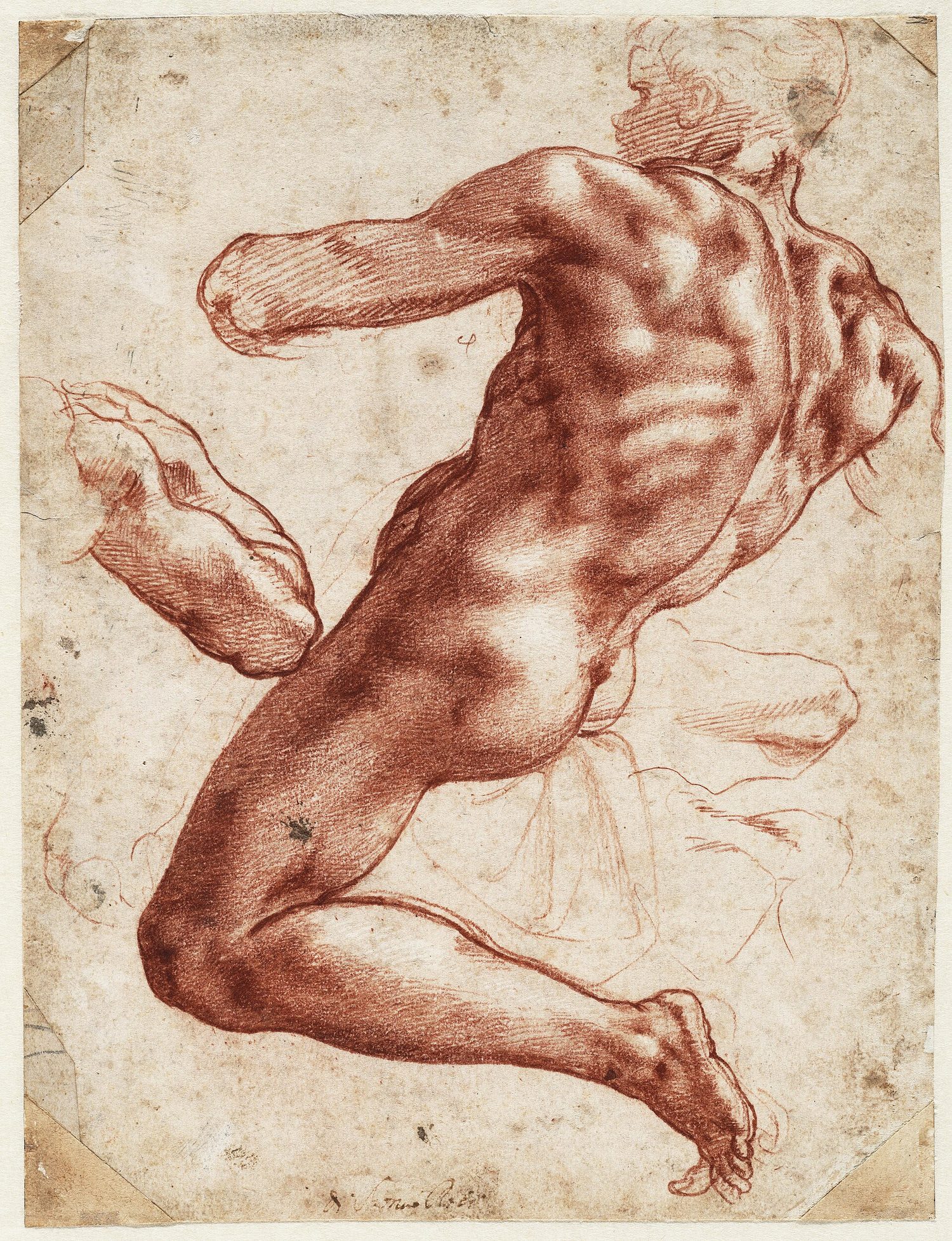
    انتقاد يحدد الأدلة البصرية: الخط، النبرة، والتكوين في رسم خبير
    انتقاد يحدد الأدلة البصرية: الخط، النبرة، والتكوين في رسم خبير
    Vocabulary · ⁨مفردات⁩ Train · ⁨تدريب⁩
    English العربية
    critique/krɪˈtiːk/ المراجعة النقدية
    Documentation/ˌdɒkjuːmənˈteɪʃn/ التوثيق
    process journal/ˈprəʊses ˈdʒɜːnl/ سجل عملية
    lines of inquiry/laɪnz ɒv ɪnˈkwaɪəri/ خطوط البحث
    4.6

    Documentation and the Process Journal · ⁨التوثيق وسجل العملية⁩

    Syllabus · ⁨المنهج⁩
    English

    Focus: Documentation records information and becomes a resource for the sustained investigation. (CED 1.A/1.B)

    • Documentation takes many forms: images, notes, diagrams, samples, and written reflection.
    • A process journal (sketchbook) records questions, experiments, and revisions over time.
    • Documenting your lines of inquiry shows how the investigation developed.
    • Good documentation can be shared with viewers and included as part of the work.
    • Consistent documentation makes writing the portfolio's written evidence far easier.
    العربية

    التركيز: التسجيل يسجل المعلومات ويصبح موردًا للبحث المستدام. (CED 1.A/1.B)

    • التوثيق يأخذ أشكالًا متعددة: صور، ملاحظات، مخططات، عينات، وتأمل مكتوب.
    • دفتر العملية (الدفتر المبدئي) يسجّل الأسئلة والتجارب والتعديلات عبر الزمن.
    • توثيق مسارات استقصائك يُظهر كيف تطوّر التحقيق.
    • التوثيق الجيد يمكن مشاركته مع المشاهدين وإدراجه كجزء من العمل.
    • التوثيق المنتظم يجعل كتابة الدليل المكتوب للمحفظة أسهل بكثير.

    Source: College Board AP Course and Exam Description · ⁨المصدر: وصف دورة وامتحان College Board AP⁩

    English

    Documentation 记录 records information and becomes a resource for the sustained investigation.

    • It takes many forms: images, notes, diagrams, material samples, and written reflection.
    • A process journal 创作日志 (sketchbook) records questions, experiments, and revisions over time.
    • Documenting your lines of inquiry 探究路径 shows how the investigation developed.
    • Consistent documentation makes writing the portfolio's written evidence far easier.

    Worked example (framing an inquiry). A weak sustained-investigation question is really just a topic: "My investigation is about the ocean." A strong one is a real question that can drive many artworks: "How can I use colour and texture to show the ocean shifting from calm to dangerous?" The question names an idea and points to the visual choices you will test — exactly what raises a portfolio's score.

    العربية

    التوثيق يسجل المعلومات ويصبح موردًا للتحقيق المستمر.

    • يأخذ أشكالًا متعددة: صور، ملاحظات، مخططات، عينات مواد، وتأمل مكتوب.
    • دفتر العملية (الدفتر المبدئي) يسجّل الأسئلة والتجارب والتعديلات عبر الزمن.
    • توثيق مسارات استقصائك يُظهر كيف تطوّر التحقيق.
    • التوثيق المنتظم يجعل كتابة الدليل المكتوب للمحفظة أسهل بكثير.

    مثال محلل (صياغة استفسار). سؤال التحقيق المستمر الضعيف هو في الواقع مجرد موضوع: "تحقيقي يدور حول المحيط." أما القوي فهو سؤال حقيقي يمكن أن يقود إلى العديد من الأعمال الفنية: "كيف يمكنني استخدام اللون والملمس لإظهار تحول المحيط من الهدوء إلى الخطر؟". السؤال يُعرّف فكرةً ويشير إلى الخيارات البصرية التي ستختبرها — وهو بالضبط ما يرفع درجة المحفظة.

    صفحة من سجل العملية: ملاحظات الاستفسار والتجارب الصغيرة توثق تطور الأفكار
    صفحة من سجل العملية: ملاحظات الاستفسار والتجارب الصغيرة توثق تطور الأفكار
    4.6

    Exam tips · ⁨نصائح للامتحان⁩

    English
    • Frame the work with an open guiding question, not a closed yes/no one.
    • Draw on varied sources — observation, experience, research — and cite your influences.
    • Aim for synthesis: materials and processes chosen because they carry the idea.
    • Evaluate through critique using the elements and principles, then plan a revision.
    • Keep a process journal: record experiments and failures as evidence of inquiry.
    العربية
    • صمم العمل حول سؤال توجيهي مفتوح، وليس سؤال مغلق بنعم/لا.
    • اعتمد على مصادر متنوعة — الملاحظة، الخبرة، البحث — واستشهد بتأثيراتك.
    • استهدف الدمج: اختيار المواد والعمليات لأنها تحمل الفكرة.
    • قم بالتقييم من خلال النقد باستخدام العناصر والمبادئ، ثم خطط لـالمراجعة.
    • احتفظ بـسجل عملية: سجّل التجارب والفشل كأدلة على الاستفسار.
  • 5

    Make: Practice, Experimentation, and Revision · ⁨إنتاج: الممارسة والتجريب والمراجعة⁩

    Watch lesson · ⁨شاهد الدرس⁩
    5.1

    The Sustained Investigation

    Syllabus · ⁨المنهج⁩
    English

    Focus: The Sustained Investigation is a body of work exploring one question or idea in depth over time. (CED Big Idea 2)

    • A sustained investigation is guided by questions or inquiry and develops as you make.
    • It shows practice, experimentation, and revision — not a set of unrelated pieces.
    • The 2-D portfolio's Sustained Investigation section is 15 images plus written evidence.
    • A clear, focused inquiry gives the whole body of work direction and coherence.
    • The investigation can change direction as new questions emerge — and that evolution is valued.
    العربية

    التركيز: البحث المستدام هو مجموعة أعمال تستكشف سؤالًا واحدًا أو فكرة بعمق عبر الزمن. (CED الفكرة الكبرى 2)

    • التحقيق المستمر يكون موجهًا بواسطة أسئلة أو استفسارات ويتطور أثناء الصنع.
    • يظهر الممارسة، والتجريب، والمراجعة — وليس مجموعة من القطع غير المرتبطة.
    • قسم التحقيق المستدام في محفظة 2-أبعاد هو 15 صور بالإضافة إلى أدلة مكتوبة.
    • استقصاء واضح ومركّز يمنح المجموعة الكاملة من الأعمال اتجاهاً وتماسكاً.
    • يمكن أن يتغير اتجاه البحث مع ظهور أسئلة جديدة — وهذا التطور مُقدَّر.

    Source: College Board AP Course and Exam Description · ⁨المصدر: وصف دورة وامتحان College Board AP⁩

    Big Idea 2 is about making. Its heart is the Sustained Investigation 持续探究 — a body of work that explores one question or idea in depth over time.

    • A sustained investigation is guided by questions or inquiry and develops as you make.
    • It shows practice, experimentation, and revision — not a set of unrelated pieces.
    • The 2-D portfolio's Sustained Investigation section is 15 images plus written evidence.
    • A clear, focused inquiry gives the whole body of work direction and coherence 连贯性.
    Vocabulary · ⁨مفردات⁩ Train · ⁨تدريب⁩
    English العربية
    Sustained Investigation/səˈsteɪnd ɪnˌvestɪˈɡeɪʃn/ البحث المستمر
    coherence/kəʊˈhɪərəns/ التماسك
    5.2

    Practice, Experimentation, and Revision

    Syllabus · ⁨المنهج⁩
    English

    Focus: Making advances through three linked actions — practice, experimentation, and revision. (CED 2.B)

    • Practice is repeated work to build skill and understanding.
    • Experimentation tries new materials, processes, and ideas to discover possibilities.
    • Revision changes a work based on reflection, feedback, or new questions.
    • These actions are shown across the body of work, not just in one final piece.
    • Evidence of experimentation and revision is exactly what the AP readers look for.
    العربية

    التركيز: تحقيق تقدم من خلال ثلاث إجراءات مرتبطة — الممارسة، والتجريب، والمراجعة. (CED 2.B)

    • الممارسة هي عمل متكرر لبناء المهارة والفهم.
    • التجريب يجرب مواد وعمليات وأفكارًا جديدة لاكتشاف الإمكانيات.
    • المراجعة تغيير العمل بناءً على التأمل أو التغذية الراجعة أو أسئلة جديدة.
    • تظهر هذه الإجراءات عبر مجموعة الأعمال، وليس فقط في قطعة نهائية واحدة.
    • أدلة التجريب والمراجعة هي بالضبط ما يبحث عنه قراء امتحانات AP.

    Source: College Board AP Course and Exam Description · ⁨المصدر: وصف دورة وامتحان College Board AP⁩

    Making advances through three linked actions.

    Making advances by practising, experimenting, and revising over time
    Practice builds skill, experimentation tries new possibilities, and revision improves the work — repeated across the body of work
    • Practice 练习 is repeated work to build skill and understanding.
    • Experimentation 实验 tries new materials, processes, and ideas to discover possibilities.
    • Revision 修改 changes a work based on reflection, feedback, or new questions.
    • These are shown across the body of work, not just in one final piece. Evidence of experimentation and revision is exactly what the AP readers look for.
    A master study: practice, experimentation and revision are how 2-D skill accumulates over time
    A master study: practice, experimentation and revision are how 2-D skill accumulates over time
    Explore · ⁨استكشف⁩

    Practice, experiment, or revise? · ⁨ممارسة، تجربة، أم مراجعة؟⁩

    Practice is repeated work to build skill; experimentation tries new materials or ideas; revision changes a work after reflection or feedback. · ⁨الممارسة هي عمل متكرر لبناء المهارة؛ التجريب يجرب مواد أو أفكارًا جديدة؛ المراجعة تغير العمل بعد التأمل أو التغذية الراجعة.⁩

    Vocabulary · ⁨مفردات⁩ Train · ⁨تدريب⁩
    English العربية
    Practice/ˈpræktɪs/ تدريب
    Experimentation/ekˌsperɪmənˈteɪʃn/ التجريب
    Revision/rɪˈvɪʒn/ المراجعة
    5.3

    Synthesis of Materials, Processes, and Ideas

    Syllabus · ⁨المنهج⁩
    English

    Focus: Strong works show synthesis — materials, processes, and ideas integrated so the whole is more than its parts. (CED 2.C)

    • Synthesis means the components combine (coalesce) to create a unified effect.
    • The choice of material should support the idea; the process should serve both.
    • When components are integrated, viewers read one clear message rather than separate parts.
    • Synthesis develops through investigation — trying combinations and keeping what works.
    • The relationships among components are what evaluation and scoring examine.
    العربية

    التركيز: الأعمال القوية تُظهر دمجاً — مواد وعمليات وأفكار مدمجة بحيث يكون الكل أكبر من مجموع أجزائه. (CED 2.C)

    • الدمج يعني أن المكونات تندمج (تنسجم) لتخلق تأثيراً موحداً.
    • اختيار المادة يجب أن يدعم الفكرة، والعملية يجب أن تخدم كليهما.
    • عندما تكون المكونات مدمجة، يقرأ المشاهد رسالة واضحة واحدة بدلاً من أجزاء منفصلة.
    • يتطور التكامل من خلال التحقيق — محاولة التركيبات والاحتفاظ بما يعمل.
    • العلاقات بين المكونات هي ما يفحصه التقييم والدرجات.

    Source: College Board AP Course and Exam Description · ⁨المصدر: وصف دورة وامتحان College Board AP⁩

    Strong works show synthesis 综合 — materials, processes, and ideas integrated so the whole is more than its parts.

    • Synthesis means the components combine to create a unified effect.
    • The chosen material should support the idea; the process should serve both.
    • When components are integrated, viewers read one clear message rather than separate parts.
    • Synthesis develops through investigation — trying combinations and keeping what works.
    Vocabulary · ⁨مفردات⁩ Train · ⁨تدريب⁩
    English العربية
    synthesis/ˈsɪnθəsɪs/ التخليق
    5.4

    Demonstrating 2-D Skills

    Syllabus · ⁨المنهج⁩
    English

    Focus: The portfolio must show 2-D skills — the elements and principles used to organise a two-dimensional surface. (CED 2.D)

    • 2-D skills are the use of the elements of art and principles of design on a flat surface.
    • Skilful work shows control of value, colour, composition, and mark-making.
    • Skills are demonstrated across many works, in a range of materials and processes.
    • The Selected Works section (5 works) is where 2-D skills are judged most directly.
    • Skill is shown by decisions that are clear, purposeful, and support the idea.
    العربية

    تركيز: يجب أن يظهر المحفظة مهارات 2-D — وهي العناصر والمبادئ المستخدمة لتنظيم سطح ثنائي الأبعاد. (CED 2.D)

    • مهارات 2-D هي استخدام عناصر الفن ومبادئ التصميم على سطح مسطح.
    • الأعمال الماهرة تُظهر تحكمًا في القيمة واللون والتكوين وصنع العلامات.
    • تُظهر المهارات عبر أعمال عديدة، في نطاق متنوع من المواد والعمليات.
    • قسم الأعمال المختارة (5 عمل) هو المكان الذي تُقيَّم فيه مهارات 2-D بشكل مباشر.
    • تُظهر المهارة من خلال قرارات واضحة، هادفة، وتدعم الفكرة.

    Source: College Board AP Course and Exam Description · ⁨المصدر: وصف دورة وامتحان College Board AP⁩

    The portfolio must show 2-D skills 二维技能 — the elements and principles used to organise a flat surface.

    • 2-D skills are the skilful use of line, shape, value, colour, texture, space, and the principles of design.
    • Skilful work shows control of value, colour, composition, and mark-making.
    • Skills are demonstrated across many works, in a range of materials and processes.
    • The Selected Works 精选作品 section is where 2-D skills are judged most directly.
    Van Gogh's Starry Night: expressive line, colour, and rhythm as 2-D skills
    Van Gogh's Starry Night: expressive line, colour, and rhythm as 2-D skills
    Vocabulary · ⁨مفردات⁩ Train · ⁨تدريب⁩
    English العربية
    2-D skills/tuː diː skɪlz/ مهارات 2-D
    Selected Works/sɪˈlektɪd wɜːks/ الأعمال المُختارة
    5.5

    Composition and Craft in Making

    Syllabus · ⁨المنهج⁩
    English

    Focus: Craft is the quality of making; composition is the arrangement of the work — both communicate care and intent.

    • Craftsmanship is the skilful, controlled handling of materials and processes.
    • Composition applies the principles of design to organise the picture plane.
    • Purposeful decisions about surface, edges, and finish strengthen a work.
    • Craft should serve the idea — sometimes rough or raw handling is the right choice.
    • Consistent quality across the body of work signals a developed artist.
    العربية

    التركيز: الصناعة هي جودة الإنتاج؛ التركيب هو ترتيب العمل — كلاهما يعبر عن العناية والنية.

    • الحرفية هي التعامل المهاري والمتحكم به مع المواد والعمليات.
    • التركيب يطبق مبادئ التصميم لتنظيم مستوى الصورة.
    • القرارات الهادفة حول السطح والحواف والطلاء تعزز العمل.
    • يجب أن تخدم الحرفية الفكرة — وأحياناً يكون التعامل الخشن أو الخام هو الخيار الأنسب.
    • الجودة المتسقة عبر مجمل الأعمال تدل على فنان ناضج.

    Source: College Board AP Course and Exam Description · ⁨المصدر: وصف دورة وامتحان College Board AP⁩

    Craft 工艺 is the quality of making; composition is the arrangement of the work — both communicate care and intent.

    • Craftsmanship 匠艺 is the skilful, controlled handling of materials and processes.
    • Composition applies the principles of design to organise the picture plane.
    • Craft should serve the idea — sometimes a rough or raw handling is the right choice.
    • Consistent quality across the body of work signals a developed artist.
    Hokusai's Great Wave: composition and craft guide the eye across the picture plane
    Hokusai's Great Wave: composition and craft guide the eye across the picture plane
    Vocabulary · ⁨مفردات⁩ Train · ⁨تدريب⁩
    English العربية
    Craft/kræft/ الحرفية
    Craftsmanship/ˈkræftsmənʃɪp/ الإتقان
    5.6

    Developing Ideas Over Time

    Syllabus · ⁨المنهج⁩
    English

    Focus: A sustained investigation shows ideas developing — growing and changing across the body of work. (CED 2.B)

    • Development is visible when later works build on discoveries in earlier ones.
    • New questions, materials, or processes push the investigation forward.
    • Not every experiment succeeds — evidence of what did not work is still valuable.
    • Documenting the sequence shows the readers a genuine journey of inquiry.
    • A body of work with clear development scores higher than a set of finished-but-static pieces.
    العربية

    التركيز: يظهر البحث المستدام أفكاراً تتطور — تنمو وتتغير عبر مجموعة الأعمال. (CED 2.B)

    • يظهر التطور عندما تبني الأعمال اللاحقة على اكتشافات الأعمال السابقة.
    • تطرح الأسئلة الجديدة أو المواد أو العمليات دفعاً للتحقيق.
    • ليس كل تجربة تنجح — أدلة ما لم ينجح لا تزال قيمة.
    • توثيق التسلسل يُظهر للقراء رحلة حقيقية من الاستقصاء.
    • تحصل مجموعة الأعمال ذات التطور الواضح على درجة أعلى من مجموعة من القطع المكتملة لكن الثابتة.

    Source: College Board AP Course and Exam Description · ⁨المصدر: وصف دورة وامتحان College Board AP⁩

    A sustained investigation shows ideas developing 发展 — growing and changing across the body of work.

    • Development is visible when later works build on discoveries in earlier ones.
    • New questions, materials, or processes push the investigation forward.
    • Not every experiment succeeds — evidence of what did not work is still valuable.
    • A body of work with clear development scores higher than a set of finished-but-static pieces.
    A sustained investigation deepens as the works develop
    Early exploration gives way to experimentation and revision, then synthesis — the thinking visibly deepens across the works

    Worked example (showing development). The Sustained Investigation is scored on evidence of thinking, not just finished pieces: "My first three works used flat colour; after seeing they felt lifeless, I experimented with layered glazes in works 4–6, then in works 7–9 I combined the best of both." Describing a change and the reason for it is how you demonstrate practice, experimentation, and revision.

    Vocabulary · ⁨مفردات⁩ Train · ⁨تدريب⁩
    English العربية
    developing/dɪˈveləpɪŋ/ تتطور
    5.6

    Exam tips

    • Build the sustained investigation as a connected body of work, not one-offs.
    • Show practice, experimentation, and revision — a documented failure still earns credit.
    • Push synthesis and clear 2-D skills, and keep craft clean to the edges.
    • Let each work develop from the last, raising the next question.
    • Choose materials and processes that embody the guiding question.
  • 6

    Present: Communication and the AP Portfolio · ⁨عرض: التواصل وبورتفوليو AP⁩

    Watch lesson · ⁨شاهد الدرس⁩
    6.1

    The AP 2-D Art and Design Portfolio · ⁨محفظة فن وتصميم AP 2-D⁩

    Syllabus · ⁨المنهج⁩
    English

    Focus: The AP exam is a portfolio, not a written test. It has two sections that are submitted digitally. (CED Big Idea 3)

    • The Sustained Investigation section: 15 images showing inquiry, practice, experimentation, and revision, plus written evidence.
    • The Selected Works section: 5 works that best show your 2-D skills and synthesis, with written information.
    • Works may be physical or digital, but all are submitted as digital images (and short video where relevant).
    • There is no written exam and no timed section — the portfolio is built across the whole course.
    • Both sections are scored against the College Board scoring guidelines.
    العربية

    التركيز: امتحان AP هو محفظة، وليس اختباراً كتابياً. له قسمان يتم تقديمهما رقمياً. (CED الفكرة الكبرى 3)

    • قسم التحقق المستمر: 15 صورة تظهر البحث والممارسة والتجريب والمراجعة، بالإضافة إلى أدلة مكتوبة.
    • قسم الأعمال المختارة: 5 أعمال تُظهر أفضل مهاراتك 2-D والتوليف، مع معلومات مكتوبة.
    • قد تكون الأعمال مادية أو رقمية، لكن جميعها تُقدم كـ صور رقمية (ومقاطع فيديو قصيرة عند الاقتضاء).
    • لا يوجد اختبار كتابي ولا قسم زمني — تُبنى المحفظة طوال المقرر الدراسي.
    • يُقيّم كلا القسمين وفقاً لـ إرشادات评分 College Board.

    Source: College Board AP Course and Exam Description · ⁨المصدر: وصف دورة وامتحان College Board AP⁩

    English

    Big Idea 3 is about presenting your work. The AP exam is a portfolio 作品集 — not a written test. It has two sections, both submitted digitally.

    • The Sustained Investigation 持续探究 section: 15 images showing inquiry, practice, experimentation, and revision, plus written evidence.
    • The Selected Works 精选作品 section: 5 works that best show your 2-D skills, with written information.
    • Works may be physical or digital, but all are submitted as digital images. There is no timed exam — the portfolio is built across the whole course.
    العربية

    الفكرة الكبرى 3 تتعلق بـعرض عملك. امتحان AP هو ملف — وليس اختباراً كتابياً. يحتوي على قسمين، يتم تقديمهما رقمياً.

    تتكون محفظة 2-D من جزأين: تحقيق مستمر صورته 15 وأعمال مختارة عددها 5
    الملف هو تحقيق مستمر comprising 15 صورة بالإضافة إلى 5 أعمال مختارة، يتم تقديمها كصور رقمية
    • قسم التحقق المستمر: 15 صورة تظهر البحث والممارسة والتجريب والمراجعة، بالإضافة إلى أدلة مكتوبة.
    • قسم الأعمال المختارة: 5 أعمال تظهر أفضل مهارات 2-D الخاصة بك، مع معلومات مكتوبة.
    • قد تكون الأعمال مادية أو رقمية، ولكن يتم تقديم جميعها كـصور رقمية. لا يوجد امتحان限时 — يتم بناء الملف طوال فترة المقرر الدراسي.
    الجزأين في محفظة فن وتصميم AP 2-D
    التحقق المستمر (15 صورة، بالإضافة إلى الأدلة المكتوبة) له وزن أكبر من الأعمال المختارة (5 قطع)
    Vocabulary · ⁨مفردات⁩ Train · ⁨تدريب⁩
    English العربية
    portfolio/pɔːtˈfəʊlɪəʊ/ محفظة
    Sustained Investigation/səˈsteɪnd ɪnˌvestɪˈɡeɪʃn/ البحث المستمر
    6.2

    Sustained Investigation: Images and Written Evidence · ⁨التحقق المستمر: الصور والأدلة المكتوبة⁩

    Syllabus · ⁨المنهج⁩
    English

    Focus: The Sustained Investigation is judged on the inquiry and the practice, experimentation, and revision it shows. (CED 3.A/3.B)

    • Submit 15 images — works and process documentation that show the investigation over time.
    • Provide written evidence: identify the questions that guided the investigation, and describe how the work shows practice, experimentation, and revision.
    • Images should tell the story of the inquiry, not just show finished pieces.
    • Detail images and in-progress shots are allowed and often helpful.
    • Clear writing (within the character limit) makes the investigation easy to follow.
    العربية

    التركيز: يُحكم على البحث المستدام بناءً على الاستقصاء والممارسة والتجريب والمراجعة التي يُظهرها. (CED 3.A/3.B)

    • قدم 15 صوراً — الأعمال وتوثيق العملية التي تظهر التحقيق عبر الزمن.
    • قدم أدلة مكتوبة: حدد الأسئلة التي وجهت البحث، ووصف كيف تُظهر الأعمال الممارسة والتجريب والمراجعة.
    • يجب أن تخبر الصور قصة الاستقصاء، وليس فقط عرض القطع النهائية.
    • صور التفاصيل واللقطات أثناء العمل مسموح بها وغالباً ما تكون مفيدة.
    • الكتابة الواضحة (في حدود حد الأحرف) تجعل المتابعة سهلة للتحقيق.

    Source: College Board AP Course and Exam Description · ⁨المصدر: وصف دورة وامتحان College Board AP⁩

    English

    The Sustained Investigation is judged on the inquiry and the practice, experimentation, and revision it shows.

    • Submit 15 images — works and process documentation that show the investigation over time.
    • Provide written evidence 书面材料: identify the guiding questions 引导性问题, and describe how the work shows practice, experimentation, and revision.
    • Images should tell the story of the inquiry, not just show finished pieces. Detail and in-progress shots are allowed.
    العربية

    يتم تقييم التحقق المستمر بناءً على البحث والممارسة والتجريب والمراجعة التي يظهرها.

    • قدم 15 صوراً — الأعمال وتوثيق العملية التي تظهر التحقيق عبر الزمن.
    • قدم أدلة مكتوبة: حدد الأسئلة التوجيهية، ووصف كيف يظهر العمل الممارسة والتجريب والمراجعة.
    • يجب أن تروي الصور قصة البحث، وليس فقط إظهار القطع النهائية. يُسمح بالتفاصيل وصور أثناء العمل.
    6.3

    Selected Works: Demonstrating Skills · ⁨الأعمال المختارة: إثبات المهارات⁩

    Syllabus · ⁨المنهج⁩
    English

    Focus: The Selected Works section shows your best evidence of 2-D skills and synthesis of materials, processes, and ideas. (CED 3.D/3.E)

    • Submit 5 works (physical or digital) as high-quality images.
    • For each, give the materials, processes, and ideas used, plus the size.
    • These works are judged mainly on the skilful use of the elements and principles.
    • They do not have to belong to the sustained investigation.
    • Choose works that most clearly show control, decision-making, and synthesis.
    العربية

    التركيز: يُظهر قسم الأعمال المختارة أدلةك الأفضل على مهارات 2-D وتوليف المواد والعمليات والأفكار. (CED 3.D/3.E)

    • قدّم 5 أعمال (مادية أو رقمية) كصور عالية الجودة.
    • لكل عمل، قدم المواد والعمليات والأفكار المستخدمة، بالإضافة إلى الحجم.
    • تُحکم هذه الأعمال بشكل رئيسي على الاستخدام المهاري للعناصر والمبادئ.
    • لا يشترط أن تنتمي إلى التحقيق المستدام.
    • اختر أعمالاً تُظهر بوضوح التحكم واتخاذ القرار والتركيب.

    Source: College Board AP Course and Exam Description · ⁨المصدر: وصف دورة وامتحان College Board AP⁩

    English

    The Selected Works section shows your best evidence of 2-D skills 二维技能 and synthesis of materials, processes, and ideas.

    • Submit 5 works (physical or digital) as high-quality images.
    • For each, give the materials, processes, and ideas used, plus the size.
    • These works are judged mainly on the skilful use of the elements and principles; they need not belong to the sustained investigation.
    العربية

    يعرض قسم الأعمال المختارة أفضل أدلة لديك على مهارات 2-D وتركيب المواد والعمليات والأفكار.

    • قدّم 5 أعمال (مادية أو رقمية) كصور عالية الجودة.
    • لكل عمل، قدم المواد والعمليات والأفكار المستخدمة، بالإضافة إلى الحجم.
    • تُقيّم هذه الأعمال بشكل رئيسي على الاستخدام المهاري للعناصر والمبادئ؛ لا يشترط أن تنتمي إلى التحقق المستمر.
    عمل مختار مكتمل: يجب أن يظهر الحرفية والتكوين والمهارة بوضوح في الصورة المقدمة
    عمل مختار جاهز: يجب أن تكون الحرفة والتكوين والمهارة واضحة في الصورة المقدمة
    زهور水生 Monet: الأعمال المختارة تحتاج إلى حرفة وعرض واضح في الصورة
    زهور水生 Monet: الأعمال المختارة تحتاج إلى حرفة وعرض واضح في الصورة
    Vocabulary · ⁨مفردات⁩ Train · ⁨تدريب⁩
    English العربية
    Selected Works/sɪˈlektɪd wɜːks/ الأعمال المُختارة
    written evidence/ˈrɪtn ˈevɪdəns/ الدليل المكتوب
    guiding questions/ˈɡaɪdɪŋ ˈkwestʃnz/ أسئلة التوجيه
    2-D skills/tuː diː skɪlz/ مهارات 2-D
    character limits/ˈkærɪktə ˈlɪmɪts/ حدود الأحرف
    keystoning/ˈkiːstənɪŋ/ تأثير المفتاح (Keystoning)
    resolution/ˌrezəˈluːʃn/ الدقة
    scoring guidelines/ˈskɔːrɪŋ ˈɡaɪdlaɪnz/ معايير التقييم
    published or photographic sources/ˈpʌblɪʃt ɔː ˌfəʊtəˈɡræfɪk ˈsɔːsɪz/ مصادر منشورة أو فوتوغرافية
    cite/saɪt/ cite
    integrity/ɪnˈteɡrɪti/ الموثوقية
    6.4

    Writing About Your Work · ⁨الكتابة عن عملك⁩

    Syllabus · ⁨المنهج⁩
    English

    Focus: Writing communicates your inquiry, processes, and ideas to viewers who cannot ask you questions. (CED 3.A/3.B/3.C)

    • Written evidence must fit within the College Board character limits — be concise and specific.
    • State the question(s) that guided the sustained investigation clearly.
    • Describe how the work shows practice, experimentation, and revision — use evidence.
    • For Selected Works, name the materials, processes, and ideas.
    • Write plainly; the reader should understand your intent from the words plus the images.
    العربية

    التركيز: تنقل الكتابة استقصاءك وعملياتك وأفكارك إلى المشاهدين الذين لا يمكنهم طرح الأسئلة عليك. (CED 3.A/3.B/3.C)

    • يجب أن تتناسب الأدلة المكتوبة ضمن حدود الأحرف لـ College Board — كن موجزاً ومحدداً.
    • نصّ السؤال(ات) الذي(ا) وجه التحقيق المستدام بوضوح.
    • صف كيف يُظهر العمل الممارسة والتجريب والمراجعة — استخدم الأدلة.
    • للأعمال المختارة، سمِّ المواد والعمليات والأفكار.
    • اكتب بوضوح؛ يجب أن يفهم القارئ نيتك من الكلمات بالإضافة إلى الصور.

    Source: College Board AP Course and Exam Description · ⁨المصدر: وصف دورة وامتحان College Board AP⁩

    English

    Writing communicates your inquiry, processes, and ideas to viewers who cannot ask you questions.

    • Written evidence must fit within the College Board character limits 字数限制 — be concise and specific.
    • State the guiding question(s) of the sustained investigation clearly.
    • Describe how the work shows practice, experimentation, and revision — use evidence, not vague claims.
    العربية

    النقل التواصل البحث والعمليات والأفكار للمشاهدين الذين لا يمكنهم طرح الأسئلة عليك.

    • يجب أن تتناسب الأدلة المكتوبة ضمن حدود الأحرف لـ College Board — كن موجزاً ومحدداً.
    • حدد السؤال(ات) التوجيهي(ة) للتحقيق المستمر بوضوح.
    • صف كيف يظهر العمل الممارسة والتجريب والمراجعة — استخدم الأدلة، وليس الادعاءات الغامضة.
    تبدأ الأدلة المكتوبة من ملاحظات البحث: صف المواد والعمل والأفكار بلغة بصرية محددة
    تبدأ الأدلة المكتوبة من ملاحظات البحث: صف المواد والعمل والأفكار بلغة بصرية محددة
    6.5

    Presentation and Image Quality · ⁨العرض وجودة الصور⁩

    Syllabus · ⁨المنهج⁩
    English

    Focus: How work is presented affects how viewers interpret it — image quality is part of the grade. (CED 3.F)

    • Photograph work with even lighting, sharp focus, true colour, and no distracting background.
    • Crop images to the work; avoid glare, shadows, and keystoning (tilted edges).
    • Follow the required file formats and sizes; keep resolution high.
    • Consistent, clean presentation lets the readers see the work, not the photograph.
    • Poor images can hide real skill — good documentation protects your score.
    العربية

    التركيز: يؤثر طريقة عرض العمل على كيفية تفسيره من قبل المشاهدين — جودة الصورة جزء من الدرجة. (CED 3.F)

    • صور العمل بإضاءة متساوية، تركيز حاد، ألوان حقيقية، وخلفية لا تشتت الانتباه.
    • قص الصور للعمل؛ تجنب اللمعان والظلال والحواف المائلة (التشوه الهندسي).
    • اتبع صيغ وحجم الملفات المطلوبة؛ حافظ على دقة عالية.
    • العرض المتسق والنظيف يسمح للقراء برؤية العمل، وليس الصورة الفوتوغرافية.
    • الصور السيئة قد تخفي المهارات الحقيقية — التوثيق الجيد يحمي درجتك.

    Source: College Board AP Course and Exam Description · ⁨المصدر: وصف دورة وامتحان College Board AP⁩

    English

    How work is presented affects how viewers interpret it — image quality is part of the grade.

    • Photograph work with even lighting, sharp focus, true colour, and no distracting background.
    • Crop to the work; avoid glare, shadows, and tilted edges (keystoning 梯形失真).
    • Follow the required file formats and sizes; keep resolution 分辨率 high. Poor images can hide real skill.
    العربية

    طريقة عرض العمل تؤثر على كيفية تفسير المشاهدين له — جودة الصورة جزء من الدرجة.

    • صور العمل بإضاءة متساوية، تركيز واضح، لون حقيقي، وخلفية غير مشتتة.
    • قص العمل؛ تجنب الانعكاسات والظلال والحواف المائلة (الاستجابة الكيستونية).
    • اتبع صيغ وحجم الملفات المطلوبة؛ حافظ على الدقة عالية. الصور السيئة يمكن أن تخفي المهارات الحقيقية.
    Explore · ⁨استكشف⁩

    Helps or hurts your portfolio image? · ⁨هل يساعد أم يضر بصورة محفظتك؟⁩

    Good documentation lets the readers see your work clearly; poor images can hide real skill. · ⁨التوثيق الجيد يسمح للقراء برؤية عملك بوضوح؛ بينما قد تخفي الصور السيئة المهارات الحقيقية.⁩

    6.6

    Understanding the Scoring Guidelines · ⁨فهم معايير التقييم⁩

    Syllabus · ⁨المنهج⁩
    English

    Focus: Both portfolio sections are scored against published guidelines — knowing them helps you build the portfolio.

    • The Sustained Investigation is scored on inquiry and on evidence of practice, experimentation, and revision (and their visual relationships).
    • Selected Works are scored on 2-D skills and the synthesis of materials, processes, and ideas.
    • Readers use visual evidence in the work plus your writing to apply the criteria.
    • Scores use a rubric with described levels; the top levels show clear, sustained, well-integrated evidence.
    • Designing your work with the criteria in mind (not to a formula) leads to a stronger portfolio.
    العربية

    التركيز: يتم تقييم كلا قسمي المحفظة بناءً على مبادئ منشورة — معرفتها تساعدك في بناء المحفظة.

    • يُقيّم التحقيق المستدام من حيث الاستقصاء وأدلة الممارسة والتجريب والمراجعة (وعلاقاتها البصرية).
    • تُقيّم الأعمال المختارة بناءً على المهارات 2-D والدمج بين المواد والعمليات والأفكار.
    • يستخدم القراء الأدلة البصرية في العمل بالإضافة إلى كتابتك لتطبيق المعايير.
    • تعتمد الدرجات على جدول تقويم مع مستويات موصوفة؛ تظهر المستويات العليا أدلة واضحة ومستدامة ومدمجة جيدًا.
    • تصميم عملك مع مراعاة المعايير (وليس وفق صيغة ثابتة) يؤدي إلى محفظة أقوى.

    Source: College Board AP Course and Exam Description · ⁨المصدر: وصف دورة وامتحان College Board AP⁩

    English

    Both sections are scored against published scoring guidelines 评分标准 — knowing them helps you build the portfolio.

    • The Sustained Investigation is scored on inquiry and on evidence of practice, experimentation, and revision.
    • Selected Works are scored on 2-D skills and the synthesis of materials, processes, and ideas.
    • Readers use visual evidence in the work plus your writing to apply the criteria. Design your work with the criteria in mind — not to a formula.
    العربية

    يتم تقييم كلا القسمين بناءً على معايير التقييم المنشورة — معرفتها تساعدك في بناء الملف.

    • يُقيّم التحقق المستمر بناءً على البحث وأدلة الممارسة والتجريب والمراجعة.
    • تُقيّم الأعمال المختارة بناءً على المهارات 2-D والدمج بين المواد والعمليات والأفكار.
    • يستخدم القراء الأدلة البصرية في العمل بالإضافة إلى كتابتك لتطبيق المعايير. صمم عملك مع مراعاة المعايير — ليس according to a formula.
    6.7

    Academic Integrity and Citing Sources · ⁨النزاهة الأكاديمية والإشارة إلى المصادر⁩

    Syllabus · ⁨المنهج⁩
    English

    Focus: Portfolios must be your own work; using others' work without permission or citation is a serious violation.

    • Work based on published or photographic sources you did not take must move far beyond duplication and cite the source.
    • Never present another artist's work — or an AI-generated image — as your own.
    • Cite influences and references; acknowledging them shows integrity, not weakness.
    • The College Board can withhold scores for portfolios that violate integrity policies.
    • When in doubt, work from your own photos, observation, and imagination.
    العربية

    التركيز: يجب أن تكون المحفظات عملك الخاص؛ استخدام عمل الآخرين بدون إذن أو استشهاد يعد انتهاكًا جسيمًا.

    • الأعمال القائمة على مصادر منشورة أو فوتوغرافية لم تأخذها بنفسك يجب أن تتجاوز التكرار وتشهد المصدر.
    • لا تقدم أبداً عمل فنان آخر — أو صورة مولدة بالذكاء الاصطناعي — كعملك الخاص.
    • استشهد بالتأثيرات والمراجع؛ الاعتراف بها يظهر النزاهة، وليس الضعف.
    • يمكن لـ College Board سحب الدرجات للمحافظات التي تنتهك سياسات النزاهة.
    • عند الشك، اعمل من صورك الخاصة والملاحظة والخيال.

    Source: College Board AP Course and Exam Description · ⁨المصدر: وصف دورة وامتحان College Board AP⁩

    English

    Portfolios must be your own work; using others' work without permission or citation is a serious violation.

    • Work based on published or photographic sources 参考来源 you did not create must move far beyond duplication and cite 注明出处 the source.
    • Never present another artist's work — or an AI-generated image — as your own.
    • Citing influences shows integrity 诚信, not weakness. When in doubt, work from your own photos, observation, and imagination.

    Worked example (portfolio written evidence). For the Sustained Investigation you write a short statement about your inquiry and how the work developed. A strong statement links idea, materials, and change: "My inquiry asked how repetition can show the passing of time. I began with pencil grids, then moved to printmaking so I could repeat one image with small changes, revising the spacing in later prints to slow the visual rhythm." One or two sentences that connect idea → process → revision score far better than a description of the finished pictures alone.

    العربية

    يجب أن يكون الملف عملك الخاص؛ استخدام عمل الآخرين بدون إذن أو إشارة يعد انتهاكاً خطيراً.

    • الأعمال المستندة إلى مصادر منشورة أو فوتوغرافية لم تنشئها يجب أن تتجاوز النسخ وتُشير إلى المصدر.
    • لا تقدم أبداً عمل فنان آخر — أو صورة مولدة بالذكاء الاصطناعي — كعملك الخاص.
    • الإشارة إلى التأثيرات تظهر النزاهة، وليس الضعف. عند الشك، اعمل من خلال صورك الخاصة والملاحظة والخيال.

    مثال محلول (أدلة مكتوبة للملف). للتحقق المستمر، تكتب بياناً قصيراً حول بحثك وكيف تطور العمل. البيان القوي يربط بين الفكرة والمواد والتغيير: "سأل بحثي كيف يمكن التكرار أن يظهر مرور الوقت. بدأت بشبكات قلم رصاص، ثم انتقلت إلى الطباعة لنتمكن من تكرار صورة واحدة بتغييرات صغيرة، ومراجعة المسافات في الطباعات اللاحقة لإبطاء الإيقاع البصري." جملة أو جملتان تربطان الفكرة ← العملية ← المراجعة تحصلان على درجات أعلى بكثير من وصف الصور النهائية وحدها.

    6.7

    Exam tips · ⁨نصائح للامتحان⁩

    English
    • Know the two sections: the sustained investigation (15 images) and selected works (5 works).
    • Use images for process, not only finished pieces, and name the guiding question in the writing.
    • Write specifically and within the character limits — point to visible evidence.
    • Photograph well: even light, true colour, avoid keystoning, and keep resolution high.
    • Keep it your own work: transform any sources far beyond copying and cite them.
    العربية
    • اعرف القسمين: التحقق المستمر (15 صورة) والأعمال المختارة (5 أعمال).
    • استخدم الصور لـالعملية، وليس فقط القطع النهائية، واذكر السؤال التوجيهي في الكتابة.
    • اكتب تحديداً وفي حدود حدود الأحرف — اشاره إلى الأدلة المرئية.
    • التقط صوراً جيدة: حتى الإضاءة، الألوان الحقيقية، تجنب التشوه الهندسي، واحافظ على الدقة عالية.
    • اجعلها عملك الخاص: حوّل أي مصادر بعيداً عن النسخ وأشر إليها.

Log in or create account · ⁨تسجيل الدخول أو إنشاء حساب⁩

IGCSE, A-Level & AP