| Core | Supplement |
|---|---|
| 1 Describe the features of gas exchange surfaces in humans, limited to: large surface area, thin surface, good blood supply and good ventilation with air | |
| 2 Identify in diagrams and images the following parts of the breathing system: lungs, diaphragm, ribs, intercostal muscles, larynx, trachea, bronchi, bronchioles, alveoli and associated capillaries | 6 Identify in diagrams and images the internal and external intercostal muscles |
| 7 State the function of cartilage in the trachea | |
| 8 Explain the role of the ribs, the internal and external intercostal muscles and the diaphragm in producing volume and pressure changes in the thorax leading to the ventilation of the lungs | |
| 3 Investigate the differences in composition between inspired and expired air using limewater as a test for carbon dioxide | 9 Explain the differences in composition between inspired and expired air |
| 4 Describe the differences in composition between inspired and expired air, limited to: oxygen, carbon dioxide and water vapour | |
| 5 Investigate and describe the effects of physical activity on the rate and depth of breathing | 10 Explain the link between physical activity and the rate and depth of breathing in terms of: an increased carbon dioxide concentration in the blood, which is detected by the brain, leading to an increased rate and greater depth of breathing |
| 11 Explain the role of goblet cells, mucus and ciliated cells in protecting the breathing system from pathogens and particles |
人体的气体交换
IGCSE 生物 · 第 11 主题
 5:54
5:54
Gas Exchange in Humans
Your lungs would cover half a tennis court if you spread them flat. They are not one big bag — they are millions of tiny sacs, and that is the whole point.…
英文讲解 · 内嵌中英文字幕
11.1
人体的气体交换

大纲
来源:剑桥国际大纲
气体交换(gas exchange)是氧气(oxygen)如何进入血液、二氧化碳(carbon dioxide)如何出去,通过扩散(diffusion)。一个好的气体交换表面有四个特征:
- 一个大表面积(surface area)——所以更多的气体能一次穿过。
- 一个薄的表面——所以气体只有一个短距离要扩散。
- 一个好的血液供应——以保持一个陡的浓度差。
- 与空气的好通气(ventilation)——新鲜空气保持差陡峭。
探索
A good gas-exchange surface
Tap the alveolus to see the four features that make it ideal for exchange: a huge surface area, a thin wall, a moist lining and a good blood supply.
词汇表
训练
| 英文 | 中文 | 拼音 |
|---|---|---|
| gas exchange/ɡæs eksˈtʃeɪndʒ/ | 气体交换 | qì tǐ jiāo huàn |
| oxygen/ˈɒksɪdʒn/ | 氧气 | yǎng qì |
| carbon dioxide/ˈkɑːbən daɪˈɒksaɪd/ | 二氧化碳 | èr yǎng huà tàn |
| diffusion/dɪˈfjuːʒn/ | 扩散 | kuò sàn |
| surface area/ˈsɜːfɪs ˈeərɪə/ | 表面积 | biǎo miàn jī |
| ventilation/ˌventɪˈleɪʃn/ | 通气 | tōng qì |
11.1
呼吸系统
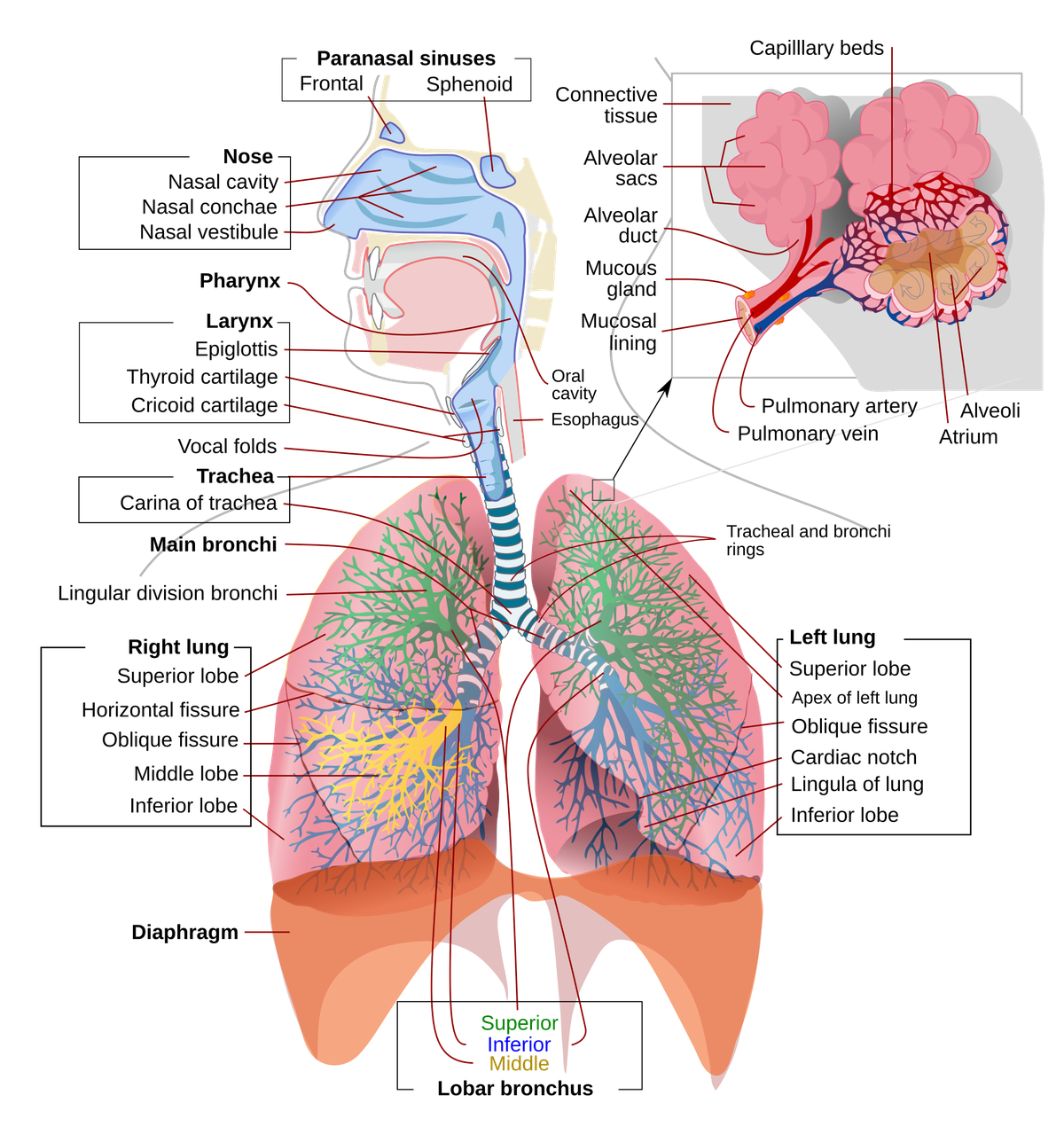
空气通过这些部分进出:
| 部分 | 工作 |
|---|---|
| 喉(larynx) | 声匣,在气管的顶部 |
| 气管(trachea) | 气道;把空气运向肺 |
| 支气管(bronchi) | 两根管,每个肺一根 |
| 细支气管(bronchioles) | 肺内部更小的分支管 |
| 肺泡(alveoli) | 气体交换发生的微小气囊;每个被毛细血管(capillaries)包裹 |
肺泡构成极好的气体交换表面:它们有数百万个(一个巨大的表面积),每个有一个只有一个细胞厚的壁(一个短距离),而每个被毛细血管围绕(一个好的血液供应)。

肺坐在胸中,被肋骨(ribs)保护。它们下面是一片肌肉,膈肌(diaphragm)。肋骨之间是肋间肌(intercostal muscles)。(补充) 气管被软骨(cartilage)环撑开,所以它在你吸气时不能塌陷。

词汇表
训练
| 英文 | 中文 | 拼音 |
|---|---|---|
| larynx/ˈlærɪŋks/ | 喉 | hóu |
| trachea/trəˈkɪə/ | 气管 | qì guǎn |
| bronchi/ˈbrɒŋkaɪ/ | 支气管 | zhī qì guǎn |
| bronchioles/ˈbrɒŋkɪəʊlz/ | 细支气管 | xì zhī qì guǎn |
| alveoli/ˈælvɪɒli/ | 肺泡 | fèi pào |
| capillaries/ˈkæpɪləriz/ | 毛细血管 | máo xì xuè guǎn |
| ribs/rɪbz/ | 肋骨 | lèi gǔ |
| diaphragm/ˈdaɪəfræm/ | 膈肌 | gé jī |
| intercostal muscles/ˌɪntəˈkɒstl ˈmʌslz/ | 肋间肌 | lē jiān jī |
| cartilage/ˈkɑːtɪlɪdʒ/ | 软骨 | ruǎn gǔ |
11.1
你如何呼吸(拓展)

呼吸改变胸(胸腔(thorax))内部的体积和压力(pressure)。
吸气(inhaling):
- 外肋间肌收缩,把肋骨往上和往外拉。
- 膈肌收缩并变平(往下移)。
- 胸腔变大,所以里面的压力降到外部空气压力之下。
- 空气被推入。
呼气(exhaling)是相反的:肌肉放松(而内肋间肌可能收缩),胸腔变小,压力上升,而空气被推出。
探索
Breathing in and out
Breathing changes the volume of the chest, which changes the pressure and makes air flow in or out.
探索
Breathing mechanism
Watch a breath — the diaphragm flattens and ribs lift, the chest grows, the pressure drops, and air flows in. Relax and it pushes back out.
词汇表
训练
| 英文 | 中文 | 拼音 |
|---|---|---|
| pressure/ˈpreʃə/ | 压力 | yā lì |
| thorax/ˈθɔːræks/ | 胸腔 | xiōng qiāng |
| inhaling/ɪnˈheɪlɪŋ/ | 吸气 | xī qì |
| exhaling/eksˈheɪlɪŋ/ | 呼气 | hū qì |
11.1
吸入与呼出的气体
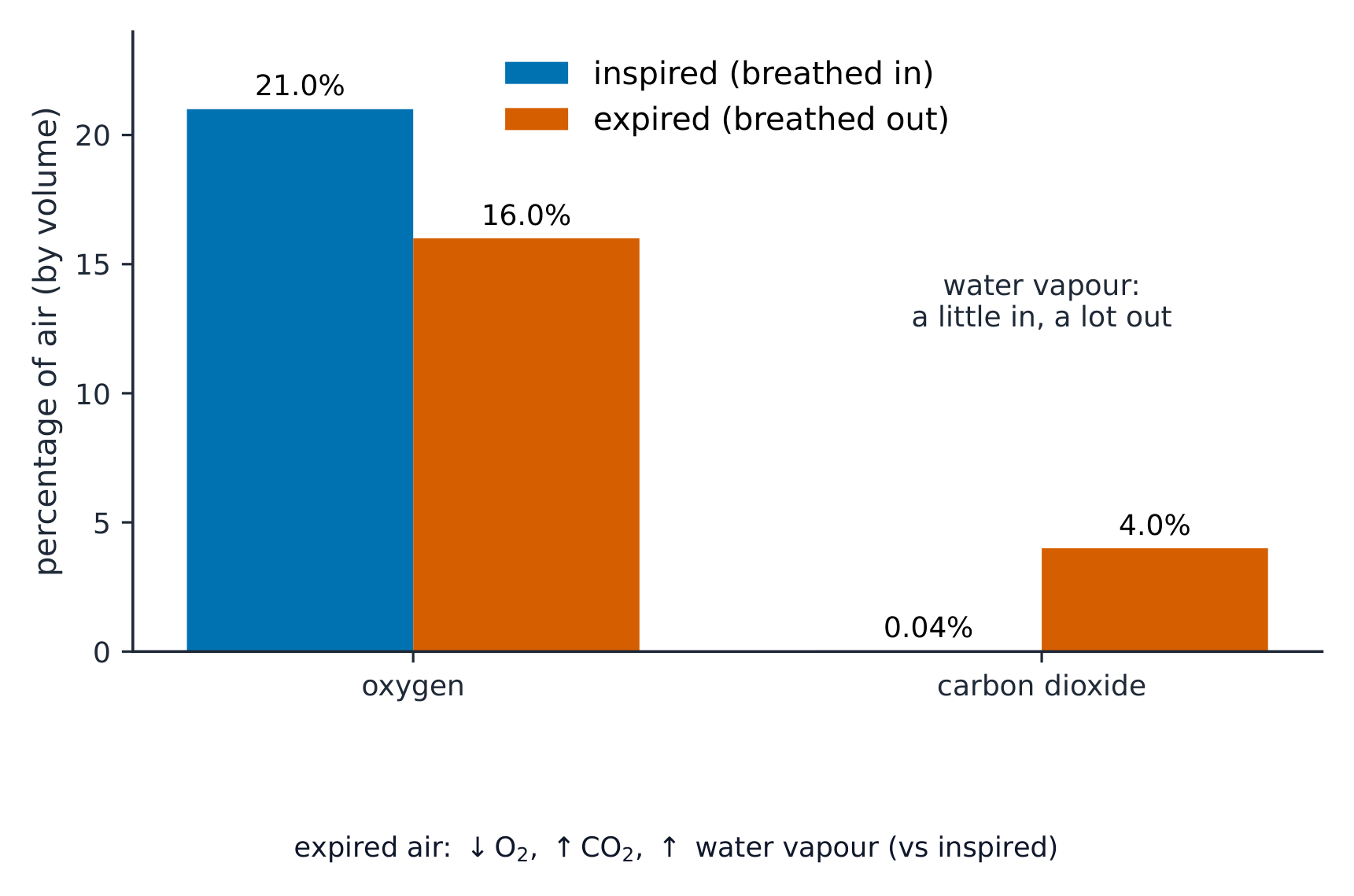
| 气体 | 吸入的空气(吸进的) | 呼出的空气(呼出的) |
|---|---|---|
| 氧气 | 约 21% | 约 16%(更少) |
| 二氧化碳 | 约 0.04% | 约 4%(更多) |
| 水蒸气(water vapour) | 一点点 | 很多(更多) |
你可以用石灰水(limewater)测试二氧化碳,它变浑浊。呼出的空气使石灰水变浑浊比吸入的空气快得多,显示它含有更多的二氧化碳。
词汇表
训练
| 英文 | 中文 | 拼音 |
|---|---|---|
| water vapour/ˈwɔːtə ˈveɪpə/ | 水蒸气 | shuǐ zhēng qì |
| limewater/ˈlaɪmwɔːtə/ | 石灰水 | shí huī shuǐ |
11.1
呼吸与运动
运动期间你的肌肉呼吸更快并制造更多的二氧化碳。这提高血液中二氧化碳的浓度(concentration)。(补充) 你的大脑(brain)检测到这个上升并使你以一个更快的速率(rate)和一个更大的深度呼吸。这吸入更多的氧气并快速移除额外的二氧化碳。
例题。 静息时一个人每分钟呼吸 12 次,每次 500 cm³ 空气。运动时变成每分钟 20 次,每次 900 cm³。两种情况下每分钟通过肺的空气各是多少?把频率乘以深度。静息:12 × 500 = 每分钟 6000 cm³。运动时:20 × 900 = 每分钟 18 000 cm³,是静息的三倍。运动会同时提高呼吸的频率和深度 - 只改频率的答案会丢掉一半的分。
词汇表
训练
| 英文 | 中文 | 拼音 |
|---|---|---|
| concentration/ˌkɒnsənˈtreɪʃn/ | 浓度 | nóng dù |
| brain/breɪn/ | 大脑 | dà nǎo |
| rate/reɪt/ | 速率 | sù lǜ |
11.1
保持呼吸道清洁(拓展)
气道衬着两种困住并移除脏物的细胞:
- 杯状细胞(goblet cells)制造黏液(mucus),它困住病原体(pathogens)和尘埃粒子(particles)。
- 纤毛细胞(ciliated cells)有微小的毛,把黏液连同困住的脏物扫到喉咙,在那里它被吞下。
词汇表
训练
| 英文 | 中文 | 拼音 |
|---|---|---|
| goblet cells/ˈɡɒblət selz/ | 杯状细胞 | bēi zhuàng xì bāo |
| mucus/ˈmjuːkəs/ | 黏液 | nián yè |
| pathogens/ˈpæθədʒnz/ | 病原体 | bìng yuán tǐ |
| particles/ˈpɑːtɪklz/ | 粒子 | lì zi |
| ciliated cells/ˈsɪlɪeɪtɪd selz/ | 纤毛细胞 | xiān máo xì bāo |
11.1
考试技巧
- 一个气体交换表面大、薄,带一个好的血液供应和好的通气。
- 空气路径:喉 → 气管 → 支气管 → 细支气管 → 肺泡。
- 吸气:外肋间肌和膈肌收缩 → 胸腔更大 → 压力更低 → 空气进入。呼气是相反的。
- 呼出的空气有更少的氧气、更多的二氧化碳和更多的水蒸气。石灰水测试二氧化碳。
- 运动 → 血液中更多的二氧化碳 → 大脑 → 更快、更深的呼吸。
本主题的互动课程
逐步学习,并即时检测练习。