Breathing and gas exchange · 呼吸和气体交换
| English | 中文 | Pinyin · 拼音 |
|---|---|---|
| ventilation/ˌventɪˈleɪʃn/ | 通气 | tōng qì |
| diaphragm/ˈdaɪəfræm/ | 膈肌 | gé jī |
| inhaled/ɪnˈheɪld/ | 吸入的 | xī rù de |
| exhaled/eksˈheɪld/ | 呼出的 | hū chū de |
Breathing in and out
- To keep the gradient steep at the alveoli, fresh air must be pumped in and stale air out.
- This is ventilation 通气 (breathing), powered by muscles.
吸气和呼气
- 为了在肺泡处保持梯度陡峭,新鲜空气必须被泵入,陈旧空气泵出。
- 这是通气(ventilation,呼吸),由肌肉驱动。
When you breathe in, the diaphragm: · 当你吸气时,膈:
The diaphragm flattens to increase chest volume. · 膈变平以增加胸腔体积。
Air rushes into the lungs when the pressure inside the chest: · 当胸腔内的压力以下哪种时,空气冲进肺:
Lower internal pressure draws air in. · 更低的内部压力把空气吸入。
During inhaling, the rib muscles lift the ribs up and out. · 在吸入期间,肋骨肌肉把肋骨向上向外抬。
This expands the chest, lowering pressure. · 这扩张胸腔,降低压力。
The movement of air in and out of the lungs is called ______ (breathing). · 空气进出肺的运动叫做______(呼吸)。
Ventilation keeps the gas-exchange gradient steep. · 通气保持气体交换梯度陡峭。
Breathing in (inhaling)
- The diaphragm 膈肌 flattens and the rib muscles lift the ribs up and out.
- This increases the chest volume, lowering the pressure, so air rushes in.
The lungs are the gas-exchange organs of the body
吸气(吸入)
- 膈(diaphragm)变平,肋骨肌肉把肋骨向上向外抬。
- 这增加胸腔体积,降低压力,所以空气冲进来。
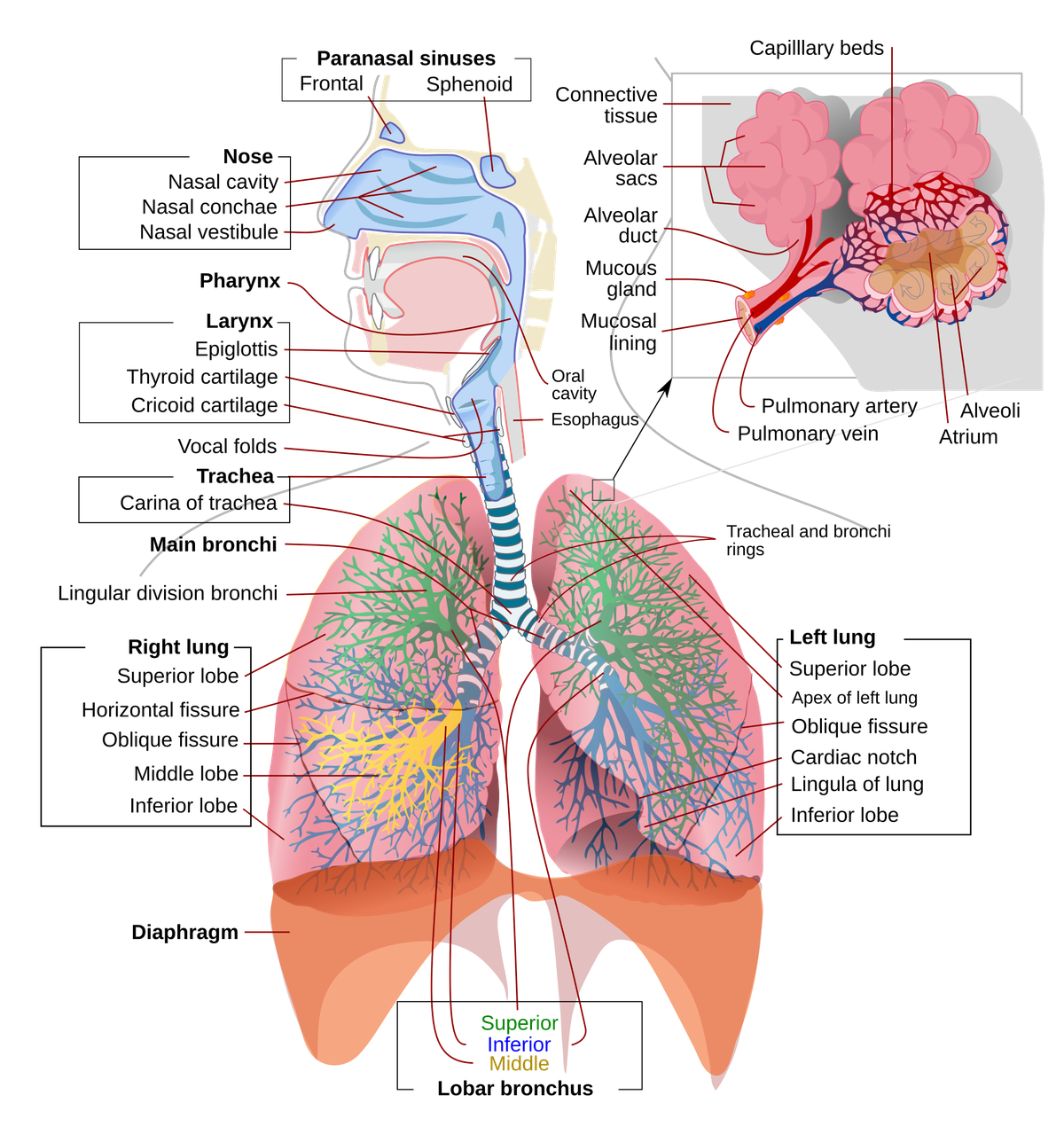
肺是身体的气体交换器官
Breathing in and out · 吸气和呼气
Breathing changes the volume of the chest, which changes the pressure and makes air flow in or out. · 呼吸改变胸腔的体积,这改变压力,使空气流入或流出。
Compared with inhaled air, exhaled air has: · 与吸入的空气相比,呼出的空气有:
Oxygen is used and carbon dioxide added. · 氧被使用,二氧化碳被添加。
Breathing out (exhaling)
- The diaphragm relaxes (domes up) and the ribs drop.
- Chest volume decreases, pressure rises, and air is pushed out.
Air travels from the trachea through the bronchi and bronchioles to the alveoli
呼气(呼出)
- 膈放松(向上呈拱形),肋骨下降。
- 胸腔体积减少,压力上升,空气被推出。

空气从气管经过支气管和细支气管到肺泡
Breathing mechanism · 呼吸机制
Watch a breath — the diaphragm flattens and ribs lift, the chest grows, the pressure drops, and air flows in. Relax and it pushes back out. · 观看一次呼吸——膈变平,肋骨抬起,胸腔变大,压力下降,空气流入。放松,它就推回去。
Inhaled 吸入的 vs exhaled 呼出的 air
- Inhaled air has more oxygen and less carbon dioxide.
- Exhaled air has less oxygen, more carbon dioxide, and more water vapour.
Worked example. When you breathe in, the diaphragm contracts and flattens, the chest expands, pressure inside falls below the outside, and air flows in — exactly like pulling out a syringe plunger draws air in.
Breathing in makes the thorax bigger; breathing out makes it smaller
吸入对比呼出的空气
- 吸入的空气有更多的氧和更少的二氧化碳。
- 呼出的空气有更少的氧、更多的二氧化碳和更多的水蒸气。
例题。 当你吸气时,膈收缩并变平,胸腔扩张,内部压力降到外部以下,空气流入——正像拉出一个注射器活塞把空气吸入。

吸气使胸腔变大;呼气使它变小
You've got it
- inhaling: diaphragm flattens, ribs rise → chest volume up, pressure down → air in
- exhaling: diaphragm relaxes, ribs drop → chest volume down, pressure up → air out
- exhaled air has less oxygen and more carbon dioxide than inhaled air
你掌握了
- 吸入:膈变平,肋骨上升 → 胸腔体积上升,压力下降 → 空气进
- 呼出:膈放松,肋骨下降 → 胸腔体积下降,压力上升 → 空气出
- 呼出的空气比吸入的空气有更少的氧和更多的二氧化碳