跳到主要内容

相似副词的比较

HSK 5 · 知识点 24

本主题的视频课程 打开视频页面
2:11

HSK 5 语法 24:比较相似副词

常常 vs. 经常。参考讲义中的句型结构。完整形式、含义及用法边界请参见讲义。

英文讲解与普通话例句 · 字幕与原声同步

点击任意汉字可查看拼音和释义。
English

often常常cháng cháng and often经常jīng cháng both mean "often". often经常jīng cháng suggests something regular or repeated over a long time and can also be an adjective (often经常jīng cháng(modifier / structural particle)的dematter事shì); often常常cháng cháng is a plain adverb. In most everyday sentences either works; the handout shows where only one fits.

24.1

常常 vs 经常

English

Form: subject + (time) + often常常cháng cháng / often经常jīng cháng + verb

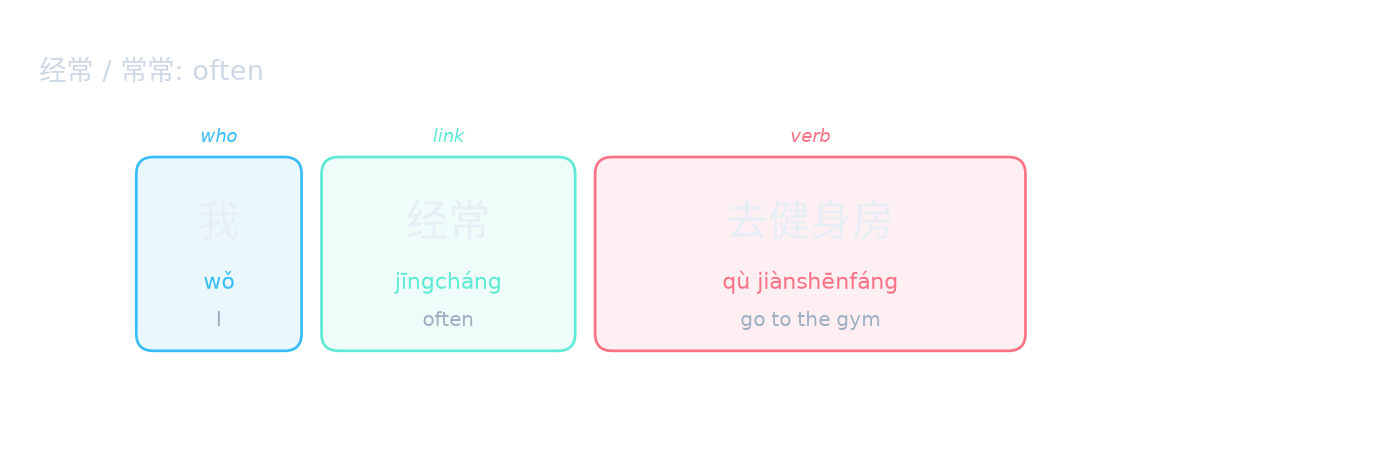
  • I / me我wǒoften经常jīng chángto go去qùgym健身房jiàn shēn fáng,weekend周末zhōu mòalso也yěoften常常cháng chángto go去qùto swim游泳yóu yǒng。 Wǒ jīngcháng qù jiànshēnfáng, zhōumò yě chángcháng qù yóuyǒng. – I go to the gym regularly, and at weekends I often swim too.
  • he / him他tāweekend周末zhōu mòoften经常jīng chángto work overtime加班jiā bān。 Tā zhōumò jīngcháng jiābān. – He often works overtime at weekends.
  • I / me我wǒ不常去bù cháng qùcinema电影院diàn yǐng yuàn。 Wǒ bù cháng qù diànyǐngyuàn. – I don't go to the cinema much.
  • in one's childhood小时候xiǎo shí hòu,grandma奶奶nǎi nǎioften常常cháng chángto / for / give给gěiI / me我wǒ讲故事jiǎng gù shì。 Xiǎo shíhou, nǎinai chángcháng gěi wǒ jiǎng gùshi. – When I was little, my grandma often told me stories.
  • this这zhèmeasure word for long thin things条tiáoroad路lùoften经常jīng chángtraffic jam堵车dǔ chē,had better; best最好zuì hǎo早点儿zǎo diǎn érto set off出发chū fā。 Zhè tiáo lù jīngcháng dǔchē, zuìhǎo zǎo diǎnr chūfā. – This road is often jammed; you'd better set off early.
  • 下雨天xià yǔ tiāntend to; often往往wǎng wǎng人少rén shǎo。 Xià yǔ tiān wǎngwǎng rén shǎo. – On rainy days there tend to be fewer people.

How it works. often常常cháng cháng chángcháng and often经常jīng cháng jīngcháng both mean "often" and usually swap freely: they go after the subject (and after a time word) and before the verb. often经常jīng cháng suggests something regular and repeated, so it is common for habits and recurring problems (often经常jīng chángto work overtime加班jiā bān, often经常jīng chángtraffic jam堵车dǔ chē); often常常cháng cháng is a little more spoken and warm, common in stories about the past.

The negatives differ: say not不bùoften常cháng or not不bùoften经常jīng cháng, never not不bùoften常常cháng cháng. Only often经常jīng cháng works as an adjective before a noun: 经常性jīng cháng xìng(modifier / structural particle)的deto check检查jiǎn chá (regular checks). tend to; often往往wǎng wǎng wǎngwǎng looks similar but means "tends to", describing a pattern under a condition.

often常常cháng cháng often经常jīng cháng tend to; often往往wǎng wǎng
often ✓ ✓ tends to, under a condition
negative not不bùoften常cháng not不bùoften经常jīng cháng (rarely negated)
before a noun – 经常性jīng cháng xìng(modifier / structural particle)的dequestion / problem问题wèn tí –
future plans ✓ after / from now on以后yǐ hòuoften常常cháng chángto come来lái ✓ after / from now on以后yǐ hòuoften经常jīng chángto come来lái –
example often常常cháng chángto drink tea喝茶hē chá often经常jīng chángto drink tea喝茶hē chá 下雨天xià yǔ tiāntend to; often往往wǎng wǎngtraffic jam堵车dǔ chē

Watch out

  • wrong: not不bùoften常常cháng cháng → not不bùoften常cháng or not不bùoften经常jīng cháng.
  • tend to; often往往wǎng wǎng needs a pattern or condition and cannot describe a plan: wrong: I / me我wǒtomorrow明天míng tiāntend to; often往往wǎng wǎngto go去qù → I / me我wǒafter / from now on以后yǐ hòucan / will会huìoften经常jīng chángto go去qù.
  • Put the frequency word before the verb, not at the end: wrong: I / me我wǒto go去qùgym健身房jiàn shēn fángoften经常jīng cháng → I / me我wǒoften经常jīng chángto go去qùgym健身房jiàn shēn fáng.

In a passage

I / me我wǒfather爸爸bà bàto work; job工作gōng zuòdegree / adjective linker很hěnbusy忙máng,often经常jīng chángto go on a business trip出差chū chāi,一个月yí gè yuètend to; often往往wǎng wǎngcan only只能zhǐ néngat / in在zài家住jiā zhù十几天shí jǐ tiān。in one's childhood小时候xiǎo shí hòuI / me我wǒoften常常cháng chángto ask问wènmum; mother妈妈mā mā:father爸爸bà bàwhat什么shén metime; when时候shí hòuto return回来huí lái?now现在xiàn zàiI / me我wǒto grow up长大zhǎng dà(completed / change)了le,to understand / clear明白míng bai(completed / change)了lehe / him他tā(modifier / structural particle)的dehard; tiring辛苦xīn kǔ。he / him他tānot不bùoften常chángto be at home在家zài jiā,but但是dàn shì每天晚上měi tiān wǎn shàngall / both都dōucan / will会huìto / for / give给gěiwe / us我们wǒ mento make a telephone call打电话dǎ diàn huà。

Read and notice. Find often经常jīng cháng, often常常cháng cháng, tend to; often往往wǎng wǎng and not不bùoften常cháng. Why does the writer use tend to; often往往wǎng wǎng in the first sentence?

经常 / 常常: often
词汇 训练
汉字 拼音 English
健身房 jiàn shēn fáng gym
24.2

练习

English

Cover the teaching pages before you answer. The answers are at the end.

1. Complete: “I don't often go to the cinema.” I / me我wǒnot不bù…………to go去qùcinema电影院diàn yǐng yuàn。

2. Which is the most natural way to say "not often"?

  • A. not不bùoften经常jīng cháng
  • B. tend to; often往往wǎng wǎngnot不bù
  • C. often经常jīng cháng
  • D. often常常cháng chángnot不bù

3. Build: “He regularly works overtime at weekends.”

Put in order: he / him他tāweekend周末zhōu mò / to work overtime加班jiā bān。 / often经常jīng cháng

4. True or false? tend to; often往往wǎng wǎng usually describes what tends to happen in a situation, unlike plain often常常cháng cháng. If false, correct it.

5. A new friend asks about your exercise habits. Use often常常cháng cháng or often经常jīng cháng. Write your answer in Chinese, then say it aloud.

24.3

混合练习

English

These questions mix the patterns and use new situations.

6. Find and fix the problem. A classmate says often常常cháng cháng means exactly three times a week. What can the word tell you?

7. Use it yourself. Say you often walk to school but take the bus when it rains.

24.4

答案与解析

English

Mark your work, then correct each mistake in your own words.

1. often常cháng

not不bùoften常cháng or not不bùoften经常jīng cháng; not不bùoften常常cháng cháng is not used.

2. A. not不bùoften经常jīng cháng

The negative of often经常jīng cháng / often常常cháng cháng is not不bùoften经常jīng cháng or not不bùoften常cháng.

3. he / him他tāweekend周末zhōu mòoften经常jīng chángto work overtime加班jiā bān。

Subject + time + often经常jīng cháng + verb.

4. True.

True. tend to; often往往wǎng wǎng describes what tends to happen in a situation: 下雨天xià yǔ tiāntend to; often往往wǎng wǎngtraffic jam堵车dǔ chē. often常常cháng cháng can describe simple frequency or the future: after / from now on以后yǐ hòuoften常常cháng chángto come来lái.

5. Model answer: I / me我wǒoften经常jīng chángto go去qùgym健身房jiàn shēn fáng,weekend周末zhōu mòalso也yěoften常常cháng chángto go去qùto swim游泳yóu yǒng。

Check your answer:

  • To say "not often", use not不bùoften常cháng or not不bùoften经常jīng cháng (not不bùoften常常cháng cháng is rare).
  • Both go before the verb, after the subject and time words: he / him他tāweekend周末zhōu mòoften经常jīng chángto work overtime加班jiā bān – "He often works overtime on weekends."

Mixed practice

6. often常常cháng cháng and often经常jīng cháng say something happens often. They do not give an exact number.

7. Model answer. I / me我wǒoften经常jīng chángto walk走路zǒu lùto go to school上学shàng xué,to rain下雨xià yǔ(modifier / structural particle)的detime; when时候shí hòuthen / just就jiùto sit / to take (a bus …)坐zuòbus公共汽车gōng gòng qì chē。

Review later. Tomorrow, say one thing you do often经常jīng cháng and one thing you do sometimes有时候yǒu shí hòu.

该知识点的互动课程

逐步完成,配合即时检查练习。

更多 HSK 5 知识点

登录或创建账户

IGCSE, A-Level & AP