跳到主要内容
学科

AP 二维艺术与设计

AP 二维艺术与设计以作品集评估,而非笔试。课程涵盖艺术要素、设计原则,以及二维媒介、材料与 技法,随后是作品集真正评分的三个方面:探究(investigate)、创作(make)、呈现(present)。

这个结构本身就是重点。你的"持续探究"(Sustained Investigation)评的是长期探究与修改的 证据——作品要能明显看出是从最初的问题发展而来——而不是一组恰好看起来相关的成品。边做边拍照 与标注不是杂务,而是分数所依赖的证据。

"精选作品"(Selected Works)评的是二维设计原则与作品本身的质量,因此拍摄要讲究:均匀光线、 正对画面、色彩真实。本站笔记先结合实例讲解艺术要素与设计原则,再讲作品集的具体要求,以及每 张图片所附文字需要做到什么。

训练全部词汇
  • 1

    艺术元素

    讲义 词汇表
    1.1

    线条

    大纲

    Focus: Line is the most basic element of art — a moving point that the eye follows across a surface.

    • A line is a mark with length and direction: straight, curved, angular, or freeform.
    • Lines vary in quality — thick or thin, smooth or rough, continuous or broken, dark or light.
    • Contour lines trace the edges of a form; gesture lines quickly capture movement and energy.
    • Implied lines are suggested, not drawn — by a row of objects, a pointing arm, or a gaze.
    • Direction carries feeling: horizontal reads as calm, vertical as strength, diagonal as action.
    • Artists use line to build shape, shade value (hatching, cross-hatching), imply texture, and lead the eye.
    来源:美国大学理事会 AP 课程与考试说明

    艺术元素(elements of art)是每个艺术家使用的视觉"构建块"。第一个是线条(line)——眼睛跟随的一个移动的点。

    • 一条线有长度和方向;它能是直的、弯曲的、有角的,或自由形式的。
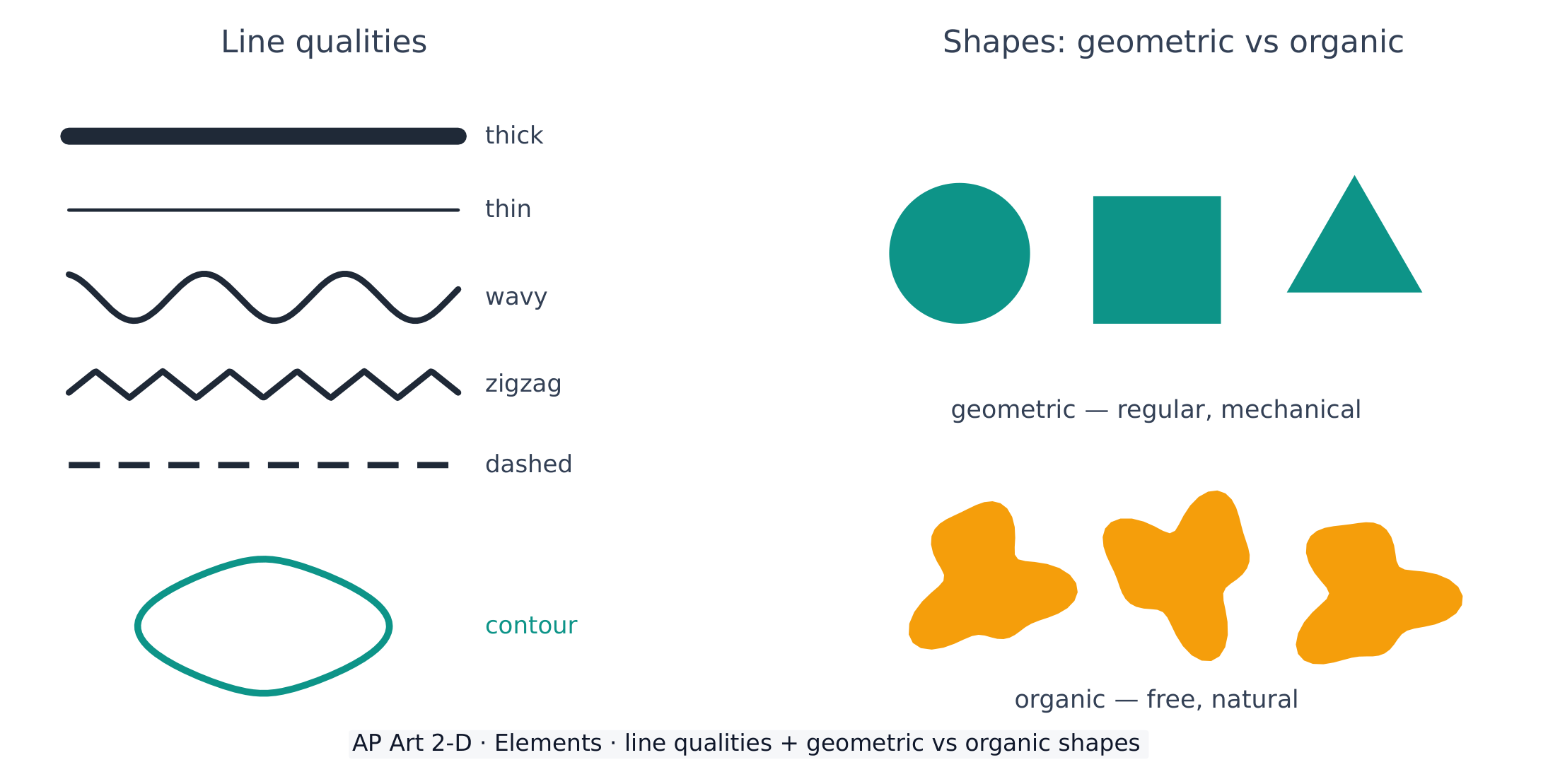
    • 线有质量:粗或细、光滑或粗糙、连续或断续、深或浅。
    • 轮廓(contour)线勾勒一个形体的边缘;动态速写(gesture)线快速捕捉运动。
    • 隐含线(implied lines)不被画出而是被暗示——由一排物体或一个人的目光。
    葛饰北斋的木版画:一道巨大卷曲的海浪即将拍下小船,远处是小小的富士山
    葛饰北斋的《神奈川冲浪里》:大胆的曲线轮廓带着视线沿海浪移动,爪状的浪花线条制造出动感
    线条质量以及几何形状和有机形状之间的差别
    线条在粗细和特征上变化;形状要么是几何的(规则)要么是有机的(自然)

    方向携带感觉:水平线感觉平静、竖直线感觉强壮,而对角线感觉活跃。艺术家用线条来构建形状、渲染明度(排线法)、暗示肌理,并引导观者的眼睛。

    词汇表 训练
    英文 中文 拼音
    elements of art 艺术元素 yì shù yuán sù
    line 线条 xiàn tiáo
    Contour 轮廓 lún kuò
    gesture 动态速写 dòng tài sù xiě
    Implied lines 隐含线 yǐn hán xiàn
    shape 形状 xíng zhuàng
    1.2

    形状与形体

    大纲

    Focus: Shape is a flat, enclosed area; form is the illusion of a three-dimensional object on a 2-D surface.

    • A shape is a two-dimensional area with a boundary; form appears three-dimensional (height, width, depth).
    • Geometric shapes (circle, square, triangle) are regular and mechanical; organic shapes are free and natural.
    • Positive shapes are the objects; negative shapes are the empty spaces around and between them.
    • Form is created on a flat surface through value (shading), overlapping, and perspective.
    • Recognising negative space helps an artist see and compose more accurately.

    来源:美国大学理事会 AP 课程与考试说明

    一个形状(shape)是一个平坦的、封闭的区域;一个形体(form)有三维(高度、宽度和深度)的错觉。

    • 几何(geometric)形状(圆、正方形、三角形)是规则的、机械的;有机(organic)形状是自由的、自然的。
    • 正形(positive shape)是物体;负形(negative shape)是物体周围和之间的空的空间——学会看它使绘画准确得多。
    • 形体在一个平坦的表面上用明度(shading,渲染)、重叠和透视创造。
    词汇表 训练
    英文 中文 拼音
    form 形体 xíng tǐ
    Geometric 几何 jǐ hé
    organic 有机 yǒu jī
    Positive shape 正形 zhèng xíng
    negative shape 负形 fù xíng
    1.3

    明度

    大纲

    Focus: Value is the lightness or darkness of a colour or tone — the key to showing form and depth.

    • Value runs from white through greys to black; a value scale shows the gradual steps.
    • Highlight, midtone, core shadow, reflected light, and cast shadow describe light on a form.
    • Strong value contrast creates drama and a clear focal point; close values feel soft and calm.
    • Chiaroscuro is the bold use of light and dark to model three-dimensional form.
    • Squinting removes colour and helps an artist judge value relationships.

    来源:美国大学理事会 AP 课程与考试说明

    光影逻辑:光如何塑造形体
    明暗色阶

    明度(value)是一个色调的明或暗——展示三维形体的单个最强大的工具。

    一个明度阶以均匀的步骤从白到黑运行
    一个明度阶从白到黑均匀地阶梯;强的明度对比造成戏剧性和一个焦点
    • 一个明度阶(value scale)从白经过灰到黑。
    • 一个形体上的光有一个高光(highlight)、中间调(midtones)、一条明暗交界线(core shadow)、反光(reflected light),和一个投影(cast shadow)。
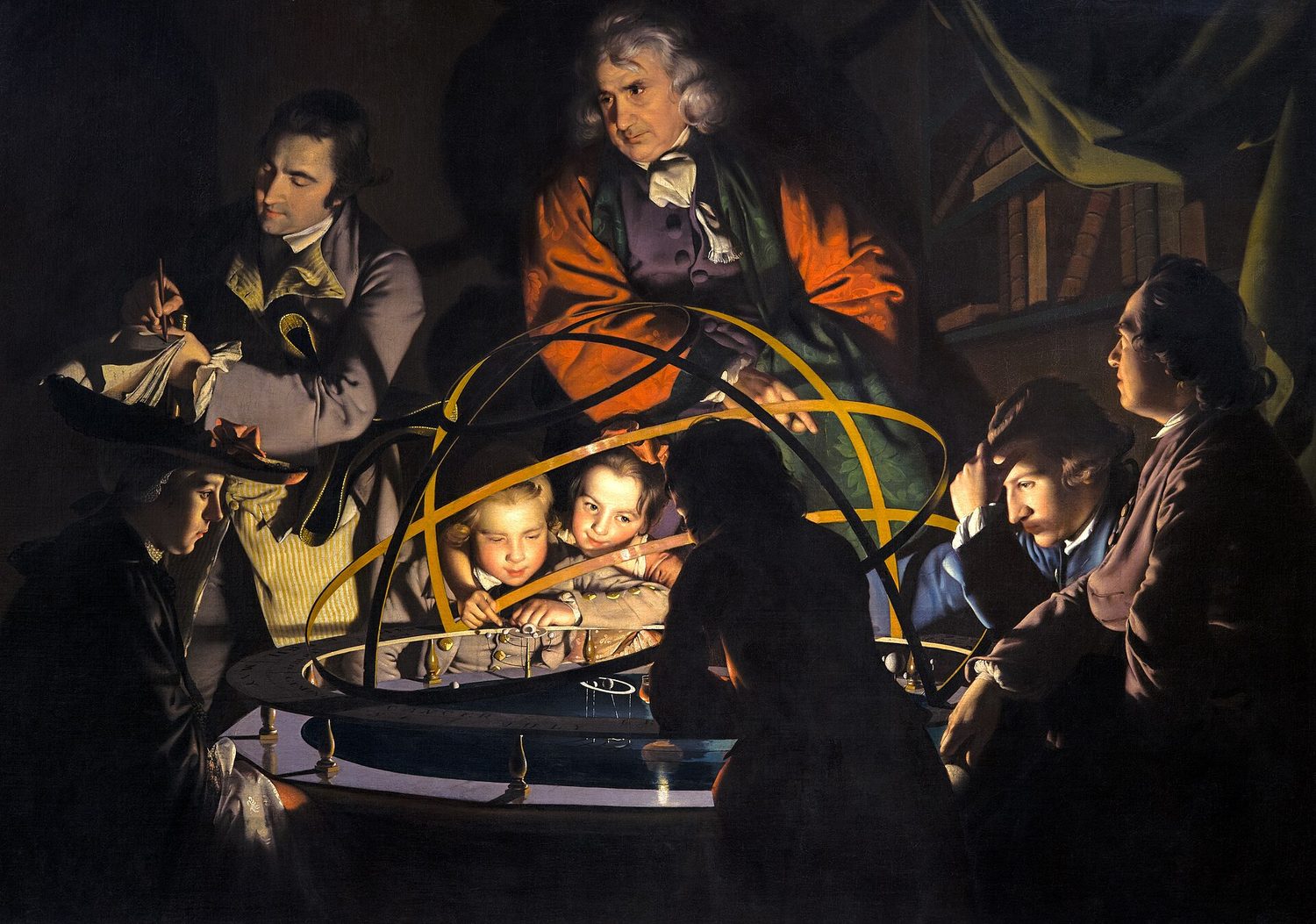
    • 明暗对照法(chiaroscuro)是对光和暗的大胆运用以塑造形体。眯眼去除色彩并帮助你判断明度。
    一幅烛光下的 18 世纪绘画,人们围着一个太阳系模型,他们的脸在黑暗的背景前发亮
    约瑟夫·赖特的《一位哲学家讲解太阳系仪》:中央一处隐藏的光源制造出强烈的明度对比(明暗对照法),把每张脸从黑暗中提出来
    词汇表 训练
    英文 中文 拼音
    Value 明度 míng dù
    value scale 明度阶 míng dù jiē
    highlight 高光 gāo guāng
    midtones 中间调 zhōng jiān diào
    core shadow 明暗交界线 míng àn jiāo jiè xiàn
    reflected light 反光 fǎn guāng
    cast shadow 投影 tóu yǐng
    Chiaroscuro 明暗对照法 míng àn duì zhào fǎ
    1.4

    色彩

    大纲

    Focus: Colour is light reflected from a surface; it has three properties and follows the logic of the colour wheel.

    • Colour has three properties: hue (its name), value (light/dark), and saturation/intensity (dull to vivid).
    • Primary colours (red, yellow, blue) mix to make secondary (orange, green, violet) and tertiary colours.
    • Colour schemes: complementary, analogous, monochromatic, triadic, warm, and cool.
    • Warm colours (red, orange, yellow) advance and energise; cool colours (blue, green, violet) recede and calm.
    • Adding white makes a tint, black makes a shade, grey makes a tone.
    • Complementary colours placed side by side intensify each other; mixed together they dull (neutralise).

    来源:美国大学理事会 AP 课程与考试说明

    色环与配色方案

    色彩(colour)是从一个表面反射的光。它有三个属性并遵循色轮(colour wheel)的逻辑。

    色轮:三原色、间色和复色,带暖和冷的两半
    三原色混合成间色和复色;互补色彼此相对而坐
    • 色彩的三个属性:色相(hue)(它的名字)、明度(value)(明/暗),和饱和度(saturation)(暗淡到鲜艳)。
    • 三原色(primary)(红、黄、蓝)混合以制造间色(secondary)和复色。
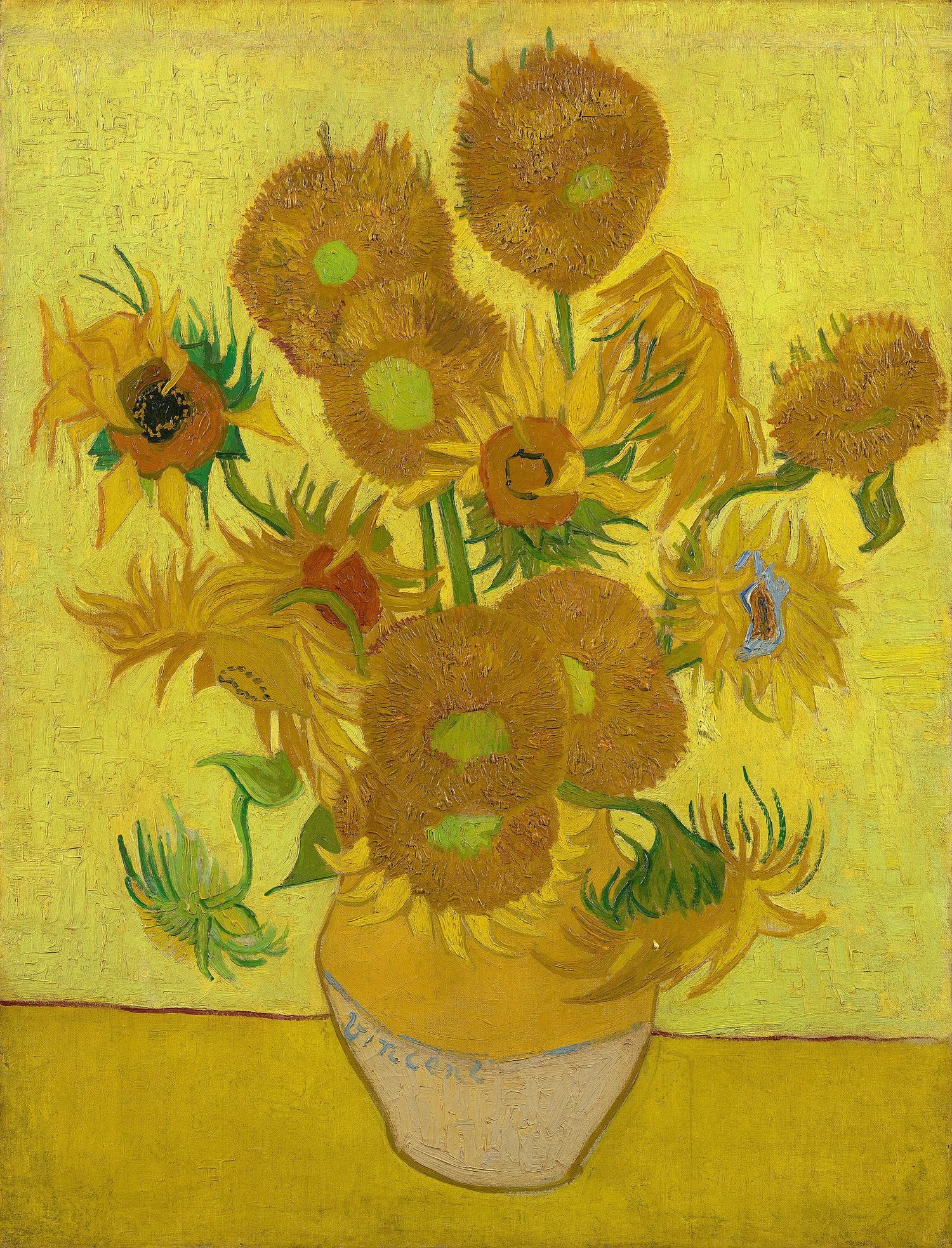
    • 互补色(complementary)在色轮上相对而坐:并排放置时它们互相加强,但混合在一起时它们中和成一种暗淡的灰棕色。邻近色(analogous)彼此相邻而坐并调和。
    • 暖色(warm)(红、橙、黄)前进;冷色(cool)(蓝、绿、紫)后退。一个色调加白,一个暗调加黑。
    梵高的静物画,一瓶向日葵,几乎完全用黄色和金色的深浅画成
    梵高的《向日葵》几乎完全由暖色的黄和橙构成——一种邻近色配色,显得明亮而统一
    探索

    Warm or cool colour?

    Warm colours (red, orange, yellow) feel energetic and seem to advance; cool colours (blue, green, violet) feel calm and seem to recede.

    词汇表 训练
    英文 中文 拼音
    Colour 色彩 sè cǎi
    colour wheel 色轮 sè lún
    hue 色相 sè xiàng
    saturation 饱和度 bǎo hé dù
    Primary 三原色 sān yuán sè
    secondary 间色 jiàn sè
    Complementary 互补色 hù bǔ sè
    neutralise 中和 zhōng hé
    Analogous 邻近色 lín jìn sè
    Warm 暖色 nuǎn sè
    cool 冷色 lěng sè
    1.5

    肌理

    大纲

    Focus: Texture is the surface quality of a work — how it feels or how it appears to feel.

    • Actual (tactile) texture can be physically touched (thick paint, collage, rough paper).
    • Implied (visual) texture is the illusion of a surface, created with marks, value, and pattern.
    • Texture is built through mark-making: stippling, hatching, dry-brush, impasto, and frottage (rubbing).
    • Contrasting smooth and rough areas adds interest and can direct attention.
    • In photography and digital work, texture comes from light, focus, and surface detail.

    来源:美国大学理事会 AP 课程与考试说明

    肌理(texture)是一件作品的表面质量——它摸起来如何,或它看起来摸起来如何。

    • 实际(触觉)肌理(actual (tactile) texture)能被物理地触摸(厚的颜料、拼贴、粗糙的纸)。
    • 视觉肌理(implied (visual) texture)是一个表面的错觉,用标记、明度和图案制造。
    • 技法包括点画、排线、厚涂(impasto)(厚的颜料),和干笔。对比光滑和粗糙的区域增加趣味并能指引眼睛。
    Woven denim close-up: texture is the surface quality you can see or feel — actual or implied
    Woven denim close-up: texture is the surface quality you can see or feel — actual or implied
    词汇表 训练
    英文 中文 拼音
    Texture 肌理 jī lǐ
    Actual (tactile) texture 实际肌理 shí jì jī lǐ
    Implied (visual) texture 视觉肌理 shì jué jī lǐ
    impasto 厚涂 hòu tú
    1.6

    空间

    大纲

    Focus: Space is the area within, around, and between the parts of a work, including the illusion of depth.

    • Positive space is filled by the subject; negative space is the empty area around it.
    • Artists create the illusion of depth with overlapping, size, placement, and detail.
    • Linear perspective uses a horizon line and vanishing point(s) so parallel lines converge.
    • Atmospheric (aerial) perspective makes distant objects paler, bluer, and less detailed.
    • Foreground, middle ground, and background organise a scene from near to far.
    • The format and cropping of the picture plane shape how space is read.

    来源:美国大学理事会 AP 课程与考试说明

    空气透视
    一点透视

    空间(space)是一件作品各部分之内、周围和之间的区域,包括一个平坦表面上深度的错觉。

    • 正空间(positive space)被主体填充;负空间(negative space)是它周围空的区域。
    • 深度用重叠(overlapping)、大小、位置和细节创造。
    • 一个场景组织成三个深度平面:前景(foreground)(最近)、中景(middle ground)和背景(background)(最远)。最近的平面通常带最多的细节和对比,最远的最少。
    • 线性透视(linear perspective)用一条地平线和灭点(vanishing point)以便平行线汇聚;空气透视(atmospheric perspective)使遥远的东西更苍白、更蓝、更少细节。
    • 画面的格式裁剪塑造空间如何被读。

    Worked example(应用这个概念)。 当被要求描述线条如何在一幅肖像中创造意义时,一个好的答案要说出元素、它的特质,和它的效果:"艺术家在背景使用粗的、锯齿状的对角线,它们不安、活跃的方向使坐着者肩膀平静的水平线显得更加静止。" 说出元素并且把它与一种感受联系起来,正是作品集书面证据和分析题都奖励的。

    词汇表 训练
    英文 中文 拼音
    Space 空间 kōng jiān
    overlapping 重叠 chóng dié
    foreground 前景 qián jǐng
    middle ground 中景 zhōng jǐng
    background 背景 bèi jǐng
    Linear perspective 线性透视 xiàn xìng tòu shì
    vanishing point 灭点 miè diǎn
    atmospheric perspective 空气透视 kōng qì tòu shì
    1.6

    考试技巧

    • 在任何分析中精确地命名元素——线条、形状或形体、明度、色彩、肌理、空间。
    • 论证形体如何用一个明度阶和一个单一光源塑造。
    • 色轮:辨别互补邻近方案以及暖或冷的温度。
    • 形状(二维)与形体(三维)分开,把实际视觉肌理分开。
    • 重叠、大小、线性透视空气透视解释深度。
  • 2

    设计原则

    讲义 词汇表
    2.1

    平衡

    大纲

    Focus: Balance is the visual distribution of weight in a composition so it feels stable.

    • Symmetrical (formal) balance mirrors both sides of a central axis — calm and orderly.
    • Asymmetrical (informal) balance uses different elements of equal visual weight — dynamic and lively.
    • Radial balance arranges elements around a central point.
    • Visual weight is affected by size, colour, value, texture, and position.
    • A large, dull shape can balance a small, bright one on the other side.

    来源:美国大学理事会 AP 课程与考试说明

    平衡:对称、非对称、放射

    设计原则(principles of design)是排列艺术元素的"规则"。第一个是平衡(balance)——重量的视觉分布,以便一件作品感觉稳定。

    三种平衡:对称、非对称和辐射
    对称平衡镜像一条中心轴;非对称平衡权衡不同的元素;辐射平衡从一个中心辐射
    • 对称(正式)平衡(symmetrical (formal) balance)镜像一条中心轴的两侧——平静而有序。
    • 非对称(非正式)平衡(asymmetrical (informal) balance)使用相等视觉重量(visual weight)的不同元素——动态而活泼。
    • 辐射平衡(radial balance)围绕一个中心点排列元素。

    视觉重量被大小、色彩、明度和位置影响:一个小的明亮形状能平衡一个大的暗淡的。

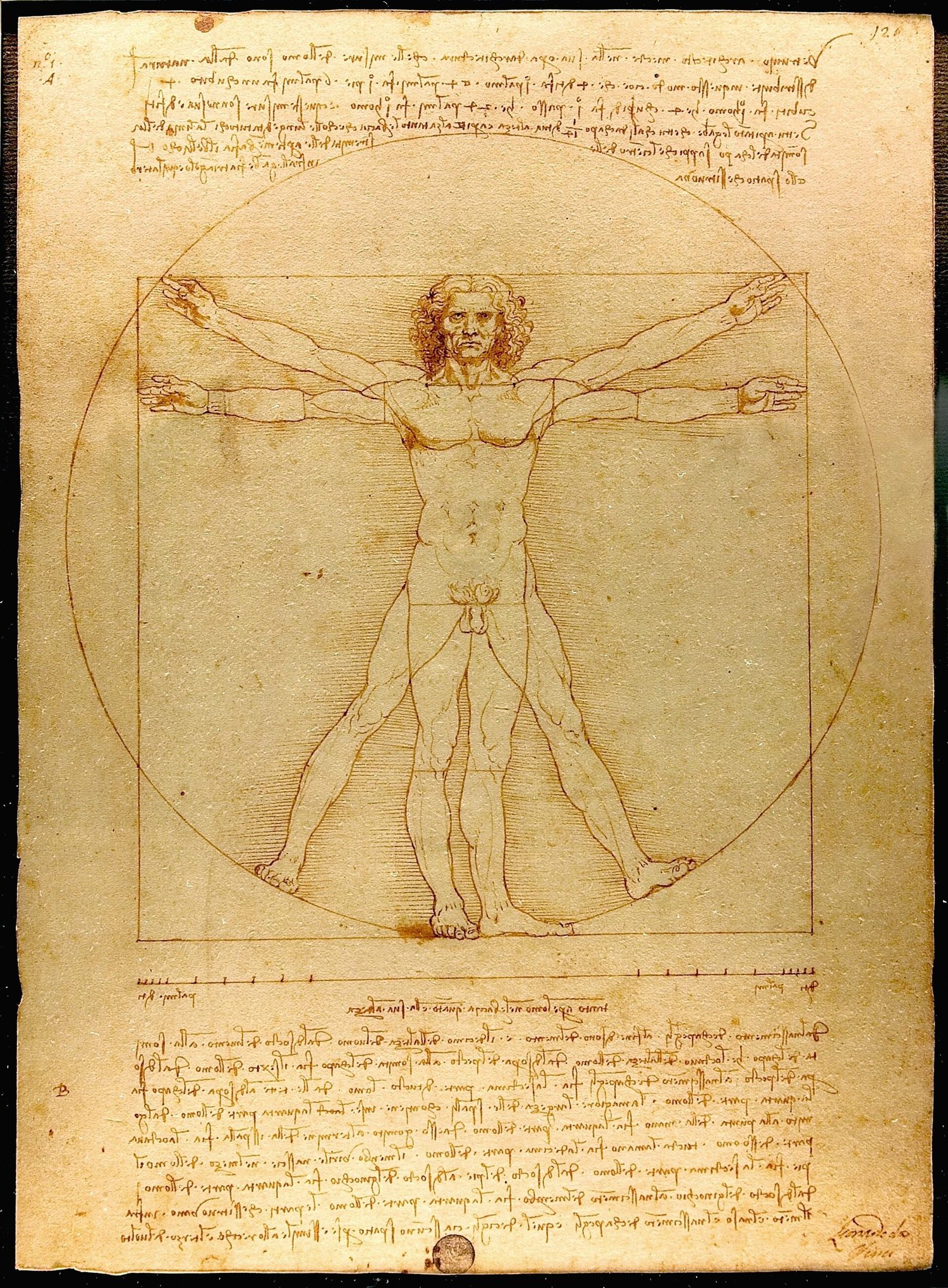
    达·芬奇的钢笔素描:一个四肢伸展的人,同时嵌在一个圆形和一个正方形里
    达·芬奇的《维特鲁威人》:这个人体以中央竖轴近乎完美地对称,而外围的圆又给它辐射平衡
    Composition balances light, mass, and interest across the picture plane
    Composition balances light, mass, and interest across the picture plane
    探索

    Which kind of balance?

    Symmetrical balance mirrors a central axis; asymmetrical balance weighs different elements of equal visual weight; radial balance radiates from a centre.

    词汇表 训练
    英文 中文 拼音
    principles of design 设计原则 shè jì yuán zé
    balance 平衡 píng héng
    Symmetrical (formal) balance 对称平衡 duì chèn píng héng
    Asymmetrical (informal) balance 非对称平衡 fēi duì chèn píng héng
    visual weight 视觉重量 shì jué zhòng liàng
    Radial balance 辐射平衡 fú shè píng héng
    Composition 构图 gòu tú
    picture plane 画面 huà miàn
    2.2

    强调与视觉焦点

    大纲

    Focus: Emphasis makes one part of a work stand out as the centre of interest (the focal point).

    • A focal point is where the eye is drawn first; emphasis creates it.
    • Emphasis is built through contrast — of size, colour, value, isolation, or placement.
    • Convergence (lines that point) and the rule of thirds help locate a strong focal point.
    • Subordination keeps other areas quieter so the focal point leads.
    • A work may have one dominant focal point and smaller secondary accents.

    来源:美国大学理事会 AP 课程与考试说明

    强调(emphasis)使一件作品的一个部分作为兴趣的中心——视觉焦点(focal point),眼睛最先被吸引的地方——脱颖而出。

    • 强调通过对比创造——大小、色彩、明度、隔离或位置的对比。
    • 引导线和三分法帮助放置一个强的视觉焦点。
    • 从属(subordination)使其他区域更安静,以便视觉焦点引领。
    词汇表 训练
    英文 中文 拼音
    Emphasis 强调 qiáng diào
    focal point 视觉焦点 shì jué jiāo diǎn
    Subordination 从属 cóng shǔ
    2.3

    对比

    大纲

    Focus: Contrast is the difference between elements — it creates energy, variety, and readability.

    • Contrast can be of value (light/dark), colour (complementary), shape, texture, or size.
    • Strong contrast attracts attention and defines a focal point.
    • Low contrast unifies a work and can feel calm, subtle, or moody.
    • Contrast in direction (horizontal vs diagonal) adds movement.
    • In graphic design, value and size contrast create clear visual hierarchy.

    来源:美国大学理事会 AP 课程与考试说明

    对比(contrast)是元素之间的差别——它创造能量、多样性和可读性。

    • 对比能是明度(明/暗)、色彩(互补)、形状、肌理或大小的。
    • 强的对比吸引注意并定义一个视觉焦点;低的对比统一并平静。
    • 在设计中,明度和大小的对比创造清晰的视觉层次(visual hierarchy)。
    词汇表 训练
    英文 中文 拼音
    Contrast 对比 duì bǐ
    visual hierarchy 视觉层次 shì jué céng cì
    2.4

    动感与节奏

    大纲

    Focus: Movement leads the viewer's eye through a work; rhythm is the repetition that creates a visual beat.

    • Movement is the path the eye takes, guided by line, edges, colour, and placement.
    • Rhythm is created by repeating elements with regular or varied spacing.
    • Types of rhythm: regular (even), flowing (curving), progressive (gradual change), and random.
    • Directional forces (leading lines, gazes, gestures) create implied motion.
    • Repetition with variation keeps rhythm interesting rather than monotonous.

    来源:美国大学理事会 AP 课程与考试说明

    动感(movement)引导观者的眼睛穿过一件作品;节奏(rhythm)是创造一个视觉"节拍"的重复。

    • 动感是眼睛所走的路径,由线条、边缘、色彩和位置引导。
    • 节奏类型:规则的(regular)(均匀)、流动的(flowing)(弯曲)、渐进(progressive)(逐渐变化),和随机的。
    • 带变化的重复保持节奏有趣而不是单调。
    梵高的绘画:夜空中布满巨大旋转的光之漩涡,下方是宁静的村庄
    梵高的《星月夜》:旋转的笔触带着视线扫过天空(动感),重复的卷曲给它一种翻滚的节奏
    词汇表 训练
    英文 中文 拼音
    Movement 动感 dòng gǎn
    rhythm 节奏 jié zòu
    progressive 渐进 jiàn jìn
    2.5

    图案与重复

    大纲

    Focus: Repetition reuses an element; pattern is the repeated element arranged in a predictable way.

    • Repetition of shape, colour, or line builds unity and rhythm.
    • A pattern is a repeated motif — regular (grid, tessellation) or irregular.
    • Patterns can fill a shape, define a texture, or become the subject itself.
    • Motif is the single unit that repeats; changing scale or colour varies the pattern.
    • Too much repetition can feel monotonous; variation keeps it engaging.

    来源:美国大学理事会 AP 课程与考试说明

    重复(repetition)重用一个元素;一个图案(pattern)是以一种可预测的方式排列的重复元素。

    • 形状、色彩或线条的重复建立统一和节奏。
    • 一个图案是一个重复的母题(motif)——规则的(一个网格或镶嵌)或不规则的。
    • 太多重复感觉单调;改变尺度或色彩增加多样性。
    一块印花布,蓝色的鸟在红色草莓和绿叶之间,同一母题在布上反复出现
    威廉·莫里斯的《草莓小偷》:一个鸟与草莓的母题以规则的图案在整块布上反复出现
    词汇表 训练
    英文 中文 拼音
    Repetition 重复 chóng fù
    pattern 图案 tú àn
    motif 母题 mǔ tí
    2.6

    比例与尺度

    大纲

    Focus: Proportion is the size relationship between parts; scale is the size of the work or an element relative to something else.

    • Proportion compares the sizes of parts within a work (e.g. head to body).
    • Scale compares an element to the whole, to the human body, or to the real world.
    • Hierarchical scale makes the most important element largest.
    • Exaggerated or distorted proportion can express emotion or draw attention.
    • The golden ratio and canon of proportions are historic guides to pleasing relationships.

    来源:美国大学理事会 AP 课程与考试说明

    比例(proportion)是各部分之间的大小关系;尺度(scale)是一个元素相对于别的东西的大小。

    构图工具:三分法和等级比例
    三分法把关键元素放在三分线上;等级比例使重要的元素最大
    • 比例比较一件作品内各部分的大小(头对身体)。
    • 等级比例(hierarchical scale)使最重要的元素最大。
    • 夸张或扭曲的比例能表达情绪或吸引注意。黄金比例(golden ratio)是一个悦目比例的历史向导。
    词汇表 训练
    英文 中文 拼音
    Proportion 比例 bǐ lì
    scale 尺度 chǐ dù
    Hierarchical scale 等级比例 děng jí bǐ lì
    golden ratio 黄金比例 huáng jīn bǐ lì
    2.7

    统一与变化

    大纲

    Focus: Unity holds a work together as a whole; variety adds interest so it is not dull. Good design balances the two.

    • Unity is a sense that all parts belong together (through repetition, proximity, and a limited palette).
    • Variety is difference that adds interest and prevents monotony.
    • Harmony comes from elements that are similar; tension from those that differ.
    • Proximity (grouping) and continuity (alignment) strengthen unity.
    • The best works achieve unity with variety — order that still surprises.

    来源:美国大学理事会 AP 课程与考试说明

    统一(unity)把一件作品作为一个整体维系在一起;变化(variety)增加趣味,以便它不乏味。好的设计平衡这两者。

    • 统一来自重复、邻近(proximity)(分组)、连续性(continuity)(把元素沿一条线或边缘对齐,使它们读作一组),和一个有限的调色板。
    • 变化是防止单调的差别。和谐(harmony)来自相似的元素。
    • 最好的作品实现统一变化——仍然令人惊讶的秩序。
    词汇表 训练
    英文 中文 拼音
    Unity 统一 tǒng yī
    variety 变化 biàn huà
    proximity 邻近 lín jìn
    continuity 连续性 lián xù xìng
    Harmony 和谐 hé xié
    2.8

    构图

    大纲

    Focus: Composition is how all the elements and principles are arranged within the picture plane.

    • The picture plane is the flat surface; its format (portrait, landscape, square) shapes the design.
    • The rule of thirds places key elements along thirds lines and their intersections.
    • Cropping decides what is included and what is cut, changing emphasis and tension.
    • Leading lines, framing, and balance guide the eye and hold the composition together.
    • A strong composition unifies the elements while creating a clear focal point.

    来源:美国大学理事会 AP 课程与考试说明

    构图(composition)是所有元素和原则如何在画面(picture plane)内排列。

    • 画幅(format)(竖幅、横幅、正方形)塑造设计。
    • 三分法(rule of thirds)把关键元素沿着三分线和它们的交点放置。
    • 裁剪(cropping)决定什么被包括和什么被切掉,改变强调和张力。
    • 一个强的构图统一元素,同时创造一个清晰的视觉焦点——这是 AP 作品集的二维技能被评判的依据。

    Worked example(应用这个概念)。 要解释一幅构图中的平衡:"左边的大暗形状被右边三个小的明亮形状平衡——这是不对称平衡,它给作品两侧视觉重量,同时保持它动态而非静态。" 一个完整的答案要说出原理、指向作品中的具体证据,并且说明对观者的效果。

    词汇表 训练
    英文 中文 拼音
    format 画幅 huà fú
    rule of thirds 三分法 sān fēn fǎ
    Cropping 裁剪 cái jiǎn
    2.8

    考试技巧

    • 对每件作品,陈述哪个原则组织它——平衡、强调、对比、动感或统一。
    • 通过视觉重量、不只是对称来论证平衡
    • 确保一个清晰的视觉焦点,并命名创造它的强调技法。
    • 瞄准统一带变化——命名统一的手法和趣味的来源。
    • 在动手之前用三分法和缩略草图规划构图
  • 3

    二维媒介、材料与技法

    讲义 词汇表
    3.1

    素描媒介

    大纲

    Focus: Drawing media make marks directly on a surface — the foundation of most 2-D work.

    • Dry media: graphite (pencil), charcoal, conte, chalk and oil pastel, coloured pencil.
    • Wet media: pen and ink, brush and ink, markers.
    • Mark-making techniques: hatching, cross-hatching, stippling, blending, and scribbling.
    • Choice of media and paper (tooth/texture) changes the line and value possible.
    • Drawing is used both to investigate ideas (studies, sketches) and to make finished works.

    来源:美国大学理事会 AP 课程与考试说明

    媒介(media)是艺术家使用的材料。绘画媒介直接在一个表面上做标记,是大多数二维作品的基础。

    • 干性媒介(dry media):石墨(铅笔)、木炭、康特笔、粉笔和油画棒、彩色铅笔。
    • 湿性媒介(wet media):钢笔和墨水、毛笔和墨水、马克笔。
    • 标记制作技法:排线(hatching)、交叉排线(cross-hatching)、点画(stippling)、混合和涂鸦。
    • 纸的纸纹(tooth)(肌理)改变可能的线条和明度。

    绘画既被用来调查(investigate)想法(习作和速写),也被用来制作成品作品。

    词汇表 训练
    英文 中文 拼音
    Media 媒介 méi jiè
    Dry media 干性媒介 gàn xìng méi jiè
    Wet media 湿性媒介 shī xìng méi jiè
    hatching 排线 pái xiàn
    cross-hatching 交叉排线 jiāo chā pái xiàn
    stippling 点画 diǎn huà
    tooth 纸纹 zhǐ wén
    3.2

    绘画媒介

    大纲

    Focus: Painting applies pigment suspended in a binder to a surface, building colour, value, and texture.

    • Common media: watercolour (transparent), gouache (opaque water-based), acrylic (fast-drying), oil (slow, blendable).
    • Support and ground (paper, canvas, board; primer/gesso) affect how paint behaves.
    • Techniques: washes, glazing, wet-on-wet, dry-brush, impasto, and layering.
    • Water-based paints dry quickly and clean with water; oils dry slowly and blend richly.
    • Brush choice, dilution, and paint thickness control mark, edge, and texture.

    来源:美国大学理事会 AP 课程与考试说明

    绘画(painting)把保持在一种粘合剂(binder)里的颜料涂到一个表面上,建立色彩、明度和肌理。

    • 水彩(watercolour)是透明的;水粉(gouache)是不透明的、水基的;丙烯(acrylic)干得快;油画(oil)干得慢并丰富地混合。
    • 底材(support)和底子(纸、画布、板;底漆或石膏底料(gesso))影响颜料如何表现。
    • 技法包括平涂、罩染(glazing)、湿画法、干笔和厚涂。
    Oil painting builds colour in layers: media choices shape surface, value and space
    Oil painting builds colour in layers: media choices shape surface, value and space
    词汇表 训练
    英文 中文 拼音
    Painting 绘画 huì huà
    binder 粘合剂 nián hé jì
    Watercolour 水彩 shuǐ cǎi
    gouache 水粉 shuǐ fěn
    acrylic 丙烯 bǐng xī
    oil 油画 yóu huà
    support 底材 dǐ cái
    gesso 石膏底料 shí gāo dǐ liào
    glazing 罩染 zhào rǎn
    Layers 图层 tú céng
    3.3

    版画

    大纲

    Focus: Printmaking transfers an image from a prepared surface (matrix) to paper, allowing multiple copies (an edition).

    • Relief (linocut, woodcut): ink the raised surface; the cut-away areas stay blank.
    • Intaglio (etching, engraving): ink sits in incised lines below the surface.
    • Planographic (lithography): image and non-image areas are on the same level, using grease and water.
    • Stencil (screen printing): ink is pushed through open areas of a mesh.
    • Prints are usually made in a numbered edition; the reversed matrix flips the image.

    来源:美国大学理事会 AP 课程与考试说明

    版画(printmaking)把一个图像从一个准备好的表面((matrix))转移到纸上,以便许多副本(一个版数(edition))能被制作。

    四个版画家族:凸版、凹版、平版和孔版
    凸版从凸起的表面印;凹版从刻入的线印;平版从一个平坦的油性图像印;孔版把墨水推过一个网
    • 凸版(relief)(油毡刻、木刻)——墨水坐在凸起的表面上;切除的区域保持空白。
    • 凹版(intaglio)(蚀刻、雕版)——墨水坐在切到表面之下的线里。
    • 平版(planographic)(石版)——图像和非图像区域在同一层面上,利用油脂和水。
    • 孔版(stencil)(丝网印刷)——墨水被推一个网的开放区域。

    版被反转,所以印出的图像是版的一个镜像。

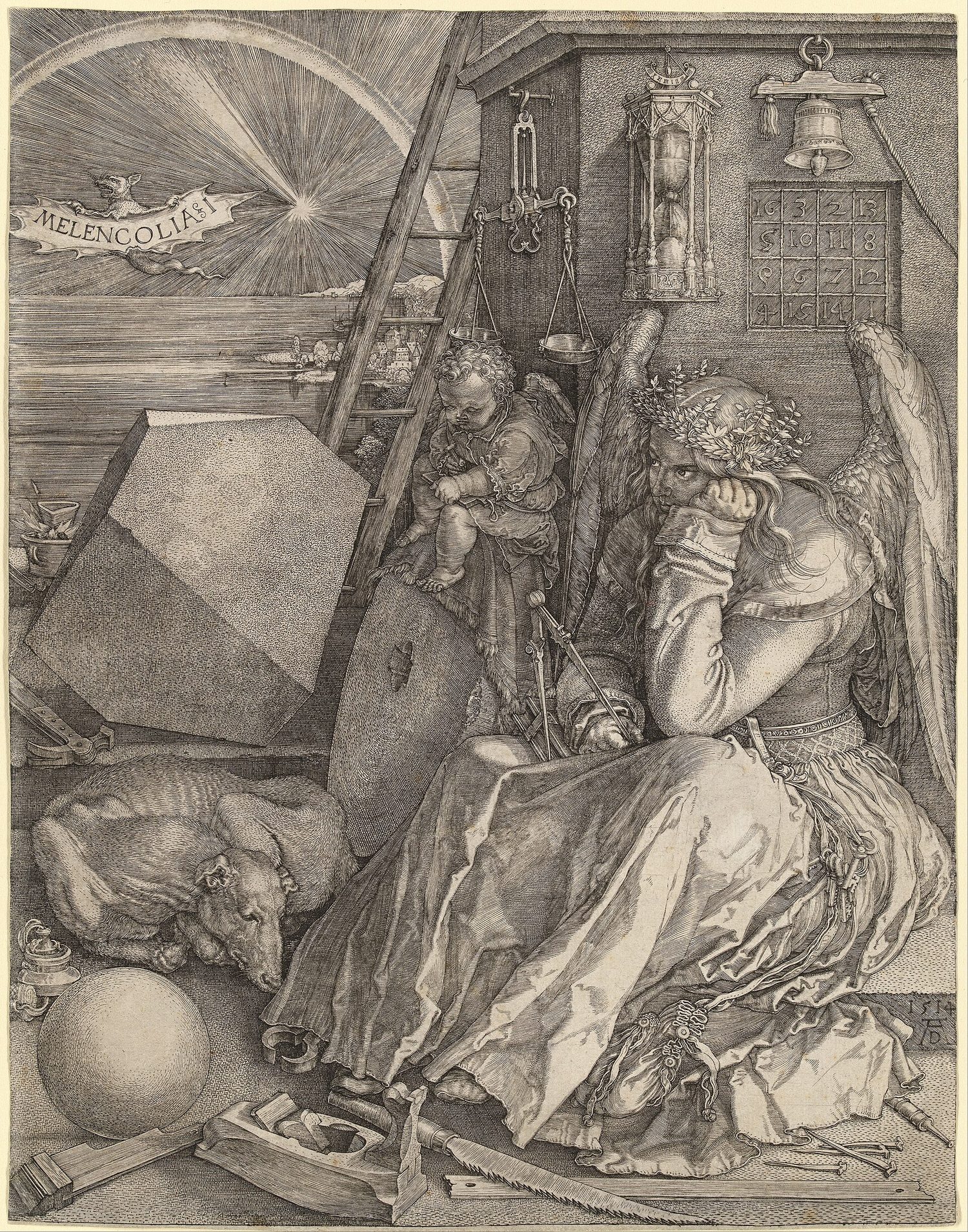
    一幅密集、极其精细的古老版画:一个坐着的带翼人物,周围环绕着工具和符号,全由细密的雕刻线条构成
    丢勒的雕版画《忧郁 I》:凹版把线条刻进金属版,雕版所能实现的细密线条塑造出深邃的阴影和丰富的细节
    探索

    Which printmaking process?

    Relief prints from the raised surface; intaglio from lines cut below the surface; planographic from a flat greasy image; stencil pushes ink through a mesh.

    词汇表 训练
    英文 中文 拼音
    Printmaking 版画 bǎn huà
    matrix bǎn
    edition 版数 bǎn shù
    Relief 凸版 tū bǎn
    Intaglio 凹版 āo bǎn
    Planographic 平版 píng bǎn
    Stencil 孔版 kǒng bǎn
    3.4

    拼贴与综合媒介

    大纲

    Focus: Collage assembles found materials onto a surface; mixed media combines two or more materials or processes.

    • Collage glues papers, photos, fabric, or found objects into a composition.
    • Mixed media layers, for example, drawing over paint, or print with stitching.
    • These processes add actual texture and unexpected juxtapositions of image and meaning.
    • Materials can carry meaning (a ticket, a map) beyond their visual role.
    • Good mixed-media work still uses the elements and principles to stay unified.

    来源:美国大学理事会 AP 课程与考试说明

    拼贴(collage)把找到的材料组装到一个表面上;综合媒介(mixed media)结合两种或更多材料或工序。

    • 拼贴把纸、照片、织物或找到的物体粘到一个构图里。
    • 综合媒介层叠工序——例如,在颜料上绘画,或印刷带缝纫。
    • 这些增加实际肌理和意想不到的意义;一种找到的材料(一张票、一张地图)能携带超出它外观的意义。
    词汇表 训练
    英文 中文 拼音
    Collage 拼贴 pīn tiē
    mixed media 综合媒介 zōng hé méi jiè
    3.5

    摄影与镜头媒介

    大纲

    Focus: Photography makes images with light and a lens; the same elements and principles apply to the frame.

    • Key controls: framing/composition, focus, exposure (light), depth of field, and viewpoint.
    • The rule of thirds, leading lines, and negative space compose a photograph.
    • Light direction and quality (hard/soft) shape value, form, and mood.
    • Editing (cropping, contrast, colour) is part of the creative process, not just correction.
    • Digital and darkroom processes both count as lens-based 2-D art and design.

    来源:美国大学理事会 AP 课程与考试说明

    摄影(photography)用光和一个镜头制作图像;元素和原则应用于画框,正如在任何二维作品里。

    一张黑白照片:一艘拥挤的船上的乘客,被一道舷梯分成上下两层,形成强烈的几何形状
    阿尔弗雷德·施蒂格利茨的《统舱》,一张著名的早期艺术摄影:舷梯、烟囱和人物构成强烈的几何构图,可见元素和原则同样适用于照片
    • 关键控制:取景、对焦(focus)、曝光(exposure)(光)、景深(depth of field),和视点。
    • 三分法、引导线和负空间构图一张照片。
    • 后期(editing)(裁剪、对比、色彩)是创作过程的一部分,不只是纠正。
    词汇表 训练
    英文 中文 拼音
    Photography 摄影 shè yǐng
    focus 对焦 duì jiāo
    exposure 曝光 bào guāng
    depth of field 景深 jǐng shēn
    Editing 后期 hòu qī
    3.6

    数字艺术与设计

    大纲

    Focus: Digital tools create and edit images on a computer or tablet, working in layers and pixels or vectors.

    • Raster images are made of pixels (photo editing, painting apps); vector images use math paths (scalable).
    • Layers let an artist build, mask, and revise non-destructively.
    • Digital colour uses RGB (screen, additive) or CMYK (print, subtractive).
    • Resolution (DPI/PPI) affects print quality; keep files high-resolution for the portfolio.
    • The same elements and principles guide digital work as any other 2-D medium.

    来源:美国大学理事会 AP 课程与考试说明

    数字媒介(digital media)在一台计算机或平板上创造和编辑图像,以图层工作。

    • 位图(raster)图像由像素构成(照片编辑、数字绘画);矢量(vector)图像使用数学路径并缩放而不失质量。
    • 图层(layers)让一个艺术家在不损坏较早作品的情况下构建、遮罩和修改。
    • 数字色彩使用 RGB(屏幕,加色)或 CMYK(印刷,减色);为作品集保持文件高分辨率(resolution)。
    Additive versus subtractive colour
    混合光(RGB)向白色变亮;混合颜料(CMY)向黑色变暗
    词汇表 训练
    英文 中文 拼音
    Digital media 数字媒介 shù zì méi jiè
    Raster 位图 wèi tú
    vector 矢量 shǐ liàng
    resolution 分辨率 fēn biàn lǜ
    3.7

    平面设计与插画

    大纲

    Focus: Graphic design communicates a message visually; illustration makes images that support or tell a story.

    • Design combines type, image, colour, and layout to communicate to a viewer or client.
    • Visual hierarchy (size, weight, contrast, placement) guides the eye to what matters first.
    • Typography — typeface, size, spacing, alignment — is a core design element.
    • Illustration serves a purpose: editorial, book, product, poster, or narrative.
    • Design and illustration are problem-solving: audience and message shape every choice.

    来源:美国大学理事会 AP 课程与考试说明

    平面设计(graphic design)视觉地传达一个信息;插画(illustration)制作支持或讲述一个故事的图像。

    • 设计结合字体(type)、图像、色彩和版式以触及一个观者或客户。
    • 视觉层次引导眼睛通过大小、粗细和位置先看什么重要。
    • 字体排印(typography)——字体、大小、间距、对齐——是一个核心设计工具。
    • 设计和插画是问题解决:受众和信息塑造每个选择。

    Worked example(写关于过程)。 当你的书面证据必须解释一种材料和过程时:"我在有色纸上用木炭,因为它柔软、可涂抹的线条让我快速建立深阴影,而我用橡皮擦提亮高光来暗示形体。" 注意结构——说出媒介,说为什么选它,并把它与你在探索的想法联系起来。列出一种材料而不给原因得分很少。

    词汇表 训练
    英文 中文 拼音
    Graphic design 平面设计 píng miàn shè jì
    illustration 插画 chā huà
    type 字体 zì tǐ
    Typography 字体排印 zì tǐ pái yìn
    3.7

    考试技巧

    • 媒介匹配到意图的效果,并论证这个选择。
    • 对于版画,陈述凸版凹版,并记住印出的图像反转。
    • 解释透明不透明颜料,以及数字作品里的图层矢量位图
    • 拼贴综合媒介材料当作意义,不只是肌理。
    • 平面设计中,展示一个服务于信息的清晰视觉层次
  • 4

    探究:探问与艺术创作过程

    讲义 词汇表
    4.1

    探问与提出问题

    大纲

    Focus: In AP Art and Design, making begins with inquiry — asking questions that guide a sustained investigation. (CED Big Idea 1)

    • Inquiry is asking questions to find information and drive investigation.
    • A sustained investigation is an in-depth, question-driven study of materials, processes, and ideas over time.
    • Questions can be simple — who, what, when, where, why, how, what if, and why not.
    • Investigation includes perception, curiosity, examination, discovery, imagination, and conversation.
    • Questions evolve: early questions lead to new questions as the work develops.

    来源:美国大学理事会 AP 课程与考试说明

    在 AP 艺术与设计里,创作以探究(inquiry)开始——提出随时间引导一次持续探究(sustained investigation)的问题。这是大概念 1(Big Idea 1)。

    艺术过程是一个提问、调查、创作和反思的循环
    探究驱动一个循环:提出一个问题、调查、创作、反思——并让每个答案提出一个新问题
    • 探究是提出问题以找到信息并驱动调查。
    • 一次持续探究是对材料、过程和想法的一次深入的、问题驱动的研究。
    • 好的问题能是简单的——谁、什么、何时、何地、为什么、如何、如果……会怎样,以及为什么不。
    • 问题演变(evolve):随着作品发展,早期的问题引向新的问题。
    词汇表 训练
    英文 中文 拼音
    inquiry 探究 tàn jiū
    sustained investigation 持续探究 chí xù tàn jiū
    4.2

    想法与经验的来源

    大纲

    Focus: Artists' and designers' experiences inform why, how, and what they make. (CED 1.A)

    • An experience is an event or occurrence — real surroundings, imagined concepts, communication, or research.
    • Reflecting on experiences sparks questions and inspires investigation.
    • Experiences can be documented with drawings, photos, diagrams, notes, or sound.
    • Ideas come from observation, memory, other disciplines, and other artists' work.
    • Recording experiences becomes a resource for the sustained investigation.

    来源:美国大学理事会 AP 课程与考试说明

    艺术家和设计师的经历(experiences)告知他们为什么、如何以及创作什么。

    • 一次经历是任何事件——真实的环境、想象的想法、交流,或研究。
    • 反思经历激发问题并启发调查。
    • 想法来自观察(observation)、记忆、其他学科,和其他艺术家的作品。
    • 经历能用绘画、照片、笔记或声音被记录(documented),成为一种资源。
    Where a sustained-investigation idea can come from
    强的探究问题从经历、观察、他人的艺术、文化、议题和材料中生长出来
    词汇表 训练
    英文 中文 拼音
    experiences 经历 jīng lì
    observation 观察 guān chá
    4.3

    材料、过程与想法

    大纲

    Focus: Every work is built from three interacting components — materials, processes, and ideas. (CED 1.C)

    • Materials are what a work is made of; processes are how it is made; ideas are what it is about.
    • These components interact: a material suggests a process; a process shapes an idea.
    • Investigating materials, processes, and ideas expands the possibilities for making.
    • The components an artist chooses influence how viewers interpret the work.
    • Documenting these choices shows the thinking behind the making.

    来源:美国大学理事会 AP 课程与考试说明

    每件作品都由三个相互作用的组成部分构建——材料、过程与想法(materials, processes, and ideas)。

    • 材料是一件作品由什么制成;过程是它如何被制作;想法是它关于什么。
    • 这些组成部分相互作用:一种材料暗示一个过程;一个过程塑造一个想法。
    • 调查全部三个扩展创作的可能性,并影响观者如何解读作品。
    为系列选择色彩和谐时回到色轮
    为系列选择色彩和谐时回到色轮
    探索

    Material, process, or idea?

    Every work combines materials (what it is made of), processes (how it is made), and ideas (what it is about).

    词汇表 训练
    英文 中文 拼音
    materials, processes, and ideas 材料、过程与想法 cái liào 、 guò chéng yǔ xiǎng fǎ
    4.4

    语境中的艺术与设计

    大纲

    Focus: Works are made and understood within contexts — traditions, cultures, and other disciplines. (CED 1.D)

    • Context is when, where, how, why, and by whom a work was made and viewed.
    • Artists work within (or challenge) art and design traditions from cultures around the world.
    • Comparing works reveals similarities and differences in materials, processes, and ideas.
    • Acknowledging references and influences shows integrity.
    • Understanding context helps both makers and viewers interpret a work.

    来源:美国大学理事会 AP 课程与考试说明

    作品在一个语境(context)——传统、文化和其他学科——里被制作和理解。

    • 语境是一件作品何时、何地、如何、为什么以及由谁被制作和观看。
    • 艺术家在世界各地文化的艺术与设计传统(traditions)之内工作,或挑战它们。
    • 比较作品揭示材料、过程和想法上的相似和差异。
    • 承认参考和影响显示诚信(integrity)——绝不在没有署名的情况下复制。
    Hokusai in context: historical works teach composition for the investigation
    Hokusai in context: historical works teach composition for the investigation
    词汇表 训练
    英文 中文 拼音
    context 语境 yǔ jìng
    traditions 传统 chuán tǒng
    integrity 诚信 chéng xìn
    4.5

    评价艺术与设计

    大纲

    Focus: Works can be evaluated by using evidence to compare them with specific criteria. (CED 1.E)

    • Evaluation uses visual evidence to judge a work against criteria (as the AP scoring guidelines do).
    • Observe carefully: identify materials, processes, and ideas, and how they connect.
    • Consider whether the components show synthesis — parts working together for one effect.
    • Evaluation can be informal (as you work) or formal (peer critique, feedback).
    • Reflecting on evaluation improves later thinking and making.

    来源:美国大学理事会 AP 课程与考试说明

    作品能通过使用视觉证据把它们与具体的标准(criteria)比较来评价(evaluated)(如 AP 评分指南所做的)。

    • 仔细观察:辨别材料、过程和想法,以及它们如何联系。
    • 考虑这些组成部分是否显示综合(synthesis)——各部分为一个效果一起工作。
    • 评价能是非正式的(在你工作时)或正式的(与同伴或一位老师的一次评图(critique))。
    • 反思评价改善你后来的思考和创作。
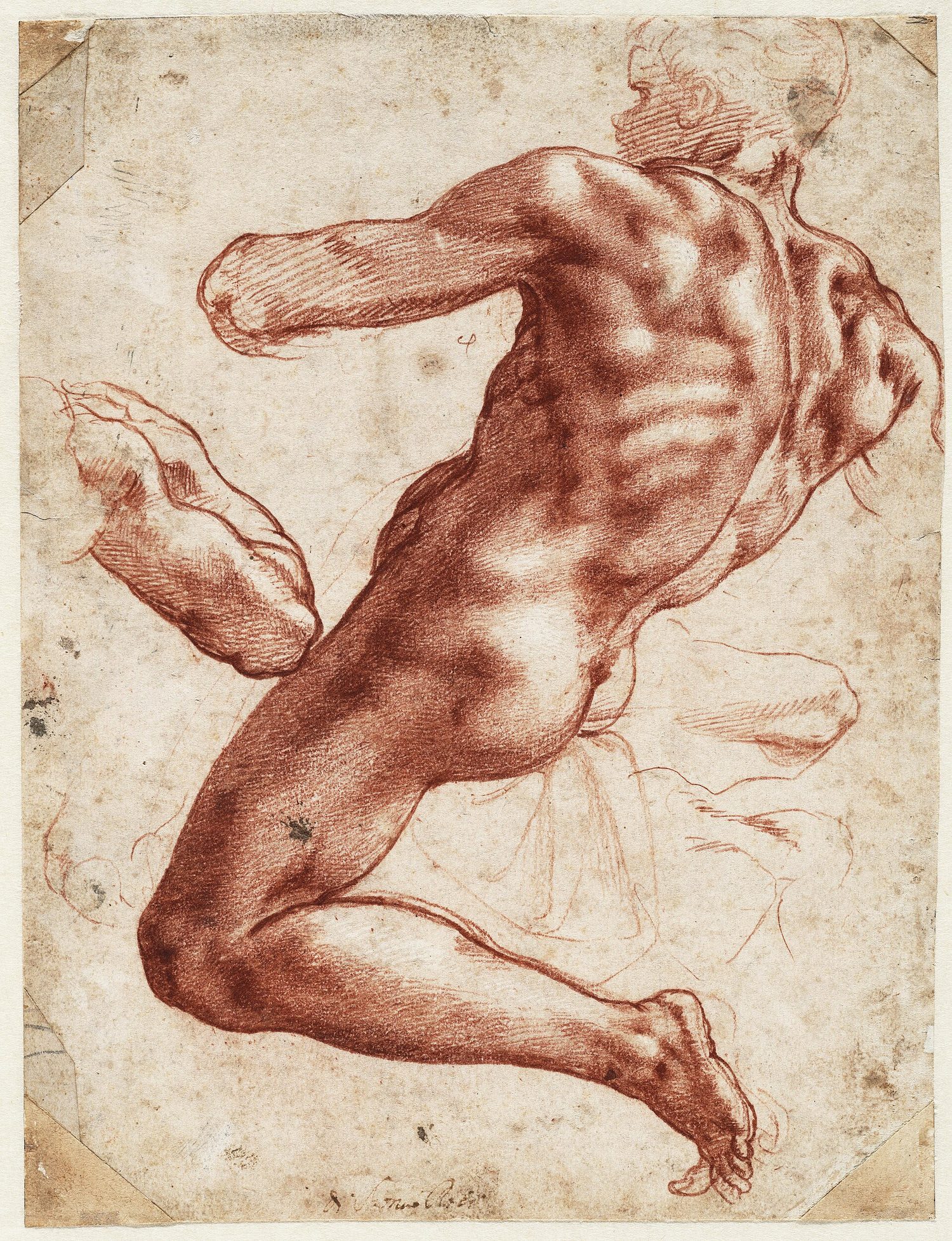
    Critique names visual evidence: line, tone, and composition in a master drawing
    Critique names visual evidence: line, tone, and composition in a master drawing
    词汇表 训练
    英文 中文 拼音
    evaluated 评价 píng jià
    criteria 标准 biāo zhǔn
    synthesis 综合 zōng hé
    critique 评图 píng tú
    4.6

    记录与创作过程日志

    大纲

    Focus: Documentation records information and becomes a resource for the sustained investigation. (CED 1.A/1.B)

    • Documentation takes many forms: images, notes, diagrams, samples, and written reflection.
    • A process journal (sketchbook) records questions, experiments, and revisions over time.
    • Documenting your lines of inquiry shows how the investigation developed.
    • Good documentation can be shared with viewers and included as part of the work.
    • Consistent documentation makes writing the portfolio's written evidence far easier.

    来源:美国大学理事会 AP 课程与考试说明

    记录(documentation)记下信息并成为持续探究的一种资源。

    • 它采取许多形式:图像、笔记、图表、材料样本,和书面反思。
    • 一本创作日志(process journal)(速写本)随时间记录问题、实验和修改。
    • 记录你的探究路径(lines of inquiry)显示调查如何发展。
    • 一致的记录使写作作品集的书面证据容易得多。

    Worked example(构建一个探究)。 一个弱的持续探究问题其实只是一个话题:"我的探究是关于海洋。" 一个强的是一个能驱动许多作品的真正问题:"我如何用颜色和纹理表现海洋从平静转向危险?" 这个问题说出一个想法并且指向你将测试的视觉选择——正是提高作品集分数的东西。

    A process journal page: inquiry notes and small experiments document how ideas develop
    A process journal page: inquiry notes and small experiments document how ideas develop
    词汇表 训练
    英文 中文 拼音
    Documentation 记录 jì lù
    process journal 创作日志 chuàng zuò rì zhì
    lines of inquiry 探究路径 tàn jiū lù jìng
    4.6

    考试技巧

    • 用一个开放的引导问题、而不是一个封闭的是/否问题框定作品。
    • 借助多样的来源——观察、经历、研究——并引用你的影响。
    • 瞄准综合:材料和过程因为携带想法而被选择。
    • 通过使用元素和原则的评图评价,然后规划一次修改
    • 保留一本创作日志:记录实验和失败作为探究的证据。
  • 5

    创作:实践、实验与修改

    讲义 词汇表
    5.1

    持续探究

    大纲

    Focus: The Sustained Investigation is a body of work exploring one question or idea in depth over time. (CED Big Idea 2)

    • A sustained investigation is guided by questions or inquiry and develops as you make.
    • It shows practice, experimentation, and revision — not a set of unrelated pieces.
    • The 2-D portfolio's Sustained Investigation section is 15 images plus written evidence.
    • A clear, focused inquiry gives the whole body of work direction and coherence.
    • The investigation can change direction as new questions emerge — and that evolution is valued.

    来源:美国大学理事会 AP 课程与考试说明

    大概念 2(Big Idea 2)是关于创作。它的核心是持续探究(Sustained Investigation)——一组随时间深入探索一个问题或想法的作品。

    • 一次持续探究由问题或探究引导并随着你的创作发展。
    • 它显示练习、实验和修改——不是一组不相关的作品。
    • 二维作品集的持续探究部分是 15 张图像加书面证据。
    • 一个清晰的、聚焦的探究给整组作品方向和连贯性(coherence)。
    词汇表 训练
    英文 中文 拼音
    Sustained Investigation 持续探究 chí xù tàn jiū
    coherence 连贯性 lián guàn xìng
    5.2

    实践、实验与修改

    大纲

    Focus: Making advances through three linked actions — practice, experimentation, and revision. (CED 2.B)

    • Practice is repeated work to build skill and understanding.
    • Experimentation tries new materials, processes, and ideas to discover possibilities.
    • Revision changes a work based on reflection, feedback, or new questions.
    • These actions are shown across the body of work, not just in one final piece.
    • Evidence of experimentation and revision is exactly what the AP readers look for.

    来源:美国大学理事会 AP 课程与考试说明

    创作通过三个相连的动作前进。

    创作通过随时间练习、实验和修改前进
    练习建立技能、实验尝试新的可能性,而修改改善作品——在整组作品里重复
    • 练习(practice)是建立技能和理解的重复工作。
    • 实验(experimentation)尝试新的材料、过程和想法以发现可能性。
    • 修改(revision)基于反思、反馈或新问题改变一件作品。
    • 这些被展示在整组作品里,不只是在一件最终作品里。实验和修改的证据正是 AP 评阅者寻找的。
    A master study: practice, experimentation and revision are how 2-D skill accumulates over time
    A master study: practice, experimentation and revision are how 2-D skill accumulates over time
    探索

    Practice, experiment, or revise?

    Practice is repeated work to build skill; experimentation tries new materials or ideas; revision changes a work after reflection or feedback.

    词汇表 训练
    英文 中文 拼音
    Practice 练习 liàn xí
    Experimentation 实验 shí yàn
    Revision 修改 xiū gǎi
    5.3

    材料、过程与想法的综合

    大纲

    Focus: Strong works show synthesis — materials, processes, and ideas integrated so the whole is more than its parts. (CED 2.C)

    • Synthesis means the components combine (coalesce) to create a unified effect.
    • The choice of material should support the idea; the process should serve both.
    • When components are integrated, viewers read one clear message rather than separate parts.
    • Synthesis develops through investigation — trying combinations and keeping what works.
    • The relationships among components are what evaluation and scoring examine.

    来源:美国大学理事会 AP 课程与考试说明

    强的作品显示综合(synthesis)——材料、过程和想法被整合,以便整体大于它的各部分。

    • 综合意味着这些组成部分结合以创造一个统一的效果。
    • 选择的材料应当支持想法;过程应当服务两者。
    • 当组成部分被整合时,观者读到一个清晰的信息而不是分开的部分。
    • 综合通过调查发展——尝试组合并保留起作用的。
    词汇表 训练
    英文 中文 拼音
    synthesis 综合 zōng hé
    5.4

    展示二维技能

    大纲

    Focus: The portfolio must show 2-D skills — the elements and principles used to organise a two-dimensional surface. (CED 2.D)

    • 2-D skills are the use of the elements of art and principles of design on a flat surface.
    • Skilful work shows control of value, colour, composition, and mark-making.
    • Skills are demonstrated across many works, in a range of materials and processes.
    • The Selected Works section (5 works) is where 2-D skills are judged most directly.
    • Skill is shown by decisions that are clear, purposeful, and support the idea.

    来源:美国大学理事会 AP 课程与考试说明

    作品集必须显示二维技能(2-D skills)——用来组织一个平坦表面的元素和原则。

    • 二维技能是对线条、形状、明度、色彩、肌理、空间和设计原则的熟练使用。
    • 熟练的作品显示对明度、色彩、构图和标记制作的控制。
    • 技能被展示在许多作品里,以一系列材料和过程。
    • 精选作品(Selected Works)部分是二维技能被最直接评判的地方。
    Van Gogh's Starry Night: expressive line, colour, and rhythm as 2-D skills
    Van Gogh's Starry Night: expressive line, colour, and rhythm as 2-D skills
    词汇表 训练
    英文 中文 拼音
    2-D skills 二维技能 èr wéi jì néng
    Selected Works 精选作品 jīng xuǎn zuò pǐn
    5.5

    创作中的构图与工艺

    大纲

    Focus: Craft is the quality of making; composition is the arrangement of the work — both communicate care and intent.

    • Craftsmanship is the skilful, controlled handling of materials and processes.
    • Composition applies the principles of design to organise the picture plane.
    • Purposeful decisions about surface, edges, and finish strengthen a work.
    • Craft should serve the idea — sometimes rough or raw handling is the right choice.
    • Consistent quality across the body of work signals a developed artist.

    来源:美国大学理事会 AP 课程与考试说明

    工艺(craft)是创作的质量;构图是作品的排列——两者都传达用心和意图。

    • 匠艺(craftsmanship)是对材料和过程的熟练的、受控的处理。
    • 构图应用设计原则来组织画面。
    • 工艺应当服务于想法——有时一种粗糙或原始的处理是正确的选择。
    • 整组作品一致的质量标志着一个成熟的艺术家。
    Hokusai's Great Wave: composition and craft guide the eye across the picture plane
    Hokusai's Great Wave: composition and craft guide the eye across the picture plane
    词汇表 训练
    英文 中文 拼音
    Craft 工艺 gōng yì
    Craftsmanship 匠艺 jiàng yì
    5.6

    想法的逐步发展

    大纲

    Focus: A sustained investigation shows ideas developing — growing and changing across the body of work. (CED 2.B)

    • Development is visible when later works build on discoveries in earlier ones.
    • New questions, materials, or processes push the investigation forward.
    • Not every experiment succeeds — evidence of what did not work is still valuable.
    • Documenting the sequence shows the readers a genuine journey of inquiry.
    • A body of work with clear development scores higher than a set of finished-but-static pieces.

    来源:美国大学理事会 AP 课程与考试说明

    一次持续探究显示想法发展(developing)——在整组作品里成长和变化。

    • 当较后的作品建立在较早作品的发现之上时,发展是可见的。
    • 新的问题、材料或过程推动调查向前。
    • 不是每个实验都成功——什么起作用的证据仍然有价值。
    • 一组有清晰发展的作品比一组完成但静态的作品得分更高。
    A sustained investigation deepens as the works develop
    早期的探索让位于试验和修改,然后是综合——思考在作品之间明显加深

    Worked example(展示发展)。 持续探究是按思考的证据评分的,而不只是完成的作品:"我的前三件作品用平涂色;在看到它们显得没有生气后,我在第 4–6 件试验了分层罩染,然后在第 7–9 件我结合了两者的最好之处。" 描述一个变化并且给出它的原因,就是你如何展示练习、试验和修改。

    词汇表 训练
    英文 中文 拼音
    developing 发展 fā zhǎn
    5.6

    考试技巧

    • 持续探究构建为一组相连的作品,不是一次性的。
    • 展示练习实验修改——一个被记录的失败仍然赢得分数。
    • 推动综合和清晰的二维技能,并保持工艺干净到边缘。
    • 让每件作品从上一件发展,提出下一个问题。
    • 选择体现引导问题的材料和过程。
  • 6

    呈现:沟通与AP作品集

    讲义 词汇表
    6.1

    AP二维艺术与设计作品集

    大纲

    Focus: The AP exam is a portfolio, not a written test. It has two sections that are submitted digitally. (CED Big Idea 3)

    • The Sustained Investigation section: 15 images showing inquiry, practice, experimentation, and revision, plus written evidence.
    • The Selected Works section: 5 works that best show your 2-D skills and synthesis, with written information.
    • Works may be physical or digital, but all are submitted as digital images (and short video where relevant).
    • There is no written exam and no timed section — the portfolio is built across the whole course.
    • Both sections are scored against the College Board scoring guidelines.

    来源:美国大学理事会 AP 课程与考试说明

    大概念 3(Big Idea 3)是关于呈现你的作品。AP 考试是一个作品集(portfolio)——不是一场笔试。它有两个部分,两者都数字化提交。

    二维作品集有两个部分:一个 15 张图像的持续探究和 5 件精选作品
    作品集是一个 15 张图像的持续探究加 5 件精选作品,作为数字图像提交
    • 持续探究(Sustained Investigation)部分:15 张图像显示探究、练习、实验和修改,加书面证据。
    • 精选作品(Selected Works)部分:5 件作品,最好地展示你的二维技能,带书面信息。
    • 作品可以是实物的或数字的,但全部作为数字图像提交。没有限时考试——作品集在整个课程里构建。
    The two parts of the AP 2-D Art and Design portfolio
    持续探究(15 张图像,加书面证据)的权重高于精选作品(5 件)
    词汇表 训练
    英文 中文 拼音
    portfolio 作品集 zuò pǐn jí
    Sustained Investigation 持续探究 chí xù tàn jiū
    Selected Works 精选作品 jīng xuǎn zuò pǐn
    6.2

    持续探究:图像与书面材料

    大纲

    Focus: The Sustained Investigation is judged on the inquiry and the practice, experimentation, and revision it shows. (CED 3.A/3.B)

    • Submit 15 images — works and process documentation that show the investigation over time.
    • Provide written evidence: identify the questions that guided the investigation, and describe how the work shows practice, experimentation, and revision.
    • Images should tell the story of the inquiry, not just show finished pieces.
    • Detail images and in-progress shots are allowed and often helpful.
    • Clear writing (within the character limit) makes the investigation easy to follow.

    来源:美国大学理事会 AP 课程与考试说明

    持续探究被依据它显示的探究练习、实验和修改来评判。

    • 提交 15 张图像——随时间显示调查的作品和过程记录。
    • 提供书面材料(written evidence):辨别引导性问题(guiding questions),并描述作品如何显示练习、实验和修改。
    • 图像应当讲述探究的故事,不只是展示完成的作品。细节和进行中的照片是允许的。
    词汇表 训练
    英文 中文 拼音
    written evidence 书面材料 shū miàn cái liào
    guiding questions 引导性问题 yǐn dǎo xìng wèn tí
    6.3

    精选作品:展示技能

    大纲

    Focus: The Selected Works section shows your best evidence of 2-D skills and synthesis of materials, processes, and ideas. (CED 3.D/3.E)

    • Submit 5 works (physical or digital) as high-quality images.
    • For each, give the materials, processes, and ideas used, plus the size.
    • These works are judged mainly on the skilful use of the elements and principles.
    • They do not have to belong to the sustained investigation.
    • Choose works that most clearly show control, decision-making, and synthesis.

    来源:美国大学理事会 AP 课程与考试说明

    精选作品部分显示你对二维技能(2-D skills)和材料、过程与想法综合的最佳证据。

    • 提交 5 件作品(实物或数字)作为高质量的图像。
    • 对每一件,给出使用的材料、过程和想法,加尺寸。
    • 这些作品主要依据对元素和原则的熟练使用来评判;它们不必属于持续探究。
    A finished Selected Work: craft, composition and skill must read clearly in the submitted image
    A finished Selected Work: craft, composition and skill must read clearly in the submitted image
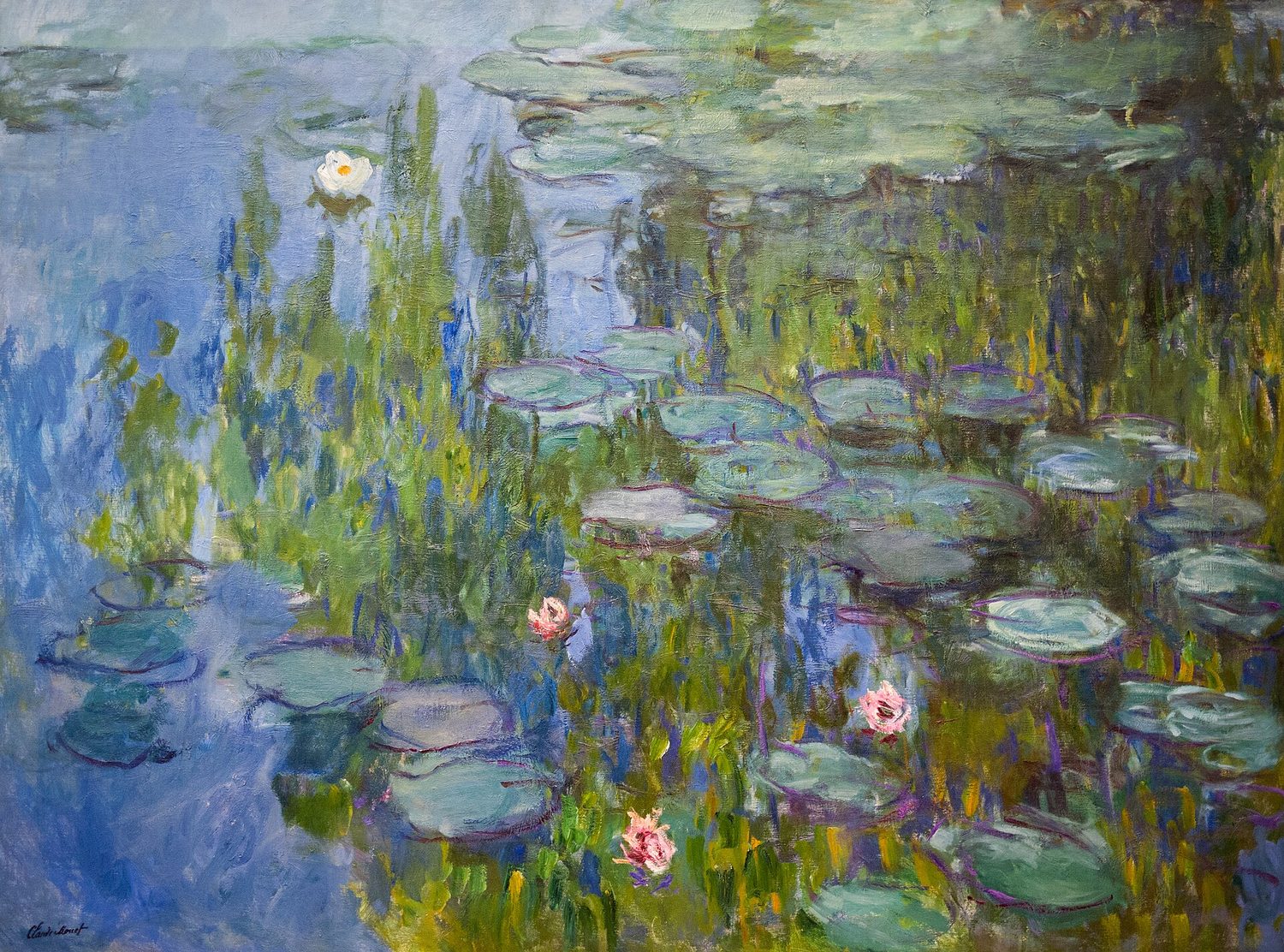
    Monet water lilies: selected works need clear craft and presentation in the image
    Monet water lilies: selected works need clear craft and presentation in the image
    词汇表 训练
    英文 中文 拼音
    2-D skills 二维技能 èr wéi jì néng
    6.4

    撰写作品说明

    大纲

    Focus: Writing communicates your inquiry, processes, and ideas to viewers who cannot ask you questions. (CED 3.A/3.B/3.C)

    • Written evidence must fit within the College Board character limits — be concise and specific.
    • State the question(s) that guided the sustained investigation clearly.
    • Describe how the work shows practice, experimentation, and revision — use evidence.
    • For Selected Works, name the materials, processes, and ideas.
    • Write plainly; the reader should understand your intent from the words plus the images.

    来源:美国大学理事会 AP 课程与考试说明

    写作把你的探究、过程和想法传达给不能问你问题的观者。

    • 书面证据必须符合大学理事会(College Board)的字数限制(character limits)——简洁而具体。
    • 清晰地陈述持续探究的引导性问题。
    • 描述作品如何显示练习、实验和修改——用证据,不是模糊的主张。
    Written evidence starts from inquiry notes: describe materials, process, and ideas with specific visual language
    Written evidence starts from inquiry notes: describe materials, process, and ideas with specific visual language
    词汇表 训练
    英文 中文 拼音
    character limits 字数限制 zì shù xiàn zhì
    6.5

    呈现与图像质量

    大纲

    Focus: How work is presented affects how viewers interpret it — image quality is part of the grade. (CED 3.F)

    • Photograph work with even lighting, sharp focus, true colour, and no distracting background.
    • Crop images to the work; avoid glare, shadows, and keystoning (tilted edges).
    • Follow the required file formats and sizes; keep resolution high.
    • Consistent, clean presentation lets the readers see the work, not the photograph.
    • Poor images can hide real skill — good documentation protects your score.

    来源:美国大学理事会 AP 课程与考试说明

    作品如何被呈现影响观者如何解读它——图像质量是评分的一部分。

    • 均匀的照明锐利的对焦真实的色彩和没有分散注意力的背景拍摄作品。
    • 裁剪到作品;避免眩光、阴影和倾斜的边缘(梯形失真(keystoning))。
    • 遵循要求的文件格式和大小;保持分辨率(resolution)高。差的图像能隐藏真正的技能。
    探索

    Helps or hurts your portfolio image?

    Good documentation lets the readers see your work clearly; poor images can hide real skill.

    词汇表 训练
    英文 中文 拼音
    keystoning 梯形失真 tī xíng shī zhēn
    resolution 分辨率 fēn biàn lǜ
    6.6

    理解评分标准

    大纲

    Focus: Both portfolio sections are scored against published guidelines — knowing them helps you build the portfolio.

    • The Sustained Investigation is scored on inquiry and on evidence of practice, experimentation, and revision (and their visual relationships).
    • Selected Works are scored on 2-D skills and the synthesis of materials, processes, and ideas.
    • Readers use visual evidence in the work plus your writing to apply the criteria.
    • Scores use a rubric with described levels; the top levels show clear, sustained, well-integrated evidence.
    • Designing your work with the criteria in mind (not to a formula) leads to a stronger portfolio.

    来源:美国大学理事会 AP 课程与考试说明

    两个部分都依据公布的评分标准(scoring guidelines)评分——知道它们帮助你构建作品集。

    • 持续探究依据探究以及练习、实验和修改的证据评分。
    • 精选作品依据二维技能和材料、过程与想法的综合评分。
    • 评阅者使用作品里的视觉证据加你的写作来应用标准。带着标准去设计你的作品——不是按一个公式。
    词汇表 训练
    英文 中文 拼音
    scoring guidelines 评分标准 píng fēn biāo zhǔn
    6.7

    学术诚信与引用来源

    大纲

    Focus: Portfolios must be your own work; using others' work without permission or citation is a serious violation.

    • Work based on published or photographic sources you did not take must move far beyond duplication and cite the source.
    • Never present another artist's work — or an AI-generated image — as your own.
    • Cite influences and references; acknowledging them shows integrity, not weakness.
    • The College Board can withhold scores for portfolios that violate integrity policies.
    • When in doubt, work from your own photos, observation, and imagination.

    来源:美国大学理事会 AP 课程与考试说明

    作品集必须是你自己的作品;在没有许可或引用的情况下使用别人的作品是一个严重的违规。

    • 基于你没有创造的参考来源(published or photographic sources)的作品必须远远超出复制并注明出处(cite)。
    • 绝不把另一个艺术家的作品——或一张 AI 生成的图像——呈现为你自己的。
    • 引用影响显示诚信(integrity),不是弱点。当有疑问时,从你自己的照片、观察和想象工作。

    Worked example(作品集书面证据)。 对于持续探究,你要写一段关于你的探究以及作品如何发展的简短陈述。一个强的陈述把想法、材料和变化联系起来:"我的探究问重复如何能表现时间的流逝。我从铅笔网格开始,然后转到版画,这样我能用小的变化重复一个图像,在后来的版画中修改间距来放慢视觉节奏。" 一两句连接想法 → 过程 → 修改的话,比只描述完成的图片评分高得多。

    词汇表 训练
    英文 中文 拼音
    published or photographic sources 参考来源 cān kǎo lái yuán
    cite 注明出处 zhù míng chū chǔ
    integrity 诚信 chéng xìn
    6.7

    考试技巧

    • 知道这两个部分:持续探究(15 张图像)和精选作品(5 件作品)。
    • 用图像展示过程,不只是完成的作品,并在写作里命名引导性问题
    • 具体地写并在字数限制内——指向可见的证据。
    • 拍好照:均匀的光、真实的色彩、避免梯形失真,并保持分辨率高。
    • 保持它是你自己的作品:把任何来源远远超出复制地转化并注明出处

登录或创建账号

IGCSE, A-Level & AP