- describe the relationship between the structure of chloroplasts, as shown in diagrams and electron micrographs, and their function
- explain that energy transferred as ATP and reduced NADP from the light-dependent stage is used during the light-independent stage (Calvin cycle) of photosynthesis to produce complex organic molecules
- state that within a chloroplast, the thylakoids (thylakoid membranes and thylakoid spaces), which occur in stacks called grana, are the site of the light-dependent stage and the stroma is the site of the light-independent stage
- describe the role of chloroplast pigments (chlorophyll a, chlorophyll b, carotene and xanthophyll) in light absorption in thylakoids
- interpret absorption spectra of chloroplast pigments and action spectra for photosynthesis
- describe and use chromatography to separate and identify chloroplast pigments (reference should be made to $R_f$ values in identification of chloroplast pigments)
- state that cyclic photophosphorylation and non-cyclic photophosphorylation occur during the light-dependent stage of photosynthesis
- explain that in cyclic photophosphorylation: • only photosystem I (PSI) is involved • photoactivation of chlorophyll occurs • ATP is synthesised
- explain that in non-cyclic photophosphorylation: • photosystem I (PSI) and photosystem II (PSII) are both involved • photoactivation of chlorophyll occurs • the oxygen-evolving complex catalyses the photolysis of water • ATP and reduced NADP are synthesised
- explain that during photophosphorylation: • energetic electrons release energy as they pass through the electron transport chain (details of carriers are not expected) • the released energy is used to transfer protons across the thylakoid membrane • protons return to the stroma from the thylakoid space by facilitated diffusion through ATP synthase, providing energy for ATP synthesis (details of ATP synthase are not expected)
- outline the three main stages of the Calvin cycle: • rubisco catalyses the fixation of carbon dioxide by combination with a molecule of ribulose bisphosphate (RuBP), a 5C compound, to yield two molecules of glycerate 3-phosphate (GP), a 3C compound • GP is reduced to triose phosphate (TP) in reactions involving reduced NADP and ATP • RuBP is regenerated from TP in reactions that use ATP
- state that Calvin cycle intermediates are used to produce other molecules, limited to GP to produce some amino acids and TP to produce carbohydrates, lipids and amino acids
光合作用
A-Level 生物 · 第 13 主题
 8:58
8:58
Photosynthesis
Here is something strange about a tree. Almost none of it came out of the ground. The wood, the leaves, the fruit — nearly all of that mass was pulled out of…
英文讲解 · 内嵌中英文字幕
13.1
作为能量转移过程的光合作用

大纲
来源:剑桥国际大纲
光合作用(photosynthesis)发生在叶绿体(chloroplast)里面。它的结构适合它的两个阶段:
- 里面是叫类囊体(thylakoids)的一叠叠扁平的囊。一叠类囊体是一个基粒(granum,复数 grana)。类囊体膜容纳捕光的色素,是第一阶段的场所。
- 类囊体周围的液体是基质(stroma),第二阶段的场所。


探索
Explore the chloroplast
Tap each part. The light-dependent stage runs on the thylakoid membranes (grana); the Calvin cycle runs in the stroma around them.
词汇表
训练
| 英文 | 中文 | 拼音 |
|---|---|---|
| photosynthesis/ˌfəʊtəʊˈsɪnθəsɪs/ | 光合作用 | guāng hé zuò yòng |
| chloroplast/ˈklɔːrəʊplæst/ | 叶绿体 | yè lǜ tǐ |
| thylakoid/ˈθaɪləkɔɪd/ | 类囊体 | lèi náng tǐ |
| grana/ˈɡrɑːnə/ | 基粒 | jī lì |
| stroma/ˈstrəʊmə/ | 基质 | jī zhì |
13.1
光合作用的两个阶段

光合作用有两个相连的阶段:
- 光反应阶段(light-dependent stage)发生在类囊体中。它用光能制造 ATP 和还原的(reduced)NADP。
- 暗反应阶段(light-independent stage),也叫卡尔文循环(Calvin cycle),发生在基质中。它用来自第一阶段的 ATP 和还原的 NADP 从二氧化碳(carbon dioxide)建造复杂的有机分子。
词汇表
训练
| 英文 | 中文 | 拼音 |
|---|---|---|
| light-dependent stage/laɪt dɪˈpendənt steɪdʒ/ | 光反应阶段 | guāng fǎn yìng jiē duàn |
| reduce/rɪˈdjuːs/ | 还原 | huán yuán |
| light-independent stage/laɪt ˌɪndɪˈpendənt steɪdʒ/ | 暗反应阶段 | àn fǎn yìng jiē duàn |
| Calvin cycle/ˈkælvɪn ˈsaɪkl/ | 卡尔文循环 | kǎ ěr wén xún huán |
| carbon dioxide/ˈkɑːbən daɪˈɒksaɪd/ | 二氧化碳 | èr yǎng huà tàn |
13.1
叶绿体色素
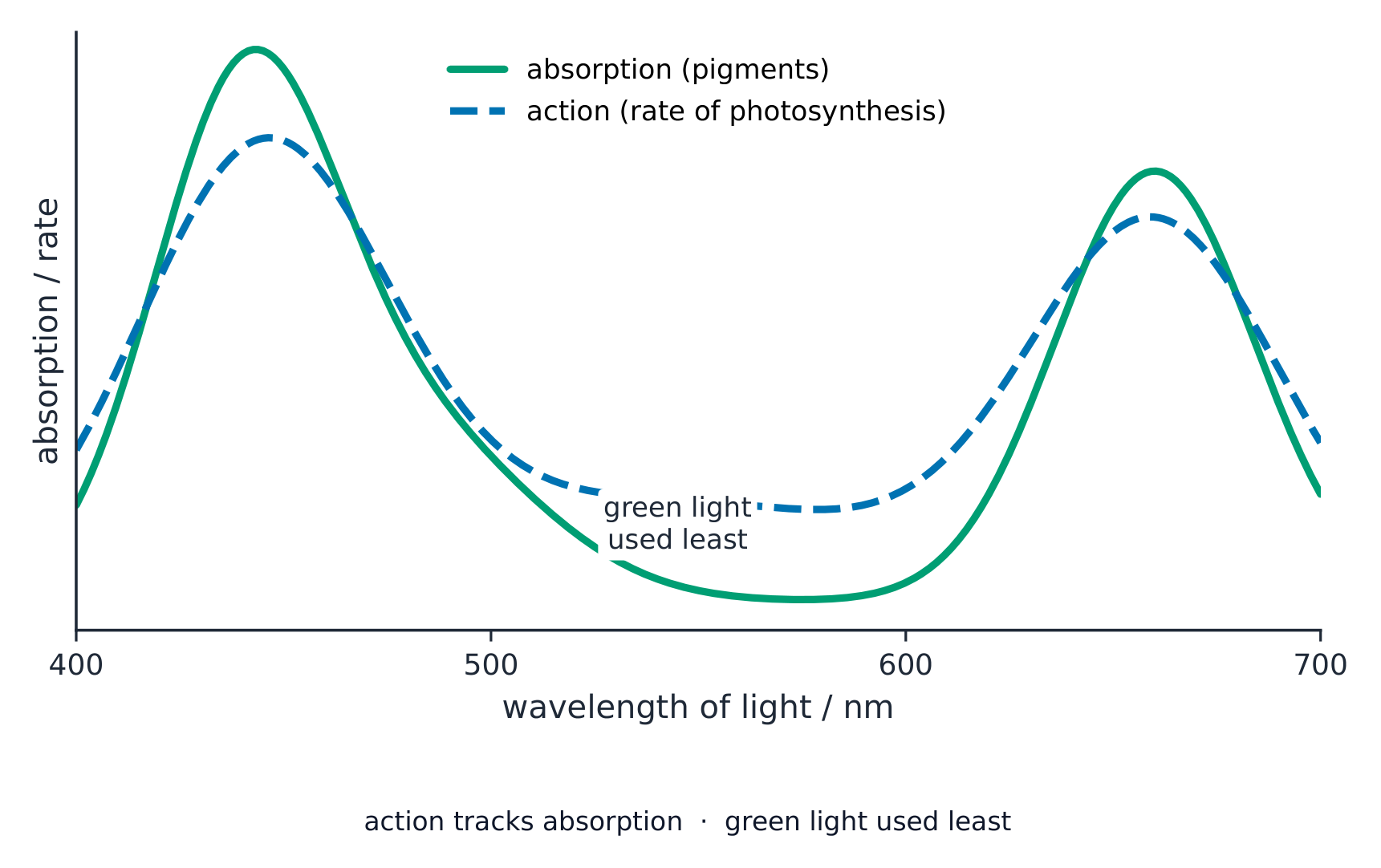
一个色素(pigment)是一个吸收光的有色物质。类囊体容纳几种一起工作以捕获尽可能多的光的色素:
- 叶绿素(chlorophyll)a 和叶绿素 b(它们主要吸收红光和蓝光),
- 胡萝卜素(carotene)和叶黄素(xanthophyll)(它们吸收其他颜色并传递能量)。
我们用两个图研究它们。一个吸收光谱(absorption spectrum)显示每种色素在每个波长吸收多少光。一个作用光谱(action spectrum)显示光合作用在每个波长进行得多快。两个图紧密匹配,这显示色素驱动光合作用。
你可以用色谱法(chromatography)分离色素:色素沿纸向上行进不同的距离。每种色素由它的 比移值(Rf value,色素移动的距离除以溶剂移动的距离)识别。

词汇表
训练
| 英文 | 中文 | 拼音 |
|---|---|---|
| pigment/ˈpɪɡmənt/ | 色素 | sè sù |
| chlorophyll/ˌklɔːrəʊˈfɪl/ | 叶绿素 | yè lǜ sù |
| carotene/ˈkærəʊtiːn/ | 胡萝卜素 | hú luó bo sù |
| xanthophyll/ˈzænθəfɪl/ | 叶黄素 | yè huáng sù |
| absorption spectrum/əbˈsɔːpʃn ˈspektrəm/ | 吸收光谱 | xī shōu guāng pǔ |
| action spectrum/ˈækʃn ˈspektrəm/ | 作用光谱 | zuò yòng guāng pǔ |
| chromatography/krəʊməˈtɒɡrəfi/ | 色谱法 | sè pǔ fǎ |
| Rf value/ˌɑːˈref ˈvæljuː/ | 比移值 | bǐ yí zhí |
13.1
光反应阶段

在类囊体中,光被用来制造 ATP。这是光合磷酸化(photophosphorylation),它有两种形式。
在循环光合磷酸化(cyclic photophosphorylation)中:
- 只用光系统(photosystem)I(PSI)。
- 发生叶绿素的光激活(photoactivation,光把它的电子(electrons)提升到一个更高的能量)。
- 只制造 ATP。
在非循环光合磷酸化(non-cyclic photophosphorylation)中:
- 光系统 I(PSI)和光系统 II(PSII)都用。
- 发生叶绿素的光激活。
- 放氧复合体(oxygen-evolving complex)执行水的光解(photolysis,被光分裂),它释放氧气(oxygen)。
- ATP 和还原的 NADP 都制造。
在两种形式中,能量以同样的方式释放:
- 有能量的电子沿一个电子传递链(electron transport chain)传递,一路释放能量。
- 这个能量被用来把质子(protons)泵过类囊体膜。
- 质子通过 ATP合酶(ATP synthase)流回基质,而这种流动提供制造 ATP 的能量。
探索
The light-dependent stage
Step through it. Light excites electrons and splits water; the result is ATP, reduced NADP and oxygen.
词汇表
训练
| 英文 | 中文 | 拼音 |
|---|---|---|
| photophosphorylation/ˌfəʊtəʊˌfɒsfɔːrɪˈleɪʃn/ | 光合磷酸化 | guāng hé lín suān huà |
| cyclic photophosphorylation/ˈsaɪklɪk ˌfəʊtəʊˌfɒsfɔːrɪˈleɪʃn/ | 循环光合磷酸化 | xún huán guāng hé lín suān huà |
| photosystem/ˌfəʊtəʊˈsɪstəm/ | 光系统 | guāng xì tǒng |
| photoactivation/ˌfəʊtəʊˌæktɪˈveɪʃn/ | 光激活 | guāng jī huó |
| electron/ɪˈlektrɒn/ | 电子 | diàn zi |
| non-cyclic photophosphorylation/nɒn ˈsaɪklɪk ˌfəʊtəʊˌfɒsfɔːrɪˈleɪʃn/ | 非循环光合磷酸化 | fēi xún huán guāng hé lín suān huà |
| oxygen-evolving complex/ˈɒksɪdʒn ɪˈvɒlvɪŋ ˈkɒmpleks/ | 放氧复合体 | fàng yǎng fù hé tǐ |
| photolysis/fəʊˈtɒləsɪs/ | 光解 | guāng jiě |
| oxygen/ˈɒksɪdʒn/ | 氧气 | yǎng qì |
| electron transport chain/ɪˈlektrɒn ˈtrænspɔːt tʃeɪn/ | 电子传递链 | diàn zi chuán dì liàn |
| proton/ˈprəʊtɒn/ | 质子 | zhì zi |
| ATP synthase/ˌeɪ tiː ˈpiː ˈsɪnθeɪs/ | ATP合酶 | hé méi |
13.1
卡尔文循环

暗反应阶段以三个主要步骤建造糖:
- 固定(fixation)——酶(enzyme)rubisco 把二氧化碳加入一个 5 碳分子,RuBP(核酮糖二磷酸)。这制造两个 3 碳化合物 GP(甘油酸 3-磷酸)的分子。
- 还原(reduction)——GP 用来自光反应阶段的还原的 NADP 和 ATP 被还原成 TP(丙糖磷酸)。
- 再生(regeneration)——大部分的 TP 被用来再生(regenerate)RuBP(用更多的 ATP),所以循环能保持运行。
一些 TP 离开循环以制造有用的分子。GP 能被用来制造一些氨基酸(amino acids),而 TP 能被用来制造碳水化合物(carbohydrates)、脂质(lipids)和氨基酸。
探索
The Calvin cycle
Step around the cycle. CO₂ is fixed onto RuBP, reduced to sugar using the light-stage's ATP and NADP, and RuBP is regenerated.
词汇表
训练
| 英文 | 中文 | 拼音 |
|---|---|---|
| fixation/fɪkˈseɪʃn/ | 固定 | gù dìng |
| enzyme/ˈenzaɪm/ | 酶 | méi |
| regenerate/riːˈdʒenəreɪt/ | 再生 | zài shēng |
| amino acid/əˈmiːnəʊ ˈæsɪd/ | 氨基酸 | ān jī suān |
| carbohydrate/ˌkɑːbəʊˈhaɪdreɪt/ | 碳水化合物 | tàn shuǐ huà hé wù |
| lipid/ˈlɪpɪd/ | 脂质 | zhī zhì |
13.2
限制因素的探究

大纲
- state that light intensity, carbon dioxide concentration and temperature are examples of limiting factors of photosynthesis
- explain the effects of changes in light intensity, carbon dioxide concentration and temperature on the rate of photosynthesis
- describe and carry out investigations using redox indicators, including DCPIP and methylene blue, and a suspension of chloroplasts to determine the effects of light intensity and light wavelength on the rate of photosynthesis
- describe and carry out investigations using whole plants, including aquatic plants, to determine the effects of light intensity, carbon dioxide concentration and temperature on the rate of photosynthesis
来源:剑桥国际大纲
一个限制因素(limiting factor)是供应最短缺、拖住光合作用速率的那个。三个主要的是光照强度(light intensity)、二氧化碳****浓度(concentration)和温度(temperature)。
- 提高光照强度加速光合作用,直到某个其他因素变成限制。
- 提高二氧化碳浓度加速它,直到某个其他因素变成限制。
- 提高温度加速它,但只到一个最适值;太高酶就变性。
你可以用一个氧化还原指示剂(indicator)如 DCPIP 或亚甲基蓝和一个叶绿体悬液测量光反应阶段的速率:染料随着叶绿体工作失去它的颜色,而你可以测试不同的光照强度或光波长(wavelengths)。用一整株水生植物(aquatic plant),你可以数放出的氧气气泡以比较不同条件下的速率。
例题。 一株正在稳定进行光合作用的植物突然被断绝二氧化碳供应。GP 和 RuBP 的含量会怎样变化?一步一步跟着循环走。二氧化碳是在RuBP 与它结合(由 Rubisco 催化)生成 GP 时被固定的。去掉二氧化碳,这个反应就停止了,所以 GP 不再被生成 - 但 GP 仍在被消耗,利用 ATP 和还原型 NADP 被还原成 TP。所以 GP 下降。与此同时,RuBP 仍在由 TP 再生,却不再被消耗,所以 RuBP 上升。方法始终不变:找出停下来的那个反应,然后对每种物质分别问它是否还在被生成、是否还在被消耗。如果改为撤掉光照,结果正好相反:没有 ATP 和还原型 NADP,GP 无法被还原,所以 GP 上升而 RuBP 下降。
探索
What limits photosynthesis
Change light and CO₂. The rate is set by whichever factor is in shortest supply — raising the others won't help.
词汇表
训练
| 英文 | 中文 | 拼音 |
|---|---|---|
| limiting factor/ˈlɪmɪtɪŋ ˈfæktə/ | 限制因素 | xiàn zhì yīn sù |
| light intensity/laɪt ɪnˈtensɪti/ | 光照强度 | guāng zhào qiáng dù |
| concentration/ˌkɒnsənˈtreɪʃn/ | 浓度 | nóng dù |
| temperature/ˈtemprɪtʃə/ | 温度 | wēn dù |
| indicator/ˈɪndɪkeɪtə/ | 指示剂 | zhǐ shì jì |
| wavelength/ˈweɪvleŋθ/ | 波长 | bō cháng |
| aquatic plant/əˈkwætɪk plænt/ | 水生植物 | shuǐ shēng zhí wù |
13.2
考试技巧
- 分开两个阶段:光反应(类囊体——光解、ATP、还原的 NADP、O2)和卡尔文循环(基质——CO2 被 rubisco 固定、GP → TP)。
- 读限制因素图:平台是一个不同的因素(光、CO2 或温度)限制速率的地方。
- 用 $R_f$ 值解释色谱法以识别色素。
- 把叶绿体结构与功能联系起来(类囊体堆叠用于光反应;基质用于卡尔文循环)。
本主题的互动课程
逐步学习,并即时检测练习。