Hãy nhìn vào sợi chỉ trong áo khoác, một bó dây thừng, hay đôi tất: nylon. Nó được cấu tạo từ hai loại phân tử, liên kết lặp đi lặp lại — một loại có nhóm nitơ…
English narration · English + 中文 subtitles burned in · Giọng đọc tiếng Anh · phụ đề tiếng Anh + 中文 được ghi trực tiếp
19.1
Primary amines · Amin bậc một
Syllabus · Chương trình
English
recall the reactions by which amines can be produced: (a) reaction of a halogenoalkane with $\text{NH}_3$ in ethanol heated under pressure Classification of amines will not be tested at AS Level.
Tiếng Việt
nhớ lại các phản ứng tạo ra amin: (a) phản ứng của halogenoalkane với $\text{NH}_3$ trong ethanol khi đun nóng dưới áp suất Phân loại amin sẽ không được kiểm tra ở Level AS.
Source: Cambridge International syllabus · Nguồn: Chương trình Cambridge International
English
An amine 胺 has an $\text{–NH}_2$ group (the nitrogen replaces a hydrogen of ammonia).
Making a primary amine
Heat a halogenoalkane 卤代烷 with ammonia dissolved in ethanol, under pressure:
This is a nucleophilic substitution 亲核取代: the lone pair on the nitrogen of ammonia attacks the slightly positive carbon and pushes out the halogen. You use an excess of ammonia, or the amine made can react again.
Tiếng Việt
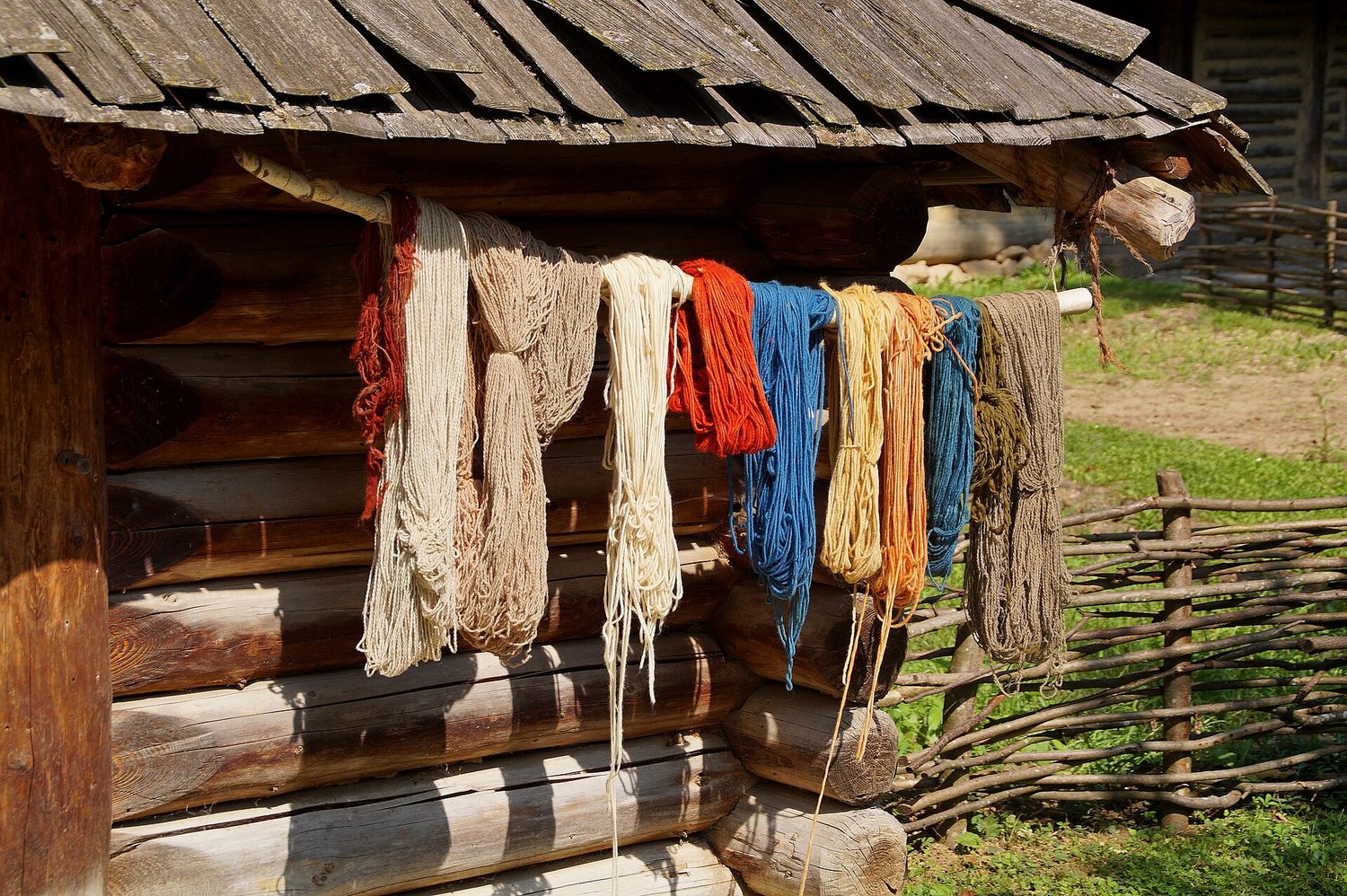
Nhuộm vải: hóa học azo và amine là yếu tố tạo ra màu sắc bền và sáng cho sợi
Một amine có nhóm $\text{–NH}_2$ (nguyên tử nitơ thay thế một nguyên tử hydro của amoniac).
Điều chế amin bậc một
Đun nóng một halogenohydrocarbon với ammonia tan trong ethanol, dưới áp suất:
Đây là phản ứng thế nucleophilic: cặp electron tự do trên nitrogen của amoniac tấn công carbon mang điện tích dương nhẹ và đẩy halogen ra. Bạn sử dụng lượng dư amoniac, hoặc amin tạo thành có thể phản ứng tiếp.
Tạo amin bậc một: cặp electron tự do của amoniac tấn công carbon δ+ và đẩy halogen ra — đây là phản ứng thế nucleophilic
Nitriles and hydroxynitriles · Nitrile và hydroxynitrile
Syllabus · Chương trình
English
recall the reactions by which nitriles can be produced: (a) reaction of a halogenoalkane with $\text{KCN}$ in ethanol and heat
recall the reactions by which hydroxynitriles can be produced: (a) the reaction of aldehydes and ketones with $\text{HCN}$, $\text{KCN}$ as catalyst, and heat
describe the hydrolysis of nitriles with dilute acid or dilute alkali followed by acidification to produce a carboxylic acid
Tiếng Việt
nhớ lại các phản ứng tạo ra nitril: (a) phản ứng của halogenoalkane với $\text{KCN}$ trong ethanol và nhiệt
nhớ lại các phản ứng tạo ra hydroxynitril: (a) phản ứng của anđehit và xeton với $\text{HCN}$, $\text{KCN}$ làm xúc tác, và nhiệt
mô tả thủy phân nitril bằng axit loãng hoặc bazơ loãng, sau đó cho axit hóa để tạo ra axit cacboxylic
Source: Cambridge International syllabus · Nguồn: Chương trình Cambridge International
English
Making a nitrile
Heat a halogenoalkane with potassium cyanide ($\text{KCN}$) in ethanol:
This is also a nucleophilic substitution, with the $\text{CN}^-$ ion as the nucleophile. It is useful because it adds one carbon to the chain. The product is a nitrile 腈.
Making a hydroxynitrile
Add $\text{HCN}$ (with $\text{KCN}$ as catalyst, and heat) to an aldehyde 醛 or ketone 酮. The $\text{H}$ and $\text{CN}$ add across the C=O bond to give a hydroxynitrile 羟基腈. The reagent is hydrogen cyanide 氰化氢, and the mechanism is nucleophilic addition 亲核加成.
Hydrolysis of nitriles
Warm a nitrile with dilute acid (or dilute alkali, then acidify). This hydrolysis 水解 turns the $\text{–CN}$ group into a $\text{–COOH}$ group, giving a carboxylic acid 羧酸:
A nitrile can also be reduced by hydrogen and a catalyst to form an amine, which is the reduction 还原 route to a longer-chain amine.
Worked example. Starting from bromoethane, make propanoic acid. Compare the carbons first: bromoethane has 2, propanoic acid has 3, so a carbon must be added - and the $\text{KCN}$ step is the reaction that does it. Step 1: warm bromoethane with ethanolic $\text{KCN}$; nucleophilic substitution gives propanenitrile, $\text{CH}_3\text{CH}_2\text{CN}$, which now has 3 carbons because the $\text{CN}$ carbon joins the chain. Step 2: reflux the nitrile with dilute $\text{HCl}$; hydrolysis gives propanoic acid. Count the carbons before you plan: whenever the target has exactly one more than the starting material, the nitrile route is almost always the intended answer, and remember the $\text{CN}$ carbon is part of the new chain.
Tiếng Việt
Tạo nitrile
Đun nóng halogenoalkane với kali xyanua ($\text{KCN}$) trong ethanol:
Đây cũng là phản ứng thế nucleophilic, với ion $\text{CN}^-$ đóng vai trò là nucleophile. Phản ứng này hữu ích vì nó thêm một nguyên tử carbon vào mạch. Sản phẩm là nitrile.
Tạo hydroxynitrile
Thêm $\text{HCN}$ (với $\text{KCN}$ làm xúc tác, và đun nóng) vào anđehit hoặc xeton. $\text{H}$ và $\text{CN}$ cộng vào liên kết C=O để tạo thành hydroxynitrile. Thuốc thử là axit xyanhydric, và cơ chế là cộng nucleophilic.
Hai cách xyanua thêm carbon: KCN với halogenoalkane thực hiện thế tạo nitrile; HCN với nhóm cacbonyl thực hiện cộng tạo hydroxynitrile
Thủy phân nitrile
Làm ấm nitrile với axit loãng (hoặc kiềm loãng, sau đó axit hóa). Quá trình thủy phân này biến nhóm $\text{–CN}$ thành nhóm $\text{–COOH}$, tạo ra axit cacboxylic:
Nitrile cũng có thể bị khử bởi hiđro và chất xúc tác để tạo thành amin, đây là con đường khử để tổng hợp amin có mạch dài hơn.
Nitrile là trung tâm tổng hợp hữu ích: KCN thêm một carbon để tạo nitrile, sau đó nitrile thủy phân thành axit cacboxylic hoặc khử thành aminKhử nitrile tạo amin; amin và diacid liên kết lại tạo polyamide như nylon — loại sợi nổi tiếng đầu tiên được dùng trong tất
Ví dụ minh họa. Bắt đầu từ bromoethane, hãy tạo propanoic acid. So sánh số carbon trước: bromoethane có 2, propanoic acid có 3, nên cần thêm một carbon - và bước $\text{KCN}$ chính là phản ứng thực hiện việc này. Bước 1: làm ấm bromoethane với $\text{KCN}$ trong ethanol; phản ứng thế nucleophilic tạo propanenitrile, $\text{CH}_3\text{CH}_2\text{CN}$, lúc này đã có 3 carbon vì carbon $\text{CN}$ đã gắn vào mạch. Bước 2: đun回流 nitrile với $\text{HCl}$ loãng; quá trình thủy phân tạo propanoic acid. Đếm số carbon trước khi lên kế hoạch: bất cứ khi nào sản phẩm mục tiêu có đúng một carbon nhiều hơn chất bắt đầu, thì con đường nitrile gần như luôn là đáp án mong đợi, và nhớ rằng carbon $\text{CN}$ là một phần của mạch mới.
Explore · Khám phá
Nitrile synthesis route · Lộ trình tổng hợp nitrile
Follow nitriles and hydroxynitriles as carbon-chain extension tools. · Xét nitrile và hydroxynitrile như các công cụ mở rộng mạch carbon.
Pick one and the site follows you — notes, papers, videos and practice all open on it. · Chọn một môn và trang sẽ điều hướng theo — ghi chú, tài liệu, video và bài tập đều mở ở đó.
Type to search notes, lessons, code, vocabulary and past-paper questions across every subject. · Nhập để tìm ghi chú, bài học, mã, từ vựng và câu hỏi đề thi cũ trên mọi môn học.