English
Learning Objective 4.1.A: Explain how attribution theory applies to behavior and mental processes.
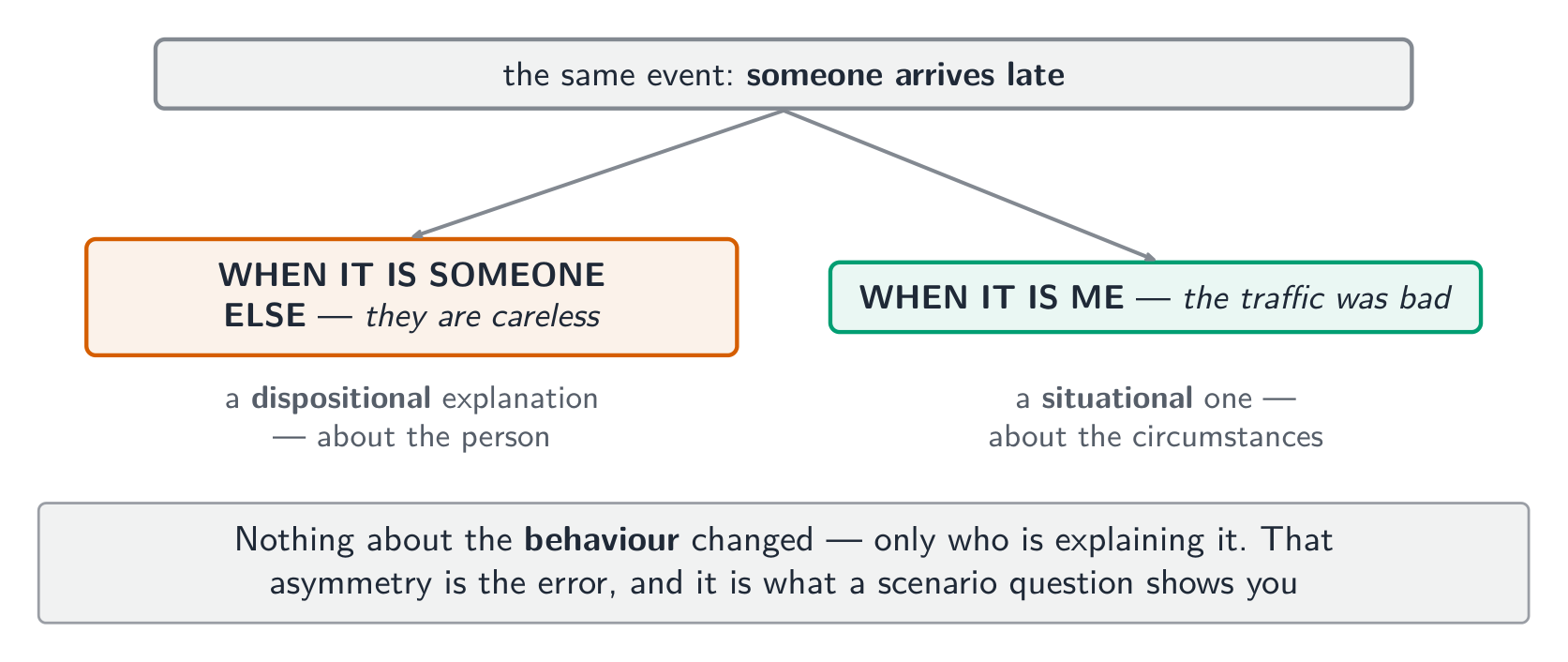
- 4.1.A.1 Attributions are how people explain behavior and mental processes of themselves and others. Dispositional attributions relate to internal qualities of others (such as intelligence or personality) while situational attributions relate to external circumstances that are experienced.
- 4.1.A.2 People demonstrate a predictable pattern of attributions called explanatory style. Explanatory style is how people explain good and bad events in their lives and in the lives of others. Explanatory style can be optimistic or pessimistic.
- 4.1.A.3 People are subject to biases in their attributions. Those biases include actor/ observer bias, fundamental attribution error, and self-serving bias, all of which can affect behavior and mental processes.
Learning Objective 4.1.B: Explain how locus of control (internal and external) applies to behavior and mental processes.
Learning Objective 4.1.C: Explain how person perception applies to behavior and mental processes.
- 4.1.C.1 People’s perception of how much they like something can be influenced by the mere exposure effect. The mere exposure effect occurs when people are exposed to a stimulus repeatedly over time, which causes them to like the stimulus more.
- 4.1.C.2 People can behave in ways that elicit behaviors from others that confirm their beliefs or perceptions about themselves or others (self-fulfilling prophecy).
- 4.1.C.3 Social comparison is a type of person perception that occurs when people evaluate themselves based on comparisons to other members of society or social circles. Social comparison can be upward or downward. People often judge their own sense of deprivation relative to others (relative deprivation).
ไทย
วัตถุประสงค์การเรียนรู้ 4.1.A: อธิบายว่าทฤษฎีการอธิบายเหตุมีผลต่อพฤติกรรมและกระบวนการทางจิตใจอย่างไร
- 4.1.A.1 การให้เหตุผล (Attributions) คือวิธีการที่บุคคลอธิบายพฤติกรรมและกระบวนการทางจิตใจของตนเองและผู้อื่น การให้เหตุผลแบบ dispositional เกี่ยวข้องกับคุณลักษณะภายในของผู้อื่น (เช่น อัจฉริยะหรือบุคลิกภาพ) ในขณะที่การให้เหตุผลแบบ situational เกี่ยวข้องกับสภาวะภายนอกที่เกิดขึ้น
- 4.1.A.2 บุคคลแสดงรูปแบบการให้เหตุผลที่คาดการณ์ได้ ซึ่งเรียกว่า สไตล์การอธิบาย (Explanatory style) สไตล์การอธิบายคือวิธีการที่บุคคลอธิบายเหตุการณ์ดีและร้ายในชีวิตของตนเองและชีวิตของผู้อื่น สไตล์การอธิบายอาจเป็นแบบ optimist หรือ pessimist ได้
- 4.1.A.3 บุคคลมีความเสี่ยงต่อความลำเอียงในการให้เหตุผล ความลำเอียงเหล่านี้รวมถึง actor/observer bias, fundamental attribution error และ self-serving bias ซึ่งทั้งหมดนี้สามารถส่งผลกระทบต่อพฤติกรรมและกระบวนการทางจิตใจ
จุดประสงค์การเรียนรู้ 4.1.B: อธิบายว่า locus of control (ภายในและภายนอก) มีผลต่อพฤติกรรมและกระบวนการทางจิตใจอย่างไร
จุดประสงค์การเรียนรู้ 4.1.C: อธิบายว่า person perception มีผลต่อพฤติกรรมและกระบวนการทางจิตใจอย่างไร
- 4.1.C.1 การรับรู้ของบุคคลเกี่ยวกับระดับความชอบในสิ่งใดสิ่งหนึ่ง สามารถได้รับอิทธิพลจาก mere exposure effect Mere exposure effect เกิดขึ้นเมื่อบุคคลถูกกระตุ้นด้วยสิ่งเร้าซ้ำๆ ตลอดเวลา ซึ่งทำให้บุคคลนั้นชอบสิ่งเร้านั้นมากขึ้น
- 4.1.C.2 บุคคลสามารถกระทำในลักษณะที่ทำให้เกิดพฤติกรรมจากผู้อื่นที่ยืนยันความเชื่อหรือการรับรู้ของตนเกี่ยวกับตนเองหรือผู้อื่น (self-fulfilling prophecy)
- 4.1.C.3 Social comparison เป็นประเภทหนึ่งของ person perception ที่เกิดขึ้นเมื่อบุคคลประเมินตนเองโดยเปรียบเทียบกับสมาชิกคนอื่น ๆ ในสังคมหรือวงสังคม Social comparison อาจเป็นแบบ upward หรือ downward มักมีการตัดสินความรู้สึกขาดแคลนของตนเองเมื่อเทียบกับผู้อื่น (relative deprivation)