재킷의 실, 로프, 스타킹을 보십시오: 나일론입니다. 이는 두 가지 종류의 분자가 반복적으로 결합되어 만들어집니다 — 질소 그룹이 포함된 one과…
English narration · English + 中文 subtitles burned in · 영어 내레이션 · 영어 + 중국어 자막 burned-in
19.1
Primary amines · election amines
Syllabus
English
recall the reactions by which amines can be produced: (a) reaction of a halogenoalkane with $\text{NH}_3$ in ethanol heated under pressure Classification of amines will not be tested at AS Level.
한국어
아민이 생성되는 반응을 기억하시오: (a) 할로젠알케인과 $\text{NH}_3$의 에탄올 내 반응, 가압 하에 가열함. AS Level에서는 아민의 분류는 출제되지 않음.
Source: Cambridge International syllabus · 출처: Cambridge International syllabus
English
An amine 胺 has an $\text{–NH}_2$ group (the nitrogen replaces a hydrogen of ammonia).
Making a primary amine
Heat a halogenoalkane 卤代烷 with ammonia dissolved in ethanol, under pressure:
This is a nucleophilic substitution 亲核取代: the lone pair on the nitrogen of ammonia attacks the slightly positive carbon and pushes out the halogen. You use an excess of ammonia, or the amine made can react again.
한국어
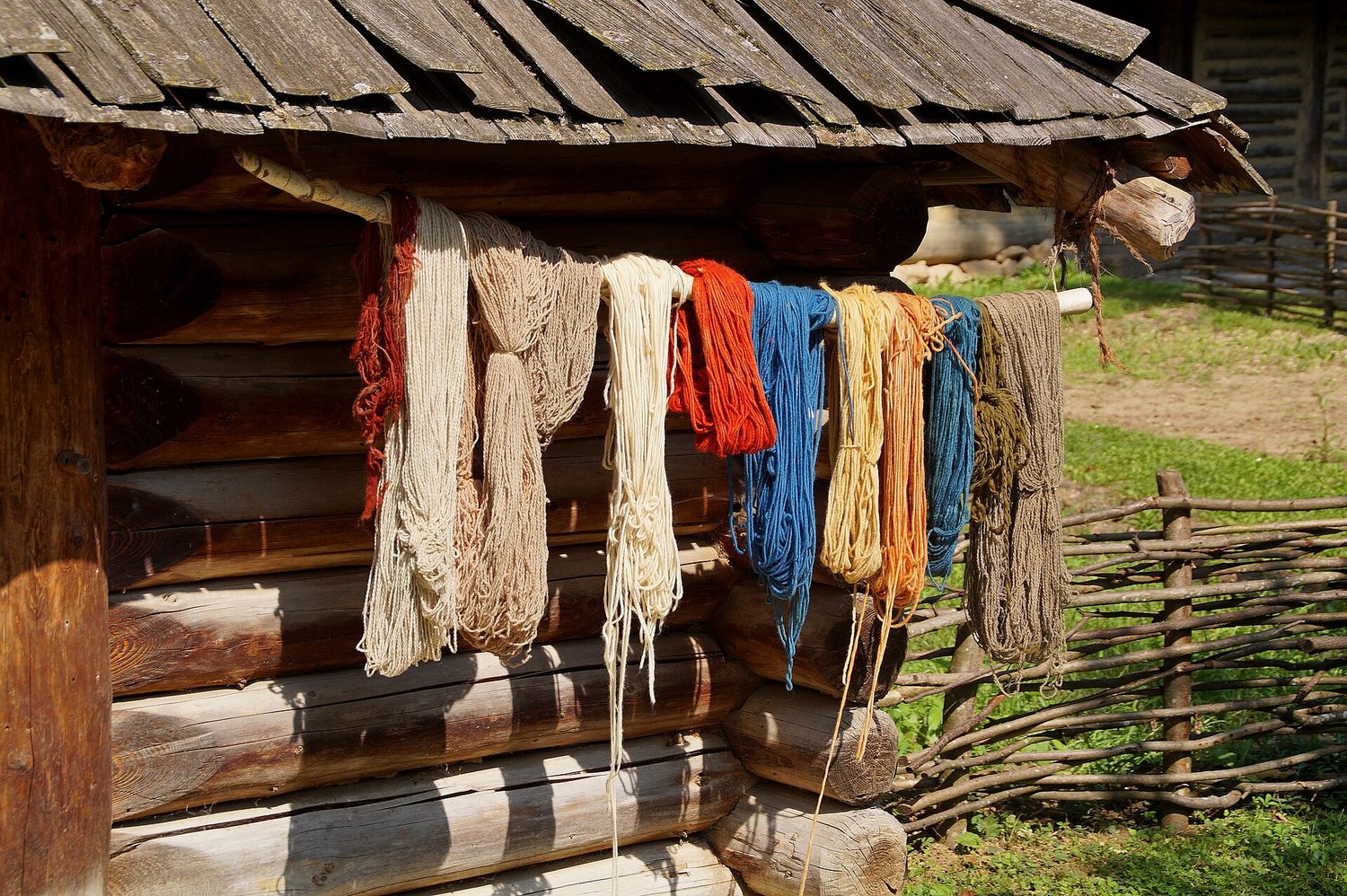
천직물 염색: azo 및 amine 화학은 섬유에 견고하고 밝은 색을 입히는 것입니다
amine은 $\text{–NH}_2$ 그룹을 가집니다(질소가 암모니아의 수소 하나를 대체합니다).
recall the reactions by which nitriles can be produced: (a) reaction of a halogenoalkane with $\text{KCN}$ in ethanol and heat
recall the reactions by which hydroxynitriles can be produced: (a) the reaction of aldehydes and ketones with $\text{HCN}$, $\text{KCN}$ as catalyst, and heat
describe the hydrolysis of nitriles with dilute acid or dilute alkali followed by acidification to produce a carboxylic acid
한국어
니트릴이 생성되는 반응을 기억하시오: (a) 할로젠알케인과 $\text{KCN}$의 에탄올 내 반응, 가열함.
하이드록시니트릴이 생성되는 반응을 기억하시오: (a) 알데히드 및 케톤과 $\text{HCN}$의 반응, $\text{KCN}$을 촉매로 사용하여 가열함.
니트릴의 카복실산 생성을 위한 희석 산 또는 희석 염기 가수분해 및 이후 산化处理을 설명하시오.
Source: Cambridge International syllabus · 출처: Cambridge International syllabus
English
Making a nitrile
Heat a halogenoalkane with potassium cyanide ($\text{KCN}$) in ethanol:
This is also a nucleophilic substitution, with the $\text{CN}^-$ ion as the nucleophile. It is useful because it adds one carbon to the chain. The product is a nitrile 腈.
Making a hydroxynitrile
Add $\text{HCN}$ (with $\text{KCN}$ as catalyst, and heat) to an aldehyde 醛 or ketone 酮. The $\text{H}$ and $\text{CN}$ add across the C=O bond to give a hydroxynitrile 羟基腈. The reagent is hydrogen cyanide 氰化氢, and the mechanism is nucleophilic addition 亲核加成.
Hydrolysis of nitriles
Warm a nitrile with dilute acid (or dilute alkali, then acidify). This hydrolysis 水解 turns the $\text{–CN}$ group into a $\text{–COOH}$ group, giving a carboxylic acid 羧酸:
A nitrile can also be reduced by hydrogen and a catalyst to form an amine, which is the reduction 还原 route to a longer-chain amine.
Worked example. Starting from bromoethane, make propanoic acid. Compare the carbons first: bromoethane has 2, propanoic acid has 3, so a carbon must be added - and the $\text{KCN}$ step is the reaction that does it. Step 1: warm bromoethane with ethanolic $\text{KCN}$; nucleophilic substitution gives propanenitrile, $\text{CH}_3\text{CH}_2\text{CN}$, which now has 3 carbons because the $\text{CN}$ carbon joins the chain. Step 2: reflux the nitrile with dilute $\text{HCl}$; hydrolysis gives propanoic acid. Count the carbons before you plan: whenever the target has exactly one more than the starting material, the nitrile route is almost always the intended answer, and remember the $\text{CN}$ carbon is part of the new chain.
한국어
나일트릴制备
할로젠알케인을 에탄올 중 용해된 시안화칼륨(KCN, $\text{KCN}$)과 함께 가열합니다:
나일트릴은 수소와 촉매에 의해 환원되어 아민이 될 수도 있으며, 이는 더 긴 사슬의 아민制备를 위한 환원 경로입니다.
나일트릴은 유용한 허브 역할: KCN이 탄소를 추가하여 나일트릴을制备하고, 이를 가수분해하면 카복실산이 되거나 환원하면 아민이 됩니다나일트릴을 환원하면 아민이 되며, 아민과 디카르복실산이 결합하여 나일론과 같은 폴리아마이드를 형성합니다 — 스타킹에서 처음 유명해진 섬유
풀이 예제. 브로모에탄에서 프로판산을制备합니다. 먼저 탄소를 비교해 봅시다: 브로모에탄은 탄소 2개, 프로판산은 탄소 3개이므로 탄소를 추가해야 하며, 그 과정은 $\text{KCN}$ 단계의 반응입니다. 1단계: 브로모에탄을 **에탄올 중의 $\text{KCN}$**과 함께 온화하게 가열합니다. 핵친화적 치환 반응에 의해 프로파네토릴($\text{CH}_3\text{CH}_2\text{CN}$)이 생성되며, 이는 now碳链에 $\text{CN}$ 탄소가 결합하여 탄소 3개를 갖게 됩니다. 2단계: 나일트릴을 **희석 $\text{HCl}$**과 함께 조류 가열(reflux)합니다. 가수분해에 의해 프로판산이 생성됩니다. 계획하기 전에 탄소를 세어 보십시오: 목표 분자가 시작 물질보다 정확히 하나 많은 경우, 나일트릴 경로는 거의 항상 정답이며, 새로운 사슬에는 $\text{CN}$ 탄소가 포함되어 있다는 점을 기억하십시오.
Explore · 탐색하기
Nitrile synthesis route · 나이트릴 합성 경로
Follow nitriles and hydroxynitriles as carbon-chain extension tools. · 탄소 사슬 연장 도구로서 나이트릴과 하이드록시나이트릴을 따르십시오.