Word pairs that look alike but do different jobs. instead (contrary to expectation)反而 goes before the verb, while opposite; on the contrary相反 usually starts a clause. definitely; to be sure肯定, to decide; certain确定 and definitely / certain一定 all mean "sure" in different ways. to suit适合 takes an object; suitable合适 is an adjective. on time按时 is "on schedule", in time; timely及时 "in time". we (including you)咱们 always includes the listener. careful仔细 is about details, conscientious认真 about attitude. shared; together共同 means shared, together一起 together. many许多 is a written "many". on one's own initiative主动 means without being asked, and common; widespread普遍 means common among many people.
Comparing similar functions
HSK 4 · Topic 29
 3:08
HSK 4 Grammar 29: Comparing Similar Words I
The grammar job decides. Two "opposite"s, three "sure"s, two "suit"s : in every pair, the grammar job decides which word you need. Adverb or adjective. Assert…
English explanations + Mandarin examples · captions follow the spoken text
29.1
At a glance
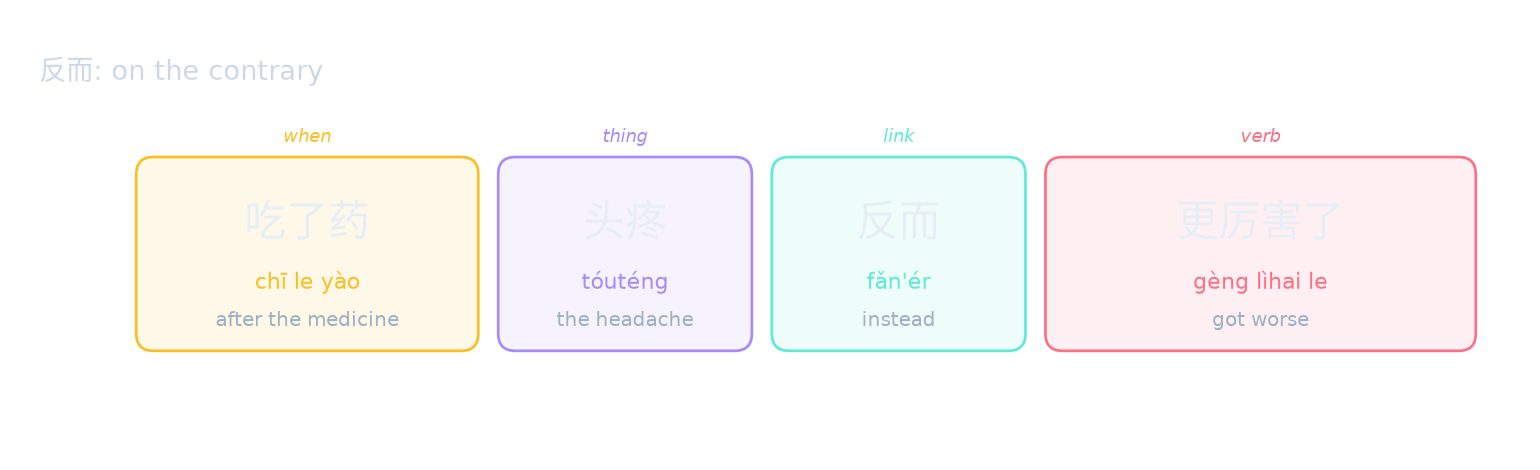
- 1. instead (contrary to expectation)反而 vs opposite; on the contrary相反 – instead vs on the contrary: to eat吃(completed / change)了medicine药,headache头疼instead (contrary to expectation)反而more更amazing; severe厉害(completed / change)了。
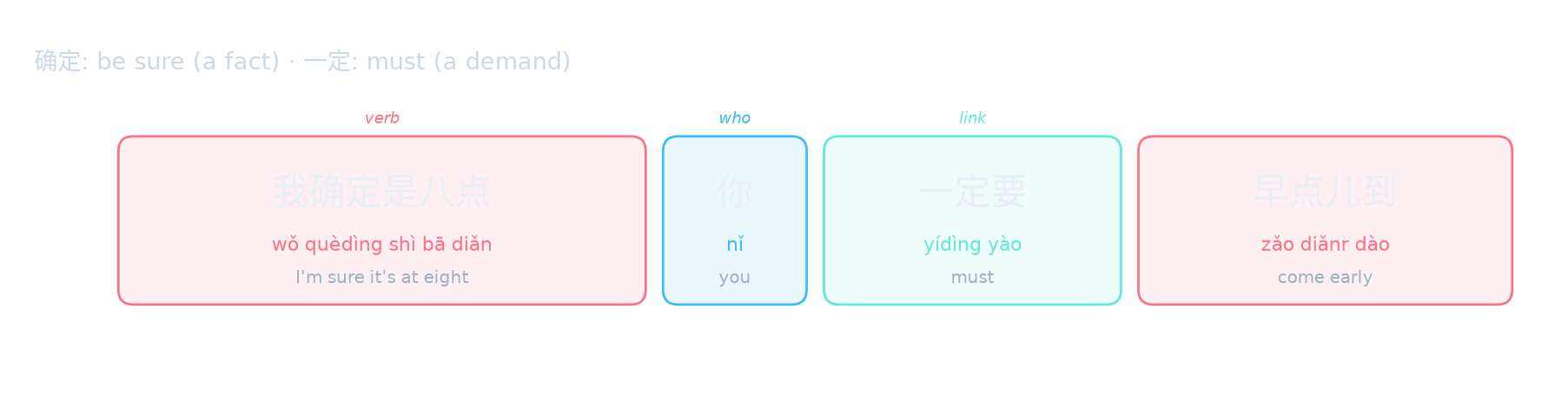
- 2. definitely; to be sure肯定 vs to decide; certain确定 vs definitely / certain一定 – sure / certain: I / me我to decide; certain确定to be / is是八点,you你definitely / certain一定want / will / need要早点儿to / arrive / (result: get)到。
- 3. to suit适合 vs suitable合适 – to suit vs suitable: 这件clothes衣服degree / adjective linker很suitable合适,color颜色also也degree / adjective linker很to suit适合you你。
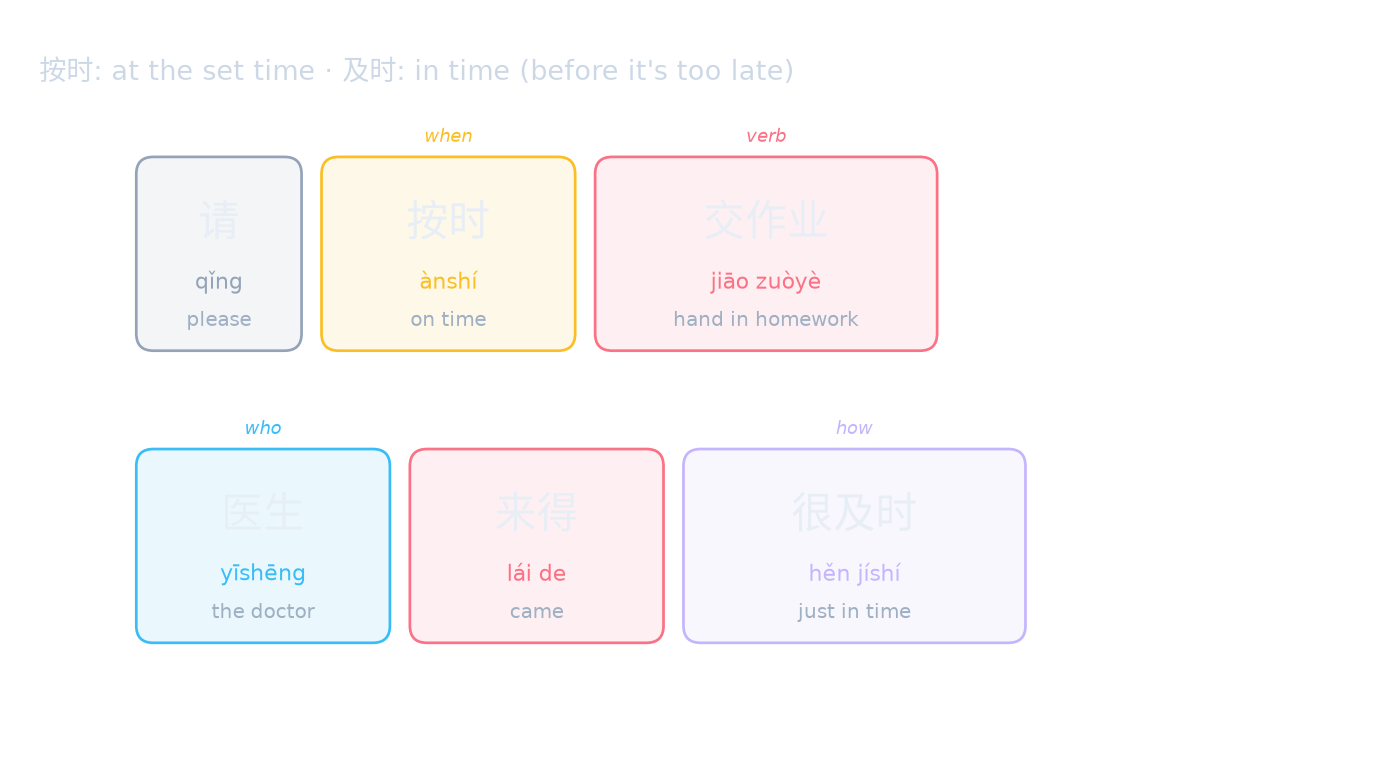
- 4. on time按时 vs in time; timely及时 – on time vs in time: doctor医生to emerge (from a…来得degree / adjective linker很in time; timely及时。
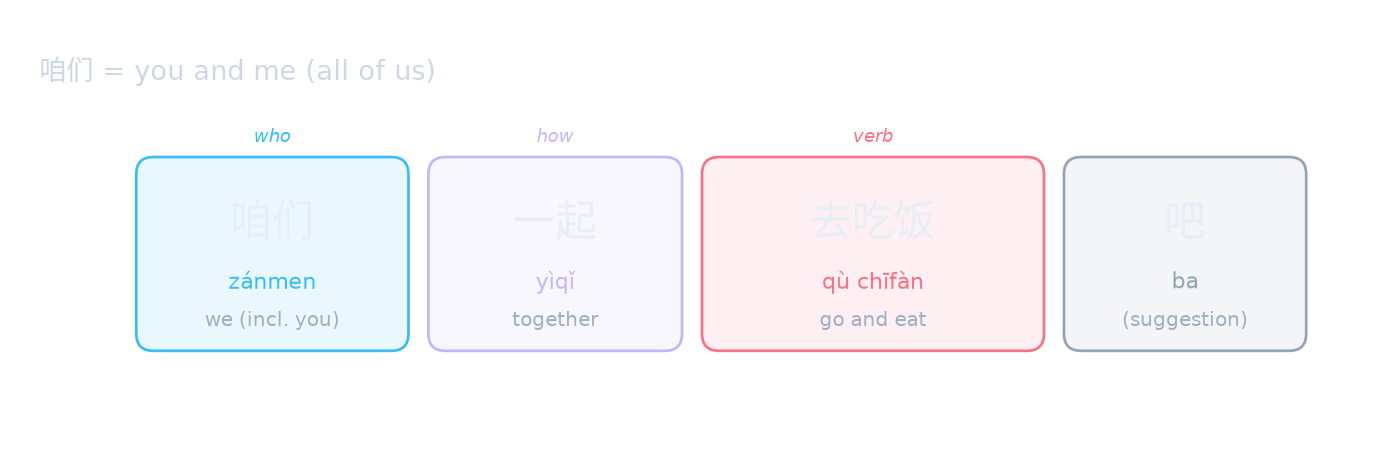
- 5. we (including you)咱们 vs we / us我们 – we, including you: we (including you)咱们together一起to go去to have a meal吃饭(suggestion)吧!
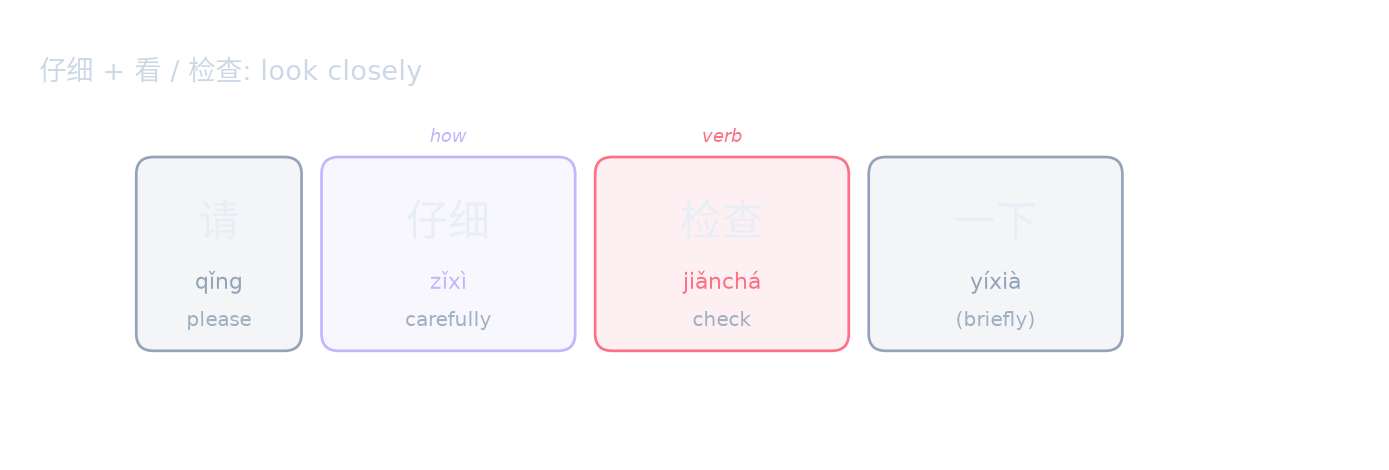
- 6. careful仔细 vs conscientious认真 and to be careful小心 – careful: please; to invite请again / then / (再…也) however再仔细检查(used after a verb) give it…一下。
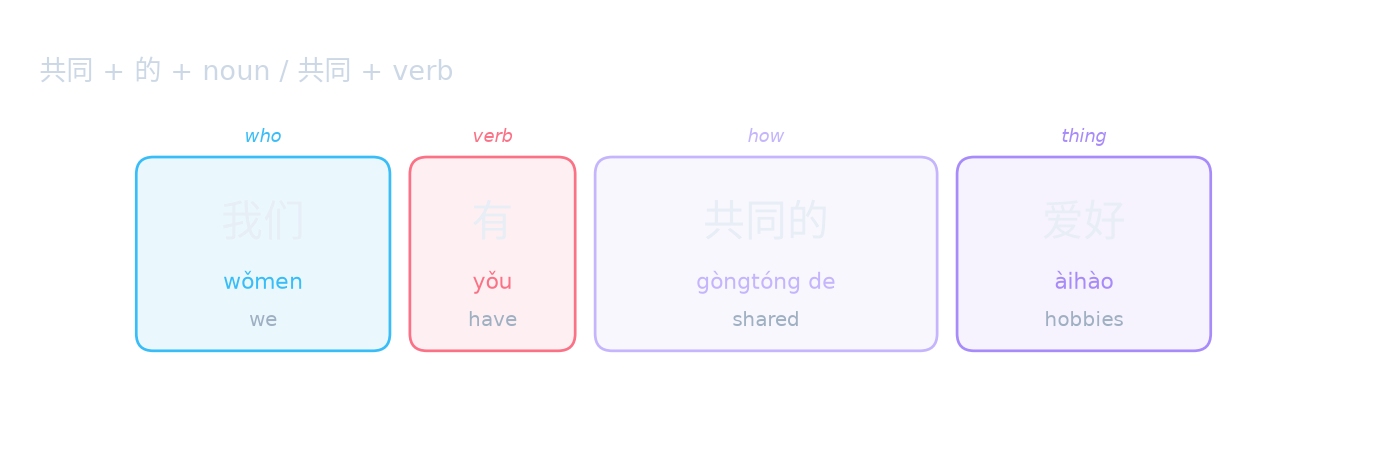
- 7. shared; together共同 vs together一起 – shared, together: we / us我们to have / there is有很多shared; together共同(modifier / structural particle)的to like爱好。
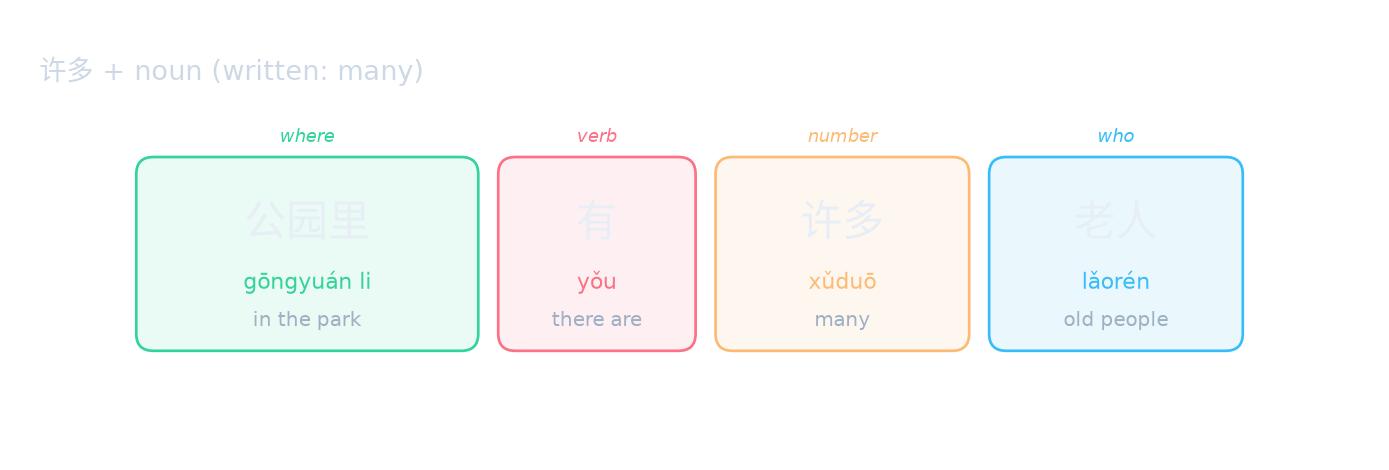
- 8. many许多 vs 很多 and many不少 – many: park公园inside; in里to have / there is有many许多old man or woman老人at / in在锻炼身体。
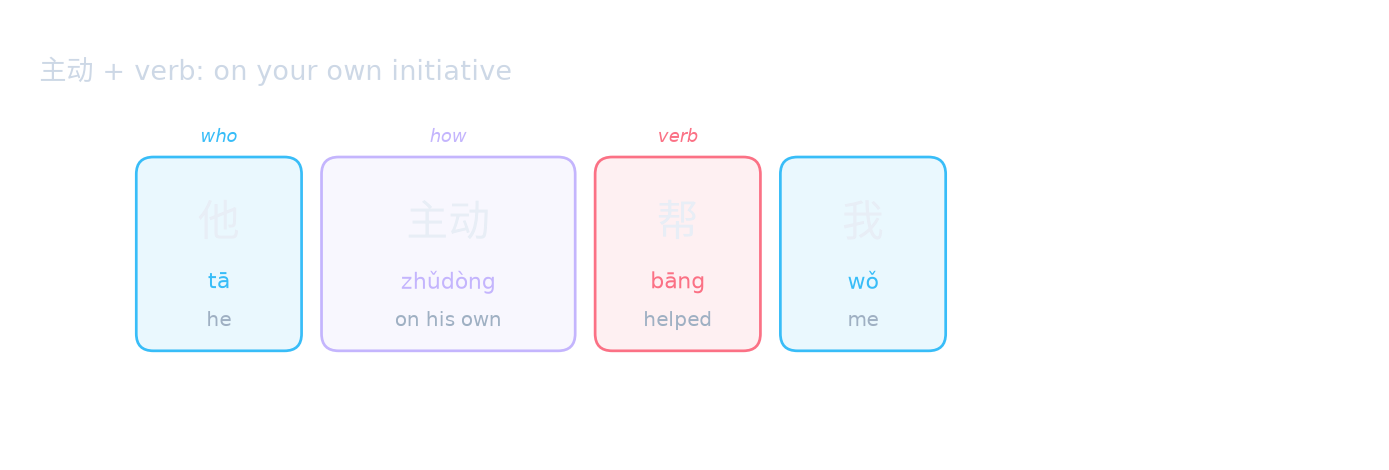
- 9. on one's own initiative主动 vs passive被动 and positive; active积极 – on your own initiative: he / him他on one's own initiative主动to help帮I / me我to take拿book书。
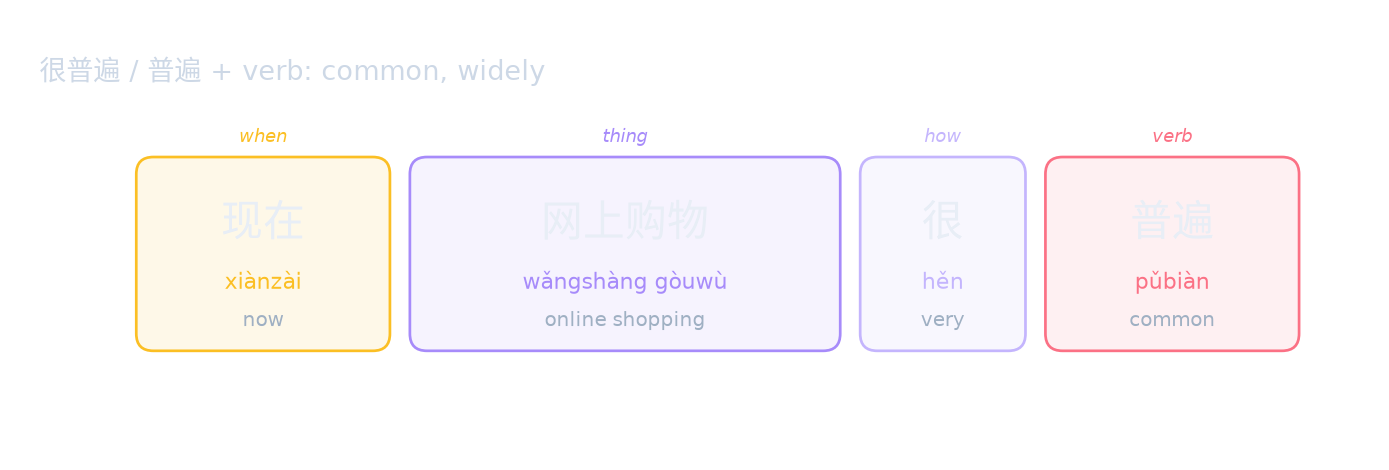
- 10. common; widespread普遍 vs often经常 and ordinary / usually一般 – common, widespread: now现在to use / with用mobile phone手机to pay money付钱degree / adjective linker很common; widespread普遍。
29.2
1. 反而 vs 相反 (instead vs on the contrary)
Form: subject + instead (contrary to expectation)反而 + verb (instead) · opposite; on the contrary相反,… (on the contrary) · A and / with和 B opposite; on the contrary相反
- to eat吃(completed / change)了medicine药,headache头疼instead (contrary to expectation)反而more更amazing; severe厉害(completed / change)了。 Chīle yào, tóuténg fǎn'ér gèng lìhai le. – After taking the medicine, my headache actually got worse.
- he / him他没生气,instead (contrary to expectation)反而to laugh笑(completed / change)了。 – He didn't get angry; instead he laughed.
- he / him他not不lazy懒。opposite; on the contrary相反,he / him他degree / adjective linker很to work hard / effort努力。 – He isn't lazy. On the contrary, he works very hard.
- we / us我们(modifier / structural particle)的opinion; suggestion意见just right; just in time正好opposite; on the contrary相反。 – Our opinions are exactly the opposite.
How it works. Position decides.
| instead (contrary to expectation)反而 fǎn'ér | opposite; on the contrary相反 xiāngfǎn |
|---|---|
| adverb: after the subject, before the verb | starts a sentence with a comma; or means "opposite" |
| the result is the opposite of what was expected | opinion; suggestion意见opposite; on the contrary相反, direction方向opposite; on the contrary相反, just right; just in time正好opposite; on the contrary相反 |
| often after not only不但not / haven't没 / not only不但not不 |
Watch out
- wrong: illness / ill病opposite; on the contrary相反重了 → illness / ill病instead (contrary to expectation)反而重了.
Vocabulary
Train
| 汉字 | Pinyin | English |
|---|---|---|
| 相反 | xiāng fǎn | opposite; on the contrary |
| 厉害 | lì hai | amazing; severe |
| 懒 | lǎn | lazy |
| 意见 | yì jiàn | opinion; suggestion |
| 正好 | zhèng hǎo | just right; just in time |
| 方向 | fāng xiàng | direction |
| 不但 | bù dàn | not only |
29.3
2. 肯定 vs 确定 vs 一定 (sure / certain)
Form: definitely / certain一定 + verb · not不definitely / certain一定 · definitely; to be sure肯定 + verb / judgement · to decide; certain确定 (+ object)
- I / me我to decide; certain确定to be / is是八点,you你definitely / certain一定want / will / need要早点儿to / arrive / (result: get)到。 Wǒ quèdìng shì bā diǎn, nǐ yídìng yào zǎodiǎnr dào. – I'm sure it's eight; you really must get there early.
- he / him他definitely; to be sure肯定to forget忘(completed / change)了。 – He's definitely forgotten.
- expensive贵(modifier / structural particle)的not不definitely / certain一定good好。 – Expensive things aren't necessarily good.
- you你to decide; certain确定(yes/no ?)吗? – Are you sure?
How it works.
| Word | Job | Example |
|---|---|---|
| definitely / certain一定 | must; certainly will | you你definitely / certain一定want / will / need要to come来, he / him他definitely / certain一定can / will会to come来 |
| not不definitely / certain一定 | not necessarily | expensive贵(modifier / structural particle)的not不definitely / certain一定good好 |
| definitely; to be sure肯定 | definitely (a confident guess); also "approve" | he / him他definitely; to be sure肯定to forget忘(completed / change)了; teacher老师definitely; to be sure肯定(completed / change)了I / me我(modifier / structural particle)的way of thinking想法 |
| to decide; certain确定 | verb: be sure of, confirm, fix | you你to decide; certain确定(yes/no ?)吗? time时间still / also / even还not / haven't没to decide; certain确定 |
Watch out
- to decide; certain确定 is not an adverb before another verb: wrong: he / him他to decide; certain确定can / will会to come来 → he / him他definitely / certain一定can / will会to come来.
Vocabulary
Train
| 汉字 | Pinyin | English |
|---|---|---|
| 肯定 | kěn dìng | definitely; to be sure |
29.4
3. 适合 vs 合适 (to suit vs suitable)
Form: to suit适合 + object (verb) · suitable合适 (adjective, no object)
- 这件clothes衣服degree / adjective linker很suitable合适,color颜色also也degree / adjective linker很to suit适合you你。 Zhè jiàn yīfu hěn héshì, yánsè yě hěn shìhé nǐ. – This jacket fits well, and the colour suits you too.
- this这个to work; job工作degree / adjective linker很to suit适合he / him他。 – This job suits him well.
- this这个time时间degree / adjective linker很suitable合适。 – This time is fine.
- I / me我at / in在to look for; to give change找一个suitable合适(modifier / structural particle)的to work; job工作。 – I'm looking for a suitable job.
How it works. Ask: is there an object?
| to suit适合 shìhé | suitable合适 héshì |
|---|---|
| verb, needs an object | adjective, no object |
| to suit适合you你, to suit适合student学生, to suit适合to run; to jog跑步 | size大小suitable合适, degree / adjective linker很suitable合适 |
Both can describe a noun: suitable合适(modifier / structural particle)的to work; job工作 / to suit适合I / me我(modifier / structural particle)的to work; job工作. To name the person with suitable合适, use to / towards / correct对: to / towards / correct对you你来说degree / adjective linker很suitable合适.
Watch out
- wrong: suitable合适you你 → to suit适合you你; wrong: this这个time时间degree / adjective linker很to suit适合 → this这个time时间degree / adjective linker很suitable合适.

Vocabulary
Train
| 汉字 | Pinyin | English |
|---|---|---|
| 适合 | shì hé | to suit |
| 合适 | hé shì | suitable |
| 对 | duì | right; to (someone); towards |
29.5
4. 按时 vs 及时 (on time vs in time)
Form: on time按时 + verb (a set time) · in time; timely及时 + verb / verb + (degree marker)得 + (degree / adjective linker很) in time; timely及时 (in time)
- please; to invite请on time按时to hand in; to make (friends)交school assignment作业。 Qǐng ànshí jiāo zuòyè. – Please hand in your homework on time.
- doctor医生to emerge (from a…来得degree / adjective linker很in time; timely及时。 – The doctor came just in time.
- to have / there is有question / problem问题want / will / need要in time; timely及时to tell告诉teacher老师。 – If there's a problem, tell the teacher right away.
How it works. Ask: is there a set time? A deadline, timetable or schedule takes on time按时. When speed matters – acting before it is too late – use in time; timely及时. Of the two, only in time; timely及时 can follow (degree marker)得 or degree / adjective linker很.
| on time按时 | in time; timely及时 | punctual准时 |
|---|---|---|
| on time (keeps to a schedule) | in time, promptly (before it's too late) | punctual, exactly on time |
Watch out
- wrong: to notice发现(degree marker)得on time按时 → to notice发现(degree marker)得in time; timely及时.
Vocabulary
Train
| 汉字 | Pinyin | English |
|---|---|---|
| 按时 | àn shí | on time |
| 及时 | jí shí | in time; timely |
| 交 | jiāo | to hand in; to make (friends) |
| 准时 | zhǔn shí | punctual |
29.6
5. 咱们 vs 我们 (we, including you)
Form: we (including you)咱们 (we, including you) · we / us我们 (we, with or without you)
- we (including you)咱们together一起to go去to have a meal吃饭(suggestion)吧! Zánmen yìqǐ qù chī fàn ba! – Let's go and eat together!
- we / us我们a few几个colleague同事tomorrow明天to go去the Great Wall长城,you你want / think / miss想together一起to go去(yes/no ?)吗? – A few of us from work are going to the Great Wall tomorrow – want to come?
- we / us我们school学校this year今年to acquire取得(completed / change)了degree / adjective linker很good好(modifier / structural particle)的achievement成绩。 – Our school did very well this year. (formal)
How it works. we (including you)咱们 normally includes the listener; it is friendly and spoken. we / us我们 can include or leave out the listener, and it is the only choice in formal writing.
| we (including you)咱们to walk / to leave走(suggestion)吧 | we / us我们a few几个colleague同事to go去,you你to go去(yes/no ?)吗? | we / us我们school学校 (formal) |
|---|---|---|
| let's go (you too) | we're going – you? | our school |
Watch out
- wrong: we (including you)咱们a few几个colleague同事tomorrow明天to go去,you你want / think / miss想together一起to go去(yes/no ?)吗? → we / us我们a few几个colleague同事……
Vocabulary
Train
| 汉字 | Pinyin | English |
|---|---|---|
| 咱们 | zán men | we (including you) |
| 长城 | cháng chéng | the Great Wall |
29.7
6. 仔细 vs 认真 and 小心 (careful)
Form: careful仔细 + to look at; to watch; to read看 / to listen to听 / to check检查 · conscientious认真 (attitude) · to be careful小心 (watch out)
- please; to invite请again / then / (再…也) however再仔细检查(used after a verb) give it…一下。 Qǐng zài zǐxì jiǎnchá yíxià. – Please check it carefully once more.
- he / him他to work; job工作degree / adjective linker很conscientious认真。 – He is very conscientious at work.
- to be careful小心路滑! – Careful, the road is slippery!
How it works. careful仔细 = paying attention to details (looking, listening, checking). conscientious认真 = serious, doing your best (an attitude: 认真对待). to be careful小心 = careful to avoid danger.
| careful仔细to look at; to watch; to read看 | 认真学习 | to be careful小心! |
|---|---|---|
| look closely | study seriously | watch out! |
Watch out
- wrong: careful仔细to treat对待 → 认真对待.
Vocabulary
Train
| 汉字 | Pinyin | English |
|---|---|---|
| 仔细 | zǐ xì | careful |
29.8
7. 共同 vs 一起 (shared, together)
Form: shared; together共同(modifier / structural particle)的 + noun · shared; together共同 + to work hard / effort努力 / to complete完成 / to solve解决
- we / us我们to have / there is有很多shared; together共同(modifier / structural particle)的to like爱好。 Wǒmen yǒu hěn duō gòngtóng de àihào. – We have a lot of hobbies in common.
- this这个question / problem问题to need需要everyone大家to work together共同努力。 – This problem needs everyone to work on it together.
- we / us我们together一起to have a meal吃饭(suggestion)吧。 – Let's eat together.
How it works. shared; together共同 = shared (before a noun, with (modifier / structural particle)的) or jointly (before a verb, a bit formal). For everyday activities together, use together一起. The same = the same一样.
| shared; together共同(modifier / structural particle)的friend朋友 | 共同完成 | together一起to have a meal吃饭 |
|---|---|---|
| a friend of both | finish jointly | eat together |
Watch out
- wrong: we / us我们shared; together共同to have a meal吃饭(suggestion)吧 → we / us我们together一起to have a meal吃饭(suggestion)吧.
Vocabulary
Train
| 汉字 | Pinyin | English |
|---|---|---|
| 共同 | gòng tóng | shared; together |
29.9
8. 许多 vs 很多 and 不少 (many)
Form: many许多 + noun · noun + 很多 (speech)
- park公园inside; in里to have / there is有many许多old man or woman老人at / in在锻炼身体。 Gōngyuán li yǒu xǔduō lǎorén zài duànliàn shēntǐ. – In the park, many old people are doing exercise.
- this这本书to help帮助(completed / change)了many许多student学生。 – This book has helped many students.
- today今天person人很多! – There are lots of people today!
How it works. many许多 = many, a bit written, straight before a noun. 很多 is everyday and can also end a sentence. many不少 = quite a few.
| many许多student学生 | person人很多 | many不少friend朋友 |
|---|---|---|
| many students | lots of people | quite a few friends |
Watch out
- wrong: degree / adjective linker很many许多 → many许多 / 很多.
Vocabulary
Train
| 汉字 | Pinyin | English |
|---|---|---|
| 许多 | xǔ duō | many |
29.10
9. 主动 vs 被动 and 积极 (on your own initiative)
Form: on one's own initiative主动 + verb · degree / adjective linker很on one's own initiative主动 · opposite passive被动
- he / him他on one's own initiative主动to help帮I / me我to take拿book书。 Tā zhǔdòng bāng wǒ ná shū. – He helped me carry the books without being asked.
- to have / there is有question / problem问题want / will / need要on one's own initiative主动to ask问teacher老师。 – If you have a question, ask the teacher yourself.
- to study; to learn学习cannot不能too太passive被动。 – You shouldn't be too passive in your studies.
How it works. on one's own initiative主动 = on one's own initiative, without being asked; as an adjective, a compliment. Opposite: passive被动. positive; active积极 = keen; oneself自己 = without help.
| on one's own initiative主动to help帮忙 | passive被动 | positive; active积极to participate参加 |
|---|---|---|
| offer to help | passive | take part keenly |
Watch out
- on one's own initiative主动 is about who starts, not about effort (to work hard / effort努力).
Vocabulary
Train
| 汉字 | Pinyin | English |
|---|---|---|
| 主动 | zhǔ dòng | on one's own initiative |
| 积极 | jī jí | positive; active |
29.11
10. 普遍 vs 经常 and 一般 (common, widespread)
Form: thing + degree / adjective linker很common; widespread普遍 · common; widespread普遍 + to think / believe认为 / to exist存在 · common; widespread普遍(modifier / structural particle)的 + noun
- now现在to use / with用mobile phone手机to pay money付钱degree / adjective linker很common; widespread普遍。 Xiànzài yòng shǒujī fù qián hěn pǔbiàn. – Paying by phone is very common now.
- everyone大家普遍认为this这个means办法good好。 – People generally think this idea is good.
- he / him他often经常to arrive late迟到。 – He is often late.
How it works. common; widespread普遍 = common among many people or places; before a verb, widely, generally. For how often something happens, use often经常. ordinary / usually一般 = usually.
| degree / adjective linker很common; widespread普遍 | often经常to arrive late迟到 | ordinary / usually一般七点to get up起床 |
|---|---|---|
| very common | often late | usually up at seven |
Watch out
- wrong: he / him他common; widespread普遍to arrive late迟到 → he / him他often经常to arrive late迟到.
Vocabulary
Train
| 汉字 | Pinyin | English |
|---|---|---|
| 普遍 | pǔ biàn | common; widespread |
29.12
Practice
Cover the teaching pages before you answer. The answers are at the end.
1. instead (contrary to expectation)反而 vs opposite; on the contrary相反 (instead vs on the contrary)
1. Complete: “He didn't get angry; instead he laughed.” he / him他没生气,…………to laugh笑(completed / change)了。
2. “Our opinions are exactly the opposite.” Which fits? we / us我们(modifier / structural particle)的opinion; suggestion意见just right; just in time正好____。
- A. opposite; on the contrary相反
- B. instead (contrary to expectation)反而
- C. to pour倒
- D. but; yet却
3. Build: “After the medicine, the headache actually got worse.”
Put in order: ,headache头疼 / instead (contrary to expectation)反而 / more更amazing; severe厉害(completed / change)了。 / to eat吃(completed / change)了medicine药
4. True or false? opposite; on the contrary相反 can start a sentence followed by a comma. If false, correct it.
5. You took medicine for a headache, but it got worse. Use instead (contrary to expectation)反而 or opposite; on the contrary相反. Write your answer in Chinese, then say it aloud.
2. definitely; to be sure肯定 vs to decide; certain确定 vs definitely / certain一定 (sure / certain)
6. Ask: “Are you sure?” you你…………(yes/no ?)吗?
7. “Expensive things aren't necessarily good.” Which fits? expensive贵(modifier / structural particle)的____good好。
- A. definitely / certain一定not不
- B. not不definitely; to be sure肯定
- C. not不to decide; certain确定
- D. not不definitely / certain一定
8. Match each sentence to its meaning.
-
(1) you你definitely / certain一定want / will / need要to come来。
-
(2) he / him他definitely; to be sure肯定to forget忘(completed / change)了。
-
(3) time时间still / also / even还not / haven't没to decide; certain确定。
-
A. He's definitely forgotten.
-
B. You really must come.
-
C. The time hasn't been fixed yet.
9. True or false? teacher老师definitely; to be sure肯定(completed / change)了I / me我(modifier / structural particle)的way of thinking想法 means the teacher approved my idea. If false, correct it.
10. Your friend asks if the train leaves at eight. You checked the ticket twice. Use definitely; to be sure肯定 or to decide; certain确定 or definitely / certain一定. Write your answer in Chinese, then say it aloud.
3. to suit适合 vs suitable合适 (to suit vs suitable)
11. Complete: “This colour really suits you.” this这个color颜色degree / adjective linker很…………you你。
12. Which sentence is correct?
- A. this这个time时间degree / adjective linker很to suit适合。
- B. this这个time时间degree / adjective linker很to suit适合suitable合适。
- C. this这个time时间suitable合适you你。
- D. this这个time时间degree / adjective linker很suitable合适。
13. Build: “I'm looking for a suitable job.”
Put in order: 一个 / I / me我at / in在to look for; to give change找 / to work; job工作。 / suitable合适(modifier / structural particle)的
14. True or false? suitable合适you你 is correct. If false, correct it.
15. You are trying on a jacket and ask your friend's opinion. Use to suit适合 or suitable合适. Write your answer in Chinese, then say it aloud.
4. on time按时 vs in time; timely及时 (on time vs in time)
16. Please hand in your homework on time (by the deadline). please; to invite请____to hand in; to make (friends)交school assignment作业。
- A. in time; timely及时
- B. on time按时
17. The doctor came just in time. doctor医生to emerge (from a…来得degree / adjective linker很____。
- A. on time按时
- B. in time; timely及时
18. The plane took off on time. airplane飞机____to take off起飞(completed / change)了。
- A. on time按时
- B. in time; timely及时
19. Complete: “Luckily it was found in time.” fortunately幸亏to notice发现(degree marker)得…………。
20. True or false? punctual准时 stresses "exactly at the agreed time". If false, correct it.
21. Write two sentences about a time you were ill: one with on time按时 (taking medicine), one with in time; timely及时 (getting help). Use on time按时 or in time; timely及时. Write your answer in Chinese, then say it aloud.
5. we (including you)咱们 vs we / us我们 (we, including you)
22. Complete (to your friend): “Let's go and eat together!” …………together一起to go去to have a meal吃饭(suggestion)吧!
23. “A few of us from work are going to the Great Wall tomorrow – want to come?” Which is right?
- A. we (including you)咱们a few几个colleague同事tomorrow明天to go去the Great Wall长城,you你want / think / miss想together一起to go去(yes/no ?)吗?
- B. we / us我们a few几个colleague同事tomorrow明天to go去the Great Wall长城,you你want / think / miss想together一起to go去(yes/no ?)吗?
24. Which fits a formal speech?
- A. we / us我们school学校this year今年to acquire取得(completed / change)了degree / adjective linker很good好(modifier / structural particle)的achievement成绩。
- B. we (including you)咱们school学校this year今年to acquire取得(completed / change)了degree / adjective linker很good好(modifier / structural particle)的achievement成绩。
25. True or false? In standard Mandarin, we (including you)咱们 includes the person you are talking to. If false, correct it.
26. Build: “A few of us from work are going to the Great Wall tomorrow – want to come?”
Put in order: together一起to go去(yes/no ?)吗? / you你want / think / miss想 / we / us我们a few几个colleague同事 / tomorrow明天to go去the Great Wall长城,
27. Make two short weekend plans: one with a classmate who is coming (use we (including you)咱们), and one to tell a friend who might not come (use we / us我们 and ask if they want to join). Use we (including you)咱们 or we / us我们. Write your answer in Chinese, then say it aloud.
6. careful仔细 vs conscientious认真 and to be careful小心 (careful)
28. Complete: “Please check it carefully once more.” please; to invite请again / then / (再…也) however再…………检查一下。
29. “Careful, the road is slippery!” Which is right?
- A. to be careful小心路滑!
- B. careful仔细路滑!
30. “You should take this problem seriously.” Which fits best?
- A. you你should应该认真对待this这个question / problem问题。
- B. you你should应该careful仔细to treat对待this这个question / problem问题。
31. Build: “Listen carefully – is someone outside?”
Put in order: outside外面 / 仔细听, / is or isn't是不是someone有人? / you你
32. True or false? he / him他to work; job工作degree / adjective linker很conscientious认真 means he is serious and does his best at work. If false, correct it.
33. Describe a classmate who is good at exams in two sentences. Use conscientious认真 for their attitude and careful仔细 for how they check their work. Use careful仔细 or conscientious认真 and to be careful小心. Write your answer in Chinese, then say it aloud.
7. shared; together共同 vs together一起 (shared, together)
34. Complete: “We have a lot of hobbies in common.” we / us我们to have / there is有很多…………(modifier / structural particle)的to like爱好。
35. “Let's eat together.” Which is right?
- A. we / us我们shared; together共同to have a meal吃饭(suggestion)吧。
- B. we / us我们together一起to have a meal吃饭(suggestion)吧。
36. “This problem needs everyone to work on it together.” Which fits best?
- A. this这个question / problem问题to need需要everyone大家to work together共同努力。
- B. this这个question / problem问题to need需要everyone大家the same一样to work hard / effort努力。
37. Build: “He's a friend of both of us.”
Put in order: shared; together共同(modifier / structural particle)的 / to be / is是we / us我们 / he / him他 / friend朋友。
38. True or false? we / us我们(modifier / structural particle)的to like爱好the same一样 means "our hobbies are the same". If false, correct it.
39. Describe a good friend in two sentences: what you have in common (shared; together共同(modifier / structural particle)的), and something you often do together (together一起). Use shared; together共同 or together一起. Write your answer in Chinese, then say it aloud.
8. many许多 vs 很多 and many不少 (many)
40. Complete (a written text): “This book has helped many students.” this这本书to help帮助(completed / change)了…………student学生。
41. Which is wrong?
- A. many许多person人
- B. 很多person人
- C. degree / adjective linker很many许多person人
42. “There are lots of people today!” (said to a friend) Which sounds most natural?
- A. today今天person人many许多!
- B. today今天person人很多!
43. Build: “In the park, many old people are doing exercise.”
Put in order: park公园inside; in里 / at / in在 / 锻炼身体。 / to have / there is有many许多old man or woman老人
44. True or false? many不少 means "quite a few". If false, correct it.
45. Write two sentences about your city for a short report (with many许多), then say one of them to a friend (with 很多). Use many许多 or 很多 and many不少. Write your answer in Chinese, then say it aloud.
9. on one's own initiative主动 vs passive被动 and positive; active积极 (on your own initiative)
46. Complete: “He helped me carry the books without being asked.” he / him他…………to help帮I / me我to take拿book书。
47. What is the opposite of on one's own initiative主动?
- A. positive; active积极
- B. passive被动
48. “I made it myself (with no help).” Which is right?
- A. this这to be / is是I / me我on one's own initiative主动to do; to make做(modifier / structural particle)的。
- B. this这to be / is是I / me我oneself自己to do; to make做(modifier / structural particle)的。
49. Build: “If you have a question, ask the teacher yourself.”
Put in order: want / will / need要 / on one's own initiative主动 / to have / there is有question / problem问题 / to ask问teacher老师。
50. True or false? he / him他on one's own initiative主动to apologize道歉(completed / change)了 means he apologised before anyone asked him to. If false, correct it.
51. In a job interview, describe yourself in two sentences using on one's own initiative主动 and positive; active积极. Use on one's own initiative主动 or passive被动 and positive; active积极. Write your answer in Chinese, then say it aloud.
10. common; widespread普遍 vs often经常 and ordinary / usually一般 (common, widespread)
52. Complete: “Paying by phone is very common now.” now现在to use / with用mobile phone手机to pay money付钱degree / adjective linker很…………。
53. “He is often late.” Which is right?
- A. he / him他common; widespread普遍to arrive late迟到。
- B. he / him他often经常to arrive late迟到。
54. “People generally think this idea is good.” Which is right?
- A. everyone大家普遍认为this这个means办法good好。
- B. everyone大家ordinary / usually一般to think / believe认为this这个means办法common; widespread普遍。
55. Build: “Going to bed too late is a common problem for students.”
Put in order: common; widespread普遍(modifier / structural particle)的 / to be / is是student学生 / 睡得太晚 / question / problem问题。
56. True or false? I / me我ordinary / usually一般七点to get up起床 means "I usually get up at seven." If false, correct it.
57. Describe two things that are common among young people in your city (common; widespread普遍), and one habit of your own (often经常). Use common; widespread普遍 or often经常 and ordinary / usually一般. Write your answer in Chinese, then say it aloud.
29.13
Mixed practice
These questions mix the patterns and use new situations.
58. Choose to suit适合 or suitable合适: 这件clothes衣服degree / adjective linker很…………。 / 这件clothes衣服…………you你。
59. Choose instead (contrary to expectation)反而 or opposite; on the contrary相反: to eat吃(completed / change)了medicine药,he / him他…………more更not不comfortable舒服(completed / change)了。 / he / him他not only不但没生气,…………still / also / even还to laugh笑(completed / change)了。
60. Choose definitely / certain一定 or to decide; certain确定: you你…………want / will / need要to come来! / I / me我not不…………he / him他is or isn't是不是to be at home在家。
61. Choose careful仔细 or conscientious认真: please; to invite请…………to take a look at看看this这张图。 / he / him他to work; job工作degree / adjective linker很…………,never从来不to arrive late迟到。
62. Choose shared; together共同 or together一起: we / us我们to have / there is有很多…………(modifier / structural particle)的to like爱好。 / to finish class下课after / from now on以后we / us我们…………to go去to have a meal吃饭(suggestion)吧。
63. Find and fix the problem. A difficult book actually made the topic clearer. A classmate writes I / me我opposite; on the contrary相反more更to understand / clear明白(completed / change)了. Correct it.
64. Use it yourself. Say this coat suits him, and the size is right too.
29.14
Answers and explanations
Mark your work, then correct each mistake in your own words.
1. instead (contrary to expectation)反而 vs opposite; on the contrary相反 (instead vs on the contrary)
1. instead (contrary to expectation)反而
instead (contrary to expectation)反而 before the verb = instead.
2. A. opposite; on the contrary相反
As the predicate meaning “opposite”, use opposite; on the contrary相反: we / us我们(modifier / structural particle)的opinion; suggestion意见just right; just in time正好opposite; on the contrary相反. instead (contrary to expectation)反而, but; yet却 and to pour倒 are adverbs that need a verb after them.
3. to eat吃(completed / change)了medicine药,headache头疼instead (contrary to expectation)反而more更amazing; severe厉害(completed / change)了。
Subject + instead (contrary to expectation)反而 + verb phrase.
4. True.
True. opposite; on the contrary相反 can start a sentence, followed by a comma, to mean “on the contrary”: he / him他没生气,opposite; on the contrary相反,he / him他degree / adjective linker很happy; glad高兴.
5. Model answer: to eat吃(completed / change)了medicine药,headache头疼instead (contrary to expectation)反而more更amazing; severe厉害(completed / change)了。
Check your answer:
- Inside a clause, before the verb, use instead (contrary to expectation)反而: illness / ill病instead (contrary to expectation)反而重了, not illness / ill病opposite; on the contrary相反重了.
- Starting a new sentence with a comma, or as "opposite", use opposite; on the contrary相反: opposite; on the contrary相反,…; direction方向opposite; on the contrary相反.
2. definitely; to be sure肯定 vs to decide; certain确定 vs definitely / certain一定 (sure / certain)
6. to decide; certain确定
to decide; certain确定 is the verb “be sure”.
7. D. not不definitely / certain一定
not不definitely / certain一定 means “not necessarily”: expensive贵(modifier / structural particle)的not不definitely / certain一定good好. definitely / certain一定not不 means “definitely not”, which is a different claim, and not不to decide; certain确定 / not不definitely; to be sure肯定 mean “unsure”.
8. (1) B: you你definitely / certain一定want / will / need要to come来。 = You really must come.; (2) A: he / him他definitely; to be sure肯定to forget忘(completed / change)了。 = He's definitely forgotten.; (3) C: time时间still / also / even还not / haven't没to decide; certain确定。 = The time hasn't been fixed yet.
definitely / certain一定 = must, definitely; to be sure肯定 = definitely, to decide; certain确定 = fix / be sure.
9. True.
definitely; to be sure肯定 can be a verb meaning “affirm”.
10. Model answer: I / me我to decide; certain确定to be / is是八点,you你definitely / certain一定want / will / need要早点儿to / arrive / (result: get)到。
Check your answer:
- to decide; certain确定 is a verb: be sure of, confirm, fix: you你to decide; certain确定(yes/no ?)吗? – "Are you sure?" time时间still / also / even还not / haven't没to decide; certain确定 – "The time hasn't been fixed."
- to decide; certain确定 does not go before another verb as "certainly": he / him他definitely / certain一定can / will会to come来, not he / him他to decide; certain确定can / will会to come来 in that sense.
3. to suit适合 vs suitable合适 (to suit vs suitable)
11. to suit适合
With an object, to suit适合.
12. D. this这个time时间degree / adjective linker很suitable合适。
this这个time时间degree / adjective linker很suitable合适 is right: suitable合适 is an adjective with no object. to suit适合 is a verb and needs one (to suit适合you你), so degree / adjective linker很to suit适合 alone is incomplete.
13. I / me我at / in在to look for; to give change找一个suitable合适(modifier / structural particle)的to work; job工作。
suitable合适(modifier / structural particle)的 + noun.
14. False.
suitable合适 takes no object; say to suit适合you你 or to / towards / correct对you你suitable合适.
15. Model answer: 这件clothes衣服degree / adjective linker很suitable合适,color颜色also也degree / adjective linker很to suit适合you你。
Check your answer:
- With an object, use to suit适合: to suit适合you你, not suitable合适you你.
- Without an object, use suitable合适: this这个time时间degree / adjective linker很suitable合适, not this这个time时间degree / adjective linker很to suit适合.
4. on time按时 vs in time; timely及时 (on time vs in time)
16. B. on time按时
A deadline is a set time, so on time按时.
17. B. in time; timely及时
Quickly enough to help, before it was too late – in time; timely及时. on time按时 cannot follow (degree marker)得 / degree / adjective linker很.
18. A. on time按时
Flights follow a timetable, so on time按时.
19. in time; timely及时
After (degree marker)得, use in time; timely及时.
20. True.
punctual准时 = punctual; on time按时 = following the schedule.
21. Model answer: 那次I / me我发高烧,fortunately幸亏mum; mother妈妈in time; timely及时to give (as a gift); to see off送I / me我to go去(completed / change)了hospital医院。doctor医生to let / make让I / me我every day每天on time按时to take medicine吃药。
Check your answer:
- on time按时 goes with a schedule; in time; timely及时 with getting help before it was too late.
- Both come before the verb (or after (degree marker)得 for in time; timely及时).
- I said it aloud before comparing with the model.
Your answer need not copy the model. A partner or teacher must hear the spoken response to comment on pronunciation.
5. we (including you)咱们 vs we / us我们 (we, including you)
22. we (including you)咱们
You and your friend – we (including you)咱们 (we / us我们 also works).
23. B. we / us我们a few几个colleague同事tomorrow明天to go去the Great Wall长城,you你want / think / miss想together一起to go去(yes/no ?)吗?
The group is the speaker's colleagues, not the listener, so we / us我们.
24. A. we / us我们school学校this year今年to acquire取得(completed / change)了degree / adjective linker很good好(modifier / structural particle)的achievement成绩。
Formal speech and writing take we / us我们.
25. True.
That is what makes it different from we / us我们. (Some regions use it more loosely.)
26. we / us我们a few几个colleague同事tomorrow明天to go去the Great Wall长城,you你want / think / miss想together一起to go去(yes/no ?)吗?
The listener is outside the group, so we / us我们.
27. Model answer: we (including you)咱们Saturday周六together一起to go去to look at; to watch; to read看电影吧!we / us我们Sunday周日to go去to climb a mountain爬山,you你want / think / miss想together一起to go去(yes/no ?)吗?
Check your answer:
- we (including you)咱们 includes the listener; we / us我们 leaves the listener out until you ask.
- Both sentences sound friendly and natural.
- I said it aloud before comparing with the model.
Your answer need not copy the model. A partner or teacher must hear the spoken response to comment on pronunciation.
6. careful仔细 vs conscientious认真 and to be careful小心 (careful)
28. careful仔细
Looking at details – careful仔细 (conscientious认真 also works).
29. A. to be careful小心路滑!
Watch out for danger – to be careful小心.
30. A. you你should应该认真对待this这个question / problem问题。
An attitude – 认真对待.
31. you你仔细听,outside外面is or isn't是不是someone有人?
careful仔细 + verb.
32. True.
conscientious认真 = conscientious.
33. Model answer: Kobayashi (Japanese surname)小林to study; to learn学习very非常conscientious认真,every day每天all / both都on time按时to review复习。exam; to take an exam考试(modifier / structural particle)的time; when时候,she / her她always总是(把: marks the object)把answer答案仔细检查两遍。
Check your answer:
- conscientious认真 describes an attitude.
- careful仔细 goes before a verb about details.
- I said it aloud before comparing with the model.
Your answer need not copy the model. A partner or teacher must hear the spoken response to comment on pronunciation.
7. shared; together共同 vs together一起 (shared, together)
34. shared; together共同
Shared – shared; together共同(modifier / structural particle)的.
35. B. we / us我们together一起to have a meal吃饭(suggestion)吧。
An everyday activity together – together一起.
36. A. this这个question / problem问题to need需要everyone大家to work together共同努力。
Jointly, towards one goal – to work together共同努力.
37. he / him他to be / is是we / us我们shared; together共同(modifier / structural particle)的friend朋友。
shared; together共同(modifier / structural particle)的 + noun.
38. True.
the same一样 = the same.
39. Model answer: I / me我and / with和small小王有一个shared; together共同(modifier / structural particle)的to like爱好,exactly就是踢足球。每个weekend周末we / us我们all / both都together一起to go去park公园踢球。
Check your answer:
- shared; together共同(modifier / structural particle)的 + noun names something shared.
- together一起 is for doing something together.
- I said it aloud before comparing with the model.
Your answer need not copy the model. A partner or teacher must hear the spoken response to comment on pronunciation.
8. many许多 vs 很多 and many不少 (many)
40. many许多
Many, before a noun – many许多.
41. C. degree / adjective linker很many许多person人
many许多 already means "many"; it doesn't take degree / adjective linker很.
42. B. today今天person人很多!
At the end of a sentence, and in speech – 很多.
43. park公园inside; in里to have / there is有many许多old man or woman老人at / in在锻炼身体。
to have / there is有 + many许多 + noun.
44. True.
he / him他to have / there is有many不少friend朋友.
45. Model answer: we / us我们(modifier / structural particle)的city城市to have / there is有many许多park公园and / with和museum博物馆。每到weekend周末,many许多family家庭all / both都can / will会to bring带child孩子to go去park公园to play玩。(to / towards / correct对friend朋友to speak说:weekend周末park公园inside; in里person人很多!)
Check your answer:
- many许多 goes straight before a noun.
- The spoken version uses 很多.
- I said it aloud before comparing with the model.
Your answer need not copy the model. A partner or teacher must hear the spoken response to comment on pronunciation.
9. on one's own initiative主动 vs passive被动 and positive; active积极 (on your own initiative)
46. on one's own initiative主动
Without being asked – on one's own initiative主动.
47. B. passive被动
on one's own initiative主动 (takes the initiative) vs passive被动 (waits to be told).
48. B. this这to be / is是I / me我oneself自己to do; to make做(modifier / structural particle)的。
Without help – oneself自己.
49. to have / there is有question / problem问题want / will / need要on one's own initiative主动to ask问teacher老师。
on one's own initiative主动 + verb.
50. True.
on one's own initiative主动 = on his own initiative.
51. Model answer: I / me我to work做事fairly / to compare比较on one's own initiative主动,to run into遇到question / problem问题can / will会on one's own initiative主动want / think / miss想means办法to solve解决。at / in在school学校(modifier / structural particle)的time; when时候,I / me我also也positive; active积极to participate参加every kind of各种activity; to exercise活动。
Check your answer:
- on one's own initiative主动 shows I start things without being asked.
- positive; active积极 shows I'm keen.
- I said it aloud before comparing with the model.
Your answer need not copy the model. A partner or teacher must hear the spoken response to comment on pronunciation.
10. common; widespread普遍 vs often经常 and ordinary / usually一般 (common, widespread)
52. common; widespread普遍
Common among many people – common; widespread普遍.
53. B. he / him他often经常to arrive late迟到。
How often he does it – often经常. common; widespread普遍 needs many people or places.
54. A. everyone大家普遍认为this这个means办法good好。
common; widespread普遍 + to think / believe认为 = widely, generally think.
55. 睡得太晚to be / is是student学生common; widespread普遍(modifier / structural particle)的question / problem问题。
common; widespread普遍(modifier / structural particle)的 + noun.
56. True.
ordinary / usually一般 = usually.
57. Model answer: at / in在we / us我们here这儿,young people年轻人to use / with用mobile phone手机o'clock; a little点(of a restaurant) to…外卖degree / adjective linker很common; widespread普遍,everyone大家also也common; widespread普遍to like喜欢weekend周末to go去café咖啡馆。I / me我oneself自己often经常to be at home在家to prepare a meal做饭。
Check your answer:
- common; widespread普遍 describes many people.
- often经常 describes my own habit.
- I said it aloud before comparing with the model.
Your answer need not copy the model. A partner or teacher must hear the spoken response to comment on pronunciation.
Mixed practice
58. 这件clothes衣服degree / adjective linker很suitable合适 (adjective)。这件clothes衣服to suit适合you你 (verb + object).
59. to eat吃(completed / change)了medicine药,he / him他instead (contrary to expectation)反而more更not不comfortable舒服(completed / change)了。he / him他not only不但没生气,instead (contrary to expectation)反而still / also / even还to laugh笑(completed / change)了。instead (contrary to expectation)反而 goes before the verb; opposite; on the contrary相反 would start a new clause: opposite; on the contrary相反,he / him他to laugh笑(completed / change)了。
60. you你definitely / certain一定want / will / need要to come来!I / me我not不to decide; certain确定he / him他is or isn't是不是to be at home在家。definitely / certain一定 stresses must or certainly; to decide; certain确定 is a verb, "to be sure of".
61. please; to invite请careful仔细to take a look at看看this这张图 (look at the details)。he / him他to work; job工作degree / adjective linker很conscientious认真 (a serious attitude).
62. we / us我们to have / there is有很多shared; together共同(modifier / structural particle)的to like爱好 (shared)。to finish class下课after / from now on以后we / us我们together一起to go去to have a meal吃饭(suggestion)吧 (together, everyday).
63. Before the verb you need the adverb instead (contrary to expectation)反而: I / me我instead (contrary to expectation)反而more更to understand / clear明白(completed / change)了. opposite; on the contrary相反 starts a clause: opposite; on the contrary相反,I / me我more更to understand / clear明白(completed / change)了.
64. Model answer. 这件coat外套degree / adjective linker很to suit适合he / him他,size大小also也degree / adjective linker很suitable合适。to suit适合 takes an object; suitable合适 is an adjective.
Review later. Tomorrow, use to suit适合 and suitable合适 in two sentences about clothes.
Interactive lessons on this topic
Work through it step by step, with instant-check exercises.
- 反而 vs 相反 (instead vs on the contrary)
- 肯定 vs 确定 vs 一定 (sure / certain)
- 适合 vs 合适 (to suit vs suitable)
- 按时 vs 及时 (on time vs in time)
- 咱们 vs 我们 (we, including you)
- 仔细 vs 认真 and 小心 (careful)
- 共同 vs 一起 (shared, together)
- 许多 vs 很多 and 不少 (many)
- 主动 vs 被动 and 积极 (on your own initiative)
- 普遍 vs 经常 and 一般 (common, widespread)