Skip to content · ⁨コンテンツへスキップ⁩

Nitrogen compounds · ⁨窒素化合物⁩

A-Level Chemistry · ⁨A-Level 化学⁩ · Topic 19 · ⁨トピック 19⁩

View Slides · ⁨查看幻灯片⁩ Train · ⁨練習する⁩
Video lesson for this topic · ⁨このトピックのビデオレッスン⁩ Open the video page · ⁨動画ページを開く⁩
7:46

窒素化合物

ジャケットの糸、ロープ、ストッキングの糸を見てみてください。それらはすべてナイロンです。これらには二種類の分子が組み合わさっており、その一つは窒素基を含んでいます…

English narration · English + 中文 subtitles burned in · ⁨英語ナレーション・英語+中文字幕 burning-in⁩

19.1

Primary amines · ⁨第一アミン⁩

Syllabus · ⁨シラバス⁩
English
  1. recall the reactions by which amines can be produced: (a) reaction of a halogenoalkane with $\text{NH}_3$ in ethanol heated under pressure Classification of amines will not be tested at AS Level.
日本語
  1. アミンが生成される反応を思い出す: (a) 塩素化アルキルの$\text{NH}_3$とのエタノール中での反応、加圧下で加熱 ASレベルではアミンの分類は試験されない。

Source: Cambridge International syllabus · ⁨出典: Cambridge International シラバス⁩

English

An amine 胺 has an $\text{–NH}_2$ group (the nitrogen replaces a hydrogen of ammonia).

Making a primary amine

Heat a halogenoalkane 卤代烷 with ammonia dissolved in ethanol, under pressure:

$$\text{C}_2\text{H}_5\text{Br} + \text{NH}_3 \rightarrow \text{C}_2\text{H}_5\text{NH}_2 + \text{HBr}$$

This is a nucleophilic substitution 亲核取代: the lone pair on the nitrogen of ammonia attacks the slightly positive carbon and pushes out the halogen. You use an excess of ammonia, or the amine made can react again.

日本語
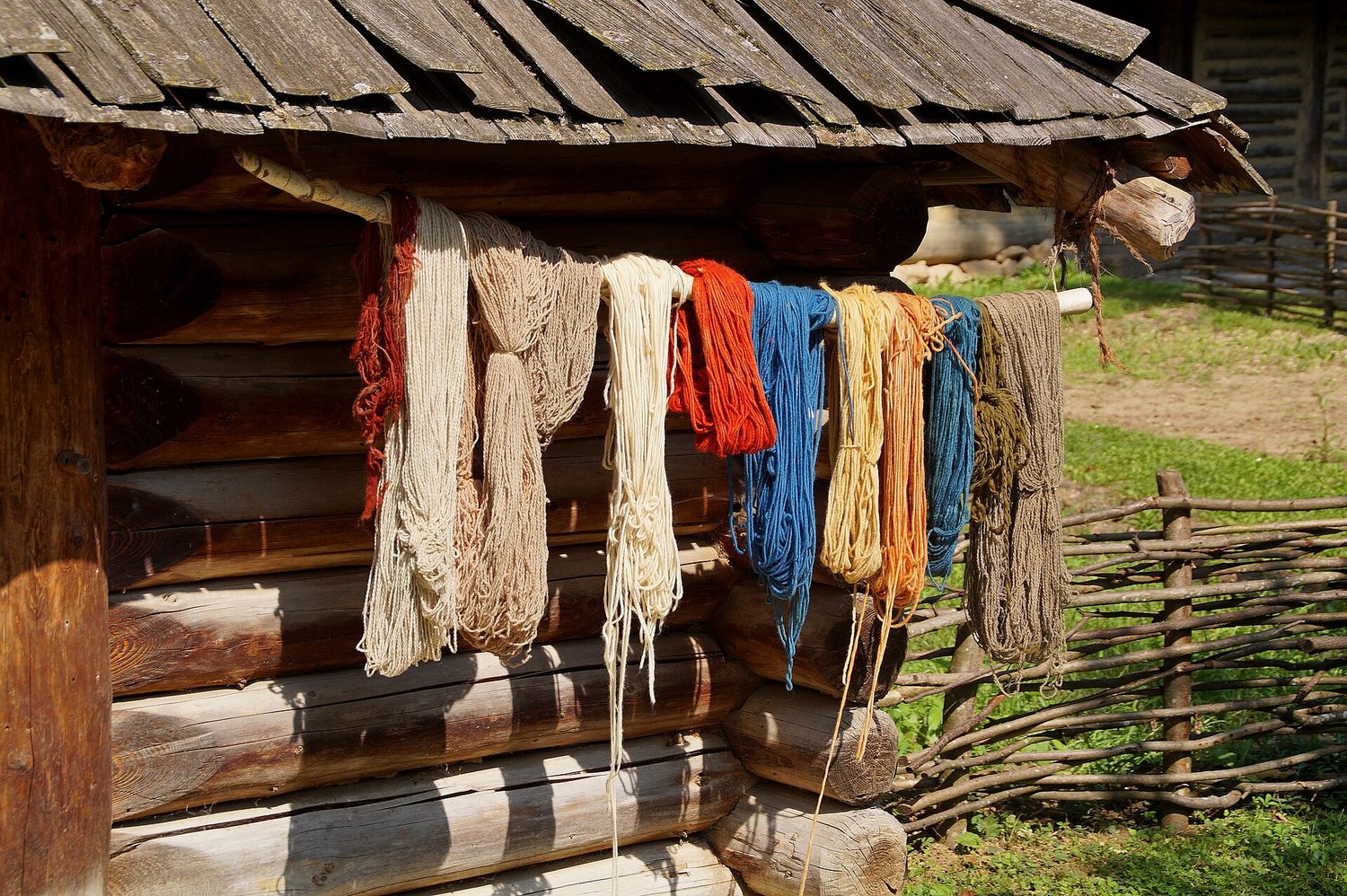
木製レールに干してある、赤、青、黄、クリーム色に染められた羊毛の紐
染色:アゾおよびアミン化学こそが、繊維に速乾性で鮮やかな色を与えるものである

アミンは$\text{–NH}_2$基を持つ(窒素がアンモニアの水素を置換したもの)。

第一アミンの合成

圧力下で、エタノールに溶解させたアンモニアとハロゲンアルカンを加熱する:

$$\text{C}_2\text{H}_5\text{Br} + \text{NH}_3 \rightarrow \text{C}_2\text{H}_5\text{NH}_2 + \text{HBr}$$

これは求核置換反応です。アンモニアの窒素原子に存在する非共有電子対が、わずかに正電荷を帯びた炭素原子に攻撃し、ハロゲン原子を押し出します。過剰量のアンモニアを使用するか、生成したアミンが再度反応することを防ぎます。

ハロゲン化アルキルとアンモニアの反応:窒素の非共有電子対がわずかに正電荷を帯びた炭素に攻撃し、臭素が脱離して一次アミンとHBrが生成する
一次アミンの合成:アンモニアの非共有電子対がδ+炭素に攻撃し、ハロゲンを押し出す——これが求核置換反応
Explore · ⁨探索⁩

Amine reaction lab · ⁨アミン反応実験室⁩

Classify amine examples by basicity and nucleophilic behaviour. · ⁨アミンの例を、塩基性と求核性に基づいて分類せよ。⁩

Vocabulary · ⁨語彙⁩ Train · ⁨練習する⁩
English 日本語
amine/ˈæmaɪn/ アミン
halogenoalkane/ˈheɪləʊdʒnəʊlkeɪn/ ハロゲン化アルキル
nucleophilic substitution/ˌnjuːklɪəˈfɪlɪk ˌsʌbstɪˈtjuːʃn/ 求核置換
19.2

Nitriles and hydroxynitriles · ⁨ニトリル類とヒドロキシニトリル類⁩

Syllabus · ⁨シラバス⁩
English
  1. recall the reactions by which nitriles can be produced: (a) reaction of a halogenoalkane with $\text{KCN}$ in ethanol and heat
  2. recall the reactions by which hydroxynitriles can be produced: (a) the reaction of aldehydes and ketones with $\text{HCN}$, $\text{KCN}$ as catalyst, and heat
  3. describe the hydrolysis of nitriles with dilute acid or dilute alkali followed by acidification to produce a carboxylic acid
日本語
  1. ニトリルが生成される反応を思い出す: (a) 塩素化アルキルの$\text{KCN}$とのエタノール中での反応、加熱
  2. ヒドロキシニトリルが生成される反応を思い出す: (a) アルデヒドおよびケトンと$\text{HCN}$、触媒としての$\text{KCN}$、および加熱による反応
  3. ニトリルの希酸または希アルカリによる加水分解、および酸化处理してカルボン酸を得るプロセスを記述する

Source: Cambridge International syllabus · ⁨出典: Cambridge International シラバス⁩

English

Making a nitrile

Heat a halogenoalkane with potassium cyanide ($\text{KCN}$) in ethanol:

$$\text{C}_2\text{H}_5\text{Br} + \text{KCN} \rightarrow \text{C}_2\text{H}_5\text{CN} + \text{KBr}$$

This is also a nucleophilic substitution, with the $\text{CN}^-$ ion as the nucleophile. It is useful because it adds one carbon to the chain. The product is a nitrile 腈.

Making a hydroxynitrile

Add $\text{HCN}$ (with $\text{KCN}$ as catalyst, and heat) to an aldehyde 醛 or ketone 酮. The $\text{H}$ and $\text{CN}$ add across the C=O bond to give a hydroxynitrile 羟基腈. The reagent is hydrogen cyanide 氰化氢, and the mechanism is nucleophilic addition 亲核加成.

Hydrolysis of nitriles

Warm a nitrile with dilute acid (or dilute alkali, then acidify). This hydrolysis 水解 turns the $\text{–CN}$ group into a $\text{–COOH}$ group, giving a carboxylic acid 羧酸:

$$\text{CH}_3\text{CN} + 2\text{H}_2\text{O} + \text{HCl} \rightarrow \text{CH}_3\text{COOH} + \text{NH}_4\text{Cl}$$

A nitrile can also be reduced by hydrogen and a catalyst to form an amine, which is the reduction 还原 route to a longer-chain amine.

Worked example. Starting from bromoethane, make propanoic acid. Compare the carbons first: bromoethane has 2, propanoic acid has 3, so a carbon must be added - and the $\text{KCN}$ step is the reaction that does it. Step 1: warm bromoethane with ethanolic $\text{KCN}$; nucleophilic substitution gives propanenitrile, $\text{CH}_3\text{CH}_2\text{CN}$, which now has 3 carbons because the $\text{CN}$ carbon joins the chain. Step 2: reflux the nitrile with dilute $\text{HCl}$; hydrolysis gives propanoic acid. Count the carbons before you plan: whenever the target has exactly one more than the starting material, the nitrile route is almost always the intended answer, and remember the $\text{CN}$ carbon is part of the new chain.

日本語

ニトリルの合成

ハロゲン化アルキルにエタノール中シアン化カリウム($\text{KCN}$)を加えて加熱する:

$$\text{C}_2\text{H}_5\text{Br} + \text{KCN} \rightarrow \text{C}_2\text{H}_5\text{CN} + \text{KBr}$$

これも求核置換反応であり、$\text{CN}^-$イオンが求核剤として働きます。この反応は有用であるのは、炭素鎖に炭素を1つ追加できるからです。生成物はニトリルとなります。

ヒドロキシニトリルの合成

アルデヒドまたはケトンに$\text{HCN}$(触媒として$\text{KCN}$を用い、加熱下で)を加える。$\text{H}$と$\text{CN}$がC=O結合に付加してヒドロキシニトリルが生成する。試薬はシアン化水素であり、反応メカニズムは求核付加反応である。

2つの反応:シアン化物イオンによるハロゲン化アルキルのニトリルへの置換反応と、シアン化水素によるカルボニル化合物への付加反応によるヒドロキシニトリルの生成
シアン化物が炭素を追加する2つの方法:ハロゲン化アルキルとKCNによる置換でニトリルを、カルボニル化合物とHCNによる付加でヒドロキシニトリルを得る

ニトリルの加水分解

ニトリルに希酸(または希塩基 subsequently 酸処理)を加えて温める。この加水分解により$\text{–CN}$基が$\text{–COOH}$基に変化し、カルボン酸が生成する:

$$\text{CH}_3\text{CN} + 2\text{H}_2\text{O} + \text{HCl} \rightarrow \text{CH}_3\text{COOH} + \text{NH}_4\text{Cl}$$

ニトリルは水素と触媒によって還元され、アミンが生成することがあります。これは炭素数が多いアミンへ向かう還元法です。

図式:ハロゲン化アルキルがKCNでニトリル(炭素1個追加)になり、その後ニトリルが加水分解されてカルボン酸になるか、あるいは還元されてアミンになる行程
ニトリルは有用なハブとなる:KCNで炭素を追加してニトリルを作り、そこから加水分解でカルボン酸を得るか、還元でアミンを得る
ナイロンストッキングのパッケージ
ニトリルの還元でアミンが得られ、アミンとジカルボン酸が連結してナイロンなどのポリアミドが生成する——ストッキングで初めて有名になった繊維

** worked example. ** ブromoethaneからプロパノ酸を合成する。まず炭素数を比較する:bromoethaneは炭素2個、プロパノ酸は炭素3個なので、炭素を追加する必要がある——その$\text{KCN}$工程がそれに相当する。ステップ1:bromoethaneをエタノール中$\text{KCN}$と温める。求核置換反応によりプロパネニトリル$\text{CH}_3\text{CH}_2\text{CN}$が生成し、$\text{CN}$炭素が鎖に結合するため炭素数が3になる。ステップ2:ニトリルを希$\text{HCl}$中で還流する。加水分解によりプロパノ酸が生成する。計画を立てる前に炭素数を数えよ:標的物質が開始物質よりちょうど1つ多い場合、ニトリル経由法がほぼ必ず意図された解答であり、$\text{CN}$炭素が新しい鎖の一部であることを忘れるな。

Explore · ⁨探索⁩

Nitrile synthesis route · ⁨ニトリルの合成経路⁩

Follow nitriles and hydroxynitriles as carbon-chain extension tools. · ⁨ニトリルおよびヒドロキシニトリルを炭素鎖伸長ツールとして学ぶ。⁩

Vocabulary · ⁨語彙⁩ Train · ⁨練習する⁩
English 日本語
nitrile/ˈnaɪtraɪl/ ニトリル
aldehyde/ˈældɪhaɪd/ アルデヒドが得られる
ketone/ˈketəʊn/ ケトン
hydroxynitrile/haɪˈdrɒksɪnaɪtraɪl/ ヒドロキシニトリル
hydrogen cyanide/ˈhaɪdrədʒn ˈsaɪənaɪd/ シアン水素酸
nucleophilic addition/ˌnjuːklɪəˈfɪlɪk əˈdɪʃn/ 求核付加
hydrolysis/haɪˈdrɒləsɪs/ 加水分解反応
carboxylic acid/ˌkɑːbəkˈsɪlɪk ˈæsɪd/ カルボン酸
reduction/rɪˈdʌkʃn/ 還元
19.2

Exam tips · ⁨試験対策⁩

English
  • Amines are bases (the N lone pair accepts $\text{H}^+$); aliphatic amines are stronger bases than ammonia.
  • Making amines: reduce a nitrile, or react a halogenoalkane with excess ammonia.
  • KCN adds one carbon (halogenoalkane → nitrile) — track the carbon count carefully in synthesis routes.
  • State reagents and conditions precisely for each conversion.
日本語
  • アミンは塩基性である(Nの非共有電子対が$\text{H}^+$を受け取る);脂肪族アミンはアンモニアよりも塩基性が強い。
  • アミンの合成:ニトリルを還元するか、ハロゲン化アルキルと過剰量のアンモニアを反応させる。
  • KCNは炭素を1つ追加する(ハロゲン化アルキル → ニトリル)——合成経路における炭素数の追跡には注意が必要。
  • 各変換に対して試薬と条件を正確に記述する。

Interactive lessons on this topic · ⁨このトピックのインタラクティブ授業⁩

Work through it step by step, with instant-check exercises. · ⁨一歩ずつ進め、即時チェック付きの問題で学習します。⁩

Past Papers · ⁨過去問⁩

More topics in A-Level Chemistry · ⁨A-Level 化学⁩ · ⁨A-Level Chemistry · ⁨A-Level 化学⁩ の他のトピック⁩

Log in or create account · ⁨ログインまたはアカウント作成⁩

IGCSE, A-Level & AP