Skip to content · ⁨דלג לתוכן⁩

The Periodic Table · ⁨הטבלה המחזורית⁩

IGCSE Chemistry · ⁨כימיה IGCSE⁩ · Topic 8 · ⁨נושא 8⁩

Video lesson for this topic · ⁨שיעור וידאו לנושא זה⁩ Open the video page · ⁨פתח את עמוד הוידאו⁩
11:15

הטבלה המחזורית

זוהי הטבלה החזקה ביותר בכל הכימיה: הטבלה המחזורית. היא נראית כמו ערימה של תאים, אך היא מסתירה סוד יפה. היסודות הם…

English narration · English + 中文 subtitles burned in · ⁨קריאת קול באנגלית · תרגום אנגלי + סינית שרוף בתוך הסרטון⁩

8.1

Arrangement of the elements · ⁨סידור האלמנטים⁩

Syllabus · ⁨סיילבוס⁩
English
Core Supplement
1 Describe the Periodic Table as an arrangement of elements in periods and groups and in order of increasing proton number/atomic number
2 Describe the change from metallic to non‑metallic character across a period
3 Describe the relationship between group number and the charge of the ions formed from elements in that group
4 Explain similarities in the chemical properties of elements in the same group of the Periodic Table in terms of their electronic configuration
5 Explain how the position of an element in the Periodic Table can be used to predict its properties 6 Identify trends in groups, given information about the elements
עברית
ליבה תוספת
1 תאר את הטבלה המחזורית כסידור יסודות במחזורים ובקבוצות ובסדר ערכי הפרוטון/מספר אטומי עולה
2 תאר את השינוי מאופי מתכתי לא-מתכתי לאורך מחזור
3 תאר את הקשר בין מספר הקבוצה לבין מטען היונים שנוצרים מיסודות בקבוצה זו
4 הסבר דמיונות בתכונות הכימיות של יסודות באותה קבוצה בטבלה המחזורית בהתבסס על תצורתם האלקטרונית
5 הסבר כיצד ניתן להשתמש במיקום יסוד בטבלה המחזורית כדי לחזות את תכונותיו 6 זיהוי מגמות בקבוצות, בהינתן מידע על היסודות

Source: Cambridge International syllabus · ⁨מקור: הסיילבוס הבינלאומי של קמבריד'ג'⁩

English

The Periodic Table 周期表 arranges all the elements 元素 in order of increasing proton number 质子数 (the atomic number 原子序数). The horizontal rows are called periods 周期 and the vertical columns are called groups 族.

A few key patterns:

  • Across a period, the elements change from metals 金属 on the left to non-metals 非金属 on the right.
  • The group number tells you the charge of the ions 离子 that the elements form. Group I forms $+1$ ions, Group II forms $+2$ ions, and Group VII forms $-1$ ions.
  • Elements in the same group have similar chemical properties. This is because they have the same number of outer-shell electrons 电子 (the same outer electronic configuration 电子排布).

Because of these patterns, you can use an element's position to predict its properties.

עברית
תצוגת הטבלה המחזורית עם דגימות אלמנטים
הטבלה המחזורית מסדרת את האלמנטים בסדר ערכים אטומיים.

הטבלה המחזורית מסדרת את כל האלמנטים בסדר ערכי מספר אטומי (מספר הפרוטונים) עולים. השורות האופקיים נקראים מחזורים והעמודות האנכיות נקראות קבוצות.

מספר דפוסים מרכזיים:

  • לאורך מחזור, האלמנטים משנים ממתכות בצד שמאל ללא-מתכות בצד ימין.
  • מספר הקבוצה מספק את המטען של היונים שהאלמנטים יוצרים. קבוצה I יוצרת יונים $+1$, קבוצה II יוצרת יונים $+2$, וקבוצה VII יוצרת יונים $-1$.
  • אלמנטים באותה קבוצה בעלי תכונות כימיות דומות. הדבר נובע מכך שיש להם אותו מספר של אלקטרונים בשכבה החיצונית (אותו תצורה אלקטרונית חיצונית).

בגלל דפוסים אלו, ניתן להשתמש במיקום האלמנט כדי לחזות את תכונותיו.

טבלה מחזורית סכמטית: קבוצות כעמודות מסומנות ומחזורים כשורות, עם מתכות מצופות בצד שמאל ולא-מתכות בצד ימין, מפרידה קו מעוקל
קבוצות הן העמודות ומחזורים הם השורות; מתכות נמצאות משמאל לקו המעוקל, ולא-מתכות מימינו
Explore · ⁨חקור⁩

Spot a trend across a period · ⁨זיהוי מגמה בצורה מעבר⁩

Reading across a period, properties change in a regular, repeating pattern. Switch the trend to watch atomic radius, ionisation energy or melting point change element by element. · ⁨בעת קריאה בצורה מעבר, התכונות משתנות בדפוס קבוע וחוזר. החלף את המגמה כדי לצפות בשינוי הרדיוס האטומי, אנרגיית היינון או נקודת ההיתוך יסוד אחרי יסוד.⁩

Vocabulary · ⁨מילון מונחים⁩ Train · ⁨אימון⁩
English עברית
Periodic Table/ˌpɪərɪˈɒdɪk ˈteɪbl/ טבלה המחזורית
elements/ˈelɪmənts/ יסודות
proton number/ˈprəʊtɒn ˈnʌmbə/ מספר אטומי
atomic number/əˈtɒmɪk ˈnʌmbə/ מספר אטומי
periods/ˈpɪərɪədz/ תקופות
groups/ɡruːps/ קבוצות
metals/ˈmetlz/ מתכות
non-metals/nɒn ˈmetlz/ ללא-מתכות
ions/ˈaɪɒnz/ יונים
electrons/ɪˈlektrɒnz/ אלקטרונים
electronic configuration/ɪlekˈtrɒnɪk kənˌfɪɡjəˈreɪʃn/ קונפיגורציה אלקטרונית
alkali metals/ˈælkəlaɪ ˈmetlz/ מתכות אלקליין
lithium/ˈlɪθɪəm/ ליטיום
sodium/ˈsəʊdɪəm/ נתרן
8.2

Group I — the alkali metals · ⁨קבוצה I — המתכות האלקליניות⁩

Syllabus · ⁨סיילבוס⁩
English
Core Supplement
1 Describe the Group I alkali metals, lithium, sodium and potassium, as relatively soft metals with general trends down the group, limited to: (a) decreasing melting point (b) increasing density (c) increasing reactivity
2 Predict the properties of other elements in Group I, given information about the elements
עברית
ליבה תוספת
1 תאר מתכות האלקלי בקבוצה I, ליתיום, נתרן ואשלגן, כמתכות רכות יחסית עם מגמות כלליות לאורך הקבוצה, המוגבלות ל: (א) נקודת התכה יורדת (ב) צפיפות עולה (ג) פעילות עולה
2 חזה תכונות של יסודות אחרים בקבוצה I, בהינתן מידע על היסודות

Source: Cambridge International syllabus · ⁨מקור: הסיילבוס הבינלאומי של קמבריד'ג'⁩

English

Group I elements are the alkali metals 碱金属: lithium 锂, sodium 钠 and potassium 钾. They are soft 柔软 metals (you can cut them with a knife).

Going down the group, there are clear trends 趋势:

Property Trend going down the group
melting point 熔点 decreases
density 密度 increases
reactivity 活泼性 increases

You can use these trends to predict the properties of other Group I elements. For example, rubidium (below potassium) would be even more reactive and have an even lower melting point.

Reaction with water, and what you see

This is the reaction the exam asks about most. Every Group I metal reacts with water to give an alkali (the metal hydroxide) plus hydrogen - which is exactly why they are called the alkali metals:

$$2\text{Na} + 2\text{H}_2\text{O} \rightarrow 2\text{NaOH} + \text{H}_2$$

"Describe what you see" is worth marks of its own, so learn the list for sodium on water:

  • it floats - the metal is less dense than water.
  • it melts into a ball - the reaction gives out heat, and the metal's melting point is low.
  • it moves about on the surface - the hydrogen jetting off pushes it around.
  • there is effervescence 泡腾 (fizzing) - the hydrogen gas escaping.
  • it gets smaller and disappears as it is used up.
  • the solution turns alkaline, so universal indicator goes purple (it is now $\text{NaOH}$).

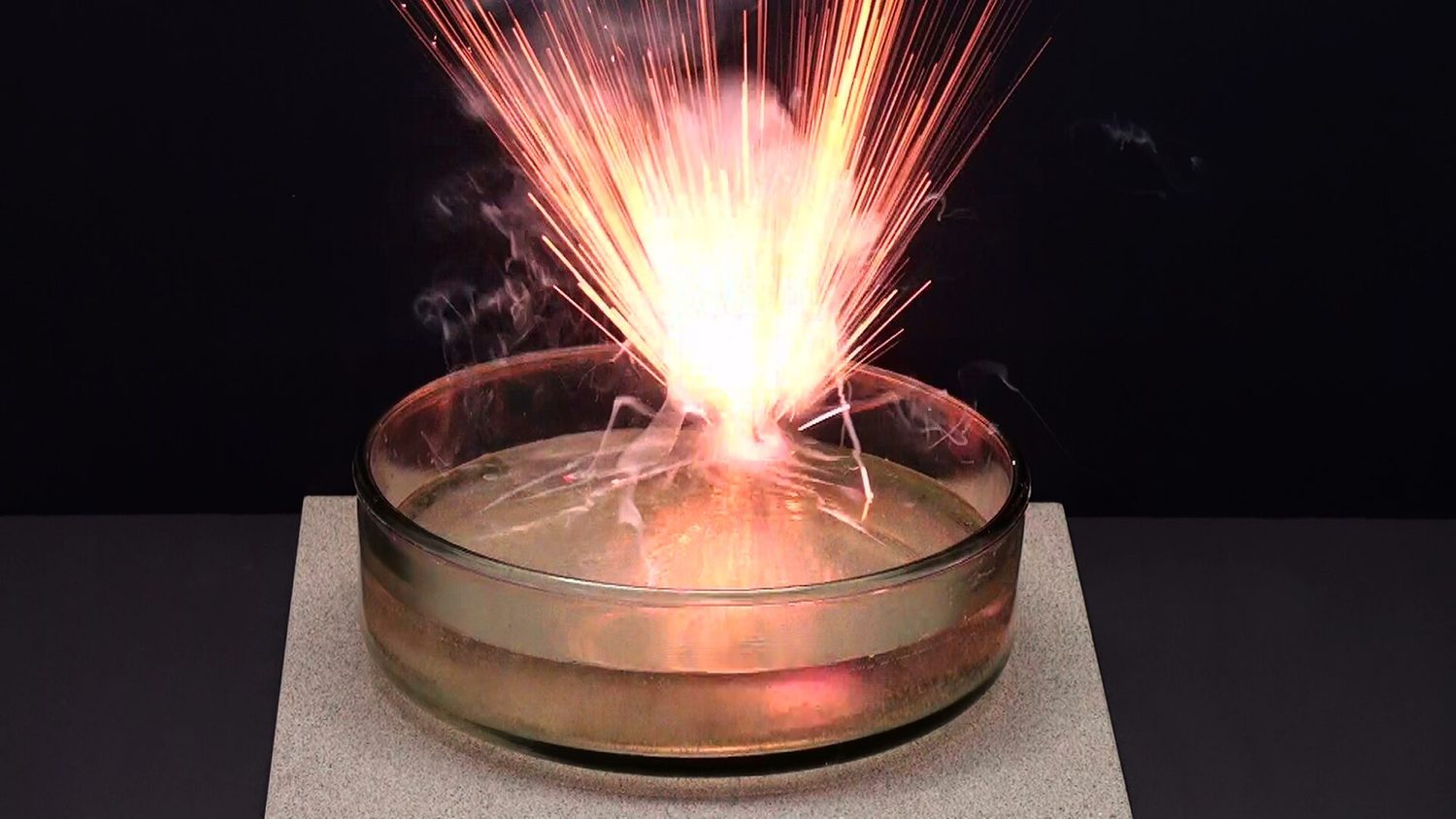
The trend shows up in how violent this is: lithium fizzes steadily but does not melt; sodium melts into a ball and darts around; potassium is fast enough to ignite its own hydrogen, burning with a lilac flame. Two answers to avoid: "hydrogen is given off" is not an observation (you cannot see it - say effervescence), and the metal melts because the reaction is exothermic, not because "water is hot".

עברית

אלמנטים בקבוצה I הם המתכות האלקליניות: ליثium, סודיום ואשלגן. הן מתכות רך (ניתן לחתוך אותן בסכין).

חתיכה קטנה של אשלגן נשרפת בפיצוץ ברק בהיר וללהבה סגולה על פני הצלחת מים *אשלגן מגיב בחומרה עם מים, משחרר מימן שנשרף בלהבה סגולה — התגוררות עולה לאורך קבוצה I

דיאגרמות מעטפת אלקטרונים של ליתיום, נתרן וkalium, כל אחת עם אלקטרון חיצוני בודד המודגש
כל אטום בקבוצה I יש אלקטרון אחד בשל החיצוני, ומכאן שהן מגיבות בצורה דומה

בעבור ירידה בקבוצה, ישנם דפוסים ברורים:

תכונה מגמה בעבור ירידה בקבוצה
נקודת היתוך יורדת
צפיפות עולה
תגוררות עולה

ניתן להשתמש בדפוסים אלו כדי לחזות תכונות של אלמנטים אחרים בקבוצה I. לדוגמה, רובידיום (מתחת לאשלגן) יהיה יותר תגורר ויהיה לו נקודת היתוך נמוכה יותר.

תגובה עם מים, ומה רואים

זהו הסוג של תגובה שהבחינה שואלת עליה הכי הרבה. כל מתכת בקבוצה I מגיבה עם מים ליצירת אלקלי (הידרוקסיד המתכת) ומימן — מה שבהחלט גורם להם לקרוא מתכות אלקליניות:

$$2\text{Na} + 2\text{H}_2\text{O} \rightarrow 2\text{NaOH} + \text{H}_2$$

"תאר מה שרואים" ממוקם בערך נקודות משלו, ולכן יש ללמוד את הרשימה עבור נתרן במים:

  • הוא צף - המתכת צפופה פחות ממים.
  • הוא נומס לכדור - התגובה משחררת חום, ונקודת ההיתוך של המתכת נמוכה.
  • הוא זז על הפני השטח - זרם מימן הנפלט דוחף אותו.
  • יש בועיות (זיזוז) - יציאת גז המימן.
  • הוא מתכווץ ונעלם כשהוא נשחק.
  • הפתרון הופך בסיסי, ולכן אינדיקטור אוניברסלי הופך לסגול (כעת $\text{NaOH}$).

המגמה באה לידי ביטוי בדרגת הכושר: ליثיום מזיזז בצורה יציבה אך אינו נומס; נתרן נומס לכדור וזורז סביב; אשלגן מהיר מספיק כדי להדליק את המימן שלו, ונשר בלהבה סגולה-לבנה. שתי תשובות למנוע: "מימן משתחרר" אינה תצפית (לא ניתן לראות אותו - יש לומר בועיות), והמתכת נומסת כי ה-תגובה היא אקסותרמית, ולא כי "מים חמים".

Explore · ⁨חקור⁩

Group I trend lab · ⁨מעבדת מגמת קבוצה I⁩

Follow Group I metals down the group and watch reactivity increase. · ⁨עבור עם מתכות קבוצה I כלפי מטה בקבוצה וצפו בעליית ההגברה.⁩

Vocabulary · ⁨מילון מונחים⁩ Train · ⁨אימון⁩
English עברית
potassium/pəˈtæsɪəm/ אשלגן
soft/sɒft/ רך
8.3

Group VII — the halogens · ⁨קבוצה VII — הלוגנים⁩

Syllabus · ⁨סיילבוס⁩
English
Core Supplement
1 Describe the Group VII halogens, chlorine, bromine and iodine, as diatomic non-metals with general trends down the group, limited to: (a) increasing density (b) decreasing reactivity
2 State the appearance of the halogens at r.t.p. as: (a) chlorine, a pale yellow-green gas (b) bromine, a red-brown liquid (c) iodine, a grey-black solid
3 Describe and explain the displacement reactions of halogens with other halide ions
4 Predict the properties of other elements in Group VII, given information about the elements
עברית
ליבה תוספת
1 תאר הלוגנים בקבוצה VII, כלור, ברומ ואיוד, כאל-מתכות די-אטומיות עם מגמות כלליות לאורך הקבוצה, המוגבלות ל: (א) צפיפות עולה (ב) פעילות יורדת
2 ציין את המראה של ההלוגנים בטמפרטורה ובלחץ רגילים כ: (א) כלור, גז צהוב-ירוק בהיר (ב) ברומ, נוזל אדום-חום (ג) איוד, מוצר אפור-שחור
3 תאר והסבר תגובות החלפה של הלוגנים עם יוני הלורידים האחרים
4 חזה תכונות של יסודות אחרים בקבוצה VII, בהינתן מידע על היסודות

Source: Cambridge International syllabus · ⁨מקור: הסיילבוס הבינלאומי של קמבריד'ג'⁩

English

Group VII elements are the halogens 卤素: chlorine 氯气, bromine 溴 and iodine 碘. They are diatomic 双原子 non-metals (each molecule is made of two atoms, such as $\text{Cl}_2$).

Their appearance at room temperature and pressure:

Halogen Appearance
chlorine a pale yellow-green gas
bromine a red-brown liquid
iodine a grey-black solid

Going down the group, the density increases but the reactivity decreases (the opposite trend to Group I).

Displacement reactions

A more reactive halogen pushes out (displaces) a less reactive halide 卤化物 ion from its solution. This is a displacement reaction 置换反应.

For example, chlorine is more reactive than bromine, so chlorine displaces bromine from potassium bromide:

$$\text{Cl}_2 + 2\text{KBr} \rightarrow 2\text{KCl} + \text{Br}_2$$

Worked example. Aqueous chlorine is added to potassium iodide solution; then aqueous iodine is added to potassium bromide solution. What happens in each? Reactivity falls down Group VII: chlorine, then bromine, then iodine. (a) Chlorine is above iodine, so it is more reactive and displaces it: $\text{Cl}_2 + 2\text{KI} \rightarrow 2\text{KCl} + \text{I}_2$, and the solution turns red-brown as iodine is released. (b) Iodine is below bromine, so it is less reactive and cannot displace it - there is no reaction and no colour change. "No reaction" is a complete answer worth marks: check the order in the group before you write any equation.

עברית

יסודות בקבוצה VII הם הלוגנים: כלור, ברום ויוד. הם אל-מתכות דיאטומיות (כל מולקולה מורכבת משני אטומים, כמו $\text{Cl}_2$).

המראה שלהם בטמפרטורת החדר ובלחץ רגיל:

הלוגן מראה
כלור גז צהוב-ירוק בהיר
ברום נוזל אדום-חום
יוד מוצא אפור-שחור

בעבר לקבוצה, הצפיפות עולה אך הכושר יורד (המגמה ההפוכה לקבוצה I).

קבוצה I עם חץ כושר כלפי מטה לצד קבוצה VII עם חץ כושר כלפי מעלה
קבוצה I הופכת יותר כושחת בעבר לקבוצה, בעוד שקבוצה VII הופכת פחות כושחת – מגמות הפוכות

תגובות החלפה

הלוגן הכושח יותר דוחף החוצה (מחליף) יון הלוריד פחות כושח מתמיסתו. זוהי תגובת החלפה.

למשל, כלור תגובתי יותר מברום, ולכן כלור דוחה ברום מפוטסיום ברומיד:

$$\text{Cl}_2 + 2\text{KBr} \rightarrow 2\text{KCl} + \text{Br}_2$$
ממיס溴יד אשלגן צלוף הופך לתוכתם כתום בעת הוספת כלור
כלור תגובתי יותר, ולכן הוא דוחה את הברום מהפתרון; הברום המשתחרר הופך את הפתרון הצבעון כתום

דוגמה פותרת. מוסיפים כלור מימי לפתרון יודיד אשלגני, ולאחר מכן מוסיפים יודין מימי לפתרון ברומיד אשלגני. מה קורה בכל אחד? התגבותיות יורדת מטה בקבוצה VII: כלור, לאחר מכן ברום, ואז יודין. (א) כלור נמצא מעל יודין, ולכן הוא תגובתי יותר ודוחה אותו: $\text{Cl}_2 + 2\text{KI} \rightarrow 2\text{KCl} + \text{I}_2$, והפתרון הופך לאדום-חום כאשר משתחרר יודין. (ב) יודין נמצא מתחת לברום, ולכן הוא פחות תגובתי ואינו יכול לדחוף אותו - אין תגובה ואין שינוי צבע. "אין תגובה" היא תשובה מלאה ששווה נקודות: בדוק את הסדר בקבוצה לפני שתכתוב משוואה.

Explore · ⁨חקור⁩

Group VII trend lab · ⁨מעבדת מגמה בקבוצה VII⁩

Follow halogens down the group and watch reactivity decrease. · ⁨עקבו אחרי הלוגנים במטה בקבוצה והערכו את ירידת התגובתיות.⁩

Vocabulary · ⁨מילון מונחים⁩ Train · ⁨אימון⁩
English עברית
trends/trendz/ מגמות
melting point/ˈmeltɪŋ pɔɪnt/ נקודת התכה
density/ˈdensɪti/ צפיפות
reactivity/rɪəkˈtɪvɪti/ רגישות
halogens/ˈhælədʒnz/ הלוגנים
chlorine/ˈklɔːriːn/ כלור
bromine/ˈbrəʊmaɪn/ ברום
iodine/ˈaɪədiːn/ יוד
diatomic/ˌdaɪəˈtɒmɪk/ דו-אטומי
halide/ˈhælaɪd/ הלוריד (או כלוריד)
displacement reaction/dɪˈspleɪsmənt rɪˈækʃn/ תגורת החלפה
transition elements/trænˈsɪʃn ˈelɪmənts/ יסודות מעבר
coloured/ˈkʌləd/ צבעוני
compounds/ˈkɒmpaʊndz/ תרכובות
variable/ˈveərɪəbl/ משתנה
oxidation numbers/ˌɒksɪˈdeɪʃn ˈnʌmbəz/ מספרים חמצוניים
iron/ˈaɪən/ ברזל
noble gases/ˈnəʊbl ˈɡæsɪz/ גזי אצילה
unreactive/ʌnrɪˈæktɪv/ בלתי תגובתי
monatomic/ˌmɒnəˈtɒmɪk/ אחד-אטומי
effervescence/ˌefəˈvesəns/ זיעוף
8.4

Transition elements · ⁨אלמנטים מעבר⁩

Syllabus · ⁨סיילבוס⁩
English
Core Supplement
1 Describe the transition elements as metals that: (a) have high densities (b) have high melting points (c) form coloured compounds (d) often act as catalysts as elements and in compounds 2 Describe transition elements as having ions with variable oxidation numbers, including iron(II) and iron(III)
עברית
ליבה תוספת
1 תאר מתכות מעבר כמתכות ש: (א) יש להן צפיפויות גבוהות (ב) יש להן נקודות התכה גבוהות (ג) יוצרות תרכובות צבעוניות (ד) לעיתים קרובות פועלות כקטליזטורים כיסודות ובתרכובות 2 תאר מתכות מעבר כבעלות יונים עם מספרי חמצון משתנים, כולל ברזל(II) וברזל(III)

Source: Cambridge International syllabus · ⁨מקור: הסיילבוס הבינלאומי של קמבריד'ג'⁩

English

The transition elements 过渡元素 are the block of metals in the middle of the Periodic Table. Compared with Group I metals, they:

  • have high densities;
  • have high melting points;
  • form coloured 有色 compounds 化合物;
  • often act as catalysts, both as elements and in compounds.

They can also have variable 可变 oxidation numbers 氧化数. For example, iron 铁 forms both iron(II) and iron(III) compounds.

עברית

האלמנטים המעבר הם סדרת המתכות באמצע הטבלה המחזורית. בהשוואה למתכות קבוצה I, הן:

  • בעלות צפיפות גבוהה;
  • בעלות נקודות התכה גבוהות;
  • יוצרות תרכובות צבעוניות;
  • לעיתים קרובות פועלות כקטליזטורים, גם כאלמנטים וגם בתרכובות.

להן גם מספרי חמצון משתנים. לדוגמה, ברזל יוצר גם תרכובות ברזל(II) וגם תרכובות ברזל(III).

שישה כוסות מבחן עם פתרונות בצבעים זוהרים — אדום, כתום, צהוב, ירוק, כחול וסגול *מתכות מעבר יוצרות תרכובות צבעוניות: לכל אחת מפתרונות אלו יש יון מתכת מעבר שונה

Explore · ⁨חקור⁩

Transition element lab · ⁨מעבדה: אלמנטים מעבר⁩

Match transition-metal properties to real examples. · ⁨התאם מאפייני מתכות מעבר לדוגמאות אמיתיות.⁩

8.5

Group VIII — the noble gases · ⁨קבוצה VIII — הגזים האצילים⁩

Syllabus · ⁨סיילבוס⁩
English
Core Supplement
1 Describe the Group VIII noble gases as unreactive, monatomic gases and explain this in terms of electronic configuration
עברית
ליבה תוספת
1 תאר את גזי האציל (הגזים היקרים) של הקבוצה VIII כגזים חד-אטומיים שאינם מגיבים, והסבר זאת בהתבסס על קונפיגורציית האלקטרונים

Source: Cambridge International syllabus · ⁨מקור: הסיילבוס הבינלאומי של קמבריד'ג'⁩

English

The Group VIII noble gases 稀有气体 are unreactive 不活泼, monatomic 单原子 gases (they exist as single atoms, not as molecules).

They are unreactive because they already have a full outer shell of electrons. This makes them stable, so they do not need to gain, lose or share electrons.

עברית

הגזים האצילים של קבוצה VIII הם לא תגובתיים, מונו-אטומיים (הם קיימים כאטומים בודדים, לא כמולקולות).

הם לא תגובתיים כי כבר יש להם מעטפת חיצונית מלאה של אלקטרונים. הדבר הופך אותם ליציבים, ולכן אינם זקוקים לרכוש, לאבד או לשיתף אלקטרונים.

חמישה צינורות פריקה המסומנים He, Ne, Ar, Kr ו-Xe, כל אחד בהילוך בצבע שונה *מעבר חשמל דרך כל גז אציל גורם לו להילוך בצבע מאפיין – כך עובדים סימני ניאון ותאורות אחרות

Explore · ⁨חקור⁩

Noble gas lab · ⁨מעבדת גזים אצילים⁩

Classify noble gas uses by the property that makes them useful. · ⁨סווג את השימושים של הגזים האצילים לפי התכונה המאפשרת אותם.⁩

8.5

Exam tips · ⁨טיפים לבחינות⁩

English
  • The Periodic Table is ordered by proton number. Elements in the same group (column) have the same number of outer electrons, so they react in similar ways; periods are the rows.
  • Group I (alkali metals) get more reactive going down; Group VII (halogens) get less reactive going down — opposite trends.
  • A more reactive halogen displaces a less reactive one from a solution of its salt — for example chlorine displaces bromine.
  • Noble gases are unreactive because they have a full outer shell. Transition elements are hard and dense, form coloured compounds, act as catalysts and have variable oxidation numbers.
עברית
  • הטבלה המחזורית מסודרת לפי מספר הפרוטונים. אלמנטים באותה קבוצה (עמודה) יש להם אותו מספר של אלקטרונים חיצוניים, ולכן הם מגיבים בצורה דומה; מחזורים הם השורות.
  • קבוצה I (מתכות האלקלי) הופכות יותר תגובתיות כשיוצאים מטה; קבוצה VII (הלוגנים) הופכות פחות תגובתיות כשיוצאים מטה – מגמות הפוכות.
  • הלוגן תגובתי יותר דוחה פחות תגובתי מפתרון מלחו – לדוגמה כלור דוחה ברום.
  • גזים יקרים אינם מגיבים מכיוון שיש להם מעטפת חיצונית מלאה. יסודות מעבר הם קשים וצפופים, יוצרים תרכובות צבעוניות, פועלים כקטליזטורים ולחלק מהם יש מספרים אוקסידטיביים משתנים.

Interactive lessons on this topic · ⁨שיעורים אינטראקטיביים בנושא זה⁩

Work through it step by step, with instant-check exercises. · ⁨לעבור על הדברים צעד אחר צעד, עם תרגילים לבדיקה מיידית.⁩

Past Papers · ⁨מבחני עבר⁩

More topics in IGCSE Chemistry · ⁨כימיה IGCSE⁩ · ⁨נושאים נוספים בIGCSE Chemistry · ⁨כימיה IGCSE⁩⁩

Log in or create account · ⁨היכנס או צור חשבון⁩

IGCSE, A-Level & AP